

Plant Profile & Key Characteristics
Also known as: Garden mint, Common mint, Lamb mint, Mackerel mint
Overview: Spearmint (Mentha spicata) is a fast-growing, aromatic herbaceous perennial reaching 20–60 cm (8–24 in). Evergreen in mild climates, it is grown chiefly for its fragrant edible leaves and doubles as a pollinator-friendly groundcover.
Quick Specifications
| Specification | Attribute |
|---|---|
| Plant Type / Life Cycle | Perennial |
| Foliage Type | Evergreen (in mild climates) |
| Mature Size | 20–60 cm (8–24 in) |
| Growth Rate | Fast |
| Root System | Rhizomatous / stoloniferous — spreads aggressively by runners |
| Toxicity | Non-toxic / edible (culinary herb) |
| Hardiness | USDA zones 4–11a (to 11b with care) |
Growth Form & Structure
- Height & Spread: In the ground reaches 20–60 cm (8–24 in) tall and spreads indefinitely by runners; in a pot use a wide, shallow 8–18 L (2–5 gallon) container and cut back the roots yearly to keep it vigorous.
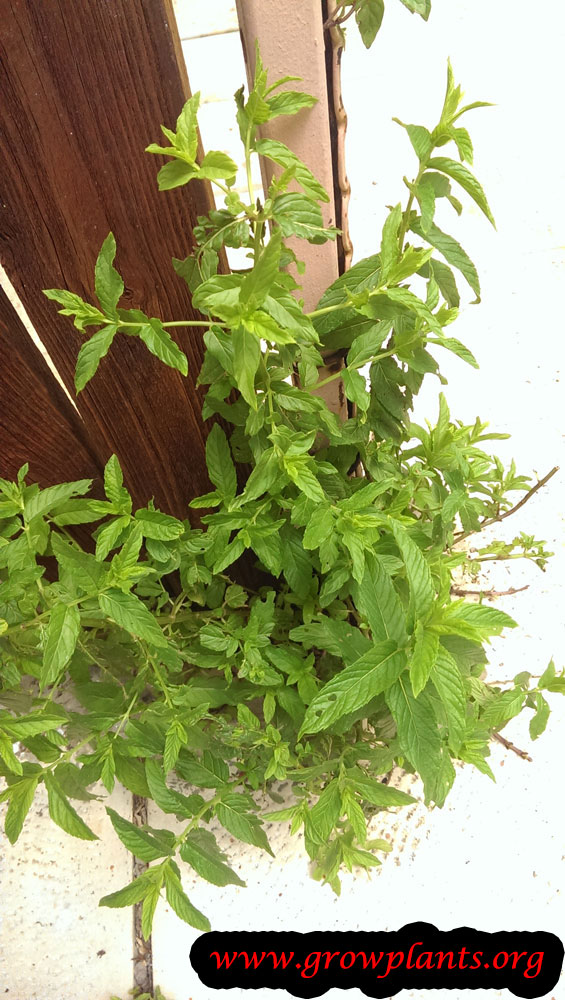
- Growth Habit & Form: Low, spreading herbaceous groundcover with upright square stems; becomes aggressive if left unconfined.
- Lifespan & Maturity: Long-lived perennial that reaches full size within one growing season; leaves can be harvested from the first season.
Anatomy & Physical Features
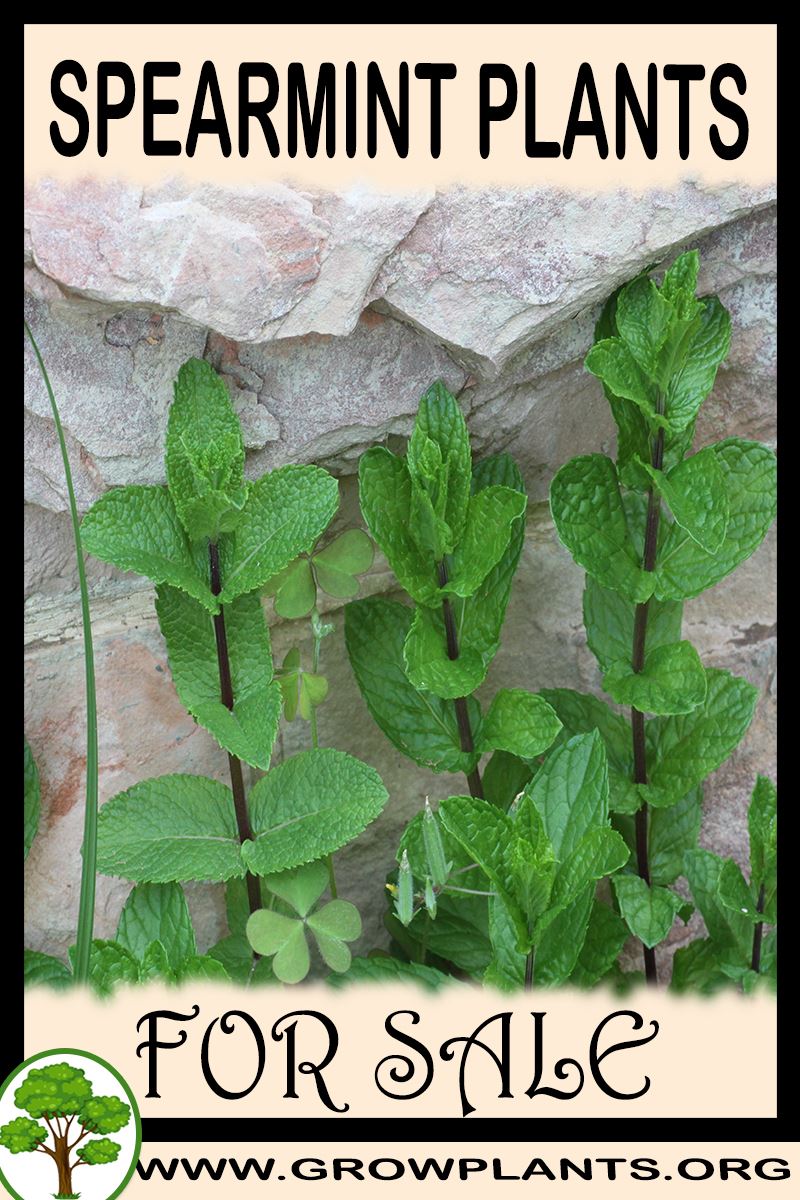
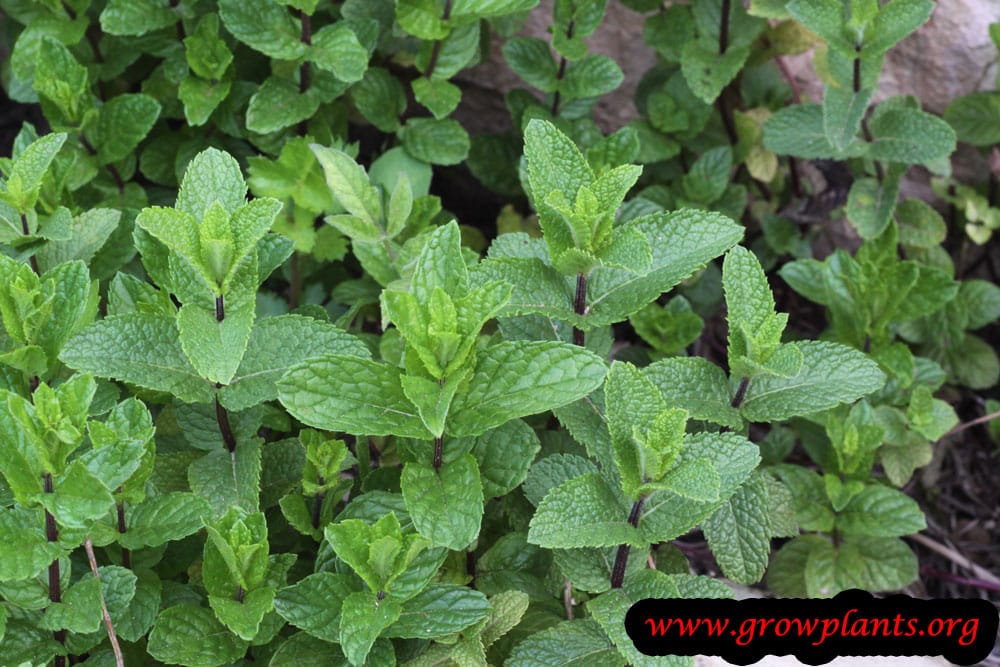
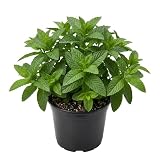
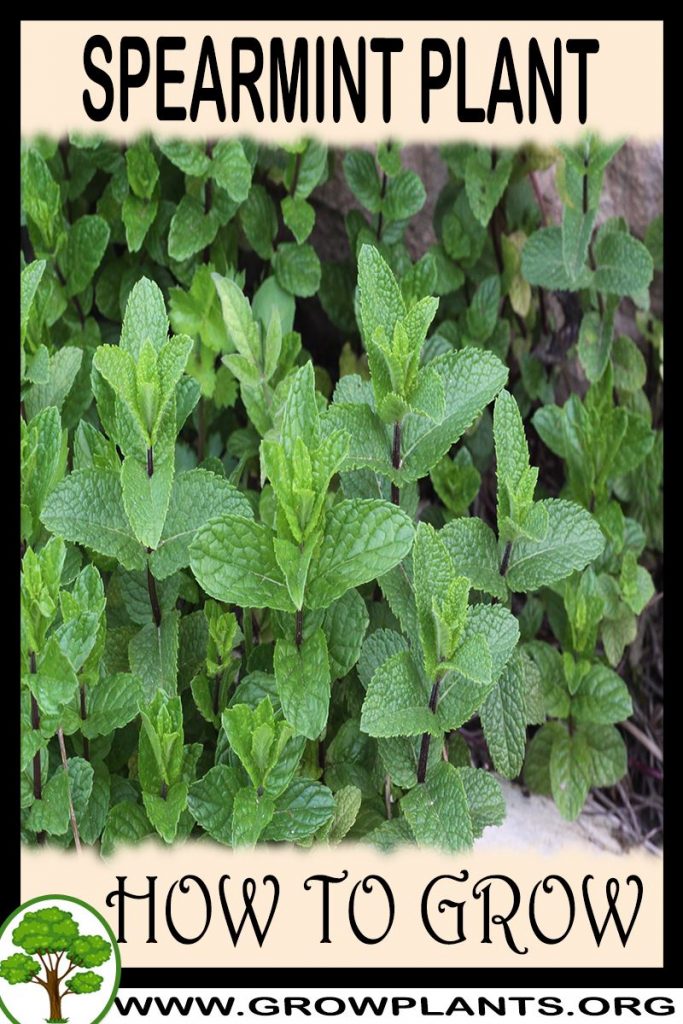
- Leaves & Foliage: Green, oval leaves with serrated edges and a strong, sweet spearmint aroma.
- Flower Characteristics: Purple flowers in whorled inflorescences along the stems in summer, attractive to bees. (See the Bloom accordion for detail.)
Primary Uses & Landscape Value
- Edible Uses: Fragrant leaves used fresh for teas and beverages and in salads.
- Functional & Ornamental Roles: Aromatic groundcover, pollinator plant and container/kitchen herb; can be grown on a bright, sunny windowsill indoors.
Care Guide: Planting, Soil & Watering
Overview: Mints are vigorous, fast-spreading herbs that thrive in warm, sunny to partly shaded spots with rich, moist, well-draining soil. They are moisture-lovers that dislike drying out and grow so aggressively that many gardeners confine them to a container or a buried barrier.
Quick Care Requirements
| Requirement | Ideal Condition |
|---|---|
| Planting Season | Spring in zones 4-7; spring–summer in 8-10a; spring–autumn in 10b; year-round in 11+ |
| Growth Rate | Fast |
| Soil Type | Rich, organic, moist and well-draining |
| Water Need | Moderate to high; keep the soil consistently moist |
Planting & Establishment
- Best Planting Season: Timing follows frost risk and warmth: plant in spring in zones 4-7, in spring to summer in zones 8-10a, in spring to autumn in zone 10b, and year-round in zone 11.
- How to Plant:
- Hole Preparation: Dig a hole a little larger than the root ball.
- Soil Amendments: Mix plenty of organic matter such as compost into the excavated soil.
- Planting Depth: Set the plant at the depth it grew before and cover the roots lightly, firming gently.
- Growth Speed & Expectations: Very fast — reaches 20-60 cm. Because it spreads by runners, plant it in a container or behind a buried barrier to keep it in check.
Soil, Watering & Drainage Care
- Soil Mix & Drainage Needs: Wants a well-ventilated, free-draining yet moisture-retentive mix rich in organic matter; in pots use potting mix or peat soil with perlite or vermiculite and refresh part of the soil every couple of years so it never turns stale.
- Watering Schedule & Technique:
- Young / Newly Planted: Water in well after planting or dividing and keep the soil moist through the first weeks so it establishes quickly.
- Established: Water regularly so the soil stays evenly moist — mint wilts fast if it dries out and does best with generous, consistent moisture.
- Seasonal Adjustments: More water in summer heat, less in the cool winter months.
Climate, Light & Hardiness
Spearmint is a vigorous, cold-hardy perennial herb that grows in full sun to partial shade and prefers cool, moist, rich conditions. The site data lists hardiness zones 4–11a (11b with care): its top growth dies back in cold winters, but the roots and runners are very hardy and resprout in spring.
Quick Climate Specifications
| Climate Zones | Mediterranean, subtropical, temperate |
|---|---|
| USDA Hardiness Zones | Approximately 4–11a (11b with care) |
| Optimal Temp Range | ~18–24°C (64–75°F) |
| Cold Damage Begins | Top growth killed by frost; crown and rhizomes tolerate hard freezing |
| Frost Tolerance | Foliage low; roots/rhizomes high |
| Light Conditions | Full sun to partial shade |
| Wind Tolerance | Moderate |
Sunlight & Light Exposure
Optimal Light Setup
Full sun to about three-quarters sun gives the strongest growth. Some shade keeps leaves larger and more tender for harvest and delays flowering, which is useful when the leaves are the goal.
Shade & Heat Management
In hot regions, partial shade and steady soil moisture prevent scorching and keep foliage lush.
Temperature Extremes & Hardiness
USDA Hardiness & Regional Limits
Very adaptable across a wide zone range. In cold-winter areas the plant behaves as a herbaceous perennial - it dies to the ground and returns from hardy underground runners.
Cold Damage & Winter Protection
Frost cuts down the top growth, but the crown and rhizomes survive well below freezing with little or no protection.
Extreme Heat Tolerance
Tolerates heat if the soil stays moist; hot, dry conditions shrink the leaves and stress the plant.
Wind, Humidity & Microclimate
Humidity Preferences
Prefers moist air and soil; it dislikes hot, dry, exposed positions.
Microclimate Recommendations
A cool, moist, lightly shaded spot suits it; its spreading runners are best contained in a bed or pot.
Growing in Pots, Balconies & Indoors
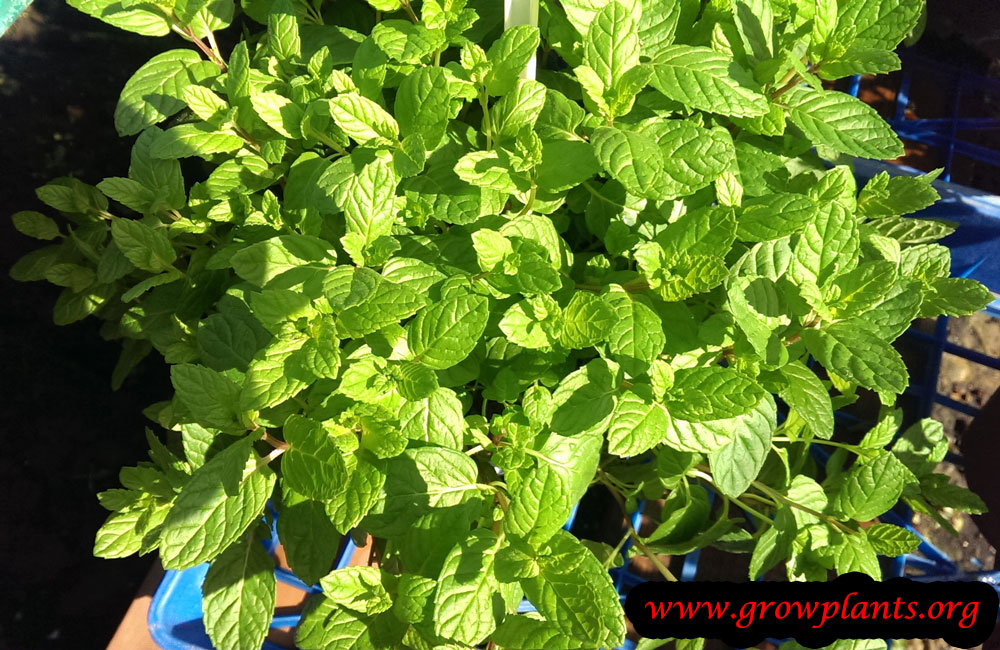
Spearmint (Mentha spicata, garden mint) is a vigorous, fragrant culinary herb – and one of the best herbs for a pot, since a container keeps its running roots in check. That same vigour also makes it an excellent hydroponic herb – a DWC or wick system suits it well, and hydroponics contains its spreading roots even more completely than a pot does. The grower does not rate it as a deep-room houseplant, but it grows well at a sunny window.
Quick Details
- Container Size: 8-18 L (2-5 gal), the bigger the better; a shallow, wide pot suits it (grower’s value)
- Indoor Suitability: Not a deep-indoor houseplant, but grows well at a sunny window with direct light
- Best Spot: Nearly full sun to part shade – a bit of shade keeps leaves large and delays flowering
- Soil & Drainage: Rich, well-drained, well-aerated mix kept lightly moist
- Watering in Pots: Keep the mix lightly and evenly moist – mint likes a fair amount of water; never bone dry
Indoors & On the Windowsill
- Houseplant limits / a window herb: The grower marks it as not a deep-room houseplant but notes it can be grown at a window with direct sun – so give it the sunniest sill; in dim light it grows thin and pale.
- Windowsill growing: One of the easiest herbs at a bright window; harvest often and pinch out flower stems to keep the leaves coming. It also roots readily in water from a cutting.
- Overwintering: Hardy in most climates, but a pot is easily kept on a bright sill through a cold winter for fresh leaves.
On a Balcony or Patio
- Light, wind & heat: It is happy on a balcony or patio in good light. Pots dry quickly because walls and paving reflect heat, so check them often in warm spells; shelter tall stems from wind and mind the pot weight and drainage runoff.
- Practicalities: A wide, shallow 8-18 L pot on a bright balcony is ideal; a container also keeps this vigorous spreader from taking over.
Choosing the Pot, Soil & Long-Term Care
- Pot & drainage: A wide, shallow 8-18 L pot with good drainage holes; empty any standing saucer so the roots never sit in water and rot.
- Pot material: Terracotta breathes and dries quickly (handy for sun-loving Mediterranean plants); glazed or plastic pots hold moisture longer.
- Potting mix: Rich, well-aerated mix – a good potting mix, or peat/coir blended with perlite or vermiculite and some organic matter; keep it lightly moist.
- Feeding: Potted plants use up nutrients faster because watering leaches them out, so feed a little more often than plants in open ground – mint responds to a nitrogen-rich feed for leafy growth.
- Repotting / renewal: The grower switches part of the soil every two years so it does not turn sour.
Grower’s Container Tip
- Hard-cut it every year: Because mint spreads fast and gets crowded, the grower cuts back all the roots and part of the plant each year (and thins the number of stems). Without this reduction the pot can decline and the plant may die – so an annual hard cut, plus renewing part of the soil every two years, keeps it vigorous.
Fertilizing & Feeding
A moderate feeder: this fast-growing, spreading herb is grown for its fragrant edible leaves and can be aggressive in the garden, so steady, nitrogen-forward feeding supports the vigorous, dense leaf growth it is prized for.
Quick Fertilizing Specs
| Feeding Level | Moderate feeder |
|---|---|
| Main Nutrient Priority | A fertilizer with good nitrogen content to match this vigorous herb’s fast leaf and stem growth |
| Best Feeding Period | Through the active growing season |
| Organic Options | Rich organic matter worked into moist, well-drained soil |
| Reduce/Stop Feeding | Feeding eases off as growth slows toward the end of the growing season |
| Micronutrients | Usually adequate from a complete fertilizer and organic matter |
| Soil pH | Tolerates a range of rich, moist, well-drained soil |
Feeding by Growth Stage
Establishment after planting
Help newly planted spearmint establish quickly in rich, moist soil before it spreads.
| Nutrient direction | A balanced to nitrogen-forward fertilizer plus organic matter supports quick root establishment and vigorous early growth. |
|---|---|
| Timing | At planting, during the active growing season. |
| Frequency | A light feeding at planting is usually enough while roots establish. |
| Fertilizer types | A balanced complete fertilizer, Organic matter worked into the planting hole |
| Precautions | Plant with a barrier or in a container if uncontrolled spread is a concern, since this herb grows aggressively once established. |
Active growth and leaf harvest
Support this fast-growing mint’s vigorous leaf and stem production for ongoing culinary harvest.
| Nutrient direction | A fertilizer leaning toward nitrogen supports the lush, dense foliage growth this vigorous grower is valued for, favoring leaf growth over blooming. |
|---|---|
| Timing | Through the active growing season while harvesting leaves. |
| Frequency | Regular feeding through the growing season suits this fast-growing habit. |
| Fertilizer types | A fertilizer with good nitrogen content, Organic matter as a top-dressing |
| Precautions | In containers, the vigorous root growth typically requires periodic root trimming and soil renewal to keep the planting healthy and productive. |
Nutrient Deficiency Signs & Corrections
Leaves are noticeably smaller and paler than this vigorous grower’s normal lush foliage, and growth slows.
| Possible causes | low available soil nitrogen relative to this fast grower’s demand, leaching from frequent watering in moist soil, an aging, depleted container mix |
|---|---|
| Appears first on | older, lower leaves |
| What to check | recent feeding history, growth rate compared to normal for the plant, condition of the potting soil if container-grown long-term |
| Possible correction | Apply a fertilizer with good nitrogen content and refresh container soil if it has not been changed in some time. |
Interveinal yellowing appears on older leaves while the veins stay green.
| Possible causes | low soil magnesium, leaching from frequent watering, an imbalance from heavier nitrogen feeding |
|---|---|
| Appears first on | older, lower leaves |
| What to check | soil magnesium status, soil drainage, recent fertilizer balance |
| Possible correction | Apply a labeled magnesium source and keep overall feeding balanced alongside the nitrogen this herb favors. |
Leaf margins brown or scorch despite regular, frequent watering.
| Possible causes | fertilizer salt buildup, especially in an aging container mix, under-watering that concentrates salts between waterings, feeding more heavily than needed for the current growth rate |
|---|---|
| Appears first on | leaf margins and tips |
| What to check | recent fertilizer amounts, watering consistency, container soil age and drainage |
| Possible correction | Ease off feeding, water thoroughly to flush salts, then resume regular but not excessive feeding. |
Pruning, Training & Seasonal Maintenance
Spearmint is a soft-stemmed, rhizome-and-stolon-spreading herb, not a woody plant, so it tolerates frequent and even aggressive cutting back with fast regrowth. Pruning here has two jobs: keeping the leaves large, tender and flavourful (leaf quality drops once the plant flowers or becomes congested), and keeping its fast, spreading growth in bounds. The safest window for a hard renewal cut is autumn–winter after the main growing season, while light tip-pinching and cutting of budding flower stems continue right through spring and summer as part of routine harvesting.
Quick Pruning & Maintenance Specs
| Pruning Tolerance | High – regrows quickly from hard cuts |
| Primary Pruning Window | Autumn–winter hard cutback (or whenever winter dieback would otherwise occur) |
| Secondary Maintenance Window | Spring–summer, ongoing tip-pinching and flower-stem removal |
| Typical Frequency | Continuous light harvest/pinch cuts, plus one hard cutback per year (more often in frost-free zones where it never fully dies back) |
| Main Objective | Leaf quality and yield, and containing spread – not shaping a structure |
| Young Plant Priority | Let roots establish before cutting; then pinch tips to build a bushy clump |
| Mature Plant Priority | Prevent crowding/leggy small-leaved growth; intercept flowering; renew by hard cutback |
| Best Tool Type | Precision snips or small hand shears |
| Avoid Heavy Pruning During | The first few weeks after planting, and periods of heat or drought stress |
Pruning by Plant Age & Size
Newly Established
Leave newly planted spearmint alone for the first few weeks beyond removing any damaged growth – let the root and stolon system settle in first. Once new growth appears, light pinching of stem tips encourages branching.
Young / Formative
No structural training applies to this herbaceous groundcover-type plant. The only “formative” work is repeated tip-pinching so the clump fills out as multiple bushy stems rather than a few tall, sparse ones.
Mature / Established
The priority shifts to renewal: an unpruned clump becomes crowded and produces smaller leaves on leggy stems, so mature plantings need an annual hard cutback plus removal of old, base-woody stems, and division/thinning if the patch has become too dense.
Seasonal Pruning Schedule
| Pre-Growth / Early Spring | Objective: clear winter damage and reset growth. | Remove: frost-blackened or dead top growth, cut down to live basal growth (zone 4–7 typically dies back fully over winter). | Do not remove: healthy overwintering foliage where the plant stays evergreen (warmer parts of its zone 4–11a range, and zone 11b with care). | Response: vigorous fresh shoots from the crown and stolons. |
| Summer Canopy Management | Objective: maximise leaf quality for harvest. | Remove: stem tips (pinching) and budding/opening flower stems. | Do not remove: all stems at once – keep some leaf area so the plant keeps photosynthesising. | Response/impact: every harvest cut works as a pruning cut; intercepting flower spikes before they open keeps leaves larger and more flavourful, since blooming coarsens leaf quality. |
| Dormant / Winter (or year-round in frost-free zones) | Objective: annual renewal. | Remove: cut all stems back to about 5 cm (2 in) above ground. | Do not remove: the crown/root system itself. | Response: strong regrowth given the plant’s fast growth rate; a short gap in harvestable leaf during regrowth. |
| Ongoing Sanitary | Objective: keep the clump clean and pest-free. | Remove: any growth showing aphids, spider mites or thrips damage. | Do not remove: unaffected surrounding growth. | Response: reduces pest build-up in the dense mat of foliage. |
Structural Pruning & Training
Spearmint has no permanent woody framework to train, so structural pruning here means managing canopy density and renewal rather than shaping branches. Thinning genuinely helps this plant: a congested clump produces smaller leaves, so periodically removing a portion of stems (or dividing the clump) keeps leaf size up. The main renewal technique is the annual hard cutback to about 5 cm, which the plant tolerates well because of its fast growth rate.
Special Growth to Remove
- Stolons/runners: spearmint spreads aggressively by stolons; where containment is the goal, regularly cut or pull runners at the point they root outside the intended area. Where it is being used deliberately as a spreading groundcover, these can be left.
- Spent/budding flower stems: cut before or as they open if leaf quality is the priority, since flowering reduces leaf size and quality.
- Old or base-woody stems: remove at ground level, especially during spring clean-up, as older stems contribute to legginess.
Container & Small-Space Pruning
Container-grown spearmint needs more aggressive management than in-ground plantings: because growth is fast and the pot volume is limited, both the top growth and the roots benefit from an annual cut-back, otherwise the plant can exhaust the pot and decline. Use a shallow, wide container suited to the shallow stoloniferous root system rather than a deep one, refresh the soil every two years, and pinch tips more frequently than you would in the ground to keep growth compact rather than floppy.
Tools
- Precision snips or small hand shears for tip-pinching and individual harvest cuts – the everyday tool for this soft-stemmed herb.
- Bypass secateurs only for the annual hard cutback of an established, multi-stemmed clump, where cutting many soft stems at once is faster with a slightly larger blade. No loppers, saw, or hedge shears are needed – this is not a woody or hedging plant.
Tool Hygiene & Disease Risk
Routine care is sufficient for most cuts – clean, sharp blades. Mints as a group can carry mint rust (Puccinia menthae) and are susceptible to verticillium wilt; since spearmint is also commonly propagated by cutting, if either disease is present or suspected, wipe or disinfect tools between plants (or between clearly diseased and healthy stems) to avoid spreading infected material.
Cut Placement & Technique
Pinch just above a leaf node or pair to trigger branching from that point. For the hard renewal cutback, cut all stems to a uniform height of about 5 cm (2 in) above the ground/crown. When removing a budding flower stem, cut back to the nearest strong leaf pair below the spike rather than removing the whole stem.
Heavy Pruning & Rejuvenation
Well tolerated: cutting the whole clump back to roughly 5 cm is the standard renewal method, best timed for autumn–winter (or whenever the plant would otherwise die back) or whenever the clump becomes crowded and small-leaved. Regrowth is fast given the plant’s rapid growth rate, with only a short gap in harvestable leaf.
Post-Pruning Care
Water normally to support regrowth. Do not add extra feeding right after a hard cutback – the single annual nitrogen feed already recommended for this plant is timed for spring, alongside the fresh flush of growth, not as a post-prune extra. Watch the new regrowth for aphids, spider mites and thrips.
Common Pruning Mistakes
- Letting the clump go unpruned for multiple seasons, resulting in crowded stems and smaller leaves.
- Only ever skimming the top few centimetres at harvest instead of occasionally cutting hard, which leaves the base woody and leggy over time.
- Not intercepting flower spikes before they open when leaf quality (rather than pollinator forage) is the goal.
- Skipping the annual root/top cutback in containers, leading to pot exhaustion and decline.
When NOT to Prune
- In the first few weeks after planting or transplanting, before roots have established.
- During periods of heat or drought stress – wait until conditions ease.
- If supporting pollinators is a goal, leave at least part of the clump to flower rather than intercepting every flower stem.
Recommended Tools (by task)
- precision_snips – pinching tips and harvesting individual stems, the main day-to-day cut on this soft-stemmed herb.
- bypass_secateurs – the annual hard cutback of an established clump, where many soft stems need cutting near the base at once.
- blade_disinfectant – optional, for use between plants if mint rust or wilt is present or suspected.
Propagation Guide
Spearmint spreads naturally by stolons and is most easily multiplied by separating a rooted stolon section or by simple stem cuttings rooted in water or soil; the site notes vegetative propagation isn’t strictly necessary but is easier and faster than starting from seed. Mints also hybridize readily, so seed-grown plants can vary somewhat in flavour and vigor from the parent, which is another reason vegetative methods are generally preferred. Overall this is a very easy, fast-rooting plant to propagate.
Quick Propagation Specs
| Best Propagation Method | Division of rooted stolons, or stem cuttings |
| Alternative Methods | Simple layering (bending a stem into the soil); seed |
| Propagation Difficulty | Easy |
| Seed True-to-Type | Variable – mints hybridize readily, so flavour and habit may differ from the parent |
| Vegetative True-to-Type | Yes |
| Best Propagation Season | Spring |
| Seed Germination Time | 2–8 weeks |
| Cutting Rooting Time | Often just one to two weeks in water under warm conditions |
| Germination Temperature | 20–26°C (68–79°F) |
| Seed Sowing Depth | 2–3 mm |
Growing from Seed
Seed Handling & Viability
Store saved seed in a cool, dry location until sowing.
Sowing Season
Spring to summer, sown at 20–26°C (68–79°F).
Sowing Depth & Orientation
Very shallow – about 2–3 mm deep.
Germination Conditions
Moist soil in full sun.
Germination Time
About 2–8 weeks.
Seedling Care
Keep lightly moist with medium humidity in full sun; watch closely, as seedlings tend to attract pests. Once seedlings have about 5–7 leaves, space or transplant them at roughly 4×5 cm (1.4×2 in) before moving to larger pots.
Stem Cuttings
Cutting Type
Stem tip cuttings.
Best Timing
Spring.
Cutting Preparation
Take a stem cutting and either place it in water, changing the water every few days, or insert it directly into moist soil.
Rooting Setup
Keep high humidity around the cutting and mist it regularly, whether rooting in water or soil.
Rooting Hormone
Not usually necessary – spearmint roots very readily on its own.
Rooting Time
Often just one to two weeks in water under warm conditions.
Air & Ground Layering
Bend a stem over and cover part of it with soil, in spring. Keep the covered section moist; once rooted, sever it from the parent and give it extra water for the first few days while it establishes.
Runners & Stolons
Spearmint spreads naturally via stolons. Once a stolon has grown a few leaves of its own, it can be separated from the mother plant; water the new division generously for the first few days to help it establish.
Bloom & Edible Flower Guide
Quick Details
- Bloom Season: Summer (in warmer climates from late spring into early autumn)
- Time to First Bloom: In its first season once the plant is established and days lengthen
- Flower Appearance: Small purple flowers in slender spikes at the stem tips
- Edibility: Yes – mint flowers are edible, mildly minty, and make a pretty garnish
Detailed Blooming Overview
Spearmint (Mentha spicata) throws up spikes of small purple flowers in summer, held above the aromatic foliage. The blooms are a magnet for bees and other pollinators, but as with all mints, flowering draws energy away from leaf production, so growers often thin the spikes to keep the harvest going.
Flower Characteristics
- Small purple flowers in narrow terminal spikes (inflorescences).
- Highly attractive to bees and other pollinators.
Bloom Care & Thinning
- Thinning the bloom: Trim off the flowering spikes to keep the plant producing tender, well-flavoured leaves.
- Pollination: Worked by bees; the flowers are a valuable pollinator resource if you let some bloom.
- Using the flowers: The small flowers are edible – use them fresh as a garnish.
Fruit & Uses
Spearmint is grown for its leaves, which are used fresh as a classic culinary herb in beverages and salads. No cooking is required – the leaves are used raw or steeped.
Quick Edible Specs
| Edible Parts | Leaves |
|---|---|
| Main Use(s) | Culinary – beverages (mint tea, mojitos, infused water), salads, garnish |
| Eaten Raw or Cooked | Raw (fresh), or dried for tea |
| Preparation Required | None; rinse before use |
| Harvest Season | Spring–autumn in cooler climates, all year in warm climates |
| Time to First Harvest | Once the plant is established, qualitatively |
| Storage | Fresh for a short time refrigerated, or dried/frozen (e.g. in ice cubes) for longer storage |
| Safety/Toxicity Caveat | No toxicity noted; a widely eaten culinary herb |
Leaves & Greens
Leaves are green, oval, serrated, with a strong minty aroma. Harvest by cutting the stem a few centimeters above the ground or at a stem division, which encourages regrowth for repeat cutting through the season (see Pruning for how this also keeps the aggressive grower in check). Use fresh in teas, cold drinks, mojitos, salads, or as a garnish; leaves can also be dried or frozen for later use.
Preparation, Uses & Safety
Spearmint is used almost entirely fresh; picking before the plant flowers keeps the leaves more tender and flavorful. No specific safety concerns are reported at normal culinary quantities. Mint has long been used in traditional herbal teas, though no medical claims are made here.
Pests, Diseases & Troubleshooting
Overview: Spearmint is a vigorous culinary mint (Lamiaceae) and, like all mints, its defining “problem” is its aggressively invasive rhizomes rather than any insect; its main biological threat is mint rust, followed by powdery mildew, verticillium wilt and the soft-bodied aphid, mite and thrips complex. Grow it contained, keep it open and un-crowded, and use soft, edible-safe controls first. Spearmint is one of the most rust-tolerant mints but still benefits from airflow and containment.
Quick Troubleshooting Overview
| Issue / Pest | Main Symptom | Primary Solution |
|---|---|---|
| Invasive rhizomes | Runners swamping the bed | Grow contained, barrier, divide |
| Mint rust | Orange pustules under leaves | Remove leaves, cut back, clean stock |
| Aphids / thrips | Colonies & scarring on new growth | Water jet, soap, sticky traps |
| Spider mite | Stippling on hot, dry foliage | Keep moist, raise humidity, oil |
| Powdery mildew / wilt | Coating or sudden wilting | Airflow, clean stock, no replant |
Common Pests & Management
- Aphids (incl. Mint Aphid) (Ovatus crataegarius / Myzus persicae):
- Symptoms: Colonies of soft green or black insects on shoot tips and leaf undersides, curling and puckering new leaves and leaving sticky honeydew; a leading nuisance on mint.
- Prevention & Control: Blast off with a water jet; pinch out infested tips; encourage lady beetles, lacewings and hoverflies; insecticidal soap on the tips if colonies persist – favour soft controls on a culinary herb.
- Two-Spotted Spider Mite (Tetranychus urticae):
- Symptoms: Fine pale stippling, bronzing and delicate webbing on leaf undersides in hot, dry, still conditions; foliage dulls and dries (listed in the source).
- Prevention & Control: Raise humidity and hose down foliage; keep the soil moist, as drought-stressed mint is most at risk; encourage predatory mites; a soap or light horticultural oil spray, repeated, in bad cases.
- Thrips (order Thysanoptera):
- Symptoms: Silvery scarring, pale flecking and tiny dark frass specks on leaves; distorted new growth (listed in the source).
- Prevention & Control: Remove sheltering weeds; use blue sticky traps; encourage predatory mites and pirate bugs; insecticidal soap or spinosad only for heavy infestations.
- Mint Flea Beetle (Longitarsus spp.):
- Symptoms: Tiny beetles that jump when disturbed, chewing small round shot-holes in the leaves; worst on young growth.
- Prevention & Control: Cover young plants with fine mesh; keep beds weed-free and clear old debris where beetles overwinter; hand-pick is impractical, so rely on barriers and vigorous growth.
- Mint Root Borer & Cutworms (Fumibotys fumalis / Noctuidae):
- Symptoms: Wilting, weak shoots and larvae tunnelling the rhizomes and roots; cutworms sever young shoots at the base.
- Prevention & Control: Rotate and refresh plantings every few years; cultivate lightly to expose larvae to birds; remove crop debris after harvest; drench with beneficial nematodes for serious root-borer pressure.
Diseases & Fungal Issues
- Mint Rust (Puccinia menthae):
- Symptoms: Bright orange-brown powdery pustules on leaf undersides and stems, with pale spotting above; distorted, dropping leaves – the signature and most serious disease of mint.
- Treatment & Management: Remove and destroy affected leaves and stems; improve airflow and avoid overhead watering; cut plants right back and clear all debris in the off-season; badly infected plantings are best dug out and restarted with clean stock elsewhere, as rust persists in the rhizomes; a sulfur fungicide can help protect new growth.
- Powdery Mildew (Golovinomyces / Erysiphe spp.):
- Symptoms: White powdery coating on leaves in crowded, humid or shaded conditions.
- Treatment & Management: Thin and space plants for airflow; give sun; water at the base; cut back congested growth; a potassium-bicarbonate, milk or sulfur spray for stubborn cases.
- Verticillium Wilt (Verticillium dahliae):
- Symptoms: Sudden wilting, yellowing and stunting of shoots from a soil-borne fungus; a serious disease of commercial mint with no cure once established.
- Treatment & Management: Plant only clean, disease-free stock; do not replant mint where wilt has occurred; rotate sites and remove and destroy affected plants; keep plants unstressed with even moisture.
- Anthracnose / Leaf Spot (Sphaceloma menthae):
- Symptoms: Sunken tan spots with dark margins on leaves and stems, sometimes girdling shoots (“mint anthracnose” or leopard spot) in wet weather.
- Treatment & Management: Improve airflow and avoid wetting foliage; remove affected growth and debris; cut back and clean up in the off-season.
- Root Rot (Pythium / Phytophthora spp.):
- Symptoms: Yellowing, wilting and collapse with dark rotted roots in soggy, poorly drained soil.
- Treatment & Management: Provide good drainage and avoid waterlogging (except for water mint, which tolerates wet feet); do not overwater containers.
Growing Difficulties & Abiotic Problems
- Aggressive, Invasive Rhizomes:
- Cause & Symptoms: Mint’s fast-spreading underground runners quickly colonise beds and swamp neighbours – the source flags every species as aggressive; this is mint’s number-one “problem.”
- Correction Strategy: Grow in containers or sink a bottomless pot or root barrier into the ground; harvest and divide regularly; chop back wandering runners to keep it in bounds.
- Rust & Disease from Crowding:
- Cause & Symptoms: Dense, congested clumps trap humidity and invite rust and mildew.
- Correction Strategy: Thin and divide clumps regularly, cut plants back hard through the season for fresh clean growth, and give them air and light.
- Leggy, Sparse Growth in Low Light:
- Cause & Symptoms: Thin, floppy, poorly-flavoured stems in shade or after flowering.
- Correction Strategy: Grow in good light; pinch tips to bush out; shear plants back after flowering to force tender new foliage.
- Iron Chlorosis:
- Cause & Symptoms: Yellowing between the veins of young leaves in very alkaline soils.
- Correction Strategy: Improve organic matter and, if needed, apply chelated iron; keep soil evenly moist.
What Helps – Products & Tools
For culinary mint use soft, edible-safe options: insecticidal soap for aphids and thrips, horticultural oil for spider mite, beneficial nematodes for root borer, fine mesh against flea beetle, blue/yellow sticky traps, and sulfur or potassium-bicarbonate sprays for rust and mildew – all backed by containment, division and hard cut-backs. The single best control is clean stock and good hygiene against rust and wilt.