Plant Profile & Key Characteristics
Overview: A fast-growing, scrambling semi-evergreen shrub or climber (Chilean potato tree) reaching 1–5 m (3–15 ft), grown as a drought-tolerant ornamental for its potato-flower clusters; the fruit is not edible.
Quick Specifications
| Specification | Attribute |
|---|---|
| Plant Type / Life Cycle | Woody perennial (scrambling shrub / climber) |
| Foliage Type | Evergreen to cold-deciduous |
| Mature Size | 1–5 m (3–15 ft) |
| Growth Rate | Fast to moderate |
| Toxicity | Poisonous — the fruit and other parts are toxic nightshade tissue; fruit is not edible |
| Hardiness | USDA zones 9+ as a perennial; from zone 2+ as an annual |
Growth Form & Structure
- Height & Spread: Reaches 1–5 m (3–15 ft) against a wall or support in the ground and can also be grown in a large container.
- Growth Habit & Form: Fast-growing, lax, scrambling shrub or semi-climber, usually tied in or trained against a wall or trellis; drought tolerant once established.
- Lifespan & Maturity: A long-lived woody perennial that reaches flowering size quickly.
Anatomy & Physical Features
- Leaves & Foliage: Narrow, greyish-green leaves, sometimes with wavy margins.
Primary Uses & Landscape Value
- Functional & Ornamental Roles: A drought-tolerant ornamental climber for clothing walls, fences and pergolas with clusters of star-shaped flowers; grown for show, not for the (inedible) fruit.
Care Guide: Planting, Soil & Watering
Overview: Chilean potato tree is a fast-growing, drought-tolerant scrambling shrub for full sun to part shade that tolerates a wide range of well-draining soils. Once established it needs only moderate water, so let the soil dry a little between waterings.
Quick Care Requirements
| Requirement | Ideal Condition |
|---|---|
| Planting Season | In spring to summer |
| Growth Rate | Moderate to fast |
| Soil Type | Adaptable and well-draining |
| Water Need | Low to moderate; fairly drought-tolerant once established |
Planting & Establishment
- Best Planting Season: Plant in spring to summer in a warm, sunny position.
- How to Plant:
- Hole Preparation: Loosen a hole a little wider than the root ball.
- Soil Amendments: Ensure free drainage; only light enrichment is needed.
- Planting Depth: Set the root ball level with the soil and firm gently; give it a support to scramble over.
- Growth Speed & Expectations: A vigorous grower reaching about 1–5 m; it can be invasive and is poisonous, so site and prune it with care.
Soil, Watering & Drainage Care
- Soil Mix & Drainage Needs: Adaptable but needs well-draining soil; it also grows in containers.
- Watering Schedule & Technique:
- Young / Newly Planted: Water regularly while the plant establishes.
- Established: Once established it tolerates some drought and needs only moderate, occasional deep watering.
- Seasonal Adjustments: More in summer heat, less in winter.
Climate, Light & Hardiness
Solanum crispum (Chilean potato vine) thrives in warm, frost-mild climates such as mediterranean, subtropical, and mild temperate regions, where it can be grown as a permanent evergreen or semi-evergreen shrub. It prefers full sun to light half-shade and, once established, tolerates USDA zone 9 winters with only brief cold, dying back or being treated as a warm-season annual well outside this range.
Quick Climate Specifications
| Climate Zones | Mediterranean, subtropical, desert, temperate, tropical |
|---|---|
| USDA Hardiness Zones | 9+ as a perennial; may be grown as a warm-season annual well outside this range |
| Optimal Temp Range | Warm – generally thrives through mild-to-hot mediterranean and subtropical warmth |
| Approx. Survival Minimum | Established plants in zone 9 typically tolerate brief dips to approximately −1–−7°C (20–30°F); harder or prolonged frost kills top growth |
| Frost Tolerance | Low–Moderate |
| Light Conditions | Full Sun to Half Shade |
Sunlight & Light Exposure
Optimal Light Setup
Grows best in full sun, which encourages the densest flowering; light half-shade is tolerated, especially in hotter climates, though flowering is usually reduced.
Best Exposure / Orientation
A warm, sheltered, sun-facing wall or south-facing aspect helps this scrambling shrub ripen its wood and improves its ability to shrug off occasional cold snaps.
Temperature Extremes & Hardiness
USDA Hardiness & Regional Limits
Reliable as a permanent perennial from about zone 9 southward/warmer. In colder climates it can be grown as a fast, warm-season annual or as a container plant brought under cover for winter.
Cold Damage & Winter Protection
Foliage and soft new growth are damaged by frost; in borderline zones, a warm wall, heavy mulch over the root zone, and cutting back damaged growth in spring help the rootstock resprout.
Frost Sensitivity
Young and newly planted specimens are more frost-sensitive than mature, well-established plants, which can resprout from the base after a hard winter even if top growth is lost.
Extreme Heat Tolerance
Handles hot, dry summers well, consistent with its desert and mediterranean climate suitability and drought-tolerant habit.
Wind, Humidity & Microclimate
Microclimate Recommendations
In marginal climates, plant against a warm, sheltered wall to buffer winter cold and give the scrambling stems support and reflected heat.
Growing in Pots, Balconies & Indoors
Solanum crispum (Chilean potato vine) is a vigorous scrambling climber that reaches 1-5 m. It is not a houseplant and outgrows pots in the long run, but the grower confirms it grows in containers – a large pot with a trellis against a sunny wall works well, especially while the plant is young.
Quick Details
- Container Size: A large, deep pot (30-50 L) with sturdy support; it will still need hard pruning
- Indoor Suitability: Too large for indoors – a young plant only; long-term it is an outdoor climber
- Best Spot: Full sun to part shade against a warm, sheltered wall
- Soil & Drainage: Rich, free-draining mix
- Watering in Pots: Small to generous with the weather; keep moist in growth but never waterlogged
Indoors & On the Windowsill
- Not a houseplant: The grower marks it ‘No’ – a fast, sprawling climber, it is unsuited to indoor life.
- While young: A young plant can be container-grown against a support, but it soon becomes too large and is best in the ground or a very large pot outdoors.
- Overwintering: Half-hardy – in cold areas a potted plant can be sheltered against a wall or moved to a bright, frost-free spot.
- Safety: All parts are poisonous if eaten – keep it away from children and pets, and never eat any part.
On a Balcony or Patio
- Light & support: Give it the sunniest, most sheltered wall and a strong trellis; tie in the whippy stems as they grow.
- Watering & wind: A large, leafy climber in a pot dries fast and catches the wind – water often and secure it well.
Choosing the Pot, Soil & Long-Term Care
- Pot & drainage: A large, deep pot with strong holes and a built-in support; skip a standing water saucer to avoid root rot. Terracotta breathes and dries fast (good for succulents), while glazed or plastic holds moisture longer.
- Potting mix: A rich, free-draining blend – loam-based potting mix with organic matter and added grit.
- Feeding: A hungry climber; Potted plants exhaust their food faster because watering leaches nutrients, so feed lightly through the growing season – more often than plants in open ground.
- Pruning & repotting: Prune hard to keep it in bounds; refresh the mix and pot on every couple of years while it is container-grown.
Fertilizing & Feeding
A moderate feeder: this vigorous, fast-growing climbing vine benefits from balanced feeding while establishing and flowering, tapering off through any cooler, slower season.
Quick Fertilizing Specs
| Feeding Level | Moderate feeder |
|---|---|
| Main Nutrient Priority | Balanced feeding with adequate nitrogen while establishing, shifting to overall balance through bloom |
| Best Feeding Period | Spring through the main warm-season growth and flowering period |
| Organic Options | Compost or aged organic matter worked into the root zone |
| Reduce/Stop Feeding | Taper off feeding as growth slows in cooler weather |
| Micronutrients | Usually unnecessary in average garden soil; correct only a diagnosed deficiency |
| Soil pH | Adapts to a range of well-drained garden soils |
Feeding by Growth Stage
Establishment after planting
Help new roots and the first flush of climbing growth establish in warm weather.
| Nutrient direction | A balanced fertilizer with adequate nitrogen supports steady root and vine establishment. |
|---|---|
| Timing | In the first season after planting, during warm weather. |
| Frequency | A light feeding as new growth begins supports establishment without forcing it. |
| Fertilizer types | A balanced complete fertilizer with adequate nitrogen, Compost worked into the planting area |
| Precautions | This is already a fast, vigorous grower – avoid heavy nitrogen feeding, which can push rampant, hard-to-train growth. |
Warm-season growth and bloom
Sustain vigorous climbing growth and the clusters of purple, pink, or white flowers.
| Nutrient direction | Balanced feeding supports both continued vine growth and flowering; extra phosphorus is not needed to drive bloom. |
|---|---|
| Timing | Through the warm active growing and flowering season. |
| Frequency | An occasional light feeding sustains growth and bloom through the season. |
| Fertilizer types | A balanced complete fertilizer, A light compost topdressing |
| Precautions | Keep feeding moderate; this vigorous, aggressive climber needs regular pruning and training more than heavy feeding. |
Cool-season rest
Let the vine rest through cooler weather, when growth slows or the plant drops its leaves.
| Nutrient direction | None – withhold fertilizer while growth is slow or the vine is leafless. |
|---|---|
| Timing | During cooler weather or, where it behaves as cold-deciduous, the leafless winter period. |
| Frequency | No feeding at this stage. |
| Fertilizer types | No feeding at this stage; do not fertilize until active warm-season growth resumes. |
| Precautions | Do not fertilize during this rest period; resume light feeding once active growth clearly returns. |
Nutrient Deficiency Signs & Corrections
Older leaves turn pale green to yellow and vine growth noticeably slows.
| Possible causes | low available soil nitrogen, root competition from the vine’s own dense, fast-growing habit, poorly drained soil limiting root uptake |
|---|---|
| Appears first on | older, lower leaves |
| What to check | recent feeding history, soil drainage, density of surrounding growth competing for nutrients |
| Possible correction | Apply a balanced, nitrogen-forward fertilizer during the growing season and improve drainage if needed. |
New leaves emerge yellow while the veins stay green.
| Possible causes | alkaline or compacted soil reducing iron availability, waterlogged roots after heavy watering, recent root disturbance from pruning or transplanting |
|---|---|
| Appears first on | newest growth |
| What to check | soil pH and drainage, recent watering pattern, any root disturbance |
| Possible correction | Correct drainage and pH first, then apply a chelated iron product per its label if chlorosis persists. |
Abundant leafy growth but noticeably fewer flower clusters than expected.
| Possible causes | overfeeding with a high-nitrogen fertilizer favoring leafy growth over bloom, insufficient sun reducing flower set, vigorous, untrained growth shading out potential flowering wood |
|---|---|
| Appears first on | whole-plant flowering pattern |
| What to check | recent fertilizer type and amount, light exposure, pruning and training history |
| Possible correction | Shift to a balanced, not nitrogen-heavy, fertilizer and confirm the vine is getting adequate sun and support. |
Pruning, Training & Seasonal Maintenance
Solanum crispum is a vigorous, scrambling shrub usually grown trained against a wall, fence, or trellis, and it tolerates fairly free pruning to control its size and shape. Because it flowers on the current season’s growth over a long summer-to-autumn season, the most effective time to prune is spring, after the frost risk has passed but before the main growth flush — cutting then shapes the plant and encourages the new growth that carries the bloom, rather than removing flower buds. Given its noted invasive tendency, pruning also plays a control role by limiting fruit set and self-seeding.
Quick Pruning & Maintenance Specs
| Pruning Tolerance | Moderate–High |
| Primary Pruning Window | Spring, after frost risk passes and before the main growth flush |
| Secondary Maintenance Window | Light tying-in and tip control through summer |
| Typical Frequency | Annual shaping cut, plus ongoing tying-in |
| Main Objective | Control size and scrambling spread; train onto a support; encourage new flowering wood |
| Young Plant Priority | Tie leading stems onto the support and pinch to encourage branching |
| Mature Plant Priority | Thin crowded growth; cut back to control height and spread; keep tied in |
| Best Tool Type | Bypass secateurs and loppers, with ties for training |
| Avoid Heavy Pruning During | Peak summer flowering and before any frost risk has passed in spring |
Pruning by Plant Age & Size
Newly Established
In the first seasons, focus on tying the strongest leading stems onto the support structure and removing only damaged growth, so the plant builds a framework against the wall or trellis.
Young / Formative
Train as a wall shrub or espalier-style scramble by tying in main stems to the support as they extend, and pinch soft tips occasionally to encourage lateral branching rather than a few bare, leggy runners.
Mature / Established
On an established plant, prioritize an annual spring thin-and-shape: remove overcrowded or wayward stems, cut back growth that has outgrown its support, and keep the remaining framework well tied in.
Seasonal Pruning Schedule
| Stage | Objective | Remove | Do Not Remove | Response / Impact |
| Pre-Growth / Early Spring | Shape the framework and stimulate new flowering wood | Frost-damaged, dead, or overcrowded stems; growth that has outgrown its support | Well-placed framework stems that will carry summer growth | Encourages a strong flush of new growth, which is what this species flowers on through summer and autumn |
Flowering & Fruiting Wood
Solanum crispum flowers on the current season’s new growth, so pruning in early spring, before that growth is produced, does not sacrifice the coming bloom — it stimulates the fresh growth the flowers form on. Avoid hard pruning once the plant is in full summer bloom, since that would remove actively flowering wood rather than encouraging more of it.
Structural Pruning & Training
Because this is a scrambling, non-self-clinging shrub, its main structural need is tying new growth onto a support system as it extends, rather than free-standing framework training; remove growth that crosses or rubs against tied-in stems, and control overall height and spread by cutting back the longest runners each spring.
Special Growth to Remove
- Spent flower clusters and, given the species’ noted invasive and poisonous fruit, developing berry clusters where self-seeding control matters
- Untied, wayward stems that have grown away from the support and are scrambling into nearby plants
- Weak or shaded-out interior growth
Container & Small-Space Pruning
In a container against a small trellis, prune harder each spring than an open-ground planting to match the restricted root volume, and keep growth tied in tightly, since this species’ natural scrambling habit will otherwise quickly outgrow a small support.
Tools
- Bypass secateurs — for tip-pinching, deadheading, and thin stem cuts
- Loppers — for thicker stems removed during the annual spring thin
- Soft ties or stakes — for training and securing new growth to its support structure
Tool Hygiene & Disease Risk
Routine care is sufficient; clean, sharp tools are enough, with no specific transmissible disease noted for this species. Wear gloves when handling cut material, since the plant is noted as poisonous.
Cut Placement & Technique
Cut back to an outward- or support-facing bud so regrowth extends along the trellis rather than back into the wall or into the plant’s own crowded center; use thinning cuts at a main stem for whole-branch removal.
Heavy Pruning & Rejuvenation
This species tolerates a hard rejuvenation cutback well given its fast growth rate; an overgrown specimen can be cut back hard in early spring to renew its framework on the support, with vigorous regrowth and flowering resuming the same season.
Post-Pruning Care
Water normally after pruning; avoid heavy feeding, since the plant is already fast-growing and additional fertility can increase its scrambling vigor and self-seeding tendency. Re-tie new growth promptly as it extends after a cutback.
Common Pruning Mistakes
- Pruning hard in mid-summer bloom instead of early spring, sacrificing an active flower display
- Leaving berry clusters on the plant, encouraging self-seeding given its invasive tendency
- Letting stems scramble untied into neighboring plants instead of training them onto the intended support
When NOT to Prune
- Before the last frost has passed in spring, since fresh cuts and new growth are frost-tender
- During peak summer flowering, if display is the priority
Recommended Tools (by task)
- bypass_secateurs — for pinching tips, deadheading, and thin stem cuts
- loppers — for the thicker stems removed in the annual spring thin-and-shape
- soft_ties_stakes — for training and securing new growth onto its wall or trellis support
Propagation Guide
Solanum crispum is a woody shrub or climber, not a herbaceous rhizomatous storage-organ plant.
Quick Propagation Specs
| Preferred Method | Semi-ripe stem cuttings; seed possible |
| Relevant Structure | Stem cuttings |
Vegetative Propagation
Use only healthy plant material that naturally carries the appropriate propagation structure for this plant. Separate or prepare propagules carefully and establish them in a clean, free-draining growing medium.
Growing from Seed
Where seed is an appropriate secondary method, use mature viable seed.
Aftercare
Protect newly propagated plants from severe drought and waterlogging until roots and shoots are established.
Bloom & Flower Guide
Quick Details
- Bloom Season: Summer to autumn
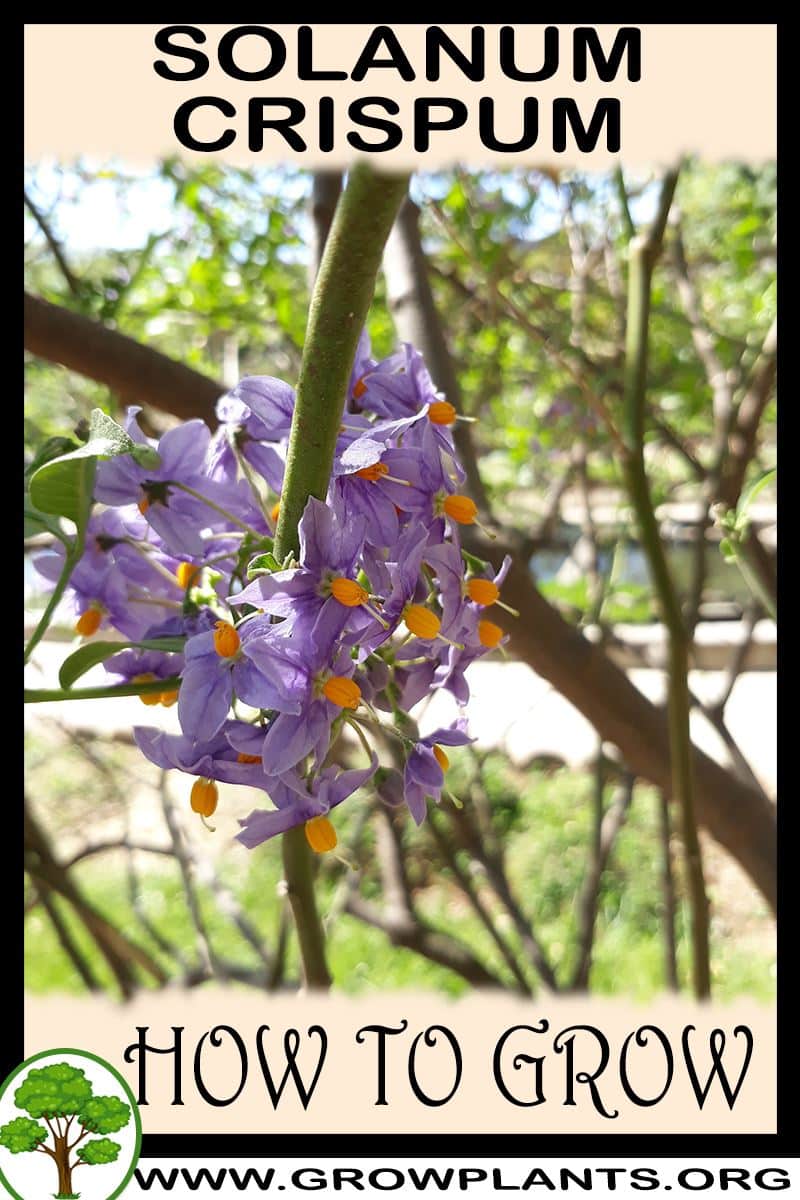
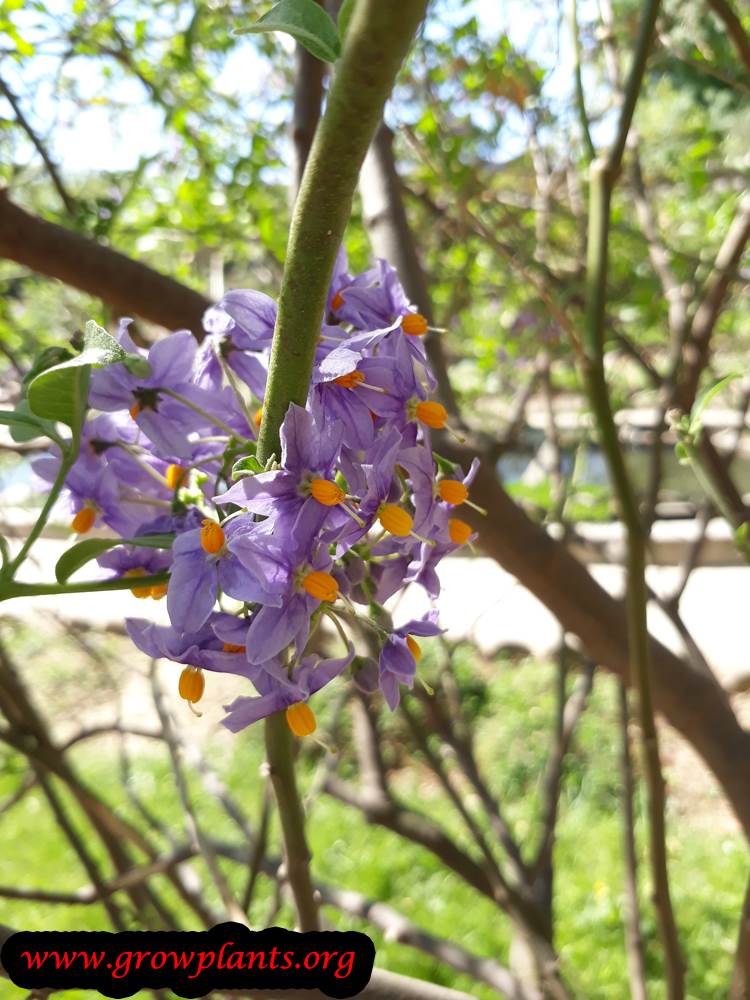
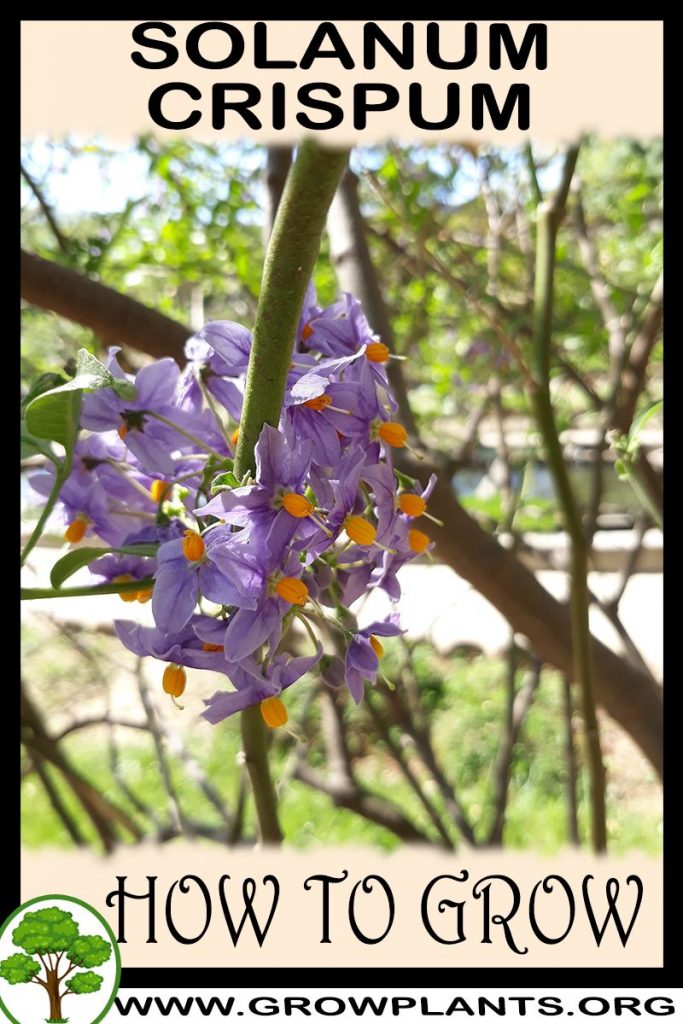
- Flower Appearance: Purple, pink or white five-petalled star flowers with a central cone of yellow anthers, carried in clusters
- Edibility: None – this is a Solanum, and all parts are toxic if eaten
Detailed Blooming Overview
Chilean potato tree is grown above all for its long summer-to-autumn bloom, when it smothers itself in clusters of potato-flower-shaped stars. It is a vigorous, semi-climbing shrub, and a well-placed plant can flower for months against a warm wall.
Flower Characteristics
- Five-petalled star flowers in purple, pink or white, each with a beak of fused yellow anthers.
- Carried in generous clusters over a long season.
- Safety: Every part of this plant is toxic if eaten – enjoy the flowers for show only, and site it away from where children graze.
Bloom Care & Thinning
- Pollination: The flowers hold their pollen in tube-like anthers and are worked by buzzing bees that vibrate it free (buzz pollination).
- Managing the bloom: A tidy-up after the main flush keeps growth in bounds and encourages fresh flowering wood.
Pests, Diseases & Troubleshooting
Overview: The Chilean potato vine (Solanum crispum) is a vigorous, largely trouble-free ornamental scrambler; being a nightshade it can pick up sap-sucking insects and occasional fungal spotting, but it has no serious pest that threatens its life. Keep it in an open, sunny, airy spot with free-draining soil and manage the occasional aphid or mite culturally. Note the fruit is toxic and should not be eaten.
Quick Troubleshooting Overview
| Issue / Pest | Main Symptom | Primary Solution |
|---|---|---|
| Aphids | Curled shoot tips, honeydew on new growth | Rinse, encourage predators, soap |
| Whiteflies | White clouds; honeydew, sooty mould | Yellow traps, soap/neem |
| Spider mites | Stippling and webbing in hot dry sites | Rinse foliage, oil/soap |
| Capsid bugs | Distorted, pitted young leaves | Tolerate minor damage; monitor |
| Leaf spots | Occasional brown spots in humid weather | Airflow, remove leaves, copper if needed |
| Root rot | Wilt in wet, heavy soil | Free drainage, avoid waterlogging |
Common Pests & Management
- Aphids (Aphis spp., Myzus persicae):
- Symptoms: Soft green/black colonies on the fast new growth, causing curl and sticky honeydew.
- Prevention & Control: Blast off with water, encourage ladybirds, lacewings and hoverflies, and spot-treat with insecticidal soap if needed.
- Whiteflies (Trialeurodes vaporariorum):
- Symptoms: White insects rising when the plant is disturbed, with honeydew and sooty mould, mainly in sheltered warm spots.
- Prevention & Control: Yellow sticky traps and insecticidal soap or neem on the undersides.
- Spider mites (Tetranychus urticae):
- Symptoms: Fine stippling and webbing under leaves on hot, dry, sheltered walls.
- Prevention & Control: Rinse foliage, and use insecticidal soap or horticultural oil for outbreaks.
- Capsid (mirid) bugs (Lygocoris pabulinus and relatives):
- Symptoms: Sap-sucking bugs that cause tattered, distorted and pin-holed young leaves.
- Prevention & Control: Usually minor – tolerate light damage, keep the plant vigorous, and encourage general predators.
Diseases & Fungal Issues
- Fungal leaf spots (Cercospora, Alternaria spp.):
- Symptoms: Brown or black spots, sometimes ringed, mostly on older leaves in humid weather.
- Treatment & Management: Remove affected leaves, improve airflow, avoid wetting foliage, and use copper only if spread continues.
- Powdery mildew (Erysiphales):
- Symptoms: White powdery coating on leaves in warm, still, humid conditions.
- Treatment & Management: Improve airflow and light, and treat with sulphur or potassium bicarbonate if needed.
- Root & foot rot (Phytophthora, Pythium):
- Symptoms: Wilting and dieback with dark rotted roots in wet, poorly drained or overwatered soil.
- Treatment & Management: Plant in free-draining soil, avoid waterlogging, and remove severely affected growth.
Growing Difficulties & Abiotic Problems
- Cold & frost damage:
- Cause & Symptoms: Though fairly hardy, hard frost can kill top growth or the whole plant in exposed sites.
- Correction Strategy: Grow against a warm sheltered wall, mulch the base, and expect it to reshoot from the base after cold winters.
- Wind & support failure:
- Cause & Symptoms: The lax, fast stems flop and tear in wind without support.
- Correction Strategy: Tie in to sturdy trellis or wires and prune after flowering to keep it manageable.
- Toxic fruit:
- Cause & Symptoms: The small berries contain solanine-type toxins and must not be eaten.
- Correction Strategy: Site away from where children might pick fruit and handle prunings with care.
What Helps – Products & Tools
For the Chilean potato vine little is usually needed: insecticidal soap and neem/horticultural oil handle the occasional aphids, whiteflies or mites, and sulphur/bicarbonate or copper deal with rare mildew or leaf spot. Its real needs are shelter, support and sharp drainage rather than pesticides.