Plant Profile & Key Characteristics
Overview: Schizanthus pinnatus (butterfly flower / poor man’s orchid) is a bushy herbaceous annual, 20-50 cm (8-20 in), grown for masses of orchid-like, butterfly-shaped blooms. Fast- to moderate-growing, it is used for bedding, borders and containers and as a cut flower across a wide climate range (hardiness zone 2+).
Quick Specifications
| Specification | Attribute |
|---|---|
| Plant Type / Life Cycle | Annual |
| Mature Size | 20-50 cm tall (8-20 in) |
| Growth Rate | Fast to moderate |
| Hardiness | USDA zone 2+ (grown as an annual) |
Growth Form & Structure
- Height & Spread: Reaches 20-50 cm (8-20 in); well suited to containers and the front of borders.
- Growth Habit & Form: Compact, bushy herbaceous annual with soft, fern-like foliage.
Anatomy & Physical Features
- Leaves & Foliage: Green, finely divided pinnate (fern-like) leaves.
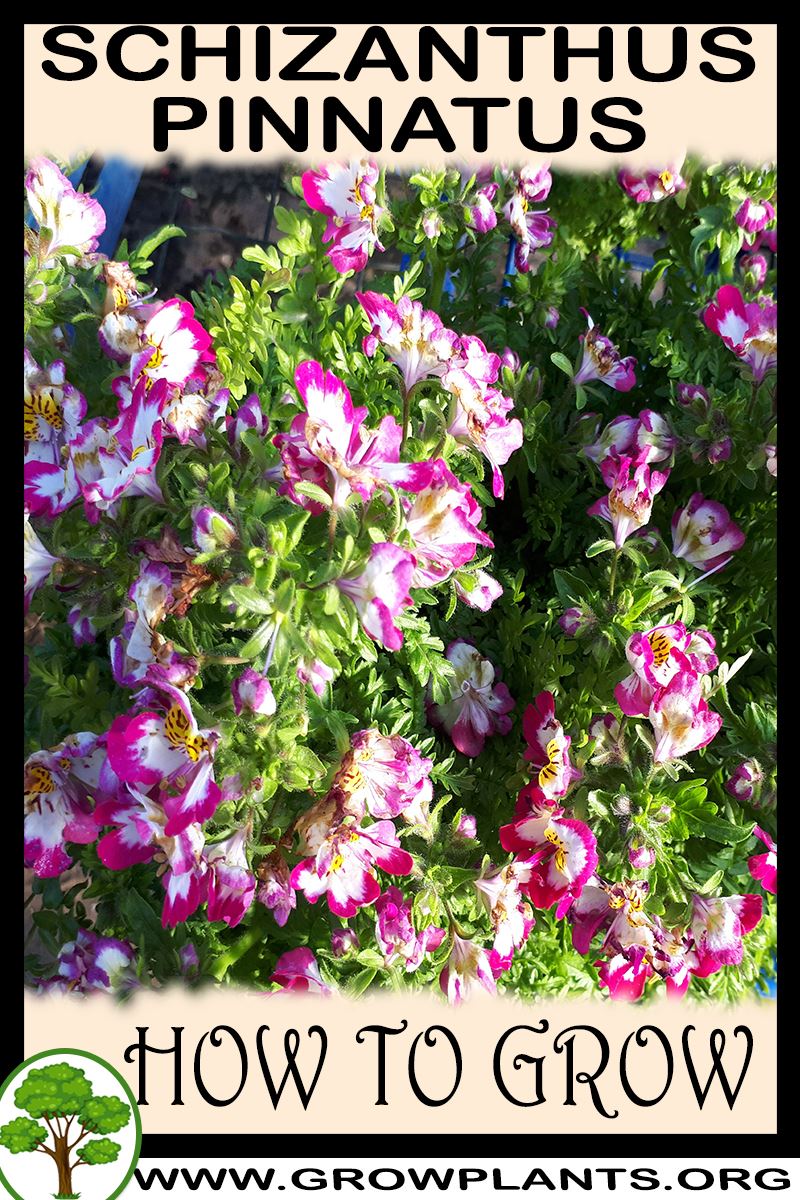
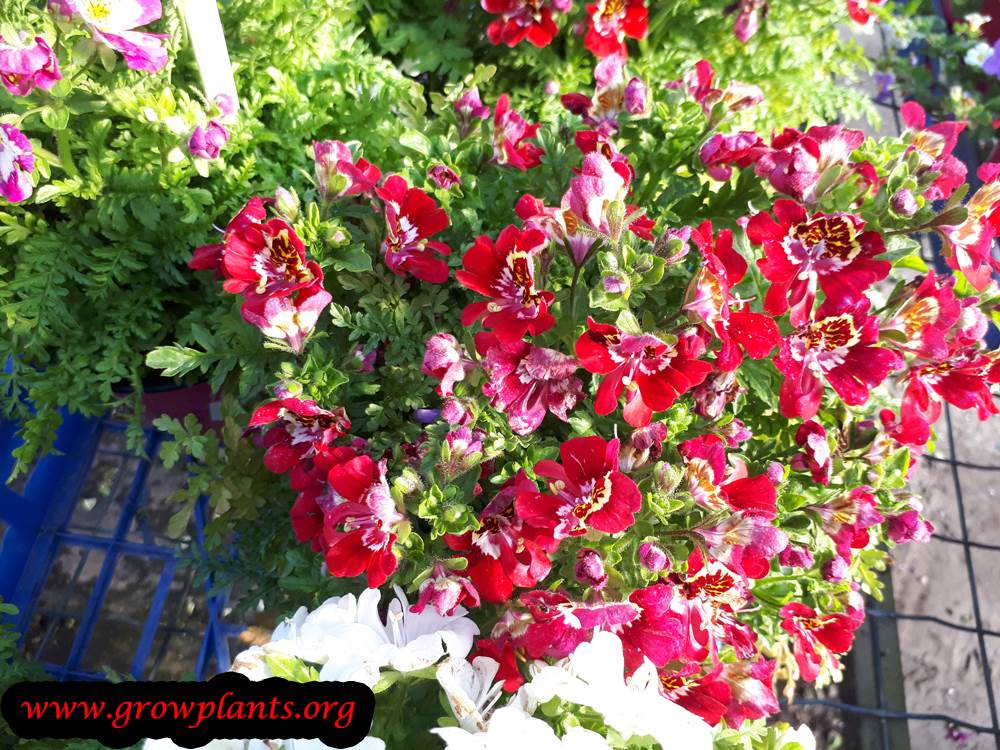
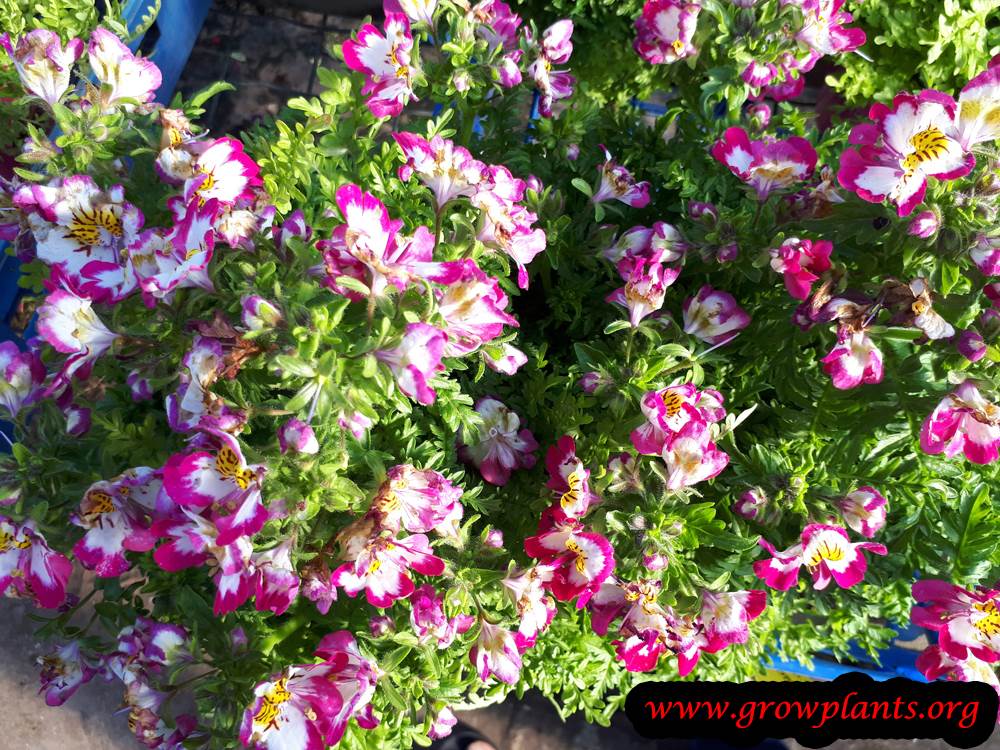
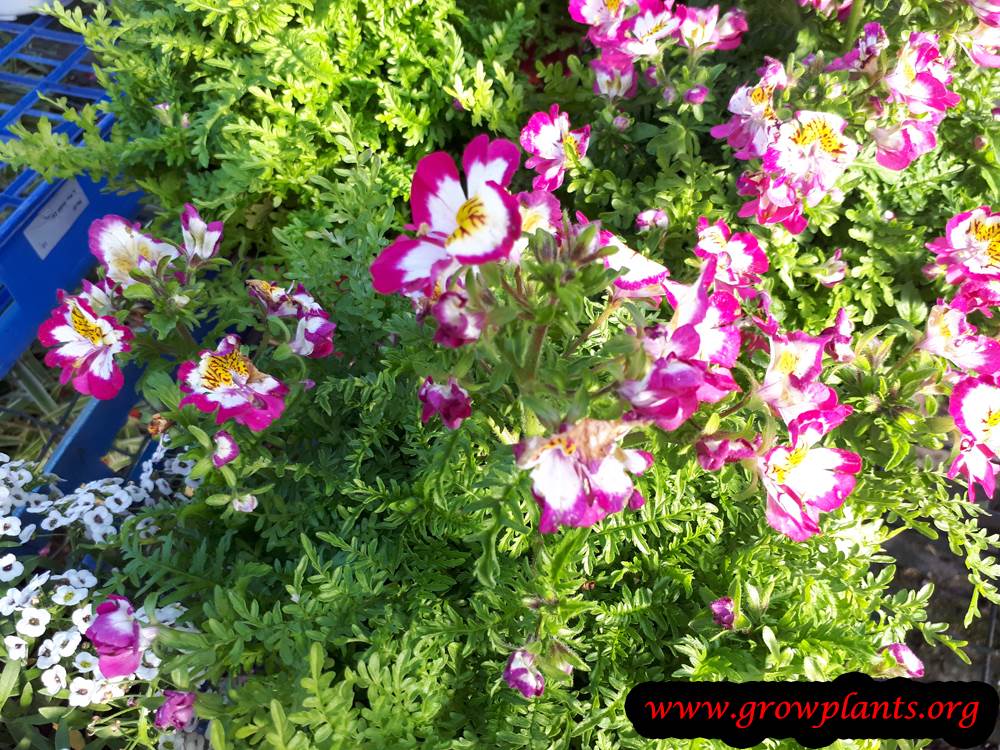
- Flower Characteristics: Multicoloured orchid- or butterfly-shaped flowers (purple, white, pink, yellow, red) with a contrasting spotted, often yellow, throat.
Primary Uses & Landscape Value
- Functional & Ornamental Roles: Ornamental bedding, border and container plant; also an excellent cut flower.
Care Guide: Planting, Soil & Watering
Overview: Schizanthus pinnatus (Schizanthus pinnatus), the butterfly flower or poor man’s orchid, is a cool-season annual grown for its showy, patterned blooms and as a cut flower (hardiness zone 2 and up). It thrives in full sun to part shade in rich, well-draining soil kept evenly moist.
Quick Care Requirements
| Requirement | Ideal Condition |
|---|---|
| Planting Season | Cool season – winter to spring |
| Growth Rate | Moderate to Fast |
| Soil Type | Rich, well-draining |
| Water Need | Moderate; keep evenly moist |
Planting & Establishment
- Best Planting Season: Plant from winter to spring in full sun or light shade, giving it a cool spell to flower well and shelter from both frost and extreme heat.
- How to Plant:
- Hole Preparation: Dig a hole a little wider than the root ball and loosen the surrounding soil so the young plant settles easily.
- Soil Amendments: Enrich the backfill with compost and organic matter while keeping the soil free-draining.
- Planting Depth: Set the plant at the depth it grew previously, keeping the crown level with the soil surface.
- Growth Speed & Expectations: A moderate-to-fast grower reaching about 20-50 cm (8-20 inches), racing to flower in a single cool season as an annual.
Soil, Watering & Drainage Care
- Soil Mix & Drainage Needs: Give rich soil that still drains freely so the roots stay moist but not soggy. It grows well in a container with open drainage holes.
- Watering Schedule & Technique:
- Young / Newly Planted: Keep the soil evenly moist while seedlings and young plants establish.
- Established: Water regularly to keep the soil evenly moist through the growing and flowering period, never letting it dry out.
- Seasonal Adjustments: Water more in warm, bright spells and protect from both frost and drying heat.
Climate, Light & Hardiness
Schizanthus pinnatus (butterfly flower) is grown worldwide as a cool-season annual across Mediterranean, desert, subtropical, temperate, and tropical climates. It favors full sun to half shade and performs best in cool weather, since summer heat cuts its display short.
Quick Climate Specifications
| Climate Zones | Mediterranean, Desert, Subtropical, Temperate, Tropical |
|---|---|
| USDA Hardiness Zones | 2 and warmer (grown as an annual) |
| Frost Tolerance | Low |
| Light Conditions | Full Sun to Half Shade |
Sunlight & Light Exposure
Optimal Light Setup
Full sun to half shade both work; in warmer climates, light shade during the hottest part of the day helps prolong bloom.
Temperature Extremes & Hardiness
USDA Hardiness & Regional Limits
Grown as an annual across USDA zone 2 and warmer - its wide zone range reflects that it is planted fresh each cool season rather than overwintered. It is sown or set out in winter to spring, timed so it flowers before summer heat arrives.
Extreme Heat Tolerance
Heat, not cold, is the main limiting factor: hot summer weather shortens the bloom period and can cause the plant to decline, so it is best treated as a cool-season display.
Frost Sensitivity
Young plants and flowers are damaged by frost; time planting to avoid hard freezes.
Growing in Pots, Balconies & Indoors
Poor man’s orchid is a showy, compact flowering annual – a classic cool-greenhouse and conservatory pot plant. The grower does not class it as a houseplant, but it is one of the few annuals that will flower beautifully on a cool, bright windowsill, as well as in a patio pot.
Quick Details
- Container Size: 5-10 L (1.3-2.6 gal); a group looks best massed in one pot
- Indoor Suitability: Not a deep-room houseplant, but flowers well on a cool, bright sill or in a conservatory
- Best Spot: Full sun to half shade; bright, cool conditions
- Soil & Drainage: Rich but free-draining potting mix kept lightly moist
- Watering in Pots: Keep evenly moist while flowering; never waterlogged
Indoors & On the Windowsill
- Windowsill & conservatory: Though the grower marks it as not a houseplant, it is a traditional pot plant for a cool, bright conservatory or sunny sill – give it maximum light and cool air and it flowers generously.
- Keep it cool: It dislikes hot, stuffy rooms; a cool, airy, bright spot gives the longest, best display.
- A short season: As an annual it flowers itself out, so enjoy the display and replace it – there is nothing to overwinter.
On a Balcony or Patio
- Light & shelter: A bright, sheltered spot with sun but shelter from strong wind and fierce midday heat suits it; it prefers cooler conditions to baking heat.
- Practicalities: Light and easy to move; keep the pot evenly moist while it is in full flower.
Choosing the Pot, Soil & Long-Term Care
- Pot & drainage: A 5-10 L pot with strong drainage holes and never leave it standing in a saucer of water, or the roots rot. Terracotta breathes and dries faster; glazed or plastic holds moisture longer.
- Potting mix: A well-aerated, organic-rich mix – potting compost, or peat/coir with perlite or vermiculite.
- Feeding: Feed regularly with a flowering feed while budding and blooming; potted annuals leach nutrients fast.
- Season’s end: Being an annual, compost it after flowering and sow afresh rather than repotting.
Fertilizing & Feeding
A moderate feeder for an annual grown for a rich flower display: regular light feedings from establishment through bloom support strong stems and abundant flowers, with feeding stopped once the plant finishes flowering.
Quick Fertilizing Specs
| Feeding Level | Moderate feeder |
|---|---|
| Main Nutrient Priority | Balanced feeding with adequate nitrogen while establishing, then support for stem strength and flower production through bloom |
| Best Feeding Period | From seedling establishment through the flowering period |
| Organic Options | Compost or other rich organic matter worked into the planting soil |
| Reduce/Stop Feeding | Stop feeding once flowering finishes and the plant declines |
| Micronutrients | Usually supplied by a complete fertilizer and enriched soil; correct only if a specific deficiency is diagnosed |
Feeding by Growth Stage
Seedling establishment
Help young plants root in and build a sturdy framework of foliage after sowing or transplanting.
| Nutrient direction | A balanced, nitrogen-adequate feeding supports steady early growth as the seedling establishes. |
|---|---|
| Timing | Soon after seedlings are up or transplants are set out, into rich, well-prepared soil. |
| Frequency | A light feeding at establishment, with organic matter mixed into the planting bed. |
| Fertilizer types | A balanced complete fertilizer, Compost or other organic matter worked into the soil |
| Precautions | Keep feeding measured on young seedlings; overfeeding can produce soft, leggy growth prone to flopping. |
Flower production
Support the dense, colorful butterfly-shaped flower display, including plants grown for cutting.
| Nutrient direction | Continue balanced feeding; adequate nitrogen with potassium supports sturdy stems and full flowering rather than heavy phosphorus. |
|---|---|
| Timing | Through the main flowering period. |
| Frequency | Regular light feedings through bloom keep flower production strong, especially for cut-flower stems. |
| Fertilizer types | A balanced complete fertilizer, A potassium-inclusive feed to support stem strength and flower quality |
| Precautions | Avoid heavy nitrogen during bloom, which pushes leafy growth at the expense of flowers and weakens stems. |
Post-bloom decline
Let the annual complete its life cycle without pushing further growth once flowering is done.
| Nutrient direction | None – withhold fertilizer as the plant finishes flowering and declines. |
|---|---|
| Timing | After the main flowering period ends and the plant begins to fade. |
| Frequency | No feeding at this stage. |
| Fertilizer types | No feeding at this stage; the annual is winding down and does not benefit from additional fertilizer. |
| Precautions | Do not fertilize a declining annual; spent plants can be removed once flowering and any seed collection are finished. |
Nutrient Deficiency Signs & Corrections
Older leaves turn pale green to yellow and overall growth and flowering slow.
| Possible causes | low available soil nitrogen, heavy watering leaching nutrients from the bed, soil that was not enriched before planting |
|---|---|
| Appears first on | older, lower leaves |
| What to check | recent feeding history, soil organic matter level, overall vigor and leaf color |
| Possible correction | Apply a balanced, nitrogen-containing fertilizer and work in organic matter, then monitor for improvement. |
Stems become weak and flowering is sparse or short-lived despite otherwise healthy foliage.
| Possible causes | low soil potassium, imbalanced feeding heavy in nitrogen alone, restricted or shallow rooting |
|---|---|
| Appears first on | flowering stems and bloom quality |
| What to check | balance of recent feeding, root health and soil drainage, overall plant vigor |
| Possible correction | Shift to a balanced fertilizer that includes potassium rather than a nitrogen-only feed. |
Leaf edges brown or scorch and growth stalls even with adequate watering.
| Possible causes | fertilizer salt buildup in the root zone, under-watering that concentrates salts, over-fertilizing young seedlings |
|---|---|
| Appears first on | leaf margins and tips |
| What to check | recent fertilizer amounts, watering consistency, drainage around the planting |
| Possible correction | Ease off feeding and water thoroughly to help flush excess salts from the root zone. |
Pruning, Training & Seasonal Maintenance
Schizanthus pinnatus is a delicate, fast-to-medium growing annual grown for its butterfly-shaped flowers as a bedding and cut-flower plant; like most annuals it needs no structural or seasonal pruning framework, only pinching while young to build a bushier, less leggy plant and regular deadheading to keep it flowering for as long as possible within its one growing season.
Quick Pruning & Maintenance Specs
| Pruning Tolerance | Low (soft grooming only) |
| Primary Pruning Window | Any time in the growing season, as needed |
| Typical Frequency | Light, ongoing |
| Main Objective | Bushier branching and prolonged bloom |
| Young Plant Priority | Pinch tips at 2-3 leaf pairs |
| Mature Plant Priority | Deadhead spent flowers |
| Best Tool Type | Fingers or precision snips |
Pruning by Plant Age & Size
Newly Established
Leave seedlings to establish; remove only damaged growth.
Young / Formative
Pinch tips once several leaf pairs are present to encourage branching – this naturally floppy, delicate species benefits particularly from early pinching for a fuller bed or pot display.
Mature / Established
Deadhead continuously through the bloom season; there is no structural training to apply to this annual.
Seasonal Pruning Schedule
Ongoing Sanitary
Remove spent flowers and damaged foliage as needed through its winter-to-summer bloom window; no dormant-season pruning applies, since it is a cool-season annual that finishes after flowering.
Special Growth to Remove
- Spent flower stems – deadhead to extend the display; unlike some related annuals this species is not flagged as invasive, so deadheading here is mainly for bloom prolongation and tidiness. Leaving a few spent flowers to set seed toward season’s end is fine if self-sowing or seed-saving is wanted.
Container & Small-Space Pruning
Commonly grown in pots and hanging baskets – pinch young plants more assertively for a compact, floriferous container specimen.
Tools
Fingers or precision snips – stems are fine and soft.
Tool Hygiene & Disease Risk
Routine – aphids are the reported pest and are not spread via pruning tools.
Cut Placement & Technique
Pinch just above a leaf node; deadhead by removing the spent flower back to the nearest leaf axil or side bud.
Heavy Pruning & Rejuvenation
Not applicable – as an annual, Schizanthus pinnatus cannot be rejuvenated by hard cutting back; replace with new sowings once flowering finishes.
Post-Pruning Care
Light watering only; avoid heavy feeding, since this species prefers rich soil but not overly lush, soft growth.
Common Pruning Mistakes
- Letting the plant get tall and leggy before the first pinch.
- Handling the brittle stems roughly – use snips rather than tearing by hand for anything beyond a soft tip pinch, since stems snap easily.
When NOT to Prune
Avoid pinching or deadheading while transplanting or hardening off young seedlings; avoid heavy-handed pruning in hot conditions, when the delicate stems are more brittle.
Recommended Tools (by task)
- precision_snips – the only tool needed, for pinching tips and deadheading this soft-stemmed annual.
Propagation Guide
Schizanthus pinnatus is grown from seed; as a true annual, vegetative propagation is neither used nor needed to keep it true to type. It germinates reasonably well from seed, though the fine roots dislike disturbance, so propagation is easy when sown where the seedlings will grow or in cell trays and transplanted young.
Quick Propagation Specs
| Best Propagation Method | Seed |
| Propagation Difficulty | Easy |
| Seed True-to-Type | Usually true-to-type; colours can vary in mixed-colour seed strains |
| Best Propagation Season | Winter to spring |
Growing from Seed
Sowing Season
Winter to spring, matching this plant’s planting season.
Sowing Depth & Orientation
Sow shallowly, barely covering the fine seed, as is typical practice for this genus (not detailed on the site).
Germination Conditions
Cool, evenly moist, well-drained, humus-rich soil suits germination (the site notes this plant overall prefers rich soil).
Germination Time
Germination is generally moderate, often taking a few weeks under cool, moist conditions; exact timing is not documented on the site.
Seedling Care
Seedlings resent root disturbance, so sow in situ or in cell trays/small pots and transplant while still small to avoid setback; keep the mix evenly moist and grow on in full sun to half shade.
Bloom & Flower Guide
Quick Details
- Bloom Season: Winter, spring and into summer where conditions stay cool
- Time to First Bloom: In its first season, as an annual grown from seed
- Flower Appearance: Orchid-like butterfly flowers in purple, white, pink, yellow or red, patterned with dots and a yellow throat
- Edibility: Ornamental / none – a member of the nightshade family, grown for looks, not for eating
Detailed Blooming Overview
Butterfly flower earns its nicknames – poor man’s orchid and fringeflower – from its exquisite, orchid-like blooms. Each flower is intricately marked, usually with a yellow eye and a scatter of fine spots, and comes in purple, white, pink, yellow, red or a blend. It flowers best in the cool part of the year and makes a fine cut flower, but it does best where summers are not too hot.
Flower Characteristics
- Butterfly- or orchid-shaped flowers with delicate, dissected petals.
- Multicoloured – purple, white, pink, yellow and red – with a patterned, often yellow, centre.
- Carried in generous clusters above ferny, pinnate foliage.
Bloom Care & Thinning
- Managing the bloom: Pinch young plants for bushiness and deadhead spent flowers to extend the display.
- For cutting: Harvest stems as the first flowers open for indoor arrangements.
Pests, Diseases & Troubleshooting
Overview: The poor man’s orchid is a soft-stemmed, cool-season annual in the nightshade family, and like its relatives it is highly attractive to aphids-its chief pest and a vector of viruses-along with whitefly and spider mites, while damp, crowded conditions bring on botrytis and root rot. Grow it cool, airy and evenly moist, keep aphids in check, and it flowers freely with little trouble.
Quick Troubleshooting Overview
| Issue / Pest | Main Symptom | Primary Solution |
|---|---|---|
| Aphids | Colonies on shoot tips and flower buds, distortion, honeydew, spread of virus | Water blast, insecticidal soap, remove badly infested plants |
| Whitefly | Clouds of tiny white flies on leaf undersides, yellowing, honeydew | Yellow sticky traps, insecticidal soap |
| Spider mites | Stippling and webbing in hot, dry conditions | Raise humidity, rinse, neem or soap |
| Botrytis (grey mould) | Fuzzy grey mould on flowers, buds and stems in cool damp air | Improve airflow, remove affected parts, avoid wet foliage |
| Damping-off / root rot | Seedlings collapse at soil line; older plants wilt in wet soil | Sow thinly in clean mix, water carefully, sharp drainage |
Common Pests & Management
- Aphids (Myzus persicae, Aphis spp.):
- Symptoms: The main pest: dense clusters of soft green, pink or black insects on the succulent new growth, flower stalks and buds, curling the leaves, fouling them with honeydew and, most seriously, spreading mosaic and other viruses between plants.
- Prevention & Control: Inspect often and act early-dislodge colonies with water, squash small ones, and encourage ladybirds and hoverflies. Spray insecticidal soap or neem for persistent infestations and rogue out any plant showing virus symptoms, since there is no cure.
- Whitefly (Trialeurodes vaporariorum, Bemisia tabaci):
- Symptoms: Tiny white moth-like flies that rise in a cloud when the plant is disturbed; their nymphs suck sap on the undersides, yellowing leaves and leaving sticky honeydew, and they too can carry viruses.
- Prevention & Control: Hang yellow sticky traps and hose off nymphs. Insecticidal soap or neem to the undersides keeps numbers down; Encarsia formosa parasitoids give good control under glass.
- Spider mites (Tetranychus urticae):
- Symptoms: In hot, dry conditions the leaves become dull and finely stippled and webbing appears on the undersides and growing tips.
- Prevention & Control: Raise humidity and rinse the foliage, then spray insecticidal soap or neem to the undersides every few days until the mites are gone.
- Caterpillars (various Noctuidae / loopers):
- Symptoms: Ragged holes chewed in leaves and flowers, with dark frass pellets left behind by night-feeding caterpillars.
- Prevention & Control: Hand-pick after dark and clear plant debris where they shelter. For heavier attacks a targeted Bacillus thuringiensis (Bt) spray controls the larvae without harming beneficial insects.
Diseases & Fungal Issues
- Botrytis / grey mould (Botrytis cinerea):
- Symptoms: Fuzzy grey-brown mould on flowers, buds, leaves and stems in the cool, humid, crowded conditions this annual enjoys; affected tissue rots and collapses, and dense flower trusses are especially vulnerable.
- Treatment & Management: Space plants for airflow, avoid wetting the foliage, and promptly remove faded flowers and mouldy tissue. Grow cool but not stagnant; a biological or copper-based fungicide helps only if humidity is reduced too.
- Damping-off & root rot (Pythium, Rhizoctonia, Phytophthora spp.):
- Symptoms: Seedlings topple with a pinched, blackened stem at soil level; established plants yellow, wilt and rot at the roots in cold, wet, poorly drained compost.
- Treatment & Management: Sow thinly in fresh, sterile, free-draining mix, water from below and avoid overwatering. Ensure good drainage and don’t sow into cold, soggy soil.
- Powdery mildew (Erysiphe / Golovinomyces spp.):
- Symptoms: A white powdery coating on leaves and stems in warm days with humid, still nights, sometimes distorting growth late in the season.
- Treatment & Management: Improve spacing and airflow, remove affected leaves, and treat if needed with a potassium-bicarbonate or sulphur spray.
- Mosaic & spotted-wilt viruses (CMV, TSWV):
- Symptoms: Mottled yellow-and-green leaves, ring spots, distortion and stunting spread by aphids and thrips; there is no cure and infected plants decline.
- Treatment & Management: Control the aphid and thrips vectors, keep the area weed-free, handle plants with clean hands, and remove and destroy any plant showing symptoms to protect the rest.
Growing Difficulties & Abiotic Problems
- Legginess & flopping:
- Cause & Symptoms: As a soft cool-season annual it stretches and grows weak, floppy stems in low light, warmth or overly rich soil, and tall plants splay open once in flower.
- Correction Strategy: Grow it in good light and cooler conditions, pinch young plants to promote bushiness, and provide discreet support for the flowering stems; avoid over-feeding with nitrogen.
- Heat intolerance & short life:
- Cause & Symptoms: This is a cool-season plant that quickly tires, stops flowering and dies back in hot weather-natural for the species rather than a disease.
- Correction Strategy: Grow it in the cooler part of the year and in bright but not baking positions; accept that it is a fleeting annual and replace or resow rather than trying to carry it through heat.
- Overwatering & waterlogging:
- Cause & Symptoms: Kept too wet in poorly drained soil the roots rot and the plant yellows and wilts despite moist compost.
- Correction Strategy: Use free-draining soil, water evenly to keep it moist but never soggy, and ensure containers drain freely.
What Helps – Products & Tools
The key toolkit for this annual is aimed at aphids and damp-loving moulds: insecticidal soap and neem oil for aphids, whitefly and mites, yellow sticky traps for monitoring, and Bacillus thuringiensis (Bt) for caterpillars. Against disease, rely first on airflow and sanitation, with a potassium-bicarbonate or sulphur spray for mildew and a copper or biological fungicide for botrytis. Clean, free-draining seed compost prevents damping-off.