Plant Profile & Key Characteristics
Overview: Creeping saxifrage (strawberry begonia) – a low evergreen perennial 10-30 cm (4-12 in) tall grown for its rounded, often variegated leaves. It spreads by thread-like runners and is popular both as a groundcover and a houseplant.
Quick Specifications
| Specification | Attribute |
|---|---|
| Plant Type / Life Cycle | Evergreen perennial |
| Foliage Type | Evergreen |
| Mature Size | 10-30 cm (4-12 in) tall |
| Growth Rate | Moderate |
| Root System | Stoloniferous – spreads by thin runners (stolons) that root down as new plantlets |
| Hardiness | USDA zones 7-10; grown as a houseplant in cooler climates |
Growth Form & Structure
- Height & Spread: A low rosette 10-30 cm (4-12 in) tall that spreads by runners; ideal in a container or hanging basket where the runners can trail.
- Growth Habit & Form: Rosette-forming evergreen perennial that sends out slender runners tipped with new plantlets, quickly forming a colony.
- Lifespan & Maturity: A perennial that renews and spreads continually via its runners.
Anatomy & Physical Features
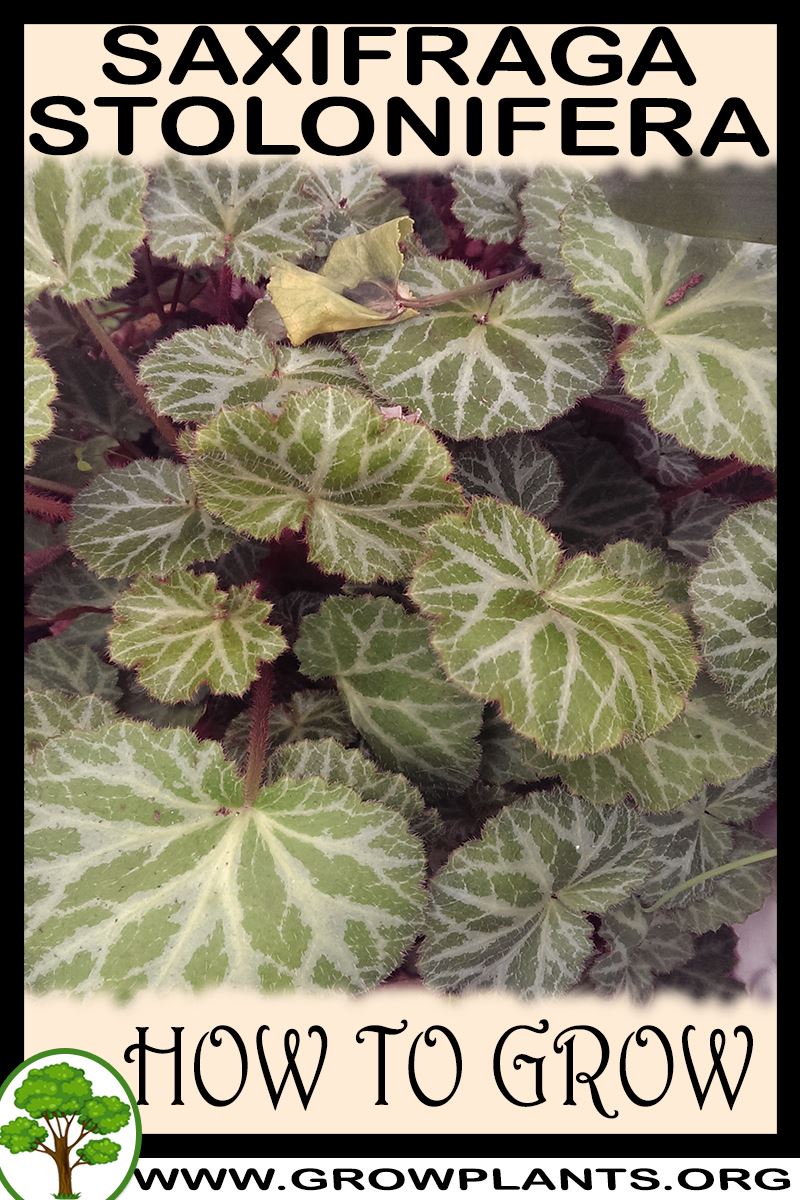
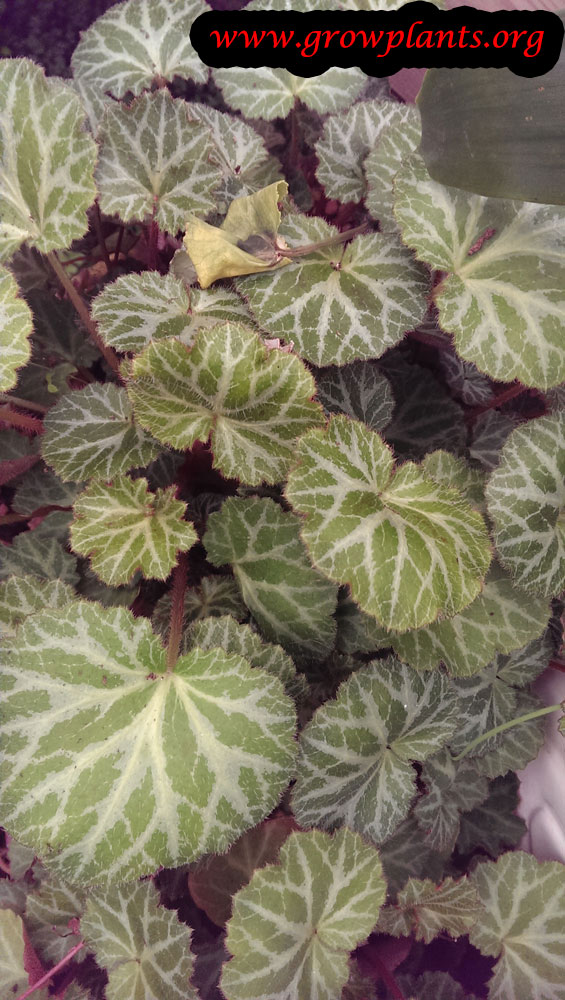
- Leaves & Foliage: Rounded, lobed leaves in green or variegated with purple, white or red markings, often silver-veined and reddish beneath.
- Flower Characteristics: Small white flowers with two long lower petals and pink-and-red upper markings, in airy sprays on tall stems.
Primary Uses & Landscape Value
- Functional & Ornamental Roles: Shade groundcover, container and hanging-basket plant, and a popular easy houseplant that propagates itself from its runners.
Care Guide: Planting, Soil & Watering
Overview: Saxifraga stolonifera (Saxifraga stolonifera), creeping saxifrage or strawberry begonia, is an evergreen groundcover for temperate and subtropical gardens, or as a houseplant (hardiness zones 7-10). It thrives in part to full shade in rich, well-draining soil and spreads by wiry runners.
Quick Care Requirements
| Requirement | Ideal Condition |
|---|---|
| Planting Season | Spring to summer |
| Growth Rate | Moderate |
| Soil Type | Rich, well-draining |
| Water Need | Moderate; keep lightly moist, never waterlogged |
Planting & Establishment
- Best Planting Season: Plant in spring to summer in a shaded position, or pot up the plantlets that form on its runners.
- How to Plant:
- Hole Preparation: Dig a hole a little wider than the root ball and loosen the surrounding soil so it settles easily.
- Soil Amendments: Enrich the soil with compost or leaf mould while keeping it free-draining.
- Planting Depth: Set the crown level with the surface and avoid burying it, which invites rot.
- Growth Speed & Expectations: A moderate grower reaching about 10-30 cm (4-12 inches), sending out runners with baby plantlets that root nearby.
Soil, Watering & Drainage Care
- Soil Mix & Drainage Needs: Give rich, humus-based soil that drains freely. It grows well in a container and makes an easy, shade-tolerant houseplant.
- Watering Schedule & Technique:
- Young / Newly Planted: Keep the soil lightly moist while young plants and rooted plantlets establish.
- Established: Water moderately once established, never letting it dry out fully nor stand waterlogged.
- Seasonal Adjustments: Water a little more in summer warmth and reduce over the cooler winter months.
Climate, Light & Hardiness
Creeping saxifrage or strawberry begonia (Saxifraga stolonifera) is an evergreen, stolon-spreading perennial for temperate and subtropical climates - and a popular houseplant - growing best in half to full shade. It is moderately cold-hardy outdoors - the site data gives roughly USDA zones 7–10 - and indoors it is comfortable in ordinary shaded room conditions.
Quick Climate Specifications
| Climate Zones | Temperate and subtropical (also grown indoors) |
|---|---|
| USDA Hardiness Zones | Approximately zones 7–10 outdoors (site data) |
| Optimal Temp Range | Mild, shaded conditions; comfortable at normal indoor temperatures |
| Cold Damage Begins | Foliage is damaged by hard frost; keep it above freezing when grown as a houseplant |
| Approx. Survival Minimum | Outdoors hardy to about zone 7 with shelter; not reliably hardy in colder zones |
| Frost Tolerance | Low–Moderate |
| Light Conditions | Half shade to full shade |
| Wind Tolerance | Low–Moderate |
Sunlight & Light Exposure
Optimal Light Setup
A true shade plant: half to full shade with bright, indirect light gives the best leaf colour and markings. Outdoors, avoid direct midday sun; indoors, a bright but sunless window (north or east aspect) suits it well.
Shade & Heat Management
Direct hot sun scorches the soft, patterned leaves, so shade and steady moisture are essential in warm, bright conditions.
Best Exposure / Orientation
A cool, shaded, evenly moist spot - ground cover under shrubs, a shady wall, or a north/east-facing window indoors - is ideal.
Temperature Extremes & Hardiness
USDA Hardiness & Regional Limits
The site data gives roughly zones 7 to 10 outdoors, describing the outdoor cold limit for anyone growing it in the garden in mild climates. In colder regions it is grown as a houseplant instead.
Cold Damage & Winter Protection
Hard frost damages the evergreen foliage; near its cold limit a sheltered, shaded, mulched position helps it through winter. As a houseplant, keep it out of cold draughts and off freezing windowsills.
Frost Sensitivity
The soft evergreen leaves are frost-sensitive; it is best kept above freezing (0 °C / 32 °F).
Extreme Heat Tolerance
Low–moderate; it prefers cool shade and dislikes hot, dry, bright exposure.
Wind, Humidity & Microclimate
Humidity Preferences
Prefers moderate to high humidity and cool, moist air; dry indoor air can brown the leaf edges.
Dry-Air Tolerance
Low–moderate; in dry rooms it appreciates a more humid spot, such as a shaded bathroom or a grouped planting.
Wind Tolerance
Low–moderate; the delicate leaves are easily tattered and dried by wind, so a sheltered position is best.
Rainfall & Seasonal Moisture
Suited to climates with regular moisture and cool, shaded, damp conditions; it dislikes prolonged drought.
Microclimate Recommendations
A cool, shaded, sheltered, humid pocket outdoors - or a bright, sunless, draught-free spot indoors - keeps the foliage at its best.
Growing in Pots, Balconies & Indoors
Strawberry begonia (creeping saxifrage) is a classic, easy houseplant – the grower rates it yes for indoors. It sends out strawberry-like runners with baby plantlets, loves shade, and looks wonderful trailing from a pot or hanging basket indoors or on a shaded balcony.
Quick Details
- Container Size: A small to medium pot or hanging basket suits its 10-30 cm (4-12 in) rosettes and runners
- Indoor Suitability: Yes – a genuine, easy houseplant that thrives in bright, indirect light
- Best Spot: Half to full shade
- Soil & Drainage: Aerated, organic mix, evenly moist but free-draining
- Watering in Pots: Average – keep lightly moist, not soggy
Indoors & On the Windowsill
- A genuine houseplant: The grower marks it yes for indoors. Give it bright, indirect light; it’s forgiving of shadier corners.
- Windowsill growing: An east or north sill is ideal; its trailing plantlets are easy to root as new plants.
- Overwintering: Happy indoors year-round; keep it away from cold, drafty glass in winter.
On a Balcony or Patio
- Light & wind: A shaded balcony corner suits it; the trailing runners spill beautifully from baskets. Protect from strong sun and drying wind.
Choosing the Pot, Soil & Long-Term Care
- Pot & drainage: Use a pot with strong drainage holes and skip a standing-water saucer, which invites root rot; terracotta breathes and dries faster, while glazed or plastic holds moisture longer.
- Potting mix: A light, aerated organic mix – peat or coir with perlite or vermiculite – gives the roots both moisture and air.
- Feeding: Potted plants use up their feed faster because each watering leaches nutrients away, so feed a little more often than plants in open ground.
- Repotting: Refresh the top of the mix and pot up every couple of years; a light root and top prune at repotting keeps established plants vigorous.
Fertilizing & Feeding
A modest feeder: light balanced feedings from spring through the flowering season support both foliage and bloom, with feeding held off through the cool-season rest; balanced nutrition, not high phosphorus, drives flowering.
Quick Fertilizing Specs
| Feeding Level | Light to moderate feeder |
|---|---|
| Main Nutrient Priority | Balanced feeding with adequate nitrogen to support growth and bloom |
| Best Feeding Period | Spring through the warm flowering season |
| Organic Options | Compost, humus, and other organic matter |
| Reduce/Stop Feeding | Ease off and hold through cool-season rest |
| Micronutrients | Usually met by a complete fertilizer and organic matter; correct only diagnosed issues |
| Soil pH | Slightly acidic to near neutral |
Feeding by Growth Stage
Spring flush of growth
Fuel fresh growth as the plant wakes up for the season.
| Nutrient direction | A balanced complete fertilizer to support healthy stems and leaves. |
|---|---|
| Timing | As growth resumes in spring or the start of the warm season. |
| Frequency | A light feeding at the start of active growth. |
| Fertilizer types | A balanced complete fertilizer, Compost and organic matter worked in |
| Precautions | Keep feeding moderate; lush overfed growth flowers poorly and flops. |
Bloom
Carry the plant through flowering with steady, balanced nutrition.
| Nutrient direction | A balanced complete fertilizer; adequate nitrogen and balanced nutrition drive bloom. |
|---|---|
| Timing | As buds form and through the flowering period. |
| Frequency | Light feedings that sustain flowering. |
| Fertilizer types | A balanced complete fertilizer |
| Precautions | Skip high-phosphorus bloom boosters; balanced feeding with adequate nitrogen drives flowering. |
Cool-season rest or dormancy
Let the plant coast through its cool-season rest without pushing growth.
| Nutrient direction | None – withhold fertilizer while the plant is not in active growth. |
|---|---|
| Timing | During cool weather or dormancy when growth has slowed or stopped. |
| Frequency | No feeding at this stage. |
| Fertilizer types | No feeding at this stage; do not fertilize until active growth resumes. |
| Precautions | Do not fertilize now; feeding a plant that is not actively growing wastes nutrients and can cause salt buildup. |
Nutrient Deficiency Signs & Corrections
Older, lower leaves fade to pale green or uniform yellow and overall growth slows.
| Possible causes | low available soil nitrogen, nitrogen leaching from heavy watering or rain, thin, low-organic-matter soil |
|---|---|
| Appears first on | older, lower leaves |
| What to check | recent feeding history, soil organic matter, watering and drainage |
| Possible correction | Apply a nitrogen-containing complete fertilizer and build soil organic matter, then water evenly. |
Youngest leaves yellow between the veins while the veins themselves stay green.
| Possible causes | low iron availability in alkaline soil, waterlogged or poorly drained roots, high soil alkalinity tying up iron |
|---|---|
| Appears first on | new, young leaves |
| What to check | soil alkalinity and drainage, whether symptoms start on the newest leaves, watering habits |
| Possible correction | Correct soil alkalinity and drainage and, if needed, apply a chelated iron product per its label. |
Leaf margins brown or scorch and growth stalls despite adequate watering.
| Possible causes | fertilizer salt buildup in the root zone, under-watering that concentrates salts, excessive or too-frequent feeding |
|---|---|
| Appears first on | leaf margins and tips |
| What to check | recent fertilizer amounts, watering consistency, drainage, especially in containers |
| Possible correction | Ease off feeding, water thoroughly to flush accumulated salts, then return to lighter feeding. |
Pruning, Training & Seasonal Maintenance
Saxifraga stolonifera is a low rosette-forming perennial that spreads by thin red runners (stolons) tipped with plantlets – the trait behind its common names. It needs grooming, not structural pruning: the main tasks are removing dead leaves and spent flower stems and deciding how many runners to keep. Winter is the safest general tidy-up window, with spent bloom stalks cut out as soon as flowering finishes.
Quick Pruning & Maintenance Specs
| Pruning Tolerance | Low |
| Primary Pruning Window | Winter (general tidy) |
| Secondary Maintenance Window | Spring/Summer, right after flowering |
| Typical Frequency | Ongoing light grooming, a few times a year |
| Main Objective | Remove dead leaves and spent bloom stems; manage runners |
| Young Plant Priority | Let rosettes establish before removing any runners |
| Mature Plant Priority | Deadhead, remove tatty leaves, thin or redirect runners |
| Best Tool Type | Precision snips |
| Avoid Heavy Pruning During | Active flowering |
Pruning by Plant Age & Size
Newly Established
Leave a newly potted or planted rosette alone apart from removing any damaged leaves – it needs its full leaf area to root in and start sending out runners.
Young / Formative
No structural training – this is a runner-forming groundcover/houseplant, not one grown on a framework. The only early decision is whether to let runners root freely (for spread/propagation) or trim them for a tighter clump.
Mature / Established
Ongoing grooming: strip dead or discoloured leaves, cut out flower stalks once bloom is over, and manage the number of trailing runners.
Seasonal Pruning Schedule
| Stage | Objective | Remove | Do Not Remove | Response / Impact |
| Post-Flowering (Spring/Summer) | Tidy after the airy bloom stalks fade | Spent flower stems, cut at the base | Runners and healthy rosette leaves | No loss of next bloom – new flower stalks come from fresh rosette growth |
| Dormant/Winter | General clean-up | Dead leaves and old bloom-stem remnants | Green rosette leaves and any runners being kept for fill-in or propagation | Neater plant, less rot risk over winter |
Special Growth to Remove
- Runners/stolons – retain some to fill a hanging basket or pot, or to propagate new plants from the plantlets at their tips; trim off the rest at the base if a tighter, non-spreading clump is wanted, especially in a small container.
- Spent flower stems – the tall, thin bloom stalks are cut right out once flowering finishes; they don’t rebloom.
- Dead or discoloured leaves – pulled or snipped off as part of routine grooming.
Container & Small-Space Pruning
This species is widely grown as a houseplant and hanging-basket subject. In hanging baskets the runners are usually left to cascade for effect; in a small pot on a shelf they are trimmed back harder and more often to stop the plant swamping its neighbours. Because it tolerates full shade, indoor light is rarely the limiting factor – grooming frequency is what controls its size.
Tools
Precision snips – every cut is on thin runners, soft flower stalks or individual leaves.
Tool Hygiene & Disease Risk
Routine: no significant transmissible disease is flagged for this species; clean snips are sufficient, mainly to avoid introducing rot into a plant that prefers evenly moist (not soggy) soil.
Cut Placement & Technique
Cut runners close to the parent rosette (or at the rooted node, if separating a plantlet for propagation), and cut flower stalks down at their base rather than partway, so no bare stub is left standing.
Heavy Pruning & Rejuvenation
Not applicable in the woody-rejuvenation sense. If the centre of an old clump thins out, the fix is to root a few runner plantlets and start fresh divisions rather than to cut the parent back hard.
Post-Pruning Care
No extra feeding is needed for routine grooming. After trimming, keep the crown from sitting in standing water, especially in containers, since the species wants moist but well-drained, rich soil.
Common Pruning Mistakes
- Removing every runner, which discards the easiest way to propagate this plant.
- Leaving spent bloom stalks to rot in the crown of a houseplant specimen.
- Letting a container-grown clump go completely untrimmed until runners smother nearby plants.
When NOT to Prune
Avoid cutting the flower stalks while still in bloom if a flowering display is wanted; otherwise there is no strong seasonal restriction given this plant’s tolerance of shade and steady moisture.
Recommended Tools (by task)
- Deadheading, leaf grooming, runner trimming (all ages): precision_snips – the only material removed is thin runners, soft flower stalks and individual leaves.
Propagation Guide
Creeping saxifrage propagates itself: it sends out slender red stolons (runners) tipped with plantlets, and rooting these is by far the easiest method. Clumps can also be divided, and seed is possible but rarely needed. Very easy, and variegated forms keep their colour from plantlets and division but not from seed.
Quick Propagation Specs
| Best Propagation Method | Plantlets on stolons (runners) |
| Alternative Methods | Division; seed |
| Propagation Difficulty | Easy |
| Seed True-to-Type | Species comes fairly true; variegated cultivars do not come true from seed |
| Vegetative True-to-Type | Yes |
| Best Propagation Season | Warm growing season, spring to summer |
Runners & Stolons
Pin a stolon’s plantlet onto a small pot of moist mix while it is still attached to the parent, or stand a plantlet in water; once it has roots of its own, sever the connecting stolon. Because the plantlets are ready-formed miniatures, they establish quickly and reproduce variegation faithfully.
Division, Offsets, Pups & Suckers
Lift a congested clump in the growing season and split it into rooted crowns; replant at the same depth in moist, rich, free-draining soil.
Growing from Seed
Seed Handling & Sowing
Rarely necessary. Surface-sow the very fine seed on moist mix in the light and keep humid; germination is slow, and seedlings of variegated forms will mostly revert to plain green.
Bloom & Flower Guide
Quick Details
- Bloom Season: Late spring into summer
- Flower Appearance: Small, asymmetric white flowers – the two lower petals long and white, the upper petals shorter with pink and red markings and a yellow center – carried in airy sprays on pink or green stems
- Edibility: Grown as an ornamental groundcover; the flowers are not eaten
Detailed Blooming Overview
Creeping saxifrage (Saxifraga stolonifera) throws up wiry flowering stems well above its mound of rounded leaves, so the delicate blooms seem to float over the foliage. The distinctive lopsided flowers, sometimes likened to tiny orchids or “little butterflies,” open over a long spell through late spring and summer.
Flower Characteristics
- Five unequal petals: two long white lower petals and three shorter upper petals spotted pink and red, with a yellow eye.
- Flowers held in a loose, open spray (inflorescence) on slender pink or green stems.
Bloom Care & Thinning
- Managing the bloom: Trim spent flower stems back to the rosette once the display fades to keep the plant tidy.
- Spreading: Between flowering the plant runs outward on thread-like stolons, so it fills in as a groundcover.
Fruit & Uses
Creeping saxifrage is grown here as an ornamental groundcover and houseplant, but its young leaves have a marginal culinary use: in East Asian (notably Japanese) cooking the young leaves are eaten, usually battered and deep-fried as tempura rather than raw. Treat this as a minor, region-specific edible use and cook the leaves before eating.
Quick Edible Specs
| Edible Parts | Young leaves (marginal use) |
|---|---|
| Main Use(s) | Culinary – young leaves cooked (e.g. tempura); traditionally used medicinally |
| Eaten Raw or Cooked | Best cooked |
| Preparation Required | Cook – batter and fry, or blanch; use only young leaves |
| Harvest Season | Pick young leaves during active growth (spring) |
| Safety/Toxicity Caveat | not a mainstream vegetable; identify the plant with certainty, cook before eating, and eat only small amounts |
Leaves & Greens
The young, tender, round-lobed leaves are the part used; older leaves are tougher and hairy and are not used. Pick small young leaves during active growth. In Japanese home cooking they are dipped in batter and deep-fried as tempura, and are generally cooked rather than eaten raw.
Preparation, Uses & Safety
Cook the young leaves before eating (tempura or a brief blanch). Because this is a marginal, region-specific edible rather than a common vegetable, be certain of identification and start with small amounts. The plant has also been used traditionally in folk medicine – no health claims are made here. Do not eat the leaves raw or in quantity.
Pests, Diseases & Troubleshooting
Overview: Strawberry saxifrage (strawberry begonia) is an easy, spreading shade and houseplant whose problems are those of a soft-leaved plant grown cool and shady: vine weevil grubs in pots, spider mites in hot dry air, aphids, mealybugs and slugs, plus crown rot if it is kept too wet. Keep it cool, evenly moist and out of hot sun, and watch pots for weevil.
Quick Troubleshooting Overview
| Issue / Pest | Main Symptom | Primary Solution |
|---|---|---|
| Vine weevil | Sudden wilt; potted plant lifts, no roots | Nematode drench, repot clean, night patrol |
| Red spider mite | Stippled, bronzed, dry cushions in heat | Cool shade, even moisture, oil/soap |
| Crown / root rot | Browning, rotting centre in wet soil | Sharp drainage, grit collar, airflow |
| Slugs & snails | Grazed rosettes; hollowed cushions | Grit barriers, traps, evening patrols |
| Aphids | Sticky, distorted new rosettes | Water jet, insecticidal soap |
| Heat / sun scorch | Brown-edged, dried-out foliage | Cool part-shade, even moisture |
Common Pests & Management
- Vine weevil (Otiorhynchus sulcatus):
- Symptoms: Adults notch the leaf edges at night, but the real damage is from the white, C-shaped larvae eating the roots – potted saxifrages suddenly wilt and lift away with no roots, often the biggest killer of alpine and container saxifrages.
- Prevention & Control: Inspect and squash adults at night, and check compost of new plants. Drench pots with biological nematodes (Steinernema kraussei/Heterorhabditis) when the soil is warm and moist, repeat as needed, and re-pot survivors into clean compost after washing the roots. Encourage ground beetles and birds outdoors.
- Aphids (Aphis / Myzus spp.):
- Symptoms: Green or black colonies on soft new rosettes and flower stems; sticky honeydew and distorted growth.
- Prevention & Control: Rinse off with water and encourage ladybirds and hoverflies; treat persistent colonies with insecticidal soap, sparing pollinators.
- Two-spotted (red) spider mite (Tetranychus urticae):
- Symptoms: Fine stippling, bronzing and a dry, faded look with faint webbing, especially on plants kept too hot and dry – a particular problem for mossy saxifrages in summer heat.
- Prevention & Control: Keep the plant cool, shaded and evenly moist, hose the foliage in hot spells, and treat persistent mites with insecticidal soap or horticultural oil; the real fix is avoiding heat and drought stress.
- Slugs and snails (Various spp.):
- Symptoms: Ragged holes and grazed rosettes, young leaves and flower stems, with slime trails in damp weather; can hollow out cushions.
- Prevention & Control: Clear hiding places, water in the morning, and use grit/copper barriers around cushions, traps or iron-phosphate pellets; hand-pick after dark.
- Root mealybugs (Rhizoecus spp.):
- Symptoms: White, waxy, mealy deposits on roots and inside the pot; slow decline, poor growth and wilting of container plants for no obvious top-side reason.
- Prevention & Control: Check roots when repotting, wash affected roots, and repot into clean compost and a clean pot; drench with insecticidal soap or a suitable treatment, and discard heavily infested plants.
Diseases & Fungal Issues
- Crown and root rot (Phytophthora / Rhizoctonia / Botrytis):
- Symptoms: Browning, softening and collapse from the centre of the cushion or crown, with dark roots, in wet, humid, poorly drained or over-crowded conditions – the main killer of cushion saxifrages.
- Treatment & Management: Grow in gritty, sharply drained soil with a collar of grit around the neck, ensure airflow, and avoid overhead watering and stagnant wet, especially in winter; remove rotted sections and replant healthy pieces into fresh gritty mix.
- Rust (Puccinia saxifragae):
- Symptoms: Orange-brown powdery pustules on leaf undersides with yellow spotting above; weakening and premature leaf loss in humid, crowded stands.
- Treatment & Management: Remove and destroy affected leaves, improve airflow by dividing crowded clumps, and avoid overhead watering; a sulphur fungicide can help if rust persists.
- Powdery mildew and leaf spot (minor):
- Symptoms: White powdery patches or brown leaf spots on stressed, crowded or dry-root plants.
- Treatment & Management: Improve airflow and even moisture, remove affected leaves, and avoid drought stress; rarely needs fungicide.
- Botrytis / grey mould (Botrytis cinerea):
- Symptoms: Grey fuzzy mould on damaged or dead tissue within a damp, congested cushion.
- Treatment & Management: Remove dead and damaged growth, improve airflow, and keep the crown drier; good hygiene prevents it.
Growing Difficulties & Abiotic Problems
- Crown / root rot from wet & poor drainage – the main problem:
- Cause & Symptoms: Cushion and mossy saxifrages rot from the crown in cold, wet, humid or badly drained conditions, browning and collapsing especially over winter.
- Correction Strategy: Plant in very gritty, sharply drained soil, ideally in a raised bed, trough, crevice or scree, with grit around the neck; avoid winter wet and overhead watering, and provide airflow around the cushion.
- Leaf scorch in direct sun / dry air:
- Cause & Symptoms: Bleached, brown-edged or crisped leaves when a shade plant is exposed to hot direct sun or dry indoor air.
- Correction Strategy: Grow in cool, bright shade out of direct midday sun, keep evenly moist, and raise humidity for indoor plants; move back from hot glass.
- Heat and drought stress:
- Cause & Symptoms: Cushions bronze, brown and thin out, and mites move in, when plants are grown too hot, sunny and dry – many saxifrages dislike hot summers.
- Correction Strategy: Grow in cool, bright part-shade (protected from hot afternoon sun), keep the roots cool with grit and even moisture, and site among rocks that shade the root-run.
- Poor drainage in containers:
- Cause & Symptoms: Container plants sit wet and rot, or dry out too fast in unsuitable compost.
- Correction Strategy: Use a gritty, free-draining alpine compost, top-dress with grit, ensure the pot drains freely, and never leave it standing in water; water evenly rather than in extremes.
What Helps – Products & Tools
For saxifrages the key products target vine weevil and drainage rather than foliage: biological nematodes (Steinernema/Heterorhabditis) drenched into pots control weevil grubs, insecticidal soap or horticultural oil handles aphids and spider mite, and slug traps/barriers protect cushions. Sharp horticultural grit for the soil and the surface collar is the single best ‘tool’ against the crown rot that kills cushion types. Yellow sticky traps and a torch for night slug-patrols round out the kit.