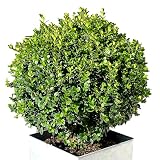

Plant Profile & Key Characteristics
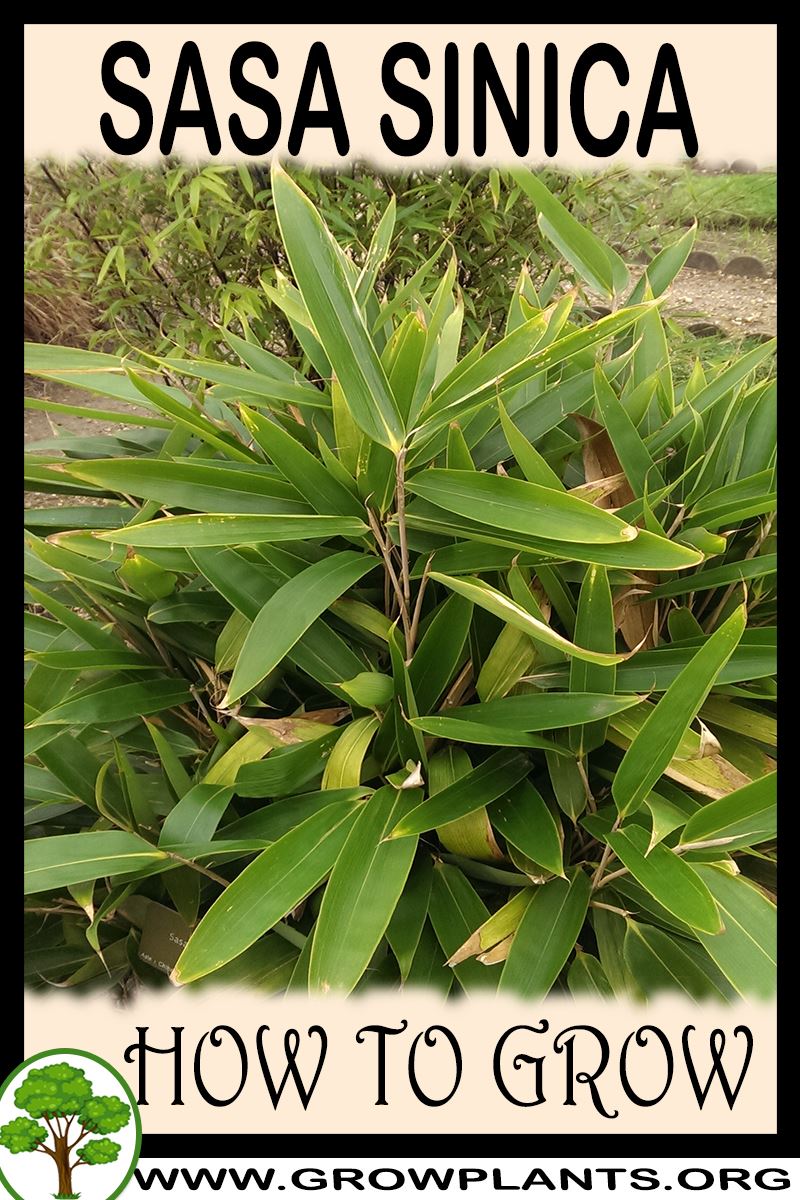
Overview: A dwarf running bamboo 1-1.5 m (40-60 in) tall, grown as an evergreen ornamental for its broad green leaves. It spreads vigorously by underground rhizomes and tolerates shade well.
Quick Specifications
| Specification | Attribute |
|---|---|
| Plant Type / Life Cycle | Evergreen perennial (running bamboo) |
| Foliage Type | Evergreen |
| Mature Size | 1-1.5 m (40-60 in) tall |
| Growth Rate | Fast to moderate |
| Root System | Rhizomatous – spreads aggressively by running underground rhizomes |
| Hardiness | USDA zones 7-10a |
Growth Form & Structure
- Height & Spread: In the ground a spreading thicket 1-1.5 m (40-60 in) tall that keeps expanding sideways; best contained, or grown in a pot to limit its spread.
- Growth Habit & Form: Running bamboo that forms dense stands of upright canes, spreading by rhizomes into a groundcover-like thicket.
- Lifespan & Maturity: A long-lived evergreen that fills its space quickly and, like most bamboos, flowers only very rarely.
Anatomy & Physical Features
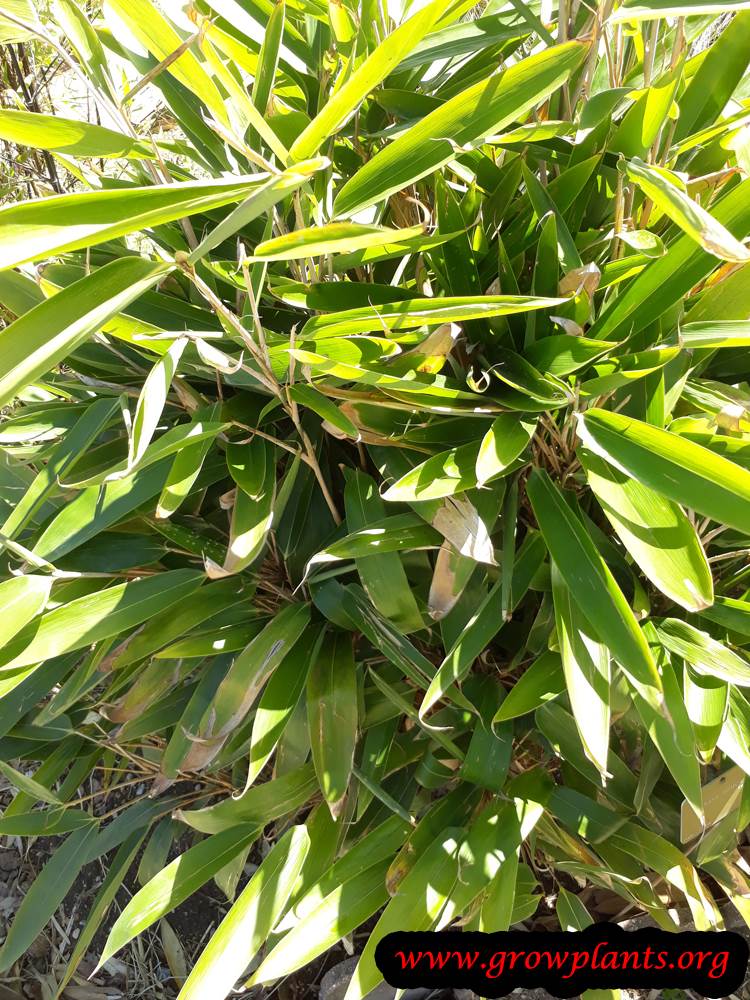
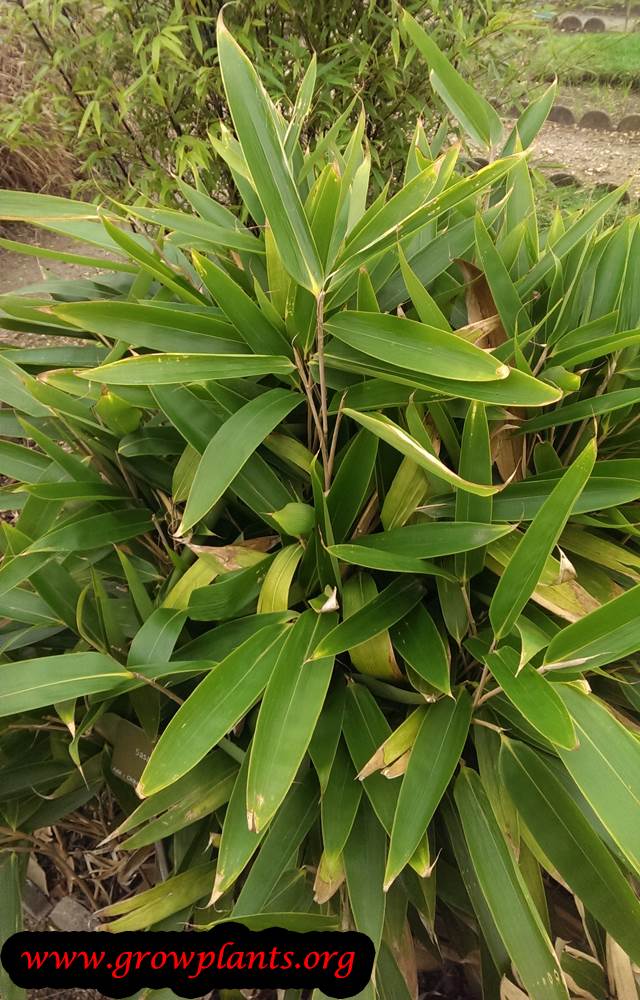
- Leaves & Foliage: Broad, linear green leaves up to about 40 cm (16 in) long – the plant’s main ornamental feature.
Primary Uses & Landscape Value
- Functional & Ornamental Roles: Evergreen screen, understorey groundcover and shade planting; needs a root barrier or container to keep its aggressive spread in check.
Care Guide: Planting, Soil & Watering
Overview: Sasa sinica (Sasa sinica) is a shade-loving dwarf bamboo grown for its broad evergreen leaves in temperate, subtropical and Mediterranean gardens, or indoors (hardiness zones 7-10a). It thrives in rich, moist, well-draining soil in part to full shade and spreads vigorously by underground runners.
Quick Care Requirements
| Requirement | Ideal Condition |
|---|---|
| Planting Season | Spring, summer or autumn |
| Growth Rate | Moderate to Fast |
| Soil Type | Rich, moist, well-draining |
| Water Need | Moderate to high; keep the soil moist |
Planting & Establishment
- Best Planting Season: Plant in spring, summer or autumn in a part- to full-shade position with rich, moist soil.
- How to Plant:
- Hole Preparation: Dig a hole wider than the root ball, and install a root barrier or sink a bottomless container to check its aggressive spread.
- Soil Amendments: Enrich the backfill with compost and organic matter to feed its lush growth.
- Planting Depth: Set the plant at the depth it grew previously, keeping the crown level with the soil surface.
- Growth Speed & Expectations: A moderate-to-fast grower reaching about 1-1.5 m (40-60 inches); it runs and colonises quickly, so plan to contain and control it.
Soil, Watering & Drainage Care
- Soil Mix & Drainage Needs: Give rich, moisture-retentive but well-draining soil. Growing it in a large container is a good way to enjoy it while limiting its spread.
- Watering Schedule & Technique:
- Young / Newly Planted: Keep the soil consistently moist while new plants establish.
- Established: Water regularly to keep the soil moist, giving more in warm, dry weather.
- Seasonal Adjustments: Increase watering through summer heat and reduce it over the cooler winter months.
Climate, Light & Hardiness
Sasa sinica is a shade-loving dwarf bamboo suited to temperate, subtropical, and Mediterranean climates, as well as bright indoor spaces. It performs best in half to full shade and has moderate cold hardiness, doing best where winters are not severely harsh.
Quick Climate Specifications
| Climate Zones | Temperate, subtropical, Mediterranean; also grown as a houseplant |
|---|---|
| USDA Hardiness Zones | 7–10a |
| Optimal Temp Range | Approximately 15–27°C (59–80°F) |
| Cold Damage Begins | Foliage may scorch or brown around freezing, roughly 0°C (32°F) |
| Approx. Survival Minimum | Established rhizomes in zone 7 typically tolerate brief winter minimums around −12°C to −18°C (0°F to 10°F) |
| Frost Tolerance | Moderate |
| Light Conditions | Half Shade / Full Shade |
| Wind Tolerance | Low–Moderate |
Sunlight & Light Exposure
Optimal Light Setup
As an understory-type bamboo, it prefers half to full shade rather than strong direct sun.
Shade & Heat Management
Shade becomes more important in hot climates, where direct sun can scorch the broad, 40 cm (16 in) leaves.
Best Exposure / Orientation
A north-facing bed, woodland-edge planting, or bright indoor spot out of direct sun suits it well.
Temperature Extremes & Hardiness
USDA Hardiness & Regional Limits
Hardy in USDA zones 7–10a outdoors; in colder climates it can be grown as a houseplant instead.
Cold Damage & Winter Protection
Leaves can brown or scorch in hard freezes even where the rhizomes survive; a sheltered position reduces winter leaf damage.
Frost Sensitivity
Moderately frost-sensitive; light frost is usually tolerated but harder freezes can damage foliage.
Extreme Heat Tolerance
Tolerates warm subtropical summers well, especially with adequate shade and consistent moisture.
Wind, Humidity & Microclimate
Humidity Preferences
Prefers humid, sheltered conditions typical of an understory habitat.
Dry-Air Tolerance
Large, thin leaves are prone to browning tips in very dry air, including indoor heated rooms.
Wind Tolerance
Broad leaves can be tattered or desiccated by strong or drying wind, so a sheltered site is preferable to an exposed one.
Microclimate Recommendations
A shaded, humid courtyard or woodland-edge microclimate best replicates its natural growing conditions.
Growing in Pots, Balconies & Indoors
Sasa sinica is a compact, shade-loving dwarf bamboo, 1-1.5 m tall. The grower confirms it can be grown both indoors as a houseplant and in containers – and a pot is actually the smart way to grow it, since it keeps this running bamboo’s spreading roots in check.
Quick Details
- Container Size: A large, sturdy pot (25-40 L or more) to house the vigorous roots
- Indoor Suitability: A genuine houseplant – grows well indoors in bright, indirect light
- Best Spot: Part to full shade; bright indirect light indoors, out of harsh midday sun
- Soil & Drainage: Rich, moisture-retentive but free-draining mix
- Watering in Pots: Average to generous – bamboo is thirsty and pots dry fast; never let it bake dry
Indoors & On the Windowsill
- A real houseplant: The grower confirms ‘Yes’ – it grows happily indoors in a bright spot away from scorching direct sun.
- Windowsill / bright room: Give it bright, indirect light and keep humidity up; mist in dry, heated rooms and keep the mix evenly moist.
- Containment: As a running bamboo, a pot is the best way to enjoy it without it spreading through a garden.
On a Balcony or Patio
- Light & shelter: A shaded or part-shaded, sheltered balcony corner suits it; strong wind and full midday sun scorch and dry the foliage.
- Watering & weight: The full pot is heavy and thirsty – place it where you can water often, as bamboo in pots dries out fast; a drip irrigation kit with a timer takes the daily guesswork out of that schedule if you can’t water by hand every day.
Choosing the Pot, Soil & Long-Term Care
- Pot & drainage: A large, strong pot with good drainage holes; skip a standing water saucer to avoid root rot. Glazed or plastic holds the moisture bamboo likes better than terracotta.
- Potting mix: A rich, organic mix that stays moist yet drains – loam-based potting mix with added compost.
- Feeding: Bamboo is hungry; Potted plants exhaust their food faster because watering leaches nutrients, so feed lightly through the growing season – more often than plants in open ground.
- Repotting: Roots fill a pot fast – divide and refresh the mix every couple of years to keep it healthy.
Fertilizing & Feeding
A moderate feeder: nitrogen-leaning feeding through the warm growing season keeps foliage dense and colorful, while feeding stops through its cooler, slower season.
Quick Fertilizing Specs
| Feeding Level | Moderate feeder |
|---|---|
| Main Nutrient Priority | Nitrogen-forward feeding to support dense foliage and new cane growth |
| Best Feeding Period | Through the warm active growing season |
| Organic Options | Compost or a light organic mulch worked into the rich soil this plant favors |
| Micronutrients | Usually supplied by a complete fertilizer in good soil; correct iron or other deficiencies only when actually diagnosed |
| Soil pH | Tolerates a range of soil but favors a rich, near-neutral, moisture-retentive site |
| Reduce/Stop Feeding | Taper off as growth slows in cooler weather and hold feeding through the slow season |
Feeding by Growth Stage
Establishment after planting
Help a newly planted division or seedling establish new roots and begin sending up fresh canes.
| Nutrient direction | A balanced, nitrogen-leaning fertilizer to support root establishment and the first flush of canes and foliage. |
|---|---|
| Timing | From planting through the first main flush of new growth. |
| Frequency | A light feeding at planting, then modest feeding as new canes emerge. |
| Fertilizer types | A balanced, nitrogen-leaning complete fertilizer, Compost or well-rotted organic matter worked into the rich soil it favors |
| Precautions | Watch the plant’s spread closely, since this is an aggressive, fast-colonizing bamboo; contain the root zone if it needs to stay in bounds, independent of feeding. |
Active canopy growth
Support dense, healthy linear foliage and steady new cane production through the main growing season.
| Nutrient direction | A nitrogen-forward feed to drive strong leaf color and vigorous new cane growth, the main draw of this foliage plant. |
|---|---|
| Timing | Through the warm active growing season. |
| Frequency | Regular light feedings through the growing season keep color and density strong; ease back as growth slows with cooler weather. |
| Fertilizer types | A nitrogen-forward complete fertilizer, Compost or a light organic mulch to feed the rich soil this plant favors |
| Precautions | Avoid over-fertilizing, which can accelerate this already aggressive spreader; pair feeding with active management of its spread and pruning of dead canes. |
Cool-season slowdown
Let growth rest through the cooler part of the year when new cane production naturally slows.
| Nutrient direction | None – withhold fertilizer while growth is slow during the cooler months. |
|---|---|
| Timing | Through the cooler, slow-growth part of the year. |
| Frequency | No feeding at this stage. |
| Fertilizer types | No feeding at this stage – resume with the return of active warm-season growth |
| Precautions | Do not fertilize while growth is minimal; unused nutrients mostly wash away or feed weeds rather than the plant. |
Nutrient Deficiency Signs & Corrections
Leaves turn pale yellow-green overall and new canes come in thin with reduced leaf density.
| Possible causes | low soil nitrogen, competition from the plant’s own dense colony, poor, depleted soil |
|---|---|
| Appears first on | older leaves and overall canopy density |
| What to check | leaf color across the clump, new cane thickness and count, soil fertility history |
| Possible correction | Increase feeding with a nitrogen-forward complete fertilizer and add organic matter to the root zone. |
New leaves emerge yellow between the veins while veins stay green, especially in heavy or alkaline soil.
| Possible causes | high soil pH limiting iron availability, waterlogged or compacted soil, naturally low soil iron |
|---|---|
| Appears first on | newest leaves |
| What to check | soil pH and drainage, whether only new growth is affected, recent watering pattern |
| Possible correction | Improve drainage, correct pH toward neutral where practical, and apply a chelated iron product per its label. |
Leaves curl or roll lengthwise and canes may drop leaves or discolor.
| Possible causes | insufficient water for this water-loving plant, root competition in an overcrowded colony, excessive heat or wind exposure |
|---|---|
| Appears first on | leaf blades across the canopy |
| What to check | soil moisture and watering frequency, density and age of the colony, exposure to sun and wind |
| Possible correction | Increase watering consistency and thin an overcrowded colony; feeding will not correct drought stress. |
Pruning, Training & Seasonal Maintenance
Sasa sinica is a spreading, rhizomatous bamboo grown as an evergreen groundcover/screen; the facts flag it as an aggressive grower, and that spreading habit – not branch shape – is the central pruning concern. New culms rise from an underground rhizome network each year, so once a culm is cut, it will not rebranch or regrow taller: canopy height and density are set by which culms you keep, not by reshaping existing ones. Major thinning is safest in late winter/early spring before the new shoot flush; sanitary tidying can happen any time.
Quick Pruning & Maintenance Specs
| Pruning Tolerance | Moderate–High (for stand management; individual culms cannot be reshaped once cut) |
| Primary Pruning Window | Late winter/early spring, before new shoot emergence |
| Secondary Maintenance Window | Ongoing light tidy through the growing season |
| Typical Frequency | Annual culm thinning + periodic rhizome-runner control |
| Main Objective | Control spread, renew the stand, remove dead culms/foliage |
| Young Plant Priority | Install a rhizome barrier/containment edge; minimal cutting otherwise |
| Mature Plant Priority | Annual thinning of oldest/weakest culms + runner control |
| Best Tool Type | Loppers for culms, spade for rhizome runners |
| Avoid Heavy Pruning During | The spring shoot-emergence flush |
Pruning by Plant Age & Size
Newly Established
Minimal cutting; the priority instead is installing a rhizome barrier or container edge to control the spread this species is known for.
Young / Formative
No branch-training system applies (grass-form growth, not a branching framework); the only formative decision is which early culms to allow to stay for stand density.
Mature / Established
Annually remove the oldest or weakest culms at ground level to renew the stand and prevent congestion; control height by removing unwanted tall culms entirely at the base rather than topping them partway up.
Seasonal Pruning Schedule
Pre-Growth/Early-Spring
Objective: renew the stand before new growth. Remove: old, weak, or winter-damaged culms and foliage. Do not remove: emerging new shoots – they are tender and represent the plant’s main growth investment for the year. Response: a flush of vigorous new culms from the rhizome. Flowering impact: not applicable; this species is not being managed for bloom.
Ongoing Sanitary
Objective: keep the stand tidy. Remove: dead, browned, or broken culms and leaves at any time. Do not remove: healthy green culms out of season. Response: cleaner appearance, better light to the base.
Structural Pruning & Training
Canopy/stand density: thin congested culms to improve air movement and light penetration to the base. Height & spread control: remove unwanted tall culms completely at ground level – never top a culm mid-height, since the cut section will not branch or regrow and is left as a permanently stunted, dead-tipped stub.
Special Growth to Remove
- Rhizome runners/spreading shoots emerging outside the intended planting area – the key recurring task for this aggressive species; sever cleanly at the barrier line.
- Old, brown, or dead culms.
- Damaged or winter-browned leaves.
Container & Small-Space Pruning
Containerizing is itself the main spread-control tool for this species. In pots, root/rhizome-prune at repotting to prevent the pot from becoming rhizome-bound – the container-scale equivalent of renewing an overgrown in-ground stand.
Tools
- Loppers – cutting culms at ground level (culms are slender enough that a saw is generally unnecessary at this species’ 1–1.5m height).
- Precision snips – tidying foliage and small shoots.
- Garden spade – severing and controlling invasive rhizome runners.
Tool Hygiene & Disease Risk
Routine: clean, sharp tools are sufficient; no specific transmissible disease risk is noted for this species.
Cut Placement & Technique
Cut culms flush at or just above ground level – a tall stub left above a node will not produce useful new growth. Sever rhizome runners cleanly with a spade right at the containment barrier.
Heavy Pruning & Rejuvenation
Tolerated, but differently than on a shrub: an overgrown, congested stand can be renewed by cutting all culms to the ground in late winter, since fresh culms regenerate from the living rhizome each year. Expect a flush of new, initially thinner shoots the following growing season.
Post-Pruning Care
Keep new shoots well watered during the spring flush. After any thinning or rhizome division that disturbs the soil, check barrier edges for runner escape.
Common Pruning Mistakes
- Topping culms mid-height, expecting them to branch or regrow taller – they will not.
- Letting rhizome spread go unmanaged until much harder containment measures are needed.
- Cutting or disturbing the stand during the tender spring shoot flush.
When NOT to Prune
- During the spring shoot-emergence flush.
- Right before winter in the colder end of its hardiness range (zone 7), when disturbing rhizomes reduces cold protection.
Recommended Tools (by task)
- loppers – cutting mature culms cleanly at ground level.
- garden_spade – severing rhizome runners and dividing/controlling spread.
- precision_snips – tidying foliage and small shoots.
Pruning Troubleshooting
| Problem | Possible Cause | What to Check | Corrective Action |
| Bare, stunted cane tips | Culm was topped mid-height instead of removed at the base | Look for old topping cuts partway up culms | Remove that culm entirely at ground level; let a fresh culm replace it |
| Runners appearing beyond the bed edge | Rhizome barrier missing, too shallow, or breached | Inspect barrier depth and edges for gaps | Sever runners with a spade; repair or reinforce the barrier |
| Thin, sparse regrowth after thinning | Too much of the stand removed at once | Review how many culms were cut in one session | Thin more conservatively; spread stand renewal over two seasons |
Propagation Guide
Sasa sinica is best propagated by dividing an established clump’s rhizomes, which is faster and far more reliable than seed since bamboos of this type flower only rarely and seed is usually not available. Vegetative division is not strictly required but is the easier and standard practical method, making propagation Easy to Moderate depending on clump size.
Quick Propagation Specs
| Best Propagation Method | Rhizome (clump) division |
| Alternative Methods | Seed, when available (uncommon, as flowering is infrequent) |
| Propagation Difficulty | Easy (division); Specialist (seed, due to rarity) |
| Vegetative True-to-Type | Yes |
| Best Propagation Season | Spring, as new growth begins |
Division, Offsets, Pups & Suckers
Divide the spreading rhizome mat in spring, cutting sections that each carry healthy roots and at least a few culms/growth points. Keep divisions well watered and in part shade to half shade until new shoots establish, matching this plant’s preferred half shade to full shade conditions and rich, moist soil. Because this bamboo spreads aggressively (noted on-site as an aggressive grower), division is also a useful way to control and contain its spread while producing new plants.
Growing from Seed
Seed is only occasionally available because Sasa species tend to flower infrequently and unpredictably; when fresh seed can be sourced, sow promptly in moist, well-drained rich soil in a warm, sheltered spot, as bamboo seed generally loses viability quickly and does not store well long-term.
Bloom & Flower Guide
Quick Details
- Bloom Season: Summer, on the rare occasions it flowers
- Flower Appearance: Small, insignificant grass-like flowers (spikelets), without petals or colour
- Edibility: Ornamental — not an edible flower
Detailed Blooming Overview
Like all bamboos, Sasa sinica is a grass and flowers only rarely — sometimes after many years, and often gregariously across a whole clone at once, after which the flowered canes may weaken or die back. Day to day it is grown for its foliage, not for bloom.
Flower Characteristics
- Small, insignificant grass-type flowers (spikelets).
- No petals or colour to speak of.
Bloom Care & Thinning
- Nature of flowering: bamboo flowering is infrequent and not something the grower can force or plan for.
- After flowering: if a stand does flower, feeding and watering help it recover afterwards.
Pests, Diseases & Troubleshooting
Overview: Dwarf bamboo is a tough, shade-tolerant running bamboo whose biggest ‘pest’ is itself – its rhizomes spread aggressively and are the main thing to manage. True pests are the bamboo-specialist mites, aphids, mealybugs and scale, which cause stippling, honeydew and sooty mould; diseases (rust, leaf spot) are usually minor. Contain the roots, keep plants vigorous, and hose down foliage to keep mites and honeydew in check.
Quick Troubleshooting Overview
| Issue / Pest | Main Symptom | Primary Solution |
|---|---|---|
| Running rhizome spread | New canes emerging far from the clump | Rhizome barrier / containment, sever runners |
| Bamboo spider mites | Rectangular yellow/mottled leaf patches | Hose foliage, raise humidity, oil/soap |
| Bamboo aphids | Honeydew, sooty mould, sticky leaves | Water jet, beneficials, insecticidal soap |
| Bamboo mealybug / scale | White fluff / bumps on culms & sheaths | Wipe/scrape, horticultural oil |
| Leaf tip scorch | Brown, dry leaf tips & margins | Steady moisture, shelter from dry wind |
| Rust / leaf spot | Orange pustules or brown spots | Remove affected leaves, improve airflow |
Common Pests & Management
- Bamboo spider mites (Schizotetranychus / Stigmaeopsis spp.):
- Symptoms: Distinctive rectangular yellow or mottled patches on the upper leaf surface, with fine webbing and colonies sheltering under nests on the underside; leaves look bleached and unhealthy in hot, dry, sheltered conditions.
- Prevention & Control: Hose the foliage forcefully and regularly to dislodge mites and raise humidity, and remove badly infested leaves. Encourage or introduce predatory mites, and treat persistent outbreaks with horticultural oil or insecticidal soap, covering leaf undersides.
- Bamboo aphids (Takecallis / Melanaphis spp.):
- Symptoms: Colonies on leaf undersides producing copious honeydew and heavy sooty mould, leaving foliage sticky and blackened; ants often present.
- Prevention & Control: Blast off with water and encourage ladybirds and lacewings; hose down honeydew. Treat heavy colonies with insecticidal soap or light horticultural oil on leaf undersides in the evening.
- Bamboo mealybug (Palmicultor / Antonina spp.):
- Symptoms: White, waxy, cottony masses tucked into the culm sheaths, nodes and leaf bases; honeydew, sooty mould and weakened growth.
- Prevention & Control: Peel back and clean out affected sheaths, dab with dilute alcohol, and treat with horticultural oil; remove and destroy heavily infested canes.
- Bamboo scale (Bambusaspis / Kuwanaspis spp.):
- Symptoms: Small white, grey or brown scales encrusting culms, branches and leaf undersides; loss of vigour and, on soft scales, honeydew and sooty mould.
- Prevention & Control: Scrub or scrape scales from canes and wipe leaves; treat with horticultural oil to smother crawlers, repeating, and cut out badly encrusted old canes to renew the clump.
Diseases & Fungal Issues
- Sooty mould (secondary):
- Symptoms: Black, sooty coating over leaves and canes wherever aphids, mealybugs or scale have deposited honeydew, reducing light to the leaf.
- Treatment & Management: Control the sap-sucking pest producing the honeydew, then wash or wipe the mould away; it is harmless in itself but disfiguring and indicates a pest problem.
- Bamboo rust (Puccinia spp.):
- Symptoms: Yellow-orange or brown powdery pustules on leaf undersides with yellow flecking above; premature leaf yellowing in humid, crowded conditions.
- Treatment & Management: Thin canes for airflow, remove affected leaves, and avoid overhead watering; a sulphur fungicide can be used for persistent rust, but sanitation and spacing usually suffice.
- Leaf spot and blight (various fungi):
- Symptoms: Brown or purplish spots and blotches on leaves, sometimes merging, in wet, still conditions.
- Treatment & Management: Improve airflow by thinning, clear fallen leaf litter, and remove affected foliage; rarely serious enough to need fungicide on a vigorous clump.
Growing Difficulties & Abiotic Problems
- Aggressive running spread – the defining problem:
- Cause & Symptoms: As a running bamboo it produces far-travelling rhizomes that send up new canes well away from the clump and can invade lawns, beds and neighbouring plots.
- Correction Strategy: Contain from the outset with a deep (60 cm+) solid rhizome barrier, a physical air-gap trench, or grow in large, sturdy containers; sever and dig out escaping rhizomes each year. Never plant an uncontained runner where spread would be a problem.
- Leaf tip scorch / marginal browning:
- Cause & Symptoms: Brown, dry leaf tips and margins from dry wind, underwatering, cold winter burn, or salt build-up.
- Correction Strategy: Keep the soil steadily moist, mulch the roots, and shelter from cold, drying winds; trim scorched leaves and refresh growth by cutting out the worst-affected old canes.
- Chlorosis:
- Cause & Symptoms: Yellowing leaves (often interveinal) from nutrient shortage or high-pH soil.
- Correction Strategy: Feed with a nitrogen-rich (grass-type) fertiliser in the growing season and mulch with compost; apply chelated iron on alkaline soils if interveinal yellowing persists.
- Thinning / bare clump with age:
- Cause & Symptoms: Old clumps accumulate dead and weak canes and can look tired and congested.
- Correction Strategy: Thin out old, weak and dead canes annually to let light in and encourage strong new growth; this also reduces pest and disease harbourage.
What Helps – Products & Tools
Dwarf bamboo needs little chemically: a strong hose knocks back bamboo mites and washes off aphid honeydew and sooty mould; insecticidal soap and horticultural oil handle mites, aphids, mealybug and scale; and a nitrogen-rich feed keeps foliage green. By far the most important ‘product’ is a proper rhizome barrier to contain the running roots. Sharp loppers for annual cane-thinning keep the clump healthy and pest-free.