
Care Guide: Planting, Soil & Watering
Overview: Rindera umbellata is a low-growing, evergreen perennial grown for its flowers, suited to full sun or part shade in well-drained soil. It is a small plant that likes regular, generous moisture during growth while never sitting in water.
Quick Care Requirements
| Requirement | Ideal Condition |
|---|---|
| Planting Season | Spring or summer |
| Growth Rate | Moderate |
| Soil Type | Well-draining |
| Water Need | Moderate to High — keep moist but well-drained |
Planting & Establishment
- Best Planting Season: Plant in spring or summer, in the warmth of the growing season, so it establishes well before winter.
- How to Plant:
- Hole Preparation: Dig a hole a little wider than the root ball on a free-draining site, loosening the sides so the roots spread easily.
- Soil Amendments: Improve the planting soil with some compost while keeping the mix free-draining, especially on heavy ground.
- Planting Depth: Set the top of the root ball level with the soil surface and keep the crown clear of soil.
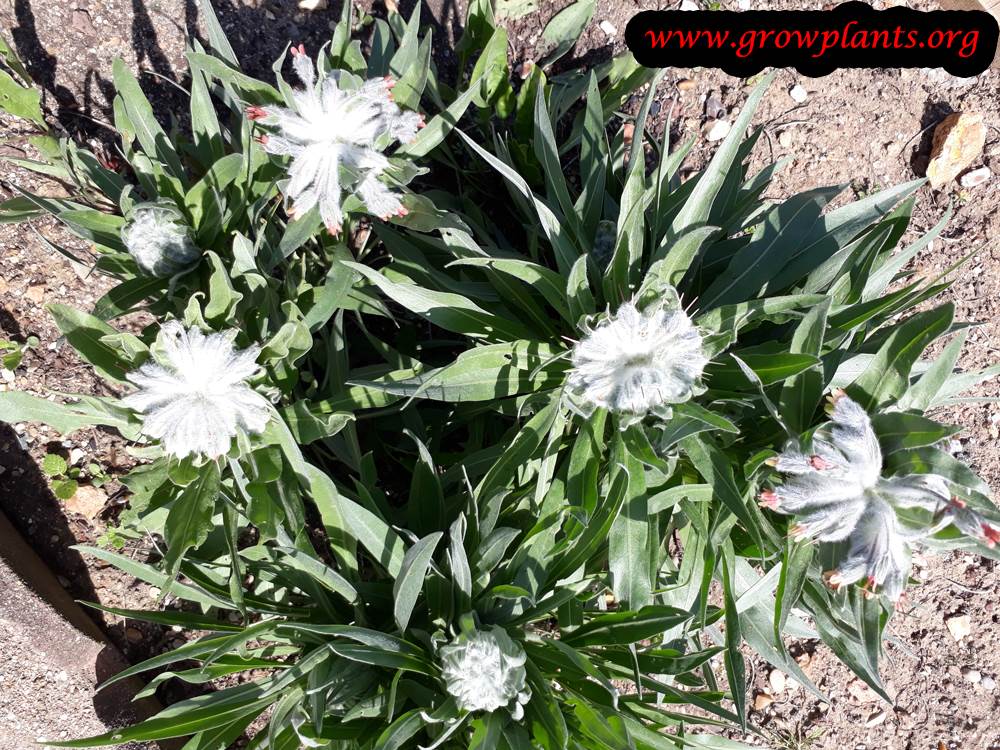
- Growth Speed & Expectations: A moderate grower staying compact (roughly 10–20 cm), forming a low clump topped with bracted flower umbels.
Soil, Watering & Drainage Care
- Soil Mix & Drainage Needs: It needs well-drained soil that still holds some moisture; sharpen drainage on heavy soils and avoid waterlogging. It grows well in a well-drained container too.
- Watering Schedule & Technique:
- Young / Newly Planted: Keep the soil evenly moist while the young plant establishes.
- Established: Water regularly and fairly generously during active growth, allowing the surface to dry slightly between waterings but not drying out fully.
- Seasonal Adjustments: Water more in warm, dry weather; reduce in cool, wet winter conditions to prevent rot.
Climate, Light & Hardiness
This flowering perennial grows in temperate and subtropical climates in full sun to half shade. It is hardy through USDA zones 4–9.
Quick Climate Specifications
| Climate Zones | Temperate, Subtropical |
|---|---|
| USDA Hardiness Zones | 4–9 |
| Frost Tolerance | High |
| Light Conditions | Full Sun / Half Shade |
Sunlight & Light Exposure
Optimal Light Setup
Full sun to half shade both suit this low-growing flowering perennial.
Temperature Extremes & Hardiness
USDA Hardiness & Regional Limits
Hardy through USDA zones 4–9, a cold-tolerant perennial suited to temperate gardens with real winter cold as well as milder subtropical regions.
Frost Sensitivity
Top growth dies back with hard frost as part of its normal seasonal cycle; the rootstock survives winter within its hardiness range.
Wind, Humidity & Microclimate
Microclimate Recommendations
Adaptable to typical temperate garden conditions within its zone 4–9 range.
Growing in Pots, Balconies & Indoors
Rindera is a low, silvery-leaved perennial from dry, open habitats. It is not a houseplant, but it grows well in a sharply drained outdoor pot or trough where it gets full light and a proper cool season.
Quick Details
- Container Size: A modest, well-drained pot or trough for this 10-20 cm plant
- Indoor Suitability: Not a houseplant – an outdoor dry-garden perennial
- Best Spot: Full sun to part shade, in the open air
- Soil & Drainage: Gritty, very free-draining mix
- Watering in Pots: Average; let the surface dry between waterings and never leave it wet
Indoors & On the Windowsill
- Houseplant limits: The grower does not rate it as an indoor plant; it needs outdoor light, air movement and a cool season.
- Sharp drainage: Its dry-habitat roots resent stagnant, warm indoor conditions.
On a Balcony or Patio
- Light & wind: Ideal for a bright, breezy balcony in a gritty pot; open air and sharp drainage suit it. Small pans dry quickly, so water when the surface is dry.
Choosing the Pot, Soil & Long-Term Care
- Pot & drainage: A pot with sharp drainage and no standing water; a grit topping keeps the crown dry.
- Gritty mix: Free-draining potting mix cut with grit or perlite.
- Feeding: Feed sparingly; it prefers lean soil.
- Repotting: Refresh the top of the mix and pot on every couple of years; for perennials, lightly prune the root ball and top growth when you do.
Fertilizing & Feeding
A light feeder – this compact, low-growing perennial needs only occasional light feeding through spring and its bloom period to support its red bell-flowers and hairy white bracts.
Quick Fertilizing Specs
| Feeding Level | Light – a small, low-growing perennial that needs only light, occasional feeding |
|---|---|
| Main Nutrient Priority | Balanced feeding without pushing extra nitrogen |
| Best Feeding Period | Spring through the bloom period |
| Soil pH | Tolerates a range of well-drained garden soil pH without special adjustment |
| Reduce/Stop Feeding | Stop feeding as growth slows in the cooler months |
Feeding by Growth Stage
Spring growth flush
Support new leaf and stem growth on this low-growing evergreen perennial as it resumes active growth
| Nutrient direction | A light, balanced feed supports steady growth on this compact, low-growing perennial without overdoing nitrogen |
|---|---|
| Timing | In spring as new growth resumes |
| Frequency | A light feeding as growth begins is usually enough for this small perennial |
| Fertilizer types | A balanced, light-strength garden fertilizer, Compost worked into well-drained soil |
| Precautions | This is a small, low-growing plant, so keep feeding light; excess fertilizer can push weak, floppy growth |
Bell-flower and bract display
Sustain the red bell-shaped flowers and their white hairy bracts through the spring-to-summer bloom period
| Nutrient direction | Continue light, balanced feeding through bloom; heavy feeding isn’t needed for this compact perennial |
|---|---|
| Timing | During the spring-to-summer bloom period |
| Frequency | Light feeding is usually enough while in bloom |
| Fertilizer types | A balanced, light-strength garden fertilizer if soil is poor |
| Precautions | Avoid overfeeding, which can produce excess foliage at the expense of the flower and bract display |
Cool-season rest
Let growth slow naturally through the cooler months on this perennial
| Nutrient direction | None – withhold fertilizer as growth slows for the season |
|---|---|
| Timing | Through the cooler months when growth is minimal |
| Frequency | No feeding at this stage |
| Fertilizer types | No feeding at this stage; resume light feeding when spring growth resumes |
| Precautions | Do not fertilize while growth is stalled in cool weather |
Nutrient Deficiency Signs & Corrections
Leaves look pale and undersized, with fewer flower stems than expected
| Possible causes | Nitrogen deficiency, Root competition from nearby, more vigorous plants, Poor, depleted soil low in organic matter |
|---|---|
| Appears first on | Older leaves and overall flower stem count |
| What to check | Soil organic matter content, Root competition from neighboring plants, Recent fertilizing history |
| Possible correction | Apply a light, balanced fertilizer per its label and work compost into the soil |
New leaves emerge pale yellow while the veins stay green
| Possible causes | Iron deficiency linked to alkaline soil, Waterlogged soil limiting root uptake, High soil pH reducing nutrient availability |
|---|---|
| Appears first on | Newest leaves |
| What to check | Soil pH and drainage, Whether yellowing is interveinal versus solid, Recent watering patterns |
| Possible correction | Correct pH toward neutral if testing shows it’s too alkaline, and consider a chelated iron product per its label |
General wilting or yellowing despite otherwise suitable growing conditions
| Possible causes | Root stress from waterlogged or poorly drained soil, Underlying nutrient deficiency compounding root stress, Overcrowding limiting airflow and root space |
|---|---|
| Appears first on | Whole plant, most visible on newer growth |
| What to check | Soil drainage around the planting site, Plant spacing and root crowding, Whether decline follows a wet spell |
| Possible correction | Improve drainage and spacing before assuming a straightforward nutrient deficiency, then apply a light balanced feed if growth is still weak |
Pruning, Training & Seasonal Maintenance
Rindera umbellata is a small, low-growing herbaceous perennial grown mainly for its unusual bell-shaped red flowers held in papery white bracts. It tolerates essentially no structural pruning – the top growth dies back each year – so maintenance is limited to a seasonal clean-up of spent stems and foliage once the display is finished. Because the plant is only about 10–20 cm tall and forms a low clump, even that clean-up is a light task.
Quick Pruning & Maintenance Specs
| Pruning Tolerance | Low – seasonal dieback removal only |
| Primary Pruning Window | Autumn to winter, after foliage and bloom stems die back |
| Typical Frequency | Once a year |
| Main Objective | Remove spent bloom stems and dead foliage; keep the clump tidy |
| Young Plant Priority | None – let the clump establish undisturbed |
| Mature Plant Priority | Clear dead leaves and spent flower/bract stems each dormant season |
| Best Tool Type | Precision snips |
| Avoid Heavy Pruning During | Spring and summer, while foliage and bracts are still green and active |
Pruning by Plant Age & Size
Newly Established
Leave untouched apart from removing any damaged leaves; allow the small clump a full season to establish before any clean-up.
Young / Formative
No structural training applies – this low herbaceous perennial has no framework to shape.
Mature / Established
The only recurring task is clearing the previous season’s dead leaves and spent flower/bract stems once they have finished and dried.
Seasonal Pruning Schedule
Dormant / Winter (after dieback): once the flower/bract stems and foliage have fully finished and dried, cut them back to the base. Because the whole clump renews its top growth each year, this clean-up does not affect next year’s flowering.
Special Growth to Remove
- Spent flower and bract stems once the display has fully finished.
- Dead or yellowed foliage at the end of the growing season.
Container & Small-Space Pruning
Well suited to containers given its small size. The same light seasonal clean-up applies; no special container-specific pruning technique is needed beyond keeping the compact clump tidy.
Tools
Precision snips – the stems and foliage are soft and low-growing.
Tool Hygiene & Disease Risk
Routine – clean tools are sufficient; no significant tool-transmissible disease is documented for this species.
Cut Placement & Technique
Cut spent stems and dead foliage close to the base of the clump without disturbing the crown or root system beneath.
Common Pruning Mistakes
- Cutting back stems or foliage while they are still green and part of the active bract/flower display.
- Disturbing the crown while clearing debris at the base.
When NOT to Prune
Avoid removing foliage or bract stems while they are still green and part of the display; wait until they have fully finished and dried.
Recommended Tools (by task)
- Precision snips – for the seasonal clean-up of spent stems and dead foliage.
Propagation Guide
The site’s own data lists seed as the way to start Rindera umbellata, with no vegetative method noted, matching its typical use as a seed-raised perennial. Reliable extension-level detail on this less common species is limited, so seed handling here is kept general and cautious.
Quick Propagation Specs
| Best Propagation Method | Seed |
| Propagation Difficulty | Moderate |
| Seed True-to-Type | Usually true-to-type (species) |
| Best Propagation Season | Spring to Summer, matching the plant’s planting season |
Growing from Seed
Sowing Season
Spring, once the weather has warmed.
Germination Conditions
A free-draining seed mix suited to its preferred well-drained soil, kept lightly moist rather than wet.
Germination Time
Germination in this Boraginaceae relative can be irregular; allow several weeks and expect some unevenness.
Seedling Care
Grow seedlings on in free-draining conditions before planting out.
Bloom & Flower Guide
Quick Details
- Bloom Season: Spring to summer
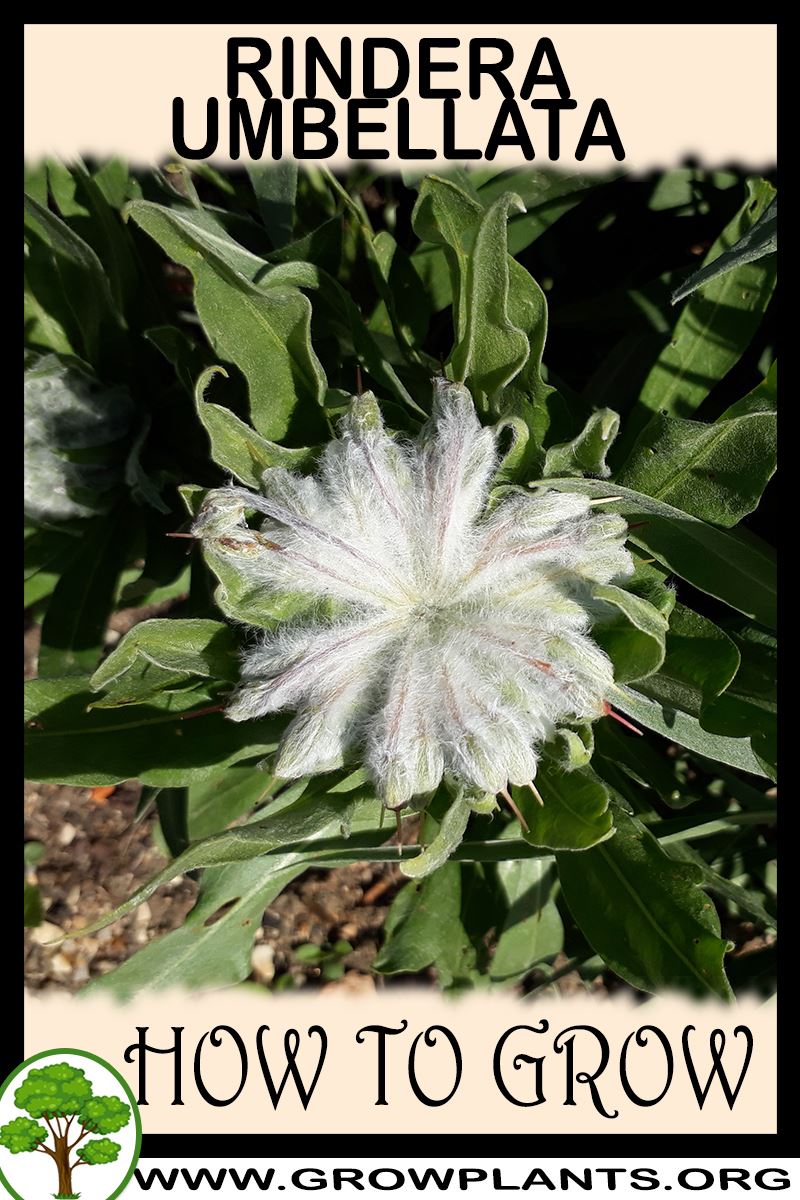
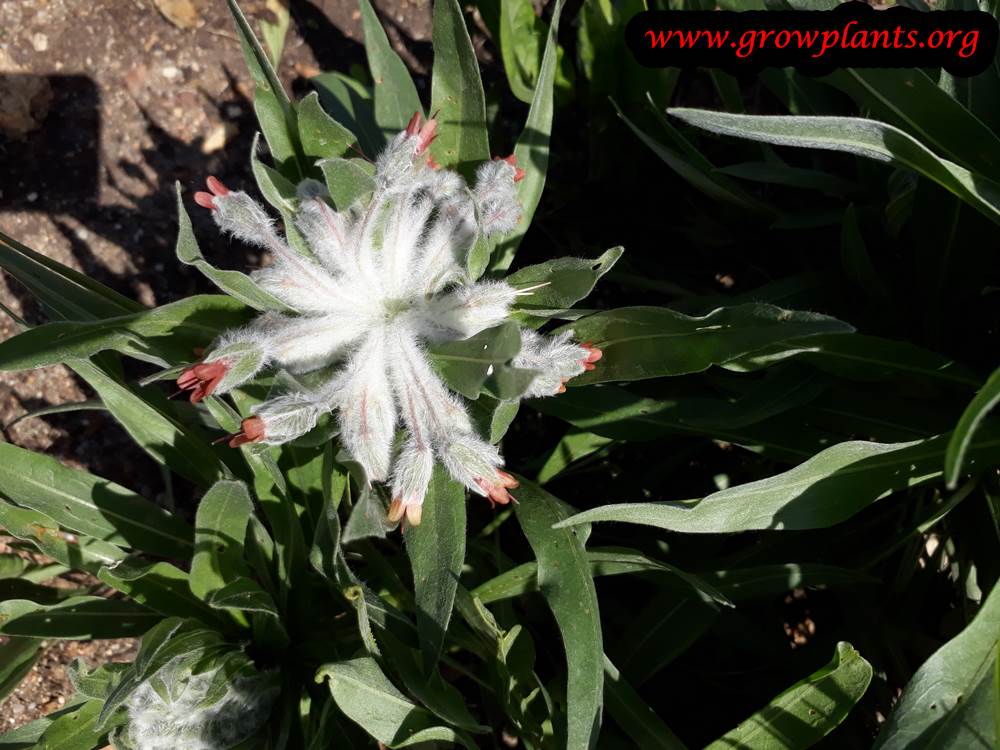
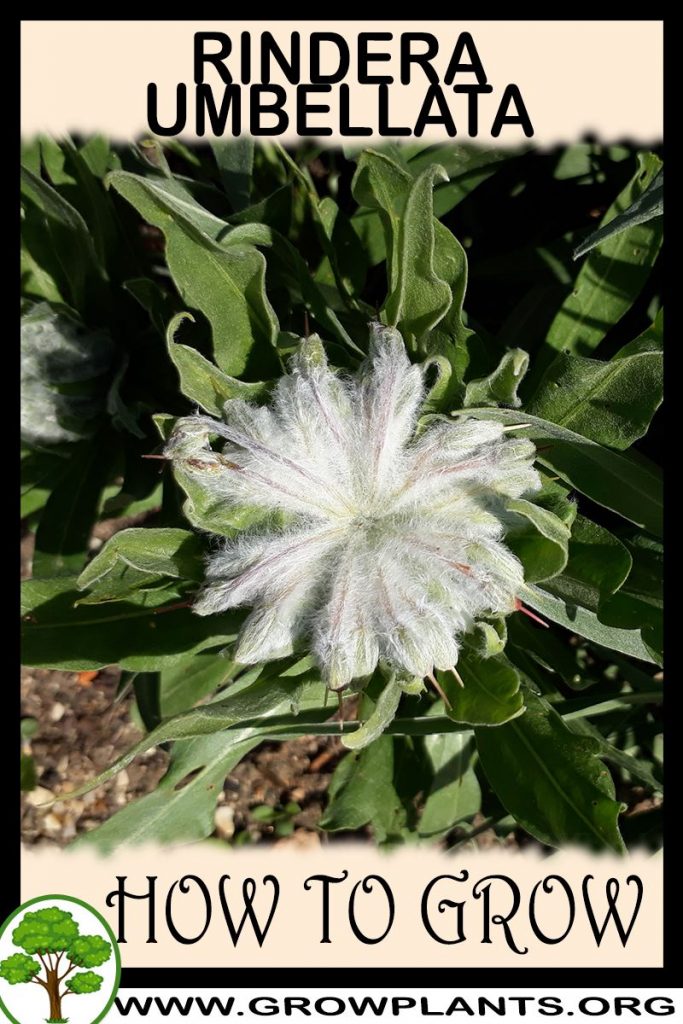
- Flower Appearance: Small red bell-shaped flowers held in showy white, hairy bracts arranged in an umbrella-like head
- Edibility: Ornamental only
Detailed Blooming Overview
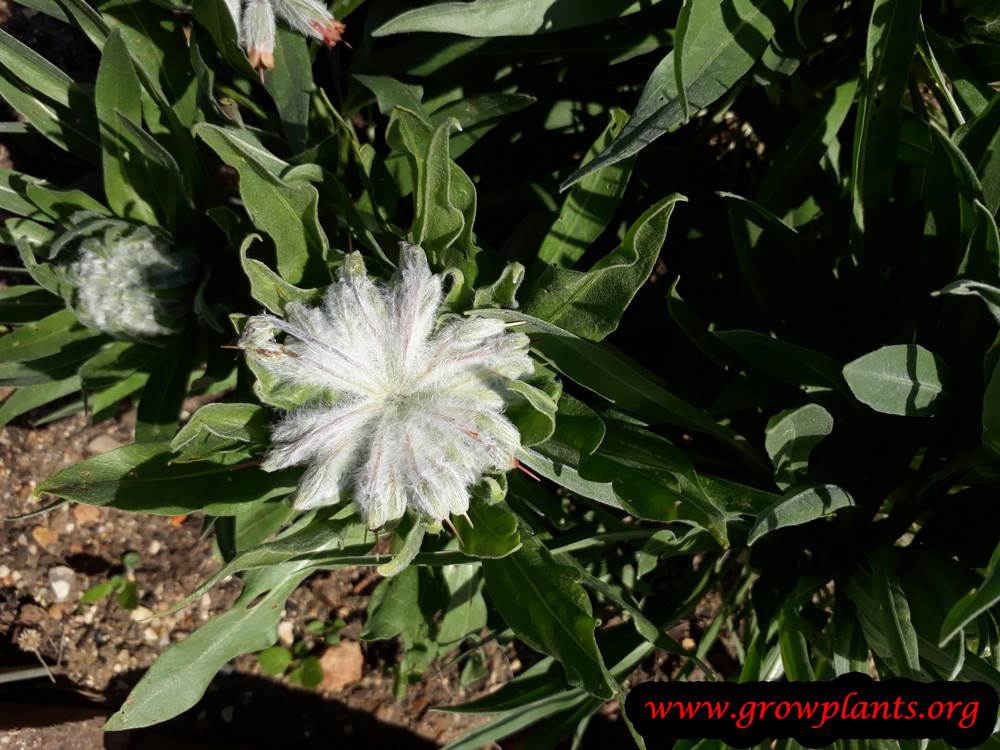
With Rindera umbellata the real show is the umbel of pale, softly hairy bracts that shelter the small red bell-shaped flowers, giving an unusual, sculptural bloom.
Flower Characteristics
- Red, bell-shaped flowers.
- Surrounded by white, hairy, tubular bracts that form an umbrella-like structure.
Bloom Care & Thinning
- Conditions: full sun and sharp drainage suit this rock-garden plant.
- After bloom: the seed heads can be left for interest.
Pests, Diseases & Troubleshooting
Overview: Rindera umbellata is an obscure dry-steppe perennial in the borage family (Boraginaceae) with little published pest information, so this profile is drawn from its family and dry-habitat biology: its real risk is root/crown rot in wet soil rather than insects, with only general aphids, slugs and mites likely. Grow it lean and sharply drained and it should be near trouble-free.
Quick Troubleshooting Overview
| Issue / Pest | Main Symptom | Primary Solution |
|---|---|---|
| Root / crown rot | Wilt and collapse in wet, heavy soil | Sharp drainage, full sun, no overwatering |
| Aphids | Sticky, distorted new growth | Predators, water jet, insecticidal soap |
| Slugs and snails | Chewed spring foliage, slime trails | Barriers, hand-pick, iron-phosphate pellets |
| Powdery mildew | White film on leaves in humidity | Airflow, sun, sulfur if needed |
| Winter wet | Crown rot in cold, wet dormancy | Gritty soil, keep dry in winter |
Common Pests & Management
- Aphids (Aphididae):
- Symptoms: Clusters of small soft insects on new growth and flower stems cause distortion, sticky honeydew and sooty mould.
- Prevention & Control: Protect predators (ladybirds, lacewings), dislodge with a water jet, and use insecticidal soap or light horticultural oil on undersides for heavy colonies, sprayed in the evening to protect bees.
- Slugs and snails (Gastropoda):
- Symptoms: Ragged holes in low leaves and slime trails, mainly on emerging spring growth in damp conditions.
- Prevention & Control: Remove hiding places, hand-pick at night, use grit or copper barriers, and apply wildlife-safer iron-phosphate pellets if needed.
- Spider mites (Tetranychus urticae):
- Symptoms: Fine stippling and bronzing of leaves in hot, dry sites, sometimes with webbing.
- Prevention & Control: Avoid drought stress, hose foliage, encourage predatory mites, and use horticultural oil or insecticidal soap if severe.
Diseases & Fungal Issues
- Root and crown rot (Phytophthora / Pythium / fungi):
- Symptoms: Wilting, collapse and blackened crown or roots in wet, heavy or poorly drained soil — the main risk for this dry-habitat steppe plant.
- Treatment & Management: Grow in gritty, sharply drained soil in full sun, never let the crown sit wet, and avoid overwatering. There is no cure once rotted, so improve drainage and remove affected plants.
- Powdery mildew (Erysiphales):
- Symptoms: A white powdery film on leaves in humid, crowded or shaded conditions, typical of many Boraginaceae.
- Treatment & Management: Improve airflow and sun exposure, avoid overhead watering, and treat with sulfur or potassium bicarbonate if it becomes troublesome.
- Leaf spot / rust (various fungi):
- Symptoms: Brown or rusty spots on foliage in wet seasons, generally cosmetic on a vigorous plant.
- Treatment & Management: Remove affected leaves and debris, improve airflow, and avoid wetting foliage; fungicide is rarely warranted.
Growing Difficulties & Abiotic Problems
- Winter wet / rot in dormancy:
- Cause & Symptoms: As a dry-steppe perennial, Rindera resents cold, wet winter soil and may rot in the crown during dormancy.
- Correction Strategy: Plant in very free-draining soil, ideally raised or gritty, keep it dry over winter, and avoid heavy mulches sitting on the crown.
- Drought and heat tolerance vs. lush conditions:
- Cause & Symptoms: It is adapted to lean, dry ground; in rich, moist gardens it may grow soft, flop and become disease-prone.
- Correction Strategy: Grow hard in lean soil with full sun and sparing water and feeding to keep growth compact and healthy.
What Helps — Products & Tools
For this dry-habitat perennial, cultural care does almost all the work: sharp drainage, full sun and restraint with water. If pests appear, insecticidal soap and light horticultural oil cover aphids and mites, iron-phosphate pellets handle slugs, and sulfur or potassium bicarbonate addresses any powdery mildew. Reserve all sprays for real need, follow the label, and protect pollinators.