Plant Profile & Key Characteristics
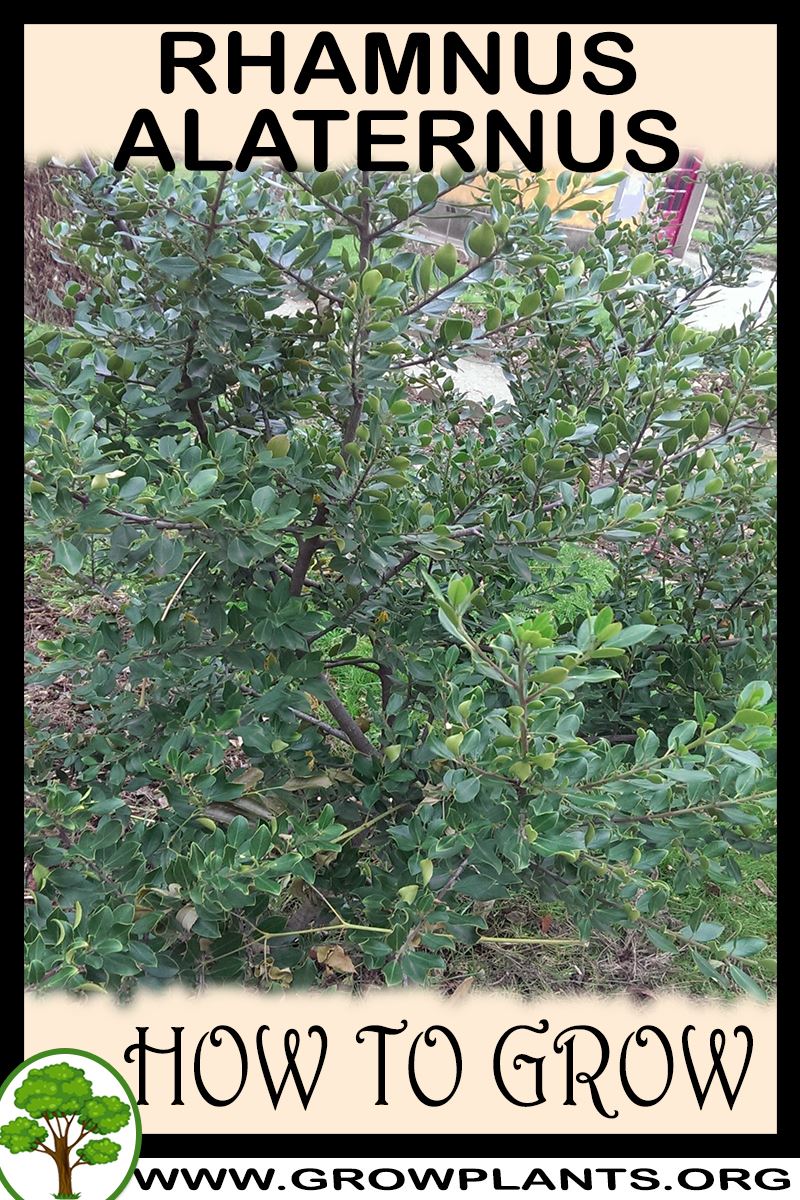
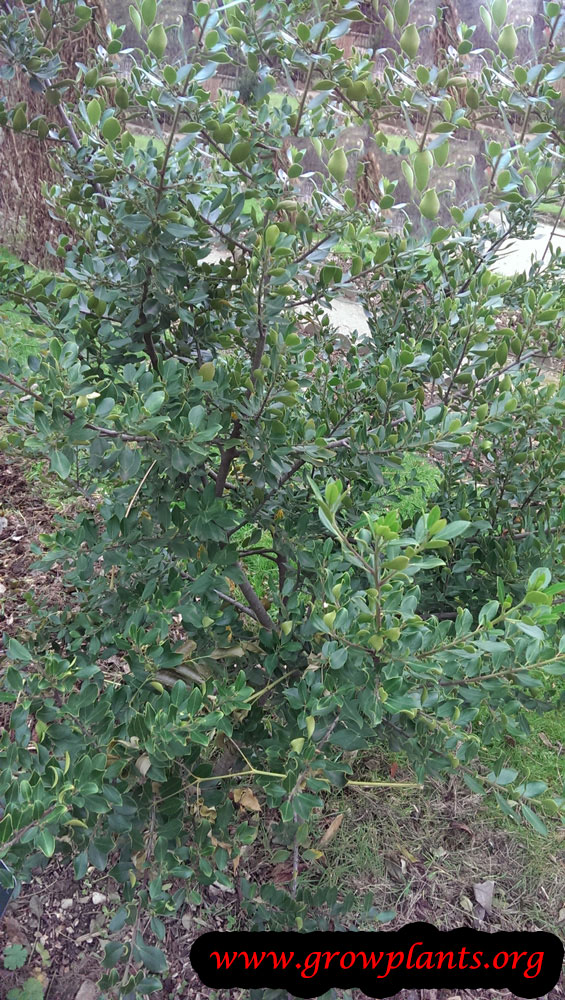
Overview: An evergreen Mediterranean shrub 1-4 m (3-13 ft) tall with glossy green foliage, grown as an ornamental and fragrant hedge. Dense and evergreen, it clips readily into screens.
Quick Specifications
| Specification | Attribute |
|---|---|
| Plant Type / Life Cycle | Perennial (evergreen shrub) |
| Foliage Type | Evergreen |
| Mature Size | 1-4 m (3-13 ft) |
| Growth Rate | Moderate |
| Toxicity | Toxic — the berries are purgative and poisonous if eaten |
| Hardiness | USDA zones 8-10 |
Growth Form & Structure
- Height & Spread: 1-4 m (3-13 ft) in the ground; also grown in large containers.
- Growth Habit & Form: Dense, twiggy evergreen shrub, often clipped as a hedge or screen.
- Lifespan & Maturity: Long-lived evergreen shrub.
Anatomy & Physical Features
- Leaves & Foliage: Glossy green, elliptic to oval, leathery leaves.
- Flower Characteristics: Small fragrant green-to-yellow five-petalled flowers borne in clusters.
- Fruit Profile: Small berries ripening from red to black, not edible.
Primary Uses & Landscape Value
- Functional & Ornamental Roles: Evergreen hedge, screen and ornamental shrub, valued for its fragrant flowers and tolerance of dry Mediterranean conditions.
Care Guide: Planting, Soil & Watering
Overview: Italian buckthorn is a tough, evergreen Mediterranean shrub that grows well in full sun to part shade and adapts to most soils as long as they drain freely. Established plants are notably drought tolerant, though they appreciate some soil moisture.
Quick Care Requirements
| Requirement | Ideal Condition |
|---|---|
| Planting Season | Spring, summer or autumn (avoid hard frost) |
| Growth Rate | Moderate |
| Soil Type | Well-draining; tolerant of poor and lime-rich soils |
| Water Need | Moderate — drought tolerant once established |
Planting & Establishment
- Best Planting Season: Plant during the milder part of the year — spring, summer or autumn — giving roots time to establish before extreme heat or cold.
- How to Plant:
- Hole Preparation: Dig a hole about twice the width of the root ball and no deeper, loosening the sides so roots can spread into the surrounding soil.
- Soil Amendments: It is not fussy, but mixing some compost or organic matter into poor or heavy soil improves establishment and drainage.
- Planting Depth: Set the plant so the top of the root ball is level with the surrounding soil, keeping the stem base at grade rather than buried.
- Growth Speed & Expectations: A moderate grower that fills in steadily to make a dense evergreen hedge or screen.
Soil, Watering & Drainage Care
- Soil Mix & Drainage Needs: Give it free-draining soil; it copes with poor, stony and lime-rich ground but not with waterlogging. In containers use a well-drained potting mix.
- Watering Schedule & Technique:
- Young / Newly Planted: Water regularly through the first season to settle the roots, keeping the soil moist but not soggy.
- Established: Once established it needs little supplemental water and tolerates dry spells; water occasionally and deeply in prolonged drought.
- Seasonal Adjustments: Water more in hot, dry weather while young; reduce watering in cool, wet periods when the soil stays damp.
Climate, Light & Hardiness
Rhamnus alaternus (Italian buckthorn) is a tough Mediterranean and subtropical evergreen shrub grown for hedging, thriving in full sun to half shade. It has good general cold hardiness for its zone range and is well adapted to dry-summer climates.
Quick Climate Specifications
| Climate Zones | Mediterranean, Subtropics |
|---|---|
| USDA Hardiness Zones | 8–10 |
| Frost Tolerance | Moderate |
| Light Conditions | Full Sun / Half Shade |
Sunlight & Light Exposure
Optimal Light Setup
Grows well in full sun to half shade, typical of a versatile Mediterranean hedge shrub.
Temperature Extremes & Hardiness
USDA Hardiness & Regional Limits
Hardy through zones 8–10, matching its native Mediterranean and warm-temperate climate range.
Cold Damage & Winter Protection
Tolerates the typical winter cold of zone 8 without special protection; young plants benefit from a sheltered spot until established.
Frost Sensitivity
Withstands light-to-moderate frost typical of its zone 8–10 range without serious damage.
Wind, Humidity & Microclimate
Dry-Air Tolerance
Well suited to the dry summer air typical of Mediterranean climates.
Wind Tolerance
Tolerant of open, breezy sites, consistent with its common use as a hedging and windbreak shrub.
Growing in Pots, Balconies & Indoors
Italian buckthorn (Rhamnus alaternus) is an evergreen Mediterranean shrub (1-4 m) often used for hedging. The grower says it is not a houseplant but can be grown in a container – a tough, drought-tolerant patio shrub outdoors. Note its berries are poisonous.
Quick Details
- Container Size: A large pot for a shrub that can reach several metres
- Indoor Suitability: Not a houseplant – an outdoor shrub
- Best Spot: Full sun to half shade, outdoors
- Soil & Drainage: Free-draining mix
- Watering in Pots: Average amount – drought-tolerant once established
Indoors & On the Windowsill
- Not a houseplant: The grower confirms it will not grow indoors; it is an outdoor evergreen shrub.
- Windowsill: Too large for a sill – grow it outside.
On a Balcony or Patio
- Light, wind & heat: Give it the brightest spot it will tolerate; walls and railings reflect heat and dry pots quickly, so check moisture often and shelter or stake exposed growth.
- Tough & sunny: It takes sun, wind and reflected heat well; keep it clipped to size in a pot.
Choosing the Pot, Soil & Long-Term Care
- Pot & drainage: A large pot with strong drainage holes. Use strong drainage holes and skip a standing-water saucer to avoid root rot. Terracotta breathes and dries faster; glazed or plastic holds moisture longer.
- Potting mix: A free-draining, moderately rich mix.
- Feeding: Feed lightly in the growing season.
- Repotting: Refresh the mix and pot up about every two years; for perennials, lightly root- and top-prune the plant when you do.
- Safety: The berries are poisonous – keep them away from children and pets, and never treat them as edible.
Fertilizing & Feeding
A light feeder for a low-input Mediterranean hedge shrub: an occasional light balanced feeding in spring supports the glossy evergreen foliage and fragrant flower clusters, with feeding held back through the cooler part of the year.
Quick Fertilizing Specs
| Feeding Level | Light feeder |
|---|---|
| Main Nutrient Priority | Balanced feeding, kept light, to support foliage and hedge density |
| Best Feeding Period | Spring as new growth resumes |
| Organic Options | A light compost top-dressing is optional rather than essential |
| Reduce/Stop Feeding | Ease off feeding as growth slows in the cooler part of the year |
| Micronutrients | Rarely an issue for this low-input, well-established hedge shrub |
| Soil pH | Tolerates a wide range in well-drained soil |
Feeding by Growth Stage
Establishment after planting
Help a newly planted Rhamnus alaternus root in well before it settles into its normal medium growth pace as a hedge or specimen shrub.
| Nutrient direction | A light balanced fertilizer or worked-in organic matter supports root establishment without pushing excess top growth. |
|---|---|
| Timing | The first weeks to months after planting. |
| Frequency | A light feeding at planting, then as new growth confirms the roots are established. |
| Fertilizer types | A light balanced fertilizer or compost worked into the planting site, Mulch to help maintain even soil moisture |
| Precautions | This shrub’s leaves and other parts are noted as poisonous, so keep any fertilizer product away from areas where pets or children might handle fallen leaves or berries. |
Spring active growth
Maintain dense, glossy evergreen foliage and support the small, fragrant flower clusters this shrub produces.
| Nutrient direction | Feeding needs stay light once established; an occasional balanced feeding in spring keeps foliage full for hedging. |
|---|---|
| Timing | Spring as new growth resumes. |
| Frequency | A light feeding once at the start of spring growth is usually sufficient for an established shrub. |
| Fertilizer types | A light balanced fertilizer, An optional light compost top-dressing |
| Precautions | Avoid heavy feeding, which can push rangy growth that needs extra pruning to keep a clean hedge shape. |
Cooler-season rest
Let this evergreen shrub coast through its slower cool-season growth, in step with its winter pruning window, without unnecessary fertilizer.
| Nutrient direction | None – minimal growth during the cooler season does not need feeding. |
|---|---|
| Timing | The cooler part of the year, alongside the shrub’s winter pruning season. |
| Frequency | No feeding through this cooler rest; resume light feeding once spring growth returns. |
| Fertilizer types | No feeding at this stage – growth is minimal during the cooler season. |
| Precautions | Do not fertilize while growth is slowed by cool weather; wait for active spring growth before feeding again. |
Nutrient Deficiency Signs & Corrections
Pale or dulled evergreen foliage and thinner-than-usual growth for a shrub grown mainly for dense hedging.
| Possible causes | very lean or depleted soil, nitrogen leaching after heavy rain, root competition from a crowded hedge row |
|---|---|
| Appears first on | older, lower leaves |
| What to check | how long since any feeding, soil fertility, spacing within the hedge planting |
| Possible correction | Apply a light balanced fertilizer once and monitor, since this shrub rarely needs ongoing feeding once established. |
New leaves emerge pale yellow while the veins stay green, dulling the shrub’s glossy evergreen look.
| Possible causes | high soil pH limiting iron availability, waterlogged roots from poor drainage, compacted, poorly aerated soil |
|---|---|
| Appears first on | newest growth |
| What to check | soil drainage and pH, planting site compaction, recent transplant stress |
| Possible correction | Improve drainage and aeration first, then apply a chelated iron product per its label if the color doesn’t recover. |
Gaps or thin spots in an established hedge row despite otherwise normal-looking leaf color.
| Possible causes | uneven light across the hedge row, over-pruning removing too much live wood at once, root competition or crowding between shrubs |
|---|---|
| Appears first on | whole-hedge growth pattern rather than a single leaf symptom |
| What to check | sun exposure across the length of the hedge, recent pruning severity and timing, spacing between individual shrubs |
| Possible correction | Even out light exposure where possible, prune more conservatively, and give crowded shrubs more room rather than relying on extra fertilizer. |
Pruning, Training & Seasonal Maintenance
Italian buckthorn is a dense, medium–fast growing evergreen shrub used almost exclusively as a clipped or informal hedge/screen; it tolerates frequent, fairly hard shearing and resprouts freely from old wood, so pruning is really about hedge density and shape rather than protecting a floral display. The safest structural window is late winter, just before the spring growth flush, with a light hold-the-line trim again in summer.
Quick Pruning & Maintenance Specs
| Pruning Tolerance | High – resprouts freely from old wood, a classic clipped-hedge shrub |
| Primary Pruning Window | Late winter, before the spring flush |
| Secondary Maintenance Window | Mid/late summer light trim to hold the hedge line |
| Typical Frequency | 1–2x/year for a maintained hedge; more for a tight formal face |
| Main Objective | Hedge density, shape and size control |
| Young Plant Priority | Force low branching with repeated tip pinches |
| Mature Plant Priority | Hold the hedge line; renewal-thin before it goes hollow |
| Best Tool Type | Hedge shears (formal face) or bypass secateurs (young/informal) |
| Avoid Heavy Pruning During | Peak summer heat/drought stress |
Pruning by Plant Age & Size
Newly Established
Remove only damaged or crossing growth in the first year; pinch tips lightly to encourage low branching for a dense hedge base rather than hard-pruning a young plant.
Young / Formative
Whether trained as a formal clipped hedge or an informal screen, repeatedly pinch/tip young stems through the first two seasons to build multiple branch tiers from the base upward.
Mature / Established
Routine shearing to silhouette; periodically remove a few of the oldest interior stems with loppers so the hedge does not thin into a hollow, leaf-only shell.
Seasonal Pruning Schedule
| Dormant/Winter | Main structural shear/cutback before spring growth; expect vigorous regrowth; minimal effect on the modest winter/spring bloom, which is incidental on a hedge plant. |
| Summer Canopy Management | Light trim to tidy new growth and hold the hedge shape; avoid shearing during intense heat. |
| Ongoing Sanitary | Remove dead, frost-damaged or broken stems any time. |
Flowering & Fruiting Wood
Flowers are small, fragrant and largely incidental on a shrub grown for foliage and hedge form; they appear on the current season’s new growth after the main shear, so an annual clip does not sacrifice a meaningful ornamental display. Where a specific planting is kept for its winter/spring bloom, skip the heaviest cut until just after flowering.
Structural Pruning & Training
On formal hedges keep a slight batter (base wider than top) so light reaches the lower foliage. On informal specimens remove crossing or rubbing interior stems. Height and spread are both easily controlled by shearing to the desired line.
Special Growth to Remove
No grafting or notable suckering to manage on seed/cutting-grown stock; simply remove any frost-nipped tips each spring at the cooler edge of its hardiness range (zone 8).
Container & Small-Space Pruning
Grows well in a large planter; trim conservatively to keep it in proportion to the pot, since container plants push less vigorous regrowth than in-ground hedges.
Tools
- Hedge shears – the formal hedge face
- Bypass secateurs – young-plant shaping and informal specimens
- Loppers – removing old interior stems during a renewal-thin
Tool Hygiene & Disease Risk
Routine care is enough – keep tools clean and sharp. Aphids are the only notable pest and are not spread by pruning cuts, so no special disinfection protocol is needed.
Cut Placement & Technique
Shear to a slightly tapered batter rather than a dead-flat vertical face; make renewal cuts flush at the stem base rather than leaving mid-branch stubs.
Heavy Pruning & Rejuvenation
Tolerates hard rejuvenation well: an overgrown or leggy hedge can be cut back into old wood in late winter and will resprout, usually filling back in within one to two growing seasons.
Post-Pruning Care
Water deeply after a hard cutback to support regrowth, and watch newly exposed interior wood for sunscald in strong summer sun until new foliage screens it again.
Common Pruning Mistakes
- Shearing at the exact same surface line every time, producing a hollow shell with foliage only on the outside
- Shearing during summer heat or drought stress
- Clipping too late into autumn at the cold edge of its range, leaving soft new growth exposed to frost
When NOT to Prune
Avoid pruning during summer heat or drought stress, and avoid a hard cutback right before an expected frost at the cooler edge of its hardiness range.
Recommended Tools (by task)
- hedge_shears – maintaining the clipped hedge face on a mature specimen
- bypass_secateurs – shaping young plants and informal, non-hedged specimens
- loppers – removing old interior stems when renewal-thinning a mature hedge
Pruning Troubleshooting
| Problem | Possible Cause | What to Check | Corrective Action |
| Hollow, bare hedge center | Repeated shearing at the same surface line | Light penetration to the hedge interior | Renewal-thin a few of the oldest stems with loppers to open the canopy |
| Sparse regrowth after a hard cutback | Cutback made during heat/drought stress | Recent watering and season | Water deeply and allow regrowth in cooler weather |
| Frost-damaged tips at season’s end | Pruning too late into autumn at the cold edge of its range | Timing of last trim versus first frost date | Shift the final trim earlier; tidy any frost damage in spring |
Propagation Guide
Rhamnus alaternus grows well from seed – the site notes vegetative propagation is not necessary for the species – though semi-hardwood cuttings are a practical alternative and are the way to keep variegated leaf forms true. Seed can be slow or uneven to germinate, so overall difficulty is easy to moderate depending on the method used.
Quick Propagation Specs
| Best Propagation Method | Seed |
| Alternative Methods | Semi-hardwood stem cuttings |
| Propagation Difficulty | Easy (cuttings); Moderate (seed, due to dormancy) |
| Seed True-to-Type | Usually true-to-type for the species; variegated leaf forms will not come true from seed |
| Vegetative True-to-Type | Yes – needed to keep variegated leaf patterns |
| Best Propagation Season | Autumn sowing or spring after stratification (seed); summer (cuttings) |
| Seed Germination Time | Can be slow and uneven, sometimes spanning weeks to months |
| Cutting Rooting Time | Often several weeks under warm, humid conditions |
| Germination Temperature | Around 15–21°C (59–70°F) |
| Seed Sowing Depth | Shallow to moderate – cover lightly with mix |
Growing from Seed
Dormancy & Pre-Sowing Treatment
Like many Rhamnus species, seed can show dormancy from a hard seed coat; a period of cold, moist stratification (several weeks refrigerated, or an outdoor autumn sowing so seed experiences winter cold) often improves and evens out germination.
Sowing Season
Sow outdoors in autumn to let seed stratify naturally, or sow in spring after artificial cold stratification.
Sowing Depth & Orientation
Cover lightly with free-draining mix.
Germination Conditions
Cool to mild temperatures with consistent light moisture suit germination best.
Germination Time
Germination can be slow and staggered, so patience is needed.
Seedling Care
Pot on once true leaves appear and grow in full sun to half shade.
Stem Cuttings
Cutting Type
Semi-hardwood tip cuttings.
Best Timing
Summer, from the current season’s firming growth.
Cutting Preparation
Take cuttings a few nodes long, strip lower leaves, and trim below a node.
Rooting Setup
Insert into a free-draining, gritty mix; keep humidity moderate to high.
Rooting Hormone
Optional – can improve rooting consistency but is not essential.
Rooting Time
Typically a few weeks under warm, humid conditions.
Bloom & Flower Guide
Quick Details
- Bloom Season: Late winter to spring
- Time to First Bloom: On established plants, usually within a few years
- Flower Appearance: Very small, fragrant green to yellow flowers without showy petals, gathered in tight clusters; plants are either male or female
- Edibility: Not eaten – grown as an ornamental hedge plant
Detailed Blooming Overview
Italian buckthorn is grown mainly as a tough evergreen hedge, and its tiny greenish-yellow flowers are easy to miss – but they are pleasantly fragrant and popular with bees. The plant is dioecious, so male and female flowers are carried on separate plants.
Flower Characteristics
- Small green to yellow flowers with five sepals and no showy petals.
- Fragrant and borne in tight clusters; male and female flowers on separate plants.
Bloom Care & Thinning
- Timing hedge work: Trim hedges after flowering so you do not remove the blooms.
- Pollination: Bees and other insects work the fragrant flowers; only female plants go on to set fruit.
Pests, Diseases & Troubleshooting
Italian buckthorn (Rhamnus alaternus) is a tough, drought-tolerant evergreen shrub that is largely trouble-free once established. Its main nuisances are sap-sucking aphids and scale on soft new growth and root rot in poorly drained soil; note also that the berries are poisonous. Good airflow, restraint with water and light pruning prevent most issues.
Quick Troubleshooting Overview
| Issue / Pest | Main Symptom | Primary Solution |
|---|---|---|
| Aphids | Curled, sticky new shoots; sooty mould | Water jet, insecticidal soap/neem, beneficials |
| Scale insects | Brown/white bumps on stems, sooty leaves | Prune out, horticultural oil, control ants |
| Spider mites | Stippled, dull, bronzed leaves in hot dry air | Hose foliage, horticultural oil |
| Root rot | Yellowing, wilt, dieback in wet soil | Improve drainage; avoid overwatering |
| Leaf spot | Dark spots on leaves in wet weather | Airflow, sanitation, copper if severe |
| Poisonous berries | Fruit toxic if eaten | Site away from children/pets; awareness only |
Common Pests & Management
- Aphids (Aphididae):
- Symptoms: Green or dark aphids cluster on soft new shoots and leaf undersides, curling and distorting growth and leaving sticky honeydew and black sooty mould.
- Prevention & Control: Blast off with water and encourage ladybirds, lacewings and hoverflies. Prune out badly infested tips. Insecticidal soap or neem oil controls persistent colonies; spray in the evening to protect pollinators.
- Scale insects (Coccidae / Diaspididae):
- Symptoms: Immobile brown, grey or white bumps on stems and leaf undersides, sapping vigour and producing honeydew and sooty mould; often tended by ants.
- Prevention & Control: Scrub off or prune out light infestations, control ants, and encourage natural enemies. Horticultural or neem oil, thoroughly coating the scales (with a dormant-strength application in cooler weather), gives good control.
- Spider mites (Tetranychidae):
- Symptoms: Fine pale stippling, dull bronzed leaves and faint webbing in hot, dry, dusty positions; heavy attacks cause leaf drop.
- Prevention & Control: Hose down foliage and keep plants adequately watered to reduce stress, conserve predatory mites, and treat hotspots with horticultural oil or insecticidal soap.
Diseases & Fungal Issues
- Root & crown rot (Phytophthora / Armillaria spp.):
- Symptoms: Yellowing, thinning canopy, branch dieback and eventual collapse linked to waterlogged or overwatered soil; roots and crown decay.
- Treatment & Management: Plant in free-draining soil, water sparingly once established, and avoid heavy, wet ground. Remove severely affected plants and improve drainage before replanting.
- Leaf spot (Misc. fungi (e.g. Cercospora)):
- Symptoms: Dark brown or purplish spots on the leaves in prolonged wet weather, sometimes causing minor leaf drop; rarely serious on a healthy shrub.
- Treatment & Management: Improve airflow, avoid overhead watering, and rake up fallen leaves. Copper fungicide is only needed in persistently wet conditions.
- Crown rust (alternate host) (Puccinia coronata):
- Symptoms: Rhamnus is the alternate host of crown rust of oats and grasses; orange spore pustules may appear on the leaves, of little consequence to the shrub itself but relevant near cereal crops.
- Treatment & Management: No treatment is needed for the shrub; where it matters agriculturally, avoid planting near susceptible cereal crops. Remove heavily rusted leaves.
Growing Difficulties & Abiotic Problems
- Poisonous berries:
- Cause & Symptoms: The black berries (and other parts) are toxic and purgative if eaten – a safety issue rather than a disease, as the source notes.
- Correction Strategy: Site away from areas used by young children and pets, and simply be aware; the plant is otherwise safe to handle and grow.
- Root rot from overwatering:
- Cause & Symptoms: This drought-tolerant shrub resents wet feet; overwatering or heavy soil causes decline and root rot.
- Correction Strategy: Grow in well-drained soil, water only to establish and during extreme drought, and avoid irrigating an established plant heavily.
- Chlorosis on poor soils:
- Cause & Symptoms: Very alkaline or nutrient-poor soils can yellow the foliage.
- Correction Strategy: Mulch with organic matter, feed lightly if needed, and correct persistent chlorosis with chelated iron.
- Frost damage on soft growth:
- Cause & Symptoms: Late frosts can scorch tender new shoots in colder areas.
- Correction Strategy: Site in a sheltered spot, avoid feeding late in the season, and trim out any frost-damaged tips in spring.
What Helps – Products & Tools
Italian buckthorn rarely needs treating: keep insecticidal soap or neem oil and horticultural oil on hand for occasional aphids, scale and mites, and copper fungicide only if leaf spot appears in a wet spell. Sharp drainage and restrained watering are its most important ‘products’.