




Plant Profile & Key Characteristics
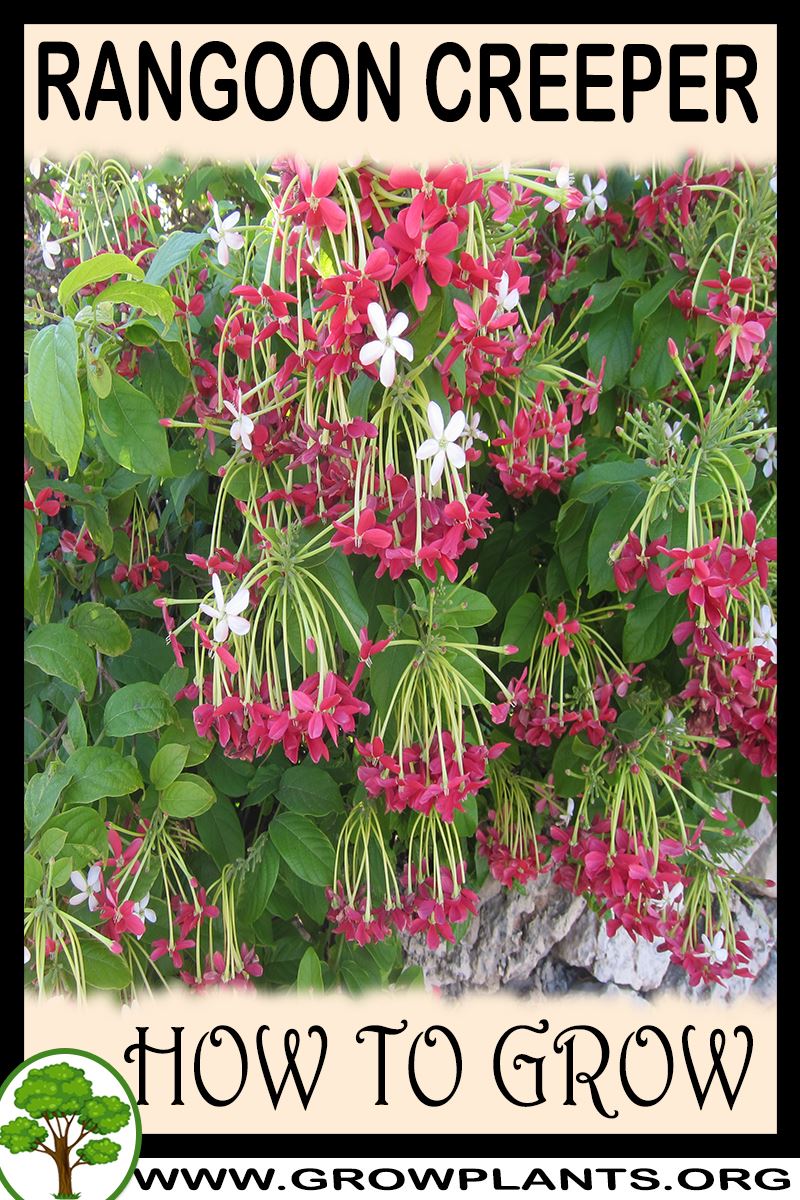
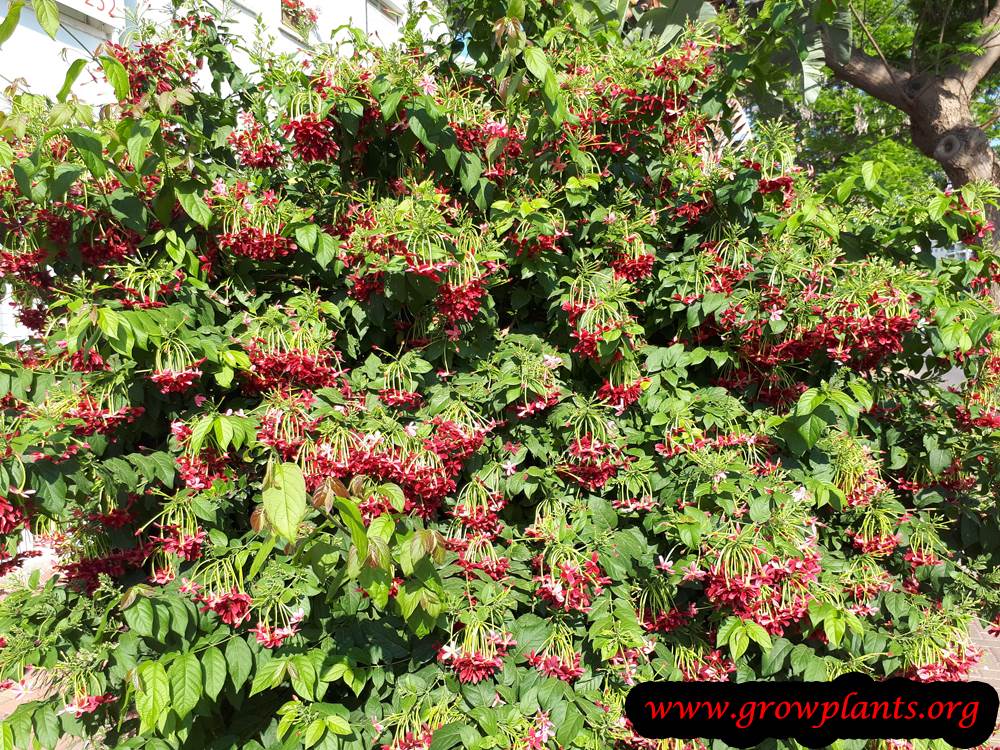
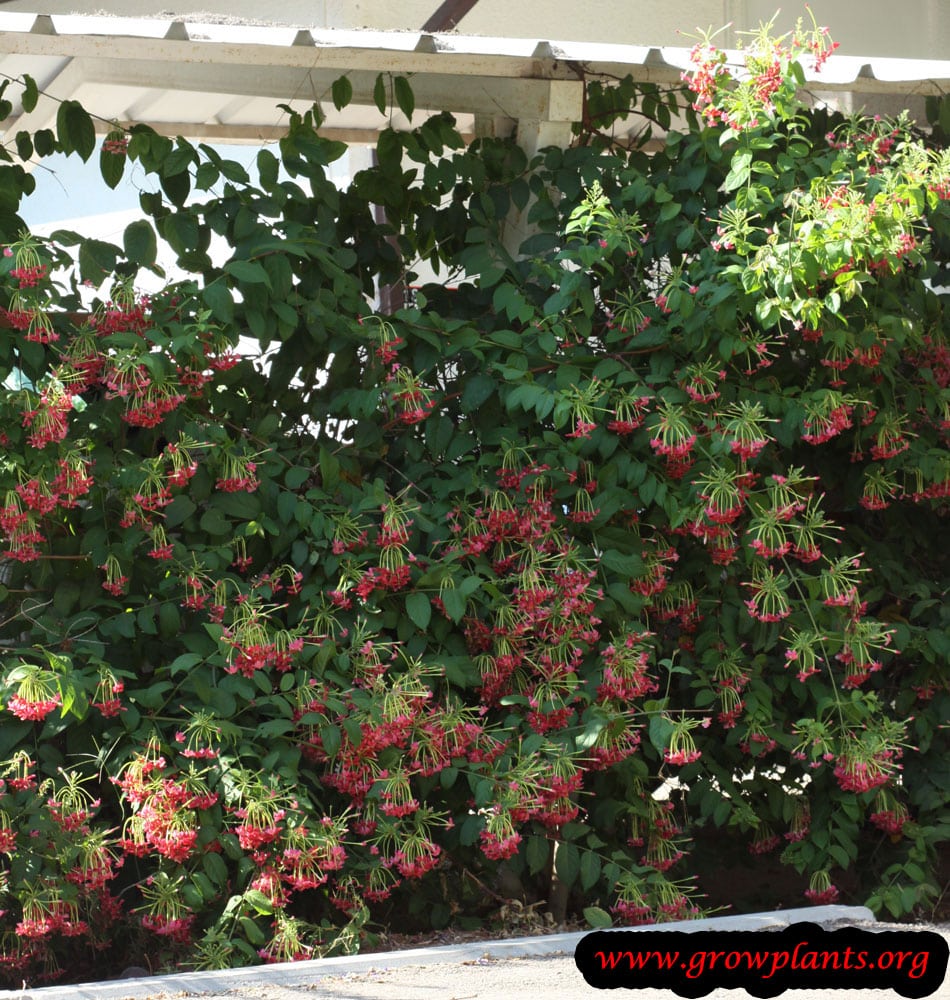
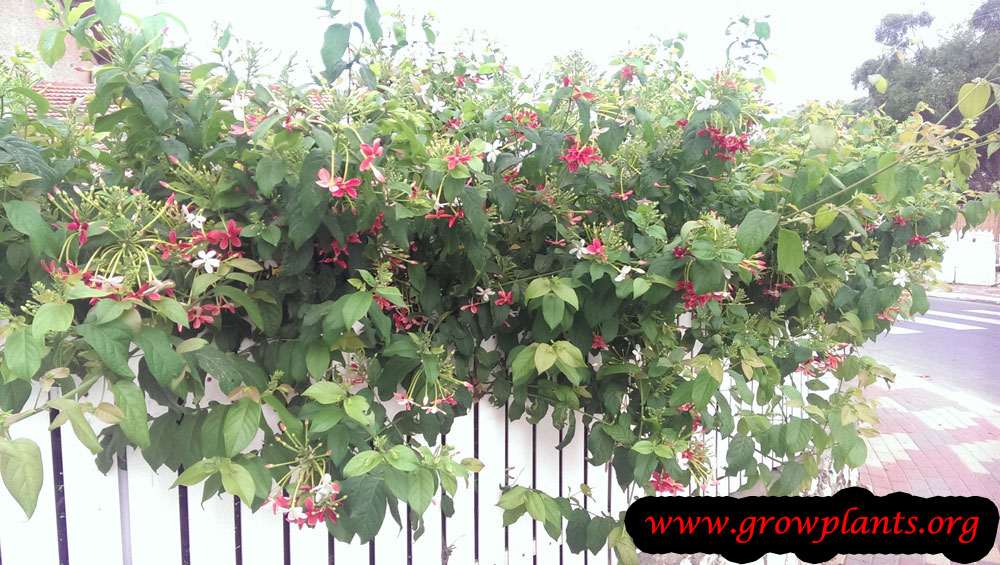
Overview: A vigorous fragrant woody climber (or trained shrub) reaching 1-10 m, grown for clustered flowers that open white and age to pink then red. It is evergreen in warm climates and needs controlling as it can be invasive.
Quick Specifications
| Specification | Attribute |
|---|---|
| Plant Type / Life Cycle | Perennial (evergreen to deciduous vine / shrub) |
| Foliage Type | Evergreen in warm climates; deciduous where cold |
| Mature Size | 1-10 m (3-30 ft) climbing |
| Growth Rate | Fast to moderate |
| Hardiness | USDA zone 9+ |
Growth Form & Structure
- Height & Spread: Climbs 1-10 m (3-30 ft); can be container-grown and needs regular control as it is invasive
- Growth Habit & Form: Scrambling woody vine (or trained shrub) that needs support
- Lifespan & Maturity: Fast-growing and long-lived, reaching size quickly
Anatomy & Physical Features
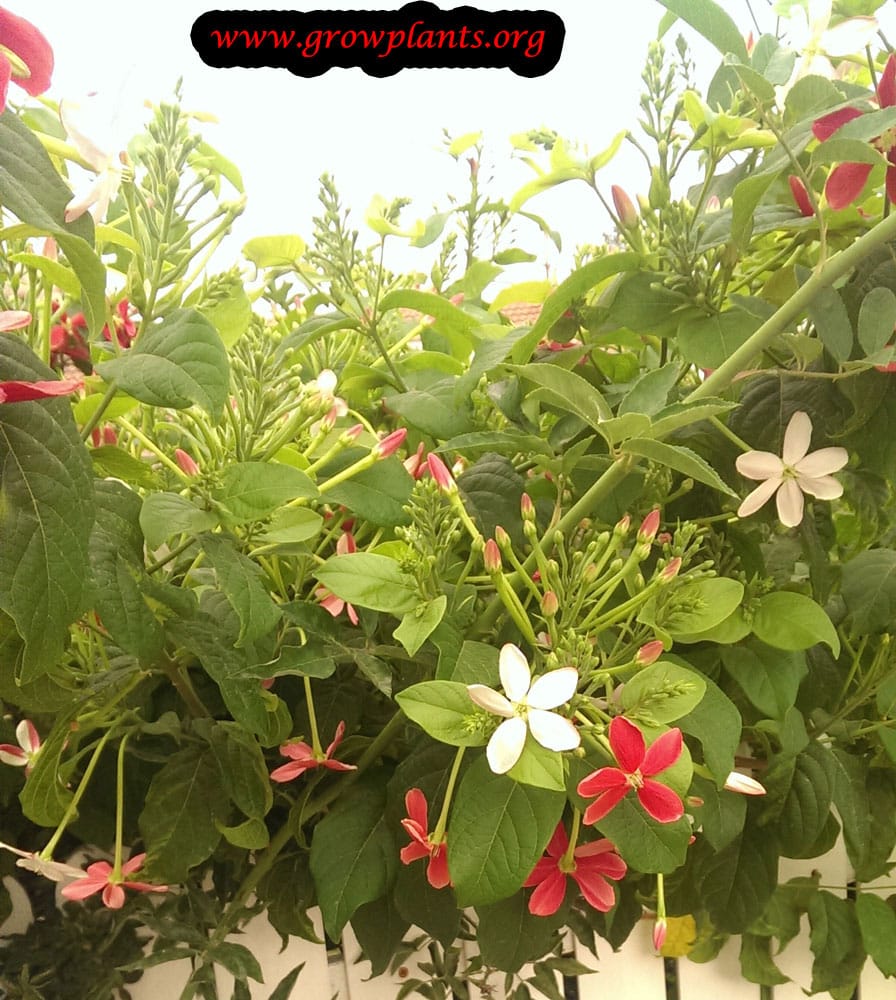
- Leaves & Foliage: Green elliptic leaves
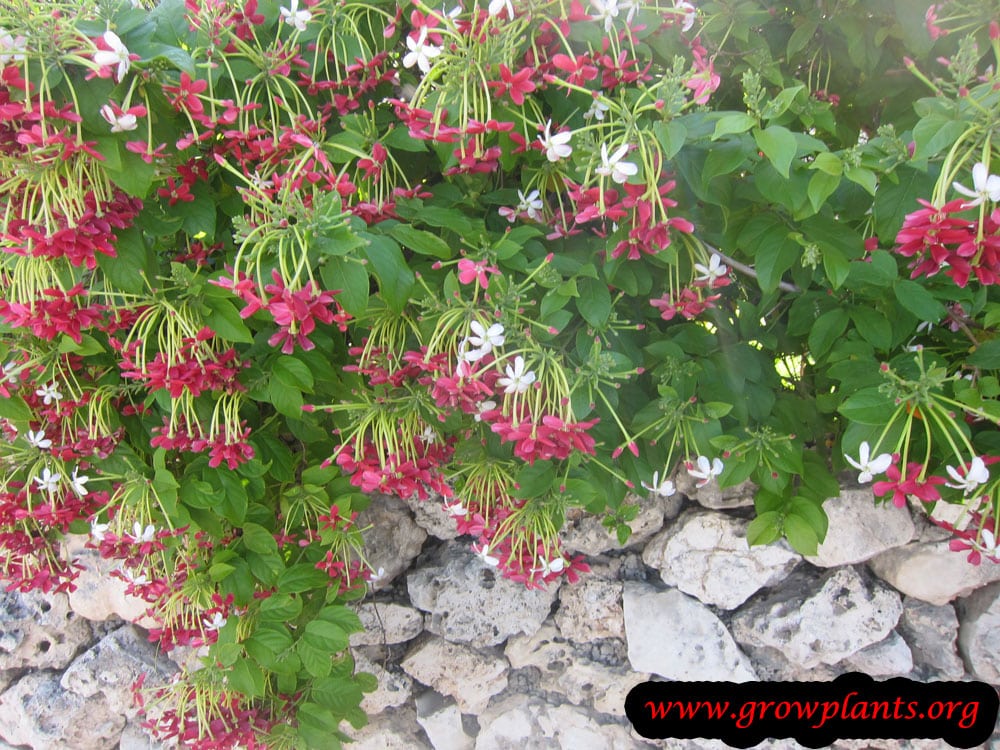
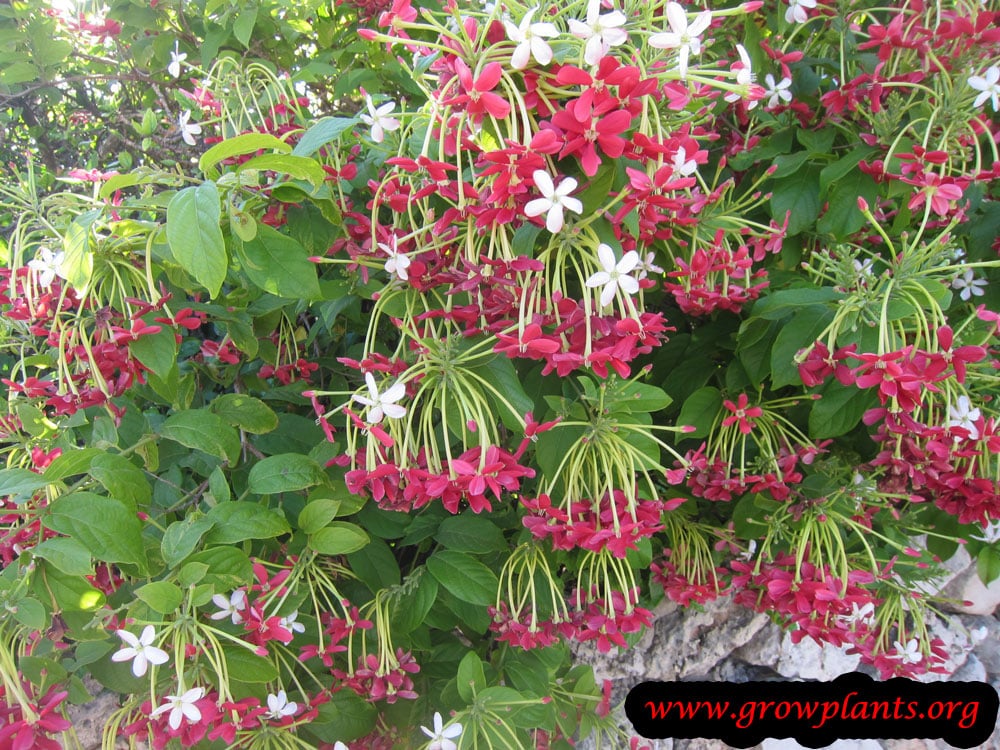
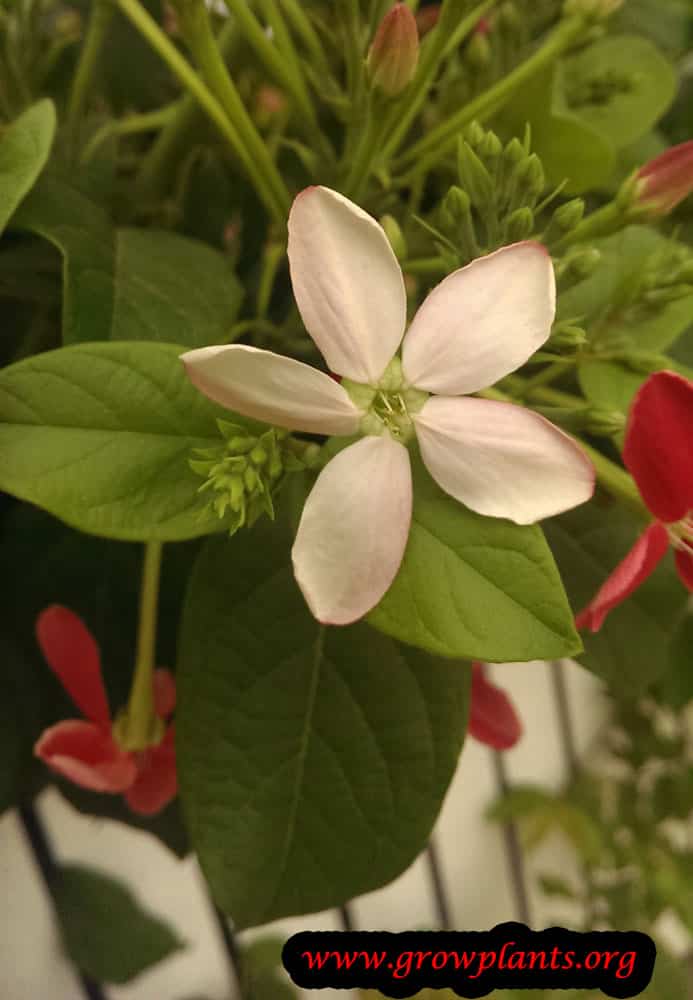
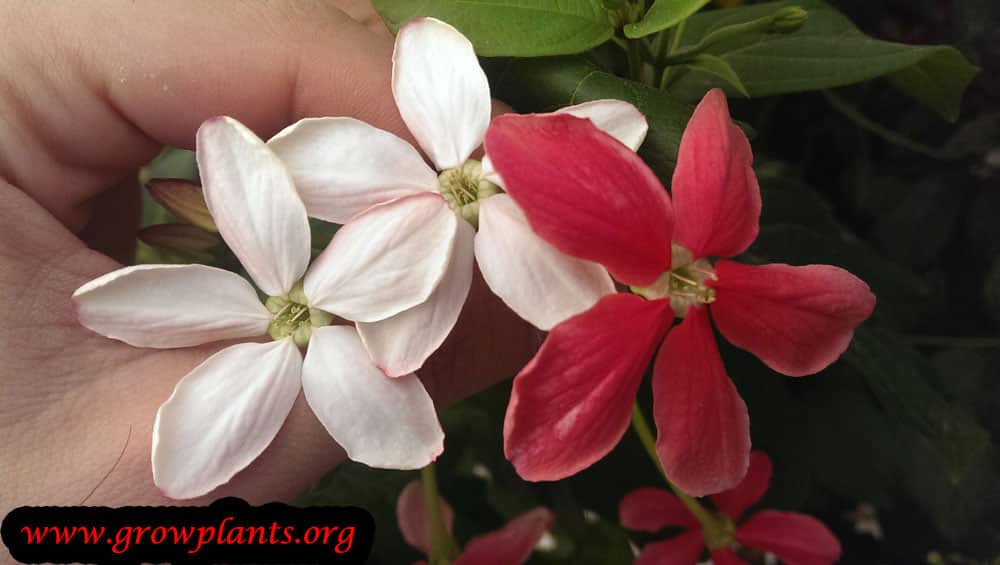
- Flower Characteristics: Fragrant five-petalled flowers in clusters that open white and age to pink then red (often several colours at once), with a yellow throat
Primary Uses & Landscape Value
- Functional & Ornamental Roles: Fragrant flowering climber for arbours, fences and pergolas; container-trainable and attracts pollinators
Care Guide: Planting, Soil & Watering
Overview: Rangoon creeper is a fast-growing, fragrant flowering vine or scrambling shrub (hardy to about zone 9, tolerating only light frost) that flowers in full sun to half shade. It prefers slightly acidic, well-draining soil, moderate watering and a strong support to climb.
Quick Care Requirements
| Requirement | Ideal Condition |
|---|---|
| Planting Season | In spring, summer or autumn |
| Growth Rate | Moderate to Fast |
| Soil Type | Slightly acidic, well-draining |
| Soil pH | Slightly acidic |
| Water Need | Moderate – keep evenly moist |
Planting & Establishment
- Best Planting Season: Plant in spring, summer or autumn in frost-free or nearly frost-free conditions; it tolerates no more than light frost.
- How to Plant:
- Hole Preparation: Dig a hole wider than the root ball and set a sturdy trellis or support in place at planting.
- Soil Amendments: Work in compost and organic matter; a slightly acidic, free-draining soil suits it best.
- Planting Depth: Set the root collar at soil level and firm gently.
- Growth Speed & Expectations: A fast, vigorous grower reaching 1–10 m (3–30 ft); it can be invasive, so prune and train it to keep it in bounds.
Soil, Watering & Drainage Care
- Soil Mix & Drainage Needs: Slightly acidic, free-draining soil prevents root rot; in containers use a well-aerated, slightly acidic potting mix.
- Watering Schedule & Technique:
- Young / Newly Planted: Keep newly planted vines evenly moist while they establish.
- Established: Water established plants moderately and regularly, letting the surface dry slightly between waterings.
- Seasonal Adjustments: More in summer heat; less in cool weather, and protect from frost in winter.
Climate, Light & Hardiness
Rangoon creeper is a tropical/subtropical vine or shrub suited to tropical, Mediterranean, subtropical, and temperate climates, doing best in full sun to half shade. It tolerates no more than light frost, so it is best suited to consistently mild or warm-winter regions.
Quick Climate Specifications
| Climate Zones | Tropical, Mediterranean, Subtropics, Temperate |
|---|---|
| USDA Hardiness Zones | 9+ |
| Frost Tolerance | Low |
| Light Conditions | Full Sun / Half Shade |
Sunlight & Light Exposure
Optimal Light Setup
Full sun to half shade both suit this vine.
Temperature Extremes & Hardiness
USDA Hardiness & Regional Limits
Reliable as a perennial from zone 9 upward; in cooler climates it behaves as cold deciduous rather than evergreen, and it is not suited to regions with regular hard freezes.
Cold Damage & Winter Protection
The site care notes specifically caution against more than light frost – anything beyond that is likely to cause significant damage.
Frost Sensitivity
Tolerates only light frost; hard freezes will damage or kill the plant, so protection or a warm microclimate is needed near the cold edge of zone 9.
Wind, Humidity & Microclimate
Microclimate Recommendations
A warm, sheltered site helps this vine perform reliably outside truly frost-free climates.
Growing in Pots, Balconies & Indoors
Rangoon creeper (Combretum indicum) is a vigorous tropical climber (1-10 m) with fragrant flowers that open white and age to red. The grower says it is not a houseplant but can be grown in a container – a big pot with a strong support suits this scented, sun-loving climber in warm climates.
Quick Details
- Container Size: A large, sturdy pot with a strong support or trellis
- Indoor Suitability: Not a houseplant – a vigorous tropical climber
- Best Spot: Full sun to half shade, outdoors
- Soil & Drainage: Rich, free-draining mix
- Watering in Pots: Average amount – steady moisture in warm growth
Indoors & On the Windowsill
- Not a houseplant: The grower confirms it will not grow indoors; it is a large tropical climber.
- Windowsill: Too vigorous for a sill – grow it outdoors on a support in warmth.
On a Balcony or Patio
- Light, wind & heat: Give it the brightest spot it will tolerate; walls and railings reflect heat and dry pots quickly, so check moisture often and shelter or stake exposed growth.
- Warmth & support: Give it a warm, sunny, sheltered spot and a robust trellis; prune after flowering to keep it in bounds. It is frost-tender.
Choosing the Pot, Soil & Long-Term Care
- Pot & drainage: A large, sturdy pot with a strong support. Use strong drainage holes and skip a standing-water saucer to avoid root rot. Terracotta breathes and dries faster; glazed or plastic holds moisture longer.
- Potting mix: A well-aerated, organic-rich mix – potting soil or peat/coir with perlite or vermiculite for free drainage.
- Feeding: Potted plants use up their soil faster as nutrients leach out with watering – feed lightly and regularly through the growing season.
- Repotting & pruning: Refresh the mix every couple of years and prune to control its size.
Fertilizing & Feeding
A vigorous flowering vine that benefits from regular light-to-moderate feeding through its long warm-season bloom, tapering off wherever winters bring cool or cold weather.
Quick Fertilizing Specs
| Feeding Level | Moderate feeder |
|---|---|
| Main Nutrient Priority | Balanced feeding with adequate nitrogen to fuel vigorous vine growth and the fragrant flower clusters |
| Best Feeding Period | Spring through the warm growing and flowering season |
| Organic Options | Compost or well-rotted manure worked into the soil |
| Reduce/Stop Feeding | Feeding tapers off or stops where winters bring cool or cold weather |
| Micronutrients | Usually met by a complete fertilizer and organic matter; correct only a diagnosed deficiency |
| Soil pH | Prefers slightly acidic soil |
Feeding by Growth Stage
Establishment after planting
Help newly planted vines root in and begin vigorous climbing growth.
| Nutrient direction | A balanced fertilizer with adequate nitrogen supports strong establishment. |
|---|---|
| Timing | At planting and through the first growing season. |
| Frequency | A light feeding at planting, continued lightly as roots establish. |
| Fertilizer types | A balanced complete fertilizer, Compost worked into the planting area |
| Precautions | Avoid heavy feeding right at planting; let roots establish before pushing top growth. |
Warm-season growth and fragrant bloom
Sustain vigorous vine growth and the long, fragrant flowering display.
| Nutrient direction | Regular balanced feeding with adequate nitrogen supports both healthy foliage and continued flowering. |
|---|---|
| Timing | Through the warm active growing and flowering season. |
| Frequency | Light, regular feedings through the warm season keep growth and bloom going. |
| Fertilizer types | A balanced complete fertilizer, Organic matter such as compost or aged manure |
| Precautions | Keep feeding proportional to growth; excess nitrogen can favor foliage over flowers. |
Cool-season slowdown
Let the vine slow down through cool or cold weather.
| Nutrient direction | None – withhold fertilizer while growth is slowed by cool weather. |
|---|---|
| Timing | During cool winter weather or where temperatures approach frost. |
| Frequency | No feeding at this stage. |
| Fertilizer types | No feeding at this stage; hold off fertilizing until warm-season growth resumes. |
| Precautions | Do not fertilize while growth is dormant or stalled by cold; wait for active growth to return. |
Nutrient Deficiency Signs & Corrections
Older leaves fade to pale green or yellow and flowering and growth both slow.
| Possible causes | low available soil nitrogen, nutrient leaching from heavy watering or rain, thin, low-organic-matter soil |
|---|---|
| Appears first on | older, lower leaves |
| What to check | recent feeding history, soil organic matter, watering and drainage |
| Possible correction | Apply a balanced fertilizer with available nitrogen and build soil organic matter. |
New leaves turn yellow between the veins while the veins themselves stay green.
| Possible causes | soil pH higher than this acid-preferring vine likes, poorly drained or compacted soil, root stress from transplanting |
|---|---|
| Appears first on | newest growth |
| What to check | soil pH, drainage and root health, recent transplant stress |
| Possible correction | Correct soil pH toward the slightly acidic range this vine prefers, or apply a chelated iron product per its label. |
Interveinal yellowing appears on older leaves while the veins stay green.
| Possible causes | low soil magnesium, leaching in light, sandy or frequently watered soils, high potassium feeding competing with magnesium uptake |
|---|---|
| Appears first on | older, lower leaves |
| What to check | soil magnesium status, soil texture and leaching, recent feeding balance |
| Possible correction | Apply a labeled magnesium source such as Epsom salt or a dolomitic amendment. |
Pruning, Training & Seasonal Maintenance
Rangoon creeper is a vigorous, woody scrambling vine (sometimes grown as a large shrub) that flowers on new growth produced through its warm-season flushes, so it tolerates firm control pruning without long-term loss of bloom. The main objective, reflected directly in its own care notes, is simply keeping this fast, sprawling grower in bounds and off structures it can quickly engulf. Winter, while growth has slowed and before the next spring flush begins, is the safest and most effective time for the main structural cutback, since it gives the plant a full growing season to produce the new wood that will carry its fragrant flower clusters.
Quick Pruning & Maintenance Specs
| Pruning Tolerance | Moderate–High |
| Primary Pruning Window | Winter (before spring growth flush) |
| Secondary Maintenance Window | Spring–autumn light containment trims |
| Typical Frequency | One firm annual cutback plus periodic containment during the growing season |
| Main Objective | Size/spread control on a fast, scrambling grower; maintain flowering wood |
| Young Plant Priority | Establish onto a trellis or support and select main climbing stems |
| Mature Plant Priority | Firm winter cutback to control size; thin dense tangled growth |
| Best Tool Type | Loppers and bypass secateurs; pruning saw for old thick stems |
| Avoid Heavy Pruning During | Main spring–autumn flowering flush |
Pruning by Plant Age & Size
Newly Established
Remove only damaged growth in the first year; tie or direct young stems onto a sturdy trellis, arbor or fence, since this species has a scrambling, semi-climbing habit rather than a self-supporting one.
Young / Formative
Select the main stems to form a permanent framework on the support; pinch tips of young growth to encourage branching and a fuller flowering framework.
Mature / Established
Firmly cut back the past season’s long, whippy growth each winter to control the plant’s naturally aggressive spread, keeping the permanent framework and just renewing the outer growth.
Seasonal Pruning Schedule
- Dormant/Winter (main cutback): objective is control of size and shape before the next growth flush; cut back the previous season’s long stems by up to a third to a half; do not remove the whole permanent framework; response is a vigorous new flush of growth that will carry the season’s flower clusters; no negative flowering impact since bloom follows on new growth produced after this cut.
- Summer Canopy Management: objective is ongoing containment of fast reach growth onto neighboring structures or plants; light trims as needed through the flowering season, avoiding removal of developing flower clusters where possible.
Flowering & Fruiting Wood
Rangoon creeper produces its fragrant clustered flowers on new growth put out during the warm growing season, so the winter control cutback (removing old, spent growth before the flush) does not sacrifice the coming display – heavy pruning right before or during the active flowering flush is what would reduce bloom, not dormant-season cutback.
Structural Pruning & Training
Maintain a clear permanent framework tied to its support and firmly control the vigorous, scrambling annual growth around it; thin out crowded, tangled interior stems periodically so the framework doesn’t collapse under its own weight or smother nearby plantings.
Special Growth to Remove
- Long, unsupported whippy stems reaching away from the trellis/support – cut back or tie in before they tangle with neighboring plants.
- Dense, crowded basal shoots on an established plant – thin to keep the framework open and manageable.
Container & Small-Space Pruning
In a container, prune harder and more often than an in-ground specimen to keep this naturally sprawling, fast grower in scale, and provide a compact trellis it can be tied to rather than letting it scramble loose.
Tools
- Loppers – the main winter cutback of long stems.
- Bypass secateurs – shaping cuts and tip-pinching young growth.
- Pruning saw – removing old thick stems if renovating a long-neglected specimen.
Tool Hygiene & Disease Risk
Routine care is sufficient – clean sharp tools between cuts. No major transmissible disease is documented for this species (aphids and mites are the noted pests, not pathogens spread by pruning).
Cut Placement & Technique
Use thinning or heading cuts back to a healthy bud or side-shoot; remove entire unwanted stems at their point of origin from the main framework rather than leaving long stubs.
Heavy Pruning & Rejuvenation
Tolerates a fairly hard renovation cutback if it has become overgrown or tangled, best done in winter; expect vigorous regrowth through the following growing season, with flowering resuming once new wood matures.
Post-Pruning Care
Water normally after cutback; no extra feeding is needed since the pruning itself stimulates regrowth. Watch fresh new growth for aphids and mites, the species’ noted pest issues.
Common Pruning Mistakes
- Leaving it unpruned, letting the naturally invasive, scrambling habit overwhelm supports and nearby plants.
- Cutting hard during the flowering flush and removing the current season’s fragrant blooms.
When NOT to Prune
Avoid a hard cutback in the middle of the main flowering flush, since it removes current blooms and the new growth that would otherwise extend the display; also hold off major cuts right after transplanting.
Recommended Tools (by task)
- loppers – the winter control cutback of long scrambling stems.
- bypass_secateurs – shaping and tip-pinching on young or trained growth.
- soft_ties_stakes – tying the main framework stems to trellis/support as it climbs.
Propagation Guide
Rangoon creeper (Combretum indicum) can be propagated from stem cuttings, layering and seed. Vegetative propagation is especially useful when you want a new plant with the same characteristics as the parent vine.
Quick Propagation Specs
| Best Propagation Methods | Stem cuttings and layering |
| Alternative Method | Seed |
| Vegetative True-to-Type | Yes |
| Propagation Difficulty | Moderate |
| Best Conditions | Warm conditions during active growth |
Stem Cuttings
Take healthy stem sections from vigorous, disease-free growth and insert them into a loose, well-drained rooting medium. Maintain warmth and even moisture while avoiding waterlogged conditions.
Layering
A flexible stem can be bent to the soil and a section held in contact with a moist rooting medium while it remains attached to the parent vine. Once a strong root system has developed, separate the rooted section and transplant it.
Growing from Seed
Fresh mature seed can also be sown in warm conditions. Seed-grown plants are genetically variable, so vegetative propagation is preferred when reproducing a particular parent plant.
Aftercare
Keep newly rooted plants warm and protected from severe drying until they establish. Provide support early because young Rangoon creeper plants develop into vigorous climbing vines.
Bloom & Flower Guide
Quick Details
- Bloom Season: Spring through autumn in warm climates
- Time to First Bloom: On established vines, usually within a couple of years
- Flower Appearance: Fragrant, five-petalled tubular flowers in hanging clusters that open white and age through pink to red, often showing all three colors at once; the throat is yellow
- Edibility: Not a culinary flower – grown as a fragrant ornamental
Detailed Blooming Overview
Rangoon creeper is loved for its intensely fragrant flowers, which open white in the evening and deepen to pink and then red as they age, so a single cluster can carry several colors at once. The scent is strongest at night, drawing in moths and butterflies.
Flower Characteristics
- Five-petalled tubular flowers with a yellow center, borne in hanging clusters.
- Fragrant and color-changing, opening white then turning pink and red.
Bloom Care & Thinning
- Support and pruning: A vigorous climber – give it strong support and prune after flowering to control size and encourage more blooms.
- Enjoying the scent: The evening fragrance is best appreciated near a path, door or window.
Fruit & Uses
Rangoon creeper is grown here as a fragrant ornamental vine, but in its native range the ripe seed kernel is traditionally eaten in small amounts and the flowers are used as a colorful, flavorless garnish; the seed also has a long history of traditional deworming use that carries a real risk of side effects, so it is not a food in the everyday sense. Eating more than a few seeds, especially fresh ones, is well documented to cause hiccups and other symptoms, so any use of the seed should be treated with caution rather than as a routine snack.
Quick Edible Specs
| Edible Parts | Ripe seed kernels; flowers (garnish only) |
| Main Use(s) | Traditional anthelmintic (medicinal-note only); ripe kernels tasted in small amounts; flowers as a decorative, flavorless garnish |
| Eaten Raw or Cooked | Seed kernels eaten raw once shelled; flowers used raw as garnish |
| Preparation Required | Remove the seed coat/shell before eating; keep portions small |
| Harvest Season | Fruit ripens from green to dark brown or blackish; seed is gathered once the five-winged fruit has matured |
| Time to First Harvest | Only mature, flowered vines that have set fruit will produce seed – see Blooming for flowering timing |
| Storage | Dry, mature seeds are preferable to fresh ones, which are more likely to cause hiccups |
| Safety/Toxicity Caveat | Eating more than a few seeds, especially fresh ones, can cause hiccups, nausea, vomiting, diarrhea, dizziness and other overdose symptoms; not appropriate for children beyond a token taste, and best avoided if unsure |
Seeds, Pods & Nuts
The five-winged, olive-shaped fruit turns from green to dark brown or blackish as it ripens; inside is a single seed kernel. The ripe kernel, once the outer seed coat is removed, is described as sweet and pleasant to taste in small quantity. The half-ripe fruit and seed are what is traditionally used in a decoction as a folk anthelmintic (deworming remedy) – this is a traditional-use note only, not a health claim, and should not be relied on as medicine. Fresh, un-dried nuts are more likely to bring on hiccups than dried ones, so any tasting should be limited to a small number of well-ripened, dried seeds, and larger amounts should be avoided.
Flowers & Flower Buds
The fragrant, tubular flowers open white and deepen through pink to red as they age, with five petals and a yellow throat. They are reported as edible but essentially flavorless, sometimes scattered into salads purely for color rather than taste. No special preparation is needed beyond picking clean, freshly opened blooms.
Preparation, Uses & Safety
Safety comes first with this plant: the seed is where the real caution lies. Traditional use is medicinal (a folk anthelmintic) rather than a food, and overdoing the seed – particularly fresh, un-dried kernels – is well documented to cause hiccups and, in larger amounts, nausea, vomiting, diarrhea, abdominal pain and dizziness. Because of this, seeds should never be treated as a casual snack, are not appropriate for children beyond perhaps a single kernel, and anyone unsure should skip eating the seed altogether. The flowers carry no such risk and can be used sparingly as a garnish. No cooking is needed for either part; the main preparation step is simply removing the seed’s outer coat and keeping portions small.
Pests, Diseases & Troubleshooting
Overview: Rangoon creeper is a vigorous, sun-loving tropical vine grown for its fragrant color-changing flowers, and it is generally tough and pest-resilient. Most trouble comes from soft-bodied sap feeders (aphids, spider mites, whitefly, scale, mealybugs) and occasional leaf-chewing caterpillars, plus foliar fungal spotting and powdery mildew in crowded, humid conditions. Keep it in strong light with airflow and lean feeding, and problems stay minor.
Quick Troubleshooting Overview
| Issue / Pest | Main Symptom | Primary Solution |
|---|---|---|
| Aphids | Sticky new shoots, curled leaves, sooty mold | Water jet, insecticidal soap, encourage predators |
| Spider mites | Fine stippling and webbing in hot, dry sites | Hose undersides, horticultural oil |
| Whitefly | Tiny white flies rise when disturbed; yellowing | Yellow sticky traps, insecticidal soap |
| Scale & mealybugs | Bumps or cottony clusters on stems, sticky honeydew | Prune, alcohol swab, horticultural oil |
| Caterpillars | Chewed, ragged leaves; frass below | Hand-pick, Bt spray |
| Leaf spot / powdery mildew | Brown spots or white powdery film in humid crowding | Airflow, remove leaves, sulfur/copper fungicide |
Common Pests & Management
- Aphids (Aphis spp.):
- Symptoms: Soft green, yellow or black insects massed on tender new shoots and flower buds; growth curls, honeydew turns surfaces sticky and sooty.
- Prevention & Control: Hose off colonies and conserve lady beetles and lacewings; use insecticidal soap for stubborn clusters and avoid excess nitrogen that drives soft growth.
- Spider mites (Tetranychus urticae):
- Symptoms: Fine pale stippling turning to bronzing, with fine webbing on leaf undersides during hot, dry spells.
- Prevention & Control: Raise humidity and hose the undersides; introduce predatory mites and spray horticultural oil or insecticidal soap if numbers rise.
- Whitefly (Bemisia/Trialeurodes spp.):
- Symptoms: Tiny white moth-like insects that flutter up in clouds when the vine is shaken; nymphs on leaf undersides cause yellowing and honeydew.
- Prevention & Control: Hang yellow sticky traps to monitor and reduce adults, spray insecticidal soap or oil on undersides, and support parasitic wasps (Encarsia).
- Scale insects (soft & armored scales):
- Symptoms: Immobile brown, tan or waxy bumps along stems and leaf veins; honeydew and sooty mold with soft scales, general decline when heavy.
- Prevention & Control: Prune out badly encrusted stems, scrub small numbers with an alcohol swab, and apply horticultural oil to smother crawlers, repeating as needed.
- Mealybugs (Planococcus/Pseudococcus spp.):
- Symptoms: Cottony white tufts in leaf axils and stem joints, sticky honeydew and stunted, distorted new growth.
- Prevention & Control: Dab colonies with alcohol, wash off with soapy water, and treat with horticultural oil or insecticidal soap; check nursery stock before introducing.
- Leaf-eating caterpillars (various moth larvae):
- Symptoms: Ragged chewed holes and notched leaf margins, with dark frass pellets below feeding sites.
- Prevention & Control: Hand-pick at dusk and apply Bacillus thuringiensis (Bt) for selective control; encourage birds and parasitic wasps.
Diseases & Fungal Issues
- Fungal leaf spot (Cercospora/Colletotrichum spp.):
- Symptoms: Brown to reddish spots, sometimes with yellow halos, that enlarge and merge in warm, wet, crowded conditions; heavy spotting causes leaf drop.
- Treatment & Management: Improve airflow, avoid overhead wetting, and remove and destroy spotted leaves; a copper fungicide protects new growth during prolonged wet weather.
- Powdery mildew (Erysiphe/Oidium spp.):
- Symptoms: White powdery patches on leaves and shoots, especially where air is still and humidity high; leaves may distort and yellow.
- Treatment & Management: Open up the canopy for airflow, water at the base, and treat with sulfur or potassium-bicarbonate sprays; avoid dense shade.
- Root rot in wet soil (Phytophthora/Pythium spp.):
- Symptoms: Wilting, yellowing and dieback despite moist soil, with dark, decayed roots in poorly drained ground.
- Treatment & Management: Plant in free-draining soil, water deeply but let the surface dry, and avoid waterlogging; there is no cure once roots collapse, so prevention is key.
Growing Difficulties & Abiotic Problems
- Poor flowering / all leaf
- Cause & Symptoms: Rich soil, excess nitrogen or too much shade give lush vines with few of the signature flowers.
- Correction Strategy: Site in full sun, feed lightly with a bloom-oriented (higher-phosphorus) fertilizer, and prune to encourage flowering wood.
- Leaf yellowing (chlorosis)
- Cause & Symptoms: Interveinal yellowing on new leaves in alkaline or cold, wet soil signals iron/manganese lock-out.
- Correction Strategy: Improve drainage, mulch, and apply chelated iron; keep soil slightly acidic to neutral.
- Cold damage
- Cause & Symptoms: As a tropical vine, it drops leaves or dies back after chilling and frost.
- Correction Strategy: Grow in a warm, sheltered spot or overwinter under protection in marginal climates.
- Sunburn on shade-grown plants
- Cause & Symptoms: Bleached patches when a shaded plant is suddenly moved to full sun.
- Correction Strategy: Acclimatize gradually to stronger light over one to two weeks.
What Helps – Products & Tools
Cultural steps come first: strong light, airflow, base watering and prompt removal of spotted leaves. Insecticidal soap, neem and horticultural oil cover aphids, mites, whitefly, scale and mealybugs; yellow sticky traps monitor whitefly, and Bacillus thuringiensis (Bt) handles caterpillars. For foliage disease use sulfur or potassium-bicarbonate against mildew and a copper fungicide for leaf spot. Follow the label and spray oils in the evening to protect pollinators.