



Plant Profile & Key Characteristics
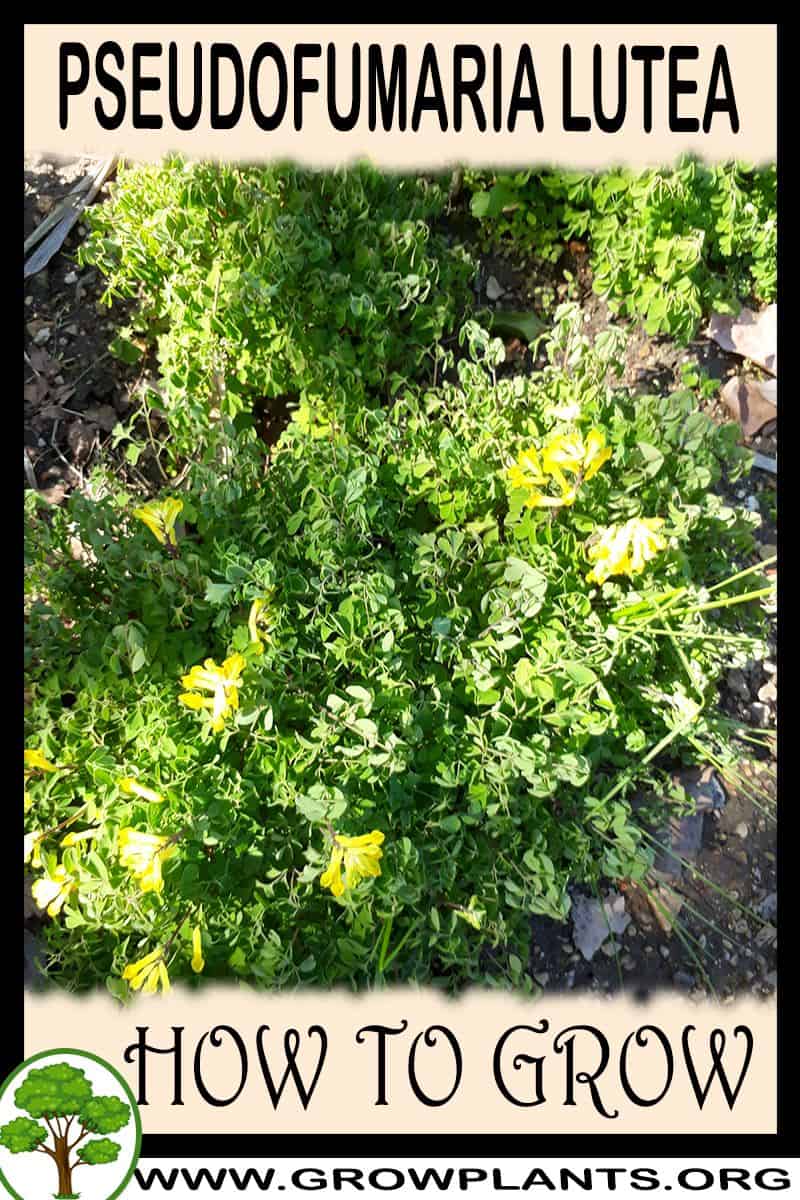
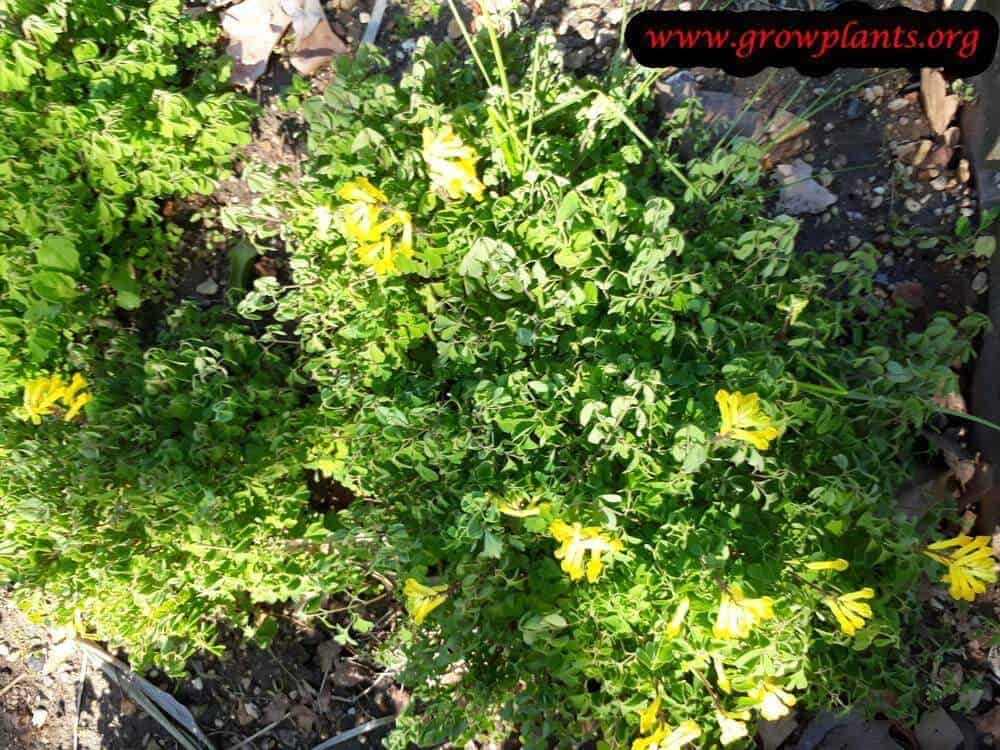
Overview: A small mounding herbaceous perennial 30-45 cm (12-18 in) tall with ferny blue-grey foliage that stays evergreen to semi-evergreen in mild climates. It is grown as an ornamental for walls, rockeries and shady borders, flowering for months and seeding itself into crevices.
Quick Specifications
| Specification | Attribute |
|---|---|
| Plant Type / Life Cycle | Herbaceous perennial (often short-lived, self-seeding) |
| Foliage Type | Evergreen to semi-evergreen (deciduous in hard winters) |
| Mature Size | 30-45 cm (12-18 in) tall, spreading a similar width |
| Growth Rate | Moderate to fast |
| Toxicity | Contains isoquinoline alkaloids and is regarded as toxic if ingested; handle as a non-edible ornamental |
| Hardiness | USDA zones 4-8 |
Growth Form & Structure
- Height & Spread: In the ground a low rounded clump 30-45 cm (12-18 in) high and about as wide; in a pot it stays compact and can also be grown indoors.
- Growth Habit & Form: Soft brittle-stemmed herbaceous mound of divided foliage that colonises walls and paving by prolific self-seeding.
- Lifespan & Maturity: Individual plants are often short-lived but the colony persists for years through self-sown seedlings, flowering in the first full season.
Anatomy & Physical Features
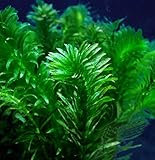
- Leaves & Foliage: Green to grey-green, finely divided fern-like leaves, triangular in outline with lobed margins and a delicate texture.
- Flower Characteristics: Small spurred tubular flowers in clear yellow, produced over a long spring-to-summer season.
Primary Uses & Landscape Value
- Functional & Ornamental Roles: One of the best plants for dry walls, rock gardens and crevices in sun or part shade; also good in containers and as a houseplant, prized for its long bloom and self-sustaining drifts.
Care Guide: Planting, Soil & Watering
Overview: This corydalis is a hardy, herbaceous perennial that thrives in cool, moist positions from full sun to full shade, in humus-rich, well-draining soil. It likes soil kept evenly moist and takes a moderate, steady supply of water.
Quick Care Requirements
| Requirement | Ideal Condition |
|---|---|
| Planting Season | In spring through summer, during the growing season |
| Growth Rate | Moderate to Fast |
| Soil Type | Humus-rich, moisture-retentive yet well-draining soil |
| Water Need | Moderate — keep the soil evenly moist, not letting it dry out |
Planting & Establishment
- Best Planting Season: Plant in spring or summer during active growth; it also self-seeds readily once settled in.
- How to Plant:
- Hole Preparation: Dig a hole a little wider than the root ball and the same depth, loosening the surrounding soil so roots establish easily.
- Soil Amendments: Work in compost or leaf mould to enrich the soil and help it hold moisture.
- Planting Depth: Set the crown right at soil level, not buried, to keep it from rotting.
- Growth Speed & Expectations: Expect a fast to moderate pace, the plant filling out quickly and often self-sowing into gaps.
Soil, Watering & Drainage Care
- Soil Mix & Drainage Needs: Give humus-rich soil that stays moist but drains freely; it grows happily in containers and even indoors, provided the pots drain well.
- Watering Schedule & Technique:
- Young / Newly Planted: Keep newly planted corydalis evenly moist while it roots in.
- Established: Water regularly to keep the soil lightly and evenly moist.
- Seasonal Adjustments: Water more in warm, dry weather and less in cool, damp conditions and over winter.
Climate, Light & Hardiness
Pseudofumaria lutea (yellow corydalis) is a very cold-hardy temperate perennial that adapts to a wide range of light, from full sun to full shade. It also tolerates warmer subtropical climates, making it an unusually flexible plant across cool and mild regions alike.
Quick Climate Specifications
| Climate Zones | Temperate, Subtropical |
|---|---|
| USDA Hardiness Zones | 4–8 |
| Frost Tolerance | High |
| Light Conditions | Full Sun, Half Shade, or Full Shade |
Sunlight & Light Exposure
Optimal Light Setup
Adapts to a broad range of light, from full sun through full shade, making it easy to place in most garden situations.
Shade & Heat Management
In the warmer, subtropical end of its range, part or full shade helps keep the plant comfortable during hot summer weather.
Best Exposure & Orientation
A woodland-edge style position with morning sun and afternoon shade suits it particularly well in warmer climates; more open sun is fine in cooler temperate areas.
Temperature Extremes & Hardiness
USDA Hardiness & Regional Limits
Hardy to USDA zone 4, indicating strong tolerance of cold northern-temperate winters with little risk of winter dieback within its rated range. It also extends into subtropical zone 8 conditions and can be grown as a houseplant outside its outdoor range.
Extreme Heat Tolerance
Reasonably heat tolerant given its subtropical range, though afternoon shade is a sensible precaution in hot climates.
Growing in Pots, Balconies & Indoors
Yellow corydalis is a dainty, long-flowering perennial the grower confirms grows both indoors and in containers. It is adaptable to sun or shade and self-sows freely; in a pot it makes a pretty, informal plant for a bright, cool spot, a shaded balcony, or a wall-top trough.
Quick Details
- Container Size: A medium pot for a single clump – 3-5 L is ample; it stays compact
- Indoor Suitability: A workable houseplant in a bright, cool spot; it prefers cooler conditions than a hot room
- Best Spot: Very adaptable – full sun to full shade; bright but cool indoors
- Soil & Drainage: Free-draining, gritty but humus-rich mix; it loves the sharp drainage of a wall or rockery
- Watering in Pots: Keep lightly, evenly moist; average water – never waterlogged, but do not let it bake dry
Indoors & On the Windowsill
- A workable houseplant: The grower confirms indoor growing. Give it bright light and, importantly, cool conditions – it resents a hot, stuffy room more than low light.
- Windowsill growing: A bright, cool sill suits it; it flowers over a long season and will drop seed to make new plants.
- Better cool: As a hardy wall/rockery plant it prefers cool, airy conditions and a cool winter rest – keep it out of dry heat.
On a Balcony or Patio
- Light & shelter: It is happy on a balcony or patio in sun or shade, in a trough or crevice; it self-seeds into gaps and shrugs off cold.
- Practicalities: Sharp drainage matters more than shelter – it copes with cool, breezy spots that many plants dislike.
Choosing the Pot, Soil & Long-Term Care
- Pot & drainage: A pot with strong drainage holes and no standing-water saucer; it hates soggy soil.
- Potting mix: A gritty but humus-rich, free-draining mix – potting soil opened up with grit or perlite.
- Feeding: Feed lightly through the growing season; it is not a hungry plant.
- Repotting: Refresh or divide every couple of years; it is short-lived but renews itself readily from self-sown seedlings.
Fertilizing & Feeding
A self-seeding, woodland-edge perennial that flowers over a long season on modest fertility; light, balanced feeding supports steady bloom without encouraging weak, floppy growth.
Quick Fertilizing Specs
| Feeding Level | Light to moderate – a modest feeder that flowers well without rich soil |
|---|---|
| Main Nutrient Priority | A balanced feed rather than a high-phosphorus ‘bloom booster’; adequate nitrogen alongside balance supports flowering |
| Best Feeding Period | Spring as new growth and flower buds begin |
| Reduce/Stop Feeding | Feeding stops once the plant dies back for its rest period |
Feeding by Growth Stage
Spring Growth
Support fresh foliage growth and bud formation as the plant breaks its rest period
| Nutrient direction | A balanced feed to support healthy new growth heading into the bloom period |
|---|---|
| Timing | Early spring as new leaves emerge |
| Frequency | A single light feeding as growth resumes is typically enough to carry the plant into bloom |
| Fertilizer types | Balanced granular or liquid feed, Compost worked lightly into the soil surface |
| Precautions | Avoid heavy nitrogen feeding, which can produce lush foliage at the expense of flowering |
Bloom Period
Sustain the plant’s characteristic long, repeat flowering display through the growing season
| Nutrient direction | A balanced feed rather than a phosphorus-heavy product; consistent overall nutrition supports repeat blooming |
|---|---|
| Timing | Through spring and summer while flowers continue to form |
| Frequency | Light, infrequent feeding through the bloom period keeps flowering steady without overfeeding |
| Fertilizer types | Balanced liquid or granular flowering-plant feed |
| Precautions | Do not favor a high-phosphorus product specifically for bloom; balanced nutrition is what sustains flowering here |
Dormancy or Rest
Allow the plant to die back and rest without pushing new growth out of season
| Nutrient direction | None – withhold fertilizer during the rest period |
|---|---|
| Timing | Once foliage naturally dies back after the flowering season |
| Frequency | No feeding at this stage |
| Fertilizer types | No feeding at this stage – resume only once new spring growth appears |
| Precautions | Do not fertilize dormant or dying-back growth; wait for new spring growth to resume feeding |
Nutrient Deficiency Signs & Corrections
Foliage looks pale or yellowish instead of its normal green-gray tone
| Possible causes | Nutrient-poor soil that has not been amended or fed in some time, Waterlogged or poorly drained soil limiting nutrient uptake, Too much shade reducing overall vigor |
|---|---|
| Appears first on | Whole-plant foliage color |
| What to check | Soil drainage and moisture retention at the planting site, How long since the bed was last fed or amended, Light exposure at the planting location |
| Possible correction | Improve drainage where the site is consistently wet and apply a light balanced feed in spring |
Foliage looks healthy but flowering is sparse or brief compared to a typical season
| Possible causes | Excess nitrogen from over-feeding favoring foliage over flowers, Insufficient light for a plant that prefers a woodland-edge setting, Root competition from nearby aggressive plants limiting available nutrients |
|---|---|
| Appears first on | Whole-plant flowering response |
| What to check | Recent feeding type and frequency, Light conditions across the growing season, Crowding from neighboring plants |
| Possible correction | Reduce nitrogen-heavy feeding in favor of a balanced product and confirm the site gets adequate dappled light |
Pruning, Training & Seasonal Maintenance
Pseudofumaria lutea (yellow corydalis) is a low, mounding herbaceous perennial with soft, ferny foliage and continuously produced small tubular flowers. It needs only light grooming, never any structural or woody pruning, and the main goal is prolonging bloom and tidiness through deadheading plus an autumn/winter cutback of the season’s spent growth as it declines. Because every part of the plant is noted as poisonous, wearing gloves for any cutting is a genuine safety point, not a generic caution.
Quick Pruning & Maintenance Specs
| Pruning Tolerance | Moderate (tolerates being cut back to the base once dormant) |
| Primary Pruning Window | Autumn/Winter cutback of declining growth |
| Secondary Maintenance Window | Ongoing deadheading through the Spring/Summer bloom |
| Typical Frequency | Regular light deadheading plus one autumn/winter tidy |
| Main Objective | Prolong flowering, remove spent stems, manage self-sown seedlings |
| Young Plant Priority | None – avoid cutting while the plant establishes |
| Mature Plant Priority | Deadhead spent flower stems; thin excess self-sown seedlings; cut back tired foliage in autumn |
| Best Tool Type | Precision snips |
| Avoid Heavy Pruning During | Peak spring/summer bloom flush |
Pruning by Plant Age & Size
Newly Established
No pruning beyond removing damaged growth; let the clump fill in.
Young / Formative
No structural training applies to this low, mounding herbaceous perennial.
Mature / Established
Routine deadheading of spent flower stems to encourage continued bloom, plus thinning of the volunteer seedlings this species readily self-sows, if a tidier, less spreading clump is preferred.
Seasonal Pruning Schedule
Ongoing Sanitary (through Spring/Summer bloom)
Objective: keep flowering going and the plant tidy. Remove: individual spent flower stems as they fade. Do not remove: healthy ferny foliage or unopened buds. Expected response: extended flowering display.
Dormant/Winter
Objective: clean up as top growth declines with cold. Remove: yellowed/collapsed foliage and old flower stalks. Do not remove: the basal crown. Expected response: a tidy dormant clump ready to resprout in spring.
Special Growth to Remove
- Spent flower stems – deadhead to prolong bloom.
- Self-sown seedlings – this species seeds itself readily around its base and into nearby cracks or paving; surplus seedlings can be pulled or snipped if a contained clump is preferred.
- Collapsed old foliage at season’s end.
Container & Small-Space Pruning
As a houseplant or container specimen, deadhead more frequently, since a confined pot has fewer flowers to spare and benefits most from prompt removal of spent stems. Watch for self-sown seedlings crowding the same pot.
Tools
Precision snips only – every cut here is on soft, thin flower stems and foliage.
Tool Hygiene & Disease Risk
Routine – clean tools; no notable disease-transmission risk is documented for this species, but wash tools and hands after cutting because of the plant’s toxicity, not for pathogen reasons.
Cut Placement & Technique
Deadhead by snipping the flowering stem down to where it emerges from the foliage mound, not partway up the bare stalk. Wear gloves for any cutback given this plant’s toxicity.
Heavy Pruning & Rejuvenation
A full cutback of the clump is tolerated once growth has declined in autumn/winter, but this is routine seasonal cleanup rather than a rejuvenation need – the plant is naturally short-lived and reseeding rather than woody and prone to overgrowth.
Post-Pruning Care
Water as normal; no extra feeding is needed after a light deadhead or the autumn cutback. Wash hands and tools after handling given the plant’s toxicity.
Common Pruning Mistakes
- Leaving spent flower stems on all season, shortening the overall bloom display.
- Pruning without gloves, given the poisonous sap.
- Removing every self-sown seedling if some natural, informal spread in a rock garden or wall setting is actually wanted.
When NOT to Prune
Avoid a hard cutback during the height of spring/summer bloom – it sacrifices the current flowering display for no horticultural benefit. Save full cleanup for when stems are genuinely spent, or the plant is going dormant in autumn/winter.
Recommended Tools (by task)
- precision_snips – deadheading individual flower stems and clearing old foliage on this soft-stemmed, non-woody perennial.
Propagation Guide
Pseudofumaria lutea is best and most easily propagated from seed, which it produces freely and which grows true to type since vegetative propagation is not needed for this species. It self-sows readily once established, making it one of the easier perennials to propagate at home.
Quick Propagation Specs
| Best Propagation Method | Seed (including self-sowing) |
| Alternative Methods | Division of established clumps |
| Propagation Difficulty | Easy |
| Seed True-to-Type | Yes |
| Vegetative True-to-Type | Yes, but not necessary for this species |
| Best Propagation Season | Spring / Summer |
| Seed Germination Time | Variable, often several weeks; may be quicker after a cold period |
Growing from Seed
Seed Handling & Viability
As with many Fumariaceae, seed viability can decline fairly quickly once dried, so sowing reasonably fresh (or allowing the plant to self-sow where it grows) tends to give the best results.
Dormancy & Pre-Sowing Treatment
A period of cool, moist conditions (such as an outdoor autumn/winter sowing) can help trigger germination in spring; this is not always essential but is a cautious, commonly used approach for this genus.
Sowing Season
Spring or summer, matching the plant’s recommended planting season; self-sown seedlings often appear on their own where an established plant is growing.
Germination Conditions
Keep the sowing medium moist; germination can be irregular and spread out rather than a single uniform flush.
Division, Offsets, Pups & Suckers
Established clumps can also be lifted and divided, though seed (including natural self-sowing) is the more practical route for most growers.
Bloom & Flower Guide
Quick Details
- Bloom Season: Spring into summer, often continuing over a long period
- Flower Appearance: Small yellow tubular flowers with a narrow throat, held in loose clusters above ferny foliage
- Edibility: Not for eating – the plant contains alkaloids; grown as an ornamental only
Detailed Blooming Overview
Pseudofumaria lutea (yellow corydalis) is a soft-leaved perennial that flowers generously from spring into summer, and often longer in mild spots. The small yellow flowers are tubular with a slim, throat-like mouth and a short spur, carried in airy clusters above blue-green, ferny foliage. It self-seeds freely, tucking itself into wall crevices and shady corners where it is a welcome, long-blooming filler.
Flower Characteristics
- Small, tubular and yellow, with a narrow throat and short spur.
- Held in loose clusters above ferny, blue-green leaves.
- Produced over a long season, self-seeding readily.
Bloom Care & Thinning
- Prolonging bloom: A cool root run and light shade keep it flowering longest; it rarely needs deadheading.
- Managing seedlings: Remove unwanted volunteers while young if you want to limit its spread.
- Handling: The plant contains alkaloids – keep it out of reach of anyone likely to nibble.
Pests, Diseases & Troubleshooting
This is an easy, largely trouble-free wall and woodland perennial (formerly classed in Corydalis) with few serious enemies; the main risks come from soft new growth and from excess moisture rather than from persistent pests. Manage it culturally — good drainage, air movement and restraint with watering — and reach for treatments only when a specific problem appears. Because it self-sows freely, the most common “complaint” is over-abundant seedlings, not disease.
Quick Troubleshooting Overview
| Issue / Pest | Main Symptom | Primary Solution |
|---|---|---|
| Aphids | Sticky, distorted new shoots and flower stalks; clusters of small green/grey insects | Blast off with water; encourage ladybirds/lacewings; insecticidal soap if heavy |
| Slugs & snails | Ragged holes in seedlings and tender leaves, slime trails | Hand-pick at dusk, remove debris, use barriers or iron-phosphate bait |
| Downy mildew | Yellow blotches above, grey-purple fuzz beneath leaves | Improve airflow, remove affected foliage, avoid overhead watering |
| Crown / root rot | Sudden collapse, blackened crown in wet, heavy soil | Sharpen drainage; never let the crown sit waterlogged |
| Excess self-seeding | Seedlings appearing throughout beds and paving cracks | Deadhead before seed sets; hoe or pull unwanted seedlings while young |
Common Pests & Management
- Aphids (Aphis spp. / Myzus persicae):
- Symptoms: Small sap-sucking insects massing on the softest new shoots, flower stems and leaf undersides, leaving sticky honeydew and sometimes sooty mould; growth becomes puckered and distorted. Look-alikes include harmless springtails, but aphids cluster and are slow-moving.
- Prevention & Control: Start with a firm jet of water to dislodge colonies and encourage natural predators (ladybirds, hoverfly and lacewing larvae, parasitic wasps) by avoiding broad-spectrum sprays. Pinch out heavily infested tips. If numbers persist, an insecticidal soap or a light horticultural-oil spray, applied in the cool of evening to protect pollinators, will clear them.
- Slugs & snails (Gastropoda):
- Symptoms: Irregular holes chewed in low leaves and seedlings, with tell-tale silvery slime trails; damage appears overnight and is worst in damp, shaded, mulch-rich spots where this plant thrives. Seedlings can be grazed to the ground.
- Prevention & Control: Clear leaf litter and hiding places near the crown, water in the morning so surfaces dry by night, and hand-pick after dark. Copper tape, grit or crushed shell barriers help around prized clumps; iron-phosphate pellets are a pet-safe bait if pressure is high.
- Vine weevil (Otiorhynchus sulcatus):
- Symptoms: Adults notch leaf margins in a distinctive scalloped pattern at night; the far more damaging white, C-shaped larvae feed on roots and crown, causing wilting and collapse of container-grown plants in particular.
- Prevention & Control: Inspect the root zone of potted plants when repotting, keep pots off the ground, and encourage ground beetles and birds. Beneficial nematodes (Steinernema/Heterorhabditis) drenched into moist, warm soil target the grubs biologically.
Diseases & Fungal Issues
- Downy mildew (Peronospora spp.):
- Symptoms: Pale yellow angular patches on the upper leaf surface with a greyish to violet downy growth on the underside in humid conditions; leaves yellow and drop. Distinguish from powdery mildew, which sits as a white bloom on the upper surface.
- Treatment & Management: This is a moisture-and-crowding disease: thin dense clumps, water at the base early in the day, and clear fallen leaves. Remove and bin affected foliage promptly. In persistent cases a copper-based or approved downy-mildew fungicide can be used, but cultural airflow is the real cure.
- Powdery mildew (Erysiphales):
- Symptoms: A white to greyish powdery coating on leaves and stems in warm, still, humid weather, sometimes with leaf yellowing and early senescence; more cosmetic than fatal on this plant.
- Treatment & Management: Space plants for airflow, avoid drought stress, and remove badly affected leaves. Potassium-bicarbonate, sulphur or a light horticultural-oil spray manages outbreaks; avoid sulphur in high heat.
- Rust (Puccinia spp.):
- Symptoms: Small orange to brown raised pustules on leaf undersides with corresponding pale spots above; heavy infection yellows and drops foliage. Uncommon but reported in the fumitory group.
- Treatment & Management: Remove and destroy infected leaves, avoid wetting foliage, and improve spacing. Rarely warrants chemical control; a sulphur or copper fungicide is available for severe, recurring cases.
Growing Difficulties & Abiotic Problems
- Crown & root rot from wet soil:
- Cause & Symptoms: The plant is short-lived and resents waterlogging; in heavy, poorly drained soil or over-watered pots the crown blackens, the plant wilts despite moist soil, and collapses — classic root-rot symptoms from Pythium/Phytophthora-type conditions.
- Correction Strategy: Plant in gritty, free-draining soil, ideally in a wall crevice or raised position, and let the surface dry between waterings. Improve heavy beds with grit and organic matter; never mulch tight against the crown.
- Short-lived / self-seeding “decline”:
- Cause & Symptoms: Individual plants are naturally short-lived and may fade after a few seasons, which can be mistaken for disease; meanwhile prolific self-sowing produces seedlings in paving and beds.
- Correction Strategy: Allow some self-seeding to renew the colony, or deadhead to control spread. Lift and thin seedlings while small, and welcome the fact that fresh plants readily replace tired ones.
- Leaf scorch in full sun / drought:
- Cause & Symptoms: In hot, dry, exposed positions leaf margins brown and the plant looks tired, as it prefers cool, part-shaded, moist-but-drained sites.
- Correction Strategy: Site in dappled shade or a north/east-facing crevice, keep roots cool with a light gritty mulch, and water in prolonged dry spells to avoid stress.
What Helps – Products & Tools
For this easy plant, cultural care does most of the work. Keep on hand a simple insecticidal soap or horticultural (neem) oil for occasional aphids, iron-phosphate slug bait and copper/grit barriers for seedlings, and a copper fungicide in reserve for downy mildew or rust in damp seasons. Beneficial nematodes are the go-to for vine-weevil grubs in pots.