

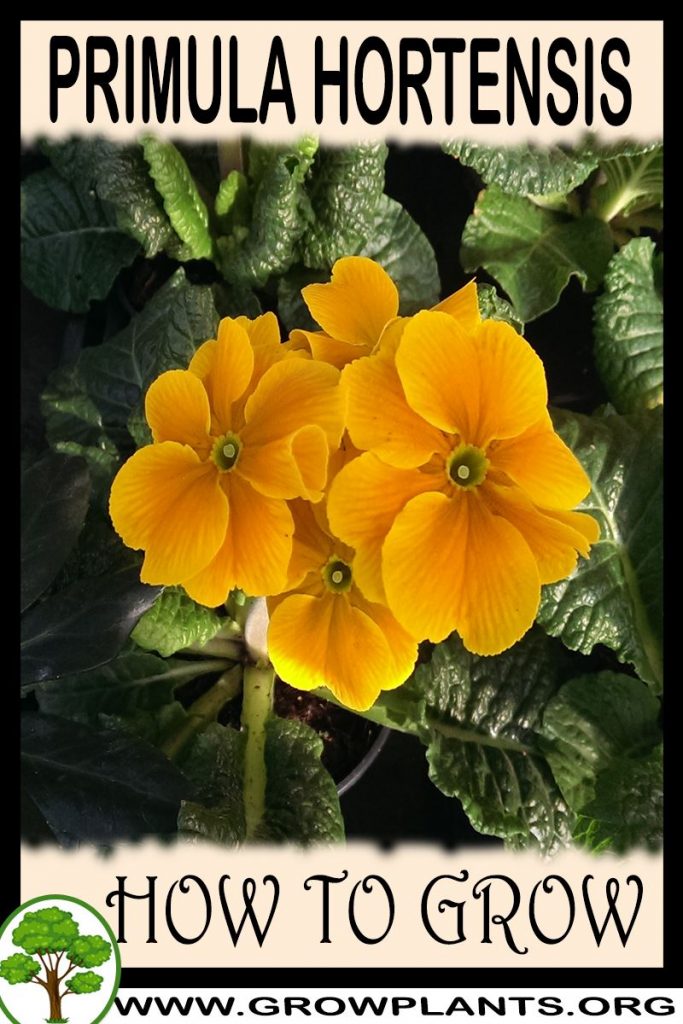
Plant Profile & Key Characteristics
Overview: A low, rosette-forming herbaceous primrose of the genus Primula, about 10-40 cm (4-16 in) high, usually grown as a cool-season ornamental. It is a perennial often treated as an annual, flowering from winter into spring in a wide range of colours.
Quick Specifications
| Specification | Attribute |
|---|---|
| Plant Type / Life Cycle | Herbaceous perennial, often grown as an annual |
| Foliage Type | Evergreen in mild climates (semi-evergreen) |
| Mature Size | 10-40 cm (4-16 in) tall |
| Growth Rate | Moderate to fast |
| Hardiness | USDA zones 4-10 |
Growth Form & Structure
- Height & Spread: A compact, low plant 10-40 cm (4-16 in) high forming a neat leafy rosette; ideal for pots, window boxes and as a short-term flowering houseplant.
- Growth Habit & Form: Clump-forming rosette; the leaves radiate from a central crown and flowers are held on short stems just above the foliage.
- Lifespan & Maturity: A short-lived perennial usually treated as a seasonal (winter-to-spring) bedding plant; grows quickly to flowering size.
Anatomy & Physical Features
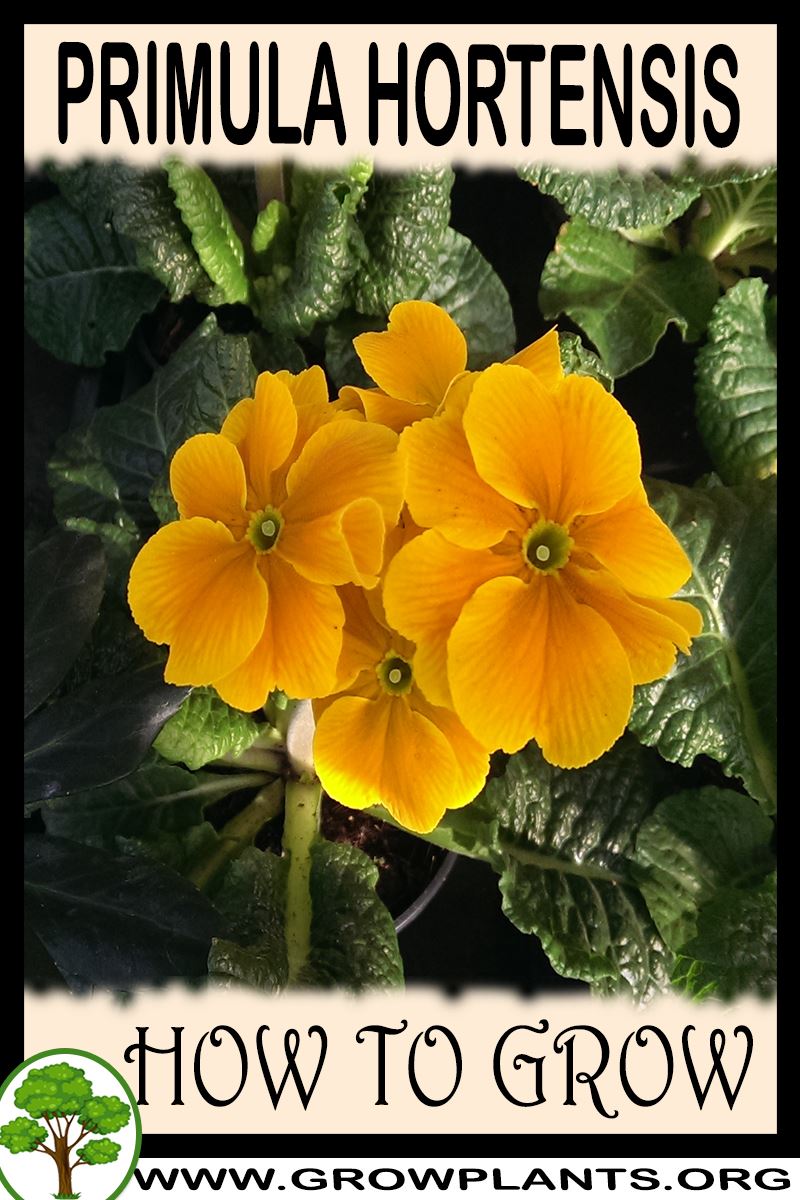
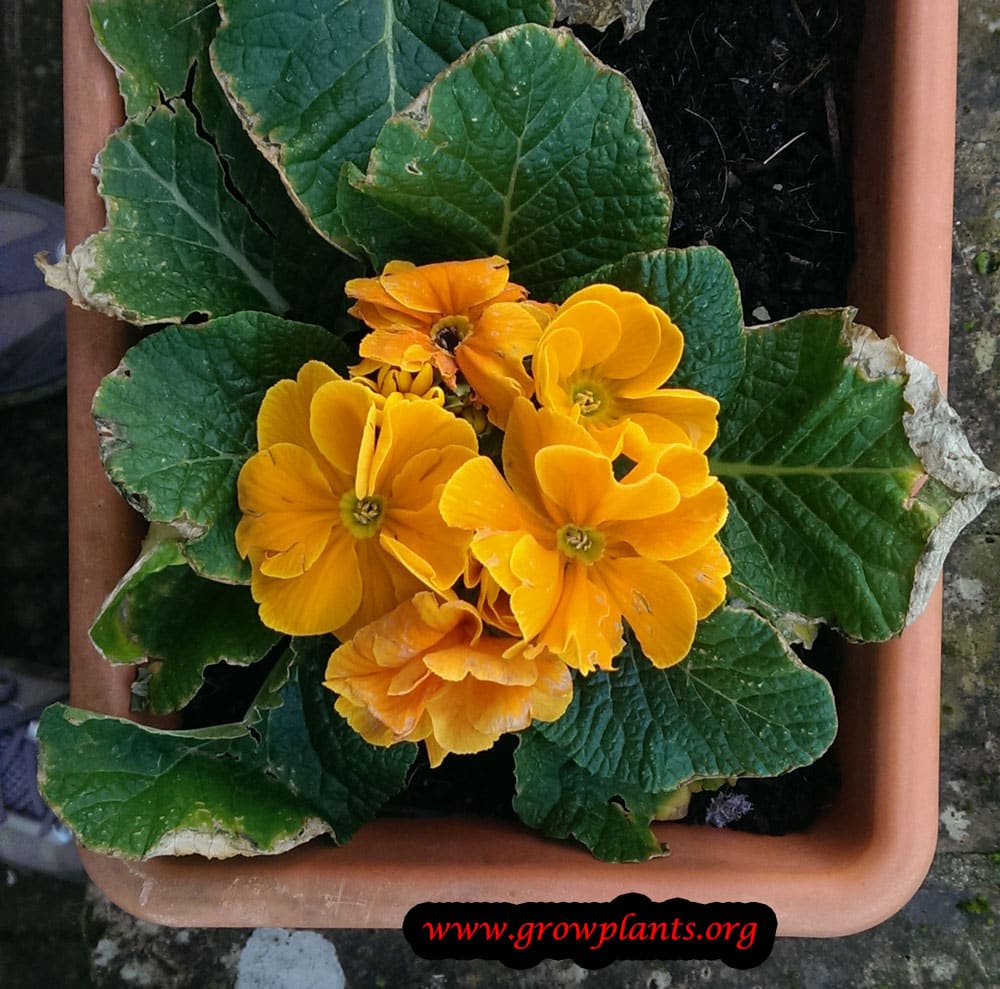
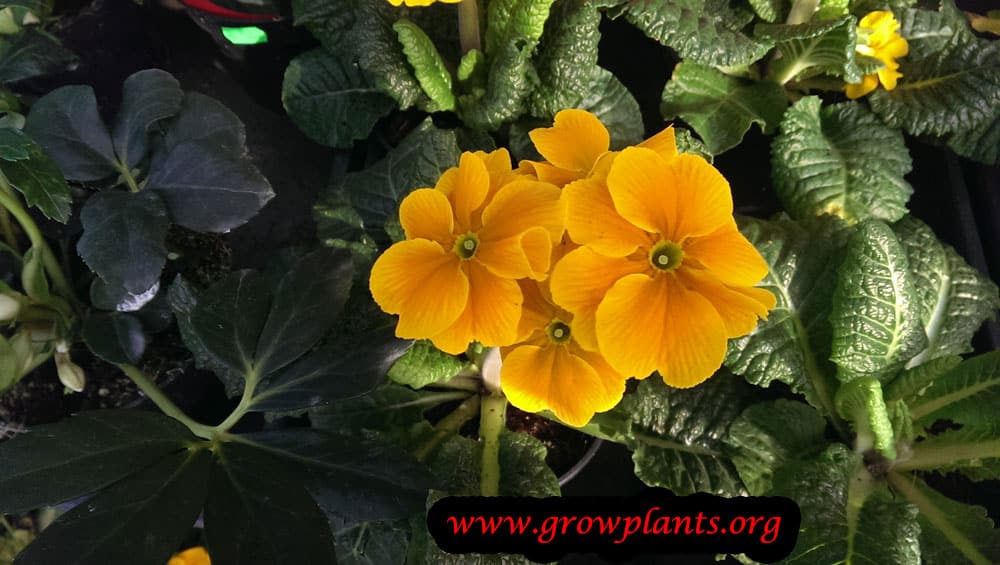
- Leaves & Foliage: Green, elliptic leaves with a puckered (bubbled) texture, arranged in a basal rosette.
- Flower Characteristics: Orange or yellow flowers with rounded, sometimes heart-shaped petals, held just above the foliage in winter to spring.
Primary Uses & Landscape Value
- Functional & Ornamental Roles: A popular cool-season ornamental for beds, borders, containers and window boxes, and as a short-lived flowering pot plant indoors, giving colour from winter into spring.
Care Guide: Planting, Soil & Watering
Overview: Primula is a cool-season plant that thrives in the mild, moist conditions of autumn through spring, in dappled to full shade, in rich, humus-heavy, well-draining soil. It likes soil kept consistently moist and never allowed to dry out, with a moderate to generous supply of water.
Quick Care Requirements
| Requirement | Ideal Condition |
|---|---|
| Planting Season | In cool weather — autumn to winter in mild/warm zones (zone 10), and late winter to spring in colder areas |
| Growth Rate | Moderate to Fast |
| Soil Type | Rich, humus-heavy, moisture-retentive yet well-draining soil |
| Water Need | Moderate to High — keep the soil consistently moist, never letting it dry out |
Planting & Establishment
- Best Planting Season: Plant during the cool season — autumn through winter where winters are mild (zone 10), or late winter to spring in colder regions — so roots establish before summer heat.
- How to Plant:
- Hole Preparation: Dig a hole a little wider than the root ball and the same depth, loosening the surrounding soil so roots knit in easily.
- Soil Amendments: Work in plenty of compost or leaf mould to enrich the soil and help it hold moisture.
- Planting Depth: Set the crown right at soil level — keep it at the surface, not buried, to avoid crown rot.
- Growth Speed & Expectations: Expect a moderate to fast pace, plants forming full rosettes and flowering within their first cool season.
Soil, Watering & Drainage Care
- Soil Mix & Drainage Needs: Give humus-rich, moisture-retentive soil that still drains well; in pots use a quality compost-based mix, keep it from drying out, and make sure the pots drain freely. It is well suited to containers and, for some types, indoor culture.
- Watering Schedule & Technique:
- Young / Newly Planted: Keep newly planted primulas evenly moist at all times while they root in — they resent drying out.
- Established: Water regularly so the soil stays consistently moist, watering at the base to keep the crown and foliage dry.
- Seasonal Adjustments: Water more in warm, dry spells and less in cool, damp weather; give extra shade and moisture through summer heat.
Climate, Light & Hardiness
Primula (Primula hortensis) is a cool-season perennial, often grown as an annual, that flowers in the cool of winter and spring and prefers moist, part- to fully shaded positions. It is cold-hardy across roughly USDA zones 4–10, but summer heat - not winter cold - is what limits it, driving decline or dormancy where summers are hot.
Quick Climate Specifications
| Climate Zones | Cool temperate, Mediterranean and cool subtropical |
|---|---|
| USDA Hardiness Zones | Approximately 4–10 |
| Optimal Temp Range | Approximately 10–20 °C (50–68 °F); cool conditions preferred |
| Cold Damage Begins | Open flowers nipped by hard frost around −3 °C (27 °F) |
| Approx. Survival Minimum | Hardy crowns survive to about −34 °C (−30 °F); varies by cultivar |
| Frost Tolerance | Moderate (open flowers: Low) |
| Light Conditions | Part shade to full shade |
| Wind Tolerance | Low to Moderate |
| Salt / Coastal Tolerance | Low |
Sunlight & Light Exposure
Optimal Light Setup
Grow it in part to full shade, or in cool climates in a spot with gentle morning sun. Deep shade suits it in warm regions, where hot direct sun quickly stresses the soft rosette of leaves.
Shade & Heat Management
Shade through the middle and afternoon of the day, plus a cool, moist, mulched root-run, is the key to carrying plants through warm spells; heat and sun together are the fastest way to lose them.
Best Exposure / Orientation
A north- or east-facing bed, or the dappled shade beneath deciduous shrubs, gives the cool, bright, sheltered conditions it flowers best in.
Temperature Extremes & Hardiness
USDA Hardiness & Regional Limits
Across roughly USDA zones 4–10 the crown is cold-hardy, so winter rarely sets the limit. In warm-winter regions (around zone 10) it is grown for autumn-to-spring colour and often treated as an annual, because it cannot persist through a hot summer - cold tolerance and this annual habit are separate matters.
Cold Damage & Winter Protection
Foliage is hardy and the plant flowers on into cold weather, though open blooms can be browned by hard frost and recover as new buds follow. In the coldest zones a light winter mulch protects the crown, and container plants need extra shelter as their roots freeze faster.
Frost Sensitivity
The plant itself is frost-tolerant, but the delicate flowers are more sensitive and may be marked by a severe freeze; this rarely harms the long-term health of an established clump.
Extreme Heat Tolerance
Heat is the defining limit: prolonged warmth above the low-20s Celsius causes wilting, stress and summer dormancy or death, so in hot-summer climates it is best enjoyed as a cool-season display and renewed each year.
Wind, Humidity & Microclimate
Humidity Preferences
It likes cool, moist air and steady soil moisture, reflecting its woodland-edge origins; hot, dry atmospheres accelerate summer decline.
Dry-Air Tolerance
Dry-air tolerance is low - combined heat and dry air quickly scorch the soft leaves - so a humid, shaded pocket is far better than an open, exposed site.
Wind Tolerance
The low rosette is not greatly troubled by wind, but drying wind adds to heat stress, so some shelter helps keep foliage and flowers fresh.
Coastal / Salt Tolerance
It has little salt tolerance and is best kept away from direct coastal spray, in sheltered garden or container settings.
Rainfall & Seasonal Moisture
Adapted to climates with reliable cool-season moisture, it performs poorly in regions with long, hot, dry summers unless grown in shade with steady watering or simply replaced annually.
Microclimate Recommendations
Choose a cool, shaded, sheltered pocket with moist, humus-rich soil - the north side of a wall or under shrubs - to extend the flowering season and ease the plant through warmth.
Growing in Pots, Balconies & Indoors
Primroses (Primula) are classic cool-season pot plants – superb in containers, window boxes and as short-term flowering houseplants. The grower confirms them indoors and in pots. They want it cool, bright and moist; a hot, dry room shortens the display.
Quick Details
- Container Size: Small pots, packs or window boxes – excellent for massed cool-season colour
- Indoor Suitability: Genuine houseplant in bright, cool light
- Best Spot: Bright, cool light; half to full shade outdoors, out of hot sun
- Soil & Drainage: Aerated, organic-rich, moisture-retentive potting mix
- Watering in Pots: Keep evenly moist – never bone dry; pots dry quickly
Indoors & On the Windowsill
- Genuine houseplant (cool & bright): The grower confirms it indoors. Primroses make lovely flowering pot plants, but they want cool, bright conditions – a warm, dry room cuts the display short. A bright windowsill out of hot sun is ideal.
- Keep it moist: Keep the mix evenly moist and the light good; deadhead spent flowers to prolong bloom.
- Skin note: Primula foliage can irritate sensitive skin in some people – wash your hands after handling.
On a Balcony or Patio
- Light & wind: Choose a cooler, shadier corner out of harsh midday sun. Reflected heat from walls and railings dries pots quickly and can scorch shade-lovers, so check moisture often and shelter from drying wind.
- Weight & runoff: A full pot of moist soil is heavy – check the balcony can take it, and stand pots so drainage water runs off cleanly without staining or flooding a neighbour below.
Choosing the Pot, Soil & Long-Term Care
- Pot & drainage: A pot with strong drainage holes and no standing-water saucer, so the roots never sit wet and rot. Terracotta breathes and dries faster (good against overwatering), while glazed or plastic holds moisture longer – match it to how often you water.
- Potting mix: A light, aerated, organic-rich mix – potting soil or peat/coir with perlite or vermiculite, blended with compost or well-rotted organic matter.
- Feeding: Nutrients leach out of pots with every watering, so potted plants need feeding more often than those in the ground – a balanced liquid feed through the growing season keeps them going.
- Repotting: Refresh the mix and pot up about every two years; for perennials, lightly trim the root ball and top growth at the same time to keep them vigorous.
Growing this plant in a greenhouse
A greenhouse can give primula hortensis frost protection, cold protection, a longer growing season and winter growing.
Greenhouse at a glance
| Greenhouse suitability | Good - clearly useful |
|---|---|
| Main benefits | frost protection, cold protection, a longer growing season, winter growing |
| Season extension | can grow through winter |
| Outdoor protection advisable below | about -3°C |
| Suitable types | unheated greenhouse, polycarbonate greenhouse |
| Heating | No added heat is normally needed. |
Related greenhouse guides
- Greenhouses: How to Choose the Right Greenhouse
- Polycarbonate Greenhouses: What to Look for Before Buying
- Greenhouse Propagation Equipment
Fertilizing & Feeding
A moderate feeder: steady, light feeding through the growing season supports both foliage and flowers, with no feeding needed during dormancy.
Quick Fertilizing Specs
| Feeding Level | Moderate feeder |
|---|---|
| Main Nutrient Priority | Balanced nutrition with adequate nitrogen |
| Best Feeding Period | Through the active growing and blooming season |
| Organic Options | Compost and well-rotted organic matter |
| Soil pH | Adapts to a range; slightly acidic to near neutral is ideal |
| Reduce/Stop Feeding | Ease off as growth slows toward dormancy |
Feeding by Growth Stage
Spring growth flush
Support healthy leaf and stem growth as the plant resumes active growth.
| Nutrient direction | A balanced complete fertilizer with adequate nitrogen to build leaves and stems. |
|---|---|
| Timing | As new growth emerges in spring. |
| Frequency | Begin light, regular feeding through the active growing season. |
| Fertilizer types | Balanced all-purpose granular or liquid fertilizer, Compost or well-rotted organic matter worked into the soil |
| Precautions | Avoid heavy nitrogen, which can push soft leafy growth at the expense of flowers. |
Blooming period
Sustain flowering with steady, balanced nutrition.
| Nutrient direction | A balanced fertilizer; adequate nitrogen and potassium support continued bloom. High-phosphorus ‘bloom boosters’ are not needed. |
|---|---|
| Timing | As flower buds form and through the bloom. |
| Frequency | Continue light, steady feeding while the plant is flowering. |
| Fertilizer types | Balanced all-purpose fertilizer |
| Precautions | Keep feeding moderate; excess nitrogen favours leaves over flowers. |
Dormancy / rest
Let the plant rest; there is little active growth to support.
| Nutrient direction | None – withhold fertilizer while the plant is dormant or resting. |
|---|---|
| Timing | After bloom, as the plant dies back or slows for winter. |
| Frequency | No feeding at this stage. |
| Fertilizer types | No feeding at this stage while the plant is dormant or resting. |
| Precautions | Do not fertilize until active growth resumes. |
Nutrient Deficiency Signs & Corrections
Older, lower leaves turn pale green to yellow and growth is weak.
| Possible causes | Low soil nitrogen, Leaching from frequent watering in containers, Cold or waterlogged soil limiting uptake |
|---|---|
| Appears first on | Older, lower leaves |
| What to check | Recent feeding history, Soil drainage and moisture, Container leaching |
| Possible correction | Apply a balanced complete fertilizer and add organic matter; recheck watering. |
New leaves yellow between green veins while the veins stay green.
| Possible causes | High soil pH reducing iron and manganese availability, Cold, wet or poorly drained soil, Genuinely low micronutrient supply |
|---|---|
| Appears first on | Youngest leaves |
| What to check | Soil pH, Drainage, Root health |
| Possible correction | Correct pH and drainage; if it persists apply a chelated iron or manganese product following its label. |
Plenty of lush leaves but few flowers.
| Possible causes | Excess nitrogen relative to other nutrients, Too little light, Over-rich soil |
|---|---|
| Appears first on | Whole plant and flowering shoots |
| What to check | Feeding balance and nitrogen level, Light exposure, Soil fertility |
| Possible correction | Shift to a balanced fertilizer, avoid excess nitrogen, and ensure adequate light. |
Pruning, Training & Seasonal Maintenance
Primula hortensis is a small, cool-season herbaceous primula that grows as a low rosette of crinkled leaves and flowers in winter and spring, and it needs no structural pruning at all — there is no stem, framework or woody growth to shape. Maintenance is confined to two simple, ongoing jobs: deadheading the spent flower stalks to keep the display going and stop the plant putting energy into seed, and removing dead, yellowing or rotting leaves from the rosette, which is important because in the cool, damp conditions it grows in, decaying foliage invites grey mould and crown rot. Everything is done with fingers or fine snips at the base of the leaf or flower stalk; there is no seasonal or structural cutting to time around a flowering framework.
Quick Pruning & Maintenance Specs
| Pruning Tolerance | Not applicable in a structural sense — only deadheading and leaf removal |
| Primary Maintenance Window | Through the winter–spring flowering period, as blooms and leaves fade |
| Secondary Maintenance Window | After flowering — tidy the rosette and lift/divide perennial plants if wanted |
| Typical Frequency | Little and often while in flower; a tidy-up at the end |
| Main Objective | Prolong bloom and prevent rot by removing spent flowers and dead leaves |
| Young Plant Priority | Remove only damaged leaves; let the rosette build |
| Mature Plant Priority | Deadhead, clear old foliage, and divide congested clumps after flowering |
| Best Tool Type | Fingers or precision snips |
| Avoid Heavy Pruning During | Any time — the plant is never cut back hard; never strip the whole rosette |
Pruning by Plant Age & Size
Newly Established
A young plant or plug needs nothing beyond removing a damaged or rotting leaf. Let the rosette fill out and settle in the cool, moist, shaded conditions it prefers; there is no formative cutting to do.
Young / Formative
No structural training applies — the plant is a flat rosette, not a branching one. ‘Formative’ care is simply keeping the centre of the rosette open and healthy by removing any leaf that yellows or rots, so the crown stays sound.
Mature / Established
An established plant is kept flowering and clean by deadheading spent stalks and clearing old leaves. Where it is grown as a perennial rather than discarded after bloom, lift and divide a congested clump straight after flowering to renew its vigour and make new plants — division, not cutting-back, is how this plant is rejuvenated.
Seasonal Pruning Schedule
Flowering Period (winter–spring)
Objective: prolong the display and prevent rot. Remove: each flower stalk at its base once the blooms fade, plus any yellowing or spotted leaves. Do NOT remove: healthy green leaves — the rosette feeds the plant. Impact: more successive flowers and far less grey mould in the damp season.
After Flowering
Objective: tidy and, if perennial, renew. Remove: the last spent stalks and tired outer leaves. Do: lift and divide congested clumps now if keeping them on. Impact: a clean crown and refreshed plants for next year.
Special Growth to Remove
The only growth to remove is the spent flower stalks and dead or diseased leaves. Deadheading not only tidies the plant but keeps it blooming and stops it exhausting itself on seed — unless you deliberately leave a few heads to save seed. There are no runners, suckers or woody shoots to manage.
Container & Small-Space Pruning
Very commonly grown in pots, window boxes and as short-term winter/spring colour, where the same care applies: deadhead often and pick off dead leaves promptly, because a crowded, damp container is exactly where crown rot and mould take hold. Good airflow and prompt removal of decaying material matter more than any cutting. If keeping perennial plants on, refresh or divide them into fresh compost after flowering rather than cutting them back.
Tools
Nothing more than fingers or precision snips is ever needed — the flower stalks and leaves are soft and pull or cut away easily at the base. There is no call for secateurs, shears, loppers or a saw on a soft rosette plant of this size.
Tool Hygiene & Disease Risk
Hygiene is routine but worth keeping up, because this plant is prone to grey mould (botrytis) and crown rot in cool, damp conditions and to aphids. Use clean snips or clean hands, remove and bin (do not compost) any mouldy or rotting material, and clean up between plants if you are working through a tray showing rot, so you are not spreading it rosette to rosette.
Cut Placement & Technique
Snap or snip each spent flower stalk right down at its base, leaving no stub to rot back into the crown, and remove dead leaves cleanly at the leaf base rather than tearing them, which can wound the crown. Keep the centre of the rosette open and free of trapped, decaying material.
Post-Pruning Care
No feeding is prompted by deadheading; the plant simply wants cool conditions, steady moisture and good drainage. After removing old foliage, ensure the crown is not sitting wet or buried, as that is what triggers rot. If you divided plants after flowering, replant into fresh, moist, well-drained compost and keep them shaded and evenly watered until re-established.
Common Pruning Mistakes
- Leaving spent flower stalks and dead leaves to rot in the damp, cool conditions, which invites grey mould and crown rot.
- Letting the plant set seed instead of deadheading, so flowering tails off early.
- Tearing leaves off and wounding the crown, or burying the crown when tidying — both encourage rot.
- Trying to ‘cut back’ a rosette plant that should simply be deadheaded, tidied and, if perennial, divided.
When NOT to Prune
Never strip a healthy rosette of its green leaves — there is no hard cut-back for this plant. Avoid disturbing or dividing it in the heat of summer or during drought, when this cool-season plant is stressed; do any division in the cooler period just after flowering instead.
Recommended Tools (by task)
- precision_snips — for deadheading spent flower stalks and removing dead leaves cleanly at the base of a soft rosette plant; no heavier tool is ever needed.
Propagation Guide
Garden primula is normally raised from seed, which germinates in cool conditions and needs light to sprout; a bought seedling is the quick alternative. Grown on as a short-lived perennial, an established clump can also be lifted and divided after flowering.
Quick Propagation Specs
| Best Propagation Method | Seed |
| Alternative Methods | Division of established clumps |
| Propagation Difficulty | Moderate |
| Seed True-to-Type | Mostly uniform within a strain |
| Vegetative True-to-Type | Yes |
| Best Propagation Season | Sow late winter to spring; divide after flowering |
| Germination Temperature | Cool, roughly 15–20°C (59–68°F) |
Growing from Seed
Seed Handling & Viability
Primula seed is fine and short-lived; sow it fresh for the best germination and avoid long dry storage.
Sowing Depth & Orientation
Surface-sow and press the seed onto moist mix without burying it – it needs light to germinate.
Germination Conditions
Keep cool and evenly moist, around 15–20°C (59–68°F); high heat suppresses germination. Expect it to be slow and uneven.
Seedling Care
Grow seedlings on cool and moist in bright shade; do not let them dry or overheat.
Division, Offsets, Pups & Suckers
Where plants persist as perennials, lift a clump after flowering and pull it apart into rooted crowns, replanting each in rich, moist soil to keep it vigorous.
Bloom & Flower Guide
Quick Details
- Bloom Season: Winter to spring
- Time to First Bloom: In its first season when grown as bedding; otherwise the following winter to spring
- Flower Appearance: Orange or yellow flowers with rounded petals, sometimes notched into a heart shape
- Edibility: Grown as an ornamental – not recommended for eating, and the leaves can irritate sensitive skin
Detailed Blooming Overview
Primula hortensis brings early colour, flowering through winter and into spring when little else is in bloom. Its cheerful orange or yellow flowers sit just above a low rosette of crinkled green leaves, making it a favourite for pots and winter bedding.
Flower Characteristics
- Flowers in orange or yellow, held over the leaf rosette.
- Rounded petals, sometimes notched into a heart shape.
Bloom Care & Thinning
- Managing the bloom: Remove faded flowers regularly to keep new buds coming, and grow in cool, bright conditions – warmth and dry air shorten the display.
- Pollination: Visited by early bees and other insects.
Bloom Health & Protection
- Grey mould (Botrytis) on the flowers: In the cool, damp conditions primulas flower in, faded blooms can turn brown and fuzzy. Promptly removing spent flowers and improving air circulation helps most; a sulfur- or copper-based fungicide can be used if it takes hold.
Fruit & Uses
Safety first: only the flowers (and, for English primrose, the very young leaves) have a genuine edible tradition, and then only from plants grown without pesticides for eating – not ornamental nursery stock, which is usually treated with chemicals. Primula can cause skin allergy and mouth/stomach upset in sensitive people, so eat only in small amounts and skip it if you react to the plant.
Quick Edible Specs
| Edible Parts | Flowers (petals) |
|---|---|
| Main Use(s) | Culinary garnish – edible flowers for salads, desserts and drinks |
| Eaten Raw or Cooked | Flowers raw as a garnish |
| Preparation Required | Use only unsprayed, food-safe plants; wash; use in moderation |
| Harvest Season | Flowers through the bloom period (winter to spring) |
| Storage | Use flowers fresh; they wilt quickly once picked |
| Safety/Toxicity Caveat | Can cause contact dermatitis / allergy (primin-type compounds) and upset in sensitive people; nursery ornamentals are usually chemically treated and must not be eaten |
Flowers & Flower Buds
The open flowers are the part used. Picked fresh and unsprayed, the colourful petals are scattered over salads, used to decorate cakes and desserts, candied (crystallised) as sweets, or floated in drinks. Use them as a garnish rather than a bulk ingredient. Pick fully open blooms and use them the same day, as they wilt fast.
Preparation, Uses & Safety
Treat this garden primula as an edible-flower garnish for occasional use, not a staple. Only eat flowers from plants you have grown or sourced specifically for eating, free of pesticides. Primula is a well-known cause of contact dermatitis and can irritate the mouth or stomach in sensitive individuals, so introduce it in very small amounts and avoid it entirely if you have reacted to primroses before. Some species of the genus (for example Primula obconica, the ‘Poison Primrose’) are not edible – be sure of the plant’s identity.
Pests, Diseases & Troubleshooting
Overview: Primroses are prone to the usual soft-plant pests — aphids, vine weevil grubs at the roots, red spider mite in warm dry spells, whitefly under glass, and slugs and snails on the tender foliage — and to fungal troubles such as grey mould and root/crown rots in cool, damp, crowded conditions. Good airflow, careful watering and clean, spaced plants prevent most problems; cultural control comes first.
Quick Troubleshooting Overview
| Issue / Pest | Main Symptom | Primary Solution |
|---|---|---|
| Vine weevil | Sudden wilt/collapse, roots eaten away | Check pots; nematode drench; pick adults at night |
| Aphids | Distorted sticky new growth, virus spread | Water jet; insecticidal soap; remove virused plants |
| Slugs & snails | Ragged holes, slime trails on leaves | Hand-pick; grit/copper barriers; iron-phosphate |
| Grey mould (Botrytis) | Fuzzy grey rot on leaves and flowers | Remove affected parts; improve airflow; deadhead |
| Red spider mite | Stippled, bronzed leaves in warm dry air | Raise humidity; rinse; insecticidal soap |
| Crown / root rot | Wilting, rotten crown in wet or buried plants | Improve drainage; don’t bury the crown |
Common Pests & Management
- Vine weevil (Otiorhynchus sulcatus):
- Symptoms: Adults notch the leaf margins with characteristic C-shaped bites at night, but the real damage is done by fat, C-shaped white grubs that eat the roots — container plants suddenly wilt and collapse despite adequate water, and lift easily from rootless compost.
- Prevention & Control: Check pots for grubs when repotting and remove them, and encourage ground beetles and birds. Drench the compost with parasitic nematodes (Steinernema/Heterorhabditis) when soil is warm and moist to kill the grubs. Trap or hand-pick adults at night to reduce egg-laying.
- Aphids (Aphidoidea):
- Symptoms: Soft-bodied green, black or grey insects clustering on new shoots, flower buds and leaf undersides. Feeding causes curled, distorted young growth, a sticky honeydew coating and, in time, black sooty mould on that honeydew. Ants farming the colony are a giveaway. On primulas aphids also spread viruses, so control them promptly and remove badly virused plants.
- Prevention & Control: Knock colonies off with a firm jet of water and pinch out badly infested tips. Encourage ladybirds, lacewings and hoverflies by avoiding broad-spectrum sprays and leaving some flowering plants nearby. If numbers stay high, spray insecticidal soap or a light horticultural/neem oil, covering leaf undersides; repeat weekly until clear and treat in the cool of the evening to protect pollinators.
- Slugs & snails (Gastropoda):
- Symptoms: Ragged, irregular holes chewed in leaves and soft new growth, worst in damp, shady conditions; tell-tale silvery slime trails on foliage and soil in the morning. Seedlings and low leaves can be stripped overnight.
- Prevention & Control: Hand-pick after dark or on damp mornings, clear leaf litter and hiding places, and water in the morning so the surface is dry by night. Barriers of grit, crushed shell or copper tape help, as do beer traps and encouraging birds, frogs and ground beetles. Use iron-phosphate pellets sparingly where pressure is high.
- Spider mites (Tetranychus urticae):
- Symptoms: Fine pale stippling or bronzing on leaves, worst in hot, dry, dusty conditions; on close inspection you see tiny moving specks and delicate webbing on leaf undersides and shoot tips. Heavy attacks cause leaves to yellow and drop.
- Prevention & Control: Raise humidity and hose foliage regularly, as mites thrive in dry air. Avoid drought stress and dusty leaves. Release or encourage predatory mites. If they persist, spray insecticidal soap or horticultural oil onto leaf undersides and repeat every few days to catch newly hatched mites; rotate products to avoid resistance.
- Whitefly (Trialeurodes vaporariorum):
- Symptoms: Tiny white moth-like insects that fly up in a cloud when the plant is disturbed; nymphs and adults on leaf undersides suck sap, causing yellowing, weak growth and honeydew with sooty mould. A common problem under cover.
- Prevention & Control: Hang yellow sticky traps to monitor and reduce adults, and encourage parasitic wasps (Encarsia) and other predators. Improve airflow and avoid overcrowding. Spray insecticidal soap or neem oil on leaf undersides, repeating to catch successive generations.
Diseases & Fungal Issues
- Grey mould (Botrytis cinerea):
- Symptoms: Fuzzy grey-brown mould on decaying leaves, stems and especially spent flowers, spreading in cool, damp, still, crowded conditions; affected tissue turns soft and brown and rots.
- Treatment & Management: Deadhead and remove dead or dying leaves and flowers promptly, space plants and improve ventilation, and avoid overhead watering and excessive humidity. Clear debris. A fungicide is rarely needed if hygiene and airflow are good.
- Primula brown core / root rot (Phytophthora primulae & Pythium):
- Symptoms: Plants wilt, stunt and fail to establish; lifted plants show short roots that are dead and brown at the core, and the crown may rot. Worst in cold, wet, poorly drained or replanted ground.
- Treatment & Management: Grow in free-draining soil enriched with organic matter, avoid waterlogging and burying the crown, and rotate to fresh ground rather than replanting primulas in the same spot. Remove and destroy affected plants; there is no effective cure once roots have rotted.
- Leaf spot & rust (Ramularia / Cercospora & Puccinia):
- Symptoms: Brown, tan or yellow-ringed spots on the leaves, or (with rust) powdery pustules on the undersides; leaves may yellow and die back in wet seasons.
- Treatment & Management: Pick off affected leaves, clear fallen debris, avoid wetting the foliage and improve air movement. Space plants well; a fungicide is only occasionally warranted where spotting is severe.
- Cucumber mosaic & other viruses (CMV):
- Symptoms: Mottled, distorted, streaked or puckered leaves and poor, deformed flowering; spread mainly by aphids and not curable.
- Treatment & Management: There is no treatment — dig up and destroy affected plants to protect the rest, and control aphids that spread the virus. Buy healthy stock and keep tools clean.
Growing Difficulties & Abiotic Problems
- Waterlogging & crown rot:
- Cause & Symptoms: Heavy, wet soil or a crown buried too deep rots the base of the plant; it wilts and collapses despite moist soil.
- Correction Strategy: Plant in free-draining, humus-rich soil with the crown at the surface, improve drainage on clay, and avoid overwatering, especially in winter.
- Leaf scorch & drought stress:
- Cause & Symptoms: In hot sun or dry soil the leaf margins brown and crisp, plants flag and flowering is cut short; primulas prefer cool, moist, part-shaded conditions.
- Correction Strategy: Site in dappled shade with cool, consistently moist (not waterlogged) soil, mulch to conserve moisture and keep roots cool, and water in dry spells.
- Chlorosis / short-lived plants:
- Cause & Symptoms: Yellowing leaves can signal poor nutrition or, on alkaline soils, iron shortage; many bedding primulas are also naturally short-lived and tire after flowering.
- Correction Strategy: Feed lightly, mulch with leaf-mould, and use chelated iron on alkaline soils. Divide clumps regularly and treat exhausted bedding types as short-term plants, refreshing stock as needed.
What Helps — Products & Tools
Primroses respond best to good culture — cool, moist, part-shade, airy spacing and prompt deadheading. For pests, drench compost with parasitic nematodes against vine-weevil grubs, use insecticidal soap or neem oil for aphids, whitefly and mites, yellow sticky traps under glass, and grit, copper tape or iron-phosphate pellets for slugs. Sanitation and airflow handle grey mould; remove and destroy virused or root-rotted plants rather than treating them.