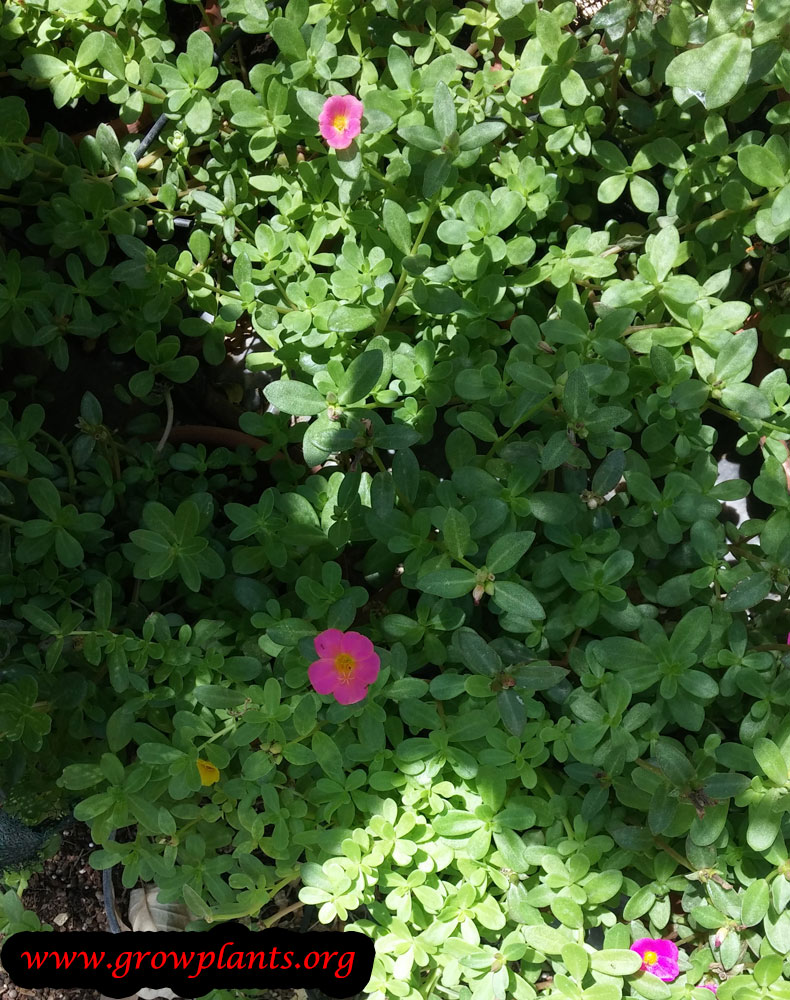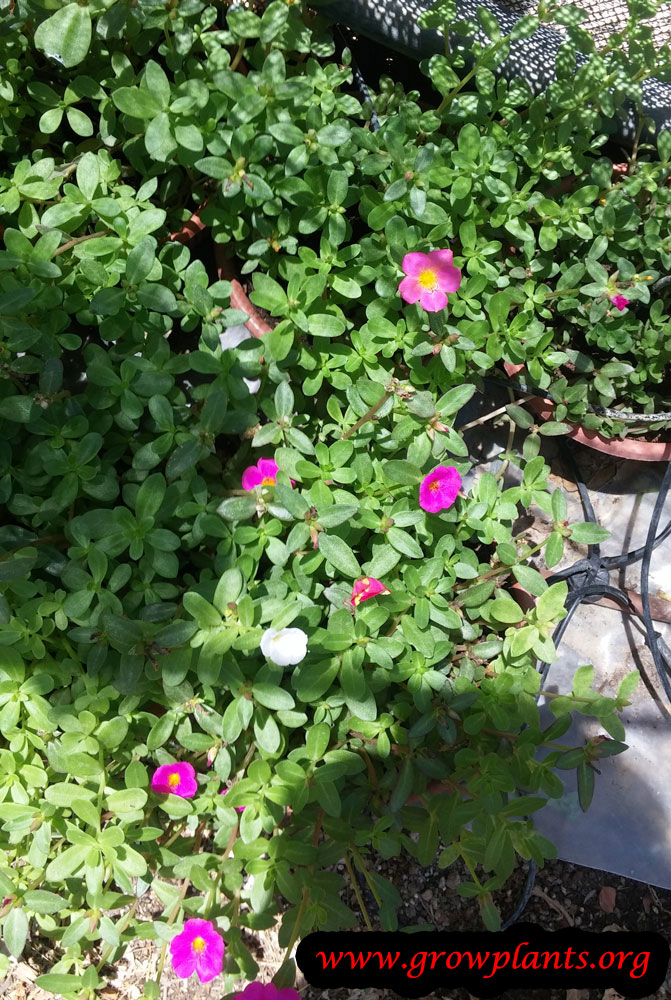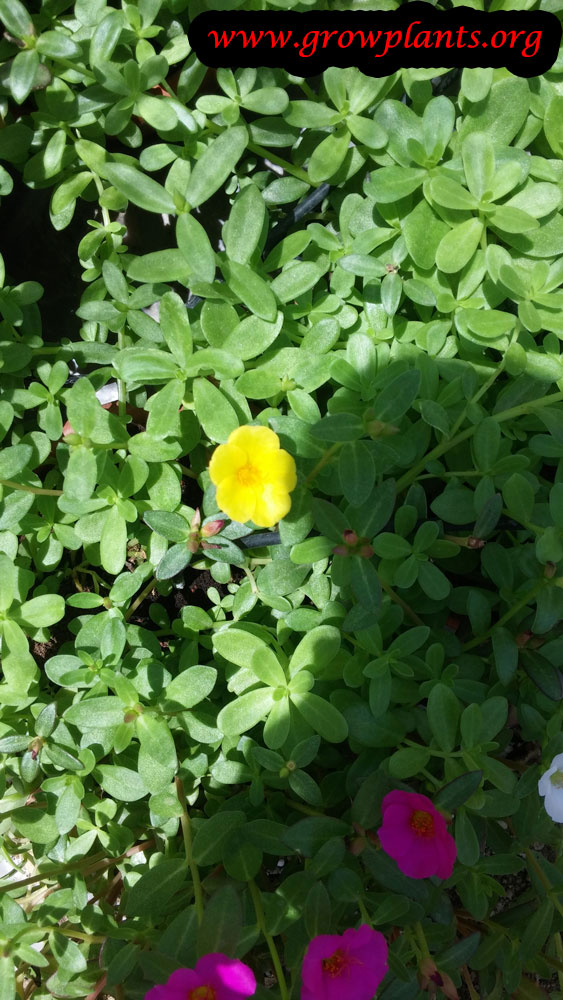





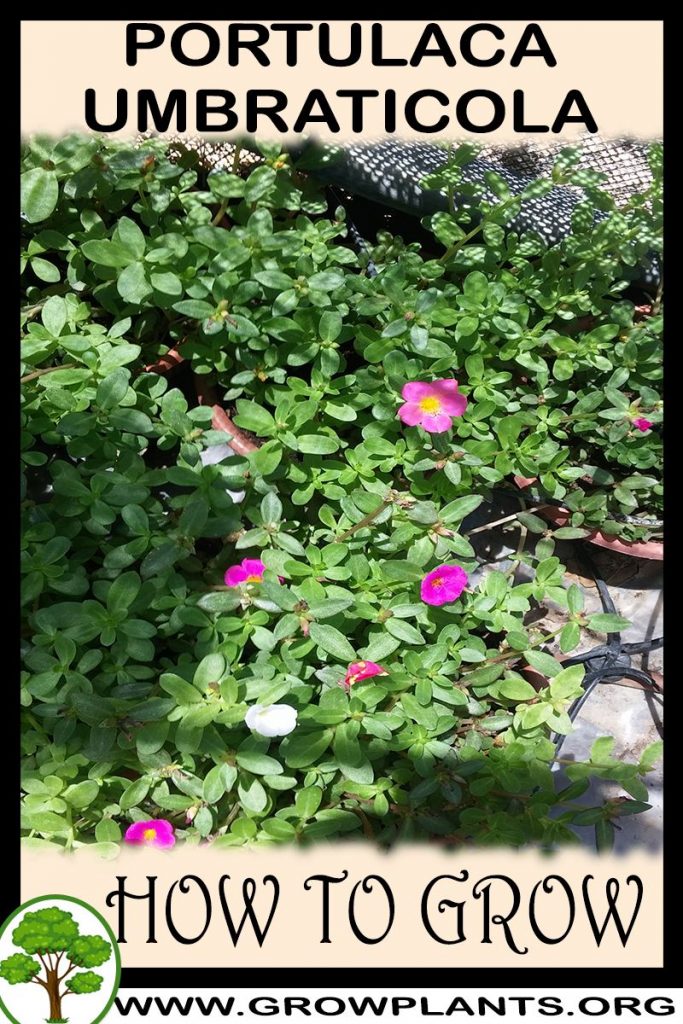
Plant Profile & Key Characteristics
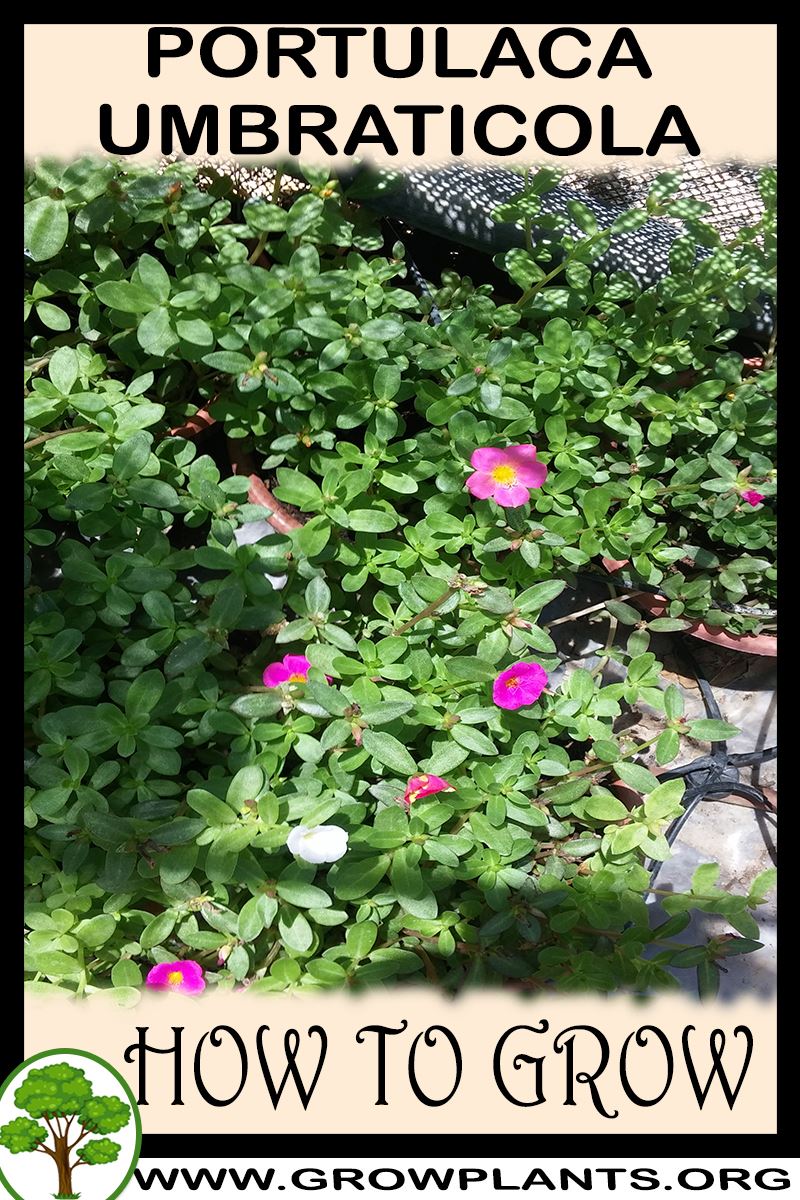
Overview: A low, spreading succulent subshrub of the genus Portulaca, usually grown as an annual and reaching only 5-50 cm (2-20 in) high. It is grown mainly as a colourful ornamental groundcover, and its fleshy leaves and stems are also edible; like other purslanes it self-seeds freely and can spread.
Quick Specifications
| Specification | Attribute |
|---|---|
| Plant Type / Life Cycle | Succulent subshrub, usually grown as an annual |
| Foliage Type | Fleshy succulent, deciduous (dies back after the season) |
| Mature Size | 5-50 cm (2-20 in) tall, spreading mat |
| Growth Rate | Fast |
| Root System | Taproot with fibrous side roots |
| Toxicity | Non-toxic — the fleshy leaves and stems are edible |
| Hardiness | USDA zones 3-12 (grown as a warm-season annual) |
Growth Form & Structure
- Height & Spread: Low and prostrate, 5-50 cm (2-20 in) tall, spreading into a dense mat; excellent trailing over the rim of a pot, planter or hanging basket.
- Growth Habit & Form: Sprawling, mat-forming succulent groundcover with fleshy stems that root as they run.
- Lifespan & Maturity: Fast-growing and short-lived, filling out within a single warm season and self-seeding for the next.
Anatomy & Physical Features
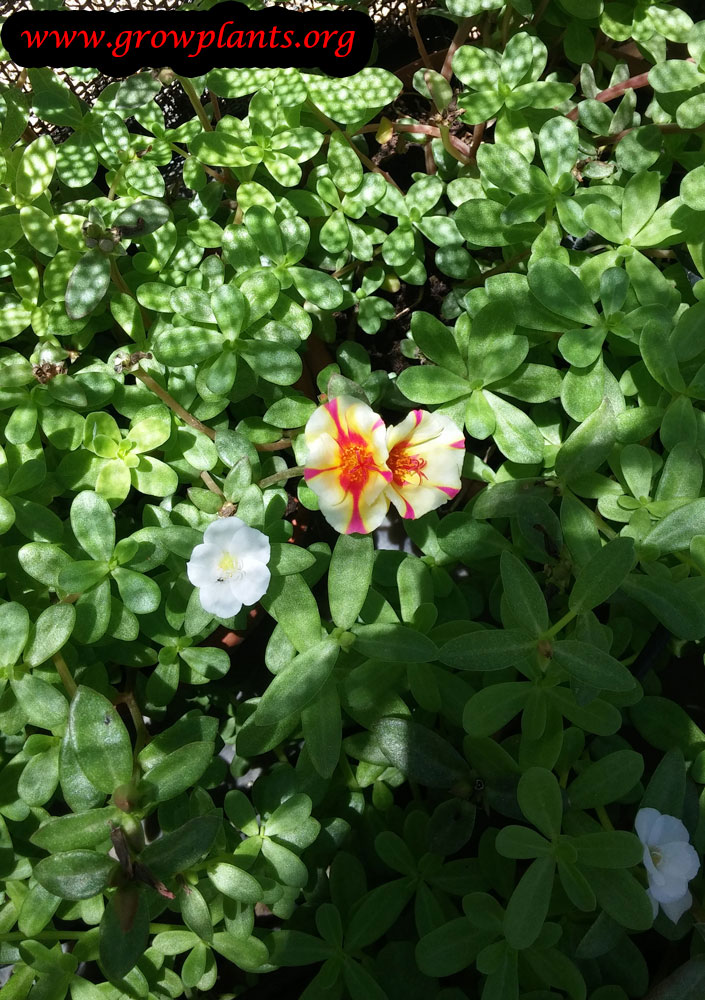
- Leaves & Foliage: Small, thick, fleshy oval leaves, green and edible on succulent stems; flavour ranges from sour to nearly bland by cultivar.
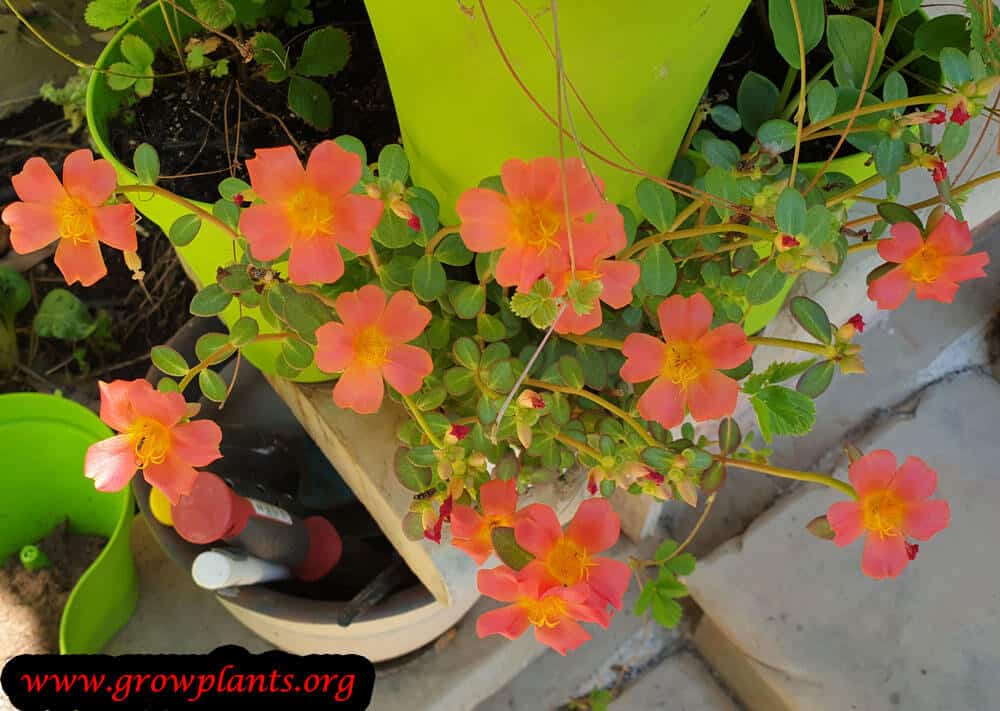
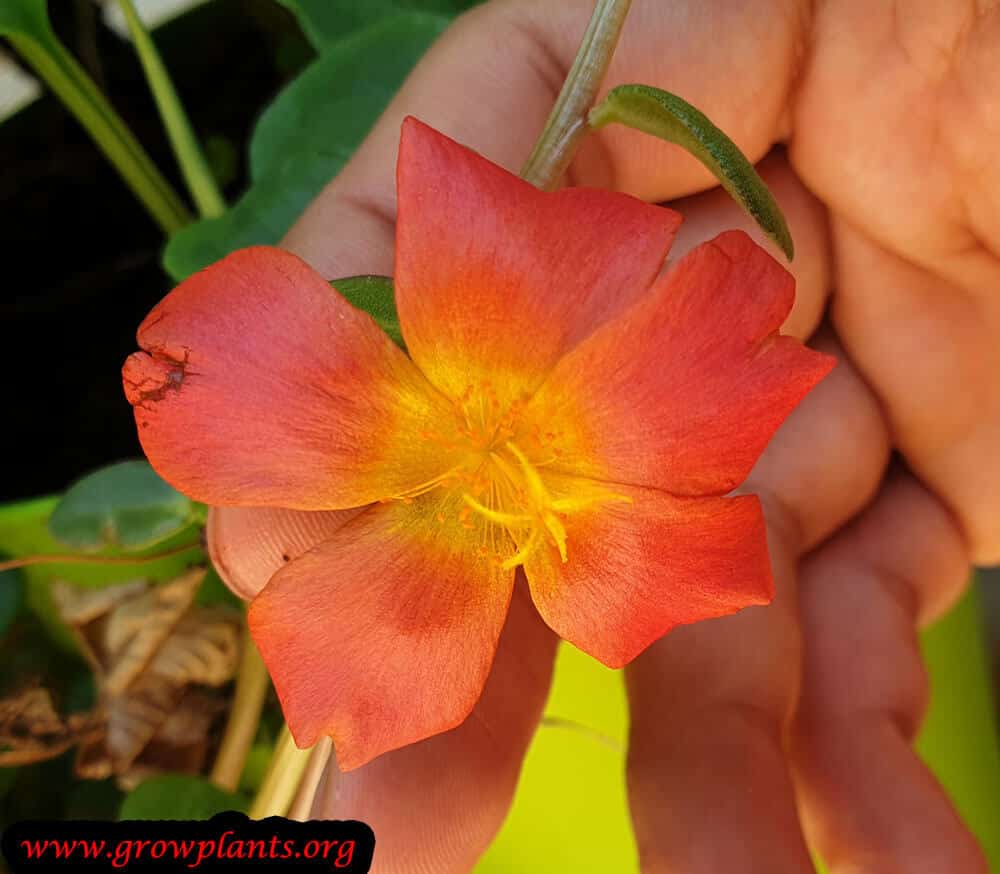
- Flower Characteristics: Showy flat or fully double flowers in yellow, orange, purple, pink, white or bicolour, opening in bright sun and worked by flies and bees.
Primary Uses & Landscape Value
- Edible Uses: Young leaves and stems can be eaten raw in salads or cooked.
- Functional & Ornamental Roles: Grown chiefly as a heat- and drought-tolerant flowering groundcover and container/basket plant for full sun; can self-seed and spread.
Care Guide: Planting, Soil & Watering
Overview: Purslane is a fast-growing annual succulent grown as an ornamental groundcover, thriving in full sun in ordinary, well-draining soil and highly drought tolerant. Its fleshy leaves store water, so it needs only light watering and copes easily with dry, poor ground.
Quick Care Requirements
| Requirement | Ideal Condition |
|---|---|
| Planting Season | At the start of the mild season — autumn to winter in hot climates, spring after frost in cooler ones |
| Growth Rate | Fast |
| Soil Type | Ordinary, well-draining soil; tolerates poor, sandy ground |
| Water Need | Low — drought tolerant; let the soil dry between waterings |
Planting & Establishment
- Best Planting Season: Sow or plant at the start of the mild growing season — in hot climates through autumn and winter, and in cooler regions in spring once frost has passed. As a fast annual it grows quickly from seed.
- How to Plant:
- Hole Preparation: Barely cover seed, or set small plants into a shallow hole at their original depth; it roots readily and needs no special preparation.
- Soil Amendments: It grows in almost any soil and needs little enrichment; a free-draining spot is all it asks — heavy, wet soil is the main thing to avoid.
- Planting Depth: Set plants at their original soil level, keeping the fleshy stems above the surface; sow seed shallowly, barely covered.
- Growth Speed & Expectations: A fast annual that spreads into a low, spreading, flowering mat within weeks and self-seeds freely.
Soil, Watering & Drainage Care
- Soil Mix & Drainage Needs: Use light, free-draining soil or a gritty potting mix; the succulent stems rot in wet ground, so drainage matters far more than richness.
- Watering Schedule & Technique:
- Young / Newly Planted: Water lightly to get seedlings or transplants going, keeping the soil just moist until they take hold.
- Established: Once growing, water sparingly and only when the soil has dried — it thrives on neglect and dislikes constant moisture.
- Seasonal Adjustments: Give occasional water in heat and almost none in cool or wet weather; the plant dies off at the end of its annual cycle.
Climate, Light & Hardiness
Ornamental purslane is a low, heat-loving warm-season annual grown as a colourful ground cover in Mediterranean, subtropical and temperate summers, flowering best in strong, full sun. Its succulent foliage tolerates heat and dry air well, but it has no frost tolerance and is killed by freezing.
Quick Climate Specifications
| Climate Zones | Mediterranean, subtropical, temperate (warm season) |
|---|---|
| USDA Hardiness Zones | Grown across zones 3–12 as a warm-season annual (killed by frost) |
| Optimal Temp Range | Approximately 21–32 °C (70–90 °F) |
| Cold Damage Begins | Growth stalls in cool weather; damage at or near freezing |
| Approx. Survival Minimum | Killed by frost; does not survive freezing |
| Frost Tolerance | None |
| Light Conditions | Full sun |
| Wind Tolerance | High (low, fleshy, mat-forming) |
| Salt / Coastal Tolerance | Moderate |
Sunlight & Light Exposure
Optimal Light Setup
Full, direct sun keeps growth compact and the flowers open widest; blooms close in dull or overcast weather.
Direct Sun Requirement
Needs full direct sun for dense growth and free flowering.
Shade & Heat Management
It thrives in heat and needs no shading, even in hot-summer regions.
Temperature Extremes & Hardiness
USDA Hardiness & Regional Limits
The wide 3–12 band reflects use as a warm-season annual wherever summers are warm; it grows and flowers in one warm season and dies with frost, persisting year-round only in frost-free (about zone 10+) conditions.
Cold Damage & Winter Protection
Cool weather checks growth, and frost collapses the fleshy stems.
Frost Sensitivity
High - no frost tolerance.
Extreme Heat Tolerance
Excellent; unbothered by hot, bright summer conditions.
Frost-Free Growing Season
A short, warm, frost-free window is enough for a full season of ground-covering growth and bloom.
Wind, Humidity & Microclimate
Humidity Preferences
Adaptable to humid or arid air.
Dry-Air Tolerance
Excellent, thanks to its water-storing succulent leaves.
Wind Tolerance
High; the mat-forming habit lies below the wind.
Coastal / Salt Tolerance
Moderately tolerant of exposed, coastal and somewhat saline sites.
Growing in Pots, Balconies & Indoors
Portulaca umbraticola is a low, fleshy, sun-loving succulent grown for its bright flowers, and it is superb in pots, bowls and hanging baskets. It is not a houseplant, but its small size and love of light make it perfect for the sunniest windowsill, a hot balcony or a patio container.
Quick Details
- Container Size: Shallow pot, bowl or basket, 3-10 L, free-draining
- Indoor Suitability: Not a true houseplant, but happy on the sunniest sill
- Best Spot: Full sun – the flowers open in bright light and close in dull weather
- Soil & Drainage: Gritty, sharply draining mix
- Watering in Pots: Water lightly and let the mix dry between drinks; it is very drought-tolerant
Indoors & On the Windowsill
- Houseplant limits: The grower does not rate it as an indoor plant – in weak light the flowers stay shut and growth turns soft.
- Windowsill growing: Only the hottest, sunniest sill gives enough light to open the flowers; keep it on the dry side and it will reward you.
On a Balcony or Patio
- Light & wind: Give it the hottest, sunniest, airiest spot you have – it thrives on the fast-drying conditions of a sunny balcony. Reflected heat from walls and railings suits it, but check the pot in the peak of summer so it never bakes bone dry for long.
- Practicalities: Make sure the filled pot’s weight is safe for the balcony and that water drains away freely rather than sitting in the base.
Choosing the Pot, Soil & Long-Term Care
- Pot & drainage: A shallow 3-10 L pot, bowl or basket with plenty of drainage holes; never leave it standing in a saucer of water – wet roots are the quickest way to kill it. Terracotta suits it well, breathing and drying faster than glazed or plastic.
- Potting mix: A sharp, free-draining mix – potting soil or peat/coir cut with extra perlite, grit or sand so water runs straight through.
- Feeding: Feed only lightly; this is a lean-soil plant, and too much food in a pot gives soft, floppy growth. A little through the growing season is plenty.
- Repotting: Refresh the mix or pot up about every couple of years, trimming the roots and shaping the top as you go.
Fertilizing & Feeding
This colourful ornamental purslane is a drought-tolerant, light feeder; a little balanced fertilizer supports steady bloom, while over-feeding gives leaves instead of flowers.
Quick Fertilizing Specs
| Feeding Level | Light |
|---|---|
| Main Nutrient Priority | Modest, balanced nutrition; it favours lean conditions. |
| Best Feeding Period | Through the warm blooming season. |
| Organic Options | A little compost is ample. |
| Micronutrients | Rarely needed in the lean soils it prefers; correct iron only if new growth yellows. |
| Soil pH | Very tolerant of a wide pH range and lean, well-drained soil. |
| Reduce/Stop Feeding | Feed sparingly; this plant blooms best in lean soil. |
Feeding by Growth Stage
Spring growth flush
Support fresh shoots and leaves as the plant wakes up in spring.
| Nutrient direction | A balanced complete feed with adequate nitrogen fuels healthy new growth. |
|---|---|
| Timing | As new growth begins in spring. |
| Frequency | Feed sparingly as growth begins; light feeding is usually enough. |
| Fertilizer types | A balanced complete fertilizer, Compost or well-rotted organic matter |
| Precautions | This is a lean, drought-adapted plant that rarely needs much feeding. Avoid heavy nitrogen, which drives leaves at the expense of flowers. |
Flowering
Sustain flowering without pushing excess foliage.
| Nutrient direction | A balanced feed supports steady bloom; adequate nitrogen, not high phosphorus, drives flowering. |
|---|---|
| Timing | Through the flowering season. |
| Frequency | Feed sparingly through the flowering period. |
| Fertilizer types | A balanced complete fertilizer |
| Precautions | High-phosphorus ‘bloom booster’ feeds are unnecessary; a balanced feed and full sun give better flowering. Avoid heavy nitrogen, which drives leaves at the expense of flowers. |
Nutrient Deficiency Signs & Corrections
Older, lower leaves fade to pale green or yellow overall and growth slows.
| Possible causes | Low soil nitrogen or thin organic matter, Nitrogen leached out by heavy watering or rain on light soils, Cold, waterlogged roots limiting uptake |
|---|---|
| Appears first on | older, lower leaves |
| What to check | soil organic matter and recent feeding, whether heavy rain or irrigation may have leached nutrients, overall plant vigor and colour |
| Possible correction | Topdress with compost or apply a balanced complete fertilizer at label strength; keep watering steady but not excessive so nutrients are not washed away. |
Youngest leaves yellow between the veins while the veins stay green.
| Possible causes | High or alkaline soil pH locking up iron, Cold or waterlogged soil slowing root uptake, Genuinely low available iron |
|---|---|
| Appears first on | newest leaves at the shoot tips |
| What to check | soil pH and drainage, whether the soil is cold or saturated, overall root health |
| Possible correction | Correct soil pH and improve drainage first; if the youngest growth stays chlorotic, apply a chelated iron product following its label. |
Lush leafy growth but few flowers.
| Possible causes | Too much nitrogen from over-feeding, Overly rich soil relative to light levels, Insufficient sunlight for the demand created by heavy feeding |
|---|---|
| Appears first on | new leafy shoots at the expense of buds |
| What to check | recent feeding rate and fertilizer type, light exposure, balance of leaf growth versus budding |
| Possible correction | Ease back on nitrogen and switch to a balanced feed; ensure full sun so the plant channels energy into flowering rather than foliage. |
Pruning, Training & Seasonal Maintenance
Portulaca umbraticola is a fast, low, sprawling ornamental groundcover (5–50 cm) grown mainly for its long spring-through-autumn flower display in yellow, orange, purple, pink, white or bicolor blooms. Its own care notes say no pruning is needed, and that holds for plant health – but as a bedding groundcover, occasional pinching or trimming is worth doing to keep the mound dense and floriferous rather than thin and sprawling, and to keep its documented invasive spread in check.
Quick Pruning & Maintenance Specs
| Pruning Tolerance | High, though not required for health |
| Primary Pruning Window | All season, as needed |
| Main Objective | Encourage a dense, floriferous mound; control spread |
| Best Tool Type | Precision snips / pinching by hand |
Pruning by Plant Age & Size
Young / Formative
Pinching the growing tips of young plants encourages side-branching, giving a fuller, more densely flowering mound than an unpinched plant – standard practice for a spreading, succulent-leaved bedding groundcover like this.
Mature / Established
Trim back trailing stems that run beyond their bed or that start to look sparse and stretched through the season; the plant is fast and fleshy enough to regrow density quickly from a light cut.
Special Growth to Remove
- Runners that have spread beyond the intended planting area, given the species’ noted invasive tendency.
- Leggy, thinned-out stems mid-season, cut back to encourage fresh, denser flowering growth.
Container & Small-Space Pruning
In a pot or hanging container, pinching tips early keeps the mound compact and trailing stems balanced rather than one-sided; trimming back overly long runners maintains the shape without any need for root pruning.
Tools
- Precision snips – for trimming trailing stems and controlling spread; the succulent stems are soft enough that hand-pinching also works.
Tool Hygiene & Disease Risk
Routine hygiene; no elevated disease-transmission risk noted for this species.
Common Pruning Mistakes
- Leaving the plant completely untrimmed all season, letting it spread past its bed given its documented invasive habit.
- Shearing it uniformly like a hedge rather than pinching/trimming selectively, which is unnecessary for a plant this soft and low-growing.
When NOT to Prune
- No specific restriction – the plant tolerates trimming throughout its flowering season.
Recommended Tools (by task)
- precision_snips – pinching young growth for density and trimming spread on mature plants.
Propagation Guide
This ornamental purslane is easiest from fleshy stem cuttings, which root readily and are the way to keep a particular flower colour, since its many named, often hybrid selections do not come true from seed. Seed is used mainly for mixed-colour plantings; overall an Easy plant to propagate.
Quick Propagation Specs
| Best Propagation Method | Stem cuttings (to keep a named colour) |
| Alternative Methods | Seed (species and mixed-colour plantings) |
| Propagation Difficulty | Easy |
| Seed True-to-Type | Variable — named/hybrid colour selections do not come true; propagate them vegetatively |
| Vegetative True-to-Type | Yes — a cutting reproduces the parent, including flower colour |
| Best Propagation Season | Warm weather |
| Seed Sowing Depth | Surface — press in, do not cover |
Growing from Seed
Seed Handling & Sowing
Surface-sow the tiny seed and press it in without covering, as it needs light to germinate; keep just moist and warm. Seedlings give mixed colours rather than the exact parent.
Stem Cuttings
Cutting Type & Rooting
Take short tip cuttings of the fleshy stems and insert them in moist soil; they root easily within days. Rooting hormone is unnecessary. Because many colourful selections are hybrids that do not come true — and some are effectively sterile — cuttings are the reliable way to reproduce a specific colour.
Bloom & Flower Guide
Quick Details
- Bloom Season: Spring, summer and autumn in warm conditions
- Time to First Bloom: Within the first season – it flowers young and fast
- Flower Appearance: Small flowers, flat or fully double, in yellow, orange, purple, pink, white or a mix of colours
- Edibility: Grown as an ornamental groundcover; the flowers are not a recognised edible
Detailed Blooming Overview
This ornamental purslane is grown as a heat-loving, drought-tolerant groundcover that flowers non-stop through the warm months. The bright blooms open in sunshine and come in a wide range of colours, single or double.
Flower Characteristics
- Small, cheerful flowers in yellow, orange, purple, pink, white or bicolours.
- Flat single or full double forms; open in sun and close in dull weather.
Bloom Care & Thinning
- Managing the bloom: Full sun and free-draining soil bring the heaviest flowering; a light trim keeps plants compact and blooming.
- Pollination: Visited by flies and bees.
Fruit & Uses
This ornamental purslane relative is recorded on the site as having fleshy, edible leaves and stems similar to common purslane, usable raw in salads or cooked. However, it is grown and sold primarily as an ornamental ground cover for its flowers, and this edible-use data closely mirrors the entry for common purslane (Portulaca oleracea) – treat it as unconfirmed for this specific species and verify identification before eating.
Quick Edible Specs
| Edible Parts | Leaves; stems (per site data – unconfirmed for this species specifically) |
|---|---|
| Main Use(s) | Culinary leafy green, if identity and edibility are confirmed |
| Eaten Raw or Cooked | Raw or cooked (as recorded) |
| Preparation Required | None – rinse before eating |
| Harvest Season | Autumn, winter, spring |
| Storage | Best used fresh |
| Safety/Toxicity Caveat | Grown mainly as an ornamental; edibility for this specific species is not well established outside this site’s data, so confirm identification and treat with caution before eating |
Leaves & Greens
The fleshy, oval leaves are described as sour to tasteless depending on cultivar, harvested by cutting with the stems. Site data lists the same raw/cooked salad use as common purslane.
Shoots & Stems
Stems are recorded as edible along with the leaves, cut together in the same harvest.
Preparation, Uses & Safety
this plant is primarily an ornamental ground cover, and its “edible leaves” data on the site is worded almost identically to the common purslane (Portulaca oleracea) entry, suggesting it may have been carried over rather than verified for this species specifically. Other Portulaca species do have edible, purslane-like foliage, but before eating this cultivar, confirm its identity and edibility from an independent source rather than relying on this entry alone.
Pests, Diseases & Troubleshooting
Overview: Purslanes and moss-roses are tough, drought-loving succulents that are largely trouble-free when grown hard in full sun and sharp-draining soil; their main enemies are excess moisture and shade rather than insects. Manage them culturally — lean soil, bright light and restrained watering — and reserve any spraying for occasional sap-suckers.
Quick Troubleshooting Overview
| Issue / Pest | Main Symptom | Primary Solution |
|---|---|---|
| Overwatering / root & stem rot | Soft, blackened, collapsing stems at soil line | Cut watering sharply; grow in gritty, fast-draining mix in full sun |
| Aphids | Clustered insects and distorted, sticky new growth | Water jet, then insecticidal soap if needed |
| Slugs & snails | Ragged holes in fleshy leaves, slime trails | Hand-pick at night; grit barriers; morning watering |
| Damping-off (seedlings) | Seedlings topple at the base and rot | Sow thinly, use clean gritty mix, avoid wet, cool conditions |
| Leaf drop / etiolation | Stretched, floppy stems, few flowers | Move to full sun; these plants demand strong light |
Common Pests & Management
- Aphids (Aphidoidea):
- Symptoms: Soft-bodied green, black or grey insects clustering on new shoots, flower buds and leaf undersides. Feeding causes curled, distorted young growth, a sticky honeydew coating and, in time, black sooty mould on that honeydew. Ants farming the colony are a giveaway.
- Prevention & Control: Knock colonies off with a firm jet of water and pinch out badly infested tips. Encourage ladybirds, lacewings and hoverflies by avoiding broad-spectrum sprays and leaving some flowering plants nearby. If numbers stay high, spray insecticidal soap or a light horticultural/neem oil, covering leaf undersides; repeat weekly until clear and treat in the cool of the evening to protect pollinators.
- Slugs & snails (Gastropoda):
- Symptoms: Ragged, irregular holes chewed in leaves and soft new growth, worst in damp, shady conditions; tell-tale silvery slime trails on foliage and soil in the morning. Seedlings and low leaves can be stripped overnight.
- Prevention & Control: Hand-pick after dark or on damp mornings, clear leaf litter and hiding places, and water in the morning so the surface is dry by night. Barriers of grit, crushed shell or copper tape help, as do beer traps and encouraging birds, frogs and ground beetles. Use iron-phosphate pellets sparingly where pressure is high.
- Fungus gnats (Sciaridae):
- Symptoms: Small dark flies running over the soil surface and short flights around the pot; their larvae feed on roots and organic matter in constantly wet compost, weakening seedlings and young plants.
- Prevention & Control: Let the surface dry thoroughly between waterings — the single most effective control for a succulent that likes it dry. Use yellow sticky traps to catch adults and a top layer of grit to deter egg-laying; a soil drench of Bacillus thuringiensis israelensis or nematodes helps if larvae are numerous.
Diseases & Fungal Issues
- Stem & root rot (Pythium / Rhizoctonia / Fusarium):
- Symptoms: Fleshy stems turn soft, water-soaked, brown-black and slimy, usually starting at the soil line; the plant collapses. Almost always driven by overwatering, heavy soil or poor drainage rather than the fungus alone.
- Treatment & Management: There is no cure once stems have rotted — take healthy tip cuttings from unaffected growth and re-root in dry, gritty mix. Prevent it: plant in sharp-draining, low-organic soil, water only when dry, give full sun and space for airflow. Copper-based products offer only limited help; culture is everything.
- Damping-off (Pythium / Rhizoctonia):
- Symptoms: Emerging seedlings suddenly flop, pinched and brown at the base, and die in patches — common in cool, wet, overcrowded sowings.
- Treatment & Management: Sow thinly in a clean, gritty seed mix, keep it on the dry side and provide warmth, light and ventilation. Avoid overhead watering; water from below and let the surface dry. Discard affected trays and do not reuse the mix.
Growing Difficulties & Abiotic Problems
- Overwatering / poor drainage:
- Cause & Symptoms: The commonest cause of failure — soggy soil starves roots of air and invites rot; leaves go translucent and mushy and stems collapse.
- Correction Strategy: Grow in a very free-draining, gritty medium in full sun, use pots with ample drainage, and water only when the soil is dry. Err on the side of drought; these plants store their own water.
- Etiolation / poor flowering in shade:
- Cause & Symptoms: In low light the stems stretch, grow floppy and pale, flowers stay shut or fail to form, and the plant becomes leggy.
- Correction Strategy: Give the brightest position available — full, direct sun. Moss-rose flowers open with strong light and close in dull weather, so shade is the enemy of a good display.
What Helps — Products & Tools
This is a plant managed almost entirely by good culture — sharp drainage, full sun and lean watering. For the rare pest, reach for insecticidal soap or a light horticultural/neem oil for aphids, iron-phosphate slug pellets and yellow sticky traps for fungus-gnat adults. Fungicides are seldom worthwhile; correcting moisture and light solves nearly every problem.