Plant Profile & Key Characteristics
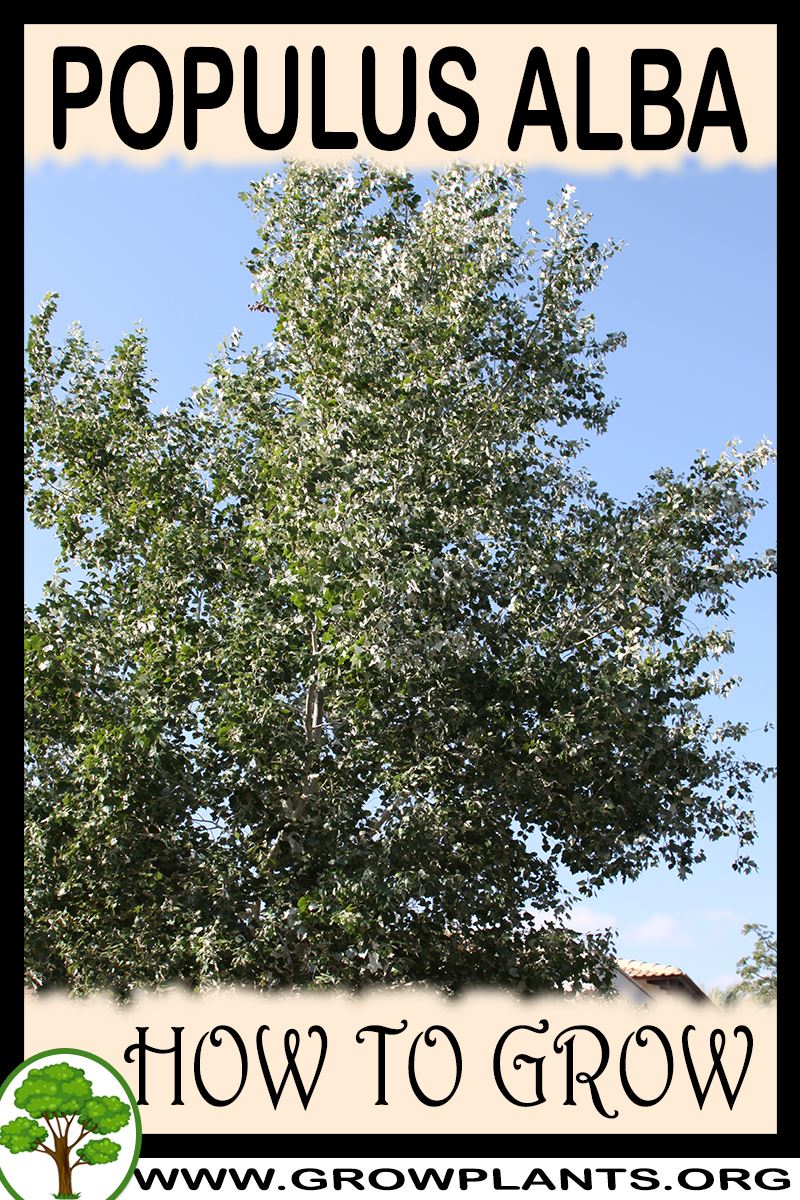
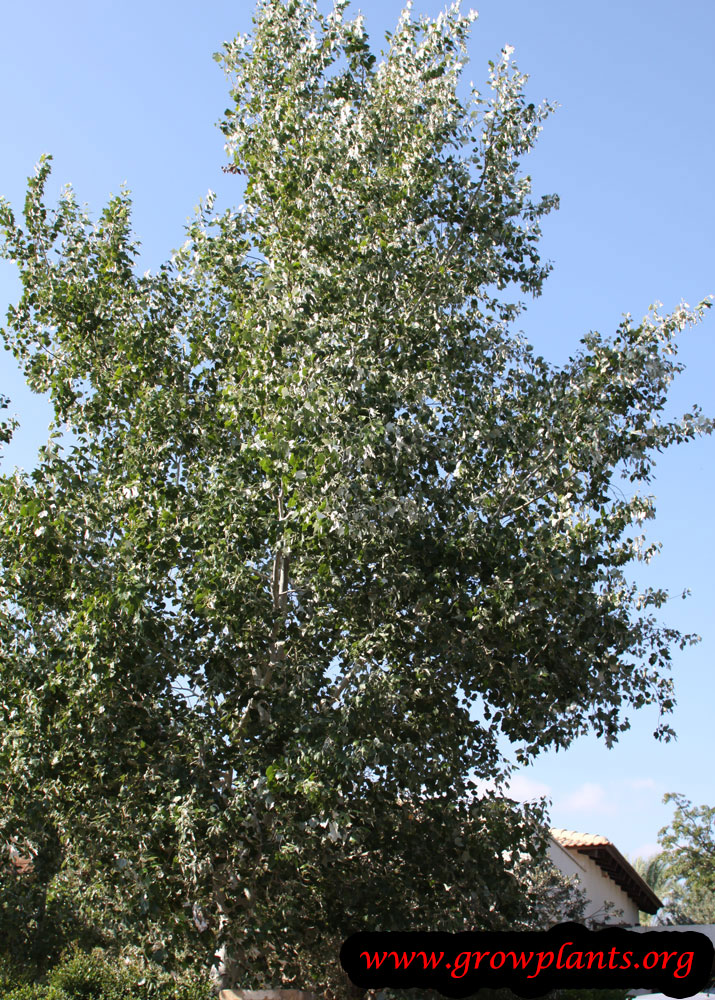
Overview: Populus alba (white poplar, or silverleaf poplar) is a large deciduous tree reaching 20-30 m (60-100 ft), named for the silvery-white undersides of its lobed leaves. This fast- to moderate-growing perennial is grown as an ornamental and shade tree.
Quick Specifications
| Specification | Attribute |
|---|---|
| Plant Type / Life Cycle | Perennial (deciduous tree) |
| Foliage Type | Deciduous |
| Mature Size | 20-30 m tall (60-100 ft) |
| Growth Rate | Fast to moderate |
| Root System | Vigorous, suckering surface roots (can be invasive) |
| Hardiness | USDA zone 4-10a |
Growth Form & Structure
- Height & Spread: A large, broad tree of 20-30 m (60-100 ft); best given open ground well away from paving and drains (not suited to containers).
- Growth Habit & Form: Broad-crowned deciduous tree that produces abundant basal shoots and root suckers.
- Lifespan & Maturity: Fast to establish; can also be kept dwarfed as a bonsai.
Anatomy & Physical Features
- Trunk & Bark: Pale grey-white bark, smooth when young and becoming darker and ridged with age.
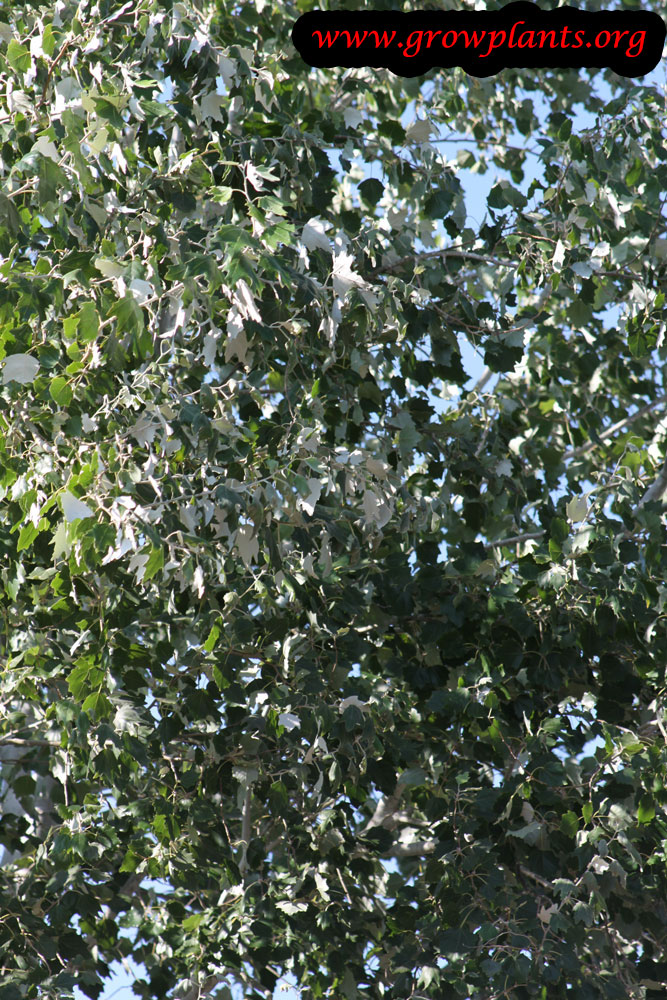
- Leaves & Foliage: Five-lobed leaves, green above with a striking silvery-white, felted underside that flashes in the wind.
- Flower Characteristics: Green or red catkins in spring; trees are dioecious, with male and female catkins on separate plants.
Primary Uses & Landscape Value
- Functional & Ornamental Roles: Fast shade and ornamental tree, windbreak and screen for large spaces, and a subject for bonsai.
Care Guide: Planting, Soil & Watering
Overview: White poplar is a large, fast-growing deciduous tree that thrives in full sun in deep, moist soil and needs a cold winter to grow well. It tolerates a wide range of soils and takes moderate to generous water, but its aggressive roots and suckers need room.
Quick Care Requirements
| Requirement | Ideal Condition |
|---|---|
| Planting Season | The dormant to early growing season — winter through spring, or into summer in milder areas |
| Growth Rate | Moderate to fast |
| Soil Type | Deep, moist, adaptable soil; tolerates poor and damp ground |
| Water Need | Moderate to high — enjoys steady moisture and tolerates wet sites |
Planting & Establishment
- Best Planting Season: Plant while dormant, from winter into early spring, so the roots establish before summer; bare-root trees in particular go in during dormancy. It needs a cold winter to thrive.
- How to Plant:
- Hole Preparation: Dig a broad hole about twice the width of the root ball, well away from paving, drains and foundations, as the roots are vigorous and invasive.
- Soil Amendments: Loosen the native soil and mix in some compost; this adaptable tree is not fussy and grows in most soils, including damp ground.
- Planting Depth: Set the tree at its original soil level, keeping the root collar at grade and never burying the trunk base.
- Growth Speed & Expectations: A fast grower that quickly makes a large shade tree 20–30 m tall — expect vigorous basal suckers, which need regular removal to keep it in check.
Soil, Watering & Drainage Care
- Soil Mix & Drainage Needs: It thrives in deep, moisture-retentive soil and tolerates poor or wet ground; being a large tree, it is not suited to container growing.
- Watering Schedule & Technique:
- Young / Newly Planted: Water generously and regularly after planting to establish the extensive root system through the first season or two.
- Established: Once established, it draws on deep soil moisture and needs watering only in extended dry spells, though it appreciates consistently moist ground.
- Seasonal Adjustments: Water through hot, dry summers; it needs none in winter dormancy and benefits from the cold rest.
Climate, Light & Hardiness
Populus alba (white poplar) grows in Mediterranean, subtropical, and temperate climates, hardy outdoors in USDA zones 4 through 10a. As a cold-deciduous tree it benefits from a distinct cold winter, and prefers full sun to half shade.
Quick Climate Specifications
| Climate Zones | Mediterranean, subtropical, temperate |
|---|---|
| USDA Hardiness Zones | 4–10a |
| Light Conditions | Full Sun to Half Shade |
Sunlight & Light Exposure
Optimal Light Setup
Grow in full sun to half shade; full sun gives the strongest growth for this fast-growing shade tree.
Temperature Extremes & Hardiness
USDA Hardiness & Regional Limits
Hardy across USDA zones 4 through 10a. As a deciduous species it does best where winters are genuinely cold enough to provide a proper dormant season; in the mildest, nearly frost-free parts of its range (zone 10a) performance and dormancy can be less reliable.
Wind, Humidity & Microclimate
Wind Tolerance
A robust, wind-tolerant shade tree once established, well suited to open, exposed sites.
Growing in Pots, Balconies & Indoors
The white poplar (Populus alba) is a large, fast-growing forest tree of 20-30 m (60-100 ft). The grower marks it as unsuitable both as a houseplant and for long-term pot or container growing – it simply gets far too big, and its vigorous, water-seeking roots need open ground.
Quick Details
- Container Size: Not suited to long-term container growing (grower’s assessment)
- Indoor Suitability: Not a houseplant – a full-size tree
- Best Spot: Full sun to half shade, in open ground
- Watering: Average to generous; its roots actively seek moisture, so keep it well away from paving, drains and buildings
Indoors & On the Windowsill
- Not for indoors or pots: The grower rates it ‘no’ for both houseplant use and containers. It is a vigorous shade tree that belongs in the landscape, not on a balcony or windowsill.
Young Trees in Containers
- Only while very young: A young sapling can be held briefly in a large pot with free-draining, organic-rich mix and steady water before being planted out – but it will quickly outgrow any container and should be moved to open ground.
- Root caution: Even as a young tree, plant it well away from paving, pipes and foundations, as poplar roots are strong and moisture-seeking.
Fertilizing & Feeding
A light feeder once established: this large, fast-growing deciduous shade tree benefits from balanced feeding while young to support root and canopy establishment, but as a vigorous, aggressively rooted tree it typically needs little to no supplemental feeding once mature in reasonable soil.
Quick Fertilizing Specs
| Feeding Level | Light feeder (heavier need while young, minimal once established) |
|---|---|
| Main Nutrient Priority | Balanced feeding to support root and canopy establishment while young |
| Best Feeding Period | During the first growing seasons after planting, in winter, spring, or summer |
| Organic Options | Compost or well-rotted organic matter worked into the root zone at planting |
| Reduce/Stop Feeding | Feeding is reduced or stopped once the tree is well established, and withheld through autumn and winter dormancy |
| Micronutrients | Usually adequate from surrounding soil once the tree is established |
| Soil pH | Tolerates a range of soil, preferring conditions with a cold winter period |
Feeding by Growth Stage
Establishment after planting
Help a newly planted white poplar establish its root system before it pushes vigorous canopy growth.
| Nutrient direction | A balanced fertilizer supports steady root establishment as the young tree settles in. |
|---|---|
| Timing | At planting and through the first growing seasons, which can be winter, spring, or summer. |
| Frequency | Light, regular feeding through the first growing seasons supports steady establishment. |
| Fertilizer types | A balanced complete fertilizer for young trees, Compost or organic matter worked into the planting area |
| Precautions | This tree is noted to produce aggressive basal shoots and spreading roots, so keep fertilizer away from areas where root spread is unwanted, and avoid overfeeding, which can encourage further vigorous suckering. |
Young tree canopy development
Support the tree’s fast-to-medium growth rate as it develops its lobed, silvery-backed canopy for shade.
| Nutrient direction | A balanced fertilizer with adequate nitrogen supports steady canopy development while the tree is young and actively expanding. |
|---|---|
| Timing | Spring through summer while the young tree is in active growth. |
| Frequency | Feeding needs taper as the tree matures and its root system expands to draw on more soil. |
| Fertilizer types | A balanced complete fertilizer, tapering off as the tree matures, An organic feed worked lightly into the surrounding soil |
| Precautions | Watch for aphids and boring insects noted as pests of this tree, and keep feeding light given its vigorous, aggressive growth habit. |
Autumn and winter dormancy
Let this deciduous tree rest through its leafless dormant period, matching its autumn-to-winter pruning window.
| Nutrient direction | None – withhold fertilizer through dormancy. |
|---|---|
| Timing | Autumn through winter while the tree is leafless and dormant. |
| Frequency | No feeding at this stage. |
| Fertilizer types | No feeding at this stage – resume light balanced feeding only if needed when spring growth resumes |
| Precautions | Do not fertilize during dormancy; pair this rest period with the tree’s autumn-to-winter pruning instead. |
Nutrient Deficiency Signs & Corrections
Pale, sparse canopy and reduced shoot growth for a tree known to grow quickly.
| Possible causes | low available soil nitrogen, root competition from the tree’s own aggressive basal shoots, compacted soil limiting root uptake |
|---|---|
| Appears first on | older, lower canopy leaves |
| What to check | recent feeding history, soil compaction around the root zone, extent of basal shoot growth |
| Possible correction | Apply a balanced fertilizer while the tree is young, and improve soil aeration around the root zone. |
New leaves appear pale or yellowish while veins stay greener, more visible on the leaf’s green upper side.
| Possible causes | high soil pH limiting iron availability, waterlogged or poorly drained soil, root stress from compacted soil |
|---|---|
| Appears first on | newest leaves |
| What to check | soil pH and drainage, standing water near the root zone, root health |
| Possible correction | Improve drainage and soil pH balance; apply a chelated iron product per its label if chlorosis persists on a young tree. |
Localized dieback, boring holes, or weakened shoots that can resemble a nutrient issue.
| Possible causes | boring insect activity noted as a pest of this tree, rather than a nutrient deficiency, aphid infestation stressing the canopy, general vigor loss from root competition with the tree’s own basal shoots |
|---|---|
| Appears first on | individual branches or shoots |
| What to check | signs of boring insect entry holes, aphid presence on new growth, overall canopy vigor versus localized damage |
| Possible correction | Address the underlying pest issue directly rather than increasing fertilizer, since this is primarily a pest problem. |
Pruning, Training & Seasonal Maintenance
Populus alba is a large, fast-growing shade tree with notably weak, brittle wood, so it tolerates only moderate structural pruning, best done while dormant (autumn–winter); growing-season cuts leave fresh wounds more vulnerable to the wood-boring pest noted among its pests. Young trees need early framework training since the wood is prone to storm damage at maturity, while mature trees mainly need deadwood removal and control of the aggressive root and basal suckering this species is specifically flagged for, rather than any reshaping of the crown.
Quick Pruning & Maintenance Specs
| Pruning Tolerance | Moderate (structural only – not heavy reshaping once mature) |
| Primary Pruning Window | Dormant season (autumn–winter) |
| Typical Frequency | Structural training while young; annual deadwood/sucker control once mature |
| Main Objective | Build a strong single-leader framework while young; control deadwood and aggressive suckers at maturity |
| Young Plant Priority | Central-leader/modified-leader training to prevent weak co-dominant forks |
| Mature Plant Priority | Remove deadwood/storm damage; control root and basal suckers; canopy clearance |
| Best Tool Type | Pruning saw and loppers for structural cuts; pole pruner for high deadwood; precision snips only for bonsai-scale work |
| Avoid Heavy Pruning During | The growing season (borer entry risk) and periods of drought stress |
Pruning by Plant Age & Size
Newly Established
Minimal pruning; remove only damaged growth and avoid heavy structural cuts until the tree is well rooted.
Young / Formative
Train to a single dominant leader (central or modified-leader), since this fast, upright grower otherwise tends to fork into multiple co-dominant stems that become a structural weak point as the tree matures. (Note: a bonsai specimen of the same species is trained completely differently – frequent pinching, wiring, and hard size restriction rather than this single-leader shade-tree approach.)
Mature / Established
Deadwood and storm-damage removal, canopy thinning for clearance from structures, and ongoing control of the root and basal suckers this species is specifically noted for – not reshaping of the crown.
Seasonal Pruning Schedule
Dormant/Winter
Objective: build or maintain the framework and remove deadwood. Remove: dead, crossing, or storm-damaged limbs; competing leaders on young trees. Do not remove: excessive live canopy in one session – over-thinning provokes even more vigorous suckering and epicormic regrowth. Response: wounds close more slowly in dormancy but are far less attractive to the borer noted among this species’ pests than growing-season cuts.
Ongoing Sanitary
Root and basal sucker removal can continue through the growing season as needed, even though heavier structural work waits for dormancy.
Structural Pruning & Training
Select and maintain one strong leader while young; remove crossing or rubbing branches; avoid over-thinning the canopy, since Populus responds to heavy cuts with vigorous but weakly attached epicormic regrowth and heavier suckering rather than a controlled response. Renewal pruning is not a normal practice for a tree of this scale.
Special Growth to Remove
- Root suckers and basal shoots – explicitly noted as an aggressive habit of this species and arguably its single most important ongoing maintenance task; remove at the point of origin, below soil level where feasible, since cutting at grade alone encourages more regrowth.
- Watersprouts/epicormic shoots, especially after any hard pruning cut, to preserve the framework.
Container & Small-Space Pruning
This species is grown at true tree scale as a shade tree but is also used for bonsai; in bonsai culture, pruning is frequent and light – pinching new growth, wiring for form, and root-pruning at repotting – a completely different intensity of intervention from the landscape tree described above.
Tools
- Pruning saw and loppers for structural cuts and deadwood removal on a mature tree.
- Pole pruner for clearance and deadwood out of reach on a tree that can reach 20–30m.
- Precision snips for young shoots, sucker removal, or bonsai-scale work.
Tool Hygiene & Disease Risk
Increased: given the wood-boring pest and general canker susceptibility of poplars, keep tools clean, avoid pruning in wet or humid conditions that favor canker fungi, and time structural cuts to dormancy to reduce the wound’s attractiveness to borers.
Cut Placement & Technique
Use thinning cuts over heading cuts to avoid dense epicormic resprouting; cut just outside the branch collar; avoid flush cuts or long stubs, both of which invite decay and borer entry; stage-remove large limbs with a three-cut technique to avoid bark tear on this fast-growing but brittle-wooded tree.
Heavy Pruning & Rejuvenation
Topping or heavy crown reduction is NOT recommended: the weak wood and vigorous, weakly attached epicormic regrowth that follows topping create a worse long-term hazard than the original size. If size control is genuinely needed, reduce gradually over multiple seasons using proper reduction cuts, never topping.
Post-Pruning Care
Monitor cut wounds for borer entry or canker; expect and stay ahead of the vigorous sucker flush that typically follows any hard pruning cut; no fertilization is needed to aid recovery – vigorous growth is already this species’ norm.
Common Pruning Mistakes
- Topping to control the tree’s large size, which triggers hazardous weak regrowth and heavier suckering.
- Ignoring root suckers until they form a thicket.
- Pruning in the growing season, inviting the noted wood-boring pest into fresh wounds.
- Using hedge shears or other selective-cut-averse tools on a large shade tree.
When NOT to Prune
Avoid pruning during the growing season, when the noted wood-boring pest is active and fresh wounds are more vulnerable to attack; avoid heavy structural work on young, unestablished, or drought-stressed trees.
Recommended Tools (by task)
- Young structural training and smaller cuts: bypass_secateurs.
- Established-framework and deadwood removal: pruning_saw and loppers.
- High clearance and deadwood removal on a tree reaching 20–30m: pole_pruner.
- Disinfecting between cuts given the noted borer and canker risk: blade_disinfectant.
Propagation Guide
Populus alba roots readily from hardwood cuttings, which is the easiest and most reliable way to increase it, and the vigorous root suckers this tree throws up (noted on this site as an aggressive, basal-shoot-prone tendency) provide another easy, ready-rooted source of new plants. Because this species is dioecious, with separate male and female trees, and can hybridize, seed-grown plants are more variable and their sex can’t be predicted, so seed is a secondary option rather than the first choice; overall propagation is easy.
Quick Propagation Specs
| Best Propagation Method | Hardwood stem cuttings |
| Alternative Methods | Rooted root suckers (basal shoots); seed |
| Propagation Difficulty | Easy |
| Seed True-to-Type | Variable; dioecious and prone to hybridizing, so sex and exact characteristics are not controlled |
| Vegetative True-to-Type | Yes |
| Best Propagation Season | Dormant season (winter), within this plant’s winter/spring/summer planting window |
| Seed Germination Time | Fresh seed germinates quickly, often within days to a couple of weeks, but loses viability fast |
| Cutting Rooting Time | Commonly a few weeks |
| Seed Sowing Depth | Very shallow; the fine, cottony seed is barely covered |
Stem Cuttings
Cutting Type
Hardwood cuttings taken from dormant, one-year-old wood.
Best Timing
During the dormant season, in winter, ahead of spring growth.
Cutting Preparation
Take a firm, pencil-thick dormant shoot section and insert it right-way-up into the rooting site.
Rooting Setup
Insert most of the cutting’s length into moist, well-drained soil outdoors or in a nursery bed; poplar hardwood cuttings are well known for rooting without special equipment.
Rooting Hormone
Not necessary; this genus roots easily from hardwood cuttings without it, though hormone can be used to speed things along.
Rooting Time
Commonly a few weeks once growth resumes in spring.
Division, Offsets, Pups & Suckers
This tree readily produces root suckers (basal shoots), which this site flags as an aggressive tendency. A sucker that already has its own roots can be severed from the parent’s root system and dug up with those roots intact; suckers still relying entirely on the parent’s root system are not yet viable on their own and should be left to develop more roots first, or simply cut back if not wanted.
Growing from Seed
Populus alba seed is very short-lived once released and is best sown fresh, as it is naturally shed at a specific time and loses viability quickly. Because trees are either male or female and the species can hybridize, seedlings are more variable than cuttings or suckers and their sex cannot be predicted until the tree matures, so seed is mainly of interest for breeding or naturalistic planting rather than reproducing a particular tree.
Bloom & Flower Guide
Quick Details
- Bloom Season: Early spring, before the leaves emerge
- Flower Appearance: Drooping catkins rather than showy flowers – reddish male catkins and greenish female catkins, borne on separate trees
- Edibility: Not edible – grown as a shade or ornamental tree
Detailed Blooming Overview
Populus alba (white poplar) flowers as catkins in early spring, well before the silvery-backed leaves appear. Like others in its genus it is dioecious, meaning male and female flowers grow on separate trees: the male catkins are reddish and the female catkins greenish. Pollination is by wind, not insects.
Flower Characteristics
- Pendulous catkins, reddish on male trees and green on female trees
- No petals or scent – these are wind-pollinated flowers
- Female trees later release fluffy, cottony seed
Bloom Care & Thinning
- Managing the bloom: no bloom care is needed on a mature tree; where the cottony seed of female trees is a nuisance, male-only selections are often preferred
- Pollination: pollen is carried entirely by the wind between separate male and female trees
- Note: the catkins are brief and appear before the foliage, so the flowering is easy to miss
Pests, Diseases & Troubleshooting
Overview: Populus alba (white poplar) is a fast, vigorous Salicaceae tree that supports a large cast of pests and diseases — poplars are classic hosts for leaf rusts, cankers, defoliating beetles and stem-boring clearwings. Most established trees tolerate a lot, but rust, canker and borers can disfigure or weaken them, and the aggressive suckering roots and brittle wood are chronic management issues. Favor vigor, sanitation and airflow; reserve products for real threats.
Quick Troubleshooting Overview
| Issue / Pest | Main Symptom | Primary Solution |
|---|---|---|
| Poplar leaf rust | Yellow-orange powdery pustules on leaf undersides; early leaf drop | Rake leaves, resistant clones, airflow |
| Dusky clearwing borer | Swellings, holes and frass in stems/trunk; dieback | Remove infested wood, pheromone traps |
| Poplar leaf beetle | Skeletonized leaves; larvae and adults feeding | Hand-pick, Bt/spinosad, tolerate on big trees |
| Aphids | Curled leaves, galls, honeydew, sooty mold | Hose off, predators, tolerate |
| Cytospora canker | Sunken cankers, oozing, branch dieback | Prune out, keep vigorous, avoid stress |
| Suckering roots / weak wood | Root suckers spreading; brittle limbs breaking | Site carefully, remove suckers, prune structure |
Common Pests & Management
- Poplar leaf beetles (Chrysomela populi, Chrysomela tremula):
- Symptoms: Metallic beetles and their black larvae feed in groups on the foliage, skeletonizing leaves (larvae) and chewing holes (adults) and browning the canopy, especially on young trees and suckers.
- Prevention & Control: Hand-pick beetles, larvae and egg clusters on small trees, encourage predatory bugs and birds, and spray Bacillus thuringiensis (Bt tenebrionis) or spinosad on larvae if needed; mature trees usually tolerate the damage.
- Dusky clearwing / poplar borer (Paranthrene tabaniformis):
- Symptoms: Clearwing-moth larvae bore into shoots, stems and the trunk base, producing swellings, entry holes with expelled frass and sawdust, wilting shoots, dieback and weak points that snap in wind.
- Prevention & Control: Cut out and burn infested shoots and prune to sound wood, keep trees vigorous and unstressed (borers favor weak, wounded trees), and use pheromone traps to monitor and time control; protect young trunks from injury. Beneficial nematodes injected into galleries can help.
- Aphids & gall aphids (Chaitophorus spp., Pemphigus spp.):
- Symptoms: Colonies on leaves and shoots cause curling, honeydew and sooty mold; Pemphigus species form conspicuous pouch or spiral galls on petioles and leaves.
- Prevention & Control: Tolerate on large trees, hose off reachable colonies, and conserve ladybirds, lacewings and parasitoids; galls are largely cosmetic and rarely need treatment. Control ants that farm aphids on young trees.
- Defoliating caterpillars (Lymantria dispar, tent caterpillars (Malacosoma), sawfly larvae):
- Symptoms: Episodic heavy leaf feeding, skeletonizing or complete defoliation, sometimes with silken tents or nests, mostly in outbreak years.
- Prevention & Control: Remove tents and egg masses by hand, band trunks against climbing larvae, encourage birds and parasitoids, and spray Bt on young caterpillars where practical; healthy trees usually re-leaf after defoliation.
- Spider mites & scale (Tetranychus spp., Coccidae):
- Symptoms: Stippling and bronzing of leaves in hot dry spells (mites) and immobile bumps with honeydew on twigs (scale), mostly on stressed trees.
- Prevention & Control: Keep trees watered and unstressed, encourage natural enemies, and use horticultural oil for scale on small trees; mites rarely need treatment outdoors.
Diseases & Fungal Issues
- Poplar leaf rust (Melampsora spp.):
- Symptoms: Masses of powdery yellow to orange pustules erupt on leaf undersides in summer, with yellow flecking above, causing early browning and premature leaf drop that weakens the tree over repeated years; the most common poplar disease.
- Treatment & Management: Rake up and remove fallen leaves (spores overwinter on them and often on an alternate host such as larch), space and prune for airflow, and choose rust-resistant clones. Fungicides are rarely justified on large trees but a protectant (triazole/mancozeb) can protect valued young or nursery stock.
- Marssonina leaf spot & blight (Marssonina brunnea):
- Symptoms: Small brown spots with darker centers coalesce across the leaves in wet weather, causing blotching, blight and early defoliation, often confused with rust.
- Treatment & Management: Rake and destroy fallen leaves, improve airflow, avoid overhead irrigation, and use resistant clones; protectant fungicide only for nursery or young trees under heavy pressure.
- Cytospora canker (Cytospora chrysosperma (Valsa sordida)):
- Symptoms: Sunken, discolored cankers on stressed branches and trunks, often oozing, girdling and killing limbs; a classic disease of drought-stressed or wounded poplars.
- Treatment & Management: There is no spray cure: keep trees vigorous and well-watered, avoid wounds and stress, and prune out cankered wood well below the lesion in dry weather, disinfecting tools between cuts. Remove severely affected trees.
- Septoria canker & leaf spot (Septoria musiva):
- Symptoms: Angular leaf spots plus stem cankers that can girdle and break young stems, particularly damaging on hybrid poplars.
- Treatment & Management: Sanitation of fallen leaves, resistant clones, and pruning out cankers; avoid planting highly susceptible hybrids where the disease is prevalent.
- Bacterial wetwood / slime flux (mixed bacteria):
- Symptoms: Dark, foul-smelling liquid oozing and staining from trunk cracks and old wounds, with internal water-soaked wood; usually a chronic, non-lethal condition.
- Treatment & Management: There is no cure; keep the tree vigorous, avoid unnecessary wounding, and do not bore drainage holes (an outdated practice); manage as a cosmetic issue.
- Powdery mildew (Erysiphales):
- Symptoms: White powdery coating on leaves in humid, crowded conditions, mostly on young growth and suckers.
- Treatment & Management: Improve airflow and light; rarely serious enough to treat on established trees.
Growing Difficulties & Abiotic Problems
- Aggressive suckering & invasive roots:
- Cause & Symptoms: White poplar suckers vigorously from spreading surface roots, colonizing lawns and beds and lifting paving and drains.
- Correction Strategy: Site well away from buildings, paving and drains, mow or remove suckers routinely, and consider root barriers; do not plant it in small gardens where its running roots become a nuisance.
- Weak, brittle wood & limb drop:
- Cause & Symptoms: Fast growth produces weak wood prone to splitting and dropping limbs in wind and storms.
- Correction Strategy: Prune young trees for good structure with a single strong leader and well-spaced branches, remove deadwood, and inspect large trees for hazards; avoid heavy topping that forces weak regrowth.
- Drought leaf scorch:
- Cause & Symptoms: Poplars are moisture-loving; drought browns and crisps leaf margins and triggers early leaf drop, and stress opens the door to canker and borers.
- Correction Strategy: Site in moisture-retentive soil, water deeply in dry spells especially when young, and mulch the root zone; a well-watered tree resists most secondary problems.
- Chlorosis on alkaline soil:
- Cause & Symptoms: Yellowing between veins on very alkaline or compacted soil where iron is unavailable.
- Correction Strategy: Improve drainage and organic matter, mulch, and correct with chelated iron on strongly alkaline sites.
- Cotton nuisance & short life:
- Cause & Symptoms: Female trees shed cottony seed fluff, and poplars are relatively short-lived and quick to decline.
- Correction Strategy: Choose male or seedless clones to avoid the fluff, and plan for the tree’s fast-but-short lifespan when siting it.
What Helps – Products & Tools
Vigor and sanitation matter most for this tree. Useful inputs are Bacillus thuringiensis (Bt) or spinosad for leaf beetles and caterpillars, pheromone traps and beneficial nematodes for clearwing borers, horticultural oil for scale, protectant fungicide (triazole/mancozeb) for rust and leaf spot on young/nursery trees, and diligent leaf raking, pruning tools and root barriers for disease hygiene, structure and sucker control.