
Plant Profile & Key Characteristics
Overview: The balloon flower (Platycodon grandiflorus) is a herbaceous perennial 30–60 cm (1–2 ft) tall, named for its inflated buds that pop open into star-shaped bells. It is grown as an ornamental and also yields edible leaves and a medicinal root.
Quick Specifications
| Specification | Attribute |
|---|---|
| Plant Type / Life Cycle | Herbaceous perennial (dies back each winter) |
| Foliage Type | Deciduous (herbaceous; dies back to the crown) |
| Mature Size | 30–60 cm (1–2 ft) tall |
| Growth Rate | Fast to moderate |
| Root System | Thick fleshy taproot |
| Toxicity | Non-toxic / edible — the young leaves and the root are eaten |
| Hardiness | USDA zones 3–9 (to zone 10 with care) |
Growth Form & Structure
- Height & Spread: A clump of 30–60 cm (1–2 ft); excellent in borders and equally at home in a 10–20 L (2.6–5.2 gal) container with well-drained soil.
- Growth Habit & Form: Upright, clump-forming herbaceous perennial rising each spring from a fleshy taproot; taller stems may need light support.
- Lifespan & Maturity: A long-lived perennial that resents disturbance once established, returning from the taproot to flower each summer.
Anatomy & Physical Features
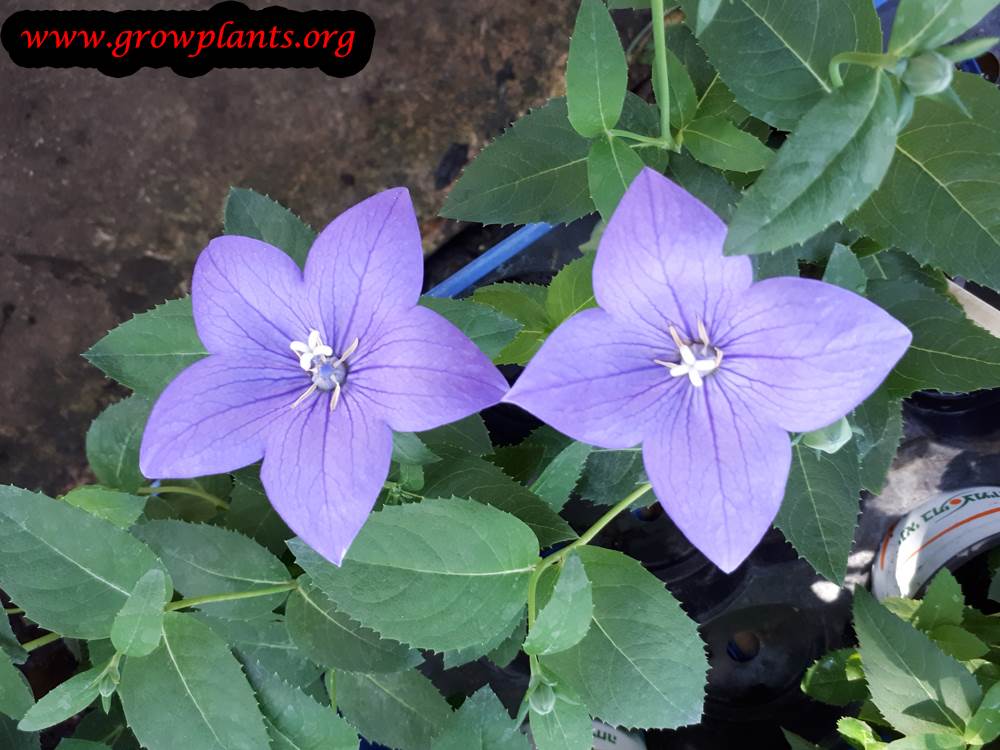
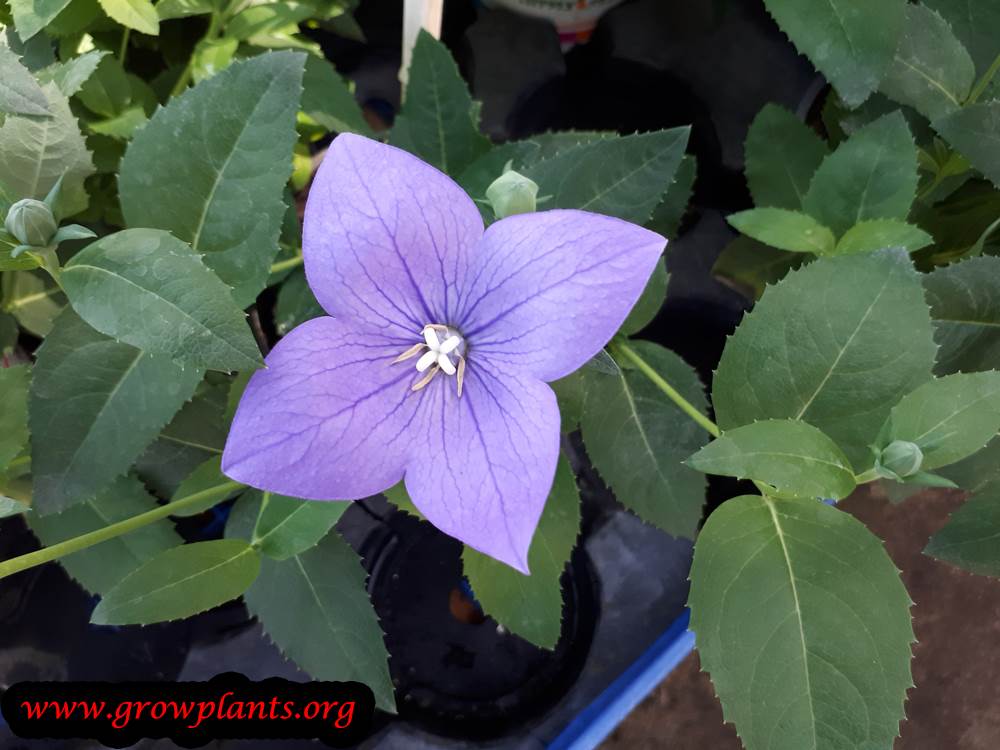
- Leaves & Foliage: Green, elliptic leaves with serrated margins; edible when young.
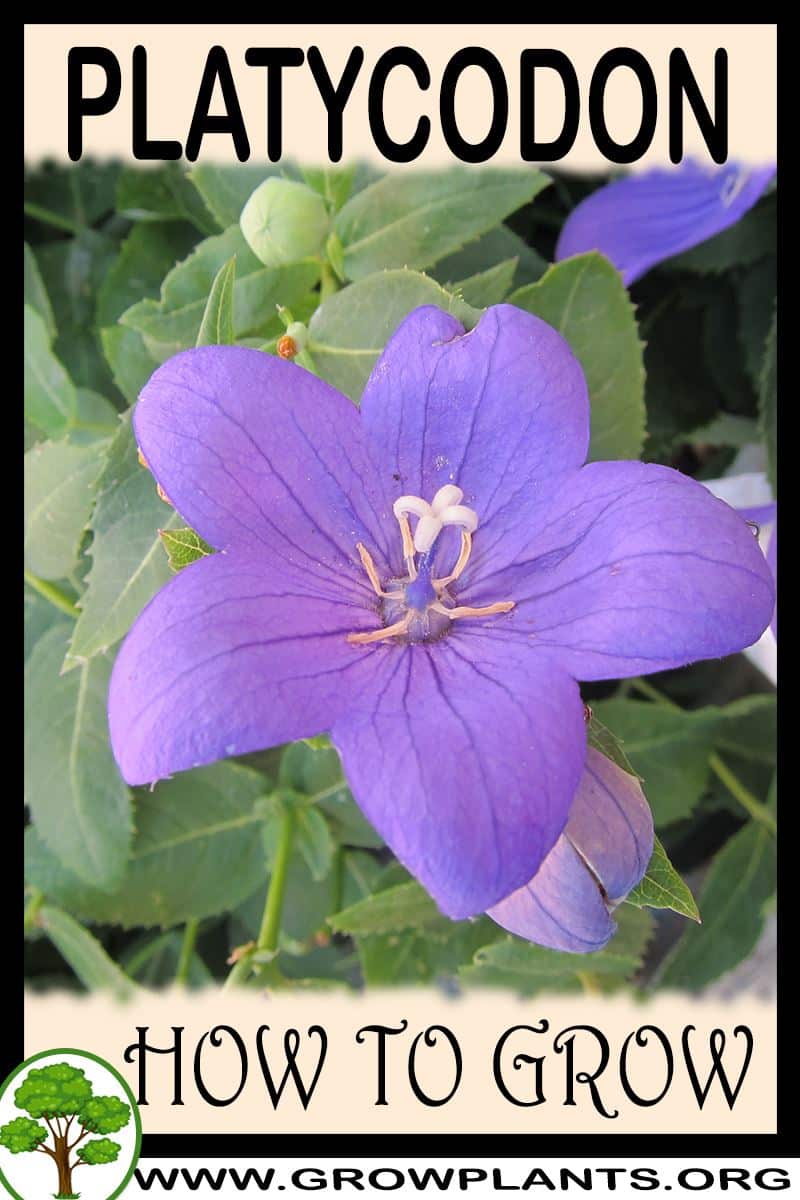
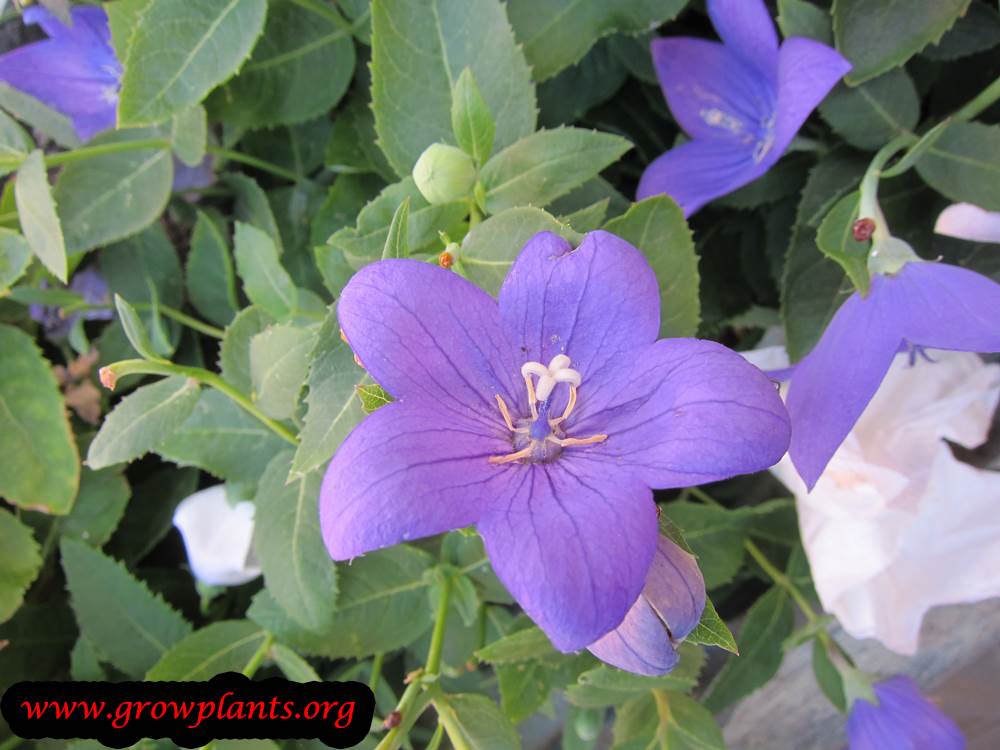
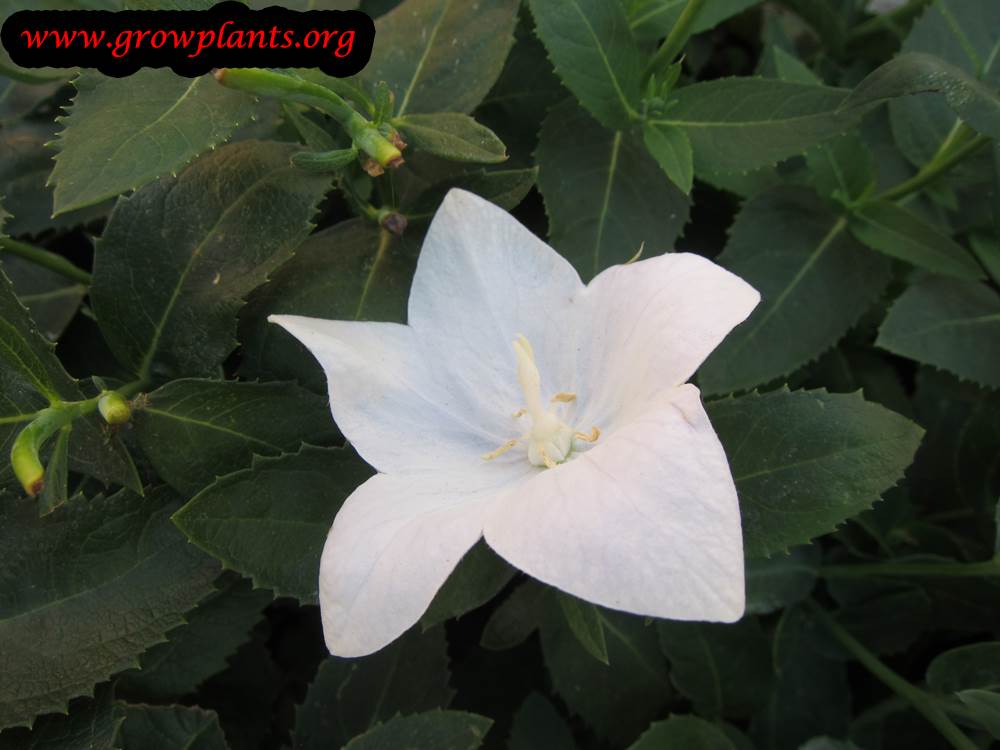
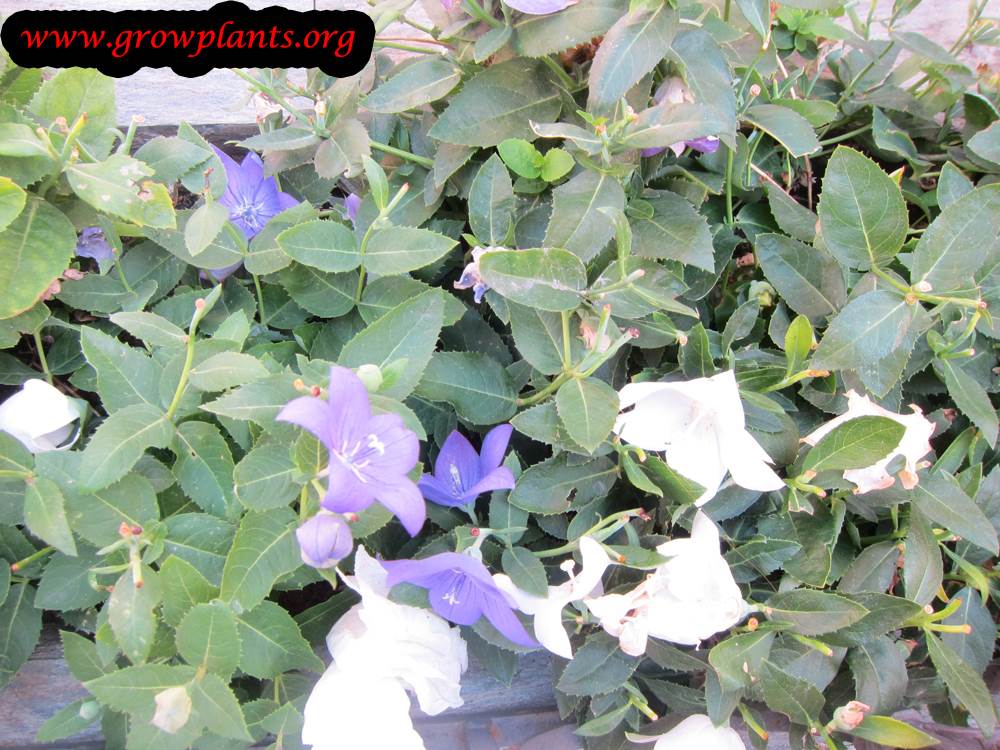
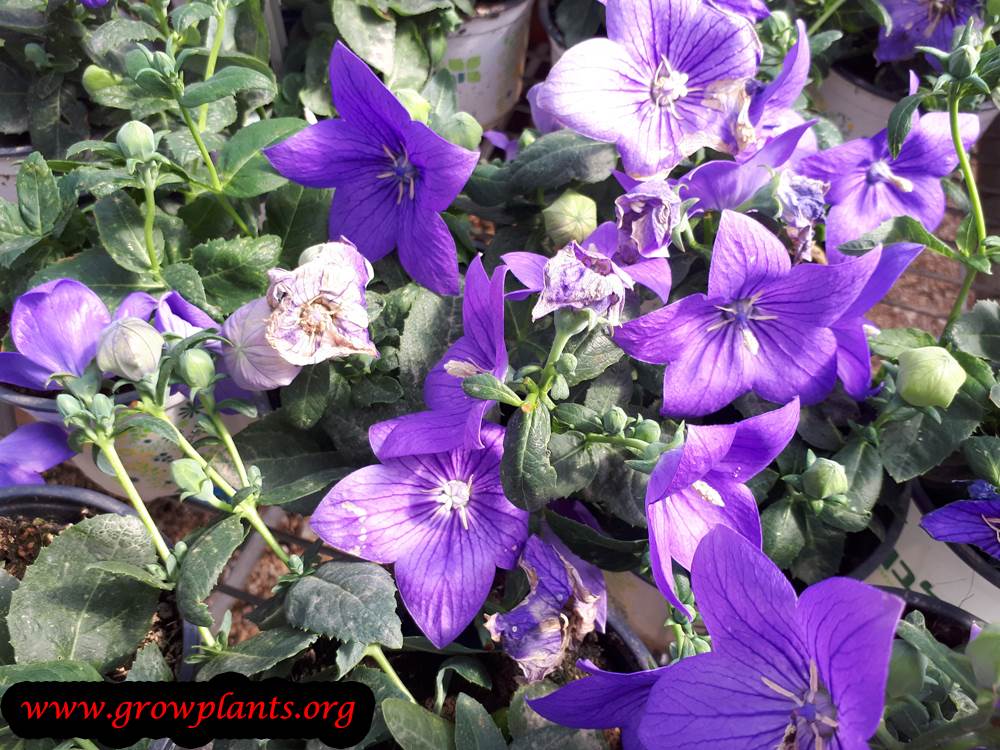
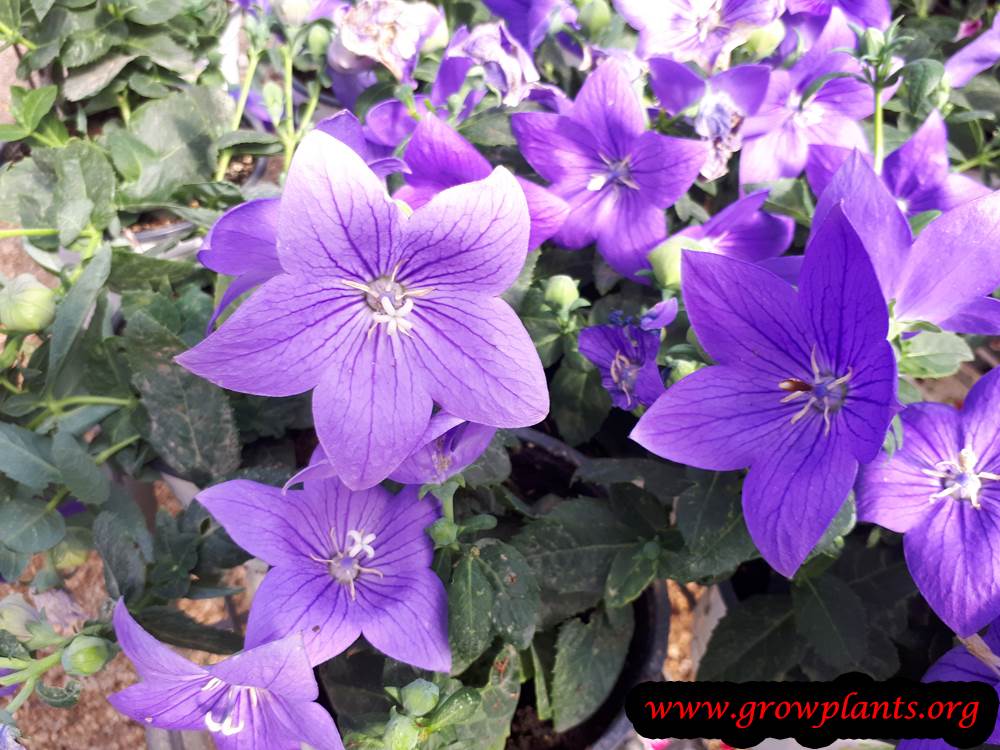
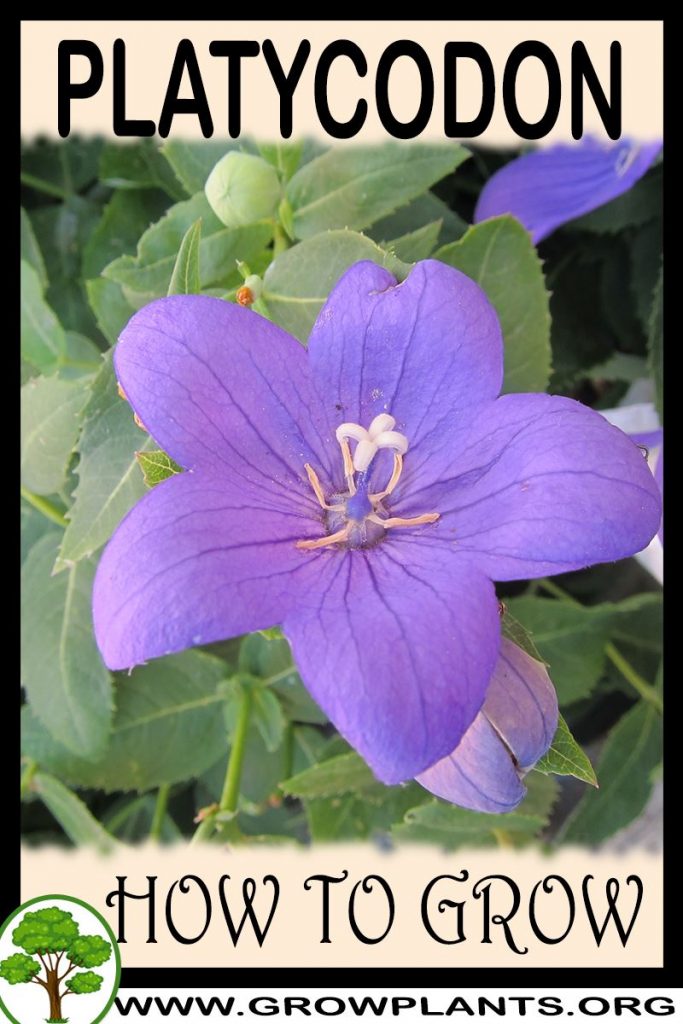
- Flower Characteristics: Balloon-like buds opening to broad star-shaped bells in blue, white, pink or purple.
Primary Uses & Landscape Value
- Edible Uses: Young leaves are eaten and the fleshy root is used as a vegetable and in herbal medicine.
- Functional & Ornamental Roles: Ornamental for borders, cottage gardens and containers, valued for its novel buds and long summer-to-autumn display.
Care Guide: Planting, Soil & Watering
Overview: Balloon flower (Platycodon grandiflorus) is a hardy herbaceous perennial that grows best in rich, well-drained soil kept lightly moist. It prefers full sun to part shade and, once settled, dislikes disturbance because it forms deep roots.
Quick Care Requirements
| Requirement | Ideal Condition |
|---|---|
| Planting Season | By zone: spring in zones 3-6, spring to summer in zones 7-9, spring to autumn in zone 10a, autumn to spring in zone 10b |
| Growth Rate | Moderate to fast |
| Soil Type | Rich, well-drained soil with plenty of organic matter |
| Water Need | Moderate – keep the soil lightly moist |
Planting & Establishment
- Best Planting Season: Plant according to your zone: spring in colder zones (3-6), spring to summer in zones 7-9, spring to autumn in zone 10a, and autumn through spring in the mildest areas (zone 10b).
- How to Plant:
- Hole Preparation: Dig a hole larger than the root ball in loosened soil and work in organic matter.
- Soil Amendments: Mix in compost, chopped dead leaves and humus to enrich the soil, then mulch after planting.
- Planting Depth: Set the plant so the crown sits at soil level, cover the roots lightly, and keep the soil moist while it establishes.
- Growth Speed & Expectations: Growth is moderate to fast, forming clumps 30-60 cm (1-2 ft) tall.
Soil, Watering & Drainage Care
- Soil Mix & Drainage Needs: Use rich but well-drained soil; add organic matter for fertility and mulch to hold moisture while letting excess water drain. In containers use a well-ventilated 10-20 L pot with good drainage.
- Watering Schedule & Technique:
- Young / Newly Planted: Keep newly planted specimens consistently moist while the roots establish.
- Established: Water regularly to keep the soil lightly moist, letting the surface dry slightly between waterings.
- Seasonal Adjustments: Water more in summer heat and reduce in winter as the plant dies back.
Climate, Light & Hardiness
Balloon flower is a hardy herbaceous perennial for temperate to subtropical gardens, thriving in mild conditions with rich, free-draining soil and dying back to a fleshy rootstock over winter. It flowers best in full sun to partial shade, and rated for USDA zones 3–9 (and zone 10 with care) it survives severe winters as a dormant crown while tolerating a fair amount of summer warmth.
Quick Climate Specifications
| Climate Zones | Temperate to subtropical |
| USDA Hardiness Zones | 3–9 (up to 10 with care) |
| Optimal Temp Range | Approximately 15–22 °C / 59–72 °F |
| Approx. Survival Minimum | Dormant rootstock roughly −40 °C / −40 °F (zone 3 rating) |
| Frost Tolerance | High (dies back and re-sprouts) |
| Light Conditions | Full sun to partial shade |
| Wind Tolerance | Moderate |
Sunlight & Light Exposure
Optimal Light Setup
Give it plenty of light - full sun in cool and temperate gardens produces the sturdiest, most free-flowering plants. In the hottest zones (around zone 10b) it does better with partial or afternoon shade.
Direct Sun Requirement
Enough direct sun is needed to bloom well; in too much shade the stems flop and flowering is sparse. Where summers are very hot, though, some midday shade prevents scorch without sacrificing flowers.
Shade & Heat Management
In hot-summer and low-latitude gardens, light afternoon shade keeps foliage from bleaching and helps the plant hold up through heat spells.
Temperature Extremes & Hardiness
USDA Hardiness & Regional Limits
The site data rates balloon flower for USDA zones 3–9, and up to zone 10 with attentive care. Active growth is happiest around 15–22 °C / 59–72 °F, while the plant simply rests underground through winter cold.
Cold Damage & Winter Protection
Top growth dies down in autumn and winter, and the thick perennial rootstock survives severe freezing in cold zones. New shoots emerge late in spring, so mark the crown to avoid digging into a dormant plant; a light winter mulch reassures it in the coldest areas.
Frost Sensitivity
Established plants are very frost tolerant; only tender young spring growth is at risk, and it re-sprouts readily. Germination and early growth want conditions above about 5 °C / 41 °F.
Extreme Heat Tolerance
It handles ordinary summer heat better than most bellflower relatives, but in very hot, humid climates growth slows and part shade plus airflow keep it healthy.
Wind, Humidity & Microclimate
Humidity Preferences
It grows across a range of humidity and is not demanding; moderate humidity with good air circulation limits foliar disease.
Wind Tolerance
The upright stems are moderately wind-tolerant but can splay in strong gusts or heavy rain, especially in rich soil - a sheltered spot or light support keeps clumps tidy.
Rainfall & Seasonal Moisture
Adapted to climates with reliable growing-season moisture; it likes evenly moist but never waterlogged soil and copes with normal seasonal rainfall, resting through cold or dry winters.
Microclimate Recommendations
A bright bed with rich, free-draining soil is ideal; in container culture the root-zone freezes and dries faster, so shelter pots and protect roots over winter in cold zones.
Growing in Pots, Balconies & Indoors
Balloon flower (Platycodon grandiflorus) is a clump-forming perennial grown for its inflated buds that pop open into starry bells – an excellent patio and balcony pot plant, but not a room houseplant. It grows very well in containers, and the grower gives a full potting recipe below; indoors the light is too weak for it to flower.
Quick Details
- Container Size: 10-20 L (2.6-5.2 gal) (grower’s guidance)
- Indoor Suitability: Not a room houseplant (grower); at most a bright, sunny sill while in growth
- Best Spot: Full sun to half shade – it needs enough sun to bloom; in the hottest climates give it half shade
- Soil & Drainage: Well-ventilated, well-drained mix with plenty of holes so water runs straight out – potting mix or peat with perlite or vermiculite (grower’s mix)
- Watering in Pots: Small to average amounts (grower); water so it drains right through and never leave the pot standing in water
Indoors & On the Windowsill
- Not a houseplant: The grower marks it unsuitable as a room houseplant – it needs full sun to open its balloon buds.
- Sunny windowsill: A young plant may grow on the brightest, sunniest sill, but it flowers far better outdoors.
- Winter: It is a hardy perennial that dies back to fleshy roots and reshoots in spring; leave the pot outside in a sheltered spot rather than in a warm room, and keep it barely moist while dormant.
On a Balcony or Patio
- Light & wind: Give it the sunniest spot; taller stems may need light support on an exposed balcony. Walls and paving reflect heat, so pots dry fast – check moisture in hot weather.
- Late riser: It shoots late in spring, so do not assume a dormant pot has failed – mark it and be patient.
Choosing the Pot, Soil & Long-Term Care
- Pot & drainage: A 10-20 L pot with plenty of drainage holes so water passes straight through; the grower advises against leaving the pot in a bottom tray of water, which would rot the fleshy roots.
- Potting mix: A well-ventilated, well-drained mix – potting mix or peat with perlite or vermiculite (grower’s mix).
- Feeding: A light balanced feed through the growing season is enough; pot nutrients leach, so feed little and often rather than heavily.
- Repotting: Balloon flower dislikes disturbance to its brittle roots – handle gently and only pot on when necessary.
Grower’s Container Tip
- Refresh the soil every few years: The grower swaps out all or part of the potting mix every few years to keep it open and fertile, and never lets the pot stand in a bottom tray of water.
Fertilizing & Feeding
A moderate feeder that benefits from balanced feeding through the growing and flowering season; avoid overfeeding with nitrogen, which favors foliage over flowers.
Quick Fertilizing Specs
| Feeding Level | Light to moderate feeder |
|---|---|
| Main Nutrient Priority | Balanced nutrition; steady nitrogen for growth, no need for high phosphorus |
| Best Feeding Period | During the active growing and flowering season |
| Organic Options | Compost, humus and organic matter worked into the soil |
| Soil pH | Adapts to a wide range; slightly acidic to near neutral |
| Reduce/Stop Feeding | Reduce and stop feeding as growth slows into dormancy |
| Micronutrients | Usually supplied by soil and organic matter; correct only if a deficiency shows |
Feeding by Growth Stage
Spring growth flush
Support healthy leaf and stem growth as the plant breaks into active growth.
| Nutrient direction | A balanced, complete fertilizer with steady nitrogen to build foliage. |
|---|---|
| Timing | As new growth begins in the active growing season. |
| Frequency | Light feeding spread across the early growing season. |
| Fertilizer types | Balanced complete garden fertilizer, Compost or other organic matter worked into the soil |
| Precautions | Avoid heavy nitrogen, which pushes soft leafy growth at the expense of flowers. |
Blooming period
Sustain flowering without forcing excess leafy growth.
| Nutrient direction | A balanced fertilizer; adequate nitrogen and potassium support bloom while extra phosphorus offers little benefit. |
|---|---|
| Timing | Through the flowering period of the growing season. |
| Frequency | Continue light feeding while the plant is actively blooming. |
| Fertilizer types | Balanced complete fertilizer |
| Precautions | Do not rely on high-phosphorus ‘bloom booster’ products; balanced nutrition and good light drive flowering. |
Dormancy and winter rest
Let the plant rest; growth slows or dies back and nutrient demand stops.
| Nutrient direction | None – withhold fertilizer while the plant is dormant. |
|---|---|
| Timing | From late in the season through winter dormancy. |
| Frequency | No feeding at this stage. |
| Fertilizer types | No feeding at this stage while the plant is dormant. |
| Precautions | Do not fertilize until active growth resumes in spring. |
Nutrient Deficiency Signs & Corrections
Older, lower leaves turn pale green to yellow and the plant grows weakly.
| Possible causes | Low soil fertility / insufficient nitrogen, Waterlogged or poorly drained soil limiting root uptake, Cold soil slowing nutrient availability |
|---|---|
| Appears first on | Older, lower leaves |
| What to check | Recent feeding history, Soil drainage and moisture |
| Possible correction | Apply a balanced complete fertilizer and improve drainage; feed lightly during active growth. |
New leaves yellow between green veins while the veins stay green.
| Possible causes | High soil pH reducing iron and manganese availability, Poorly drained or cold, wet soil, Actual iron or manganese shortage in the root zone |
|---|---|
| Appears first on | New, young leaves at the shoot tips |
| What to check | Soil pH, Drainage and root health |
| Possible correction | Correct soil pH and drainage; if it persists, apply a chelated iron product per its label. |
The plant grows leafy but produces few flowers.
| Possible causes | Too little light, Excess nitrogen promoting foliage over flowers, Immature or recently divided plant |
|---|---|
| Appears first on | Flowering stems |
| What to check | Amount of direct light, Recent nitrogen feeding |
| Possible correction | Ensure adequate sunlight and avoid excess nitrogen; use a balanced fertilizer. |
Pruning, Training & Seasonal Maintenance
Platycodon grandiflorus (balloon flower) is a herbaceous perennial that dies back completely to a crown each year, so its main pruning event is a single autumn/winter cutback of the spent top growth – the source’s own care note pairs this with an annual fertilize, once a year, not routine repeated feeding. Through its summer–autumn bloom, light deadheading of the balloon-shaped buds and star-shaped flowers extends flowering and helps control the self-seeding the source flags as an invasive tendency in this species.
Quick Pruning & Maintenance Specs
| Pruning Tolerance | Moderate – tolerates a full cutback each dormant season as an herbaceous die-back perennial |
| Primary Pruning Window | Autumn/Winter (full cutback of dead top growth) |
| Secondary Maintenance Window | Summer–autumn bloom (deadheading) |
| Typical Frequency | One annual cutback; deadhead every 1–2 weeks in bloom |
| Main Objective | Remove spent top growth, prolong bloom, limit self-seeding |
| Young Plant Priority | Avoid disturbing the crown; mark its spot since spring regrowth is slow to appear |
| Mature Plant Priority | Deadhead through bloom; cut back fully once dormant |
| Best Tool Type | Precision snips for deadheading, bypass secateurs for the fall cutback |
| Avoid Heavy Pruning During | Early-to-mid spring, before new shoots are confirmed emerged |
Pruning by Plant Age & Size
Newly Established
Do not cut the young plant back; balloon flower is well known for emerging late and slowly in spring, so mark its location to avoid accidentally digging into the crown or its deep taproot while it looks dormant.
Young / Formative
No formal training system, but pinching the tips of young stems in late spring is a widely used technique in this genus to build a bushier, more compact plant that is less prone to flopping once flowers form.
Mature / Established
Deadhead through the bloom season and give the plant its single annual cutback once top growth has died back for winter, matching the source’s own once-a-year pruning rhythm.
Seasonal Pruning Schedule
Dormant/Winter: once foliage has fully died back after frost, cut all top growth down near ground level; this is the one significant cut of the year and the plant regrows fully from its crown, so there is no cost to next season’s bloom.
Ongoing Sanitary (Summer/Autumn bloom): deadhead spent balloon buds and open flowers to prolong flowering and to intercept seed pods before they mature, given the plant’s tendency to self-seed.
Structural Pruning & Training
Taller or floppier stems benefit from light staking, or from the formative pinching described above, rather than from any cutting-based height control once the plant is in bud.
Special Growth to Remove
- Spent flower stems and forming seed pods, removed before they mature to limit self-seeding.
- Dead leaves and stems, cleared at the single dormant-season cutback.
Container & Small-Space Pruning
Suits a fairly large container (source specifies roughly 10–20L) with very well-drained soil; because of its deep taproot the crown resents disturbance, so avoid root-pruning or repotting disruption at the same time as top-growth pruning – do the two on separate occasions if both are needed.
Tools
Precision snips for deadheading soft flower stems through summer; bypass secateurs for the tougher, more fibrous stems at the autumn/winter cutback.
Tool Hygiene & Disease Risk
Routine – the noted pests (aphids, thrips) are not spread by pruning tools; ordinary clean tools are adequate.
Cut Placement & Technique
Deadhead by cutting just above a leaf node or side bud so lateral buds can continue the display. For the dormant cutback, cut stems down close to the crown without gouging into it.
Heavy Pruning & Rejuvenation
The full annual cutback already functions as the plant’s rejuvenation – it regrows entirely fresh from the crown each spring, so no separate hard-pruning event is needed or appropriate.
Post-Pruning Care
Apply mulch and organic matter after the dormant cutback, matching the source’s own care guidance, both for winter protection over the crown and as part of the plant’s annual feeding. Avoid disturbing the soil above the crown afterward, since regrowth in spring can be slow to show.
Common Pruning Mistakes
- Assuming a slow-to-emerge crown in spring is dead and disturbing or digging it up.
- Letting spent flowers go to seed given this species’ self-seeding tendency.
- Root-disturbing the deep taproot while doing top-growth pruning or repotting.
When NOT to Prune
Do not cut back or disturb the crown in early spring before new shoots are confirmed – wait for visible regrowth, since this species emerges later than many border perennials.
Recommended Tools (by task)
- precision_snips – deadheading soft flower stems through the bloom season.
- bypass_secateurs – the tougher stems at the single annual dormant-season cutback.
- soft_ties_stakes – light support for taller or floppy flowering stems.
Propagation Guide
Balloon flower is easiest and most reliably raised from seed, and the site also notes it starts readily from cuttings; its fleshy taproot makes division of older plants risky. The species comes largely true from seed and needs no grafting, making it an easy to moderate subject.
Quick Propagation Specs
| Best Propagation Method | Seed |
| Alternative Methods | Basal/stem cuttings (division risky — fleshy taproot) |
| Propagation Difficulty | Easy |
| Seed True-to-Type | Usually true-to-type (named cultivars vary) |
| Vegetative True-to-Type | Yes |
| Best Propagation Season | Spring (autumn in zone 10b), per site |
| Seed Germination Time | About 2–4 weeks (site) |
| Cutting Rooting Time | Usually a few weeks under warm, humid conditions |
| Germination Temperature | 15–22°C (59–72°F), per site |
| Seed Sowing Depth | About 1 cm (0.4 in), per site; barely covered |
Growing from Seed
Seed Handling & Viability
Save the fine seed and, as the site advises, keep it in a dry, dark place in the refrigerator until sowing; cool, dry storage preserves viability.
Sowing Season
Per the site, sow in spring in hardiness zones 3–10a and in autumn in zone 10b.
Sowing Depth & Orientation
The site gives a sowing depth of about 1 cm (0.4 in); sow shallowly into moist soil. Balloon-flower seed germinates well with light, so barely cover it.
Germination Conditions
The site specifies moist soil in full sun with moderate humidity at about 15–22°C (59–72°F), with an average amount of water.
Germination Time
Germination takes about 2–4 weeks, as the site records.
Sowing Spacing & Thinning
Space or thin seedlings to about 20 × 30 cm (8 × 12 in), the spacing the site gives.
Seedling Care
Keep seedlings in moist soil and full sun and above about 5°C (41°F), the site’s stated minimum. Because the taproot resents disturbance, transplant while young or sow where the plants are to grow.
Stem Cuttings
Cutting Type
Soft basal or short stem-tip cuttings taken before the stems harden; the site confirms balloon flower starts readily from cuttings.
Best Timing
Late spring to early summer, from vigorous young growth.
Cutting Preparation
Take short cuttings, remove the lower leaves, and insert into a moist, free-draining mix; the milky sap can be rinsed or left to dry briefly before insertion.
Rooting Setup
Root in a warm, humid, lightly shaded spot with the mix kept just moist.
Rooting Hormone
Optional; a light rooting powder may speed things but is not essential.
Rooting Time
Expect roots within a few weeks under warm, humid conditions.
Division, Offsets, Pups & Suckers
Balloon flower forms a thick, brittle taproot and resents disturbance, so division of older plants is risky and often fails. If attempted, do it in spring on a younger crown, cutting cleanly so each piece keeps a share of the fleshy root and a growth bud; most growers prefer seed or cuttings instead.
Bloom & Edible Flower Guide
Quick Details
- Bloom Season: Summer into autumn.
- Time to First Bloom: From seed it usually flowers in its second year; nursery plants bloom the first summer.
- Flower Appearance: Balloon-like buds that puff up and then split open into broad, five-pointed star-bells in blue, white, pink or purple.
- Edibility: Edible – the young balloon buds and open flowers are edible and are used as a delicate garnish; the roots and leaves are also eaten in East Asian cooking.
Detailed Blooming Overview
The balloon flower earns its name at the bud stage: each bud inflates like a little balloon before popping open into a wide, star-shaped bell. Flowering builds through summer and often continues into autumn, with blue the best-known colour alongside white, pink and purple forms.
Flower Characteristics
- Shape: Broad, upward-facing bells that open flat into a five-pointed star; the inflated “balloon” bud is the giveaway.
- Colour: Blue, white, pink or purple.
- Also known as: Balloon flower or Chinese bellflower.
- Pollinators: Bees; the flowers are protandrous, shedding pollen before the stigma becomes receptive, which favours cross-pollination.
Bloom Care & Thinning
- Deadheading: Pinching off spent flowers keeps the plant blooming for longer through the season.
- Support: Taller forms can flop when in full flower; a discreet stake keeps the display upright.
- Pollination: Bee-pollinated; no intervention needed for a good show.
Bloom Health & Protection
- Slugs and snails: They graze the soft shoots and can spoil buds in damp weather; hand-picking or a wildlife-safe slug control helps.
- Grey mould (Botrytis): Flowers may rot in prolonged wet; airflow and removing faded blooms is the simplest safeguard.
Fruit & Uses
Balloon flower (Chinese bellflower, Korean doraji) is grown both as an ornamental and as a food plant: the site notes its edible leaves, and the thick root is a well-known vegetable in Korean cooking. The young leaves are eaten as a cooked green, while the root needs soaking and cooking before use.
Quick Edible Specs
| Edible Parts | Young leaves and the fleshy root |
|---|---|
| Main Use(s) | Culinary — leaves as a cooked green; root as a pickled or stir-fried vegetable and in soups. Root also traditionally used medicinally. |
| Eaten Raw or Cooked | Leaves cooked; root cooked (soaked first) |
| Preparation Required | Root: peel, then soak / rub with salt and rinse (or parboil) to draw out bitterness and saponins before cooking. Leaves: cook. |
| Harvest Season | Young leaves in spring to summer; roots lifted in autumn once the clump is well established |
| Time to First Harvest | Roots are lifted only after the plant has grown for a few seasons (cross-reference planting notes for age) |
| Safety/Toxicity Caveat | The raw root contains bitter saponins — soak and cook it before eating; do not eat it raw in quantity. |
Leaves & Greens
The young green leaves are edible and are used as a cooked leafy green. Pick tender new leaves in spring and early summer, before the plant puts its energy into flowering; older leaves toughen. Note that repeatedly stripping leaves competes with the root crop, so on plants grown for their roots take leaves only sparingly.
Roots & Tubers
The fleshy, carrot-like root is the main food part. Roots are lifted in autumn once the plant is well established, then washed and peeled. Because the raw root is bitter and rich in saponins, it is soaked in water — often rubbed with salt and rinsed, or briefly parboiled — to draw out the bitterness before it is julienned and stir-fried, seasoned and pickled, or added to soups. Prepared this way it has a crisp texture and mild flavour.
Preparation, Uses & Safety
Always prepare the root before eating: peel it, soak or salt-rub and rinse it (or parboil it) to remove the bitter saponins, then cook it — do not eat raw root in quantity. Young leaves should be cooked rather than eaten raw. The root is also traditionally used medicinally (for example in cough remedies); this is noted only as a traditional use and is not a health claim. As with any nursery plant, eat only material that has not been treated with pesticides.
Pests, Diseases & Troubleshooting
Overview: Balloon flower is a generally trouble-free herbaceous perennial; its main pests are slugs and snails grazing the emerging spring shoots, with aphids and thrips secondary, while its real vulnerability is crown and root rot in heavy, wet soil. It has a deep taproot that resents disturbance and is famously late to emerge in spring. Give it well-drained soil, sun to light shade, and patience, and it needs little intervention beyond slug protection.
Quick Troubleshooting Overview
| Issue / Pest | Main Symptom | Primary Solution |
|---|---|---|
| Slugs and snails | Emerging shoots and young leaves chewed; slime trails | Hand-pick at night; barriers/traps; iron-phosphate bait |
| Aphids | Sticky, curled new growth and buds | Hose off; insecticidal soap; encourage natural enemies |
| Thrips | Silvery streaks, distorted flowers | Sticky traps; remove spent blooms; spinosad if needed |
| Crown / root rot | Wilting, blackened crown in wet soil | Improve drainage; avoid overwatering; remove affected plants |
| Southern blight | White fungal threads and collapse at soil line | Remove infected plants and soil; improve drainage |
| Late emergence | No growth until late spring (looks dead) | Mark the spot; be patient; avoid digging or overwatering the crown |
Common Pests & Management
- Slugs and snails (Gastropoda):
- Symptoms: Ragged holes and stripped tissue on the tender emerging shoots and young leaves in spring, with slime trails, worst in cool damp weather — the main pest of this plant.
- Prevention & Control: Hand-pick after dark, set beer or shelter traps, and ring emerging crowns with grit or copper barriers; apply iron-phosphate bait, which is safer around pets and wildlife than metaldehyde. Protect the crown especially as it breaks dormancy.
- Aphids (Aphididae):
- Symptoms: Clusters of soft insects on soft new growth and flower buds, causing curling, honeydew and occasional bud distortion.
- Prevention & Control: Knock off with a water jet, encourage ladybirds and lacewings, and use insecticidal soap for heavy colonies; avoid excess nitrogen that promotes soft, aphid-prone growth.
- Thrips (Thrips spp.):
- Symptoms: Silvery streaking and flecking on leaves and petals with distorted, spotted flowers.
- Prevention & Control: Monitor with sticky traps, remove spent flowers, and treat persistent outbreaks with spinosad or insecticidal soap, sparing pollinators by spraying in the evening.
- Spider mites and cutworms (Tetranychus urticae; Noctuidae larvae):
- Symptoms: Mites stipple and dull foliage in hot dry spells; cutworms sever young shoots at the base overnight.
- Prevention & Control: Rinse foliage and reduce drought stress for mites; for cutworms, clear debris, use collars around young shoots, and hand-collect at night.
Diseases & Fungal Issues
- Crown and root rot (Pythium, Phytophthora, Sclerotinia spp.):
- Symptoms: The key disease: plants wilt and the crown and fleshy taproot turn brown and rot, especially in heavy, poorly drained or overwatered soil and in wet winters.
- Treatment & Management: Plant in well-drained soil, avoid overwatering and winter wet, and do not mulch heavily against the crown. Remove and destroy rotted plants; there is no cure once the taproot rots, so drainage and restrained watering are the real controls.
- Southern blight (Sclerotium rolfsii):
- Symptoms: In warm climates, white fan-like fungal threads and tan mustard-seed-like sclerotia appear at the soil line and the plant collapses from the base.
- Treatment & Management: Remove infected plants along with surrounding soil, improve drainage and airflow, avoid burying the crown with mulch, and rotate the position; solarizing or replacing infested soil helps in beds with a history of it.
- Botrytis / grey mold (Botrytis cinerea):
- Symptoms: Fuzzy grey mold on flowers and soft tissue in cool, damp, crowded conditions.
- Treatment & Management: Deadhead spent blooms, improve airflow, and avoid overhead watering; remove affected tissue promptly.
- Leaf spot / damping-off (various fungi):
- Symptoms: Brown leaf spots in humid conditions; seedlings collapse in cold, wet, over-sown flats.
- Treatment & Management: Space plants and remove spotted leaves; sow seed in warm, free-draining, uncrowded conditions and avoid overwatering seedlings.
Growing Difficulties & Abiotic Problems
- Very late spring emergence:
- Cause & Symptoms: Balloon flower is one of the last perennials to appear, so bare soil in spring is often mistaken for a dead plant — leading to accidental digging or overwatering.
- Correction Strategy: Mark the crown’s position in autumn, be patient into late spring, and avoid disturbing or soaking the dormant crown while you wait.
- Flopping / staking:
- Cause & Symptoms: Taller selections can flop, especially in rich soil or shade, splaying open at the center.
- Correction Strategy: Grow in full sun on lean, well-drained soil, provide support or grow compact cultivars, and pinch or cut back early for sturdier stems.
- Transplant resentment:
- Cause & Symptoms: The deep, brittle taproot dislikes disturbance, so division and transplanting often set the plant back or kill it.
- Correction Strategy: Site it permanently from the start, transplant only when young and with a deep root ball, and avoid unnecessary division; propagate from seed or basal cuttings instead.
What Helps — Products & Tools
This easygoing perennial needs little more than iron-phosphate slug bait and simple barriers for slugs and snails, insecticidal soap for occasional aphids, and spinosad for thrips if they appear; the most important ‘products’ are good drainage and restraint with water. Spray in the evening to protect pollinators.