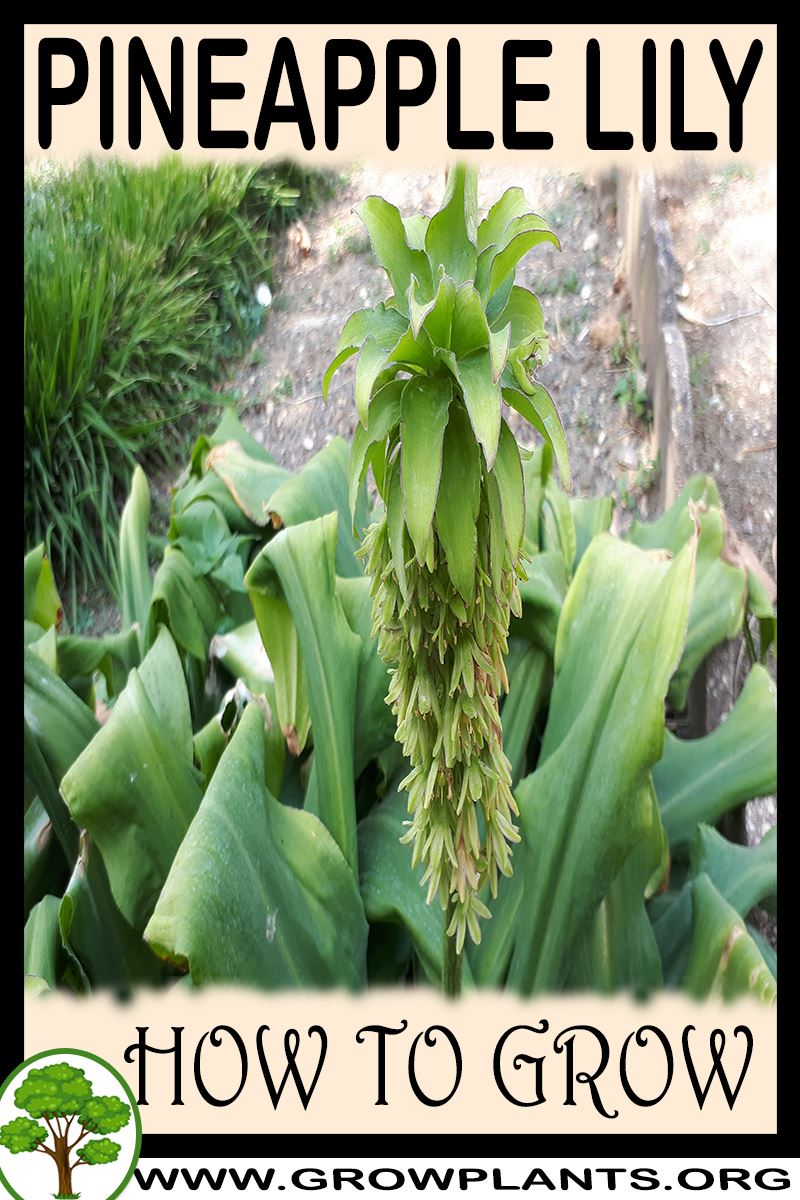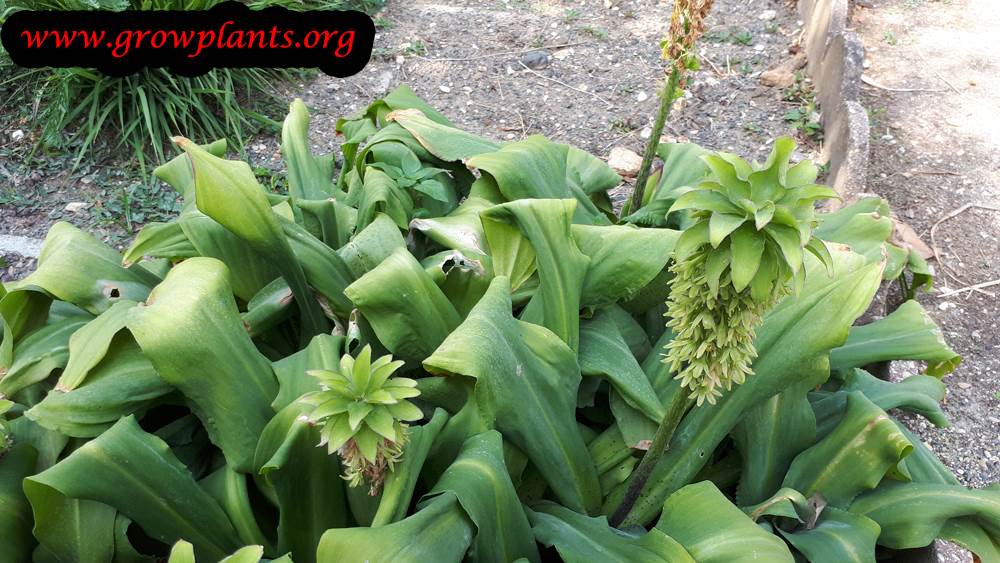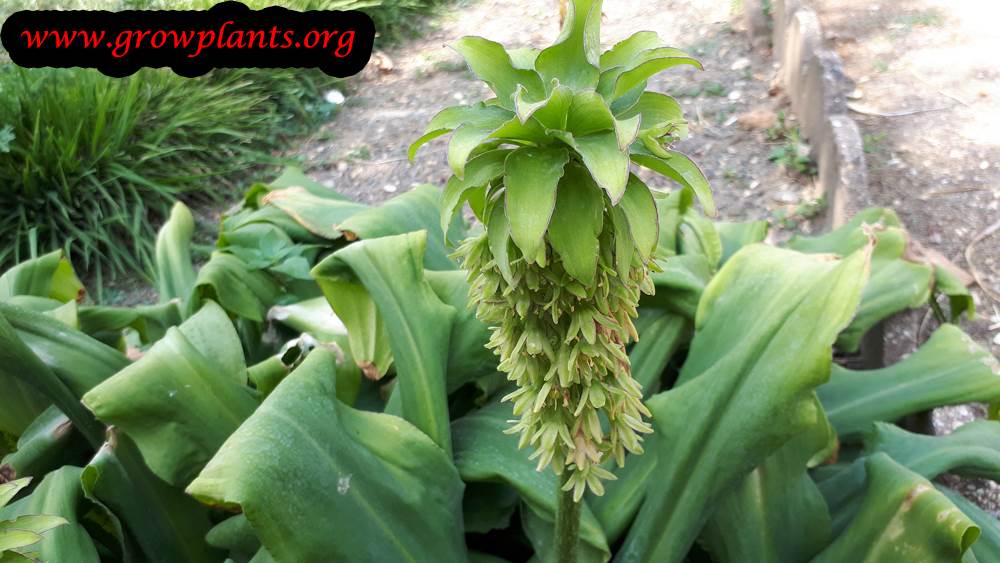


Plant Profile & Key Characteristics
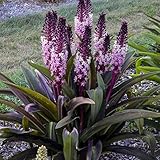
Overview: Pineapple lily (Eucomis) is a bulbous plant 20–40 cm (8–16 in) tall, grown for its curious pineapple-like flower spikes topped with a leafy crown. It is used as an ornamental and long-lasting cut flower.
Quick Specifications
| Specification | Attribute |
|---|---|
| Plant Type / Life Cycle | Bulbous geophyte — perennial in mild climates, grown as an annual where winters are hard |
| Foliage Type | Deciduous (dies back to the bulb; evergreen only in frost-free conditions) |
| Mature Size | 20–40 cm (8–16 in) tall |
| Growth Rate | Fast to moderate |
| Root System | Grows from a bulb |
| Hardiness | USDA zone 10b and warmer as a perennial; zones 4–10a grown as an annual |
Growth Form & Structure
- Height & Spread: A modest 20–40 cm (8–16 in), well suited to containers and equally at home in a border.
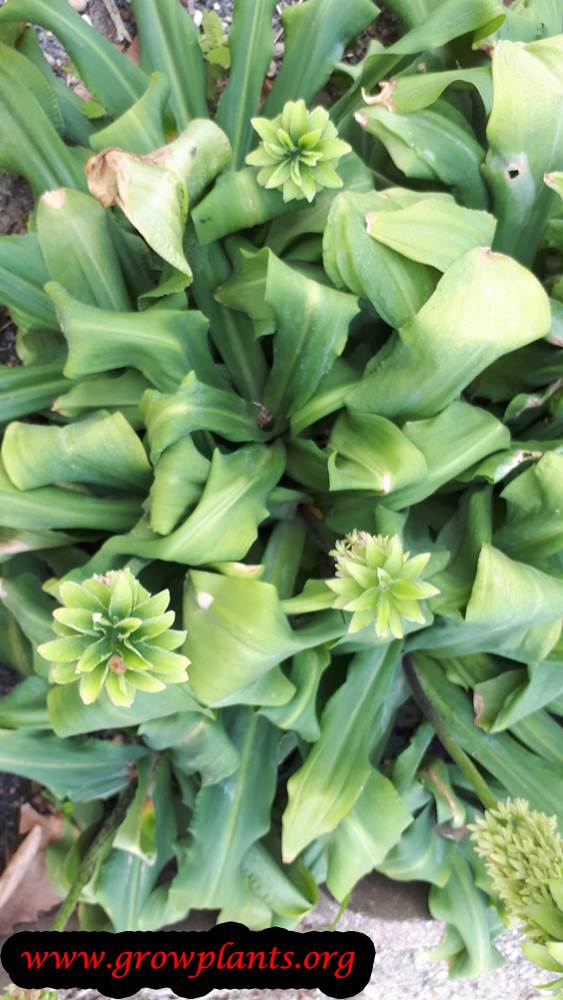
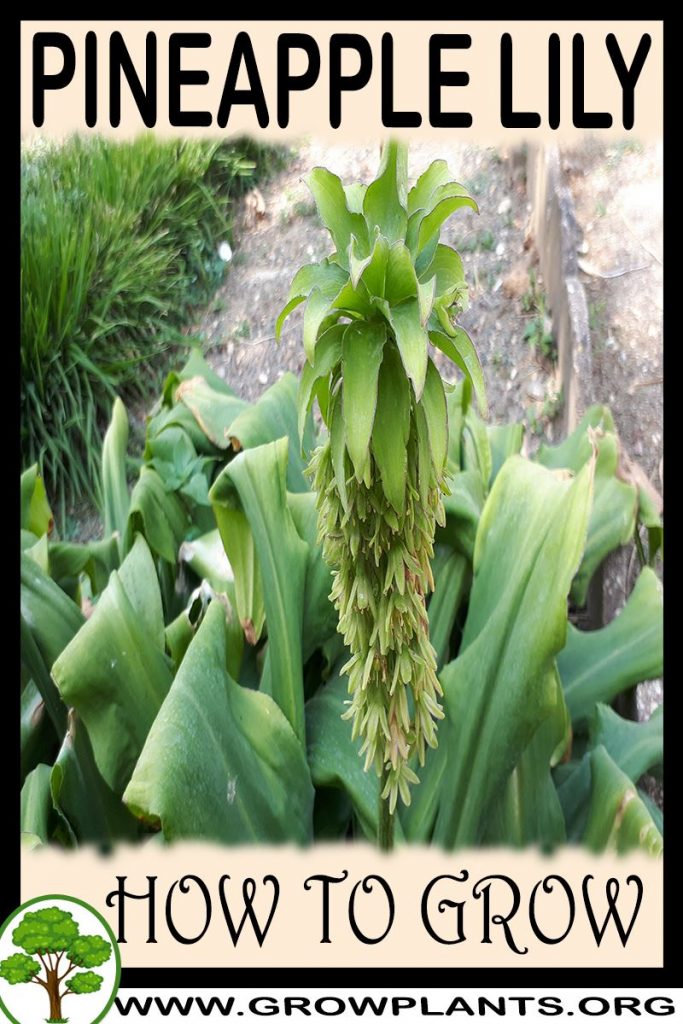
- Growth Habit & Form: A rosette of strappy leaves at the base from which a stout flower stem rises, capped by a tuft of leaf-like bracts resembling a pineapple.
- Lifespan & Maturity: The bulb returns each year where hardy, flowering in summer; where winters are cold the bulbs are lifted and stored or grown fresh as annuals.
Anatomy & Physical Features
- Leaves & Foliage: Green leaves in a basal rosette, linear at the base and more triangular towards the tip.
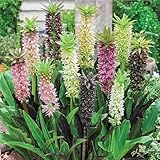
- Flower Characteristics: Dense summer spike of small star-shaped flowers (purple, white, pink, green, yellow or bicoloured) crowned by a tuft of leafy bracts.
Primary Uses & Landscape Value
- Functional & Ornamental Roles: Ornamental for borders and containers and an unusual, long-lasting cut flower.
Care Guide: Planting, Soil & Watering
Overview: Pineapple lily is a bulbous perennial that grows best in rich, fertile soil kept evenly moist through the growing season. It needs a sunny, sheltered spot with sharp drainage, and stays drier while dormant.
Quick Care Requirements
| Requirement | Ideal Condition |
|---|---|
| Planting Season | In spring after the last frost; from spring to autumn where hardy |
| Growth Rate | Moderate to fast |
| Soil Type | Rich, fertile, moisture-retentive but free-draining soil |
| Water Need | Moderate – evenly moist in growth, drier when dormant |
Planting & Establishment
- Best Planting Season: Plant bulbs in spring once frost has passed; in mild, frost-free areas planting can extend from spring through autumn.
- How to Plant:
- Hole Preparation: Dig a hole roughly two to three times the width of the bulb in loosened, free-draining soil.
- Soil Amendments: Mix in plenty of compost or well-rotted organic matter to enrich the soil and aid drainage.
- Planting Depth: Set the bulb with its neck near the surface (about 15 cm/6 in deep in the ground, shallower in pots); avoid burying too deeply.
- Growth Speed & Expectations: Expect moderate to fast growth through the warm season, forming a rosette 20-40 cm (8-16 in) tall before flowering.
Soil, Watering & Drainage Care
- Soil Mix & Drainage Needs: Use a rich but sharply drained mix; in pots add grit or perlite so water drains freely and the bulb never sits wet.
- Watering Schedule & Technique:
- Young / Newly Planted: Water in well at planting, then keep the soil lightly moist as shoots emerge.
- Established: Water regularly through the growing season to keep the soil evenly moist, letting the top layer dry slightly between waterings.
- Seasonal Adjustments: Reduce watering sharply as foliage dies back and keep the dormant bulb nearly dry over winter.
Climate, Light & Hardiness
Pineapple lily (Eucomis) is a summer-flowering bulb suited to tropical, Mediterranean, subtropical, and temperate climates. It is winter-hardy as a perennial only in USDA zone 10b and warmer, and is grown as an annual (typically with the bulb lifted for winter) much further north.
Quick Climate Specifications
| Climate Zones | Tropic, mediterranean, subtropical, temperate |
|---|---|
| USDA Hardiness Zones | 10b+ as a perennial; 4–10a grown as an annual |
| Light Conditions | Full sun to half shade |
| Frost Tolerance | Low for the bulb in the ground outside its perennial range |
Sunlight & Light Exposure
Optimal Light Setup
Full sun to half shade both suit this bulb, with full sun typically giving the sturdiest bloom stalks.
Temperature Extremes & Hardiness
USDA Hardiness & Regional Limits
The bulb survives winter in the ground reliably only in zone 10b and warmer; in zones 4–10a it is commonly grown as an annual, with the bulb often lifted and stored over winter rather than left to face freezing soil.
Frost Sensitivity
Frost damages or kills top growth, and a freeze reaching the bulb in the ground outside its hardy range will kill it, which is why lifting or heavy mulching is used in colder climates.
Wind, Humidity & Microclimate
Rainfall & Seasonal Moisture
Prefers rich, moist soil through the growing season, tolerating the range of rainfall patterns found across its broad climate span.
Growing in Pots, Balconies & Indoors
Pineapple lily is a summer-flowering bulb, superb in a pot on a sunny patio but not a houseplant – it needs full sun and a dry winter rest. Its neat size makes it a natural container subject, and pots make overwintering the tender bulbs easy in cold areas.
Quick Details
- Container Size: 5-10 L (1.3-2.6 gal); a few bulbs to a pot look best
- Indoor Suitability: Not a houseplant; a patio bulb needing full sun and a dormant rest
- Best Spot: Full sun to half shade
- Soil & Drainage: Free-draining, gritty mix; it hates a wet, cold winter root
- Watering in Pots: Water freely in growth, then keep dry and cool while dormant
Indoors & On the Windowsill
- Houseplant limits: Not a houseplant – it grows from a bulb that needs strong sun to flower and a dry, cool dormancy afterwards, which a living room cannot provide.
- Overwintering the bulbs: This is where a pot earns its keep: in cold climates keep the potted bulbs dry and frost-free through winter, then start watering and move them back into the sun as growth resumes.
On a Balcony or Patio
- Light & warmth: Stand it in the sunniest spot; a warm patio or balcony that ripens the bulbs gives the best flower spikes. Pots dry fast in summer, so water generously while it is growing.
- Practicalities: A filled pot is heavy once watered – check the balcony can take the load, and stand it where drainage runoff will not be a nuisance.
Choosing the Pot, Soil & Long-Term Care
- Pot & drainage: A 5-10 L pot with strong drainage holes and never leave it standing in a saucer of water, or the roots rot. Terracotta breathes and dries faster; glazed or plastic holds moisture longer. Sharp drainage matters most while the bulb is resting.
- Potting mix: An open, free-draining mix – potting compost with added grit, perlite or coarse sand.
- Feeding: Feed while in leaf and flower; ease off as the foliage dies down for dormancy.
- Repotting: Top-dress yearly and repot every few years, dividing congested bulbs when dormant.
Fertilizing & Feeding
A moderate feeder from bulb: balanced feeding through leaf growth supports a strong rosette and good bloom stems, then feeding stops as the bulb heads toward dormancy after flowering.
Quick Fertilizing Specs
| Feeding Level | Moderate feeder |
|---|---|
| Main Nutrient Priority | Balanced feeding while leaves and flower stems are actively developing |
| Best Feeding Period | From spring leaf emergence through summer bloom |
| Organic Options | Compost or well-rotted organic matter worked into rich, moist soil at planting |
| Micronutrients | Usually supplied by a complete fertilizer and organic matter; correct specific issues only when diagnosed |
| Soil pH | Tolerates a wide range in fertile, well-drained soil |
| Reduce/Stop Feeding | Taper off feeding once flowering finishes and foliage begins to decline |
Feeding by Growth Stage
Spring leaf emergence and rosette establishment
Support the bulb in pushing up a full rosette of leaves before bloom stems form.
| Nutrient direction | A balanced complete fertilizer to establish steady leaf growth. |
|---|---|
| Timing | From spring planting or leaf emergence through early rosette development. |
| Frequency | Light, regular feeding worked into rich, well-drained soil. |
| Fertilizer types | A balanced complete garden fertilizer, Compost or well-rotted organic matter |
| Precautions | Keep soil well drained; the bulb is prone to rot in soggy, over-fed soil. |
Summer flower stem and bloom
Support tall, sturdy bloom stems and the pineapple-like flower crown.
| Nutrient direction | Continue balanced feeding to sustain both foliage and the developing flower stem. |
|---|---|
| Timing | Through summer as bloom stems rise and flowers open. |
| Frequency | Light, steady feeding through the bloom period. |
| Fertilizer types | A balanced complete garden fertilizer |
| Precautions | Avoid heavy nitrogen during bloom, which can favor leafy growth over strong flower stems. |
Post-bloom decline and dormancy
Let the bulb wind down naturally after flowering and store energy for the next season.
| Nutrient direction | None – withhold fertilizer as foliage yellows and the bulb heads into dormancy. |
|---|---|
| Timing | From late summer or autumn foliage decline through winter dormancy. |
| Frequency | No feeding at this stage. |
| Fertilizer types | No feeding at this stage – allow the bulb to go dormant undisturbed |
| Precautions | Do not fertilize once foliage is dying back; excess moisture and feeding at this point increase the risk of bulb rot. |
Nutrient Deficiency Signs & Corrections
The bulb softens and darkens with a musty smell, and above-ground growth wilts or collapses.
| Possible causes | poorly drained or waterlogged soil, overwatering, excess or overly rich feeding held against the bulb |
|---|---|
| Appears first on | the bulb and stem base |
| What to check | soil drainage, recent watering frequency, recent feeding amounts near the bulb |
| Possible correction | Improve drainage, let soil dry between watering, and ease off feeding; remove and discard badly affected bulbs. |
Leaves are pale and the rosette stays small with weak or absent bloom stems.
| Possible causes | low soil nitrogen, poor soil fertility or depleted organic matter, leaching in light, sandy soils |
|---|---|
| Appears first on | the overall leaf rosette |
| What to check | recent feeding history, soil organic matter content, soil texture and drainage |
| Possible correction | Resume balanced feeding during active leaf growth and improve soil organic matter. |
Flower stems are thin, floppy, or fail to stand upright as blooms open.
| Possible causes | nitrogen-heavy feeding relative to other nutrients, insufficient light, overcrowded planting competing for resources |
|---|---|
| Appears first on | the bloom stem |
| What to check | recent feeding balance, light exposure, planting spacing and crowding |
| Possible correction | Moderate nitrogen and keep feeding balanced through the bloom period, and improve light exposure or spacing where possible. |
Pruning, Training & Seasonal Maintenance
Pineapple lily (Eucomis) is a bulbous geophyte with a rosette of strap-like leaves and a tall above-crown bloom spike. It is not woody, so pruning here means seasonal foliage and spent-stem removal tied to the bulb’s growth cycle, not structural training. Where it behaves as a hardy evergreen (in its warmer perennial range) only individual leaves need removing as they age; where it dies back for winter or is grown as an annual, removal is concentrated at season’s end once the foliage has fully yellowed and the bulb has gone dormant.
Quick Pruning & Maintenance Specs
| Pruning Tolerance | Low (foliage/flower-stalk removal only, never cutting into the bulb crown) |
| Primary Pruning Window | End-of-season foliage dieback (autumn), where the plant goes dormant |
| Secondary Maintenance Window | After flowering, for the spent bloom stalk |
| Typical Frequency | A few times per growing season |
| Main Objective | Tidy appearance, support bulb recharge, remove spent growth |
| Young Plant Priority | None – leave all foliage to build up the bulb |
| Mature Plant Priority | Remove spent flower stalk after bloom; clear fully dead leaves at season’s end |
| Best Tool Type | Precision snips or bypass secateurs |
Pruning by Plant Age & Size
Newly Established
Do not remove any foliage from a newly planted bulb in its first season — every leaf is feeding the bulb while it builds a root system.
Young / Formative
No structural training — the plant is a single rosette and bloom spike with no framework to shape.
Mature / Established
Cut the spent flower stalk back to its base once it has fully browned and dried. Where the plant dies back seasonally, leave foliage in place until it has yellowed completely before removing it, since green leaves are still recharging next year’s bulb.
Seasonal Pruning Schedule
| Post-Flowering | Objective: conserve bulb energy and tidy the plant. Remove: the spent bloom stalk at its base, once fully dry. Do not remove: any stalk still showing green. Response: no rebloom from that stalk; next season’s flower comes from a fresh spike. No impact on foliage. |
| Dormant/Winter (in climates where it dies back) | Objective: clear old growth without weakening the bulb. Remove: only fully yellowed or collapsed leaves. Do not remove: any leaf still showing green. Response: bulb enters dormancy cleanly for next year’s regrowth. |
Special Growth to Remove
- Spent flower stem — cut at the base once fully dry.
- Dead or fully yellowed leaves — removed at season’s end (or as they occur where evergreen).
Container & Small-Space Pruning
This bulb is commonly grown in containers. In a pot, letting foliage die back completely before removing it matters even more than in open ground, since the bulb has a smaller soil volume to draw reserves from; where the pot is being dried off and stored for winter, hold off cutting foliage until it has fully collapsed, then trim to the base.
Tools
- precision_snips — for foliage.
- bypass_secateurs — for the thicker, more fibrous flower stalk.
Tool Hygiene & Disease Risk
Routine — no specific tool-transmitted disease is noted for this species; clean tools are sufficient.
Cut Placement & Technique
Cut the flower stalk and dead leaves close to the base at the crown, without cutting into the bulb’s neck itself.
Post-Pruning Care
No special aftercare beyond normal watering is needed; where the bulb is lifted for winter storage in colder zones, let any cut surfaces dry briefly before storing.
Common Pruning Mistakes
- Cutting back green foliage before it has yellowed, which weakens the bulb for next year’s bloom.
- Removing the flower stalk too soon, before it has dried, when the bulb may still be reclaiming nutrients from it.
When Not to Prune
Do not remove foliage while it is still green and actively growing at season’s end; avoid cutting the flower stalk immediately after bloom if any green remains in it.
Recommended Tools (by task)
- precision_snips — for removing dead leaves and the dried spent flower stalk at the base.
Propagation Guide
Pineapple lily is most reliably increased by dividing bulb offsets, which the site notes is easier than seed even though seed is not strictly necessary. Seed works too but takes considerably longer to produce a flowering-size bulb, and named flower-color forms may not come fully true from seed, so overall this is an easy plant to propagate vegetatively and moderate from seed.
Quick Propagation Specs
| Best Propagation Method | Bulb offset division |
| Alternative Methods | Seed; leaf cuttings |
| Propagation Difficulty | Easy (offsets); Moderate (seed) |
| Seed True-to-Type | Variable for named flower-color forms; generally true for the species |
| Vegetative True-to-Type | Yes |
| Best Propagation Season | Spring (matches the site’s spring planting season) |
Growing from Seed
Sow in spring in a well-draining mix; no specific depth, temperature or germination-time data is recorded on site for this species. Seed-grown plants take considerably longer than divisions to reach flowering size.
Leaf & Root Cuttings
Eucomis (pineapple lily) can also be propagated from leaf cuttings: a mature leaf is cut into sections and inserted upright into a sandy, well-drained propagation mix, where small bulblets can form at the base of each section over time. This is slower than dividing offsets and is not documented on this site specifically, but is an established technique for this genus.
Rhizomes, Tubers, Bulbs & Corms
Bulb Offset Division
Established clumps naturally produce offset bulbs alongside the parent bulb; separate these during the dormant/early growth period (spring, matching the site’s planting season) by lifting the clump and gently detaching offsets that already have their own roots, then replanting each at the same depth as the parent bulb.
Bloom & Flower Guide
Quick Details
- Bloom Season: Summer
- Time to First Bloom: Bulbs typically flower in their first summer after planting
- Flower Appearance: Dense raceme of star-shaped flowers – purple, white, pink, green, yellow or mixed – topped by a tuft of leafy bracts, so the whole spike resembles a pineapple
- Edibility: Grown as an ornamental and cut flower; the bulbs are toxic and not for eating
Detailed Blooming Overview
The pineapple lily makes an architectural summer statement: a stout stem packed with starry flowers, crowned by a pineapple-like top-knot of small leaves. The spikes are long-lasting both in the garden and in the vase, and they age gracefully into ornamental seed heads.
Flower Characteristics
- Star-shaped flowers in purple, white, pink, green, yellow or several colours at once, on a raceme, as the grower describes.
- Crowned by a leafy tuft that gives the plant its name.
Bloom Care & Thinning
- For the vase: The spikes have an exceptionally long cut life.
- Feeding: Feed while in active growth to build strong flowering bulbs.
- Seed heads: You can leave the faded spikes standing, as the seed heads remain decorative.
Pests, Diseases & Troubleshooting
Overview: Pineapple lily (Eucomis) is a summer-growing bulb whose chief vulnerability is rot of the bulb and roots when it sits in cold, wet soil during dormancy; in active growth it attracts the usual soft-bodied sap-suckers — mealybugs, aphids and thrips — plus slugs and snails on the fleshy foliage. It is otherwise easygoing in a sunny, sharply drained spot. Manage it by respecting its wet-summer, dry-winter rhythm and keeping the bulb dry when dormant.
Quick Troubleshooting Overview
| Issue / Pest | Main Symptom | Primary Solution |
|---|---|---|
| Mealybugs | White cottony tufts in leaf bases and on the bulb | Alcohol/neem on foliage; inspect bulb; discard heavily infested bulbs |
| Aphids | Sticky, distorted flower stalks and new leaves | Rinse off; insecticidal soap; watch for virus spread |
| Thrips | Silvery streaking on leaves and flowers | Sticky traps; spinosad or soap; remove spent blooms |
| Slugs and snails | Ragged holes in leaves, slime trails | Hand-pick at night; barriers/traps; iron-phosphate bait |
| Bulb / basal rot | Soft, brown, foul bulb; plant collapses | Lift and dry; discard rotten bulbs; keep dry when dormant |
| Leaf spot | Brown spots on leaves in wet, crowded conditions | Improve airflow; remove spotted leaves |
Common Pests & Management
- Mealybugs (Pseudococcus, Rhizoecus spp.):
- Symptoms: White cottony masses tucked into leaf bases and, importantly, on and around the bulb (root mealybug), sapping vigor and leaving honeydew.
- Prevention & Control: Treat foliage with neem or insecticidal soap and dab colonies with rubbing alcohol. When lifting or repotting, inspect the bulb and roots and discard or thoroughly clean bulbs harboring root mealybug; control ants that spread them.
- Aphids (Aphididae):
- Symptoms: Soft green or black insects clustering on tender flower stalks and new leaves, causing sticky honeydew and distortion, and able to spread viruses.
- Prevention & Control: Wash off with water, encourage ladybirds and lacewings, and use insecticidal soap for heavy colonies; controlling aphids also limits mosaic-virus spread.
- Thrips (Thrips spp.):
- Symptoms: Fine silvery streaking and flecking on leaves and petals, with distorted flowers and tiny dark fecal specks.
- Prevention & Control: Monitor with sticky traps, remove spent flower spikes, and treat with spinosad or insecticidal soap, sparing pollinators by spraying in the evening.
- Slugs and snails (Gastropoda):
- Symptoms: Irregular ragged holes chewed in the fleshy leaves overnight, with slime trails, worst in cool damp weather.
- Prevention & Control: Hand-pick after dark, use traps and grit or copper barriers around emerging shoots, and apply iron-phosphate bait, which is safer around pets and wildlife than metaldehyde.
- Vine weevil / bulb fly larvae (Otiorhynchus sulcatus, Merodon spp.):
- Symptoms: Sudden collapse as pale grubs eat the roots and tunnel the bulb, especially in containers.
- Prevention & Control: Check compost and bulbs when repotting, remove grubs, and treat container plants with beneficial nematodes; discard bulbs that are hollowed or maggot-ridden.
Diseases & Fungal Issues
- Bulb and basal rot (Fusarium, Botrytis, Pythium spp.):
- Symptoms: The main killer: the bulb turns soft, brown and foul-smelling and the plant collapses, typically after sitting in cold, wet soil during dormancy.
- Treatment & Management: Plant in sharply drained soil, keep the bulb dry and cool while dormant, and lift and store in mild-winter-marginal climates. Discard any soft or diseased bulbs and dust cuts with fungicide before storage; there is no cure once the bulb rots.
- Fungal leaf spot (Cercospora, Alternaria spp.):
- Symptoms: Brown spots or blotches on the strappy leaves in warm, wet, crowded conditions.
- Treatment & Management: Space plants and improve airflow, avoid overhead watering, and remove and destroy spotted leaves; fungicides are rarely needed.
- Mosaic / bulb viruses (various mosaic viruses):
- Symptoms: Yellow mottling, streaking and distortion of leaves that persists and reduces vigor.
- Treatment & Management: There is no cure — buy healthy stock, control aphid vectors, rogue out mottled plants, and disinfect tools to avoid spread.
Growing Difficulties & Abiotic Problems
- Dormant-season waterlogging:
- Cause & Symptoms: Wet, cold soil in the dormant period rots the bulb — the single most common cause of failure.
- Correction Strategy: Grow in free-draining soil or raised beds, withhold water once foliage dies down, and lift or cover the bulb where winters are wet; resume watering only as growth restarts.
- Wrong light / floppy growth:
- Cause & Symptoms: Too much shade gives weak, leaning foliage and poor flowering; sudden intense sun can scorch leaves.
- Correction Strategy: Give a sunny to lightly shaded position, acclimatize container plants gradually to strong sun, and support tall flower spikes if needed.
- Failure to flower:
- Cause & Symptoms: Undersized bulbs, over-crowding, or dormant-season disturbance reduce blooming.
- Correction Strategy: Grow bulbs on undisturbed for a few seasons, feed during active growth, and divide only when congested; plant bulbs at the correct depth.
What Helps — Products & Tools
Practical tools are insecticidal soap and neem for aphids and mealybugs, spinosad for thrips, iron-phosphate slug bait and beneficial nematodes for weevil grubs, and a fungicidal dust for bulb storage; the most important ‘product’ is sharp drainage and a dry dormant season. Spray in the evening to protect bees.