Plant Profile & Key Characteristics
Overview: A fast, upright annual herb 30-60 cm (12-24 in) tall with soft, ferny foliage. It is grown as an ornamental and, above all, as a pollinator magnet and cover crop, its lavender scorpioid flower coils drawing bees and hoverflies.
Quick Specifications
| Specification | Attribute |
|---|---|
| Plant Type / Life Cycle | Annual |
| Mature Size | 30-60 cm (12-24 in) tall |
| Growth Rate | Fast to moderate |
| Hardiness | USDA zones 5-10 |
Growth Form & Structure
- Height & Spread: Reaches 30-60 cm (12-24 in) in a single season; grows well in the open ground and equally happily in a pot or as a sown patch.
- Growth Habit & Form: Upright, branching herbaceous annual forming a soft, feathery mound topped by curled flower spikes.
- Lifespan & Maturity: Completes its life cycle in one season, flowering within a couple of months of sowing and then setting seed.
Anatomy & Physical Features
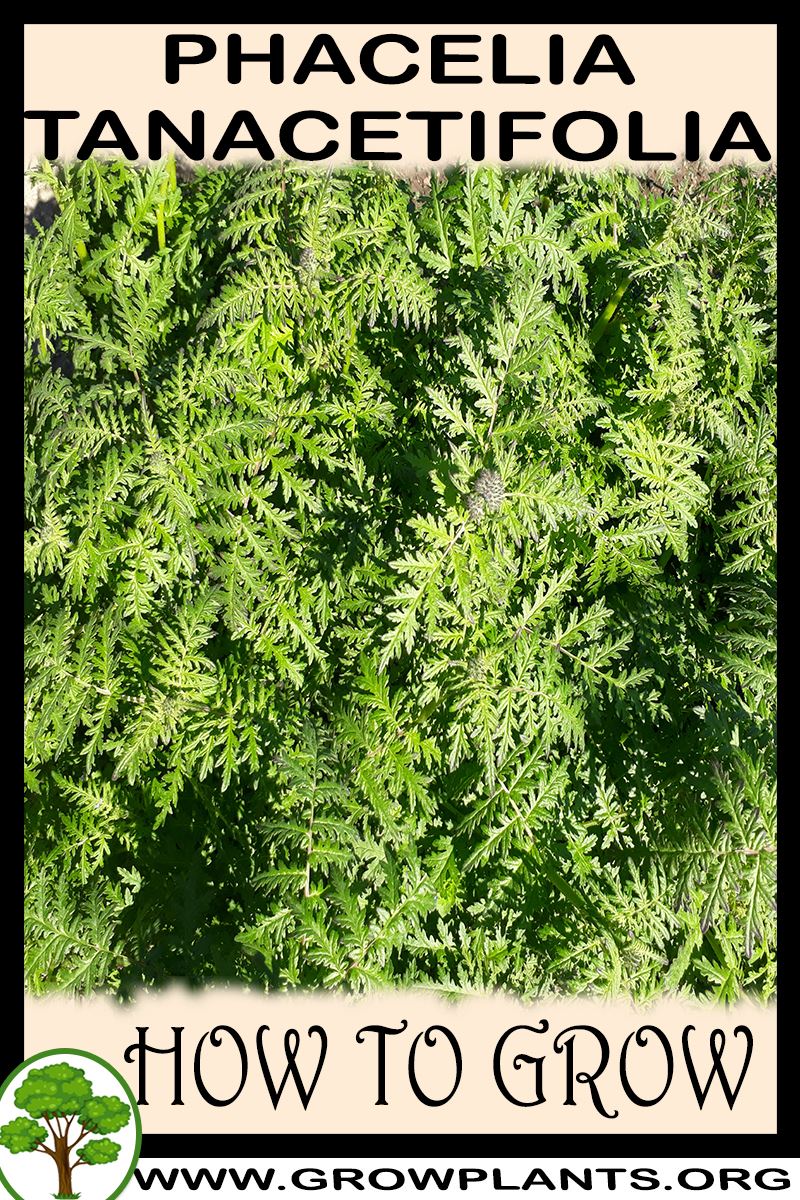
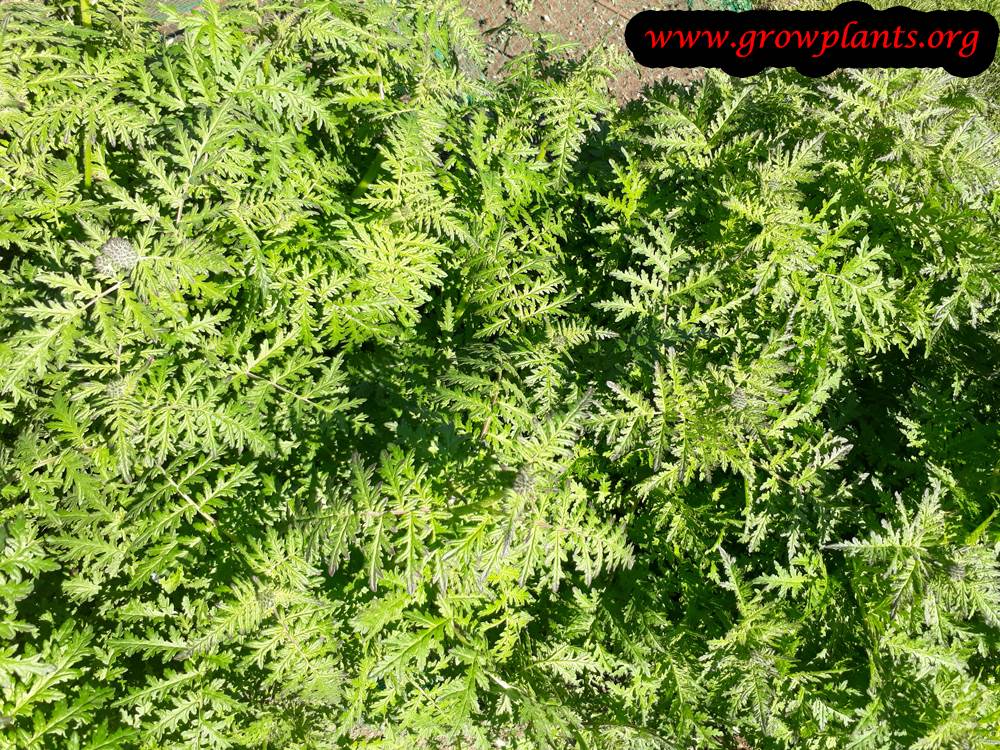
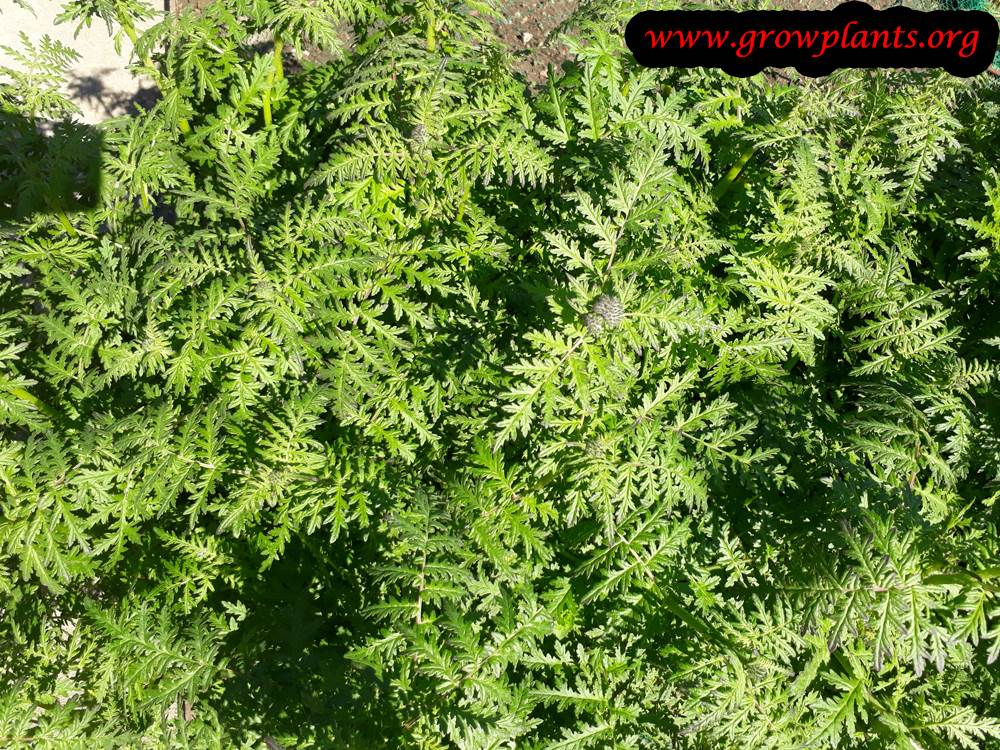
- Leaves & Foliage: Green, deeply pinnately-divided fern-like leaves giving the plant a lacy texture.
- Flower Characteristics: Purple, bell-shaped flowers packed along coiled scorpioid spikes that unfurl as they open.
Primary Uses & Landscape Value
- Functional & Ornamental Roles: A premier nectar plant for bees and aphid-eating hoverflies, widely used as a green-manure cover crop and as an informal ornamental in borders and containers.
Care Guide: Planting, Soil & Watering
Overview: Lacy phacelia is an easy hardy annual that grows fast in full sun and light, freely draining soil. It needs only modest moisture and actively resents overwatering, making it well suited to lean, average garden ground.
Quick Care Requirements
| Requirement | Ideal Condition |
|---|---|
| Planting Season | In spring, after the last frost |
| Growth Rate | Fast |
| Soil Type | Light, well-draining, average-to-lean fertility |
| Water Need | Low to moderate — let the soil dry between waterings |
Planting & Establishment
- Best Planting Season: Sow or plant in spring once the danger of frost has passed and the soil has begun to warm.
- How to Plant:
- Hole Preparation: Loosen the soil and set plants into a freely draining spot; no rich planting pocket is needed.
- Soil Amendments: Little is required — focus on drainage rather than feeding, as over-rich soil produces lush foliage at the expense of flowers.
- Planting Depth: Set the root ball so its top sits level with the surrounding soil, keeping the stem base at the surface.
- Growth Speed & Expectations: Expect fast growth to a bushy 30–60 cm plant that flowers through summer and autumn.
Soil, Watering & Drainage Care
- Soil Mix & Drainage Needs: Sharp drainage is the priority; it tolerates poor soil but rots in heavy, waterlogged ground. In a container use a free-draining mix rather than dense garden soil.
- Watering Schedule & Technique:
- Young / Newly Planted: Keep the soil lightly moist while seedlings and transplants establish.
- Established: Water sparingly — it is drought-tolerant once rooted and does best when the top few cm dry out before the next watering.
- Seasonal Adjustments: Water a little more during hot, dry spells; withhold water in cool, wet weather to avoid rot.
Climate, Light & Hardiness
Phacelia tanacetifolia (lacy phacelia) is a fast, cold-tolerant annual suited to desert, temperate, subtropical, and Mediterranean climates. It grows best in full sun with well-drained soil.
Quick Climate Specifications
| Climate Zones | Desert, temperate, subtropical, mediterranean |
|---|---|
| USDA Hardiness Zones | 5–10 |
| Light Conditions | Full sun |
| Frost Tolerance | Moderate for young plants; a hard freeze ends the annual cycle |
Sunlight & Light Exposure
Optimal Light Setup
Needs full sun for the strongest growth and the heaviest bloom, which is important for its role attracting pollinators and beneficial insects.
Temperature Extremes & Hardiness
USDA Hardiness & Regional Limits
The site data retains USDA zone 5–10 as its growing range; as a spring-sown annual, its practical limit is the length and mildness of the frost-free season rather than winter survival as a perennial.
Frost-Free Growing Season
Typically sown in spring and completes flowering and seed set within the frost-free season; it can tolerate a light spring frost as a young plant but a hard freeze will end the cycle.
Wind, Humidity & Microclimate
Dry-Air Tolerance
Adapted to a wide range of conditions including dry, low-humidity desert and Mediterranean climates, provided the soil itself is not overwatered.
Growing in Pots, Balconies & Indoors
Lacy phacelia is a fast, bee-friendly annual grown for its lavender flowers – not a houseplant, but an easy full-sun container plant for a sunny patio or balcony.
Quick Details
- Container Size: A medium pot for a short-lived annual
- Indoor Suitability: Not a true houseplant; grows best outdoors
- Best Spot: Full sun
- Soil & Drainage: Aerated, organic-rich mix (peat or coir with perlite or vermiculite); must drain freely
- Watering in Pots: Water moderately and let the surface dry between drinks; it is drought-tolerant once up
Indoors & On the Windowsill
- Houseplant limits: It needs strong outdoor sun to flower and is far too light-hungry for indoor life.
On a Balcony or Patio
- Light & wind: Give it full sun; the flowers are a magnet for bees. Wear gloves when handling, as the foliage can irritate sensitive skin. Walls and paving reflect heat, so pots dry quickly – check moisture often in hot weather.
- Practicalities: Set the pot where drainage runoff won’t stain, and remember a full, wet container is heavy to move.
Choosing the Pot, Soil & Long-Term Care
- Pot & drainage: A container with strong drainage holes and no standing-water saucer, to avoid root rot; terracotta breathes and dries faster, glazed or plastic holds moisture longer.
- Potting mix: A well-aerated, organic-rich mix – peat or coir with perlite or vermiculite.
- Feeding: Potted plants exhaust their soil quickly – feed a little more often, since watering leaches nutrients away.
- Repotting: Refresh the top of the mix each year and pot on every couple of years, trimming the root ball lightly.
Fertilizing & Feeding
Phacelia tanacetifolia is a fast, easy-growing annual prized for attracting pollinators and beneficial insects, and it typically performs well in average, well-drained soil with little to no supplemental feeding.
Quick Fertilizing Specs
| Feeding Level | light |
|---|---|
| Main Nutrient Priority | little to no supplemental feeding; average well-drained soil generally suffices |
| Best Feeding Period | at sowing time only if the soil is notably poor |
| Reduce/Stop Feeding | not usually needed given this plant’s fast, self-sufficient annual life cycle |
Feeding by Growth Stage
Establishment
Help seedlings establish from spring sowing in well-drained soil.
| Nutrient direction | This fast-growing annual rarely needs feeding beyond what average garden soil already supplies. |
|---|---|
| Timing | At spring sowing and early seedling growth. |
| Frequency | Feeding is rarely needed at this stage; minimal feeding is usually enough if soil is notably poor. |
| Fertilizer types | A balanced, general-purpose fertilizer used sparingly only if the soil is notably poor |
| Precautions | Avoid overwatering and unnecessary feeding, since this species prefers well-drained soil and does not tolerate being kept too wet. |
Active Growth and Bloom
Support the plant’s ferny foliage and its purple, pollinator-attracting flower display.
| Nutrient direction | Minimal feeding is typically enough through this stage. |
|---|---|
| Timing | Through summer into autumn growth and bloom. |
| Frequency | This stage rarely needs supplemental feeding beyond well-drained, adequately watered soil. |
| Fertilizer types | A balanced fertilizer used only sparingly if growth looks unusually weak |
| Precautions | Avoid overwatering or heavy feeding, since excess of either can weaken this well-drained-soil-adapted annual. |
Nutrient Deficiency Signs & Corrections
Unusually pale, stunted seedlings in poor soil.
| Possible causes | Very poor or depleted soil lacking basic fertility, Overwatering limiting root function in this well-drained-soil-adapted species, Heavy competition from surrounding vegetation |
|---|---|
| Appears first on | Youngest seedling growth |
| What to check | Assess soil fertility, Check drainage and watering practice, Look for crowding or competition |
| Possible correction | Apply a light, balanced fertilizer only if soil is confirmed to be notably poor, and ensure good drainage. |
Wilting, yellowing, or stunted growth despite adequate light and mild feeding.
| Possible causes | Overwatering or poor drainage stressing roots, since this species dislikes being kept too wet, Compacted soil limiting root development, Excess feeding compounding stress on an already struggling root system |
|---|---|
| Appears first on | Whole-plant vigor and lower leaves |
| What to check | Check soil drainage and recent watering, Inspect roots for rot, Review any recent feeding |
| Possible correction | Improve drainage and moderate watering before considering any additional feeding. |
Pruning, Training & Seasonal Maintenance
Phacelia tanacetifolia needs almost no pruning: it is a fast, self-sufficient annual grown as a pollinator/hoverfly attractant or cover crop, and the only routine task is removing dead or damaged leaves as they appear through the season. There is no structural framework, no woody growth and no timing at which cutting affects a future season, since the plant completes its cycle from seed to flower to seed within one growing period.
Quick Pruning & Maintenance Specs
| Pruning Tolerance | Low need (minimal pruning required, not that it is intolerant) |
| Primary Pruning Window | Ongoing through the growing season, as needed |
| Typical Frequency | Occasional, as dead leaves appear |
| Main Objective | Remove dead or damaged leaves; tidy appearance if grown ornamentally |
| Best Tool Type | Precision snips, or simply pinching by hand |
Special Growth to Remove
- Dead or yellowing leaves – remove as they appear to keep the foliage tidy and reduce a minor entry point for fungal issues.
- Spent flower heads – only if grown ornamentally and self-seeding is unwanted; otherwise leave them, since the seed heads continue to feed pollinators and the plant is often allowed to self-sow or is turned into the soil as a green manure at season’s end.
When NOT to Prune
If grown as a pollinator planting or cover crop, avoid deadheading the flowers while bees and hoverflies are actively working them, since the flower itself (not foliage) is the point of growing it.
Recommended Tools (by task)
- precision_snips – for the occasional removal of dead leaves; no other tool category is warranted for this soft-stemmed annual.
Propagation Guide
Phacelia tanacetifolia is a true annual grown entirely from seed; because it forms a taproot and does not transplant well, direct sowing in place is the standard and by far the most practical method. No vegetative method is used or needed for this plant, consistent with the site’s own note that vegetative reproduction is not necessary. Propagation from seed is easy.
Quick Propagation Specs
| Best Propagation Method | Seed, direct-sown in place |
| Propagation Difficulty | Easy |
| Seed True-to-Type | Yes (species) |
| Best Propagation Season | Spring, matching the site’s stated planting season |
| Seed Germination Time | Typically 1–3 weeks; can be slower and more uneven in warm soil |
| Germination Temperature | Cooler soil suits it best, roughly 10–20°C (50–68°F); germination can be poor or erratic in hot soil |
| Seed Sowing Depth | Shallow, about 0.5cm (¼ inch); light can aid germination of this small seed |
Growing from Seed
Sowing Season
Direct sow in early spring while soil is still cool, matching the site’s spring-only planting season.
Sowing Depth & Orientation
Sow shallowly and keep the seedbed evenly moist without overwatering, in line with the site’s well-drained, don’t-overwater care note.
Germination Conditions
Germinates best in cool soil; warm summer soil temperatures can slow or stagger germination.
Germination Time
Usually 1–3 weeks, sometimes longer and uneven if soil is warm.
Seedling Care
Because it forms a taproot, thin seedlings in place rather than transplanting them. Successive small sowings a few weeks apart extend the flowering (and pollinator-attracting) season, since the site notes it is grown to attract pollinators and aphid-eating hoverflies.
Bloom & Flower Guide
Quick Details
- Bloom Season: Summer into autumn
- Time to First Bloom: A fast annual – often flowering within roughly six to twelve weeks of sowing
- Flower Appearance: Lavender-purple, bell-shaped flowers packed into curled, coiled sprays with long, protruding stamens
- Edibility: Grown as an ornamental and pollinator plant
Detailed Blooming Overview
Lacy phacelia is one of the very best plants for bees and hoverflies, whose larvae help clear aphids. The mauve, fiddlehead-like flower coils unfurl over a long summer season, buzzing with insect life from morning to evening.
Flower Characteristics
- Bell-shaped purple flowers borne on curled, connected sprays, as the grower describes.
- Prominent stamens give the flowerheads a soft, fuzzy look.
Bloom Care & Thinning
- Continuous bloom: Sow in succession for flowers right through the season.
- Handling: The bristly foliage can irritate sensitive skin, so wear gloves when cutting it back.
- Self-seeding: Let a few heads set seed and it will return, or cut them off to prevent spread.
Pests, Diseases & Troubleshooting
Overview: Phacelia is one of the most trouble-free plants a grower can sow – a fast annual cover crop and pollinator magnet with almost no serious pests. Its flowers draw hoverflies, lacewings and bees whose larvae devour aphids, so it is used as a companion plant to protect other crops. The only real issues are slugs on young seedlings and occasional aphids or mildew on stressed, overcrowded stands.
Quick Troubleshooting Overview
| Issue / Pest | Main Symptom | Primary Solution |
|---|---|---|
| Slugs & snails | Seedlings grazed to the ground | Protect emerging seedlings, iron-phosphate pellets |
| Aphids | Minor clusters on stressed plants | Usually self-corrects via the beneficials it attracts |
| Powdery mildew | White film late in the season | Sow at correct density, allow airflow |
| Damping off | Seedlings collapse when sown too wet | Sow into a firm, moist but not soggy seedbed |
Common Pests & Management
- Slugs & snails (Gastropoda spp.):
- Symptoms: Irregular ragged holes in leaves and soft new shoots, worst in damp shady conditions, with tell-tale slime trails at night.
- Prevention & Control: Hand-pick after dark; remove damp hiding places; set beer traps or copper barriers; encourage frogs and ground beetles. Scatter iron-phosphate pellets, which are safe around pets and wildlife, only where needed.
- Aphids (Aphidoidea spp.):
- Symptoms: Occasional small clusters on soft growth of crowded or drought-stressed plants; rarely damaging on a vigorous stand.
- Prevention & Control: Almost always self-regulating – phacelia’s own flowers summon the hoverflies, ladybirds and lacewings that clear aphids. Simply sow at the right density and keep plants unstressed; sprays are practically never needed.
Diseases & Fungal Issues
- Powdery mildew (Erysiphe spp.):
- Symptoms: A white powdery film on leaves late in the season or on over-mature, congested plants.
- Treatment & Management: Sow at the recommended density for airflow, and cut or dig in the crop once flowering finishes rather than letting it linger.
- Damping off (Pythium / Rhizoctonia spp.):
- Symptoms: Seedlings rot and collapse at the soil line when sown into cold, waterlogged ground.
- Treatment & Management: Sow into a firm, warm, moist-but-not-soggy seedbed; avoid overwatering emerging stands.
Growing Difficulties & Abiotic Problems
- Patchy germination:
- Cause & Symptoms: Phacelia seed needs darkness and good soil contact; loose, dry or crusted soil gives thin, uneven stands.
- Correction Strategy: Rake seed in lightly to cover it, firm the bed, and keep evenly moist until established.
- Flopping / lodging:
- Cause & Symptoms: Rich soil or overcrowding makes tall stems flop before flowering.
- Correction Strategy: Sow on ordinary soil at the correct rate; on a windy site cut for green manure a little earlier.
What Helps – Products & Tools
Phacelia essentially manages itself – its main role is as an organic tool, drawing beneficial insects that protect neighbouring crops. If anything is needed it is only iron-phosphate slug pellets to protect fresh seedlings; leave the aphids for the hoverflies. No routine insecticide or fungicide is warranted.