Plant Profile & Key Characteristics
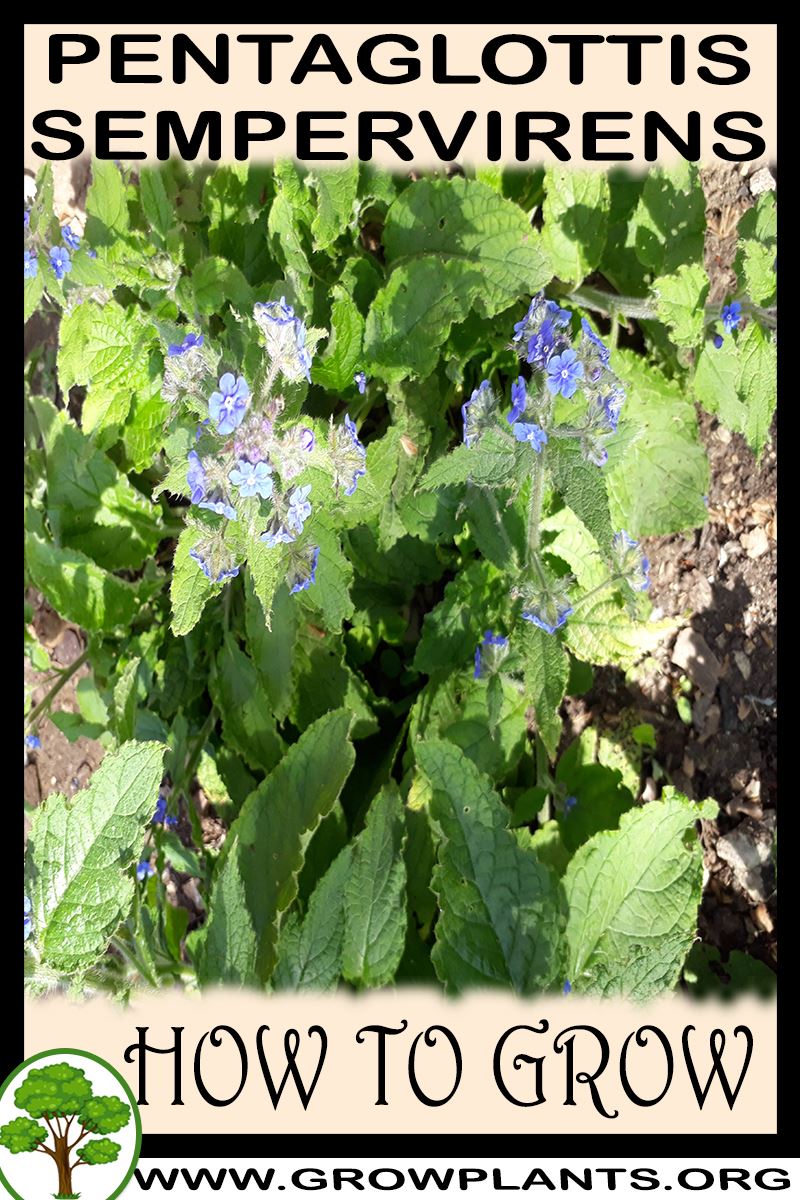
Overview: An evergreen perennial reaching about 40-90 cm (16-36 in) tall, forming a rough, hairy clump topped with bright blue borage-like flowers. It is grown as an ornamental and has historically been used to yield a red dye from its roots.
Quick Specifications
| Specification | Attribute |
|---|---|
| Plant Type / Life Cycle | Herbaceous perennial |
| Foliage Type | Evergreen |
| Mature Size | 40-90 cm (16-36 in) tall |
| Growth Rate | Fast to moderate |
| Root System | Deep, brittle taproot (regrows readily from root fragments) |
| Hardiness | USDA zones 6-10a |
Growth Form & Structure
- Height & Spread: Forms an upright, bushy clump 40-90 cm (16-36 in) tall in the ground; can be grown in a container, though its deep taproot prefers open ground.
- Growth Habit & Form: A robust, bristly-hairy clump-forming perennial with branching leafy stems rising from a stout rootstock.
- Lifespan & Maturity: A persistent, long-lived perennial that reaches full size quickly and self-seeds freely; established plants are hard to remove because the taproot regrows from fragments.
Anatomy & Physical Features
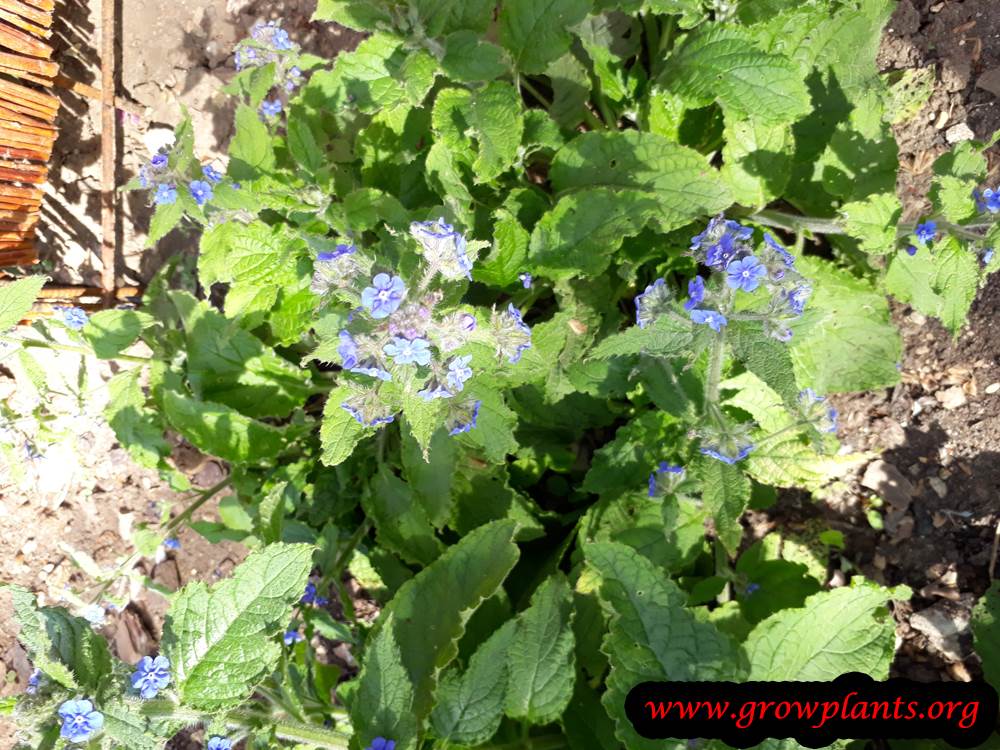
- Leaves & Foliage: Large, oval, coarsely hairy green leaves with a rough texture.
- Flower Characteristics: Small five-petalled flowers of vivid blue with a white eye, borne in loose sprays.
Primary Uses & Landscape Value
- Functional & Ornamental Roles: A cottage-garden and wildlife ornamental for shady and difficult spots, valued by bees; the roots have historically been used to dye skin and fabric. Can become weedy where naturalised.
Care Guide: Planting, Soil & Watering
Overview: Green alkanet grows best in full sun to part shade in a temperate to mild climate (hardiness zone 6-10a), in moist, humus-rich soil. It likes a moderate to generous amount of water and prefers soil that stays evenly moist rather than dry.
Quick Care Requirements
| Requirement | Ideal Condition |
|---|---|
| Planting Season | The warm season, in spring or summer |
| Growth Rate | Fast to Moderate |
| Soil Type | Moist, humus-rich, moisture-retentive soil |
| Water Need | Moderate to High – keep the soil consistently moist |
Planting & Establishment
- Best Planting Season: Plant in the warm season, in spring or summer; it is happy in the dappled shade of a border or woodland edge.
- How to Plant:
- Hole Preparation: Dig a hole about twice the width of the root ball and the same depth, loosening the soil to accommodate its deep taproot.
- Soil Amendments: Work in plenty of compost or leaf mould to enrich the soil and help it hold moisture.
- Planting Depth: Set the root collar level with the surrounding soil and firm gently around the roots.
- Growth Speed & Expectations: Fast to moderate; it establishes readily and self-seeds freely, so remove spent flowers if you want to limit its spread.
Soil, Watering & Drainage Care
- Soil Mix & Drainage Needs: Moisture-retentive, humus-rich soil suits it best; it tolerates heavier ground better than most, but soil should stay moist without becoming stagnant.
- Watering Schedule & Technique:
- Young / Newly Planted: Keep the soil consistently moist while young plants establish.
- Established: Water regularly to keep the soil evenly moist, especially in dry spells; it does not like to dry out for long.
- Seasonal Adjustments: Water more in hot, dry weather and less in cool or wet conditions.
Climate, Light & Hardiness
Green alkanet is an evergreen herbaceous perennial suited to temperate, subtropical, and Mediterranean climates, growing well in full sun to half shade. It is hardy through USDA zones 6–10a.
Quick Climate Specifications
| Climate Zones | Temperate, Subtropical, Mediterranean |
|---|---|
| USDA Hardiness Zones | 6–10a |
| Frost Tolerance | Moderate to High |
| Light Conditions | Full Sun / Half Shade |
Sunlight & Light Exposure
Optimal Light Setup
Full sun to half shade both suit this vigorous perennial, which is adaptable across a range of garden light conditions.
Temperature Extremes & Hardiness
USDA Hardiness & Regional Limits
Hardy through USDA zones 6–10a, tolerating cold-winter temperate climates as well as milder subtropical and Mediterranean regions.
Frost Sensitivity
As an evergreen perennial within its hardy range, foliage may be knocked back by a hard freeze but typically regrows from the crown.
Wind, Humidity & Microclimate
Humidity Preferences
Prefers consistently moist soil conditions rather than dry sites, reflecting its shady, moisture-retentive woodland-edge origins.
Growing in Pots, Balconies & Indoors
Green alkanet is a robust, bristly woodland perennial with deep roots and bright blue flowers. It is not a houseplant, but growing it in a pot is a good way to enjoy its flowers while keeping its vigorous, self-seeding spread under control.
Quick Details
- Container Size: A deep, roomy pot to suit its long taproot
- Indoor Suitability: Not a houseplant – an outdoor woodland-edge plant
- Best Spot: Full sun to part shade; happy in dappled shade
- Soil & Drainage: Organic-rich, moisture-retentive but free-draining mix
- Watering in Pots: Average to generous; it likes soil that stays evenly moist – pots dry faster
Indoors & On the Windowsill
- Houseplant limits: The grower does not consider it an indoor plant; it wants outdoor light and a natural cool season.
- Contained spread: A pot is useful mainly to stop it seeding itself around the garden.
On a Balcony or Patio
- Light & wind: Tough and shade-tolerant, it suits a part-shaded balcony; keep the roomy pot evenly moist as the bristly foliage wilts fast when dry – a drip irrigation kit with a timer makes that easier to keep up with.
- Handling: The leaves and stems are coarse and bristly – wear gloves when cutting back.
Choosing the Pot, Soil & Long-Term Care
- Pot & drainage: A deep pot with strong drainage holes for the long taproot; no standing water.
- Rich, moisture-holding mix: Organic-rich potting mix with perlite so it drains yet stays cool and moist.
- Feeding: Potted plants exhaust their soil faster than those in the ground – feed through the growing season, since nutrients leach out with every watering.
- Repotting: Refresh the top of the mix and pot on every couple of years; for perennials, lightly prune the root ball and top growth when you do.
Fertilizing & Feeding
A light feeder: this fast-growing, self-sufficient perennial needs only modest, occasional balanced feeding during active growth, with none through its winter dieback and dormancy.
Quick Fertilizing Specs
| Feeding Level | Light feeder |
|---|---|
| Main Nutrient Priority | Minimal and balanced; this vigorous grower rarely needs rich feeding |
| Best Feeding Period | The spring and summer active growing period |
| Organic Options | A light amount of compost worked into moist soil |
| Micronutrients | Rarely needed; correct iron only if new growth looks pale in wet or alkaline soil |
| Soil pH | Tolerates a wide range in consistently moist soil |
| Reduce/Stop Feeding | Stop feeding entirely once top growth dies back for winter |
Feeding by Growth Stage
Active growing season growth
Support healthy foliage and flowering through the main growing season.
| Nutrient direction | A light, balanced feeding is generally enough; this vigorous, fast-growing plant rarely needs rich feeding to thrive. |
|---|---|
| Timing | Through the spring and summer active growing period. |
| Frequency | An occasional light feeding through the growing season is usually sufficient. |
| Fertilizer types | A balanced complete garden fertilizer, used sparingly, Light topdressing with compost |
| Precautions | Avoid rich or frequent feeding; this already-vigorous, spreading plant can become overly dominant with excess fertility. |
Winter dieback and dormancy
Let top growth die back and the plant rest through winter without pushing tender new growth.
| Nutrient direction | None – withhold fertilizer while the plant is dormant. |
|---|---|
| Timing | Through autumn dieback and winter dormancy. |
| Frequency | No feeding at this stage. |
| Fertilizer types | No feeding at this stage – allow the plant to rest through winter |
| Precautions | Do not fertilize during winter dormancy; feeding now risks tender growth that cold weather can damage. |
Nutrient Deficiency Signs & Corrections
Leaves look pale or small and growth is noticeably slower than this plant’s usual vigorous habit.
| Possible causes | depleted, poor soil, competition from dense surrounding growth, poor root establishment |
|---|---|
| Appears first on | whole plant, most visible in older leaves |
| What to check | soil richness and organic matter content, how crowded the planting site is, overall root health |
| Possible correction | Apply a light, balanced feeding and work a modest amount of organic matter into the soil. |
New leaves emerge pale or yellowish while veins stay comparatively green.
| Possible causes | alkaline soil tying up iron, poorly drained or consistently wet soil, root stress from waterlogging |
|---|---|
| Appears first on | newest leaves |
| What to check | soil pH if testing is available, soil drainage and moisture level, overall root health |
| Possible correction | Improve drainage where the site is too wet and apply a chelated iron product per its label if chlorosis persists. |
The crown softens or the plant wilts and declines despite consistently moist soil.
| Possible causes | waterlogged or poorly drained soil, overwatering, overly rich soil that stays saturated |
|---|---|
| Appears first on | the crown and base of the plant |
| What to check | soil drainage, recent watering and rainfall, soil richness |
| Possible correction | Improve drainage where possible and avoid feeding soil that stays consistently wet. |
Pruning, Training & Seasonal Maintenance
Pentaglottis sempervirens is a fast-to-medium growing herbaceous perennial that tolerates being cut back hard without harm, since it regrows readily from its base. The main objectives are shaping the clump and, importantly, cutting back after its spring/summer bloom to stop it setting the abundant seed this species is known for. Autumn/winter is the noted window for a general design tidy, while a post-flowering cutback in the growing season is the more targeted cut for controlling spread and refreshing the foliage.
Quick Pruning & Maintenance Specs
| Pruning Tolerance | High |
| Primary Pruning Window | Autumn / Winter (general tidy) |
| Secondary Maintenance Window | Immediately after spring/summer flowering |
| Typical Frequency | 1-2 cutbacks per year |
| Main Objective | Shape/size control and preventing unwanted self-seeding |
| Young Plant Priority | Leave largely uncut to establish a full clump |
| Mature Plant Priority | Post-bloom cutback for fresh foliage and seed control; winter tidy of tattered growth |
| Best Tool Type | Bypass secateurs or hand shears |
| Avoid Heavy Pruning During | Active spring flowering, if the display is still wanted |
Pruning by Plant Age & Size
Newly Established
Remove only damaged leaves; allow the clump to bulk up before any hard cutback.
Young / Formative
No structural training needed – this is a clump-forming herbaceous perennial, not a plant that takes a trained framework.
Mature / Established
Cut the whole clump back after flowering finishes to remove spent flower stalks before seed sets, tidy the foliage, and encourage a fresh flush of leaves; in winter, remove any cold-tattered or dead leaves.
Seasonal Pruning Schedule
| Post-Flowering | Objective: prevent seed set and refresh foliage. Remove: spent flower stems and any straggly foliage, cutting the clump back close to the base. Do not remove: emerging new basal growth. Response: prompt regrowth of fresh leaves, often followed by a lighter secondary bloom. Flowering impact: this cut is after bloom, so it does not sacrifice the current display, and it curbs the seed drop that makes this species spread readily. |
| Dormant/Winter | Objective: general tidy. Remove: dead, tattered or frost-damaged leaves. Do not remove: healthy evergreen foliage that is overwintering normally. Response: neater clump into spring. |
Structural Pruning & Training
No branch-selection or framework training applies; the only ‘structural’ control is overall clump size, managed by cutting the whole plant back rather than selectively thinning individual stems.
Special Growth to Remove
- Spent flower stems – remove promptly after bloom to reduce the heavy self-seeding this species is known for
- Dead or frost-tattered leaves, particularly after winter
Container & Small-Space Pruning
In a container, cut back a little more readily to keep the clump compact, since this species can otherwise sprawl; deadheading is especially worthwhile in small spaces to stop volunteer seedlings appearing nearby.
Tools
- Bypass secateurs or hand shears for cutting back the whole clump
- No saws or loppers – all growth is soft, herbaceous stem
Tool Hygiene & Disease Risk
Routine: only aphids are noted as a pest for this species, with no significant transmissible disease flagged – clean tools are sufficient.
Cut Placement & Technique
Cut stems back close to the basal rosette rather than leaving tall stubs, so regrowth emerges cleanly from the crown.
Heavy Pruning & Rejuvenation
Tolerates a full hard cutback to the base after flowering; expect vigorous regrowth of fresh foliage within a few weeks, and possibly a secondary, lighter bloom later in the season.
Post-Pruning Care
Keep the moist soil this species prefers consistently watered after a hard cutback to support quick regrowth; no extra feeding is needed for the regrowth itself.
Common Pruning Mistakes
- Leaving spent flower stems in place too long, letting the plant self-seed heavily
- Cutting back hard while still in full bloom, losing the display unnecessarily
When NOT to Prune
Avoid a hard cutback while the plant is still in full flower if the bloom display is wanted, and avoid heavy cutting during drought stress since this species prefers consistently moist soil.
Recommended Tools (by task)
- bypass_secateurs – post-bloom cutback and general tidy of soft herbaceous growth
Propagation Guide
Pentaglottis sempervirens propagates readily both from seed, which it drops and self-sows freely, and from its deep taproot, which is capable of regenerating a new plant even from a root fragment left in the soil. Because of this vigorous regrowth, home division of root sections is a fast, reliable vegetative option, and overall propagation is easy.
Quick Propagation Specs
| Best Propagation Method | Root division/root cuttings |
| Alternative Methods | Seed (self-sows readily) |
| Propagation Difficulty | Easy |
| Seed True-to-Type | Usually true-to-type |
| Vegetative True-to-Type | Yes |
| Best Propagation Season | Spring, within the plant’s spring–summer planting window |
Leaf & Root Cuttings
Sections of the thick taproot can be replanted and will regenerate a new plant; this vigorous regrowth from root pieces is well documented for this species and is the main reason it can be difficult to fully remove once established. When dividing, handle root sections carefully and keep them moist until new top growth appears.
Growing from Seed
Green alkanet self-sows freely once established, and seed generally comes true to type for this species; no special pre-sowing treatment is documented as necessary.
Bloom & Flower Guide
Quick Details
- Bloom Season: Spring into summer
- Flower Appearance: Bright blue, five-petalled flowers with a small white eye, like a vivid forget-me-not
- Edibility: Not treated as an edible flower – the plant contains pyrrolizidine alkaloids that are mildly toxic if eaten in quantity
Detailed Blooming Overview
Green alkanet is a bristly member of the borage family that opens its intensely blue, white-eyed flowers over a long spring-to-summer season. The blooms uncurl from coiled sprays in the classic borage manner and are one of the best early nectar sources for bees. It self-seeds very freely and has a deep taproot, so it can become hard to remove once established.
Flower Characteristics
- Bright blue, five-petalled flowers with a neat white centre.
- Opening in succession from coiled cymes over many weeks.
- An excellent early source of nectar and pollen for bees.
Bloom Care & Thinning
- Pollination: Worked heavily by bees, especially long-tongued bumblebees.
- Managing the bloom: Cut off spent flower stems before seed sets to keep its vigorous self-seeding in check.
Pests, Diseases & Troubleshooting
Green alkanet is a tough, deep-rooted boraginaceous perennial that is rarely seriously troubled by pests—so much so that it often behaves as a persistent self-seeder. Its bristly foliage deters most chewers; the realistic issues are aphids on soft new growth and fungal leaf problems (powdery and downy mildew, occasional rust) in damp, crowded conditions.
Quick Troubleshooting Overview
| Issue / Pest | Main Symptom | Primary Solution |
|---|---|---|
| Aphids | Sticky, curled new shoots with honeydew | Hose off; encourage ladybirds and lacewings |
| Powdery mildew | White powdery film on leaves in dry, crowded sites | Thin growth, improve airflow |
| Downy mildew | Yellow blotches above, greyish mould beneath in damp weather | Remove affected leaves, water at the base |
| Slugs & snails | Ragged holes on seedlings and young leaves | Hand-pick at night, use barriers or traps |
Common Pests & Management
- Aphids (Aphidoidea):
- Symptoms: Colonies of small green or black soft-bodied insects on the tenderest shoot tips and flower stems, with honeydew and some leaf curl; the bristly mature foliage is largely ignored.
- Prevention & Control: Knock them off with a jet of water, rely on ladybirds, lacewings and hoverflies, and use insecticidal soap only for heavy early-season colonies, sprayed in the evening.
- Slugs and snails (Gastropoda):
- Symptoms: Irregular holes and slime trails on seedlings and low young leaves, mainly in damp shade.
- Prevention & Control: Hand-pick after dark, remove damp hiding places, use grit or copper barriers around prized clumps, and set beer traps or iron-phosphate bait if pressure is high.
- Spider mites (Tetranychidae):
- Symptoms: Fine stippling and dull bronzing on foliage in hot, dry, sheltered spots.
- Prevention & Control: Raise humidity by hosing the leaves, keep plants from drought-stress, and treat persistent mites with insecticidal soap or horticultural oil.
Diseases & Fungal Issues
- Powdery mildew (Erysiphaceae):
- Symptoms: White powdery patches on leaf surfaces in dry, crowded, shaded conditions, later yellowing and distorting foliage.
- Treatment & Management: Thin and space plants for airflow, remove affected leaves, and apply sulfur or potassium bicarbonate only if it spreads.
- Downy mildew (Peronosporaceae):
- Symptoms: Pale yellow blotches on the upper leaf with a greyish-purple mould beneath in cool, damp weather.
- Treatment & Management: Improve drainage and airflow, water at the base, clear infected foliage, and use a copper-based fungicide in persistent wet spells.
- Rust (Puccinia spp.):
- Symptoms: Occasional orange-brown pustules on leaf undersides, causing yellow flecking above.
- Treatment & Management: Remove infected leaves and improve spacing; rarely severe enough to need spraying.
Growing Difficulties & Abiotic Problems
- Aggressive self-seeding / taproot spread:
- Cause & Symptoms: Not a disease but the plant’s main ‘problem’: a deep taproot and heavy seeding let it colonise beds and resprout from root fragments.
- Correction Strategy: Deadhead before seed sets and dig out the full taproot; contain it where you want it and site it in rougher ground.
- Leaf scorch in dry sun:
- Cause & Symptoms: Full sun on dry soil scorches and browns the large leaves.
- Correction Strategy: Grow in part shade with reliably moist soil and mulch to hold moisture.
What Helps – Products & Tools
Green alkanet needs little intervention. Keep insecticidal soap or light horticultural oil for occasional aphids and mites, iron-phosphate slug bait or copper barriers for gastropods, and a sulfur or copper fungicide only if mildew or rust takes hold in a damp season.