Plant Profile & Key Characteristics
Overview: The garden pea (Pisum sativum) is an annual climbing legume of 0.5–2 m (20–80 in) grown for its edible seeds and pods. It is a fast cool-season vegetable that also fixes nitrogen in the soil.
Quick Specifications
| Specification | Attribute |
|---|---|
| Plant Type / Life Cycle | Annual (cool-season vegetable) |
| Foliage Type | Deciduous (soft annual growth) |
| Mature Size | 0.5–2 m (20–80 in) climbing |
| Growth Rate | Fast to moderate |
| Root System | Taproot with nitrogen-fixing root nodules |
| Toxicity | Non-toxic / edible — a food crop |
| Hardiness | USDA zones 2–10a (spring crop) or 10b–11 (autumn crop) |
Growth Form & Structure
- Height & Spread: A slender climber of 0.5–2 m (20–80 in) that needs trellising; grows well in the ground or in containers.
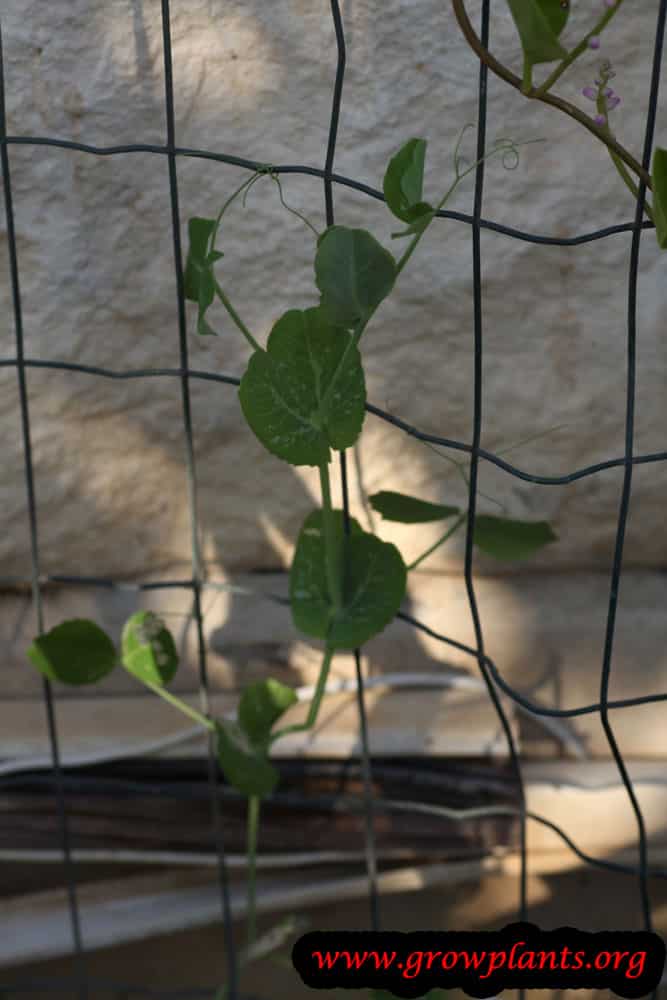
- Growth Habit & Form: Soft-stemmed climbing vine that clings by tendrils and scrambles up supports.
- Lifespan & Maturity: A quick annual, ready to pick roughly 60–80 days from sowing.
Anatomy & Physical Features
- Leaves & Foliage: Green, oval, tendril-tipped leaves; edible.
- Flower Characteristics: White or purple butterfly-shaped (pea) flowers; largely self-pollinating.
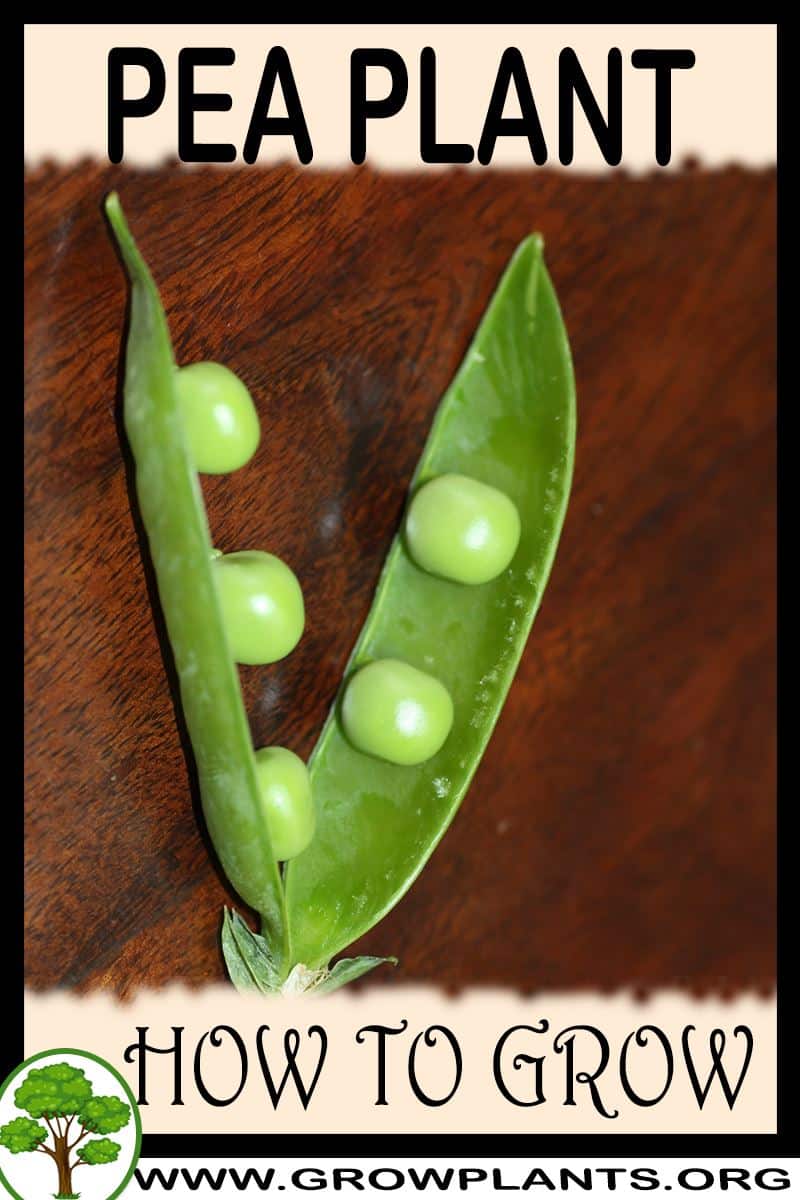
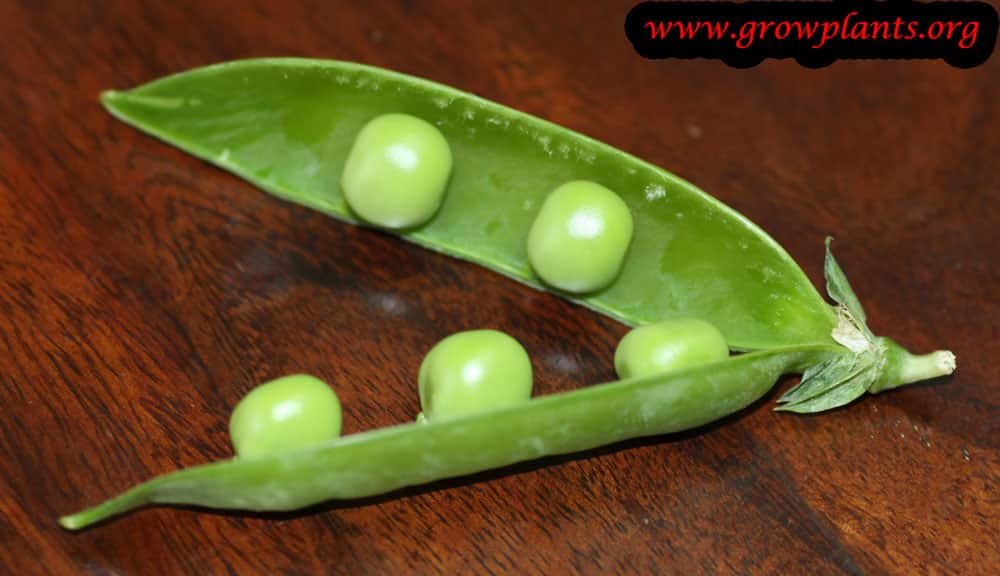
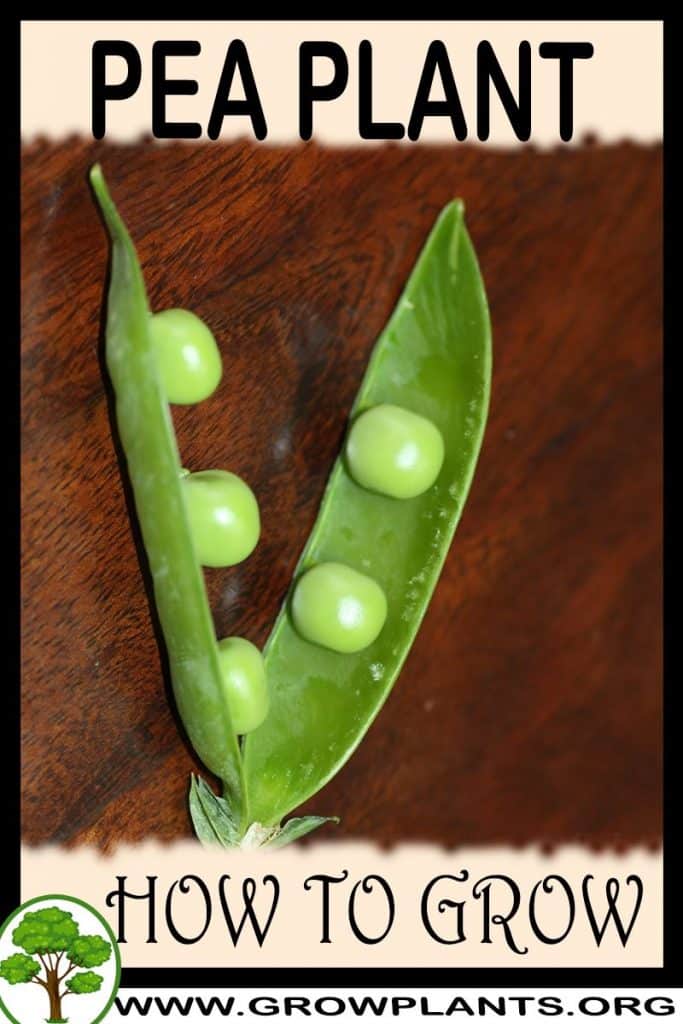
- Fruit Profile: Green pods holding 5–10+ small round seeds; both peas and the tender pods are edible.
Primary Uses & Landscape Value
- Edible Uses: Peas eaten raw and in stews, soups and stir-fries; young pods and shoots are also eaten.
- Functional & Ornamental Roles: Productive cool-season vegetable and soil-improving nitrogen-fixer for beds and containers.
Care Guide: Planting, Soil & Watering
Overview: Garden pea (Pisum sativum) is a cool-season annual climber grown for its edible pods, thriving in cool weather with fertile, well-drained soil and a trellis to climb. It needs steady moisture and near-neutral soil, and dislikes heat, which shortens the crop.
Quick Care Requirements
| Requirement | Ideal Condition |
|---|---|
| Planting Season | In spring in cooler zones (2-10a); in autumn in frost-free areas (zone 10b-11) |
| Growth Rate | Moderate to fast |
| Soil Type | Fertile, well-drained soil rich in organic matter |
| Soil pH | Near-neutral (about 6.0-7.0) |
| Water Need | Moderate – keep evenly moist, especially at flowering and podding |
Planting & Establishment
- Best Planting Season: Sow in spring as soon as the soil can be worked in cool-temperate zones, or in autumn where winters are frost-free, so pods set before hot weather.
- How to Plant:
- Hole Preparation: Sow seeds directly about 3-4 cm (1-1.5 in) deep in loosened, free-draining soil beside a support for the tendrils.
- Soil Amendments: Work in compost before sowing; as legumes, peas fix their own nitrogen, so avoid high-nitrogen feeds.
- Planting Depth: Sow at a consistent shallow depth and firm the soil gently, then set up a trellis or netting for the climbing stems.
- Growth Speed & Expectations: Growth is moderate to fast in cool weather; vines reach 0.5-2 m (20-80 in) on their support.
Soil, Watering & Drainage Care
- Soil Mix & Drainage Needs: Provide fertile, free-draining soil; good drainage prevents seed and root rot while steady moisture keeps the pods filling.
- Watering Schedule & Technique:
- Young / Newly Planted: Keep the soil evenly moist during germination and early growth, avoiding waterlogging.
- Established: Water regularly, especially once flowering and pods form, giving a deep soak when the surface dries.
- Seasonal Adjustments: Water more in warm, dry spells; the crop naturally finishes as the weather turns hot.
Climate, Light & Hardiness
Garden pea is a cool-season annual legume for Mediterranean, temperate and subtropical climates, grown in full sun (a little shade helps in warm regions). The dataset gives zones 2–10a for spring sowing and 10b–11 for autumn sowing; young plants take light frost, and heat rather than cold sets the limit.
Quick Climate Specifications
| Climate Zones | Mediterranean, temperate, subtropical (cool-season) |
|---|---|
| USDA Hardiness Zones | Approximately 2–10a spring-sown, 10b–11 autumn-sown (per dataset) |
| Optimal Temp Range | Approximately 13–18 °C / 55–64 °F |
| Cold Damage Begins | Seedlings take light frost; flowers and pods injured by frost below roughly −2 °C / 28 °F |
| Approx. Survival Minimum | Hardened young plants survive brief frost to around −6 °C / 21 °F; varies with conditions |
| Frost Tolerance | Moderate (young growth); flowers Low |
| Light Conditions | Full sun; half shade in warm climates |
| Wind Tolerance | Moderate (needs a trellis) |
Sunlight & Light Exposure
Optimal Light Setup
Full sun gives the best pod set in cool weather; in warmer regions a little afternoon shade keeps plants cooler and cropping longer.
Shade & Heat Management
Half shade is useful where spring heats up quickly, since heat, not shade, cuts the season short.
Temperature Extremes & Hardiness
USDA Hardiness & Regional Limits
Grown as an annual, its cool-season nature sets the timing: cold-winter zones (about 2–10a) sow in spring, while frost-free and mild zones (10b–11) sow in autumn to crop through winter. Cold defines the planting window rather than preventing the crop.
Cold Damage & Frost Sensitivity
Young plants are frost-hardy enough for autumn sowing in mild areas, but open flowers and forming pods are more tender than the foliage.
Extreme Heat Tolerance
Sustained heat above roughly 24–27 °C / 75–81 °F causes poor set and quickly ends the crop, which is the main climatic limit.
Wind, Humidity & Microclimate
Wind Tolerance
The tendrilled stems need support and some shelter from strong wind.
Microclimate Recommendations
An open, sunny, well-drained spot worked in the cool season gives the steady mild conditions peas prefer.
Growing in Pots, Balconies & Indoors
The garden pea grows well in a deep pot with a support on a sunny balcony or patio, and dwarf types can even crop on a bright windowsill. It is not a houseplant, but it is one of the easier crops for a sunny sill.
Quick Details
- Container Size: A deep pot, 15-30 L (4-8 gal), with netting or twigs for the tendrils
- Indoor Suitability: Not a deep-indoor houseplant; a dwarf cultivar can crop on a bright, sunny sill
- Best Spot: Full sun; light shade is fine in warm climates
- Soil & Drainage: Keep the mix evenly moist, especially at flowering and podding; peas dislike drying out but must not sit wet
- Watering in Pots: Houseplant limits: Not a true houseplant – it needs strong direct light a room interior lacks. Windowsill growing: On a bright, sunny sill a dwarf pea in a deep pot can crop; give the tendrils a few twigs or netting to grip.
Indoors & On the Windowsill
- Light, heat & wind: Give it the sunniest spot you can. Walls, railings and paving reflect heat, so pots dry quickly – check moisture daily in warm weather, and shelter tall growth from wind.
- Support: On a balcony or patio give it a trellis, netting or a cane wigwam to climb; mind the weight of large filled pots and where drainage water runs off shared balconies.
On a Balcony or Patio
- Pot & drainage: A deep 15-30 L pot with strong drainage holes; skip a standing water saucer to avoid root rot. Terracotta breathes and dries fast; glazed or plastic holds moisture longer.
- Potting mix: Use a well-aerated, organic-rich mix – peat or coir blended with perlite or vermiculite for free drainage.
- Feeding: Potted plants lose nutrients as watering leaches them, so feed more often than in open ground. As a legume it fixes much of its own nitrogen, so favour a low-nitrogen feed richer in phosphorus and potassium.
- Annual crop: Grown fresh each season – clear the pot and re-sow rather than repotting.
Choosing the Pot, Soil & Long-Term Care
Growing this plant in a greenhouse
A greenhouse can give pea plant frost protection, cold protection, a longer growing season and controlled production.
Greenhouse at a glance
| Greenhouse suitability | Excellent - a major practical advantage |
|---|---|
| Main benefits | frost protection, cold protection, a longer growing season, controlled production |
| Season extension | can grow through winter |
| Outdoor protection advisable below | about -2°C |
| Suitable types | unheated greenhouse, polycarbonate greenhouse, lean-to |
| Heating | Heating is optional - useful mainly for winter growing in cold areas. |
Related greenhouse guides
- Greenhouses: How to Choose the Right Greenhouse
- Best Lean-To Greenhouses
- Polycarbonate Greenhouses: What to Look for Before Buying
Fertilizing & Feeding
As a nitrogen-fixing legume, Pea plant is a light feeder: it supplies much of its own nitrogen through root nodules, so it needs only modest, balanced nutrition and responds poorly to heavy nitrogen.
Quick Fertilizing Specs
| Feeding Level | Light; a modest feeder thanks to nitrogen fixation. |
|---|---|
| Main Nutrient Priority | Balanced nutrition with restrained nitrogen; potassium and phosphorus support flowering and pods. |
| Best Feeding Period | During early growth and again as flowering begins. |
| Organic Options | Compost and other organic matter suit this legume well and reduce the need for concentrated fertilizer. |
| Soil pH | Prefers slightly acidic to near-neutral soil. |
| Reduce/Stop Feeding | Ease off feeding as pods mature and the plant winds down. |
Feeding by Growth Stage
Establishment
Help young Pea plant plants settle in and build an early root system and first true leaves.
| Nutrient direction | Modest, balanced nutrition to support early root and shoot growth; as a legume this crop partners with soil bacteria to supply much of its own nitrogen, so keep nitrogen restrained. |
|---|---|
| Timing | From germination or transplanting through the first weeks of growth. |
| Frequency | A single light feeding as growth begins is usually enough on decent soil. |
| Fertilizer types | A balanced complete garden fertilizer used lightly, Compost or other organic matter worked into the bed before planting |
| Precautions | Avoid heavy nitrogen, which pushes soft leafy growth, can discourage nodulation, and delays flowering. |
Vegetative growth
Build a healthy, vigorous canopy of stems and leaves ahead of flowering.
| Nutrient direction | Steady, balanced nutrition with a light hand on nitrogen; because this legume fixes its own nitrogen, extra nitrogen mostly favors foliage over flowers and pods. |
|---|---|
| Timing | Through the main leafy growth phase before flowers appear. |
| Frequency | Feed sparingly during active growth on poor soil; rich, well-composted soil rarely needs more. |
| Fertilizer types | A balanced complete fertilizer used sparingly, A light compost side-dressing |
| Precautions | Too much nitrogen makes plants lush but unproductive and can delay pod set. |
Flowering and podding
Support strong flowering and the filling of pods and seeds.
| Nutrient direction | Shift the emphasis toward potassium and phosphorus support for flowering and pod fill while keeping nitrogen modest. |
|---|---|
| Timing | From the start of flowering through pod and bean development. |
| Frequency | A light feeding as flowering begins can support a heavier pod set on lean soil. |
| Fertilizer types | A balanced or slightly potassium-leaning complete fertilizer used lightly |
| Precautions | Keep nitrogen in check during flowering so the plant invests in pods rather than more leaves. |
Nutrient Deficiency Signs & Corrections
Older, lower leaves fade from green to pale yellow and overall growth is slow and weak.
| Possible causes | Poor nodulation, so the plant’s root bacteria are fixing little nitrogen, Cold or waterlogged soil that limits root and bacterial activity, Genuinely low soil nitrogen where no active nodules have formed |
|---|---|
| Appears first on | Older, lower leaves. |
| What to check | Whether the roots carry healthy pinkish nodules, Soil drainage and temperature, Recent history of organic matter and any nitrogen inputs |
| Possible correction | Improve drainage and soil warmth, make sure the right rhizobia are present (inoculate the seed if needed), and give a light balanced feeding only if nodulation is clearly poor. |
The youngest leaves yellow between the veins while the veins themselves stay green.
| Possible causes | High soil pH reducing the availability of iron or manganese, Cold or waterlogged roots that cannot take micronutrients up, A genuine iron or manganese shortage in the soil |
|---|---|
| Appears first on | New, upper leaves. |
| What to check | Soil pH, Drainage and whether roots are sitting wet, Whether only the newest growth is affected |
| Possible correction | Correct soil pH and drainage first; if the pattern persists, apply a chelated iron or manganese product according to its label. |
Plenty of leafy growth but few flowers or pods actually form.
| Possible causes | Excess nitrogen pushing foliage at the expense of flowering, Heat or uneven moisture stress during flowering, Low potassium limiting flowering and pod fill |
|---|---|
| Appears first on | Flowering shoots and developing pods. |
| What to check | Recent nitrogen inputs and overall soil richness, Temperature and watering steadiness during bloom, General balance of the fertility program |
| Possible correction | Ease off nitrogen, keep watering steady through flowering, and support the plant with a balanced to potassium-leaning feed. |
Pruning, Training & Seasonal Maintenance
The garden pea (Pisum sativum, also called the garden pea) is an annual cool-season climbing legume that needs no structural pruning: it is grown, cropped and cleared within one season. Management is training the tendril-climbing stems onto a support, an optional early pinch to encourage branching, sanitary removal of any mildewed lower leaves, and above all steady picking — here the pods are shelled for the peas inside, and picking mature pods promptly keeps new ones setting.
It flowers and pods on current-season growth and supports itself by tendrils, so there is no framework, no woody wood and no renewal pruning to consider.
Pruning & the Edible Harvest
This pea is grown to shell the seeds (peas), with the pods and young leafy shoots also edible; it fruits on current-season growth and is never cut back for shape — steady picking, not pruning, is what sustains the harvest.
The shelled peas are the main crop, with the pods and young pea shoots also edible; harvesting pea shoots or stripping leaves reduces the foliage that fills the pods, so take them only lightly if a full pea harvest is the goal.
Quick Pruning & Maintenance Specs
| Pruning Tolerance | Low structural need (soft annual; pinch and pick only) |
| Primary Pruning Window | Through cropping – regular picking |
| Typical Frequency | Every few days once pods form |
| Main Objective | Keep the vine on its support and keep it cropping |
| Young Plant Priority | Optional tip-pinch for branching; guide onto the support |
| Mature Plant Priority | Pick regularly; remove mildewed lower leaves for airflow |
| Best Tool Type | Precision snips |
| Avoid Heavy Pruning During | Any time – it is never cut back, only picked |
Pruning by Plant Age & Size
Newly Established
Remove nothing but damage. As tendrils appear, guide the seedlings onto netting, twiggy sticks or a trellis.
Young / Formative
You may pinch the growing tip of a young plant to encourage a bushier, better-branched vine; otherwise no training is needed beyond tying or weaving stray shoots onto the support. Garden peas are grown to fill and shell, so let pods swell before picking.
Mature / Established
The main task is regular harvesting, which keeps the plant productive. Strip off any lower leaves showing powdery mildew to improve airflow, and clear the whole plant once cropping finishes.
Seasonal Pruning Schedule
Cropping (the whole job): objective is continued yield and airflow — pick pods promptly and remove mildew-affected lower foliage; keep healthy leafy growth and tendrils; expect continued pod set while picking is kept up. End of crop: the spent annual is pulled and composted; nitrogen-fixing roots can be left in the soil. There is no dormant or renewal stage.
Structural Pruning & Training
Training only: give tall netting, pea sticks or a trellis and keep new tendril growth on it. There is no framework to build or thin beyond removing diseased lower leaves.
Container & Small-Space Pruning
In pots, grow a shorter or dwarf strain, pinch young plants for bushiness and keep picking — a limited root run makes prompt harvesting even more important to sustain cropping. Provide a compact support rather than cutting the plant to control height.
Tools
All stems are soft, so precision snips (or finger-pinching) cover pinching, the odd leaf removal and pod picking. No loppers, saw or shears are involved.
Tool Hygiene & Disease Risk
Increased when removing mildewed or diseased foliage. Powdery mildew and pea weevil are the typical problems; clean snips between plants when cutting out disease and take affected leaves off the bed. Routine podding of healthy plants needs only clean, sharp blades.
Cut Placement & Technique
Pinch a young tip just above a leaf joint to force branching. Pick pods by cutting or snapping at the stalk so the vine is not torn. Remove mildewed leaves cleanly at the base of the leaf stalk.
Heavy Pruning & Rejuvenation
Not applicable. As a soft annual there is no woody base to renew; a finished plant is cleared, not cut back.
Post-Pruning Care
Keep the soil evenly moist, especially through flowering and pod fill, and avoid overhead wetting that encourages mildew after you have removed affected leaves. No feeding is prompted by picking.
Common Pruning Mistakes
- Leaving mature pods on the vine, which slows or stops further flowering and cropping.
- Cutting the plant back for “shape” — unnecessary on a self-supporting tendril annual.
- Yanking pods off and tearing stems instead of snipping or snapping cleanly.
When NOT to Prune
Never cut the plant back hard; it only needs picking and light sanitary leaf removal. Avoid stripping healthy foliage or tendrils, and do not disturb newly transplanted seedlings beyond an optional single tip-pinch.
Recommended Tools (by task)
- precision_snips — for the optional tip-pinch, for removing mildewed lower leaves, and for cleanly picking pods.
- soft_ties_stakes — to guide and secure the tendril-climbing stems onto netting or pea sticks.
Propagation Guide
The garden pea is grown almost exclusively from seed, sown directly where it is to grow; because it is largely self-pollinating, open-pollinated seed comes true to type and no grafting or cuttings are used. It is an easy, quick crop to raise from seed, the main requirement being cool soil at sowing.
Quick Propagation Specs
| Best Propagation Method | Seed (direct-sown) |
| Alternative Methods | Sowing in cells/plugs to transplant young |
| Propagation Difficulty | Easy |
| Seed True-to-Type | Usually true-to-type — peas are self-pollinating, so open-pollinated seed reproduces the parent |
| Best Propagation Season | Cool weather: autumn in frost-free areas, spring in cold-temperate climates |
| Seed Germination Time | Usually about one to two weeks; slower in cold soil |
| Germination Temperature | Cool, roughly 10–18°C (50–64°F); will start as low as about 4°C (39°F) |
| Seed Sowing Depth | About 2.5–4 cm (1–1.5 in) |
Growing from Seed
Seed Handling & Viability
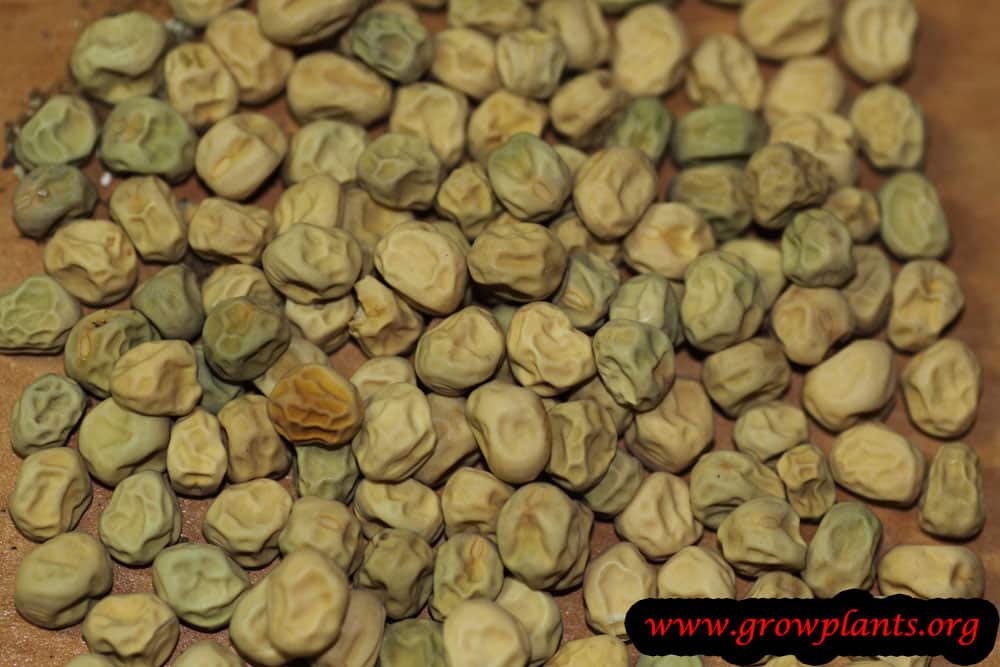
The round seed is large and easy to handle; stored cool and dry it stays viable for several years. Save seed only from open-pollinated (not F1 hybrid) plants if you want it to come true.
Dormancy & Pre-Sowing Treatment
No dormancy treatment is needed. An optional short soak can speed emergence, but avoid soaking seed destined for cold, wet soil, where soaked seed rots easily — sow it dry instead.
Sowing Season
Sow in autumn in frost-free areas and in spring in cold-temperate climates, timing the crop for cool growing weather.
Sowing Depth & Orientation
Sow about 2.5–4 cm (1–1.5 in) deep along a row; set supports at sowing, as the climbing types need trellising from an early stage.
Germination Conditions & Time
Peas germinate in cool, moist, well-drained soil without any bottom heat, usually within one to two weeks; emergence is slower and more erratic in cold soil.
Seedling Care
Guide the young shoots onto their support early and keep them cool — heat during establishment checks growth.
Bloom & Edible Flower Guide
Quick Details
- Bloom Season: Autumn to winter in frost-free areas; spring in cold temperate climates
- Time to First Bloom: Roughly five to eight weeks after sowing
- Flower Appearance: White or purple, butterfly-shaped flowers
- Edibility: Edible, the flowers and tender shoots of the garden pea are eaten in salads and as pea shoots
Detailed Blooming Overview
The garden pea opens neat white or purple flowers in the familiar pea shape, each one the promise of a pod. Handily, the flowers and the young shoots, the pea shoots, are edible and make a fresh, sweet addition to salads. One word of care: this is the true garden pea, unlike the ornamental sweet pea (Lathyrus), whose look-alike flowers and seeds are poisonous.
Flower Characteristics
- White or purple butterfly-shaped flowers.
- Edible, along with the tender growing shoots.
Bloom Care & Thinning
- Pollination: Mostly self-pollinating, with bees also lending a hand.
- Steady water at bloom: Even moisture during flowering gives the best pod set; heat and drought cut the bloom short.
- Harvesting flowers vs pods: Pick a few flowers or shoots for the table and leave the rest to set peas.
Bloom Health & Protection
- Powdery mildew: A white coating on leaves and stems in warm, dry weather can shorten flowering; good spacing and airflow help, with a sulfur-based fungicide if it spreads.
- Pea aphid: These cluster on flowering tips and buds; a jet of water or an insecticidal soap or neem oil keeps them down, worth keeping gentle since flowers and shoots may be eaten.
Fruit & Uses
Garden pea is grown for its edible seeds (peas), which form 5–10 or more to a pod. The pods of many types are also edible, and the young leaves and shoots (pea shoots) are eaten as a green.
Quick Edible Specs
| Edible Parts | Seeds (peas); pods; young leaves and shoots |
|---|---|
| Main Use(s) | Peas eaten raw or in stews, soups and stir-fries; tender pods as a vegetable; shoots as a green |
| Eaten Raw or Cooked | Young peas and tender pods raw or cooked; shoots raw or cooked |
| Preparation Required | Shell for the peas; eat pods whole while tender (older pods turn fibrous) |
| Harvest Season | Autumn to winter in frost-free areas; spring to early summer in cool climates |
| Safety/Toxicity Caveat | None noted for the peas, pods and shoots; pick pods on time before they toughen |
Seeds, Pods & Nuts
The small, round seeds (up to about 0.5 cm) grow 5–10 or more to a pod. The pods are edible but become fibrous with age, so pick on time; if picked late the seeds can fall. Young peas are eaten raw straight from the pod, or cooked in stews, soups and stir-fries.
Leaves & Greens
The green, oval young leaves and the tender shoot tips (“pea shoots”) are eaten as a green, raw in salads or lightly cooked.
Preparation, Uses & Safety
Shell mature peas, eat tender pods whole, and use young leaves and shoots as greens. Pick the pods before they toughen. There are no special toxicity concerns for these parts.
Pests, Diseases & Troubleshooting
Overview: Peas are cool-season legumes whose main pests are pea aphid, pea weevil and pea moth, and whose defining diseases are powdery and downy mildew plus a root-rot/wilt complex and ascochyta blight; poor cold-wet germination (damping-off) and heat-triggered flower drop round out the troubles. This is the standard shelling garden pea, grown for the seeds inside the pod. Grow them fast in cool weather on well-drained soil with good airflow, rotate away from legumes, and use resistant varieties — most problems are prevented rather than sprayed.
Quick Troubleshooting Overview
| Issue / Pest | Main Symptom | Primary Solution |
|---|---|---|
| Pea aphid | Colonies on shoots/pods; distortion; virus spread | Hose off; encourage ladybirds; insecticidal soap; sow early |
| Pea moth | Maggots inside pods | Sow early/late to dodge flight; pheromone traps; row cover at flowering |
| Pea weevil / pea leaf weevil | Notched leaf edges; grubs in seeds | Tolerate leaf notching; firm barriers; harvest seed early to dry |
| Powdery mildew | White powder on leaves/pods late season | Resistant varieties; airflow; sulfur or potassium bicarbonate |
| Root rot / wilt | Yellowing, stunting, rotted roots | Rotate; well-drained soil; resistant varieties; avoid overwatering |
| Damping-off | Seedlings collapse in cold wet soil | Sow in warm soil; don’t overwater; treated or fresh seed |
Common Pests & Management
- Pea aphid (Acyrthosiphon pisum):
- Symptoms: Large green (sometimes pink) aphids clustering on shoot tips, flowers and developing pods, distorting growth, fouling with honeydew and, importantly, transmitting pea viruses.
- Prevention & Control: Sow early to crop before peak aphid pressure, encourage ladybirds, lacewings and parasitic wasps, and knock colonies off with water. Use insecticidal soap for heavy infestations; controlling aphids also limits virus spread.
- Pea moth (Cydia nigricana):
- Symptoms: The classic ‘maggoty peas’: small caterpillars hatch from eggs laid at flowering and bore into pods to feed on the developing seeds, leaving frass.
- Prevention & Control: Adjust sowing dates so flowering avoids the main moth flight, use pheromone traps to time protection, and cover crops with fine mesh during flowering; remove and destroy infested pods.
- Pea weevil and pea leaf weevil (Bruchus pisorum, Sitona lineatus):
- Symptoms: Pea leaf weevil adults notch characteristic scallops from leaf margins while larvae feed on root nodules; pea (seed) weevil larvae develop inside the seeds, leaving exit holes.
- Prevention & Control: Vigorous plants outgrow leaf notching, so tolerate it; protect seedlings with row cover, and for saved seed harvest and dry promptly, then freeze seed to kill any developing weevils before storage.
- Thrips and spider mites (Thrips spp., Tetranychus urticae):
- Symptoms: Thrips silver and distort flowers and pods; mites stipple and bronze leaves in hot, dry conditions.
- Prevention & Control: Keep plants unstressed and well watered, monitor with sticky traps, and treat outbreaks with insecticidal soap or spinosad, sparing pollinators by spraying in the evening.
- Birds and rodents (various):
- Symptoms: Birds pull emerging seedlings and rodents dig sown seed — the grain of truth in the source’s ‘birds, worms’ note.
- Prevention & Control: Protect sowings with netting, cloches or mesh until established, and use guards over seed rows; the ‘worms’ of the source are really pea-moth larvae and root-feeding weevil grubs.
Diseases & Fungal Issues
- Powdery mildew (Erysiphe pisi):
- Symptoms: White powdery coating on leaves, stems and pods, mainly in the warm, dry end of the season, causing yellowing, poor pod fill and off-flavors.
- Treatment & Management: Grow resistant varieties, sow early to crop before mildew peaks, space plants for airflow, and avoid overhead watering. Sulfur, potassium bicarbonate or a light horticultural-oil spray checks early infection; remove crop debris after harvest.
- Downy mildew (Peronospora viciae):
- Symptoms: Yellow blotches on upper leaf surfaces with grey-purple fuzzy growth beneath in cool, wet conditions, distorting shoots and pods.
- Treatment & Management: Improve airflow and drainage, avoid dense stands and prolonged leaf wetness, rotate crops, and remove affected plants; choose resistant varieties where downy mildew is common.
- Ascochyta / mycosphaerella blight complex (Ascochyta pisi, Didymella pinodes):
- Symptoms: Brown to purplish spots and blotches on leaves, stems and pods, sometimes with stem lesions and seed staining, spreading in wet weather and via infected seed.
- Treatment & Management: Use clean, certified seed, rotate away from peas for several years, remove crop debris, and avoid working plants when wet; fungicides help only in high-value, high-pressure situations.
- Root rots and fusarium wilt (Fusarium oxysporum f.sp. pisi, Aphanomyces euteiches, Pythium):
- Symptoms: Yellowing, wilting and stunting with brown, rotted or discolored roots and vascular staining, worst in compacted, wet or pea-sick soils.
- Treatment & Management: Rotate widely away from legumes, improve drainage and soil structure, avoid overwatering, and grow wilt-resistant varieties; there is no cure once roots rot, so prevention through rotation and drainage is essential.
- Pea viruses (Pea enation mosaic virus, pea seed-borne mosaic virus):
- Symptoms: Mottling, enations (blistery outgrowths), distortion and stunting, spread by aphids or through infected seed.
- Treatment & Management: Control aphids, use clean seed, and remove affected plants; grow resistant varieties where these viruses are established.
Growing Difficulties & Abiotic Problems
- Damping-off / poor germination:
- Cause & Symptoms: Cold, wet soil rots seed and topples seedlings at the base before they establish.
- Correction Strategy: Sow into warm, well-drained soil, avoid overwatering, and use fresh or treated seed; in cold conditions start under cover and transplant, or wait for soil to warm.
- Flower and pod drop in heat:
- Cause & Symptoms: Peas are cool-season plants; hot spells cause blossoms to drop and pods to set poorly. Shelled peas are less affected by pod cosmetic damage than edible-pod types.
- Correction Strategy: Sow to mature in cool weather (early or late season), provide even moisture and light afternoon shade in heat, and choose heat-tolerant varieties for warm climates.
- Nutrient issues:
- Cause & Symptoms: As nitrogen-fixers, peas rarely need much nitrogen; excess makes lush, disease-prone, pod-poor growth, while poor nodulation on new ground gives pale plants.
- Correction Strategy: Avoid high-nitrogen feeding, ensure phosphorus and potassium for pod fill, and inoculate seed with rhizobia on ground new to legumes.
What Helps — Products & Tools
Peas are best managed culturally: resistant varieties, early sowing, wide rotation, airflow and clean seed. Where products help, use insecticidal soap for aphids, pheromone traps and fine mesh against pea moth, sulfur or potassium bicarbonate for powdery mildew, and netting to keep birds off seedlings. Spray in the evening to protect pollinators.