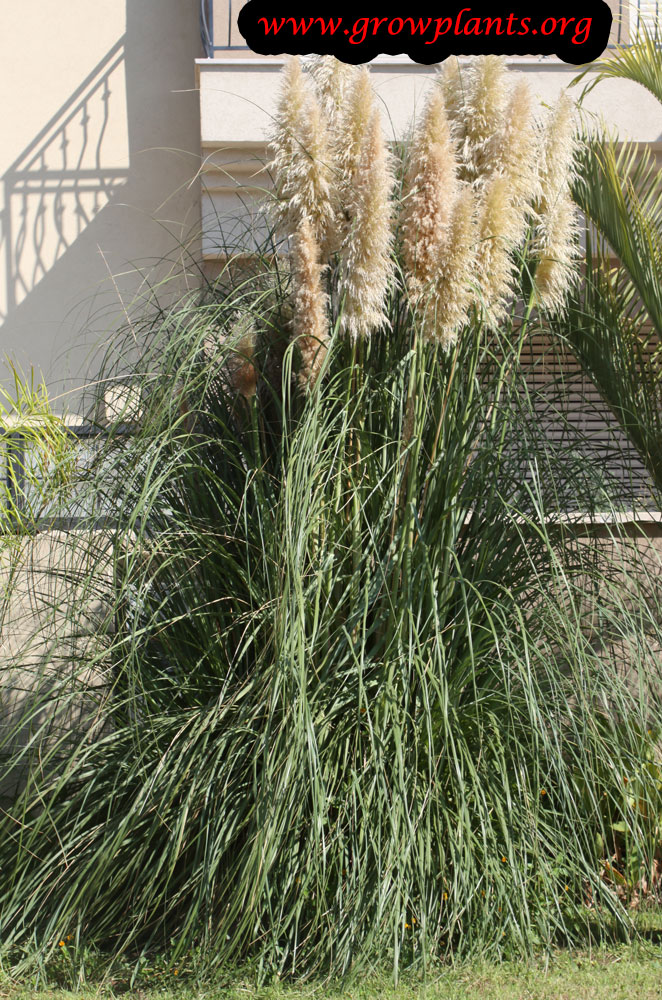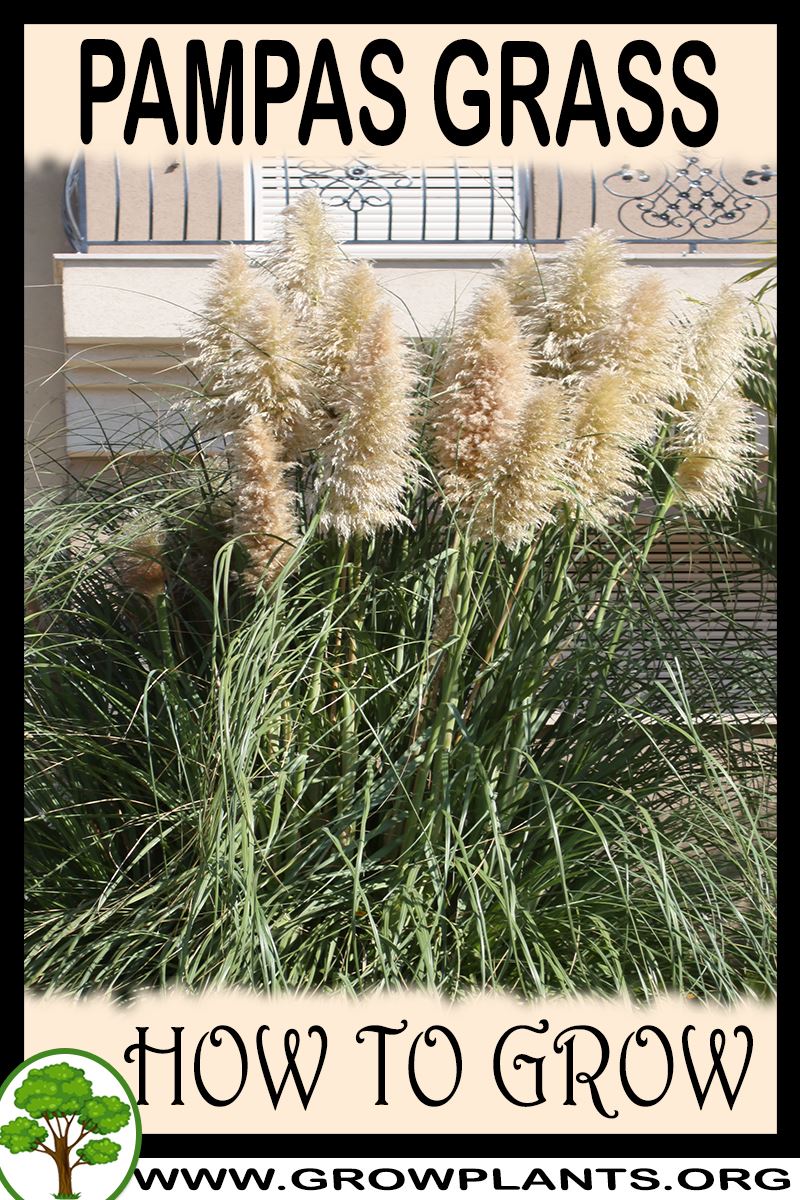
Plant Profile & Key Characteristics
Overview: A large, fast-growing ornamental grass forming dense clumps 1-3 m (3-10 ft) tall, evergreen in mild areas and cut back where winters are cold. It is grown for its dramatic silvery-white flower plumes, which are also dried for arrangements.
Quick Specifications
| Specification | Attribute |
|---|---|
| Plant Type / Life Cycle | Evergreen perennial grass (deciduous in cold winters) |
| Foliage Type | Evergreen (deciduous in cold climates) |
| Mature Size | Clump 1-3 m (3-10 ft) tall, with flower plumes rising higher |
| Growth Rate | Fast to moderate |
| Root System | Dense, fibrous clump (tussock-forming) |
| Toxicity | Non-toxic, but the leaf margins are razor-sharp and readily cut skin |
| Hardiness | USDA zone 7 and up |
Growth Form & Structure
- Height & Spread: A fountain-like clump 1-3 m (3-10 ft) with flower stems standing well above the foliage; it can be grown in a very large container but resents long-term confinement.
- Growth Habit & Form: A dense, upright-arching tussock of long linear leaves radiating from a central crown.
- Lifespan & Maturity: Long-lived clump that bulks up quickly and flowers from its second season onward.
Anatomy & Physical Features
- Leaves & Foliage: Green, narrow, arching leaves up to 1-2 m long with finely toothed, sharp cutting edges.
- Flower Characteristics: Tall stems topped with plume-like, feathery white panicles resembling a horse’s tail.
Primary Uses & Landscape Value
- Functional & Ornamental Roles: Bold specimen and screening grass, drought-tolerant xeriscape plant and a favourite fresh or dried cut plume. Note it is invasive in many mild climates.
Care Guide: Planting, Soil & Watering
Overview: Pampas grass (Cortaderia selloana) is a large, drought-tolerant ornamental grass that thrives in full sun to half shade in almost any well-drained soil. Once established it needs little water, though it is vigorous enough to be invasive in some regions.
Quick Care Requirements
| Requirement | Ideal Condition |
|---|---|
| Planting Season | Year-round in mild climates; spring to summer where winters are cold |
| Growth Rate | Moderate to fast |
| Soil Type | Well-draining; adaptable to most soils |
| Water Need | Low; drought-tolerant once established |
Planting & Establishment
- Best Planting Season: Plant year-round in mild areas, or in spring to summer in cold climates so it establishes before winter.
- How to Plant:
- Hole Preparation: Dig a hole as wide as the root ball, allowing plenty of room for the clump to spread.
- Soil Amendments: Little is needed; loosen heavy ground and add grit if drainage is poor.
- Planting Depth: Set the crown level with the soil surface and firm well.
- Growth Speed & Expectations: Grows at a moderate to fast pace into a big clump of 1-3 m; give it space, as it can self-seed and spread aggressively.
Soil, Watering & Drainage Care
- Soil Mix & Drainage Needs: Undemanding as long as drainage is good; it tolerates poor soils but dislikes waterlogged ground.
- Watering Schedule & Technique:
- Young / Newly Planted: Water regularly through the first season to build a strong root system.
- Established: Needs little water once settled – it is markedly drought-tolerant.
- Seasonal Adjustments: An occasional deep soak in prolonged summer drought; almost no water needed in winter.
Climate, Light & Hardiness
Pampas grass is a large, architectural grass built for warm, sunny climates – mediterranean, desert, subtropical, temperate, and tropical – and performs best in full sun. It is comparatively cold-hardy for its size, reliable through USDA Zone 7 and warmer, with hard freezes killing the foliage back to a hardy crown.
Quick Climate Specifications
| Climate Zones | mediterranean, desert, subtropics, temperate, and tropics |
| USDA Hardiness Zones | Zone 7 and warmer |
| Optimal Temp Range | Approximately 16–30°C (61–86°F) |
| Cold Damage Begins | Approximately 0–2°C (32–36°F) – foliage browns with hard frost |
| Approx. Survival Minimum | Roughly −18 to −12°C (0 to 10°F) for the crown, in line with USDA Zone 7 |
| Frost Tolerance | Moderate |
| Light Conditions | Full Sun / Half Shade |
| Wind Tolerance | High |
| Salt / Coastal Tolerance | High |
Sunlight & Light Exposure
Optimal Light Setup
Full sun gives the fullest clumps and the tallest, most upright plumes.
Direct Sun Requirement
Strong, direct sun for most of the day is important for good plume production.
Shade & Heat Management
It tolerates half shade with a looser, less floriferous habit, and handles the strong summer heat of its native warm climates without difficulty.
Best Exposure / Orientation
Open, spacious sites – including exposed coastal or windswept positions – suit this large grass well; allow room for its mature spread.
Temperature Extremes & Hardiness
USDA Hardiness & Regional Limits
Reliably perennial through USDA Zone 7 and warmer; in colder gardens near this limit, winter can kill the crown outright rather than just the foliage.
Cold Damage & Winter Protection
Hard frost browns and flattens the foliage; leaving the old plumes and dried leaves in place over winter helps insulate the crown, with cutting back reserved for early spring.
Frost Sensitivity
Moderate – light frost is cosmetic, but repeated hard freezes at the cold edge of its range can be fatal to the crown.
Extreme Heat Tolerance
Excellent; it is native to hot mediterranean, desert, and subtropical conditions.
Wind, Humidity & Microclimate
Humidity Preferences
Adaptable across dry desert air and more humid subtropical and tropical conditions.
Dry-Air Tolerance
High; well suited to arid climates.
Wind Tolerance
High – pampas grass is widely planted as a windbreak and in exposed, breezy sites, with flexible plumes and foliage that shrug off strong wind.
Coastal / Salt Tolerance
High; it is a classic choice for coastal gardens facing salt-laden wind.
Rainfall & Seasonal Moisture
Adapted to climates with long dry spells and irregular rainfall, consistent with its desert and mediterranean native range.
Microclimate Recommendations
Open, exposed sites are not a problem for this grass; near the cold edge of Zone 7, a sheltered or south-facing spot helps the crown come through winter reliably.
Growing in Pots, Balconies & Indoors
Pampas grass is a very large, dramatic ornamental grass (1-3 m / 3-10 ft), not a houseplant, but it can be grown in a big container on a spacious patio or balcony while young. Indoors the light is far too weak; it needs full sun and open air.
Quick Details
- Container Size: The largest, heaviest pot you can manage – a mature clump is huge, so container growing suits younger plants or long-term division.
- Indoor Suitability: Not a houseplant; a full-sun grass for the open air.
- Best Spot: Full sun to half shade.
- Soil & Drainage: Free-draining potting mix; it is drought-tolerant once established.
- Watering in Pots: Needs little water once settled, but pots dry faster – water in dry spells and always let the pot drain.
Indoors & On the Windowsill
- Houseplant limits: The grower confirms it is not an indoor plant – far too large and sun-hungry for a room or windowsill.
- Overwintering: Hardy in most climates; in a pot it can stay outdoors – cut back the old growth in late winter before new growth appears.
On a Balcony or Patio
- Light & wind: Give it full sun and a sturdy, heavy pot – the tall plumes catch the wind. Reflected wall heat dries pots quickly, so check moisture in warm weather.
- Safety & practicalities: The leaf edges are razor-sharp – site it well away from walkways, seating and where children or pets pass, and wear gloves when handling or pruning. A large clump is heavy, so place the pot before filling.
Choosing the Pot, Soil & Long-Term Care
- Pot & drainage: A very large pot with strong drainage holes; skip a standing water saucer to avoid root rot. Terracotta breathes and dries fast; glazed or plastic holds moisture longer.
- Potting mix: Free-draining, well-aerated potting mix (coir or peat with perlite).
- Feeding: Feed lightly through the growing season, as potted plants leach nutrients faster than those in the ground.
- Repotting & division: It quickly outgrows any pot; divide the clump every couple of years (wearing thick gloves), trim the roots and refresh the mix, or plant it out once it becomes too big.
Fertilizing & Feeding
Pampas grass is a drought-tolerant ornamental grown mainly for its architectural form and feathery plumes, and it thrives in average to lean, well-drained soil without heavy feeding. Established clumps generally perform well on minimal supplemental nutrition, with feeding reserved for the early establishment period and the lead-up to plume formation.
Quick Fertilizing Specs
| Feeding Level | Light feeder once established; more attentive feeding only while roots are getting established |
|---|---|
| Main Nutrient Priority | Balanced feeding with adequate nitrogen to support vigorous foliage and strong plume stalks, without overdoing nitrogen at the expense of sturdy growth |
| Best Feeding Period | Active warm-season growth, from spring into the approach of the bloom period |
| Soil pH | Adaptable to a wide range of soil conditions; tolerates near-neutral to mildly alkaline soils well |
| Reduce/Stop Feeding | Taper off as growth slows heading into the cooler, dormant part of the year |
| Organic Options | Compost or well-rotted organic matter worked into the planting area supports steady, even feeding |
| Micronutrients | Generally undemanding; a complete ornamental fertilizer that includes minor nutrients covers routine needs |
Feeding by Growth Stage
Establishment after planting
Support root development and early clump formation in newly planted pampas grass
| Nutrient direction | Balanced feeding that favors root and crown development over top growth |
|---|---|
| Timing | The first growing season after planting, while the root system is expanding into surrounding soil |
| Frequency | A light, occasional feeding through the establishment period is generally sufficient |
| Fertilizer types | A balanced, complete ornamental fertilizer, Compost or well-rotted organic matter worked into the planting area |
| Precautions | Avoid heavy feeding right after planting, which can push soft, floppy growth before roots are established |
Active growth through plume formation
Fuel the vigorous warm-season foliage growth and support the development of sturdy flowering plumes
| Nutrient direction | Balanced feeding with adequate nitrogen for foliage, without excess that leads to weak, lodging stalks |
|---|---|
| Timing | Spring through summer, as the clump pushes new foliage and flowering stalks emerge |
| Frequency | One or a small number of light feedings spaced through the active growing season is usually enough |
| Fertilizer types | A balanced, complete ornamental or all-purpose fertilizer |
| Routine trace nutrients | iron, manganese |
| Precautions | Overfeeding, especially with excess nitrogen, tends to produce lush but weak, floppy stalks that lodge instead of standing upright |
Dormant or rest period
Allow the clump to harden off and rest as active growth slows going into the cooler part of the year
| Nutrient direction | None – withhold fertilizer while the plant is not in active growth |
|---|---|
| Timing | Late autumn through winter, or whenever growth has clearly slowed for the season |
| Frequency | No feeding at this stage |
| Fertilizer types | No feeding at this stage – resume only once active spring growth is underway |
| Precautions | Do not fertilize during dormancy; feeding a resting clump can encourage tender growth that is more vulnerable to cold |
Nutrient Deficiency Signs & Corrections
Overall pale green or yellowish foliage with slower-than-expected clump growth
| Possible causes | Nitrogen deficiency, Compacted or poorly aerated soil restricting root uptake, Soil that is too lean from years without any organic matter input |
|---|---|
| Appears first on | Older, lower foliage first, then spreading to newer growth if uncorrected |
| What to check | Overall clump vigor and density compared to prior seasons, Soil texture and drainage around the root zone, Whether any feeding has been given in recent seasons |
| Possible correction | Work in compost or apply a balanced complete fertilizer during active growth, and improve soil aeration if compaction is suspected |
New leaves showing yellowing between the veins while the veins themselves stay greener
| Possible causes | Iron deficiency, often induced by alkaline or high-pH soil limiting availability, Waterlogged or poorly drained soil stressing the root system, Root disturbance or damage limiting nutrient uptake |
|---|---|
| Appears first on | Newest leaf growth |
| What to check | Soil drainage and any recent waterlogging, General soil pH and mineral soil conditions in the bed, Root health if the clump can be inspected |
| Possible correction | Correct drainage issues first, then apply a chelated iron product per its label if chlorosis persists in well-drained soil |
Flowering stalks that are tall and leafy but weak, lodging over instead of standing upright
| Possible causes | Excess nitrogen relative to the plant’s other nutrient needs, Too much shade reducing stem strength, Overcrowded or overly dense clumps competing for light and resources |
|---|---|
| Appears first on | The flowering stalks as they extend toward bloom |
| What to check | Recent feeding history and whether nitrogen-heavy products were used, Light exposure of the planting site, Clump density and whether division is overdue |
| Possible correction | Shift toward a more balanced, less nitrogen-forward feeding approach and ensure the site gets adequate sun |
Pruning, Training & Seasonal Maintenance
Pampas grass (Cortaderia selloana) is a large (1-3m), high-pruning-tolerance clumping ornamental grass whose blades have sharp, serrated margins – a real handling hazard that shapes the tools and technique below more than any other grass in this group. It is also a recognized invasive species in many mediterranean and coastal climates where female plants set abundant wind-dispersed seed, so the annual design cutback is worth pairing with removing plume heads before they shatter. Because it blooms nearly year-round in warm climates, the main hard cutback is best timed for its quietest winter period.
Quick Pruning & Maintenance Specs
| Pruning Tolerance | High – tolerates a full hard cutback annually |
| Primary Pruning Window | Late winter, before new spring growth emerges |
| Secondary Maintenance Window | Any time, to remove spent plume heads before seed shatter |
| Typical Frequency | One hard cutback per year |
| Main Objective | Rejuvenate the clump, manage its large volume safely, and limit self-seeding |
| Young Plant Priority | Establish first season; no hard cutback until well rooted |
| Mature Plant Priority | Annual hard cutback of the full clump; remove plumes before seed shatter |
| Best Tool Type | Loppers or hedge shears, never bare-handed given the serrated blades |
| Avoid Heavy Pruning During | Late autumn / onset of cold at the cooler zone-7 edge of its range |
Pruning by Plant Age & Size
Newly Established
Remove only damaged or discolored blades in the first season; skip the hard cutback until the clump is well rooted, typically not in its first winter.
Young / Formative
No structural training applies – it is a self-forming clump; the main formative decision is siting it well away from paths or play areas given the mature size and sharp foliage.
Mature / Established
Annual hard cutback is the main task on a mature clump, which by 1-3m can be substantial work; very old clumps with a dead, hollow center are better divided than repeatedly cut back.
Seasonal Pruning Schedule
| Dormant/Winter | Objective: rejuvenate and reduce the large mass of old foliage before spring. Remove: cut the entire clump back to roughly 30-45cm above the crown. Do not remove: none – this is the one hard cut of the year. Response: fresh growth from the crown in spring. Bloom impact: interrupts the near-year-round bloom only briefly. |
| Ongoing Sanitary | Objective: limit self-seeding. Remove: spent plume heads before they dry and shatter. Do not remove: healthy foliage. Response: no regrowth trigger, purely a seed-control measure. |
Special Growth to Remove
- Spent flower/plume stems – cut at the base before seed shatter; the main lever for limiting this species’ documented self-seeding, and does not affect next bloom since flowering is on current growth.
- Dead or browned blades – remove any time, carefully given the sharp edges.
- Old, declined clumps with a thin or hollow center – lift and divide rather than continuing to cut back in place.
Container & Small-Space Pruning
Container growing is possible but the mature 1-3m size makes it a poor fit for small spaces long-term; a containerized plant will still need the same annual hard cutback, done with the same protective handling as an in-ground clump.
Tools
- Loppers or hedge shears – needed for the volume and toughness of a mature clump; hand snips are impractical at this scale.
- Pruning saw – for an old clump with a thickened, woody-feeling base.
Tool Hygiene & Disease Risk
Routine – no significant disease pressure is noted for this species; the real risk with this plant is physical injury from the blade edges, not pathogen spread, so heavy gloves, long sleeves, and eye protection matter more here than blade sterilization.
Cut Placement & Technique
Tie the clump’s foliage into a bundle with rope or twine before cutting – this is standard practice for pampas grass, both to control the sharp blades as they fall and to make cleanup manageable. Cut straight across roughly 30-45cm above the crown, avoiding cuts into the crown itself; cutting is safer and more controllable than burning, which some older references mention but which extension guidance generally advises against for home gardens.
Heavy Pruning & Rejuvenation
Tolerated well and expected annually – the hard cutback is this plant’s routine rejuvenation. On a very old, congested clump, cutting alone may leave a persistently hollow center; division at that point restores a fuller form better than repeated cutback.
Post-Pruning Care
No feeding needed to force regrowth after the cutback. Dispose of or bag the cut foliage and any plume material rather than leaving it in place, since seed heads can still carry viable seed.
Common Pruning Mistakes
- Cutting bare-handed or without eye protection – the serrated blade margins cause real cuts.
- Leaving spent plumes on the plant until they shatter, feeding this species’ documented self-seeding spread.
- Hard-cutting in autumn instead of late winter at the cooler, zone-7 edge of its range.
When NOT to Prune
Avoid the hard cutback in late autumn or right at the onset of cold weather at the zone-7 edge of its range – the old foliage left standing helps buffer the crown until just before spring regrowth.
Recommended Tools (by task)
- loppers – handling the volume and toughness of a mature clump’s stems.
- hedge_shears – an efficient alternative for the whole-clump cutback on a large plant.
- soft_ties_stakes – bundling the sharp foliage before cutting for safer, easier cleanup.
Propagation Guide
Pampas grass is propagated by dividing an established clump, which is the method recorded for this plant and reliably reproduces the same plant, including its flowering quality. Plants are separately male or female, and named garden selections are typically female clones prized for their fuller plumes, so division (rather than seed) is the standard, dependable way to keep that same plant. Propagation by division is Easy, though not strictly required to keep the plant going.
Quick Propagation Specs
| Best Propagation Method | Clump division |
| Propagation Difficulty | Easy |
| Vegetative True-to-Type | Yes, including sex and plume quality |
| Best Propagation Season | All year where climate allows; spring to summer in colder climates |
Division, Offsets, Pups & Suckers
Lift and divide mature clumps, cutting through the dense root mass with a spade or saw as needed; keep divisions on the larger side, as small pieces can be slow to reestablish. Wear heavy gloves and long sleeves when handling the plant, since the leaf blades have sharp, saw-like edges. Replant promptly and water well until new growth confirms the division has taken.
Seed propagation is biologically possible for this species but is not part of this plant’s own recorded care data and is generally avoided for named ornamental selections, since seedlings vary in sex and plume quality and self-sown seedlings have contributed to pampas grass becoming invasive in some regions.
Bloom & Flower Guide
Quick Details
- Bloom Season: Late summer into autumn (in mild, frost-free areas it may persist for much of the year)
- Time to First Bloom: Often two to three years from a young plant to full-sized plumes
- Flower Appearance: Tall, silky white plumes shaped like feather dusters or a horse’s tail, held high on stiff stems
- Edibility: Ornamental only – grown for its dramatic plumes, not for eating
Detailed Blooming Overview
Pampas grass is grown for one thing above all: its spectacular plumes. In late summer, tall, stiff stems lift great silky white flower heads – shaped like feather dusters or a horse’s tail – well above the foliage, where they last for months and dry beautifully for indoor arrangements.
Flower Characteristics
- Large, silky, feather-like white plumes carried well above the foliage.
- A classic cut and dried flower that holds for months once cut.
- The species is dioecious: male and female plumes grow on separate plants, and the female plumes are the fuller, showier ones.
- Wind-pollinated, relying on the breeze to move pollen between plants.
Bloom Care & Thinning
- Encouraging plumes: Full sun and an open position give the biggest, most numerous plumes; young plants need a couple of years to reach full size.
- Tidying and safety: Cut old plumes and foliage back in late winter – and wear stout gloves and long sleeves, because the leaf edges are sharp enough to cut skin.
- Keeping it in bounds: Pampas grass self-seeds freely and is invasive in many mild regions, so removing the plumes before the seed ripens helps prevent unwanted spread.
Pests, Diseases & Troubleshooting
Overview: Pampas grass is a tough, near pest-free ornamental grass; honestly, its real risks are crown rot in soggy soil and the occasional sap-sucker rather than any insect plague. Management is mostly good drainage and an annual cut-back, not spraying.
Quick Troubleshooting Overview
| Issue / Pest | Main Symptom | Primary Solution |
|---|---|---|
| Crown/root rot | Rotting, collapsing centre in wet or waterlogged soil | Improve drainage, avoid winter wet, divide healthy sections |
| Aphids / mealybugs | Occasional colonies and honeydew deep in the clump | Usually tolerable; hose off or insecticidal soap if heavy |
| Rust | Orange pustules on leaves (uncommon) | Improve airflow, remove affected leaves, sulfur if needed |
| Leaf-blade injury | Painful cuts to the gardener from razor-edged leaves | Wear gloves and long sleeves when handling or cutting back |
| Winter dieback | Foliage browns off in cold; clump looks dead | Normal – cut back and it reshoots; protect crown in hard climates |
Common Pests & Management
- Aphids (Aphidoidea):
- Symptoms: Occasional colonies tucked among the leaf bases producing honeydew and a little sooty mold; rarely significant on an established clump.
- Prevention & Control: Usually best tolerated, as natural predators keep them in check; hose out heavy pockets or apply insecticidal soap only if honeydew becomes a nuisance.
- Mealybugs (Pseudococcidae):
- Symptoms: White cottony masses deep in the crown and leaf sheaths, mostly on containerized or stressed plants.
- Prevention & Control: Improve vigor and airflow; treat visible colonies with horticultural oil or insecticidal soap, though robust garden clumps seldom need it.
- Cutworms / crown-boring caterpillars (Noctuidae larvae):
- Symptoms: Occasional chewing at the crown and tender new shoots of young plants.
- Prevention & Control: Clear debris where moths shelter, encourage birds and ground beetles, and hand-pick; established clumps outgrow minor damage.
Diseases & Fungal Issues
- Crown and root rot (Fusarium / Phytophthora spp.):
- Symptoms: The clump’s centre turns soft, brown and collapses, especially over a wet, cold winter in heavy or waterlogged soil.
- Treatment & Management: Plant in full sun and free-draining soil, avoid winter waterlogging, and never let the crown sit wet. Lift and divide, discarding rotted material and replanting vigorous outer sections.
- Rust (Puccinia spp.):
- Symptoms: Orange to brown powdery pustules on leaf blades; uncommon and rarely serious, favored by damp crowding.
- Treatment & Management: Improve airflow, remove badly affected leaves at the annual cut-back, and apply a sulfur fungicide only in the rare persistent case.
- Leaf spot / blight (Helminthosporium and other fungi):
- Symptoms: Brown flecks or streaks on foliage in prolonged wet weather; largely cosmetic.
- Treatment & Management: Cut back and remove old foliage annually to reduce inoculum; no chemical treatment is usually warranted.
Growing Difficulties & Abiotic Problems
- Waterlogging / crown rot:
- Cause & Symptoms: Standing water and heavy soil rot the crown – the single most common cause of decline.
- Correction Strategy: Site in full sun with sharp drainage, and improve heavy ground with grit before planting.
- Winter dieback:
- Cause & Symptoms: Foliage browns and dies back in cold; the clump can look dead but is dormant.
- Correction Strategy: Cut the clump back hard once a year and it reshoots vigorously; in the coldest areas tie up and mulch the crown for protection.
- Self-seeding / invasiveness:
- Cause & Symptoms: Fertile forms can seed prolifically and naturalize aggressively in mild climates.
- Correction Strategy: Choose sterile or male (non-seeding) selections where invasiveness is a concern, and remove spent plumes before seed sheds.
What Helps – Products & Tools
Pampas grass genuinely needs very little: improve drainage to prevent crown rot, keep insecticidal soap on hand for the rare heavy aphid or mealybug pocket, and a sulfur fungicide only if rust ever appears. The most important ‘tools’ are stout gloves, long sleeves and a good pair of shears for the razor-edged annual cut-back. Follow the label on any spray.