

Plant Profile & Key Characteristics
Overview: An evergreen tropical tree of the genus Pachira (Malabar chestnut / money tree) reaching 7-15 m outdoors, becoming semi-deciduous in cold winters. It is grown as an ornamental and popular braided-stem houseplant or bonsai, and for its edible, chestnut-like nuts.
Quick Specifications
| Specification | Attribute |
|---|---|
| Plant Type / Life Cycle | Perennial tree |
| Foliage Type | Evergreen (semi-deciduous in cold winters) |
| Mature Size | 7-15 m (21-45 ft) tall |
| Growth Rate | Moderate to slow |
| Toxicity | Non-toxic – nuts are edible |
| Hardiness | USDA zone 10+ |
Growth Form & Structure
- Height & Spread: 7-15 m (21-45 ft) in the ground; stays far smaller in a container, where it is commonly kept as a compact houseplant or bonsai.
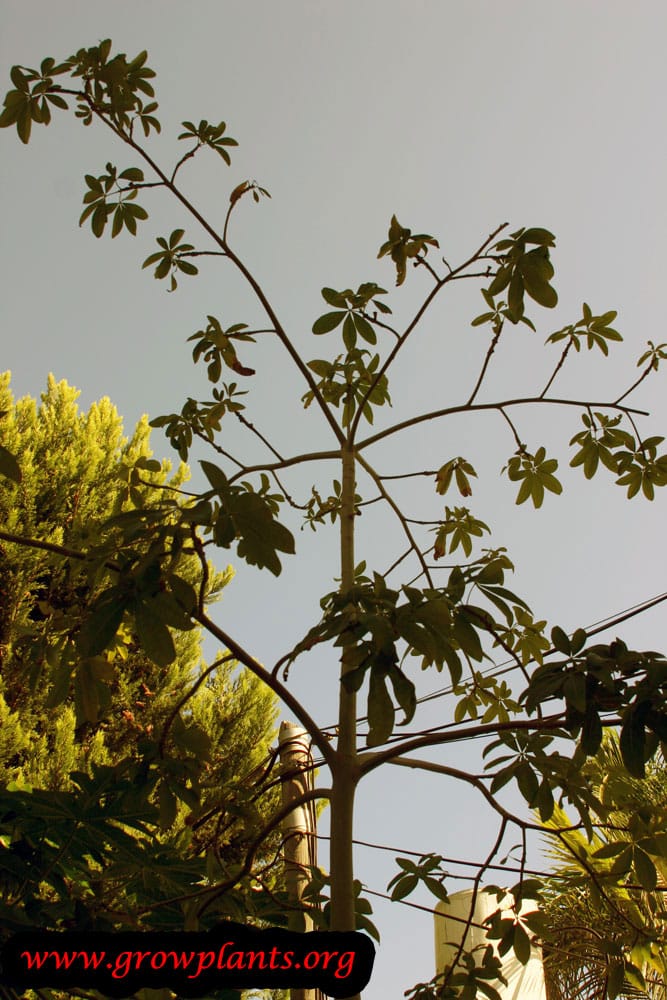
- Growth Habit & Form: Upright tree with a green trunk (often braided when young) and a canopy of palmate leaves; fast top-growth can outpace the roots.
- Lifespan & Maturity: Long-lived perennial; takes about 2-5 years to begin bearing nuts.
Anatomy & Physical Features
- Leaves & Foliage: Glossy green, ovate leaflets arranged palmately in whorls of 5-7, like the fingers of a hand.
- Flower Characteristics: Large white flowers with showy, brush-like stamens.
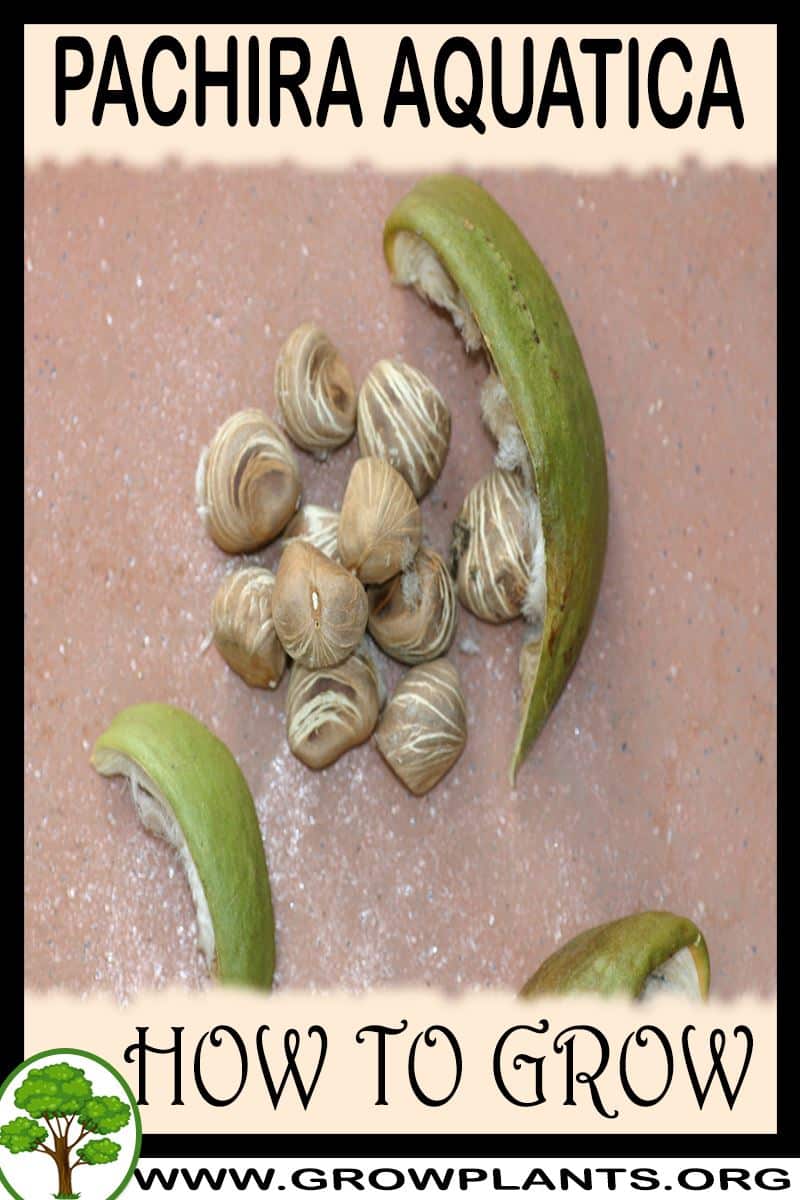
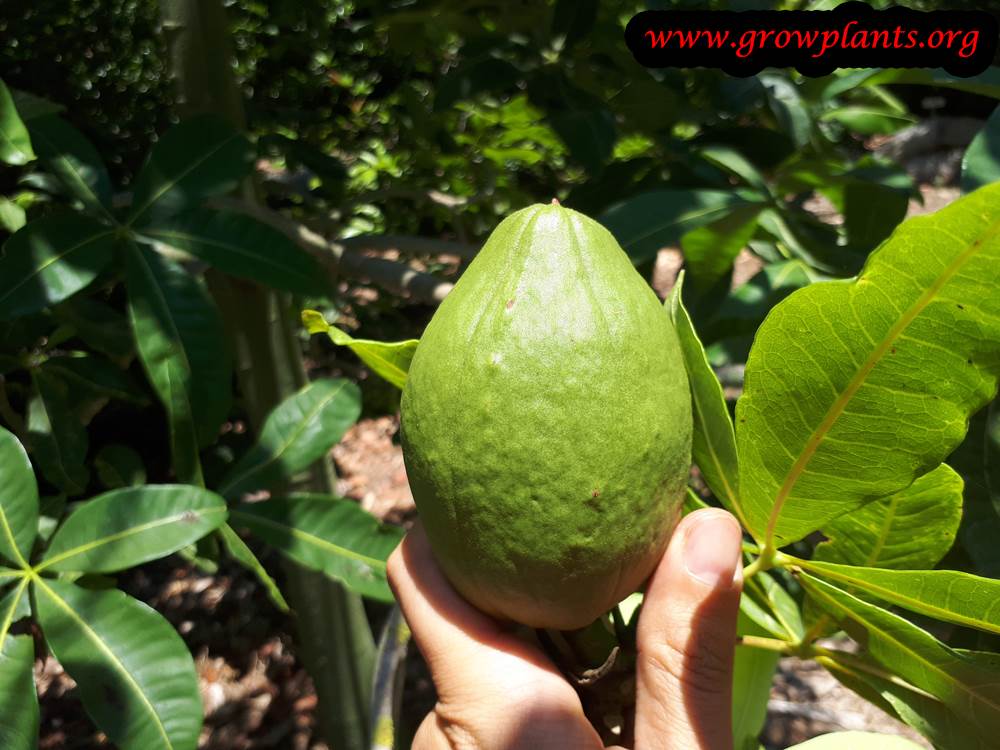
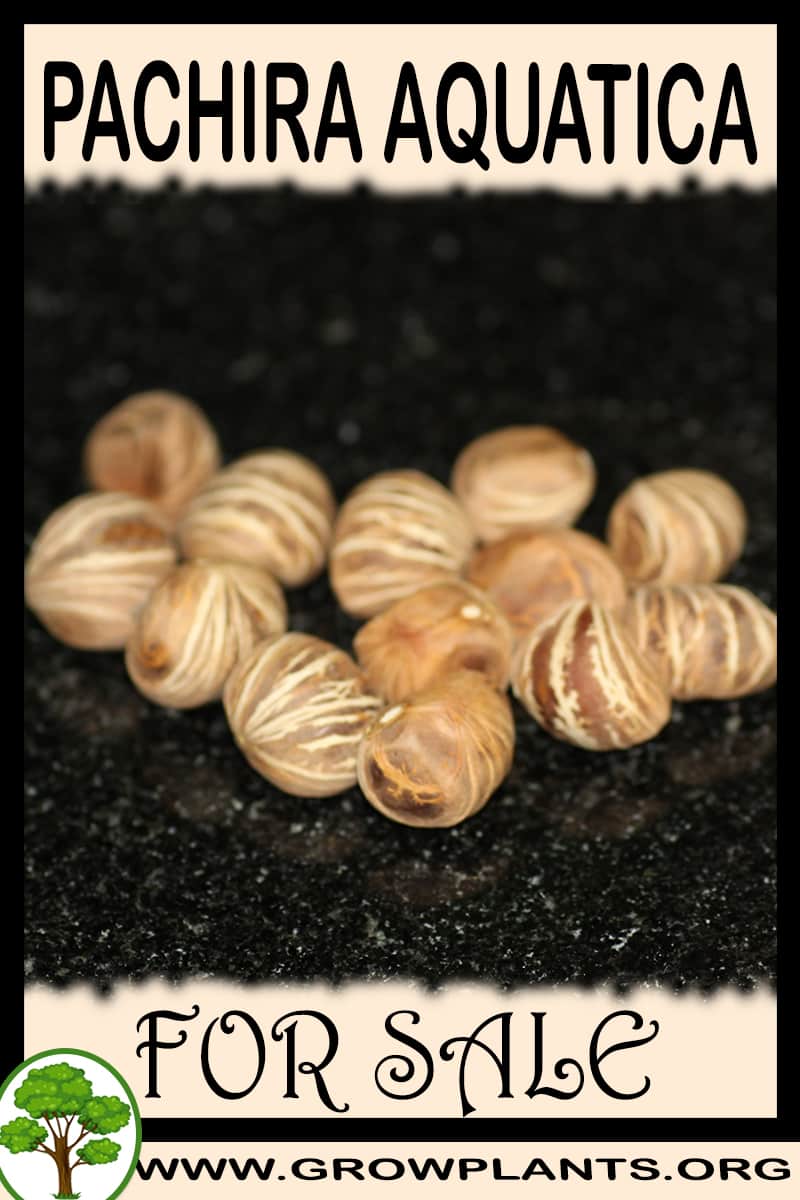
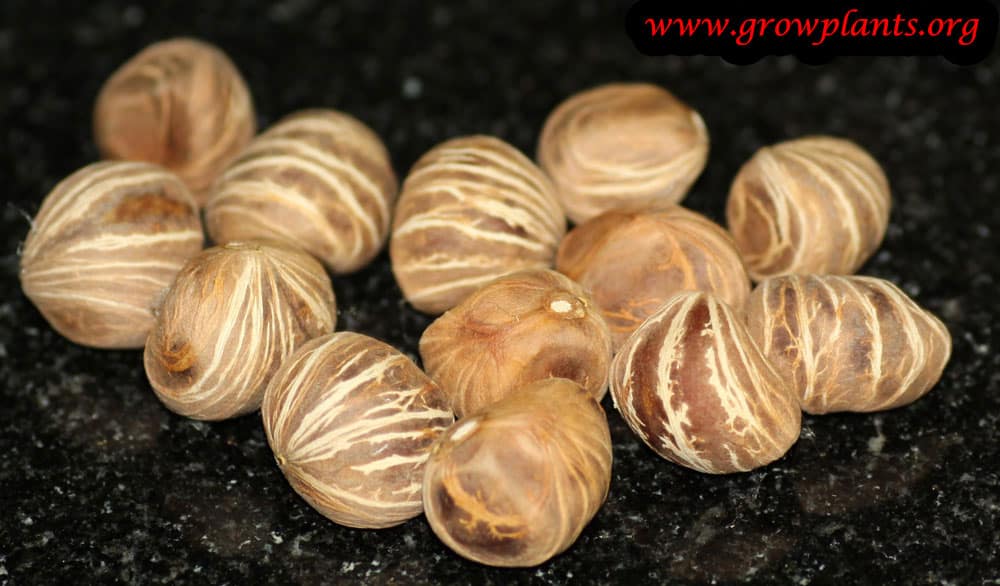
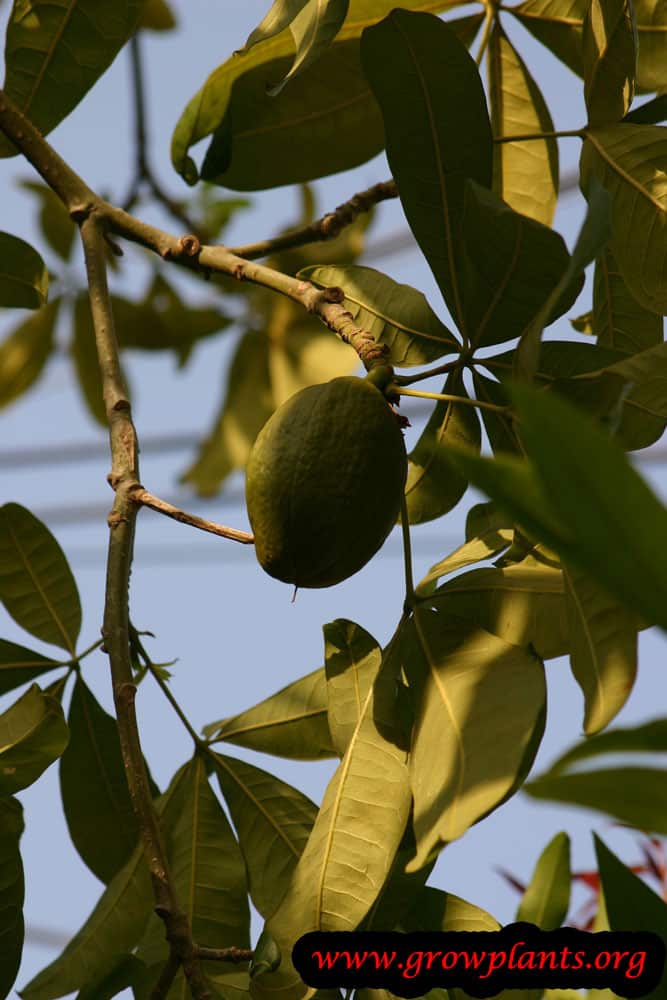
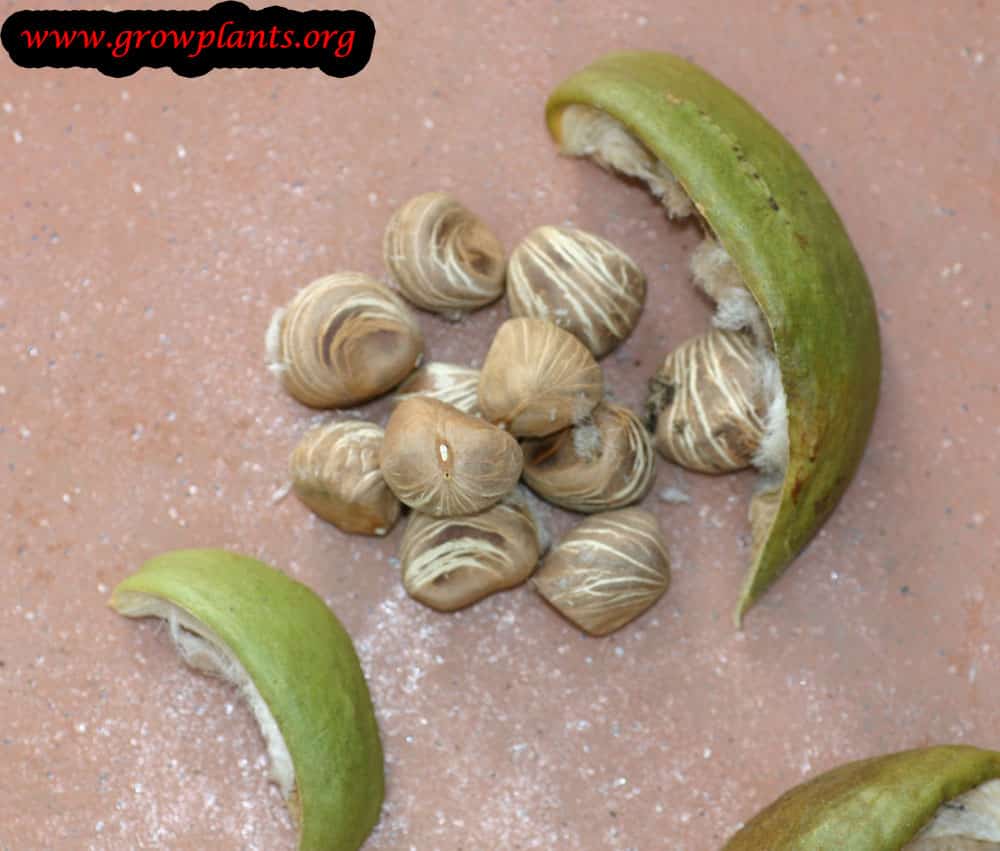
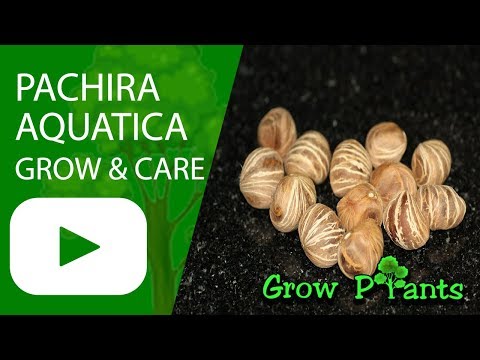
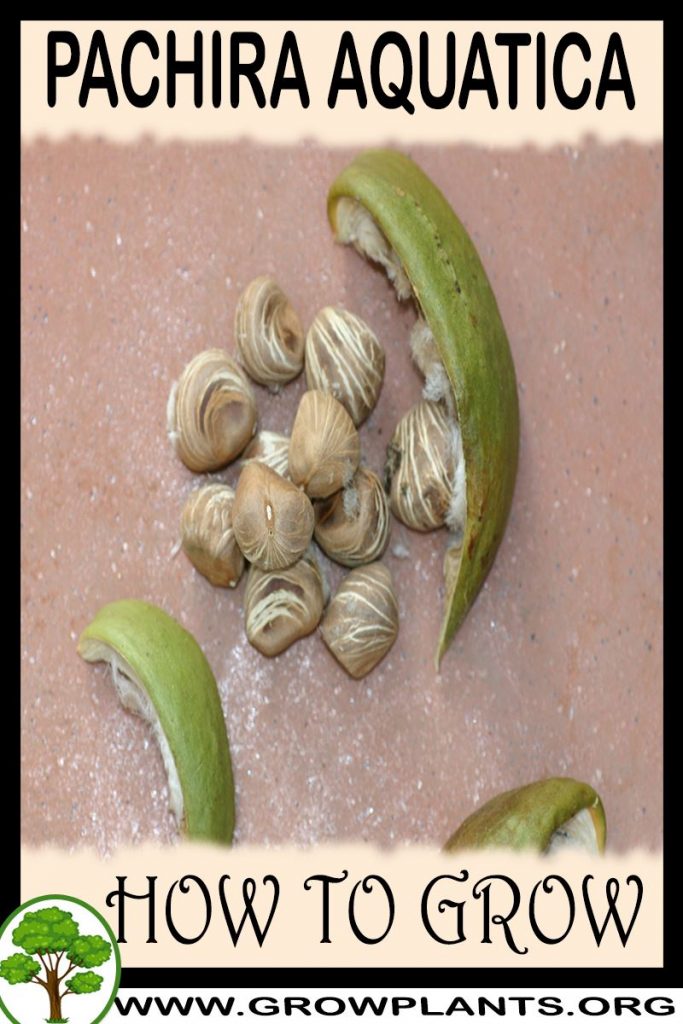
- Fruit Profile: Woody green-brown capsule that splits to drop cream-white, brain-shaped nuts about 1-2 cm.
Primary Uses & Landscape Value
- Edible Uses: Nuts eaten raw or roasted, and can be ground into a milk-like drink.
- Functional & Ornamental Roles: Ornamental shade tree outdoors; widely grown indoors as a houseplant or bonsai.
Care Guide: Planting, Soil & Watering
Overview: Pachira aquatica (Malabar chestnut) is a tropical, frost-tender tree that grows naturally in wet ground, so it enjoys rich, moist, well-draining soil and tolerates wet feet. It needs warm, frost-free conditions and moderate, steady moisture.
Quick Care Requirements
| Requirement | Ideal Condition |
|---|---|
| Planting Season | Spring through autumn, in warm frost-free climates (hardiness zone 10+) |
| Growth Rate | Slow to Moderate |
| Soil Type | Rich, moist, well-draining soil; tolerates wet ground |
| Water Need | Low to Moderate – keep the soil moist; it tolerates periodic wet |
Planting & Establishment
- Best Planting Season: Plant in the warm season, from spring through autumn, only where conditions stay frost-free.
- How to Plant:
- Hole Preparation: Dig a hole about twice the width of the root ball to give the roots room to establish in loosened soil.
- Soil Amendments: Enrich the backfill with compost or organic matter, keeping the soil moisture-retentive but still draining.
- Planting Depth: Set the root collar level with the soil surface and do not bury the trunk; stake young trees, as fast top growth can make them topple in wind before the roots anchor.
- Growth Speed & Expectations: Growth is slow to moderate; it can put on height quickly at the top, so early staking and light formative pruning help it build a sturdy frame.
Soil, Watering & Drainage Care
- Soil Mix & Drainage Needs: Use a rich, moisture-retentive but well-draining soil; being a swamp native it tolerates wet feet better than most trees. In containers, use a good potting mix with drainage holes.
- Watering Schedule & Technique:
- Young / Newly Planted: Keep the soil consistently moist while the young tree establishes.
- Established: Water moderately once established, allowing the surface to dry slightly between waterings; it copes with both wet spells and short dry periods.
- Seasonal Adjustments: Water less in cool winter weather (it may drop some leaves) and more during summer heat.
Climate, Light & Hardiness
Pachira aquatica (Malabar chestnut) is a tropical tree for Mediterranean, subtropical and tropical climates, and a popular indoor specimen; it grows in full sun through to full shade. The site rates it for hardiness zone 10 and above - frost-tender outdoors, though it becomes semi-deciduous in cold winters.
Quick Climate Specifications
| Climate Zones | Mediterranean, subtropical, tropical (or indoors) |
|---|---|
| USDA Hardiness Zones | 10+ |
| Frost Tolerance | Very Low |
| Light Conditions | Full sun to full shade |
| Wind Tolerance | Low to Moderate |
Sunlight & Light Exposure
Optimal Light Setup
Grows across a wide light range: full sun outdoors in warm climates, and bright indoor light as a houseplant. It survives full shade but grows poorly there.
Shade & Heat Management
Tolerates lower light better than most tropical trees, which is why it is a common indoor plant; the more light it receives, however, the stronger and more compact its growth.
Best Exposure / Orientation
Outdoors, a warm, bright, sheltered position; indoors, a bright spot near a well-lit window away from cold draughts.
Temperature Extremes & Hardiness
USDA Hardiness & Regional Limits
The site rates it for zone 10 and above, describing its outdoor cold limit - relevant to anyone growing it outside in warm climates. Elsewhere it is grown as an indoor or protected plant, where a comfortable room-temperature range in the low-to-mid 20s°C (roughly 68–77°F) suits it.
Cold Damage & Winter Protection
It is frost-tender; cold near freezing damages foliage, and in a cold winter it may drop leaves and turn deciduous. Keep it away from frost and cold windows; indoor plants dislike cold draughts and sudden chills.
Frost Sensitivity
Frost-sensitive - not suited to outdoor culture where frosts occur.
Extreme Heat Tolerance
Good in tropical warmth, given adequate moisture.
Wind, Humidity & Microclimate
Humidity Preferences
Prefers moist, humid air; indoors it appreciates raised humidity, especially in heated rooms.
Dry-Air Tolerance
Moderate; very dry indoor air can stress the foliage.
Wind Tolerance
Low to moderate. The site warns that fast, tall growth can make the tree top-heavy and prone to toppling in wind, so a sheltered position and staking help.
Microclimate Recommendations
Outdoors, a warm, humid, wind-sheltered, frost-free spot; indoors, a bright, warm, draught-free position with some added humidity.
Growing in Pots, Balconies & Indoors
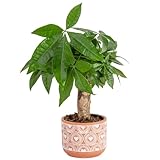
The grower confirms Pachira aquatica grows both as an indoor plant (given enough light) and in containers – and indeed it is one of the most popular of all houseplants, the braided-trunk money tree. Though it becomes a large tree outdoors, in a pot it stays a manageable, handsome foliage plant.
Quick Details
- Container Size: A 10-25 L pot for a room-sized specimen; pot up as it grows
- Indoor Suitability: Good houseplant – the grower notes it does need light
- Best Spot: Bright, indirect light; it tolerates some shade but grows poorly in deep shade
- Soil & Drainage: Free-draining mix; despite its swamp origins it rots if permanently waterlogged in a pot
- Watering in Pots: Water when the top few centimetres dry; it stores water in its trunk and dislikes constant sogginess
Indoors & On the Windowsill
- A popular houseplant: Give it a warm room with bright, indirect light – the grower stresses it needs light; too little and it grows leggy and weak.
- Even light: Turn the pot occasionally for even growth, and keep it away from cold draughts; it likes some humidity.
- Windowsill: A bright sill out of harsh midday sun is ideal; strong light keeps the palmate leaves lush.
On a Balcony or Patio
- Light & shelter: Outdoors in warm, frost-free weather it enjoys bright light with shelter from fierce sun and wind; the pot dries faster outside, so check it.
- Overwintering: It is frost-tender – bring the pot indoors before any cold and grow it on as a houseplant.
Choosing the Pot, Soil & Long-Term Care
- Pot & drainage: A 10-25 L pot with strong drainage holes; skip a standing water saucer to avoid root rot; terracotta breathes and dries faster, while glazed or plastic holds moisture longer.
- Potting mix: A light, aerated mix – peat or coir blended with perlite or vermiculite so roots get both moisture and air.
- Feeding: Potted plants use up their soil faster as nutrients wash out with each watering, so feed a little and often through the growing season.
- Repotting & shaping: Pot up every couple of years; prune to control height and keep the bushy shape, and refresh the mix when you repot.
Fertilizing & Feeding
A moderate feeder: young trees appreciate nitrogen-forward feeding to build structure, while bearing trees do best with balanced nutrition and steady potassium through the growing season.
Quick Fertilizing Specs
| Feeding Level | moderate |
|---|---|
| young_feeding | Nitrogen-forward feeding through the growing season to build the tree. |
| mature_feeding | Balanced feeding with steady potassium to support cropping. |
| Main Nutrient Priority | Nitrogen while young; balanced nutrition with potassium once bearing. |
| Best Feeding Period | From when growth resumes through active growth and crop development. |
| Organic Options | Compost, well-rotted manure, and organic mulch over the root zone. |
| Micronutrients | A complete tree fertilizer usually supplies iron, manganese, and zinc; watch for chlorosis on alkaline soils. |
| Soil pH | Best in well-drained soil that is slightly acidic to near-neutral. |
| Reduce/Stop Feeding | Ease off feeding after harvest and through the cool, dormant season. |
Feeding by Growth Stage
Newly planted tree
Help the young tree establish roots after planting.
| Nutrient direction | Go light on fertilizer at first; let roots settle, then begin light balanced feeding once new growth appears. |
|---|---|
| Timing | The first season after planting. |
| Frequency | Feed sparingly until the tree is established and actively growing. |
| Fertilizer types | Light application of a balanced complete fertilizer, Compost or well-rotted organic matter worked into the planting area |
| Precautions | Keep fertilizer off the trunk and avoid heavy feeding, which can burn tender new roots. |
Young, non-bearing tree
Build a strong framework of branches and roots during the years before bearing.
| Nutrient direction | A nitrogen-forward complete fertilizer to drive steady vegetative growth and canopy development. |
|---|---|
| Timing | Through the growing seasons before the tree begins to bear. |
| Frequency | Feed through the active growing season, tapering as growth slows toward the cool season. |
| Fertilizer types | Nitrogen-forward complete tree fertilizer, Slow-release granular tree fertilizer, Compost or organic matter |
| Routine trace nutrients | iron, manganese, zinc |
| Precautions | Avoid late-season nitrogen that pushes tender growth vulnerable to cold. |
Established tree approaching bearing
Maintain healthy growth and prepare the tree to carry a crop.
| Nutrient direction | Shift toward a balanced complete fertilizer as the tree matures and prepares to fruit. |
|---|---|
| Timing | As the tree fills out and nears bearing age. |
| Frequency | Feed through the active growing season with balanced nutrition. |
| Fertilizer types | Balanced complete tree fertilizer, Slow-release granular feed, Compost or organic matter |
| Routine trace nutrients | iron, manganese, zinc |
| Precautions | Keep nutrition balanced; excess nitrogen can delay or reduce fruiting. |
Mature, bearing tree
Support a healthy canopy and a good crop year after year.
| Nutrient direction | A balanced complete fertilizer with steady potassium to support nut development. |
|---|---|
| Timing | Each growing season, with feeding concentrated as growth resumes and through crop development. |
| Frequency | Feed through the active growing season; ease off after harvest as the tree slows. |
| Fertilizer types | Balanced complete fertilizer with potassium, Slow-release granular tree fertilizer, Compost or organic matter |
| Routine trace nutrients | iron, manganese, zinc |
| Precautions | Watch for micronutrient chlorosis on alkaline soils and correct the cause rather than overfeeding. |
Nutrient Deficiency Signs & Corrections
Overall pale, yellow-green foliage with weak, slow growth.
| Possible causes | Low soil nitrogen, Heavy leaching in sandy or frequently watered soils, Cold or waterlogged soil limiting uptake |
|---|---|
| Appears first on | Older, lower leaves |
| What to check | Feeding history, Whether the oldest leaves yellow first, Soil drainage and temperature |
| Possible correction | Apply a nitrogen-forward complete fertilizer during the growing season and build soil organic matter. |
New leaves yellow between green veins, most on the youngest growth.
| Possible causes | High or alkaline soil pH making iron unavailable, Waterlogged, poorly aerated roots, Cold soil slowing uptake |
|---|---|
| Appears first on | Youngest leaves |
| What to check | Soil pH, Drainage and root health, Whether yellowing is interveinal on new leaves |
| Possible correction | Correct soil pH and drainage; apply a chelated iron product per its label if needed. |
Small, narrow leaves clustered in rosettes at shoot tips with shortened internodes.
| Possible causes | Low available zinc, High soil pH reducing zinc uptake, Sandy, low-organic soils |
|---|---|
| Appears first on | New shoot tips |
| What to check | Leaf and internode size on new growth, Soil pH, History of micronutrient issues |
| Possible correction | Correct high pH and apply a zinc product per its label if a deficiency is confirmed. |
Poor nut set, misshapen or aborted kernels, and dieback of shoot tips.
| Possible causes | Low soil boron, Sandy soils and heavy leaching, Dry conditions limiting boron movement to developing nuts |
|---|---|
| Appears first on | Developing nuts and shoot tips |
| What to check | Nut set and kernel fill, Soil boron history, Whether shoot tips die back |
| Possible correction | Correct only a confirmed shortage; apply boron carefully to a soil test and label, as the safe margin is narrow. |
Pruning, Training & Seasonal Maintenance
Pachira aquatica — the Malabar chestnut or money tree (Malvaceae) — is grown mostly as an indoor bonsai or braided-stem houseplant, and it responds to pruning very obligingly: it tolerates hard cutting and back-buds readily from below the cut, so topping and shaping are low-risk. The whole point of pruning here is controlling size and habit and keeping it bushy, not managing any fruiting wood. It is best cut in late winter to spring, just before the growing season.
Quick Pruning & Maintenance Specs
| Pruning Tolerance | High – back-buds readily, tolerates topping |
| Primary Pruning Window | Late winter to spring, before active growth |
| Secondary Maintenance Window | Pinch/tidy any time in the growing season |
| Typical Frequency | As needed to control size and shape |
| Main Objective | Compact, bushy, well-branched habit; controlled height |
| Young Plant Priority | Tip/top to force branching and avoid a bare, leggy stem |
| Mature Plant Priority | Reduce height, renew leggy shoots, refine bonsai form |
| Best Tool Type | Precision snips & secateurs (saw only for thick trunks) |
| Avoid Heavy Pruning During | Cold, dark, low-light spells indoors |
Pruning by Plant Age & Size
Newly Established
Let a young plant settle, then tip or top it to trigger side branching — left alone it tends to run up as a single stem and grow leggy. The source note that it is best cut while young (before it is firmly established and top-heavy) reflects exactly this: a fast, soft stem can grow tall and flop, so early height reduction and branching pay off.
Young / Formative
For a bushy houseplant, top to the height you want and let it branch below; for bonsai, begin building structure by cutting back to shape and, if desired, wiring young shoots. Braided specimens are simply kept in bounds by trimming the canopy each stem carries.
Mature / Established
Reduce height and cut leggy shoots back into good wood; it will reliably push new shoots from below the cuts, so an overgrown plant can be brought back to a compact, leafy silhouette.
Reproductive Note
Outdoors and mature, Pachira bears large white stamen-brush flowers and woody seed capsules with edible nuts, but in indoor and bonsai culture it rarely flowers or fruits, so there is no flowering-wood timing to manage — pruning is driven entirely by shape and size.
Structural Pruning & Training
Because it back-buds so willingly, structure is easy to direct: cut to an outward shoot or bud to steer growth, top to hold height, and thin crowded inner shoots so light reaches the whole plant. On braided plants keep the strands balanced so no single stem dominates.
Special Growth to Remove
Remove weak, spindly indoor shoots and any dead or yellowing leaves; thin congested tufts of new growth after a hard cut down to a few strong shoots.
Container & Small-Space Pruning
This is the main way the plant is grown, so container pruning is central, not an afterthought. Top and pinch to keep it compact and full; cut leggy, light-starved shoots back hard, knowing it will reshoot; and for bonsai, prune the canopy in balance with a root-prune at repotting so top and roots stay matched. Give good light after cutting so the regrowth is short-jointed rather than drawn.
Tools
Precision snips and secateurs handle nearly everything on this soft-wooded plant; a small saw is only needed to top a thick, mature braided trunk. No loppers, pole pruners or hedge shears apply.
Tool Hygiene & Disease Risk
Routine — clean, sharp snips; there is no significant tool-borne disease (its main indoor troubles are root rot from overwatering and the odd pest, not pruning wounds). Simply avoid working with dirty blades on soft, wet stems.
Cut Placement & Technique
Cut just above a node or a dormant bud in the direction you want the new shoot to grow; the plant will break from there. Make clean cuts on the soft wood and avoid leaving long dead stubs, which simply die back.
Heavy Pruning & Rejuvenation
Fully tolerated — a leggy, overgrown money tree can be topped hard, even into bare older wood, and will reliably back-bud into a fresh, bushy head. Do it as growth resumes in spring and give it good light and warmth.
Post-Pruning Care
After a hard cut, ease back on watering until new growth appears (bare, leafless stems use little water and rot easily if kept soggy), keep the plant warm and well lit, and no feeding is needed until it is actively reshooting.
Common Pruning Mistakes
- Never topping a young plant, so it grows into a tall, bare, floppy stem.
- Keeping the soil wet after a hard cut, which rots the leafless stem.
- Pruning hard in a dark, cold spell, so the regrowth comes weak and drawn.
When NOT to Prune
Avoid hard pruning in the low light and cold of deep winter indoors — wait for lengthening days and warmth so the plant reshoots strongly.
Recommended Tools (by task)
- precision_snips — pinching, shaping and bonsai detail on soft shoots.
- bypass_secateurs — for topping and cutting back thicker stems.
Pruning Troubleshooting
| Problem | Possible Cause | What to Check | Corrective Action |
| Tall, bare, leggy stem | Never topped; low light | Whether it was tip-pruned; light levels | Top to force branching; give brighter light |
| Rot / dieback after a hard cut | Kept too wet while leafless | Soil moisture on the cut-back plant | Reduce watering until new shoots appear; keep warm |
| Weak, drawn regrowth | Pruned in cold, dark conditions | Season and light when cut | Prune as growth resumes in spring with good light |
Propagation Guide
Malabar chestnut is easily grown from its large fresh seed, which germinates quickly, and from stem cuttings that root readily. The seed does not store well, so sow it fresh. An easy subject.
Quick Propagation Specs
| Best Propagation Method | Seed (fresh) |
| Alternative Methods | Stem cuttings |
| Propagation Difficulty | Easy |
| Seed True-to-Type | Usually true-to-type |
| Vegetative True-to-Type | Yes |
| Best Propagation Season | Warm months (spring to summer) |
| Seed Germination Time | Fast — often within a couple of weeks in warmth |
| Germination Temperature | Warm, roughly 24–29°C (75–84°F) |
| Seed Sowing Depth | Shallow — the large seed half-buried |
| Cutting Rooting Time | A few weeks |
Growing from Seed
Seed Handling & Viability
The large seeds are short-lived (recalcitrant): sow fresh and do not let them dry out.
Sowing & Germination
Press the seed into a warm, moist, free-draining mix and cover shallowly; germination is fast and reliable in warmth.
Seedling Care
Grow warm and bright; the swollen seedling base is what gives the “money tree” its character.
Stem Cuttings
Semi-hardwood stem cuttings root readily in warm, humid conditions; rooting hormone is optional. Cutting-grown plants are often used for the braided nursery form.
Bloom & Flower Guide
Quick Details
- Bloom Season: Late spring to early summer
- Flower Appearance: Large, showy white flowers whose narrow petals curl back to reveal a bold brush of long stamens
- Edibility: Ornamental – the tree is grown for its nuts; the flowers themselves are not eaten
Detailed Blooming Overview
Pachira aquatica (Malabar chestnut) puts on one of the more dramatic tropical blooms. The flowers open with slender white petals that arch backward, releasing a dense spray of long, thread-like stamens that gives the whole flower a fireworks or shaving-brush look. Blooms appear mainly through late spring and early summer on established, well-lit plants; the small bonsai and houseplant specimens most people grow rarely reach flowering size.
Flower Characteristics
- White flowers carried singly, large and eye-catching for their prominent stamens.
- The showy feature is the many long stamens rather than the petals.
- Faintly fragrant, opening toward evening.
Bloom Care & Thinning
- Pollination: Visited and pollinated by bees (and other insects) drawn to the stamens.
- Encouraging bloom: Flowers form only on mature plants given strong light and room to grow – indoor bonsai kept small seldom flower.
Fruit & Uses
The edible part of the Malabar chestnut is its cream-white, brain-shaped kernel, about 1–2 cm, inside a soft striped shell. The kernels are eaten raw or roasted, or ground and made into a milk-like drink.
Quick Edible Specs
| Edible Parts | Nut (kernel) |
|---|---|
| Main Use(s) | Culinary: eaten raw or roasted, or made into a nut “milk” |
| Eaten Raw or Cooked | Both — raw or roasted |
| Preparation Required | Open the capsule / soft shell; roast if desired |
| Harvest Season | Late summer to early autumn |
| Time to First Harvest | A few years from planting (see growing notes) |
Seeds, Pods & Nuts
The nuts ripen inside a green-to-brown capsule; when they are ready the capsule cover splits open and the nuts fall to the ground with the cover. The kernel is cream-white and brain-shaped, in a soft brown striped shell. Because fallen nuts can be hard to spot, the site suggests planting where the ground is visible and marking capsules while still green so they are easy to find.
Preparation, Uses & Safety
Open the soft shell and eat the kernel raw or roasted; the kernels can also be ground into a milk-like drink. No special detoxification is recorded.
Pests, Diseases & Troubleshooting
Overview: The money tree is a resilient tropical, but indoors and in containers its main enemies are sap-sucking insects (scale, mealybugs, spider mites) and – by far the most common killer – root rot from overwatering. Nematodes and fungus gnats appear in wet, tired soil. Keep the plant in bright, airy conditions with a dry-down between waterings and most problems never start.
Quick Troubleshooting Overview
| Issue / Pest | Main Symptom | Primary Solution |
|---|---|---|
| Root rot | Yellowing leaves, soft blackened trunk base, wilting despite wet soil | Cut back watering; repot into fresh, free-draining mix |
| Scale insects | Brown bumps on stems/leaves, sticky honeydew, sooty mould | Scrape off; horticultural oil |
| Mealybugs | White cottony tufts in leaf axils and undersides | Dab with alcohol; insecticidal soap/oil |
| Spider mites | Fine stippling and webbing in dry indoor air | Raise humidity; horticultural oil |
| Fungus gnats | Small flies over constantly moist soil | Dry the surface; sticky traps; Bti drench |
| Leaf drop / yellowing | Sudden leaf loss | Correct watering and light; steady conditions |
Common Pests & Management
- Scale insects (Coccus / Saissetia spp.):
- Symptoms: Immobile brown, tan, or blackish bumps clinging to stems, leaf undersides, and midribs; they bleed sticky honeydew that fuels black sooty mould, and leaves yellow and drop.
- Prevention & Control: Wipe or scrape off with a soft cloth or thumbnail, then treat with horticultural oil or insecticidal soap, covering stems and leaf undersides thoroughly. Repeat every 1–2 weeks; isolate the plant and inspect neighbours, as scale spreads by crawlers.
- Mealybugs (Planococcus / Pseudococcus spp.):
- Symptoms: White, cottony, waxy tufts tucked into leaf axils, along veins, and on undersides, with sticky honeydew, sooty mould, and stunted, distorted new growth; a root form attacks the root ball.
- Prevention & Control: Dab visible colonies with a cotton bud dipped in rubbing alcohol, then spray insecticidal soap or neem/horticultural oil. Check the roots at repotting and drench if a root form is found. Persist over several weeks to catch hatchlings.
- Spider mites (Tetranychus urticae):
- Symptoms: Fine pale speckling that dulls and bronzes the leaves, with delicate webbing between leaflets and along undersides in warm, dry indoor air; leaves yellow and drop.
- Prevention & Control: Raise humidity, keep the plant away from heating vents, and shower the foliage periodically. Introduce predatory mites under cover, or spray horticultural oil / insecticidal soap on undersides, repeating every 5–7 days until clear.
- Fungus gnats (Bradysia spp.):
- Symptoms: Small dark flies drifting up from the soil; larvae thrive in soggy compost and nibble fine feeder roots, adding stress to an already wet root ball.
- Prevention & Control: Let the top few centimetres of mix dry between waterings and improve drainage. Use yellow sticky traps and a grit topdressing; drench with Bacillus thuringiensis var. israelensis or beneficial nematodes if larvae persist.
- Aphids (Aphis spp.):
- Symptoms: Soft green or black insects clustered on the flush of tender new leaves, causing curling and stickiness, mostly on plants grown outdoors in the warm season.
- Prevention & Control: Rinse off with water and squash survivors; encourage natural predators outdoors. Insecticidal soap or a light oil clears heavier outbreaks – spray leaf undersides and growing tips.
Diseases & Fungal Issues
- Root and crown rot (Pythium / Phytophthora / Fusarium):
- Symptoms: The classic money-tree ailment: leaves yellow and drop, the plump trunk base turns soft, dark, and mushy or smells sour, and the plant wilts even though the soil is wet. Roots are brown and slimy rather than white and firm.
- Treatment & Management: Prevention is everything – use a chunky, free-draining mix, a pot with drainage holes, and water only when the top few centimetres are dry. If rot has started, unpot, cut away all soft brown roots and tissue back to firm, healthy wood, dust cuts, and repot into fresh dry mix; withhold water briefly to let it recover.
- Leaf-spot and anthracnose (Colletotrichum / Cercospora spp.):
- Symptoms: Brown or black spots, sometimes with yellow halos or dead patches, on leaves kept wet in humid, still air; spots may merge and cause leaf drop.
- Treatment & Management: Remove affected leaves, avoid wetting foliage, and improve airflow and light. Keep leaves dry when watering; a copper-based fungicide helps in persistent cases, but sanitation and drier foliage usually suffice.
- Sooty mould (secondary):
- Symptoms: A black, soot-like film coating leaves and stems wherever scale, mealybugs, or aphids have left honeydew; it blocks light rather than infecting tissue.
- Treatment & Management: Control the underlying sap-suckers first, then wipe the black film off with a damp cloth or a mild soap solution. Once the honeydew stops, no mould returns.
Growing Difficulties & Abiotic Problems
- Overwatering & poor drainage
- Cause & Symptoms: Yellowing, dropping leaves and a softening trunk base – the single most common reason money trees decline – from soil kept constantly wet, especially in low light and cool rooms.
- Correction Strategy: Water only when the top 3–5 cm of mix is dry, empty any saucer, and use a gritty, free-draining medium. In winter and low light, water much less. The swollen trunk stores water, so err on the dry side.
- Underwatering / low humidity
- Cause & Symptoms: Crispy brown leaf edges, leaflet curling, and leaf drop when the plant is left bone-dry for long periods or sits in very dry, heated air.
- Correction Strategy: Keep a steady moderate rhythm, watering thoroughly then letting it dry appropriately; group plants or use a pebble tray to lift humidity. Avoid swinging between drought and flood.
- Light and cold stress
- Cause & Symptoms: Leggy, pale growth and leaf loss in deep shade; blackened, dropping leaves after exposure to cold draughts or temperatures below about 10 °C.
- Correction Strategy: Give bright, indirect light and turn the plant occasionally for even growth. Keep it away from cold windows and draughts and above 12–15 °C; move outdoor plants in before cold snaps.
- Top-heavy / weak trunk
- Cause & Symptoms: Fast, soft growth can leave the tree tall and unstable, prone to leaning or snapping in wind outdoors (as the source notes).
- Correction Strategy: Grow in good light for sturdier stems, stake young plants, and prune to a balanced framework. Braided specimens support each other; shelter container plants from strong wind.
What Helps – Products & Tools
Your core kit is horticultural / neem oil and insecticidal soap for scale, mealybugs, mites, and aphids, rubbing alcohol on a cotton bud for spot-treating mealybugs, and yellow sticky traps plus Bti for fungus gnats. Against the ever-present rot threat, the best ‘products’ are a free-draining potting mix, a well-drained pot, and restraint with the watering can; a copper fungicide is a backup for leaf spot only.