



Plant Profile & Key Characteristics
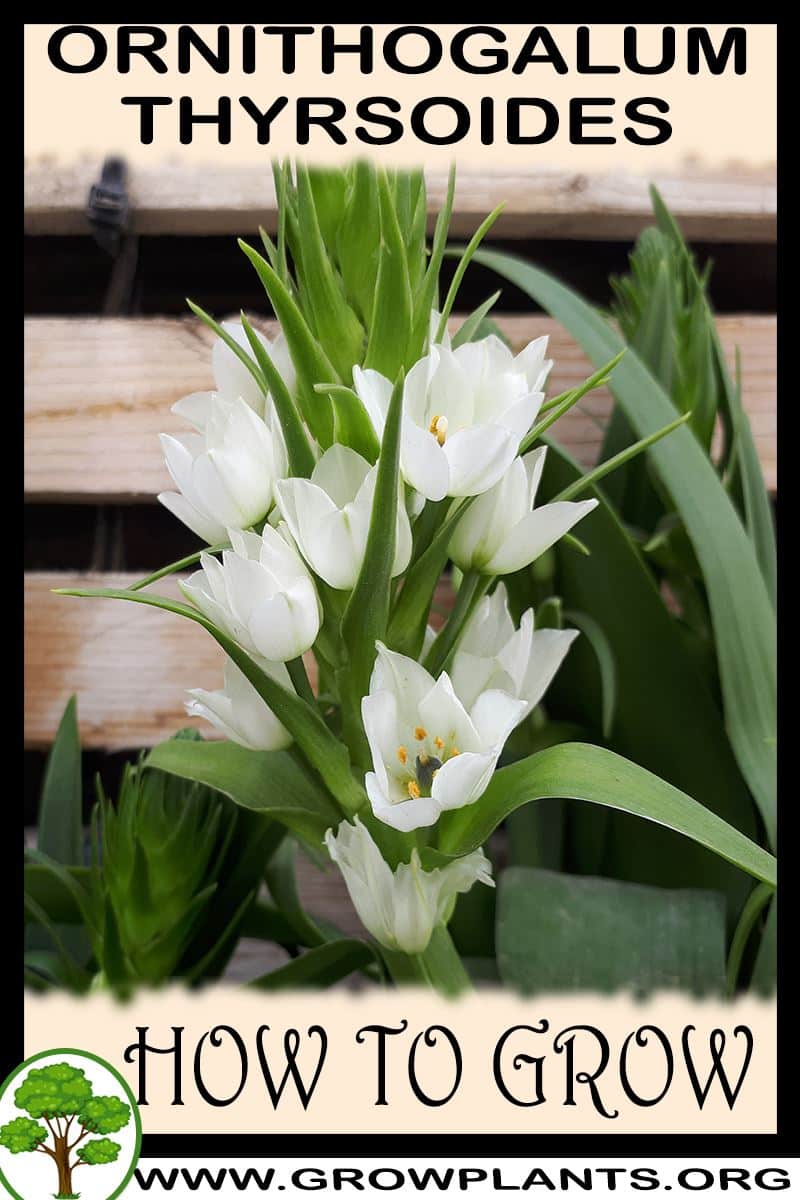
Overview: Ornithogalum thyrsoides (chincherinchee) is a bulbous perennial geophyte about 20-40 cm tall, famous as an extremely long-lasting white cut flower with star-shaped, six-petalled blooms.
Quick Specifications
| Specification | Attribute |
|---|---|
| Plant Type / Life Cycle | Perennial (bulbous geophyte, summer-dormant) |
| Foliage Type | Deciduous |
| Mature Size | 20-40 cm (8-16 in) |
| Growth Rate | Moderate |
| Root System | Bulb (geophyte) |
| Toxicity | Toxic – bulbs and foliage contain cardiac glycosides and are poisonous if eaten |
| Hardiness | USDA zones 6-10 (bulb left in ground) / 4-7 (lifted) |
Growth Form & Structure
- Height & Spread: 20-40 cm (8-16 in); grows well in containers.
- Growth Habit & Form: A clump of basal linear leaves with flowers on erect stalks, all arising from an underground bulb.
- Lifespan & Maturity: Perennial that returns from its bulb each year and multiplies by offsets.
Anatomy & Physical Features
- Leaves & Foliage: Green, linear leaves growing from the bulb.
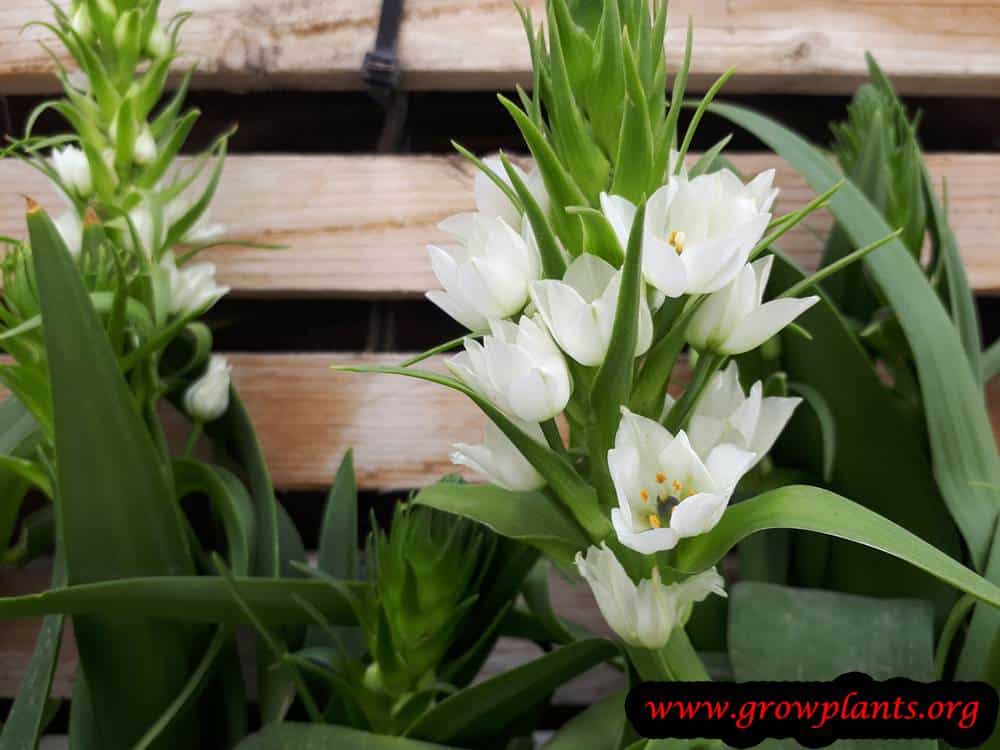
- Flower Characteristics: White star-shaped 6-petalled flowers with a darker centre, carried on stalks (full detail in the Bloom guide).
Primary Uses & Landscape Value
- Functional & Ornamental Roles: Ornamental bedding and rockery bulb, and a long-lasting cut flower.
Care Guide: Planting, Soil & Watering
Overview: Ornithogalum thyrsoides (Chinkerinchee) is a bulbous geophyte that grows through the cool, moist season and rests through a dry summer. It needs well-draining soil and moderate water while in leaf, then must be kept dry (or the bulb lifted) once it dies back.
Quick Care Requirements
| Requirement | Ideal Condition |
|---|---|
| Planting Season | Autumn to winter in warm climates; spring in cold climates |
| Growth Rate | Moderate |
| Soil Type | Light, well-draining soil that dries out over summer |
| Water Need | Moderate during active growth; keep nearly dry in summer dormancy |
Planting & Establishment
- Best Planting Season: Plant the bulbs as the growing season begins – autumn to winter in warm climates, or spring in cold climates.
- How to Plant:
- Hole Preparation: Plant each bulb a few centimetres deep, roughly two to three times its own height, with the pointed nose facing up.
- Soil Amendments: Work a little compost plus some grit or coarse sand into the bed so the soil is fertile but drains freely.
- Planting Depth: Cover the bulb with about 5 cm (2 in) of soil; planting into free-draining ground stops it from rotting during its summer rest.
- Growth Speed & Expectations: Growth is moderate – leaves emerge first, followed by the star-shaped flowers on their stalks in winter to spring.
Soil, Watering & Drainage Care
- Soil Mix & Drainage Needs: Sharp drainage is essential, as the dormant bulb rots in wet summer soil; in containers use a free-draining, gritty mix. Choose a spot that dries out naturally in summer.
- Watering Schedule & Technique:
- Young / Newly Planted: Keep the soil evenly moist as shoots and leaves develop through the cool growing season.
- Established: Water regularly during active growth, letting the surface dry slightly between waterings.
- Seasonal Adjustments: Taper off watering as the foliage yellows and dies back, then keep the bulb dry (or lift and store it) through the summer dormancy; resume when growth restarts.
Climate, Light & Hardiness
Ornithogalum thyrsoides is a bulb suited to mediterranean, desert, subtropical, and temperate climates with full sun to half shade, going dormant and dying back for part of the year. Its bulbs can stay in the ground year-round from about USDA zone 6 through 10, while gardeners in cooler zone 4–7 climates typically lift and store the bulbs indoors over winter instead.
Quick Climate Specifications
| Climate Zones | Mediterranean, desert, subtropical, temperate |
|---|---|
| USDA Hardiness Zones | 6–10 (bulb left in soil); 4–7 (bulb lifted and stored over winter) |
| Light Conditions | Full Sun to Half Shade |
Sunlight & Light Exposure
Optimal Light Setup
Full sun to half shade during its active growth and bloom period.
Temperature Extremes & Hardiness
USDA Hardiness & Regional Limits
In zone 6 through 10 the bulb can simply stay in the ground through its dormant season. In colder zone 4–7 climates, winter cold is enough of a risk to the bulb that lifting and indoor storage over winter is the standard approach rather than in-ground survival.
Frost Sensitivity
The bulb needs a dry summer dormancy and is vulnerable to hard freezes while dormant in the ground outside its warmer hardiness range, which is the main reason for lifting it in colder climates.
Wind, Humidity & Microclimate
Rainfall & Seasonal Moisture
Prefers a dry summer rest (or the bulb lifted out of the ground) with well-drained soil, reflecting its mediterranean-climate origin of wet winters and dry summers.
Growing in Pots, Balconies & Indoors
Chincherinchee is a South African bulb (20-40 cm) grown for its long-lasting white spikes – the grower rates it as not a houseplant, but it grows well in pots on a sunny to part-shaded balcony or patio.
Quick Details
- Container Size: A medium pot for a cluster of bulbs
- Indoor Suitability: Not a houseplant – an outdoor container bulb
- Best Spot: Full sun to light shade
- Soil & Drainage: Free-draining mix
- Watering in Pots: Average while growing; drier when dormant
Indoors & On the Windowsill
- Not a houseplant: Best grown outdoors in pots; the grower rates it unsuitable indoors.
- Safety: All parts are toxic if eaten – keep the bulbs and cut stems away from children and pets.
On a Balcony or Patio
- Sunny spot: Full sun to light shade on a balcony or patio; feed while in growth for strong spikes.
- Light & heat: Walls, railings and paving reflect heat and wind dries pots fast, so check moisture often and water more in hot spells.
Choosing the Pot, Soil & Long-Term Care
- Pot & drainage: A pot with strong drainage holes; do not leave it standing in water.
- Potting mix: A light, free-draining mix – a good potting mix, or peat/coir blended with perlite or vermiculite.
- Feeding: Container plants use up food faster because watering washes nutrients out – feed a little and often through the growing season.
- Long term: Let the bulbs rest dry when dormant and refresh the mix every season or two.
Fertilizing & Feeding
A light feeder: modest balanced feeding while the leaves are actively growing helps recharge the bulb for next season, with feeding stopped entirely once the plant goes dormant.
Quick Fertilizing Specs
| Feeding Level | Light feeder |
|---|---|
| Main Nutrient Priority | Balanced feeding with adequate potassium to recharge the bulb |
| Best Feeding Period | While foliage is actively growing, before and during bloom |
| Organic Options | Compost worked into well-drained planting soil |
| Reduce/Stop Feeding | Stop feeding once foliage yellows and the bulb enters its dry dormant rest |
| Micronutrients | Usually unnecessary in well-drained, organically enriched soil |
| Soil pH | Tolerates a wide range in well-drained soil |
Feeding by Growth Stage
Active leaf and bulb growth
Support the emerging foliage as it builds energy toward flowering and replenishes the bulb.
| Nutrient direction | A balanced fertilizer supports steady leaf growth and bulb development without pushing soft, weak foliage. |
|---|---|
| Timing | As leaves emerge and develop, ahead of flowering. |
| Frequency | Light, occasional feeding through this period of active leaf growth. |
| Fertilizer types | A balanced complete fertilizer, Compost worked into the soil at planting |
| Precautions | Keep feeding light; overfeeding bulbs can encourage lush foliage at the expense of flowering and bulb quality. |
Flowering
Support the flower display while the bulb continues storing energy for the following season.
| Nutrient direction | A balanced fertilizer with adequate potassium favors strong bloom and helps recharge the bulb. |
|---|---|
| Timing | During the flowering period. |
| Frequency | Continue light, occasional feeding through bloom. |
| Fertilizer types | A balanced complete fertilizer with adequate potassium |
| Precautions | Avoid heavy nitrogen at this stage, which favors foliage over bloom quality and bulb recharge. |
Dry dormant rest
Let the bulb rest undisturbed through its natural dormant period.
| Nutrient direction | None – withhold fertilizer entirely while the bulb is dormant. |
|---|---|
| Timing | After foliage yellows and dies back, through the dry dormant period, whether the bulb stays in the ground or is lifted and stored. |
| Frequency | No feeding at this stage; resume only when active leaf growth returns. |
| Fertilizer types | No feeding at this stage; do not fertilize a dormant bulb. |
| Precautions | Do not fertilize during dormancy; the bulb is not taking up nutrients and feeding now risks salt buildup around a resting bulb. |
Nutrient Deficiency Signs & Corrections
Leaf margins show scorch or yellowing and flowering is weak despite otherwise healthy foliage.
| Possible causes | low available soil potassium, leaching from heavy watering, an imbalanced, nitrogen-heavy feeding history |
|---|---|
| Appears first on | leaf margins of older leaves |
| What to check | recent fertilizer balance, soil texture and drainage, bloom performance over recent seasons |
| Possible correction | Apply a balanced fertilizer with adequate potassium during active leaf growth and bloom. |
Foliage is pale and thin, with noticeably reduced leaf growth for the season.
| Possible causes | low available soil nitrogen, poor, sandy, or organic-matter-poor soil, nutrient leaching |
|---|---|
| Appears first on | overall foliage vigor |
| What to check | soil organic matter, recent feeding history, drainage and watering |
| Possible correction | Apply a balanced fertilizer during active leaf growth and work organic matter into the soil. |
Weak, stunted leaf emergence or failure to sprout despite a healthy-looking bulb.
| Possible causes | waterlogged, poorly drained soil, fungal or bacterial bulb rot, nutrient stress unrelated to fertility, such as planting depth or damage |
|---|---|
| Appears first on | emerging shoots and roots |
| What to check | soil drainage, bulb firmness and signs of rot, planting depth |
| Possible correction | Improve drainage, remove and discard visibly rotten bulbs, and avoid feeding until healthy growth resumes. |
Pruning, Training & Seasonal Maintenance
Ornithogalum thyrsoides is a deciduous, bulb-forming geophyte, so it needs no structural pruning at all – the only maintenance is grooming spent flower stalks and, at season’s end, removing the dying foliage. The main objective is protecting the bulb’s ability to recharge itself after bloom, so the safest time to remove leaves is once they have yellowed and died back naturally toward summer, not while they are still green and photosynthesizing.
Quick Pruning & Maintenance Specs
| Pruning Tolerance | Low (foliage removal only, and only once it has died back) |
| Primary Pruning Window | Summer, as foliage yellows and dies back after bloom |
| Typical Frequency | Once per bloom cycle, plus optional deadheading during flowering |
| Main Objective | Let the bulb recharge from spent foliage before removal; tidy spent bloom stalks |
| Best Tool Type | Precision snips |
| Avoid Heavy Pruning During | While leaves are still green (spring bloom period) |
Special Growth to Remove
- Spent flower stalks – can be cut once bloom finishes; deadheading prevents the plant spending energy on seed set if you are not collecting seed.
- Dead leaves – remove only once they have yellowed and died back naturally at the end of the growing season; green leaves should be left in place, as they are still feeding the bulb for next year’s flowering.
Container & Small-Space Pruning
Grown in pots as readily as in the ground. In containers the same rule applies – let foliage die back fully before removing it, since a potted bulb has no other reserves to draw on for next season’s bloom. Where the bulb is lifted for summer storage (recommended in areas with wet summers), foliage removal naturally coincides with lifting.
Tools
- Precision snips – the only tool needed, for cutting spent flower stalks and fully dead leaves.
Tool Hygiene & Disease Risk
Routine: clean tools are sufficient. Note that the bulb itself is poisonous, so wear gloves when handling cut material or dividing bulbs to avoid skin contact with the sap.
Cut Placement & Technique
Cut flower stalks at the base once flowers fade. Remove dead leaves at soil level only after they have fully yellowed; do not pull leaves away from the bulb, as this can damage the bulb’s basal plate – cut them instead.
Common Pruning Mistakes
- Cutting back green foliage right after flowering to ‘tidy up’ – this starves the bulb and reduces or prevents flowering the following year.
- Handling the poisonous bulb or sap without gloves.
When NOT to Prune
Do not remove foliage while it is still green, even if the flowers have finished – wait until it yellows and dies back on its own so the bulb can fully recharge for next year.
Recommended Tools (by task)
- precision_snips – the only cut this plant needs: spent flower stalks and, later, fully dead foliage.
Propagation Guide
Ornithogalum thyrsoides is most easily increased by dividing the small bulb offsets (bulblets) that form naturally around the mother bulb, and the site confirms grafting or special vegetative techniques are not necessary. Seed is also viable and grows true to the species, but takes longer to reach a flowering-size bulb, so overall propagation is easy.
Quick Propagation Specs
| Best Propagation Method | Bulb offset (bulblet) division |
| Alternative Methods | Seed |
| Propagation Difficulty | Easy |
| Seed True-to-Type | Yes |
| Vegetative True-to-Type | Yes |
| Best Propagation Season | Lift and divide bulbs when dormant; spring in cold climates, autumn/winter in hot climates |
| Seed Germination Time | Several weeks, sometimes irregular |
| Germination Temperature | Around 15–20°C (59–68°F) |
| Seed Sowing Depth | Shallow, just covered |
Growing from Seed
Sowing Season
Sow in the plant’s normal planting window – spring where winters are cold, or autumn/winter in warmer, frost-free climates.
Sowing Depth & Orientation
Sow seed shallowly, just covered with a light, well-drained mix.
Germination Conditions
Keep the medium moist but not waterlogged in a sunny to lightly shaded spot; cool, mild temperatures around 15–20°C (59–68°F) suit germination.
Germination Time
Typically several weeks, and can be uneven.
Seedling Care
Grow seedlings on until the small bulb is established before treating them like mature plants; because the bulb is poisonous, handle with care and keep away from children and pets during handling and transplanting.
Rhizomes, Tubers, Bulbs & Corms
Bulb Offset (Bulblet) Division: Lift the parent bulb during its dormant period (matching the site’s planting/lifting season – spring in cold climates, autumn/winter in hot climates) and gently separate the small bulblets that form at its base. Only replant offsets of reasonable size with visible roots or growth points attached; very tiny bulblets can be grown on in a nursery bed or pot for a season before moving to their final spot. Handle bulbs and offsets with care since they are poisonous.
Bloom & Flower Guide
Quick Details
- Bloom Season: Winter into spring
- Time to First Bloom: From a planted bulb, flowers appear in the first season
- Flower Appearance: Star-shaped white flowers with six elliptic petals and a darker centre, clustered near the top of an upright stalk
- Edibility: Not edible — all parts are toxic if eaten; grown for ornament and cut flowers only
Detailed Blooming Overview
Ornithogalum thyrsoides, the chinkerinchee or star of Bethlehem, grows from a bulb and throws up dense, cone-shaped heads of pure white, star-like flowers over winter and spring. It is famous as a cut flower because the blooms last for weeks in a vase, opening gradually from the base of the spike upward.
Flower Characteristics
- Six-petalled, star-shaped flowers, crisp white with a darker eye at the centre.
- Massed in a tight, thyrse-like head on a straight, leafless stalk.
- Exceptionally long-lasting, both on the plant and when cut.
Bloom Care & Thinning
- For cut flowers: Cut when the lowest few flowers on the spike have opened; the rest will continue opening in the vase.
- After flowering: Let the foliage die back naturally to build the bulb for next year.
- Safety: The plant is poisonous — keep the flowers, bulbs and vase water away from children and pets, and wash your hands after handling.
Pests, Diseases & Troubleshooting
Overview: Chincherinchee (Ornithogalum thyrsoides) is a bulbous plant whose above-ground growth is troubled mainly by sap-sucking aphids and thrips, while its real vulnerabilities lie underground – bulb rots and mites in wet, poorly drained soil – and in the viruses that these insects spread. Keep the bulbs in gritty, sharply drained soil, dry during dormancy, and control sucking pests to break the virus cycle.
Quick Troubleshooting Overview
| Issue / Pest | Main Symptom | Primary Solution |
|---|---|---|
| Aphids | Sticky, distorted growth; also spread virus | Water jet, insecticidal soap, control ants |
| Thrips | Silvery streaks and flecking on leaves/flowers | Blue sticky traps, soap/neem, remove debris |
| Bulb mites | Rotting, crumbly bulbs with white mites | Discard soft bulbs; dry storage; clean stock |
| Ornithogalum mosaic virus | Yellow mottling and streaking on leaves | Rogue out; control aphids; clean tools |
| Bulb / basal rot | Soft, brown, foul bulbs; no emergence | Improve drainage; dry dormancy; discard rotten |
| Grey mould | Fuzzy grey mould on flowers in damp air | Improve airflow; remove spent blooms |
Common Pests & Management
- Aphids (Aphididae):
- Symptoms: Clusters of soft green or black insects on flower stalks, buds and young leaves, causing sticky honeydew, sooty mould and distorted growth. Their most serious effect is spreading Ornithogalum mosaic virus from plant to plant.
- Prevention & Control: Rinse off with a firm water spray and encourage ladybirds and lacewings. Control the ants that farm them. Use insecticidal soap or neem oil for heavier infestations, and rogue out any virus-symptomatic plants first so aphids cannot spread infection.
- Thrips (Thrips / Frankliniella spp.):
- Symptoms: Tiny slender insects whose rasping feeding leaves silvery streaks, pale flecking and distorted, browning petals; they hide in buds and leaf sheaths. Also virus vectors.
- Prevention & Control: Monitor with blue sticky traps, remove weeds and plant debris that harbour them, and spray insecticidal soap or neem oil into the buds, repeating to catch successive generations. Beneficial predatory mites help under cover.
- Bulb mites (Rhizoglyphus spp.):
- Symptoms: Slow-moving, shiny white-and-brown mites that infest soft, damaged or already-rotting bulbs, hastening their breakdown into a crumbly mush; often noticed at lifting or storage.
- Prevention & Control: Buy and plant only firm, blemish-free bulbs, avoid wounding them, and keep storage cool, dry and airy. Discard any soft or infested bulbs rather than replanting them; good drainage that prevents rot is the best defence.
- Spider mites (Tetranychus urticae):
- Symptoms: Fine stippling and faint webbing on foliage in hot, dry conditions, mostly on plants grown under glass or indoors.
- Prevention & Control: Raise humidity, rinse the foliage, and treat with insecticidal soap or neem oil on leaf undersides, repeating at intervals.
Diseases & Fungal Issues
- Ornithogalum mosaic virus (Ornithogalum mosaic virus (OrMV)):
- Symptoms: Yellow or pale-green mottling, mosaic patterning and streaking on the leaves, sometimes with distorted growth and reduced vigour; spread mainly by aphids and by sap on tools.
- Treatment & Management: There is no cure. Remove and destroy affected plants, buy virus-tested stock, disinfect blades between plants, and keep aphids and thrips under control to stop spread.
- Bulb and basal rot (Fusarium / Pythium spp.):
- Symptoms: Soft, brown, sometimes foul-smelling bulbs that fail to sprout or collapse in growth, typically after sitting in cold, wet, poorly drained soil or being stored damp.
- Treatment & Management: Prevent with gritty, sharply drained soil, restrained watering, and a proper dry dormancy; lift and store bulbs dry where winters are wet. Discard any soft or discoloured bulbs and do not replant into infected wet ground.
- Grey mould (Botrytis spp.):
- Symptoms: A fuzzy grey mould and browning on flowers and leaves in cool, damp, crowded conditions, spoiling the long-lasting blooms this genus is prized for.
- Treatment & Management: Improve air circulation, avoid wetting the flowers, and remove faded blooms and dead leaves promptly. Fungicides are seldom needed if spacing and ventilation are corrected.
Growing Difficulties & Abiotic Problems
- Bulb rot from overwatering:
- Cause & Symptoms: The commonest cause of failure: bulbs left in wet, heavy soil – especially during summer dormancy – suffocate and rot.
- Correction Strategy: Plant in free-draining soil or raised beds, water only in active growth, and keep bulbs dry once foliage dies back; in wet climates lift and store them dry.
- Poisonous bulbs and sap:
- Cause & Symptoms: All parts, and the bulbs in particular, are toxic if eaten and the sap can irritate skin, as the source notes.
- Correction Strategy: Wear gloves when handling and dividing, wash hands afterwards, and site plants away from children, pets and grazing animals; this is a handling caution rather than a disease.
- Failure to flower:
- Cause & Symptoms: Sparse or absent blooms usually follow too much shade, overcrowded clumps, or bulbs that were kept growing (not rested) after flowering.
- Correction Strategy: Give a bright, sunny position, divide congested clumps during dormancy, and allow the foliage to die back naturally to recharge the bulb for next season.
- Leaf yellowing / chlorosis:
- Cause & Symptoms: Pale, yellowing leaves can signal waterlogging, poor drainage or, less often, nutrient shortage.
- Correction Strategy: Correct drainage first; if the soil is sound, feed lightly with a balanced fertiliser during active growth.
What Helps – Products & Tools
Useful here are a water jet and insecticidal soap or neem oil for aphids and thrips, blue and yellow sticky traps for monitoring, and gloves for safe handling of the toxic bulbs. Against the underground problems, the real ‘products’ are gritty free-draining soil, dry dormant storage and strict sanitation – rogue out virus-infected plants and disinfect tools. Reserve any sulphur or copper fungicide for stubborn Botrytis under cover.