




Plant Profile & Key Characteristics
Overview: Ophrys insectifera (fly orchid) is a small terrestrial orchid about 10-50 cm (4-20 in) tall, grown as an ornamental and cut flower. It is a summer-dormant deciduous perennial whose flowers mimic a fly to attract male bees and wasps.
Quick Specifications
| Specification | Attribute |
|---|---|
| Plant Type / Life Cycle | Perennial |
| Foliage Type | Deciduous (summer-dormant) |
| Mature Size | 10-50 cm (4-20 in) tall |
| Growth Rate | Slow |
| Root System | Tuberous (underground tubers) |
| Toxicity | Non-toxic (Orchidaceae) |
| Hardiness | USDA zones 6-9 |
Growth Form & Structure
- Height & Spread: 10-50 cm (4-20 in) tall in the ground; can also be grown in pots.
- Growth Habit & Form: Terrestrial orchid forming a basal rosette of leaves with an upright flower spike; grows from underground tubers.
- Lifespan & Maturity: Slow-growing perennial that dies back to its tubers and is summer-dormant, resprouting to flower each season.
Anatomy & Physical Features
- Leaves & Foliage: Green, linear leaves in a basal rosette.
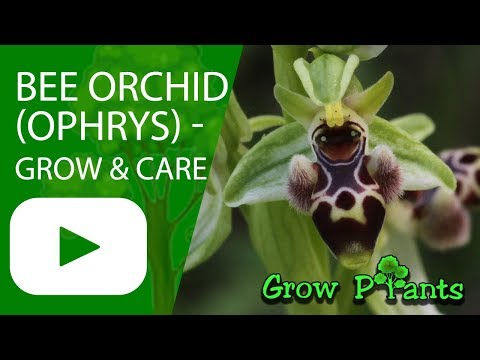
- Flower Characteristics: Small flowers (0.5-4 cm) with green sepals and a fly-like black-brown-purple lip (see the Bloom guide).
Primary Uses & Landscape Value
- Functional & Ornamental Roles: Ornamental flowering orchid and cut flower; a specialist collector’s plant that is difficult to grow outside the wild.
Care Guide: Planting, Soil & Watering
Overview: Bee orchids are terrestrial Mediterranean orchids that grow from underground tubers and thrive in sharply drained, calcareous (chalky, alkaline) soil in full sun to light shade. They need moisture through active growth and flowering, then dry conditions during summer dormancy.
Quick Care Requirements
| Requirement | Ideal Condition |
|---|---|
| Planting Season | In autumn or spring in mild climates; year-round only under controlled cultivation |
| Growth Rate | Slow |
| Soil Type | Sharply drained, calcareous (chalky / limestone) soil |
| Soil pH | Alkaline (calcareous) |
| Water Need | Low to moderate — moist during growth and bloom, dry in summer dormancy |
Planting & Establishment
- Best Planting Season: Plant tubers in autumn or early spring while temperatures are mild; under controlled conditions they can be started at other times.
- How to Plant:
- Hole Preparation: Plant into a free-draining, gritty bed rich in lime; if your soil is heavy, work in grit or coarse sand first.
- Soil Amendments: Incorporate limestone grit or other calcareous material and avoid rich, acidic composts.
- Planting Depth: Set the tuber a few centimetres deep with the growing point facing up.
- Growth Speed & Expectations: Slow-growing and famously difficult to establish outside its native habitat — patience and the right alkaline, well-drained conditions are key.
Soil, Watering & Drainage Care
- Soil Mix & Drainage Needs: A gritty, alkaline mix with very sharp drainage is essential; standing moisture quickly rots the tubers.
- Watering Schedule & Technique:
- Young / Newly Planted: Keep lightly moist as the roots establish in autumn or spring.
- Established: Give moderate water through active growth and flowering.
- Seasonal Adjustments: Withhold water during summer dormancy, keeping the tubers dry and cool, then resume as growth restarts.
Climate, Light & Hardiness
Ophrys insectifera is a mediterranean terrestrial orchid that grows from underground tubers, going dormant through the hot, dry summer and making its active growth during the cooler, wetter part of the year. It prefers full sun to light shade and needs a genuine seasonal cool period, doing best in USDA zone 6–9 climates with a true mediterranean or temperate rainfall pattern.
Quick Climate Specifications
| Climate Zones | Mediterranean, subtropical, and temperate climates with a cool, wet growing season and a dry summer dormancy |
|---|---|
| USDA Hardiness Zones | Zone 6–9 |
| Cold Damage Begins | Hard freezes during the active winter–spring growth and flowering period can damage foliage and flower spikes |
| Frost Tolerance | Moderate for the dormant, below-ground tuber; Low for active winter–spring foliage |
| Light Conditions | Full Sun to Full Shade (with some light) |
Sunlight & Light Exposure
Optimal Light Setup
Full sun to light, dappled shade during its cool-season active growth suits it best, echoing the open grassland and scrubland habitats where wild Ophrys species grow.
Direct Sun Requirement
Good direct light during the autumn-to-spring growing season supports strong flowering; deep, permanent shade reduces bloom.
Shade & Heat Management
During summer dormancy, light shade or shelter from the harshest sun on the dormant planting site can help keep the soil from overheating and drying out too abruptly.
Best Exposure / Orientation
An open, sunny to lightly shaded bed or rock garden that mimics mediterranean scrub or grassland suits it best.
Temperature Extremes & Hardiness
USDA Hardiness & Regional Limits
Winter cold hardiness corresponds to zone 6–9; the plant relies on a genuinely cool, but not severely harsh, winter both for its dormant tuber and to trigger the spring flowering cycle.
Cold Damage & Winter Protection
Hard, prolonged freezes can damage the dormant tuber or emerging winter growth; in the coldest parts of its hardiness range, a loose, dry mulch over the dormant tuber offers some protection.
Frost Sensitivity
Active foliage and flower spikes are more frost-sensitive than the dormant, below-ground tuber.
Extreme Heat Tolerance
The dormant tuber tolerates the dry, hot summer typical of mediterranean climates well, provided the soil is well-drained and not kept wet during this rest period.
Wind, Humidity & Microclimate
Humidity Preferences
Prefers the moderate, seasonally variable humidity of mediterranean and temperate climates rather than constant high humidity.
Rainfall & Seasonal Moisture
Needs a distinctly seasonal rainfall pattern - moist soil during the autumn-to-spring growing season and a dry rest period through summer dormancy; year-round wet conditions or a damp summer favor tuber rot rather than benefiting the plant.
Microclimate Recommendations
A well-drained bed or rock garden that stays naturally drier in summer, such as a sunny slope or a gritty soil pocket, best reproduces its native mediterranean scrub and grassland conditions.
Growing in Pots, Balconies & Indoors
Ophrys (the bee orchids) are hardy, ground-dwelling Mediterranean orchids grown for their extraordinary insect-mimicking flowers. The grower notes they are not houseplants, but they can be grown in containers – often the best way to give these fussy terrestrial orchids the sharp drainage and controlled conditions they need. Indoors, ordinary room light is far too weak and too warm; they want a cool, bright, airy spot and a genuine winter chill to flower.
Quick Details
- Container Size: A small, deep pot (about 2-5 L / 0.5-1.3 gal) – room for the tubers with sharp drainage
- Indoor Suitability: Not a houseplant; best in an unheated greenhouse, cold frame or bright, cool porch
- Best Spot: Full sun to light or part shade; cool and very well ventilated
- Soil & Drainage: Gritty, free-draining, lime-rich mix; must never stay wet
- Watering in Pots: Modest – moist in active growth, nearly dry through the dormant rest; pots must drain freely
Indoors & On the Windowsill
- Not a houseplant: These are terrestrial orchids of open, sunny hillsides, not warm living rooms – central heating, low light and stale air will quickly exhaust them. The grower marks them unsuitable indoors.
- A cool, bright glasshouse instead: If you grow them under cover, use an unheated greenhouse, cold frame or a bright, cool, airy windowsill that stays chilly through the cold season – they need a real cold rest to set flower.
- Dormancy matters: After flowering the plant dies back to an underground tuber and rests through the dry period; keep it barely moist and never bake or waterlog it.
On a Balcony or Patio
- Light & air: A sunny, breezy balcony suits them far better than indoors. Give good airflow and a little shade from the fiercest midday sun in hot climates.
- Reflected heat & drying: Walls and paving throw back heat and pots dry fast – check moisture in growth, then ease right off as the plant goes dormant.
- Overwinter cold, not warm: Unlike tender plants, these need the cold – leave them out to chill (protect only from sodden, freezing wet), as warmth indoors will stop them flowering.
Choosing the Pot, Soil & Long-Term Care
- Pot & drainage: A deep pot with generous drainage holes – terracotta breathes and dries well, which suits these orchids; never leave it standing in a saucer of water, as wet tubers rot.
- Potting mix: A gritty, sharply draining terrestrial-orchid mix – loam or fine bark with plenty of grit and perlite and a little added lime; open and airy, never sodden.
- Feeding: Feed very lightly and only in active growth; potted plants lose nutrients to leaching, but these orchids resent rich feeding, so a weak, occasional dose is plenty.
- Repotting: Refresh the mix about every couple of years while the plant is dormant, handling the delicate tubers with care.
Fertilizing & Feeding
A wild Mediterranean terrestrial orchid that depends on soil fungi and lean, calcareous ground; it wants very little supplemental fertilizer and is easily harmed by rich feeding.
Quick Fertilizing Specs
| Feeding Level | Light – a lean-loving wild orchid |
|---|---|
| Main Nutrient Priority | Lean, balanced nutrition; avoid excess nitrogen |
| Best Feeding Period | The cool, moist growing season, from autumn leaf emergence through spring bloom |
| Reduce/Stop Feeding | Stop entirely once foliage yellows and the plant enters summer dormancy |
| Soil pH | Alkaline, calcareous ground |
| Organic Options | A little well-rotted leaf mould worked into the ground |
| Micronutrients | Not needed on suitable calcareous soil |
Feeding by Growth Stage
Cool-season leaf and tuber growth
Build the leaf rosette and replenish the underground tuber reserves during the cool, moist growing period.
| Nutrient direction | Very dilute, balanced nutrition leaning low in nitrogen. |
|---|---|
| Timing | From autumn leaf emergence through winter. |
| Frequency | Feed sparingly; light feeding is usually enough for this lean-loving orchid. |
| Fertilizer types | A very weak, balanced liquid feed, A little well-rotted leaf mould worked into the surface |
| Precautions | Keep feeding minimal; rich or high-nitrogen fertilizer harms the roots and their fungal partners. |
Spring flowering
Support the flower spike as the plant blooms.
| Nutrient direction | Light, balanced nutrition; no bloom booster required. |
|---|---|
| Timing | Spring, as flower spikes rise. |
| Frequency | A light feed while spikes develop is plenty. |
| Fertilizer types | A dilute, balanced liquid feed |
| Precautions | Avoid high-phosphorus bloom products; balanced feeding and good light drive flowering. |
Summer dormancy
The foliage dies back and the tuber rests dry through the summer.
| Nutrient direction | None – withhold fertilizer during dormancy. |
|---|---|
| Timing | Summer, after the foliage dies down. |
| Frequency | No feeding at this stage. |
| Fertilizer types | No feeding while the plant is dormant. |
| Precautions | Do not fertilize the dormant tuber; keep it lean and on the dry side. |
Nutrient Deficiency Signs & Corrections
Overall pale, weak foliage and sluggish growth.
| Possible causes | A genuinely nutrient-poor medium, Insufficient light limiting growth, Poor root or mycorrhizal health from an unsuitable medium |
|---|---|
| Appears first on | The whole rosette, older leaves first. |
| What to check | Light levels, Medium suitability and drainage, Whether the roots and tuber are healthy |
| Possible correction | Improve light and the growing medium first; only if truly needed, apply a very dilute balanced feed. |
Brown, scorched leaf tips and margins.
| Possible causes | Fertilizer salt build-up from over-feeding, Hard or salty water, Sharp drying at the roots |
|---|---|
| Appears first on | Leaf tips and margins. |
| What to check | Recent feeding strength, Water quality, How consistent soil moisture is |
| Possible correction | Flush the soil with clean water, cut back feeding, and switch to softer water. |
Yellowing between the veins on the newest leaves.
| Possible causes | Iron becoming unavailable when the medium stays too wet or waterlogged, Root damage limiting uptake, Occasionally a manganese shortage |
|---|---|
| Appears first on | The newest leaves. |
| What to check | Drainage and how wet the medium stays, Root health |
| Possible correction | Correct drainage first; if it persists, a chelated iron product applied per its label can green up new growth. |
Pruning, Training & Seasonal Maintenance
Ophrys insectifera, whose flower mimics a fly to attract male bees and wasps, is a small terrestrial, tuberous-rooted orchid with no woody framework to prune. Hardy to roughly zone 6–9, it forms a leaf rosette over the cooler months, flowers in spring, then dies back completely to its underground tuber for summer dormancy – the only cutting it ever needs is removing the spent flower stem after bloom and clearing old leaves once they have fully dried, generally by mid-summer.
Quick Pruning & Maintenance Specs
| Pruning Tolerance | Very Low (herbaceous geophyte; no structural pruning applies) |
| Primary Pruning Window | Mid-summer, once foliage has died back naturally |
| Secondary Maintenance Window | Just after flowering (spent stem removal) |
| Typical Frequency | 1–2 light passes per growing cycle |
| Main Objective | Sanitation and dormancy tidy only |
| Young Plant Priority | Leave undisturbed while the tuber establishes |
| Mature Plant Priority | Same light tidy; divide offsets only while dormant |
| Best Tool Type | Precision snips or clean fingers |
| Avoid Heavy Pruning During | Active growth, flowering, and while leaves are green |
Pruning by Plant Age & Size
Newly Established
In the first season, remove only visibly rotted or damaged tissue and otherwise let the tuber establish undisturbed.
Young / Formative
No structural training fits a 10–50 cm rosette geophyte; the only formative step is spacing so young rosettes aren’t crowded or shaded.
Mature / Established
Established plants need only the seasonal tidy below; congested colonies are thinned by dividing offset tubers in dormancy, not by trimming leaves.
Seasonal Pruning Schedule
Post-Flowering
Objective: tidy the finished bloom, once the insect-mimicking flowers have done their job attracting pollinators. Cut the flower stem at its base once petals fade, leaving every leaf untouched; no flowering impact, since the season’s bloom is already spent.
Ongoing Sanitary / Summer Dormancy
Objective: clear dead material as dormancy sets in. Remove leaves only once fully yellow, brown and dry and they lift away easily; leave green tissue and don’t disturb the buried tuber, since early leaf loss reduces reserves for next year’s flower.
Special Growth to Remove
- Spent flower stems: cut at the base after bloom.
- Old, fully dried leaves: remove at ground level once loose; leave anything green.
- Offset tubers: lift and divide congested clumps while fully dormant – a more dependable increase route than seed given how demanding this genus is outside the wild.
Container & Small-Space Pruning
Grown outdoors in pots rather than indoors, container culture needs the same minimal tidy, with even less tolerance for premature leaf removal since a potted tuber has no spare soil reserve. Keep dormant pots dry, matching its preference for well-drained, calcareous soil.
Tools
Precision snips or clean fingertips handle every task on a plant this size – nipping the spent flower stem and lifting dried leaves. No larger cutting tool is ever appropriate.
Tool Hygiene & Disease Risk
Routine hygiene (clean, sharp snips) is sufficient; aphids are the only recorded pest, not a tool-spread disease, so disinfection between cuts is unnecessary.
Cut Placement & Technique
Cut the spent flower stem cleanly at its base above the rosette. Only take a leaf once it lifts away with light pressure; resistance means leave it.
Heavy Pruning & Rejuvenation
Not applicable – the plant already resets by dying back fully to the tuber each year, so no hard pruning is needed or tolerated.
Post-Pruning Care
Keep the dormant bed or pot dry after the summer tidy rather than watering or feeding; excess summer moisture around a leafless tuber risks rot in a genus already difficult outside the wild.
Common Pruning Mistakes
- Cutting green leaves for tidiness, which starves the tuber and weakens next year’s flowering.
- Digging or disturbing the bed in summer when the leafless tuber is invisible.
- Removing the slender flower spike before its wasp and bee pollinators have had a season to visit, if seed-set is a goal.
When NOT to Prune
Never cut green, actively growing foliage, and never cut during flowering. Leave the ground undisturbed through summer dormancy while the tuber is present but hidden.
Recommended Tools (by task)
- Task: Removing the spent flower stem after bloom – Size: slender herbaceous stem, under 1 cm – Tool: precision_snips – a fine, clean cut is all this stem needs.
Propagation Guide
Propagated in cultivation mainly by tuber division during dormancy - separate healthy tubers and replant with the growing point just below the soil surface. Seed propagation is possible but impractical outside a lab: orchid seed has no food reserves and will not germinate without the presence of a compatible mycorrhizal fungus, so home seed-raising is generally not viable.
Bloom & Flower Guide
Quick Details
- Bloom Season: Spring to summer (winter to spring in hot climates)
- Flower Appearance: Small flowers that mimic an insect – green sepals framing a velvety black-brown to purple ‘body’
- Edibility: Ornamental – a wild orchid, not eaten
Detailed Blooming Overview
The fly orchid is one of nature’s great mimics. Its small flowers imitate a female insect so convincingly – in look and scent – that male digger wasps try to mate with them and carry pollen from bloom to bloom, a trick called pseudocopulation. The flowers are spaced along a loose upright stem; some plants also self-pollinate.
Flower Characteristics
- Small flowers, roughly 0.5-4 cm, spaced along an upright stem (inflorescence)
- Three green sepals frame a velvety ‘body’ (lip) in black-brown to purple that resembles an insect
Bloom Care & Thinning
- Pollination: Chiefly by male wasps deceived into visiting; some flowers also set seed by self-pollination.
- A wild species: Best enjoyed in place – these terrestrial orchids resent disturbance.
Fruit & Uses
The Fly Orchid is grown for its unusual insect-mimicking flowers, not as food; its only edible part on record is the underground tuber, historically usable, like other terrestrial orchid tubers, as a source of salep. This is a historical/folk use, not a practical food source – the plant is naturally scattered and slow-growing, and should be left undisturbed.
Quick Edible Specs
| Edible Parts | Underground tuber (tuberoid) |
|---|---|
| Main Use(s) | Historical/traditional – dried, ground into salep powder for a hot drink or as a thickener |
| Eaten Raw or Cooked | Never raw – must be boiled/processed |
| Preparation Required | Boil to deactivate enzymes, then dry and grind into flour |
| Harvest Season | Traditionally after flowering, as the plant dies back |
| Storage | Only the dried, ground powder stores well |
| Safety/Toxicity Caveat | Not toxic, but this species is scarce and slow to establish in much of its range – do not dig up wild plants |
Roots & Tubers
Ophrys insectifera carries a small underground tuber typical of the genus. Reference sources on useful plants list its root as a historical salep source: traditionally lifted after flowering, boiled to inactivate enzymes and remove bitterness, then dried and ground into the fine starchy powder once used for a nourishing hot drink. In practice the tuber is tiny, the plant is uncommon through much of its northern range, and taking it kills that individual – this is orchid folklore worth knowing, not a food source to act on.
Preparation, Uses & Safety
Traditional preparation always involved boiling before drying and grinding into flour – the raw tuber is not eaten. No specific medicinal claims are attached to this species beyond salep’s general folk reputation. The clear caution is conservation: the Fly Orchid is patchily distributed and slow-growing, several populations are protected, and digging wild tubers for food is not recommended.
Pests, Diseases & Troubleshooting
Overview: Bee and spider orchids are hardy terrestrial Mediterranean orchids that grow from underground tubers, leafing out in the cool wet season and dying back to dormant tubers through the hot dry summer. In the wild they are largely pest-free; in cultivation their dangers are almost all cultural – above all tuber and basal rot from moisture while dormant – with slugs and aphids the main animal pests. They also depend on soil mycorrhizal fungi, which makes them demanding to grow well. Manage them by mimicking their climate: sharp drainage, a dry summer rest, and cool airy winter growth.
Quick Troubleshooting Overview
| Issue / Pest | Main Symptom | Primary Solution |
|---|---|---|
| Tuber / basal rot | Soft, rotting tuber; plant fails to reappear | Dry summer rest, gritty free-draining mix |
| Slugs & snails | Grazed leaf rosettes, flower spikes and buds | Night patrols, iron-phosphate bait, barriers |
| Aphids | Colonies on flower spikes and buds | Rinse/soap spray, encourage beneficials |
| Vine weevil | Notched leaves; grubs eat tubers/roots | Check compost, nematode drench, remove grubs |
| Botrytis (grey mould) | Grey fuzzy rot on leaves/flowers in damp cool air | Airflow, remove affected tissue, avoid wet foliage |
| Failure to re-emerge | No growth after dormancy | Correct summer watering, mycorrhiza, drainage |
Common Pests & Management
- Slugs & snails (Deroceras / Cornu spp.):
- Symptoms: The most damaging animal pest – the soft leaf rosettes, emerging flower spikes and buds are grazed overnight, with slime trails; a single night can ruin a season’s bloom.
- Prevention & Control: Vigilant night patrols from the moment growth emerges, iron-phosphate bait, beer traps, and grit or copper barriers around pots and colonies. Keep surrounding debris clear.
- Aphids (Aphis / Myzus spp.):
- Symptoms: Green or black colonies on the developing flower spikes and buds, deforming blooms and leaving sticky honeydew; they can also transmit orchid viruses.
- Prevention & Control: Rinse off gently, encourage ladybirds and hoverflies, and use a mild insecticidal soap on spikes if needed – treating gently to protect the flowers.
- Vine weevil (Otiorhynchus sulcatus):
- Symptoms: Adults notch leaf margins at night; far worse, the white C-shaped larvae in the compost devour roots and hollow out the precious tubers, killing potted plants unseen.
- Prevention & Control: Inspect compost at repotting and crush grubs; drench with entomopathogenic nematodes (Steinernema/Heterorhabditis) in warm soil, and use fresh sterile mix for pot culture.
- Spider mites & thrips:
- Symptoms: Fine stippling on leaves in warm dry conditions (mites); silvery flecking and spotting on petals (thrips), mainly under glass.
- Prevention & Control: Keep cool and airy with adequate humidity; rinse foliage and use blue sticky traps for thrips. Rarely a problem on plants grown hard and cool.
Diseases & Fungal Issues
- Tuber & basal rot (Fusarium / Sclerotium / Pythium spp.):
- Symptoms: The number-one killer – the dormant or active tuber turns soft, brown and mushy and the plant fails to grow or collapses at the base. Driven by moisture and warmth during the summer dormancy.
- Treatment & Management: Prevention is the only reliable route: keep tubers dry and airy through their summer rest, grow in a very free-draining gritty medium, never bury the tuber too deep, and avoid overhead watering. Discard rotten tubers; dust cut/healthy ones with sulfur or cinnamon.
- Grey mould (Botrytis cinerea):
- Symptoms: Fuzzy grey mould and water-soaked rot on leaves and flowers in cool, damp, still winter-growing conditions.
- Treatment & Management: Improve ventilation, keep water off the foliage, remove faded flowers and dead leaves promptly, and avoid overcrowding under glass.
- Rust & fungal leaf spot (Puccinia / Cercospora spp.):
- Symptoms: Orange pustules (rust) or brown spots on the leaves in humid, poorly ventilated conditions.
- Treatment & Management: Remove affected leaves, improve airflow, and avoid wetting the foliage; sulfur checks rust if it persists.
- Orchid viruses (CymMV, ORSV and others):
- Symptoms: Mottling, chlorotic streaks and distorted growth that never recovers.
- Treatment & Management: Incurable – control aphids that spread it, use clean tools, and isolate or discard confirmed plants.
Growing Difficulties & Abiotic Problems
- Rot from summer watering during dormancy:
- Cause & Symptoms: The classic cultivation failure – watering or damp soil while the tuber is resting in the warm season causes it to rot away, so it never re-emerges.
- Correction Strategy: Enforce a warm, dry summer dormancy; withhold water once the leaves die back and store pots dry until cooler weather returns.
- Dependence on mycorrhizal fungi:
- Cause & Symptoms: These orchids partner with specific soil fungi; without them, seedlings and even mature plants weaken and dwindle – a key reason they are hard to establish and often decline after transplanting.
- Correction Strategy: Grow in undisturbed, appropriate soil, avoid fungicide-drenching the root zone, and disturb established colonies as little as possible; do not dig wild plants, which rarely survive the move.
- Failure to re-emerge / dormancy skipping:
- Cause & Symptoms: A plant may simply not reappear after summer due to rot, exhaustion, or wrong conditions rather than being dead.
- Correction Strategy: Provide a cool, moist growing season and a dry rest, lean soil and good light; be patient, as tubers can sit out a poor season.
- Sun scorch / heat stress on leaves:
- Cause & Symptoms: The winter-green rosettes scorch and brown if hit by strong late-season sun and heat.
- Correction Strategy: Grow cool and bright through the wet season and let the plant die back naturally as heat rises, rather than trying to keep it in leaf.
Species note: The fly orchid grows in cooler, semi-shaded woodland edges and calcareous fens, so it tolerates a little more moisture than dry-ground species but still rots if waterlogged; notably tricky in cultivation and highly mycorrhiza-dependent.
What Helps — Products & Tools
Very little chemistry is wanted here: iron-phosphate slug bait, beer traps and copper barriers for the main pest, a mild insecticidal soap for aphids on spikes, and entomopathogenic nematodes for vine-weevil grubs in pots. Sulfur or cinnamon dusts protect tubers and check rust/Botrytis, but the real “tools” are cultural – gritty free-draining soil, a dry summer rest, cool airy winter growth and undisturbed mycorrhizal soil.