


Plant Profile & Key Characteristics
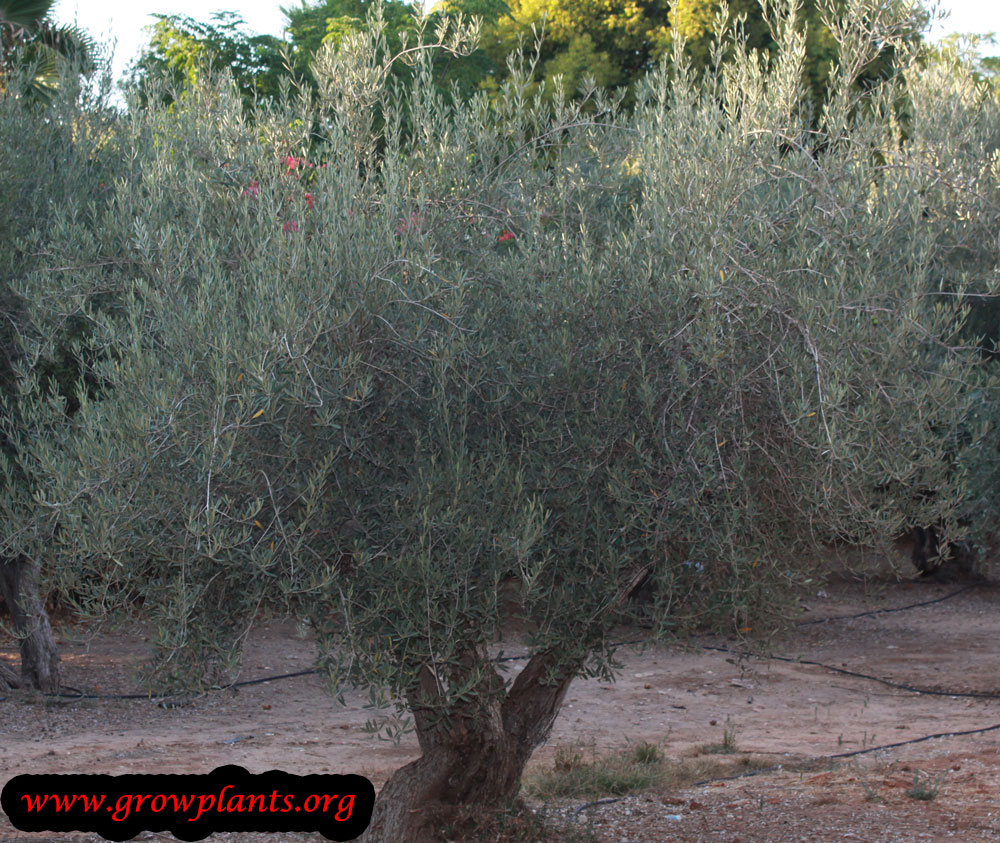
Overview: The olive (Olea europaea) is a long-lived evergreen tree reaching about 5-15 m (16-50 ft). It is a perennial grown both for its edible fruit (table olives and oil) and as an ornamental for its characteristic gnarled, silvery trunk.
Quick Specifications
| Specification | Attribute |
|---|---|
| Plant Type / Life Cycle | Perennial |
| Foliage Type | Evergreen |
| Mature Size | 5-15 m (16-50 ft) tall |
| Growth Rate | Slow to moderate |
| Root System | Shallow, wide-spreading |
| Toxicity | Non-toxic; fruit edible after processing (bitter raw) |
| Hardiness | USDA zones 8-11 |
Growth Form & Structure
- Height & Spread: 5-15 m (16-50 ft) tall in the ground; young trees can also be grown in large containers.
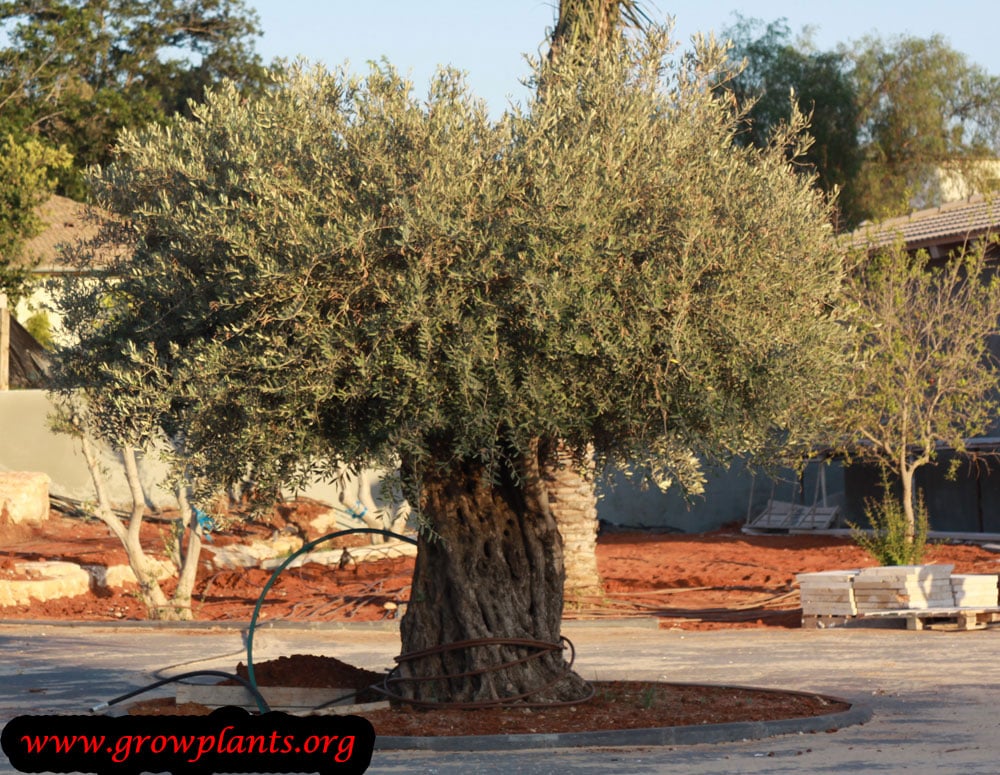
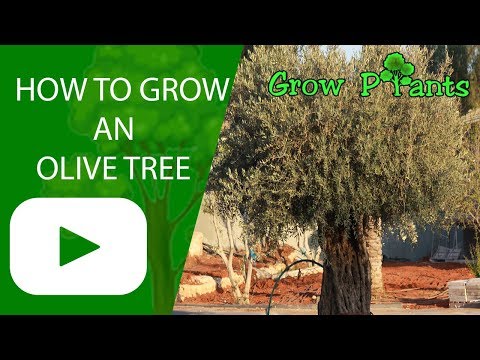
- Growth Habit & Form: Slow-growing tree with a broad, densely branched canopy and a thick, gnarled trunk.
- Lifespan & Maturity: Very long-lived; grows slowly and typically begins bearing fruit within 2-5 years.
Anatomy & Physical Features
- Trunk & Bark: Thick, gnarled and characterful trunk, prized for ornamental value in mature specimens.
- Leaves & Foliage: Small, oval leaves, green above and silvery beneath.
- Flower Characteristics: Small yellow-green flowers borne in clusters (see the Bloom guide).
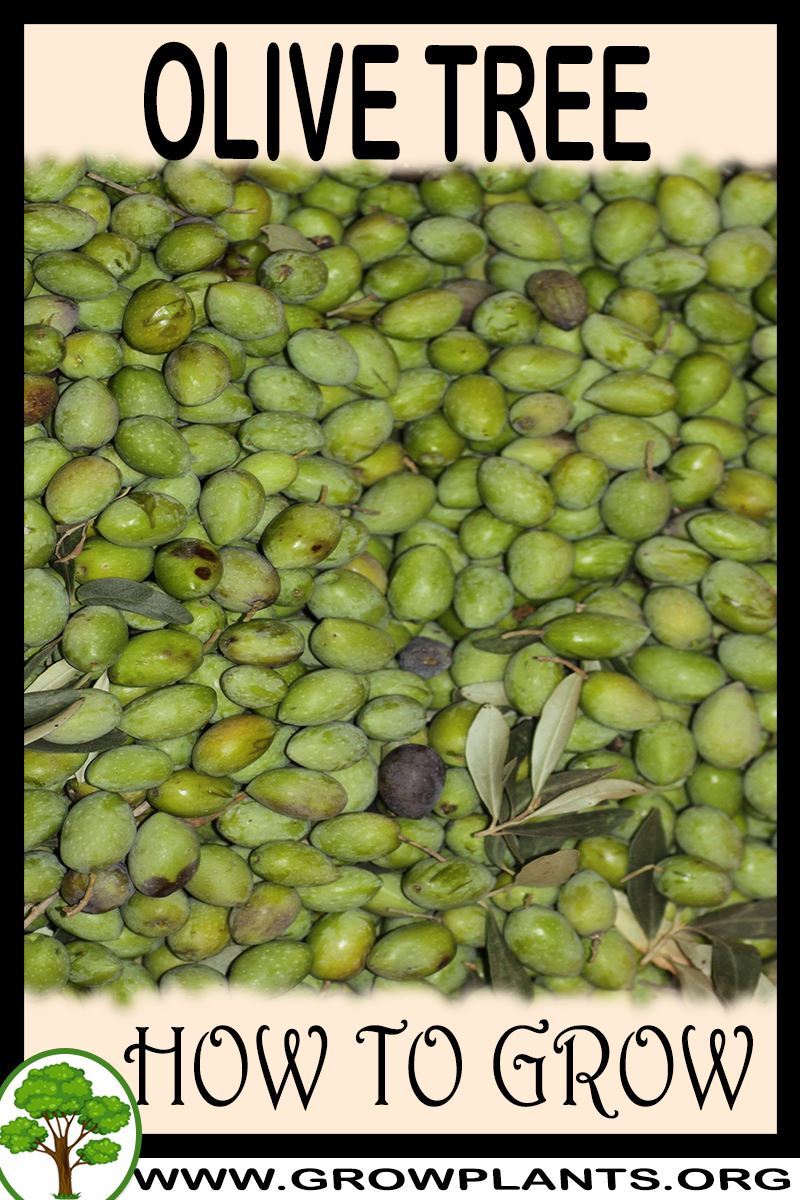
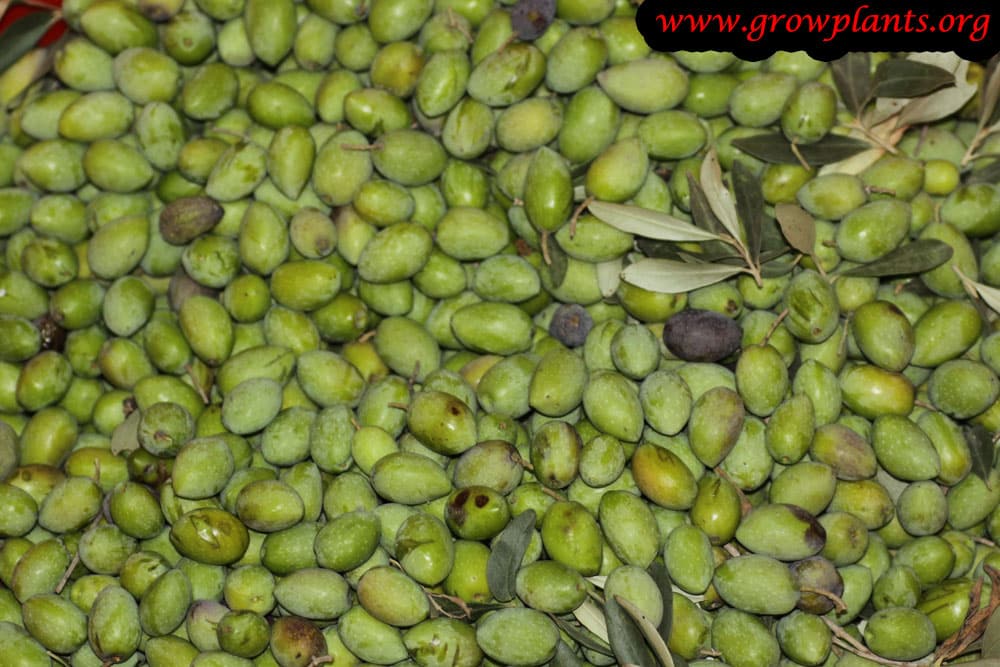
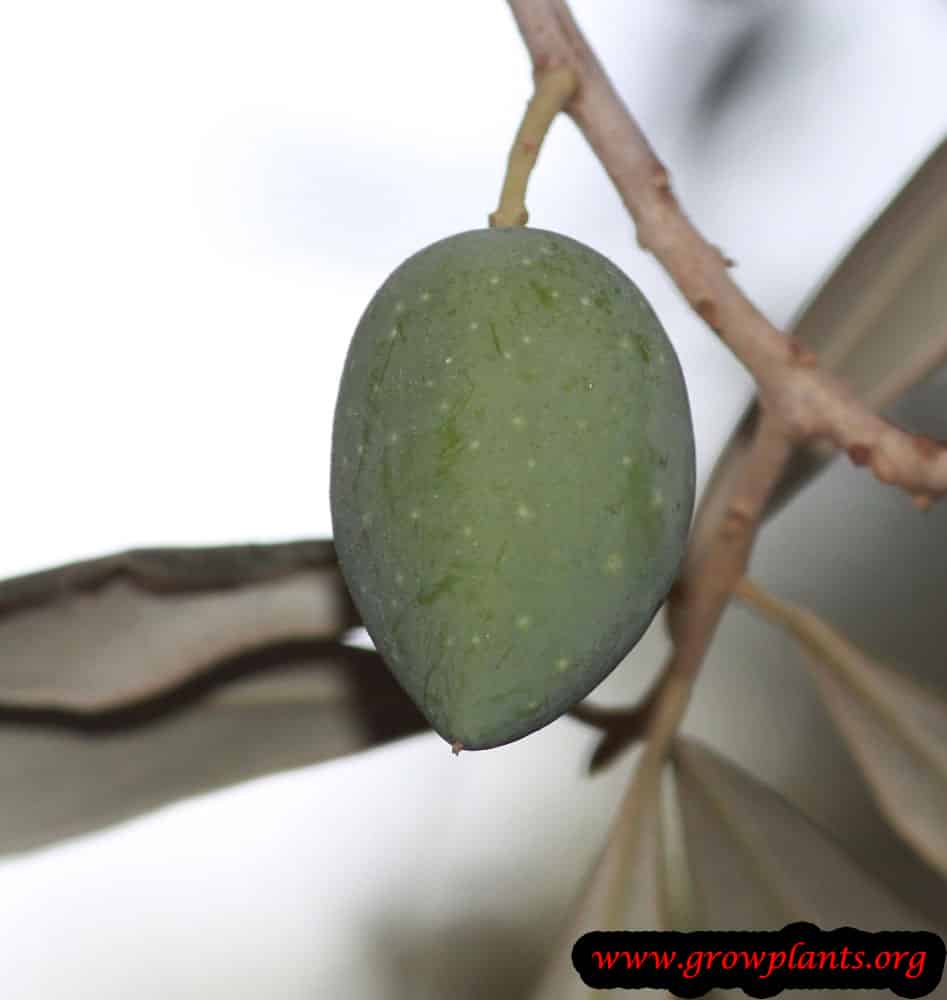
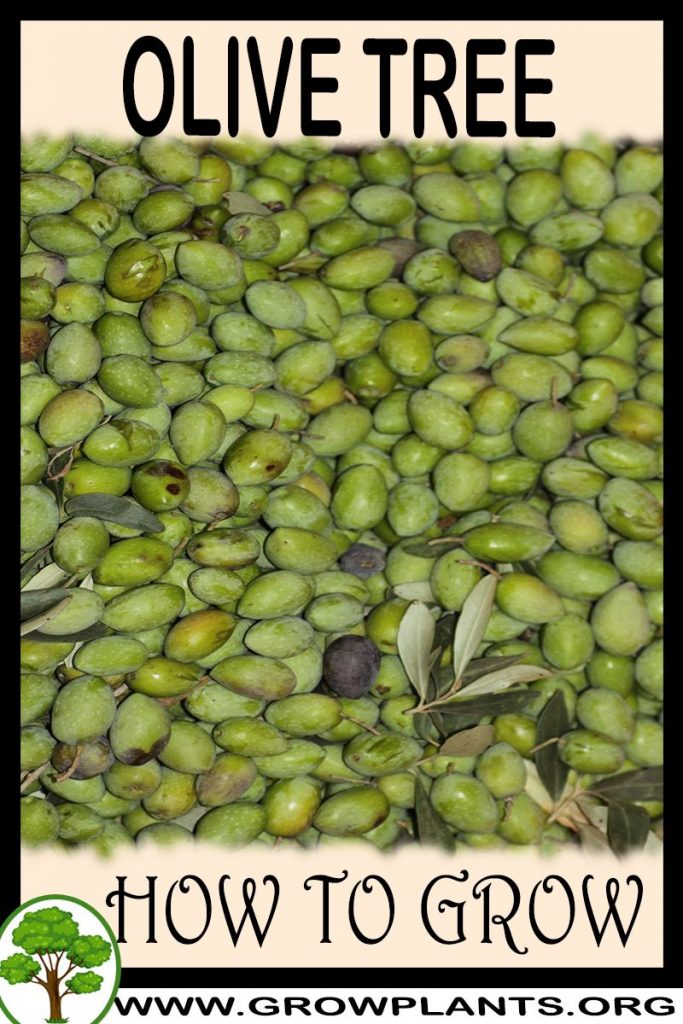
- Fruit Profile: Olive drupes ripen from green to black-purple; bitter raw and eaten after curing as table olives or pressed for oil (see the Fruit guide).
Primary Uses & Landscape Value
- Edible Uses: Fruit cured into table olives or pressed into olive oil; bitter and not eaten raw.
- Functional & Ornamental Roles: Fruit / oil crop and ornamental specimen tree valued for its silvery foliage and sculptural trunk.
Care Guide: Planting, Soil & Watering
Overview: The olive is a tough Mediterranean evergreen tree that thrives in full sun and free-draining soil, tolerating drought, heat and poor, stony ground once established. It is hardy to around -8°C and grows at a slow to moderate pace.
Quick Care Requirements
| Requirement | Ideal Condition |
|---|---|
| Planting Season | In spring through autumn once frost has passed (year-round in frost-free zones) |
| Growth Rate | Slow to moderate |
| Soil Type | Well-drained soil; tolerates poor, stony or sandy ground |
| Water Need | Low — very drought tolerant; water deeply but infrequently |
Planting & Establishment
- Best Planting Season: Plant from spring through autumn once the danger of frost has passed; in frost-free climates it can also be planted in winter.
- How to Plant:
- Hole Preparation: Dig a hole about twice the width of the root ball and the same depth.
- Soil Amendments: Ensure sharp drainage — add grit to heavy soil and avoid overly rich ground.
- Planting Depth: Set the root collar at ground level and do not bury the trunk.
- Growth Speed & Expectations: Slow to moderate; expect patient, steady growth into a long-lived, characterful tree.
Soil, Watering & Drainage Care
- Soil Mix & Drainage Needs: Sharp drainage is essential — olives dislike waterlogged roots and thrive even in lean, stony soils.
- Watering Schedule & Technique:
- Young / Newly Planted: Water regularly through the first couple of years to establish a strong root system.
- Established: Switch to deep, infrequent watering; mature trees are highly drought tolerant.
- Seasonal Adjustments: Water more in summer heat and very little in winter.
Climate, Light & Hardiness
Olive is a classic Mediterranean evergreen tree that thrives in full sun with hot, dry summers and mild winters. It is one of the hardier subtropical trees - the site data lists hardiness zones 8–11 and tolerance below about −8°C (18°F) - and it is well suited to coastal, windy sites.
Quick Climate Specifications
| Climate Zones | Mediterranean, subtropical, mild temperate |
|---|---|
| USDA Hardiness Zones | Approximately 8–11 |
| Optimal Temp Range | ~15–30°C (59–86°F) |
| Cold Damage Begins | Foliage and young wood around −5 to −7°C (23–19°F) |
| Approx. Survival Minimum | Established trees near −8 to −10°C (18–14°F); varies by cultivar |
| Frost Tolerance | Moderate |
| Light Conditions | Full sun |
| Wind Tolerance | High |
| Salt / Coastal Tolerance | High |
Sunlight & Light Exposure
Optimal Light Setup
Full sun is essential for strong growth, flowering, and fruit ripening. Olives fruit poorly in shade.
Best Exposure / Orientation
An open, sunny aspect with good air movement suits it well and helps ripen a crop.
Temperature Extremes & Hardiness
USDA Hardiness & Regional Limits
Grown outdoors roughly from zone 8 to 11. Cold tolerance varies by cultivar; hard, prolonged freezes below its limit damage foliage and wood, while fruit is more cold-sensitive than the tree.
Cold Damage & Winter Protection
Mature trees generally tolerate short frosts to around −8 to −10°C (18–14°F), but young trees are more tender and benefit from protection in their first winters.
Extreme Heat Tolerance
Excellent - olive is adapted to long, hot, dry summers.
Chilling Requirement
Olive is not a chill-hour deciduous fruit, but it does need a cool winter period to flower well; in climates with very mild, warm winters flowering and fruit set can be reduced. This is a cool-winter response, not a precise chill-hour count.
Wind, Humidity & Microclimate
Dry-Air Tolerance
Very good; olive is well adapted to low humidity and dry heat.
Wind Tolerance
High - the tough, flexible canopy stands up to wind, making it a good choice for exposed sites.
Coastal / Salt Tolerance
High tolerance of coastal salt spray, one reason it is a staple of seaside Mediterranean plantings. (Tolerance of salt spray is distinct from tolerance of saline soil or irrigation water.)
Growing in Pots, Balconies & Indoors
The olive (Olea europaea) is a long-lived tree that reaches 5-15 m in the ground, but it is one of the classic large pot plants: kept in a tub and lightly clipped, it makes a beautiful, drought-tough evergreen for a hot, sunny balcony, patio or terrace for many years. It is not a houseplant – it needs full sun outdoors.
Quick Details
- Container Size: Large tub, 30-50 L or more, sized up as the tree grows
- Indoor Suitability: Not a houseplant; a bright, cool sunroom at most – it needs full sun
- Best Spot: Full sun, outdoors – the hotter and brighter the better
- Soil & Drainage: Free-draining, gritty mix; it dislikes wet, heavy soil
- Watering in Pots: Water sparingly but deeply; let the top of the mix dry between waterings
Indoors & On the Windowsill
- Houseplant limits: The grower marks it as not an indoor plant – indoor light is far too weak, and a warm room in winter denies it the cool rest it needs.
- Windowsill / cool room: At most, a young potted olive can spend cold spells in a bright, cool, frost-free sunroom or by the sunniest window, then go straight back outside in spring.
- Overwintering: In climates too cold for it outdoors, growing in a pot lets you move the tree into a bright, frost-free but unheated space over winter.
On a Balcony or Patio
- Light & wind: Give it the hottest, sunniest, airiest spot you have – it thrives on the fast-drying conditions of a sunny balcony. Reflected heat from walls and railings suits it, but check the pot in the peak of summer so it never bakes bone dry for long.
- Practicalities: Make sure the filled pot’s weight is safe for the balcony and that water drains away freely rather than sitting in the base.
Choosing the Pot, Soil & Long-Term Care
- Pot & drainage: A large, heavy-based tub with strong drainage holes; never leave it in a saucer of water. Terracotta suits it, breathing and drying faster than plastic.
- Potting mix: A gritty, free-draining mix – potting soil with added perlite, grit or coarse sand.
- Feeding: Feed lightly through the growing season; potted trees leach nutrients faster than those in the ground, but olives dislike being overfed.
- Repotting: Pot up or refresh the top of the mix every couple of years, trimming the roots and shaping the head to keep it in scale with the tub.
Growing this plant in a greenhouse
A greenhouse can give olive tree protection from rain.
Greenhouse at a glance
| Greenhouse suitability | Conditional - depends on your climate |
|---|---|
| Main benefits | protection from rain |
| Season extension | earlier spring & later autumn |
| Outdoor protection advisable below | about -7°C |
| Suitable types | heated greenhouse, glass greenhouse, polycarbonate greenhouse |
| Heating | No added heat is normally needed. |
Related greenhouse guides
- Greenhouses: How to Choose the Right Greenhouse
- Best Greenhouse Heaters
- Greenhouse Climate Control: Temperature, Ventilation and Humidity
- Polycarbonate Greenhouses: What to Look for Before Buying
Fertilizing & Feeding
A moderate feeder: olives do well with steady, moderate feeding through the growing season, leaning on nitrogen while young and on balanced feeding with adequate potassium once bearing.
Quick Fertilizing Specs
| Feeding Level | Moderate feeder |
|---|---|
| young_feeding | Lean toward nitrogen to build the young framework |
| mature_feeding | Balanced feeding with adequate potassium through flowering and fruiting |
| Main Nutrient Priority | Nitrogen while young; balanced feeding with adequate potassium once bearing |
| Best Feeding Period | From late winter or early spring through the active growing season |
| Organic Options | Compost and mulch over the root zone |
| Micronutrients | A complete fruit-tree fertilizer usually supplies iron, manganese, and zinc; correct boron only if a test confirms a need |
| Soil pH | Tolerates a wide range and does well in well-drained, near-neutral to slightly alkaline soil |
Feeding by Growth Stage
Newly planted
Help a young tree establish roots without forcing heavy top growth.
| Nutrient direction | A gentle balanced feeding to support establishment. |
|---|---|
| Timing | In the first growing season after planting, once new growth appears. |
| Frequency | A light feeding early in the growing season. |
| Fertilizer types | A balanced complete fertilizer, Compost and mulch over the root zone |
| Precautions | Keep feeding light near a new tree and keep fertilizer off the trunk. |
Young, non-bearing tree
Build a strong canopy and framework in the years before cropping.
| Nutrient direction | A nitrogen-forward complete fertilizer to drive steady structural growth. |
|---|---|
| Timing | Through the active growing season in the young years. |
| Frequency | Light feeding early in and through the growing season. |
| Fertilizer types | A nitrogen-forward complete fertilizer, Compost as a top-dressing |
| Routine trace nutrients | iron, manganese, zinc |
| Precautions | Avoid heavy late-season nitrogen, which pushes soft growth vulnerable to cold. |
Established, coming into bearing
Maintain healthy growth as the tree transitions toward cropping.
| Nutrient direction | A balanced complete fertilizer to keep the tree in steady, even condition. |
|---|---|
| Timing | Through the active growing season. |
| Frequency | Moderate feeding through the growing season. |
| Fertilizer types | A balanced complete fertilizer, Compost and mulch over the root zone |
| Routine trace nutrients | iron, manganese, zinc |
| Precautions | Keep feeding even; big swings in nutrition and water can worsen alternate bearing. |
Mature, bearing tree
Support flowering, fruit set, and a steady olive crop.
| Nutrient direction | A balanced complete fertilizer with adequate potassium to carry flowering and fruiting. |
|---|---|
| Timing | From late winter or early spring through the fruiting season. |
| Frequency | Moderate feeding through the growing and fruiting season. |
| Fertilizer types | A balanced complete fertilizer with adequate potassium, Compost and mulch over the root zone |
| Routine trace nutrients | iron, manganese, zinc |
| Precautions | Keep water and feeding even through fruiting; erratic supply worsens alternate bearing and fruit drop. |
Nutrient Deficiency Signs & Corrections
Older, lower leaves fade to pale green or uniform yellow and overall growth slows.
| Possible causes | low available soil nitrogen, nitrogen lost to leaching from heavy watering or rain, thin soil low in organic matter |
|---|---|
| Appears first on | older, lower leaves |
| What to check | recent feeding history, soil organic matter, watering and drainage |
| Possible correction | Apply a nitrogen-containing complete fertilizer and build soil organic matter, then water evenly. |
Interveinal yellowing on the youngest leaves while the veins themselves stay green.
| Possible causes | iron made unavailable in alkaline soil, waterlogged or poorly drained roots, cold, wet soil limiting uptake |
|---|---|
| Appears first on | the youngest leaves |
| What to check | soil pH and drainage, recent watering, root health |
| Possible correction | Correct soil pH and drainage and apply a chelated iron product per its label. |
Older leaf margins yellow and then scorch and brown.
| Possible causes | low soil potassium, excess nitrogen unbalancing the feeding, sandy soil prone to leaching |
|---|---|
| Appears first on | older leaf margins |
| What to check | balance of recent feeding, soil texture and leaching, overall plant vigor |
| Possible correction | Use a complete fertilizer that supplies adequate potassium and avoid overloading nitrogen. |
Poor fruit set, distorted young growth, or dieback of shoot tips.
| Possible causes | low soil boron, dry soil limiting boron uptake, over-liming that raises pH and locks up boron |
|---|---|
| Appears first on | shoot tips and developing fruit |
| What to check | a soil or tissue test before acting, soil moisture in the root zone, recent liming history |
| Possible correction | Confirm with a soil or tissue test first, because the margin between too little and too much boron is very narrow, then correct only if the test calls for it. |
Pruning, Training & Seasonal Maintenance
The olive tree tolerates moderate to fairly hard pruning and, unusually for a fruit tree, can even go several years between major cuts and still recover well when finally cut back to its main branches. The main objectives are managing the tree’s natural tendency to bear heavily every second year (biennial/alternate bearing), keeping the canopy open enough for fruit to develop throughout, and controlling the eventual size of a tree that can otherwise reach 5–15 m. Winter is the safest and most effective pruning window, once the risk of hard frost has passed and before spring growth begins; pruning directly affects next year’s crop because olives fruit on the previous season’s shoot growth, so how much and when you cut changes how much wood is available to flower the following spring.
Quick Pruning & Maintenance Specs
| Pruning Tolerance | Moderate to High (including periodic hard renewal) |
| Primary Pruning Window | Winter, after main frost risk has passed |
| Secondary Maintenance Window | Light sucker/watersprout removal through the growing season |
| Typical Frequency | Light annual pruning is best; some trees are left several years between cuts |
| Main Objective | Open canopy, manage alternate bearing, control size |
| Young Plant Priority | Establish an open scaffold; thin early flower clusters in the first couple of years |
| Mature Plant Priority | Maintain canopy openness; periodic renewal if growth has become dense or unproductive |
| Best Tool Type | Bypass secateurs and loppers for routine cuts; pruning saw for scaffold renewal |
| Avoid Heavy Pruning During | Wet weather, and ahead of any late hard frost (tree is only reliably hardy to about –8°C) |
Pruning by Plant Age & Size
Newly Established
In the first year or two, prune minimally — remove only damaged growth while the young tree builds its root system, but thin the earliest flower clusters, since directing a young tree’s energy into establishing structure rather than an early heavy fruit set is recommended in its first two years.
Young / Formative
Train to an open-center (vase) framework of a few well-spaced main scaffold branches; this is the structure that keeps light and air reaching the fruiting wood as the tree matures, and it also keeps the canopy at a manageable height for hand harvesting later.
Mature / Established
On a bearing tree, the priority is thinning crossing and overly dense growth each winter to keep light reaching the interior, and watching for a tree that has become congested or has settled into a strongly alternate-bearing pattern, which periodic renewal back to the main branches can help correct.
Seasonal Pruning Schedule
| Stage | Objective | Remove | Do Not Remove | Response / Impact |
| Dormant / Winter | Main structural and thinning cuts | Crossing/inward growth, excess density, damaged wood | Healthy one-year-old shoots — next year’s fruiting wood | Opens the canopy for the coming bloom; heavy cuts reduce next season’s flowering wood |
| Post-Harvest (autumn) | Clean-up and light corrective cuts after fruit is picked | Damaged, diseased or dead wood found during harvest | Framework branches | Tidies the tree ahead of the winter structural prune |
Flowering & Fruiting Wood
Olives flower and fruit on shoots that grew the previous season, not on old wood or new spring growth — so removing too much one-year-old wood in winter directly reduces that year’s crop, while leaving too much unthinned wood contributes to the tree’s tendency to crop heavily one year and lightly the next. Moderate, even annual thinning of one-year-old shoots (rather than either no pruning or a single severe cut) is the main lever growers have to smooth out this alternate-bearing pattern.
Structural Pruning & Training
Keep the open-center vase form by removing branches that cross, rub or grow back into the canopy’s interior. Canopy thinning genuinely helps this tree — it improves light penetration to fruiting wood throughout the canopy rather than just at the surface, which supports more even fruit set. Renewal pruning (cutting back to the main branches every several years) is tolerated well and is a known way to rejuvenate an old or neglected tree, though it comes at the cost of little to no crop for a season or two while the canopy rebuilds.
Special Growth to Remove
- Rootstock suckers below the graft union on grafted trees
- Basal suckers arising from the trunk base
- Watersprouts — vigorous upright shoots that commonly follow any significant cut, especially after a hard renewal prune
Container & Small-Space Pruning
Container-grown or ornamental-form olives need a different scale of management than an orchard tree — keep the canopy compact with more frequent light pruning rather than occasional heavy cuts, and prune part of the root mass at repotting time, since a tree confined to a pot cannot be renewed the same way a large field-grown tree can.
Tools
- Bypass secateurs — for one-year-old shoots and light thinning cuts
- Loppers — for branches too thick for secateurs but still moderate in diameter
- Pruning saw — for scaffold branches and periodic renewal cuts back to the main framework
Tool Hygiene & Disease Risk
Increased — olive knot, a bacterial disease, enters through fresh wounds including pruning cuts, especially in wet conditions, and this tree’s documented pest list already includes several disease pressures. Avoid pruning in or just before wet weather, and disinfect tools between trees where olive knot cankers are visible on a property.
Cut Placement & Technique
Favor thinning cuts (removing a whole shoot or branch back to its point of origin) over heading cuts, since heading stimulates a flush of watersprouts at the expense of fruiting wood. Cut outside the branch collar and avoid flush cuts. On large scaffold limbs, stage the cut (undercut first) to avoid tearing bark down the trunk.
Heavy Pruning & Rejuvenation
Tolerated well — a neglected or overgrown tree can periodically be cut back hard to its main branches and will resprout vigorously. Expect a season or two of little to no fruit while the canopy rebuilds, and on a very old or badly neglected tree, spreading the renewal over two seasons preserves more of the tree’s overall vigor and some partial crop along the way.
Post-Pruning Care
After opening up a dense canopy, watch previously shaded bark and branches for sunscald now that they’re newly exposed to direct sun. Avoid extra fertilizing purely because the tree was pruned — a hard renewal cut already forces vigorous vegetative regrowth on its own. Monitor for olive fruit fly and watch cut surfaces for signs of olive knot, particularly if pruning happened in less-than-ideal dry conditions.
Common Pruning Mistakes
- Shearing the canopy into a dense ball instead of thinning, which shades out interior fruiting wood and worsens alternate bearing
- Heavy heading cuts that trigger a flush of unproductive watersprouts
- Pruning during or right before wet weather, raising olive knot infection risk
- Ignoring rootstock suckers on a grafted tree until they compete seriously with the productive top growth
When NOT to Prune
Avoid pruning during or immediately before wet weather because of olive knot infection risk, and avoid heavy pruning ahead of a late hard frost, since the tree’s cold tolerance is limited (roughly to –8°C) and fresh cuts plus any stimulated new growth are more vulnerable to cold injury.
Recommended Tools (by task)
| Task | Tool Category | Why |
| Thinning one-year-old shoots and light annual maintenance | bypass_secateurs | Most of the fruiting-relevant thinning is on moderate one-year-old wood |
| Removing crossing branches and larger watersprouts | loppers | Branch diameters here exceed what secateurs handle cleanly |
| Scaffold renewal and large-limb removal | pruning_saw | Periodic cutback to main branches on a tree reaching 5–15 m needs a saw-sized cut |
| Disinfecting between cuts where olive knot is present | blade_disinfectant | Olive knot bacterium spreads readily through fresh pruning wounds |
Pruning Troubleshooting
| Problem | Possible Cause | What to Check | Corrective Action |
| Heavy crop one year, almost none the next | Natural alternate bearing, worsened by uneven pruning | Density of one-year-old fruiting wood across the canopy | Prune lightly every winter rather than skipping years, to even out the wood available to fruit each season |
| Excess upright, non-fruiting shoots after pruning | Heading cuts or an unusually hard renewal prune | Whether recent cuts were heading vs. thinning cuts | Remove watersprouts and switch to thinning cuts going forward |
| Poor fruit set despite a healthy-looking canopy | Overly dense, shaded interior | Light penetration to inner branches | Thin crossing and interior growth the next winter |
| Cankers or dieback near recent pruning cuts | Olive knot infection through a wet-weather wound | Wet conditions at time of pruning; visible knot cankers nearby | Remove and destroy infected wood, disinfect tools, avoid pruning in wet weather going forward |
Propagation Guide
Olive is a clonal crop: named cultivars such as ‘Souri’ and ‘Picual’ are kept true only by vegetative means — semi-hardwood cuttings or grafting — because seedlings are variable and drift back toward the small-fruited wild form. Seed is used mainly to raise rootstocks; overall Moderate.
Quick Propagation Specs
| Best Propagation Method | Semi-hardwood cuttings; grafting to fix a named cultivar |
| Alternative Methods | Seed (rootstocks and breeding), suckers, hardwood truncheons, air layering |
| Propagation Difficulty | Moderate |
| Seed True-to-Type | No — seedlings are variable and often revert to small wild-type fruit |
| Vegetative True-to-Type | Yes — cuttings and grafts reproduce the cultivar exactly |
| Best Propagation Season | Semi-hardwood cuttings in late summer; grafting in spring |
| Cutting Rooting Time | Several weeks to a few months under mist |
Growing from Seed
Seed Handling & Viability
Clean all flesh from the stone before sowing; the hard, stony endocarp is the main barrier to germination.
Dormancy & Pre-Sowing Treatment
Cracking or nicking the stony endocarp, and/or a period of cool-moist stratification, greatly improves an otherwise slow and erratic germination.
Germination Conditions
Sow into a warm, free-draining mix and expect slow, uneven emergence. Seedlings are raised chiefly as rootstocks rather than for their (variable) fruit.
Stem Cuttings
Cutting Type
Use semi-hardwood cuttings of the current season’s growth.
Best Timing
Late summer, while wood is firming.
Rooting Setup
Warmth at the base (bottom heat) and mist or high humidity markedly improve rooting, which is otherwise slow.
Rooting Hormone
Strongly recommended for olive, as the cuttings root reluctantly without it.
Rooting Time
Several weeks to a few months.
Grafting & Budding
Why Grafting Is Used
To put a chosen fruiting cultivar on a vigorous or hardier root system, to work over an existing tree to a new cultivar, and to bring a plant into cultivar character sooner than a seedling would.
Preferred Methods
Whip and cleft grafting, and T-budding, are all standard on olive.
Rootstock
A seedling olive or wild olive (oleaster), or a rooted olive cutting.
Scion Selection
Healthy current-season or dormant wood from the chosen cultivar.
Best Grafting Season
Spring as growth resumes; budding during the active growing season.
Graft Aftercare
Bind and seal the union, keep it from drying, and rub out rootstock shoots below the graft until the scion is growing away.
Division, Offsets, Pups & Suckers
Olives sucker from the base and old trees build up a woody basal burr from which shoots arise; rooted suckers or pieces of this burr can be detached with roots and grown on. Large hardwood “truncheon” cuttings and air layering of a suitable branch are further vegetative options.
Bloom & Flower Guide
Quick Details
- Bloom Season: Late spring to early summer
- Time to First Bloom: Usually about 3-5 years from planting
- Flower Appearance: Small creamy yellow-green flowers carried in clusters (panicles)
- Edibility: The flower is not eaten – the olive is grown for its fruit
Detailed Blooming Overview
An olive in flower is easy to miss up close but unmistakable from a distance, when the whole canopy softens with tiny cream blossoms. A single tree opens thousands of flowers and only a small fraction ever set fruit – that is completely normal.
Flower Characteristics
- Small yellow-green flowers held in short clusters along the shoots.
- Very numerous; most drop after flowering while a few go on to become olives.
Bloom Care & Thinning
- Thinning: In the first couple of years the grower recommends thinning the bloom so the young tree puts its energy into growth rather than a heavy early crop.
- Pollination: Olive is mainly wind-pollinated; a nearby second variety improves fruit set even on self-fertile trees.
- Alternate bearing: Olives tend to swing between a heavy year and a light year – thinning in a heavy year evens this out.
Fruit & Uses
The olive fruit is the edible part of this tree, but it must be processed before eating – picked straight from the branch, olives are extremely bitter. Cured/pickled olives and pressed olive oil are the two established home uses.
Quick Edible Specs
| Edible Parts | Fruit (olive) |
| Main Use(s) | Culinary – cured/pickled olives and olive oil |
| Eaten Raw or Cooked | Not eaten raw off the tree; cured/pickled, or pressed for oil |
| Preparation Required | Cure/pickle or press for oil to remove bitterness |
| Harvest Season | Autumn, occasionally into early winter |
| Time to First Harvest | Not until the tree has matured for several years – see Pruning/Care for bearing-age detail |
| Storage | Cured olives keep well in brine; oil stores best in a cool, dark place |
| Safety/Toxicity Caveat | Raw, unprocessed olives are bitter and unpalatable rather than toxic; processing is about palatability |
Fruit
Olives ripen from green to black-purple; fruit can be picked green, part-ripe, or fully black-purple depending on the desired flavor and use – greener olives are firmer and more pungent, while fully ripened black olives are softer and milder. Fruit is hand-harvested (netting the canopy helps protect the ripening crop and eases collection) once it reaches the desired ripeness stage; picking before full ripening is common and acceptable. Straight off the tree, olives are intensely bitter and essentially inedible raw.
Harvesting
Harvest runs mainly in autumn, only rarely extending into winter. Because olives can be picked at different ripeness stages, timing is partly a style choice – greener fruit for firmer pickled olives, darker fruit for milder olives or oil. Netting or fruit-fly traps help protect the crop as it ripens.
Preparation, Uses & Safety
The two established uses are curing/pickling the whole fruit or pressing it for oil; olives are also sometimes cooked. Curing removes the natural bitterness through brining, salt-curing, water-leaching, or lye methods – raw olives should not be eaten straight from the tree. Note that bearing can be biennial (heavier in alternate years) in some trees – see Pruning/Care for managing this.
Pests, Diseases & Troubleshooting
Overview: The olive is a famously long-lived, drought-hardy tree, but as a Mediterranean orchard crop it has a well-defined roster of specialist pests and diseases: the olive fruit fly that ruins the crop, scale and their sooty mould, and the fungal and bacterial diseases peacock spot, anthracnose, verticillium wilt and olive knot. Good management is cultural – an open, airy canopy, sharp drainage, orchard sanitation (clearing fallen fruit and prunings) and careful, clean pruning – backed by monitoring traps and, where allowed, copper.
Quick Troubleshooting Overview
| Issue / Pest | Main Symptom | Primary Solution |
|---|---|---|
| Olive fruit fly | Sting marks, maggots and rot inside fruit | Bait/mass traps, sanitation, early harvest |
| Black scale | Brown domed bumps, honeydew, black sooty mould | Open canopy, horticultural oil, beneficials |
| Peacock spot | Dark “eye-spot” rings on leaves, leaf drop | Airflow, sanitation, copper fungicide |
| Olive knot | Woody galls on twigs and branches | Prune out in dry weather, disinfect tools, copper |
| Verticillium wilt | Sudden branch dieback, one-sided wilt | No cure; drainage, remove wood, avoid the pathogen |
| Anthracnose | Rotting, mummified fruit (“soapy” fruit) | Sanitation, resistant cultivars, copper |
Common Pests & Management
- Olive fruit fly (Bactrocera oleae):
- Symptoms: The key pest of the crop – the female stings soft fruit leaving a small brown puncture; larvae tunnel the flesh, causing rot, premature drop and off-flavoured oil.
- Prevention & Control: Monitor and mass-trap with McPhail/yellow-panel traps and protein or pheromone baits; keep bait-spray coverage where pressure is high. Clear fallen and infested fruit promptly, and harvest early. Table olives are the most vulnerable.
- Black scale (Saissetia oleae) and other soft scale:
- Symptoms: Dark brown, dome-shaped bumps (often with an “H” ridge) on twigs and leaf undersides; copious honeydew, black sooty mould and weakened, sparse growth.
- Prevention & Control: Open up dense canopies by pruning – scale thrives in shade and still air. Conserve parasitic wasps and ladybirds; apply horticultural oil to smother crawlers. Ants that farm scale should be managed too.
- Olive moth (Prays oleae):
- Symptoms: Three generations attack leaves (mines), flowers (webbed clusters) and fruit (larvae bore into the young olive and stone, causing drop).
- Prevention & Control: Pheromone monitoring; conserve natural enemies. Bacillus thuringiensis targets the caterpillars on the flower/leaf generations where treatment is warranted.
- Olive psyllid & olive bark beetle (Euphyllura olivina; Phloeotribus scarabaeoides):
- Symptoms: Psyllid nymphs coat flower clusters in white waxy “cotton”, reducing fruit set; bark beetles bore galleries in weakened twigs and prunings, causing dieback.
- Prevention & Control: Keep trees vigorous and unstressed; remove and destroy prunings promptly (beetle breeding sites). Oil sprays help against psyllid where needed.
- Olive lace bug / thrips & root-knot nematodes:
- Symptoms: Stippled, mottled foliage from lace bug/thrips; stunting and galled roots from nematodes in sandy soils.
- Prevention & Control: Tolerate light foliar damage; support tree vigour with mulch and organic matter, and avoid replanting into nematode-infested ground.
Diseases & Fungal Issues
- Peacock spot / olive leaf spot (Venturia oleaginea, syn. Spilocaea oleaginea):
- Symptoms: Dark circular spots with a yellowish halo forming a “peacock-eye” pattern on upper leaf surfaces; heavy infection causes yellowing and serious leaf drop, thinning the canopy. Worst in wet, humid, cool conditions.
- Treatment & Management: Prune for an open, quick-drying canopy; rake up and remove fallen leaves. Copper fungicide before the wet season is the standard preventive; choose tolerant cultivars.
- Anthracnose (Colletotrichum spp.):
- Symptoms: Sunken rotting lesions on ripening fruit that mummify and cause “soapy” spoiled fruit and poor, acidic oil; twig dieback in wet autumns.
- Treatment & Management: Remove mummified fruit, harvest promptly, and improve airflow. Copper sprays and resistant cultivars where the disease is established.
- Verticillium wilt (Verticillium dahliae):
- Symptoms: Sudden wilting and dieback of individual branches, often one-sided, with browning under the bark; a serious soil-borne vascular disease with no cure.
- Treatment & Management: Prevention only – plant on well-drained ground never previously in susceptible crops (cotton, solanaceous vegetables), avoid over-irrigation and wounding roots, prune out dead wood, and choose tolerant rootstocks/cultivars.
- Olive knot (Pseudomonas savastanoi pv. savastanoi):
- Symptoms: Rough woody galls and swellings on twigs, branches and trunk, entering through pruning cuts, frost cracks and leaf scars; girdling causes dieback.
- Treatment & Management: Prune out galls in dry weather, disinfect tools between cuts, and avoid pruning in wet conditions or before rain. Copper applications after harvest and after damage reduce spread.
- Root rot (Phytophthora spp.) & sooty mould:
- Symptoms: Decline, yellowing and collapse from rotting roots in waterlogged soil; black sooty mould coating leaves over scale/psyllid honeydew.
- Treatment & Management: Ensure excellent drainage and avoid over-watering established trees; sooty mould clears once the underlying sap-sucker (and its ants) is controlled.
Growing Difficulties & Abiotic Problems
- Alternate (biennial) bearing:
- Cause & Symptoms: A heavy crop one year is followed by a light one, an inherent olive habit worsened by stress and lack of thinning.
- Correction Strategy: Prune annually and thin in heavy years; steady water and feeding even out the cycle.
- Frost & cold damage:
- Cause & Symptoms: Hard frost splits bark and kills young wood and the flower crop; sustained cold below about −7 to −10 °C damages even mature trees. Bark cracks are entry points for olive knot.
- Correction Strategy: Site in a warm, sheltered spot, avoid late-autumn feeding that pushes tender growth, and protect young trees; prune out frost-damaged wood cleanly.
- Poor fruit set / flower drop:
- Cause & Symptoms: Insufficient winter chill, extreme heat or drought at flowering, or lack of cross-pollination gives heavy flowering but little fruit.
- Correction Strategy: Grow suitable cultivars for the climate, ensure a pollinator variety nearby, and keep soil moisture steady through bloom and fruit set.
- Chlorosis & waterlogging:
- Cause & Symptoms: Yellowing leaves from iron/nutrient lock-up in wet or very alkaline soil; the olive hates “wet feet”.
- Correction Strategy: Improve drainage first; correct deficiencies with a foliar feed or iron chelate, and avoid over-irrigation.
What Helps — Products & Tools
For olives, combine monitoring and cultural control with targeted products: fruit-fly McPhail/panel traps and protein baits, horticultural oil for scale and psyllid, Bacillus thuringiensis for olive-moth caterpillars, and copper fungicide as the mainstay against peacock spot, anthracnose and olive knot. Clean, disinfected pruning tools and orchard sanitation (removing fallen fruit and prunings) do much of the work; iron chelate corrects chlorosis on alkaline ground.
Varieties & Cultivars
- Souri: Produces a small amount of fruit; a moist, slow-growing tree. The fruit is slightly bitter and spicy.
- Picual: Purple fruit with a white dot, oval in shape and rounder in the middle; usually used for oil.
Frequently Asked Questions
Why is my olive tree not producing fruit?
Poor fruit set usually comes from insufficient winter chill, extreme heat or drought at flowering, or a lack of cross-pollination, which can give heavy flowering but very little fruit. Grow a cultivar suited to your climate, keep a pollinator variety nearby, and maintain steady soil moisture through bloom and fruit set.
Can an olive tree be grown indoors?
No – the olive is not a houseplant and needs full sun outdoors. Indoor light is far too weak for it, and a warm room in winter denies it the cool rest it needs. At most, a young potted olive can shelter from cold spells in a bright, cool, frost-free sunroom before going straight back outside in spring.
Can olive trees be grown in pots?
Yes – kept in a tub and lightly clipped, an olive makes a beautiful, drought-tough evergreen for a hot, sunny balcony, patio or terrace for many years. Use a large tub of 30-50 L or more (sizing up as the tree grows) with a free-draining, gritty mix, and water sparingly but deeply, letting the top of the mix dry between waterings.
What’s the difference between green and black olives?
They’re the same fruit at different stages of ripeness. Olives ripen from green to black-purple, and can be picked green, part-ripe, or fully black-purple depending on the desired flavor and use – greener olives are firmer and more pungent, while fully ripened black olives are softer and milder.
Can you eat olives straight off the tree?
No – picked straight from the branch, olives are extremely bitter and essentially inedible raw. They need to be processed first: the two established home uses are curing/pickling the whole fruit or pressing it for olive oil.
How big do olive trees get?
An olive tree is a slow-growing tree that reaches about 5-15 m (16-50 ft) tall, with a broad, densely branched canopy and a thick, gnarled trunk. Growth rate is slow to moderate, and young trees can also be kept smaller in large containers.
Can you grow an olive tree from seed, and will it match the parent tree?
You can, but seedlings are variable and often revert to the small-fruited wild form, so seed is used mainly to raise rootstocks rather than to reproduce a named cultivar. Clean the flesh from the stone before sowing, and cracking or nicking the stony endocarp and/or a period of cool-moist stratification greatly improves an otherwise slow and erratic germination. To keep a named variety true to type, propagate it by cuttings or grafting instead.
What climate does an olive tree need to thrive?
The olive is a classic Mediterranean evergreen that thrives in full sun with hot, dry summers and mild winters. It is one of the hardier subtropical trees, suited to USDA zones 8-11 with tolerance below about -8°C (18°F), and it copes well with coastal and windy sites.
Is the olive tree grown just for its fruit, or is it valued as an ornamental too?
Both – beyond its crop, the olive is prized as an ornamental specimen tree for its small, oval leaves that are green above and silvery beneath, and its thick, gnarled, characterful trunk. Kept in a tub, it also makes a beautiful, drought-tough ornamental feature for a hot, sunny balcony or patio.