

Plant Profile & Key Characteristics
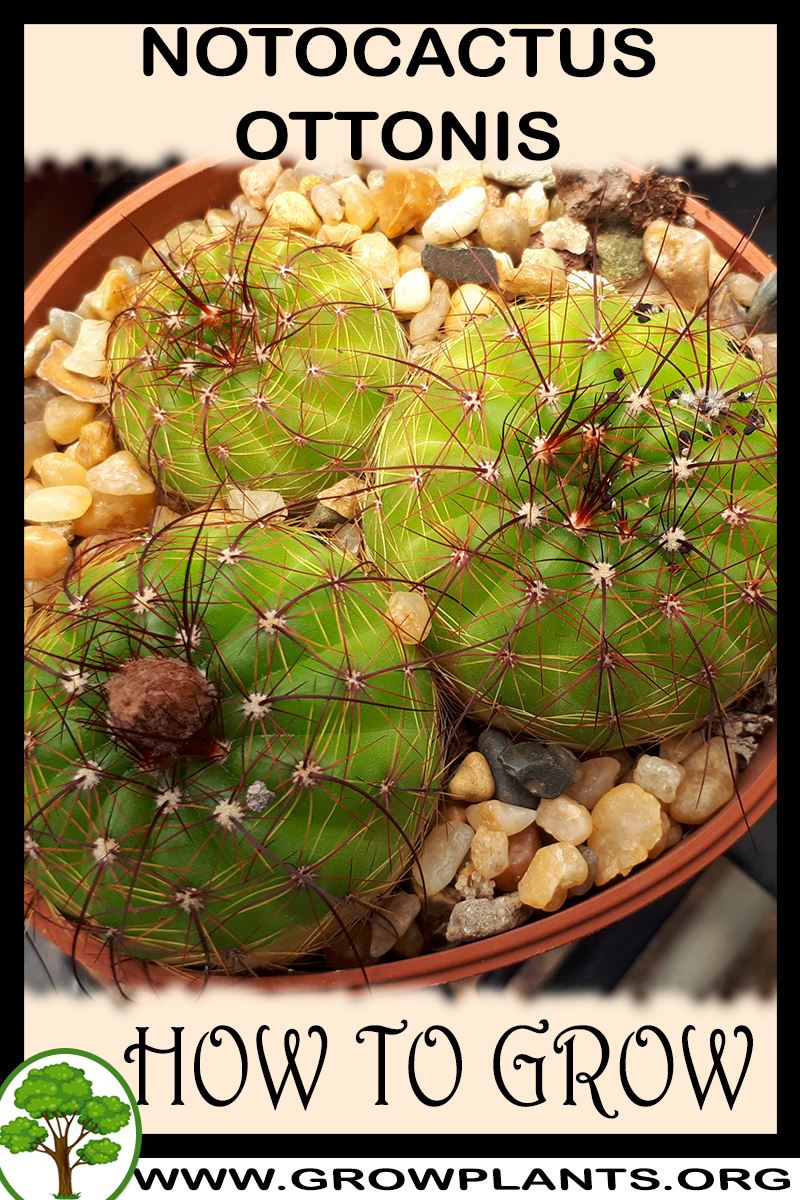
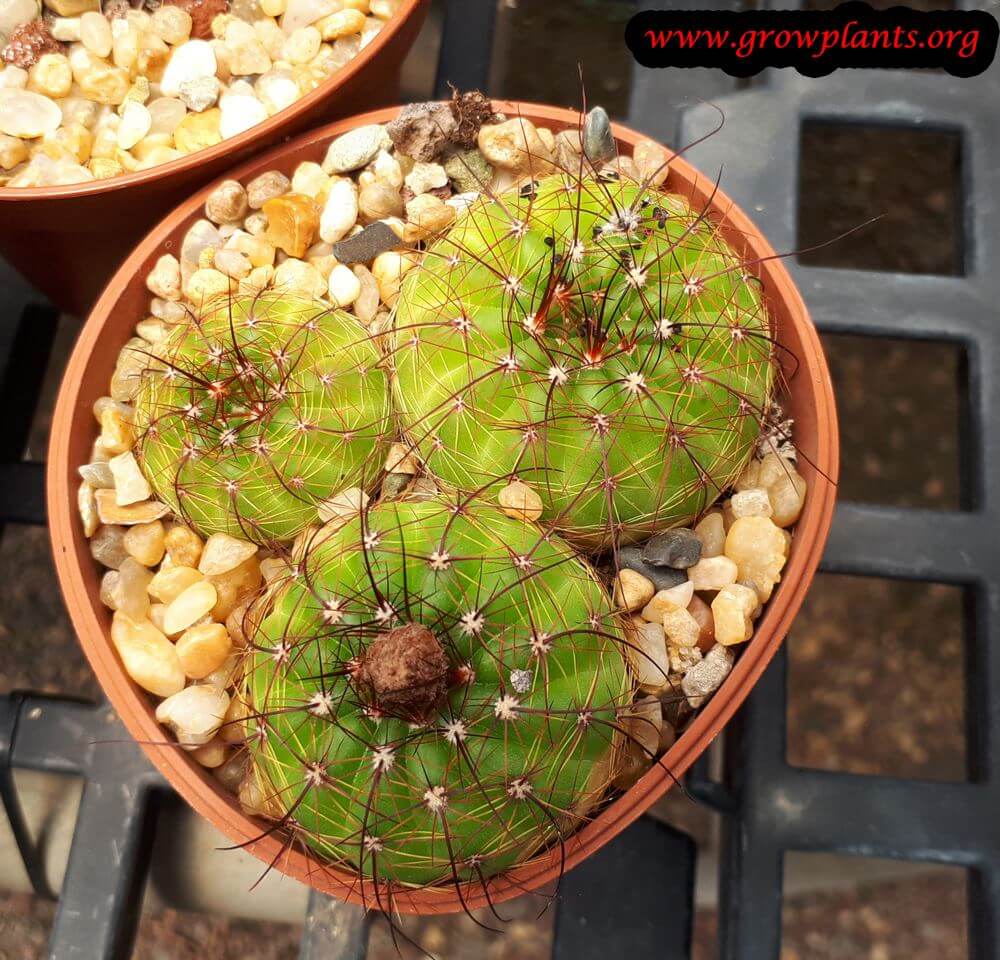
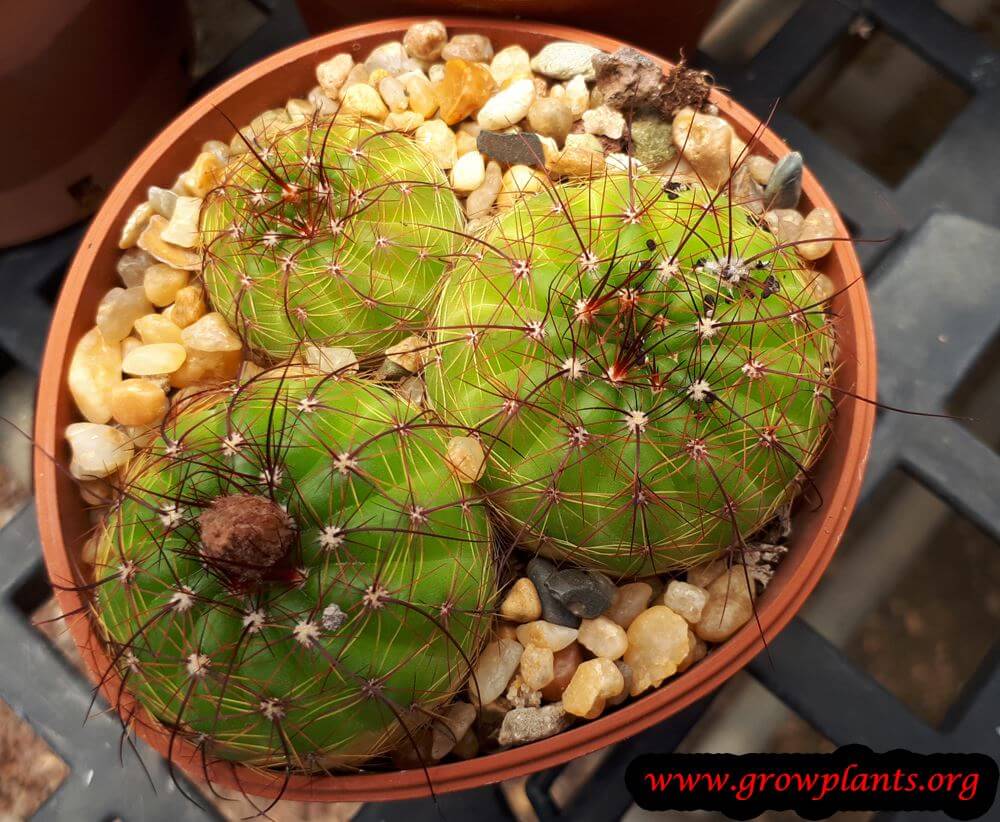
Overview: Notocactus ottonis is a slow-growing evergreen perennial cactus with a small globular stem 2-15 cm (1-6 in) across. It is grown as a drought-tolerant ornamental for its compact form and showy trumpet-shaped flowers.
Quick Specifications
| Specification | Attribute |
|---|---|
| Plant Type / Life Cycle | Perennial (cactus) |
| Foliage Type | Evergreen (leafless succulent stem) |
| Mature Size | 2-15 cm (1-6 in) |
| Growth Rate | Slow |
| Hardiness | USDA zones 10-11; hardy to about -2 °C |
Growth Form & Structure
- Height & Spread: Small stem 2-15 cm (1-6 in) that offsets to form clusters; ideal for pots and rockeries.
- Growth Habit & Form: Low, globular to shortly cylindrical succulent stem, clumping with offsets.
- Lifespan & Maturity: Slow-growing and long-lived; free-flowering once established.
Anatomy & Physical Features
- Stem & Spines: Green cone-shaped or rounded stem with white-to-yellow spines.
- Flower Characteristics: Trumpet-shaped flowers in yellow, pink, white or orange, forming a crown at the stem apex in summer.
Primary Uses & Landscape Value
- Functional & Ornamental Roles: Drought-tolerant ornamental for desert, Mediterranean and subtropical gardens, rockeries and containers.
Care Guide: Planting, Soil & Watering
Overview: Notocactus is a small, slow-growing cactus that needs a gritty, free-draining mineral soil and full sun. It wants little water, drying out fully between waterings, and is hardy down to about -2°C.
Quick Care Requirements
| Requirement | Ideal Condition |
|---|---|
| Planting Season | Warm season – spring to summer |
| Growth Rate | Slow |
| Soil Type | Free-draining cactus / mineral mix |
| Water Need | Low – dry out fully between waterings |
Planting & Establishment
- Best Planting Season: Plant in the warm season, spring to summer.
- How to Plant:
- Hole Preparation: Dig a hole slightly wider than the root ball in a sharply drained site.
- Soil Amendments: Add grit, coarse sand or pumice; keep organic matter low.
- Planting Depth: Set it at the same soil level it grew; do not bury the base.
- Growth Speed & Expectations: Slow.
Soil, Watering & Drainage Care
- Soil Mix & Drainage Needs: Gritty, free-draining mix is essential; avoid waterlogging.
- Watering Schedule & Technique:
- Young / Newly Planted: Water sparingly to establish.
- Established: Infrequent deep watering, letting the soil dry completely between.
- Seasonal Adjustments: Keep nearly dry and cool in winter (hardy to about -2°C); water only during warm growth.
Climate, Light & Hardiness
Notocactus ottonis (Gold lace cactus) is a desert-to-subtropical cactus that needs strong, direct sun and very well-drained conditions. It tolerates only light frost, so it is best suited to warm, mild-winter climates.
Quick Climate Specifications
| Climate Zones | Desert, Mediterranean, Subtropical |
|---|---|
| USDA Hardiness Zones | 10–11 |
| Approx. Survival Minimum | approximately −2°C (28°F), in well-drained soil |
| Frost Tolerance | Low |
| Light Conditions | Full Sun |
Sunlight & Light Exposure
Optimal Light Setup
Grow in full, direct sun; this compact cactus needs bright light to stay dense and to flower well.
Direct Sun Requirement
Unshaded, direct exposure is preferred; shaded plants tend to grow soft and etiolated.
Best Exposure & Orientation
An open, south-facing spot works well outside its warmest zones.
Temperature Extremes & Hardiness
USDA Hardiness & Regional Limits
Hardy outdoors in USDA zones 10–11; outside this range it needs winter protection or container culture that can be moved indoors.
Cold Damage & Winter Protection
Well-drained, dry soil is essential going into winter - wet cold soil is much more likely to cause rot than cold air alone.
Frost Sensitivity
Tolerates only brief, light frost; hard or prolonged freezes are likely to kill it.
Extreme Heat Tolerance
Handles hot, dry desert-type summers well as a drought-tolerant cactus.
Wind, Humidity & Microclimate
Humidity Preferences
Prefers dry air typical of desert and Mediterranean climates.
Dry-Air Tolerance
High.
Microclimate Recommendations
Site on a slope or in raised, gritty soil so winter rain drains away quickly rather than pooling around the base.
Growing in Pots, Balconies & Indoors
Notocactus ottonis is a small, free-flowering globe cactus. The grower says it is not a houseplant but confirms pot culture; grow it in a sharply drained pot on your sunniest windowsill or a hot patio, where it stays compact and blooms readily.
Quick Details
- Container Size: A small pot, only a little larger than the plant; shallow suits its shallow roots
- Indoor Suitability: Not a true houseplant – only the sunniest window keeps it firm and flowering
- Best Spot: Full sun – maximum direct light and warmth
- Soil & Drainage: Free-draining cactus mix over a gravel base layer; drainage holes essential
- Watering in Pots: Water sparingly, letting it dry between waterings; keep nearly dry over the cool, low-light season
Indoors & On the Windowsill
- Not a deep-room houseplant: The grower says no – it needs full sun the middle of a room cannot supply. A ready-made cactus and succulent soil mix provides that structure without mixing it yourself. Keep it against your brightest window.
- Sunniest windowsill: A sunny sill or sunroom keeps the globe firm and round; weak light makes it pale and drawn.
- Overwintering: In cold areas overwinter it bright, cool, and nearly dry; this cool, dry rest also helps it flower in spring.
On a Balcony or Patio
- Light & heat: A hot, sunny, sheltered balcony or patio is ideal; it thrives on reflected heat and full exposure.
- Practicalities: Keep the small pot draining fast and sheltered from long spells of rain.
Choosing the Pot, Soil & Long-Term Care
- Pot & drainage: A small pot with strong drainage holes and a gravel base layer; no standing-water saucer.
- Potting mix: A free-draining cactus/succulent mix – potting mix or sandy soil opened up with coarse sand, perlite, or fine gravel; a layer of gravel, pebbles, or lava rock at the base helps drainage.
- Feeding: A weak cactus feed once or twice in the warm season is plenty.
- Repotting: Pot on only every few years when it fills the pot or the mix breaks down.
Fertilizing & Feeding
A slow-growing globular cactus that needs very little supplemental feeding; light feeding during the active growing season is enough, and none at all through the cool rest period.
Quick Fertilizing Specs
| Feeding Level | Light – a minimal feeder |
|---|---|
| Main Nutrient Priority | Low-nitrogen, cactus-formulated feed that favors sturdy growth over soft, fast growth |
| Best Feeding Period | Warm active growing months, in step with visible new growth |
| Organic Options | Well-aged compost worked lightly into a fast-draining mix; avoid rich, nitrogen-heavy organic amendments |
| Reduce/Stop Feeding | Feeding stops through the cool, low-light rest period |
Feeding by Growth Stage
Active Growth (Warm Season)
Support steady, compact body growth and healthy spine and flower development without pushing soft, weak tissue
| Nutrient direction | A low-nitrogen, cactus-specific feed that keeps growth firm and well-formed rather than lush |
|---|---|
| Timing | During the warm months when new growth and flower buds are visible |
| Frequency | Light feeding only occasionally through the active season; this cactus rarely needs more than a couple of light applications |
| Fertilizer types | Diluted cactus and succulent fertilizer, Low-nitrogen balanced feed |
| Precautions | Always feed into moist, well-drained soil, never a dry pot; over-feeding causes soft, distorted growth that is prone to rot |
Cool-Season Rest
Let the plant rest through cooler, lower-light months without pushing new growth
| Nutrient direction | None – withhold fertilizer entirely while growth is dormant |
|---|---|
| Timing | Cooler months when growth visibly stops |
| Frequency | No feeding at this stage |
| Fertilizer types | No feeding at this stage – plain water only, given sparingly |
| Precautions | Do not fertilize a dormant, resting plant; feeding now encourages weak growth that is easily damaged |
Nutrient Deficiency Signs & Corrections
New growth emerges pale or washed-out in color instead of the normal healthy green
| Possible causes | Insufficient light reducing chlorophyll production, Nutrient-depleted potting mix after years without repotting or feeding, Waterlogged roots limiting nutrient uptake even when nutrients are present |
|---|---|
| Appears first on | Newest growth at the crown |
| What to check | Light exposure and recent changes in placement, Time since last repotting or feeding, Soil moisture and drainage at the root zone |
| Possible correction | Move to brighter light gradually and resume light, low-nitrogen feeding during the active season if the mix is old and depleted |
Little or no new growth appears during what should be the active growing season
| Possible causes | Root-bound container restricting nutrient and water uptake, Depleted, nutrient-poor potting mix, Insufficient warmth or light for active growth to resume |
|---|---|
| Appears first on | Whole-plant growth rate rather than a single part |
| What to check | Roots circling the pot or emerging from drainage holes, How long since the last soil change, Temperature and light conditions |
| Possible correction | Check the root system and refresh the potting mix if old and compacted, then resume light seasonal feeding once active growth is confirmed |
Softening or yellowing at the base of the plant
| Possible causes | Overwatering or poor drainage causing root stress that impairs nutrient uptake, Excess nitrogen producing soft, weak tissue, Root rot from prolonged wet soil |
|---|---|
| Appears first on | Base of the plant near the soil line |
| What to check | Soil moisture and how quickly the mix drains, Root color and firmness if the plant can be checked, Recent feeding history and fertilizer strength used |
| Possible correction | Improve drainage and let the mix dry appropriately between waterings; withhold feeding until the plant shows healthy firm growth again |
Pruning, Training & Seasonal Maintenance
Notocactus ottonis clusters and offsets readily, and pruning is optional – used only for design purposes, such as removing an offset that spoils the cluster’s shape, or for removing dead tissue. It is never a routine structural need. The plant tolerates this kind of light, occasional intervention at any time of year, but has no use for or tolerance of any heavy or structural pruning, given its small mature size of only 2–15cm (1–6in).
Quick Pruning & Maintenance Specs
| Pruning Tolerance | Low – light, purely optional cuts only |
| Primary Pruning Window | Any time, as needed (source data: pruning season “all year”) |
| Typical Frequency | Occasional, cosmetic |
| Main Objective | Remove dead tissue; optionally thin or remove an offset for the cluster’s appearance |
| Young Plant Priority | None |
| Mature Plant Priority | Same as young – dead-tissue removal, with optional design-driven offset thinning |
| Best Tool Type | Small sterile knife |
| Avoid Heavy Pruning During | Not applicable – this plant is not structurally pruned at any stage |
Pruning by Plant Age & Size
Newly Established / Young
No intervention needed unless dead tissue appears.
Mature / Established
Clusters may become crowded with offsets over time; an offset can be removed for design or spacing if desired, but otherwise no pruning is needed regardless of the plant’s age.
Special Growth to Remove
- Dead or shriveled tissue.
- Individual offsets – entirely optional, only if trimming for a particular shape or if the cluster has become more crowded than wanted.
Container & Small-Space Pruning
This species is commonly pot-grown; in a container, offset clusters fill the pot faster, so any cosmetic thinning of offsets may come up sooner than it would for a plant growing in open ground.
Tools
- A small sterile knife, sized to this small cactus’s cuts.
Tool Hygiene & Disease Risk
Increased – any cut into a small cactus body is an entry point for rot, so use a clean, sterile blade for offset removal or dead-tissue trims.
Cut Placement & Technique
Remove an offset at its point of attachment to the mother plant; trim dead tissue back to clearly healthy material.
Heavy Pruning & Rejuvenation
Not applicable – this species is never hard-pruned or rejuvenated by cutting back. A declining plant is better propagated from its own healthy offsets than cut into.
Post-Pruning Care
Let any cut surface dry and callus in shade for a few days before watering resumes over that area, standard practice to avoid rot at a fresh cactus wound.
Common Pruning Mistakes
- Cutting live tissue for looks without a real design reason.
- Not letting a cut callus before watering resumes, inviting rot at the wound.
When NOT to Prune
There is no real seasonal restriction; simply avoid unnecessary cuts, since this species does not benefit from routine or preventive pruning.
Recommended Tools (by task)
- Grafting knife – a small sterile blade sufficient for every cut this species needs, whether removing a dead patch or a single offset.
Propagation Guide
Notocactus ottonis is most easily and reliably propagated from the offsets (pups) it produces around the base of the mother plant, though seed is also a common and straightforward option for this genus. Seed does not require grafting or any special vegetative technique to succeed, and offsets come true to the parent while seedlings show natural variation; overall this is an easy cactus to propagate by either method for a home grower.
Quick Propagation Specs
| Best Propagation Method | Offsets (pups) or seed |
| Alternative Methods | Stem cuttings where offsets have a short neck |
| Propagation Difficulty | Easy |
| Seed True-to-Type | Usually true-to-type |
| Vegetative True-to-Type | Yes |
| Best Propagation Season | Spring / Summer |
| Seed Germination Time | Typically a few weeks, variable with temperature |
| Cutting Rooting Time | Several weeks once callused |
| Germination Temperature | Around 20–28°C (68–82°F) |
| Seed Sowing Depth | Surface-sow, barely covered |
Growing from Seed
Seed Handling & Viability
Use clean, dry cactus seed; viability is generally good when seed is kept cool and dry until sowing.
Sowing Depth & Orientation
Surface-sow on a gritty, well-drained cactus mix and press in lightly rather than burying — small cactus seed needs light to germinate.
Germination Conditions
Keep consistently moist (not wet) and warm; germination can be uneven, so expect seedlings to appear over a spread of days to weeks.
Seedling Care
Young seedlings need bright, filtered light and careful watering to avoid damping off; increase sun exposure gradually as spines develop.
Division, Offsets, Pups & Suckers
Mature clumps of Notocactus ottonis readily form basal offsets. Remove a pup once it has its own small root system or a firm base, let the cut surface callus (dry) for a few days in a shaded spot as noted for the genus’ care needs, then set it on top of well-drained soil and water sparingly until roots establish.
Bloom & Flower Guide
Quick Details
- Bloom Season: Summer
- Flower Appearance: Trumpet-shaped flowers in yellow, pink, white or orange, opening in a crown at the top of the stem
- Edibility: Ornamental only – grown for its flowers, not for eating
Detailed Blooming Overview
Notocactus ottonis is a small, free-flowering globe cactus that is one of the easiest to bring into bloom. In summer it opens glossy, trumpet-shaped flowers – usually yellow, but also pink, white or orange – that cluster at the very top of the stem to form a bright crown. The flowers open in a run over several days in good light.
Flower Characteristics
- Trumpet-shaped and glossy, in yellow, pink, white or orange.
- Gathered into a crown at the top of the stem.
- Open over several days in bright light.
Bloom Care & Thinning
- Encouraging bloom: A cool, dry winter rest followed by spring watering and full light reliably brings summer flowers.
- Watering: Keep just moist as buds form; let the mix dry between waterings.
Pests, Diseases & Troubleshooting
Overview: Notocactus (now placed in Parodia) are small, easy South American globe cacti with very few insect problems; nearly all trouble comes from overwatering and cold-wet soil. Grown hard in a gritty mineral mix with a bright spot and a proper dry winter rest, they are resilient and long-lived. Watch the hidden crown and roots for sap-suckers, and let inspection and correct watering do the work before any spray. N. ottonis is a clustering globe cactus that offsets freely; watch for rot and mealybugs among the pups.
Quick Troubleshooting Overview
| Issue / Pest | Main Symptom | Primary Solution |
|---|---|---|
| Root & basal rot | Soft, brown, collapsing base; blackening | Stop watering; gritty dry mix; rescue by cutting to firm tissue |
| Mealybugs (incl. root) | White cottony fluff between ribs / in roots | Alcohol swab; systemic or oil; bare-root & rinse for root type |
| Scale insects | Brown limpet-like bumps on the body | Scrape off; horticultural oil |
| Spider mites | Rusty/tan scarring near the crown | Rinse; raise humidity; oil/soap; scarring is permanent |
| Fungus gnats | Small black flies from damp mix | Let soil dry; sticky traps; more mineral topdressing |
| Corky / scarred skin | Brown patches low on the body | Often natural ageing or old mite/scar damage — cosmetic |
Common Pests & Management
- Mealybugs, foliar & root (Pseudococcus / Rhizoecus spp.):
- Symptoms: White cottony tufts nestled between the ribs and around the woolly crown; root mealybugs show as white, mould-like deposits over the roots when unpotted, causing slow decline and poor rooting.
- Prevention & Control: Inspect the crown and, periodically, the rootball. Dab visible colonies with an alcohol-dipped swab; for wider spread use horticultural oil or a systemic drench. For root mealybugs, bare-root the plant, wash the roots clean, treat, and repot into fresh dry mineral mix. Quarantine new cacti.
- Scale insects (Diaspididae):
- Symptoms: Small brown, limpet-shaped bumps clinging to the body that do not rub off; yellowing and weakening beneath heavy colonies.
- Prevention & Control: Scrape or brush off the few present, then apply horticultural oil to smother crawlers, repeating after a couple of weeks. Keep plants unstressed and well lit.
- Spider mites (Tetranychus spp.):
- Symptoms: Rusty, bronzed or tan scarring at the growing tip in hot, dry, still air; fine webbing in bad cases. The scarred skin never greens up again.
- Prevention & Control: Rinse the plant and improve ventilation and humidity; treat with insecticidal soap or a miticidal horticultural oil covering the crown. Prevent by avoiding prolonged hot, dusty, dry spells.
- Fungus gnats (Bradysia spp.):
- Symptoms: Tiny black flies rising from the soil; larvae in constantly damp mix can nibble fine roots and seedlings.
- Prevention & Control: Let the mix dry thoroughly, add a gritty mineral topdressing, and use yellow sticky traps; a BTI soil drench handles larvae if needed. They vanish once watering is corrected.
Diseases & Fungal Issues
- Root & basal stem rot (Fusarium / Phytophthora / Pythium spp.):
- Symptoms: The main killer. The base turns soft, brown-black and mushy, often rising up the body; the plant loses its grip and topples. Caused by cold, wet, airless soil, especially in the winter rest.
- Treatment & Management: Prevent with a sharply draining mineral mix, careful watering only in active growth, and a dry winter. To rescue, cut back to clean firm green tissue, dust the wound with sulphur, let it callus for days, then re-root in dry mix. Discard fully rotted plants to protect others.
- Fungal spotting (various):
- Symptoms: Occasional black or brown sunken spots on the body in cold, damp, stagnant conditions.
- Treatment & Management: Improve airflow and warmth, keep the body dry, and cut out spots; a sulphur or copper fungicide checks spread. Avoid overhead water sitting in the crown.
Growing Difficulties & Abiotic Problems
- Overwatering / cold-wet soil:
- Cause & Symptoms: Soft base, yellowing, and sudden collapse — the underlying cause of most losses.
- Correction Strategy: Water only when the mix is bone-dry and the plant is actively growing; keep it dry and cool (not wet and cold) through winter; use an open, mostly mineral substrate.
- Etiolation (weak light):
- Cause & Symptoms: Pale, stretched, narrowing growth that loses its round shape when light is too low.
- Correction Strategy: Give bright light (with acclimatisation); the distortion is permanent but new growth will be normal.
- Sunburn / scorch:
- Cause & Symptoms: Bleached yellow-white or corky patches when moved abruptly into intense sun after low light.
- Correction Strategy: Increase sun gradually over weeks; provide light shade in the fiercest midday heat.
- Corking (natural ageing):
- Cause & Symptoms: Brown, bark-like tissue creeping up from the base on older plants — normal, not disease, if firm and dry.
- Correction Strategy: None needed; distinguish firm corking from soft rot by touch.
What Helps — Products & Tools
Keep the toolkit simple and gentle: rubbing alcohol on a swab and a systemic for mealybugs (including root mealybugs), horticultural / neem oil and insecticidal soap for scale and mites, yellow sticky traps for fungus gnats, and sulphur or copper fungicide plus a clean sharp blade for rot rescue. A gritty mineral mix and disciplined watering are your best defence.