

Plant Profile & Key Characteristics
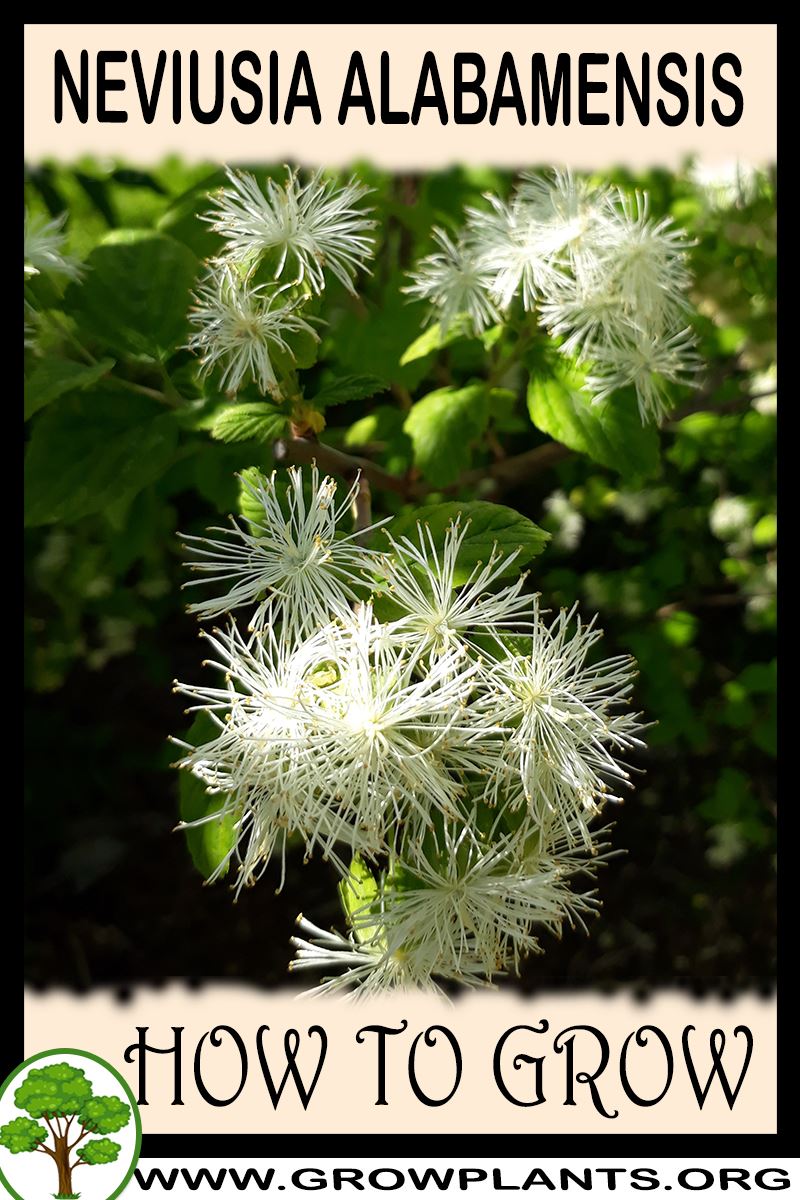
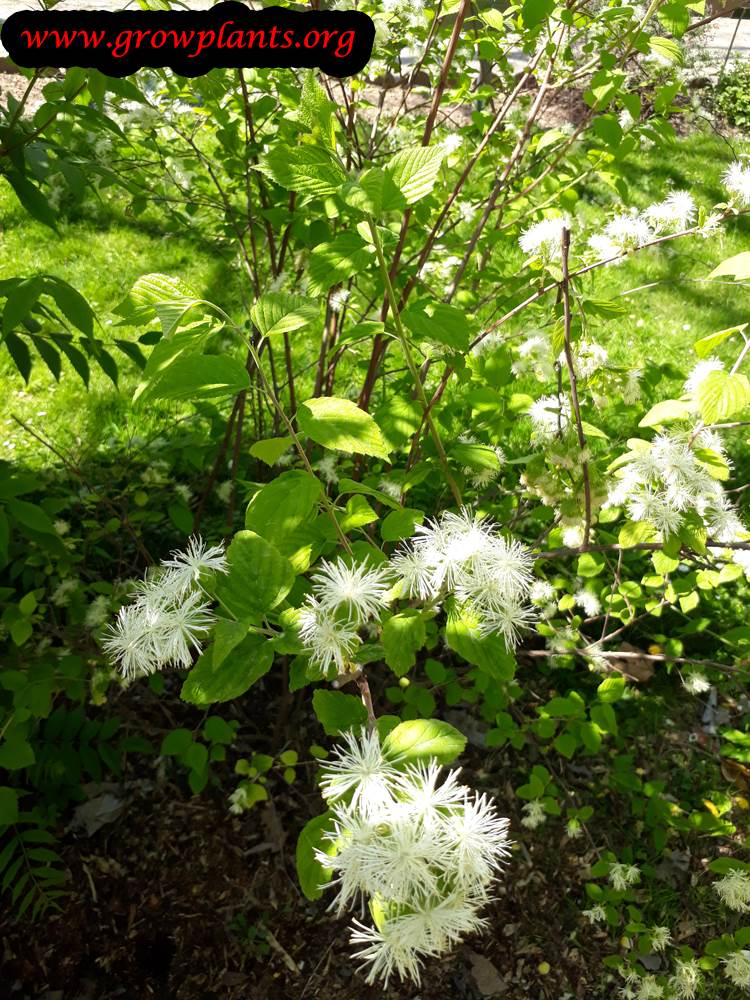
Overview: Neviusia alabamensis (Alabama snow wreath) is a suckering, arching shrub 1-2 m (3-6 ft) tall, grown as an ornamental and informal hedge for its frothy white flowers. It suits temperate and subtropical climates.
Quick Specifications
| Specification | Attribute |
|---|---|
| Plant Type / Life Cycle | Perennial shrub |
| Foliage Type | Deciduous (evergreen in mild areas) |
| Mature Size | 1-2 m (3-6 ft) tall |
| Growth Rate | Moderate to Fast |
| Root System | Suckering – spreads by root suckers to form thickets |
| Hardiness | USDA zones 5-8 |
Growth Form & Structure
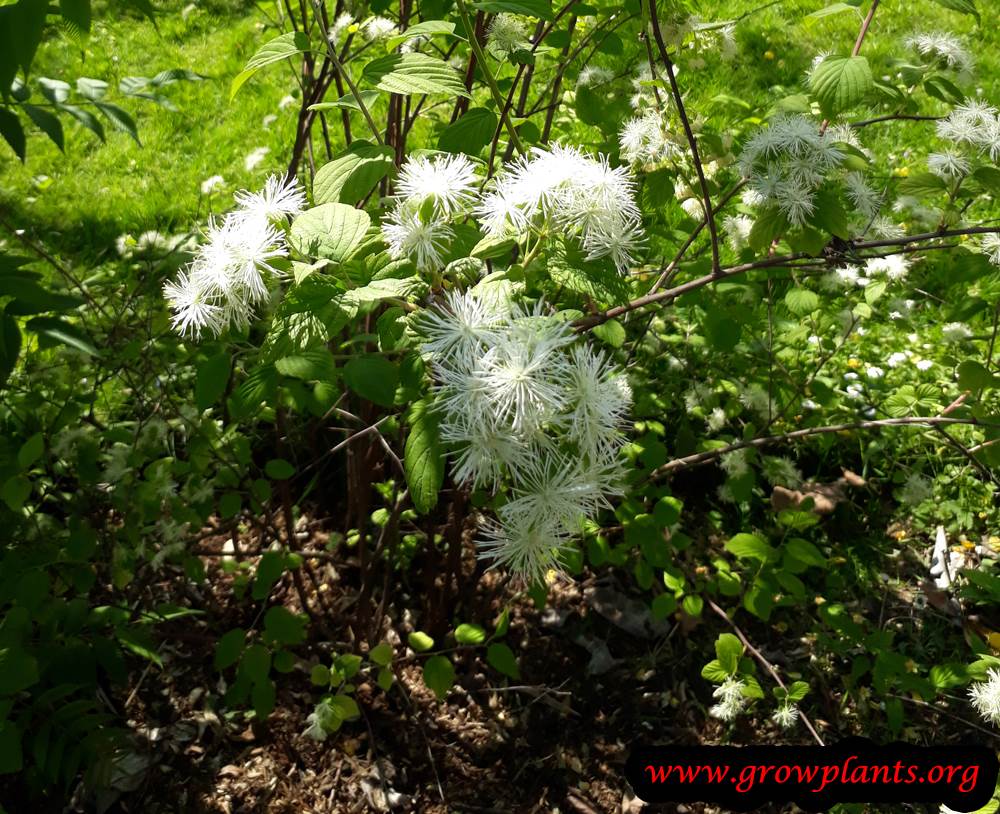
- Height & Spread: Reaches 1-2 m (3-6 ft) with an arching, thicket-forming habit; also grown in large containers.
- Growth Habit & Form: Multi-stemmed, arching shrub that suckers from the roots to form colonies.
- Lifespan & Maturity: Fast-establishing, long-lived colonising shrub.
Anatomy & Physical Features
- Leaves & Foliage: Green, elliptic leaves with a serrated margin.
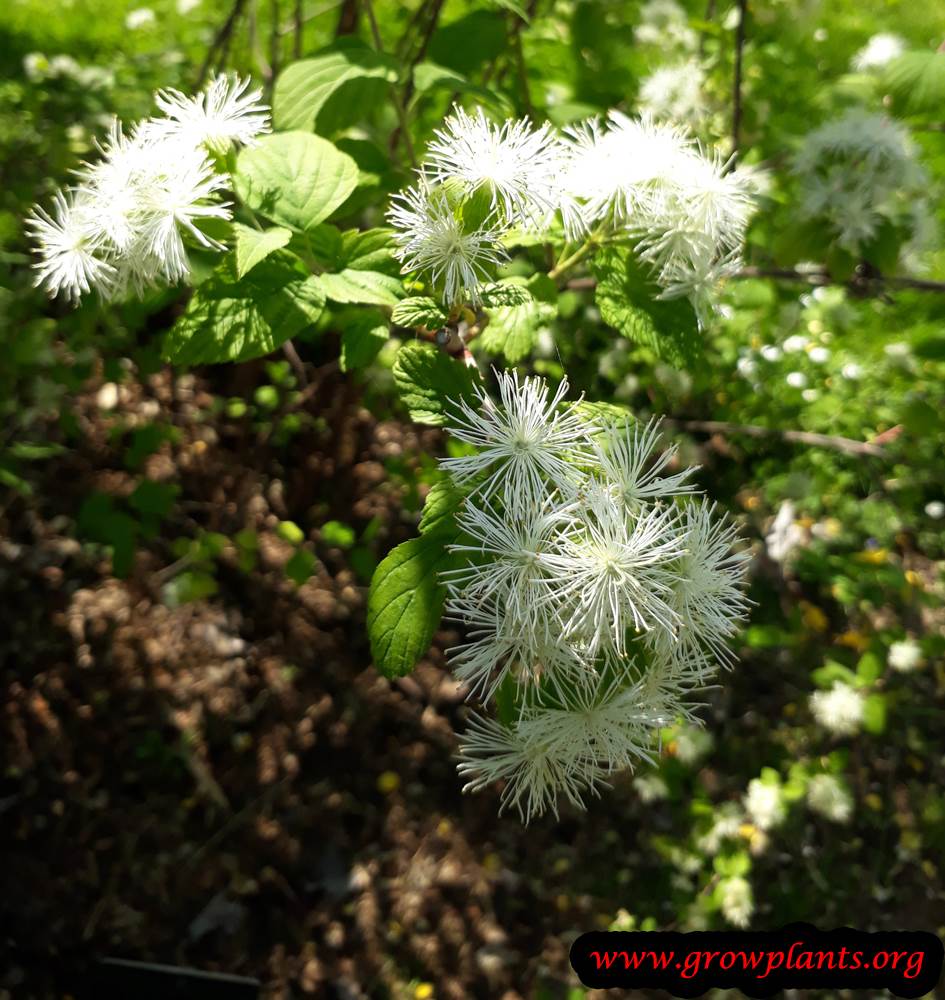
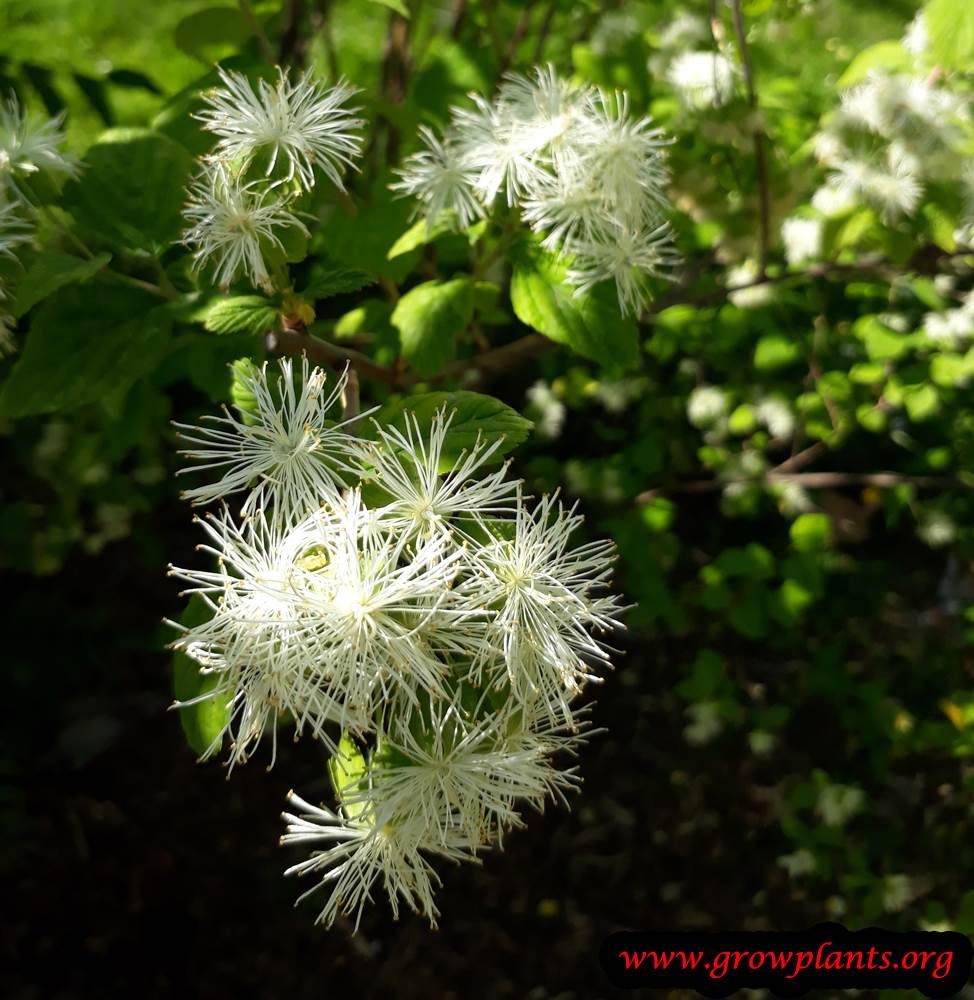
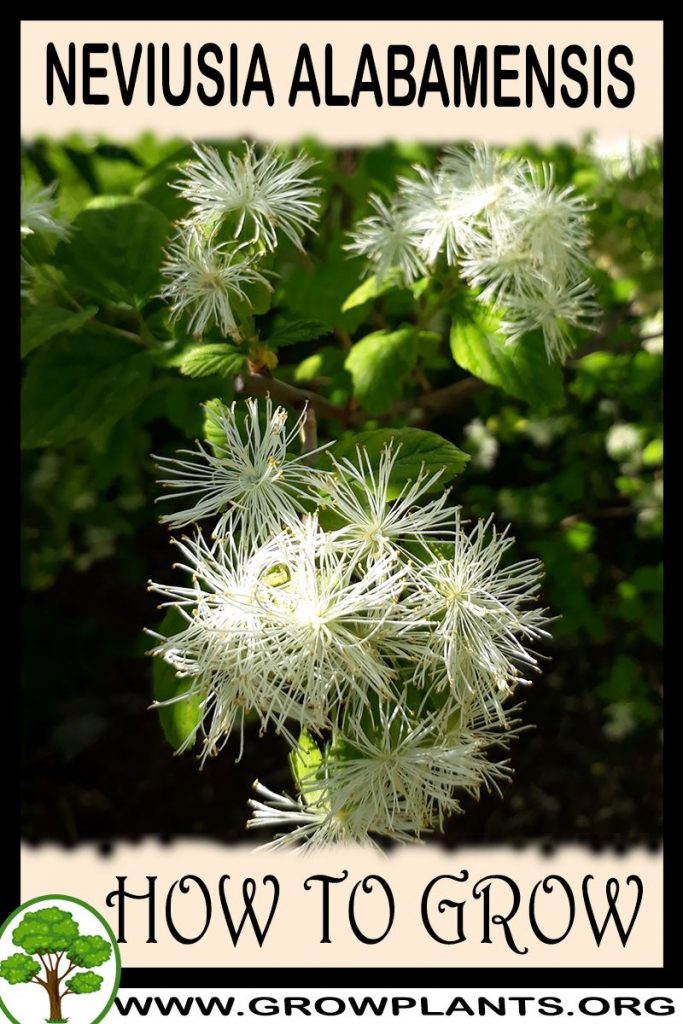
- Flower Characteristics: White, petal-less flowers whose fine needle-like stamens create a fluffy pompom effect.
Primary Uses & Landscape Value
- Functional & Ornamental Roles: Ornamental flowering shrub for informal hedges, screens, naturalising and erosion-holding thickets.
Care Guide: Planting, Soil & Watering
Overview: Alabama snow-wreath is an adaptable deciduous shrub that grows in moist, well-drained soil in full sun to part shade. It wants moderate to generous water and keeps its soil evenly moist.
Quick Care Requirements
| Requirement | Ideal Condition |
|---|---|
| Planting Season | Spring to summer |
| Growth Rate | Fast to moderate |
| Soil Type | Moist, well-drained, adaptable |
| Water Need | Moderate to high; keep evenly moist |
Planting & Establishment
- Best Planting Season: Plant in spring to summer (or autumn in mild areas).
- How to Plant:
- Hole Preparation: Dig a hole about twice as wide as the root ball and the same depth.
- Soil Amendments: Mix compost or organic matter into the backfill.
- Planting Depth: Set the root collar level with the soil; do not bury the stems.
- Growth Speed & Expectations: Fast to moderate; it suckers to form spreading thickets.
Soil, Watering & Drainage Care
- Soil Mix & Drainage Needs: Moisture-retentive but well-drained soil; it is adaptable to a range of soils.
- Watering Schedule & Technique:
- Young / Newly Planted: Water regularly to establish.
- Established: Keep the soil evenly moist and water deeply in dry spells.
- Seasonal Adjustments: Less in winter dormancy; more during summer heat.
Climate, Light & Hardiness
Alabama snow wreath is a temperate and subtropical shrub grown for its white pompom-like blooms. It grows in full sun to half shade and is hardy through moderately cold winters.
Quick Climate Specifications
| Climate Zones | Temperate, subtropical |
|---|---|
| USDA Hardiness Zones | 5–8 |
| Frost Tolerance | Moderate–High |
| Light Conditions | Full Sun to Half Shade |
Sunlight & Light Exposure
Optimal Light Setup
Full sun to half shade; as an understory-type shrub it also tolerates dappled shade well.
Temperature Extremes & Hardiness
USDA Hardiness & Regional Limits
Hardy in USDA zones 5–8, tolerating cold temperate winters as well as milder subtropical conditions; it is not suited to hot zones beyond 8 without further data.
Growing in Pots, Balconies & Indoors
Alabama snow-wreath is a rare deciduous shrub grown for its frothy, petal-less white spring flowers. The grower rates it for containers but not indoors – it is a hardy, suckering shrub best kept outside on a patio or balcony.
Quick Details
- Container Size: A large tub, 30-50 L (8-13 gal) for this suckering shrub
- Indoor Suitability: Not a houseplant (grower); a hardy deciduous shrub for outdoor pots
- Best Spot: Full sun to partial shade; a bright spot with some direct sun is ideal.
- Soil & Drainage: Aerated, organic-rich mix (quality potting mix, or peat/coir with perlite or vermiculite); it must drain freely.
- Watering in Pots: Keep the mix consistently moist – this one likes water – but make sure it drains freely; never let a potted plant go bone-dry.
Indoors & On the Windowsill
- Not a houseplant: The grower marks it unsuitable indoors; it needs outdoor light and a cold winter, and its suckering habit is unsuited to a room.
- No winter shelter needed: It is hardy and deciduous – leave it outdoors to go dormant over winter.
On a Balcony or Patio
- Light & exposure: Sun to part shade suits it; keep the pot from drying out in wind and heat. Its spreading suckers are neatly contained by a container.
- Practicalities: Thin out crowded and old stems to keep it airy and free-flowering.
Choosing the Pot, Soil & Long-Term Care
- Pot & drainage: A large tub with strong drainage holes; skip a standing-water saucer. Keep the mix moisture-retentive, as it likes reliable moisture.
- Potting mix: Use a well-aerated, organic-rich mix – quality potting mix, or peat/coir blended with perlite or vermiculite.
- Feeding: As nutrients wash out of pots faster than open ground, feed potted plants regularly through the growing season with a balanced fertiliser.
- Repotting: Divide or root-prune and refresh the mix every couple of years; prune after flowering, as blooms form on older wood.
Fertilizing & Feeding
Alabama snow wreath is a fast-to-medium growing hedge shrub prized for its fluffy white pompom-like flowers; it grows well on moist soil with steady, moderate feeding through the growing season.
Quick Fertilizing Specs
| Feeding Level | Moderate; a vigorous hedge shrub that benefits from consistent feeding. |
|---|---|
| Main Nutrient Priority | Balanced nutrition to support strong stem and leaf growth alongside the spring flower display. |
| Best Feeding Period | Through the spring and summer growing season. |
| Organic Options | Compost or other organic matter suits this shrub well given its preference for consistently moist soil. |
| Reduce/Stop Feeding | Ease off feeding as growth slows going into autumn and winter. |
Feeding by Growth Stage
Establishment
Help a newly planted Alabama snow wreath root into moist soil and put out its first flush of serrated, elliptic leaves.
| Nutrient direction | Light, balanced nutrition to support root development while roots are still spreading. |
|---|---|
| Timing | In the weeks after planting. |
| Frequency | A light feeding at planting is usually enough to get this shrub started. |
| Fertilizer types | A balanced complete fertilizer used lightly, Compost worked into moist, organically rich soil |
| Precautions | Keep soil consistently moist while roots establish; this species does not tolerate drying out well. |
Spring growth and bloom
Support the flush of new stems and leaves along with the fluffy white flower clusters that give this plant its common name.
| Nutrient direction | Steady, balanced nutrition to fuel both foliage growth and a strong flower display. |
|---|---|
| Timing | Through the main spring and into summer growth and bloom period. |
| Frequency | Regular light feedings through the growing season suit this vigorous shrub well. |
| Fertilizer types | A balanced complete fertilizer formulated for shrubs or hedges, A controlled-release granular product for even feeding through the season |
| Precautions | This species can spread and become somewhat invasive in favorable conditions, so avoid overfeeding beyond what supports healthy, moderate growth. |
Autumn and winter dormancy
Let growth harden off and the shrub go dormant ahead of winter.
| Nutrient direction | None – withhold fertilizer through dormancy. |
|---|---|
| Timing | From autumn through winter. |
| Frequency | No feeding at this stage. |
| Fertilizer types | No feeding – resume feeding once spring growth resumes |
| Precautions | Do not fertilize during dormancy; late feeding can push tender growth that is more vulnerable to cold. |
Nutrient Deficiency Signs & Corrections
Leaves look pale, wilted, or scorched at the edges despite regular feeding.
| Possible causes | Soil drying out, since this species prefers consistently moist conditions, A general nutrient shortage on poor soil, Root stress from soil that is either too dry or waterlogged |
|---|---|
| Appears first on | Leaves throughout the shrub, often worse on the sunniest side. |
| What to check | Soil moisture consistency, Recent watering and rainfall, Overall drainage at the planting site |
| Possible correction | Correct soil moisture and drainage first, then give a light balanced feeding if pale, weak growth continues. |
New growth is sparse or thin instead of forming the shrub’s typically full, dense habit.
| Possible causes | A general nitrogen shortage, Overcrowding or too much shade limiting light to the interior of the shrub, Root competition from nearby trees or shrubs |
|---|---|
| Appears first on | New shoots throughout the shrub. |
| What to check | Recent feeding history, Sun and light exposure, Root competition from nearby plantings |
| Possible correction | Address light and root competition first, then support recovery with a balanced feeding. |
The shrub grows well but produces few of its characteristic pompom-like white flowers.
| Possible causes | Excess nitrogen favoring leafy growth over flower buds, Pruning at the wrong time removing developing flower wood, Insufficient light reaching the shrub |
|---|---|
| Appears first on | Overall flowering across the shrub. |
| What to check | Recent nitrogen-heavy feeding, When and how the shrub was last pruned, Sun exposure at the site |
| Possible correction | Ease back on nitrogen, prune promptly after flowering rather than beforehand, and confirm the site gets adequate sun. |
Pruning, Training & Seasonal Maintenance
Neviusia alabamensis is a deciduous-to-semi-evergreen, thicket-forming shrub grown for its unusual white, petal-less pompom flowers, produced in spring on wood grown the previous year. Because the flower buds are already set on that old wood by autumn, the safest and most effective pruning window is right after flowering finishes in spring — not autumn or winter, which would cut off the buds before they ever open. It suckers to form a colony, so most routine work is about controlling spread and renewing old canes rather than formal shaping.
Quick Pruning & Maintenance Specs
| Pruning Tolerance | Moderate to High — resprouts readily from the base |
| Primary Pruning Window | Immediately after flowering, once bloom fades in spring |
| Secondary Maintenance Window | Sucker/spread control through the growing season |
| Typical Frequency | Annual thinning plus as-needed sucker control |
| Main Objective | Preserve next year’s flower buds while controlling colony spread and renewing old canes |
| Young Plant Priority | Minimal — let it establish and begin colonizing |
| Mature Plant Priority | Renewal thinning of the oldest canes, spread control |
| Best Tool Type | Bypass secateurs/loppers for older canes |
| Avoid Heavy Pruning During | Autumn through winter — next spring’s flower buds are already formed on the old wood by then |
Pruning by Plant Age & Size
Newly Established
Minimal pruning; remove only damaged growth while it establishes.
Young / Formative
No formal training applies — it is a thicket/colony-forming shrub, not trained to a framework.
Mature / Established
Post-bloom renewal: remove the oldest, least-productive canes at the base each year to keep the colony vigorous and floriferous.
Seasonal Pruning Schedule
Post-Flowering (old-wood bloomer — the essential window)
Objective: renew the plant and control its spread while leaving a full growing season for new flowering wood to form. Remove: damaged wood, the oldest canes at the base, and unwanted spreading suckers. Do not remove: current-season wood — this is what will carry next spring’s flowers. Expected response: fresh cane growth that matures into next year’s flowering wood. Flowering impact: none — this is the only window that costs nothing in bloom.
Ongoing Sanitary
Remove dead or damaged canes at any time.
Flowering & Fruiting Wood
Flowers form on one-year-old (previous season’s) wood, opening in spring before or as new leaves emerge. Any pruning done in autumn or winter — after that wood has already set its flower buds — removes the coming spring’s flower display. Pruning right after flowering costs nothing, since the plant then has the whole growing season to produce fresh wood for the following year’s buds.
Structural Pruning & Training
Cane-at-base renewal: remove the oldest, thinnest, or least-flowering canes at ground level each year. Control colony spread by removing unwanted root suckers beyond the desired planting area.
Special Growth to Remove
- Root suckers/colonizing shoots beyond the desired spread — this is the plant’s natural colonizing habit (noted in source data as tending toward invasive), so manage rather than try to eliminate it entirely.
- The oldest woody canes at renewal time.
- Spent flower clusters, if tidiness is wanted (not required for plant health).
Container & Small-Space Pruning
Container growing is possible, but its natural thicket/colonizing habit is awkward in a small pot long-term; regularly remove suckering shoots to keep a containerized specimen from overfilling the pot.
Tools
- Bypass secateurs — routine post-bloom cane selection.
- Loppers — thicker old canes at the base.
- Garden spade — dividing out unwanted colonizing suckers with their roots if spread needs firmer containment.
Tool Hygiene & Disease Risk
Routine — only aphids are noted as a pest concern; no major transmissible disease flagged for this species.
Cut Placement & Technique
Remove selected old canes flush at ground level (a thinning cut at the base, not headed partway up) to encourage strong new basal shoots.
Heavy Pruning & Rejuvenation
Tolerates a hard cutback of overgrown colonies right after flowering. Cutting roughly the oldest third of canes to the ground each year (a rolling renewal) keeps the plant vigorous without ever sacrificing a full season’s bloom; an all-at-once hard cutback is possible but forfeits the following spring’s flower show.
Post-Pruning Care
Water during the post-cut regrowth flush; monitor new basal shoots for aphids.
Common Pruning Mistakes
- Pruning in autumn or winter to tidy up for the season, which removes the already-set spring flower buds.
- Letting the colony spread unchecked and never thinning old canes, leading to a dense tangle of unproductive old wood.
When NOT to Prune
Avoid pruning in autumn or winter, since this removes the coming spring’s flower buds already set on old wood. Avoid major cuts right as new spring growth is emerging and still tender.
Recommended Tools (by task)
- bypass_secateurs — routine post-bloom cane selection.
- loppers — thicker old canes at base-level renewal.
- garden_spade — removing unwanted colonizing suckers with their roots.
Pruning Troubleshooting
| Problem | Possible Cause | What to Check | Corrective Action |
| No flowers in spring | Pruned in autumn/winter, removing already-set flower buds | Timing of the last prune relative to the bloom window | Shift all pruning to immediately after flowering |
| Overcrowded, tangled thicket | No cane renewal performed for several years | Proportion of old, woody, unproductive canes | Begin annual base-level thinning of the oldest canes |
| Colony spreading beyond bounds | Root suckers left unmanaged | Perimeter for new shoots | Remove unwanted suckers at their point of origin |
Propagation Guide
Alabama snow wreath is most easily increased by digging and dividing its own rooted root suckers, or by taking softwood stem cuttings; both methods reproduce the plant true to type and suit its naturally colony-forming habit. Seed is a usable but slower alternative, and overall propagation is Easy.
Quick Propagation Specs
| Best Propagation Method | Division of rooted root suckers |
| Alternative Methods | Softwood stem cuttings; seed |
| Propagation Difficulty | Easy |
| Seed True-to-Type | Usually true-to-type (species, not a named cultivar) |
| Vegetative True-to-Type | Yes |
| Best Propagation Season | Spring to summer |
| Cutting Rooting Time | Typically a few weeks under warm, humid conditions |
| Grafting Required | No |
Growing from Seed
Seed Handling & Viability
The site does not record specific handling details for this species; as with many woody Rosaceae shrubs, fresher seed generally germinates more reliably than seed held in storage a long time.
Dormancy & Pre-Sowing Treatment
Seed of many woody Rosaceae shrubs benefits from a period of cold, moist stratification (winter chilling) to break dormancy; sowing fresh seed outdoors in autumn so it experiences natural winter cold is a reasonable, low-risk approach.
Germination Time
Germination can be slow and uneven; allow at least several weeks to a few months before concluding a sowing has failed.
Stem Cuttings
Cutting Type
Softwood or semi-hardwood tip cuttings taken from vigorous young suckering shoots.
Best Timing
Late spring to early summer, during active growth, in line with the plant’s spring/summer planting season.
Cutting Preparation
Take 10–15cm (4–6in) tip cuttings and remove the lower leaves before inserting.
Rooting Setup
A moist, well-drained propagation mix under humidity (mist or a covered tray) with bright, indirect light.
Rooting Hormone
Optional; a rooting hormone can improve consistency but is not strictly required for softwood cuttings of this shrub.
Rooting Time
Typically a few weeks under warm, humid conditions.
Division, Offsets, Pups & Suckers
Alabama snow wreath spreads naturally by root suckers, which is also the reason the site flags it as capable of becoming invasive in the garden – the same vigorous suckering habit makes division an easy propagation method. Dig well-rooted suckers with an intact section of root attached, ideally in spring, separating them from the parent clump with minimal disturbance. Keep new divisions consistently moist and in light shade until fresh growth confirms establishment, then acclimate gradually to fuller sun. Suckers that have not yet formed their own roots should be left in place rather than removed, since they will not establish independently.
Bloom & Flower Guide
Quick Details
- Bloom Season: Spring into early summer
- Flower Appearance: Fluffy white pompoms made of many slender stamens
- Edibility: Ornamental – not eaten
Detailed Blooming Overview
Alabama snow-wreath is grown for its unusual spring bloom: the flowers have little or no petals, and the display comes instead from a dense burst of fine white stamens that give each flower a soft, feathery pompom look. Massed along arching stems, they create the snowy wreath effect behind the name.
Flower Characteristics
- White, with the fluffy appearance coming from numerous needle-like stamens rather than showy petals.
- Carried along the branches to form soft, brush-like clusters.
Bloom Care & Thinning
- Pruning for bloom: Flowers form on established stems, so prune in autumn or winter and avoid removing the wood that will carry the spring bloom.
- Light and water: Full sun to half shade with moist, average-to-generous watering keeps it flowering well.
Pests, Diseases & Troubleshooting
Overview: Alabama snow-wreath (Neviusia alabamensis) is a rare, rarely cultivated native shrub in the rose family (Rosaceae) with little published pest information. It is regarded as a tough, largely trouble-free plant; the issues listed are those typical of ornamental Rosaceae shrubs and should be verified against local conditions rather than treated as documented species pests.
Quick Troubleshooting Overview
| Issue / Pest | Main Symptom | Primary Solution |
|---|---|---|
| Aphids | Curled new shoots, sticky honeydew | Water jet; soap; encourage predators |
| Leaf-chewing beetles | Skeletonized or holed leaves | Handpick; tolerate light damage |
| Powdery mildew | White coating in humid shade | Improve airflow/light; sulfur if needed |
| Leaf spot | Brown spots in wet weather | Rake debris; improve airflow |
| Root rot | Wilting in wet, heavy soil | Improve drainage; reduce watering |
Common Pests & Management
- Aphids (Aphididae):
- Symptoms: Clusters on soft new shoots typical of rose-family shrubs, curling growth and leaving honeydew.
- Prevention & Control: Hose off with water, encourage ladybirds and lacewings, and use insecticidal soap only if colonies persist.
- Leaf-chewing beetles (Scarabaeidae / Chrysomelidae (e.g. Japanese beetle where present)):
- Symptoms: Skeletonized or holed leaves from beetles that favor many Rosaceae; incidence depends heavily on region.
- Prevention & Control: Handpick beetles in the cool of morning, tolerate light damage on an established shrub, and use targeted controls only where beetle pressure is high.
- Scale insects (Coccoidea):
- Symptoms: Occasional bumps on stems with honeydew, as on other woody Rosaceae.
- Prevention & Control: Prune out infested wood and apply horticultural oil if scale appears.
- Spider mites (Tetranychus spp.):
- Symptoms: Possible stippling in hot, dry, dusty conditions.
- Prevention & Control: Rinse foliage and improve conditions; oils or soap only if needed.
Diseases & Fungal Issues
- Powdery mildew (Erysiphaceae):
- Symptoms: White powdery coating on leaves in humid, shaded, crowded conditions, as on many Rosaceae.
- Treatment & Management: Site with good airflow and light, avoid excess soft growth, and use sulfur or potassium bicarbonate only if it appears; likely uncommon on this vigorous native.
- Leaf spot (Cercospora / Septoria / other fungi):
- Symptoms: Brown leaf spots in prolonged wet weather.
- Treatment & Management: Rake up fallen leaves, improve airflow, and avoid overhead watering; rarely serious.
- Root & crown rot (Phytophthora / Pythium):
- Symptoms: Wilting and dieback in heavy, waterlogged soil.
- Treatment & Management: Plant in well-drained soil, avoid overwatering, and mulch away from the crown.
Growing Difficulties & Abiotic Problems
- Suckering / sprawl:
- Cause & Symptoms: This shrub suckers and can form a broad, arching, somewhat untidy clump.
- Correction Strategy: Prune after flowering to shape, and remove unwanted suckers to control spread.
- Poor flowering in deep shade:
- Cause & Symptoms: Too little light reduces its feathery white flower display.
- Correction Strategy: Grow in part shade to sun for the best bloom; it is adaptable but flowers more in brighter light.
- Establishment stress:
- Cause & Symptoms: As an uncommon plant it may sulk if planted in the wrong site or dried out while establishing.
- Correction Strategy: Plant in humus-rich, well-drained soil, water through establishment, and mulch; it is hardy and durable once settled.
What Helps – Products & Tools
As a robust native shrub it should need very little: a water jet and insecticidal soap for aphids, handpicking for beetles, horticultural oil for occasional scale, and sulfur or potassium bicarbonate only if powdery mildew appears. Because documented data is thin, verify any pest locally before treating.