

Plant Profile & Key Characteristics
Also known as: Large num-num, Big num-num, Amatungulu, Grootnoem noem, huge tuttlei, Natal creeper
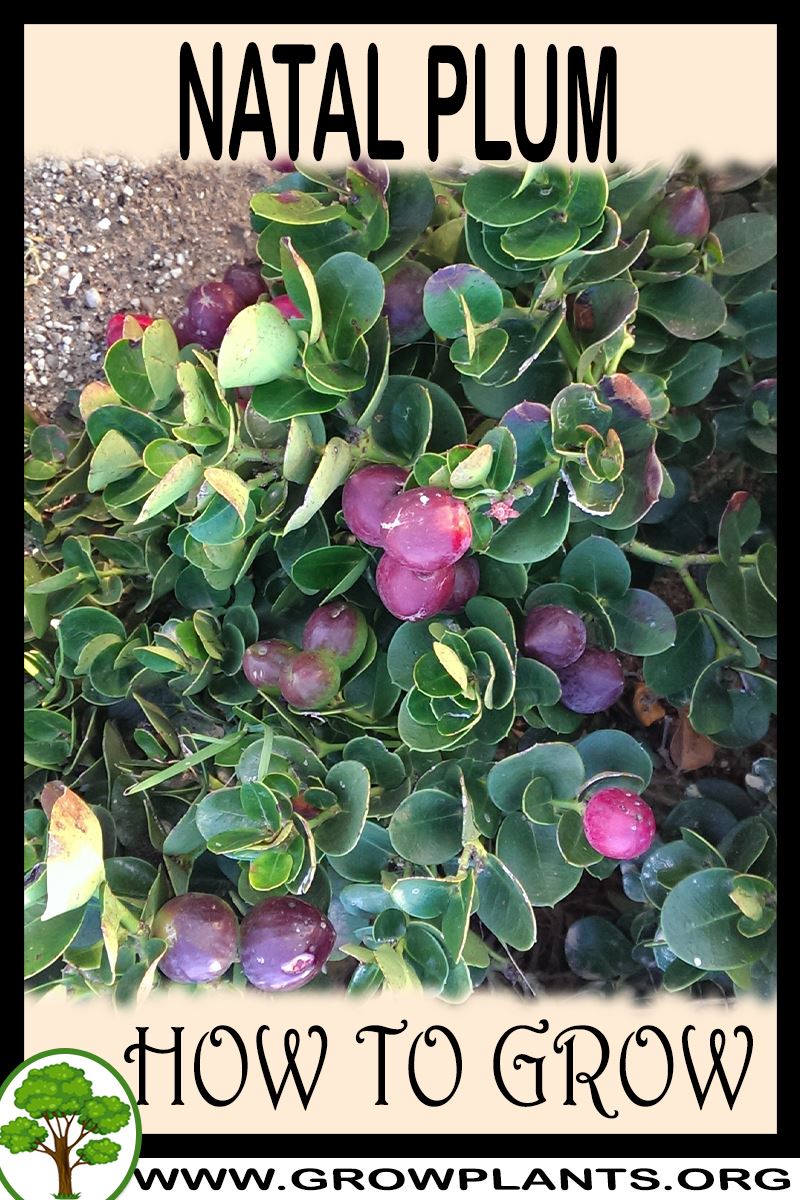
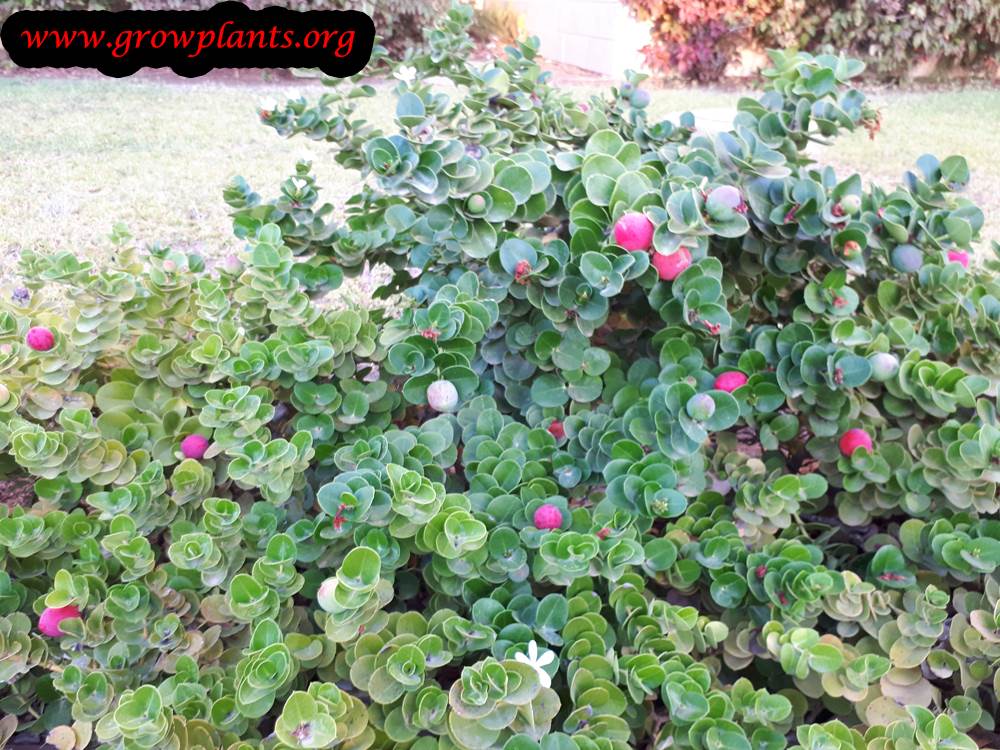
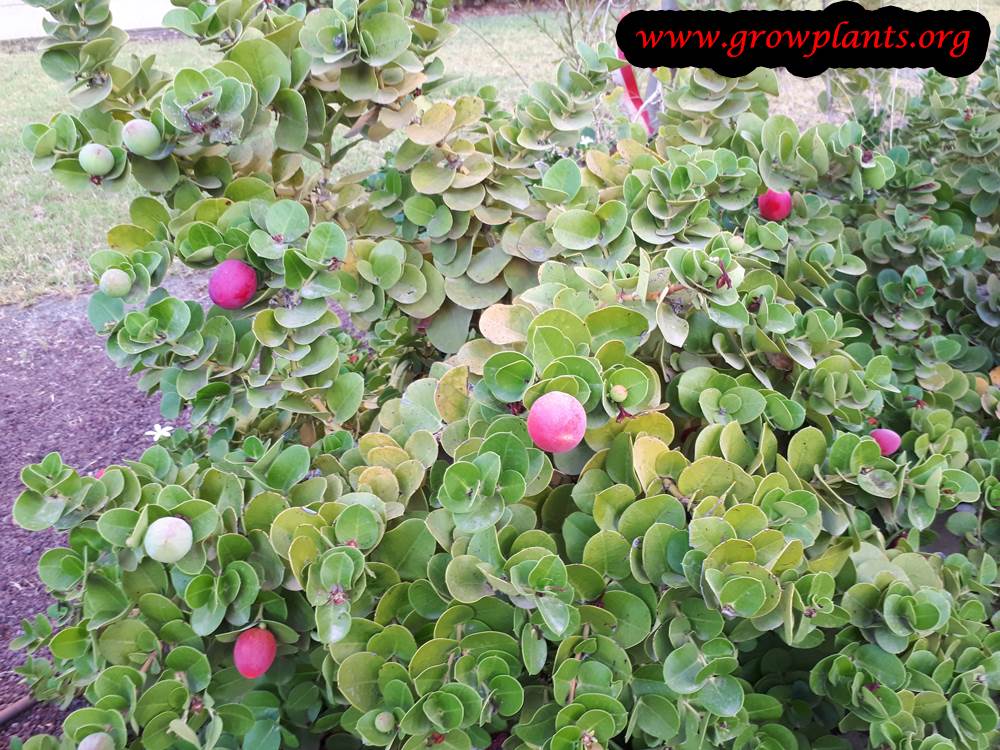
A dense evergreen shrub reaching about 0.5-5 m (1.8-15 ft), with dwarf and groundcover forms. A tough, salt- and drought-tolerant perennial grown as a hedge, groundcover or houseplant, with fragrant white flowers and edible red fruit.
Quick Specifications
| Specification | Attribute |
|---|---|
| Plant Type / Life Cycle | Perennial |
| Foliage Type | Evergreen |
| Mature Size | 0.5-5 m (1.8-15 ft); dwarf forms 20-50 cm |
| Growth Rate | Moderate to slow |
| Toxicity | Ripe fruit edible; unripe fruit and milky sap toxic |
| Hardiness | USDA zone 9b/10+ |
Growth Form & Structure
- Height & Spread: 0.5-5 m (1.8-15 ft) tall; dwarf and prostrate cultivars 20-50 cm used as groundcover; grows well in pots
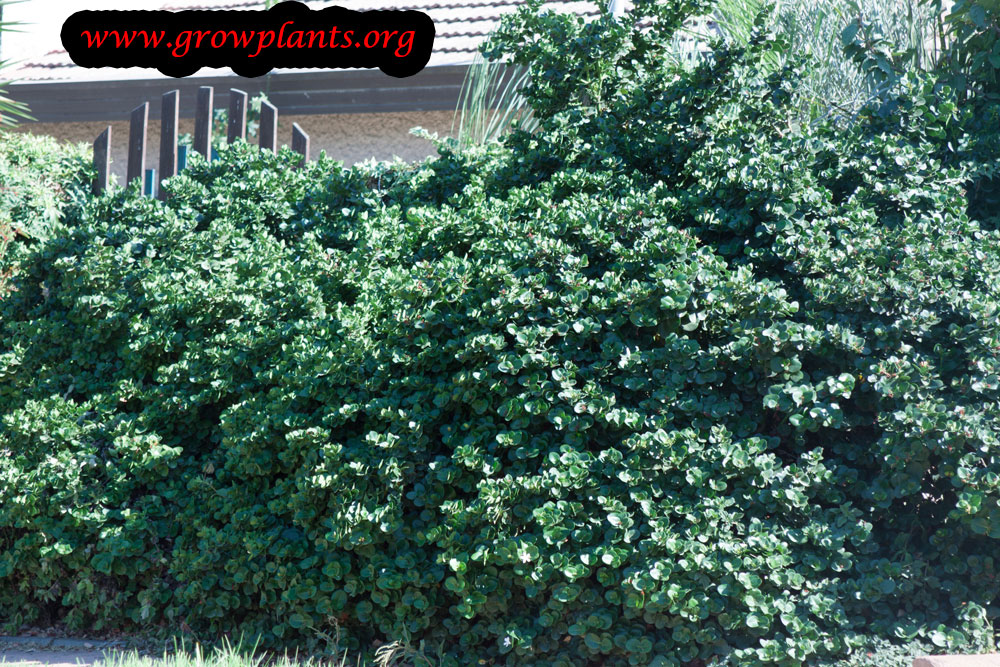
- Growth Habit & Form: Dense, mostly thorny mounding shrub; prostrate cultivars spread as groundcover; trainable as hedge, tree or bonsai
- Lifespan & Maturity: Bears fruit about 2 years from planting
Anatomy & Physical Features
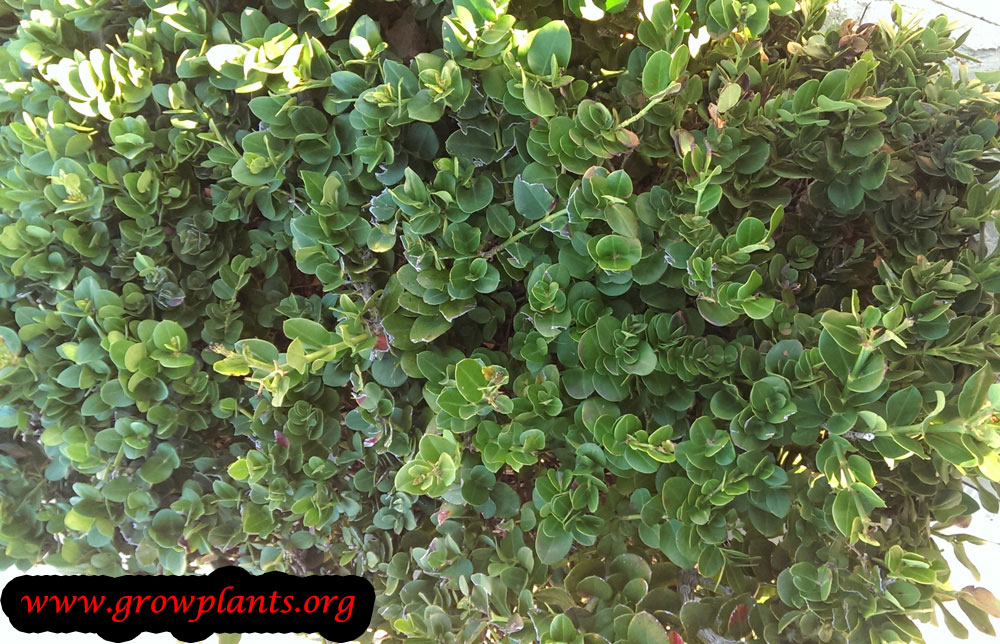
- Leaves & Foliage: Dark green, leathery, rounded to ovate leaves in opposite pairs
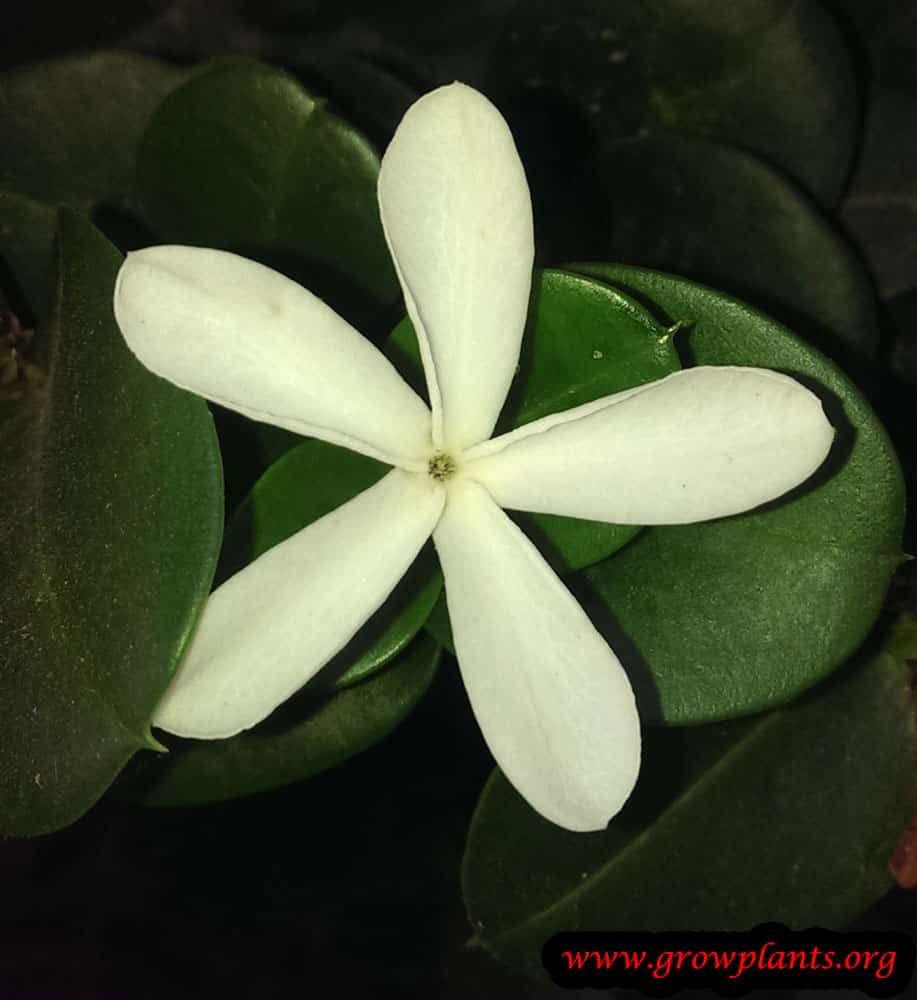
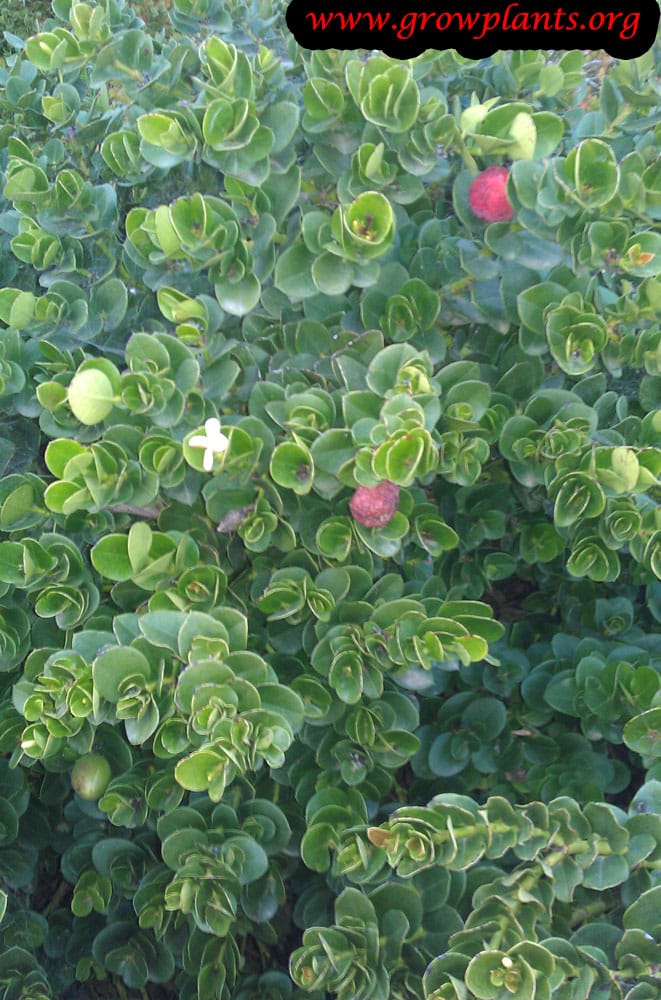
- Flower Characteristics: Fragrant white 5-petalled flowers in clusters; bee-pollinated
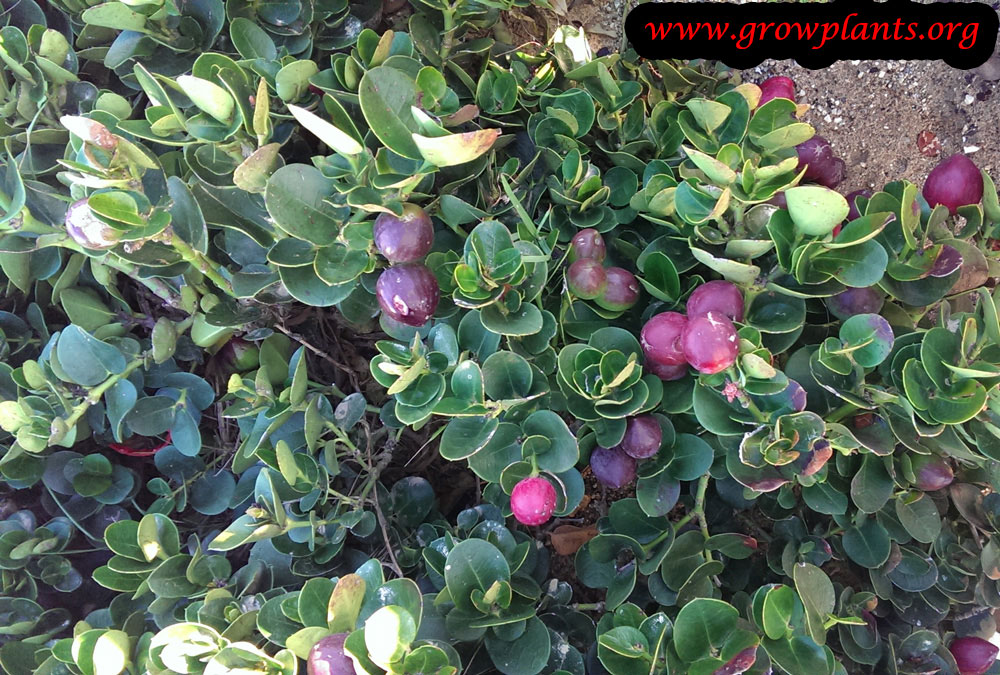
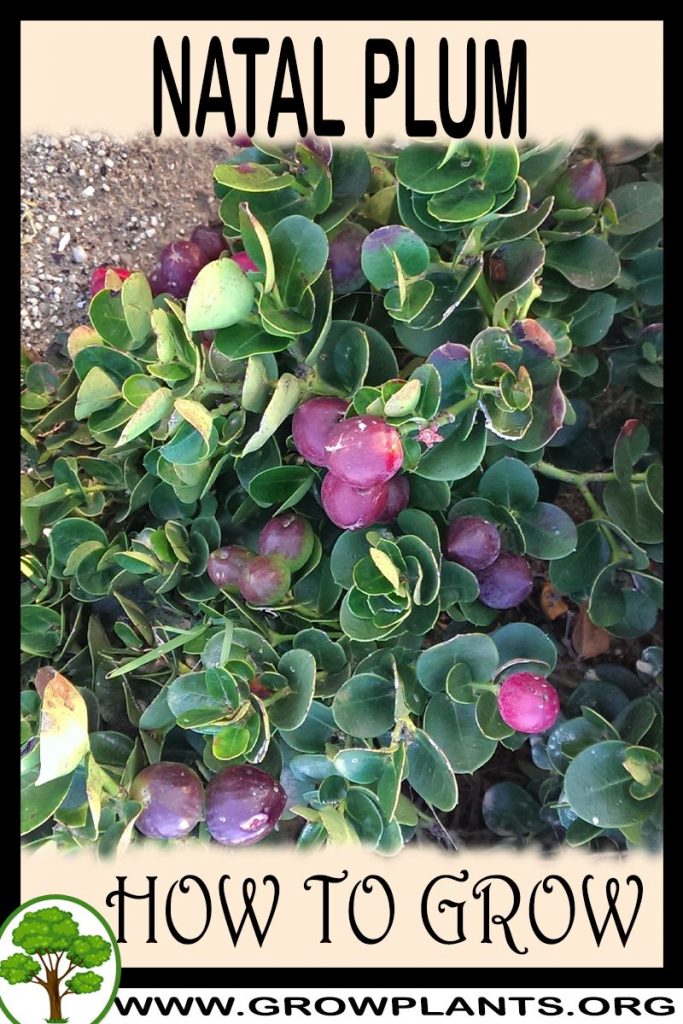
- Fruit Profile: Glossy pink-red oval berries with soft, milky-fleshed edible pulp
Primary Uses & Landscape Value
- Edible Uses: Ripe fruit eaten raw and made into jams and pickles
- Functional & Ornamental Roles: Hedge, groundcover, foundation and coastal planting; container/houseplant; bonsai; drought- and salt-tolerant
Care Guide: Planting, Soil & Watering
Overview: A dense, thorny, salt-tolerant shrub for full sun and well-drained soil. It is slow to moderate growing and drought-tolerant once established, though it prefers regular water.
Quick Care Requirements
| Requirement | Ideal Condition |
|---|---|
| Planting Season | In spring in zone 9b; spring–summer in 10a; spring–autumn in 10b; year-round in 11+ |
| Growth Rate | Moderate to slow |
| Soil Type | Well-draining |
| Water Need | Low to moderate – drought-tolerant once established, but prefers regular water |
Planting & Establishment
- Best Planting Season: Plant in spring in cooler zones, extending through the warm season in milder zones; year-round in zone 11+.
- How to Plant:
- Hole Preparation: Dig a hole wider than the root ball.
- Soil Amendments: Mix in compost, and add grit if the soil is heavy.
- Planting Depth: Set the root collar at soil level.
- Growth Speed & Expectations: Moderate to slow; from dwarf forms of 20–50 cm up to shrubs of several metres.
Soil, Watering & Drainage Care
- Soil Mix & Drainage Needs: Well-drained soil; excellent in coastal, salty conditions. Grows well in containers.
- Watering Schedule & Technique:
- Young / Newly Planted: Water regularly to establish.
- Established: Water sparingly to moderately; it tolerates drought but blooms and fruits better with regular deep watering.
- Seasonal Adjustments: More in heat, less in winter.
Climate, Light & Hardiness
Natal plum is an evergreen shrub of tropical, Mediterranean, desert, and subtropical climates that can also be grown as a houseplant, hardy to USDA zone 10+ and, with good care and siting, down to zone 9b. It flowers and fruits best in full sun; increasing shade progressively reduces flowering and fruit set, and established plants prefer to avoid temperatures below about −5°C (23°F) even though they can briefly survive colder.
Quick Climate Specifications
| Climate Zones | tropical, Mediterranean, desert, or subtropical climates; also grown as a houseplant |
|---|---|
| USDA Hardiness Zones | 10+, and with good care down to 9b |
| Optimal Temp Range | warm, largely frost-free conditions typical of subtropical and Mediterranean climates |
| Cold Damage Begins | cold injury becomes a concern as temperatures approach freezing |
| Approx. Survival Minimum | prefers to stay above roughly −5°C (23°F); established plants can briefly survive somewhat colder |
| Frost Tolerance | Low |
| Light Conditions | Full Sun / Half Shade / Full Shade (flowering and fruiting decline in full shade) |
| Wind Tolerance | Moderate |
Sunlight & Light Exposure
Optimal Light Setup
Full sun gives the best flowering and fruiting; half shade is tolerated with some trade-off.
Direct Sun Requirement
Some direct sun exposure is genuinely needed to bloom and set fruit reliably; plants kept in full shade, including many indoor situations, often stop fruiting.
Shade & Heat Management
Handles full shade without dying, but growth becomes more purely ornamental (foliage only) rather than fruiting; handles full sun heat well.
Best Exposure/Orientation
An open, sunny position outdoors; if grown as a houseplant, place near the brightest available window and, ideally, give it some time outdoors in season.
Temperature Extremes & Hardiness
USDA Hardiness & Regional Limits
Reliable outdoors year-round in zone 10+; the site data notes that with good care it can also succeed in zone 9b, making it slightly more cold-tolerant at the margin than Karonda (Carissa carandas).
Cold Damage & Winter Protection
Prefers to stay above roughly −5°C (23°F); in zone 9b, site it in a warm, sheltered microclimate and protect from hard frost.
Frost Sensitivity
Frost sensitive; an established plant can briefly survive somewhat colder than its preferred minimum, but young plants are more vulnerable.
Extreme Heat Tolerance
Very good – well suited to hot tropical, desert, and Mediterranean summers.
Wind, Humidity & Microclimate
Humidity Preferences
Adaptable across humid tropical and drier Mediterranean or desert climates.
Dry-Air Tolerance
Good; grows with small to average irrigation and also tolerates drought once established.
Wind Tolerance
Moderate; dense growth copes reasonably well with wind, and it is sometimes used as a hedge.
Rainfall & Seasonal Moisture
Adapted to climates with a dry season; tolerates low rainfall once established.
Microclimate Recommendations
Toward the cold edge of its range (zone 9b), a warm, sheltered, sun-facing microclimate makes the difference between reliable survival and frost damage.
Growing in Pots, Balconies & Indoors
Natal plum (Carissa macrocarpa) makes a genuine container and indoor plant – the grower confirms it can be grown indoors (though it may not fruit without some sun), and dwarf cultivars (20-50 cm) are ideal for pots, windowsills and bonsai. Give it a sunny spot if you want the fragrant flowers and fruit.
Quick Details
- Container Size: Start 20-30% larger than the root ball and step up (grower’s method); dwarf cultivars stay compact
- Indoor Suitability: A good houseplant for a bright spot – needs some direct sun to actually fruit
- Best Spot: Full sun to part shade (sun for flowers and fruit)
- Soil & Drainage: Good free-draining potting soil
- Watering in Pots: Average – it will take some drought but prefers steady moisture; never waterlogged
Indoors & On the Windowsill
- As a houseplant: The grower rates it Yes for indoors. Give it the brightest window you have, keep it warm, and it makes a handsome glossy evergreen; a dwarf cultivar is perfect for a sill or bonsai.
- For flowers and fruit: It needs real sun to bloom and set fruit – deep shade gives leaves only, so a sunny sill, sunroom or a spell outdoors in summer helps.
- Overwintering: Frost-tender – in cold climates keep the pot bright and frost-free over winter.
- Safety: All parts exude a white latex, and the unripe fruit is toxic – only the fully ripe fruit is edible. Keep it away from children and pets and take care with the sap.
On a Balcony or Patio
- Light & wind: Give it the sunniest spot for the best show; its spines suit it to an edge or screen. Pots against warm walls dry fast – check moisture in the heat.
- Practicalities: A stable, free-draining tub; place the spiny growth clear of passers-by.
Choosing the Pot, Soil & Long-Term Care
- Pot & drainage: Strong drainage holes and no standing-water saucer, to avoid root rot. Terracotta breathes and dries faster, glazed or plastic holds moisture longer.
- Potting mix: A well-aerated, organic mix – peat or coir with perlite (and a little vermiculite) – giving roots both moisture and air.
- Feeding: Potted plants need feeding more often than those in the ground, since watering leaches nutrients from the mix – a balanced feed through the growing season keeps them productive.
- Repotting: Refresh the top of the mix and pot up about every couple of years; on established plants, lightly root- and top-prune to keep them in balance with the pot.
Grower’s Container Tip
- Step-up potting (grower’s method): Either start straight in the final-size container, or better, begin in a pot about 20-30% larger than the root ball and step it up as the roots grow until it reaches the size you want. Use a good potting soil.
- Care: Mainly prune and shape it once a year to keep it neat and productive.
Fertilizing & Feeding
A light feeder: grown mostly as an ornamental hedge, groundcover, or container plant for its fragrant flowers rather than as a fruit crop, it needs only modest feeding through the warm growing season and little to none when growth slows.
Quick Fertilizing Specs
| Feeding Level | Light feeder |
|---|---|
| Main Nutrient Priority | Balanced feeding with adequate nitrogen to support foliage and fragrant bloom |
| Best Feeding Period | Spring through the warm active growing season, when bloom is heaviest |
| Organic Options | Compost worked into well-drained soil |
| Reduce/Stop Feeding | Ease off feeding as growth slows in cooler weather |
| Micronutrients | Usually met by a complete fertilizer in well-drained soil; correct only diagnosed deficiencies |
| Soil pH | Prefers well-drained soil and tolerates a wide range |
Feeding by Growth Stage
Active growth and bloom
Support fresh foliage and the fragrant, star-shaped white flowers, whether the plant is grown as a hedge, groundcover, or in a container.
| Nutrient direction | A balanced complete fertilizer with adequate nitrogen supports foliage and steady flowering; do not favor a high-phosphorus ‘bloom booster’, which isn’t necessary for good flowering. |
|---|---|
| Timing | Through the warm active growing season, when flowering is heaviest. |
| Frequency | An occasional light feeding through the growing season is usually enough. |
| Fertilizer types | A balanced complete fertilizer, Compost as a top-dress around the root zone |
| Precautions | Keep feeding light; this shrub is drought-tolerant and undemanding, and overfeeding can push soft growth at the expense of flowering. |
Cool-season slowdown
Let the plant coast through cooler weather, when growth and flowering naturally slow, without pushing new growth.
| Nutrient direction | None – withhold fertilizer while growth is slow. |
|---|---|
| Timing | Cooler months, or indoors during low-light winter conditions if grown as a houseplant. |
| Frequency | No feeding during this slowdown; resume only when active growth returns. |
| Fertilizer types | No feeding at this stage; do not fertilize while growth is slow. |
| Precautions | Withhold fertilizer now; feeding a plant that isn’t actively growing risks salt buildup rather than better bloom. |
Nutrient Deficiency Signs & Corrections
Pale, yellow-green foliage and reduced new growth or flowering.
| Possible causes | low available soil nitrogen, very sandy or fast-draining soil that leaches nutrients, prolonged root stress from either drought or waterlogging |
|---|---|
| Appears first on | older, lower leaves |
| What to check | recent feeding history, soil texture and drainage, watering consistency |
| Possible correction | Apply a light, balanced complete fertilizer during the active growing season. |
Healthy foliage but sparse or absent flowering.
| Possible causes | insufficient light, since the facts note full shade reduces blooming and fruiting, over-application of nitrogen at the expense of overall plant balance, juvenile plant age or a heavily shaded container position |
|---|---|
| Appears first on | the whole plant showing few or no flowers despite healthy leaves |
| What to check | how much direct sun the plant receives, recent feeding balance, plant age and container position |
| Possible correction | Move to a sunnier spot if shaded and keep feeding balanced rather than adding extra phosphorus, which is not the typical cause of poor bloom. |
Leaf margins scorch or brown and growth stalls despite adequate watering.
| Possible causes | fertilizer salt buildup from overfeeding, under-watering that concentrates salts in the root zone, especially in containers, poor drainage limiting salt leaching |
|---|---|
| Appears first on | leaf margins and tips |
| What to check | recent fertilizer amounts and frequency, watering consistency, container or bed drainage |
| Possible correction | Ease off feeding and water thoroughly to help flush accumulated salts, then return to lighter feeding. |
Pruning, Training & Seasonal Maintenance
Natal plum’s pruning approach depends heavily on which cultivar or form is being grown – this plant’s own data lists prostrate groundcover selections, dwarf mounds, upright hedge or small-tree forms, and bonsai-trained specimens, so the right cut depends on the intended habit rather than a single fixed routine. It tolerates pruning year-round and blooms mostly spring–summer (potentially longer in mild climates) on new growth, so shaping after a flowering flush costs little bloom and encourages the next one.
Quick Pruning & Maintenance Specs
| Pruning Tolerance | Moderate-High |
| Primary Pruning Window | Year-round, light and as-needed |
| Main Objective | Form-dependent: hedge density, groundcover spread control, small-tree structure, or bonsai refinement, plus easy fruit access |
| Young Plant Priority | Reinforce the cultivar’s natural habit rather than fighting it |
| Mature Plant Priority | Maintain chosen form; renew old wood; keep spiny growth away from paths |
| Best Tool Type | Form-dependent – see Tools |
| Avoid Heavy Pruning During | An actively ripening fruit flush |
Pruning by Plant Age & Size
Newly Established
Minimal – let young plants fill out before the first real shaping.
Young / Formative
Match training to the cultivar: groundcover types (‘Prostrata’, ‘Horizontalis’) need only spread/edge control, not upward training; dwarf mound types (‘Nana’, ‘Boxwood Beauty’) benefit from light tip-pinching for density; upright types grown as hedge or small tree need early leader or line selection.
Mature / Established
Maintain the established form: shear hedges to a uniform face; thin tree-form or bonsai specimens selectively rather than shearing.
Flowering & Fruiting Wood
Bloom is mostly spring–summer (potentially longer in the mildest climates) on new growth, with fruit taking about two years from planting to first bear. Because bloom occurs on new wood, routine shaping just after a flowering flush removes little of the coming crop and instead promotes fresh flowering shoots – but avoid shearing while a wanted fruit flush is still ripening.
Structural Pruning & Training
Thorn-bearing cultivars (the data notes most cultivars carry thorns) need enough internal or edge clearance for safe hand access at harvest and hedge-maintenance time. Groundcover cultivars need periodic edge-trimming to keep spread in bounds rather than shrub-style pruning. Tree- or bonsai-trained specimens need a clear single trunk with competing basal stems removed.
Special Growth to Remove
- Reverted growth on thornless or more compact selections – occasional more vigorous, thorny shoots reverting toward the species type; remove promptly to keep a chosen cultivar true to form.
Container & Small-Space Pruning
This species is grown in containers with pruning/design done roughly once a year; that annual reshaping is also the time to check the root ball and keep top growth in scale with the pot. Dwarf cultivars are naturally best suited to container culture and need less frequent correction than full-size forms.
Tools
Bypass secateurs for routine shaping and thorny growth; hedge shears only for plants deliberately kept as a clipped hedge; precision snips for fine bonsai or dwarf-cultivar work; loppers occasionally for older wood on a tree-form specimen.
Tool Hygiene & Disease Risk
Routine – no major transmissible disease is flagged for this species; clean, sharp tools are sufficient.
Cut Placement & Technique
On groundcover cultivars, trim at the spreading runners/edge rather than shearing the crown. On hedges, shear to a consistent face. On bonsai or tree forms, use thinning cuts back to a bud or side branch to preserve natural structure.
Heavy Pruning & Rejuvenation
Tolerates fairly hard renewal cuts on overgrown hedge or mound forms; expect vigorous, thorny regrowth and a temporary drop in flowering while it recovers. Groundcover cultivars can be cut back hard at the edges to reclaim spread without harming the planting.
Post-Pruning Care
Minimal follow-up on this tough, drought-tolerant shrub; normal watering after a hard reshape.
Common Pruning Mistakes
- Shearing a groundcover or bonsai-trained specimen as if it were a formal hedge.
- Letting reverted thorny, vigorous shoots take over a thornless or compact cultivar.
- Ignoring thorns when working close to the plant.
When NOT to Prune
Avoid heavy shaping while a wanted fruit flush is ripening. This plant’s own data notes full shade already reduces bloom and fruit, so avoid hard pruning of shade-grown plants, which would compound that loss.
Recommended Tools (by task)
| Task | Tool Category | Why |
| General shaping / thorny growth | bypass_secateurs | Clean cuts on spiny wood |
| Hedge-form maintenance | hedge_shears | Only for hedge-trained specimens |
| Bonsai / dwarf-cultivar detail work | precision_snips | Fine control for small-scale forms |
| Older wood on tree-form specimens | loppers | Handles thicker stems on mature tree-trained plants |
Pruning Troubleshooting
| Problem | Possible Cause | What to Check | Corrective Action |
| Poor flowering/fruiting | Grown in full shade and/or sheared right before a bloom flush | Light exposure and pruning timing | Move to more sun where possible; shape just after a flush |
| Thorny reversion overtaking a thornless cultivar | Reverted shoot left to grow unchecked | Atypical vigorous, thorny stems | Remove reverted growth at its base |
| Groundcover spreading past its bed | Edges not trimmed | Spread at bed margins | Trim runners back to the desired edge |
Propagation Guide
Stem cuttings from a named cultivar are the best method for Natal plum, since vegetative propagation is the only reliable way to keep cultivar-specific traits – dwarf or full size, thornless or thorny, upright/hedge or prostrate/creeping habit, and fruit quality – true to the parent (the source lists cultivars such as Boxwood Beauty, Nana, Prostrata, and Horizontalis that each depend on this). Seed germinates readily in a few weeks but seedlings vary in these traits, so difficulty is Easy overall, with the main caution being to take cuttings from correctly identified stock.
Quick Propagation Specs
| Best Propagation Method | Stem cuttings from a named cultivar |
| Alternative Methods | Seed |
| Propagation Difficulty | Easy |
| Seed True-to-Type | Variable – cultivar traits (dwarf size, thornlessness, growth habit, fruit quality) are cultivar-dependent and not guaranteed from seed |
| Vegetative True-to-Type | Yes |
| Best Propagation Season | Spring to summer (sowing possible year-round in hardiness zone 11+, but establishes best in spring) |
| Seed Germination Time | 3–5 weeks |
| Seed Sowing Depth | 0.5–1 cm (0.25–0.5 inch) |
Growing from Seed
Seed Handling & Viability
Store seed dry, in a dark spot, at room temperature until sowing.
Sowing Season
Spring to summer; sowing is possible year-round in hardiness zone 11+, but plants establish best when sown in spring.
Sowing Depth & Orientation
0.5–1 cm (0.25–0.5 inch) deep.
Germination Conditions
Moist, well-drained soil in warm weather and a sunny location.
Germination Time
3–5 weeks.
Seedling Care
Keep in a sunny location and water regularly; avoid overwatering and don’t let the soil dry out.
Seedlings are genetically variable and will not reliably reproduce named cultivar traits such as dwarf size, thornlessness, prostrate/creeping habit, or specific fruit quality.
Stem Cuttings
Cutting Type
Stem cuttings taken from a named cultivar, chosen specifically to preserve its size, growth habit (upright, hedge, creeper, or bonsai form), thorn presence, and fruit quality.
Best Timing
Best taken during the warm growing season (spring to summer).
Rooting Setup
Use a well-drained rooting medium and keep it consistently moist; most cultivars carry spines (Boxwood Beauty is a noted thornless exception), so handle cuttings with care.
Rooting Hormone
Optional – may improve consistency, though this species is generally easy to root from cuttings.
Bloom & Flower Guide
Quick Details
- Bloom Season: Mainly spring to summer, but can flower on and off all year
- Flower Appearance: Fragrant white, five-petalled flowers in small clusters
- Edibility: Not edible – the plant contains toxic milky latex, and the flowers are ornamental only
Detailed Blooming Overview
Natal plum (Carissa macrocarpa) is grown as much for its flowers as its fruit. The white, five-petalled, star-shaped blooms are sweetly fragrant and appear mainly from spring into summer, though in mild climates the shrub can flower nearly year-round, often carrying flowers and fruit at the same time.
Flower Characteristics
- Fragrant white flowers with five petals, held in small clusters.
- Star-like form with a jasmine-like scent, attractive on hedges and ground cover plantings.
Bloom Care & Thinning
- Pollination: Visited and pollinated by bees.
- Safety: The plant’s milky latex is toxic – only the fully ripe fruit is edible; keep flowers, leaves and stems out of the mouth.
Fruit & Uses
Natal plum is grown mainly as an ornamental hedge or groundcover, but its glossy pink-red, oval berries are genuinely edible once fully ripe, eaten fresh or made into pickles and jam. As with its relative Karonda, only the ripe fruit is used as food – the plant’s sap and unripe fruit are left alone.
Quick Edible Specs
| Edible Parts | Fruit |
|---|---|
| Main Use(s) | Culinary – fresh eating, pickles, jams/preserves; ornamental use is the plant’s primary role |
| Eaten Raw or Cooked | Raw when fully ripe; cooked/pickled when firmer |
| Preparation Required | None for ripe fruit eaten fresh; cooking or brining for pickles and jam |
| Harvest Season | Mostly summer to autumn, can extend year-round in the warmest growing zones |
| Time to First Harvest | Takes a couple of years from planting to first fruit; see Propagation for how the start method affects timing and fruit quality |
| Storage | Best used fresh or processed soon after picking; jams and pickles extend storage |
| Safety/Toxicity Caveat | Only the fully ripe fruit is eaten; the milky sap and unripe fruit are not used as food, and most cultivars carry thorns that make picking care worthwhile |
Fruit
The oval berries ripen to a glossy pink-red, with a milky liquid inside that is normal in the fruit’s interior. Pick once fully coloured and slightly soft; under-ripe fruit is firm and less pleasant to eat. Ripe berries are eaten out of hand or processed into pickles and jam when harvests are large.
Harvesting
Fruiting runs mostly summer into autumn, longer in frost-free climates, and ripens gradually rather than all at once, so the plant is picked over several rounds. Birds are the main competition for ripe fruit.
Preparation, Uses & Safety
Ripe fruit needs no preparation beyond picking and rinsing. For pickles or jam, cook the fruit with sugar, salt or spices as for any tart berry. Because most cultivars are thorny and the plant produces a milky sap, handle the shrub with care when harvesting and stick to the ripe fruit itself as the edible part.
Pests, Diseases & Troubleshooting
Overview: Carissa is a tough, largely trouble-free subtropical shrub whose main pests are sap-suckers — scale, mealybugs, thrips and whiteflies — that invite sooty mold, while its diseases are mostly stress- and moisture-related dieback, leaf spot and root rot. Because it is drought-tolerant and resents wet feet, most problems trace back to overwatering or poor drainage, so cultural care (sharp drainage, restrained watering, sanitation) prevents the majority of issues.
Quick Troubleshooting Overview
| Issue / Pest | Main Symptom | Primary Solution |
|---|---|---|
| Scale / mealybug | Bumps or white cottony masses, honeydew, sooty mold | Prune, alcohol/water wash, horticultural oil |
| Thrips / whitefly | Silvery scarring, distorted growth, honeydew | Sticky traps, beneficials, insecticidal soap |
| Dieback / canker | Twig and branch tips brown and die back | Prune to healthy wood, reduce stress, copper |
| Leaf spot | Brown/purple leaf spots, yellowing, leaf drop | Airflow, no overhead water, copper fungicide |
| Root rot | Wilt in moist soil, dark rotted roots | Improve drainage, water less, phosphonate |
| Iron chlorosis | Yellow leaves, green veins on new growth | Fix drainage, lower pH, chelated iron |
Common Pests & Management
- Scale insects (Coccidae / Diaspididae):
- Symptoms: Brown, black, tan or white bumps along stems and leaf midribs that do not rub off; yellowing, twig dieback and, from soft scales, honeydew and sooty mold. The most persistent pest of Carissa.
- Prevention & Control: Prune out heavily encrusted twigs; scrub light infestations off; conserve natural enemies (ladybirds, parasitic wasps). Horticultural oil smothers scale and crawlers — time sprays to the crawler stage and repeat.
- Mealybugs (Planococcus / Pseudococcus spp.):
- Symptoms: White cottony masses in leaf axils, on new growth and around fruit; honeydew, sooty mold and stunted growth.
- Prevention & Control: Wash off with a water jet or wipe with alcohol-dipped swabs; remove badly infested tips; encourage beneficials. Neem or horticultural oil and insecticidal soap control persistent colonies.
- Thrips (Thysanoptera):
- Symptoms: Silvery scarring and stippling on leaves and flowers, distorted new growth and scarred young fruit; tiny slivers that move quickly when disturbed.
- Prevention & Control: Monitor with sticky traps; hose foliage and remove weeds; introduce predatory mites. Spot-treat with insecticidal soap or spinosad if numbers climb.
- Whiteflies (Aleyrodidae):
- Symptoms: Tiny white flying insects on leaf undersides with honeydew and sooty mold; more of a nuisance in warm, sheltered sites.
- Prevention & Control: Yellow sticky traps and beneficial insects usually keep them in check; wash foliage and treat with insecticidal soap or oil if needed.
- Spider mites (Tetranychus spp.):
- Symptoms: Fine stippling, dull bronzed leaves and faint webbing in hot, dry, dusty conditions.
- Prevention & Control: Rinse foliage and raise humidity; avoid dust and drought stress. Horticultural oil or insecticidal soap controls active mites.
Diseases & Fungal Issues
- Dieback and canker (Botryosphaeria / Colletotrichum spp.):
- Symptoms: Twig and branch tips brown and die back, sometimes with sunken cankers, often following stress, wounds or scale damage; leaves on affected stems wither.
- Treatment & Management: Prune out dead and cankered wood well below the affected area with sterile tools; keep plants healthy and unstressed; avoid wounds. Copper sprays give some protection where dieback is recurrent.
- Leaf spot (Cercospora / Alternaria spp.):
- Symptoms: Brown or purplish spots on leaves, sometimes with yellow halos; heavy spotting causes yellowing and leaf drop in warm, wet conditions.
- Treatment & Management: Avoid overhead watering; improve airflow; remove and destroy fallen infected leaves. Copper fungicide checks spread during prolonged wet weather.
- Root and crown rot (Phytophthora / Pythium):
- Symptoms: Wilting despite moist soil, yellowing, and dark rotted roots or a rotted crown in wet, poorly drained ground; branches decline and die.
- Treatment & Management: Plant in well-drained soil and avoid overwatering; do not mound mulch against the stem. Improve drainage; phosphonate treatments help protect valuable plants.
Growing Difficulties & Abiotic Problems
- Iron chlorosis:
- Cause & Symptoms: Yellowing leaves with green veins on new growth, especially in alkaline or waterlogged soils where iron uptake is blocked; Carissa is a common sufferer in high-pH coastal soils.
- Correction Strategy: Correct soil drainage and avoid overwatering; lower pH gradually with soil amendments; apply chelated iron for a quicker green-up while addressing the underlying soil condition.
- Root rot from overwatering:
- Cause & Symptoms: General decline, yellowing and wilting when this drought-tolerant shrub is kept too wet or grown in heavy soil.
- Correction Strategy: Water only when the topsoil dries; ensure sharp drainage; ease back on irrigation for established plants, which are notably drought-tolerant.
- Cold damage:
- Cause & Symptoms: Leaf burn, blackened tips and dieback after frost; these subtropical shrubs are tender and damaged by hard cold.
- Correction Strategy: Site in a warm, sheltered spot; protect with covers during frost; prune out cold-damaged wood once new growth resumes in spring.
What Helps — Products & Tools
For Carissa, keep horticultural or neem oil and insecticidal soap for scale, mealybug, whitefly and mites, plus sticky traps for monitoring thrips and whiteflies. Copper fungicide addresses leaf spot and dieback, and chelated iron corrects the chlorosis common on alkaline soils. The best tools, though, are good drainage and restrained watering, since this drought-tolerant shrub suffers most from wet feet.
Varieties & Cultivars
- Boxwood Beauty: Dwarf cultivar, grows 30-60cm (12-24 inches), no thorns.
- Nana: Dwarf cultivar, grows to about 0.5m (1.8 feet / 20 inches).
- Prostrata: Low-growing cultivar, 20-40cm (8-16 inches); spreads and covers ground efficiently as groundcover.
- Horizontalis (Natal creeper): Also known as Natal creeper; grows 20-30cm (8-12 inches) as a creeper/groundcover.