Plant Profile & Key Characteristics
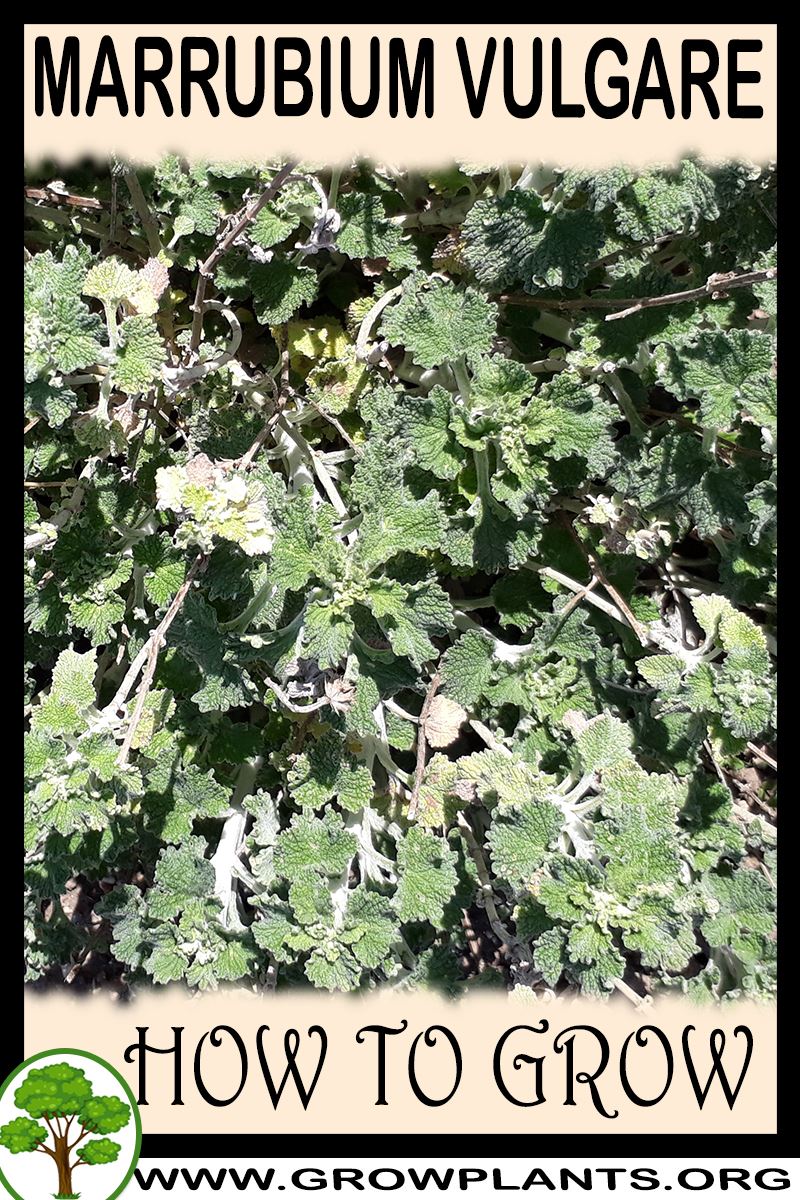
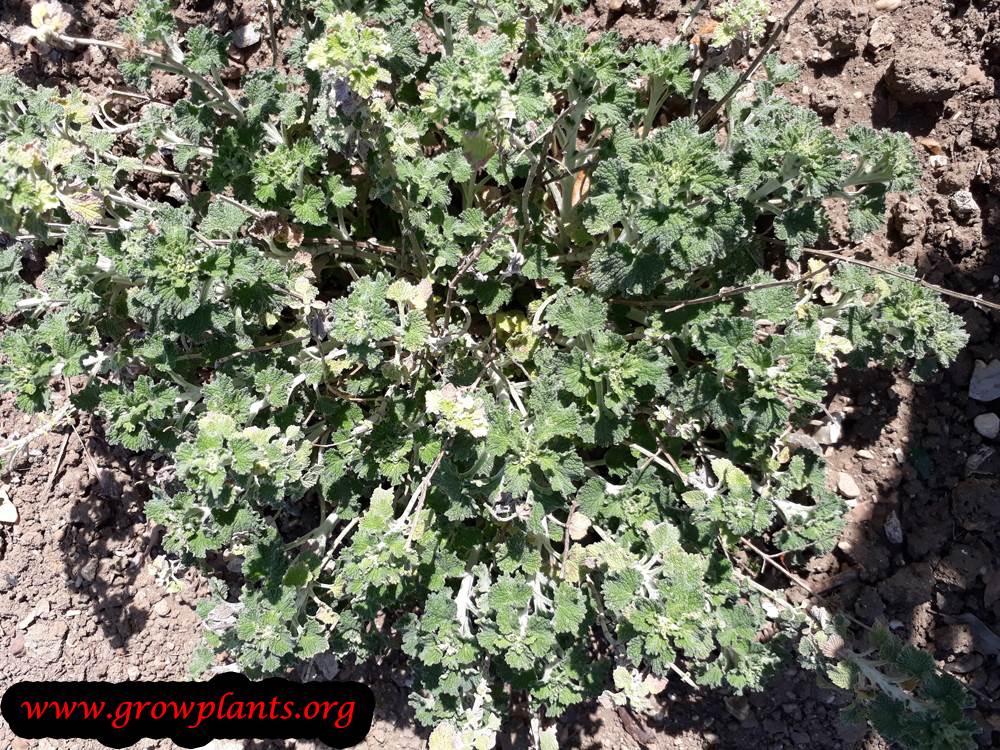
Overview: Marrubium vulgare (white horehound) is an aromatic evergreen perennial herb 20-50 cm with woolly grey-green foliage; grown mainly as a traditional medicinal and flavouring herb and as an ornamental.
Quick Specifications
| Specification | Attribute |
|---|---|
| Plant Type / Life Cycle | Perennial (evergreen) |
| Foliage Type | Evergreen |
| Mature Size | 20-50 cm (8-20 in) |
| Growth Rate | Fast to moderate |
| Toxicity | Non-toxic (traditional medicinal herb) |
| Hardiness | USDA 4-8 |
Growth Form & Structure
- Height & Spread: 20-50 cm (8-20 in); suits containers.
- Growth Habit & Form: Bushy, branching herb with square stems (mint family).
- Lifespan & Maturity: Fast-establishing, long-lived perennial.
Anatomy & Physical Features
- Leaves & Foliage: Grey-green, wrinkled, woolly, deltoid leaves; aromatic.
- Flower Characteristics: Small white-to-yellowish flowers clustered in whorls along the stems (see Bloom guide).
Primary Uses & Landscape Value
- Edible Uses: Leaves used to make horehound tea, cough syrups and traditional candy; a bittering/medicinal herb.
- Functional & Ornamental Roles: Herb garden, grey-foliage ornamental and pollinator plant.
Care Guide: Planting, Soil & Watering
Overview: White horehound (Marrubium vulgare) is a hardy, fast- to medium-growing Mediterranean herb (zones 4–8) that thrives in full sun to part shade with well-draining soil. It is tough and drought tolerant, needing only moderate watering once established.
Quick Care Requirements
| Requirement | Ideal Condition |
|---|---|
| Planting Season | Spring through autumn |
| Growth Rate | Fast to Moderate |
| Soil Type | Well-draining (tolerates poor, dry soil) |
| Water Need | Moderate |
Planting & Establishment
- Best Planting Season: Plant in spring, summer or autumn.
- How to Plant:
- Hole Preparation: Dig a hole a little wider than the root ball in a sunny, free-draining spot.
- Soil Amendments: Little is needed — loosen heavy ground with grit to improve drainage rather than enriching it.
- Planting Depth: Set the crown at soil level and firm gently.
- Growth Speed & Expectations: Fast to medium — forms a bushy clump about 20–50 cm (8–20 in) tall.
Soil, Watering & Drainage Care
- Soil Mix & Drainage Needs: Well-draining soil is important; it also grows well in a container with a free-draining mix and drainage holes.
- Watering Schedule & Technique:
- Young / Newly Planted: Water regularly at first to help roots establish.
- Established: Water moderately, letting the top of the soil dry between waterings; it tolerates dry spells well.
- Seasonal Adjustments: A little more in summer heat and much less in cool, wet weather.
Climate, Light & Hardiness
White horehound is a tough, sun-loving evergreen herb suited to temperate and subtropical climates. It grows in full sun to half shade and is reliably hardy through USDA zones 4–8.
Quick Climate Specifications
| Climate Zones | Temperate, Subtropical |
|---|---|
| USDA Hardiness Zones | 4–8 |
| Frost Tolerance | High |
| Light Conditions | Full Sun / Half Shade |
Sunlight & Light Exposure
Optimal Light Setup
Full sun to half shade both suit this hardy herb; its gray-green, hairy leaves are adapted to tolerate strong sun exposure.
Temperature Extremes & Hardiness
USDA Hardiness & Regional Limits
Hardy through USDA zones 4–8, a genuinely cold-tolerant herb well suited to temperate gardens with cold winters as well as milder subtropical sites.
Frost Sensitivity
Foliage tolerates frost well as an evergreen perennial in this range; hard freezes may cause some dieback that regrows from the base.
Wind, Humidity & Microclimate
Dry-Air Tolerance
Its hairy, gray-green foliage is adapted to dry, sunny conditions and well-drained soil, making it comfortable in relatively dry-air climates.
Growing in Pots, Balconies & Indoors
White horehound is a hardy, sun-loving medicinal herb the grower confirms is not a houseplant but grows well in containers. Grow it in a sunny pot on a patio or balcony rather than indoors; a container also helps keep this ready self-seeder from spreading.
Quick Details
- Container Size: A medium pot, 5-15 L, for a 20-50 cm plant
- Indoor Suitability: Not an indoor plant – a hardy outdoor herb
- Best Spot: Full sun to part shade, outdoors
- Soil & Drainage: Free-draining mix; it is drought-tolerant and dislikes wet feet
- Watering in Pots: Average water; let the top dry between waterings
Indoors & On the Windowsill
- Not a houseplant: A tough Mediterranean herb that won’t thrive in a room; a very sunny sill might hold a young plant briefly, but it belongs outside.
- Windowsill: Too dim indoors for a sun-loving herb to stay compact.
On a Balcony or Patio
- Light & seeding: Give it the sunniest spot; deadhead before seed sets, as it self-seeds freely.
- Practicalities: Once established it is drought-tolerant – handy for a hot, dry corner; water when the surface dries.
Choosing the Pot, Soil & Long-Term Care
- Pot & drainage: A well-drained pot with strong drainage holes and no standing-water saucer to avoid root rot; terracotta breathes and dries faster, glazed or plastic holds moisture longer.
- Potting mix: A well-aerated, organic-rich potting mix – peat or coir blended with perlite or vermiculite, leaning free-draining.
- Feeding: Potted plants are fed more often than those in the ground, as watering steadily leaches nutrients from the mix – a light feed; herbs stay more aromatic on a lean diet.
- Repotting: Refresh the top of the mix and pot up about every couple of years, lightly trimming the root ball and top growth every year or two.
Fertilizing & Feeding
A light feeder like most aromatic herbs in this family: it grows well in average, well-drained soil without much feeding, and keeping nitrogen light preserves the concentrated character that makes this plant useful as an aromatic and medicinal herb.
Quick Fertilizing Specs
| Feeding Level | Light feeder |
|---|---|
| Main Nutrient Priority | Minimal, low-nitrogen feeding; this herb performs best without rich, heavily fertilized soil |
| Best Feeding Period | Lightly during establishment, with little to no supplemental feeding afterward |
| Organic Options | A light top-dressing of compost worked into well-drained soil at planting |
| Micronutrients | Not typically needed for this low-demand herb; correct specific issues only when diagnosed |
| Soil pH | Tolerates a wide range of well-drained soils |
| Reduce/Stop Feeding | Little to no feeding is needed once established; excess fertility tends to produce lusher but less aromatic growth |
Feeding by Growth Stage
Establishment after planting
Help a newly planted or newly seeded horehound root into well-drained soil.
| Nutrient direction | A light, balanced feeding at most, since this herb establishes well in average-fertility soil. |
|---|---|
| Timing | At planting or after seedlings emerge. |
| Frequency | A single light feeding is usually enough while roots establish. |
| Fertilizer types | A light, balanced starter fertilizer, used sparingly, A light top-dressing of compost |
| Precautions | Avoid rich or heavily fertilized soil, which can produce weak, floppy growth in this naturally low-demand herb. |
Established active growth
Maintain steady, naturally compact growth without diluting the qualities that make this plant useful as an aromatic and medicinal herb.
| Nutrient direction | Keep nitrogen low; this herb rarely needs feeding once established and tends to perform best in lean, well-drained soil. |
|---|---|
| Timing | Through the main growing season, if feeding at all. |
| Frequency | Minimal feeding is usually enough for established plants; many established plantings need none at all. |
| Fertilizer types | A light, low-nitrogen fertilizer, used sparingly if at all |
| Precautions | Avoid regular feeding once established, since excess fertility tends to produce lusher but less aromatic, more sprawling growth. |
Nutrient Deficiency Signs & Corrections
Leaves are noticeably pale and growth is unusually weak even for this naturally low-demand herb.
| Possible causes | very low soil fertility, poor drainage limiting root function, prolonged period in an overly depleted container or bed |
|---|---|
| Appears first on | older leaves and overall plant vigor |
| What to check | soil fertility and drainage, recent feeding history, root health |
| Possible correction | Apply a light, balanced fertilizer and improve soil drainage rather than assuming heavy feeding is needed. |
Growth stalls, leaves yellow, and the base of the plant softens or declines.
| Possible causes | poorly drained soil holding excess water, root or crown rot from overwatering, planting site with inadequate drainage |
|---|---|
| Appears first on | lower leaves and the crown of the plant |
| What to check | soil drainage and recent watering, planting site grading, crown and root condition if accessible |
| Possible correction | Improve drainage and reduce watering frequency before considering any additional feeding. |
Pruning, Training & Seasonal Maintenance
Marrubium vulgare (white horehound) is a low, hairy-leaved herbaceous perennial in the mint family, grown mainly as a medicinal or ornamental plant rather than for culinary harvest. It tolerates light shaping cuts well and, like many of its Lamiaceae relatives, tends to become straggly and open at the base if never cut back – the source guidance places pruning in autumn to winter and describes it simply as tidying for appearance rather than any structural or productivity concern.
Quick Pruning & Maintenance Specs
| Pruning Tolerance | High |
| Primary Pruning Window | Autumn to winter |
| Typical Frequency | Once a year, plus light deadheading through the flowering season |
| Main Objective | Keep a neat, compact shape and prevent legginess |
| Young Plant Priority | Pinch growing tips to encourage a bushy habit |
| Mature Plant Priority | Annual cutback to prevent a bare, woody-based, sprawling clump |
| Best Tool Type | Precision snips |
| Avoid Heavy Pruning During | The first growing season after planting |
Pruning by Plant Age & Size
Newly Established
Pinch out growing tips rather than cutting hard, to encourage branching and a full habit while the plant is still rooting in.
Young / Formative
No formal training system – this is a low, bushy herbaceous plant; simply pinch tips through the first season to build density.
Mature / Established
Give the clump an annual tidy-up cut in autumn or winter, as the source describes, purely for appearance and to stop the base from becoming sparse and sprawling.
Seasonal Pruning Schedule
Dormant/Winter
Objective: tidy the plant’s shape for the coming season.
Remove: spent flower stems, straggly or sprawling growth, and any dead foliage.
Do not remove: the plant’s basal growing points.
Expected response: fuller, more compact regrowth in spring.
Flowering/fruiting impact: not a concern here – the plant is not grown for a wood-based flower or fruit crop, so this cut is purely cosmetic/structural.
Special Growth to Remove
- Spent flower spikes once bloom has faded.
- Straggly, sprawling stems that spoil the plant’s shape.
- Dead foliage, particularly at the base.
Container & Small-Space Pruning
In a container, trim a little more often than an in-ground planting to keep the naturally sprawling habit compact within the pot’s footprint.
Tools
Precision snips are all that is needed – stems are soft and herbaceous, so no heavier tool applies.
Tool Hygiene & Disease Risk
Routine – clean, sharp snips are sufficient; no notable transmissible disease is documented for this plant.
Cut Placement & Technique
Cut back to a healthy set of leaves or just above a lower growth point to encourage branching rather than leaving bare stubs.
Heavy Pruning & Rejuvenation
A hard cutback in autumn/winter is well tolerated and is, in fact, the main way to keep this plant from becoming permanently straggly – it regrows readily from the base the following season.
Post-Pruning Care
Water normally after cutting back; no extra feeding is needed simply because the plant was trimmed.
Common Pruning Mistakes
- Never cutting back, allowing the base to become bare and the whole plant to sprawl.
- Cutting hard during the first season before the plant is established.
When NOT to Prune
Avoid a hard cutback during the plant’s first season while it is still establishing.
Recommended Tools (by task)
- precision_snips – tip pinching on young plants and the annual autumn/winter tidy-up cut on soft herbaceous stems.
Propagation Guide
White horehound is most easily grown from seed, sown directly or started as seedlings, and the site confirms vegetative propagation is not required; established clumps can also be divided or increased by softwood cuttings if a specific plant needs to be replicated. Propagation is Easy.
Quick Propagation Specs
| Best Propagation Method | Seed (direct sow or seedling/transplant) |
| Alternative Methods | Division of established clumps; softwood stem cuttings |
| Propagation Difficulty | Easy |
| Seed True-to-Type | Usually true-to-type |
| Vegetative True-to-Type | Yes |
| Best Propagation Season | Spring, summer or autumn |
| Seed Sowing Depth | Shallow – this herb’s seed is small and best surface-sown or barely covered |
Growing from Seed
Sowing Season
Spring, summer or autumn.
Sowing Depth & Orientation
Sow shallowly; small seed germinates best when not buried deeply.
Germination Conditions
Germinates readily in well-drained soil in sun to part shade; no special pretreatment is generally needed.
Germination Time
Usually within a couple of weeks under warm conditions, though this can vary.
Division, Offsets, Pups & Suckers
Established clumps can be lifted and divided, ideally in spring, taking sections with both roots and shoots attached; keep divisions shaded and moist until they re-establish.
Stem Cuttings
Softwood tip cuttings taken in spring or summer will root readily in a well-drained medium; rooting hormone is not necessary but can help.
Bloom & Flower Guide
Quick Details
- Bloom Season: Summer into autumn
- Flower Appearance: Small white to pale flowers packed into dense whorls (clusters) around the square stems
- Edibility: A medicinal and aromatic herb; the leaves are the useful part, and the flowers are not treated as an edible flower
Detailed Blooming Overview
White horehound is a woolly, grey-green member of the mint family whose small flowers gather in tight whorls in the leaf axils, so the flowering stem looks like a series of bristly balls up the square stem. The blooms are modest but a good nectar source for bees. The plant is best known as the traditional source of horehound (from the leaves), used in old-fashioned cough remedies and candy.
Flower Characteristics
- Small two-lipped flowers, white to pale, easy to overlook individually.
- Densely clustered in whorls (verticillasters) around the stem, with hooked calyx teeth that later cling to fur and clothing.
Bloom Care & Thinning
- Pollination: Worked by bees drawn to the nectar.
- Managing the bloom: Cut back after flowering to keep the plant tidy and curb its free self-seeding.
Pests, Diseases & Troubleshooting
Overview: White horehound (Marrubium vulgare) is an aromatic, bitter, drought-tolerant Lamiaceae herb that is remarkably pest-free — its woolly, strongly flavoured leaves deter most insects — so the real risks are root rot in heavy wet soil and occasional aphids, spider mites, powdery mildew or rust. Grown lean, dry and sunny, it rarely needs more than good cultural care.
Quick Troubleshooting Overview
| Issue / Pest | Main Symptom | Primary Solution |
|---|---|---|
| Aphids | Small clusters on soft new growth; honeydew | Hose off, insecticidal soap; usually minor |
| Spider mites | Fine stippling and webbing in hot, dry, stressed conditions | Rinse, raise humidity, insecticidal soap if needed |
| Whiteflies | Small white flies over the plant; yellowing | Sticky traps, insecticidal soap |
| Powdery mildew | White powdery coating in humid, crowded, shady spots | Airflow, sun, avoid crowding; sulphur if severe |
| Rust | Orange-brown pustules on leaf undersides | Remove affected leaves, improve airflow |
| Root rot | Wilting, blackening base in wet, heavy soil | Sharp drainage, sun, avoid overwatering |
Common Pests & Management
- Aphids (Aphis / Myzus spp.):
- Symptoms: Occasional small green or dark clusters on the tender new shoots and flower spikes, with a little honeydew; rarely a serious problem on this bitter, hairy herb.
- Prevention & Control: Dislodge with a spray of water and, if needed, use insecticidal soap; natural predators usually keep numbers negligible, so avoid spraying an edible/medicinal herb unnecessarily.
- Spider mites (Tetranychus urticae):
- Symptoms: In hot, dry, stressed conditions the leaves may show fine pale stippling and light webbing, dulling the foliage.
- Prevention & Control: Rinse the plant, ensure it is not drought-stressed, and apply insecticidal soap only if mites persist; good airflow and adequate water prevent most outbreaks.
- Whiteflies (Trialeurodes vaporariorum):
- Symptoms: Small white flies may appear on plants grown under cover or in still, humid air, with nymphs on leaf undersides secreting honeydew.
- Prevention & Control: Use yellow sticky traps and insecticidal soap if needed; better airflow and outdoor culture discourage them.
- Grasshoppers & leaf-chewers (Acrididae; occasional caterpillars):
- Symptoms: Ragged chewed patches on the leaves during outbreaks, though the bitter foliage is generally avoided by most chewers.
- Prevention & Control: Hand-pick where practical and tolerate minor damage; horehound’s bitterness usually spares it serious defoliation.
Diseases & Fungal Issues
- Powdery mildew (Erysiphaceae):
- Symptoms: A white powdery film on the leaves in humid, crowded or shaded conditions, causing yellowing; uncommon on well-sited plants.
- Treatment & Management: Grow in full sun with good airflow, avoid overcrowding and overhead watering, and remove affected leaves; sulphur or potassium bicarbonate can be used if it persists.
- Rust (Puccinia spp.):
- Symptoms: Orange-brown to dark pustules on the leaf undersides with yellow spotting above, favoured by damp, cool, still conditions.
- Treatment & Management: Remove and destroy affected leaves, improve airflow and reduce leaf wetness; badly affected plants can be cut back to promote clean regrowth.
- Root & crown rot (Phytophthora / Pythium / Rhizoctonia):
- Symptoms: Wilting, yellowing and a blackening, softening base in heavy, wet or poorly drained soil — the main killer of this dry-loving herb.
- Treatment & Management: Grow in gritty, free-draining soil in full sun, water sparingly once established, and never let it sit wet; improve drainage rather than treating chemically.
Growing Difficulties & Abiotic Problems
- Wet feet / overwatering:
- Cause & Symptoms: Yellowing, collapse and rot where the soil stays damp; horehound resents rich, moist conditions.
- Correction Strategy: Plant in poor, dry, sharply drained soil in full sun and water only in prolonged drought.
- Legginess in shade or rich soil:
- Cause & Symptoms: Soft, floppy, sprawling growth with weak flavour in shade or over-fertile ground.
- Correction Strategy: Grow hard in full sun and lean soil, and trim to keep the plant compact and aromatic.
- Self-seeding / weediness:
- Cause & Symptoms: The plant seeds freely and can spread where unwanted.
- Correction Strategy: Deadhead before seed set to control spread and remove unwanted seedlings.
What Helps – Products & Tools
This herb is best managed culturally — full sun, lean free-draining soil and sparing water keep it healthy and pest-free. On the rare occasion pests appear, insecticidal soap handles aphids, mites and whiteflies, yellow sticky traps monitor whitefly, and sulphur or potassium bicarbonate addresses powdery mildew. Observe any pre-harvest interval on a medicinal herb.