
Plant Profile & Key Characteristics
Overview: Mandrake (Mandragora autumnalis) is a low herbaceous perennial geophyte forming a ground rosette of wavy leaves 10-30 cm high over a large forked taproot; grown as an ornamental curiosity and traditional medicinal plant, famed in folklore.
Quick Specifications
| Specification | Attribute |
|---|---|
| Plant Type / Life Cycle | Perennial (deciduous geophyte) |
| Foliage Type | Deciduous |
| Mature Size | Leaf rosette 10-30 cm (4-12 in); taproot 0.5-2 m (20-80 in) |
| Growth Rate | Slow to moderate |
| Root System | Thick, deep forked taproot (0.5-2 m) – the plant’s famous ‘mandrake’ root |
| Toxicity | Highly toxic – all parts contain tropane alkaloids (Solanaceae) |
| Hardiness | USDA 6-10 |
Growth Form & Structure
- Height & Spread: Leaf rosette 10-30 cm (4-12 in) high; can be container-grown where the pot is deep enough for the long root.
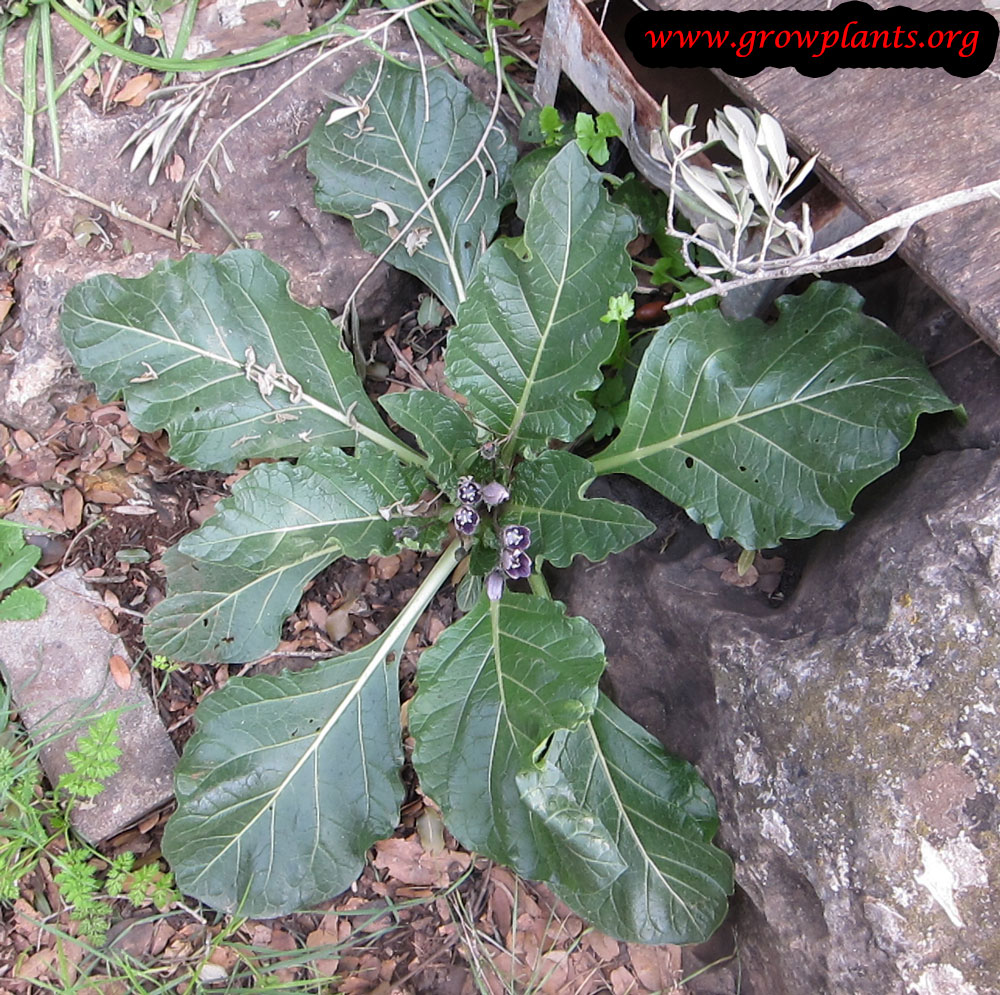
- Growth Habit & Form: Stemless ground-level rosette of leaves that dies back (deciduous) between seasons.
- Lifespan & Maturity: Long-lived perennial regrowing from its taproot each season.
Anatomy & Physical Features
- Leaves & Foliage: Green, wavy, ovate leaves with white veins, in a ground rosette.
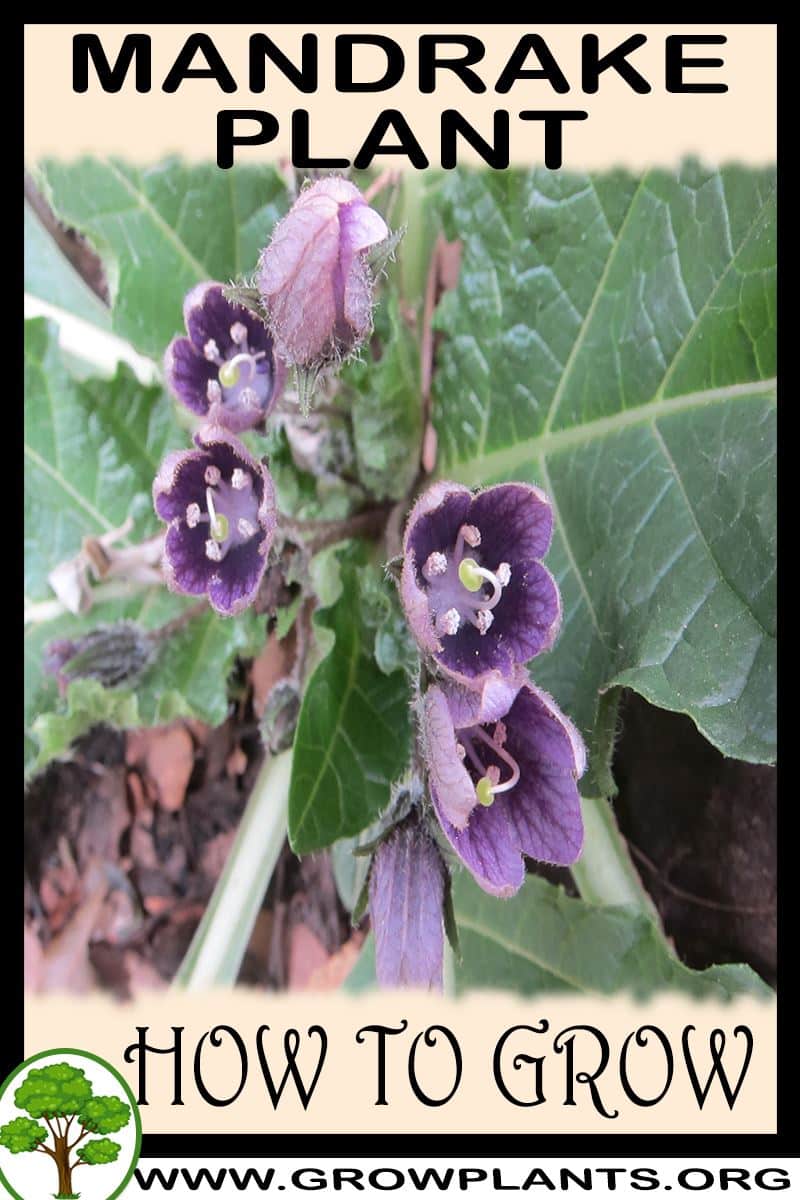
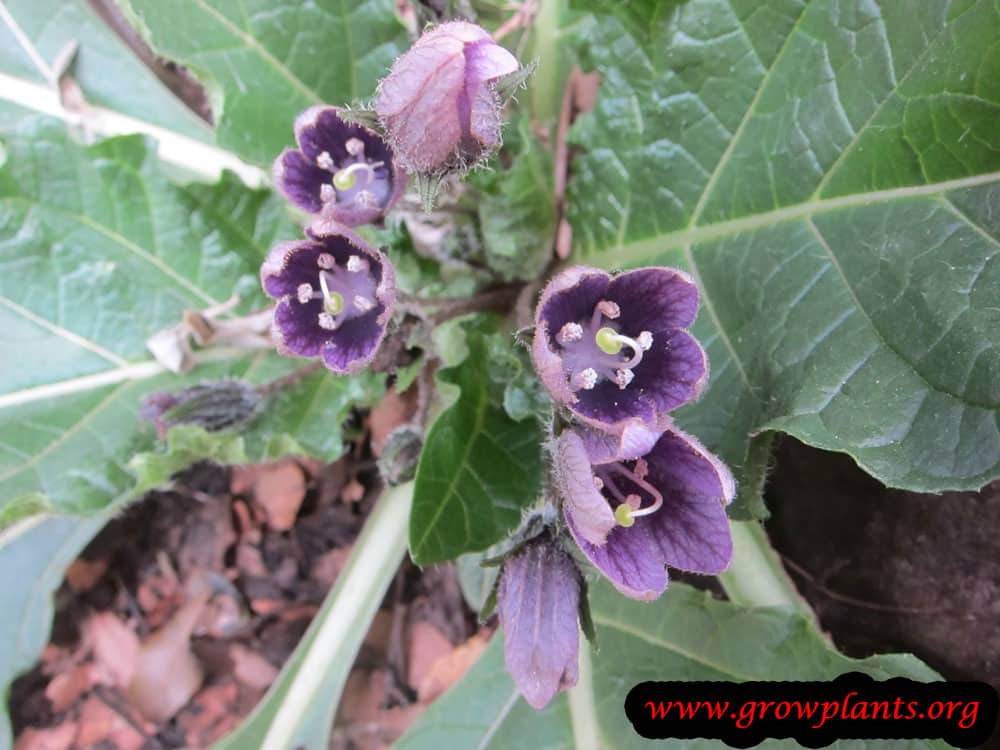
- Flower Characteristics: Purple or white five-petalled flowers (see Bloom guide).
Primary Uses & Landscape Value
- Functional & Ornamental Roles: Ornamental novelty and traditional medicinal/ritual plant; not edible (toxic).
Care Guide: Planting, Soil & Watering
Overview: The mandrake (Mandragora autumnalis) is a slow- to medium-growing perennial geophyte (hardy in zones 6–10) that grows from a long taproot and tolerates full sun to full shade. It is drought tolerant and needs well-drained soil with only modest watering — the fleshy root rots easily in wet ground. Note: all parts are poisonous.
Quick Care Requirements
| Requirement | Ideal Condition |
|---|---|
| Planting Season | Autumn, or spring in cooler areas |
| Growth Rate | Slow to Moderate |
| Soil Type | Deep, well-draining |
| Water Need | Low — let the soil dry between waterings |
Planting & Establishment
- Best Planting Season: Plant in autumn, or in spring in cooler areas.
- How to Plant:
- Hole Preparation: Dig deep and loose — the taproot can reach 0.5–2 m (20–80 in), so it needs plenty of room to grow straight down.
- Soil Amendments: Loosen heavy ground and add grit or organic matter to keep it free-draining.
- Planting Depth: Set the crown at soil level so the root runs down; avoid burying the leaf rosette.
- Growth Speed & Expectations: Slow to medium — the leaf rosette reaches only 10–30 cm (4–12 in) while the root grows deep below.
Soil, Watering & Drainage Care
- Soil Mix & Drainage Needs: Well-drained soil is essential to protect the fleshy taproot from rot; in a container choose a deep pot that gives the root room.
- Watering Schedule & Technique:
- Young / Newly Planted: Water lightly to settle the soil, then allow it to dry between waterings.
- Established: Water sparingly — the plant is drought tolerant and needs little once rooted.
- Seasonal Adjustments: Give a little water during active autumn–spring growth and keep dry through summer dormancy.
Climate, Light & Hardiness
Mandrake is a Mediterranean geophyte suited to Mediterranean, subtropical and temperate climates, growing in full sun through to full shade. It follows the classic Mediterranean rhythm - leafing and flowering in the cool, moist season and dying back to a fleshy root through summer - and the site data gives it a fairly hardy range of roughly USDA zone 6 to 10.
Quick Climate Specifications
| Climate Zones | Mediterranean, subtropical and temperate |
|---|---|
| USDA Hardiness Zones | Approximately zones 6–10 (site data) |
| Optimal Temp Range | Cool-season growth in mild autumn-to-spring conditions |
| Cold Damage Begins | The winter rosette tolerates frost; only the hardest, prolonged freezes damage the crown |
| Approx. Survival Minimum | The fleshy root survives winter cold to about zone 6; deep prolonged freezing is the limit |
| Frost Tolerance | Moderate (winter-growing rosette is frost-tolerant) |
| Light Conditions | Full sun, part shade or full shade |
| Wind Tolerance | Moderate (low ground-hugging rosette) |
Sunlight & Light Exposure
Optimal Light Setup
Adaptable - it grows in full sun, part shade or full shade. Because it is in leaf during the cool season, full winter sun is usually comfortable, while summer position matters little once it is dormant.
Shade & Heat Management
In hot climates the plant sidesteps summer heat by going dormant; a partly shaded spot keeps the resting root cooler and prevents it baking.
Best Exposure / Orientation
A spot with good winter light and sharp drainage suits the low rosette; the deep, fleshy root needs an undisturbed, well-drained position.
Temperature Extremes & Hardiness
USDA Hardiness & Regional Limits
The site data gives roughly zones 6 to 10, making it fairly cold-hardy for a Mediterranean plant. Its winter-growing habit means the foliage is out during the cold months, so reliable frost tolerance in the rosette matters more than deep midwinter dormancy.
Cold Damage & Winter Protection
The rosette takes normal Mediterranean frosts; only hard, prolonged freezing threatens the crown and root. Near the cold end of its range a dry winter mulch protects the root, and sharp drainage prevents cold, wet rot.
Frost Sensitivity
Low - the winter foliage is frost-tolerant; unusually severe freezes are the risk rather than ordinary frost.
Extreme Heat Tolerance
It avoids summer heat by dying back to its root; keeping the dormant root on the dry side and out of baking sun through summer is the key, rather than any active heat threshold.
Wind, Humidity & Microclimate
Humidity Preferences
Suited to the moist-winter, dry-summer Mediterranean pattern; it does not need summer humidity.
Dry-Air Tolerance
High - it is drought-adapted and rests through the hot, dry season.
Wind Tolerance
Moderate; the low, ground-hugging rosette is little troubled by wind.
Rainfall & Seasonal Moisture
Adapted to winter rainfall and a dry summer; the root can rot if kept wet during its summer dormancy, so a dry summer rest is important.
Microclimate Recommendations
A well-drained, undisturbed spot with winter light and a dry summer rest mimics its natural Mediterranean niche; sharp drainage is more important than shelter.
Growing in Pots, Balconies & Indoors
Mandrake (Mandragora autumnalis) is one of the few plants here the grower marks as suitable indoors, and it makes an intriguing potted specimen – a low rosette of leaves over a large fleshy taproot. Give it a deep pot for that long root, a bright spot, and a careful, sparing hand with water. It is famously and dangerously poisonous, so treat it as an ornamental curiosity, never a plant to handle carelessly.
Quick Details
- Container Size: A deep pot to house the taproot (roots reach 0.5-2 m / 20-80 in) – depth matters more than width; strong drainage essential
- Indoor Suitability: Yes – it can be grown indoors in a bright spot; the grower confirms it works as a houseplant
- Best Spot: Adaptable to full sun, part shade or even shade; a bright windowsill indoors suits it
- Soil & Drainage: Deep, gritty, free-draining mix – the fleshy root rots in wet soil
- Watering in Pots: Sparing – it needs little water and is summer-dormant; let the mix dry and cut water right back when it rests
Indoors & On the Windowsill
- A genuine houseplant: Grown indoors it wants a deep pot, bright light and very careful watering; it naturally rests (dies back) in the dry season, so reduce water then and let it re-sprout in the cool growing season.
- Windowsill: A bright sill is ideal, and its tolerance of lower light means it copes with an indoor position better than most of its relatives.
- Safety: All parts, especially the root, are highly toxic (tropane alkaloids) and potentially deadly if eaten – keep it strictly out of reach of children and pets, and wash your hands after handling. Never ingest any part.
On a Balcony or Patio
- Light & wind: It grows well outside in a pot too, in sun or part shade; the key is sharp drainage, so raise the pot and never let it stand in water after rain.
- Practicalities: Keep the toxic plant where pets and children on the balcony cannot reach the leaves or dig at the root.
Choosing the Pot, Soil & Long-Term Care
- Pot & drainage: A deep pot with sharp drainage to protect the fleshy taproot. Skip a standing-water saucer, which keeps the roots wet and invites rot. Terracotta breathes and dries faster; glazed or plastic pots hold moisture longer.
- Potting mix: Well-aerated and organic-rich – a quality potting mix, or peat/coir with perlite or vermiculite for drainage.
- Feeding: Potted plants need feeding more often than those in the ground, since frequent watering leaches nutrients away – feed through the growing season with a balanced, organic-rich fertilizer.
- Repotting: Every couple of years refresh the mix and pot on a size; for perennials, lightly prune the root ball and top growth at the same time to keep them vigorous.
Fertilizing & Feeding
A light feeder: this slow, drought-tolerant geophyte needs little fertilizer and resents rich, wet soil.
Quick Fertilizing Specs
| Feeding Level | light |
|---|---|
| Main Nutrient Priority | Minimal, balanced nutrition; lean soil suits it |
| Best Feeding Period | During the cool-season growth from autumn to spring |
| Reduce/Stop Feeding | Stop feeding through summer dormancy |
| Soil pH | Prefers well-drained soil of moderate fertility |
| Organic Options | A little compost in sharply drained soil |
Feeding by Growth Stage
Establishment
Help young plants build the deep storage root and first leaves.
| Nutrient direction | A light, balanced feed to support early root and leaf growth. |
|---|---|
| Timing | In autumn, as the rosette begins growing after summer dormancy. |
| Frequency | A light feeding as growth begins; this slow, drought-tolerant plant needs little. |
| Fertilizer types | Balanced complete fertilizer used lightly, Well-drained soil with a little compost |
| Precautions | Avoid rich, wet feeding; the storage root rots in soggy soil. All parts are poisonous – wear gloves. |
Cool-season active growth
Support the autumn-to-spring rosette and flowering.
| Nutrient direction | A light, balanced feed with restrained nitrogen suits this lean-soil plant. |
|---|---|
| Timing | Through the cool-season growth from autumn to spring. |
| Frequency | Feed sparingly during active growth; rich feeding is unnecessary. |
| Fertilizer types | Balanced complete fertilizer used sparingly |
| Precautions | Keep fertilizer light and the soil sharply drained; wear gloves, as the plant is poisonous. |
Summer dormancy
The plant dies back and rests through the dry summer; no nutrients are needed.
| Nutrient direction | None – withhold fertilizer while the plant is not in active growth. |
|---|---|
| Timing | Through the hot, dry summer when foliage dies back. |
| Frequency | No feeding at this stage. |
| Fertilizer types | No feeding at this stage – hold off on fertilizer until autumn growth resumes |
| Precautions | Do not fertilize the dormant, leafless plant; feeding wet summer soil invites rot. |
Nutrient Deficiency Signs & Corrections
Older, lower leaves fade to pale green or yellow and overall growth is slow and weak.
| Possible causes | Low or leached soil nitrogen, Cold or waterlogged soil limiting root uptake |
|---|---|
| Appears first on | Older, lower leaves |
| What to check | Recent feeding history and soil organic matter, Soil drainage and root health |
| Possible correction | Apply a complete nitrogen-bearing fertilizer during active growth and build soil with compost. |
Interveinal yellowing on older leaves while the veins stay green.
| Possible causes | Low soil magnesium, High potassium competing with magnesium uptake, Sandy, leached soils |
|---|---|
| Appears first on | Older leaves |
| What to check | Soil test for magnesium, Balance of recent fertilizer use |
| Possible correction | Apply a magnesium source such as a labeled Epsom-salt drench if a soil test confirms the need. |
Pruning, Training & Seasonal Maintenance
The Mediterranean mandrake (Mandragora autumnalis) is a herbaceous geophyte: a flat rosette of leaves springing directly from a large fleshy taproot, growing through the cool autumn-to-spring season and going dormant in summer. It has no stems, branches or woody structure, and it tolerates no pruning in the ordinary sense. The only maintenance is removing leaves once they naturally yellow and die back as summer dormancy approaches—never cutting healthy green leaves, which are feeding the root, and never cutting into the crown or taproot. All parts are poisonous (tropane alkaloids), so wear gloves and wash your hands, and keep it away from children and pets.
Quick Maintenance Specs
| Pruning Tolerance | None — no structural pruning; remove only spent leaves |
| Primary Maintenance Window | Early summer, as the rosette yellows into dormancy |
| Typical Frequency | Once a year, tidying dead leaves |
| Main Objective | Remove only naturally spent foliage; protect the crown and root |
| Young Plant Priority | Leave entirely alone; let it build the taproot |
| Mature Plant Priority | Clear yellowed leaves at dormancy; nothing else |
| Best Tool Type | Precision snips or hand-pulling of loose dead leaves |
| Avoid Cutting | Healthy green leaves at any time; the crown or taproot ever |
Maintenance by Plant Age
Young Plant
Leave it entirely alone. The plant is slow-growing and is investing in its large taproot; every healthy leaf feeds that root, so nothing should be removed but genuinely damaged foliage.
Established Plant
Each year, as the rosette naturally yellows and collapses at the onset of summer dormancy, remove the spent leaves—snipped or gently pulled away once loose. This is tidying, not pruning: you are removing what the plant has already finished with, and no live tissue is cut.
Seasonal Schedule
Onset of Summer Dormancy
Objective: clear dead foliage as the plant rests. Remove: only yellowed, collapsing leaves. Do NOT remove: any still-green leaf, and never the crown. Response: the root rests through summer and reshoots in autumn.
Growing Season (Autumn–Spring)
Objective: nothing but sanitary care. Remove only individual damaged or diseased leaves; otherwise leave the whole rosette intact to feed the root and produce its winter-to-spring flowers at the crown.
Structural Pruning & Training
None exists and none is possible—there is no stem or branch to cut, and the single growing crown must not be damaged. Cutting into the crown or taproot injures or kills the plant, so there is no thinning, heading, training or renewal to perform.
Special Growth to Remove
Only naturally spent leaves, and any diseased leaf. There are no stems, suckers, runners or offsets to manage on this single-crowned rosette. The flowers and any fruit sit at the crown and are simply left (and kept away from children, being toxic).
Container & Small-Space Care
Mandrake grows in a deep pot that gives the long taproot room. The care is identical—remove only spent leaves at dormancy—and the crucial point is never to disturb or cut the root: keep the pot dry through summer dormancy and let it reshoot in autumn.
Tools
Precision snips for the occasional damaged leaf, or simply lift away loose dead leaves by hand. No secateurs, loppers, saw or shears have any use on this plant.
Tool Hygiene & Disease Risk
Classification: Routine for disease. The real caution is toxicity: it is a poisonous plant, so wear gloves, wash hands and tools after handling, and keep the sap and any part of the plant away from skin, eyes, children and pets.
Technique
Snip or gently pull spent leaves at their base without tugging the crown. Never cut into the fleshy crown or root. Work when leaves have genuinely died back rather than removing them while still green.
Heavy Pruning & Rejuvenation
Not applicable and not tolerated—there is no woody or stemmy growth to cut back, and the plant cannot be rejuvenated by pruning. Vigour comes from an undisturbed taproot and a correct dormant rest, not from cutting.
Post-Care
After clearing dead leaves, keep the dormant plant on the dry side through summer and simply wait for autumn regrowth. No feeding or cutting follows.
Common Mistakes
- Cutting off healthy green leaves and starving the taproot.
- Damaging or slicing the crown or root in a mistaken attempt to “prune” it.
- Handling the poisonous plant without gloves and hand-washing.
- Watering it through its summer dormancy instead of letting it rest.
When NOT to Prune
Effectively always, in the pruning sense: never cut the crown, root or living leaves. Confine yourself to removing dead foliage as the plant naturally enters dormancy.
Recommended Tools (by task)
- precision_snips — remove the occasional damaged leaf and clear spent foliage at dormancy (gloved).
Propagation Guide
Mandrake is traditionally raised from seed, but germination is slow and erratic, which makes it the difficult step; the plant’s large fleshy taproot also allows a limited amount of vegetative increase by crown division or root cuttings. Overall propagation is difficult, mainly because of the seed. The whole plant is poisonous, so handle it with care.
Quick Propagation Specs
| Best Propagation Method | Seed (traditional, but slow and uneven) |
| Alternative Methods | Crown division; root cuttings |
| Propagation Difficulty | Difficult |
| Seed True-to-Type | Mostly uniform for this species |
| Vegetative True-to-Type | Yes – divisions and root cuttings are clones of the parent |
| Best Propagation Season | Sow and plant in autumn (spring in cooler areas) |
| Seed Germination Time | Slow and erratic, often over many weeks to months |
Growing from Seed
Seed Handling & Viability
Clean the seed from the ripe berry pulp. Fresh seed generally does better than long-stored seed.
Dormancy & Pre-Sowing Treatment
The seed carries a dormancy that a period of cool, moist conditions helps to break, so autumn sowing – which exposes the seed to the cool of winter – is the usual approach. Do not expect quick or even germination.
Germination Conditions & Time
Keep the sown seed in a cool, moist, well-drained medium and be patient: emergence is typically slow and staggered, spread over many weeks or months rather than days.
Seedling Care
Grow the seedlings on in free-draining soil; the plant is drought-tolerant once established and resents waterlogging. It develops its long taproot early, so deep pots or an undisturbed position suit it.
Division, Crown & Root Cuttings
An established plant can be increased vegetatively while dormant: the crown can sometimes be divided where it has offset, and sections of the thick root are able to regenerate as root cuttings. Because the taproot is the plant’s storage organ, keep divisions and root pieces reasonably large and replant them without delay in free-draining soil.
Bloom & Flower Guide
Quick Details
- Bloom Season: Winter into spring, in the cooler part of the year
- Flower Appearance: Five-petalled flowers in purple or white, cupped low among the leaves
- Edibility: None – mandrake is poisonous in every part, flowers included
Detailed Blooming Overview
Mandrake is a stemless geophyte, so its flowers sit almost at ground level, tucked into the centre of the leaf rosette. Through winter and into spring it opens purple or white blooms, each carrying five petals, which are later followed by the plant’s rounded berries. It is a striking, old-world plant, but one to enjoy with your eyes rather than your kitchen – the whole plant, including the flowers, contains tropane alkaloids.
Flower Characteristics
- Colour is purple or white.
- Each flower has five petals.
- Flowers are borne low, nestled among the wavy, white-veined leaves of the rosette.
Bloom Care & Thinning
- Managing the bloom: Little is needed – simply remove spent flowers and tidy away dead leaves once the display finishes.
- Safety first: The flowers, and the berries that follow, are toxic if eaten. Wear gloves when handling and keep the plant well away from children and pets.
Pests, Diseases & Troubleshooting
Overview: The mandrake (Mandragora autumnalis) is a Mediterranean geophyte in the nightshade family whose large fleshy taproot is very prone to rot if kept wet during its summer dormancy, while the ground-hugging leaf rosette attracts slugs, snails, aphids and whiteflies. Because all parts are highly toxic, management leans on cultural methods — sharp drainage, a dry summer rest and barriers — rather than heavy intervention.
Quick Troubleshooting Overview
| Issue / Pest | Main Symptom | Primary Solution |
|---|---|---|
| Aphids | Clusters on the rosette and undersides; distortion, honeydew | Hose off, insecticidal soap or neem |
| Whiteflies | Small white flies over the leaves; yellowing | Sticky traps, insecticidal soap or neem |
| Flea beetles | Tiny shot-hole punctures in the leaves | Row cover, keep vigorous; spinosad if severe |
| Slugs & snails | Ragged holes and slime trails on the low rosette | Hand-pick at night, barriers, iron-phosphate bait |
| Root rot | Collapsing rosette, soft foul taproot in wet soil | Sharp drainage, dry summer rest, avoid overwatering |
| Leaf spot / botrytis | Brown or grey mouldy patches on damp foliage | Improve airflow, remove debris, avoid wetting leaves |
Common Pests & Management
- Aphids (Aphis / Myzus persicae):
- Symptoms: Green or dark clusters gather on the leaf rosette, undersides and flower stalks, distorting growth, spreading sticky honeydew and potentially transmitting viruses common to Solanaceae.
- Prevention & Control: Rinse off with water and treat with insecticidal soap or neem oil if needed; encourage ladybirds and lacewings, and remove badly infested leaves.
- Whiteflies (Trialeurodes vaporariorum):
- Symptoms: Tiny white flies rise in a cloud when the rosette is disturbed; nymphs on the leaf undersides suck sap, yellowing foliage and leaving honeydew.
- Prevention & Control: Use yellow sticky traps and spray insecticidal soap or neem to the undersides, repeating regularly; better airflow discourages build-up.
- Flea beetles (Chrysomelidae (Alticini)):
- Symptoms: Tiny jumping beetles chew numerous small round “shot-holes” in the leaves, a typical nightshade-family pest that can riddle young rosettes.
- Prevention & Control: Protect young plants with fine row cover, keep them vigorous so damage is outgrown, and use a spinosad product only if infestation is heavy.
- Slugs & snails (Gastropoda):
- Symptoms: The low, tender rosette is grazed into ragged holes overnight, with tell-tale slime trails, especially in the moist growing season.
- Prevention & Control: Hand-pick after dark, clear hiding places, and ring plants with grit or copper barriers; iron-phosphate pellets are a pet-safer bait where pressure is high.
- Spider mites (Tetranychus urticae):
- Symptoms: In hot dry spells fine pale stippling and light webbing appear on the leaves, which dull and yellow.
- Prevention & Control: Raise humidity and rinse the foliage; treat with insecticidal soap or a miticide if needed. Usually a minor, weather-driven problem.
Diseases & Fungal Issues
- Root & crown rot (Pythium / Phytophthora / Sclerotium):
- Symptoms: The fleshy taproot and crown turn soft, brown and foul in wet, poorly drained soil, particularly during the summer dormancy, and the rosette collapses — the main way this plant is lost.
- Treatment & Management: Grow in gritty, free-draining soil or a deep pot, keep it dry through summer dormancy, and never let water sit around the crown. There is no cure once the root rots, so prevention through drainage and a dry rest is essential.
- Fungal leaf spot (Cercospora / Alternaria):
- Symptoms: Brown or dark spots and blotches on the foliage in damp, crowded conditions, sometimes with concentric rings.
- Treatment & Management: Improve airflow, avoid wetting the leaves, and clear fallen debris; remove spotted leaves and, if persistent, apply a copper fungicide.
- Grey mould (botrytis) (Botrytis cinerea):
- Symptoms: Fuzzy grey mould on the crowded rosette, flowers and any damaged tissue in cool, damp, still weather.
- Treatment & Management: Space plants, improve ventilation and remove dead or dying material promptly; keep the crown dry to deny the fungus a foothold.
Growing Difficulties & Abiotic Problems
- Summer-dormancy rot:
- Cause & Symptoms: The plant naturally dies back to the root in summer; watering during this rest causes the taproot to rot.
- Correction Strategy: Withhold water and keep the dormant root dry and well drained until growth resumes in the cool season.
- Transplant shock / forked roots:
- Cause & Symptoms: Sulking or root distortion after transplanting the long, brittle taproot.
- Correction Strategy: Site the plant in its final deep, well-drained position while young and disturb the taproot as little as possible.
- Toxicity handling:
- Cause & Symptoms: Not a plant problem but a grower one — all parts, especially the root, are highly poisonous.
- Correction Strategy: Wear gloves when handling, site away from children and pets, and wash hands after contact.
What Helps – Products & Tools
Care is almost entirely cultural — gritty free-draining soil, a dry summer rest, barriers and gloved handling. Useful products are insecticidal soap and neem oil for aphids and whiteflies, yellow sticky traps for whitefly, iron-phosphate slug bait and copper or grit barriers for slugs and snails, fine row cover for flea beetles, and a copper fungicide for leaf spot.