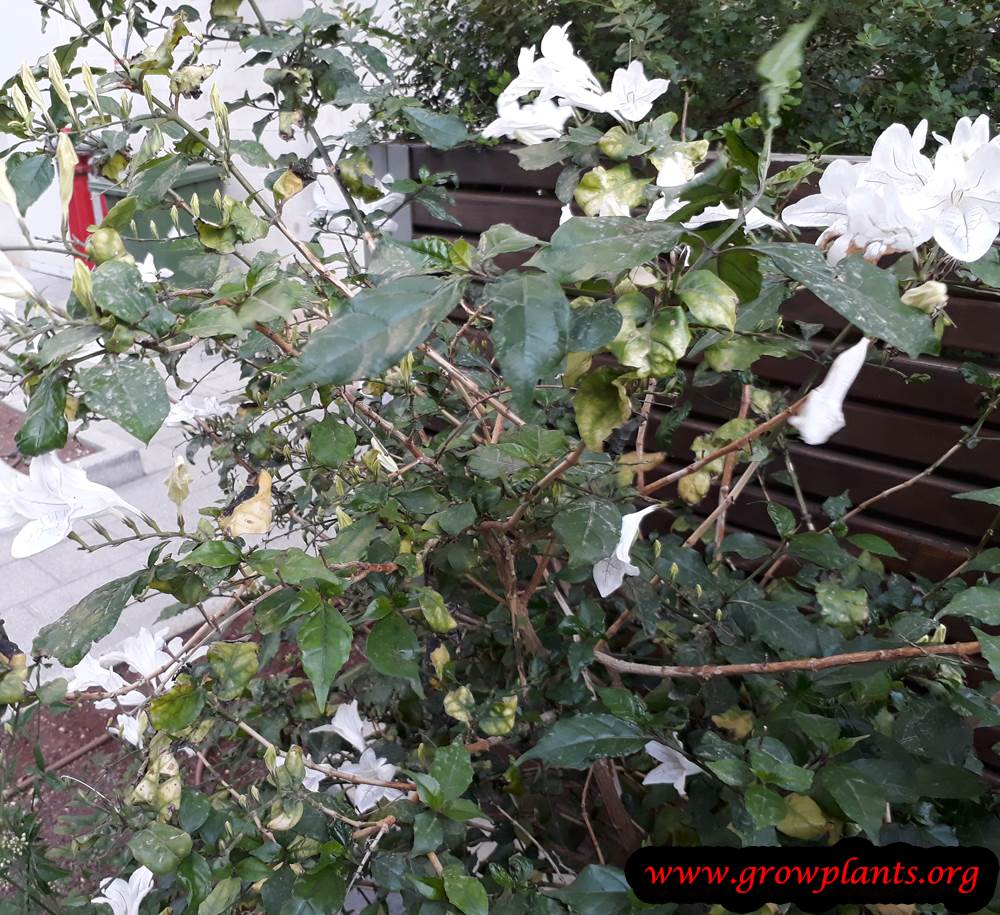
Plant Profile & Key Characteristics
Overview: Evergreen shrub reaching 0.5-3 m, grown as an ornamental hedge and shade-loving specimen for its pale bell-shaped flowers. Suits partial to full shade and can be grown indoors.
Quick Specifications
| Specification | Attribute |
|---|---|
| Plant Type / Life Cycle | Perennial (evergreen shrub) |
| Foliage Type | Evergreen |
| Mature Size | 0.5-3 m (2-10 ft) |
| Growth Rate | Moderate |
| Hardiness | USDA zone 9+ |
Growth Form & Structure
- Height & Spread: 0.5-3 m; grows in containers and as a houseplant.
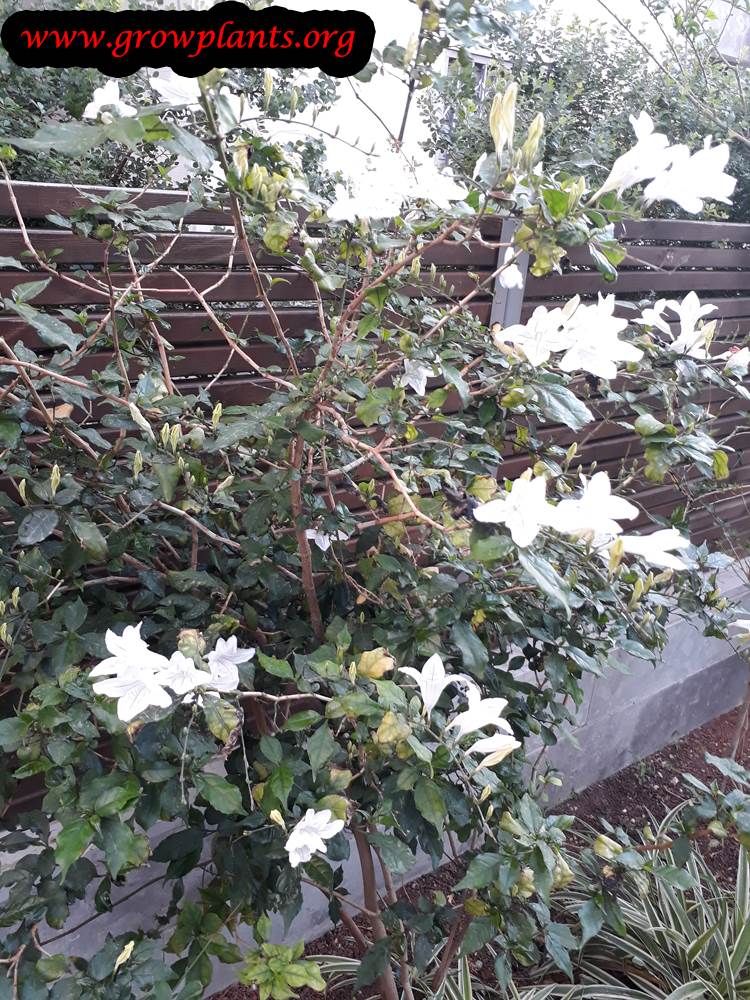
- Growth Habit & Form: Bushy, soft-stemmed evergreen shrub for shade.
- Lifespan & Maturity: Long-lived evergreen perennial.
Anatomy & Physical Features
- Leaves & Foliage: Dark green, glossy, oval leaves.
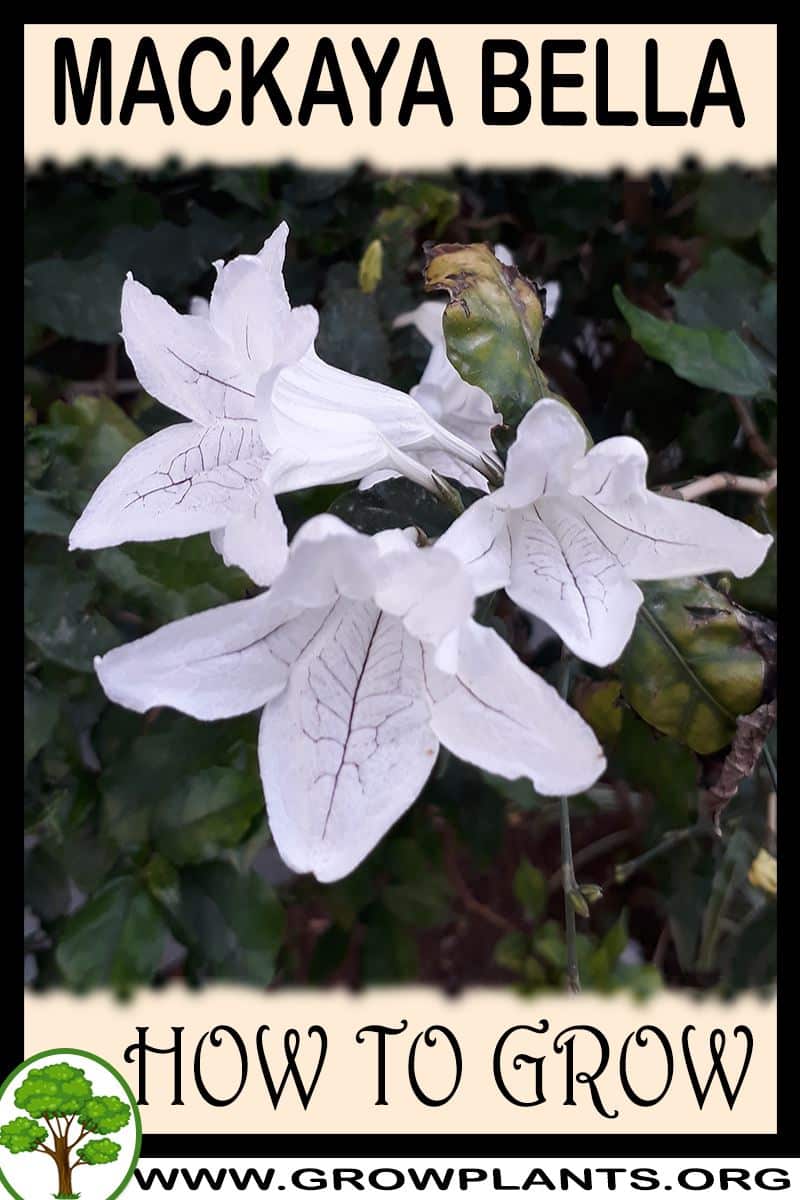
- Flower Characteristics: Trumpet- to bell-shaped flowers in white to pale purple, with a crepe-paper texture.
Primary Uses & Landscape Value
- Functional & Ornamental Roles: Ornamental shade shrub, informal hedge, container or indoor plant.
Care Guide: Planting, Soil & Watering
Overview: Forest bell bush (Mackaya bella) is a moderate-growing evergreen shrub or scrambler for mild, frost-free gardens (zone 9+) that prefers shade to part shade. It grows best in a rich, well-drained soil kept evenly moist, and it dislikes strong wind.
Quick Care Requirements
| Requirement | Ideal Condition |
|---|---|
| Planting Season | Spring to summer |
| Growth Rate | Moderate |
| Soil Type | Rich, well-drained |
| Water Need | Moderate – keep evenly moist |
Planting & Establishment
- Best Planting Season: In spring to summer once temperatures are warm, in a sheltered frost-free position (hardiness zone 9+).
- How to Plant:
- Hole Preparation: Dig a hole about the depth of the root ball and roughly twice as wide, choosing a sheltered, shaded spot out of strong wind; provide a support if training it upward.
- Soil Amendments: Work compost or leaf mould into the backfill to build a rich, free-draining, moisture-retentive soil.
- Planting Depth: Set the root ball level with the soil surface; keep the stem base clear.
- Growth Speed & Expectations: A moderate grower that fills out steadily into a soft, arching shrub for shaded borders or informal hedging.
Soil, Watering & Drainage Care
- Soil Mix & Drainage Needs: A humus-rich, well-drained soil that holds moisture suits it best; in containers (it also grows well indoors) use a rich, free-draining mix with drainage holes.
- Watering Schedule & Technique:
- Young / Newly Planted: Water every few days for the first weeks so the root zone never dries out completely.
- Established: Water deeply when the top few centimetres dry, keeping the soil evenly moist — it prefers not to dry out fully in its shady position.
- Seasonal Adjustments: Cut back in winter and water more often during hot, dry spells.
Climate, Light & Hardiness
Forest bell bush is an evergreen vine of subtropical, temperate, tropical, and mediterranean climates, also grown as an indoor plant. It prefers full to half shade rather than strong direct sun and needs a wind-sheltered site.
Quick Climate Specifications
| Climate Zones | Subtropical, temperate, tropical, Mediterranean; also grown indoors |
|---|---|
| USDA Hardiness Zones | Approximately 9 and warmer |
| Wind Tolerance | Low |
| Light Conditions | Full Shade to Half Shade |
Sunlight & Light Exposure
Optimal Light Setup
Grow in full to half shade; this forest-understory vine is not suited to hot, direct full sun.
Shade & Heat Management
A shaded or filtered-light spot keeps foliage from scorching in warm climates.
Temperature Extremes & Hardiness
USDA Hardiness & Regional Limits
Grows outdoors in roughly USDA zone 9 and warmer; in colder climates it is kept as an indoor plant year-round or brought inside for winter.
Wind, Humidity & Microclimate
Wind Tolerance
Site data notes sensitivity to wind, so a sheltered position out of strong or drying winds is recommended, particularly for young plants.
Microclimate Recommendations
A sheltered, part-shaded spot - such as under larger trees or near a wall - suits this plant’s wind and light preferences together.
Growing in Pots, Balconies & Indoors
The forest bell bush is a graceful shade shrub with soft lilac, foxglove-like flowers. The grower rates it both as a houseplant and for containers – being a woodland-understorey plant, it takes indoor conditions better than most.
Quick Details
- Container Size: A roomy pot, 20-40 L (5-10 gal), scaled to the plant
- Indoor Suitability: A genuine houseplant (grower); a shade-loving shrub for a bright indoor spot
- Best Spot: Partial to full shade – a cooler, shaded balcony or a bright spot out of harsh midday sun.
- Soil & Drainage: Aerated, organic-rich mix (quality potting mix, or peat/coir with perlite or vermiculite); it must drain freely.
- Watering in Pots: Keep the mix evenly moist, letting the surface dry slightly between waterings; pots dry faster than open ground.
Indoors & On the Windowsill
- A real houseplant: The grower confirms it grows indoors. As a forest-floor plant it is happy in bright indirect light to shade – no scorching sun needed – which makes it well suited to a well-lit room.
- Care indoors: Keep the mix evenly moist and the air from getting too dry; it dislikes drying out. Give it space, as it forms a soft, arching shrub.
On a Balcony or Patio
- Light & shelter: Ideal for a shaded or part-shaded balcony where sun-lovers won’t grow; the grower notes it is sensitive to wind, so give it a sheltered corner out of drafts and gusts.
- Watering: Keep the pot evenly moist; shelter also reduces how fast it dries.
Choosing the Pot, Soil & Long-Term Care
- Pot & drainage: A roomy pot with strong drainage holes; skip a standing-water saucer. It likes steady moisture, so a moisture-holding pot (glazed or plastic) suits it.
- Potting mix: Use a well-aerated, organic-rich mix – quality potting mix, or peat/coir blended with perlite or vermiculite.
- Feeding: As nutrients wash out of pots faster than open ground, feed potted plants regularly through the growing season with a balanced fertiliser.
- Repotting: Refresh the mix and pot up or root-prune every couple of years; prune after flowering to keep it bushy.
Fertilizing & Feeding
Forest bell bush is a shade-loving, moderate-growing plant that does well on light, steady feeding rather than a heavy fertility program.
Quick Fertilizing Specs
| Feeding Level | Light to moderate; grows well without a rich feeding program. |
|---|---|
| Main Nutrient Priority | Balanced nutrition to support steady growth and its extended trumpet-flower display. |
| Best Feeding Period | Through the spring and summer growing and flowering months. |
| Organic Options | Compost worked into the well-drained soil it prefers suits this shrub well. |
| Reduce/Stop Feeding | Ease off feeding as growth slows going into the cooler part of the year. |
Feeding by Growth Stage
Establishment
Help a newly planted Forest bell bush root in, particularly while it is trained onto any support and settling into a shaded or half-shaded spot.
| Nutrient direction | Light, balanced nutrition to support root development without forcing soft top growth that wind can damage. |
|---|---|
| Timing | In the weeks after planting or transplanting. |
| Frequency | Light feeding is usually enough while the plant is settling in. |
| Fertilizer types | A balanced complete fertilizer used lightly, Compost worked into well-drained soil at planting |
| Precautions | This shrub is sensitive to wind, so pair light feeding with a sheltered site rather than trying to compensate with extra fertilizer. |
Growth and bloom
Support steady stem and leaf growth alongside the white-to-purple trumpet flowers that appear over an extended season.
| Nutrient direction | Balanced nutrition that keeps growth and flowering going without pushing excess soft growth in shade. |
|---|---|
| Timing | Through the main spring, summer and autumn growing and flowering period. |
| Frequency | Light, well-spaced feedings through the growing season suit this shrub better than a heavy single dose. |
| Fertilizer types | A balanced complete fertilizer used lightly, For container or indoor specimens, a diluted balanced liquid feed |
| Precautions | In shade, excess feeding tends to produce weak, leggy stems rather than more flowers, so keep applications light. |
Cool-season rest
Let growth slow naturally when temperatures drop and light levels fall.
| Nutrient direction | None – withhold fertilizer while growth is slow. |
|---|---|
| Timing | Through the coolest, lowest-light part of the year. |
| Frequency | No feeding at this stage. |
| Fertilizer types | No feeding – resume light feeding once active growth picks back up |
| Precautions | Do not fertilize while growth has slowed; wait for clear signs of new growth before feeding again. |
Nutrient Deficiency Signs & Corrections
Leaves look pale green and new growth is thin and weak.
| Possible causes | Too little light for the plant’s shade-loving nature, limiting overall vigor, A general nitrogen shortage, Roots sitting in poorly drained soil |
|---|---|
| Appears first on | New shoots and leaves. |
| What to check | Light levels at the planting or container site, Soil drainage, Recent feeding history |
| Possible correction | Confirm the site offers enough filtered light and good drainage, then give a light balanced feeding if growth stays weak. |
Leaf edges look browned, torn or scorched rather than evenly discolored.
| Possible causes | Wind exposure, since this species is known to be wind-sensitive, Underwatering or drought stress rather than a nutrient problem, Excess fertilizer salts building up around the roots |
|---|---|
| Appears first on | Leaf margins and exposed foliage. |
| What to check | Whether the planting site is sheltered from wind, Watering consistency, Any recent heavy feeding |
| Possible correction | Move or shelter the plant from wind, water consistently, and keep fertilizer applications light rather than concentrated. |
The plant grows well but produces few of its trumpet-shaped flowers.
| Possible causes | Too much shade for good bud formation, Excess nitrogen favoring leafy growth over flowers, Stress from wind or inconsistent watering during bud development |
|---|---|
| Appears first on | Overall flowering across the plant. |
| What to check | Light levels reaching the plant, Recent nitrogen-heavy feeding, Watering consistency during the bloom period |
| Possible correction | Increase filtered light if possible, ease back on nitrogen, and keep watering steady through flowering. |
Pruning, Training & Seasonal Maintenance
Mackaya bella is a scrambling, vine-like evergreen shrub that needs a support or trellis to look its best, grown for its trumpet flowers (produced over an extended spring-through-autumn season) and usable as an informal hedge. It tolerates fairly hard pruning and resprouts readily, so its main pruning challenges are training it onto a support and managing its noted sensitivity to wind rather than protecting old-wood flower buds. The most effective structural window is late winter, once flowering has tapered off for the year and before the spring growth flush begins.
Quick Pruning & Maintenance Specs
| Pruning Tolerance | Moderate to High |
| Primary Pruning Window | Late winter (post-bloom, pre-spring flush) |
| Secondary Maintenance Window | Light tip pinching through the growing season to control the scrambling habit |
| Typical Frequency | One structural prune per year, plus ongoing light shaping |
| Main Objective | Control the sprawling/vining habit, maintain hedge form, reduce wind-catch |
| Young Plant Priority | Install support early; select and tie in main stems |
| Mature Plant Priority | Renewal-thin scrambling canes, size control, keep growth secured to its support |
| Best Tool Type | Bypass secateurs, loppers for older canes, ties/stakes for training |
| Avoid Heavy Pruning During | An active bloom flush, and just before/after strong wind exposure |
Pruning by Plant Age & Size
Newly Established
Install a trellis or other support at planting time; prune only damaged growth while the plant roots in.
Young / Formative
Select and tie in main stems to the support as they extend (an informal climbing-shrub training rather than a rigid framework); pinch tips on free-standing or hedge-grown plants to encourage bushiness.
Mature / Established
Renewal-thin older scrambling canes, control overall size, and keep growth tied in so it doesn’t flop or catch wind.
Seasonal Pruning Schedule
Pre-Growth/Late-Winter (primary window)
Objective: shape and size the plant before the spring growth flush, once the main bloom period has quieted. Remove: winter dieback, crowded or crossing canes, excess length. Do not remove: more growth than the support system can carry once regrowth begins. Expected response: a strong new flush that will carry the coming season’s flowers. Flowering impact: minimal, since flowering wood is produced fresh through the season rather than depending on last year’s growth.
Ongoing Sanitary
Remove wind-damaged or broken stems promptly given the plant’s noted sensitivity to wind.
Flowering & Fruiting Wood
Mackaya bella blooms over an extended spring-through-autumn window mainly on newer growth rather than depending on buds set the previous year, so a late-winter structural prune sacrifices little — the plant has the whole growing season ahead to produce fresh flowering wood. The one timing caution is the opposite of a dormant-season plant: avoid cutting into an active summer or autumn bloom flush, which removes flowers already open or forming.
Structural Pruning & Training
Because this is a scrambling grower rather than a self-supporting shrub, its main structural task is selecting and tying in main stems to a trellis or similar support, removing crossing/rubbing canes, and controlling spread. Thinning the canopy also reduces the wind-catching surface that this species is sensitive to.
Special Growth to Remove
No grafting is used for this species, so there are no rootstock suckers to manage. Remove wind-damaged or broken stems as soon as noticed; trimming spent flower stems is optional tidiness rather than a health necessity.
Container & Small-Space Pruning
Grows well as a container or indoor plant. Potted specimens need more frequent tip pinching to stay compact and still benefit from a small support even in a pot; watch that indoor light is adequate, since low light (it tolerates full shade to half shade) combined with no pinching can lead to leggy growth.
Tools
- Bypass secateurs — routine shaping and tie-in adjustments.
- Loppers — older, thicker canes at renewal time.
- Soft ties/stakes — training stems onto the trellis or support this species requires.
Tool Hygiene & Disease Risk
Routine — aphids and caterpillars are the noted pest concerns, not diseases requiring blade disinfection between cuts.
Cut Placement & Technique
Use thinning cuts for cane selection; cut just above a healthy bud or node facing the direction growth is wanted (typically outward from the support), and avoid flush cuts that can slow healing.
Heavy Pruning & Rejuvenation
Tolerates a fairly hard cutback in late winter to renew an overgrown or leggy specimen; expect a strong flush of new growth and a somewhat lighter bloom the following season while the plant rebuilds its framework on the support.
Post-Pruning Care
After a hard prune, the plant is more exposed to wind until regrowth fills back in — provide temporary shelter or extra ties if the site is windy. Watch the tender new growth for aphids and caterpillars.
Common Pruning Mistakes
- Over-thinning the canopy and leaving the plant more exposed to wind damage than it can tolerate.
- Letting the support lag behind growth so stems flop, tangle, or snap.
- Hard-pruning mid-bloom instead of waiting for the late-winter quiet period.
When NOT to Prune
Avoid major cuts during an active bloom flush, and avoid heavy pruning right before or during windy periods until new growth has had time to harden off.
Recommended Tools (by task)
- bypass_secateurs — routine shaping and cane selection.
- loppers — thicker old canes at renewal time.
- soft_ties_stakes — securing the scrambling growth to its required support.
Pruning Troubleshooting
| Problem | Possible Cause | What to Check | Corrective Action |
| Stems flopping or breaking | Inadequate support or tie-in | Trellis condition and tie spacing | Add ties/stakes; prune to reduce top-heavy growth |
| Reduced flowering | Pruned during an active bloom flush, or plant too shaded | Timing of last cut; light levels at the site | Shift major pruning to late winter; ensure adequate light |
| Wind damage after pruning | Canopy over-thinned, exposing remaining growth | Canopy density immediately after cutting | Leave more interior growth; stake temporarily until regrowth fills in |
Propagation Guide
Mackaya bella is most reliably propagated from stem cuttings; seed is possible but is not well documented in cultivation and is a secondary option. Grafting or vegetative propagation is not required to grow a typical plant, and overall difficulty is easy to moderate.
Quick Propagation Specs
| Best Propagation Method | Softwood or semi-hardwood stem cuttings |
| Alternative Methods | Seed (less commonly used) |
| Propagation Difficulty | Easy to moderate |
| Seed True-to-Type | Mostly uniform (species) |
| Vegetative True-to-Type | Yes |
| Best Propagation Season | Spring to summer, matching the plant's planting window |
| Cutting Rooting Time | Typically several weeks under warm, humid conditions |
Stem Cuttings
Cutting Type
Softwood to semi-hardwood tip cuttings.
Best Timing
Spring to summer, during active growth.
Cutting Preparation
Take short tip cuttings with a few leaves and remove the lower leaves.
Rooting Setup
A warm, humid, well-drained propagation mix; since this plant tolerates full to half shade and can be grown indoors, cuttings generally do well in similarly warm, humid, indirectly lit conditions.
Rooting Hormone
Optional; may help speed and even out rooting.
Rooting Time
Typically several weeks.
Bloom & Flower Guide
Quick Details
- Bloom Season: Spring through autumn
- Flower Appearance: Trumpet- to bell-shaped flowers of soft, crepe-paper texture
- Edibility: Ornamental – not eaten
Detailed Blooming Overview
Mackaya bella, the forest bell bush, is a shade-loving evergreen grown for its graceful bell-shaped flowers. Blooming from spring into autumn, it lights up a dappled or shady corner where many flowering shrubs would struggle.
Flower Characteristics
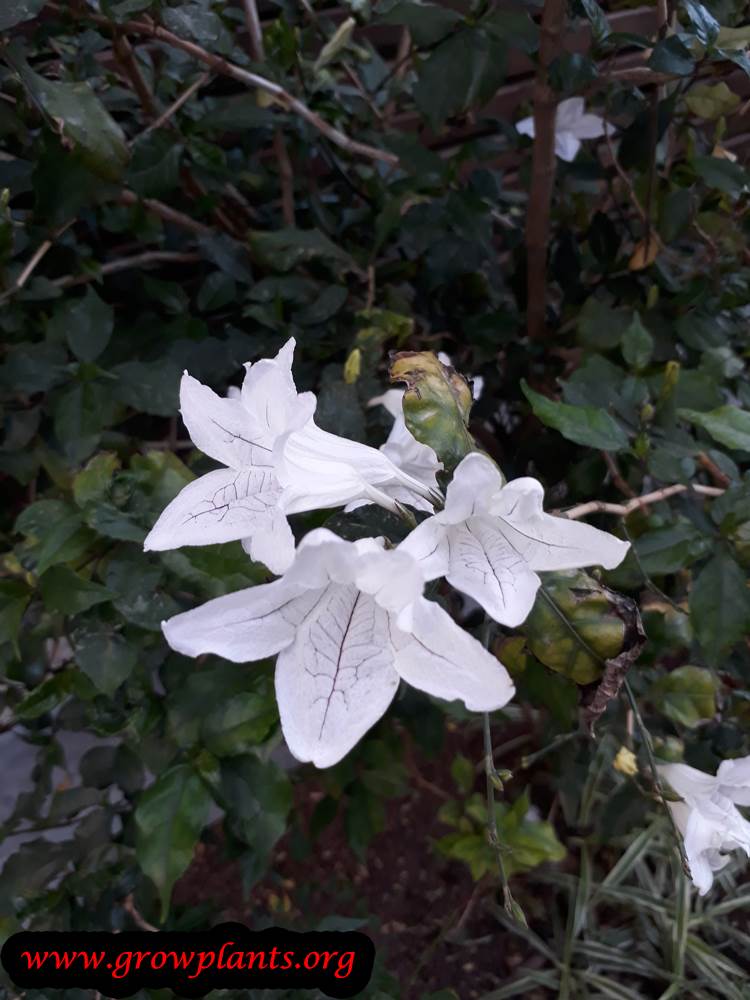
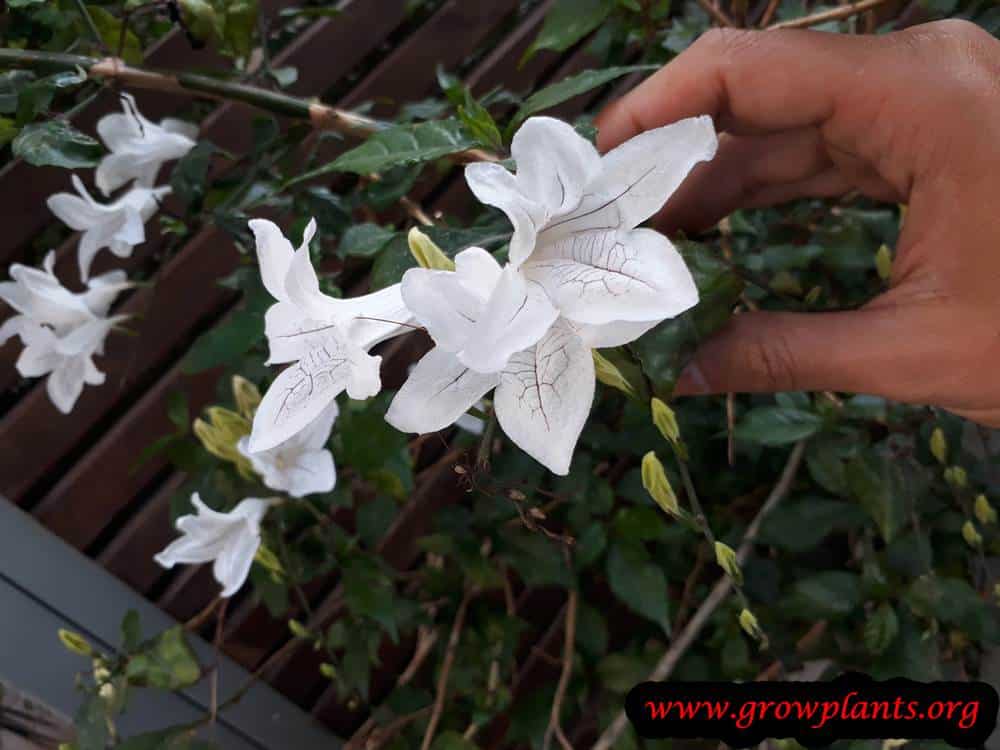
- Flowers are white to soft purple, often with fine darker veining.
- The trumpet or bell shape has a thin, crepe-paper-like texture.
Bloom Care & Thinning
- Pruning for bloom: Tidy the shrub in autumn or winter after flowering; it needs little more than shaping.
- Light and shelter: It flowers best in half to full shade and appreciates protection from strong wind.
Bloom Health & Protection
- Aphids and caterpillars: Both can trouble soft new growth and buds; hand-removal, insecticidal soap, or neem oil keeps numbers down.
Pests, Diseases & Troubleshooting
Overview: The forest bell bush is a soft-wooded shade shrub in the Acanthaceae, so its troubles are the sap-sucking and leaf-chewing pests that favour lush, sheltered foliage – aphids, whitefly, mealybugs, scale and caterpillars – with minor fungal leaf spots and rot in soggy soil. It is not seriously disease-prone; keep it shaded, humid and well drained and it stays glossy and healthy.
Quick Troubleshooting Overview
| Issue / Pest | Main Symptom | Primary Solution |
|---|---|---|
| Aphids | Curled soft shoots, honeydew | Hose off; predators; insecticidal soap |
| Caterpillars | Chewed and skeletonised leaves | Handpick; Bt if heavy |
| Whitefly | Clouds of white flies; sticky leaves | Sticky traps; insecticidal soap |
| Mealybugs & scale | White fluff / brown bumps; sooty mould | Alcohol swab; horticultural oil |
| Spider mites | Stippling in dry, warm air | Raise humidity; hose foliage; oil |
| Root rot | Wilting, yellowing in wet soil | Improve drainage; ease watering |
Common Pests & Management
- Aphids (Aphis / Myzus spp.):
- Symptoms: Soft green or black insects cluster on the tender new shoots and flower buds, causing curling, stunting and sticky honeydew that blackens with sooty mould.
- Prevention & Control: Hose off with water, encourage ladybirds, lacewings and hoverflies, pinch out badly infested tips, and use insecticidal soap or neem for heavy colonies; avoid over-feeding nitrogen.
- Caterpillars (leaf feeders) (various Lepidoptera larvae):
- Symptoms: Chewed, notched or skeletonised leaves with green-black droppings; Acanthaceae are favoured hosts of several butterfly and moth larvae.
- Prevention & Control: Handpick caterpillars and remove egg clusters, encourage birds and parasitic wasps, and use Bacillus thuringiensis (Bt) for heavy infestations; light feeding is cosmetic on a vigorous bush.
- Whitefly (Trialeurodes / Bemisia spp.):
- Symptoms: Tiny white flies rise in a cloud when the bush is disturbed, sucking sap from leaf undersides and leaving honeydew and sooty mould.
- Prevention & Control: Hang yellow sticky traps, spray insecticidal soap or neem on leaf undersides, and encourage the parasitic wasp Encarsia; remove heavily infested lower leaves.
- Mealybugs & scale (Pseudococcus spp. / Coccus spp.):
- Symptoms: White cottony tufts in leaf axils (mealybugs) or brown limpet-like bumps on stems and leaf undersides (scale), both sucking sap and producing honeydew.
- Prevention & Control: Dab mealybugs with dilute alcohol, scrape off scale, and apply horticultural oil to smother crawlers; inspect regularly and isolate new plants.
Diseases & Fungal Issues
- Fungal leaf spot (Cercospora / Colletotrichum):
- Symptoms: Brown or black spots, sometimes with yellow halos, on leaves in warm, wet, crowded conditions.
- Treatment & Management: Remove spotted leaves, avoid wetting the foliage, improve airflow by thinning, and use a copper fungicide only for persistent spread.
- Powdery mildew (Oidium spp.):
- Symptoms: White powdery coating on leaves in still, humid air, causing yellowing and leaf drop.
- Treatment & Management: Improve ventilation, water at the base, remove affected leaves, and apply sulfur or potassium-bicarbonate if it spreads.
- Root & stem rot (Phytophthora / Pythium):
- Symptoms: Wilting, yellowing and dark rot at the base and roots in soggy, poorly drained soil.
- Treatment & Management: Grow in humus-rich but free-draining soil, let the surface dry between waterings, avoid waterlogging, and remove severely affected plants.
Growing Difficulties & Abiotic Problems
- Sun scorch / wrong exposure:
- Cause & Symptoms: Pale, bleached, crisped leaves and stress in full sun; this is an understorey shade-lover.
- Correction Strategy: Site in dappled shade or morning sun with afternoon shade, and shelter from hot, drying wind; move container plants to a shadier spot if scorched.
- Overwatering / poor drainage:
- Cause & Symptoms: Yellowing lower leaves and wilting despite wet soil when kept soggy.
- Correction Strategy: Water to keep the soil evenly moist but never waterlogged, ensure good drainage, and ease off in cool weather.
- Frost & cold damage:
- Cause & Symptoms: Blackened, wilted shoots after frost on this frost-tender subtropical shrub.
- Correction Strategy: Protect from frost, grow in a sheltered warm position or a container to move under cover, and prune out cold-damaged wood after the danger passes.
- Leggy growth / poor flowering:
- Cause & Symptoms: Sparse, drawn-out stems and few blooms in deep shade or without pruning.
- Correction Strategy: Give bright dappled light, feed moderately in the growing season, and prune after flowering to keep the bush bushy and floriferous.
What Helps – Products & Tools
A soft, cultural approach suits this shade shrub: hosing and insecticidal soap or neem for aphids and whitefly, horticultural oil for mealybugs, scale and mites, and Bt for caterpillars. Copper or sulfur handle the occasional leaf spot or mildew, while shade and good drainage prevent most problems.