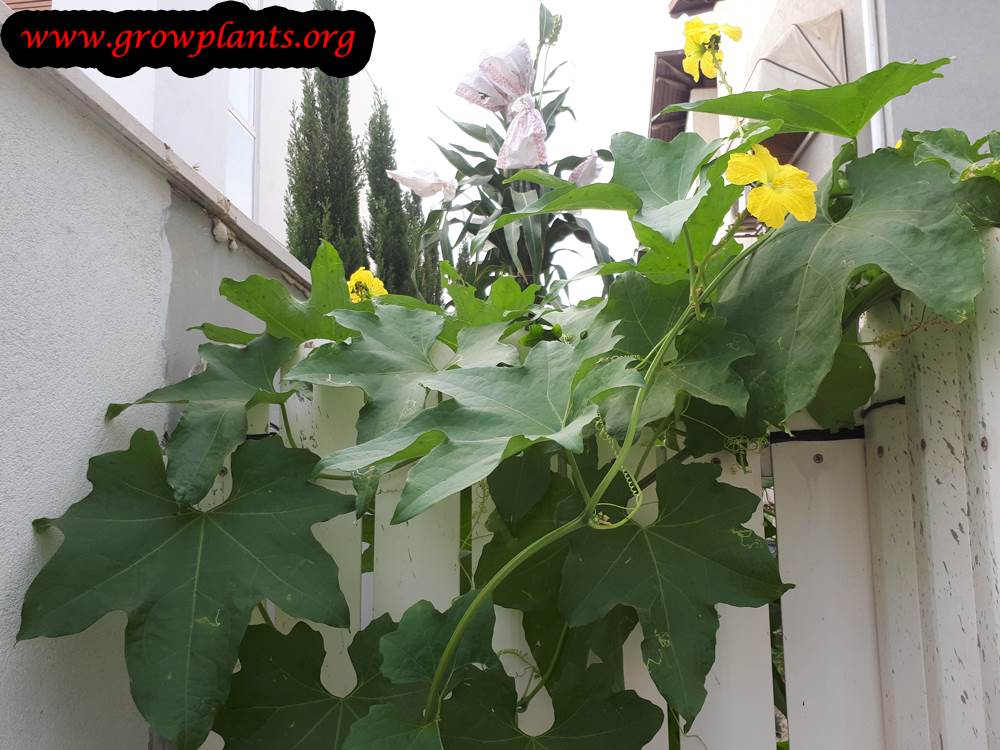
Plant Profile & Key Characteristics
Overview: Fast-growing annual climbing vine reaching 5-10 m, grown for its elongated gourds that are eaten young or dried into fibrous sponges. Also used as a summer shade vine.
Quick Specifications
| Specification | Attribute |
|---|---|
| Plant Type / Life Cycle | Annual (climbing vine) |
| Mature Size | 5-10 m (15-30 ft) long |
| Growth Rate | Fast |
| Toxicity | Non-toxic (young fruit edible) |
| Hardiness | USDA zone 6+ |
Growth Form & Structure
- Height & Spread: Climbs 5-10 m on a trellis; can be grown in a large container with support.
- Growth Habit & Form: Vigorous annual tendril-climbing vine that needs trellising.
- Lifespan & Maturity: Single-season annual; fruits in about 60-90 days for eating, or 160-200 days for mature sponges.
Anatomy & Physical Features
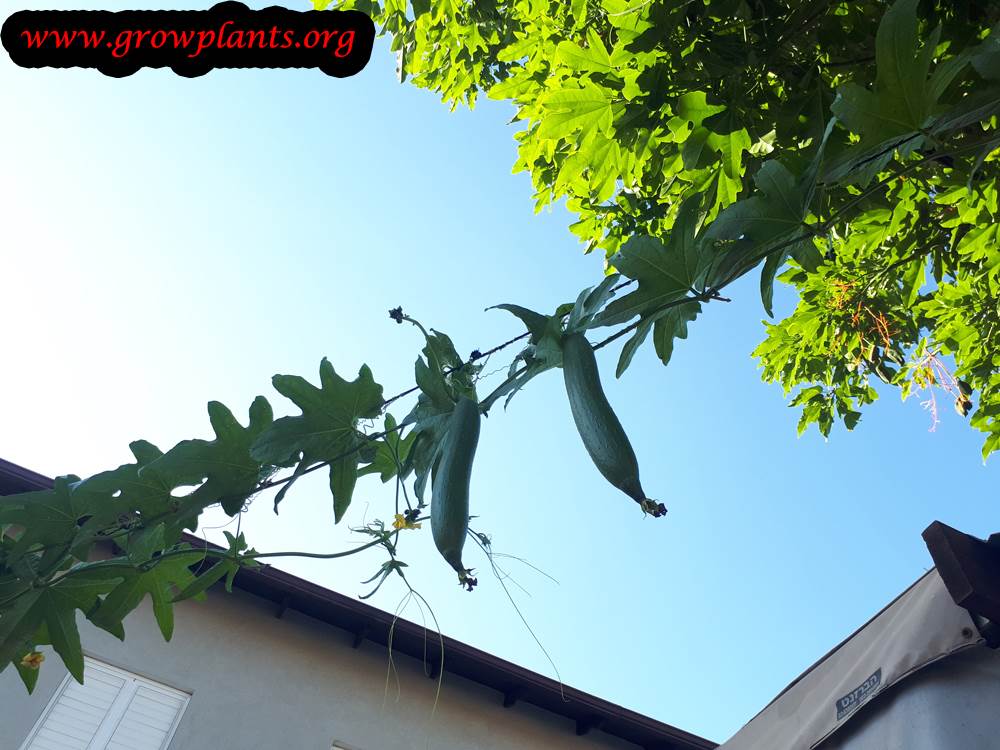
- Leaves & Foliage: Green, lobed leaves.
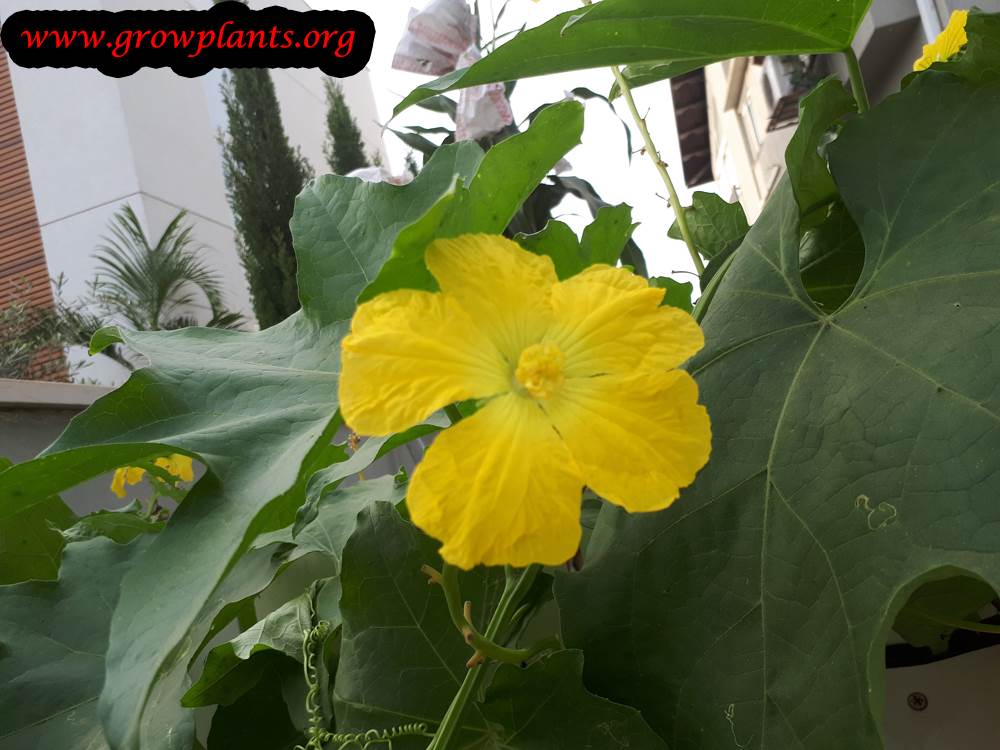
- Flower Characteristics: Yellow, saucer-shaped flowers.
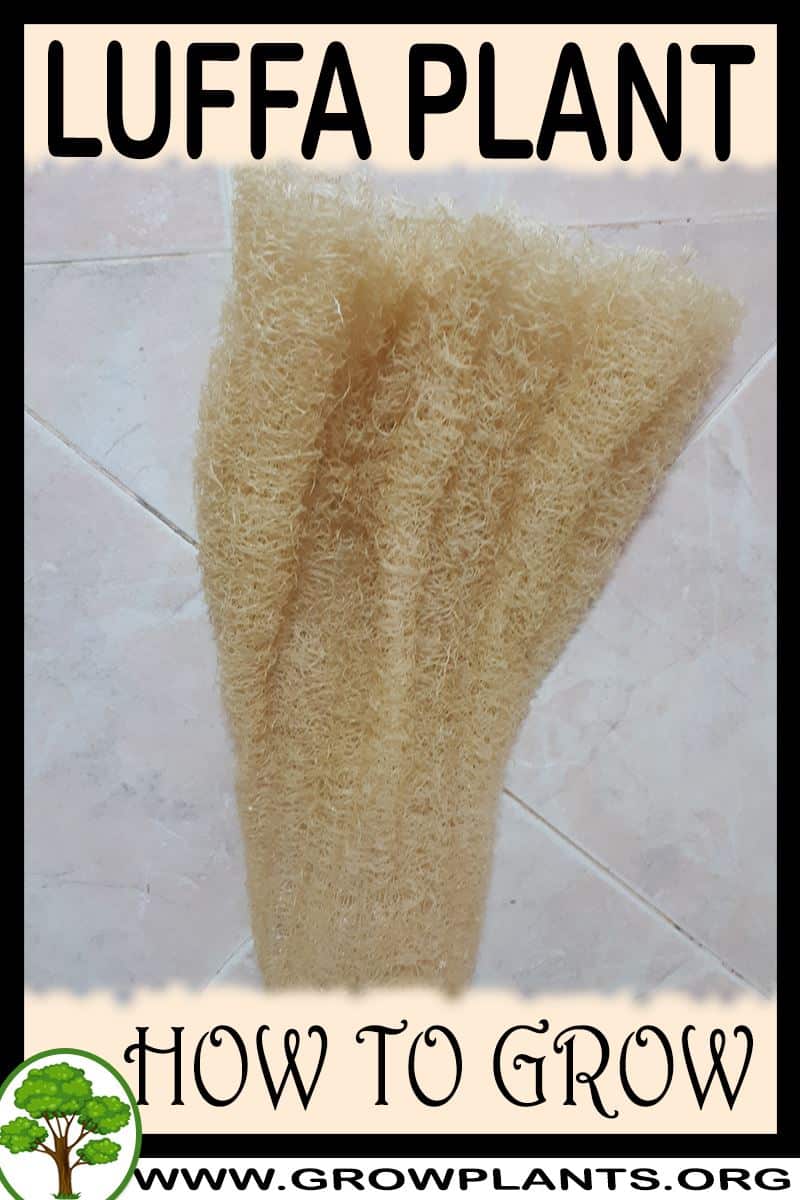
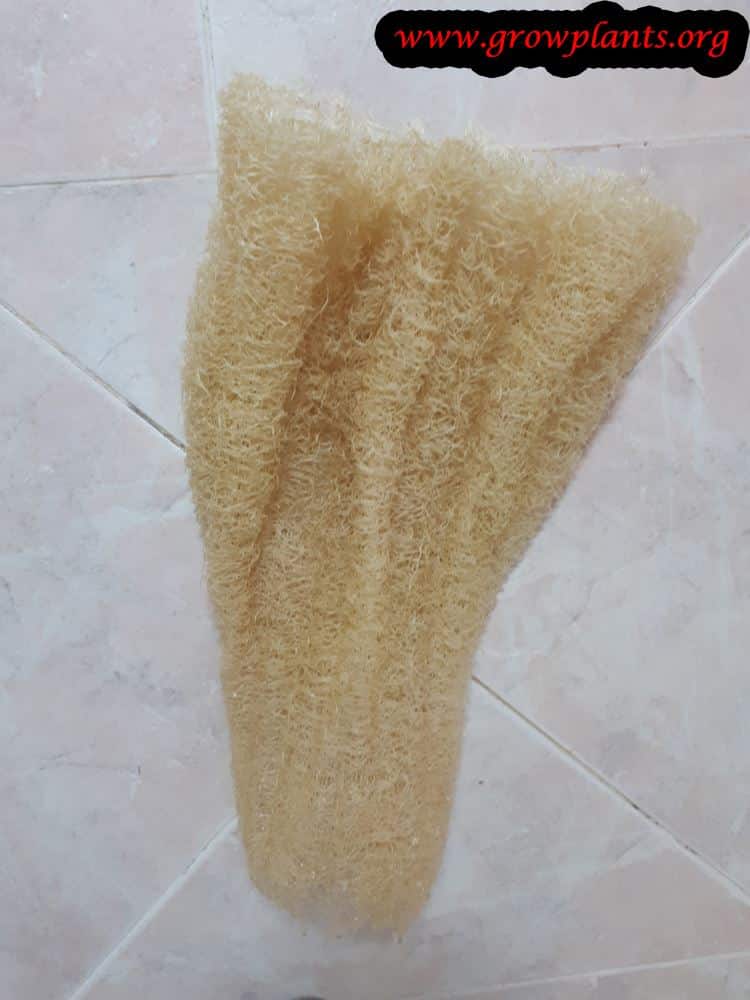
- Fruit Profile: Long cylindrical gourd, edible when young and tender, drying to a fibrous internal sponge.
Primary Uses & Landscape Value
- Edible Uses: Young, immature fruits eaten as a vegetable.
- Functional & Ornamental Roles: Grown for natural loofah sponges and as a summer shade or screening vine.
Care Guide: Planting, Soil & Watering
Overview: Luffa is a fast-growing annual vine for full sun that needs rich, well-drained soil and a sturdy trellis to climb. It grows on low to moderate watering but needs a long, warm, frost-free season to mature its fruit.
Quick Care Requirements
| Requirement | Ideal Condition |
|---|---|
| Planting Season | In spring to summer, once frost has passed |
| Growth Rate | Fast |
| Soil Type | Rich, well-draining soil; needs a trellis for support |
| Water Need | Low to moderate — let the top of the soil dry between waterings; tolerates short dry spells |
Planting & Establishment
- Best Planting Season: Plant in spring to summer once all danger of frost has passed, giving the long warm season this vine needs to mature its fruit.
- How to Plant:
- Hole Preparation: Dig a hole a little larger than the root ball at the base of a sturdy trellis or support, loosening the surrounding soil.
- Soil Amendments: Work in compost or well-rotted organic matter to enrich the bed and improve both fertility and drainage.
- Planting Depth: Set the plant at the same level it grew in its pot, with the root collar at the soil surface — do not bury the stem. Provide a strong trellis at planting so the fast-growing vine has support from the start.
- Growth Speed & Expectations: Expect fast growth in optimal conditions, establishing and reaching full size quickly.
Soil, Watering & Drainage Care
- Soil Mix & Drainage Needs: Provide rich, well-draining soil and a robust trellis; free drainage keeps the roots healthy while the vine climbs and the heavy fruit develops.
- Watering Schedule & Technique:
- Young / Newly Planted: Keep the soil lightly moist while young plants establish, watering whenever the surface begins to dry.
- Established: Once established, water deeply but let the top few centimetres dry before watering again; the plant tolerates short dry spells.
- Seasonal Adjustments: Increase watering in hot, dry weather and reduce it in winter or during rainy spells.
Climate, Light & Hardiness
Luffa is a fast-growing annual vine grown across tropical, mediterranean, desert, subtropical, and temperate climates, from USDA zone 6 upward, thriving in full sun. As a warm-season annual, it is planted after frost danger passes and completes its life cycle within a single frost-free growing season.
Quick Climate Specifications
| Climate Zones | Tropical, mediterranean, desert, subtropical, temperate |
|---|---|
| USDA Hardiness Zones | 6+ (annual crop grown within this range) |
| Frost Tolerance | Low |
| Light Conditions | Full sun |
| Frost-Free Growing Season | Approximately 60–90 days to first edible young fruit; about 160–200 days for fruit to mature into a fibrous sponge |
Sunlight & Light Exposure
Optimal Light Setup
Full sun for vigorous vine growth and fruiting.
Direct Sun Requirement
Needs strong direct sun.
Best Exposure / Orientation
An open, sunny site with a trellis or other support.
Temperature Extremes & Hardiness
USDA Hardiness & Regional Limits
The zone 6+ range reflects where luffa can be grown as a warm-season annual within a frost-free window, not year-round outdoor survival; frost limits the growing season rather than the plant's usable range.
Cold Damage & Winter Protection
Frost kills the vine; it is planted in spring/summer once frost danger has passed.
Frost Sensitivity
Low tolerance.
Extreme Heat Tolerance
Well suited to the heat of tropical, desert, and subtropical climates.
Wind, Humidity & Microclimate
Rainfall & Seasonal Moisture
Grown with a small to average amount of water in well-drained soil.
Microclimate Recommendations
An open, sunny site with a trellis; time planting to spring/summer to allow a full frost-free season for the fruit to mature.
Growing in Pots, Balconies & Indoors
Luffa is a vigorous annual climbing vine grown for its sponge-like fruits, not a houseplant – but it does well in a large container on a sunny patio or balcony if given a sturdy support to climb.
Quick Details
- Container Size: The largest pot you can manage – it is a big, thirsty annual vine
- Indoor Suitability: Not a true houseplant; grows best outdoors
- Best Spot: Full sun against a strong trellis or fence
- Soil & Drainage: Aerated, organic-rich mix (peat or coir with perlite or vermiculite); must drain freely
- Watering in Pots: Keep evenly moist in the heat of the growing season; pots dry fast under a vigorous vine
Indoors & On the Windowsill
- Houseplant limits: It needs strong, direct sun and a big trellis to fruit, which a room cannot provide.
On a Balcony or Patio
- Light & wind: Give it the sunniest, most sheltered wall and a tall, well-anchored support. Walls and paving reflect heat, so pots dry quickly – check moisture often in hot weather.
- Practicalities: Set the pot where drainage runoff won’t stain, and remember a full, wet container is heavy to move.
Choosing the Pot, Soil & Long-Term Care
- Pot & drainage: A container with strong drainage holes and no standing-water saucer, to avoid root rot; terracotta breathes and dries faster, glazed or plastic holds moisture longer.
- Potting mix: A well-aerated, organic-rich mix – peat or coir with perlite or vermiculite.
- Feeding: Potted plants exhaust their soil quickly – feed a little more often, since watering leaches nutrients away.
- Repotting: Refresh the top of the mix each year and pot on every couple of years, trimming the root ball lightly.
Fertilizing & Feeding
A vigorous, fast-growing vining crop that benefits from steady feeding through the season, shifting from a nitrogen-forward start to a more balanced, potassium-leaning feed as fruit develops.
Quick Fertilizing Specs
| Feeding Level | Moderate feeder |
|---|---|
| Main Nutrient Priority | Nitrogen-forward early for vine growth, shifting toward balanced and potassium-leaning as fruit sets |
| Best Feeding Period | Spring planting through the summer growing and fruiting season |
| Organic Options | Well-rotted compost or aged manure worked into the bed before planting, topped up during the season |
| Reduce/Stop Feeding | Ease off feeding as the vine’s growth naturally slows and fruit finishes developing |
| Soil pH | Prefers a well-drained soil; avoid waterlogged or compacted ground |
Feeding by Growth Stage
Establishment after planting
Support young seedlings and transplants as they root in and begin climbing the trellis.
| Nutrient direction | A balanced, complete fertilizer worked into the bed at planting helps roots and early vine growth get going. |
|---|---|
| Timing | At planting and through the first weeks of establishment in spring. |
| Frequency | A light initial feeding is usually enough to carry this fast starter into vigorous vine growth. |
| Fertilizer types | A balanced, complete vegetable fertilizer mixed into the planting bed, Well-rotted compost worked into the soil before planting |
| Precautions | Avoid burying fertilizer directly against young stems or roots, which can cause burn. |
Vigorous vine and leaf growth
Fuel the fast, aggressive climbing growth and lobed foliage before flowering begins.
| Nutrient direction | A nitrogen-forward feed supports the rapid vine and leaf expansion typical of this fast-growing climber. |
|---|---|
| Timing | Through the main stretch of vine growth as the plant climbs its trellis. |
| Frequency | Side-dress or feed as the vine visibly picks up pace, backing off once flowering starts. |
| Fertilizer types | A nitrogen-forward vegetable or vine fertilizer, Compost tea or a liquid balanced feed for container-grown vines |
| Precautions | Too much nitrogen this aggressive a grower can push excess leafy growth at the expense of flowering and fruit; watch vigor and ease back if the vine is already sprawling strongly. |
Flowering and fruit development
Support the yellow saucer-shaped flowers and the developing fruit, whether harvested young for eating or left to mature for sponge use.
| Nutrient direction | Shift toward a balanced, potassium-leaning feed once flowers and young fruit appear, to support fruit set and development. |
|---|---|
| Timing | From first flowering through fruit development and harvest. |
| Frequency | A steady, moderate feeding schedule through fruiting suits this productive vine; scale back as harvest wraps up. |
| Fertilizer types | A balanced or potassium-leaning fruiting vegetable fertilizer, Compost or aged manure top-dressed around the root zone |
| Precautions | Keep fertilizer off open flowers and young fruit; water in after feeding to reduce the risk of root or stem burn. |
Nutrient Deficiency Signs & Corrections
Pale green to yellowish older leaves and noticeably slower vine growth for what is normally a fast climber.
| Possible causes | insufficient nitrogen in the soil, compacted or poorly draining soil limiting root uptake, heavy rain leaching nutrients from a light or sandy bed |
|---|---|
| Appears first on | older, lower leaves |
| What to check | overall vine vigor compared to expected fast growth, soil drainage and compaction, recent heavy rainfall or irrigation |
| Possible correction | Apply a nitrogen-forward feed and improve soil drainage if compaction or waterlogging is present. |
Yellowing or scorching along leaf edges combined with poor fruit development or misshapen fruit.
| Possible causes | insufficient potassium relative to nitrogen during fruiting, inconsistent watering stressing the vine during fruit set, sandy soil with poor nutrient retention |
|---|---|
| Appears first on | leaf margins, especially on older leaves |
| What to check | fruit shape and development compared to leaf and vine vigor, watering consistency during flowering and fruiting, soil type and nutrient retention |
| Possible correction | Shift toward a balanced or potassium-leaning feed during fruiting and keep watering consistent. |
Interveinal yellowing on older leaves while the veins themselves stay green.
| Possible causes | magnesium deficiency in light or sandy soils, excess potassium feeding interfering with magnesium uptake, naturally leached or nutrient-poor soil |
|---|---|
| Appears first on | older, lower leaves, between the veins |
| What to check | soil type and fertility history, recent heavy potassium feeding, whether new growth still looks healthy |
| Possible correction | Correct with a chelated magnesium product per its label if the pattern is confirmed. |
Distinct yellowing on the newest leaves while the veins remain green.
| Possible causes | high soil pH limiting iron availability, waterlogged or compacted soil restricting root uptake, naturally low soil iron |
|---|---|
| Appears first on | youngest leaves at the growing tips |
| What to check | soil pH and drainage, how recently the vine was watered or fed, whether older leaves are unaffected |
| Possible correction | Correct soil pH toward a more favorable range and apply a chelated iron product per its label if chlorosis persists. |
Pruning, Training & Seasonal Maintenance
This vigorous annual cucurbit vine can reach 5-10m in a single season and is almost always grown on a trellis, so pruning here is mostly about training and airflow rather than shaping a permanent framework. Since the plant is replaced each year, cuts are about directing this season’s growth: training the leader up its support for straighter fruit, removing crowded lower growth to improve air circulation given its documented susceptibility to powdery mildew, and once the vine reaches the top of its support, pinching the growing tip to push out more lateral, fruit-bearing side-shoots.
Quick Pruning & Maintenance Specs
| Pruning Tolerance | Moderate to High – tolerates pinching and thinning without harming the crop |
| Primary Pruning Window | Throughout the growing season as the vine develops |
| Secondary Maintenance Window | Not applicable – training is continuous as the vine climbs |
| Typical Frequency | Regular light pinching and training through the growing season |
| Main Objective | Train the vine onto its trellis and improve airflow to reduce powdery mildew |
| Young Plant Priority | Train the leader onto the trellis early; remove weak or damaged early growth |
| Mature Plant Priority | Thin crowded lower and interior growth for airflow; pinch the tip once the top of the support is reached |
| Best Tool Type | Precision snips or bypass secateurs – soft vine stems, no woody cuts |
| Avoid Heavy Pruning During | Active flowering and fruit set, when removing too much foliage can reduce the plant’s ability to size developing fruit |
Pruning by Plant Age & Size
Newly Established
Minimal – direct the young vine onto its trellis or support as it starts to climb, removing only damaged growth.
Young / Formative
Vine training up a trellis is the relevant system here: tie or guide the main leader onto the support and remove low side-shoots that would otherwise sprawl on the ground.
Mature / Established
Once the vine reaches the top of the trellis, pinch the growing tip to encourage branching lateral shoots, where much of the fruit develops, and continue thinning crowded lower foliage through the season for airflow.
Seasonal Pruning Schedule
Summer Canopy Management: keep the fast-growing vine channeled onto its support and maintain airflow through the thickening canopy by removing excess lower leaves and side-shoots crowding the base, and pinching the growing tip once the vine has filled its trellis, while leaving healthy upper foliage that is actively feeding developing fruit; the result is a more open, better-ventilated canopy and more lateral fruiting growth after tip-pinching.
Ongoing Sanitary: remove visibly mildewed or damaged leaves promptly to slow the spread of powdery mildew through the canopy, given the source’s own noted pest.
Structural Pruning & Training
Training the main vine up a trellis or support is central here, directly reflected in the source’s own trellising note. Thin crowded lateral growth and lower leaves to open the canopy for airflow, addressing the powdery mildew risk noted in the source. Height and spread control is not really a goal, since the vine is encouraged to climb its full support, but canopy density management is, since good airflow is one of the more effective non-chemical controls for powdery mildew on cucurbits.
Special Growth to Remove
- Lower leaves and side-shoots in contact with or close to the soil, reducing soil-splash and improving airflow
- Any visibly mildew-affected foliage, removed promptly
- The growing tip once the vine has filled its allotted trellis space, to push lateral fruiting growth instead of continued climbing
Container & Small-Space Pruning
Given its 5-10m mature size, container growing requires an especially sturdy, tall trellis and more assertive tip-pinching and lateral training to keep the vine productive within a manageable footprint rather than letting it run unchecked. Container plants also need closer attention to consistent watering, since a large vine in a limited root volume dries out faster.
Tools
Precision snips for pinching growing tips and thinning young side-shoots; bypass secateurs for thicker basal growth or removing larger mildew-affected leaves later in the season.
Tool Hygiene & Disease Risk
Increased – powdery mildew, the pest documented for this plant, spreads readily on tools and hands moving from infected to healthy foliage, so wipe blades between removing visibly mildewed material and working on clean parts of the vine, and avoid handling the wet canopy, which spreads spores more readily.
Cut Placement & Technique
Pinch the growing tip cleanly just above a leaf node once the vine has reached the top of its support. Remove side-shoots and lower leaves at their point of attachment rather than leaving stubs, which can become entry points for disease.
Heavy Pruning & Rejuvenation
Not applicable in the perennial-woody sense – as an annual, this vine is not rejuvenated, it is simply trained and thinned through its one growing season and then removed at season’s end.
Post-Pruning Care
Water consistently, especially for trellised or container plants with a limited root volume. Avoid heavy feeding as a response to pruning – pinching and thinning are about airflow and shape, not a stress the plant needs fertilizer to recover from. Keep monitoring for powdery mildew after any pruning that opens the canopy, since fresh cuts do not reduce risk on their own, airflow does.
Common Pruning Mistakes
- Leaving dense, unthinned lower growth that stays damp and encourages powdery mildew
- Failing to train the leader onto the trellis early, resulting in a sprawling vine that is harder to manage
- Over-thinning healthy upper foliage during fruit development and reducing the leaf area the plant needs to size its fruit
When NOT to Prune
Avoid removing significant foliage during active flowering and fruit set, when the plant needs its leaf area to develop the crop. Do not handle or prune the vine while foliage is wet, since this spreads powdery mildew spores more readily.
Recommended Tools (by task)
| precision_snips | Pinching growing tips and removing young side-shoots through the season |
| bypass_secateurs | Thicker basal growth and removing larger mildew-affected leaves |
| soft_ties_stakes | Training the climbing vine onto its trellis as it grows |
Pruning Troubleshooting
| Problem | Possible Cause | What to Check | Corrective Action |
| Powdery mildew spreading through the canopy | Dense, poorly-ventilated growth, especially low on the vine | Air circulation around lower leaves and crowding at the base | Thin crowded lower growth and remove affected leaves promptly; avoid working wet foliage |
| Vine climbing without setting much fruit | All energy going into vine length rather than lateral branching | Whether the growing tip has ever been pinched once it reached the top of the support | Pinch the leading tip to force lateral, fruit-bearing side-shoots |
| Fruit misshapen or curled | Fruit developing while resting on the ground instead of hanging from the trellis | Whether the vine and fruit are properly supported on the trellis | Train and tie the vine up its support so fruit hangs straight |
| Sparse fruiting despite healthy vine growth | Excess vegetative growth from over-fertilizing or under-thinning | Balance between foliage density and flowering or fruit set | Thin dense foliage and avoid excess nitrogen feeding |
Propagation Guide
Luffa plant is grown almost exclusively from seed – this vigorous annual vine sets a full crop of true-to-type gourds within a single warm season, so grafting or vegetative propagation offer no real advantage. Propagation is easy for a home grower who can provide warm soil and a sturdy trellis for the fast, sprawling growth.
Quick Propagation Specs
| Best Propagation Method | Direct-sow seed (or start indoors for later transplanting) |
| Alternative Methods | Vegetative reproduction (stem cuttings) is possible but rarely used, since seed is faster, easier, and standard practice |
| Propagation Difficulty | Easy |
| Seed True-to-Type | Usually true-to-type for the straight species; isolate from other Luffa varieties to keep seed pure |
| Best Propagation Season | Spring to summer, once the soil has warmed |
| Seed Germination Time | Typically about 1–2 weeks in warm soil, sometimes longer if seed or soil is cool |
| Germination Temperature | Around 21–30°C (70–86°F) |
| Seed Sowing Depth | About 1–2cm (0.4–0.8in) |
Growing from Seed
Seed Handling & Viability
Seeds have a hard outer coat and keep reasonably well in cool, dry storage for a couple of years, though germination rates decline as seed ages.
Dormancy & Pre-Sowing Treatment
The hard seed coat slows water uptake, so soaking seed in water for about 24 hours before sowing is a common way to speed up and even out germination.
Sowing Season
Sow in spring to summer once frost danger has passed and the soil is warm, matching the plant’s Spring/Summer planting season.
Sowing Depth & Orientation
Sow about 1–2cm (0.4–0.8in) deep; no special seed orientation is needed.
Germination Conditions
Needs consistently warm, moist soil in full sun. Seed can be started indoors 2–4 weeks before the last frost and transplanted out once conditions are warm, or direct-sown once the season is reliably warm.
Germination Time
Usually around 1–2 weeks, though timing can be irregular depending on soil temperature and seed freshness.
Seedling Care
Because this is a fast, aggressive climbing vine, give seedlings a sturdy trellis from early on and enough spacing so the vigorous growth doesn’t overwhelm neighboring plants.
Bloom & Edible Flower Guide
Quick Details
- Bloom Season: Spring through autumn
- Time to First Bloom: An annual vine that flowers in its first summer, once it has climbed and warmed up
- Flower Appearance: Large, bright yellow, saucer-shaped flowers along the climbing stems
- Edibility: The young flowers and buds are edible — picked young and eaten as a vegetable, as with other gourd-family blossoms
Detailed Blooming Overview
Luffa opens big, bright yellow flowers along its vigorous climbing vine through the warm season. Like other members of the gourd family it is monoecious, carrying separate male and female flowers on the same plant: the male flowers come in clusters, while each female flower sits singly with a tiny immature gourd behind it. The young flowers and buds are edible and are enjoyed in several Asian cuisines.
Flower Characteristics
- Five broad yellow petals forming an open saucer.
- Male flowers borne in clusters; female flowers borne singly.
- Opening freely along the vine over a long season.
Bloom Care & Thinning
- Site for best flowering: Full sun, warmth and a strong support to climb.
- Pollination: Worked mainly by bees; in cool or still conditions you can hand-pollinate by moving pollen from a male flower to the female flowers.
- Managing the bloom: Young flowers and buds can be picked for the kitchen, but leave the female flowers you want to develop further on the vine.
Fruit & Uses
Luffa plant is grown for its long fruit, which is edible only while young and tender; left to mature and dry on the vine, the very same fruit turns fibrous and is used instead as a natural scrubbing sponge rather than as food. Young fruit is always cooked before eating, never eaten raw.
Quick Edible Specs
| Edible Parts | Fruit (young, immature only) |
| Main Use(s) | Culinary (cooked vegetable); mature dried fruit used as a household/bath sponge (non-edible use) |
| Eaten Raw or Cooked | Cooked |
| Preparation Required | Peel and cook |
| Harvest Season | Young fruit is picked promptly through the growing season; fruit left instead to mature into a sponge is taken later, in autumn/winter |
| Time to First Harvest | Young edible fruit is ready well before the fruit fully matures; the fibrous sponge stage takes considerably longer to develop (see Pruning/Care for overall growth timing) |
| Storage | Fresh young fruit does not keep long – use soon after picking, as with other squash |
| Safety/Toxicity Caveat | As with other cucurbits, discard any unusually bitter-tasting fruit rather than eating it |
Fruit
The long, ridged fruit is the plant’s only edible part. For eating, it must be picked young and tender, before the skin toughens and the interior develops the stringy fibrous network that later becomes the familiar "loofah" sponge. At this young stage it is peeled and cooked much like a zucchini or other summer squash – added to stir-fries, soups, and other cooked dishes. If instead left on the vine, the fruit keeps maturing and drying out; once fully mature and dried it is no longer eaten, and is cured and cleaned to produce the fibrous bath/kitchen sponge the plant is best known for.
Harvesting
Check plants regularly once fruiting begins, since edible fruit passes from tender to fibrous quickly – timely picking is essential to catch it at the eating stage. Harvest continues through the season as new fruit sets; any fruit intended for sponge use instead is simply left on the vine to mature and dry, which takes much longer than the tender vegetable stage.
Preparation, Uses & Safety
Young fruit is peeled and cooked before eating; it is not eaten raw. Mature fruit is not a food item at all – it is dried and processed into a fibrous sponge for bathing and household scrubbing, an established non-culinary use of the same plant. As with cucumbers, melons and other cucurbits, any fruit that tastes notably bitter should be discarded rather than eaten, since bitterness in this plant family can signal elevated levels of naturally occurring bitter compounds.
Pests, Diseases & Troubleshooting
Overview: Luffa is a long-season cucurbit vine and, like its cucumber and squash relatives, is prone to the full cucurbit pest and disease complex – beetles, borers, aphids, mildews and mosaic viruses – plus pollination and fruit-set problems in cool or short seasons. Prevention through vigour, airflow and rotation is far more effective than chasing outbreaks.
Quick Troubleshooting Overview
| Issue / Pest | Main Symptom | Primary Solution |
|---|---|---|
| Cucumber beetles | Chewed leaves/flowers; spread bacterial wilt | Row covers early; handpick; yellow sticky traps |
| Squash vine borer | Sudden wilting; sawdust frass at stem base | Inspect stems; slit and remove larva; mound soil on nodes |
| Aphids & whitefly | Curled leaves, honeydew, virus spread | Hose off; insecticidal soap; reflective mulch |
| Powdery mildew | White powder on leaves, early dieback | Airflow, resistant strains, sulfur/potassium bicarbonate |
| Downy mildew | Angular yellow blotches, grey undersides | Avoid wet leaves; copper; improve airflow |
| Poor fruit set | Flowers drop; tiny fruit shrivel | Hand-pollinate; encourage bees; give a long warm season |
Common Pests & Management
- Cucumber beetles (Acalymma / Diabrotica spp.):
- Symptoms: Striped or spotted yellow beetles chew leaves, flowers and young fruit and, critically, transmit bacterial wilt and mosaic viruses; seedlings can be killed outright.
- Prevention & Control: Protect young plants with floating row covers (lift at flowering for pollination), handpick beetles in the cool of the morning, use yellow sticky traps, and clear crop debris. Keep plants vigorous so they outgrow feeding, and rotate cucurbits.
- Squash vine borer (Melittia cucurbitae):
- Symptoms: A stem suddenly wilts and collapses; look for a small entry hole with wet, sawdust-like frass near the base where the larva tunnels inside.
- Prevention & Control: Inspect main stems, slit lengthwise to remove and destroy the larva, then mound moist soil over the wound and nearby nodes to encourage new roots. Cover stem bases early and rotate away from cucurbits to break the cycle.
- Squash bugs (Anasa tristis):
- Symptoms: Grey-brown shield-shaped bugs and bronze egg clusters on leaf undersides; feeding causes wilting, yellow speckling and dieback of runners.
- Prevention & Control: Crush egg masses, trap adults under boards laid overnight, keep mulch loose so they cannot hide, and support predators. Treat only heavy infestations, and target nymphs.
- Aphids (Aphis gossypii / Myzus persicae):
- Symptoms: Colonies on shoot tips and leaf undersides cause curling, stunting and sticky honeydew, and spread cucurbit mosaic viruses.
- Prevention & Control: Hose off, use reflective/silver mulch to deter them, encourage ladybirds and lacewings, and apply insecticidal soap or neem for heavy pressure. Controlling aphids is the main defence against virus.
- Whitefly (Bemisia / Trialeurodes spp.):
- Symptoms: Tiny white flies rise in a cloud when disturbed; they suck sap, coat leaves in honeydew and sooty mould, and vector viruses.
- Prevention & Control: Use yellow sticky traps, reflective mulch and insecticidal soap or neem on leaf undersides, and remove heavily infested lower leaves.
- Two-spotted spider mite (Tetranychus urticae):
- Symptoms: Fine stippling, bronzing and webbing on leaves in hot dry weather, causing rapid decline.
- Prevention & Control: Keep plants watered and unstressed, hose foliage undersides, and use horticultural oil or insecticidal soap; conserve predatory mites.
Diseases & Fungal Issues
- Powdery mildew (Podosphaera / Erysiphe spp.):
- Symptoms: White powdery patches spreading over leaves and stems in warm, humid, crowded conditions, leading to yellowing and premature dieback that shortens the season.
- Treatment & Management: Space and trellis vines for airflow, water at the base in the morning, remove badly affected leaves, and choose resistant strains; sulfur, potassium-bicarbonate or a milk spray as protectant.
- Downy mildew (Pseudoperonospora cubensis):
- Symptoms: Angular yellow blotches bounded by veins on the upper leaf surface with greyish fuzz beneath in cool, wet, humid weather; leaves brown and die.
- Treatment & Management: Improve airflow, avoid wetting foliage, remove infected leaves, and apply a copper fungicide preventively where pressure is high.
- Mosaic viruses (CMV / WMV / ZYMV):
- Symptoms: Mottled, distorted, puckered leaves and stunted, blistered, misshapen fruit – spread by aphids and cucumber beetles and not curable.
- Treatment & Management: Control the insect vectors, remove and destroy infected plants promptly, manage weeds that host virus, and use clean seed; there is no chemical cure.
- Angular leaf spot & bacterial wilt (Erwinia tracheiphila):
- Symptoms: Angular water-soaked leaf spots, and whole-vine wilting where cucumber beetles have transmitted the wilt bacterium (a cut stem oozes sticky sap).
- Treatment & Management: The key control is managing cucumber beetles; remove wilted vines, avoid working plants when wet, rotate, and use drip rather than overhead watering.
Growing Difficulties & Abiotic Problems
- Poor pollination / fruit drop:
- Cause & Symptoms: Female flowers drop or tiny fruit yellow and shrivel because bees are scarce or only male flowers are open; luffa needs abundant insect pollination.
- Correction Strategy: Encourage bees with companion flowers, avoid spraying during bloom, and hand-pollinate by transferring pollen from a male to a female flower in the morning.
- Short / cool season:
- Cause & Symptoms: Vines fail to ripen fibrous sponges before cold arrives because luffa needs a long, warm, frost-free run to mature.
- Correction Strategy: Start seed early indoors, plant out only in warm soil, give full sun and a strong trellis, and in cool climates grow under cover to extend the season.
- Blossom-end rot & irregular watering:
- Cause & Symptoms: Dark sunken rot at the fruit tip and cracked or misshapen fruit from calcium disruption and swings between drought and flooding.
- Correction Strategy: Water deeply and evenly, mulch to buffer moisture, and maintain balanced calcium and steady nutrition rather than heavy nitrogen flushes.
- Nutrient issues (excess nitrogen):
- Cause & Symptoms: Rampant leafy vines with few fruit when overfed with nitrogen.
- Correction Strategy: Feed moderately with a balanced or slightly potassium-rich fertiliser once fruiting begins, and rely on the vine’s natural vigour rather than pushing leaf growth.
What Helps – Products & Tools
Lean on prevention: floating row covers and yellow sticky traps for beetles and whitefly, reflective mulch and hosing for aphids, insecticidal soap or neem for soft-bodied pests, and sulfur, potassium-bicarbonate or copper fungicide for the mildews. A pollinator-friendly garden and a warm, airy trellis do most of the work.