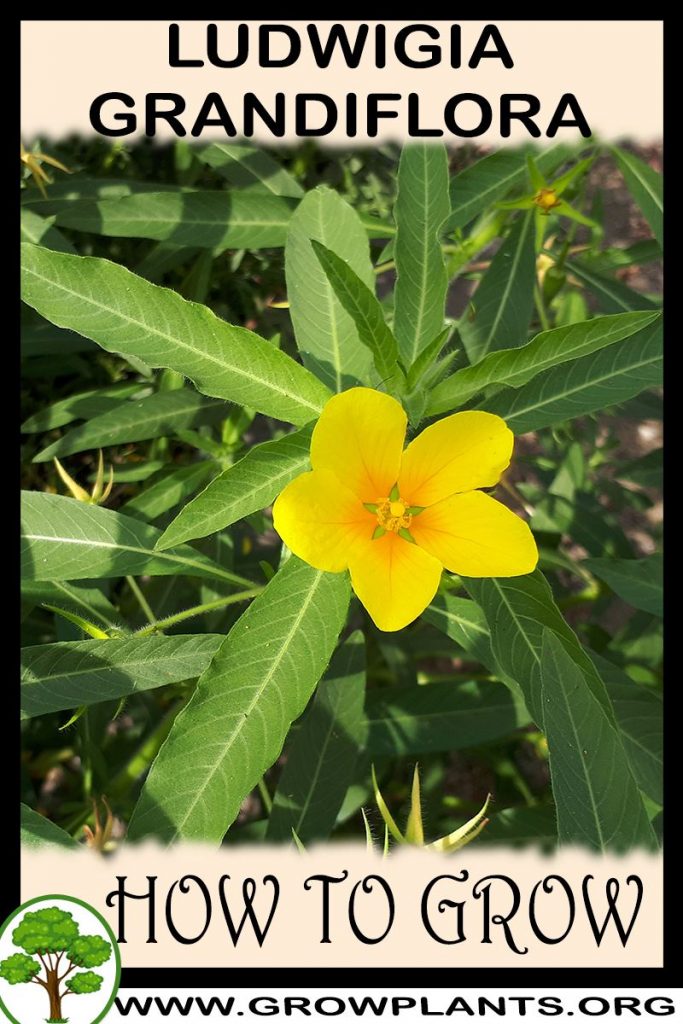
Plant Profile & Key Characteristics
Overview: Vigorous aquatic perennial reaching 20-50 cm above the water, with evergreen linear foliage and yellow saucer-shaped flowers. Grown as an ornamental water and marginal plant, but highly invasive.
Quick Specifications
| Specification | Attribute |
|---|---|
| Plant Type / Life Cycle | Perennial (aquatic) |
| Foliage Type | Evergreen |
| Mature Size | 20-50 cm (8-20 in) emergent |
| Growth Rate | Fast |
| Root System | Roots at the nodes, spreading by stolons (aquatic) |
| Hardiness | USDA zones 5-11 |
Growth Form & Structure
- Height & Spread: 20-50 cm above water, spreading widely across the surface; can be confined to a pond planter.
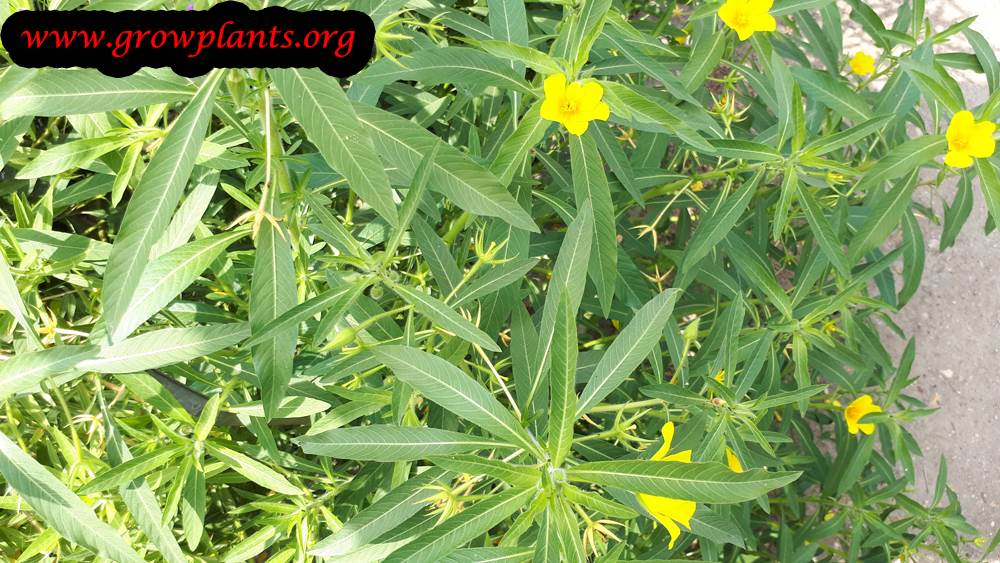
- Growth Habit & Form: Sprawling aquatic and marginal plant rooting along creeping stems.
- Lifespan & Maturity: Fast-establishing perennial.
Anatomy & Physical Features
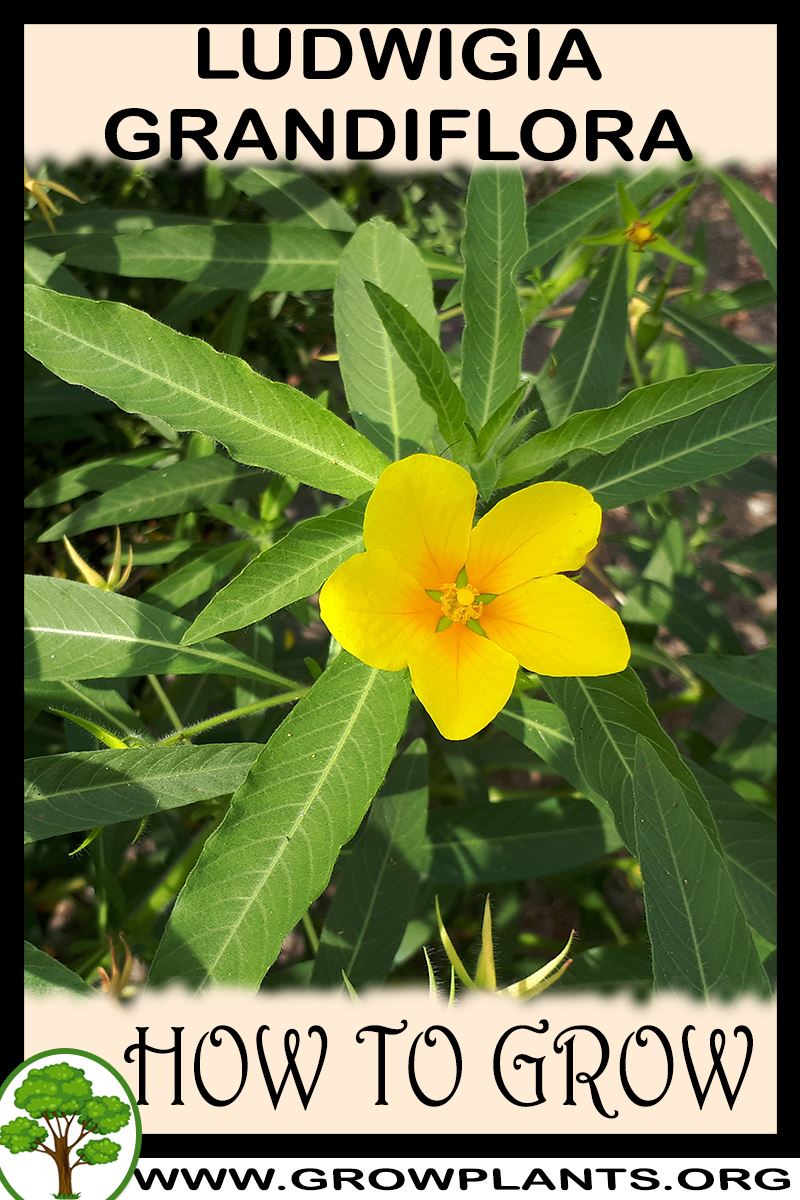
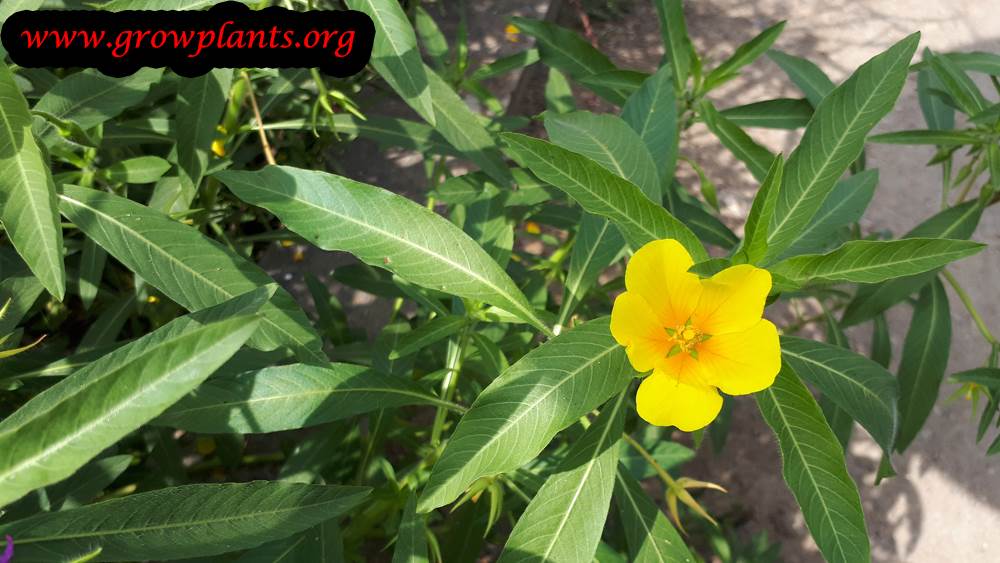
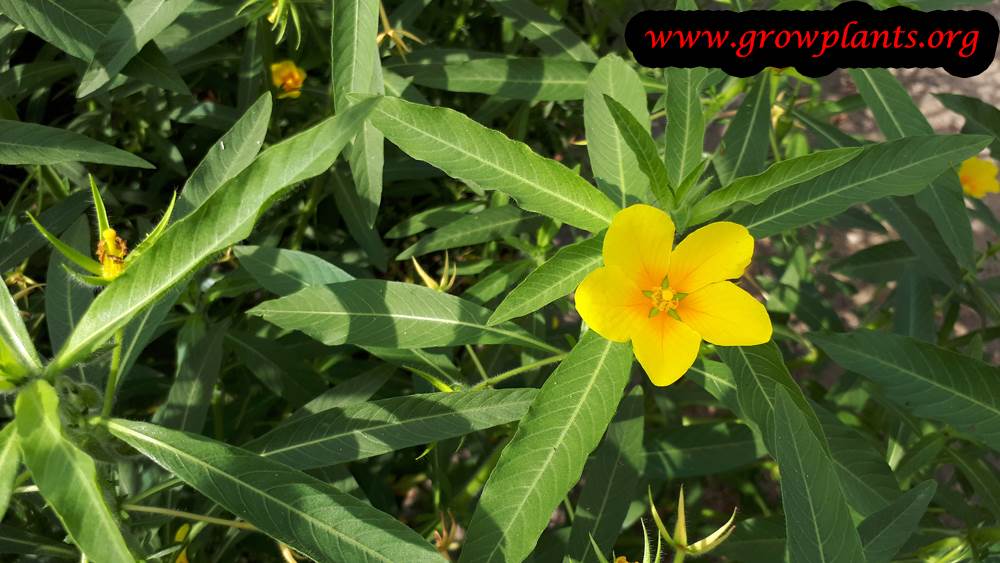
- Leaves & Foliage: Green, linear leaves.
- Flower Characteristics: Yellow, saucer-shaped flowers.
Primary Uses & Landscape Value
- Functional & Ornamental Roles: Ornamental pond and water-garden plant; note it is highly invasive in waterways.
Care Guide: Planting, Soil & Watering
Overview: Water primrose is an aquatic/marginal plant for full sun that grows in heavy, rich soil in water or permanently saturated ground. It demands abundant water and is happiest with its roots submerged or flooded.
Quick Care Requirements
| Requirement | Ideal Condition |
|---|---|
| Planting Season | During the warm season, spring through autumn |
| Growth Rate | Fast |
| Soil Type | Heavy, rich soil in an aquatic or permanently wet setting |
| Water Need | High — grow in water or permanently saturated soil |
Planting & Establishment
- Best Planting Season: Plant during the warm season, anytime from spring through autumn, into a pond margin, shallow water, or a flooded container.
- How to Plant:
- Hole Preparation: Set the roots into a heavy loam or aquatic planting substrate in a submerged basket or pond-margin soil.
- Soil Amendments: Use a heavy, rich loam or aquatic soil rather than a light, free-draining mix, since this plant needs to stay wet.
- Planting Depth: Plant at the water margin or in shallow water with the crown at or just below the water surface.
- Growth Speed & Expectations: Expect fast growth in optimal conditions, establishing and reaching full size quickly.
Soil, Watering & Drainage Care
- Soil Mix & Drainage Needs: Grow in a heavy, rich loam or aquatic substrate in a pond margin, shallow water, or a container kept permanently flooded; because it spreads aggressively, contain it where it cannot escape into natural waterways.
- Watering Schedule & Technique:
- Young / Newly Planted: Keep the soil saturated or submerged from the start; this is a water plant that must never dry out.
- Established: Maintain standing water or permanently waterlogged soil around the roots throughout the growing season.
- Seasonal Adjustments: Growth slows in cold weather; keep the crown wet year-round and cut back top growth as needed to control spread.
Climate, Light & Hardiness
Ludwigia grandiflora (primrose willow) is an aquatic/wetland perennial suited to temperate, subtropical, mediterranean, and desert climates, hardy in USDA zones 5–11. It grows in full sun with its roots in water or consistently saturated, heavy soil.
Quick Climate Specifications
| Climate Zones | Temperate, subtropical, mediterranean, desert |
|---|---|
| USDA Hardiness Zones | 5–11 |
| Frost Tolerance | High (at the root/crown, buffered by water) |
| Light Conditions | Full sun |
Sunlight & Light Exposure
Optimal Light Setup
Full sun.
Direct Sun Requirement
Needs strong direct sun.
Best Exposure / Orientation
An open, sunny pond or wetland margin.
Temperature Extremes & Hardiness
USDA Hardiness & Regional Limits
Its broad hardiness range (zone 5–11) reflects that, as an aquatic plant, the water body buffers the roots and crown from air-temperature extremes; even where top growth is killed by frost, the submerged crown and roots often survive to resprout.
Cold Damage & Winter Protection
Foliage likely dies back with frost or cold; in ponds that don't freeze solid, the crown typically survives to resprout in spring.
Frost Sensitivity
Top growth has low frost tolerance, but the root/crown, protected by water, is considerably more cold hardy - consistent with the wide zone range in the source data.
Extreme Heat Tolerance
Suited to warm subtropical and desert-climate summers given adequate water.
Wind, Humidity & Microclimate
Rainfall & Seasonal Moisture
Needs to be sited directly in water or permanently saturated heavy soil; not adaptable to dry conditions.
Microclimate Recommendations
Pond margins or wetland plantings in full sun; because it can be invasive, contain its spread where required by local regulations.
Growing in Pots, Balconies & Indoors
Ludwigia grandiflora (water primrose) is a sun-loving aquatic and marginal plant, not a houseplant. The grower confirms it grows in containers – but as a pond or bog subject that wants full sun and permanently wet roots. It spreads vigorously, so keep it firmly contained.
Quick Details
- Container Size: A water-holding container, pond basket or bog pot – it wants standing water, not free drainage.
- Indoor Suitability: No – not a houseplant.
- Best Spot: Full sun.
- Soil & Drainage: Heavy aquatic loam; unlike most pot plants it wants to sit in water.
- Watering in Pots: Constant – keep it permanently wet; it is a water plant.
Indoors & On the Windowsill
- Not a houseplant: The grower says no – it is a full-sun aquatic and will not grow as an indoor plant.
- Pond or bog container: Its container home is a watertight pot, pond margin or bog on a sunny balcony, kept flooded.
On a Balcony or Patio
- Sun and water: Give it the sunniest spot and never let the reservoir run dry; top it up daily in hot weather.
- Keep it contained: It is a fast, vigorous spreader and can be invasive – grow it only in a closed container, never where it can reach natural water.
Choosing the Pot, Soil & Long-Term Care
- Container & water: Use a watertight pot or pond basket that holds water rather than draining; a flooded saucer or reservoir is essential here.
- Substrate: A heavy aquatic loam topped with gravel keeps it anchored and fed.
- Feeding: Container plants run through nutrients fast because watering washes them out, so feed a little more often through the growing season than you would in open ground.
- Repotting: Refresh the mix or pot up about every couple of years; for perennials, lightly trim the roots and top growth at the same time.
Fertilizing & Feeding
A light feeder in practice: as a rooted water garden plant, this species draws much of its nutrition from the heavy, rich substrate it is planted in, with root-zone feeding rather than surface fertilizer being the main way to supply nutrients.
Quick Fertilizing Specs
| Feeding Level | Light feeder |
|---|---|
| Main Nutrient Priority | Balanced feeding delivered to the root zone through the planting substrate |
| Best Feeding Period | Spring through the active summer growing season |
| Organic Options | Heavy, rich aquatic planting soil or substrate suited to pond and water-garden use |
| Reduce/Stop Feeding | Reduce and then withhold feeding as growth slows going into cooler weather |
| Micronutrients | Usually met by a rich aquatic planting substrate; correct only diagnosed issues |
| Soil pH | Adaptable; grown in heavy, rich aquatic substrate rather than typical garden soil |
Feeding by Growth Stage
Planting and root establishment
Help newly planted roots establish in the heavy substrate at the pond or water garden’s edge.
| Nutrient direction | A balanced, root-zone fertilizer worked into the heavy planting substrate supports early rooting. |
|---|---|
| Timing | At planting, during the warmer part of the growing season. |
| Frequency | A single root-zone feeding placed in the substrate at planting is typically enough to start this vigorous grower. |
| Fertilizer types | An aquatic-safe root-zone fertilizer tab or substrate additive placed away from open water, Heavy, rich planting soil suited to submerged or marginal pond use |
| Precautions | Keep any fertilizer contained within the planting substrate rather than loose in the water, to avoid feeding algae or affecting fish and other pond life. |
Active summer growth
Sustain vigorous stem and leaf growth and the yellow saucer-shaped flowers through the warm season.
| Nutrient direction | Continued root-zone feeding in the substrate supports this fast-spreading grower; loose fertilizer in open water is not appropriate. |
|---|---|
| Timing | Through the warm active growing season, typically spring into autumn. |
| Frequency | Feeding rarely needs repeating once the substrate has been enriched at planting, given how vigorously this species grows. |
| Fertilizer types | An aquatic-safe root-zone tab renewed in the substrate if growth weakens, No open-water or foliar feeding |
| Precautions | This species is naturally invasive and spreads readily; extra feeding is rarely needed and can make it harder to keep in bounds. |
Cool-season dieback and rest
Let top growth die back and the rootstock rest through cold weather at the cooler edge of its range.
| Nutrient direction | None – withhold fertilizer once growth dies back for the season. |
|---|---|
| Timing | During cooler weather or winter, particularly toward the colder end of its hardiness range. |
| Frequency | No feeding at this stage. |
| Fertilizer types | No feeding at this stage; do not fertilize until new growth resumes in spring. |
| Precautions | Do not fertilize dormant or dying-back growth in cold water; unused nutrients can instead feed algae in the pond. |
Nutrient Deficiency Signs & Corrections
Pale, weak stems and slower spread than expected for a normally vigorous grower.
| Possible causes | depleted or unenriched planting substrate, substrate that has washed out or thinned over time, excessive removal of old growth without renewing substrate nutrients |
|---|---|
| Appears first on | older leaves and overall stem vigor |
| What to check | condition and richness of the planting substrate, how long since the substrate was last enriched, recent pruning or thinning |
| Possible correction | Renew the planting substrate or add an aquatic-safe root-zone fertilizer tab. |
Vigorous stem and leaf growth but few of the yellow saucer-shaped flowers.
| Possible causes | insufficient light reaching the water surface, overcrowded growth shading itself out, cool water temperatures suppressing bloom |
|---|---|
| Appears first on | overall flower count rather than a specific leaf symptom |
| What to check | light exposure at the planting site, how crowded the stand has become, water temperature trends |
| Possible correction | Improve light exposure where possible and thin overcrowded stems; feeding is rarely the limiting factor for bloom in this species. |
Green, cloudy water or algae growth in the pond around a fertilized planting.
| Possible causes | fertilizer applied loose in open water instead of contained in substrate, over-fertilizing the planting substrate, excess nutrients from other pond sources such as fish waste |
|---|---|
| Appears first on | the surrounding open water rather than the plant itself |
| What to check | how and where fertilizer was applied, overall pond nutrient load, other nutrient sources in the pond |
| Possible correction | Switch to contained root-zone tabs placed in the substrate and reduce overall nutrient input to the pond. |
Pruning, Training & Seasonal Maintenance
This is an aquatic or marginal perennial grown as a water-garden plant, and in cultivation it is recognized as a seriously invasive weed in ponds and waterways in many regions, restricted or banned in parts of the EU, UK and US. Pruning here means active containment, not shaping. Because it roots readily from stem fragments, cutting is double-edged: done correctly, with cuttings fully removed from the water, it controls the clump’s spread; leaving fragments in or near water lets them float off and start new colonies elsewhere. Check local regulations before cutting, removing or disposing of this species, since handling restrictions apply in a number of places.
Quick Pruning & Maintenance Specs
| Pruning Tolerance | High – regrows vigorously, which is exactly why cut fragments are a spread risk |
| Primary Pruning Window | Ongoing through the growing season as needed for containment |
| Secondary Maintenance Window | Not applicable |
| Typical Frequency | As often as needed to keep it within its intended area, more frequently during fast summer growth |
| Main Objective | Contain spread and keep the water-garden planting within bounds – not shape or train the plant |
| Young Plant Priority | Confine newly planted stock immediately in a basket or clearly bounded area rather than letting it root freely |
| Mature Plant Priority | Regular cutting back and removal of excess growth before it escapes its intended zone |
| Best Tool Type | Precision snips or bypass secateurs for soft aquatic stems – nothing heavier is needed |
| Avoid Heavy Pruning During | No timing restriction – the real caution here is disposal, not season |
Pruning by Plant Age & Size
Newly Established
Contain from the start – plant in a basket or clearly bounded area rather than letting it root freely, given how readily it spreads.
Young / Formative
No structural training – this is a spreading, soft-stemmed aquatic plant with no framework; the only formative task is establishing a containment boundary.
Mature / Established
Routine cutting back of stems that have grown beyond the intended planting area or that are creeping toward open water or neighboring plantings.
Seasonal Pruning Schedule
Summer Canopy Management (fast growth period): keep pace with its rapid summer growth before it spreads beyond bounds by removing any stems extending past the planting area or into open water, while leaving no cut material behind in the water; expect vigorous regrowth given its fast growth speed, so this is a repeat task, not a one-off, and cutting back does not sacrifice bloom since flowering is on current growth that simply regrows.
Ongoing Sanitary: general containment and tidiness as needed, removing excess or wayward growth.
Structural Pruning & Training
Essentially just spread and containment control – no branch-selection or canopy-thinning logic applies to this soft, spreading aquatic herb.
Special Growth to Remove
- Any stems rooting or trailing outside the intended container or planting zone – the single most important category of growth to watch, given its documented invasiveness
- Spent flower stems, if seed-set containment is also a goal
Container & Small-Space Pruning
Container or basket culture is the recommended way to grow this plant responsibly given its invasive tendency – keep it confined to a planting basket within the pond rather than letting it root in open substrate, and trim back regularly so growth does not spill over the basket’s edge into open water.
Tools
Precision snips or bypass secateurs for the soft, non-woody aquatic stems – no heavier tool is ever needed for this species.
Tool Hygiene & Disease Risk
Increased, in a specific sense – not for pathogen transmission but for spread prevention: rinse and clean tools, boots and equipment after working with this plant before moving to another water body, since even small fragments carried on equipment can start a new invasive population, mirroring standard clean-drain-dry biosecurity guidance for invasive aquatics.
Cut Placement & Technique
Cut well back into the confined growth area, not just at the boundary, to slow how quickly regrowth reaches the edge again. Always fully remove cut material from the water and surrounding banks – never leave trimmings floating or on wet soil where fragments can root.
Heavy Pruning & Rejuvenation
Not something this plant needs – it is already vigorous and fast-growing. There is no rejuvenation benefit to a hard cutback, only a containment one, and hard-cutting mainly matters as a way to slow its spread, not to refresh its vigor.
Post-Pruning Care
No extra feeding is needed. The main care step after cutting is proper disposal of removed material away from any waterway or damp ground – composted well away from water, or disposed of per local invasive-species guidance – so it cannot re-root.
Common Pruning Mistakes
- Leaving cut stems floating in or near the water, letting them drift and re-root elsewhere
- Under-managing summer growth until it has already spread beyond the intended area
- Composting or discarding trimmings near ponds, ditches or waterways
When NOT to Prune
There is no season to avoid cutting for this plant’s own sake; the caution is procedural – never cut or disturb it in a way that lets fragments reach open water or a waterway without full removal and proper disposal.
Recommended Tools (by task)
| precision_snips | Routine containment cuts on the soft aquatic stems, done often enough to prevent spread past its planting area |
| bypass_secateurs | Thicker basal growth on a well-established, overgrown clump |
Propagation Guide
Ludwigia grandiflora spreads and is propagated mainly from stem and node fragments, which root very readily in mud or shallow water – the practical reason the site notes this plant as invasive. Seed is produced too and gives true-to-type plants, but fragment propagation is far faster and more dependable. Overall difficulty is easy – because rooting happens so readily, cuttings should be contained (e.g., in a pot or defined planting area) to avoid unwanted spread.
Quick Propagation Specs
| Best Propagation Method | Stem/node cuttings (fragments) |
| Alternative Methods | Seed |
| Propagation Difficulty | Easy |
| Seed True-to-Type | Usually true-to-type |
| Vegetative True-to-Type | Yes |
| Best Propagation Season | Warm growing months (spring to summer) for fastest establishment |
| Cutting Rooting Time | Often just days to a couple of weeks in warm water or mud |
Growing from Seed
Seed is produced but this species is mainly increased vegetatively in practice; where seed is used, consistently wet or submerged, warm conditions favor germination for this aquatic plant.
Stem Cuttings
Cutting Type
Stem or node fragments/tip cuttings, taken from healthy, non-flowering growth.
Best Timing
Warm season for fastest rooting, though it can root in mild conditions nearly year-round.
Cutting Preparation
A segment with at least one node is enough to root and grow into a new plant.
Rooting Setup
Place cut segments directly into wet mud, shallow water, or a container of water/aquatic soil, matching this species’ aquatic-environment, heavy-soil preference; roots form readily at the nodes.
Rooting Hormone
Unnecessary – this species roots on its own very easily.
Rooting Time
Often just days to a couple of weeks in warm conditions.
Bloom & Flower Guide
Quick Details
- Bloom Season: Summer into autumn
- Time to First Bloom: A vigorous perennial that flowers freely once established
- Flower Appearance: Bright yellow, saucer-shaped, primrose-like flowers held above the water
- Edibility: Grown as an ornamental aquatic — the flowers are not eaten
Detailed Blooming Overview
Water primrose lifts cheerful yellow, primrose-like flowers just above the waterline through summer and autumn. It is undeniably pretty, but also extremely vigorous, so the display comes with a strong word of caution about its spread.
Flower Characteristics
- Five (occasionally six) rounded yellow petals forming an open saucer.
- Held clear of the water on emergent stems.
- Bright and long-flowering.
Bloom Care & Thinning
- Site for best flowering: Full sun in or beside water.
- Managing the spread: This is a highly invasive aquatic in many regions — grow it only where it is legal and fully contained, and never release it into natural waterways.
- Pollination: Worked by bees and other insects.
Pests, Diseases & Troubleshooting
Overview: Water primrose is a vigorous aquatic/marginal plant that is remarkably free of serious pests – its problems are mostly abiotic and, importantly, its own invasiveness in open water. In a controlled pond it may get aphids on emergent shoots and aquatic snails on foliage, while algae competition and rot in stagnant water are the main day-to-day issues.
Quick Troubleshooting Overview
| Issue / Pest | Main Symptom | Primary Solution |
|---|---|---|
| Aphids | Green/black clusters on emergent tips; sticky honeydew | Hose into water for fish; avoid oils on aquatics |
| Aquatic snails | Grazed holes in floating/emergent leaves | Tolerate; manual removal; balanced pond fauna |
| China-mark moth | Leaf pieces cut and used as cases; ragged leaves | Handpick larvae/cases; usually cosmetic |
| Algae competition | Green water/blanket weed smothering shoots | Reduce nutrients, shade water, remove blanket weed |
| Rot in stagnant water | Blackened, slimy submerged stems | Improve water movement; thin congested growth |
Common Pests & Management
- Aphids (water-lily / shoot aphids) (Rhopalosiphum nymphaeae / Aphis spp.):
- Symptoms: Dense colonies of green or dark aphids on emergent shoot tips and flower stalks above the waterline, causing curling, honeydew and weakened growth.
- Prevention & Control: Simply hose them off the foliage into the water where pond fish will eat them; avoid oils, soaps and insecticides on aquatic plants as they harm fish and invertebrates. A healthy pond with fish and predators keeps aphids in check.
- Aquatic snails (Lymnaea / Planorbis spp.):
- Symptoms: Grazing damage and small holes on floating and emergent leaves; snails and their jelly egg masses cling to undersides.
- Prevention & Control: Light grazing is harmless and part of a balanced pond; remove excess snails by hand or on a lettuce-leaf trap if populations explode. Do not use molluscicides in water.
- China-mark moth larvae (Elophila nymphaeata):
- Symptoms: Larvae cut oval sections from the leaves to build protective cases and skeletonise foliage, leaving ragged, notched leaves floating on the surface.
- Prevention & Control: Pick off the leaf cases and affected leaves by hand; damage is usually cosmetic. Encourage fish and keep the planting from becoming congested.
Diseases & Fungal Issues
- Stem & crown rot (waterlogging fungi/bacteria):
- Symptoms: Blackened, soft, slimy stems and collapse where water is stagnant, over-warm or oxygen-poor, especially among congested growth.
- Treatment & Management: Keep water gently moving and oxygenated, thin overcrowded stems, and remove decaying material promptly so it does not foul the water.
- Leaf-spot & algal coating:
- Symptoms: Brown spotting on emergent leaves and a green algal film that smothers foliage in nutrient-rich, sunny, still water.
- Treatment & Management: Reduce nutrient loading (limit feeding of fish, remove debris), shade part of the surface, and skim blanket weed; a balanced planting outcompetes algae.
Growing Difficulties & Abiotic Problems
- Invasiveness / overgrowth:
- Cause & Symptoms: This is the plant’s biggest ‘problem’ – it spreads aggressively by fragments and can choke a pond or waterway; broken pieces re-root readily.
- Correction Strategy: Contain it in a basket or lined section, thin it hard each season, and NEVER dispose of trimmings in natural waterways – bag and compost them well away from water. Check local regulations, as it is invasive/banned in many regions.
- Nutrient overload / poor water quality:
- Cause & Symptoms: Rank, floppy growth, algae blooms and yellowing where the water is over-rich.
- Correction Strategy: Cut nutrient inputs, remove decaying vegetation, and keep water oxygenated; leaner water gives sturdier, more manageable plants.
- Insufficient light / cold dormancy:
- Cause & Symptoms: Weak, pale, drawn growth in deep shade; top growth dies back and blackens in cold conditions.
- Correction Strategy: Site in full sun to light shade in shallow margins; expect natural dieback in cold periods and remove blackened material to keep water clean.
What Helps – Products & Tools
Because this is an aquatic plant, avoid oils, soaps and chemical sprays that poison pond life – physical methods rule here: hose aphids into the water for fish, handpick snails and moth cases, skim algae and blanket weed, and use a rake or net for thinning. A fine mesh basket contains its spread.