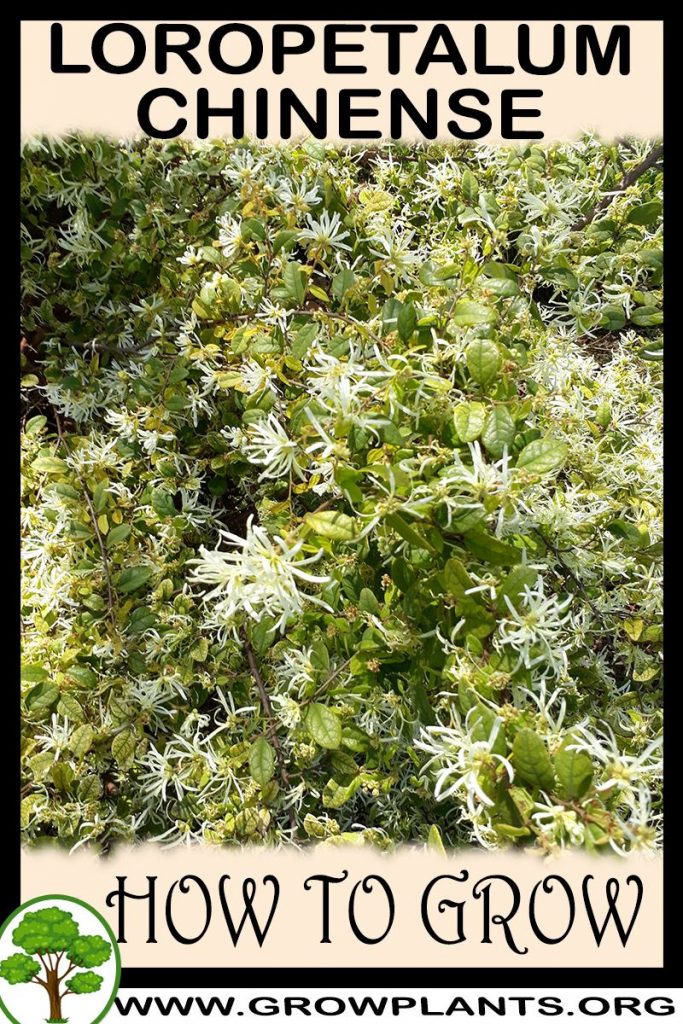
Plant Profile & Key Characteristics
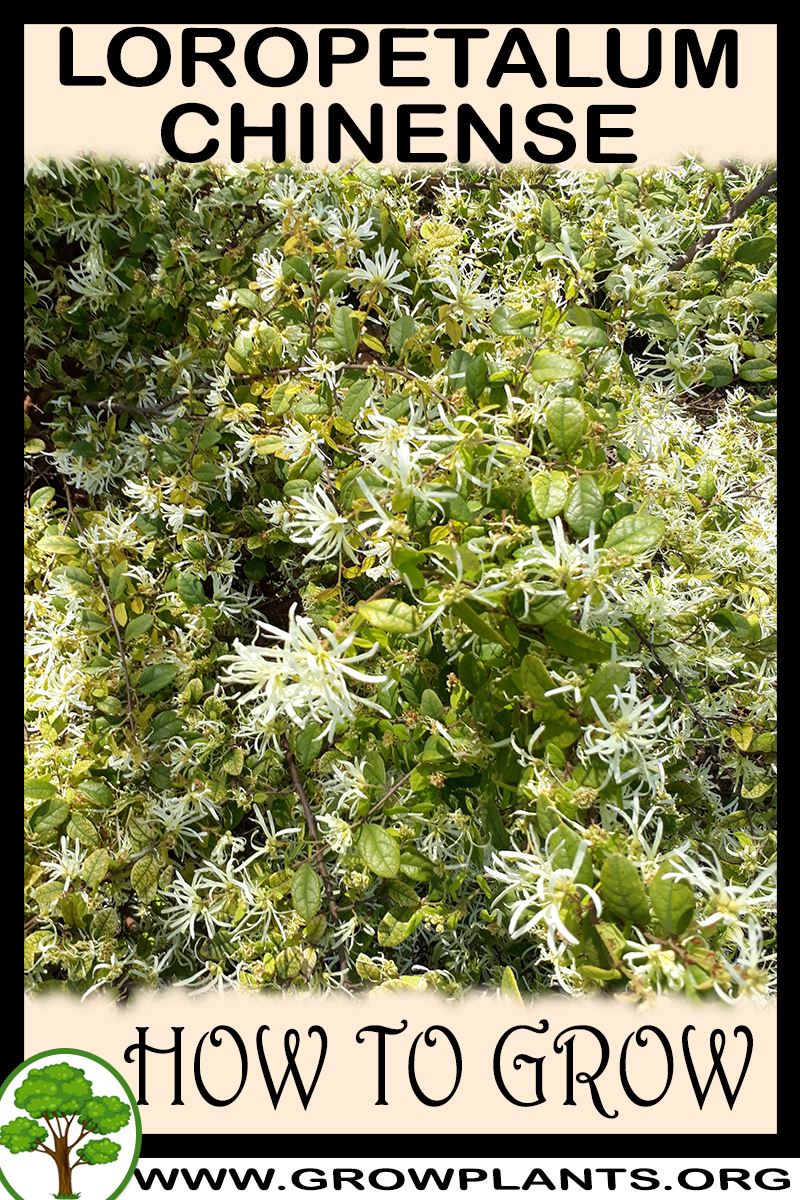
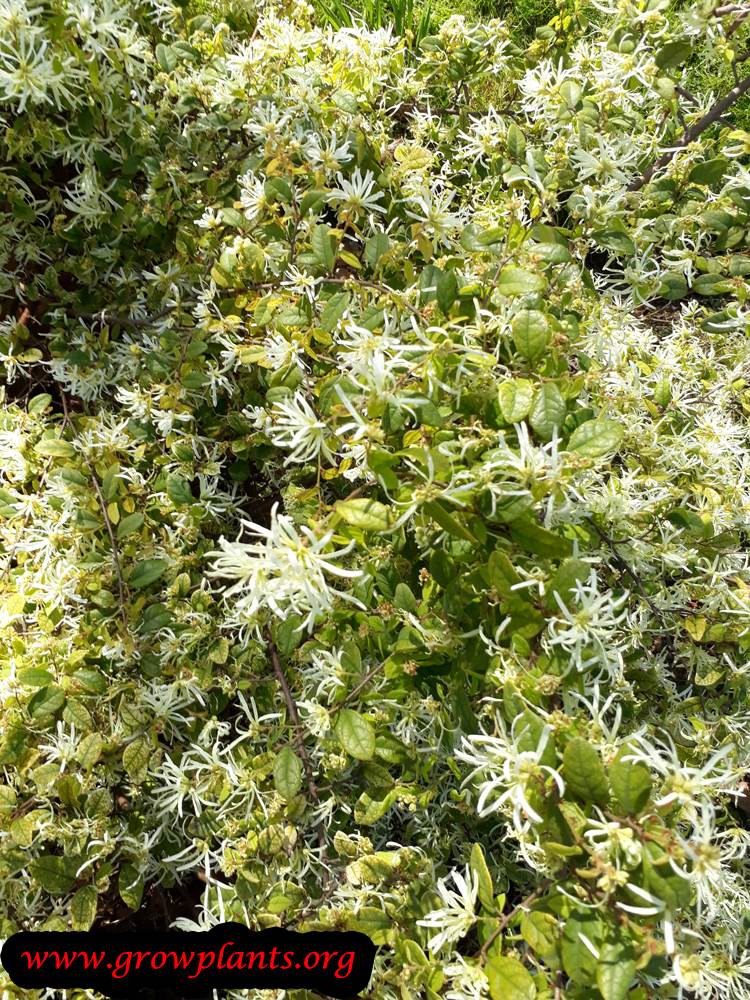
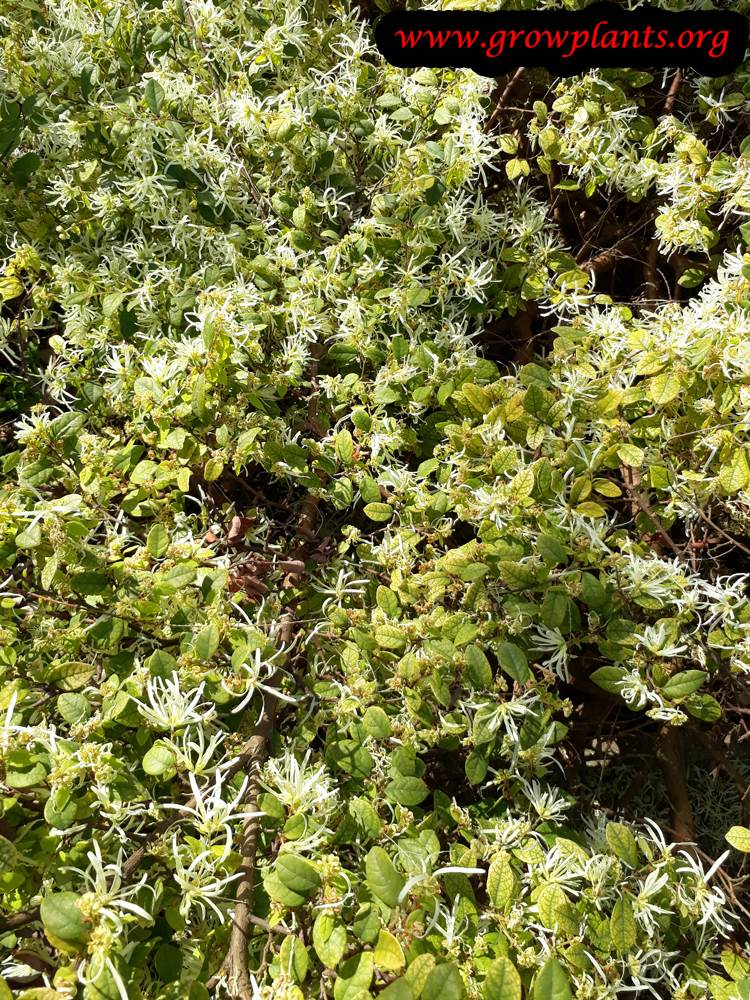
Overview: Loropetalum chinense (Chinese fringe flower) is an evergreen ornamental shrub 0.6-1.8 m tall, grown for its fringe-like pink or white flowers and, in coloured cultivars, its striking burgundy foliage. It is widely used for hedging and borders.
Quick Specifications
| Specification | Attribute |
|---|---|
| Plant Type / Life Cycle | Perennial (evergreen shrub) |
| Foliage Type | Evergreen |
| Mature Size | 0.6-1.8 m tall and wide (2-6 ft) |
| Growth Rate | Moderate to Fast |
| Toxicity | Non-toxic |
| Hardiness | USDA zones 7-10 |
Growth Form & Structure
- Height & Spread: Bushy shrub 0.6-1.8 m tall and wide; compact forms grow well in containers.
- Growth Habit & Form: Rounded, arching, densely branched evergreen shrub good for hedges and foundation planting.
- Lifespan & Maturity: Long-lived woody shrub that fills out over a few seasons.
Anatomy & Physical Features
- Leaves & Foliage: Elliptic leaves in green, red, brown, purple or a mix, giving year-round colour in the burgundy-leaved cultivars.
- Flower Characteristics: Fringe-like flowers with narrow, twisted, ribbon-like petals in pink or white.
Primary Uses & Landscape Value
- Functional & Ornamental Roles: Ornamental flowering and foliage shrub for hedges, screens, borders and containers.
Care Guide: Planting, Soil & Watering
Overview: Chinese fringe flower grows in full sun to half shade in slightly acidic, well-drained soil enriched with organic matter and mulch. It likes moderate to generous, steady moisture and dislikes drying out completely.
Quick Care Requirements
| Requirement | Ideal Condition |
|---|---|
| Planting Season | During the warm season, spring through autumn |
| Growth Rate | Moderate to Fast |
| Soil Type | Slightly acidic, well-draining soil, mulched |
| Soil pH | Slightly acidic |
| Water Need | Moderate to high — keep the soil consistently moist, but never waterlogged |
Planting & Establishment
- Best Planting Season: Plant during the warm season, anytime from spring through autumn.
- How to Plant:
- Hole Preparation: Dig a hole about twice the width of the root ball and the same depth, loosening the sides and base.
- Soil Amendments: Work in compost or well-rotted organic matter and mulch after planting to enrich the soil, retain moisture, and keep the root zone lightly acidic.
- Planting Depth: Set the plant at the same level it grew in its pot, with the root collar at the soil surface — do not bury the stem.
- Growth Speed & Expectations: Expect moderate to fast growth in optimal conditions, filling out quickly through the warm season.
Soil, Watering & Drainage Care
- Soil Mix & Drainage Needs: Grow in rich, moist but well-draining, slightly acidic soil; add organic matter or mulch to hold moisture and keep excess water draining freely to avoid root rot.
- Watering Schedule & Technique:
- Young / Newly Planted: Keep the soil consistently moist right after planting, never letting it dry out while roots establish.
- Established: Water generously and often so the soil stays evenly moist, but make sure excess water drains away.
- Seasonal Adjustments: Increase watering in hot, dry weather; ease off in winter but do not let the soil dry out completely.
Climate, Light & Hardiness
Chinese fringe flower is a subtropical, mediterranean, and temperate-climate evergreen hedge shrub. It grows well in full sun to half shade and is reliably hardy across a moderate winter-cold range.
Quick Climate Specifications
| Climate Zones | Subtropical, Mediterranean, temperate |
|---|---|
| USDA Hardiness Zones | 7–10 |
| Frost Tolerance | Moderate |
| Light Conditions | Full Sun to Half Shade |
Sunlight & Light Exposure
Optimal Light Setup
Full sun brings out the best foliage color (including red/purple leaf forms) and flowering; half shade is tolerated.
Temperature Extremes & Hardiness
USDA Hardiness & Regional Limits
Reliably hardy in USDA zones 7–10, covering both cooler temperate winters and warmer subtropical conditions.
Frost Sensitivity
Tolerates the typical frosts found within its zone 7–10 range once established; colder zones would require site protection.
Growing in Pots, Balconies & Indoors
Chinese fringe flower is a handsome evergreen with ribbon-like flowers and, in many forms, rich burgundy foliage. The grower rates it for containers but not indoors – it colours and flowers best in strong outdoor light.
Quick Details
- Container Size: A roomy tub, 20-40 L (5-10 gal), with an acidic mix
- Indoor Suitability: Not a houseplant (grower); an evergreen shrub for acidic outdoor pots
- Best Spot: Full sun to partial shade; a bright spot with some direct sun is ideal.
- Soil & Drainage: Aerated, organic-rich, slightly acidic mix (peat/coir with perlite); it must drain freely.
- Watering in Pots: Keep the mix consistently moist – this one likes water – but make sure it drains freely; never let a potted plant go bone-dry.
Indoors & On the Windowsill
- Not a houseplant: The grower marks it unsuitable indoors; the dark leaf colour and flowering both fade in weak room light.
- Overwintering: In colder-than-ideal areas a potted plant can be sheltered in a bright, frost-free spot over winter, as it is only moderately hardy.
On a Balcony or Patio
- Light & colour: Sun to part shade gives the deepest foliage colour and most flowers; keep the acid-loving roots evenly moist, and use rainwater in hard-water areas.
- Practicalities: It responds well to clipping, so it stays neat and shapely in a container.
Choosing the Pot, Soil & Long-Term Care
- Pot & drainage: A roomy tub with strong drainage holes and an acidic, moisture-retentive mix; skip a standing-water saucer.
- Potting mix: Use a well-aerated, organic-rich mix – quality potting mix, or peat/coir blended with perlite or vermiculite.
- Feeding: Feed with an ericaceous (acid-loving) fertiliser through the growing season.
- Repotting: Refresh the acidic mix and pot up or root-prune every couple of years; trim to shape after flowering.
Fertilizing & Feeding
A fast-growing evergreen hedge shrub, Chinese fringe flower responds well to steady, moderate feeding through its growing season, especially cultivars grown for deep red or purple foliage color.
Quick Fertilizing Specs
| Feeding Level | Moderate; a vigorous hedge and screening shrub that rewards consistent feeding. |
|---|---|
| Main Nutrient Priority | Balanced nutrition that supports both strong foliage color and the winter-into-spring flower flush. |
| Best Feeding Period | Through the main spring and summer growth flush, tapering off as growth slows in autumn. |
| Organic Options | A mulch layer and compost around the root zone suit this shrub well and help keep the slightly acid soil it prefers. |
| Soil pH | Prefers slightly acidic soil; can develop nutrient uptake trouble in alkaline soil. |
| Reduce/Stop Feeding | Taper feeding as cooler weather sets in and the shrub heads into its winter bloom and rest period. |
Feeding by Growth Stage
Late winter to spring bloom
Support the fringe-shaped pink or white flower display without pushing so much new growth that it competes with flowering.
| Nutrient direction | Balanced, moderate nutrition; avoid a heavy nitrogen push right as flower buds are opening. |
|---|---|
| Timing | During the late winter into spring bloom period. |
| Frequency | A light, balanced feeding just before or as flowering begins is usually sufficient. |
| Fertilizer types | A balanced complete shrub or hedge fertilizer used lightly, A top-dressing of compost or aged mulch around the root zone |
| Precautions | Avoid heavy nitrogen right at bud break, which can favor leafy growth over the flower display. |
Spring and summer growth flush
Fuel the main flush of new stems and leaves, including the deep foliage color prized in colored-leaf cultivars, and build a dense hedge habit.
| Nutrient direction | Steady, balanced-to-nitrogen-leaning nutrition to support vigorous shoot and leaf growth. |
|---|---|
| Timing | Through the active spring and summer growing season. |
| Frequency | Several light, evenly spaced feedings through the growing season suit this vigorous shrub better than one heavy dose. |
| Fertilizer types | A balanced complete fertilizer formulated for shrubs or hedges, A controlled-release granular product for even feeding through the season |
| Precautions | On alkaline or heavy clay soil, watch new growth for pale, yellowing leaves even when feeding is adequate – this points to a pH problem rather than a lack of fertilizer. |
Autumn and winter rest
Let growth harden off and the shrub settle into dormancy ahead of its winter bloom.
| Nutrient direction | None – withhold fertilizer so growth can slow naturally. |
|---|---|
| Timing | From autumn through the coldest part of winter, before flower buds open. |
| Frequency | No feeding at this stage. |
| Fertilizer types | No feeding – allow the shrub to rest until spring growth resumes |
| Precautions | Do not fertilize during this rest period; late feeding can push soft new growth that is more vulnerable to cold. |
Nutrient Deficiency Signs & Corrections
New leaves turn pale or yellow while the veins stay green, most noticeable on plants grown outside their preferred acid soil.
| Possible causes | Alkaline or neutral soil limiting iron or manganese availability, Waterlogged or compacted soil restricting root uptake, A genuine iron or manganese shortage in the soil |
|---|---|
| Appears first on | New, upper growth. |
| What to check | Soil pH, since this shrub prefers slightly acid conditions, Drainage and whether roots are sitting wet, Whether older leaves stay a normal green while only new growth is affected |
| Possible correction | Work toward a slightly acid soil pH and improve drainage first; if chlorosis persists, apply a chelated iron or manganese product per its label. |
Colored-leaf cultivars lose their deep red or purple tone and look washed-out or greenish.
| Possible causes | Too little sun exposure for the cultivar’s leaf pigmentation, General nutrient shortage limiting overall vigor, Old, depleted soil with little organic matter |
|---|---|
| Appears first on | New foliage across the shrub. |
| What to check | How much direct sun the planting site actually gets, Recent feeding history and general plant vigor, Soil organic matter and mulch condition |
| Possible correction | Confirm the site gets enough sun for the cultivar, then support the shrub with a balanced feeding and a refreshed mulch or compost layer. |
The shrub grows well but produces few of its characteristic fringe-shaped flowers.
| Possible causes | Excess nitrogen favoring leafy growth over flower buds, Pruning at the wrong time removing developing flower wood, Insufficient light for good bud set |
|---|---|
| Appears first on | Overall flowering across the shrub. |
| What to check | Recent nitrogen-heavy feeding, When and how hard the shrub was last pruned, Sun exposure at the planting site |
| Possible correction | Ease back on nitrogen, prune only after flowering rather than beforehand, and confirm the site gets adequate sun. |
Pruning, Training & Seasonal Maintenance
Loropetalum chinense is a vigorous evergreen shrub grown both for its colorful foliage and its fringe-petaled winter/spring flowers, and it takes hard pruning well as a hedge or screen plant. The one timing rule that matters most: it sets its flower buds on the previous season’s wood during summer and autumn, ready to open in winter/spring, so pruning in autumn or winter — as is sometimes assumed for a plant that blooms early in the year — actually cuts off the very buds about to open. The safest and most reliable window for any major shaping is immediately after the flower display finishes in spring, once new growth has the rest of the season to mature into next year’s flowering wood.
Quick Pruning & Maintenance Specs
| Pruning Tolerance | High — vigorous, resprouts readily even from hard cuts |
| Primary Pruning Window | Immediately after flowering (mid-to-late spring) |
| Secondary Maintenance Window | Light shearing through summer for formal hedges (accepts some loss of next bloom as a trade-off) |
| Typical Frequency | 1-2x/year for formal hedges; a single annual shaping otherwise |
| Main Objective | Shape/hedge density while preserving next season’s flower display |
| Young Plant Priority | Light formative shaping; establish multiple main stems |
| Mature Plant Priority | Renewal thinning of dense or leggy interior growth, size control |
| Best Tool Type | Bypass secateurs (selective); hedge shears only if maintained as a formal sheared hedge |
| Avoid Heavy Pruning During | Late summer through winter — removes the flower buds already forming for next season |
Pruning by Plant Age & Size
Newly Established
Minimal pruning; remove only damaged growth while the plant establishes.
Young / Formative
Light tip pinching or selective shaping to build a full, multi-stemmed habit, or begin regular shearing early if the plant is being grown from the start as a formal hedge.
Mature / Established
Renewal thinning of dense, leggy, or shaded-out interior growth after flowering; size maintenance as needed for hedges and screens.
Seasonal Pruning Schedule
Post-Flowering (primary window)
Objective: shape and size the plant while it still has a full season ahead to regrow flowering wood. Remove: spent flowering growth, crossing/rubbing stems, excess length. Do not remove: healthy new growth right as it emerges. Expected response: vigorous flush of new growth that matures into next season’s flower-bearing wood. Flowering impact: none — this is the one window that costs nothing in bloom.
Summer Canopy Management (formal hedges only)
Objective: maintain a crisp hedge line. Remove: new shoot tips extending past the hedge face. Expected response: denser outer growth. Flowering impact: some loss of the following bloom is likely, since shearing removes forming flower buds — an accepted trade-off for hedges valued mainly for foliage.
Ongoing Sanitary
Remove dead or damaged wood at any time of year.
Flowering & Fruiting Wood
Loropetalum flowers on wood produced during the prior growing season; buds set through summer and autumn for the winter-to-spring bloom. Pruning in autumn or winter removes buds that are already formed and about to open, sacrificing that season’s display even though the plant itself is unharmed. For specimens valued for their flowers, always prune right after bloom; for hedges kept mainly for foliage color, a summer shearing schedule that trades some bloom for a tidy form is a reasonable choice.
Structural Pruning & Training
Thin crossing and rubbing stems within the dense multi-stem canopy to improve air movement and interior light. Renewal-prune overgrown or leggy hedges by removing the oldest, least productive stems at their base.
Special Growth to Remove
Plants grown from cuttings/seed have no rootstock to worry about; rootstock suckers are only a concern on grafted color selections (grafting is used mainly to guarantee flower color, per source data). On hedges, thin selected interior stems to maintain density rather than removing every vigorous shoot.
Container & Small-Space Pruning
Tolerates container culture; more frequent light shaping after flowering keeps a potted specimen compact, and root-prune at repotting if it becomes rootbound.
Tools
- Bypass secateurs — routine selective shaping and stem selection.
- Hedge shears — only for specimens maintained as a formally clipped hedge.
- Loppers — thicker stems during renewal thinning of older hedges.
Tool Hygiene & Disease Risk
Routine — only aphids are noted as a pest concern; no major transmissible disease requiring blade disinfection between cuts.
Cut Placement & Technique
Favor thinning cuts (removing a stem at its point of origin) over heading cuts to keep a natural form; for formal hedges, taper the sides slightly wider at the base so lower growth still gets light.
Heavy Pruning & Rejuvenation
Tolerated well — an overgrown or leggy hedge can be cut back hard, even close to old wood, right after flowering to rejuvenate it. Expect vigorous regrowth and a lighter-than-usual bloom the following season while the plant rebuilds its framework.
Post-Pruning Care
Water during the regrowth flush and watch the tender new growth for aphids, the pest most commonly noted for this species.
Common Pruning Mistakes
- Pruning in autumn or winter out of habit, which strips the coming season’s flower display.
- Shearing hedges into a tight outer shell that shades out interior foliage color.
- Treating flower-display specimens and clipped hedges with the same pruning calendar, when their priorities (bloom vs. form) actually call for different timing.
When NOT to Prune
Avoid heavy pruning from late summer through winter, when next season’s flower buds are forming and set on the old wood. Avoid hedge shearing during periods of hot, dry stress.
Recommended Tools (by task)
- bypass_secateurs — selective shaping and stem selection on pencil-to-finger-thick growth; clean cuts that don’t crush stems.
- hedge_shears — only for a formally clipped hedge or screen where uniform shearing is the intended look.
- loppers — renewal cuts on older, thicker basal stems that secateurs can’t handle cleanly.
Pruning Troubleshooting
| Problem | Possible Cause | What to Check | Corrective Action |
| No flowers after pruning | Pruned in autumn/winter, removing already-set flower buds | Timing of the last prune relative to the bloom window | Shift major pruning to immediately after flowering next time |
| Dense outer shell, bare/hollow interior | Repeated shallow shearing with no interior thinning | Light penetration into the hedge’s core | Selective thinning cuts to open the canopy periodically |
| Leggy, sparse lower hedge | Only tip-shearing performed, no renewal cuts | Age and density of lower stems | Renewal-prune the oldest stems at their base |
Propagation Guide
Loropetalum chinense is best propagated from semi-hardwood stem cuttings, and the site notes that vegetative propagation is necessary if you want to keep a specific leaf or flower color true. Seed is possible for the plain green species but is not reliable for colored-leaf forms, and overall difficulty is moderate.
Quick Propagation Specs
| Best Propagation Method | Semi-hardwood stem cuttings |
| Alternative Methods | Seed (species only, not reliable for named color forms) |
| Propagation Difficulty | Moderate |
| Seed True-to-Type | Mostly uniform for the plain species; colored-leaf cultivars often do not come true and can revert toward green-leaved seedlings |
| Vegetative True-to-Type | Yes |
| Best Propagation Season | Summer, once new growth has begun to firm up, within the spring–summer–autumn planting window |
| Cutting Rooting Time | Several weeks to a couple of months |
Growing from Seed
Detailed seed data is not documented for this species. As in many related plants, germination from seed can be slow and uneven, so treat timing as approximate. More importantly, seed is a secondary option here: it is only suitable for the plain green-leaved species, since named colored-leaf selections need to be propagated vegetatively to keep their color true.
Stem Cuttings
Cutting Type
Semi-hardwood cuttings taken from the current season's growth.
Best Timing
Summer, after new growth has begun to firm up.
Cutting Preparation
Take tip cuttings roughly 10–15cm (4–6 inches) long and remove the lower leaves.
Rooting Setup
A well-drained propagation mix under high humidity, such as mist or an enclosed humidity dome.
Rooting Hormone
Often beneficial for more consistent rooting of semi-hardwood cuttings, though not always required.
Rooting Time
Several weeks to a couple of months under warm, humid conditions.
Bloom & Flower Guide
Quick Details
- Bloom Season: Late winter into spring, with occasional later flushes
- Flower Appearance: Spidery fringe flowers with narrow, twisted strap-like petals
- Edibility: Ornamental – not eaten
Detailed Blooming Overview
Chinese fringe flower is prized for its clusters of unusual, fringe-like blooms that appear mainly from late winter into spring against its often burgundy-tinged foliage. The contrast of ribbon-petalled flowers over coloured leaves makes it a standout hedge or feature shrub.
Flower Characteristics
- Petals are linear and twisted, giving each flower a delicate, spidery fringe.
- Colours are pink or white, borne in tight clusters along the stems.
Bloom Care & Thinning
- Pruning for bloom: Prune after the main flowering; a hard trim in autumn or winter shapes the shrub without sacrificing the spring display.
- Soil and light: Slightly acid, well-drained soil and full sun to half shade bring out the best flower colour.
Pests, Diseases & Troubleshooting
Overview: Chinese fringe flower (Loropetalum chinense) is a tough, largely pest-resistant evergreen shrub; its occasional pests are aphids, spider mites, scale, mealybugs and root-knot nematodes, and its real weaknesses are root rot in wet soil, leaf spot, and iron chlorosis on alkaline ground. Given acidic, well-drained soil and good airflow it is one of the more trouble-free flowering shrubs.
Quick Troubleshooting Overview
| Issue / Pest | Main Symptom | Primary Solution |
|---|---|---|
| Aphids | Sticky, curled new shoots | Water jet, insecticidal soap |
| Spider mites | Fine stippling, bronzing in heat/drought | Rinse foliage, horticultural oil |
| Scale / mealybugs | Bumps or white fluff, honeydew, sooty mould | Prune, horticultural oil, control ants |
| Root rot | Wilting and dieback in wet soil | Improve drainage, ease watering |
| Iron chlorosis | Yellow leaves with green veins | Acidify soil, iron chelate |
Common Pests & Management
- Aphids (Aphis spp.):
- Symptoms: Colonies on soft new growth and flower shoots with honeydew, sooty mould and curling.
- Prevention & Control: Hose off, apply insecticidal soap or neem, and conserve ladybirds and lacewings; control ants.
- Spider mites (Tetranychus urticae):
- Symptoms: Fine pale stippling, dull bronzed leaves and faint webbing in hot, dry, dusty spells.
- Prevention & Control: Rinse foliage, raise humidity, avoid drought stress, and treat with horticultural oil or insecticidal soap on the undersides.
- Scale insects (Coccidae & Diaspididae):
- Symptoms: Immobile brown or white bumps on stems and leaf undersides with honeydew, sooty mould and weak growth.
- Prevention & Control: Prune out infested wood, apply horticultural oil to smother crawlers, control ants, and encourage parasitoid wasps.
- Mealybugs (Pseudococcus spp.):
- Symptoms: Cottony white masses in leaf axils and shoot tips with honeydew and sooty mould.
- Prevention & Control: Dab with alcohol, wash off with soapy water, apply horticultural oil, and encourage natural predators.
- Root-knot nematodes (Meloidogyne spp.):
- Symptoms: Poor vigour, yellowing and dieback with swollen galls on the roots in sandy soils.
- Prevention & Control: Maintain high organic matter and mulch, keep plants well watered and fed to tolerate damage, and avoid moving infested soil; solarise or rotate badly affected beds.
Diseases & Fungal Issues
- Root and collar rot (Phytophthora / Rhizoctonia spp.):
- Symptoms: Wilting, yellowing and branch dieback despite moist soil, with dark, decayed roots – a wet-soil disease.
- Treatment & Management: Plant high in acidic, well-drained soil, avoid overwatering and mulch piled against the stem, and remove severely affected plants with surrounding soil.
- Leaf spot (Cercospora / Colletotrichum spp.):
- Symptoms: Small brown or purplish spots that enlarge and may cause leaf drop in warm, wet weather.
- Treatment & Management: Remove and destroy affected leaves and debris, water at the base, improve airflow, and use a copper fungicide only if it spreads.
- Anthracnose (Colletotrichum spp.):
- Symptoms: Dark sunken lesions on leaves and shoot tips with some dieback in prolonged wet conditions.
- Treatment & Management: Prune for airflow, clear fallen debris, avoid overhead watering, and apply copper if it recurs.
Growing Difficulties & Abiotic Problems
- Iron chlorosis on alkaline soil:
- Cause & Symptoms: As an acid-loving shrub, Loropetalum yellows between the veins of young leaves when grown in alkaline or high-pH soil that locks up iron.
- Correction Strategy: Grow in acidic, well-drained soil, mulch with organic matter, use acidifying fertilisers, and apply iron chelate to correct active chlorosis.
- Root rot from wet soil:
- Cause & Symptoms: Heavy, waterlogged ground rots the roots and causes wilting and dieback.
- Correction Strategy: Plant high in free-draining soil, water deeply but infrequently once established, and keep mulch off the stem base.
- Leaf scorch and cold damage:
- Cause & Symptoms: Fierce reflected sun and drying wind scorch leaf margins, while hard frost browns soft new growth on this borderline-hardy shrub.
- Correction Strategy: Site with some shelter and afternoon shade in hot climates, mulch to steady moisture, avoid late feeding, and prune out frost-damaged wood after the risk passes.
What Helps – Products & Tools
A general shrub kit suffices: insecticidal soap or neem for aphids and mealybugs, horticultural oil for scale and spider mites, a copper fungicide for leaf spot or anthracnose, and – most usefully for this acid-lover – iron chelate and acidifying feeds for chlorosis. Good drainage and airflow prevent most problems. Spray in the evening to protect pollinators and follow the label.