Plant Profile & Key Characteristics
Also known as: Spurred snapdragon flower, Moroccan toadflax, Linaria Fairy Bouquet
Overview: Linaria maroccana (Moroccan toadflax) is a fine-textured annual reaching 20-60 cm, covered in small snapdragon-like, usually bicoloured flowers. It is a drought-tolerant ornamental that attracts pollinators.
Quick Specifications
| Specification | Attribute |
|---|---|
| Plant Type / Life Cycle | Annual |
| Foliage Type | Deciduous (soft annual foliage) |
| Mature Size | 20-60 cm tall (8-24 in), about 10-15 cm (4-6 in) wide |
| Growth Rate | Moderate to Fast |
| Hardiness | USDA zones 4-11 |
Growth Form & Structure
- Height & Spread: Slim upright stems 20-60 cm tall; compact enough for pots and window boxes.
- Growth Habit & Form: Slender, upright, well-branched herbaceous annual carrying flowers along the stems.
- Lifespan & Maturity: Completes its life cycle in one season, flowering quickly from seed; self-seeds freely.
Anatomy & Physical Features
- Leaves & Foliage: Green, soft, narrow (linear) leaves.
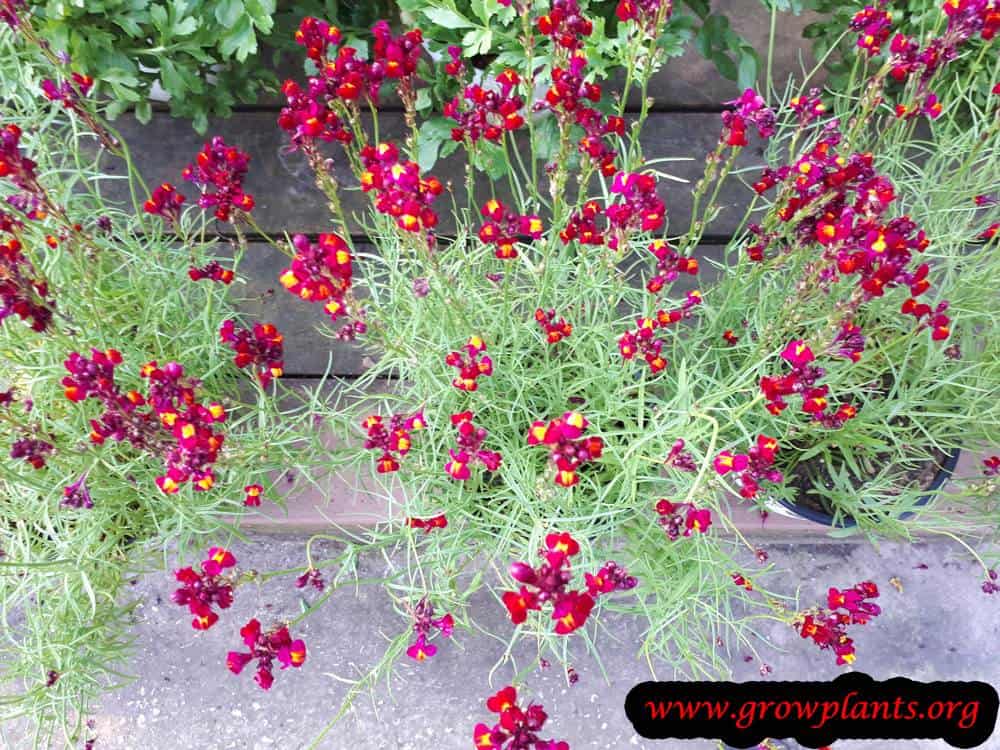
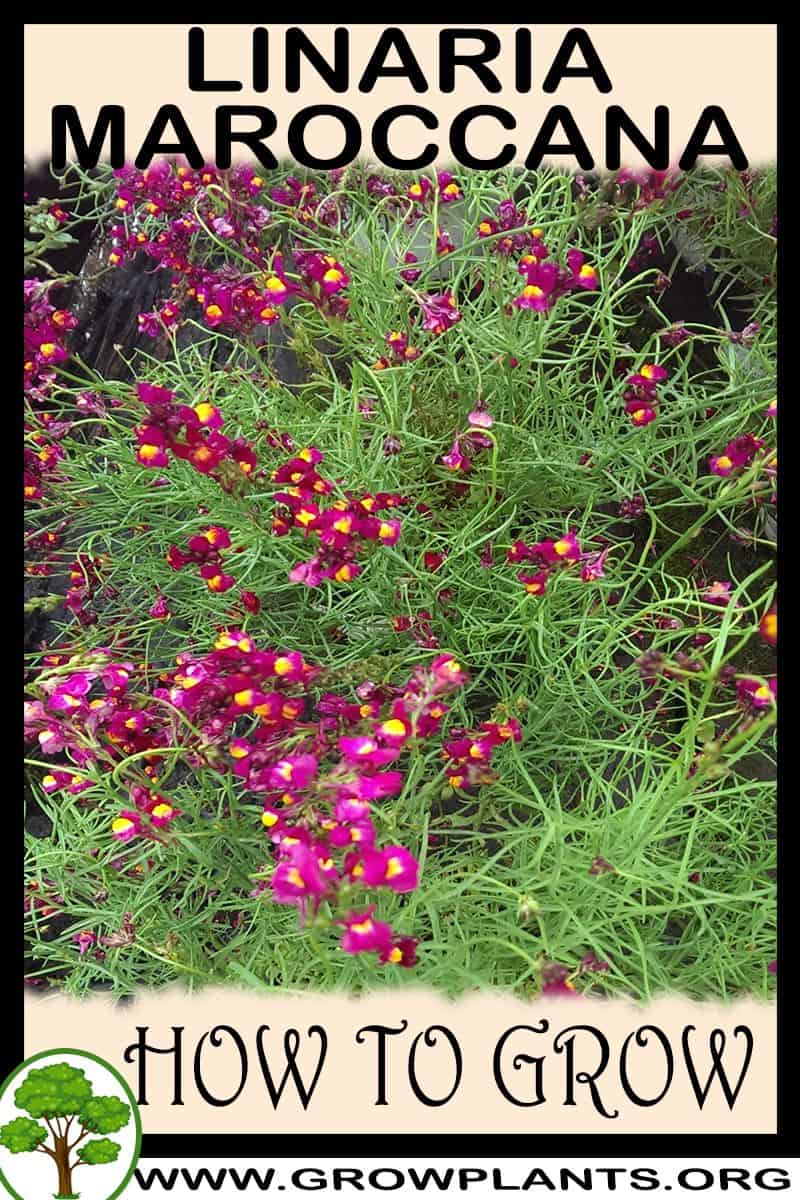
- Flower Characteristics: Small spurred, snapdragon-like flowers, usually two-toned, in purple, white, pink, yellow or red.
Primary Uses & Landscape Value
- Functional & Ornamental Roles: Ornamental for beds, borders, cottage gardens and containers; drought tolerant and attracts pollinators.
Care Guide: Planting, Soil & Watering
Overview: Linaria maroccana is an easy, frost-tender annual for full sun to light shade that asks only for light, well-drained soil. It is drought tolerant once growing and does best with modest watering and only a little feeding before flowering.
Quick Care Requirements
| Requirement | Ideal Condition |
|---|---|
| Planting Season | In spring in cooler climates; in autumn to winter where winters are mild |
| Growth Rate | Moderate to Fast |
| Soil Type | Light, well-draining soil |
| Water Need | Low to moderate — let the top of the soil dry between waterings; tolerates short dry spells |
Planting & Establishment
- Best Planting Season: Plant out after the danger of frost has passed in cooler climates; in mild, frost-free areas sow or plant in autumn to winter for cool-season colour.
- How to Plant:
- Hole Preparation: Dig a hole a little larger than the root ball and loosen the surrounding soil so young roots can spread easily.
- Soil Amendments: Keep amendments light — a little compost is enough, and only a small amount of fertiliser is needed before flowering.
- Planting Depth: Set the plant at the same level it grew in its pot, with the root collar at the soil surface — do not bury the stem.
- Growth Speed & Expectations: Expect moderate to fast growth in optimal conditions, filling out quickly through the warm season.
Soil, Watering & Drainage Care
- Soil Mix & Drainage Needs: Provide light, aerated, well-draining soil so water never pools around the roots; in containers use a quality free-draining potting mix and make sure the pot has drainage holes to prevent root rot.
- Watering Schedule & Technique:
- Young / Newly Planted: Keep the soil lightly moist while young plants establish, watering whenever the surface begins to dry.
- Established: Once established, water deeply but let the top few centimetres dry before watering again; the plant tolerates short dry spells.
- Seasonal Adjustments: Increase watering in hot, dry weather and reduce it in winter or during rainy spells.
Climate, Light & Hardiness
Moroccan toadflax grows across mediterranean, desert, subtropical, and temperate climates as a cool-to-warm-season annual bedding flower. It wants full sun to half shade and frost-free conditions to bloom well, with its planting window shifting by climate.
Quick Climate Specifications
| Climate Zones | Mediterranean, desert, subtropics, temperate |
|---|---|
| USDA Hardiness Zones | 4–11 (commonly grown as a cool/warm-season annual) |
| Frost Tolerance | Low |
| Light Conditions | Full Sun to Half Shade |
Sunlight & Light Exposure
Optimal Light Setup
Full sun produces the most flowers; half shade is tolerated, particularly in hot climates.
Temperature Extremes & Hardiness
USDA Hardiness & Regional Limits
Site data spans USDA zones 4–11. In colder zones (roughly 4–10a) it is planted spring to summer as a warm-season annual; in warm-winter zones (10b–11) it is planted autumn to winter and grown through the cool season. The plant itself is frost-sensitive - the zone range reflects when local conditions are frost-free enough to grow it, not year-round outdoor survival.
Frost Sensitivity
Described in the site data as needing frost-free conditions; freezing weather will damage or kill the planting.
Frost-Free Growing Season
Because it needs a frost-free spell to establish and bloom, timing planting to the local frost-free window (spring in cold-winter areas, autumn/winter in warm-winter areas) is the main climate consideration.
Growing in Pots, Balconies & Indoors
Moroccan toadflax is a dainty annual with clouds of tiny snapdragon-like flowers in mixed pastels. The grower rates it for containers but not indoors – it is a light-hungry annual that’s perfect for pots, troughs and window boxes.
Quick Details
- Container Size: A pot or trough about 50% larger than the root ball (grower); lovely in window boxes
- Indoor Suitability: Not a houseplant (grower); a sun-loving annual for outdoor pots and boxes
- Best Spot: Full sun to partial shade; a bright spot with some direct sun is ideal.
- Soil & Drainage: Aerated, organic-rich mix (quality potting mix, or peat/coir with perlite or vermiculite); it must drain freely.
- Watering in Pots: Let the top few centimetres of mix dry between waterings; pots drain fast, so check often, but never leave it waterlogged.
Indoors & On the Windowsill
- Not a houseplant: The grower marks it unsuitable indoors; it needs full outdoor light to flower well and is grown as a quick outdoor annual.
- Season only: As an annual it completes its life in one season, so there is no overwintering – simply resow.
On a Balcony or Patio
- Light & exposure: Give it full sun to part shade; it is drought-tolerant and shrugs off heat, making it easy on a bright balcony. Deadhead to prolong the display.
- Watering: It prefers moderate water but tolerates dry spells – let the surface dry between waterings and never keep it soggy.
Choosing the Pot, Soil & Long-Term Care
- Pot & drainage: Per the grower, use a pot about 50% larger than the root ball, with free drainage; skip a standing-water saucer.
- Potting mix: The grower notes it is easy-going about mix – sandy soil, potting mix, or peat with perlite all work, as long as it drains.
- Feeding: A light feed keeps flowering going; it is not a hungry plant.
- Repotting: Usually grown as an annual; where kept on, the grower advises refreshing the soil every few years and root-pruning, trimming roots and leaves back if the plant gets too large.
Fertilizing & Feeding
A light feeder: a little balanced feeding as plants establish, kept light going into bloom, is all this fast-growing flowering annual needs.
Quick Fertilizing Specs
| Feeding Level | Light feeder |
|---|---|
| Main Nutrient Priority | Light, balanced feeding rather than nitrogen-heavy feeding, to favor flowers over foliage |
| Best Feeding Period | As young plants establish, ahead of the bloom flush |
| Organic Options | A light amount of compost worked into well-drained soil |
| Reduce/Stop Feeding | Feeding is kept light once buds and flowers appear |
| Micronutrients | Usually met by a complete fertilizer; correct only diagnosed issues |
| Soil pH | Tolerates a wide range of well-drained soils |
Feeding by Growth Stage
Seedling and young plant establishment
Get seedlings or transplants off to a steady start in frost-free, well-drained soil.
| Nutrient direction | A light, balanced feeding supports steady establishment without forcing soft growth. |
|---|---|
| Timing | At sowing, transplanting, and through early growth. |
| Frequency | A light feeding at planting is usually enough for this fast grower. |
| Fertilizer types | A balanced complete fertilizer at a gentle rate, A light amount of compost worked into the bed |
| Precautions | Keep feeding light; this drought-tolerant annual does not need rich soil to grow well. |
Flowering display
Support the two-tone flower display on stems, prized for pollinators and cut arrangements.
| Nutrient direction | Light, balanced feeding favors flowering; heavy nitrogen instead pushes foliage at the expense of bloom. |
|---|---|
| Timing | Through the flowering season. |
| Frequency | Feed sparingly once buds and flowers appear. |
| Fertilizer types | A light, balanced complete fertilizer |
| Precautions | Avoid heavy or high-nitrogen feeding during bloom, which can reduce flowering. |
Nutrient Deficiency Signs & Corrections
Seedlings or young plants look pale and weak with slow growth.
| Possible causes | low available soil nitrogen, nitrogen leaching from watering or rain, thin, low-organic-matter soil |
|---|---|
| Appears first on | older, lower leaves |
| What to check | recent feeding history, soil organic matter, watering and drainage |
| Possible correction | Apply a light, balanced complete fertilizer during establishment. |
Interveinal yellowing appears on older leaves while the veins stay green.
| Possible causes | low soil magnesium, leaching in light, sandy, well-drained soils, an imbalanced fertilizer heavy in potassium relative to magnesium |
|---|---|
| Appears first on | older, lower leaves |
| What to check | soil magnesium status, soil texture and leaching, recent fertilizer balance |
| Possible correction | Apply a labeled magnesium source such as Epsom salt and rebalance overall feeding. |
Seedling leaf margins brown or scorch shortly after feeding.
| Possible causes | fertilizer salt buildup around young, sensitive roots, over-fertilizing seedlings or young plants, inconsistent watering that concentrates salts |
|---|---|
| Appears first on | leaf tips and margins |
| What to check | recent fertilizer strength and amount, watering consistency, soil drainage |
| Possible correction | Ease off feeding, water thoroughly to flush accumulated salts, then return to lighter, well-diluted feeding. |
Pruning, Training & Seasonal Maintenance
Linaria maroccana (Moroccan toadflax) is a fast-cycling annual bedding plant, and true pruning is almost never needed. The only useful interventions are pinching young seedlings once to encourage a bushier, more floriferous plant, and deadheading spent flower spikes through the bloom period to prolong flowering and limit the self-seeding that has made it a noted reseeding/invasive spreader in some settings.
Quick Pruning & Maintenance Specs
| Pruning Tolerance | Low (little to no pruning required) |
| Primary Pruning Window | Early growth stage (pinch) and ongoing through bloom (deadhead) |
| Typical Frequency | One pinch when young; light deadheading as flowers fade |
| Main Objective | Bushier habit, prolonged bloom, limiting excess self-seeding |
| Young Plant Priority | Pinch the growing tip once seedlings have several true leaves |
| Mature Plant Priority | Deadhead spent flower spikes as they fade |
| Best Tool Type | Precision snips, or simply pinching by hand |
Pruning by Plant Age & Size
Newly Established
No pruning — let seedlings establish undisturbed.
Young / Formative
Pinch out the growing tip once seedlings have a few sets of true leaves to encourage branching and a fuller, more floriferous plant rather than a single thin spike.
Mature / Established
Through the bloom period, deadhead spent flower spikes back to a lower node or side shoot; this is the plant’s only ongoing maintenance, and being a fast-cycling annual it does not have a long-term “mature” structural stage to manage.
Special Growth to Remove
Spent flower spikes — removing them promptly both tidies the planting and reduces the amount of seed the plant sets, which matters here given its tendency to self-seed aggressively.
Container & Small-Space Pruning
Grows well in containers; pinching young plants is especially valuable in a pot’s confined root space to prevent thin, leggy growth, and regular deadheading keeps container plantings tidy through the season.
Tools
Precision snips (or simply fingers) are all that is needed — the stems are soft and thin, so no larger cutting tool is ever warranted.
Tool Hygiene & Disease Risk
Routine — only aphids are noted; ordinary clean tools (or bare fingers for pinching) are sufficient.
Cut Placement & Technique
Pinch just above a leaf node to encourage two new shoots; deadhead by cutting the spent spike back to just above a lower leaf or side shoot rather than leaving a bare stub.
Heavy Pruning & Rejuvenation
Not applicable — as a short-lived annual, the plant naturally declines once its bloom cycle finishes and is simply replaced rather than renovated with any kind of hard cutback.
Post-Pruning Care
Water lightly after pinching; no fertilizing is needed to support the minor regrowth from a pinch or deadhead.
Common Pruning Mistakes
Skipping the early pinch, which leaves plants thin and less floriferous; letting spent flower spikes go to seed when reseeding into the surrounding bed is not wanted.
When NOT to Prune
Avoid pinching or deadheading during extreme heat stress, and avoid disturbing seedlings immediately after transplanting until they’ve settled in.
Recommended Tools (by task)
- precision_snips – pinching young seedlings and deadheading spent flower spikes through the bloom season.
Propagation Guide
Linaria maroccana (Moroccan toadflax) is easiest and most reliably grown from seed, and grafting or vegetative propagation is not necessary. Seed comes fairly true for this bedding species, though individual plants naturally show varied two-tone flower colors, and overall difficulty is easy.
Quick Propagation Specs
| Best Propagation Method | Seed |
| Propagation Difficulty | Easy |
| Seed True-to-Type | Mostly uniform (flower color naturally varies within the strain) |
| Best Propagation Season | Spring in hardiness zone 4–10a; autumn in hardiness zone 10b–11 |
| Seed Germination Time | 1–3 weeks |
| Germination Temperature | At least 25°C (77°F), in a sunny spot |
| Seed Sowing Depth | 0.5cm (0.25 inches) |
Growing from Seed
Seed Handling & Viability
Store saved seed in a dry, dark place until sowing time.
Sowing Season
Spring in hardiness zone 4–10a; autumn in hardiness zone 10b–11, matching the plant's planting window.
Sowing Depth & Orientation
Sow about 0.5cm (0.25 inches) deep in well-drained soil during warm weather. In rows or trays, space about 15×10cm (4×6 inches) for small cultivars, or 20×15cm (8×6 inches) for larger types.
Germination Conditions
Keep the soil lightly moist at a minimum of about 25°C (77°F) in a sunny location; water with a small to average amount, enough that the soil never dries out but is not kept waterlogged.
Germination Time
1–3 weeks.
Seedling Care
Keep seedlings in moist soil, ideally in full sun.
Bloom & Flower Guide
Quick Details
- Bloom Season: Spring to summer where winters are cool; autumn into winter where winters are mild
- Time to First Bloom: In its first season, a couple of months after sowing (it is grown as an annual)
- Flower Appearance: Small two-lipped, spurred flowers like miniature snapdragons on slender spikes
- Edibility: Ornamental – grown for its flowers, which attract pollinators; not eaten
Detailed Blooming Overview
Moroccan toadflax is a quick, cheerful annual that covers itself in dainty spikes of colour. In cooler regions it flowers spring into summer; where winters stay mild it can be sown to bloom through the cooler months. Either way it comes into flower fast from seed and draws in bees and other pollinators.
Flower Characteristics
- Colours include purple, white, pink, yellow, and red – most flowers show two tones.
- Each little flower has the two-lipped, spurred shape of a small snapdragon, carried in loose spikes.
Bloom Care & Thinning
- Managing the bloom: Little pruning is needed; tidying spent flower stems can prolong the display.
- Pollination: The flowers are attractive to bees.
- Light and water: Full sun to half shade and modest watering keep it flowering well.
Bloom Health & Protection
- Aphids: They can gather on flower stems and buds; a jet of water, insecticidal soap, or neem oil manages them.
Pests, Diseases & Troubleshooting
Overview: Moroccan toadflax (Linaria maroccana) is an easy hardy annual with few serious enemies; the main issues are aphids on soft growth, damping-off of seedlings, and foliar fungal diseases – downy and powdery mildew, and occasional rust – in crowded, damp conditions. Grow it lean and airy in full sun and it largely looks after itself.
Quick Troubleshooting Overview
| Issue / Pest | Main Symptom | Primary Solution |
|---|---|---|
| Aphids | Sticky, curled new shoots and flower spikes | Water jet, insecticidal soap |
| Damping-off | Seedlings collapse at soil line, thread-like stems | Sow thinly, clean mix, avoid overwatering |
| Downy mildew | Yellow blotches above, greyish mould beneath | Airflow, avoid wet foliage |
| Powdery mildew | White powdery film in humid crowding | Space plants, sulphur spray |
| Slugs/snails | Grazed seedlings and holed leaves | Handpick, iron-phosphate bait |
Common Pests & Management
- Aphids (Aphis spp. & Myzus persicae):
- Symptoms: Green or black colonies on tender shoot tips and flower spikes, with honeydew, sooty mould and curled, distorted growth.
- Prevention & Control: Blast off with water and follow with insecticidal soap or neem; encourage ladybirds and lacewings, and control ants that protect the colonies.
- Slugs and snails (Deroceras & Helix spp.):
- Symptoms: Young seedlings grazed to stubs and irregular holes in soft leaves, with silvery slime trails after damp nights.
- Prevention & Control: Hand-collect after dark, use traps and grit barriers, and scatter iron-phosphate bait around emerging seedlings.
- Flea beetles (Phyllotreta spp.):
- Symptoms: Tiny shot-hole punctures peppering the leaves; beetles jump when disturbed, worst on young plants in warm dry spells.
- Prevention & Control: Protect seedlings with fine mesh, keep plants watered and unstressed, and use a light neem application if numbers are high.
- Caterpillars (various Lepidoptera):
- Symptoms: Ragged chewed leaves and flower spikes with dark droppings; larvae feed mostly at night.
- Prevention & Control: Handpick, encourage birds and parasitic wasps, and spot-treat outbreaks with Bacillus thuringiensis (Bt), which spares beneficials.
Diseases & Fungal Issues
- Damping-off (Pythium / Rhizoctonia spp.):
- Symptoms: Seedlings topple with water-soaked, pinched thread-like stems at the soil line, often in patches soon after germination.
- Treatment & Management: Sow thinly in clean, free-draining mix, avoid overwatering and cold wet conditions, and give good ventilation; do not sow too deep or too dense.
- Downy mildew (Peronospora spp.):
- Symptoms: Pale yellow blotches on upper leaf surfaces with a greyish-purple downy mould beneath in cool, wet, humid weather.
- Treatment & Management: Improve airflow and spacing, avoid overhead and evening watering, remove infected leaves, and use a copper fungicide only if it persists.
- Powdery mildew (Erysiphe / Podosphaera spp.):
- Symptoms: White powdery patches on leaves and stems, later yellowing and drying, in crowded plantings during warm humid spells.
- Treatment & Management: Space plants, give sun and air movement, avoid excess nitrogen, and spray sulphur or potassium bicarbonate at first sign.
- Rust (Puccinia spp.):
- Symptoms: Orange-brown powdery pustules on leaf undersides with pale flecking above.
- Treatment & Management: Remove and destroy affected leaves, avoid wetting foliage, and use a sulphur fungicide if it spreads.
Growing Difficulties & Abiotic Problems
- Leggy, sparse growth:
- Cause & Symptoms: Rich soil or shade makes toadflax lax, floppy and shy to flower.
- Correction Strategy: Grow lean in full sun with modest feeding; pinch young plants to encourage branching and more flower spikes.
- Heat and drought decline:
- Cause & Symptoms: As a cool-season annual it fades, browns and stops flowering in prolonged heat and dryness.
- Correction Strategy: Sow for cool-season display, keep evenly moist in heat, and expect to replace it once hot weather sets in; deadhead to prolong bloom.
- Root rot in wet soil:
- Cause & Symptoms: Waterlogged ground rots the fine roots, causing wilting and yellowing.
- Correction Strategy: Plant in well-drained soil, avoid overwatering, and never let it sit wet.
What Helps – Products & Tools
Toadflax rarely needs much: insecticidal soap or neem oil for aphids and flea beetles, Bt for caterpillars, iron-phosphate bait for slugs, and a sulphur or copper fungicide only if mildew or rust appears. Clean, thin sowing and airy spacing prevent most trouble. Spray in the evening to protect pollinators and follow the label.