



Plant Profile & Key Characteristics
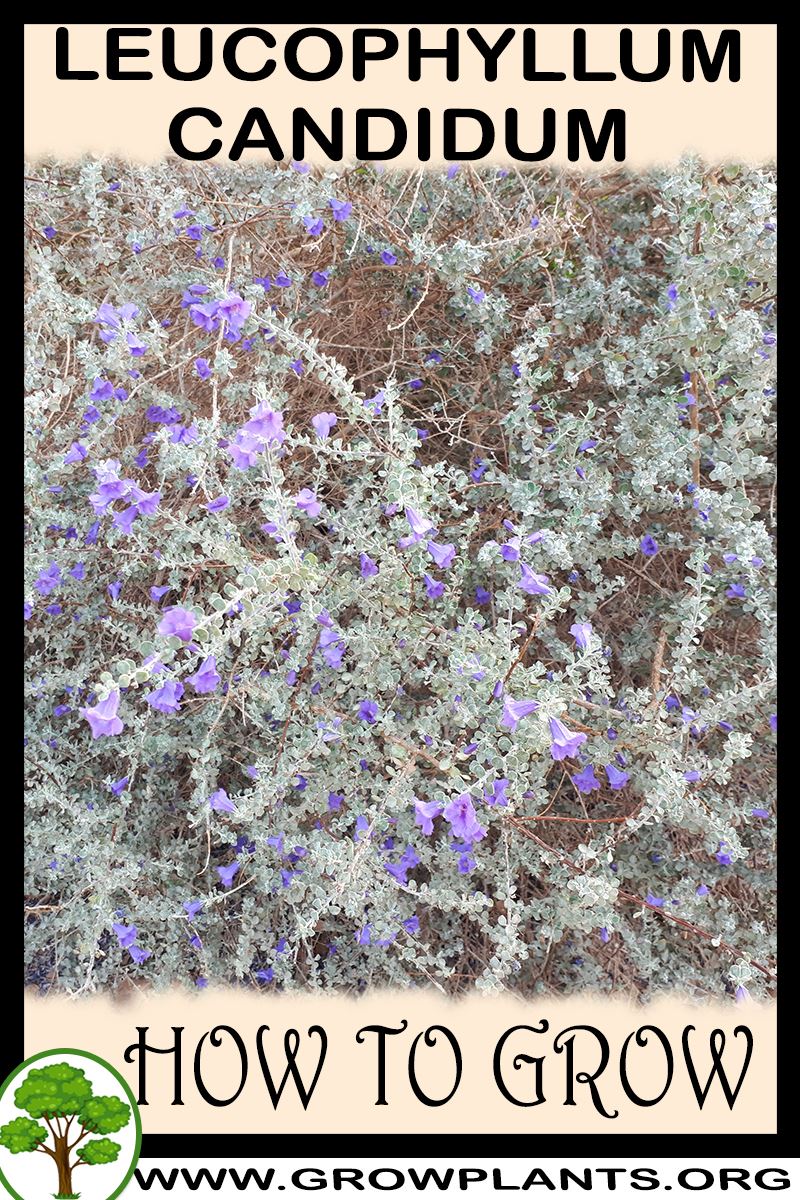
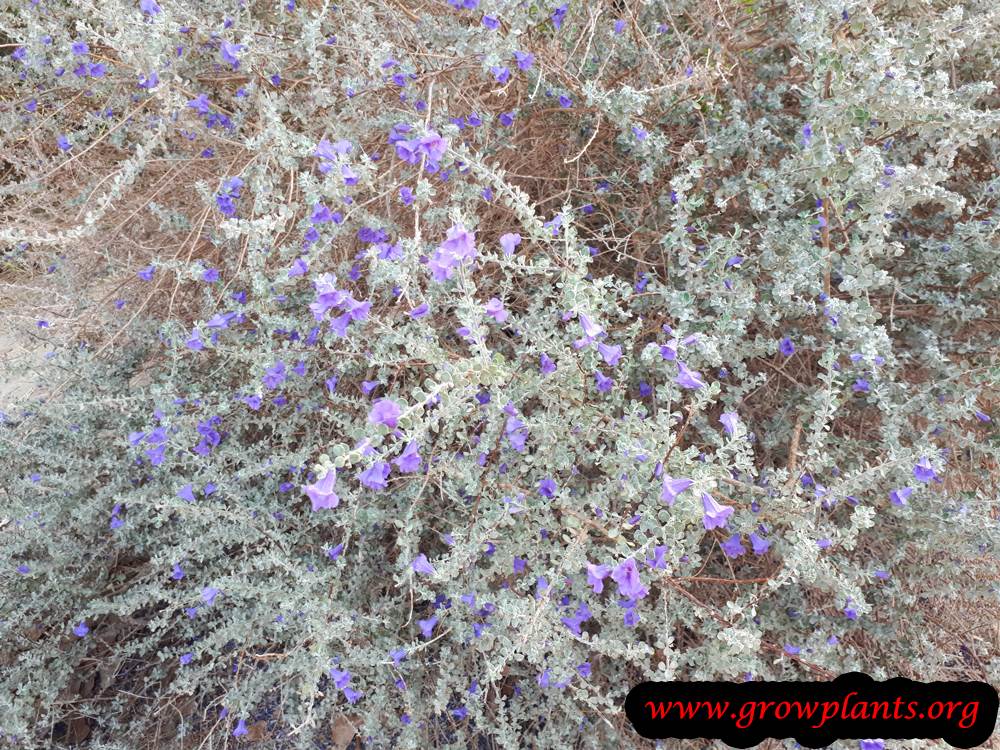
Overview: Leucophyllum candidum (violet silverleaf) is an evergreen shrub of about 0.8-1.5 m with silvery foliage, grown as a drought-tolerant flowering ornamental and hedge. It is a moderate-growing perennial hardy across USDA zones 8-11.
Quick Specifications
| Specification | Attribute |
|---|---|
| Plant Type / Life Cycle | Perennial (evergreen shrub) |
| Foliage Type | Evergreen |
| Mature Size | 0.8-1.5 m tall (2.8-5 ft) |
| Growth Rate | Moderate |
| Toxicity | Non-toxic |
| Hardiness | USDA zones 8-11 |
Growth Form & Structure
- Height & Spread: Reaches about 0.8-1.5 m (2.8-5 ft) tall; can be grown in containers.
- Growth Habit & Form: Rounded, densely branched evergreen shrub with silvery foliage.
- Lifespan & Maturity: Moderate; long-lived and responds well to light shaping.
Anatomy & Physical Features
- Leaves & Foliage: Silvery-green, elliptic leaves, sometimes wavy, with a felted surface that reflects heat.
- Flower Characteristics: Fragrant, two-lipped five-petalled flowers in pink to purple.
Primary Uses & Landscape Value
- Functional & Ornamental Roles: Drought-tolerant ornamental shrub or hedge for hot, dry and xeriscape gardens; attracts pollinators.
Care Guide: Planting, Soil & Watering
Overview: This drought-tolerant desert shrub grows in full sun and hot conditions (hardiness zone 8-11). It needs a sharply drained, alkaline soil and only low water, disliking any wet feet.
Quick Care Requirements
| Requirement | Ideal Condition |
|---|---|
| Planting Season | Warm season, spring through autumn |
| Growth Rate | Moderate |
| Soil Type | Well-draining; alkaline |
| Soil pH | Alkaline |
| Water Need | Low; drought tolerant, let the soil dry between waterings |
Planting & Establishment
- Best Planting Season: Plant during the warm season, spring through autumn.
- How to Plant:
- Hole Preparation: Dig a hole about the width of the root ball.
- Soil Amendments: Add grit or sand for drainage; rich soil is not needed.
- Planting Depth: Set the root collar level with the soil.
- Growth Speed & Expectations: A moderate grower reaching about 0.8-1.5 m (2.8-5 ft).
Soil, Watering & Drainage Care
- Soil Mix & Drainage Needs: Use a gravelly, free-draining alkaline soil; it rots in soggy ground.
- Watering Schedule & Technique:
- Young / Newly Planted: Water occasionally to help it establish.
- Established: Water deeply but infrequently; it is very drought tolerant.
- Seasonal Adjustments: Water minimally in winter and cool weather, and avoid overwatering.
Climate, Light & Hardiness
Leucophyllum candidum is a heat- and drought-adapted desert and dryland shrub that thrives in full sun with hot, dry conditions, growing best in USDA zone 8–11 and warmer. It is only moderately cold-hardy and is best suited to arid, mediterranean, and warm subtropical climates rather than humid or consistently cold regions.
Quick Climate Specifications
| Climate Zones | Desert, temperate, mediterranean, subtropics |
| USDA Hardiness Zones | 8–11 |
| Optimal Temp Range | Approximately 18–35°C (64–95°F); thrives in hot summer conditions |
| Approx. Survival Minimum | Established plants may briefly tolerate winter minimums around −12°C to −7°C (10°F to 20°F), reflecting its zone 8 rating |
| Frost Tolerance | Moderate |
| Light Conditions | Full sun |
| Wind Tolerance | High |
| Salt / Coastal Tolerance | Moderate |
Sunlight & Light Exposure
Optimal Light Setup
Full sun is essential for compact growth and reliable flowering; this is a sun-loving desert shrub.
Direct Sun Requirement
Direct, intense sun is preferred and well tolerated, even in hot desert climates.
Shade & Heat Management
Needs no shade protection - it is naturally adapted to hot, high-light conditions and can look sparse or leggy in shade.
Best Exposure / Orientation
A fully open, south-facing exposure with reflected heat (such as near paving or a wall) is well tolerated.
Temperature Extremes & Hardiness
USDA Hardiness & Regional Limits
Reliably grown outdoors from about zone 8–11 and warmer; outside this range winter cold limits outdoor survival.
Cold Damage & Winter Protection
Foliage and stem tips can be damaged by hard freezes; in marginal zones, a warm, sheltered microclimate improves winter survival.
Frost Sensitivity
Moderately frost-sensitive; young, newly planted specimens are more vulnerable than established shrubs.
Extreme Heat Tolerance
Excellent heat tolerance - it is native to hot, alkaline desert and dryland soils and performs best in intense summer heat.
Wind, Humidity & Microclimate
Humidity Preferences
Prefers dry air; it is not well suited to consistently humid climates.
Dry-Air Tolerance
Excellent dry-air tolerance, reflecting its desert and dryland origins.
Wind Tolerance
High wind tolerance, typical of tough, small-leaved desert shrubs.
Coastal / Salt Tolerance
Moderate salt tolerance; this genus is commonly used in hot, alkaline-soil landscaping and tolerates some salinity in soil and irrigation water.
Rainfall & Seasonal Moisture
Adapted to low-rainfall, dry-summer climates; sharp drainage is essential, especially in wetter climates or heavy soils.
Microclimate Recommendations
A hot, open, sun-baked, well-drained site - such as a gravel bed or south-facing border - best matches its native desert conditions.
Growing in Pots, Balconies & Indoors
Texas sage (Leucophyllum) is a silvery, sun-baked desert shrub – not a houseplant, but an excellent, drought-tough container plant for a hot, sunny balcony or patio, where its grey foliage and pink-purple flowers shine.
Quick Details
- Container Size: A sturdy pot for a shrub of 0.8-1.5 m (2.8-5 ft); pot up as it grows
- Indoor Suitability: Not a houseplant (the grower marks it “No”); it needs blazing full sun
- Best Spot: Full sun, hot and dry – the more sun and heat, the better
- Soil & Drainage: Very free-draining, gritty or sandy mix; it hates wet feet
- Watering in Pots: Sparse – highly drought tolerant; let it dry out well between waterings
Indoors & On the Windowsill
- Houseplant limits: The grower marks it as not suitable indoors. In low light it grows thin and stays damp too long, which it dislikes – it is not a houseplant. Only a hot, full-sun sill in a dry, airy room could keep it alive.
- Overwintering: It is heat- and cold-tough but tender to hard frost; in cold areas shelter the pot over winter.
On a Balcony or Patio
- Light & heat: It loves reflected heat off sunny walls and is superb for hot, exposed spots. In a pot the main risk is overwatering, not drought.
- Practicalities: Raise the pot on feet so it drains freely; make sure water never pools underneath.
Choosing the Pot, Soil & Long-Term Care
- Pot & drainage: A pot with plenty of drainage holes; skip a standing water saucer to avoid root rot. Terracotta breathes and dries fast, which suits this desert shrub.
- Potting mix: Gritty and very free-draining – a sandy mix with added grit or perlite.
- Feeding: Feed sparingly; it thrives on lean soil, and rich feeding just makes soft, floppy growth.
- Pruning & repotting: Prune lightly to shape; pot up or refresh the mix every couple of years.
Fertilizing & Feeding
A light feeder: this drought-adapted flowering shrub performs best on lean, well-drained soil, with bloom driven far more by rainfall and humidity than by fertilizer.
Quick Fertilizing Specs
| Feeding Level | Light feeder |
|---|---|
| Main Nutrient Priority | Balanced feeding, used sparingly – flowering depends more on rainfall and humidity than fertilizer |
| Best Feeding Period | At planting and lightly during the first growing season |
| Organic Options | Compost worked into the planting hole |
| Micronutrients | Rarely needed on this drought-adapted shrub; correct specific issues only when diagnosed |
| Soil pH | Prefers alkaline, well-drained soil |
Feeding by Growth Stage
Establishment after planting
Help new plants root into well-drained, alkaline soil before the shrub settles into its natural low-water, low-input routine.
| Nutrient direction | A balanced, general-purpose fertilizer applied lightly. |
|---|---|
| Timing | During the first growing season after planting. |
| Frequency | A light feeding at planting, then minimal supplemental feeding as roots establish. |
| Fertilizer types | A balanced, general-purpose garden fertilizer used at a light rate, Compost worked into the planting hole |
| Precautions | Avoid rich soil amendments or heavy feeding, which run counter to this desert-adapted shrub’s natural lean-soil preference. |
Rain-triggered flowering
Support the fragrant purple-to-pink flowers, which this species produces in flushes tied to humidity and rainfall rather than a fixed calendar.
| Nutrient direction | Keep feeding light and balanced; flowering in this species depends far more on moisture than on fertilizer. |
|---|---|
| Timing | Through the warmer months whenever a rain or humidity event triggers a flowering flush; typically absent in winter in frost-prone areas and reduced during summer drought. |
| Frequency | Little to no supplemental feeding is usually needed once established. |
| Fertilizer types | A balanced fertilizer used sparingly, if at all, on established plants |
| Precautions | Overfeeding will not increase bloom and can instead push soft growth that is less drought- and heat-tolerant. |
Dry-season or winter rest
Let the shrub rest during its slowest growth, whether from winter cold or summer drought stress.
| Nutrient direction | None – withhold fertilizer during dormancy or drought stress. |
|---|---|
| Timing | Winter in frost-prone areas, or summer if rainfall and irrigation are insufficient. |
| Frequency | No feeding at this stage. |
| Fertilizer types | No feeding at this stage; resume light feeding only when active growth resumes. |
| Precautions | Do not fertilize a plant that is dormant or drought-stressed; feeding then can do more harm than good. |
Nutrient Deficiency Signs & Corrections
New leaves show interveinal yellowing while the veins stay green.
| Possible causes | high alkaline soil pH limiting iron availability, overwatering or poor drainage, naturally calcareous soil |
|---|---|
| Appears first on | newest growth |
| What to check | soil pH, drainage and watering habits, whether nearby alkaline-soil plants show the same pattern |
| Possible correction | Improve drainage, avoid overwatering this drought-adapted shrub, and correct with a chelated iron product per its label if chlorosis persists. |
General decline, yellowing, or leaf drop despite the plant’s normal drought tolerance.
| Possible causes | overwatering or poor drainage, root rot from excess irrigation, a planting site with heavy or poorly draining soil |
|---|---|
| Appears first on | whole-plant vigor and older leaves |
| What to check | irrigation frequency, soil drainage, root condition |
| Possible correction | Cut back irrigation to match this drought-tolerant shrub’s low water needs, improve site drainage, and ease off feeding until new healthy growth appears. |
Pale, yellow-green foliage overall with reduced vigor.
| Possible causes | very lean or heavily leached soil, prolonged lack of any feeding, poor root establishment since planting |
|---|---|
| Appears first on | overall foliage color |
| What to check | feeding history, soil quality, root establishment since planting |
| Possible correction | Apply a balanced, general-purpose fertilizer at a light rate. |
Pruning, Training & Seasonal Maintenance
Leucophyllum candidum is an evergreen desert shrub in the same genus as Texas sage (L. frutescens), sharing that genus’s distinctive rain/humidity-triggered bloom flush on new growth and its low need for formal shaping. It typically stays more compact and finer-textured than L. frutescens, with an even silverier, more densely felted leaf surface. As with the rest of the genus, light selective pruning that preserves the natural mounded outline keeps it healthiest and best-flowering; routine shearing into a formal hedge shape – a common landscape habit for this genus – costs bloom and creates a stressed, hollow-centered plant. Light shaping is workable any time in the growing season.
Quick Pruning & Maintenance Specs
| Pruning Tolerance | Moderate–High (tolerates hard cuts; formal shearing costs bloom) |
| Primary Pruning Window | Light shaping any time during active growth |
| Secondary Maintenance Window | Early spring, to remove any winter cold damage |
| Typical Frequency | One to two light shaping/thinning passes a year |
| Main Objective | Preserve the compact natural form and the rain-triggered bloom flush |
| Young Plant Priority | Minimal – allow the naturally dense, rounded habit to develop |
| Mature Plant Priority | Selective thinning of crossing or old interior growth |
| Best Tool Type | Bypass secateurs for selective cuts |
| Avoid Heavy Pruning During | Just before a cold snap, and during an active bloom flush |
Pruning by Plant Age & Size
Newly Established
Minimal – remove only damaged growth from planting.
Young / Formative
No formal training. Let the naturally dense, compact mound develop; avoid early shearing into a geometric shape.
Mature / Established
Selective thinning of older interior growth and any crossing branches; head long shoots back to a lateral rather than shearing the surface flat.
Seasonal Pruning Schedule
| Ongoing Sanitary (year-round) | Dead, damaged, or crossing growth | Healthy foliage and developing flush wood | Maintains compact natural form | None, if kept light and selective |
Flowering & Fruiting Wood
Like the rest of the genus, this species flowers on current-season growth in flushes triggered by rain or humidity, not on aged wood – so light pruning at most times doesn’t cost a future bloom. Pruning right as a flush is starting removes that fresh growth and delays or reduces that particular bloom cycle.
Structural Pruning & Training
Remove crossing or rubbing branches; thin the interior occasionally to maintain airflow and keep the silvery foliage visible rather than hidden under a sheared outer surface.
Special Growth to Remove
- Dead or cold-damaged tips
- Crossing or rubbing interior branches
Container & Small-Space Pruning
Its naturally more compact size than Texas sage makes it a reasonable large-container candidate; prune lightly and selectively to keep the canopy proportionate to the pot.
Tools
Bypass secateurs for routine selective shaping. Hedge shears are not recommended – as with the rest of the genus, formal shearing sacrifices the natural form and much of the bloom.
Tool Hygiene & Disease Risk
Routine – no major documented disease-transmission risk for this genus.
Cut Placement & Technique
Heading cuts to an outward-facing lateral bud; thinning cuts at the branch base for interior renewal, avoiding flat surface shearing.
Heavy Pruning & Rejuvenation
Cold- or storm-damaged plants tolerate a hard cutback in early spring; expect vigorous resprouting but reduced bloom for the first season while flush wood regrows.
Post-Pruning Care
Water to support regrowth after a hard cut, but avoid routine overwatering – this is a drought-adapted plant. Watch new growth for aphids and mites.
Common Pruning Mistakes
- Shearing into a formal hedge or ball shape, suppressing the natural bloom flush
- Pruning right as a bloom flush begins
- Overwatering after pruning out of habit
When NOT to Prune
Avoid hard pruning shortly before an expected cold snap, during an active bloom flush, or in prolonged wet weather.
Recommended Tools (by task)
- bypass_secateurs – for the selective shaping and thinning cuts this compact shrub needs to keep its natural form.
Propagation Guide
Like other Leucophyllum species, this plant is most reliably increased from semi-hardwood stem cuttings, which preserve the compact habit and flower color of a chosen plant; seed propagation is possible for the species but is slower and less predictable, and named selections generally need cuttings to stay true. Overall difficulty is moderate, since this drought-adapted shrub can be slow to root and is sensitive to overly wet rooting media.
Quick Propagation Specs
| Best Propagation Method | Semi-hardwood stem cuttings |
| Alternative Methods | Seed (species) |
| Propagation Difficulty | Moderate |
| Seed True-to-Type | Usually true-to-type for the species; cultivar-dependent for named selections |
| Vegetative True-to-Type | Yes |
| Best Propagation Season | Late spring to summer |
| Seed Germination Time | Several weeks, and often uneven |
| Cutting Rooting Time | Several weeks to a couple of months |
| Germination Temperature | Around 21–27°C (70–80°F) |
| Seed Sowing Depth | Shallow – lightly cover |
Growing from Seed
Seed Handling & Viability
Use clean, fresh seed for best results; like many desert shrubs, viability can decline with storage.
Sowing Season
Spring.
Sowing Depth & Orientation
Sow shallowly and lightly cover.
Germination Conditions
Warm conditions in a free-draining mix; avoid keeping the medium constantly wet.
Germination Time
Germination can be slow and uneven, often taking several weeks.
Stem Cuttings
Cutting Type
Semi-hardwood tip cuttings, roughly 10–15cm (4–6in).
Best Timing
Late spring into summer, once new growth has begun to firm.
Cutting Preparation
Remove the lower leaves and stick the cutting into a well-draining sand/perlite-type mix.
Rooting Setup
Bright, indirect light with good drainage; keep the medium lightly moist rather than wet, since this desert shrub is prone to rot in soggy conditions.
Rooting Hormone
Beneficial – can improve rooting percentage and speed for this woody, moderately slow-rooting shrub.
Rooting Time
Often several weeks to a couple of months.
Bloom & Flower Guide
Quick Details
- Bloom Season: Through much of the year, in flushes (pausing in hard frost and during drought)
- Time to First Bloom: Blooms while young and small, typically within a year of planting
- Flower Appearance: Fragrant, bell-shaped five-petalled flowers, pink to purple, set against silvery foliage
- Edibility: Ornamental pollinator shrub (generally regarded as non-toxic); not grown as an edible flower
Detailed Blooming Overview
Leucophyllum candidum (Texas sage, or cenizo) is famous as a “barometer bush” – it bursts into bloom a few days after rain or a rise in humidity, smothering its silvery-grey foliage in pink-to-purple, mouth-shaped flowers. It flowers in repeated flushes through much of the warm season, resting in hard winter frost and when it runs dry. Drought-tolerant and fragrant, it is a magnet for bees and other pollinators.
Flower Characteristics
- Colour and scent: Fragrant, pink to purple
- Form: Bell-shaped, five-petalled flowers with a softly spotted throat, borne along the stems
- Setting: Shown off beautifully against the silvery-grey leaves
- Bloom trigger: Flushes follow rain and humidity – the “barometer bush” habit
- Pollinators: Nectar attracts bees and other pollinators
Bloom Care & Thinning
- Site for best bloom: Full sun and sharp drainage give the most flowers.
- Light shaping: A light trim after a flush keeps it dense and floriferous; avoid hard shearing, which cuts down flowering.
- Go easy on water and feed: Once established it is drought-tolerant – overwatering and rich soil push leafy growth at the expense of bloom.
Pests, Diseases & Troubleshooting
Overview: Texas sage (Texas ranger) is a silver-leaved desert shrub prized for needing almost no care in hot, dry, alkaline landscapes; it is exceptionally pest- and disease-resistant, and virtually every problem it suffers comes from too much water or heavy soil rather than from insects. The management philosophy is simple: keep it lean, sunny and sharply drained and leave it alone.
Quick Troubleshooting Overview
| Issue / Pest | Main Symptom | Primary Solution |
|---|---|---|
| Cotton (Texas) root rot | Sudden wilting and death of whole shrub in summer heat | Improve drainage/soil; avoid over-water; poor recovery |
| Root rot from over-watering | Yellowing, leaf drop, dieback in wet soil | Water deeply but rarely; sharp drainage |
| Aphids | Sticky new growth (uncommon) | Water jet; soap |
| Whitefly | White flies on lush growth under irrigation | Ease watering; sticky traps; neem |
| Spider mites | Fine stippling in dusty heat | Hose; oil |
| Leaf drop after wet spell | Sudden shedding after heavy rain/irrigation | Reduce water; usually recovers |
Common Pests & Management
- Aphids (Aphis spp.):
- Symptoms: Occasional clusters of soft-bodied insects on the softest new growth, mainly when the shrub is pushed with extra water and fertiliser it does not need; honeydew and slight distortion.
- Prevention & Control: Rarely warrant action – hose off and encourage beneficials. The best prevention is to stop over-watering and over-feeding, which is what produces the soft growth aphids seek. Insecticidal soap only if truly heavy.
- Whitefly (Trialeurodes / Bemisia spp.):
- Symptoms: Tiny white flies on the undersides of leaves on lush, over-irrigated or sheltered plants, leaving honeydew and sooty mould; uncommon on a hard-grown desert shrub.
- Prevention & Control: Cut back watering to firm the growth, monitor with yellow sticky traps, and use neem or insecticidal soap for heavy build-ups in the evening.
- Spider mites (Tetranychus spp.):
- Symptoms: Fine pale stippling and a dusty look to the foliage in very hot, dry, dusty positions.
- Prevention & Control: Hose the foliage to remove dust and mites, and use a horticultural oil for outbreaks; generally a minor, occasional issue.
Diseases & Fungal Issues
- Cotton (Texas) root rot (Phymatotrichopsis omnivora):
- Symptoms: A soil fungus of hot alkaline regions that causes sudden, permanent wilting and death of the whole shrub in the warm season, with the roots found rotted and the plant easily lifted; it strikes established plants without warning.
- Treatment & Management: There is no reliable cure. Prevent by improving soil with organic matter, ensuring excellent drainage, avoiding over-watering, and not replanting susceptible shrubs where the disease has struck; choose the site and soil carefully in known-infested ground.
- Root & crown rot (Phytophthora / Rhizoctonia spp.):
- Symptoms: Yellowing, leaf drop, branch dieback and collapse in heavy, poorly drained or over-watered soil – by far the most common way gardeners kill this drought-lover.
- Treatment & Management: Grow in gritty, sharply drained soil, water deeply but infrequently (and hardly at all once established), avoid heavy clay and irrigation, and never mulch wetly against the stem. Remove collapsed plants.
Growing Difficulties & Abiotic Problems
- Over-watering / wet soil decline:
- Cause & Symptoms: Yellowing, thinning, leaf drop and dieback where soil stays moist or drainage is poor – this shrub thrives on neglect and drought.
- Correction Strategy: Water deeply but very infrequently once established, grow in lean, gritty, well-drained, alkaline-tolerant soil in full sun, and resist the urge to pamper it.
- Leaf drop after heavy rain:
- Cause & Symptoms: Sudden shedding of leaves following a heavy rain or irrigation event, as the plant reacts to the moisture swing.
- Correction Strategy: Usually temporary – reduce supplementary water and the plant re-leafs; ensure drainage so roots are never waterlogged.
- Legginess / sparse bloom in shade or rich soil:
- Cause & Symptoms: Open, weak, flower-poor growth in too much shade, rich soil or with feeding.
- Correction Strategy: Grow in full blazing sun on poor, well-drained soil without fertiliser, and shear lightly to keep it dense; heat and drought trigger its flushes of bloom.
What Helps – Products & Tools
This is a plant that wants nothing more than sun and drainage – the best ‘product’ is gritty, well-drained soil and a watering can left in the shed. On the rare occasion of aphids, whitefly or mites (usually a symptom of over-watering), insecticidal soap or neem/horticultural oil and yellow sticky traps suffice. Root rots are managed by drainage, not fungicides. Spray oils in the evening to protect pollinators.