
Plant Profile & Key Characteristics
Overview: Lepismium houlletianum (snowdrop cactus) is an epiphytic cactus grown as an ornamental trailing houseplant, with jointed, leafless photosynthetic stems reaching about 0.4-1.3 m. It is a moderate- to slow-growing tropical perennial best kept warm and humid.
Quick Specifications
| Specification | Attribute |
|---|---|
| Plant Type / Life Cycle | Perennial (epiphytic cactus) |
| Foliage Type | Evergreen |
| Mature Size | 0.4-1.3 m long (16-51 in) |
| Growth Rate | Moderate to slow |
| Root System | Epiphytic (aerial roots; grows on trees or rocks without soil) |
| Toxicity | Non-toxic (epiphytic cactus) |
Growth Form & Structure
- Height & Spread: Trailing stems reach about 0.4-1.3 m; ideal for hanging baskets and elevated pots.
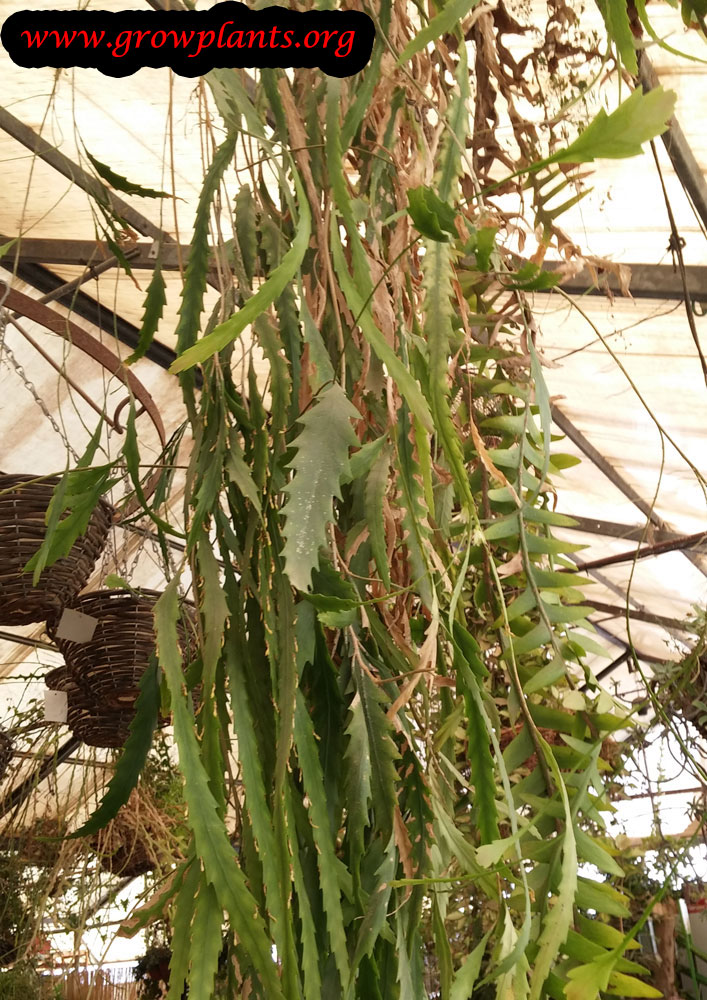
- Growth Habit & Form: Pendant, branching epiphytic cactus with segmented stems that cascade over the pot rim.
- Lifespan & Maturity: Moderate to slow; long-lived, gradually lengthening and branching.
Anatomy & Physical Features
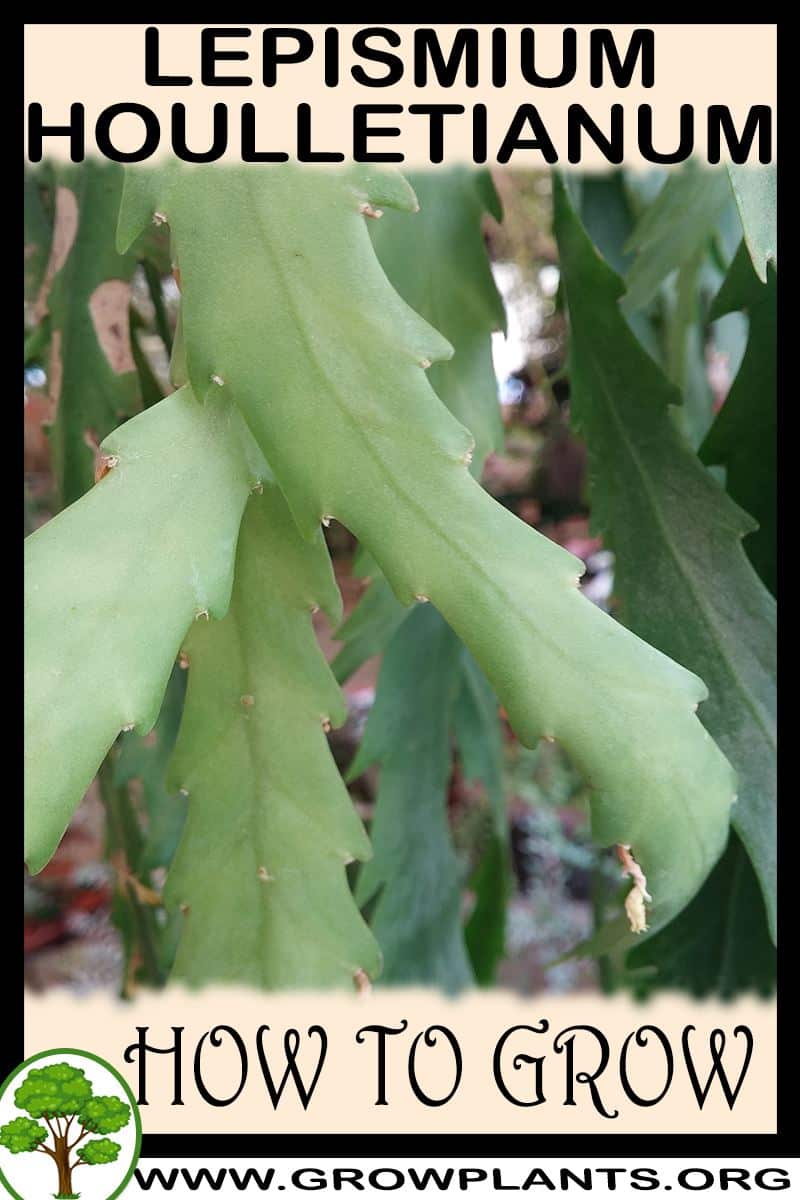
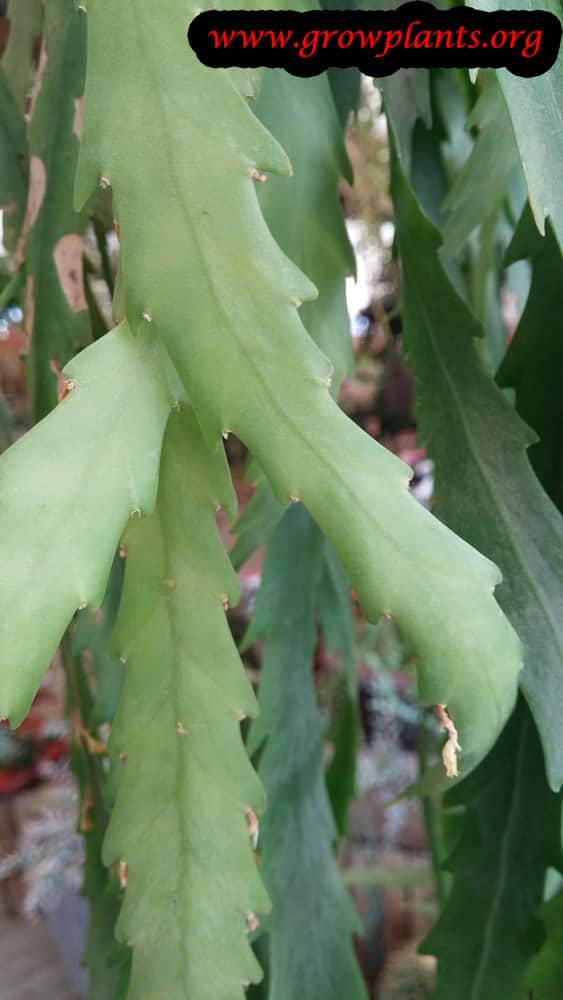
- Leaves & Foliage: No true leaves; flat, fleshy green stems with deeply serrated edges that flush red in high humidity.
- Flower Characteristics: White-to-cream, many-petalled flowers borne at the stem joints.
Primary Uses & Landscape Value
- Functional & Ornamental Roles: Ornamental hanging or basket houseplant; tolerant of shade and low light, and drought-tolerant once established.
Care Guide: Planting, Soil & Watering
Overview: This epiphytic cactus grows in shade with a little sun and warmth (optimal 20-28C / 68-82F), often hung in a pot or mounted on cork. It needs an airy, acidic, well-drained mix kept moist in high humidity, and absorbs moisture from the air.
Quick Care Requirements
| Requirement | Ideal Condition |
|---|---|
| Planting Season | Year-round in warm, frost-free conditions |
| Growth Rate | Slow to moderate |
| Soil Type | Airy, well-draining epiphyte mix of peat, moss, and composted leaves plus grit |
| Soil pH | Acidic (5.5-6.5) |
| Water Need | Low in volume but frequent; keep moist with high humidity |
Planting & Establishment
- Best Planting Season: Plant year-round in warmth; it is often grown hanging in a pot or on cork.
- How to Plant:
- Hole Preparation: Set the stem base firmly into an airy mix so it stays stable.
- Soil Amendments: Use a light blend of peat, moss, and composted dead leaves with lava grit or orchid mix to keep it airy; liquid or algae-based fertilizer can be sprayed on.
- Planting Depth: Seat the stem base at the surface of the mix; keep it stable rather than deeply buried.
- Growth Speed & Expectations: A slow to moderate grower reaching about 0.4-1.3 m (32-65 in).
Soil, Watering & Drainage Care
- Soil Mix & Drainage Needs: Use a very airy, acidic mix with excellent drainage, and refresh it every 2-3 years (ideally below 20C).
- Watering Schedule & Technique:
- Young / Newly Planted: Mist cuttings and new plants lightly several times a day.
- Established: Keep the mix moist in high humidity; it absorbs water from the air, so mist often and protect it from drying air-conditioning or heaters.
- Seasonal Adjustments: Reduce water and repot when temperatures drop below 20C.
Climate, Light & Hardiness
Lepismium houlletianum (Snowdrop Cactus) is a tropical epiphytic cactus that needs warmth, high humidity and shade rather than desert sun, suiting tropical, subtropical and mediterranean climates or indoor growing. The site's own data gives a survivable range of 5–30°C (41–86°F) with an optimal growing temperature of 20–28°C (68–82°F).
Quick Climate Specifications
| Climate Zones | Tropics, subtropical, mediterranean, or indoors as a houseplant |
|---|---|
| USDA Hardiness Zones | Approximately 11b+ |
| Optimal Temp Range | 20–28°C (68–82°F) |
| Cold Damage Begins | Below approximately 5–10°C (41–50°F), as growth slows well above its stated survival floor |
| Approx. Survival Minimum | Around 5°C (41°F) per the site's own data |
| Frost Tolerance | None |
| Light Conditions | Full shade, ideally with a little filtered sun |
Sunlight & Light Exposure
Optimal Light Setup
Full shade with a touch of filtered light gives the best growth and stem colour; direct exposure needs 100% ambient humidity to avoid scorching, per the site's own guidance.
Direct Sun Requirement
Not needed and generally best avoided - this epiphyte naturally grows in the dappled shade beneath a tropical forest canopy.
Shade & Heat Management
The flat, fleshy stems redden under higher humidity but can scorch in direct sun unless humidity is very high; open or dappled shade is the safer choice.
Best Exposure / Orientation
Hung or grown under canopy outdoors in the tropics, or a bright, sun-free indoor spot such as an east-facing room.
Temperature Extremes & Hardiness
USDA Hardiness & Regional Limits
The site places it at roughly zone 11b+, reflecting a warm, essentially frost-free requirement; outside genuinely warm tropical, subtropical or mild mediterranean climates it is best grown indoors or under glass.
Cold Damage & Winter Protection
The site's data shows growth is only truly comfortable from about 20°C upward; below roughly 5°C the plant is at its survival limit, so it should be moved somewhere warmer well before temperatures approach that point. Switch its soil only when temperatures are under 20°C, per the site's own repotting guidance, to reduce transplant stress.
Frost Sensitivity
Very high - this is a warm-climate or indoor plant with no meaningful frost tolerance.
Extreme Heat Tolerance
The site's data shows it can survive up to about 30°C (86°F), but sustained heat above its 20–28°C optimum is stressful, especially if paired with low humidity or drying growing medium.
Wind, Humidity & Microclimate
Humidity Preferences
Needs high humidity to thrive, per the site's own care guidance; the stems visibly redden in more humid conditions.
Dry-Air Tolerance
Low - indoor heating and air conditioning dry the air and are noted by the site as a specific risk when growing it indoors.
Rainfall & Seasonal Moisture
Adapted to consistently humid, evenly moist tropical conditions rather than a pronounced dry season; the growing medium should stay lightly moist without becoming waterlogged.
Microclimate Recommendations
A shaded, humid spot such as a hanging basket under tree cover, or a humid bathroom or kitchen indoors away from heating vents, air-conditioning drafts, and direct hot sun.
Growing in Pots, Balconies & Indoors
Like its cousin Lepismium, this is a shade-loving, trailing epiphytic cactus – a good houseplant for a bright-but-indirect spot, as long as you keep the air around it humid.
Quick Details
- Container Size: A medium pot or hanging basket; the long, trailing stems want hanging room
- Indoor Suitability: A good houseplant with attention to humidity – it dislikes the dry air of heaters and air conditioning (grower)
- Best Spot: Full shade with a little soft light is best; it takes direct sun only at very high humidity (grower)
- Soil & Drainage: Well-ventilated, airy mix of peat, moss and composted leaf/organic matter, lightened with lava grit or bought orchid mix (grower)
- Watering in Pots: Little water but high humidity – as an epiphyte it absorbs moisture from the air (grower)
Indoors & On the Windowsill
- A genuine houseplant: The grower confirms it grows well indoors but stresses humidity: heaters and air conditioning dry the air and stress the plant, so mist it, group it with other plants or stand it on a humidity tray.
- As a hanging plant: Its long stems look best trailing from a hanging pot or high shelf in bright, indirect light – never harsh direct sun, unless humidity is very high.
- Light for the epiphyte: It naturally lives in shade with dappled light; too much direct sun scorches it unless the air is nearly saturated.
On a Balcony or Patio
- Light & shelter: Outdoors in warm weather it wants a shaded, humid, sheltered corner – full sun is only safe at very high humidity.
- Practicalities: Bring it in well before cold weather; it is not frost-hardy and resents dry cold.
Choosing the Pot, Soil & Long-Term Care
- Potting mix (grower): A well-ventilated, airy mix – peat, moss and composted dead leaves or other organic material, lightened with something like lava grit, or simply use a bought orchid mix so it never packs down heavy.
- Pot & drainage: A pot or basket with strong drainage holes; skip a standing saucer of water to avoid rot, even though the plant loves humid air.
- Repotting (grower): Change the soil every two to three years, ideally during cooler conditions (below about 20C / 68F) rather than in the heat of active growth.
- Feeding: A dilute balanced feed occasionally during active growth.
Growing this plant in a greenhouse
A greenhouse can give lepismium houlletianum frost protection, cold protection, humidity control and extra warmth.
Greenhouse at a glance
| Greenhouse suitability | Good - clearly useful |
|---|---|
| Main benefits | frost protection, cold protection, humidity control, extra warmth |
| Outdoor protection advisable below | about 10°C |
| Maintain greenhouse minimum | around 10°C for active growth |
| Suitable types | unheated greenhouse, polycarbonate greenhouse |
| Heating | Heating is optional - useful mainly for winter growing in cold areas. |
Related greenhouse guides
- Greenhouses: How to Choose the Right Greenhouse
- Polycarbonate Greenhouses: What to Look for Before Buying
- Greenhouse Climate Control: Temperature, Ventilation and Humidity
Fertilizing & Feeding
A shade-loving, high-humidity epiphytic cactus that grows on organic debris in habitat, so it responds well to gentle organic or liquid feeding rather than a mineral-soil cactus regimen.
Quick Fertilizing Specs
| Feeding Level | Light feeder |
|---|---|
| Main Nutrient Priority | Low-nitrogen liquid or organic feed during active, humid growth |
| Best Feeding Period | Warm season while humidity and moisture are kept consistently high |
| Reduce/Stop Feeding | Ease off feeding as growth and humidity drop going into cooler weather |
| Soil pH | Prefers an airy, organic, moisture-retentive mix on the acidic side rather than a strict numeric target |
Feeding by Growth Stage
Active Growth
Support new stem and flower production in this epiphyte’s naturally humid, organic-rich growing conditions.
| Nutrient direction | A diluted liquid fertilizer or a top-up of organic matter such as compost or leaf mold worked lightly into the growing medium, favoring gentleness over strength. |
|---|---|
| Timing | During the warm season while humidity is kept high and the medium is evenly moist. |
| Frequency | A few light feedings through the active growing season, alongside periodic organic matter top-ups, is generally enough. |
| Fertilizer types | Diluted liquid fertilizer suited to epiphytic or orchid-type plants, Organic matter (compost, leaf mold, or similar) worked into the growing medium |
| Precautions | Keep humidity high when feeding and avoid strong concentrations – this species is noted as sensitive to drought and dry air, and over-fertilizing compounds that stress. |
Dormant / Rest Period
Let the plant rest through its natural slowdown without forcing growth it cannot support.
| Nutrient direction | None – withhold fertilizer while growth is slow or paused. |
|---|---|
| Timing | Cooler months or periods when new growth clearly slows. |
| Frequency | No feeding at this stage. |
| Fertilizer types | No feeding at this stage – resume once active growth and humidity return. |
| Precautions | Do not fertilize during the rest period; maintain humidity through misting or grouping rather than through feeding. |
Nutrient Deficiency Signs & Corrections
Pale or reddened stem segments with unusually slow new growth despite consistent humidity.
| Possible causes | Extended period without feeding or organic matter renewal in the growing medium, Low humidity or dry air causing stress that resembles a nutrient issue, Root stress from a growing medium that has broken down and lost aeration |
|---|---|
| Appears first on | Newest stem segments |
| What to check | Confirm humidity levels match this species’ high-humidity, shade-loving needs, Check whether the growing medium is still airy and organic-rich or needs refreshing, Review recent feeding history before assuming a nutrient cause |
| Possible correction | Raise humidity and refresh the growing medium first; if pale growth persists, resume light feeding during the next active period. |
Shriveled, limp, or reddened stem segments rather than the fleshy green typical of healthy growth.
| Possible causes | Insufficient humidity or watering for this drought-sensitive epiphyte, Excess direct sun without the high humidity needed to buffer it, Root damage limiting water and nutrient uptake |
|---|---|
| Appears first on | Stem segments furthest from the base |
| What to check | Check ambient humidity and watering frequency against this species’ preference for consistent moisture, Confirm light exposure is shaded or filtered rather than direct, Inspect roots and growing medium for dryness or damage |
| Possible correction | Address humidity and watering first; fertilizing a drought-stressed plant will not resolve the underlying cause and should wait until it recovers. |
Pruning, Training & Seasonal Maintenance
Lepismium houlletianum (Snowdrop cactus) is a tropical/subtropical epiphytic cactus (0.4–1.3 m) with flat, fleshy, deeply-serrated trailing stems best grown hanging in a pot or on cork. It has no woody trunk and flowers repeatedly on current growth through winter–summer, so pruning is purely cosmetic length/shape control, allowed year-round per its own data — but unlike most cacti it is noted as sensitive to drought, so cuts and any handling should avoid adding extra water stress.
Quick Pruning & Maintenance Specs
| Pruning Tolerance | Low–Moderate — cosmetic trimming only |
| Primary Pruning Window | Any time of year (per its own care data); easiest during active growth in warm, humid conditions |
| Typical Frequency | Occasional, as trailing stems outgrow their space or dead/damaged segments appear |
| Main Objective | Control trailing length, remove dead or damaged segments, keep the hanging display tidy |
| Young Plant Priority | Leave undisturbed to establish trailing growth |
| Mature Plant Priority | Trim overlong trailing stems; remove dead/damaged segments |
| Best Tool Type | Precision snips |
| Avoid Heavy Pruning During | Cool conditions or dry indoor air (heater/AC), when this drought-sensitive plant is already under stress |
Pruning by Plant Age & Size
Newly Established
No pruning; remove only damaged tissue present at planting, and prioritize humidity over any cutting while roots settle.
Young / Formative
No structural training — the flat, serrated stems naturally cascade; choose a hanging pot or cork mount early rather than trying to train the growth upright.
Mature / Established
Trim trailing stems once they exceed the display space, and remove dead or damaged segments; larger, older specimens (approaching 1.3 m) accumulate the most trailing length and need this most.
Special Growth to Remove
- Dead or damaged stem segments.
- Overlong trailing stems — cut back if the plant has outgrown its hanging space; healthy trimmed segments can be left to dry a few days and used as cuttings to start new plants.
Container & Small-Space Pruning
Grown hanging in a pot or on cork with an airy, well-ventilated mix (peat/moss/leaf mold or orchid mix, lightened with lava grit) rather than dense potting soil, per its own care notes. Container maintenance is mostly about humidity and mix, not pruning; when indoors, watch for dry air from heating/air-conditioning, which stresses this drought-sensitive epiphyte more than any cutting would.
Tools
Precision snips for the soft, flat, jointed stems — nothing heavier is ever needed.
Tool Hygiene & Disease Risk
Routine. A clean, sharp blade is enough; wipe it if cutting any soft or damaged tissue before moving to healthy stems.
Cut Placement & Technique
Cut at a natural joint between segments (as this species is typically propagated — by breaking or cutting at a stem connection) rather than through the middle of a segment, which leaves a cleaner scar and a natural point for regrowth.
Post-Pruning Care
Let cuttings/cut ends dry for a few days in a shaded spot before any contact with soil, then keep the plant warm (20–28 C/68–82 F optimal) and humid as usual; because it is drought-sensitive, do not let the plant dry out to compensate for a recent cut — resume its normal humidity-forward care rather than reducing water.
Common Pruning Mistakes
- Cutting mid-segment instead of at a natural joint.
- Treating it like a typical drought-tolerant cactus and withholding water/humidity after cutting, which stresses this drought-sensitive species.
- Trimming in cold or very dry indoor air rather than during its warm, humid growing conditions.
When NOT to Prune
- During cold spells below its comfortable range (it tolerates down to about 5 C/41 F but prefers 20–28 C/68–82 F) when recovery is slow.
- When indoor air is dry from heating or air-conditioning — address humidity first.
- Right after repotting, while it is adjusting to new mix.
Recommended Tools (by task)
- precision_snips — the only tool this soft, flat-stemmed trailing epiphyte genuinely needs, for length control and removing dead or damaged segments.
Propagation Guide
Lepismium houlletianum roots most reliably from a stem cutting — a section separated at a natural joint or simply cut from the stem, dried briefly, then kept moist and humid until it roots — which the site’s own notes describe as giving a distinctly better success rate than the plant’s fine, rarely available seed. Vegetative propagation isn’t required to keep the species true, but it’s the easier, more dependable route, and overall difficulty is easy to moderate given this epiphyte’s need for warmth and humidity while rooting.
Quick Propagation Specs
| Best Propagation Method | Stem Cuttings (separated at a stem joint) |
| Alternative Methods | Seed (rarely available) |
| Propagation Difficulty | Easy to Moderate |
| Seed True-to-Type | Usually true-to-type |
| Vegetative True-to-Type | Yes |
| Best Propagation Season | Achievable year-round where warmth can be provided |
| Germination Temperature | 25°C (77°F) |
| Cutting Rooting Time | Not precisely documented by the site; expect at least a few weeks under the recommended warm, humid conditions |
Growing from Seed
Seed Handling & Viability
The site notes seed is rare (uncommonly available/produced) for this species.
Sowing Depth & Orientation
Fine seed, typically surface-sown.
Germination Conditions
Sow at 25°C (77°F), keep the soil moist, and cover with nylon or plastic wrap to hold in humidity, per the site’s instructions.
Germination Time
Not specified by the site; expect it to take at least several weeks under these warm, humid conditions.
Seedling Care
Maintain the high humidity this epiphytic species needs; avoid letting the covering dry out.
Stem Cuttings
Cutting Type
A stem section, ideally separated by hand at a natural joint between segments, or simply a cut portion of stem.
Best Timing
Warm conditions give the best results, achievable whenever 25°C (77°F) can be provided.
Cutting Preparation
Let the cut or broken end lay to dry for a few days before inserting it into the growing medium.
Rooting Setup
Use a well-ventilated, airy substrate that keeps the cutting stable and won’t let it shift — the same acidic (pH 5.5–6.5), airy epiphyte mix the site recommends generally (peat, moss, or dead leaves/compost, with added lava grit, or orchid soil); spray lightly with water a few times a day rather than watering heavily, and target around 25°C (77°F) for best results.
Rooting Hormone
Not mentioned by the site; not necessary, optional.
Rooting Time
Not given precisely by the site; typically a few weeks under these warm, humid conditions.
Bloom & Flower Guide
Quick Details
- Bloom Season: Winter through spring and into summer, and it may repeat every few months when conditions suit.
- Flower Appearance: White to cream, multi-petalled flowers set along the stems.
- Edibility: Ornamental only; not an edible flower. Not known to be toxic and a good pet-safe choice.
Detailed Blooming Overview
Commonly called the Snowdrop cactus, Lepismium houlletianum is an epiphytic species that flowers along its long, flattened, trailing stems rather than at a single crown. The pale, bell-like flowers hang from the notched edges of the segments – the “snowdrop” nickname captures their nodding, creamy-white look. As the grower notes, in good conditions it is generous and can flower more than once through the year rather than in a single fixed season.
Flower Characteristics
- Colour: white to cream.
- Form: multi-petalled, pendent bell-shaped flowers.
- Position: along the stems, at the joints and notched margins, next to the spines.
Bloom Care & Thinning
- Treat it as an epiphyte: bright indirect light, an airy bark-based mix and reliable humidity give the best flowering.
- A slightly cooler, drier rest between flushes helps prompt the next round of buds.
- Prune sparingly: flowers come off mature segments, so avoid cutting back healthy older stems if you want the fullest display.
Fruit & Uses
Lepismium houlletianum (snowdrop or seaweed cactus) produces small red berries along the notched edges of its flattened, strap-like stems after its cream-white flowers fade. Like other Lepismium/Rhipsalis relatives, the berries are reported edible raw, though this species is grown as an ornamental epiphyte rather than for its fruit.
Quick Edible Specs
| Edible Parts | Fruit |
|---|---|
| Main Use(s) | Occasional raw snack (mainly a source of seed/wildlife food) |
| Eaten Raw or Cooked | Raw |
| Preparation Required | None |
| Harvest Season | Following its winter–summer bloom flush (see Blooming) |
| Time to First Harvest | Only once the trailing stems are mature enough to flower and fruit |
| Storage | Best eaten fresh; small and thin-skinned |
| Safety/Toxicity Caveat | No known toxicity; species-specific edibility is inferred from the wider genus rather than independently documented for this exact species, so treat any tasting as a curiosity, not a food source |
Fruit
Small (roughly 0.5 cm), globose, red berries form along the notched edges of the flat stems, next to the areoles. Ripe fruit is soft and slightly glossy; pick gently by hand once it yields to light pressure.
Preparation, Uses & Safety
If eaten, it is taken raw with no processing needed. Because a species-specific record of this exact fruit being eaten was not found, this should be treated as a minor curiosity inferred from the wider Lepismium/Rhipsalis group rather than a confirmed, established food use.
Pests, Diseases & Troubleshooting
Overview: Lepismium are epiphytic ‘jungle cacti’ – soft, trailing forest cacti related to Rhipsalis – grown as easy houseplants, and they are largely pest-free; their real vulnerability is stem and root rot from over-watering or a cold, wet, airless spot. Insect trouble is confined to the usual indoor sap-suckers, easily spotted and wiped away.
Quick Troubleshooting Overview
| Issue / Pest | Main Symptom | Primary Solution |
|---|---|---|
| Mealybugs | White cottony tufts on stems and joints | Wipe with alcohol; horticultural oil |
| Scale | Brown limpet bumps on stem segments | Scrape off; oil spray |
| Spider mites | Fine stippling, dull grey stems in dry air | Raise humidity; hose; miticidal oil |
| Fungus gnats | Small flies from soil; larvae at roots | Let mix dry; sticky traps; BTi |
| Root / stem rot | Soft, mushy, blackening segments and base | Cut back watering; airy mix; remove rot |
| Aphids (on new growth/buds) | Sticky, distorted new tips and buds | Water jet; soap |
Common Pests & Management
- Mealybugs (Pseudococcus spp.):
- Symptoms: White cottony tufts tucked into the joints and along the trailing stems, sucking sap and leaving sticky honeydew that turns black with sooty mould; the commonest pest of forest cacti.
- Prevention & Control: Wipe clusters off with an alcohol-dipped cotton swab, then smother remaining crawlers with a light horticultural oil. Check the roots for root mealybugs at repotting, isolate new plants, and keep the plant unstressed.
- Scale insects (Coccidae / Diaspididae):
- Symptoms: Small brown, tan or waxy limpet-like bumps clamped on the stem segments, sucking sap and excreting honeydew; immobile once settled.
- Prevention & Control: Scrape off with a fingernail or swab and treat with horticultural oil to smother crawlers, repeating every couple of weeks until clear.
- Two-spotted spider mite (Tetranychus urticae):
- Symptoms: Fine pale stippling and a dull, greyish, dusty look to the stems in hot, dry indoor air, with faint webbing when severe.
- Prevention & Control: Raise humidity, rinse the stems, and use a horticultural oil or insecticidal soap; predatory mites work in a warm room. Good humidity largely prevents them.
- Fungus gnats (Bradysia / Sciaridae):
- Symptoms: Small dark flies drifting up from the pot, their larvae feeding on roots and organic matter in mix kept too wet.
- Prevention & Control: Let the top of the mix dry between waterings, use an open, free-draining epiphyte mix, catch adults on yellow sticky traps, and drench with BTi for the larvae.
Diseases & Fungal Issues
- Stem & root rot (Phytophthora / Pythium / Fusarium spp.):
- Symptoms: The main killer: stem segments and the base go soft, translucent, blackened and mushy and drop away, always linked to over-watering, a heavy airless mix, or cold wet conditions.
- Treatment & Management: Prevent with an open, free-draining epiphyte mix, watering only as the mix dries, good airflow and warmth, and never letting the pot stand in water. Cut away rot into clean firm tissue, let it callus, and re-root healthy segments in dry mix.
- Fungal leaf/stem spots (Various leaf-spot fungi):
- Symptoms: Brown or black sunken spots on the stems in stagnant, over-humid, wet conditions.
- Treatment & Management: Improve airflow, avoid wetting the stems and over-watering, remove affected segments, and keep the plant warmer and drier.
Growing Difficulties & Abiotic Problems
- Over-watering rot:
- Cause & Symptoms: Soft, yellowing, blackening segments from too-frequent watering or a dense wet mix – the usual cause of failure.
- Correction Strategy: Water only as the mix dries, use an open epiphytic mix with bark and perlite, and ensure the pot drains freely; err dry, especially in cool weather.
- Sunburn / bleaching:
- Cause & Symptoms: Yellowed, reddened or scorched patches on stems moved abruptly into strong direct sun.
- Correction Strategy: Grow in bright indirect light or gentle morning sun, and acclimatise gradually – these are forest-canopy plants, not desert cacti.
- Shrivelling from under-watering / dry air:
- Cause & Symptoms: Wrinkled, limp, thin stems from prolonged drought or very dry air.
- Correction Strategy: Water when the mix is dry (they are less drought-tough than desert cacti), and provide moderate humidity; a light misting suits epiphytes.
What Helps – Products & Tools
A near-hands-off plant – the best tool is an open, free-draining epiphyte mix and restraint with water. Keep horticultural (neem) oil and insecticidal soap for mealybugs, scale and mites, yellow sticky traps plus BTi for fungus gnats, and sulphur powder to dress any rot cuts. Spray oils in the evening.