![[Medicinal Korean Herbal Pills] 100% Natural Motherwort (Leonurus cardiaca) Pills (Motherwort) / 익모초 환 4oz (113g)](https://m.media-amazon.com/images/I/51ixMBVpM1L._SL160_.jpg)

Plant Profile & Key Characteristics
Overview: Leonurus cardiaca (motherwort) is an upright herbaceous plant of about 50-125 cm, grown as a medicinal herb and pollinator plant. It is a fast- to moderate-growing perennial (sometimes biennial or annual) hardy across USDA zones 3-10a.
Quick Specifications
| Specification | Attribute |
|---|---|
| Plant Type / Life Cycle | Perennial (sometimes biennial or annual) |
| Foliage Type | Semi-evergreen (deciduous or annual in cold climates) |
| Mature Size | 50-125 cm tall (20-50 in) |
| Growth Rate | Fast to moderate |
| Hardiness | USDA zones 3-10a |
Growth Form & Structure
- Height & Spread: Reaches about 50-125 cm (20-50 in) tall; can be grown in containers.
- Growth Habit & Form: Upright, branching herbaceous plant with square stems typical of the mint family.
- Lifespan & Maturity: Reaches flowering size in its first or second season; self-seeds and can spread.
Anatomy & Physical Features
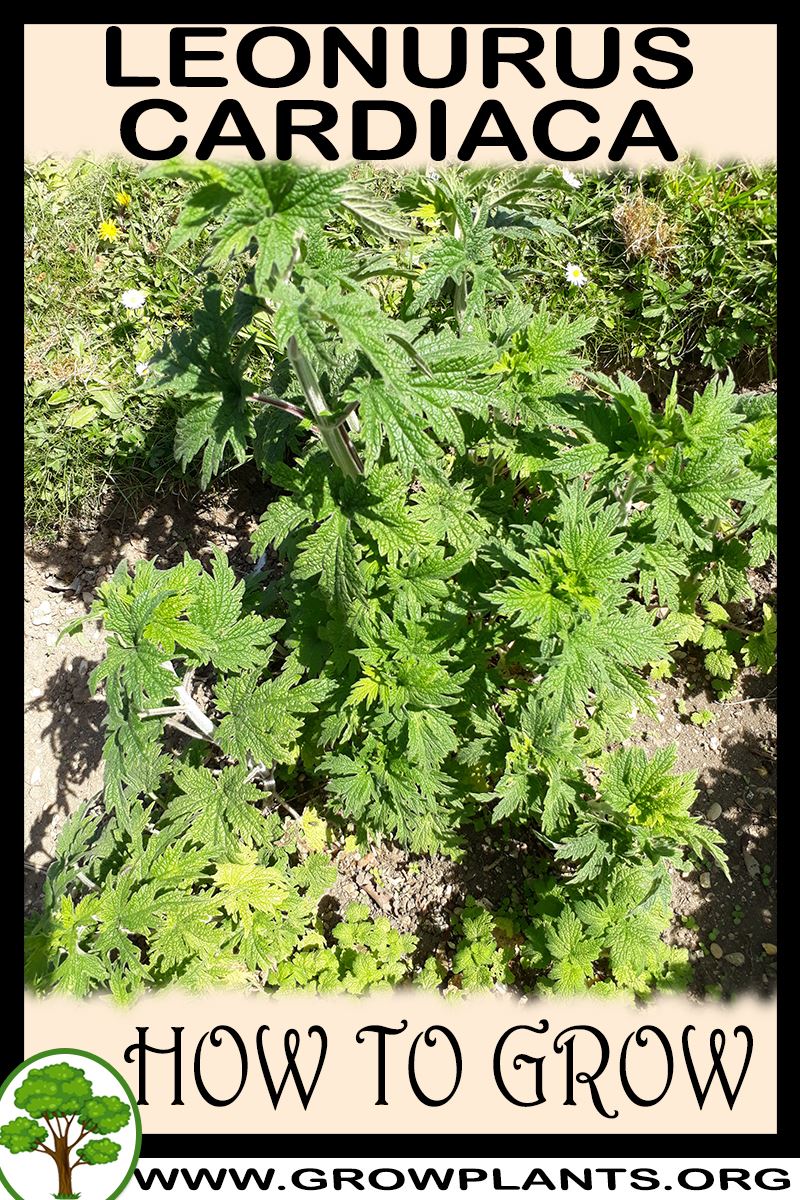
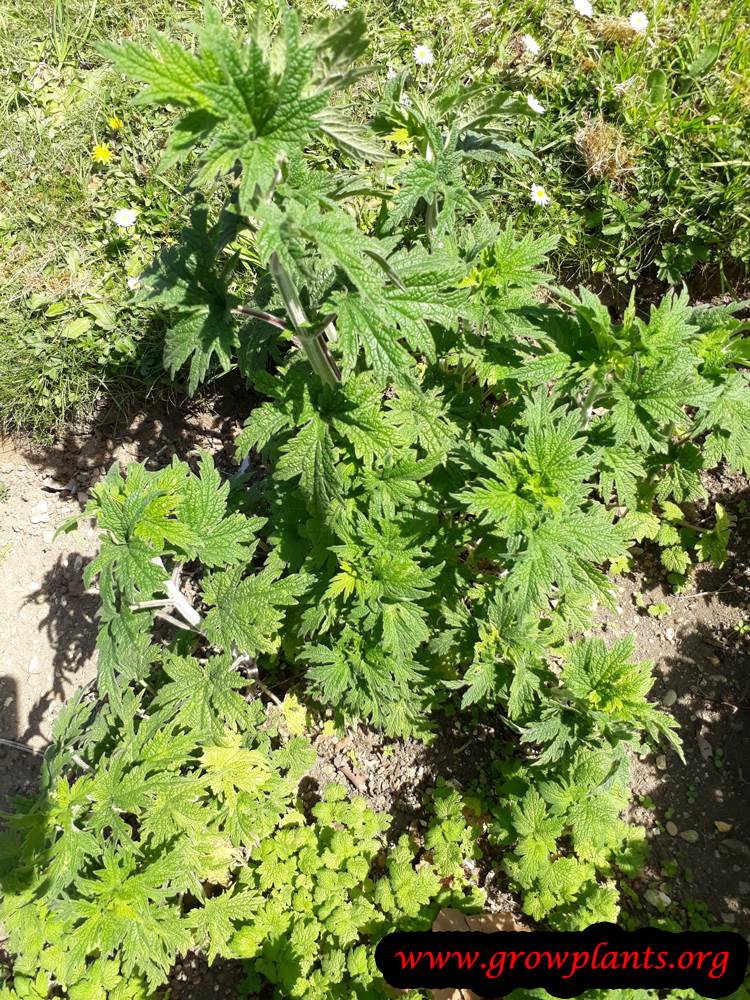
- Leaves & Foliage: Green, wedge-shaped leaves that are deeply lobed into pointed segments.
- Flower Characteristics: Small, hairy two-lipped flowers in pink to white, clustered in whorls at the leaf axils.
Primary Uses & Landscape Value
- Functional & Ornamental Roles: Traditional medicinal herb and pollinator plant; suits informal and cottage-style borders, but can become invasive.
Care Guide: Planting, Soil & Watering
Overview: Motherwort is a vigorous herbaceous perennial that grows in full sun to part shade in temperate, subtropical, or Mediterranean conditions (hardiness zone 3-10a). It prefers a moist soil and moderate to high water.
Quick Care Requirements
| Requirement | Ideal Condition |
|---|---|
| Planting Season | Spring through autumn |
| Growth Rate | Moderate to fast |
| Soil Type | Moist, average garden soil; adaptable |
| Water Need | Moderate to high; keep the soil moist |
Planting & Establishment
- Best Planting Season: Plant from spring through autumn.
- How to Plant:
- Hole Preparation: Dig a hole about the width of the root ball.
- Soil Amendments: Work compost or organic matter in to help the soil hold moisture.
- Planting Depth: Set the root collar level with the soil.
- Growth Speed & Expectations: A fast to moderate grower reaching about 50-125 cm (20-50 in); it can self-seed and spread aggressively.
Soil, Watering & Drainage Care
- Soil Mix & Drainage Needs: Keep the soil moisture-retentive but not waterlogged.
- Watering Schedule & Technique:
- Young / Newly Planted: Keep consistently moist while establishing.
- Established: Water regularly and do not let the soil dry out.
- Seasonal Adjustments: Cut back on water in winter as the plant dies back.
Climate, Light & Hardiness
Motherwort is a very cold-hardy herbaceous perennial for temperate, subtropical, and Mediterranean climates, growing well in full sun to half shade with consistently moist soil.
Quick Climate Specifications
| Climate Zones | Temperate, Subtropical, Mediterranean |
|---|---|
| USDA Hardiness Zones | 3–10a |
| Frost Tolerance | High |
| Light Conditions | Full Sun to Half Shade |
Sunlight & Light Exposure
Optimal Light Setup
Full sun to half shade both suit this plant.
Temperature Extremes & Hardiness
USDA Hardiness & Regional Limits
Hardy across USDA zones 3–10a, tolerating severe winter cold without protection.
Wind, Humidity & Microclimate
Rainfall & Seasonal Moisture
Prefers consistently moist soil rather than a dry-summer pattern.
Growing in Pots, Balconies & Indoors
Motherwort is a hardy herbaceous perennial the grower confirms is not a houseplant but grows well in containers. Grow it in a pot on a sunny or lightly shaded patio; it is a robust outdoor herb rather than a room plant, and a container also helps limit its ready self-seeding.
Quick Details
- Container Size: A deep pot, 15-30 L, for this 50-125 cm perennial
- Indoor Suitability: Not an indoor plant – a hardy outdoor herb
- Best Spot: Full sun to part shade, outdoors
- Soil & Drainage: Ordinary free-draining mix
- Watering in Pots: Average to generous water; keep it from drying out fully
Indoors & On the Windowsill
- Not a houseplant: A tall, hardy perennial herb that won’t thrive in a room; grow it outside.
- Windowsill: Too dim on a sill and too big to keep there long.
On a Balcony or Patio
- Light & seeding: Sun or part shade both suit it; deadhead before seed sets, as it self-seeds freely.
- Practicalities: A deep pot supports the tall stems; stake if the balcony is windy.
Choosing the Pot, Soil & Long-Term Care
- Pot & drainage: A deep, well-drained pot with strong drainage holes and no standing-water saucer to avoid root rot; terracotta breathes and dries faster, glazed or plastic holds moisture longer.
- Potting mix: A well-aerated, organic-rich potting mix – peat or coir blended with perlite or vermiculite.
- Feeding: Potted plants are fed more often than those in the ground, as watering steadily leaches nutrients from the mix – a modest feed in the growing season.
- Repotting: Divide and refresh every year or two.
Fertilizing & Feeding
A fast-growing herbaceous medicinal and ornamental herb that establishes readily in moist soil; it performs well with light, occasional feeding, and excessive nitrogen tends to push soft leafy growth at the expense of the plant’s naturally sturdy, upright habit.
Quick Fertilizing Specs
| Feeding Level | Light feeder – grows vigorously in moist, average garden soil |
|---|---|
| Main Nutrient Priority | Balanced, moderate feeding rather than heavy nitrogen |
| Best Feeding Period | Active growth in spring and summer |
| Soil pH | Tolerates a wide soil pH range |
| Reduce/Stop Feeding | Ease off as growth slows heading into autumn |
Feeding by Growth Stage
Establishment
Help a newly planted or newly sown motherwort establish healthy roots and early top growth
| Nutrient direction | A light, balanced feeding along with organic matter supports steady root and leaf establishment |
|---|---|
| Timing | At planting and through the first part of the growing season |
| Frequency | A light feeding is usually enough while the plant is establishing |
| Fertilizer types | A balanced general-purpose fertilizer applied at a light rate, Compost or well-rotted organic matter worked into the soil |
| Precautions | Avoid heavy nitrogen feeding, which can produce weak, floppy stems on this naturally upright herb |
Active Growth
Support continued leaf and stem growth through the growing season toward flowering
| Nutrient direction | A balanced, moderate feeding maintains steady growth without overstimulating soft foliage |
|---|---|
| Timing | Through spring and summer while the plant is actively growing |
| Frequency | Occasional light feeding through the active growing season supports steady growth |
| Fertilizer types | A balanced general-purpose fertilizer applied at a moderate rate |
| Precautions | This vigorous, spreading herb rarely needs rich feeding – err on the light side to avoid encouraging unwanted spread |
Nutrient Deficiency Signs & Corrections
Overall pale green or yellowish leaf color across the plant
| Possible causes | Nitrogen deficiency in poor soil, Waterlogged soil limiting root uptake, Insufficient light |
|---|---|
| Appears first on | Whole-plant foliage color, most visible on lower leaves |
| What to check | Soil fertility and feeding history, Soil drainage and moisture, Light exposure |
| Possible correction | Apply a light balanced feeding and confirm the site has adequate drainage and light |
Yellowing between the veins of younger leaves while veins remain green
| Possible causes | Iron deficiency from alkaline soil, Root stress from overly wet soil, General nutrient imbalance |
|---|---|
| Appears first on | New growth at stem tips |
| What to check | Soil pH, Drainage, Recent feeding history |
| Possible correction | Correct soil pH if alkaline and apply a chelated iron product per its label |
Tall, weak stems that lean or flop over rather than standing upright
| Possible causes | Overfeeding with nitrogen-heavy fertilizer, Insufficient light causing stretched growth, Overcrowded planting |
|---|---|
| Appears first on | New stem growth |
| What to check | Recent feeding rate and type, Light exposure, Planting density |
| Possible correction | Reduce feeding rate, improve light exposure, and thin overcrowded plantings |
Pruning, Training & Seasonal Maintenance
Leonurus cardiaca (motherwort) is a soft-stemmed herbaceous perennial, grown across a wide hardiness range (zone 3–10a) where it can behave as evergreen, deciduous, or even annual depending on climate — so its pruning needs shift with that habit. Growers note pruning is mainly about removing dead parts in autumn/winter, which lines up with a full dieback in colder zones; the other real maintenance task is deadheading spent flower spikes before they set seed, since this species is listed as invasive/aggressive and self-seeds readily. No structural framework is involved — this is a cut-back-and-tidy herb, not a shaped shrub.
Quick Pruning & Maintenance Specs
| Pruning Tolerance | High (can be cut hard to the base with no structural loss) |
| Primary Pruning Window | Autumn/winter (full cutback of dead top-growth in colder zones) |
| Secondary Maintenance Window | Through bloom – deadheading spent flower spikes before seed-set |
| Typical Frequency | One seasonal cutback, plus ongoing deadheading |
| Main Objective | Remove dead growth and limit self-seeding |
| Young Plant Priority | Pinch tips to build a bushier clump |
| Mature Plant Priority | Cut to the base after dieback; deadhead through the season |
| Best Tool Type | Precision snips for deadheading; bypass secateurs for the basal cutback |
| Avoid Heavy Pruning During | Active spring/summer bloom, if seed for wildlife/medicinal harvest is wanted |
Pruning by Plant Age & Size
Newly Established
Remove only dead or damaged growth while the plant roots in; pinch tips lightly once it is growing away to encourage a bushier clump rather than a single tall stem.
Young / Formative
No structural training applies to this soft-stemmed herb — tip-pinching in the first season is the only shaping needed to build a fuller clump before it reaches its mature 50–125 cm height.
Mature / Established
Deadhead flower spikes through spring/summer bloom to tidy the plant and curb self-seeding, then cut all top growth back to the base once it dies back in autumn/winter (or, in evergreen/mild-climate specimens, cut back hard in late winter to refresh the clump before new spring growth).
Seasonal Pruning Schedule
Ongoing Sanitary (through bloom): objective – control the plant’s aggressive self-seeding; remove spent flower spikes before seed matures; do not remove healthy foliage below the spike; response – a tidier clump and far fewer volunteer seedlings; flowering impact – none, spikes are already spent when cut, though this trade-off should be weighed against the plant’s role attracting pollinators or as a medicinal-harvest crop where flowering tops are the harvested part.
Dormant/Winter: objective – remove dead top-growth after the plant dies back for the year; cut stems back to the base or to a low, healthy node; do not disturb the crown/root system; response – clean regrowth from the base the following spring; flowering impact – none, next season’s stems arise fresh from the crown.
Special Growth to Remove
- Spent flower spikes, cut before seed sets, given the plant’s invasive/self-seeding tendency
- Dead stems and foliage once the plant dies back for the season
- Any weak, overcrowded stems in a dense clump, thinned to improve airflow and reduce aphid buildup
Container & Small-Space Pruning
Tolerates container growing. In a pot, deadhead more assiduously than an in-ground planting, since a contained clump has less room to absorb self-seeded volunteers, and cut back to the base at the end of the season just as with in-ground plants.
Tools
Precision snips for deadheading individual flower spikes; bypass secateurs for the coarser basal cutback of a full season’s growth.
Tool Hygiene & Disease Risk
Routine — aphids are the listed pest rather than a cut-transmitted disease, so clean, sharp tools are sufficient.
Cut Placement & Technique
Deadhead just below the spent flower spike, above the next set of healthy leaves; for the seasonal cutback, cut stems close to the base or crown once they have died back, leaving the root system undisturbed.
Heavy Pruning & Rejuvenation
Well tolerated — as an herbaceous perennial, cutting the entire top growth back to the base each year (after dieback, or in late winter where it stays evergreen) is normal maintenance, not a rare rejuvenation measure, and the plant regrows fully from the crown each season.
Post-Pruning Care
No special watering or feeding is needed after the seasonal cutback; this species prefers moist, average-to-generous water regardless of pruning. Watch fresh spring regrowth for aphids.
Common Pruning Mistakes
- Letting flower spikes go to seed given the plant’s known invasive/self-seeding tendency
- Cutting the clump back hard in the middle of active summer growth rather than after dieback or in late winter
- Disturbing the crown or roots when removing dead stems
When NOT to Prune
- During active spring/summer bloom, if flowers are wanted for pollinators or medicinal harvest
- Right after transplanting, until the clump is established
Recommended Tools (by task)
- Deadheading spent flower spikes to limit self-seeding: precision_snips – quick, precise cuts on thin flowering stems.
- Cutting the whole clump back at dieback: bypass_secateurs – enough capacity for the coarser base of a full season’s stem growth.
Propagation Guide
Motherwort self-sows readily and grows true to type from seed, which is the simplest and most practical way to start it, matching the site’s note that grafting or vegetative propagation is not necessary. Established clumps can also be divided if a particular plant needs multiplying, and overall this hardy, self-seeding herb is easy to propagate.
Quick Propagation Specs
| Best Propagation Method | Seed |
| Alternative Methods | Division of established clumps |
| Propagation Difficulty | Easy |
| Seed True-to-Type | Yes |
| Vegetative True-to-Type | Yes |
| Best Propagation Season | Spring, extending into summer and autumn in warmer zones |
| Seed Germination Time | Generally a couple to a few weeks |
| Germination Temperature | Around 18–22°C (64–72°F) |
| Seed Sowing Depth | Shallow – lightly covered or just pressed into the surface |
Growing from Seed
Dormancy & Pre-Sowing Treatment
Fresh seed sown in spring typically germinates without special treatment, though seed sown outdoors late in the season may benefit from the natural cold, moist period of overwintering.
Sowing Season
Spring, with sowing possible into summer and autumn in the warmer end of this plant’s hardiness range.
Sowing Depth & Orientation
Sow shallowly, just lightly covered.
Germination Conditions
Keep consistently moist at room-warm temperatures.
Germination Time
Generally a couple to a few weeks.
Seedling Care
Grow seedlings on in full sun to half shade and don’t let the soil dry out, matching this moisture-loving herb’s normal care.
Division, Offsets, Pups & Suckers
Established clumps can be divided in spring as new growth begins; replant divisions with a good portion of roots attached and keep them consistently moist while they establish.
Bloom & Flower Guide
Quick Details
- Bloom Season: Late spring through summer
- Flower Appearance: Small pink-to-white, two-lipped flowers, softly hairy, clustered in whorls around the upper stem
- Edibility: A medicinal herb; the flowers are not used as an edible flower
Detailed Blooming Overview
Motherwort is an upright member of the mint family whose flowers gather in dense whorls in the angles of the upper leaves, so the flowering stem looks tiered and slightly spiny. Each small bloom is two-lipped and downy, pink fading to white. Long grown as a medicinal and pollinator herb, it is a reliable source of nectar through summer.
Flower Characteristics
- Two-lipped flowers, pink to white, with fine hairs on the upper lip.
- Set in tight whorls (verticillasters) with spiny-toothed calyces around the square stem.
- Carried in tiers up the upper part of the flowering stem.
Bloom Care & Thinning
- Pollination: Bees and other pollinators work the flowers steadily.
- Managing the bloom: Cut stems back after flowering to limit its prolific self-seeding, unless you want it to naturalise.
Fruit & Uses
Leonurus cardiaca (motherwort) is grown mainly as a traditional herbal plant rather than a food: the leaves and flowering tops are dried and steeped as a very bitter herbal tea. This is a medicinal-tradition use, not a culinary one, so it is treated here cautiously rather than as a ready-to-eat plant part.
Quick Edible Specs
| Edible Parts | Leaves and flowering tops (tea/infusion only) |
|---|---|
| Main Use(s) | Medicinal-note: traditionally used as a herbal tea/tincture; not a culinary food |
| Eaten Raw or Cooked | Steeped as a hot infusion; not eaten as food |
| Preparation Required | Dry the aerial parts before steeping; use sparingly due to strong bitterness |
| Harvest Season | Aerial parts cut while flowering (see Bloom season: spring/summer) |
| Time to First Harvest | Once the plant is established and flowering |
| Storage | Dry in a shaded, ventilated spot; store dried material in an airtight, light-proof container |
| Safety/Toxicity Caveat | traditionally avoided during pregnancy; very bitter taste limits use to small infusion amounts; this is a traditional herb, not a validated food or medical treatment – no health claims are made here. |
Leaves & Greens
The wedge-shaped, deeply lobed leaves, together with the pink-to-white flowering tops, are the parts traditionally gathered. They are cut while the plant is in flower, dried in a shaded and airy spot, and later steeped as a bitter herbal infusion. They are not used as a cooked green or salad leaf.
Preparation, Uses & Safety
Preparation is limited to drying the cut aerial parts and steeping them in hot water; no cooking or detoxification step applies. Lead with caution: motherwort has a long tradition of use in herbal preparations, but it is not a food crop, is very bitter, and is conventionally avoided in pregnancy. No dosing or health-benefit claims are made here – only that it has traditionally been used medicinally.
Pests, Diseases & Troubleshooting
Overview: Motherwort is a hardy, bitter, aromatic member of the mint family grown as a medicinal herb, and it is very pest-resistant – its bitter foliage deters most chewers and it can even self-seed weedily. Trouble is limited to a few sap-suckers on soft growth and to mildew or root rot in crowded, wet conditions; airflow and drainage keep it clean.
Quick Troubleshooting Overview
| Issue / Pest | Main Symptom | Primary Solution |
|---|---|---|
| Aphids | Sticky curled shoot tips | Water jet; beneficials; soap |
| Spider mites | Fine stippling in hot dry air | Raise humidity; hose; miticidal oil |
| Leafhoppers | Pale stippling, occasional distortion | Tolerate; clear weeds; soap if heavy |
| Powdery mildew | White film on leaves in humid crowding | Airflow; sulphur fungicide |
| Rust | Brown pustules on leaf undersides | Remove leaves; fungicide if persistent |
| Root rot | Wilting, collapse in wet soil | Improve drainage; ease watering |
Common Pests & Management
- Aphids (Aphis spp.):
- Symptoms: Small green or black soft-bodied insects on the tender shoot tips and around the whorled flower clusters, curling leaves and leaving honeydew.
- Prevention & Control: Blast off with water and encourage ladybirds, lacewings and hoverflies; avoid heavy nitrogen. Insecticidal soap or neem for stubborn colonies, sprayed in the evening to protect the bees this plant attracts.
- Two-spotted spider mite (Tetranychus urticae):
- Symptoms: Fine pale stippling and delicate webbing on the leaves in hot, dry weather, bronzing foliage when severe.
- Prevention & Control: Raise humidity, hose the undersides of leaves, and use predatory mites or a horticultural oil.
- Leafhoppers (Cicadellidae):
- Symptoms: Slender wedge-shaped insects that hop when disturbed and rasp the leaves, causing pale stippling and occasional distortion, and able to spread plant pathogens.
- Prevention & Control: Usually cosmetic and tolerable; clear weeds and encourage predators, and use insecticidal soap only for heavy infestations in the evening.
Diseases & Fungal Issues
- Powdery mildew (Erysiphaceae):
- Symptoms: A white powdery film on leaves and stems in humid, crowded or shaded conditions, dulling the foliage; common on herbs late in the growing season.
- Treatment & Management: Improve airflow with spacing and cutting back, grow in sun, avoid overhead watering, and apply a sulphur or potassium-bicarbonate fungicide if it spreads.
- Rust (Puccinia spp.):
- Symptoms: Brown pustules on the undersides of leaves in damp weather, with yellow spotting above; can cause leaf drop.
- Treatment & Management: Remove and destroy affected leaves, improve airflow, and use a sulphur fungicide where persistent.
- Root & stem rot (Rhizoctonia / Phytophthora spp.):
- Symptoms: Wilting and basal collapse in wet, poorly drained or crowded soil.
- Treatment & Management: Grow in free-draining soil, avoid over-watering and crowding, and remove collapsed plants.
Growing Difficulties & Abiotic Problems
- Weedy self-seeding:
- Cause & Symptoms: Motherwort seeds prolifically and can spread beyond its spot, becoming a nuisance.
- Correction Strategy: Deadhead before seed sets to control spread, and remove unwanted seedlings while young.
- Legginess in shade:
- Cause & Symptoms: Tall, sparse, floppy stems and weak growth in too much shade or rich soil.
- Correction Strategy: Grow in full sun to part shade on lean soil, cut back to encourage bushiness, and avoid over-feeding.
- Root rot from over-watering:
- Cause & Symptoms: Yellowing and collapse where soil stays wet.
- Correction Strategy: Water only as the soil dries and ensure good drainage; this tough herb tolerates dry better than wet.
What Helps – Products & Tools
A robust herb that rarely needs products – airflow, sun and drainage suffice. Keep insecticidal soap or neem for aphids, mites and leafhoppers, and a sulphur or potassium-bicarbonate fungicide for powdery mildew or rust in humid spells. Spray in the evening to protect pollinators.