Plant Profile & Key Characteristics
Overview: Lavatera trimestris (annual mallow) is a fast-growing herbaceous annual of the mallow family, reaching about 0.5-1 m, grown as a showy bedding and border plant. It is hardy across USDA zones 4-10.
Quick Specifications
| Specification | Attribute |
|---|---|
| Plant Type / Life Cycle | Annual (herbaceous) |
| Mature Size | 0.5-1 m tall (20-40 in) |
| Growth Rate | Fast to moderate |
| Toxicity | Non-toxic (mallow family) |
| Hardiness | USDA zones 4-10 |
Growth Form & Structure
- Height & Spread: Reaches about 0.5-1 m (20-40 in) tall; also grown in containers.
- Growth Habit & Form: Upright, bushy annual that flowers freely in its single season.
- Lifespan & Maturity: Completes its life cycle in one season, flowering within a few months of sowing.
Anatomy & Physical Features
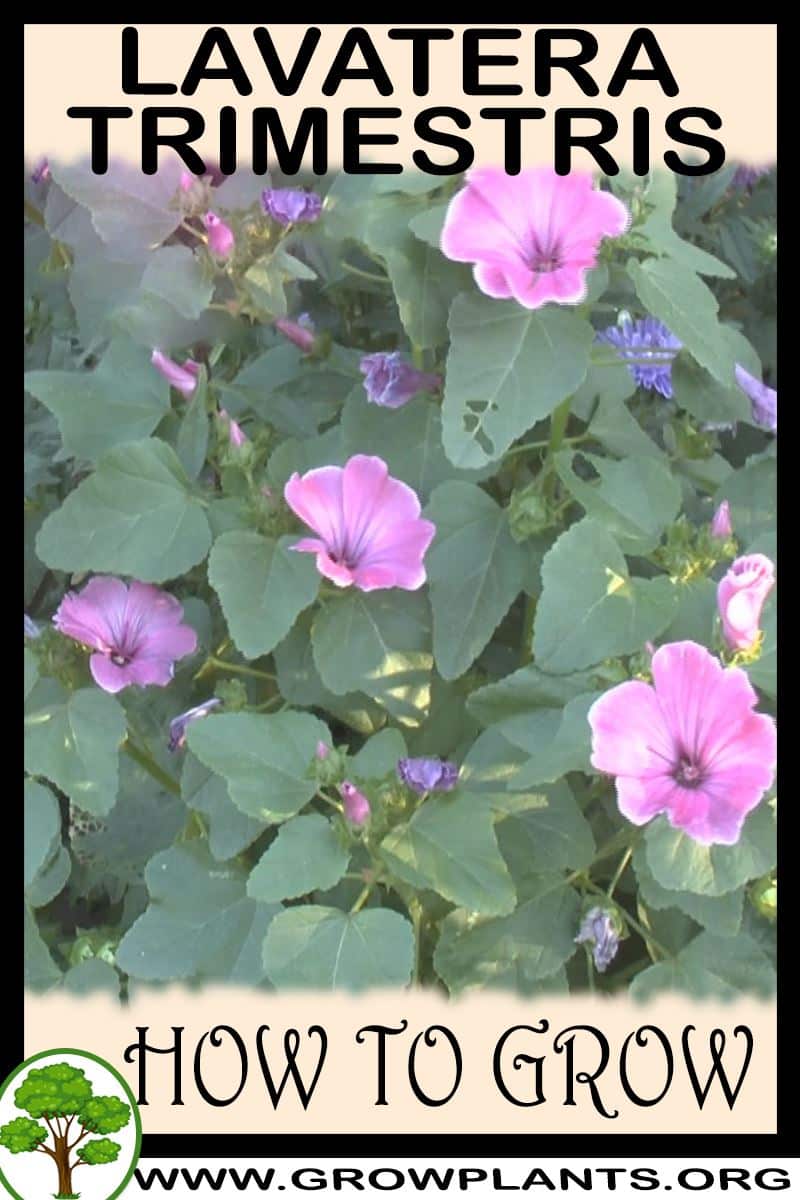
- Leaves & Foliage: Green, heart-shaped leaves with three lobes and wavy margins.
- Flower Characteristics: Large, bowl-shaped flowers in purple, pink or red, with petals fused at the base.
Primary Uses & Landscape Value
- Functional & Ornamental Roles: Ornamental bedding and border annual; good as a cut flower and for quick summer colour; can self-seed.
Care Guide: Planting, Soil & Watering
Overview: Annual mallow is a fast-growing annual grown for its large, showy flowers, thriving in full sun to part shade. It grows best in fertile, well-draining soil kept reasonably moist.
Quick Care Requirements
| Requirement | Ideal Condition |
|---|---|
| Planting Season | In spring through summer, once frost has passed |
| Growth Rate | Moderate to Fast |
| Soil Type | Fertile, well-draining soil |
| Water Need | Moderate to High – keep reasonably moist |
Planting & Establishment
- Best Planting Season: Plant in spring through summer once the danger of frost has passed and the soil has begun to warm.
- How to Plant:
- Hole Preparation: Dig a hole a little wider than the root ball and loosen the surrounding soil.
- Soil Amendments: Work some compost or organic matter into the soil to support fast, leafy growth and abundant flowers.
- Planting Depth: Set the plant at the depth it grew in its pot, keeping the crown at soil level.
- Growth Speed & Expectations: A fast grower that reaches 0.5-1 m in a single season, flowering freely from spring into autumn.
Soil, Watering & Drainage Care
- Soil Mix & Drainage Needs: Give it fertile, free-draining soil; good drainage prevents rot while steady moisture keeps the fast growth and flowering going.
- Watering Schedule & Technique:
- Young / Newly Planted: Keep the soil evenly moist while young plants establish.
- Established: Water regularly to keep the soil from drying out fully, watering deeply in warm weather.
- Seasonal Adjustments: Water more in summer heat and dry spells; reduce in cool, wet weather.
Climate, Light & Hardiness
Lavatera trimestris (annual mallow) is a fast, easy-care annual for mediterranean, desert, subtropical, and temperate gardens, thriving in full sun to half shade. Its USDA zone 4–10 rating reflects the wide range where it can be sown and flower in a single season, since it completes its life cycle before winter regardless of the local frost line.
Quick Climate Specifications
| Climate Zones | Mediterranean, desert, subtropical, temperate |
|---|---|
| USDA Hardiness Zones | 4–10 (grown as a warm-season annual throughout this range) |
| Optimal Temp Range | Approximately 15–27°C (59–80°F) |
| Cold Damage Begins | Approximately 5°C (41°F) – growth slows and tender growth can be marked |
| Approx. Survival Minimum | Killed by hard frost, near 0°C (32°F) |
| Frost Tolerance | Low |
| Light Conditions | Full Sun / Half Shade |
Sunlight & Light Exposure
Optimal Light Setup
Full sun to half shade both work well; full sun gives the sturdiest stems and most abundant bowl-shaped flowers.
Direct Sun Requirement
Several hours of direct sun daily is ideal.
Best Exposure / Orientation
Open borders with good air movement suit it well; it is fast and vigorous enough (noted as invasive/self-seeding) that spacing and sun exposure both matter for controlling its spread.
Temperature Extremes & Hardiness
USDA Hardiness & Regional Limits
Sown from spring to summer across USDA zone 4–10, it is grown as an annual that completes flowering within one warm season, so winter hardiness of the plant itself is not the limiting factor – frost timing relative to sowing is.
Cold Damage & Winter Protection
Frost ends the plant’s growth cycle; no winter protection is used since it is not carried over as a perennial.
Frost Sensitivity
Frost-sensitive; a hard freeze kills the plant outright.
Extreme Heat Tolerance
Good with average-to-generous water; performs well through a full warm growing season.
Wind, Humidity & Microclimate
Wind Tolerance
Moderate; taller stems may benefit from some shelter or light staking in exposed sites.
Rainfall & Seasonal Moisture
Suited to average-to-generous seasonal moisture typical of temperate and mediterranean spring-to-summer rainfall, supplemented by irrigation in drier desert climates.
Microclimate Recommendations
A warm, open, well-drained bed in full sun to half shade suits it across its wide climate range.
Growing in Pots, Balconies & Indoors
Annual mallow (Lavatera trimestris) is a fast, showy annual of 0.5-1 m (20-40 in). The grower notes it is not an indoor houseplant, but it grows well in a container on a sunny balcony or patio.
Quick Details
- Container Size: A medium to large pot for its bushy, upright growth
- Indoor Suitability: Not a houseplant – it needs full sun
- Best Spot: Full sun to half shade
- Soil & Drainage: Free-draining, organic-rich mix
- Watering in Pots: Average to generous; keep evenly moist, never waterlogged
Indoors & On the Windowsill
- Houseplant limits: The grower marks it as not for indoors – it grows tall and leggy without strong sun and flowers poorly in a room.
- Windowsill note: Even a sunny sill is too dim for good bloom; grow it outdoors.
On a Balcony or Patio
- Light & wind: Give it the sunniest spot; on an exposed balcony stake it and shelter it from wind. Pots against warm walls dry fast – check moisture regularly.
Choosing the Pot, Soil & Long-Term Care
- Pot & drainage: A pot with strong drainage holes is essential; skip a permanently full standing-water saucer to avoid root rot. Terracotta breathes and dries faster, while glazed or plastic holds moisture longer.
- Potting mix: A well-aerated, organic-rich mix – potting mix or peat/coir with perlite or vermiculite – works best.
- Feeding: Potted plants need feeding more often than those in the ground, since watering steadily leaches nutrients out of the container.
Growing this plant in a greenhouse
A greenhouse can give lavatera trimestris frost protection and cold protection.
Greenhouse at a glance
| Greenhouse suitability | Conditional - depends on your climate |
|---|---|
| Main benefits | frost protection, cold protection |
| Season extension | earlier spring & later autumn |
| Outdoor protection advisable below | about 5°C |
| Maintain greenhouse minimum | around 5°C for active growth |
| Suitable types | unheated greenhouse, polycarbonate greenhouse |
| Heating | Heating is optional - useful mainly for winter growing in cold areas. |
Related greenhouse guides
- Greenhouses: How to Choose the Right Greenhouse
- Polycarbonate Greenhouses: What to Look for Before Buying
Fertilizing & Feeding
Moderate – a fast-growing annual mallow grown for its bowl-shaped flowers; steady, balanced feeding through its single growing season keeps the bushy habit and flower production going without encouraging weak, floppy stems.
Quick Fertilizing Specs
| Feeding Level | Moderate – fast growth over a single season calls for dependable, balanced nutrition. |
|---|---|
| young_feeding | A balanced starter feed as seedlings establish and put on early growth. |
| mature_feeding | Regular light-to-moderate balanced feeding through vigorous growth and bloom. |
| Main Nutrient Priority | Balanced nutrition with dependable nitrogen, without overdoing it on a naturally vigorous grower. |
| Best Feeding Period | From establishment through the spring-to-autumn bloom season. |
| Organic Options | Compost or well-rotted organic matter worked into the bed at planting. |
| Soil pH | Tolerates a wide range of well-drained garden soils; near-neutral is fine. |
| Reduce/Stop Feeding | Ease off feeding as the plant finishes flowering and completes its annual cycle. |
| Micronutrients | Rarely needed on ordinary garden soil; correct only if a deficiency shows. |
Feeding by Growth Stage
Establishment and early growth
Support quick root and shoot development after seeding or transplanting.
| Nutrient direction | A balanced complete fertilizer with dependable nitrogen to get this fast grower off to a strong start. |
|---|---|
| Timing | As seedlings establish in spring. |
| Frequency | Regular light feeding through early establishment. |
| Fertilizer types | Balanced complete fertilizer, Compost or well-rotted organic matter |
| Precautions | Avoid heavy nitrogen doses, since this naturally vigorous, sometimes aggressive grower can quickly turn leggy on rich feeding. |
Vigorous growth and bloom
Sustain the flush of bowl-shaped flowers through the growing season.
| Nutrient direction | Continue a balanced feed with adequate nitrogen; a high-phosphorus bloom booster is not needed to drive more flowers. |
|---|---|
| Timing | Through the spring-to-autumn bloom period. |
| Frequency | Regular light-to-moderate feeding while the plant is actively flowering. |
| Fertilizer types | Balanced complete fertilizer |
| Precautions | Watch for overly lush, floppy growth; if stems sprawl, moderate feeding rather than increasing it. |
End-of-season decline
Let the plant complete its annual life cycle without pushing new growth.
| Nutrient direction | None – withhold fertilizer as the plant finishes flowering and declines toward the end of the season. |
|---|---|
| Timing | Late in the growing season as the annual cycle ends. |
| Frequency | No feeding at this stage. |
| Fertilizer types | No feeding at this stage – the plant is completing its annual life cycle. |
| Precautions | Do not fertilize a declining annual; clear spent plants once flowering ends. |
Nutrient Deficiency Signs & Corrections
Pale green to yellowish leaves and slowed growth.
| Possible causes | Low soil nitrogen, Waterlogged or compacted soil limiting root uptake, Heavy competition from surrounding fast-growing plants |
|---|---|
| Appears first on | Older, lower leaves first. |
| What to check | Recent feeding history, Soil drainage and compaction, Crowding from nearby plants |
| Possible correction | Resume a balanced complete feed and improve soil drainage; thin out competing plants if crowding is limiting growth. |
Yellowing between the veins of the newest leaves while the veins stay green.
| Possible causes | High or alkaline soil pH locking up iron or manganese, Overly wet or cold soil reducing micronutrient uptake, Genuinely low available iron in the soil |
|---|---|
| Appears first on | Newest leaves at the shoot tips. |
| What to check | Soil pH, Drainage and recent watering, Whether older leaves remain unaffected |
| Possible correction | Correct soil pH toward a more neutral range, improve drainage, and if it persists apply a chelated iron product per its label. |
Lush leafy growth with weak, sprawling stems but comparatively few flowers.
| Possible causes | Excess nitrogen favoring foliage over flowers, Insufficient direct sun, Overly frequent feeding on an already vigorous grower |
|---|---|
| Appears first on | The whole plant, most noticeable on the most vigorous stems. |
| What to check | Recent nitrogen inputs, Hours of direct sun the plant receives, Feeding frequency |
| Possible correction | Moderate nitrogen, rely on a balanced feed, and ensure full sun to part shade rather than reaching for a high-phosphorus bloom product. |
Pruning, Training & Seasonal Maintenance
Annual mallow needs little pruning to grow and flower well – what cutting it does get is largely optional, done “for design” to keep the naturally fast, somewhat sprawling growth neat rather than to trigger flowering. Pinching young plants and deadheading spent blooms both help keep the plant compact and extend flowering, and deadheading has a second, practical benefit here: this species self-seeds readily enough to be flagged as invasive, so removing spent flowers before they set seed also limits unwanted spread.
Quick Pruning & Maintenance Specs
| Pruning Tolerance | Moderate – tolerates pinching/shaping, but cutting is optional, not required |
| Primary Pruning Window | Spring–summer active growth (pinching, deadheading) |
| Secondary Maintenance Window | End of season/winter cutback where the plant persists or is frost-killed |
| Typical Frequency | Occasional pinching when young; deadhead through the bloom season |
| Main Objective | Neater, more compact habit and extended, tidier flowering |
| Young Plant Priority | Optional tip pinch for bushiness |
| Mature Plant Priority | Deadhead to prolong bloom and curb self-seeding |
| Best Tool Type | Precision snips (soft annual stems) |
| Avoid Heavy Pruning During | Peak flowering, if you want uninterrupted bloom display |
Pruning by Plant Age & Size
Newly Established
Leave young seedlings/transplants unpruned until established; remove only damaged growth.
Young / Formative
No formal training system is needed; an optional pinch of the growing tip once the plant is a few sets of leaves tall can encourage a bushier, less floppy habit given its fast growth rate, but is purely cosmetic rather than required.
Mature / Established
Ongoing care is limited to deadheading and, if the plant becomes leggy from its fast growth, light shaping cuts for appearance.
Seasonal Pruning Schedule
| Spring–summer (active growth & bloom) | Objective: shape and prolong flowering. Remove: growing tips on young plants (optional), spent flowers as they fade. Do not remove: unopened buds or wanted seed heads. Response: bushier growth, continued flowering, reduced self-seeding. Bloom impact: deadheading extends bloom. |
| End of season/winter (where applicable) | Objective: tidy the spent or frost-killed plant. Remove: exhausted or frost-damaged top growth. Do not remove: any seed heads you are intentionally leaving for wildlife or self-sowing. Response: n/a – plant is finishing its life cycle. Bloom impact: none, the season is over. |
Special Growth to Remove
- Spent flower stems – deadhead promptly; this is the single most useful cut for this species, both to keep flowering going and to limit its tendency to self-seed and spread.
- Floppy or overly leggy stems – light shaping cuts can tidy the naturally fast, sprawling growth if it outpaces its support.
Container & Small-Space Pruning
In containers, pinch young plants a little more assertively than in-ground specimens to keep growth compact within the pot, and deadhead promptly since a container’s smaller soil volume gives the plant less room to “absorb” energy spent on unwanted seed production.
Tools
- Precision snips for pinching and deadheading soft annual growth.
Tool Hygiene & Disease Risk
Routine: clean, sharp snips are sufficient; the aphid pressure reported for this species is not spread by pruning cuts.
Cut Placement & Technique
Pinch just above a leaf node on soft new growth; deadhead by cutting the flowering stem back to the nearest healthy leaf or bud rather than leaving a bare stub.
Heavy Pruning & Rejuvenation
Not applicable – as a fast, single-season annual, Lavatera trimestris is not rejuvenated by hard cutback; once its cycle ends the plant is removed rather than cut back for regrowth.
Post-Pruning Care
Water after pinching in warm weather; no extra feeding is needed beyond normal seasonal care.
Common Pruning Mistakes
- Skipping deadheading, which both shortens the bloom display and lets the plant self-seed more freely than desired.
- Shaping too hard during peak bloom, removing unopened buds along with spent flowers.
When Not to Prune
Hold off on deadheading late in the season if you want to deliberately collect or leave seed; otherwise there is no strong reason to withhold pruning from this tolerant annual.
Recommended Tools (by task)
- Pinching young growth / deadheading spent flowers – precision_snips: the only tool this soft-stemmed annual needs.
Propagation Guide
Lavatera trimestris (Annual mallow) is a fast, easy annual grown almost entirely from seed, which comes true to type for the species and needs no grafting or division to reproduce. Because it dislikes root disturbance, direct sowing where the plant is to grow gives the most reliable results.
Quick Propagation Specs
| Best Propagation Method | Seed, direct-sown |
| Alternative Methods | Softwood stem cuttings (occasional, not standard) |
| Propagation Difficulty | Easy |
| Seed True-to-Type | Usually true-to-type |
| Best Propagation Season | Spring to early summer |
| Seed Germination Time | Typically 1-3 weeks |
| Germination Temperature | Roughly 15-21°C (59-70°F), mild spring conditions |
| Seed Sowing Depth | Shallow, about 0.5-1 cm (roughly 1/4-1/2 inch) |
Growing from Seed
Sowing Season
Direct sow outdoors in spring once frost danger has passed and the soil has warmed, matching the site’s spring-to-summer planting season.
Sowing Depth & Orientation
Sow shallowly, about 0.5-1 cm deep (roughly 1/4-1/2 inch), and firm the soil lightly over the seed.
Germination Conditions
Keep the seedbed evenly moist until germination; this cool-tolerant annual germinates well in mild, mid-spring conditions.
Germination Time
Usually within one to three weeks.
Seedling Care
This species dislikes having its roots disturbed, so direct sowing in place (or sowing into small individual pots for later minimal-disturbance transplanting) tends to establish more reliably than bare-root transplants.
Stem Cuttings
Cutting Type
Softwood tip cuttings can be rooted as an occasional alternative, though seed is by far the simpler, standard route for this fast-growing annual.
Rooting Setup
Root in a moist, well-drained mix kept out of direct hot sun.
Rooting Hormone
Not necessary, given how easily this plant grows from seed.
Bloom & Flower Guide
Quick Details
- Bloom Season: Spring, summer and into autumn
- Time to First Bloom: Within its first season from sowing – a fast summer annual
- Flower Appearance: Large, satiny bowl-shaped flowers in purple, pink or red, the petals joined at the base
- Edibility: Grown as an ornamental; a mallow-family plant valued for its blooms rather than for eating
Detailed Blooming Overview
Annual mallow is one of the most free-flowering summer annuals, opening wide, silky trumpets in clean shades of pink, rose and white-throated red. Individual blooms are fleeting, but the plant replaces them steadily from early summer until the first frosts, so the display holds for months.
Flower Characteristics
- Broad, shallow bowl-shaped flowers with a satiny sheen.
- Petals fuse into a short tube at the base, in the classic mallow form.
Bloom Care & Thinning
- Prolong the show: Remove spent flowers to keep new buds forming and delay seeding.
- Support the bloom: A sunny, open spot and moderate feeding give the strongest flush; over-rich soil favours leaves over flowers.
Bloom Health & Protection
- Rust and leaf spot: Like other mallows it can pick up rust in damp seasons; space plants for airflow and use a suitable fungicide if it takes hold.
Pests, Diseases & Troubleshooting
Overview: Tree and annual mallows are fast, soft-stemmed members of the mallow family (Malvaceae), and like their hollyhock and hibiscus relatives their signature problem is mallow rust, backed up by sap-sucking insects on lush growth. Management centres on airflow, prompt removal of infected leaves, and not over-feeding the soft growth that aphids love.
Quick Troubleshooting Overview
| Issue / Pest | Main Symptom | Primary Solution |
|---|---|---|
| Mallow / hollyhock rust | Bright orange-brown pustules on leaf undersides, yellow spots on top | Remove infected leaves; improve airflow; fungicide if severe |
| Aphids | Sticky, curled shoot tips; sooty mould | Water jet; beneficials; soap if needed |
| Spider mites | Fine stippling, webbing in hot dry spells | Raise humidity; hose; miticidal oil |
| Capsid bugs | Ragged, distorted young leaves with pinholes | Tolerate minor damage; clear debris |
| Whitefly | Clouds of white flies, honeydew | Sticky traps; soap; ventilation |
| Stem / root rot | Basal collapse in wet soil | Improve drainage; avoid crowding |
Common Pests & Management
- Aphids (Aphis / Myzus spp.):
- Symptoms: Dense clusters of green or black soft-bodied insects on the fast-growing shoot tips and flower buds, curling leaves and coating them with sticky honeydew that turns black with sooty mould.
- Prevention & Control: Blast off with water and support ladybirds, lacewings and hoverflies. Avoid heavy nitrogen feeding, which produces the soft growth aphids prefer. Insecticidal soap or a light neem oil clears stubborn colonies; spray in the evening.
- Two-spotted spider mite (Tetranychus urticae):
- Symptoms: Fine pale stippling on the leaves in hot, dry conditions, with delicate webbing on undersides and stem junctions; heavy attacks bronze and drop the foliage.
- Prevention & Control: Raise humidity and hose the undersides of leaves regularly. Predatory mites (Phytoseiulus persimilis) are effective; a horticultural oil or insecticidal soap knocks down outbreaks.
- Capsid (plant) bugs (Lygocoris / Lygus spp.):
- Symptoms: Small active green bugs that pierce young leaves and buds, causing tiny holes that expand into ragged, distorted ‘tattered’ foliage as the leaf grows.
- Prevention & Control: Damage is usually cosmetic and tolerable; clear weeds and debris where they overwinter. Only heavy infestations warrant an evening pyrethrum spray.
- Whitefly (Trialeurodes vaporariorum):
- Symptoms: Tiny white flies rising in clouds from disturbed foliage, especially on sheltered or greenhouse plants, leaving honeydew and sooty mould.
- Prevention & Control: Ventilate well, monitor and reduce numbers with yellow sticky traps, and use Encarsia formosa under glass; insecticidal soap for severe cases.
Diseases & Fungal Issues
- Mallow / hollyhock rust (Puccinia malvacearum):
- Symptoms: The defining disease of the mallow family: raised bright orange to reddish-brown pustules on the undersides of leaves, with corresponding yellow-orange spots on the upper surface. Heavy infection browns, distorts and drops the lower leaves and weakens the plant.
- Treatment & Management: Remove and destroy infected leaves at first sign, clear all fallen debris at season’s end, and space and prune for maximum airflow. Avoid overhead watering. Where rust is chronic, apply a sulphur or myclobutanil-type fungicide preventively and choose more resistant relatives.
- Leaf spot (Cercospora / Colletotrichum spp.):
- Symptoms: Brown to grey angular or rounded spots on the leaves in warm, humid, wet weather, sometimes with a yellow halo; leaves may yellow and drop.
- Treatment & Management: Improve airflow and avoid wetting foliage, remove spotted leaves, and clear debris. A copper-based fungicide helps in persistent wet spells.
- Stem & root rot (Phytophthora / Sclerotinia / Rhizoctonia spp.):
- Symptoms: Soft, dark collapse at the stem base or a whole-plant wilt, sometimes with white fungal growth (Sclerotinia), in wet, crowded conditions – annual mallows on heavy soil are especially prone.
- Treatment & Management: Improve drainage, avoid crowding and over-watering, and remove and destroy affected plants promptly. Practise crop rotation with annual types.
Growing Difficulties & Abiotic Problems
- Wind rock & flop:
- Cause & Symptoms: Tall, soft, fast-grown stems snap or lean after wind and rain, especially the tree mallow.
- Correction Strategy: Site out of strong wind, stake tall plants, and avoid over-feeding, which produces weak sappy stems. Trim back leggy growth to encourage a bushier frame.
- Short-lived / woody decline:
- Cause & Symptoms: Tree mallow in particular is naturally short-lived, becoming woody and sparse after a few years.
- Correction Strategy: Treat it as a short-lived shrub, take cuttings to renew stock, and cut back hard in the growing season to prolong vigour.
- Chlorosis on poor soil:
- Cause & Symptoms: Pale yellowing between leaf veins on very poor or waterlogged ground.
- Correction Strategy: Improve soil with compost, ensure drainage, and give a balanced feed if genuinely deficient – but avoid excess nitrogen.
What Helps – Products & Tools
Cultural steps do most of the work: airflow, leaf hygiene and lean soil. For the aphids, mites and whitefly this family attracts, keep insecticidal soap and a light horticultural (neem) oil on hand, plus yellow sticky traps. For the near-inevitable mallow rust, a sulphur fungicide (or a myclobutanil product in bad years) applied preventively is the key tool; a copper fungicide covers leaf spot. Spray oils and soaps in the evening to protect pollinators.