Plant Profile & Key Characteristics
Also known as: common rush or soft rush, Corkscrew rush
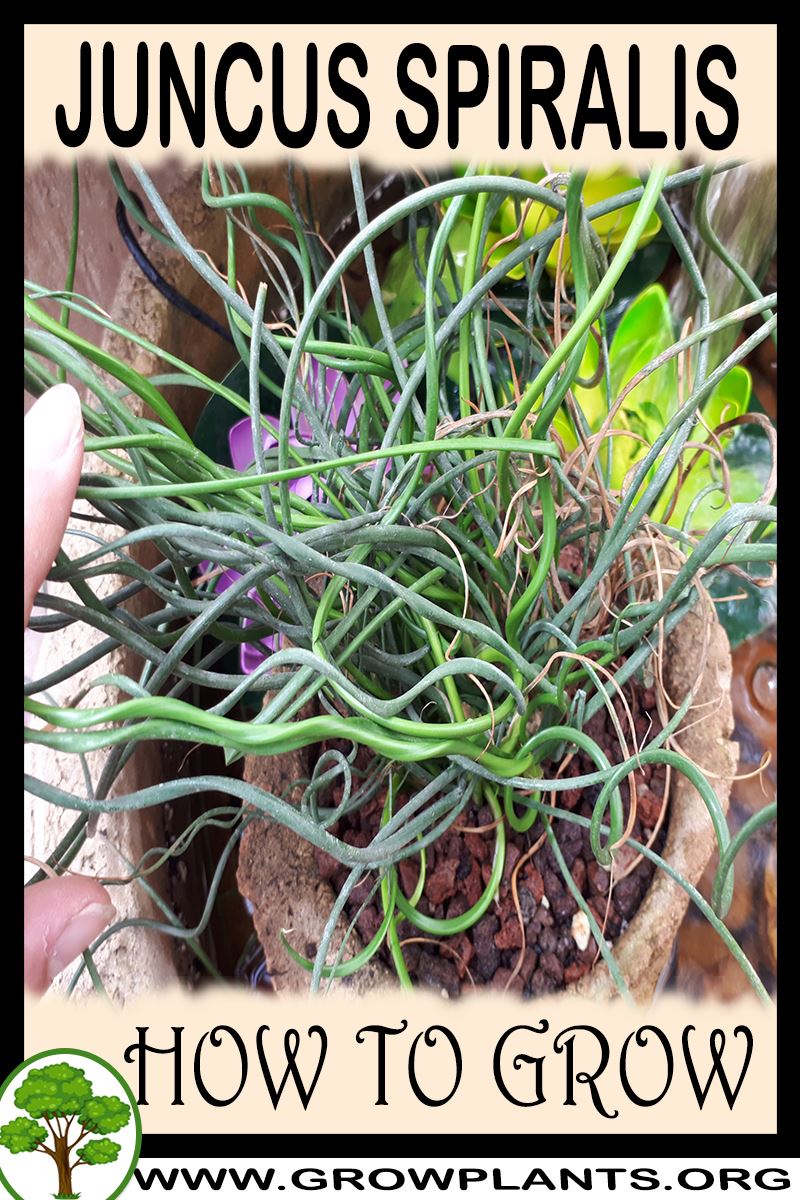
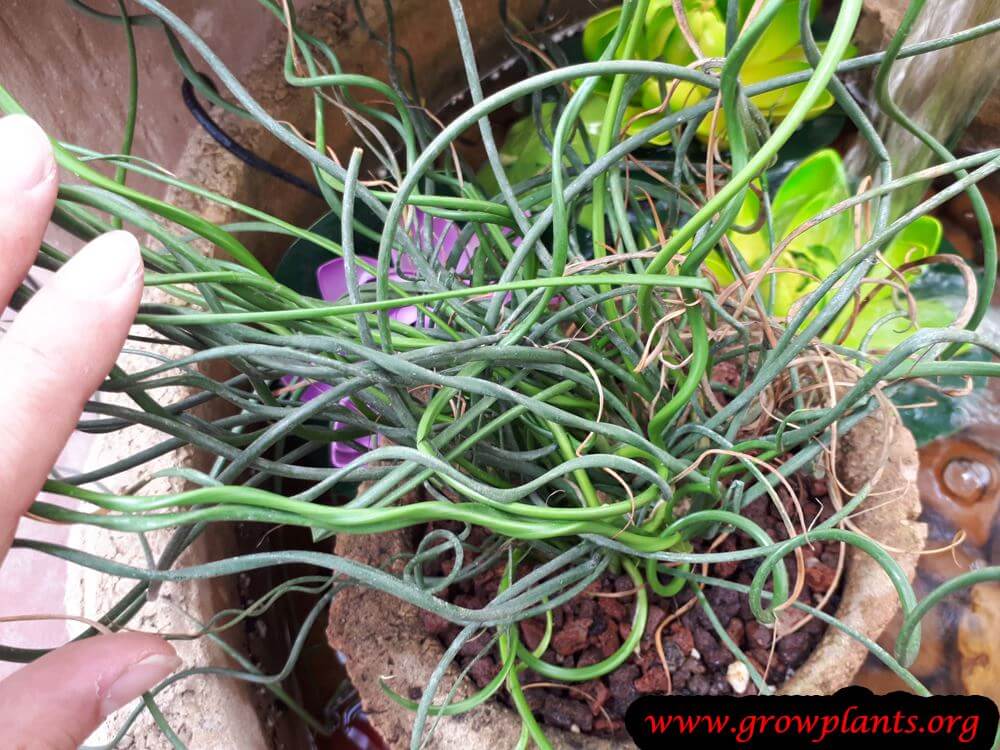
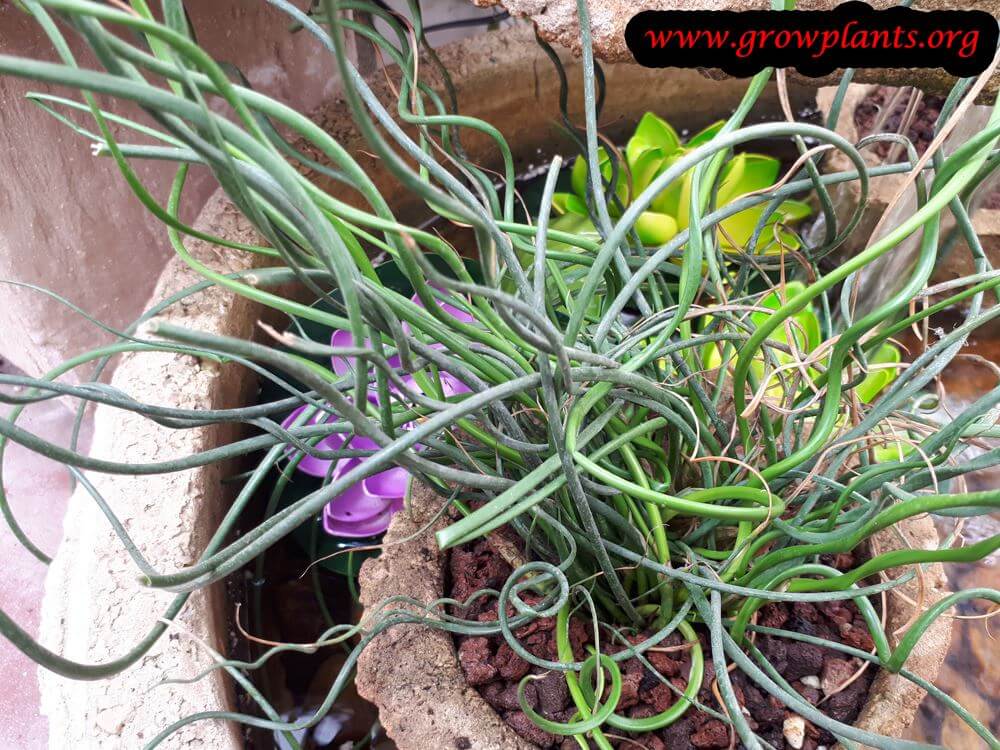
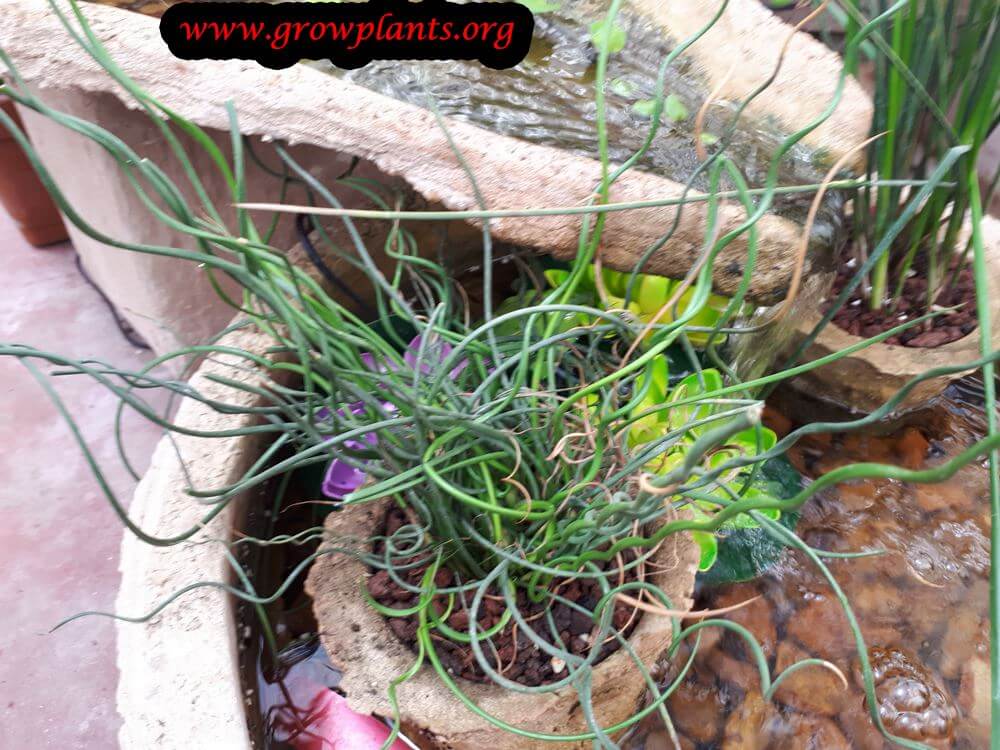
Overview: Juncus effusus ‘Spiralis’ (corkscrew rush) is a herbaceous, moisture-loving perennial 20–50 cm (8–20 in) tall, grown as an ornamental for its distinctive spiralling green stems. It thrives in wet soil, bog gardens, pond margins and containers.
Quick Specifications
| Specification | Attribute |
|---|---|
| Plant Type / Life Cycle | Perennial |
| Foliage Type | Semi-evergreen (evergreen in mild climates) |
| Mature Size | 20–50 cm tall (8–20 in) |
| Growth Rate | Moderate to fast |
| Root System | Rhizomatous (clump-forming) |
| Toxicity | Non-toxic |
| Hardiness | USDA zones 4–10a |
Growth Form & Structure
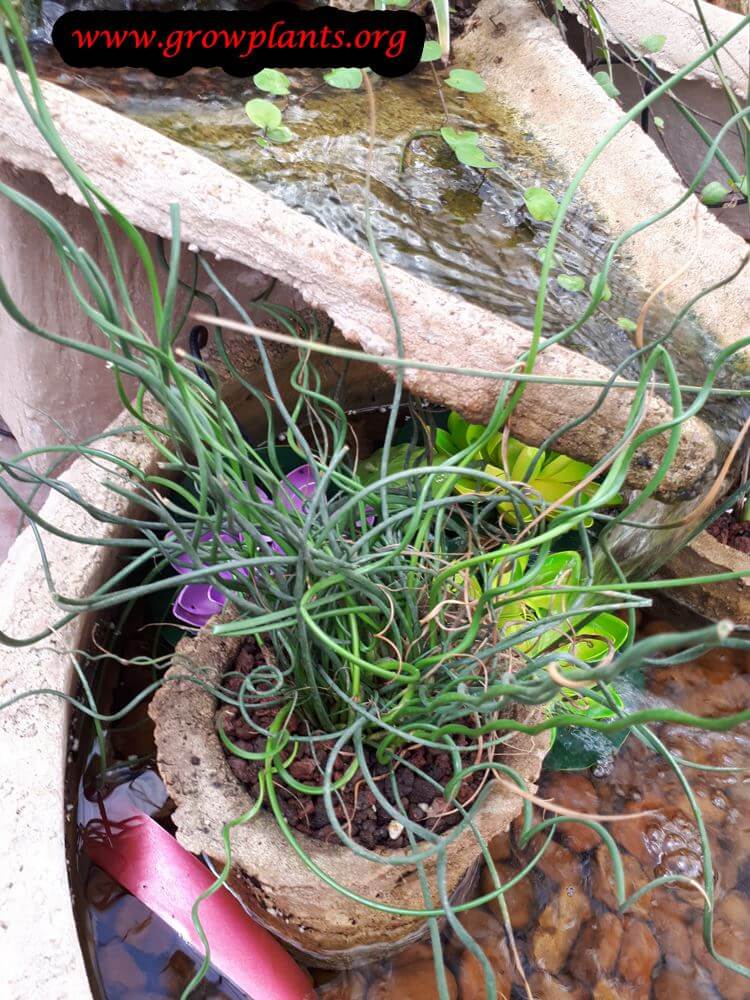
- Height & Spread: Forms tufts 20–50 cm (8–20 in) tall; grows well in containers of 5–10 L (1–2 gal) standing in water, and can be kept indoors on a sunny window.
- Growth Habit & Form: Clump-forming, grass-like rush spreading by short rhizomes, with curling, corkscrew stems.
- Lifespan & Maturity: Fast-establishing marginal/aquatic perennial; divided clumps re-establish quickly.
Anatomy & Physical Features
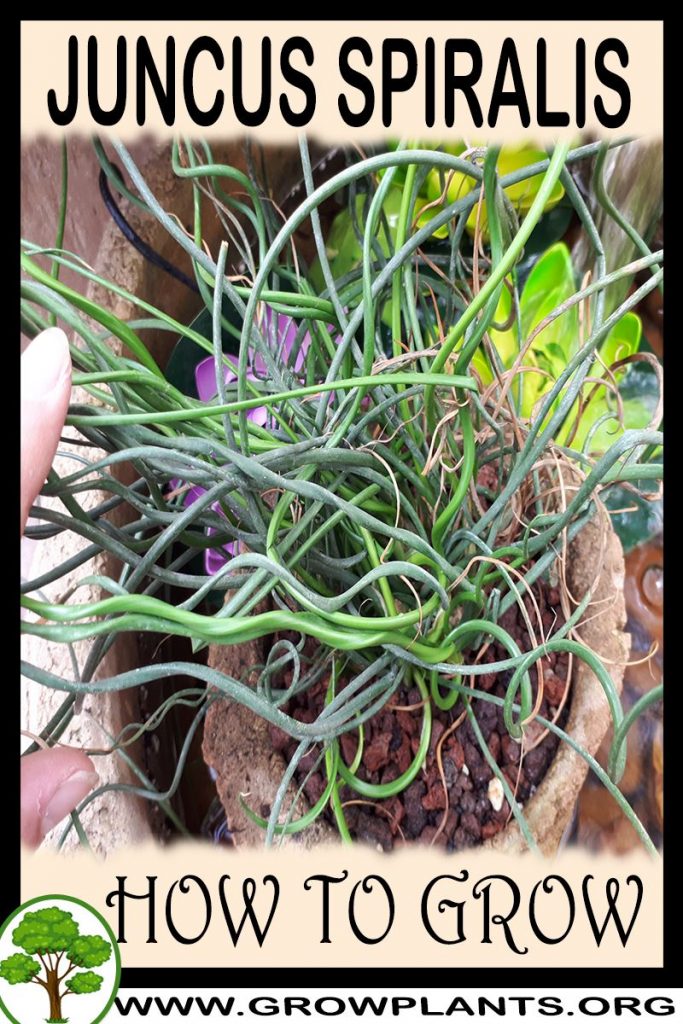
- Leaves & Foliage: Leafless green stems that are linear but twist into distinctive spirals – the ornamental feature.
- Flower Characteristics: Small pink, yellow or brown flowers borne on the stems in summer to autumn; insignificant.
Primary Uses & Landscape Value
- Functional & Ornamental Roles: Ornamental water/marginal plant for pond edges, bog gardens and water containers; also grown as a novelty houseplant given enough light.
Care Guide: Planting, Soil & Watering
Overview: Corkscrew rush is a marginal water plant that wants constantly wet, rich soil or even shallow standing water, in full sun to light shade. It is sensitive to drought and heat, so the rule that matters most is simply never to let it dry out.
Quick Care Requirements
| Requirement | Ideal Condition |
|---|---|
| Planting Season | In spring as growth begins; the season extends spring through autumn in milder zones, but stays in spring in the coldest zones |
| Growth Rate | Moderate to fast |
| Soil Type | Heavy, rich, moisture-retentive soil; tolerates boggy ground and pond margins |
| Water Need | High – keep the soil saturated at all times; it can even stand in shallow water |
Planting & Establishment
- Best Planting Season: Plant in spring as it starts into growth; in warm-winter areas planting can continue through to autumn.
- How to Plant:
- Hole Preparation: Plant into heavy, water-retentive soil at a pond edge, in a bog bed, or in a container standing in water, firming it so the crown stays wet.
- Soil Amendments: Use a rich, heavy soil rather than a free-draining mix, and work in organic matter to hold moisture.
- Planting Depth: Set the crown at soil level in saturated ground, or just below the waterline as a pond marginal; never let the roots dry.
- Growth Speed & Expectations: Moderate to fast in warmth with ample water, forming its distinctive spiralling stems.
Soil, Watering & Drainage Care
- Soil Mix & Drainage Needs: Unlike most plants it wants moisture-retentive, heavy soil and does not need sharp drainage; in a pot use heavy soil and stand it in a saucer or pond so it never dries. Feed once a year and keep the water clean.
- Watering Schedule & Technique:
- Young / Newly Planted: Keep newly planted rushes constantly wet from the very first day; they establish quickly when never allowed to dry.
- Established: Maintain saturated soil or standing water year-round, checking and topping up water regularly.
- Seasonal Adjustments: Watch it closely through summer heat when evaporation is fast, and ease off feeding over winter while keeping the soil wet.
Climate, Light & Hardiness
Juncus spiralis (corkscrew rush) is a marginal aquatic and bog plant adapted to consistently wet soil or shallow water across a broad span of climates - from temperate to desert, as long as water is available - and it is notably cold-hardy for an evergreen-leaning rush. It grows best in full sun to light shade but dislikes the combination of heat and drought.
Quick Climate Specifications
| Climate Zones | Temperate, Mediterranean, desert (with adequate water), subtropical; also grown indoors on a sunny windowsill |
|---|---|
| USDA Hardiness Zones | 4–9, extending to 10a with care (site data) |
| Frost Tolerance | High (crown/roots); foliage may brown back in hard frost |
| Light Conditions | Full Sun / Half Shade (grows better in full sun) |
| Wind Tolerance | Moderate (general knowledge for this flexible-stemmed marginal rush) |
Sunlight & Light Exposure
Optimal Light Setup
Full sun gives the best, most tightly spiraled and colorful growth; site data notes the plant grows better in full sun than in shade.
Direct Sun Requirement
Several hours of direct sun daily are recommended for compact form; too much shade produces looser, less spiraled stems.
Shade & Heat Management
In hot desert or subtropical climates, part-day shade paired with constant moisture prevents the combined heat-and-drought stress this species is sensitive to per site data.
Best Exposure / Orientation
Pond margins, bog gardens, or containers in full sun outdoors; indoors it needs a sunny windowsill, as site data specifies it must be positioned to get enough sun when grown as a houseplant.
Temperature Extremes & Hardiness
USDA Hardiness & Regional Limits
Site data gives zones 4–9, extending to 10a with attentive care. Recommended planting timing shifts by zone - spring only in zones 4–6, spring through summer in zones 7–8, and spring through autumn in zones 9–10a - reflecting reduced cold tolerance while the plant is newly establishing.
Cold Damage & Winter Protection
Foliage may brown or die back with hard frost, but the crown and roots are cold-hardy where the root zone doesn't freeze solid; pond-margin or moist-soil siting helps insulate roots even in zone 4.
Frost Sensitivity
Top growth is frost-tender and may brown after a hard freeze, while the below-ground crown and roots are considerably hardier.
Extreme Heat Tolerance
Low to moderate when combined with drought; site data specifically flags sensitivity to heat and drought together, so consistent moisture is essential in hot climates.
Wind, Humidity & Microclimate
Humidity Preferences
Naturally suited to humid, wet-margin conditions rather than dry air.
Dry-Air Tolerance
Low; as a bog/marginal-aquatic species it prefers humid air around the foliage, particularly when grown indoors.
Wind Tolerance
Generally moderate, given the plant's flexible, grass-like stems typical of marginal aquatic rushes, though some shelter is worthwhile in very exposed sites.
Rainfall & Seasonal Moisture
Adapted to consistently wet soil or shallow standing water year-round rather than a seasonal dry period; this is a defining requirement of the species.
Microclimate Recommendations
Pond edges, bog gardens, or containers standing in a saucer of water; in hot, dry climates pair part-day shade with reliable water to prevent heat-and-drought stress.
Growing in Pots, Balconies & Indoors
The corkscrew rush is a quirky, spiralling bog plant that loves wet feet and bright light. The grower says it is not a true houseplant unless it sits right on a sunny window, because it needs full sun; in a pot it wants a big, constant supply of water and makes a fun windowsill or pond-side container plant.
Quick Details
- Container Size: 5-10 L (1-2 gal) container
- Indoor Suitability: Only on a bright, sunny windowsill – the grower notes it needs full sun to grow indoors
- Best Spot: Full sun (grows better in full sun than in half shade); a sunny sill indoors
- Soil & Drainage: Heavy, moisture-holding soil enriched with fertiliser and organic matter, kept constantly wet
- Watering in Pots: A big amount of water at all times – it is a bog/marginal plant and must never dry out; it will even stand in water
Indoors & On the Windowsill
- Windowsill only: The grower says it is not a houseplant unless it is on the window getting full sun. A drip irrigation kit with a timer can take over that watering check automatically. Give it your sunniest sill and keep it constantly wet.
- Keep it wet: Unlike most pot plants it loves waterlogged soil – stand the pot in a saucer of water so it never dries out.
- Bright light for form: Strong light keeps the corkscrew stems curled and vigorous; in dim light it grows weak and loose.
On a Balcony or Patio
- Light & water: A sunny balcony or patio suits it, but the pot must stay wet – stand it in a water-filled saucer or by a container pond, since it will never over-drink.
- Practicalities: In heat it drinks fast; keep the reservoir topped up daily. It is hardy and tolerates cold outdoors.
Choosing the Pot, Soil & Long-Term Care
- Pot & water: Unusually, this plant welcomes a standing-water saucer – keep the base sitting in water so the heavy soil stays saturated.
- Potting mix: The grower prefers a heavy, water-holding soil boosted with fertiliser and organic material – the opposite of a free-draining mix.
- Feeding: Work fertiliser and organic matter into the soil; potted bog plants still appreciate a boost through the growing season.
- Refreshing the soil: Every few years switch the soil – all of it or just part – to keep it healthy, as the grower advises.
Grower’s Container Tip
- Heavy soil & constant water (grower’s method): In a 5-10 L (1-2 gal) pot the grower uses a heavy soil enriched with fertiliser and organic material and gives a big amount of water constantly. Every few years he swaps out all or part of the soil to keep the plant fresh.
Fertilizing & Feeding
Grown as a marginal or shallow-water plant, this rush draws some nutrients from the surrounding water and sediment already, so it needs only light supplemental feeding rather than routine garden-strength applications.
Quick Fertilizing Specs
| Feeding Level | Light |
|---|---|
| Main Nutrient Priority | Balanced feed delivered into the root zone rather than dissolved into open water |
| Best Feeding Period | As active growth resumes in spring and through the warm growing season |
| Organic Options | Rich, heavy garden soil at planting supplies much of what this plant needs in a pond setting |
| Soil pH | Tolerates a wide range in wet or aquatic soil |
| Reduce/Stop Feeding | Stop feeding as growth slows going into the cooler months |
Feeding by Growth Stage
Establishment After Planting or Dividing
Help newly planted or divided shoots root into heavy, wet planting soil before asking them to put on top growth
| Nutrient direction | A light, balanced feed worked into the planting soil rather than a strong dose right at planting |
|---|---|
| Timing | At planting or shortly after dividing shoots, at the start of the growing season |
| Frequency | A single light application of a slow-release aquatic tablet placed in the root zone at planting is generally enough to start |
| Fertilizer types | An aquatic-plant slow-release fertilizer tablet pressed into the heavy soil near the roots, not a soluble feed poured into the water |
| Precautions | Keep fertilizer out of the open water column; dissolved nutrients in a pond can trigger algae blooms |
Active Growing Season
Maintain steady production of the plant’s twisting, spiraled stems through the warm growing months
| Nutrient direction | A light, balanced feed via root-zone tablets, since some nutrients are already available from the surrounding water and sediment |
|---|---|
| Timing | Through the warm months while the plant is actively producing new stems |
| Frequency | A light feeding at the start of the growing season is usually sufficient for the year, topped up only if growth looks weak |
| Fertilizer types | An aquatic-specific slow-release tablet placed at the roots |
| Precautions | Avoid soluble fertilizers applied to the water itself, which feed algae rather than the plant’s roots |
Cool-Season Dieback and Dormancy
Let the plant slow down and go dormant as temperatures drop, without pushing fresh growth that cold can damage
| Nutrient direction | None – withhold fertilizer as growth slows and stems die back |
|---|---|
| Timing | From the point growth slows in autumn through winter dormancy |
| Frequency | No feeding at this stage |
| Fertilizer types | No feeding at this stage; the plant does not need nutrient input while dormant |
| Precautions | Do not fertilize a dormant or heavily dying-back plant; wait for clear new growth in spring before feeding again |
Nutrient Deficiency Signs & Corrections
Pale, thin stems and generally weak, sparse growth for the season
| Possible causes | Nutrient-poor planting soil or sediment, Root competition from other plants sharing the same basket or pond margin, Poor water quality or low oxygen around the roots, Long-term container culture without any soil refresh |
|---|---|
| Appears first on | New stems as they emerge |
| What to check | Stem color and thickness compared to a typical healthy clump, Time since the planting soil was last refreshed, General water quality of the pond or container |
| Possible correction | Add a fresh aquatic fertilizer tablet to the root zone and refresh heavy planting soil if it has been several years since the last change |
Yellowing of new shoots while older stems remain green
| Possible causes | High pH in the water or planting substrate, Waterlogged, low-oxygen sediment tying up iron, Generally nutrient-poor planting soil, Root stress from rot or overcrowding |
|---|---|
| Appears first on | Newest shoots |
| What to check | Color pattern between new and older stems, Root condition when the basket is lifted, General fertility and age of the planting soil |
| Possible correction | Correct with a chelated iron product suited for aquatic use per its label, and address any root or drainage stress in the basket |
Growth stalls or the clump thins out over time in container or basket culture, even with adequate light and water
| Possible causes | Exhausted planting soil that has lost its nutrient content, Roots overcrowded and needing division, Poor exchange of fresh water around a tightly packed basket, No fertilizer applied since the original planting |
|---|---|
| Appears first on | Whole clump, seen as reduced vigor over one or more seasons |
| What to check | Root density and crowding in the basket, Years since the soil or basket was last refreshed, Whether an aquatic fertilizer tablet has ever been applied |
| Possible correction | Divide and repot into fresh heavy soil with a slow-release aquatic tablet at the roots |
Pruning, Training & Seasonal Maintenance
Corkscrew rush is a soft, grass-like perennial with pithy, non-woody spiraled stems, so "pruning" here means grooming rather than structural cutting: its only real need is removing dead, browning or damaged stems. It tolerates this kind of maintenance well but has little tolerance for hard cutback during its spring growth flush or during hot, dry weather, since it is notably heat- and drought-sensitive. The safest windows are summer, autumn and winter; light grooming does not affect flowering, but removing spent flower stems keeps the clump tidy through its summer–autumn bloom.
Quick Pruning & Maintenance Specs
| Pruning Tolerance | Moderate – tolerates dead/damaged-stem removal readily; poor tolerance for hard cutback in spring or during heat/drought stress |
| Primary Pruning Window | Autumn – Winter (dead-stem clean-up) |
| Secondary Maintenance Window | Summer (remove browning or storm-damaged stems) |
| Typical Frequency | Light ongoing grooming, with a fuller clean-up once or twice a year |
| Main Objective | Remove dead/browning stems, keep the spiral form visible and the clump vigorous |
| Young Plant Priority | Leave alone while establishing – remove only stems damaged in transplanting |
| Mature Plant Priority | Sanitary dead-stem removal plus periodic clump division to renew vigor |
| Best Tool Type | Precision snips or bypass secateurs (soft, pithy stems) |
| Avoid Heavy Pruning During | Spring flush (new spiral growth emerging) and periods of heat or drought stress |
Pruning by Plant Age & Size
Newly Established
Remove only stems damaged during transplanting; do not cut into healthy new growth while the clump is settling in.
Young / Formative
No structural training applies – this is a clumping, grass-like habit, not a framework plant. Light grooming to remove any straight (non-spiraled) or damaged shoots is the only formative task.
Mature / Established
Routine removal of dead/brown stems at the base; every few years, when the clump center thins or vigor drops, lift and divide – keeping at least 10cm (4in) of leaf on each division – rather than trying to renew the plant by cutting alone.
Seasonal Pruning Schedule
Ongoing Sanitary (Summer – Autumn – Winter)
Objective: keep the clump clean and healthy. Remove: dead, browned or damaged stems, and spent flower stems once the summer–autumn bloom fades. Do not remove: green, actively spiraling stems, especially in spring when new growth is emerging. Expected response: a tidier clump with the spiral form more visible; sanitary removal has no flowering impact.
Special Growth to Remove
- Dead or browning stems – cut at the base as they appear.
- Spent flower stems after the summer–autumn bloom.
- Any straight (non-spiraled) reversion shoots, to keep the ornamental corkscrew form.
Container & Small-Space Pruning
Juncus spiralis is commonly grown in pots or water containers; pruning needs don’t change, but container clumps fill their pot faster, so watch for overcrowding sooner and plan to divide every few years rather than relying on cutting back to control size.
Tools
- Precision snips or bypass secateurs for individual dead stems – the stems are soft and pithy, not woody.
Tool Hygiene & Disease Risk
Routine – clean, sharp tools are sufficient; no significant transmissible disease risk is associated with this plant.
Cut Placement & Technique
Cut dead stems close to the base (soil or water line) rather than leaving stubs, which show against the live spiral stems.
Heavy Pruning & Rejuvenation
A congested, tired clump can be cut back hard to a few centimeters above the base in late winter, just before new growth resumes, to force a fresh flush of spiral stems. The more reliable long-term rejuvenation method, though, is dividing the clump rather than cutting alone.
Post-Pruning Care
After a hard cutback, keep the plant consistently wet (its normal aquatic/wet-soil requirement) while new growth resumes, and avoid exposing a freshly cut clump to peak heat or drought given its sensitivity to both. Resume the normal once-a-year fertilizing schedule – no extra feeding is needed after cutting back.
Common Pruning Mistakes
- Hard cutback in spring, interrupting the new spiral-stem flush just as it emerges.
- Letting the clump go too long without division, leading to a thin, weak center.
- Leaving long stubs instead of cutting dead stems back to the base.
When NOT to Prune
Avoid hard cutback in spring while new spiral growth is emerging, and avoid heavy pruning during hot, dry spells – this plant is notably drought- and heat-sensitive, and cutting into it further at those times slows recovery.
Recommended Tools (by task)
- Precision snips – for spot removal of individual dead or browning stems at any age; the stems are soft and pithy, not woody.
- Garden spade – for lifting and dividing a mature, congested clump every few years, the main long-term rejuvenation method for this plant.
Propagation Guide
Juncus spiralis is best increased by dividing rooted shoots from an established clump, since this is the only way to be sure the new plant keeps the corkscrew-twisted stems that define this cultivar; seed-grown plants risk coming up as the plain straight-stemmed species instead. Division is easy, while raising it from seed is a slower, moderately more involved process the site gives a full protocol for.
Quick Propagation Specs
| Best Propagation Method | Division of rooted shoots (clump division) |
| Alternative Methods | Seed |
| Propagation Difficulty | Easy (division); Moderate (seed) |
| Seed True-to-Type | Variable – seed-raised plants may revert to the straight-stemmed species rather than keep the spiral form |
| Vegetative True-to-Type | Yes – division reliably keeps the spiral stems |
| Best Propagation Season | Division: spring as growth resumes; Seed: Spring |
| Seed Germination Time | 4–8 weeks |
| Germination Temperature | 16–23°C (61–74°F) |
| Seed Sowing Depth | About 1cm (0.5in), seeds need to be covered/buried |
Growing from Seed
Seed Handling & Viability
Keep seed dark, dry, and refrigerated until it is time to sow.
Sowing Season
Spring.
Sowing Depth & Orientation
Cover the seed to about 1cm (0.5in) deep – the seeds need to be buried, not left on the surface.
Germination Conditions
Sow at 16–23°C (61–74°F) in consistently wet soil; if sowing directly into a pond setting, make sure the seed stays well covered by soil and water. Give seeds a big amount of water throughout germination.
Germination Time
4–8 weeks.
Seedling Care
When transplanting seedlings on, space them about 4x4cm (2x2in) apart initially. Protect young plants over their first winter, since they are more vulnerable while still establishing.
Division, Offsets, Pups & Suckers
Divide shoots once the plant is fully grown. It is easier to separate divisions after first wetting the soil, which helps free the roots – cut the connection between the section being removed and the rest of the clump, keeping as much root length intact as possible. Take divisions with at least 10cm (4 inches) of leaf/stem attached for reliable establishment. Time division to the growing-season window for the local hardiness zone: spring through autumn in zones 9b–10a, spring through summer in zones 7–8, and spring only in zones 4–6.
Bloom & Flower Guide
Quick Details
- Bloom Season: Summer into autumn
- Flower Appearance: Small, inconspicuous flowers in pink, yellow or brown, borne in clusters along the curled stems
- Edibility: Ornamental only – grown for its corkscrew stems; the flowers are minor
Detailed Blooming Overview
Corkscrew rush (Juncus effusus Spiralis) is grown for its twisting, spiral green stems rather than for showy flowers. It does bloom, but modestly – small clusters of pink to brown flowers appear along the stems in summer and autumn. As a true rush, it is wind-pollinated, so the flowers are plain and petal-less rather than colourful. The corkscrew habit remains the main attraction.
Flower Characteristics
- Small and inconspicuous, in pink, yellow or brown.
- Clustered along the spiralled stems rather than on separate stalks.
- Wind-pollinated, so plain and without showy petals.
Bloom Care & Thinning
- What to expect: Flowering is subtle – value it as a bonus rather than the show.
- Tidying: Trim out old or straightened stems to keep the fresh, curling growth to the fore.
Pests, Diseases & Troubleshooting
Overview: Corkscrew rush is a bog-margin plant that is essentially pest-free; nearly all of its problems are cultural rather than living – chiefly browning from drying out, since it wants constantly moist to wet feet. Grown in the wet, boggy conditions it loves, it needs almost no pest or disease intervention.
Quick Troubleshooting Overview
| Issue / Pest | Main Symptom | Primary Solution |
|---|---|---|
| Browning / dry tips | Stems go brown and crisp | Keep soil constantly wet; stand pot in water |
| Reversion to straight stems | New growth comes up straight not spiralled | Normal; remove straight stems to keep the curl |
| Aphids | Sticky, distorted new shoots (occasional) | Water jet; insecticidal soap |
| Rust | Orange pustules on stems (rare) | Remove affected stems; improve airflow |
| Root rot | Mushy base – only if grown too dry then waterlogged in cold | Match to bog conditions; fresh mix |
| Winter dieback | Stems brown off in cold | Normal; cut back, regrows in warmth |
Common Pests & Management
- Aphids (Aphis spp.):
- Symptoms: Occasional small colonies of soft insects on tender new growth with a little sticky honeydew – uncommon and minor on this plant.
- Prevention & Control: Simply rinse them off with a jet of water; encourage ladybirds, and use insecticidal soap only in the rare event of a persistent colony.
- Mealybugs (Planococcus citri):
- Symptoms: White cottony tufts at the stem bases, mostly on plants grown indoors or under cover.
- Prevention & Control: Wipe off with an alcohol swab or hose down, and treat with insecticidal soap if they persist; rarely needed outdoors.
Diseases & Fungal Issues
- Rust (Uromyces spp.):
- Symptoms: Orange to brown powdery pustules on the stems; uncommon, and usually only where air is stagnant and crowded.
- Treatment & Management: Cut out and destroy affected stems, thin the clump for airflow, and avoid overhead watering; fungicide is rarely warranted.
- Root rot (Pythium spp.):
- Symptoms: Softening, blackening base and collapse – ironically uncommon in this wet-loving plant, appearing mainly if it is kept dry then left waterlogged in cold, stagnant conditions.
- Treatment & Management: Match culture to its bog nature (moving or fresh water, active growth), and divide and replant healthy sections into fresh mix if rot sets in.
Growing Difficulties & Abiotic Problems
- Browning / crisping:
- Cause & Symptoms: Brown, crisp stem tips or whole stems from drying out – the single most common complaint, as this plant will not tolerate dry roots.
- Correction Strategy: Keep the soil constantly moist to wet; stand the pot in a saucer or tray of water, or grow at a pond margin, and trim off dead stems.
- Reversion to straight stems:
- Cause & Symptoms: Some new stems emerge straight rather than curled; the spiral form is unstable and partly reverts.
- Correction Strategy: This is normal – simply cut out the straight stems at the base to keep the display looking corkscrewed.
- Winter dieback:
- Cause & Symptoms: Stems brown and die back in cold weather; the plant is herbaceous to semi-evergreen depending on climate.
- Correction Strategy: Trim back tired or browned growth; it flushes again from the base as warmth returns. Protect containers from hard freezes.
- Scorch in hot dry sites:
- Cause & Symptoms: Bleaching and browning where it is grown in blazing sun with insufficient moisture.
- Correction Strategy: Give full sun to part shade but never let it dry; in hot climates a little afternoon shade and permanently wet soil keep it fresh.
What Helps – Products & Tools
This rush asks for water, not sprays. Constant moisture is the real ‘product’ – a pot saucer kept topped up or a bog/pond-margin planting prevents almost every problem. For the rare pest, a water jet and insecticidal soap handle aphids or mealybugs, and cutting out affected stems deals with occasional rust. Remove straight, reverted stems to keep the corkscrew form.