Plant Profile & Key Characteristics
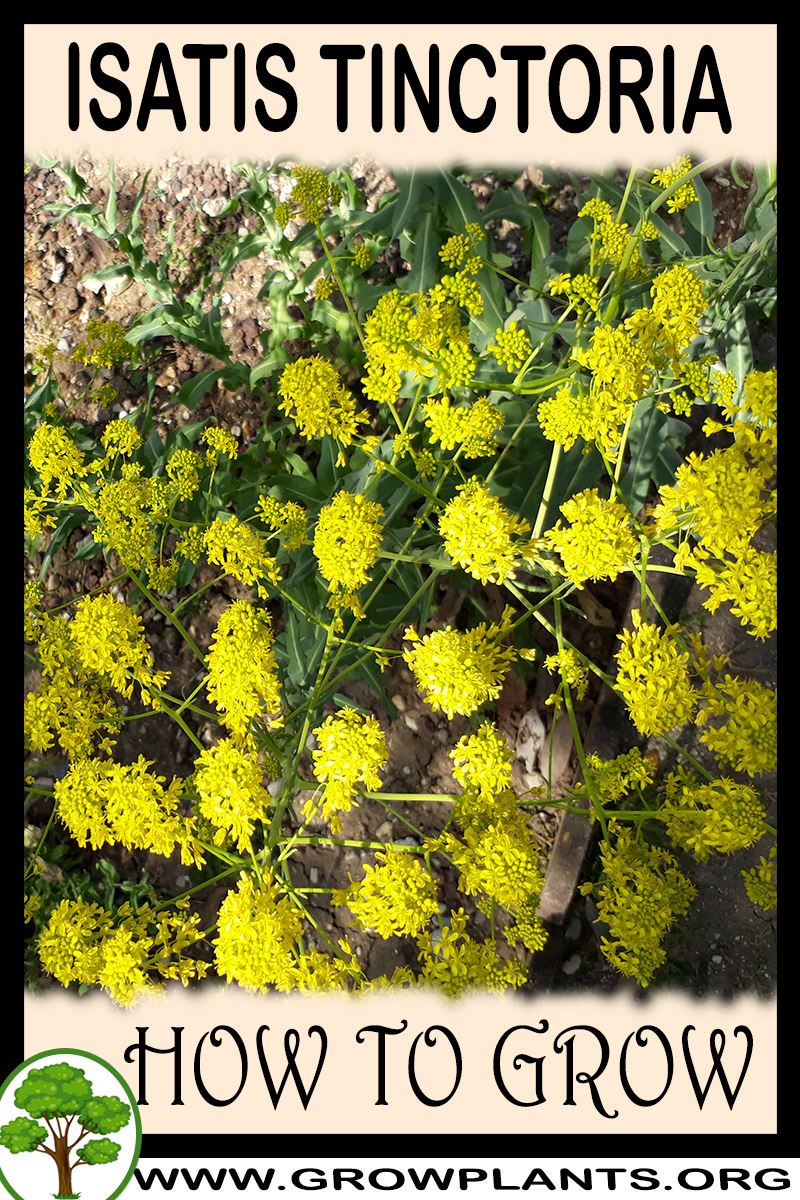
Overview: Isatis tinctoria (woad / glastum) is an upright herbaceous biennial to short-lived perennial 0.7-1 m tall, historically grown as the source of blue (woad) dye and also as an airy ornamental. It forms a leafy rosette before sending up branched flowering stems.
Quick Specifications
| Specification | Attribute |
|---|---|
| Plant Type / Life Cycle | Biennial to short-lived perennial (often grown as annual) |
| Foliage Type | Semi-evergreen (over-wintering rosette) |
| Mature Size | 70-100 cm (28-40 in) |
| Growth Rate | Fast to moderate |
| Root System | Taproot |
| Hardiness | USDA zone 4-9 |
Growth Form & Structure
- Height & Spread: 70-100 cm (28-40 in) tall in ground; also grows in planters and containers.
- Growth Habit & Form: Basal rosette in the first year, then an erect, branched flowering stem.
- Lifespan & Maturity: Flowers and sets seed in its second year, then usually dies; self-seeds freely.
Anatomy & Physical Features
- Leaves & Foliage: Green, linear leaves with twisted, wavy margins in a basal rosette.
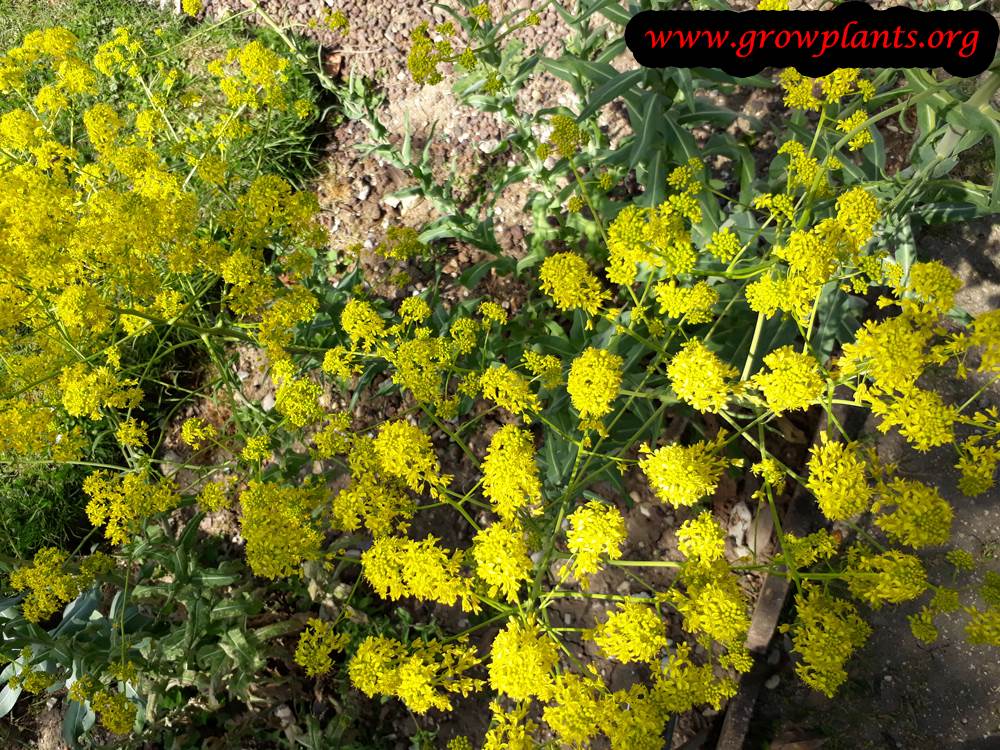
- Flower Characteristics: Clouds of small, four-petalled (cross-shaped) yellow flowers borne spring to summer (full detail in the Bloom guide).
Primary Uses & Landscape Value
- Functional & Ornamental Roles: Historic dye plant (blue woad dye from the leaves); also an airy ornamental. Self-seeds aggressively and can be invasive.
Care Guide: Planting, Soil & Watering
Overview: Woad grows as a robust, upright plant in full sun in ordinary, well-drained soil, needing nothing special once sited. It is easy and undemanding but self-seeds prolifically, so deadhead if you want to keep it in check.
Quick Care Requirements
| Requirement | Ideal Condition |
|---|---|
| Planting Season | In spring to summer |
| Growth Rate | Moderate to fast |
| Soil Type | Ordinary and well-draining |
| Water Need | Moderate; let the surface dry between waterings |
Planting & Establishment
- Best Planting Season: Sow or plant in spring to summer once the soil has warmed.
- How to Plant:
- Hole Preparation: Dig a hole a little wider than the root ball in ordinary, well-drained soil.
- Soil Amendments: A little compost helps, but it is not fussy and thrives in average soil.
- Planting Depth: Set the plant at the level it grew before and firm gently.
- Growth Speed & Expectations: A moderate to fast grower reaching 70-100 cm and flowering in its first or second year; remove seed heads to limit its prolific self-seeding.
Soil, Watering & Drainage Care
- Soil Mix & Drainage Needs: Any free-draining soil suits it; a standard potting mix works for container plants, with good drainage to avoid waterlogging.
- Watering Schedule & Technique:
- Young / Newly Planted: Keep evenly moist while establishing.
- Established: Water moderately, letting the top few centimetres dry between waterings.
- Seasonal Adjustments: More in summer heat, less in cool weather.
Climate, Light & Hardiness
Woad is a cold-hardy short-lived perennial, often grown as a biennial or annual, for temperate and subtropical climates, growing best in full sun.
Quick Climate Specifications
| Climate Zones | Temperate, Subtropical |
|---|---|
| USDA Hardiness Zones | 4–9 |
| Frost Tolerance | High |
| Light Conditions | Full Sun |
Sunlight & Light Exposure
Optimal Light Setup
Needs full sun for best growth and flowering.
Temperature Extremes & Hardiness
USDA Hardiness & Regional Limits
Hardy in USDA zones 4–9, tolerating cold winters typical of temperate climates without protection; where grown as an annual or biennial, cold mainly determines whether the plant survives to flower a second season rather than whether it germinates and grows.
Wind, Humidity & Microclimate
Rainfall & Seasonal Moisture
Adapts to average temperate rainfall patterns without special moisture requirements.
Growing in Pots, Balconies & Indoors
Woad is a full-sun, short-lived dye plant the grower confirms is not a houseplant but does grow in containers. Keep it outdoors on a sunny patio or balcony; a pot is also a tidy way to contain it, since it can be invasive and self-seeds freely.
Quick Details
- Container Size: A deep pot for its taproot; 15-30 L for a 70-100 cm plant
- Indoor Suitability: Not an indoor plant – it needs full sun
- Best Spot: Full sun on a patio or balcony
- Soil & Drainage: Undemanding but free-draining mix
- Watering in Pots: Average water; let the surface dry between waterings
Indoors & On the Windowsill
- Not a houseplant: A sun-loving biennial that won’t thrive indoors; grow it outside.
- Windowsill: A sill is too dim for a full-sun plant.
On a Balcony or Patio
- Light & seeding: Full sun suits it; deadhead before seed sets, because in a pot or garden it spreads aggressively and can become invasive.
- Practicalities: A deep pot accommodates the taproot; water when the surface dries.
Choosing the Pot, Soil & Long-Term Care
- Pot & drainage: A deep, well-drained pot with strong drainage holes and no standing-water saucer to avoid root rot; terracotta breathes and dries faster, glazed or plastic holds moisture longer.
- Potting mix: A well-aerated, organic-rich potting mix – peat or coir blended with perlite or vermiculite.
- Feeding: Potted plants are fed more often than those in the ground, as watering steadily leaches nutrients from the mix – a modest feed in the growing season.
- Repotting: Usually grown fresh from seed rather than kept long – refresh or replace every year or two.
Fertilizing & Feeding
A light feeder overall – this self-sowing plant grows readily without heavy fertilizer input.
Quick Fertilizing Specs
| Feeding Level | Light feeder |
|---|---|
| Main Nutrient Priority | Nitrogen-forward during leafy growth, tapering to balanced as flowering approaches |
| Best Feeding Period | The main leafy growth phase before flowering |
| Soil pH | Tolerant of a range of soil pH |
| Reduce/Stop Feeding | Stop feeding once flowering and seed set are underway |
| Organic Options | A light compost topdressing suits this modest feeder well |
Feeding by Growth Stage
Establishment
Support seedling and young plant root development
| Nutrient direction | A light, balanced feeding direction supports steady early growth |
|---|---|
| Timing | Early in the growing season as seedlings establish |
| Frequency | A light feeding once seedlings are established is usually enough |
| Fertilizer types | A diluted, balanced, general-purpose fertilizer |
| Precautions | Avoid heavy feeding on young seedlings, which can scorch tender roots |
Active Leafy Growth
Support vigorous leaf production, since this plant is grown largely for its foliage
| Nutrient direction | A nitrogen-forward direction supports strong leafy growth |
|---|---|
| Timing | Through the main growing season before flowering begins |
| Frequency | A couple of light feedings through the leafy growth phase is usually sufficient for this modest feeder |
| Fertilizer types | A balanced to nitrogen-forward, general-purpose fertilizer, or a light topdressing of compost |
| Precautions | This plant self-sows readily and can become weedy – avoid excessive feeding that would only increase its spread |
Flowering and Seed Set
Support the plant through flowering and seed production without pushing extra soft growth
| Nutrient direction | Taper feeding to a light, balanced direction as the plant shifts from leafy growth to flowering and seed set |
|---|---|
| Timing | As flower stalks emerge through seed maturation |
| Frequency | Feeding needs drop off during flowering – rely on what was applied during the leafy growth phase |
| Fertilizer types | Little to no additional feeding is usually needed once flowering begins |
| Precautions | Avoid nitrogen-heavy feeding during flowering, which can delay seed maturity and prolong soft, weak growth |
Post-Flowering Decline or Rest
Let the plant complete its natural cycle after flowering and seed set, whether it declines as an annual or rests as a short-lived perennial
| Nutrient direction | None – withhold fertilizer once flowering and seed set are complete |
|---|---|
| Timing | After flowering and seed set finish |
| Frequency | No feeding at this stage |
| Fertilizer types | No feeding at this stage – withhold fertilizer; many plants decline naturally after seed set, and any that persist as short-lived perennials should not be fed again until new growth appears the following season |
| Precautions | Do not fertilize a plant that has finished flowering and is declining or entering a rest period |
Nutrient Deficiency Signs & Corrections
Leaves are pale green to yellow with reduced overall growth
| Possible causes | Low soil fertility, Leaching from heavy rain or watering, Overcrowded seedlings competing for nutrients |
|---|---|
| Appears first on | Older, lower leaves first |
| What to check | Seedling spacing and thinning, Feeding history, Soil fertility |
| Possible correction | Thin overcrowded seedlings and resume light, balanced to nitrogen-forward feeding during active leafy growth |
Leaf margins turn brown and crispy
| Possible causes | Drought or moisture stress, Salt buildup from over-fertilizing, Nutrient imbalance from inconsistent feeding |
|---|---|
| Appears first on | Leaf margins and tips first |
| What to check | Soil moisture and watering consistency, Recent feeding rate, Drainage at the planting site |
| Possible correction | Even out watering, flush excess salts with a thorough watering, and keep feeding light and consistent |
New leaves emerge pale yellow with veins staying green
| Possible causes | Soil pH outside the favorable range for iron uptake, Waterlogged or compacted soil limiting root function, Root stress from recent transplanting |
|---|---|
| Appears first on | Newest leaves first |
| What to check | Soil pH and drainage, Recent transplant stress, Whether yellowing is interveinal |
| Possible correction | Correct pH and drainage, or apply a chelated iron product per its label if the deficiency persists |
Pruning, Training & Seasonal Maintenance
Woad is a soft, herbaceous plant that needs only light, sanitary pruning – there is no woody framework to shape, and the main decision is what to do with its flowering stems, since this species is documented as invasive through prolific self-seeding. Cutting spent flower stems back in autumn or winter, once flowering has finished, is the safest and most useful time to prune, and doing so before seed drops is the single most effective way to keep a planting from spreading uncontrolled.
Quick Pruning & Maintenance Specs
| Pruning Tolerance | Low (light, sanitary cutting only) |
| Primary Pruning Window | Autumn–winter, after flowering finishes |
| Typical Frequency | Once or twice a season |
| Main Objective | Remove dead flowers and leaves; control self-seeding |
| Young Plant Priority | Leave the first-year foliage rosette largely undisturbed to build reserves for flowering |
| Mature Plant Priority | Deadhead before seed drop if spread is unwanted; clear dead material after the plant declines post-flowering |
| Best Tool Type | Precision snips |
| Avoid Heavy Pruning During | Not applicable in a structural sense – this plant has no framework to over-prune |
Pruning by Plant Age & Size
Newly Established
No pruning needed while the plant builds its first-year leaf rosette; only remove obviously damaged leaves.
Young / Formative
No structural training applies – woad is a soft herbaceous plant, not one grown on a trained framework.
Mature / Established
Once flowering finishes, decide whether to deadhead the spent flower stems to prevent self-seeding, or to leave some seed heads if you want the plant to naturalise for continued dye production – the two goals are directly in tension given its documented invasive tendency, so this is a genuine choice rather than a default action.
Special Growth to Remove
- Spent flower stems, cut back to the base once flowering is finished, if controlling spread is the priority.
- Dead or damaged leaves, removed as noticed.
Container & Small-Space Pruning
Growing woad in a container is itself a useful way to limit its self-seeding into surrounding beds; deadhead promptly in a container planting if any nearby open ground could be colonised by dropped seed.
Tools
- Precision snips for deadheading spent flower stems and removing dead leaves.
Tool Hygiene & Disease Risk
Routine – clean, sharp snips are sufficient. This plant’s documented issue is Pieris butterfly caterpillars feeding on foliage rather than a disease spread by pruning cuts.
Cut Placement & Technique
Deadhead by cutting the flower stem back to its base, or to just above the leaf rosette, once bloom has faded.
Common Pruning Mistakes
- Leaving spent flower heads on the plant until seed has already dropped, given its documented invasive self-seeding.
- Cutting back the first-year leaf rosette, which reduces the reserves the plant needs to flower well the following year.
When NOT to Prune
Avoid removing the first-year foliage rosette, since this is the growth the plant relies on before it sends up its flowering stem.
Recommended Tools (by task)
- precision_snips – the only tool needed, for deadheading flower stems and removing dead leaves on this soft herbaceous plant.
Propagation Guide
Isatis tinctoria is propagated only from seed, sown directly or started and transplanted in spring; since it is grown as the straight species, seed reproduces it reliably, and it is an easy plant to raise – part of why it self-sows readily and is noted as invasive.
Quick Propagation Specs
| Best Propagation Method | Seed |
| Propagation Difficulty | Easy |
| Seed True-to-Type | Yes |
| Best Propagation Season | Spring into early summer |
Growing from Seed
Sowing Season
Spring to early summer, matching the plant’s planting season.
Germination Conditions
Full sun. As a member of the cabbage/mustard family (Brassicaceae), Isatis tinctoria typically germinates readily at cool-to-moderate temperatures without special pre-treatment.
Seedling Care
Thin or transplant seedlings as needed. Because this plant self-sows readily, deadhead spent flower stalks if volunteer seedlings are not wanted.
Bloom & Flower Guide
Quick Details
- Bloom Season: Spring and summer
- Flower Appearance: Airy sprays of small four-petalled yellow flowers in the classic cross shape of the cabbage family
- Edibility: Grown for dye and as an ornamental, not for food – woad is used to make blue dye and is best not eaten
Detailed Blooming Overview
Isatis tinctoria, woad, sends up branching stems topped with clouds of tiny yellow flowers in spring and summer. It is a member of the cabbage family, so the four-petalled blooms form the familiar little cross; en masse they give a soft yellow haze above the blue-green foliage that is later used to make the historic blue dye.
Flower Characteristics
- Small yellow flowers with four petals in a cross (typical of the Brassicaceae).
- Held in loose, branching sprays.
Bloom Care & Thinning
- Managing the bloom: The flowers give way to dangling seed pods; remove spent stems if you want to limit its heavy self-seeding.
- Note: Woad self-sows freely and can become weedy, so deadheading before seed set helps keep it in check.
Fruit & Uses
Isatis tinctoria (woad) is grown mainly as a dye and ornamental plant, not as a food crop, and its edible use is marginal at best. The young leaves are technically edible but are bitter and need lengthy preparation, so this is a minor, occasional use rather than a reliable vegetable.
Quick Edible Specs
| Edible Parts | Young leaves only (marginal use) |
|---|---|
| Main Use(s) | Minor, occasional culinary use historically; this plant’s primary use is as a source of blue dye, not food |
| Eaten Raw or Cooked | Not palatable raw – requires soaking/processing before any use |
| Preparation Required | Long soaking to reduce bitterness; leaves remain noticeably bitter even afterward |
| Harvest Season | Spring, while leaves are young and the plant is newly established (see site planting season, spring/summer) |
| Time to First Harvest | Young rosette leaves only, before the plant bolts and flowers (qualitative – see Blooming for bloom-season timing) |
| Storage | Use fresh; this is not a plant grown or stored as a food supply |
| Safety/Toxicity Caveat | No specific toxicity is documented for the leaves, but this is not an established food plant – treat any edible use as a minor curiosity, not a leafy-vegetable substitute |
Leaves & Greens
The green, linear leaves with a twisted, wavy margin can be picked young and soaked at length to draw out their natural bitterness before eating; even after thorough processing they remain noticeably bitter. Because of this, they are rarely used as food and are far better known historically as the source of blue (indigo) dye than as a vegetable.
Harvesting
Where leaves are gathered for this rare edible use, take only young rosette leaves in spring before the plant bolts and flowers – older leaves toughen and grow more bitter once flowering begins in the summer bloom period.
Preparation, Uses & Safety
Young leaves need a long soak to draw out bitterness before any culinary use, and remain bitter even then, so this plant is not a practical everyday food source. No specific toxicity has been documented for the leaves, but woad is grown and valued almost entirely for its dye and ornamental qualities, not as a crop, so treat any edible use as occasional and minor rather than as a reliable food part.
Pests, Diseases & Troubleshooting
Overview: Woad is a member of the cabbage family, so it shares the classic brassica pests – cabbage-white caterpillars, flea beetles and aphids – along with typical brassica diseases like white blister, downy mildew and clubroot. Crop rotation, netting and healthy soil are the backbone of control; the plant is also a vigorous self-seeder to keep in check.
Quick Troubleshooting Overview
| Issue / Pest | Main Symptom | Primary Solution |
|---|---|---|
| Cabbage white caterpillars | Leaves chewed to lace, green droppings | Netting, hand-pick eggs/larvae, Bt |
| Flea beetles | Countless tiny shot-holes in leaves | Row cover, vigorous growth, spinosad |
| Cabbage aphid | Grey-waxy colonies, distorted growth | Rinse off, insecticidal soap, predators |
| White blister / downy mildew | White pustules or downy grey mold on leaves | Airflow, remove leaves, copper if severe |
| Clubroot | Wilting, stunting, swollen distorted roots | Rotation, raise pH (lime), clean tools |
Common Pests & Management
- Cabbage white caterpillars (Pieris rapae / Pieris brassicae):
- Symptoms: Green or velvety larvae of the cabbage-white butterflies chew the leaves to a lacy skeleton and leave green-black droppings; eggs are laid in clusters or singly on leaf undersides.
- Prevention & Control: Cover plants with fine insect netting to stop the butterflies laying, and check leaf undersides to crush eggs and young larvae. Encourage parasitic wasps and birds; Bacillus thuringiensis (Bt) is a selective spray for heavy infestations.
- Flea beetles (Phyllotreta spp.):
- Symptoms: Tiny black beetles that jump when disturbed and riddle the leaves with countless small round ‘shot-holes’, worst on seedlings in warm, dry weather.
- Prevention & Control: Protect seedlings with row cover, keep plants well-watered and vigorous to outgrow damage, and clear weedy brassicas nearby. Diatomaceous earth or spinosad helps in serious outbreaks.
- Cabbage aphid (Brevicoryne brassicae):
- Symptoms: Dense grey-green, mealy-waxy colonies on shoot tips and leaf undersides causing curling, stunting and honeydew; can transmit brassica viruses.
- Prevention & Control: Blast off with water, squash colonies, and encourage ladybirds, hoverflies and lacewings. Insecticidal soap or neem controls persistent infestations; remove old crop debris that harbors them.
- Diamondback moth (Plutella xylostella):
- Symptoms: Small green caterpillars that wriggle and drop on a thread when disturbed, grazing the leaf underside into ‘windows’ and small holes.
- Prevention & Control: Netting excludes the moths; Bt and spinosad control larvae, and rotating actives avoids resistance. Encourage natural enemies and remove crop residues.
Diseases & Fungal Issues
- White blister (white rust) (Albugo candida):
- Symptoms: Shiny white, blister-like pustules on leaves and stems, sometimes with distorted, swollen growth; spread in cool, wet, humid weather.
- Treatment & Management: Remove and destroy infected leaves, space plants and improve airflow, and avoid overhead watering. Rotate crops; copper fungicide protects healthy foliage under heavy pressure.
- Downy mildew (Hyaloperonospora parasitica):
- Symptoms: Yellow blotches on the upper leaf surface with a greyish downy mold beneath, worst in cool damp conditions and on crowded seedlings.
- Treatment & Management: Improve airflow and spacing, avoid wet foliage, and remove affected leaves. Copper-based fungicide helps on valuable plantings; do not save seed from infected plants.
- Clubroot (Plasmodiophora brassicae):
- Symptoms: Stunting, wilting in warm afternoons and yellowing, with swollen, distorted, club-like galls on the roots; the soil-borne spores persist for many years.
- Treatment & Management: There is no cure – remove and destroy affected plants. Rotate brassicas on a long cycle, raise soil pH toward neutral-alkaline with lime, improve drainage, and disinfect tools and boots to avoid spreading spores.
- Alternaria leaf spot (Alternaria brassicae):
- Symptoms: Dark brown spots with concentric target-like rings, sometimes yellow-haloed, that merge and blight the foliage in warm wet weather.
- Treatment & Management: Remove infected leaves and debris, rotate crops, and avoid overhead watering. Copper fungicide checks spread on badly affected plants.
Growing Difficulties & Abiotic Problems
- Bolting:
- Cause & Symptoms: Heat, drought stress or a cold check can trigger premature flowering, which for a leaf/dye crop reduces useful foliage (though woad is grown into its second-year flowering stage for seed).
- Correction Strategy: Sow at the right season, keep the soil evenly moist, and harvest first-year rosette leaves before the plant runs up to flower.
- Aggressive self-seeding:
- Cause & Symptoms: Woad sets abundant seed and can naturalise and become weedy or invasive, crowding out other plants and regulated in some regions.
- Correction Strategy: Deadhead before seed ripens, remove unwanted seedlings while young, and check local regulations before planting.
- Chlorosis / poor vigor:
- Cause & Symptoms: Pale, weak growth points to poor, compacted or nutrient-short soil, as woad is a fairly hungry plant.
- Correction Strategy: Grow in fertile, well-drained soil with added organic matter, keep the pH toward neutral-alkaline (which also suppresses clubroot), and feed moderately.
What Helps – Products & Tools
Fine insect netting/row cover is the single most useful tool against the butterflies, moths and flea beetles; Bacillus thuringiensis (Bt) and spinosad handle caterpillars; insecticidal soap or neem controls aphids; and copper fungicide addresses white blister, downy mildew and leaf spot. Liming to raise soil pH is the practical defense against clubroot. Follow labels and protect pollinators, especially on flowering second-year plants.