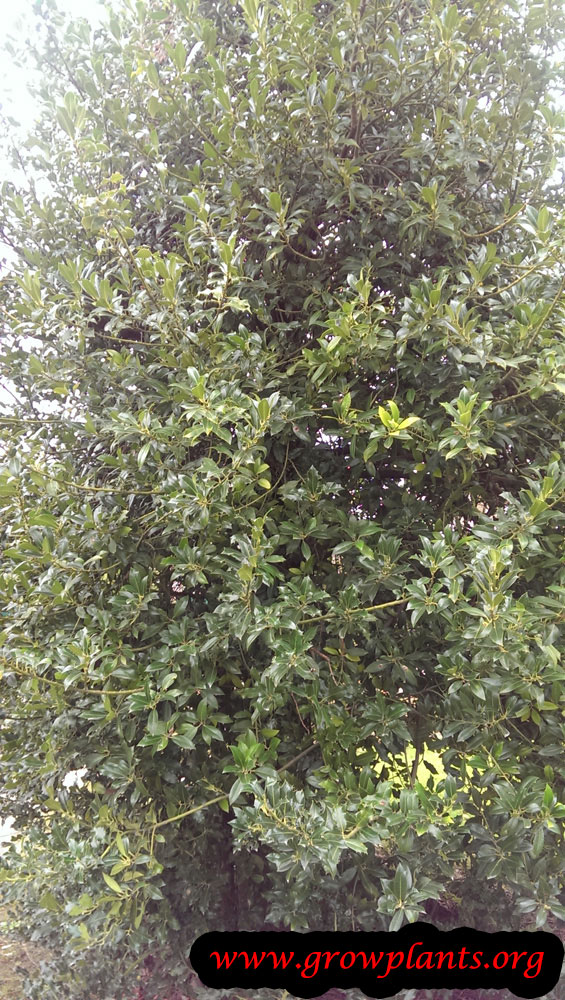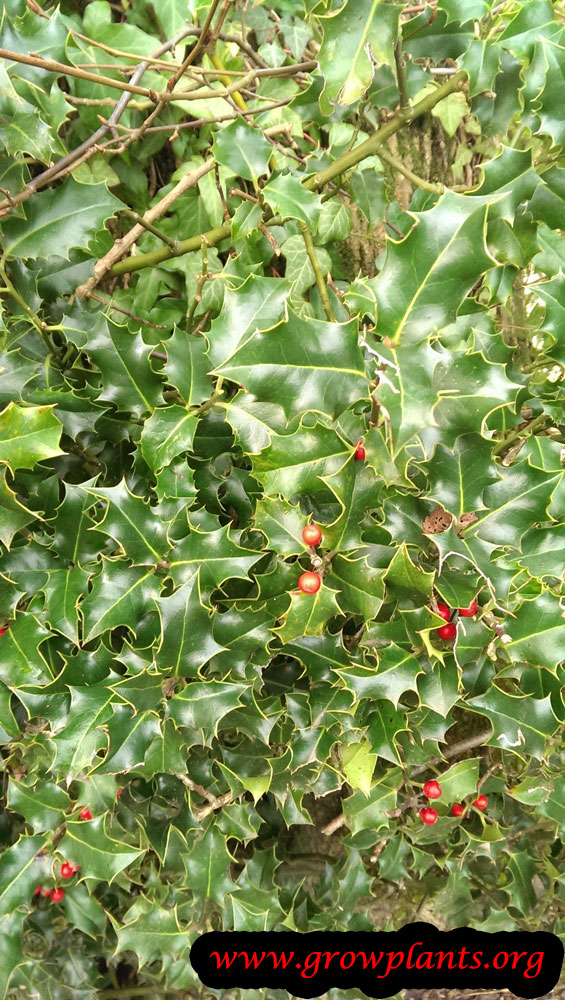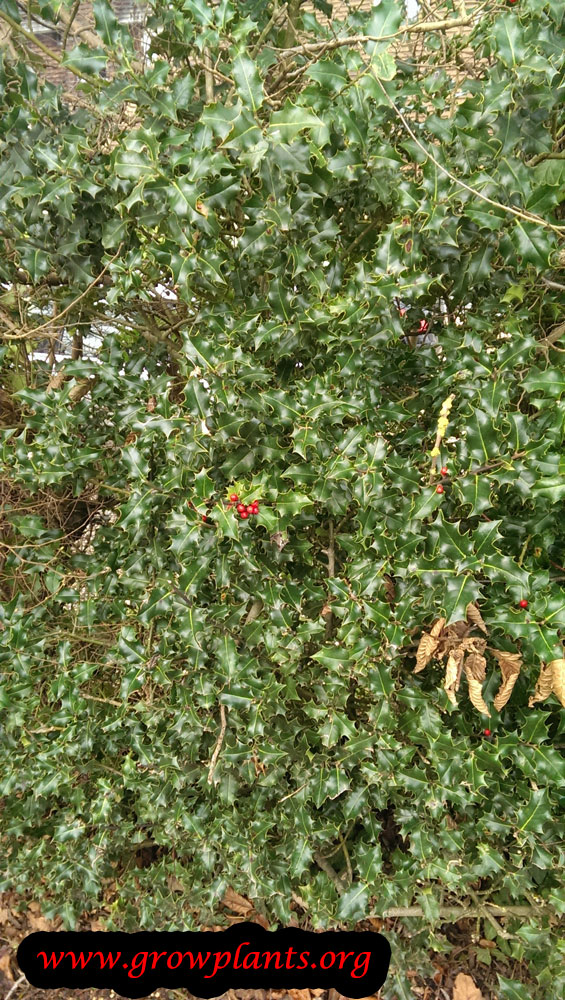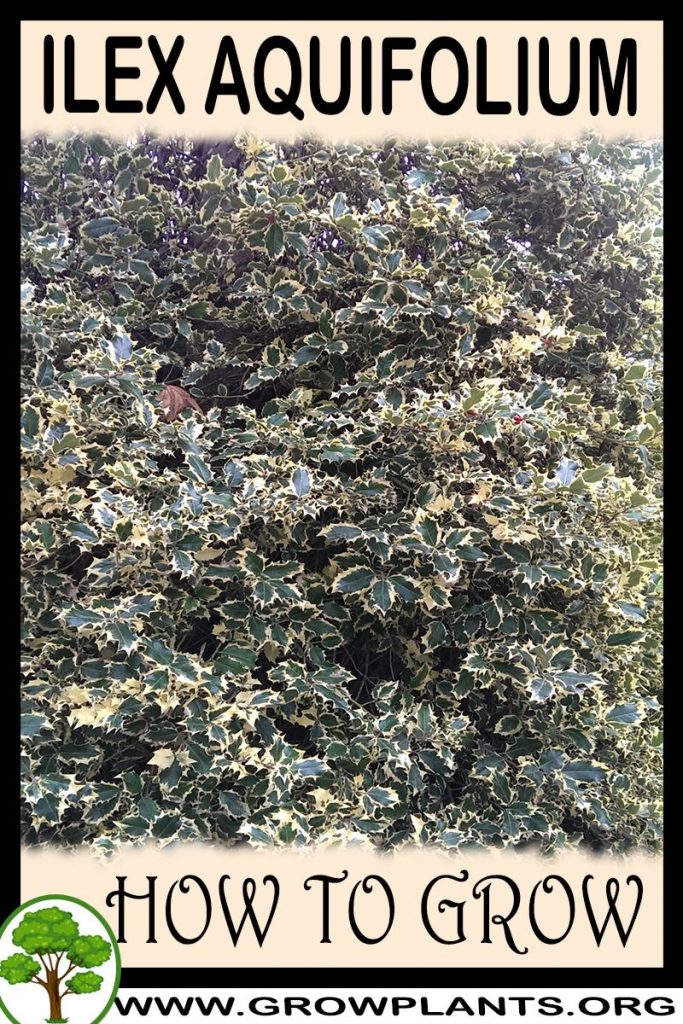
Plant Profile & Key Characteristics
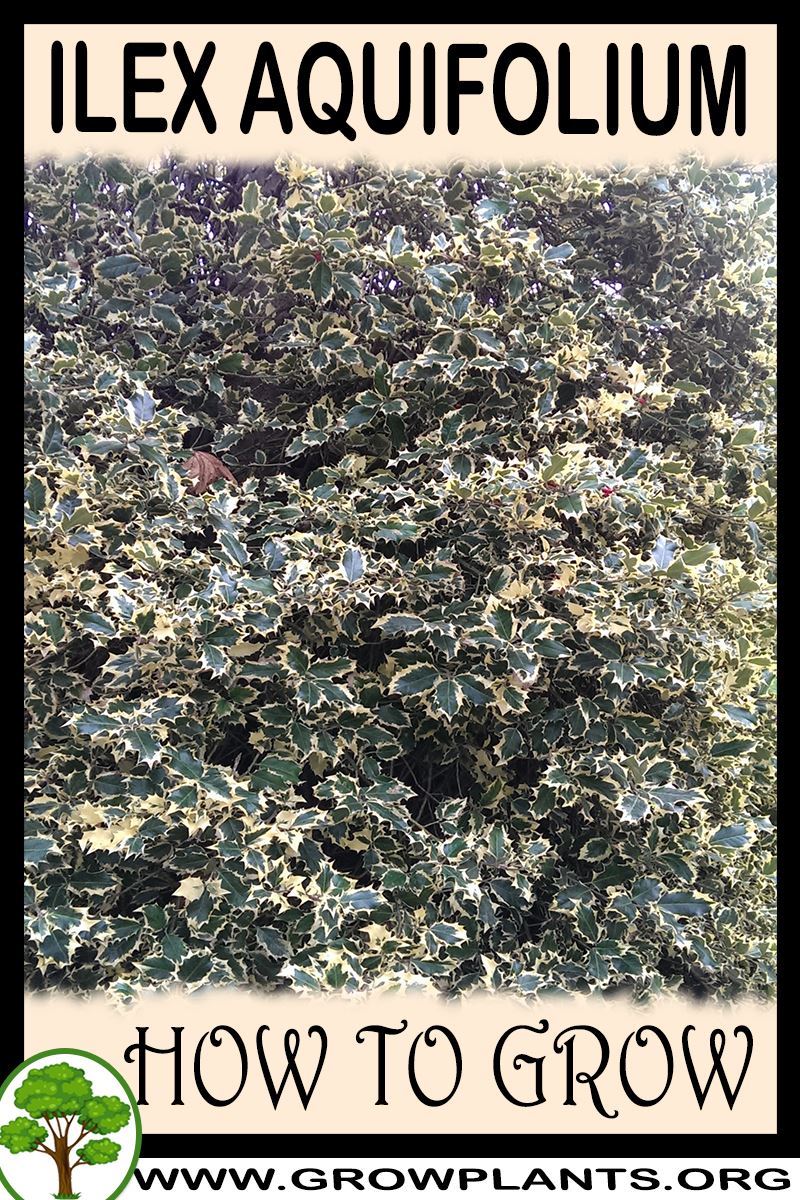
Overview: The common holly, a slow-growing evergreen large shrub or small tree (2-10 m) with glossy, spiny leaves. A classic ornamental hedge and screening plant, with bright red (non-edible) berries on female plants.
Quick Specifications
| Specification | Attribute |
|---|---|
| Plant Type / Life Cycle | Perennial (evergreen shrub/tree) |
| Foliage Type | Evergreen |
| Mature Size | 2-10 m tall (6-30 ft) |
| Growth Rate | Slow |
| Root System | Fibrous |
| Toxicity | Berries toxic if ingested (saponins) – not edible |
| Hardiness | USDA zones 3-8 |
Growth Form & Structure
- Height & Spread: Reaches 2-10 m (6-30 ft) in the ground but tolerates hard clipping; also grows in large containers and indoors.
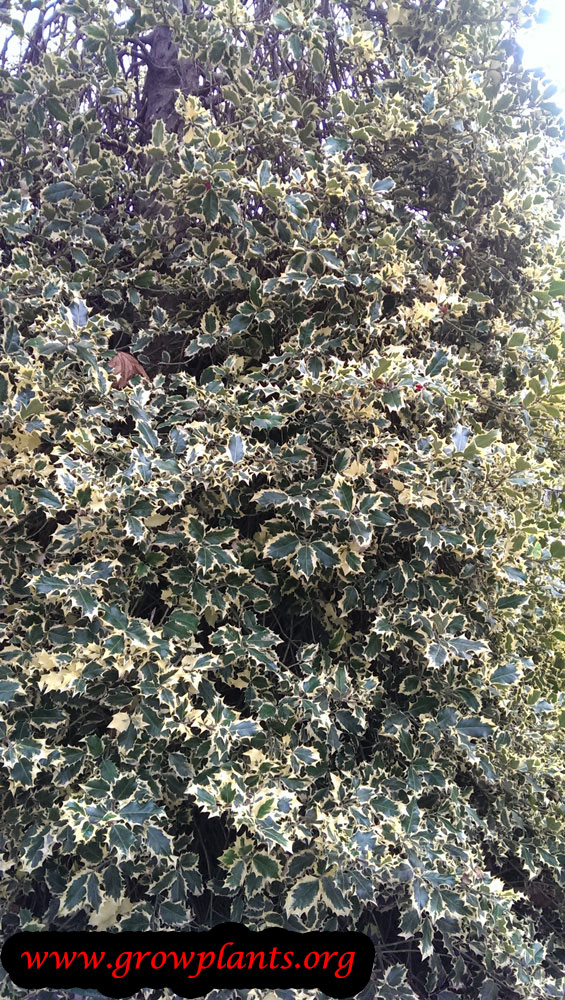
- Growth Habit & Form: Dense, upright shrub or small tree with a pyramidal outline, easily maintained as a formal hedge.
- Lifespan & Maturity: Long-lived but slow-growing perennial.
Anatomy & Physical Features
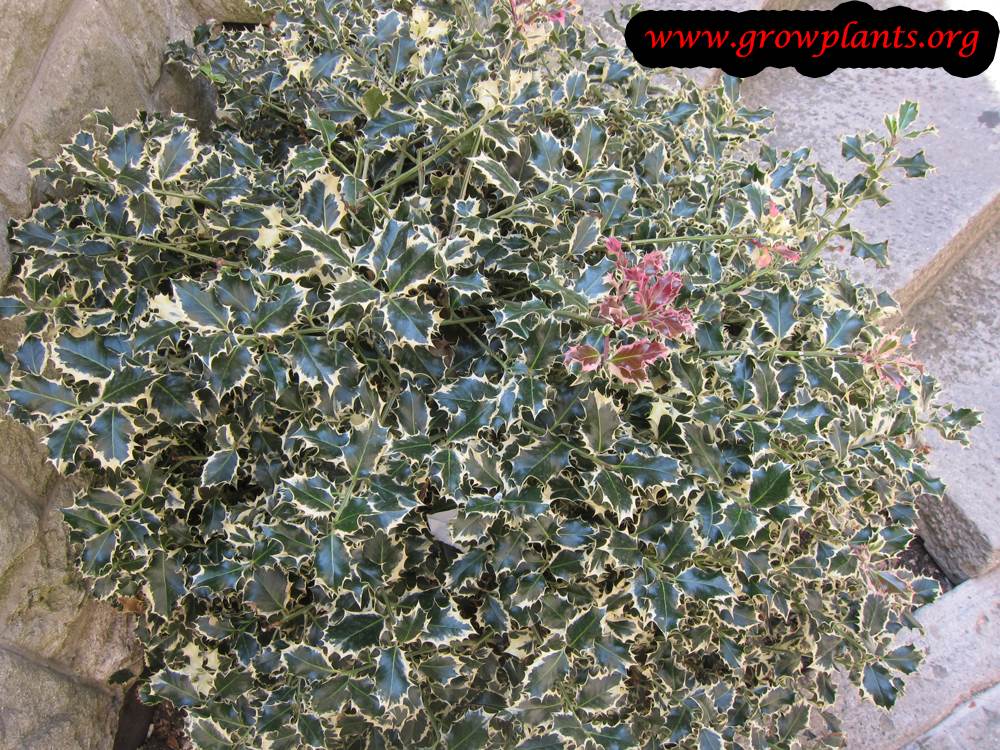
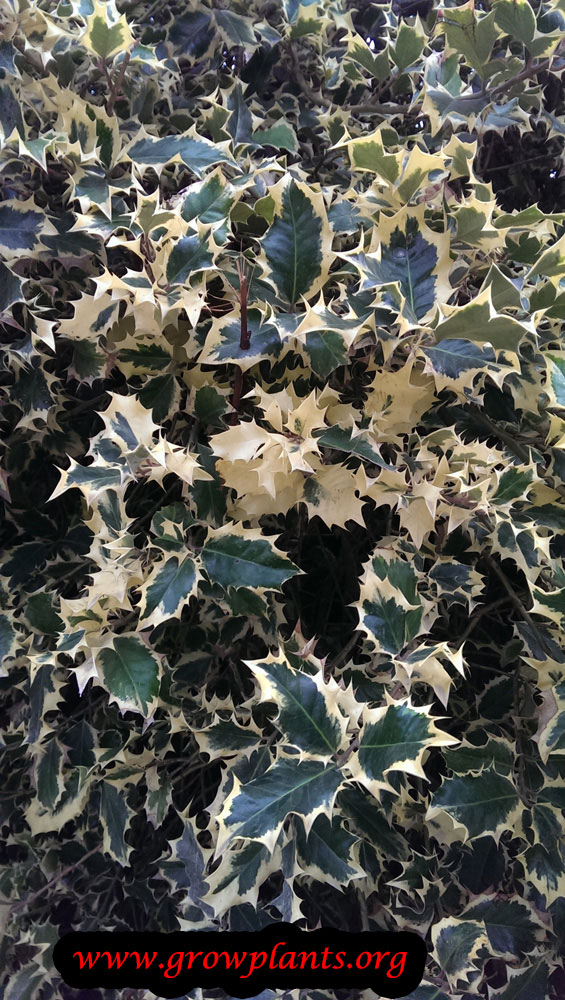
- Leaves & Foliage: Glossy, leathery evergreen leaves, green (or variegated) with wavy, sharply spined margins.
- Flower Characteristics: Small clustered flowers – white on female plants, yellow-green on males (see the Bloom guide).
- Fruit Profile: Small (~0.5 cm) glossy red berries on female plants, not edible (see the Fruit guide).
Primary Uses & Landscape Value
- Functional & Ornamental Roles: Ornamental hedge, screen and specimen shrub; tolerant of shade and clipping, good for wildlife.
Care Guide: Planting, Soil & Watering
Overview: Common holly is an evergreen shrub or tree for cool temperate to cold Mediterranean climates, growing in full sun to full shade (it prefers half shade). It thrives in moist, well-draining soil.
Quick Care Requirements
| Requirement | Ideal Condition |
|---|---|
| Planting Season | Spring, summer or autumn |
| Growth Rate | Slow |
| Soil Type | Moist, well-draining soil |
| Water Need | Moderate – keep the soil evenly moist |
Planting & Establishment
- Best Planting Season: Plant in spring, summer or autumn, avoiding frozen ground.
- How to Plant:
- Hole Preparation: Dig a hole about twice the width of the root ball so roots establish into loosened soil.
- Soil Amendments: Mix in organic matter and mulch the surface to retain moisture and keep roots cool.
- Planting Depth: Set the top of the root ball level with the soil surface; do not bury the stem.
- Growth Speed & Expectations: A slow grower that establishes and thickens gradually into a dense hedge.
Soil, Watering & Drainage Care
- Soil Mix & Drainage Needs: Moist but well-draining soil suits it best; it also grows in containers and indoors with good light.
- Watering Schedule & Technique:
- Young / Newly Planted: Water regularly after planting, keeping the soil evenly moist while roots establish.
- Established: Water moderately to keep the soil consistently moist, avoiding prolonged dryness.
- Seasonal Adjustments: Water more in summer heat and less in cool, wet weather.
Climate, Light & Hardiness
Common holly thrives in cool–temperate to cold–Mediterranean and cold–subtropical climates and adapts well as a houseplant. It grows in full sun through half shade and even tolerates full shade, with strong cold hardiness typical of the species.
Quick Climate Specifications
| Climate Zones | Temperate, cold Mediterranean, cold subtropics; also grown as a houseplant |
|---|---|
| USDA Hardiness Zones | 3–8 |
| Frost Tolerance | High |
| Light Conditions | Full Sun to Half Shade (preferred); tolerates Full Shade |
| Wind Tolerance | Moderate to High |
Sunlight & Light Exposure
Grows well across a wide light range, from full sun to fairly deep shade, making it flexible for hedges, borders, or containers in varying garden exposures.
Shade & Heat Management
In hot, sunny climates some afternoon shade reduces leaf stress; the plant is naturally suited to cooler conditions.
Temperature Extremes & Hardiness
USDA Hardiness & Regional Limits
Reliably hardy from USDA zone 3 through 8, making it one of the more cold–tolerant broadleaf evergreens suited to temperate and cold–Mediterranean gardens.
Cold Damage & Winter Protection
Winter mulching around the root zone helps protect against harsh cold, particularly for young plants at the colder end of its range.
Extreme Heat Tolerance
Performs best in cool to moderate climates; it is not suited to prolonged extreme heat or true tropical conditions.
Wind, Humidity & Microclimate
Humidity Preferences
Prefers consistently moist conditions rather than dry air, in keeping with its cool–climate origins.
Wind Tolerance
Its dense, spiny evergreen foliage and use as a hedge plant indicate good tolerance of exposed, windy sites.
Growing in Pots, Balconies & Indoors
Common holly is listed by the grower as suitable both indoors and in containers. Slow-growing and shade-tolerant, a young plant makes a fine pot specimen for a bright room and moves out to a patio or balcony as it gradually enlarges (potentially 2-10 m / 6-30 ft over many years in the ground). Its berries and leaves are toxic if eaten.
Quick Details
- Container Size: A pot of about 20-40 L (5-11 gal), potting up as it grows
- Indoor Suitability: Suitable indoors while young – slow and shade-tolerant – then move outdoors as it enlarges
- Best Spot: Full sun to full shade; it prefers part shade
- Soil & Drainage: Free-draining, organic-rich mix
- Watering in Pots: Keep evenly moist; holly dislikes both drought and waterlogging
Indoors & On the Windowsill
- Safety first: Holly berries and leaves are toxic if swallowed and the spiny leaves prick – keep it away from small children and pets.
- As a houseplant: The grower rates it suitable indoors; its shade tolerance suits a bright-to-moderate spot, and slow growth keeps it in scale for years.
- Overwintering: Fully hardy – a potted holly stays outdoors year-round in most climates with no shelter needed.
On a Balcony or Patio
- Light & wind: Takes sun or shade and tolerates exposed, breezy balconies well as an evergreen; keep the roots steadily moist.
- Practicalities: A slow, long-lived, structural evergreen – excellent for a shaded corner or clipped into shape.
Choosing the Pot, Soil & Long-Term Care
- Pot & drainage: A 20-40 L pot, potting up over time with strong drainage holes; skip a standing-water saucer to avoid root rot. Terracotta breathes and dries faster; glazed or plastic holds moisture longer.
- Potting mix: A light, aerated, organic-rich mix – potting compost or peat/coir with added perlite or vermiculite for drainage.
- Feeding: Nutrients wash out of pots faster than open ground, so feed potted holly more often – a balanced liquid feed through the active growing season.
- Repotting: Refresh the top layer of mix each year and renew it or pot up every couple of years; lightly trim the roots and top growth when you do.
Fertilizing & Feeding
A slow-growing evergreen hedge and specimen shrub that is a light feeder: modest feeding as new growth begins is usually enough, with feeding withheld once the plant goes dormant for winter.
Quick Fertilizing Specs
| Feeding Level | Light feeder |
|---|---|
| Main Nutrient Priority | Balanced feeding with adequate nitrogen to support glossy foliage and berry set |
| Best Feeding Period | Spring as new growth begins through the bloom period |
| Organic Options | Compost or leaf mold worked into the root zone |
| Reduce/Stop Feeding | Hold off fertilizing through winter dormancy |
| Micronutrients | Correct iron chlorosis only if diagnosed, especially on alkaline soils |
| Soil pH | Prefers slightly acidic soil; iron uptake suffers on alkaline ground |
Feeding by Growth Stage
Spring flush of new growth
Support fresh leaf growth and overall vigor as the shrub or tree breaks dormancy.
| Nutrient direction | A balanced complete fertilizer with adequate nitrogen encourages healthy new foliage without forcing soft, leggy growth. |
|---|---|
| Timing | As new growth begins in spring. |
| Frequency | A single light feeding is usually enough to start the season. |
| Fertilizer types | A balanced complete fertilizer, Compost or leaf mold as a top-dressing |
| Precautions | Keep feeding light; hollies are slow, steady growers and overfeeding pushes weak growth that spoils a tight hedge shape. |
Bloom and berry development
Support the small clustered flowers and, on female plants, the developing ornamental berries.
| Nutrient direction | Continued balanced feeding supports flowering and fruit set without needing a phosphorus-heavy product. |
|---|---|
| Timing | During and just after the spring bloom period. |
| Frequency | Minimal feeding is usually enough if spring feeding was already applied. |
| Fertilizer types | A balanced complete fertilizer if growth looks thin |
| Precautions | Avoid heavy feeding late in this stage, which can delay the hardening of new growth before the next dormant period. |
Winter dormancy
Let the evergreen shrub or tree rest through cold weather without pushing tender new growth.
| Nutrient direction | None – withhold fertilizer while the plant is dormant. |
|---|---|
| Timing | Through autumn and winter. |
| Frequency | No feeding at this stage. |
| Fertilizer types | No feeding at this stage; do not fertilize until spring growth resumes. |
| Precautions | Do not fertilize now; late-season feeding can trigger tender growth that is easily damaged by frost. |
Nutrient Deficiency Signs & Corrections
Older leaves turn pale green to yellow and overall growth slows or thins.
| Possible causes | low available soil nitrogen, nitrogen leaching from heavy rain or watering, competition from nearby turf or weeds |
|---|---|
| Appears first on | older, lower leaves |
| What to check | recent feeding history, soil organic matter and drainage, competing vegetation near the root zone |
| Possible correction | Apply a balanced fertilizer with nitrogen and work in organic matter, then monitor for greening over the following weeks. |
New leaves show yellowing between the veins while the veins themselves stay green.
| Possible causes | alkaline or high-pH soil limiting iron availability, poor drainage or compacted, stressed roots, irrigation water high in carbonates |
|---|---|
| Appears first on | newest growth at branch tips |
| What to check | soil pH, drainage around the root zone, irrigation water quality |
| Possible correction | Correct soil pH toward slightly acidic where practical and apply a chelated iron product per its label. |
Leaf margins brown or scorch and new growth stalls despite adequate watering.
| Possible causes | fertilizer salt buildup in the root zone, under-watering that concentrates salts, feeding that was too frequent or too heavy for a slow-growing shrub |
|---|---|
| Appears first on | leaf margins and tips |
| What to check | recent fertilizer amounts, watering consistency, drainage around the planting site |
| Possible correction | Ease off feeding, water thoroughly to move salts past the root zone, then resume with lighter applications. |
Pruning, Training & Seasonal Maintenance
Common holly is a slow-growing, spiny-leaved evergreen shrub or small tree grown mainly as a clipped hedge, screen or shaped specimen; it tolerates regular, even hard, pruning without harming its long-term health. Pruning mainly controls size and density rather than fruiting, since flowers (and any berries on female plants) form on the current season’s new growth; the safest window is winter dormancy, before spring growth begins, when cuts heal cleanly and shape is easiest to judge on the bare branch structure.
Quick Pruning & Maintenance Specs
| Pruning Tolerance | Moderate to High – responds well to shaping and hard cutback, but slow to refill |
| Primary Pruning Window | Winter dormancy (before spring growth) |
| Secondary Maintenance Window | Light touch-up shaping in late spring/summer if needed |
| Typical Frequency | Once a year for hedges/formal shapes; less for informal specimens |
| Main Objective | Size, density and shape control (hedge/screen/specimen) |
| Young Plant Priority | Establish a strong leader and branching framework |
| Mature Plant Priority | Maintain density and outline; remove crowded interior growth |
| Best Tool Type | Hedge shears for formal hedges; bypass secateurs/loppers for specimens |
| Avoid Heavy Pruning During | Active spring flush and hot mid-summer |
Pruning by Plant Age & Size
Newly Established
Minimal cutting; remove only damaged growth and lightly tip young shoots to encourage branching low down. Avoid heading the main leader unless a bushier, multi-stemmed form is wanted from the start.
Young / Formative
If grown as a tree or large specimen, favor a central-leader framework with well-spaced side branches; if grown as a hedge, begin light shearing early to build density from the base rather than waiting until the plant is tall and bare below.
Mature / Established
Formal hedges are sheared to a consistent outline; informal specimens are thinned selectively to remove crossing, crowded or wayward branches and to keep the spiny foliage from encroaching on paths.
Seasonal Pruning Schedule
Dormant/Winter
Objective: shape and size control. Remove dead, damaged, crossing or overly dense growth and reduce the outline of hedges/topiary. Do not remove more than a moderate portion of old wood on a single specimen in one session given its slow regrowth. Expected response: fresh shoots along the cut lines the following spring. Flowering/fruiting impact: minimal, since flowers form on new growth produced after this cut.
Ongoing Sanitary
Remove leaf-miner-affected foliage (a known pest on this species) and any dead or storm-damaged branches as noticed through the year.
Flowering & Fruiting Wood
Ilex aquifolium is dioecious – only female plants set the glossy red (inedible) berries, and both flowers and berries develop on the current season’s new growth. A standard winter shaping cut does not sacrifice the coming bloom, but on a specimen kept specifically for its berry display, prefer light shaping immediately after flowering rather than a hard winter cutback, since removing a large share of new growth in winter reduces how much berry-bearing wood forms that year.
Structural Pruning & Training
For tree-form specimens, maintain one dominant leader and remove competing upright shoots; for hedges, keep the base slightly wider than the top so lower foliage still receives light and does not thin out. Thin congested interior growth on mature specimens to reduce the dense, shaded canopy this species can develop.
Special Growth to Remove
Not typically grafted, so no rootstock suckers; remove root suckers if the plant spreads from the base (noted as having invasive tendency in some settings) and any reverted all-green shoots on variegated cultivars, which grow more vigorously and will outcompete the variegated foliage if left.
Container & Small-Space Pruning
Container-grown holly (suitable as it tolerates indoor/pot culture) needs more frequent light trimming to stay in scale, since its natural mature size (2–10 m) far exceeds any pot; pinch and lightly shear through the season rather than relying on one annual cut, and expect slower regrowth after any hard reduction than an in-ground plant.
Tools
Hedge shears for formally clipped hedges/topiary; bypass secateurs for individual stems and loppers for thicker interior branches on informal specimens; heavy leather gloves are essential given the spiny foliage.
Tool Hygiene & Disease Risk
Routine – clean, sharp tools between plants; no major tool-transmissible disease is documented for this species, though shears should be wiped of sap and leaf debris regularly since dense clipping accumulates plant matter that can encourage fungal spotting in damp weather.
Cut Placement & Technique
On hedges, shear to a consistent flat or slightly tapered line; on specimens, use thinning cuts back to a side branch or bud rather than leaving stubs, and avoid flush cuts into the trunk on larger limbs.
Heavy Pruning & Rejuvenation
Tolerates hard rejuvenation – an overgrown or leggy hedge can be cut back hard into old wood in winter and will resprout, but recovery is slow given its slow growth rate, so stage a severe reduction over two winters rather than removing everything at once.
Post-Pruning Care
Water during dry spells after a hard cut; do not fertilize immediately afterward, as the plant’s stored reserves will drive the regrowth. Watch new flushes for leaf miner and scale.
Common Pruning Mistakes
Shearing so hard and so often that berries never get the chance to form on female plants; cutting a formal hedge with a narrower base than top, which shades out and thins the lower foliage over time; pruning hard in mid-summer heat, which stresses the plant and slows recovery.
When NOT to Prune
Avoid pruning during the spring growth flush when new leaves are soft, during prolonged heat or drought stress, and on any specimen kept for berries, avoid heavy cuts before the current season’s berries have had a chance to set and color.
Recommended Tools (by task)
- Formal hedge/topiary shaping: hedge_shears – the right tool for maintaining a consistent clipped outline on a true hedging plant.
- Selective branch removal on specimens: bypass_secateurs – clean cuts on individual stems without crushing.
- Thicker interior/framework branches: loppers – for cuts too large for secateurs on a mature specimen.
Pruning Troubleshooting
| Problem | Possible Cause | What to Check | Corrective Action |
| Few or no berries | Plant is male, or heavy/frequent shearing removed flowering wood | Whether the specimen is confirmed female; timing and severity of recent cuts | Shift to lighter, less frequent shaping and avoid cutting immediately before bloom |
| Bare, leggy lower hedge | Hedge sheared narrower at the base than the top, shading out lower growth | Hedge cross-section shape | Re-taper so the base is at least as wide as the top; hard-prune the bare section to force basal regrowth |
| Slow recovery after a hard cutback | Species’ naturally slow growth rate combined with a too-severe single cut | How much old wood was removed at once | Stage heavy reduction over two winters instead of one |
Propagation Guide
As a straight species, this holly grows readily from seed, though seed-grown plants are slow to germinate, and their sex (and any natural variegation) only becomes apparent once they mature and flower. For quicker, predictable results – a known sex or a particular leaf pattern – semi-hardwood stem cuttings are the more practical vegetative option, and overall propagation is moderate in difficulty mainly because of holly’s characteristically slow rooting and germination.
Quick Propagation Specs
| Best Propagation Method | Seed (for naturalizing) or semi-hardwood stem cuttings (for a known sex or leaf form) |
| Alternative Methods | Air layering |
| Propagation Difficulty | Moderate |
| Seed True-to-Type | Usually true-to-type for the species, but sex and any leaf variegation are unknown until the plant matures |
| Vegetative True-to-Type | Yes |
| Best Propagation Season | Autumn for seed collection/sowing; late summer to early autumn for cuttings |
| Seed Germination Time | Often 18 months to 2+ years, staggered |
| Cutting Rooting Time | Typically 2–4 months |
| Germination Temperature | Around 18–21°C (64–70°F) |
| Seed Sowing Depth | Shallow, about 1cm (0.4in), just covered |
Growing from Seed
Seed Handling & Viability
Seed comes from the small glossy red berries (borne only on female plants); clean away the fruit pulp before sowing, as it can inhibit germination. Birds readily spread the seed in the wild, which is part of why this species can naturalize where conditions suit it.
Dormancy & Pre-Sowing Treatment
The seed’s hard coat combined with an underdeveloped embryo typically calls for a warm period followed by a cold period before germination; sowing outdoors in autumn and allowing a natural warm-then-cold cycle over one to two winters is the common approach.
Sowing Season
Autumn, soon after fruit is cleaned.
Sowing Depth & Orientation
Shallow, roughly 1cm (0.4in) deep, in a nursery bed or cold frame.
Germination Conditions
Keep the seedbed evenly moist but not waterlogged; germination is commonly erratic and prolonged.
Germination Time
Often 18 months to two years or more, emerging unevenly over that period.
Seedling Care
Grow on in light shade; because sex is unknown from seed, expect roughly half of seedlings to be male (non-fruiting) and half female.
Stem Cuttings
Cutting Type
Semi-hardwood cuttings from the current season’s growth, ideally with a small heel of older wood, taken from a plant of known sex or leaf form.
Best Timing
Late summer into early autumn, once new growth has begun to firm up.
Cutting Preparation
Take cuttings about 8–13cm (3–5in) long with two or three nodes, strip the lower leaves, and lightly wound the base.
Rooting Setup
A well-draining propagation mix (e.g. perlite with peat) under high humidity, such as a propagator lid or mist; bottom heat helps but isn’t essential.
Rooting Hormone
Beneficial, since this species is naturally slow and somewhat inconsistent to root from cuttings.
Rooting Time
Typically several months (roughly 2–4 months), sometimes continuing into the following spring.
Air & Ground Layering
Air layering a semi-mature, pencil-thick branch works well for larger specimens or to fix a particular sex/leaf form: wound or lightly girdle the bark, apply rooting hormone, wrap in moist sphagnum moss and plastic, and expect rooting to take several months to about a year before separating.
Bloom & Flower Guide
Quick Details
- Bloom Season: Spring
- Flower Appearance: Small four-petalled flowers in clusters — white on female trees, greenish-yellow on males
- Edibility: None — holly is toxic; neither the flowers nor the red berries should be eaten
Detailed Blooming Overview
Common holly flowers modestly in spring, its small blooms clustered where leaf meets stem. Because it is dioecious, only pollinated female trees carry the bright red winter berries, so a male tree needs to be within range. All parts are toxic if eaten.
Flower Characteristics
- Small four-petalled flowers, white on females and greenish-yellow on males, borne in clusters among glossy, spiny leaves.
Bloom Care & Thinning
- Encouraging bloom: Flowers in spring on established wood, in full sun to full shade.
- Pollination: Plant a male within range of females for a good berry set.
- Safety: All parts, especially the berries, are toxic — keep away from children and pets.
Pests, Diseases & Troubleshooting
Overview: English holly is a durable evergreen, and its standout pest is exactly the one the trade knows it for — the holly leaf miner — alongside scale and holly aphid, with Phytophthora leaf and root problems the main diseases. Good drainage, airflow, and removal of mined leaves keep it looking clean.
Quick Troubleshooting Overview
| Issue / Pest | Main Symptom | Primary Solution |
|---|---|---|
| Holly leaf miner | Yellow/brown blister trails and blotches in leaves | Pick off mined leaves, tolerate light damage |
| Scale insects | Brown/waxy bumps, yellowing, sooty mold | Horticultural oil, prune infested wood |
| Holly aphid | Curled, sticky, distorted new leaves in spring | Water jet, insecticidal soap |
| Leaf spot / scab | Purple-black spots and blotches on leaves | Rake litter, airflow, copper if severe |
| Phytophthora root rot | Wilt, dieback, dark roots in wet soil | Improve drainage, avoid overwatering |
| Leaf scorch / purpling | Browning, bronzing margins in winter wind/sun | Shelter, mulch, steady moisture |
Common Pests & Management
- Holly leaf miner (Phytomyza ilicis):
- Symptoms: The signature holly pest: larvae tunnel inside the leaf, creating yellowish then brown blotchy blister-mines and serpentine trails; heavy mining disfigures foliage but rarely threatens the plant.
- Prevention & Control: Pick off and destroy mined leaves to reduce the next generation, tolerate light damage (it is largely cosmetic), encourage parasitic wasps, and reserve systemic treatment for high-value specimen plants.
- Holly scale & cushion scale (Coccoidea (e.g. Coccus, Pulvinaria)):
- Symptoms: Immobile brown, grey, or waxy bumps and cottony egg masses on leaf undersides and stems, with yellow flecking, honeydew, and black sooty mold.
- Prevention & Control: Prune out heavily encrusted wood, wash light infestations, and smother crawlers with horticultural oil timed to the newly-hatched stage; control attending ants.
- Holly (leaf) aphid (Aphis ilicis):
- Symptoms: Colonies of dark aphids on new spring growth causing tightly curled, distorted, sticky young leaves and sooty mold.
- Prevention & Control: Blast with water, encourage ladybirds and lacewings, and use insecticidal soap or neem on heavy colonies before leaves harden.
- Spider mites & whitefly (Tetranychus / Aleyrodidae):
- Symptoms: Fine stippling and webbing (mites) in hot dry conditions, or tiny white flies with honeydew (whitefly), mostly on stressed or sheltered plants.
- Prevention & Control: Hose foliage, raise humidity, keep plants unstressed, use yellow sticky traps for whitefly, and treat with insecticidal soap or light horticultural oil.
Diseases & Fungal Issues
- Holly leaf blight / spot & scab (Phytophthora ilicis, Coniothyrium):
- Symptoms: Purple-black to brown spots and blotches, blackened leaf margins and stems, and defoliation in cool wet weather; scab shows as raised corky spots.
- Treatment & Management: Rake and destroy fallen infected leaves, prune for airflow, avoid overhead watering, and apply a copper fungicide in prolonged wet conditions on valued plants.
- Phytophthora root rot (Phytophthora spp.):
- Symptoms: General decline, wilting, sparse yellowing foliage, and branch dieback with dark, decayed roots in heavy or waterlogged soil.
- Treatment & Management: Plant in well-drained soil, never let roots sit in water, mulch without piling against the trunk, and remove severely affected plants; correct drainage before replanting.
- Tar spot & leaf spot fungi (Rhytisma, Phyllosticta):
- Symptoms: Raised black tar-like spots or brown blotches on leaves, mostly cosmetic.
- Treatment & Management: Collect and destroy fallen leaves, improve airflow, and keep foliage dry; fungicide is seldom necessary.
- Powdery mildew & sooty mold:
- Symptoms: White powdery film in shade/humidity, or black sooty coating growing on sap-sucker honeydew.
- Treatment & Management: Improve airflow and light, and control the aphids/scale/whitefly whose honeydew feeds sooty mold; wash foliage clean.
Growing Difficulties & Abiotic Problems
- Leaf scorch & winter bronzing:
- Cause & Symptoms: Browning, bronzing, or purpling of leaf margins and tips from cold drying winds, hard frost, or reflected sun in winter.
- Correction Strategy: Shelter from harsh wind and winter sun, mulch to keep roots insulated and evenly moist, and avoid planting in exposed frost pockets.
- Chlorosis (iron):
- Cause & Symptoms: Yellowing between green veins on new leaves in alkaline or waterlogged soil.
- Correction Strategy: Improve drainage and organic matter, apply chelated iron, and lower soil pH over time; hollies prefer slightly acidic soil.
- Leaf drop & failure to berry:
- Cause & Symptoms: Sudden leaf yellowing/drop after transplant or drought stress; or a healthy plant that never berries because it is male or lacks a nearby pollinator.
- Correction Strategy: Keep watering steady during establishment, avoid root disturbance, and for berries ensure a female plant with a compatible male nearby (hollies are dioecious). For berries, grow a female plant with a compatible male holly within pollinating distance.
- Sunscald / transplant shock:
- Cause & Symptoms: Bleached or browned foliage after a sudden move into full sun or after root disturbance.
- Correction Strategy: Transplant carefully with minimal root loss, water in well, and acclimate gradually to stronger light.
What Helps — Products & Tools
Lead with sanitation — removing mined and spotted leaves — and horticultural oil or insecticidal soap for scale, holly aphid, mites, and whitefly. For the Phytophthora leaf and root problems that matter most, drainage and airflow come first, then a copper fungicide on valued plants. Chelated iron corrects chlorosis; yellow sticky traps monitor whitefly.
Varieties & Cultivars
- Ilex aquifolium Silver queen — Learn more about Ilex aquifolium Silver queen