

Plant Profile & Key Characteristics
Overview: Hippocrepis emerus (scorpion senna) is an evergreen legume shrub of 0.5-1.5 m grown as an ornamental and for soil nitrogen fixing. It bears yellow pea-shaped flowers and suits sunny, well-drained sites in zones 6-10.
Quick Specifications
| Specification | Attribute |
|---|---|
| Plant Type / Life Cycle | Perennial (shrub) |
| Foliage Type | Evergreen |
| Mature Size | 0.5-1.5 m tall (20-60 inches) |
| Growth Rate | Fast to moderate |
| Root System | Nitrogen-fixing legume roots (nodulated) |
| Hardiness | USDA zones 6-10 |
Growth Form & Structure
- Height and Spread: Reaches 0.5-1.5 m (20-60 inches); grows in containers; not suited as an indoor houseplant.
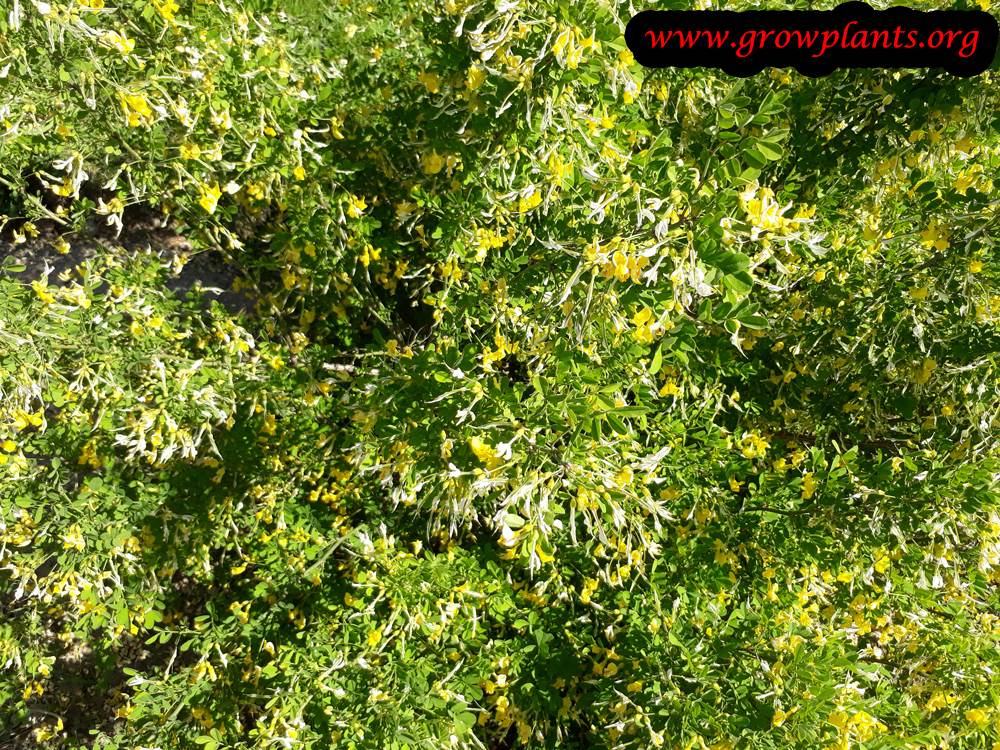
- Growth Habit and Form: Bushy, twiggy legume shrub.
- Lifespan and Maturity: Fast to moderate growing perennial shrub.
Anatomy & Physical Features
- Leaves and Foliage: Green, oval (pinnate) leaflets.
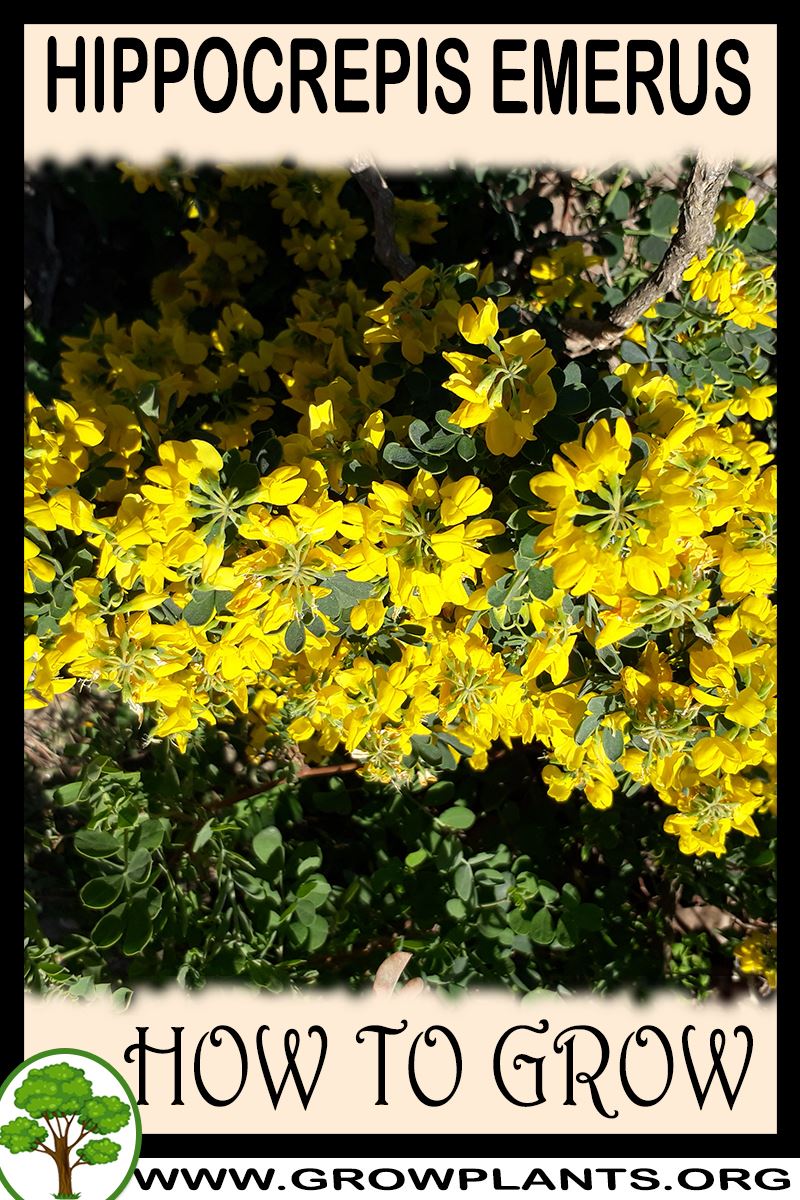
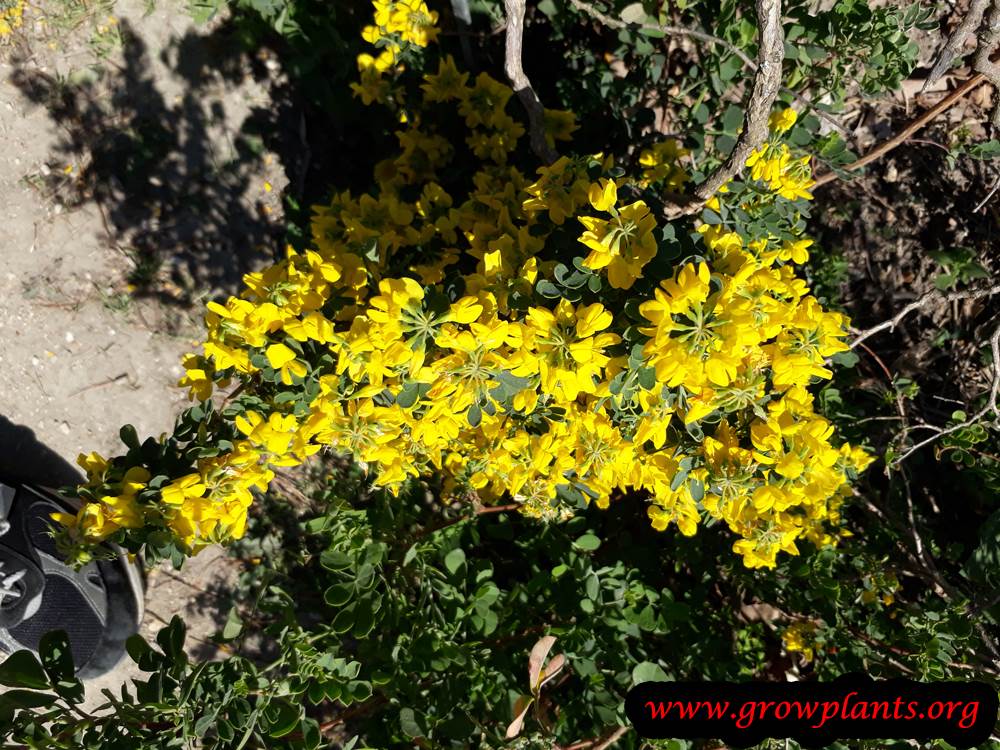
- Flower Characteristics: Yellow pea-shaped flowers, opening summer to autumn (full detail in the Bloom accordion).
Primary Uses & Landscape Value
- Functional and Ornamental Roles: Ornamental flowering shrub and nitrogen-fixing soil improver; useful for slopes and wildlife plantings.
Care Guide: Planting, Soil & Watering
Overview: Scorpion senna is a hardy Mediterranean shrub and nitrogen-fixing legume that thrives in full sun and well-drained soil. It is drought-tolerant once established and needs only modest watering.
Quick Care Requirements
| Requirement | Ideal Condition |
|---|---|
| Planting Season | Spring through autumn |
| Growth Rate | Moderate to fast |
| Soil Type | Well-drained soil (tolerates lean soils; fixes its own nitrogen) |
| Water Need | Low to moderate – water to establish, then drought-tolerant |
Planting & Establishment
- Best Planting Season: Plant during the growing season, from spring through autumn.
- How to Plant:
- Hole Preparation: Dig a hole about the width of the root ball and a little wider.
- Soil Amendments: As a legume it needs little feeding; add some compost and make sure the soil drains freely.
- Planting Depth: Set the root collar at soil level without burying the stem.
- Growth Speed & Expectations: Moderate to fast once established.
Soil, Watering & Drainage Care
- Soil Mix & Drainage Needs: Well-drained soil is the main requirement; it copes with lean, rocky ground and improves it by fixing nitrogen. Avoid waterlogging.
- Watering Schedule & Technique:
- Young / Newly Planted: Water regularly through the first season to establish the roots.
- Established: Water occasionally; it tolerates dry spells well once settled.
- Seasonal Adjustments: A little more in summer heat, little in winter.
Climate, Light & Hardiness
Scorpion senna is a cold-hardy, nitrogen-fixing shrub for Mediterranean, subtropical, and temperate climates, thriving in full sun and well-drained soil.
Quick Climate Specifications
| Climate Zones | Mediterranean, Subtropical, Temperate |
|---|---|
| USDA Hardiness Zones | 6–10 |
| Frost Tolerance | High |
| Light Conditions | Full Sun |
Sunlight & Light Exposure
Optimal Light Setup
Needs full sun for the best flowering and a compact form.
Temperature Extremes & Hardiness
USDA Hardiness & Regional Limits
Hardy in USDA zones 6–10, tolerating cold winters typical of temperate climates without protection.
Wind, Humidity & Microclimate
Rainfall & Seasonal Moisture
Well-drained soil suits it best; tolerant of a dry-summer Mediterranean climate pattern.
Growing in Pots, Balconies & Indoors
Scorpion senna is a hardy, full-sun flowering shrub – the grower confirms it is not a houseplant but does grow in containers. It belongs on a sunny patio or balcony rather than indoors, where it also fixes nitrogen and flowers in warm weather.
Quick Details
- Container Size: A roomy pot for a 0.5-1.5 m shrub; 15-30 L
- Indoor Suitability: Not an indoor plant – it needs full sun
- Best Spot: Full sun on a patio or balcony
- Soil & Drainage: Well-drained mix; it is drought-tolerant and dislikes wet feet
- Watering in Pots: Low to average water; let the top dry between waterings
Indoors & On the Windowsill
- Not a houseplant: A sun-loving shrub that won’t thrive in a room; grow it outdoors.
- Windowsill: Too little light on a sill for good growth and flowering.
On a Balcony or Patio
- Light & wind: Give it the sunniest spot; the pot dries faster than open ground, so water when the surface dries, and shelter it on an exposed balcony.
- Practicalities: Once established it is fairly drought-tolerant, handy for a hot, dry corner.
Choosing the Pot, Soil & Long-Term Care
- Pot & drainage: A well-drained pot with strong drainage holes and no standing-water saucer to avoid root rot; terracotta breathes and dries faster, glazed or plastic holds moisture longer.
- Potting mix: A well-aerated, organic-rich potting mix – peat or coir blended with perlite or vermiculite, leaning free-draining.
- Feeding: Potted plants are fed more often than those in the ground, as watering steadily leaches nutrients from the mix – being a legume it needs little nitrogen; feed sparingly.
- Repotting: Refresh the top of the mix and pot up about every couple of years, lightly trimming the root ball and top growth.
Fertilizing & Feeding
A light feeder by nature – as a nitrogen-fixing legume it needs little to no supplemental nitrogen once established.
Quick Fertilizing Specs
| Feeding Level | Light feeder |
|---|---|
| Main Nutrient Priority | Low nitrogen – as a nitrogen-fixing legume it supplies much of its own nitrogen |
| Best Feeding Period | Spring, as new growth resumes |
| Soil pH | Tolerant of a wide range of well-drained soils |
| Reduce/Stop Feeding | Little to no feeding needed once established; stop entirely through winter dormancy |
Feeding by Growth Stage
Spring Growth
Support new shoot growth as the shrub breaks from winter dormancy
| Nutrient direction | Keep nitrogen light – as a nitrogen-fixing legume this shrub produces much of its own nitrogen and rarely needs a nitrogen-heavy feed |
|---|---|
| Timing | As new growth resumes in spring |
| Frequency | This shrub rarely needs feeding – an occasional light feeding is usually plenty, especially on poor soils |
| Fertilizer types | A light, balanced, general-purpose fertilizer, or often none beyond a light compost topdressing |
| Precautions | Avoid nitrogen-heavy fertilizer – this legume fixes its own nitrogen and excess feeding favors leafy growth over flowering and can weaken drought tolerance |
Bloom Period
Support the pea-shaped summer and autumn flowers without pushing excess leafy growth
| Nutrient direction | Keep feeding light and balanced; avoid switching to a high-phosphorus ‘bloom booster’ |
|---|---|
| Timing | Through the summer and into autumn while flowering |
| Frequency | Little additional feeding is usually needed during bloom beyond what was applied earlier in the season |
| Fertilizer types | Little to no additional feeding is usually needed; rely on the light feeding applied earlier in the season |
| Precautions | This drought-tolerant shrub is prone to weak, floppy growth if overfed or overwatered |
Winter Dormancy
Let the shrub rest through winter without pushing new growth
| Nutrient direction | None – withhold fertilizer through the dormant season |
|---|---|
| Timing | Winter, while the plant is dormant or growth has paused |
| Frequency | No feeding at this stage |
| Fertilizer types | No feeding at this stage – withhold fertilizer until active spring growth resumes |
| Precautions | Do not fertilize during winter dormancy |
Nutrient Deficiency Signs & Corrections
Growth is lush and leafy but floppy, with fewer flowers than expected
| Possible causes | Excess nitrogen feeding on a plant that fixes much of its own nitrogen, Too much shade reducing flowering regardless of feeding, Overwatering favoring soft, weak growth |
|---|---|
| Appears first on | New shoot tips throughout the plant |
| What to check | Recent feeding history and rate, Light exposure at the planting site, Watering frequency |
| Possible correction | Stop supplemental nitrogen feeding, ensure full sun exposure, and let the soil dry between waterings |
Leaves are pale green to yellow and growth is stunted despite this being a nitrogen-fixing plant
| Possible causes | Poor nodulation or root health limiting the plant’s own nitrogen fixation, Waterlogged or compacted soil restricting root function, Very poor soil overall, low in multiple nutrients |
|---|---|
| Appears first on | Whole plant, often uniformly |
| What to check | Root health and soil drainage, Overall soil fertility, Whether the plant is otherwise stressed (transplant shock, pests) |
| Possible correction | Improve drainage and root health first; only add a light balanced feeding if pale growth persists after that |
New shoots are distorted, sticky, and weak-looking
| Possible causes | Aphid infestation on tender new growth, Excess nitrogen feeding attracting aphids to soft growth, Water stress weakening new shoots |
|---|---|
| Appears first on | Newest shoot tips and flower buds first |
| What to check | Presence of aphids on new growth, Recent feeding rate, Watering consistency |
| Possible correction | Control aphids directly and avoid excess nitrogen feeding, which makes new growth more attractive to them |
Pruning, Training & Seasonal Maintenance
Hippocrepis emerus is a modest, twiggy legume shrub that tolerates moderate pruning well; the main objective is keeping its naturally loose, arching habit shapely rather than forcing a formal outline. Winter, while the plant is dormant, is the safest and most effective time to prune, since its yellow pea-flowers form on the current season’s growth – cutting back in winter removes none of the wood that would otherwise flower, and instead encourages the fresh new shoots that carry the summer–autumn bloom.
Quick Pruning & Maintenance Specs
| Pruning Tolerance | Moderate |
| Primary Pruning Window | Winter (dormant season) |
| Typical Frequency | Once a year, plus occasional light tidying |
| Main Objective | Maintain shape and an open, twiggy habit; encourage fresh flowering shoots |
| Young Plant Priority | Light shaping to encourage a well-branched, bushy base |
| Mature Plant Priority | Thin congested or leggy growth; renew older wood to keep flowering strong |
| Best Tool Type | Bypass secateurs |
| Avoid Heavy Pruning During | Active summer–autumn flowering |
Pruning by Plant Age & Size
Newly Established
Minimal pruning beyond removing any damaged growth; allow the young shrub to fill out its base before shaping.
Young / Formative
No formal training system is needed – this is a small, naturally shrubby legume rather than a plant grown on a trained framework. Light tip pruning in the first couple of winters encourages denser branching from the base.
Mature / Established
Shift to shape maintenance and renewal: thin out crowded or crossing twiggy growth each winter, and cut back a portion of the oldest stems every few years to keep the shrub from becoming sparse and woody at the centre.
Seasonal Pruning Schedule
Dormant/Winter
Objective: shape the shrub and stimulate fresh flowering wood. Remove: dead, weak or overly congested twiggy growth, and cut back for size if needed. Do not remove: so much of the framework that the plant is left bare and unbalanced. Expected response: vigorous new shoots in spring. Flowering impact: positive or neutral – since bloom forms on new growth, winter pruning does not remove next season’s flower buds and instead promotes more flowering wood.
Structural Pruning & Training
Thin crossing or inward-growing twigs to keep the naturally loose, arching form open and avoid a dense, tangled centre; light renewal pruning of the oldest stems every few years keeps flowering vigorous, since older wood on twiggy legume shrubs like this tends to flower less freely than younger growth.
Container & Small-Space Pruning
In a container, keep pruning slightly more frequent and a little harder than an in-ground plant to hold a compact size, and watch that root growth is not restricting the plant before assuming poor flowering is a pruning issue.
Tools
- Bypass secateurs for routine shaping and thinning cuts on this shrub’s thin, twiggy growth.
Tool Hygiene & Disease Risk
Routine – clean, sharp tools are sufficient. The plant’s main documented issue is aphids on soft new growth rather than a pathogen spread by pruning cuts; inspect new shoots for aphid colonies at the same time as a winter or spring prune.
Cut Placement & Technique
Use thinning cuts back to a healthy side shoot or bud rather than heading cuts partway along a stem, to keep the natural arching habit rather than producing dense, stubby regrowth.
Heavy Pruning & Rejuvenation
A leggy or overgrown specimen tolerates a harder winter cutback to renew its shape, though it is best spread across two winters rather than removing most of the framework in a single season, to avoid excessive stress on a shrub of this modest size.
Post-Pruning Care
Water normally; avoid extra feeding purely because the plant was pruned, since as a nitrogen-fixing legume it already has good access to nitrogen. Check regrowth for aphid buildup, since fresh new shoots are the aphids’ preferred target.
Common Pruning Mistakes
- Pruning hard in spring or summer, which removes the current season’s developing flower buds.
- Shearing the whole shrub into a formal ball instead of using selective thinning cuts, which spoils its naturally loose, arching character.
- Never renewing old wood, leaving the shrub sparse and bare at the centre over time.
When NOT to Prune
Avoid pruning during the summer–autumn flowering period, since this removes the current season’s bloom and the new growth it forms on.
Recommended Tools (by task)
- bypass_secateurs – the main tool for winter shaping, thinning and renewal cuts on this shrub’s slender, twiggy stems.
Propagation Guide
Hippocrepis emerus is most simply raised from seed, though as with many legumes the hard seed coat can slow and stagger germination unless it is nicked or soaked beforehand; semi-hardwood cuttings offer an easy vegetative alternative when a particular plant’s form needs to be kept. This is the straight species, so seed reproduces it reliably, and overall difficulty is easy.
Quick Propagation Specs
| Best Propagation Method | Seed |
| Alternative Methods | Semi-Hardwood Stem Cuttings |
| Propagation Difficulty | Easy |
| Seed True-to-Type | Yes |
| Vegetative True-to-Type | Yes |
| Best Propagation Season | Seed: spring. Cuttings: summer |
Growing from Seed
Dormancy & Pre-Sowing Treatment
Like many members of the pea family, Hippocrepis emerus seed has a hard coat that can slow and stagger germination; lightly nicking the coat or soaking seed in water for about a day before sowing typically improves and speeds germination.
Sowing Season
Spring, in step with the plant’s spring-to-autumn planting window.
Germination Conditions
Full sun in well-drained soil, matching the plant’s own growing preference.
Stem Cuttings
Cutting Type
Semi-hardwood cuttings.
Best Timing
Summer, from the current season’s firming growth.
Rooting Setup
A free-draining, gritty cutting mix, reflecting this plant’s preference for well-drained soil.
Rooting Hormone
Not specified on site; optional for cuttings of this type.
Bloom & Flower Guide
Quick Details
- Bloom Season: Late spring into summer, sometimes continuing into autumn
- Time to First Bloom: Established shrubs flower each season; plants raised from seed usually bloom within two to three years
- Flower Appearance: Bright yellow pea-shaped (papilionaceous) flowers carried in small stalked clusters
- Edibility: Not edible – grown as an ornamental; this plant carries cardiac glycosides and should not be eaten
Detailed Blooming Overview
Scorpion senna is a legume (Fabaceae), and its bloom shows the classic pea-flower form. Clusters of clear yellow flowers open along the twiggy, evergreen framework and are a good early nectar source for bees. As a nitrogen-fixer it tends to flower freely once settled in a sunny, well-drained spot.
Flower Characteristics
- Yellow, pea-shaped (papilionaceous) flowers with the typical standard, wings and keel.
- Borne in small axillary clusters of roughly two to eight blooms.
- Followed by the narrow, jointed seed pods typical of the horseshoe-vetch family.
Bloom Care & Thinning
- Pollination: Worked by bees, which trip the keel to reach the nectar.
- Managing the bloom: No thinning is needed; a light trim after flowering keeps the shrub neat and encourages fresh growth.
Pests, Diseases & Troubleshooting
Overview: Scorpion senna (Hippocrepis emerus, formerly Coronilla emerus) is a tough, sun-loving Mediterranean legume shrub that is largely free of serious pests. As a nitrogen-fixing pea-family plant it can host aphids and leaf-eating caterpillars, and it dislikes wet, heavy soil, where root rot sets in. Grow it lean and well-drained and it needs very little intervention.
Quick Troubleshooting Overview
| Issue / Pest | Main Symptom | Primary Solution |
|---|---|---|
| Aphids | Colonies on soft shoots and flower stalks; honeydew | Hose off; insecticidal soap; beneficials |
| Caterpillars | Chewed leaflets, ragged foliage | Hand-pick; Bt for heavy infestations |
| Spider mites | Stippling and webbing in hot, dry spells | Hose; horticultural oil |
| Powdery mildew | White film on foliage in humid, crowded sites | Improve airflow; sulfur spray |
| Root rot | Wilting and decline in wet, heavy soil | Improve drainage; avoid overwatering |
Common Pests & Management
- Aphids (Aphis / Acyrthosiphon spp.):
- Symptoms: Clusters of green or black aphids on soft new shoots and flower stalks, with honeydew and sooty mould; legumes are a favoured host.
- Prevention & Control: Dislodge with water, encourage ladybirds and lacewings, and use insecticidal soap or neem oil if colonies persist.
- Leaf-feeding caterpillars (various Lepidoptera):
- Symptoms: Chewed, notched or skeletonised leaflets and some webbing; legumes host a range of caterpillars.
- Prevention & Control: Hand-pick, encourage birds and parasitic wasps, and use Bacillus thuringiensis for heavier infestations.
- Spider mites (Tetranychus spp.):
- Symptoms: Fine stippling, bronzing and webbing in hot, dry, dusty conditions.
- Prevention & Control: Hose foliage, avoid drought stress, and use horticultural oil for outbreaks.
- Scale insects (Coccidae / Diaspididae):
- Symptoms: Small immobile bumps on stems and leaves with honeydew and sooty mould.
- Prevention & Control: Prune out heavily infested wood, wipe off, and treat with horticultural oil; control ants.
Diseases & Fungal Issues
- Powdery mildew (Erysiphaceae):
- Symptoms: White powdery film on leaves in humid, crowded or shaded conditions.
- Treatment & Management: Improve spacing and airflow, avoid drought stress, and spray sulfur or potassium bicarbonate if needed.
- Leaf spot & rust (various fungi):
- Symptoms: Brown spots or rusty pustules on leaflets in wet seasons; largely cosmetic on a healthy shrub.
- Treatment & Management: Remove affected foliage and improve airflow; fungicide is rarely warranted.
- Root & collar rot (Phytophthora / Pythium):
- Symptoms: Wilting, yellowing and dieback in wet, heavy or poorly drained soil.
- Treatment & Management: Plant in free-draining soil, avoid overwatering, and never let it sit waterlogged — this is a drought-tolerant shrub.
Growing Difficulties & Abiotic Problems
- Wet-soil decline:
- Cause & Symptoms: Yellowing and root rot in heavy, wet ground. Correction Strategy: Grow lean and sharply drained; it thrives on poor, dry, alkaline soils.
- Legginess in shade:
- Cause & Symptoms: Sparse, drawn growth and poor flowering in too much shade. Correction Strategy: Give full sun and prune lightly to shape.
What Helps — Products & Tools
This is a low-maintenance shrub. Keep insecticidal soap or neem oil for aphids, Bacillus thuringiensis for caterpillars, and sulfur for the occasional mildew, but the real key is a sunny, free-draining site — get that right and pests and diseases are rarely an issue.