
Plant Profile & Key Characteristics
Overview: A herbaceous rhizomatous perennial (geophyte) reaching 1-2 m (40-80 in), grown for its fragrant yellow-and-orange flower spikes. It is evergreen in mild climates and dies back over cold winters.
Quick Specifications
| Specification | Attribute |
|---|---|
| Plant Type / Life Cycle | Perennial (rhizomatous geophyte) |
| Foliage Type | Evergreen in mild climates; herbaceous, dying back in cold winters |
| Mature Size | 1-2 m (40-80 in) |
| Growth Rate | Moderate |
| Root System | Rhizomatous |
| Toxicity | Non-toxic |
| Hardiness | USDA zone 8+ |
Growth Form & Structure
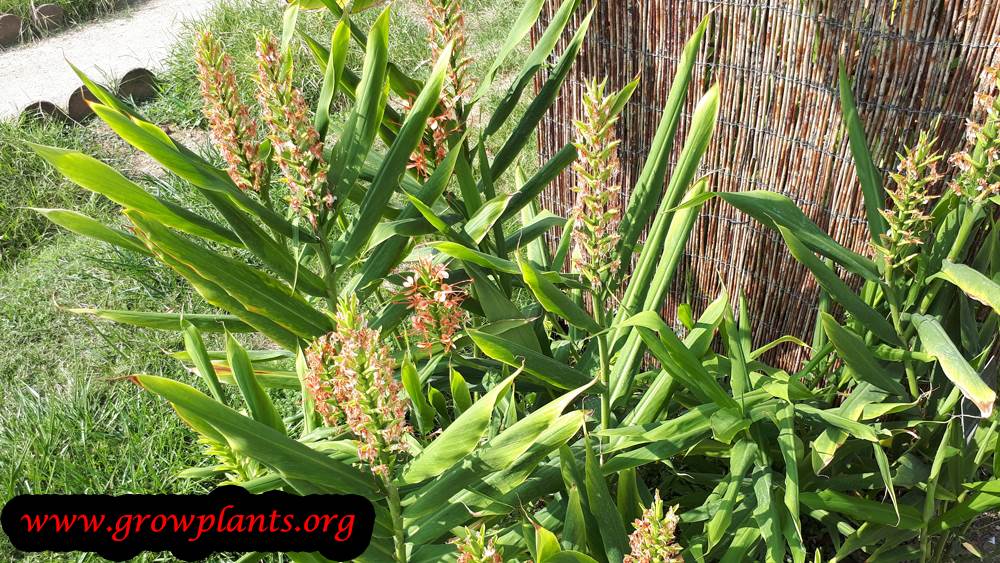
- Height & Spread: Leafy clumps 1-2 m (40-80 in) tall; also grown in large containers and indoors.
- Growth Habit & Form: Upright leafy canes rising from vigorous spreading rhizomes to form dense clumps; strongly invasive.
- Lifespan & Maturity: Perennial of moderate growth, spreading aggressively by rhizome.
Anatomy & Physical Features
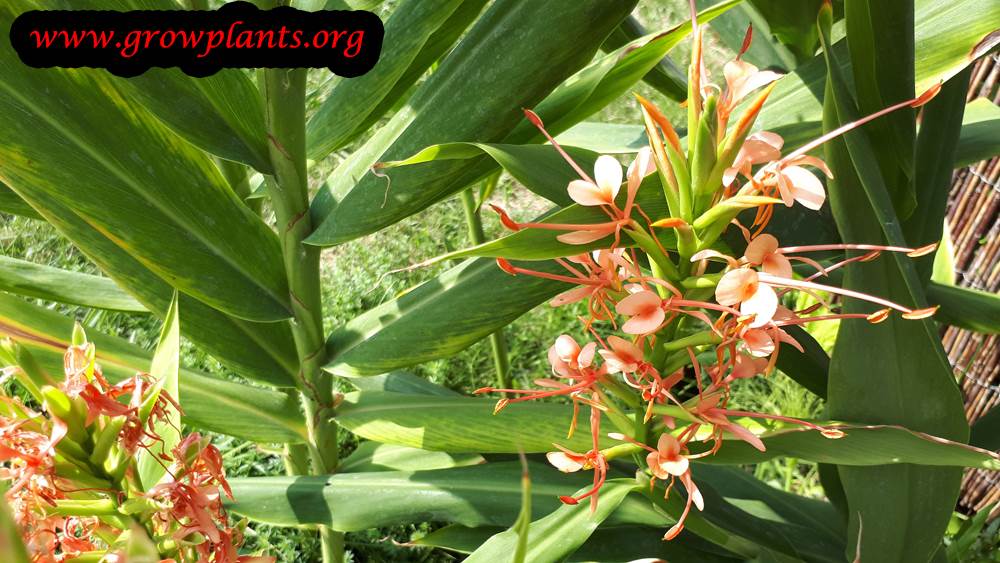
- Leaves & Foliage: Oval green leaves, sometimes variegated with white or yellow.
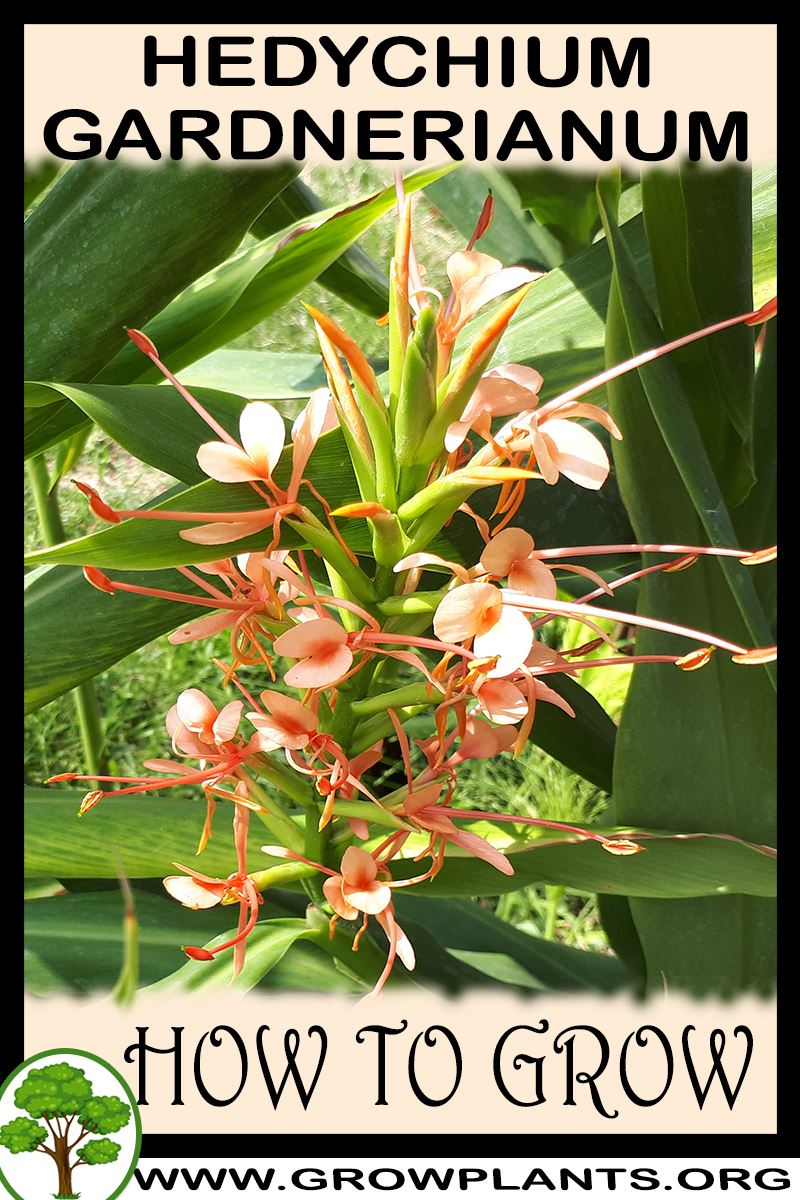
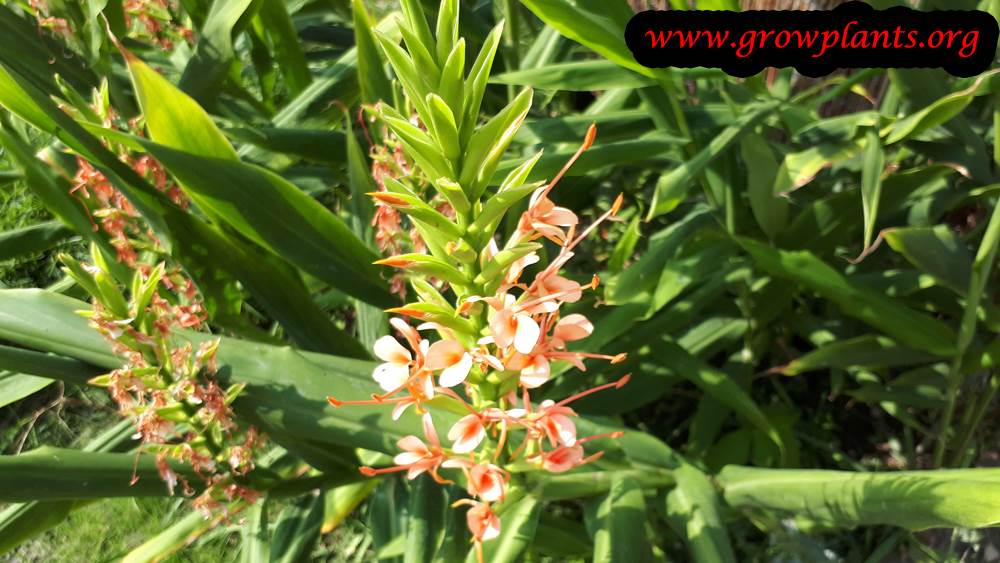
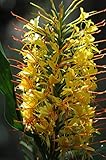
- Flower Characteristics: Fragrant yellow and orange flowers with showy red stamens, borne in a spike at the top of the stem.
Primary Uses & Landscape Value
- Functional & Ornamental Roles: Fragrant ornamental for borders, large pots and bright indoor spots; flowers attract pollinators.
Care Guide: Planting, Soil & Watering
Overview: Hedychium gardnerianum (Kahili ginger) is a lush, rhizomatous perennial that grows best in full sun to part shade in warm climates. It thrives in rich, slightly acidic soil kept consistently moist through the growing season.
Quick Care Requirements
| Requirement | Ideal Condition |
|---|---|
| Planting Season | In spring as the soil warms (year-round in the tropics) |
| Growth Rate | Moderate |
| Soil Type | Rich, moisture-retentive |
| Soil pH | Slightly acidic |
| Water Need | Moderate – keep consistently moist |
Planting & Establishment
- Best Planting Season: Plant in spring as the soil warms; in the tropics it can be planted year-round.
- How to Plant:
- Hole Preparation: Set the rhizomes in a hole wide enough to spread the roots, in ground that has been loosened and enriched; note the plant can be invasive and spreads readily.
- Soil Amendments: Work in generous compost or organic matter to build a rich, moisture-retentive, slightly acidic soil.
- Planting Depth: Plant the rhizome shallowly, just below the soil surface with the growing points near the top; do not bury it deeply.
- Growth Speed & Expectations: A moderate grower reaching about 1-2 m (40-80 in).
Soil, Watering & Drainage Care
- Soil Mix & Drainage Needs: Give rich soil that holds moisture yet still drains; avoid waterlogging, which can rot the rhizomes.
- Watering Schedule & Technique:
- Young / Newly Planted: Keep the soil consistently moist after planting to get the rhizomes into active growth.
- Established: Water regularly and deeply to maintain even moisture through the warm growing season.
- Seasonal Adjustments: Water freely in summer heat and reduce once growth slows in autumn and winter.
Climate, Light & Hardiness
Hedychium gardnerianum (Kahili ginger) is a fragrant, adaptable perennial geophyte for tropical, subtropical, mediterranean, and temperate climates, tolerant of everything from full sun to full shade. It is reliably hardy outdoors from USDA zone 8 and warmer.
Quick Climate Specifications
| Climate Zones | Tropical, subtropical, mediterranean, temperate |
|---|---|
| USDA Hardiness Zones | 8+ |
| Frost Tolerance | Low to Moderate (rhizome hardier than top growth) |
| Light Conditions | Full Sun / Half Shade / Full Shade |
Sunlight & Light Exposure
Optimal Light Setup
Highly adaptable from full sun to full shade, useful in varied garden spots.
Direct Sun Requirement
Not strictly required – performs across the full range from sun to shade.
Best Exposure / Orientation
Flexible placement; part shade can help in hot climates while full sun works well in cooler ones.
Temperature Extremes & Hardiness
USDA Hardiness & Regional Limits
Reliable outdoors from USDA zone 8 and warmer; it grows year-round in the tropics, where this species is notably vigorous and can naturalize (it is documented as invasive in some tropical regions such as Hawaii, reflecting how easily it establishes in frost-free warm climates).
Cold Damage & Winter Protection
Foliage and stems die back with autumn/winter cold; a mulch layer over the rhizome helps it return reliably each spring at the cooler edge of zone 8.
Frost Sensitivity
Top growth is frost-sensitive, while the underground rhizome is considerably hardier within its zone range.
Extreme Heat Tolerance
Good, given the average water it needs; well suited to tropical and subtropical heat and humidity.
Wind, Humidity & Microclimate
Humidity Preferences
Suited to the humid conditions of tropical and subtropical climates.
Rainfall & Seasonal Moisture
Prefers slightly acid, consistently moist soil with average water through the growing season.
Microclimate Recommendations
A sheltered spot with mulch over the rhizome helps it perform reliably at the cooler edge of its zone 8 range; in frost-free tropical climates it needs no such help and can spread vigorously.
Growing in Pots, Balconies & Indoors
This ginger lily is a bold, clump-forming perennial the grower says can be grown indoors and does well in large containers. It reaches around 1-2 m but is herbaceous – it dies back and regrows – so a big pot keeps it in bounds, and because it tolerates shade it makes a fine large houseplant or patio specimen. This is the Kahili ginger, with showy, scented yellow-and-red flower spikes.
Quick Details
- Container Size: A large, deep pot or tub – the bigger the pot, the taller and fuller the clump
- Indoor Suitability: A good indoor foliage plant for a bright, warm room; tolerates shade
- Best Spot: Full sun to full shade; warm and sheltered from cold wind
- Soil & Drainage: Rich, moisture-retentive mix that still drains freely
- Watering in Pots: Average and steady – don’t let a potted clump dry out
Indoors & On the Windowsill
- Houseplant: A genuine indoor plant for a warm, bright spot. Its shade tolerance means it copes with normal room light; give it space for the tall stems.
- Overwintering: Tender to frost – in cold climates a potted clump is easy to move indoors and rest cool and drier over winter, then bring back out when warm.
- A pot tames it: It is listed as invasive in the ground, so container-growing is a tidy way to enjoy it without letting it spread.
On a Balcony or Patio
- Light, wind & heat: Best on a sheltered, shaded or part-shaded balcony out of harsh midday sun; walls and railings reflect heat and dry pots fast, so check moisture often and shield from strong wind.
- Practicalities: Tall stems catch the wind – shelter or lightly support them, and remember a full tub is heavy to move.
Choosing the Pot, Soil & Long-Term Care
- Pot & drainage: A large tub with strong drainage holes and no standing saucer; a mulch on top helps hold moisture.
- Potting mix: Well-aerated and organic-rich – a peat- or coir-based mix opened up with perlite or vermiculite and enriched with compost.
- Feeding: A hungry plant in a pot – feed regularly through the growing season, as watering washes nutrients out faster than in the ground.
- Repotting & dividing: Every couple of years refresh the mix and divide the rhizomes if the clump has filled the pot.
Fertilizing & Feeding
A moderate feeder while it is building its tall canes and broad leaves; because this species colonizes readily and is considered invasive in some regions, keep feeding purposeful rather than pushing maximum growth.
Quick Fertilizing Specs
| Feeding Level | Moderate feeder |
|---|---|
| Main Nutrient Priority | Nitrogen-forward feeding while canes and leaves are expanding, easing toward balanced feeding as flower spikes appear |
| Best Feeding Period | Through the warm growing season into the summer-autumn bloom |
| Organic Options | Compost or leaf mold worked into the planting area |
| Reduce/Stop Feeding | Cut back on feeding once canes finish blooming and growth slows |
| Micronutrients | Usually met by a complete fertilizer and organic matter; correct only a diagnosed deficiency |
| Soil pH | Prefers soil on the acidic side rather than alkaline |
Feeding by Growth Stage
Establishment after planting
Get newly planted rhizomes rooted and pushing their first canes.
| Nutrient direction | A light, balanced feeding once shoots emerge to support rooting and early leaf growth. |
|---|---|
| Timing | Spring after planting, once new shoots appear. |
| Frequency | A light feeding to start; hold off on heavier feeding until the clump is established. |
| Fertilizer types | A balanced complete fertilizer at a light rate, Compost worked into the planting hole |
| Precautions | Given how readily this species spreads, avoid overfeeding new plantings beyond what is needed to establish roots. |
Active cane and leaf growth
Support the tall canes and broad, sometimes variegated leaves that build up ahead of flowering.
| Nutrient direction | A nitrogen-forward complete fertilizer keeps foliage full and well colored. |
|---|---|
| Timing | Through the warm growing season as canes lengthen. |
| Frequency | Regular light feedings suit this vigorous grower without overdoing it. |
| Fertilizer types | A nitrogen-forward complete fertilizer, Organic mulch renewed as it breaks down |
| Precautions | Keep an eye on spread; vigorous feeding in favorable climates can accelerate the colony-forming habit that makes this species invasive in places. |
Bloom period
Support the showy yellow-to-orange flower heads that top the canes.
| Nutrient direction | Shift to balanced feeding rather than extra nitrogen once buds are forming. |
|---|---|
| Timing | Summer into autumn as flower heads form and open. |
| Frequency | Light, balanced feeding through bloom is sufficient. |
| Fertilizer types | A balanced complete fertilizer |
| Precautions | Excess nitrogen during bud formation favors leafy growth over the flower heads. |
Cool-season rest or dieback
Let the clump rest once flowering finishes and canes are cut back for the cooler part of the year.
| Nutrient direction | None – withhold fertilizer while the plant is resting or cut back. |
|---|---|
| Timing | Autumn into winter, after flowering ends and dead canes are removed. |
| Frequency | No feeding during this rest period; resume once new shoots appear. |
| Fertilizer types | No feeding at this stage; do not fertilize resting or cut-back rhizomes. |
| Precautions | Do not fertilize dormant rhizomes; wait until new growth is visible before feeding again. |
Nutrient Deficiency Signs & Corrections
Older leaves fade to pale green or yellow and cane growth slows noticeably.
| Possible causes | low available soil nitrogen, nutrient leaching in a plant that likes consistently moist soil, underfeeding relative to this species’ vigorous growth habit |
|---|---|
| Appears first on | older, lower leaves |
| What to check | recent feeding history, soil moisture and drainage, how crowded the clump has become |
| Possible correction | Apply a nitrogen-containing complete fertilizer and resume a regular light feeding routine. |
New leaves come in pale to yellow while the veins remain distinctly green.
| Possible causes | alkaline soil limiting iron availability for this acid-preferring plant, cold, wet, or compacted soil restricting root uptake, root stress after division or transplanting |
|---|---|
| Appears first on | newest leaves |
| What to check | soil pH, drainage and soil temperature, recent division or transplant activity |
| Possible correction | Correct alkaline soil or drainage issues, then apply a chelated iron product per its label. |
Interveinal yellowing appears on older leaves while the veins themselves stay green.
| Possible causes | low soil magnesium, heavy potassium or nitrogen feeding competing with magnesium uptake, leaching in light, fast-draining soils |
|---|---|
| Appears first on | older, lower leaves |
| What to check | soil magnesium status, recent fertilizer balance, soil texture and leaching |
| Possible correction | Apply a labeled magnesium source such as Epsom salt or a dolomitic amendment and rebalance overall feeding. |
Pruning, Training & Seasonal Maintenance
Hedychium gardnerianum (Kahili ginger) is a clump-forming rhizomatous perennial with soft, non-woody canes, so pruning here means seasonal maintenance rather than structural woody cutting. Because this species is a well-documented aggressive invasive in many mild, frost-free regions, controlling rhizome spread is as important a pruning objective as tidying spent canes. The safest period for cutting back top growth is autumn into winter, after flowering has finished or once cool weather has knocked foliage back; light removal of individual spent flower stalks can be done through the bloom season without affecting the rest of the clump.
Quick Pruning & Maintenance Specs
| Pruning Tolerance | Moderate |
| Primary Pruning Window | Autumn – Winter (post-flowering / post-frost) |
| Typical Frequency | Once yearly, plus spot removal of spent flower canes as they finish |
| Main Objective | Sanitation of spent canes/foliage AND active containment of rhizome spread |
| Young Plant Priority | None – let the rhizome establish undisturbed |
| Mature Plant Priority | Remove spent canes at the base; divide and contain the clump regularly |
| Best Tool Type | Bypass secateurs; loppers for thick mature cane clusters |
| Avoid Heavy Pruning During | Active spring growth flush and while canes are in flower |
Pruning by Plant Age & Size
Newly Established
No pruning beyond removing damaged leaves; let the rhizome settle in for its first season.
Young / Formative
No structural training applies to this clumping geophyte. Watch the clump’s outward spread from the start, since containment is much easier before the rhizome establishes widely.
Mature / Established
Annual removal of spent flowering canes and dead foliage, and regular division/containment of the rhizome mass – this species spreads aggressively where winters stay mild.
Seasonal Pruning Schedule
| Post-Flowering | Objective: remove spent bloom stalks. Remove: the individual cane that has finished flowering, cut near the base. Do not remove: canes still in bud or flower nearby. Response: energy redirects into the rhizome. Flowering impact: none, since that cane will not rebloom. |
| Dormant/Winter | Objective: sanitation and containment. Remove: frost-collapsed, yellowed canes to ground level, and any rhizome growth that has crept beyond its bed. Do not remove: healthy green canes in frost-free climates. Response: fresh cane flush from the rhizome in spring. Flowering impact: none. |
Structural Pruning & Training
No formal training system applies. Thinning the oldest canes at the base in a congested clump improves airflow and light penetration to the rhizome and generally improves next season’s flowering.
Special Growth to Remove
- Spent flower canes, cut at the base once finished
- Dead, frost-collapsed or yellowed foliage and canes
- Rhizome offshoots spreading beyond the intended bed – treat containment as a routine, not occasional, task with this species
Container & Small-Space Pruning
Growing it in a container is actually the most reliable way to enjoy this species without it escaping into surrounding ground – the pot itself is the containment strategy. Divide and remove outer rhizome sections every couple of years to prevent the plant from becoming root-bound.
Tools
Bypass secateurs for routine cane removal (soft, fibrous tissue, not wood); loppers for thick mature cane clumps at division time.
Tool Hygiene & Disease Risk
Routine – clean, sharp tools are sufficient; no significant transmissible disease risk documented for this species.
Cut Placement & Technique
Cut spent canes close to ground level rather than leaving stubs. Canes are soft and pithy, so use a clean single cut.
Heavy Pruning & Rejuvenation
Tolerated well: cutting the whole clump to the ground in late winter is followed by vigorous spring regrowth. Regular full division of the rhizome mass is the main rejuvenation and containment tool for this fast-spreading species.
Post-Pruning Care
Keep soil evenly moist as new canes emerge; watch young shoots for slug/snail damage. No feeding needed after routine sanitation cuts.
Common Pruning Mistakes
- Treating rhizome containment as optional tidying rather than a required annual task, given this species’ invasive reputation
- Cutting green, still-flowering canes before they finish blooming
- Leaving tall cane stubs instead of cutting to the base
When NOT to Prune
Avoid cutting canes that are actively developing toward flower in the growing season, and avoid dividing the rhizome mass during active summer growth – save division for the dormant season.
Recommended Tools (by task)
- bypass_secateurs – routine cutting of soft canes and spent flower stalks
- loppers – thicker mature cane clusters or rhizome division
- garden_spade – lifting and dividing the rhizome for containment
Propagation Guide
Hedychium gardnerianum is most reliably propagated by dividing its rhizomes, which reproduces the plant — including any leaf variegation — exactly; seed is a slower alternative and is how the species spreads in the wild in areas where it is considered invasive. Propagation is easy overall.
Quick Propagation Specs
| Best Propagation Method | Rhizome Division |
| Alternative Methods | Seed |
| Propagation Difficulty | Easy |
| Seed True-to-Type | Variable — variegated leaf forms may not come true from seed |
| Vegetative True-to-Type | Yes |
| Best Propagation Season | Spring in temperate and subtropical climates; year-round where frost-free |
Growing from Seed
Seed Handling & Viability
Site data does not detail seed handling; as with most gingers, viability is generally best from fresh seed.
Germination Conditions
Warm, consistently moist conditions favor germination.
Germination Time
Not documented by the site; germination is often slow and can take several weeks to a few months.
Rhizomes, Tubers, Bulbs & Corms
Divide established clumps in spring, cutting the rhizome into sections that each carry at least one growth point (eye) and some roots. Replant promptly at a similar depth and keep the soil moist until new shoots appear. For plants with the green-and-white or green-and-yellow variegated leaf form, division is the reliable way to keep the variegation, since seedlings are not guaranteed to inherit it.
Bloom & Flower Guide
Quick Details
- Bloom Season: Summer and autumn
- Flower Appearance: Large, cylindrical spike of fragrant pale-yellow to orange flowers, each with a long, protruding red stamen
- Edibility: Grown ornamentally for its fragrance
Detailed Blooming Overview
Hedychium gardnerianum, the Kahili ginger, sends up a bold cylindrical flower spike at the top of each leafy stem in summer and autumn. The pale yellow flowers, each tipped by a long red stamen, are richly fragrant — especially in the evening — and give the plant its showy, torch-like silhouette.
Flower Characteristics
- Fragrant yellow to orange flowers packed into a large conical spike.
- Two oval-to-triangular side petals and a narrow lower petal, with a long red stamen.
- Borne at the top of the stem; strongest scent in the evening.
Bloom Care & Thinning
- Managing the bloom: Remove faded flower spikes to keep the plant tidy and channel energy into new growth.
- Responsible growing: It can spread aggressively in warm, frost-free regions — deadhead spent spikes before they set seed to keep it in bounds.
Fruit & Uses
Sources disagree on how edible Hedychium gardnerianum (Kahili ginger) really is – it is grown and sold purely as an ornamental fragrant plant, and while some foraging references list the flowers, buds, young shoots and rhizome as edible in small amounts, other sources state it is simply not eaten. Treat it as a marginal, small-quantity use, not a ginger substitute for regular cooking.
Quick Edible Specs
| Edible Parts | Flowers & flower buds, young shoots, rhizome (reported edible in small amounts by some sources; other sources say not edible) |
|---|---|
| Main Use(s) | Minor culinary garnish/infusion; historically used as an emergency ginger substitute |
| Eaten Raw or Cooked | Flowers/buds: raw or infused; shoots and rhizome: cooked |
| Preparation Required | Cook shoots and rhizome; use flowers/buds fresh in small quantity |
| Harvest Season | Summer to autumn during bloom (see Blooming) |
| Time to First Harvest | Not meaningful – grown as an ornamental, only harvest once well established and flowering |
| Storage | Best used fresh |
| Safety/Toxicity Caveat | Not consistently regarded as a food plant; sources conflict on edibility, and ingesting large or unprocessed amounts may cause gastric upset – use sparingly and only well-identified plant material |
Flowers & Flower Buds
The yellow-orange flowers and unopened buds are the most commonly cited edible part, with a mild floral flavor sometimes used for tea-like infusions or as a garnish. Harvest freshly opened flowers or firm buds during the summer–autumn bloom.
Shoots & Stems
Young emerging shoots can be cooked in small amounts; older stems are fibrous and not palatable.
Roots & Tubers
The rhizome has reportedly been used historically as an emergency ginger substitute, but it is more resinous and fibrous than true culinary ginger and is not a reliable everyday spice. Use only cooked, in small amounts, and only if the plant’s identity is certain.
Preparation, Uses & Safety
Given the conflicting guidance on edibility, treat Kahili ginger as a marginal, occasional-use plant rather than a food crop: cook the shoots and rhizome, use flowers sparingly and fresh, and avoid large quantities. This species is also noted as invasive in the Care notes – see Care/Difficulties for that separate concern.
Pests, Diseases & Troubleshooting
Overview: Butterfly gingers are lush, fast-growing rhizomatous plants of the ginger family and, like their relatives, are largely healthy in warm, moist, well-drained ground. Their main pests are sap-suckers and mites in dry or sheltered conditions, plus root-knot nematodes; their most serious diseases attack the rhizome – rhizome rot and bacterial wilt in waterlogged or contaminated soil. Clean planting stock and good drainage are the foundation of control. H. gardnerianum (Kahili ginger) is vigorous and invasive in some regions.
Quick Troubleshooting Overview
| Issue / Pest | Main Symptom | Primary Solution |
|---|---|---|
| Spider mites | Stippling, bronzing, webbing in hot/dry air | Raise humidity, wash foliage, horticultural oil/miticide |
| Mealybug & scale | White fluff / brown bumps, honeydew | Alcohol swab, insecticidal soap/oil |
| Root-knot nematode | Galled roots, stunting, wilting | Clean stock, rotate, soil health; solarise beds |
| Rhizome / root rot | Soft, foul rhizomes; yellowing, collapse | Plant clean rhizomes in drained soil; avoid waterlogging |
| Bacterial wilt | Sudden wilt, oozing cut stems, no recovery | Rogue & destroy; clean stock, sanitation |
| Leaf spot | Brown/tan spots and streaks on leaves | Airflow, remove leaves, copper if needed |
Common Pests & Management
- Spider mites (Tetranychus spp.):
- Symptoms: Fine stippling and a bronze cast on leaves with fine webbing on undersides and along midribs, worst in hot, dry, sheltered spots or indoors/under cover.
- Prevention & Control: Raise humidity and hose down the foliage (especially undersides) regularly; at first sign treat with horticultural oil, insecticidal soap or a miticide, repeating every 5–7 days. Predatory mites help under cover.
- Mealybug (Pseudococcus / Planococcus spp.):
- Symptoms: White cottony tufts in leaf sheaths, leaf axils and on the rhizome/root zone, with honeydew and sooty mould; stunts growth when heavy.
- Prevention & Control: Dab with 70% alcohol; spray insecticidal soap or horticultural oil into the sheaths, repeating. Inspect rhizomes at planting and discard infested stock.
- Scale insects (Coccidae & Diaspididae):
- Symptoms: Brown or waxy immobile bumps on stems, leaf sheaths and midribs with honeydew.
- Prevention & Control: Wipe or scrape off, then horticultural oil to smother crawlers; prune out heavily encrusted canes.
- Aphids (Aphididae (incl. banana aphid, Pentalonia nigronervosa)):
- Symptoms: Soft green/brown insects on new growth and in the crown, causing distortion and honeydew; aphids can also transmit viruses in gingers/bananas.
- Prevention & Control: Blast off with water and encourage predators; insecticidal soap or a light oil for persistent colonies. Control matters partly to limit virus spread.
- Root-knot nematode (Meloidogyne spp.):
- Symptoms: Below-ground pest causing swollen galls/knots on roots, with above-ground stunting, yellowing and wilting in warm sandy soils.
- Prevention & Control: Plant clean, nematode-free rhizomes; rotate away from known-infested ground; build soil organic matter and beneficial microbes; solarise beds before planting in warm climates. Discard badly galled stock.
Diseases & Fungal Issues
- Rhizome & root rot (Pythium / Fusarium spp.):
- Symptoms: Soft, water-soaked, foul-smelling decay of the rhizome and roots, with yellowing, wilting and collapse of the clump; the classic result of waterlogged soil or planting infected rhizomes.
- Treatment & Management: Plant only firm, clean rhizomes in well-drained soil, avoid waterlogging, and don’t overwater dormant clumps. Lift and cut away rot, discard badly affected rhizomes, and replant healthy divisions in fresh, drained ground.
- Bacterial wilt (Ralstonia solanacearum):
- Symptoms: Sudden, permanent wilting of otherwise green leaves, yellowing, and a milky ooze from cut stems/rhizomes placed in water; plants do not recover. Spreads in water, soil and on tools.
- Treatment & Management: There is no cure – remove and destroy affected clumps and surrounding soil, plant certified clean stock, sanitise tools between plants, and improve drainage. Avoid moving soil/water from infected areas.
- Leaf spot (Colletotrichum / Phyllosticta spp.):
- Symptoms: Brown, tan or reddish spots and streaks on the leaves, sometimes with yellow halos, enlarging in warm wet weather.
- Treatment & Management: Improve airflow through the clump, avoid overhead watering, and remove affected leaves. Copper or a suitable fungicide protects new foliage in persistent wet spells.
Growing Difficulties & Abiotic Problems
- Waterlogging & rhizome rot risk:
- Cause & Symptoms: Constantly saturated soil suffocates roots and rots rhizomes; leaves yellow and the clump declines.
- Correction Strategy: Grow in rich but free-draining soil, water generously in growth but never leave it swampy, and reduce water as the plant goes dormant.
- Cold / frost damage & dormancy:
- Cause & Symptoms: Frost blackens the lush foliage and can kill exposed rhizomes; growth dies back naturally in cool seasons.
- Correction Strategy: In cold climates, mulch heavily or lift and store rhizomes dry and frost-free; cut back blackened growth and let the plant re-shoot from the rhizome in warmth.
- Leaf scorch & wind tatter:
- Cause & Symptoms: Harsh direct sun scorches the large leaves and strong wind shreds them, marring the display.
- Correction Strategy: Site in bright light with shelter from fierce midday sun and strong wind; keep the roots moist to reduce scorch.
- Nutrient deficiency / poor flowering:
- Cause & Symptoms: Pale, weak growth and shy flowering on hungry or root-bound plants.
- Correction Strategy: Feed generously through the growing season, refresh soil, and divide congested clumps to restore vigour and bloom.
What Helps – Products & Tools
Lead with clean rhizomes and good drainage. For pests: horticultural/neem oil and insecticidal soap for mites, mealybug, scale and aphids, with a miticide in reserve; manage nematodes culturally (clean stock, rotation, solarisation). For disease: copper fungicide for leaf spot, and strict sanitation for rhizome rot and bacterial wilt (there is no spray cure – rogue and destroy).