![Greenwood Nursery: Live Ground-Cover Plants - English Ivy + Hedera Helix - [Qty: 25 Bare Roots] - (Click for Other Available Plants/Quantities)](https://m.media-amazon.com/images/I/517mw5v102L._SL160_.jpg)


Plant Profile & Key Characteristics
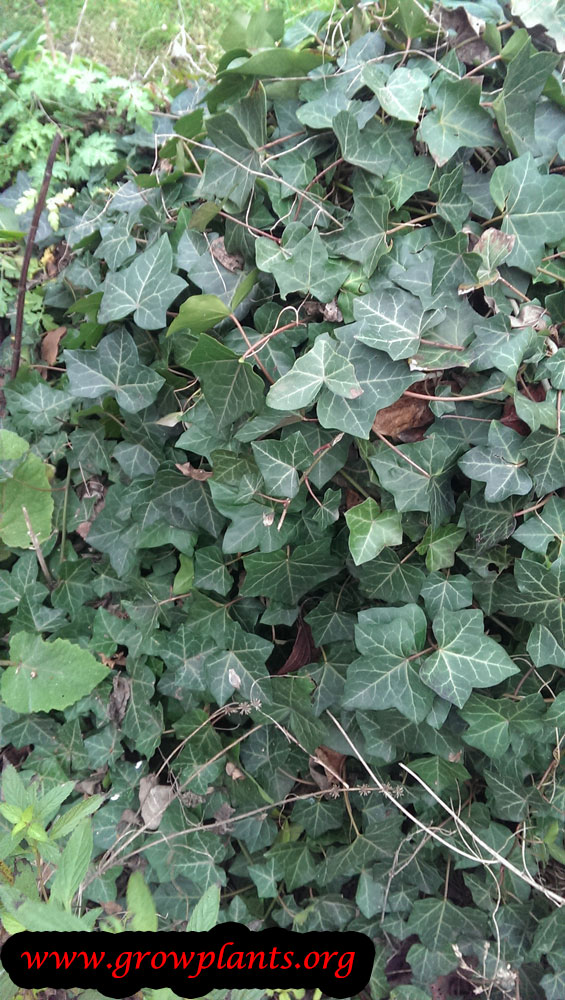
Overview: An evergreen self-clinging vine grown as ground cover, hedge cover or an ornamental climber, and also as a trailing houseplant. This fast-growing, drought-tolerant perennial is vigorous to the point of being aggressive and invasive if left unchecked.
Quick Specifications
| Specification | Attribute |
|---|---|
| Plant Type / Life Cycle | Perennial |
| Foliage Type | Evergreen |
| Mature Size | 5-30 m (15-100 ft) climbing/spreading |
| Growth Rate | Fast |
| Root System | Fibrous, with clinging aerial rootlets (holdfasts) for climbing |
| Toxicity | Toxic – leaves and black berries contain saponins; sap can cause skin irritation (keep away from pets and children) |
| Hardiness | USDA zones 5-10 |
Growth Form & Structure
- Height & Spread: Climbs or trails 5-30 m up supports or spreads as ground cover; also grown indoors and in containers.
- Growth Habit & Form: Evergreen woody vine that climbs by adhesive aerial rootlets; juvenile lobed climbing/trailing growth matures to shrubby, flowering adult growth.
- Lifespan & Maturity: Long-lived, fast-growing perennial that can become invasive if unmanaged.
Anatomy & Physical Features
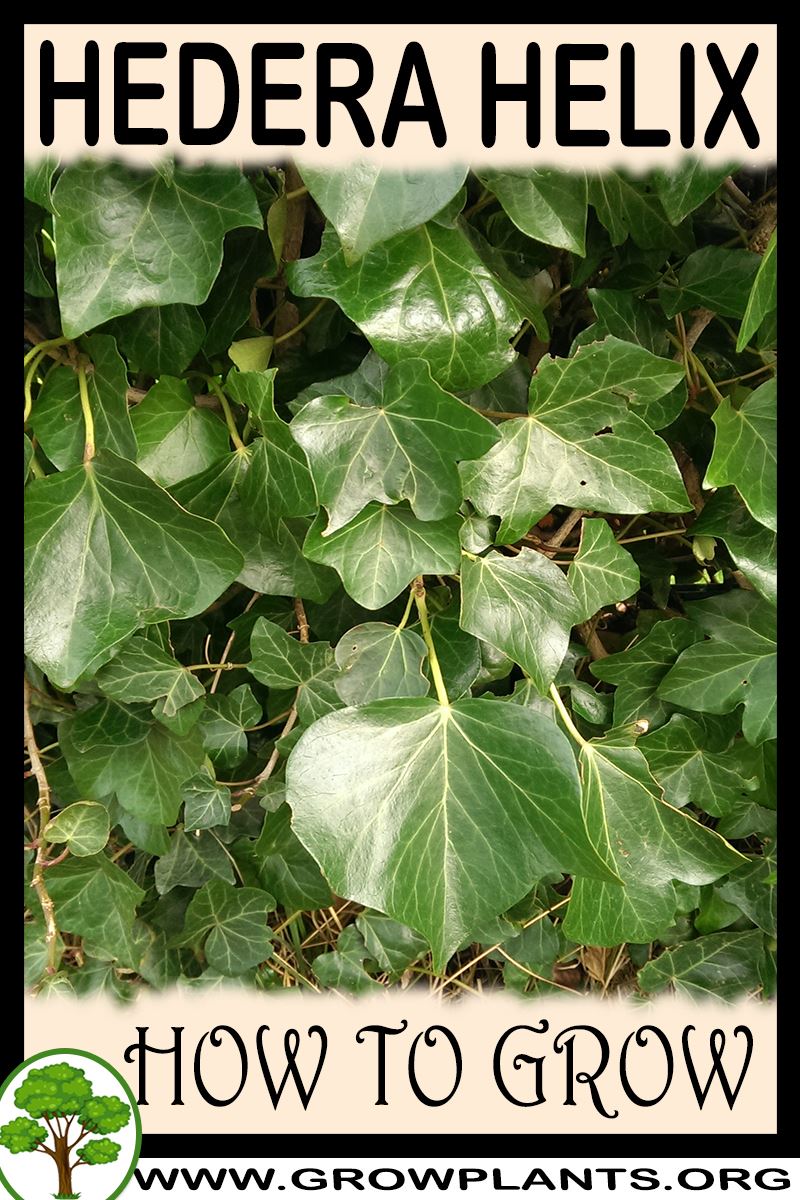
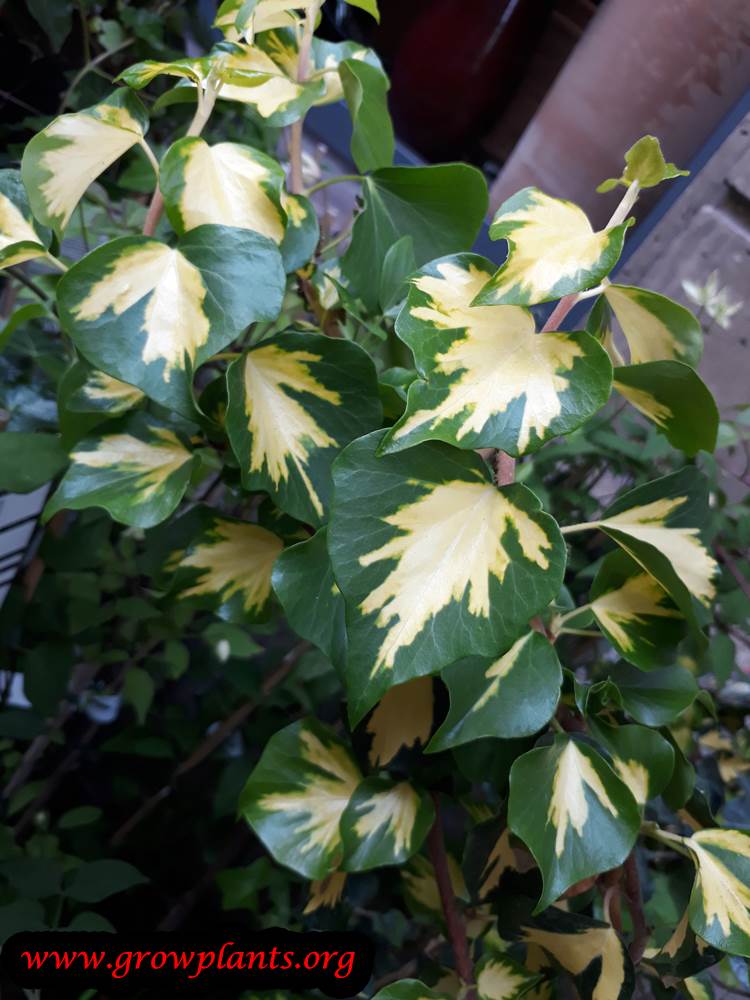
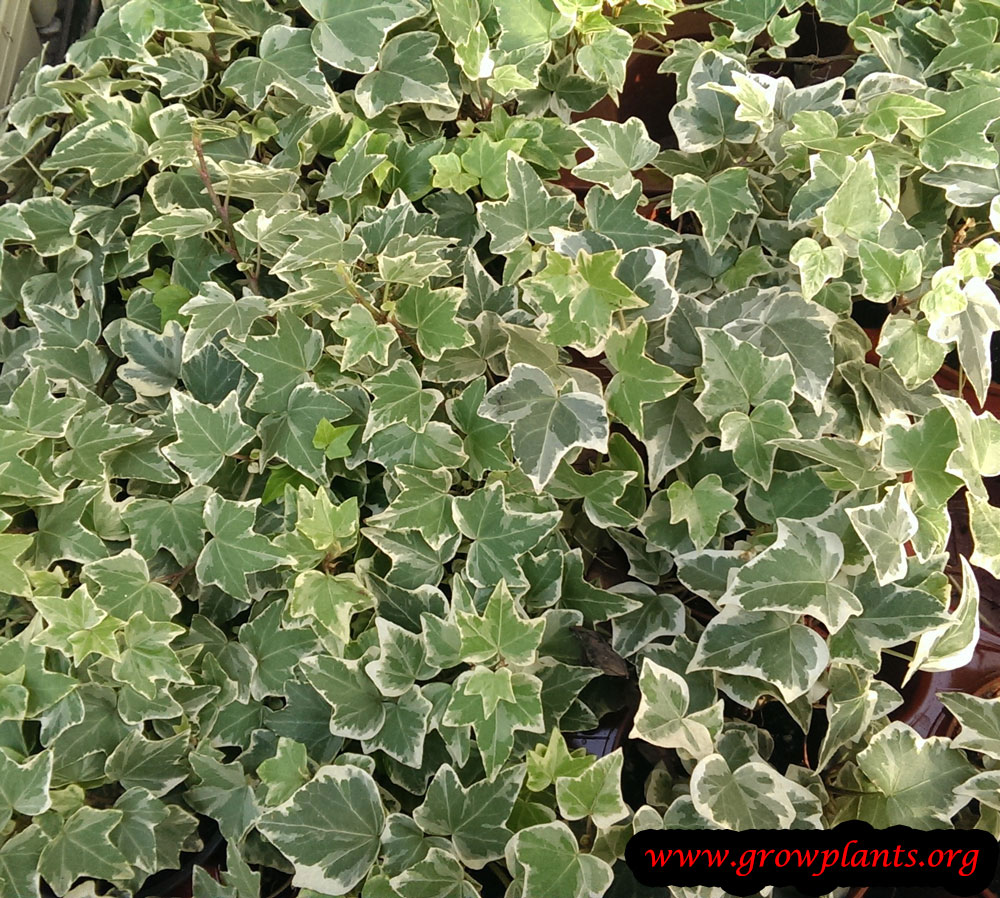
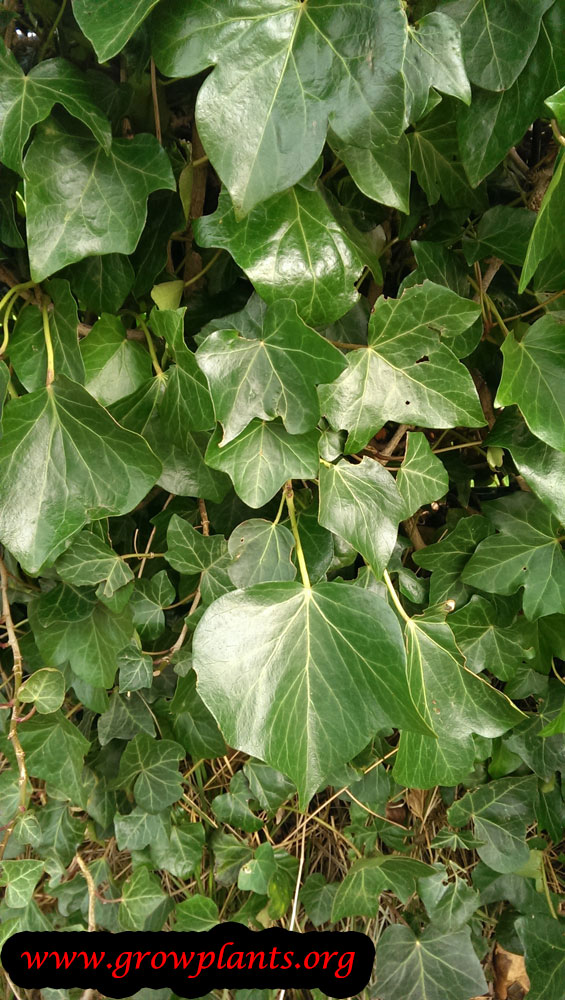
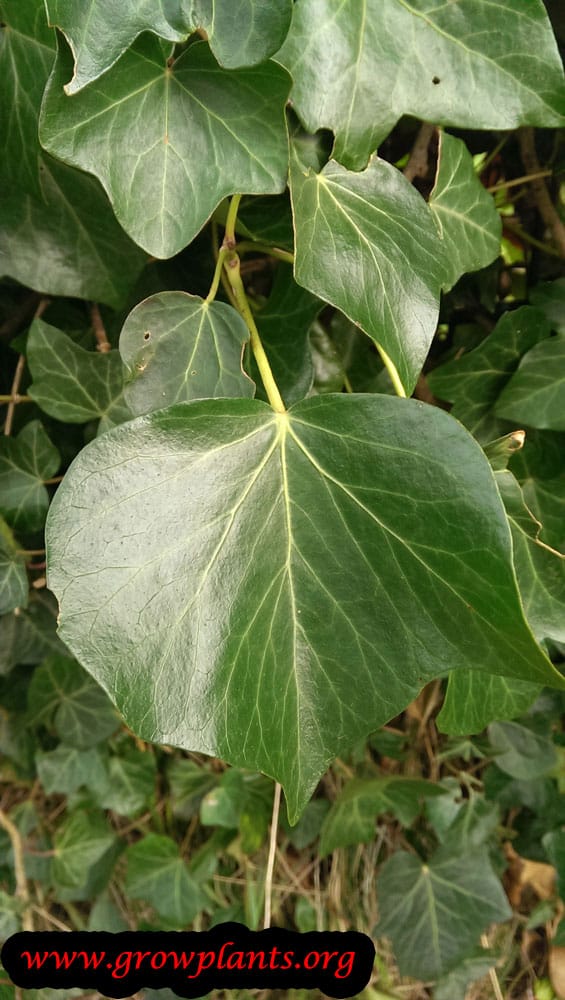
- Leaves & Foliage: Three-lobed, triangular to heart-shaped leaves, green or variegated green with white or yellow.
- Flower Characteristics: Small yellow-green flowers (about 1 mm) in rounded clusters (umbels), opening in autumn.
Primary Uses & Landscape Value
- Functional & Ornamental Roles: Ground cover, wall and hedge cover, trailing houseplant and drought-tolerant ornamental climber.
Care Guide: Planting, Soil & Watering
Overview: Hedera helix (English ivy) is a vigorous evergreen climber that adapts to full sun through deep shade and is notably drought-tolerant once established. It grows best in well-draining soil kept lightly moist, and needs little fuss beyond room to spread.
Quick Care Requirements
| Requirement | Ideal Condition |
|---|---|
| Planting Season | In spring through summer during the active growing season |
| Growth Rate | Fast |
| Soil Type | Well-draining, lightly moist |
| Water Need | Low to Moderate |
Planting & Establishment
- Best Planting Season: Plant in spring or summer during active growth so it establishes quickly; note that ivy is aggressive and can be invasive, so site it where its spread can be controlled.
- How to Plant:
- Hole Preparation: Dig a hole a little wider than the root ball and of equal depth, loosening the surrounding soil.
- Soil Amendments: Mix in compost or organic matter to enrich the soil and support drainage; ivy is undemanding and tolerates most soils.
- Planting Depth: Set the root ball level with the soil surface; do not bury the stems.
- Growth Speed & Expectations: A fast grower that can climb or trail to 5-30 m (15-100 ft); expect rapid coverage that needs regular trimming to keep it in bounds.
Soil, Watering & Drainage Care
- Soil Mix & Drainage Needs: Provide well-draining soil or potting mix; good drainage prevents root rot, while light, steady moisture keeps growth lush.
- Watering Schedule & Technique:
- Young / Newly Planted: Water regularly after planting to keep the soil lightly moist while roots establish.
- Established: Once established it is drought-tolerant; water moderately, letting the top of the soil dry between waterings.
- Seasonal Adjustments: Water more in hot, dry weather and reduce in winter.
Climate, Light & Hardiness
English ivy (Hedera helix) is a vigorous evergreen climbing and ground-covering vine that suits temperate, Mediterranean and subtropical climates and grows well in everything from full sun to deep shade. It is markedly cold-hardy - roughly USDA zones 5–10 - staying evergreen through winter and also thriving as a houseplant.
Quick Climate Specifications
| Climate Zones | Temperate, Mediterranean and subtropical; also grown indoors |
|---|---|
| USDA Hardiness Zones | Approximately 5–10 |
| Optimal Temp Range | Approximately 15–24 °C (59–75 °F) |
| Cold Damage Begins | Cold, drying winds and harsh winter sun can scorch leaves in the coldest zones |
| Approx. Survival Minimum | Established plants generally hardy to about −29 °C (−20 °F) |
| Frost Tolerance | High |
| Light Conditions | Full sun to full shade |
| Wind Tolerance | Moderate to High |
| Salt / Coastal Tolerance | Moderate |
Sunlight & Light Exposure
Optimal Light Setup
Few plants are as adaptable on light: ivy grows in full sun, part shade or full shade, making it a mainstay for difficult dark corners. Green-leaved ivy is the most shade-tolerant of all.
Shade & Heat Management
In hot climates it is happiest with shade during the fiercest part of the day; strong summer sun combined with dry soil can brown the foliage.
Best Exposure / Orientation
North- and east-facing walls and shaded banks suit it perfectly; on cold-winter sites, avoid exposed positions where winter sun and freezing wind together desiccate the evergreen leaves.
Temperature Extremes & Hardiness
USDA Hardiness & Regional Limits
Rated for roughly USDA zones 5–10, ivy is reliably hardy through cold temperate winters. At the warm end it grows well provided it has shade and moisture, as the constraint there is heat and exposure rather than cold.
Cold Damage & Winter Protection
The evergreen foliage occasionally browns at the edges after severe cold or from cold, drying winds and bright winter sun, but established plants recover in spring. Container plants are more exposed and benefit from a sheltered spot in the coldest zones.
Frost Sensitivity
Frost tolerance is high; hard freezes rarely kill established ivy, and any scorched leaves are replaced once growth resumes.
Extreme Heat Tolerance
It copes with considerable heat as long as its roots are shaded and not parched; in hot, exposed sites without shade the leaves can scald, so it performs best cool at the root.
Wind, Humidity & Microclimate
Humidity Preferences
Ivy is indifferent to outdoor humidity but, indoors, appreciates a little extra moisture in the air; very dry, heated rooms encourage spider mites on the foliage.
Dry-Air Tolerance
Once established it tolerates dry air and short dry spells well - it is regarded as a drought-tolerant plant - though sustained hot, dry wind will brown exposed leaves.
Wind Tolerance
As a self-clinging climber it withstands wind well when attached to a wall or the ground; only cold, drying winter wind on freshly exposed growth causes real damage.
Coastal / Salt Tolerance
It shows moderate tolerance of coastal salt spray and is often used in seaside gardens, though not on the most exposed, salt-blasted frontages.
Rainfall & Seasonal Moisture
Adapted to climates with regular rainfall, it also endures drier summers once established, making it suitable across a broad moisture range provided drainage is reasonable.
Microclimate Recommendations
Use it to clothe shaded, sheltered walls and banks; in the coldest zones favour aspects protected from freezing wind and harsh winter sun to keep the evergreen cover unblemished.
Growing in Pots, Balconies & Indoors
English ivy (Hedera helix) is one of the classic trailing houseplants and container plants. Outdoors it is a vigorous climber that can reach great lengths, but in a pot it is easily kept compact by trimming – the grower confirms it both indoors and in containers.
Quick Details
- Container Size: Any well-drained pot; despite its potential vine length it is easily kept compact by trimming
- Indoor Suitability: Genuine houseplant in bright, indirect light (tolerates shade)
- Best Spot: Bright, indirect light to shade; cool rooms
- Soil & Drainage: Ordinary well-drained potting mix
- Watering in Pots: Keep lightly moist – let the top dry a little between waterings; it dislikes waterlogging
Indoors & On the Windowsill
- Genuine houseplant: The grower confirms it. Ivy is a long-standing favourite indoor and container plant – trailing from a shelf or hanging pot, or trained up a support. It tolerates low light but keeps its markings best in bright, indirect light, and prefers cool rooms.
- Windowsill & trailing: Happy on most sills; pinch the tips to keep it bushy. Variegated types want more light to hold their colour.
- Keep away from pets & children: All parts of ivy are toxic if eaten and the sap can irritate skin – site it out of reach.
On a Balcony or Patio
- Light & wind: Choose a cooler, shadier corner out of harsh midday sun. Reflected heat from walls and railings dries pots quickly and can scorch shade-lovers, so check moisture often and shelter from drying wind.
- Weight & runoff: A full pot of moist soil is heavy – check the balcony can take it, and stand pots so drainage water runs off cleanly without staining or flooding a neighbour below.
Choosing the Pot, Soil & Long-Term Care
- Pot & drainage: A pot with strong drainage holes and no standing-water saucer, so the roots never sit wet and rot. Terracotta breathes and dries faster (good against overwatering), while glazed or plastic holds moisture longer – match it to how often you water.
- Potting mix: A light, aerated, organic-rich mix – potting soil or peat/coir with perlite or vermiculite, blended with compost or well-rotted organic matter.
- Feeding: Nutrients leach out of pots with every watering, so potted plants need feeding more often than those in the ground – a balanced liquid feed through the growing season keeps them going.
- Repotting: Refresh the mix and pot up about every two years; for perennials, lightly trim the root ball and top growth at the same time to keep them vigorous.
Fertilizing & Feeding
A vigorous but light feeder: modest feeding through the growing season keeps foliage full, with no feeding needed in winter.
Quick Fertilizing Specs
| Feeding Level | Light feeder |
|---|---|
| Main Nutrient Priority | Balanced nutrition with adequate nitrogen for foliage |
| Best Feeding Period | Spring through summer during active growth |
| Organic Options | Compost or a diluted balanced organic feed |
| Soil pH | Adapts to a range; near neutral is fine |
| Reduce/Stop Feeding | Stop feeding over winter |
Feeding by Growth Stage
Establishment
Help newly planted or freshly potted ivy root in and start vining.
| Nutrient direction | A balanced complete fertilizer once new growth begins; ivy is not a demanding feeder. |
|---|---|
| Timing | After planting, once the plant shows new growth. |
| Frequency | Feed sparingly as the plant establishes. |
| Fertilizer types | Balanced all-purpose fertilizer, Compost or organic matter |
| Precautions | Ivy tolerates lean conditions; go easy to avoid soft, leggy growth. |
Active growth
Support vigorous foliage and trailing or climbing stems.
| Nutrient direction | A complete fertilizer with adequate nitrogen keeps foliage dense and green; variegated types hold colour best with steady but modest feeding. |
|---|---|
| Timing | Spring through summer during active growth. |
| Frequency | Feed lightly through the growing season. |
| Fertilizer types | Balanced all-purpose fertilizer |
| Precautions | Ivy is a light feeder; excess nitrogen produces weak, overly lush growth. |
Winter slowdown
Growth slows in winter and the plant rests.
| Nutrient direction | None – withhold fertilizer during winter rest. |
|---|---|
| Timing | Winter, when growth slows. |
| Frequency | No feeding at this stage. |
| Fertilizer types | No feeding at this stage during winter rest. |
| Precautions | Do not fertilize dormant or resting plants. |
Nutrient Deficiency Signs & Corrections
Leaves turn pale or variegation fades and growth is sparse.
| Possible causes | Low nitrogen, Insufficient light for variegated types, Root-bound or leached container |
|---|---|
| Appears first on | Older leaves and whole plant |
| What to check | Feeding history, Light exposure, Root and container condition |
| Possible correction | Feed with a balanced fertilizer and give variegated ivies brighter light. |
New leaves yellow between the green veins.
| Possible causes | High soil or water pH, Cold, wet or compacted soil, Low iron availability |
|---|---|
| Appears first on | Newest leaves |
| What to check | Soil and water pH, Drainage, Root health |
| Possible correction | Correct pH and drainage; apply a chelated iron product following its label if it persists. |
Leaf edges and tips turn brown and crisp.
| Possible causes | Fertilizer salt buildup in containers, Dry air or underwatering, Excess feeding |
|---|---|
| Appears first on | Leaf tips and margins |
| What to check | Recent fertilizer amounts, Soil moisture and humidity, Drainage |
| Possible correction | Leach the soil with plain water and reduce feeding. |
Pruning, Training & Seasonal Maintenance
Hedera helix (English ivy) is a vigorous, self-clinging evergreen woody vine that can reach many metres, so with this plant pruning is almost entirely about control rather than encouragement — it is listed as aggressive and invasive, and left alone it climbs into gutters, roofs and tree canopies and blankets the ground. It tolerates hard cutting extremely well, resprouting from old woody stems, which makes it forgiving to shear, cut back and even renew to near ground level. It has two life phases: juvenile climbing/trailing growth with the familiar lobed leaves, and, high up in full sun, an adult shrubby phase that carries the autumn flowers; keeping ivy in its useful leafy juvenile form simply means cutting out any coarse adult growth. Because it is grown as foliage and its late flowers are minor (though good for pollinators), pruning is driven by size, tidiness and containment, not by protecting bloom.
Quick Pruning & Maintenance Specs
| Pruning Tolerance | Very high — shears, hard cut-back and renewal to the base all tolerated |
| Primary Pruning Window | Late winter to early spring, before the main flush (and before birds nest in it) |
| Secondary Maintenance Window | Through the growing season — trim wayward runners as needed |
| Typical Frequency | At least yearly hard trim; more often to keep it off walls, gutters and paths |
| Main Objective | Contain size and spread; keep it clear of structures; renew tired growth |
| Young Plant Priority | Guide and tip young stems to cover the target area evenly |
| Mature Plant Priority | Cut back off buildings/trees, shear groundcover, renew leggy bare stems |
| Best Tool Type | Hedge shears for mass foliage; secateurs/loppers for thick woody stems |
| Avoid Heavy Pruning During | Bird nesting in dense ivy; hard frost on freshly cut growth |
Pruning by Plant Age & Size
Newly Established
A young plant needs little more than guiding: tip the leading stems to encourage the branching that fills a wall, fence or bank evenly, and remove any weak or misdirected shoots. Because it is fast and aggressive, restraint early prevents a tangle later.
Young / Formative
There is no framework to train in the woody-tree sense; ‘formative’ work is directing the self-clinging stems over the surface you want covered and pinching tips to thicken the cover. Decide the boundaries now — ivy will not respect them on its own — and keep it off anything you do not want colonised.
Mature / Established
Established ivy is kept in bounds: cut it back hard off gutters, window frames, roof tiles and tree trunks, shear wall and groundcover growth to refresh it, and cut out coarse adult (arborescent) shoots to hold it in the leafier juvenile form. When it grows thin, bare and woody at the base, cut the whole planting back hard — even to near ground level — and it regenerates with dense new foliage.
Seasonal Pruning Schedule
Late Winter / Early Spring (main cut-back)
Objective: renew and contain before growth and before birds nest. Remove: excess length, growth off structures, and tired or bare stems — hard if needed. Do NOT: cut into ivy already holding active nests. Impact: a dense flush of fresh juvenile foliage for the season.
Growing Season (containment)
Objective: keep it in bounds. Remove: runners heading onto paths, walls, gutters or up trees, and any coarse adult shoots. Impact: maintains the intended cover and stops invasive spread.
Ongoing Sanitary
Objective: tidiness and health. Remove: dead, damaged or diseased stems and any leaf-spotted growth. Impact: a cleaner, denser stand.
Structural Pruning & Training
Structure means guiding and confining rather than building a branch framework: direct the clinging stems over the wall, fence or ground you want covered, and cut everything back at the chosen edges. Thinning an over-thick mat lets light in and reduces the weight and moisture it holds against a surface. Renewal is by hard cutting: because it reshoots from old wood, an ageing, bare-based stand is rejuvenated by cutting it right back rather than by patching.
Special Growth to Remove
Cut out the coarse, non-lobed adult growth that appears in older, sunlit ivy if you want to keep the leafy juvenile look (and to limit the berries that spread it). Remove climbing stems reaching where you do not want them — into trees, under tiles, into gutters. There are no grafts or true suckers; the aerial rootlets that let it cling are part of normal growth, though you will need to scrape their residue off surfaces after removing stems.
Container & Small-Space Pruning
In a pot or small bed the same vigour must be curbed: pinch and trim trailing stems often to keep the plant bushy and within bounds, cut back leggy runners to force branching, and shear a topiary or trained shape as needed — ivy takes close clipping well. Refresh the soil and trim the roots every couple of years; a pot-bound plant can be cut back top and root together to rebalance it.
Tools
Match the tool to the growth: hedge shears (or a strimmer for large groundcover areas) make short work of the leafy mass, bypass secateurs handle individual stems and trimming, and loppers or a pruning saw are needed for the surprisingly thick, woody old climbing stems at the base of a long-established plant. Precision snips suit detailed work on container and topiary ivy.
Tool Hygiene & Disease Risk
Hygiene is generally routine — clean, sharp tools are enough, since ivy is tough and its main issues are leaf spot and sap-suckers rather than serious blade-borne disease. Step up to wiping blades when cutting out clearly leaf-spotted or diseased growth so you do not carry it through fresh cuts. Wear gloves and long sleeves: ivy sap can irritate skin, and dense old growth harbours dust and, at times, nesting or sheltering wildlife.
Cut Placement & Technique
For containment, cut cleanly along the boundary you want to hold, back to a stem junction where possible so regrowth is directed inward. When renewing, cut old woody stems low, close to the base, from which new shoots break. On thick basal stems, use loppers or a saw for a clean cut rather than crushing them, and pull the severed top growth away, scraping clinging rootlet residue off the surface afterwards.
Heavy Pruning & Rejuvenation
English ivy is a classic candidate for hard rejuvenation: a bare, woody, leggy stand can be cut right back — often to within a short distance of the ground — in late winter or early spring, and it regenerates densely from the old stems. This is the standard way to renew tired ivy or to reduce an overgrown wall or bank; keep the cut plant watered as it re-flushes and expect vigorous regrowth that will itself soon need containing.
Post-Pruning Care
After a hard cut-back, water in dry spells to support regrowth and mulch groundcover plantings; feeding is rarely necessary, as hard-pruned ivy resprouts strongly on its own and extra feeding only fuels growth you must then cut again. Clear away all cut stems and berries (which can seed) and scrape clinging residue from walls; watch that vigorous new runners do not immediately re-invade gutters or trees.
Common Pruning Mistakes
- Letting it climb unchecked into gutters, roofs and trees before starting to prune, so control becomes a major job.
- Shearing dense ivy in spring or summer without checking for active bird nests inside it.
- Assuming it is too woody to renew — it reshoots readily from a hard cut to the base.
- Leaving coarse adult growth and its berries in place, which spread this invasive plant further.
When NOT to Prune
Do not shear dense ivy during the bird-nesting season without checking it first, and avoid hard cutting just before a hard frost, which can damage the tender regrowth. Otherwise this exceptionally tough plant can be cut back through much of the year; the main restraint is wildlife and weather, not the plant’s tolerance.
Recommended Tools (by task)
- hedge_shears — for shearing large areas of leafy wall and groundcover growth quickly and evenly.
- bypass_secateurs — for trimming individual runners, containment cuts and detailed work.
- loppers — for the thick, woody old climbing stems at the base when renewing or removing established ivy.
Pruning Troubleshooting
| Problem | Possible Cause | What to Check | Corrective Action |
| Thin, bare, woody growth with leaves only at the tips | Old ivy never renewed; too much shade | Age of the stand and light levels | Cut the whole planting hard back to near the base in late winter to force dense new growth |
| Ivy repeatedly invading gutters, walls or trees | Vigorous runners not contained; growing too well unchecked | Where the clinging stems are heading | Trim back to the boundary through the season and cut climbing stems off structures and trunks |
| Coarse leaves and unwanted berries appearing high up | Plant has entered its adult flowering phase in the sun | Presence of non-lobed adult shoots and berries | Cut out adult growth to keep the juvenile form and limit self-seeding |
| Regrowth slow or damaged after a hard cut | Cut just before hard frost, or plant left dry | Timing of the cut and soil moisture afterwards | Time hard cuts for late winter/early spring and keep the plant watered as it re-flushes |
Propagation Guide
English ivy is one of the easiest plants to propagate: nodal stem cuttings and its naturally self-rooting trailing stems both strike readily, and variegated forms are increased this way to stay true. Seed from the berries of mature growth is possible but slower and variable, so vegetative methods are preferred.
Quick Propagation Specs
| Best Propagation Method | Stem (nodal) cuttings |
| Alternative Methods | Ground layering; division of rooted stems; seed |
| Propagation Difficulty | Easy |
| Seed True-to-Type | Variable; green species fairly uniform, variegated forms not true |
| Vegetative True-to-Type | Yes |
| Best Propagation Season | Spring to summer (cuttings root almost year-round) |
Growing from Seed
Seed Handling & Viability
Seed forms only on mature (adult, shrubby) growth that has flowered and fruited; clean it from the ripe berries. Seedlings are variable and never reproduce variegation.
Dormancy & Pre-Sowing Treatment
A period of cool-moist stratification helps even out germination; expect it to be slow and staggered.
Stem Cuttings
Cutting Type
Take nodal cuttings of trailing juvenile stems, each with a few leaves and one or two nodes. Cuttings taken from adult, shrubby growth keep the adult form.
Rooting Setup
Root in water or in moist, well-drained mix; the nodes root quickly. Rooting hormone is unnecessary.
Air & Ground Layering
Trailing stems root by themselves where nodes touch moist soil. Simply lift an already-rooted section and sever it, or pin a stem down and keep it moist until it roots. This aggressive self-layering is why ivy spreads and is treated as invasive – keep divisions contained.
Division, Offsets, Pups & Suckers
An established plant that has rooted along its stems can be lifted and split into several rooted pieces, each replanted directly.
Bloom & Flower Guide
Quick Details
- Bloom Season: Autumn
- Time to First Bloom: Only once the plant reaches its mature (adult) phase, often after several years
- Flower Appearance: Tiny yellow-green flowers, about 1 mm, packed into rounded clusters
- Edibility: Not edible – the leaves, sap and black berries that follow are toxic
Detailed Blooming Overview
English ivy spends its early life in a non-flowering, climbing juvenile phase; only when it matures and produces adult, unlobed growth does it flower. When it does, in autumn, it carries rounded clusters of tiny yellow-green flowers that are a valuable late-season source of nectar and pollen after most other plants have finished. Black berries follow and ripen over winter.
Flower Characteristics
- Very small yellow-green flowers, roughly 1 mm each.
- Borne in rounded, umbel-like clusters on mature stems.
- Rich in nectar, making them a magnet for late-flying insects.
Bloom Care & Thinning
- Managing the bloom: Leave the autumn flowers where you can – they feed bees and other pollinators; where a tidy juvenile cover is wanted, simply keep the plant clipped so it stays in its non-flowering phase.
- Pollination: Visited by bees, wasps, hoverflies and other flies drawn to the late nectar.
- Safety: All parts are toxic if eaten and the sap can cause skin irritation – wear gloves when cutting and keep the berries away from children and pets.
Pests, Diseases & Troubleshooting
Overview: Ivies are vigorous and forgiving outdoors, but under indoor or dry, warm, still conditions they have one signature enemy above all – the two-spotted spider mite – along with scale, mealybug and aphids. Their most important diseases are bacterial leaf spot and anthracnose in wet foliage, plus root rot in soggy soil. Humidity, airflow and vigilant early inspection prevent most problems. Common English ivy.
Quick Troubleshooting Overview
| Issue / Pest | Main Symptom | Primary Solution |
|---|---|---|
| Spider mites (signature) | Fine stippling, bronzing, webbing; worst indoors/dry | Raise humidity, wash foliage, horticultural oil/miticide |
| Scale | Brown bumps, honeydew, sooty mould on stems/leaves | Wipe/scrape off, horticultural oil |
| Mealybug | White cottony tufts in leaf axils and veins | Alcohol swab, insecticidal soap/oil |
| Aphids | Curled soft new growth, honeydew | Water jet, insecticidal soap |
| Bacterial leaf spot | Dark water-soaked spots with yellow halos | Reduce leaf wetness, remove leaves, copper |
| Root rot | Wilting, yellowing, blackened roots in wet soil | Correct drainage/watering |
Common Pests & Management
- Two-spotted spider mite (Tetranychus urticae):
- Symptoms: The defining ivy pest, especially indoors and in warm, dry, still air. Fine pale stippling on the upper leaf surface progresses to a dull bronze or grey cast; fine silk webbing appears in leaf axils and on undersides, where tiny moving specks (mites) shelter. Heavily infested leaves dry and drop.
- Prevention & Control: Prevention is humidity and cleanliness – mites thrive in dry heat, so mist/raise humidity, keep plants away from heat sources, and rinse the foliage (especially undersides) regularly. At first sign, shower the whole plant, then treat with horticultural oil, insecticidal soap or a dedicated miticide, repeating every 5–7 days for several cycles to break the fast life cycle. Rotate products and consider predatory mites (Phytoseiulus) indoors.
- Scale insects (Soft brown scale (Coccus hesperidum) & hemispherical scale (Saissetia coffeae)):
- Symptoms: Immobile brown, tan or waxy bumps clustered along stems, petioles and leaf veins/undersides; sticky honeydew and black sooty mould are tell-tale signs. Leaves yellow under heavy colonies.
- Prevention & Control: Wipe or scrape off with a soft cloth or fingernail and dab with alcohol. Apply horticultural oil to smother crawlers, repeating; prune out badly encrusted stems. Inspect new plants before introducing them.
- Mealybug (Pseudococcus / Planococcus spp.):
- Symptoms: White, cottony, waxy tufts nestled in leaf axils, along veins and at growing points, with honeydew and sooty mould. Look-alike: mineral deposits – mealybugs are soft and move.
- Prevention & Control: Dab with 70% alcohol on a cotton bud; spray insecticidal soap or horticultural oil, hitting the hidden axils, and repeat weekly. Isolate infested plants; check the roots for root mealybug at repotting.
- Aphids (Aphididae):
- Symptoms: Clusters of green, grey or black soft-bodied insects on soft new shoots and leaf undersides, curling and distorting young growth with honeydew.
- Prevention & Control: Blast off with water, encourage predators outdoors, and use insecticidal soap or a light oil on persistent colonies.
- Whitefly (Trialeurodes vaporariorum):
- Symptoms: Tiny white flying insects that rise in a cloud when disturbed, with scale-like nymphs and honeydew on leaf undersides; more of an issue on sheltered/indoor ivy.
- Prevention & Control: Yellow sticky traps to monitor and thin adults; insecticidal soap or neem to the undersides, repeating for successive generations.
Diseases & Fungal Issues
- Bacterial leaf spot (Xanthomonas campestris pv. hederae):
- Symptoms: The key ivy disease: small water-soaked spots that enlarge into brown-black lesions, often with yellow halos, sometimes greasy-looking; on stems it can cause blackening and dieback. Spreads fast on wet foliage.
- Treatment & Management: There is no cure once infected – remove and destroy affected leaves and stems, avoid overhead watering, and keep foliage dry with good airflow. Isolate the plant, sterilise tools, and take cuttings only from clean growth. Copper sprays can slow spread but sanitation is decisive.
- Anthracnose (Colletotrichum trichellum):
- Symptoms: Large brown-black blotches, often on leaf tips and margins with fruiting specks in the dead tissue; leaves and stems can be girdled and die back in wet conditions.
- Treatment & Management: Remove and destroy infected foliage, improve airflow, and stop overhead watering. Copper or a suitable fungicide protects new growth during persistent wet spells.
- Powdery mildew (Erysiphe spp.):
- Symptoms: White powdery patches on leaves in warm days with humid, still nights.
- Treatment & Management: Space and prune for airflow, remove affected leaves; sulfur or potassium bicarbonate for control.
- Root & stem rot (Phytophthora / Rhizoctonia / Pythium spp.):
- Symptoms: Wilting despite moist soil, yellowing, stem blackening at the base and dark decayed roots – the result of overwatering and poor drainage.
- Treatment & Management: Prevent with free-draining media, correct watering, and clean pots. Remove badly affected plants; salvage cuttings from healthy top growth.
Growing Difficulties & Abiotic Problems
- Edema (oedema):
- Cause & Symptoms: Corky, blister-like bumps on leaf undersides caused by roots taking up water faster than leaves transpire it, in cool, damp, low-light conditions.
- Correction Strategy: Improve light and airflow, water more evenly and less in cool dull spells, and avoid soggy soil. Damaged leaves won’t heal but new growth will be clean.
- Leaf scorch & brown crispy edges:
- Cause & Symptoms: Dry air, hot direct sun, or dry roots cause brown, papery leaf edges and tips – and low humidity also invites spider mites.
- Correction Strategy: Grow in bright indirect light, raise humidity, keep the root ball evenly moist (not wet), and keep plants off radiators and hot draughts.
- Loss of variegation / reversion:
- Cause & Symptoms: Variegated ivies (e.g. ‘Glacier’, ‘Goldheart’) fade to plain green in low light, or throw all-green reverted shoots.
- Correction Strategy: Give bright light to hold variegation and prune out any fully green reverting stems promptly, as they out-compete the variegated growth.
- Cold & drought stress:
- Cause & Symptoms: Sudden cold, frozen root balls in pots, or prolonged drying cause leaf drop and dieback.
- Correction Strategy: Shelter container ivy from hard freezes and don’t let it dry out completely; recover by trimming dead growth and resuming even care.
What Helps – Products & Tools
For this plant keep a miticide strategy front of mind alongside general tools: horticultural/neem oil and insecticidal soap for spider mites, scale, mealybug and aphids (with a dedicated miticide in reserve for stubborn mite outbreaks), yellow sticky traps for whitefly, and copper fungicide for bacterial leaf spot and anthracnose. Raising humidity is itself one of the most effective ‘products’ against ivy’s number-one pest.
Varieties & Cultivars
- Glacier — Learn more about Glacier · Shop Glacier on Amazon
- Goldheart — Learn more about Goldheart