


Plant Profile & Key Characteristics
Also known as: Hechtia bromeliad
Overview: An evergreen terrestrial bromeliad forming a stiff, spiny rosette 10-40 cm (4-16 in) across, grown as an ornamental foliage plant. This slow-to-moderate perennial is dioecious, bearing male and female flowers on separate plants.
Quick Specifications
| Specification | Attribute |
|---|---|
| Plant Type / Life Cycle | Perennial |
| Foliage Type | Evergreen |
| Mature Size | 10-40 cm (4-16 in) |
| Growth Rate | Slow to moderate |
| Hardiness | USDA zone 10b+ |
Growth Form & Structure
- Height & Spread: Rosette 10-40 cm (4-16 in) across; often grown mounted on cork/bark or in a free-draining pot as it is largely epiphytic in the wild.
- Growth Habit & Form: Ground-level rosette of stiff, spine-edged leaves; a terrestrial/saxicolous bromeliad living on rocks and bark in nature.
- Lifespan & Maturity: Long-lived perennial of slow to moderate growth.
Anatomy & Physical Features
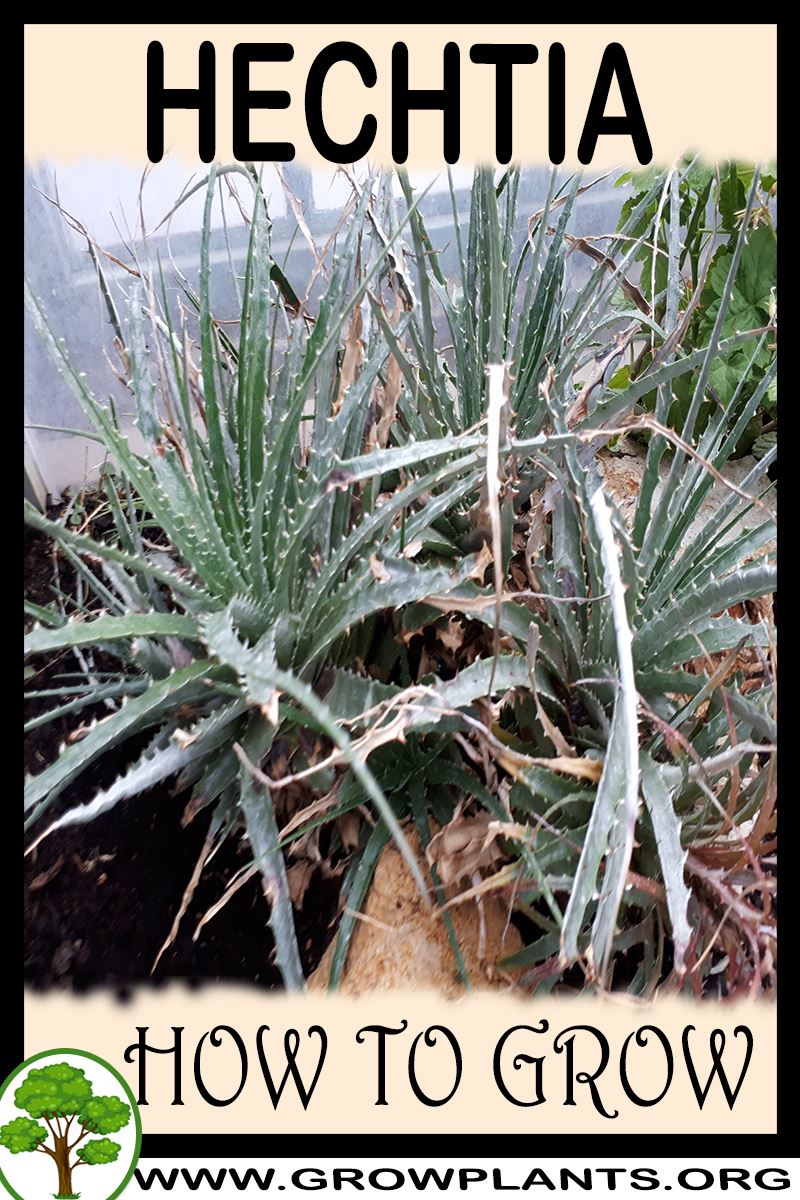
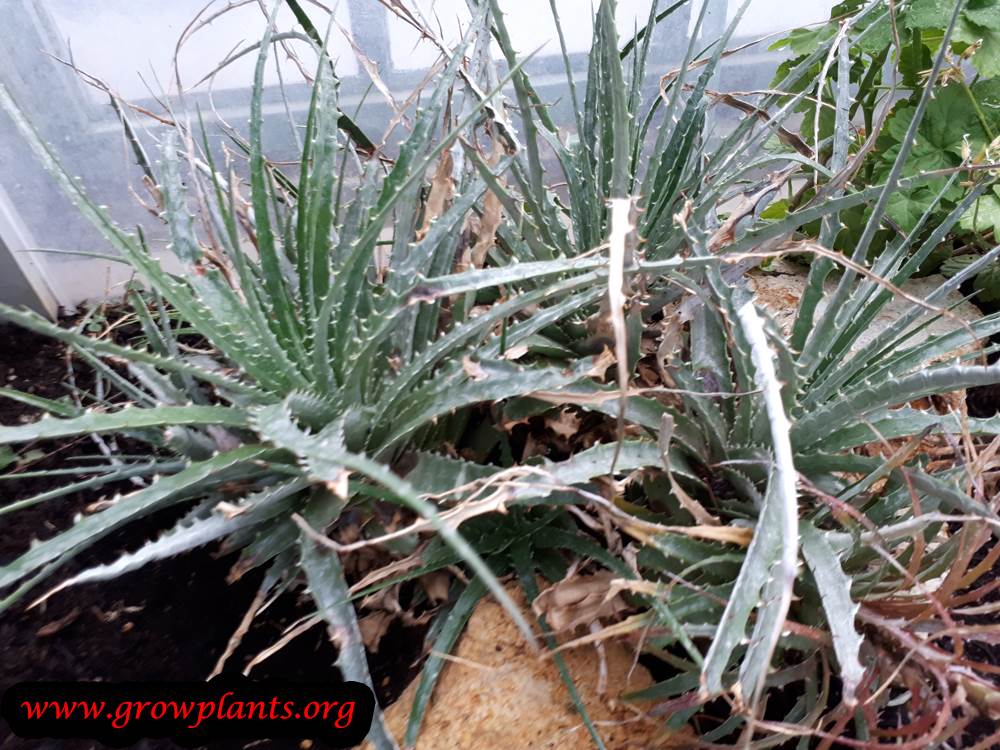
- Leaves & Foliage: Linear, sharply spine-edged leaves with pointed tips, colouring green, red, purple, yellow or grey, arranged in a rosette.
- Flower Characteristics: Small white or red flowers borne deep within the rosette; male and female flowers on separate plants (dioecious).
Primary Uses & Landscape Value
- Functional & Ornamental Roles: Ornamental foliage bromeliad for containers, mounted culture or bright indoor spots; grown for its colourful spiny rosettes.
Care Guide: Planting, Soil & Watering
Overview: Hechtia is a rosette-forming bromeliad that grows best in bright, indirect light out of direct sun, in a warm, frost-free spot. It wants a light, airy, slightly acidic medium that stays moist yet drains and breathes freely, much like the rocky, epiphytic perches it occupies in the wild.
Quick Care Requirements
| Requirement | Ideal Condition |
|---|---|
| Planting Season | Spring to summer in zone 10b, spring to autumn in zone 11, year-round in zone 12+ |
| Growth Rate | Slow to Moderate |
| Soil Type | Light, airy, free-draining |
| Soil pH | Slightly acidic |
| Water Need | Moderate – keep moist but never waterlogged |
Planting & Establishment
- Best Planting Season: Plant during the warm season — spring to summer in zone 10b, spring to autumn in zone 11, and year-round in zone 12 and warmer; keep it above about 15°C (59°F) for best growth.
- How to Plant:
- Hole Preparation: Because it is naturally an epiphyte, it is often best set into a container or mounted rather than deep ground; give it an open pocket of loose, fast-draining medium.
- Soil Amendments: Use a light, well-aerated mix; adding bark or other coarse material keeps it open and holds moisture at the roots without compacting.
- Planting Depth: Set the rosette so its base rests at the surface of the medium; do not bury the crown, which will rot if kept buried and wet.
- Growth Speed & Expectations: A slow-to-moderate grower reaching about 10-40 cm (4-16 in).
Soil, Watering & Drainage Care
- Soil Mix & Drainage Needs: Grow in a light, breathable, slightly acidic medium with sharp drainage; if mounted on cork or bark, cover the roots with bark or moss to hold humidity. Purified or rainwater is preferable to hard tap water.
- Watering Schedule & Technique:
- Young / Newly Planted: Keep the medium and roots consistently moist while establishing, and maintain good humidity.
- Established: Water to keep it moist, and pour a little water into the central cup of the rosette; always let excess drain away freely.
- Seasonal Adjustments: Maintain moisture and humidity in warm growth; ease back in cooler weather, keeping it warm and never soggy.
Climate, Light & Hardiness
Hechtia is a bromeliad suited to subtropical, mediterranean, or tropical climates, or grown as a houseplant elsewhere, doing best in half shade to full (lightly lit) shade without direct sun. It is frost-sensitive and listed hardy outdoors from about USDA zone 10b upward; the site data notes it is better kept above roughly 15°C (59°F), though it can survive brief dips to about 3°C (37°F) even though that isn't recommended.
Quick Climate Specifications
| Climate Zones | Subtropics, mediterranean, tropical (or houseplant) |
|---|---|
| USDA Hardiness Zones | 10b+ |
| Optimal Temp Range | Above approximately 15°C (59°F) |
| Approx. Survival Minimum | Approximately 3°C (37°F), briefly, though not recommended |
| Frost Tolerance | Very Low |
| Light Conditions | Half Shade (no direct light) to Full Shade (with light) |
Sunlight & Light Exposure
Optimal Light Setup
Bright but indirect light suits it best; avoid direct sun exposure.
Shade & Heat Management
Direct sun burns both the leaves and flowers, leaving visible scorch marks, so filtered or indirect light is essential year-round.
Temperature Extremes & Hardiness
USDA Hardiness & Regional Limits
Reliable outdoors year-round only from about zone 10b upward; elsewhere it needs container culture that can be moved under cover for winter.
Cold Damage & Winter Protection
Best kept above roughly 15°C (59°F); it can tolerate brief dips to around 3°C (37°F), but the site data is clear this is a survival threshold, not a recommended condition.
Frost Sensitivity
Very frost-sensitive as a warmth-loving epiphytic/terrestrial bromeliad; avoid any exposure to freezing.
Wind, Humidity & Microclimate
Humidity Preferences
Needs consistently high humidity and moist (ideally purified or rain) water, reflecting its native habit of growing on rocks or trees in humid tropical forest with heavy rainfall.
Microclimate Recommendations
A warm, humid, filtered-light microclimate - whether on bark, in a well-ventilated pot, or under greenhouse-style cover - matches its epiphytic origins best.
Growing in Pots, Balconies & Indoors
Hechtia (Hechtia) is a small bromeliad of 10-40 cm (4-16 in). The grower confirms it makes an easy houseplant – as a natural epiphyte it is actually happier grown in a pot or on cork than in the open ground.
Quick Details
- Container Size: A small pot, or mount it on cork/bark – its roots are mainly for anchorage
- Indoor Suitability: A good, easy houseplant
- Best Spot: Bright light but no direct sun, which scorches the leaves and flowers
- Soil & Drainage: Very open, fast-draining bromeliad/epiphyte mix – or bark, no soil at all
- Watering in Pots: Average water poured into the central rosette; keep humid but well ventilated
Indoors & On the Windowsill
- An easy houseplant: The grower marks it as suitable indoors – away from wind, with steady humidity, it is simple to give it what it needs.
- Light & water: Bright, filtered light without direct sun; fill the central cup/rosette with water and keep the roots humid but never sodden.
On a Balcony or Patio
- Light & wind: Give it a shaded, sheltered spot out of direct sun and drying wind; the leaves burn easily and the mount or pot dries fast in a breeze.
Choosing the Pot, Soil & Long-Term Care
- Pot & drainage: Use a small, very free-draining pot and never leave it standing in water.
- Potting mix: An open, airy epiphyte/bromeliad mix, or grow it soil-free on bark.
- Feeding: A weak feed occasionally in the growing season is enough.
Grower’s Container Tip
- Grow it as an epiphyte: Because it is an epiphyte it does especially well mounted on cork or bark, disconnected from soil. If you mount it, keep the roots more humid and moist – cover them with a piece of bark or similar to hold moisture around the roots.
Fertilizing & Feeding
A naturally light feeder adapted to nutrient-poor conditions in the wild – a diluted, low-nitrogen feed during active growth is plenty, with no feeding right after potting or during its cool-season slowdown.
Quick Fertilizing Specs
| Feeding Level | Light – a naturally low-nutrient-demand bromeliad relative. |
|---|---|
| Main Nutrient Priority | Low nitrogen at reduced, diluted strength. |
| Best Feeding Period | The warm active-growth season only, once the plant is well established. |
| Organic Options | Not typically fed with heavy organic amendments; a light, diluted mineral feed is preferred. |
| Micronutrients | Iron and manganese support general leaf color where a complete diluted feed is used. |
| Reduce/Stop Feeding | No feeding right after potting or dividing, and none again during the cool or low-light slowdown. |
Feeding by Growth Stage
Settling in after planting or repotting
Let a newly potted or newly mounted Hechtia establish its roots undisturbed before introducing fertilizer.
| Nutrient direction | None – hold off on fertilizer while the plant settles into its new pot or mount. |
|---|---|
| Timing | The first stretch of time after potting, dividing daughter plants, or mounting on cork or bark. |
| Frequency | No feeding at this stage; wait for clear signs of new growth before starting to feed. |
| Fertilizer types | No feeding at this stage – let the roots establish in fresh mix or on the mount before adding fertilizer. |
| Precautions | Do not fertilize freshly divided or newly mounted plants; wait for visible new growth as a sign the roots have taken hold. |
Warm-season active growth
Support steady rosette growth and eventual flowering during the plant’s active growing period.
| Nutrient direction | A light, low-nitrogen feed at reduced strength – this bromeliad relative is naturally adapted to nutrient-poor, rocky or epiphytic conditions and does not want a rich diet. |
|---|---|
| Timing | The warm growing season once the plant is established and putting on new leaves. |
| Frequency | Feeding needs are minimal; a few light feedings spaced well apart through the growing season is plenty. |
| Fertilizer types | A diluted, balanced houseplant or bromeliad-formulated fertilizer applied at reduced strength., Fed through the soil or mix rather than concentrated in the central rosette, to avoid rot. |
| Routine trace nutrients | iron, manganese |
| Precautions | Rich, full-strength feeding is generally too much for this genus – dilute well and favor purified or rain water, since this plant can be sensitive to mineral-heavy tap water. |
Cool or low-light slowdown
Let the plant coast through the part of the year when light and warmth are reduced and growth naturally slows.
| Nutrient direction | None – withhold fertilizer while growth is minimal. |
|---|---|
| Timing | The cooler, lower-light months, or anytime the plant is not actively producing new leaves. |
| Frequency | No feeding at this stage; resume light feeding once active growth clearly restarts. |
| Fertilizer types | No feeding at this stage – the plant needs little to sustain it while growth is paused. |
| Precautions | Do not fertilize during this slowdown; unused nutrients can build up as salts around the roots with no active growth to absorb them. |
Nutrient Deficiency Signs & Corrections
Leaf tips turn brown, dry, or crispy while the rest of the leaf stays healthy.
| Possible causes | Mineral or salt buildup from hard tap water or over-concentrated fertilizer., Low humidity or dry air around the plant., Fluoride or chlorine sensitivity from treated tap water. |
|---|---|
| Appears first on | Leaf tips, especially on the outer, older leaves. |
| What to check | Water source – tap water hardness or treatment., Fertilizer strength and how often it has been applied., Ambient humidity around the plant. |
| Possible correction | Switch to purified, filtered, or rain water, flush the pot occasionally with plain water to clear built-up minerals, and dilute any fertilizer well below label strength. |
New leaves emerge pale, thin, or noticeably stretched rather than compact and colorful.
| Possible causes | Insufficient light, since low light causes stretching independent of nutrition., Excess nitrogen pushing soft, fast growth., General nutrient shortfall if the plant hasn’t been fed in a long time. |
|---|---|
| Appears first on | The newest, innermost leaves of the rosette. |
| What to check | Light levels at the plant’s current location., How long since the last light feeding., Whether recent fertilizer was unusually nitrogen-heavy. |
| Possible correction | Increase light gradually to avoid scorching an adjusted plant, and if feeding has lapsed for a long time, resume with a light, diluted, low-nitrogen feed. |
The plant produces very few new leaves and overall growth seems stalled during what should be its active season.
| Possible causes | Nutrient shortfall from extended periods without any feeding., Root stress from a mount or pot that has dried out repeatedly., Cooler-than-ideal temperatures suppressing growth. |
|---|---|
| Appears first on | Whole-rosette growth rate. |
| What to check | Feeding history over the past growing season., Watering and humidity consistency at the roots., Ambient temperature the plant is kept at. |
| Possible correction | Resume light, diluted feeding during the warm season, keep the root zone from drying out completely, and confirm the plant is kept warm enough. |
Pruning, Training & Seasonal Maintenance
Hechtia needs essentially no pruning beyond removing dead leaves as they occur – this is a small, spiny, slow-to-medium rosette plant with no woody framework and no benefit from cutting back healthy tissue. The only real task, and it can be done any time of year, is tidying up spent foliage and, eventually, the spent flowering rosette itself. Its sharp-edged, spine-tipped leaves make careful handling, more than any cutting technique, the main practical concern.
Quick Pruning & Maintenance Specs
| Pruning Tolerance | Low |
| Primary Pruning Window | Any time – sanitary removal only, not seasonal |
| Typical Frequency | As dead leaves appear |
| Main Objective | Remove dead/damaged leaves; later, remove the spent rosette after it flowers |
| Mature Plant Priority | Sanitary leaf removal; after flowering, clear the spent rosette to favor offsets |
| Best Tool Type | Precision snips, used with heavy gloves given the spine-tipped leaves |
| Avoid Heavy Pruning During | Always – no structural or rejuvenation pruning applies to this plant |
Pruning by Plant Age & Size
Newly Established
No pruning while the young rosette settles in.
Young / Formative
No structural training applies to a spiny rosette plant; the only care is avoiding unnecessary handling of the sharp leaf edges.
Mature / Established
Remove dead or browned lower leaves as they appear. Like many rosette-forming bromeliads, an individual Hechtia rosette typically flowers once and then declines; once a rosette has finished flowering and is clearly dying back, cut it away near its base to redirect the plant’s energy to its offsets (pups).
Special Growth to Remove
Dead or browned leaves, cut at the base without disturbing the rosette’s growing center. The spent flowering rosette itself, once it has bloomed and begun to decline, should be removed to favor the offsets that will continue the plant. Offsets/pups can otherwise be left in place to fill out the clump, or divided off if the container is becoming crowded.
Container & Small-Space Pruning
This is a small plant (10-40cm) commonly grown in pots; container care is mostly about thinning offsets if the clump becomes overcrowded, not about pruning the plant’s own growth.
Tools
Precision snips for dead-leaf and spent-rosette removal – no secateurs, loppers or saw are needed on a plant this size and structure. Thick gloves or gauntlets are essential given the sharp, spine-edged leaves noted in this plant’s own description.
Tool Hygiene & Disease Risk
Routine: clean tools are sufficient. No significant tool-transmitted disease risk is documented for this species; its noted pest (mealybugs) is not blade-spread.
Cut Placement & Technique
Cut dead leaves at their base without cutting into living tissue or the rosette’s growing center. When removing a spent flowering rosette, cut it away near its base, above any visible offsets, taking care not to damage the pups.
Heavy Pruning & Rejuvenation
Not applicable. This plant has no capacity for, or need of, hard cutback or rejuvenation pruning – renewal happens through offsets replacing a spent rosette, not through cutting the plant back.
Post-Pruning Care
Minimal aftercare is needed; watch the cut base of a removed rosette for rot in humid or wet conditions, since there is no woody tissue to seal the wound the way a shrub would.
Common Pruning Mistakes
Cutting into healthy green leaf tissue unnecessarily; handling the plant without gloves given its sharp, spine-tipped leaves; removing offsets before they are established enough to survive on their own if propagation is the goal.
When NOT to Prune
Avoid cutting living tissue for cosmetic reasons – there is no benefit to routine shaping on this plant. Avoid removing pups before they have rooted in if you want to propagate them.
Recommended Tools (by task)
- precision_snips – the only cutting tool needed, for dead-leaf and spent-rosette removal.
Propagation Guide
Hechtia is most reliably propagated by separating rooted basal offsets (“pups”), which the site notes is needed to keep a particular cultivar true. Because this plant is dioecious, with male and female flowers on separate plants, seed propagation requires both sexes to be present and flowering together, and resulting seedlings will vary in sex. Offset division is easy; seed propagation is more moderate given this pollination requirement.
Quick Propagation Specs
| Best Propagation Method | Offsets / daughter plants (pups) |
| Alternative Methods | Seed |
| Propagation Difficulty | Easy by offsets; Moderate by seed |
| Seed True-to-Type | Variable — being dioecious, seed requires both a male and a female plant, and seedlings include both sexes |
| Vegetative True-to-Type | Yes, and necessary to keep a specific cultivar |
| Best Propagation Season | Spring to summer in hardiness zone 10b, spring to autumn in zone 11, all year in zone 12+ |
Growing from Seed
Seed Handling & Viability
Because Hechtia bears male and female flowers on separate plants, viable seed only forms when both a male and a female plant flower together; seed collected from a single plant alone will not be fertile.
Sowing Season
Spring to summer in hardiness zone 10b, spring to autumn in zone 11, and all year in zone 12 and above.
Germination Conditions
Warm and humid, with bright but indirect light, in keeping with this plant’s general preference for half shade over direct sun.
Division, Offsets, Pups & Suckers
Offsets (“pups”) forming at the base of the rosette are the standard way to propagate this plant and the only way to keep a specific cultivar or color form true. Wait until an offset has developed its own root system and reached roughly a third to half the size of the parent rosette before separating and potting it on its own.
Bloom & Flower Guide
Quick Details
- Bloom Season: Summer into autumn
- Time to First Bloom: Only mature rosettes flower, usually after several years of slow growth
- Flower Appearance: Small white or red flowers carried on a tall spike that rises from the centre of the spiny rosette
- Edibility: Grown as an ornamental; the flowers are not eaten
Detailed Blooming Overview
Hechtia is a terrestrial bromeliad grown for its rosette of stiff, spiny, colourful leaves, but a mature plant will send up a tall, branching flower spike from the centre of the rosette. The plants are dioecious — male and female flowers are borne on separate plants — so you need both to set seed. Unlike some bromeliads, the rosette is not always killed by flowering, and clumps build up over time.
Flower Characteristics
- Small flowers in white or red, held in numbers along a branched spike.
- The flowering spike rises well above the rosette of spiny leaves.
- Male and female flowers are on separate plants.
Bloom Care & Thinning
- Light: Bright light and the warmth of a well-established plant are what bring on the spike.
- Handle with care: The leaf margins are sharply spined, so mind your hands when working around a flowering rosette.
- After flowering: Cut the spent spike back once it fades; the clump carries on through its offsets.
Pests, Diseases & Troubleshooting
Overview: Hechtias are tough, spiny, terrestrial bromeliads adapted to hot, dry, rocky sites, and like most xeric bromeliads they are seldom seriously troubled by pests. The real risks are sap-sucking insects sheltering among the tight, armed leaf bases and – above all – crown or root rot from overwatering and poor drainage.
Quick Troubleshooting Overview
| Issue / Pest | Main Symptom | Primary Solution |
|---|---|---|
| Mealybug | White cottony fluff deep in leaf axils | Alcohol swab, insecticidal soap/oil, isolate |
| Scale | Brown/grey bumps on leaves | Scrape off, horticultural oil |
| Crown / root rot | Soft, browning base; collapse in wet soil | Correct drainage; remove rotted tissue |
| Overwatering | Yellowing, mushy centre | Dry mix, water sparingly |
Common Pests & Management
- Mealybug (Pseudococcus / Planococcus spp.):
- Symptoms: White, waxy, cottony clusters hidden in the dense, spiny leaf axils and rosette centre, with honeydew and sooty mould; the tight architecture makes them hard to spot until numbers build.
- Prevention & Control: Spot-treat with 70% alcohol on a cotton bud; for wider infestations spray insecticidal soap or horticultural oil into the axils (mind the spines), repeating to catch hatchlings. Quarantine new plants.
- Scale (Diaspididae & Coccidae):
- Symptoms: Immobile brown, grey or tan bumps stuck to the tough leaves; soft scale leaves honeydew.
- Prevention & Control: Scrape or brush off and wipe with alcohol; horticultural oil smothers crawlers. Inspect leaf undersides and bases.
- Root mealybug (Rhizoecus spp.):
- Symptoms: White waxy insects on the roots and at the soil line, found at repotting; plants stall and lose vigour.
- Prevention & Control: Bare-root, wash and trim affected roots, repot into fresh gritty mix, and drench with horticultural oil or insecticidal soap solution.
- Aphids (Aphididae):
- Symptoms: Soft green or grey insects on the emerging flower spike, causing distortion and honeydew – a flowering-time nuisance rather than a leaf threat.
- Prevention & Control: Rinse off or pinch out the spike; insecticidal soap for persistent clusters.
Diseases & Fungal Issues
- Crown & root rot (Pythium / Phytophthora / Erwinia spp.):
- Symptoms: The central leaves and base turn soft, brown and slimy and pull away easily; the rosette collapses. Follows water sitting in the crown, soggy mix, or cold wet conditions.
- Treatment & Management: Remove rotted tissue back to firm flesh, dry the plant, and re-establish healthy offsets or pups in gritty, fast-draining mix. Water the soil rather than the crown and never leave the plant wet and cold.
- Fungal leaf spot (various fungi):
- Symptoms: Brown or black spots on leaves in stagnant, overly humid conditions.
- Treatment & Management: Improve airflow and light, avoid wetting the foliage, remove affected leaves; copper fungicide only if it spreads.
Growing Difficulties & Abiotic Problems
- Overwatering & rot:
- Cause & Symptoms: As a xeric plant, Hechtia rots quickly in wet, airless soil – yellowing, softening and centre collapse follow.
- Correction Strategy: Grow in a sharply-drained, mostly-mineral mix, water only when dry, and give strong light and airflow. Terracotta helps the root ball dry.
- Insufficient light:
- Cause & Symptoms: Weak light produces pale, loose, floppy growth and dull colour (Hechtias colour up in strong sun).
- Correction Strategy: Give full sun to very bright light; increase gradually to avoid scorch.
- Cold damage:
- Cause & Symptoms: These warm-climate bromeliads are frost-tender; cold scorches and blackens foliage.
- Correction Strategy: Protect from frost, grow under cover in cold climates, and keep dry through cold spells.
What Helps – Products & Tools
Management is mostly cultural – gritty mix, sun, restraint with water. For pests: 70% alcohol swabs and insecticidal soap or horticultural/neem oil for mealybug and scale, and copper fungicide only if leaf spot or rot appears. Sulfur or cinnamon dresses cut surfaces after removing rot.