Plant Profile & Key Characteristics
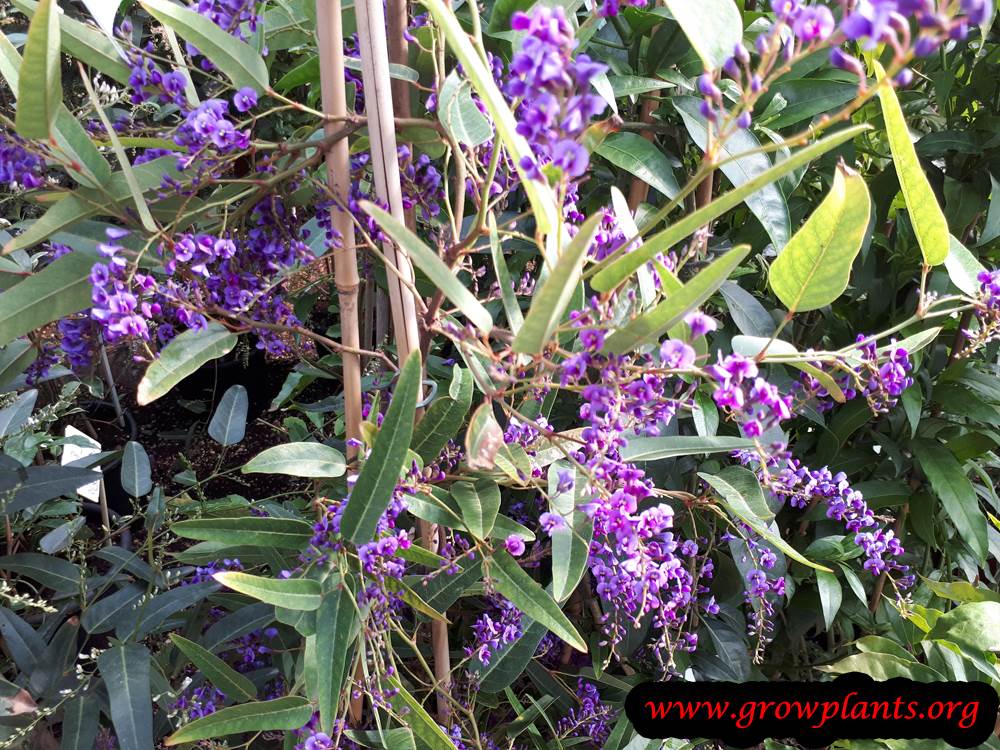
Overview: An evergreen twining vine (coral pea) reaching 3-5 m, clothed in narrow leaves and, in the cooler months, sprays of small fragrant pea-shaped flowers. Grown as a fast, fragrant ornamental climber and screening or hedge plant.
Quick Specifications
| Specification | Attribute |
|---|---|
| Plant Type / Life Cycle | Perennial (evergreen vine / climber) |
| Foliage Type | Evergreen |
| Mature Size | 3-5 m long (10-15 ft) |
| Growth Rate | Fast |
| Hardiness | USDA zone 10+ |
Growth Form & Structure
- Height & Spread: Climbs and scrambles 3-5 m on supports; can be container-grown and trained, and is vigorous to the point of being aggressive if unchecked.
- Growth Habit & Form: Twining woody climber suited to trellises, fences and screens, or used as a groundcover or hedge.
- Lifespan & Maturity: Long-lived evergreen; a hard prune after flowering promotes the next season’s growth and bloom.
Anatomy & Physical Features
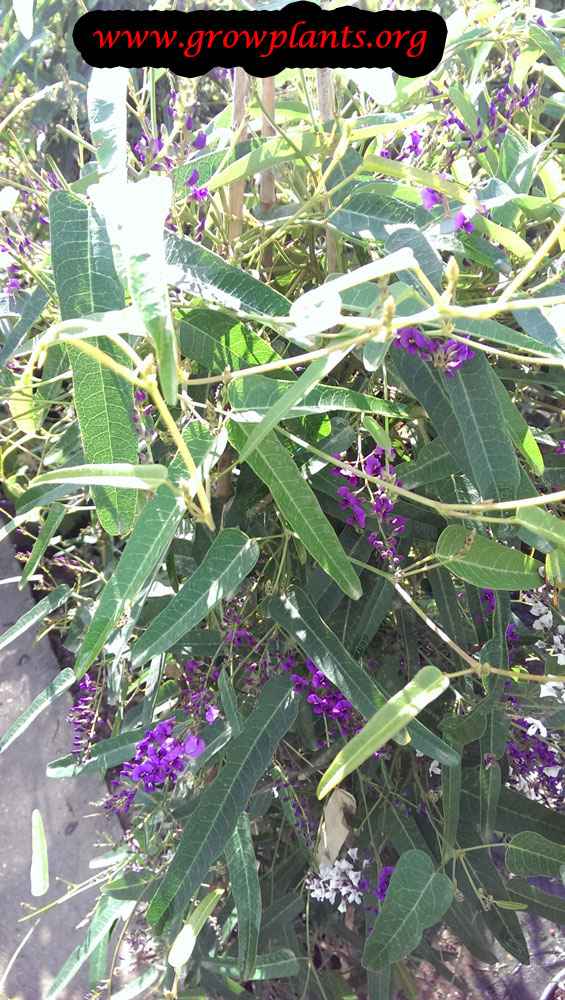
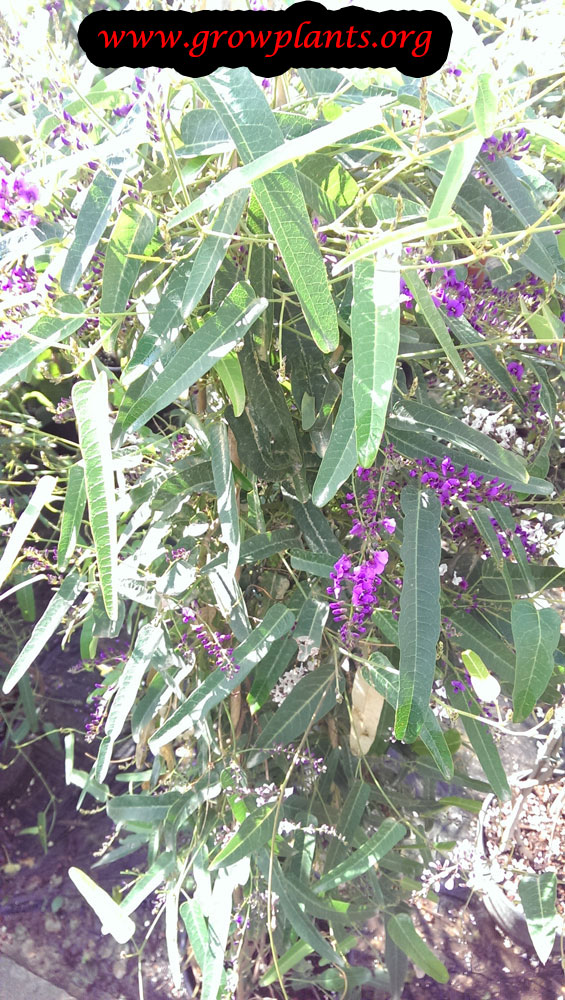
- Leaves & Foliage: Green leaves, linear to lanceolate.
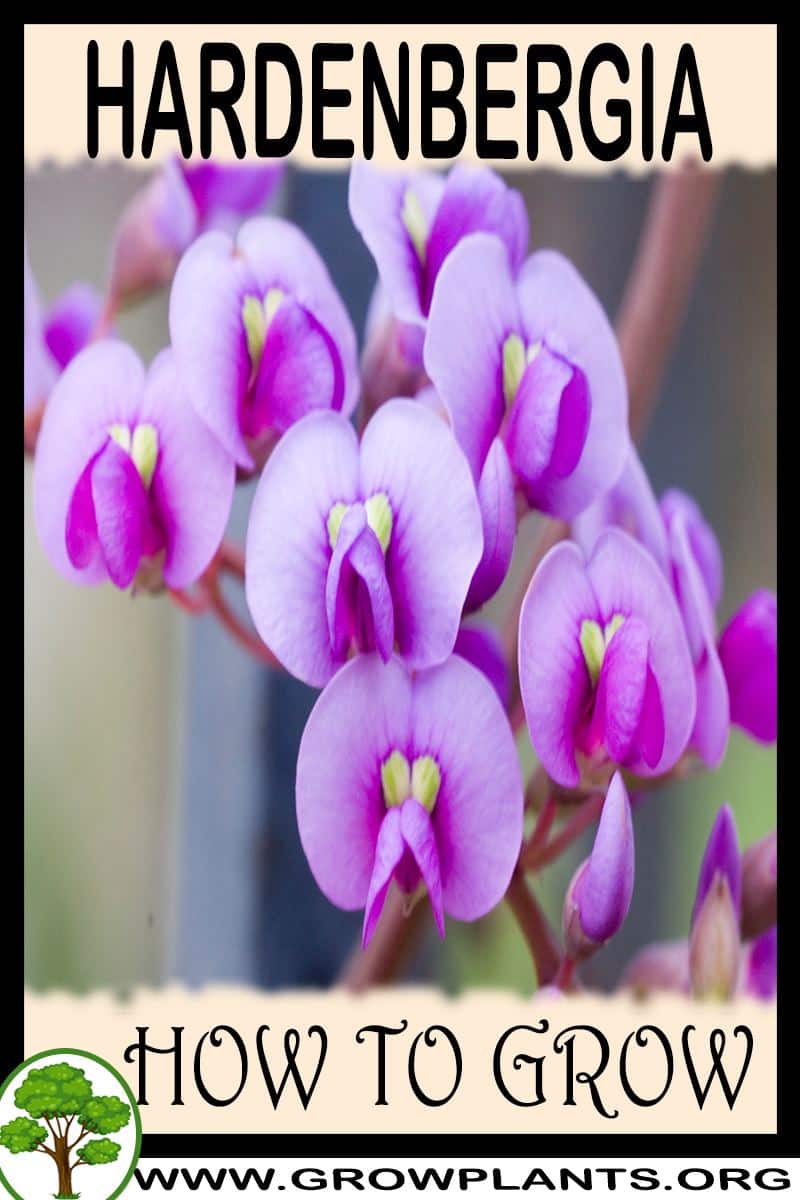
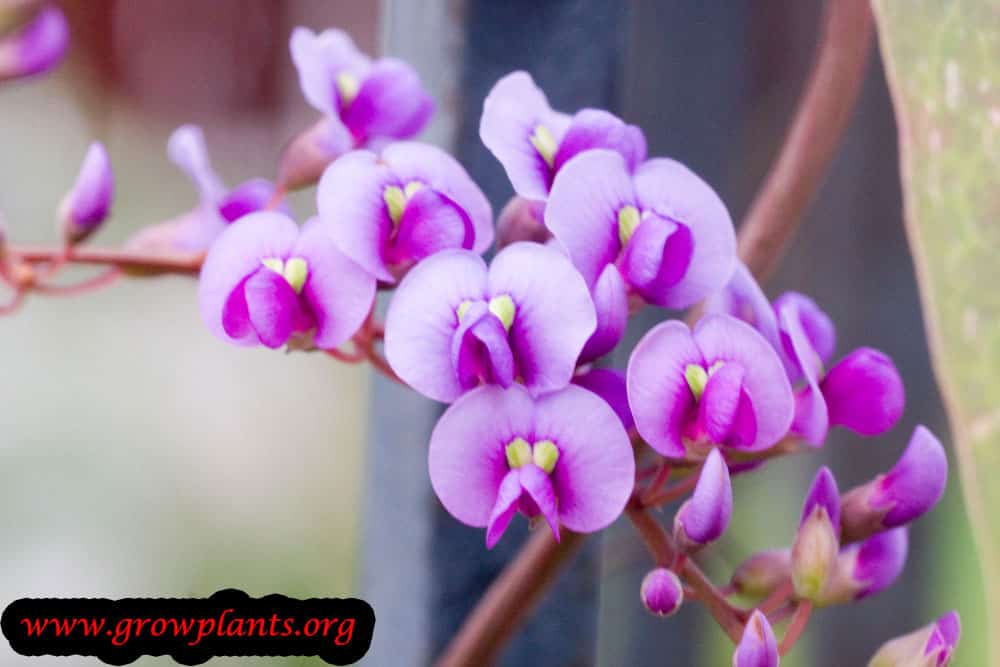
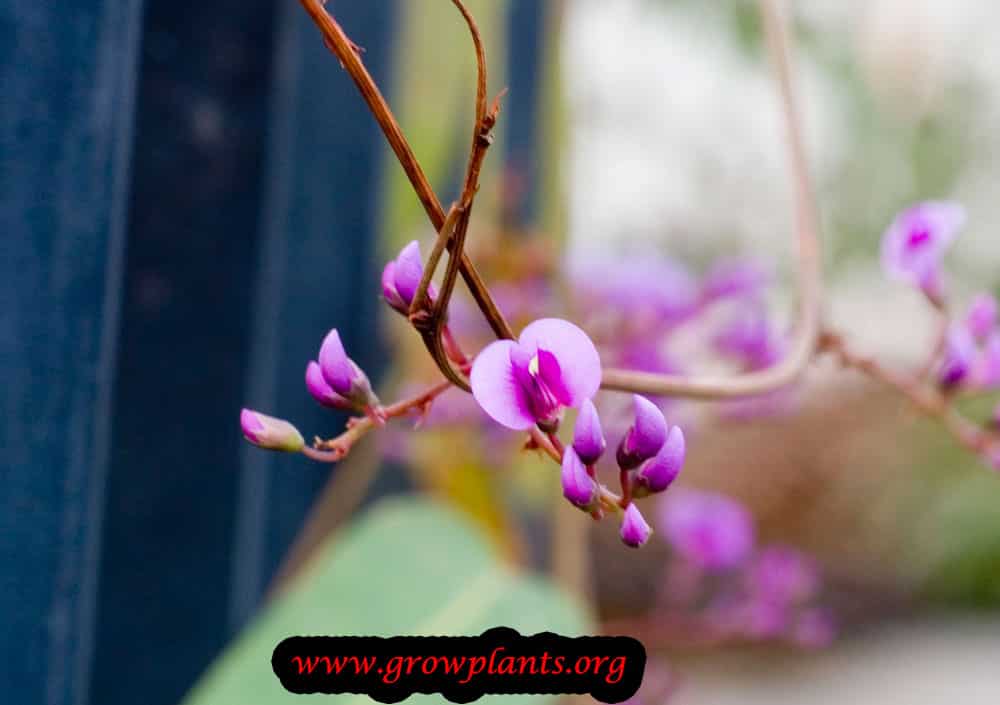
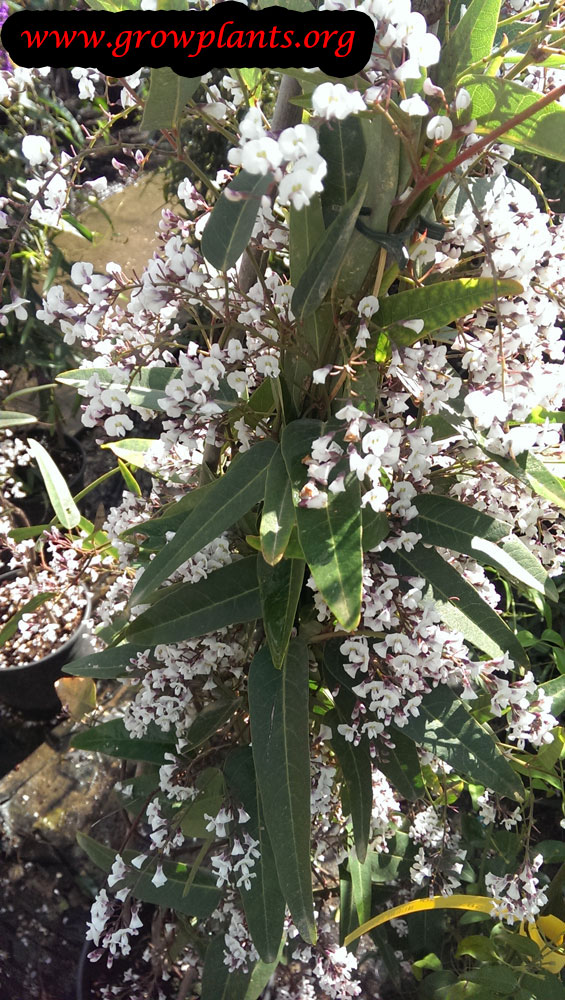
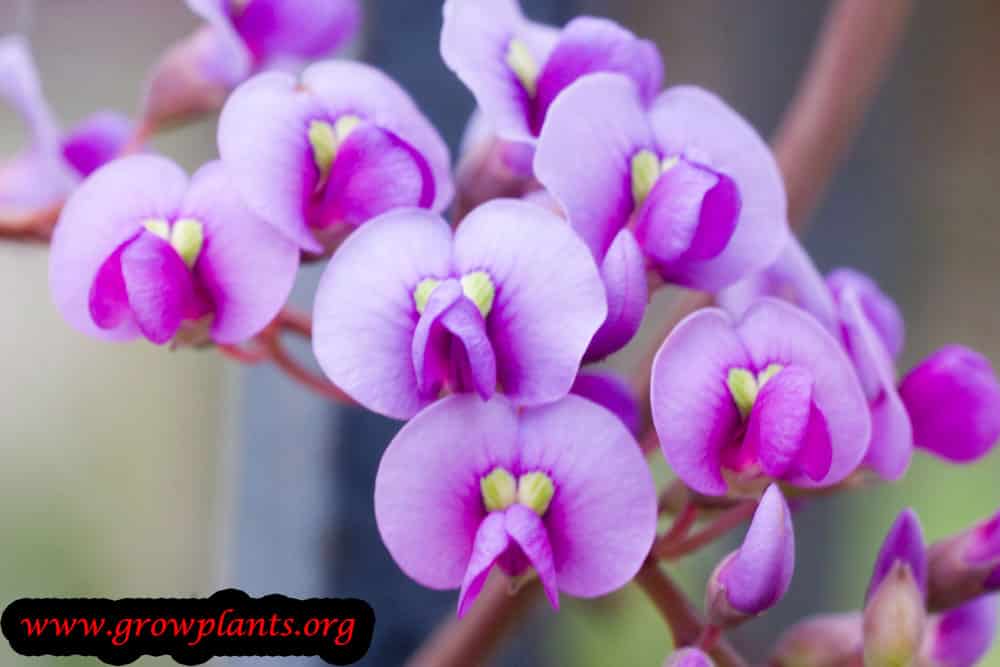
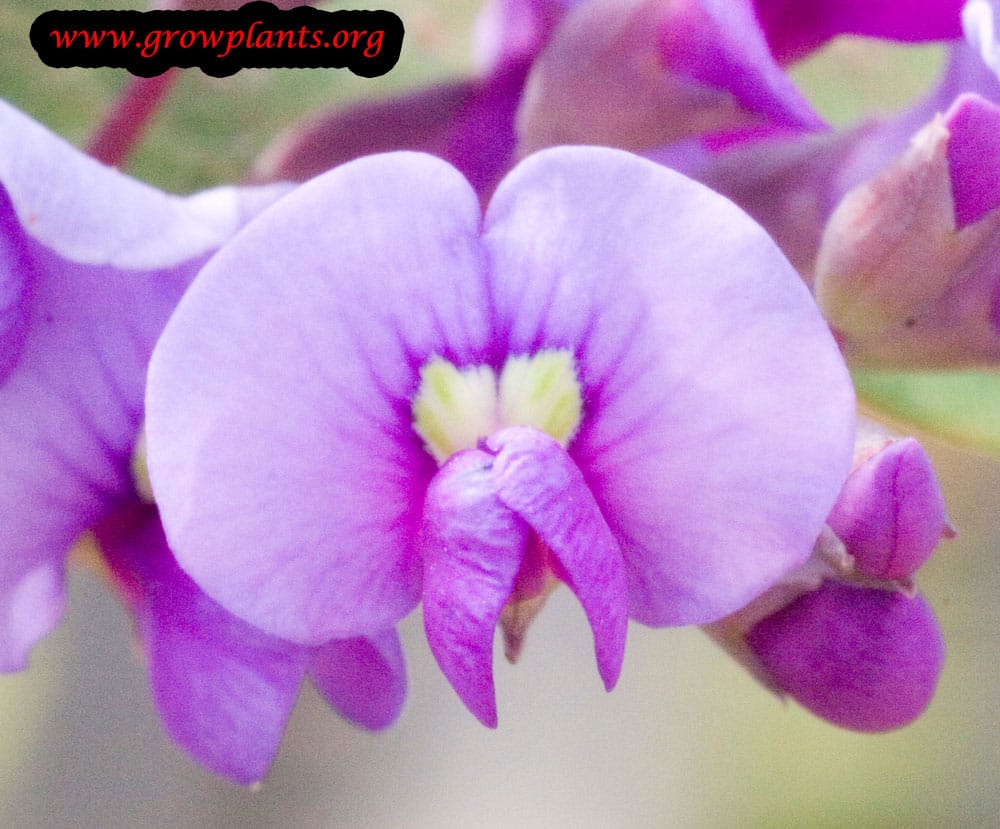
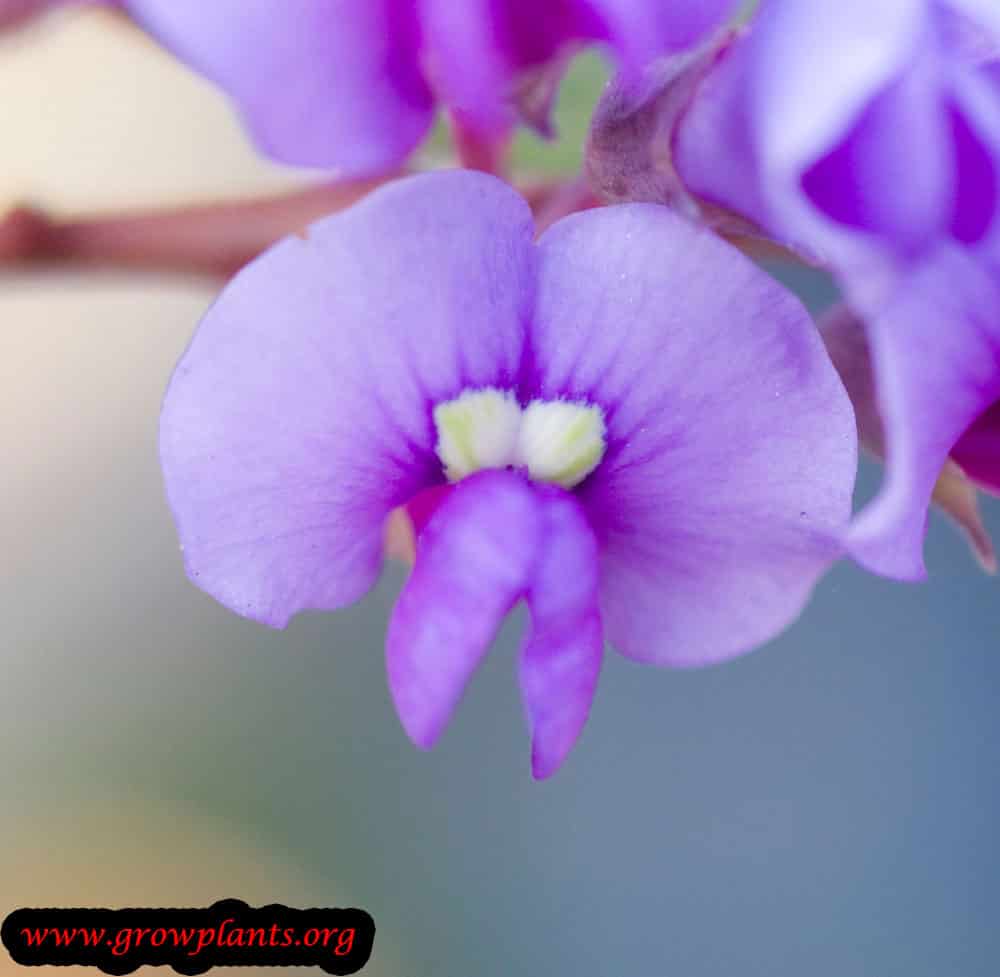
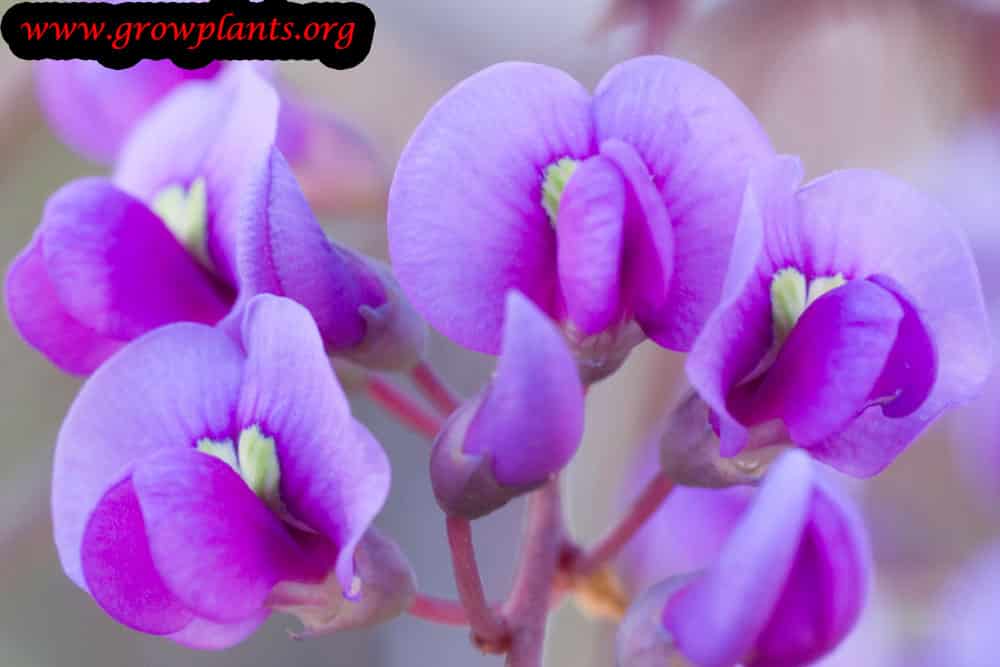
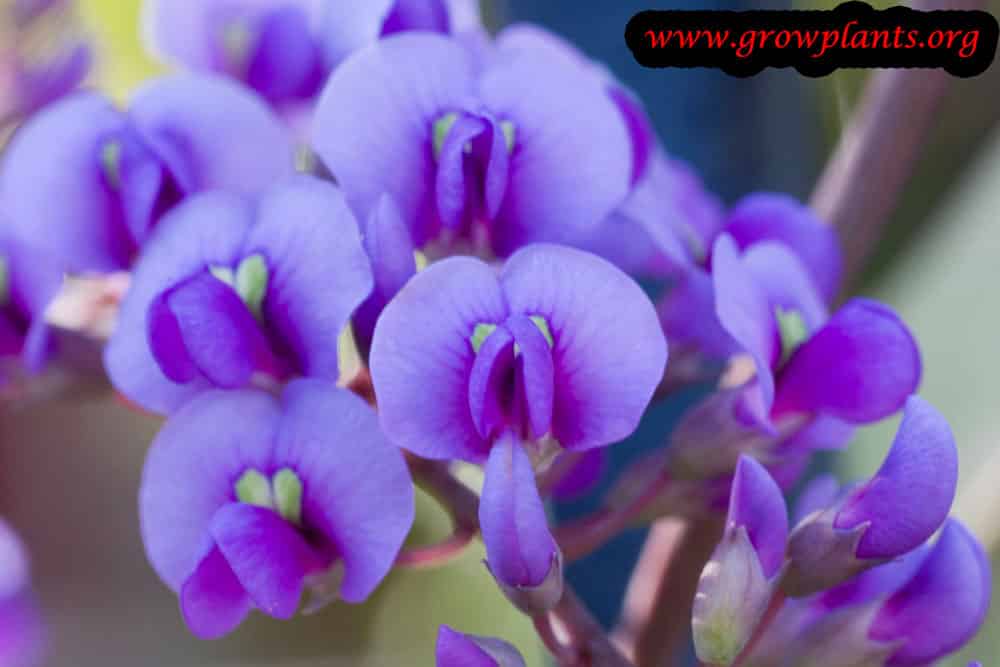
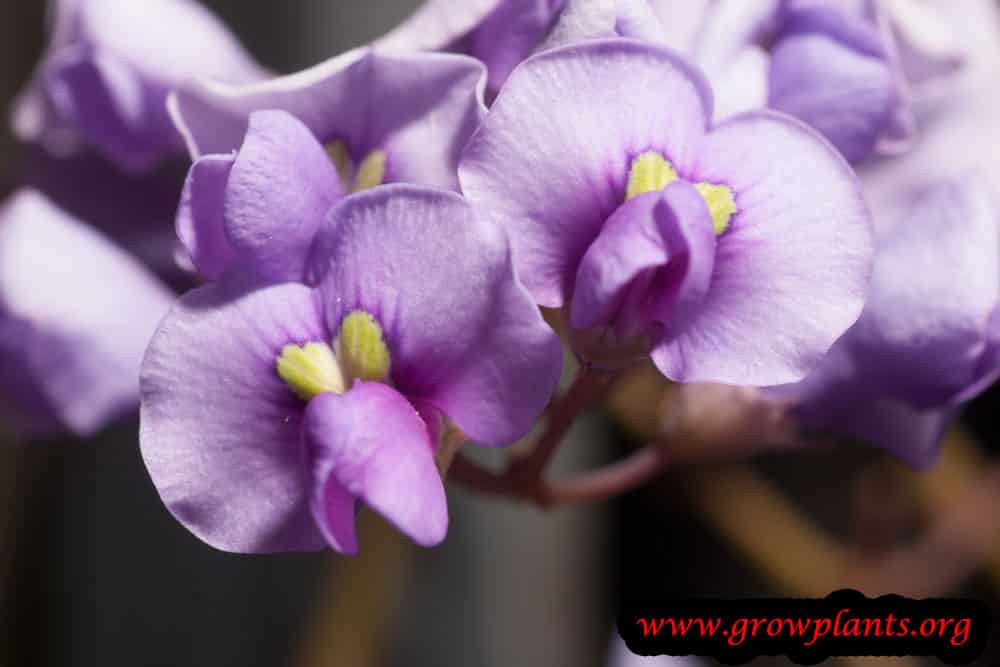
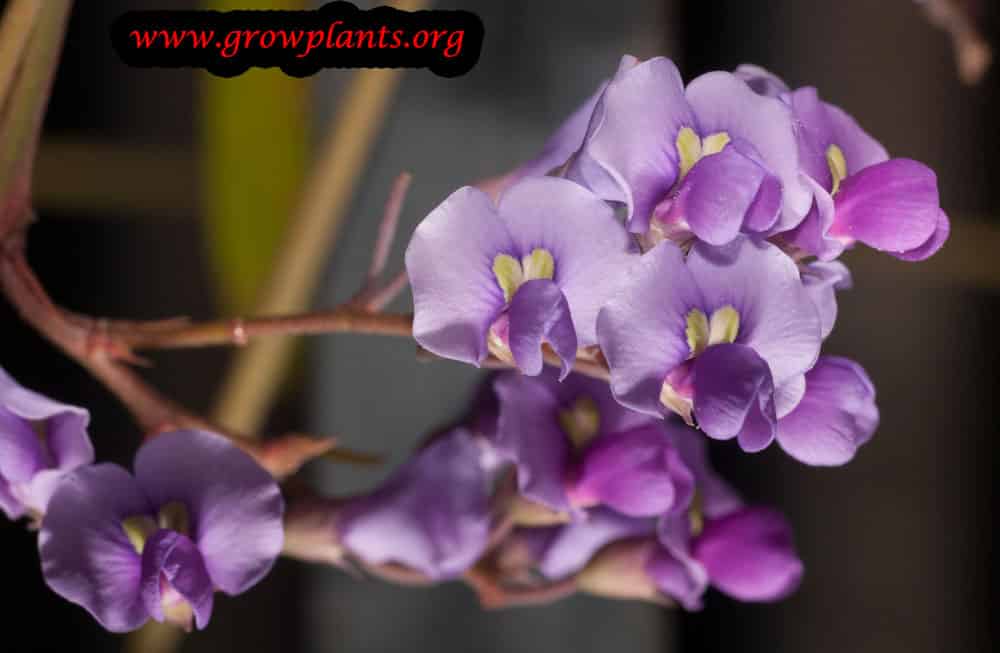
- Flower Characteristics: Small (3-6 mm) fragrant pea-shaped flowers – purple, pink or white – carried in clusters.
Primary Uses & Landscape Value
- Functional & Ornamental Roles: Fragrant ornamental climber for trellises, fences and screening; can be used as a hedge or groundcover.
Care Guide: Planting, Soil & Watering
Overview: Hardenbergia is a vigorous evergreen climbing legume grown for its sprays of pea-like flowers. It thrives in a sunny to part-shaded spot with light, well-draining soil and moderate, even moisture, tolerating light frost down to about -2°C.
Quick Care Requirements
| Requirement | Ideal Condition |
|---|---|
| Planting Season | The cooler, milder half of the year — autumn, winter and spring |
| Growth Rate | Fast |
| Soil Type | Light, well-draining soil |
| Water Need | Moderate — water evenly and let the surface dry between waterings; it dislikes waterlogged soil |
Planting & Establishment
- Best Planting Season: Plant in autumn, winter or spring, avoiding the peak heat of summer, so the roots establish in mild conditions; it withstands only light frost, to about -2°C.
- How to Plant:
- Hole Preparation: Dig a hole a little wider than the root ball beside a support, trellis or fence for the twining stems to climb.
- Soil Amendments: Improve heavy soil with grit or compost for drainage; as a nitrogen-fixing legume it needs no rich feeding, so avoid heavy fertiliser.
- Planting Depth: Set the plant at the depth it grew in its pot with the root collar at the surface; do not bury the stem.
- Growth Speed & Expectations: Growth is fast and can be aggressive — the vine climbs and spreads quickly, so give it room and a sturdy support, and prune after flowering to keep it in bounds.
Soil, Watering & Drainage Care
- Soil Mix & Drainage Needs: Provide light, free-draining soil; good drainage is essential, as the roots resent sitting in cold, wet ground.
- Watering Schedule & Technique:
- Young / Newly Planted: Water regularly to keep the soil evenly moist while the young vine establishes.
- Established: Water moderately once established, letting the surface dry between waterings; it is fairly drought-tolerant once settled in.
- Seasonal Adjustments: Water more in hot, dry spells and cut back in cool, wet weather.
Climate, Light & Hardiness
Hardenbergia is an evergreen twining vine for frost-free mediterranean, subtropical and mild tropical climates, flowering through the cooler months. It grows in full sun where summers are mild but wants some afternoon shade in hot inland heat, and it is frost-sensitive - established plants tolerating only brief, light frost.
Quick Climate Specifications
| Climate Zones | Mediterranean, subtropical, mild tropical |
|---|---|
| USDA Hardiness Zones | Approximately 10 and warmer (site data) |
| Optimal Temp Range | Mild, roughly 15–25 °C (59–77 °F) |
| Cold Damage Begins | Light frost damages foliage around −1 to −2 °C (30–28 °F) |
| Approx. Survival Minimum | Established plants tolerate brief dips to about −2 °C (28 °F) per site data; young plants are more tender |
| Frost Tolerance | Low |
| Light Conditions | Full sun in mild climates; part shade in hot inland areas |
| Wind Tolerance | Moderate (twining vine needing support) |
| Salt / Coastal Tolerance | Moderate (approximate) |
Sunlight & Light Exposure
Optimal Light Setup
Full sun in coastal and mild climates gives the strongest flowering; in regions with fierce summer sun give part or dappled shade.
Direct Sun Requirement
Good light is needed for a full flush of bloom. Full sun is fine except in genuinely hot climates, where the site data specifically warns against it.
Shade & Heat Management
In hot, dry inland areas provide afternoon shade to prevent leaf scorch and stress.
Best Exposure / Orientation
A warm, sheltered, sunny wall, fence or trellis in a frost-free aspect suits it well.
Temperature Extremes & Hardiness
USDA Hardiness & Regional Limits
Best in zone 10 and warmer - essentially frost-free to nearly frost-free gardens. It is not suited to areas with regular hard freezes, where it would need overhead protection to survive winter.
Cold Damage & Winter Protection
Foliage is damaged by frost; the site data frames its limit as “more than −2 °C.” Protect young plants over their first winters, and note that container plants freeze faster and are more exposed than those in open ground.
Frost Sensitivity
Low frost tolerance - only brief, light frost is survived, and cold tolerance varies with plant age, exposure duration and conditions.
Extreme Heat Tolerance
Moderate to good in mediterranean warmth, but full sun in hot climates scorches foliage; part shade offsets this.
Wind, Humidity & Microclimate
Humidity Preferences
Adaptable - it copes with both mediterranean dry air and humid subtropical conditions.
Dry-Air Tolerance
Good; it handles dry atmospheric conditions well.
Wind Tolerance
As a twining climber it must be tied in or trellised; strong wind can tear stems from their support, so a sheltered structure is best.
Coastal / Salt Tolerance
Shows moderate tolerance of coastal conditions, though exposure to direct salt-laden wind is best buffered.
Rainfall & Seasonal Moisture
Adapted to a winter-wet, summer-dry mediterranean rhythm and requires sharp drainage - the site data stresses well-drained soil.
Microclimate Recommendations
A warm, sunny, sheltered and well-drained frost-free pocket - against a sunny wall, for instance - gives the most reliable results.
Growing in Pots, Balconies & Indoors
Hardenbergia is a vigorous evergreen climber, and the grower confirms it can be grown both indoors and in containers. In a pot it stays more manageable and can be trained up a trellis or obelisk – give it the brightest light you have, as this vine flowers best in strong light.
Quick Details
- Container Size: A roomy pot (about 20-40 L / 5-10 gal) with a trellis or support – it is a climber that fills the space it is given
- Indoor Suitability: Suitable indoors per the grower – give it a very bright, sunny position and something to climb
- Best Spot: Bright light; full sun in cooler climates, part shade where summers are hot
- Soil & Drainage: Free-draining, organic-rich mix; as a legume it is not a hungry feeder
- Watering in Pots: Moderate – keep lightly moist and let the top dry between waterings; pots dry faster than open ground
Indoors & On the Windowsill
- Houseplant use: The grower marks it suitable indoors. Place it at a bright window with direct light and give it a trellis or hoop to twine around.
- Windowsill & light: It will not flower well in a dim corner – the more direct light, the better the bloom.
- Overwintering: Where it is too cold outdoors, a potted plant can be moved into a bright, frost-free room for winter and returned outside once mild.
On a Balcony or Patio
- Light & support: A sunny, sheltered balcony suits it well; secure the trellis against wind and let it climb a railing or screen.
- Watering & weight: Reflected heat from walls dries pots fast, so check moisture often. A large pot plus support is heavy – site it before filling.
Choosing the Pot, Soil & Long-Term Care
- Pot & drainage: Strong drainage holes and no standing-water saucer to avoid root rot; terracotta breathes and dries faster, glazed or plastic holds moisture longer.
- Potting mix: Well-aerated and organic-rich – a peat- or coir-based mix with perlite or vermiculite.
- Feeding: Pot nutrients leach with every watering, so feed lightly and regularly through the growing season; as a legume it needs only modest feeding.
- Repotting: Refresh the mix or pot up about every couple of years and lightly prune roots and top growth to keep it in bounds.
Growing this plant in a greenhouse
A greenhouse can give hardenbergia frost protection and cold protection.
Greenhouse at a glance
| Greenhouse suitability | Conditional - depends on your climate |
|---|---|
| Main benefits | frost protection, cold protection |
| Season extension | earlier spring & later autumn |
| Outdoor protection advisable below | about 5°C |
| Maintain greenhouse minimum | around 5°C for active growth |
| Suitable types | unheated greenhouse, polycarbonate greenhouse, lean-to |
| Heating | Heating is optional - useful mainly for winter growing in cold areas. |
Related greenhouse guides
- Greenhouses: How to Choose the Right Greenhouse
- Best Lean-To Greenhouses
- Polycarbonate Greenhouses: What to Look for Before Buying
Fertilizing & Feeding
Hardenbergia is a vigorous, undemanding legume climber; as a nitrogen-fixer it rarely needs rich feeding, and light nutrition through the growing season is usually enough.
Quick Fertilizing Specs
| Feeding Level | Light – an undemanding, nitrogen-fixing climber |
|---|---|
| Main Nutrient Priority | Balanced nutrition with restrained nitrogen so leafy growth does not crowd out bloom |
| Best Feeding Period | Through the active growing season |
| Organic Options | Compost or well-rotted organic matter worked into the planting area |
| Soil pH | Prefers well-drained soil in the slightly acidic to near-neutral range |
| Reduce/Stop Feeding | Ease off during peak summer heat and cool-season rest |
| Micronutrients | Iron only if new growth yellows between the veins |
Feeding by Growth Stage
Establishment after planting
Encourage strong root development and steady new shoots on a newly planted vine.
| Nutrient direction | Gentle, balanced nutrition that favours root establishment over lush top growth. |
|---|---|
| Timing | In the first season after planting, once new growth begins. |
| Frequency | A light feeding as the young vine settles in. |
| Fertilizer types | A balanced complete fertilizer, Compost or other well-rotted organic matter |
| Precautions | Avoid heavy nitrogen, which pushes soft growth at the expense of roots and flowers. |
Active seasonal growth
Support vigorous climbing growth and a strong flowering display without excess foliage.
| Nutrient direction | Balanced nutrition with restrained nitrogen; as a legume it fixes much of its own nitrogen. |
|---|---|
| Timing | Through the active growing season. |
| Frequency | Light feedings spread across the growing season. |
| Fertilizer types | A balanced complete fertilizer, A slow-release granular feed |
| Precautions | Too much nitrogen favours leaves over the fragrant flowers; feed sparingly. |
Peak-heat and dormant rest
Let the vine coast through peak summer heat stress and any cool-season lull.
| Nutrient direction | None – withhold fertilizer while growth is stalled. |
|---|---|
| Timing | During peak summer heat and any cool-season rest. |
| Frequency | No feeding at this stage. |
| Fertilizer types | No feeding at this stage; resume when active growth returns. |
| Precautions | Do not fertilize stressed or resting plants; wait for active growth. |
Nutrient Deficiency Signs & Corrections
Older, lower leaves fade to pale green or yellow while new growth stays greener.
| Possible causes | General nitrogen shortage in a poor or leached soil, Waterlogged or compacted roots limiting uptake, Root damage or drought stress |
|---|---|
| Appears first on | Older, lower leaves |
| What to check | Soil drainage and recent watering, Whether the planting area is very poor or unmulched |
| Possible correction | Correct drainage and watering first; if the soil is genuinely poor, apply a balanced complete fertilizer at a modest rate and add organic matter. |
New leaves yellow between green veins.
| Possible causes | Iron made unavailable by alkaline or waterlogged soil, Poor drainage restricting root function, True iron shortage in the soil |
|---|---|
| Appears first on | Youngest leaves at the shoot tips |
| What to check | Soil pH and drainage, Whether symptoms follow wet spells |
| Possible correction | Improve drainage and correct soil pH; where needed apply a chelated iron product according to its label. |
Lush leafy growth but sparse flowering.
| Possible causes | Excess nitrogen driving foliage over flowers, Too much shade, Over-vigorous growth needing corrective pruning |
|---|---|
| Appears first on | Flowering shoots and the plant overall |
| What to check | Recent fertilizer, especially nearby high-nitrogen lawn feeds, Light levels and pruning timing |
| Possible correction | Cut back nitrogen and rely on balanced feeding; ensure adequate light and prune after flowering. |
Pruning, Training & Seasonal Maintenance
The genus Hardenbergia (purple coral pea) is grown as a fragrant ornamental climber and informal hedge. It is an evergreen, woody twining vine (a legume) that grows fast to 3–5 m and flowers in late winter to spring on wood made the previous season. That single fact sets the timing: it is pruned right after the bloom flush — the facts call for a spring cut and note that a strong cut improves the next year’s growth and bloom — so the new growth has the whole season to mature and set flower buds. It tolerates hard cutting well, which is useful because it is vigorous and inclined to tangle. Grown as a hedge or screen it can be lightly clipped, but selective cuts after bloom keep far more flower than formal shearing.
Quick Pruning & Maintenance Specs
| Pruning Tolerance | High – a robust legume vine that reshoots strongly from hard cuts |
| Primary Pruning Window | Spring, immediately after the main flowering flush |
| Secondary Maintenance Window | Growing season – tying in and thinning new twining growth |
| Typical Frequency | One shaping/renewal cut after bloom; ongoing tie-in and spot-thinning |
| Main Objective | Shape on its support, control the vigorous tangle, and renew flowering wood |
| Young Plant Priority | Guide onto the support and pinch to build well-spaced main stems |
| Mature Plant Priority | Cut back flowered growth, thin congestion, renew the oldest stems |
| Best Tool Type | Bypass secateurs and loppers; soft ties for training on the support |
| Avoid Heavy Pruning During | Full bloom, late summer/autumn, and near frost (tender) |
Pruning by Plant Age & Size
Newly Established
Get the young vine onto its support early and pinch the growing tips to make it branch; otherwise remove only damaged growth while the root system establishes.
Young / Formative
This is a twining vine, so ‘training’ means guiding and tying stems onto a trellis, fence or hedge frame and spacing out a few strong main stems. Pinch soft tips to encourage the branching, well-clothed cover it is grown for.
Mature / Established
Once established, the annual job is a shaping cut just after flowering: shorten the flowered growth, thin out the congested tangle, remove dead and crossing stems, and periodically cut one or two of the oldest woody stems back hard to renew the vine and keep its aggressive spread in bounds.
Seasonal Pruning Schedule
Late winter–spring (bloom): enjoy the flush; do not cut into it. Deadheading spent clusters afterwards tidies the plant.
Just after flowering (spring — main prune): cut back flowered stems, thin the tangle, and make any hard renewal cuts now — the resulting new growth has the full season to ripen and set next year’s flower buds.
Growing season (upkeep): tie in and pinch new twining growth and spot-thin where it congests, but avoid heavy cutting that would remove the wood carrying next season’s bloom.
Flowering & Fruiting Wood
Hardenbergia flowers on wood produced the previous season, so pruning timing is everything: cut right after the bloom flush and the vigorous regrowth matures over summer to carry next year’s flowers. Prune in late summer, autumn or winter and you remove the very wood that would have bloomed, sacrificing the following display — which is exactly why a hard renewal cut is scheduled immediately after flowering, not before it.
Structural Pruning & Training
Select and space a few strong main stems on the support and remove crossing, inward or tangled growth; thinning improves both airflow and flowering on this dense grower. Height and spread must be actively contained because the vine is aggressive, and the oldest woody stems can be cut to the base in rotation to renew the framework.
Special Growth to Remove
The plant is grown on its own roots (not grafted), so there is no rootstock sucker to chase; remove instead any unwanted basal or root suckers where it spreads too far, dead and tangled stems, and spent flower clusters. As a nitrogen-fixing legume it needs little feeding — heavy nitrogen only drives leaf at the expense of flower.
Container & Small-Space Pruning
In a pot the vine is grown up an obelisk or frame and kept in scale by more frequent tip-pinching and thinning, with a harder cut after flowering to contain it. Tie in new growth regularly, and at repotting the roots can be trimmed to keep a long-term container plant in balance — something not done to the top growth in the ground.
Tools
Bypass secateurs handle the green and slender pea-vine stems and spent flower clusters; loppers deal with the older woody main stems when renewing the framework. Soft ties and stakes secure the twining growth to its support. A saw is rarely needed on such slim stems, and shearing it as a formal hedge costs flowers, so keep to selective cuts.
Tool Hygiene & Disease Risk
Routine. The listed problems — aphids and mites — are pests treated directly, not tool-borne diseases, so clean, sharp blades are enough. There is no need for between-cut disinfection on a healthy plant.
Cut Placement & Technique
Cut back to an outward-facing bud or node to steer regrowth away from the tangle, and make renewal cuts low at the base of the oldest stems. Shorten spent flower clusters to a bud, and time all significant cuts to just after the bloom flush.
Heavy Pruning & Rejuvenation
Renovation is well tolerated: an overgrown, tangled vine can be cut back hard after flowering and will reshoot strongly, as the facts confirm. Do it immediately after bloom so the new wood has time to set next season’s flowers, spread a very drastic reduction over a season if needed, and because the plant is frost-tender (hardy only to about −2°C), renovate after frost risk has passed, not before winter.
Post-Pruning Care
Water the fresh regrowth after a hard cut and re-tie the new stems to the support as they extend. Watch the soft new shoots for aphids and mites, and resist heavy nitrogen feeding, which on a legume produces leaf rather than the flowers you pruned to encourage.
Common Pruning Mistakes
- Pruning in summer, autumn or winter and cutting off the wood that carries next season’s flowers.
- Letting the aggressive vine smother its support or neighbouring plants for want of thinning.
- Feeding heavily (extra nitrogen) on a legume, so it runs to leaf instead of bloom.
- Shearing it as a formal hedge and losing most of the flower; hard-cutting just before frost on a tender vine.
When NOT to Prune
Do not prune hard just before or after frost on this tender vine, do not cut in late summer or autumn when you would remove next season’s flowering wood, and do not cut into the plant while it is in full bloom — wait until the flush has just finished.
Recommended Tools (by task)
- bypass_secateurs – shaping cuts, spent flower clusters and slender green stems.
- loppers – cutting older woody main stems to the base when renewing the framework.
- soft_ties_stakes – tying and guiding the twining growth onto its trellis, fence or hedge support.
Pruning Troubleshooting
| Problem | Possible Cause | What to Check | Corrective Action |
| Few flowers after pruning | Cut in summer/autumn/winter, removing previous-season bloom wood | When the last prune was done | Prune only just after the bloom flush so new wood can set buds |
| Lush leaf, little bloom | Too much nitrogen, or over-hard summer cutting | Feeding regime and cut timing | Stop feeding nitrogen (it is a legume); shift the main cut to post-bloom |
| Congested, tangled, bare-based vine | Never thinned or renewed | Density and age of the main stems | Thin the tangle and cut the oldest woody stems to the base in rotation |
| Dieback after pruning | Cut too close to frost on a tender vine | Season of the cut and frost dates | Delay hard cuts until frost risk has passed; renovate after bloom in spring |
Propagation Guide
Hardenbergia is a legume vine raised most often from seed after breaking the hard seed coat, with semi-hardwood cuttings used for named colour forms and to guarantee a particular plant. It is of moderate difficulty: the seed is easy once treated, while cuttings take a little more care.
Quick Propagation Specs
| Best Propagation Method | Seed after hard-coat treatment; semi-hardwood cuttings for named forms |
| Alternative Methods | Ground (serpentine) layering |
| Propagation Difficulty | Moderate |
| Seed True-to-Type | Mostly uniform for the species, but flower colour can vary; named colour forms are not true from seed |
| Vegetative True-to-Type | Yes |
| Best Propagation Season | Seed in spring; cuttings from late spring through summer |
| Germination Temperature | Warm, about 18–24°C (64–75°F) |
| Seed Sowing Depth | Shallow – about the seed’s own thickness |
Growing from Seed
Seed Handling & Viability
The hard-coated seed stores well dry for long periods, so it need not be sown fresh.
Dormancy & Pre-Sowing Treatment
Like other pea-family seed it has a hard, water-resistant coat (physical dormancy). Pour near-boiling water over the seed and leave it to soak overnight, or nick the coat; sow the seeds that swell, and re-treat any that stay hard. Untreated seed germinates poorly and unevenly.
Sowing Season
Sow in spring into warm conditions.
Sowing Depth & Orientation
Cover shallowly, to roughly the seed’s own thickness.
Germination Conditions
Keep the mix moist and warm; a free-draining seed compost suits this legume.
Germination Time
Treated seed usually comes up within a few weeks, though emergence can still be uneven.
Seedling Care
Grow the seedlings on in bright light with good drainage, and pinch the tips to encourage a bushy, well-branched young plant before it starts to climb.
Stem Cuttings
Cutting Type
Semi-hardwood cuttings of firm, current-season growth that is no longer soft at the tip.
Best Timing
Late spring into summer, once new growth has begun to firm.
Cutting Preparation
Take short lengths, remove the lower leaves, and keep the cuttings turgid.
Rooting Setup
Insert into a gritty, free-draining mix and keep warm and humid, for example in a covered tray or misted frame, with bright but indirect light.
Rooting Hormone
Beneficial – a rooting hormone improves and evens up the strike on semi-hardwood cuttings, though it is not strictly required.
Air & Ground Layering
As a long-stemmed scrambling vine it also lends itself to ground (serpentine) layering. In the cooler growing months, bend a flexible stem down to the soil, nick or wound it lightly on the underside, pin it into moist ground, and leave the tip free. Once roots have formed at the buried point, sever the new plant from the parent and pot it up. This is a low-effort way to obtain a few extra plants that are identical to the parent.
Bloom & Flower Guide
Quick Details
- Bloom Season: Autumn through winter and into spring, a welcome cool-season show
- Time to First Bloom: Young plants usually begin flowering within their first year or two once established
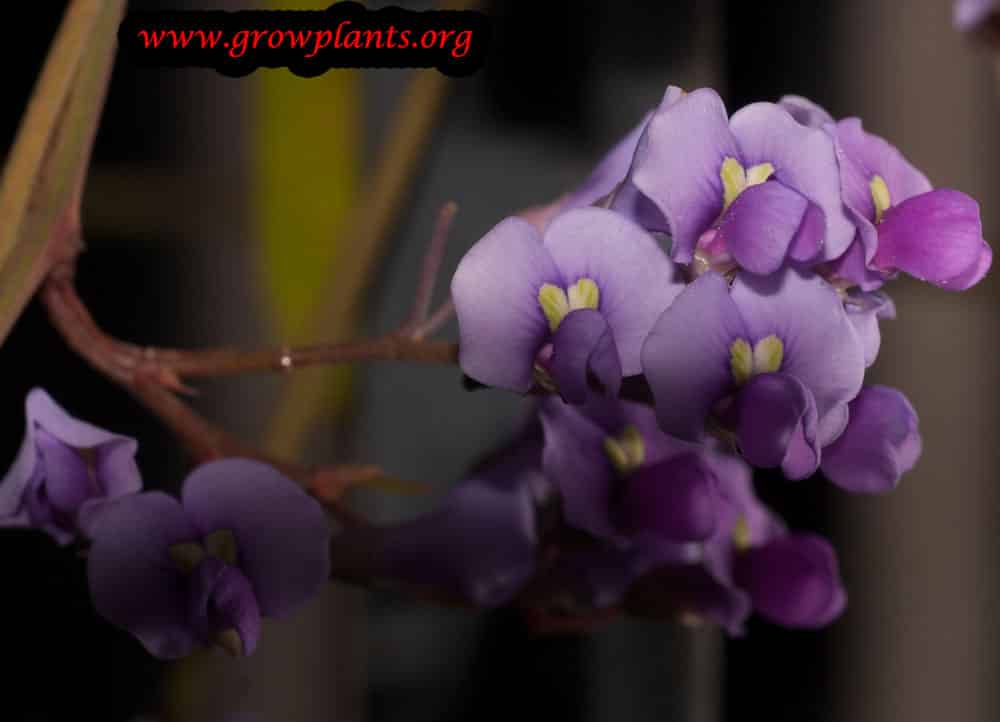
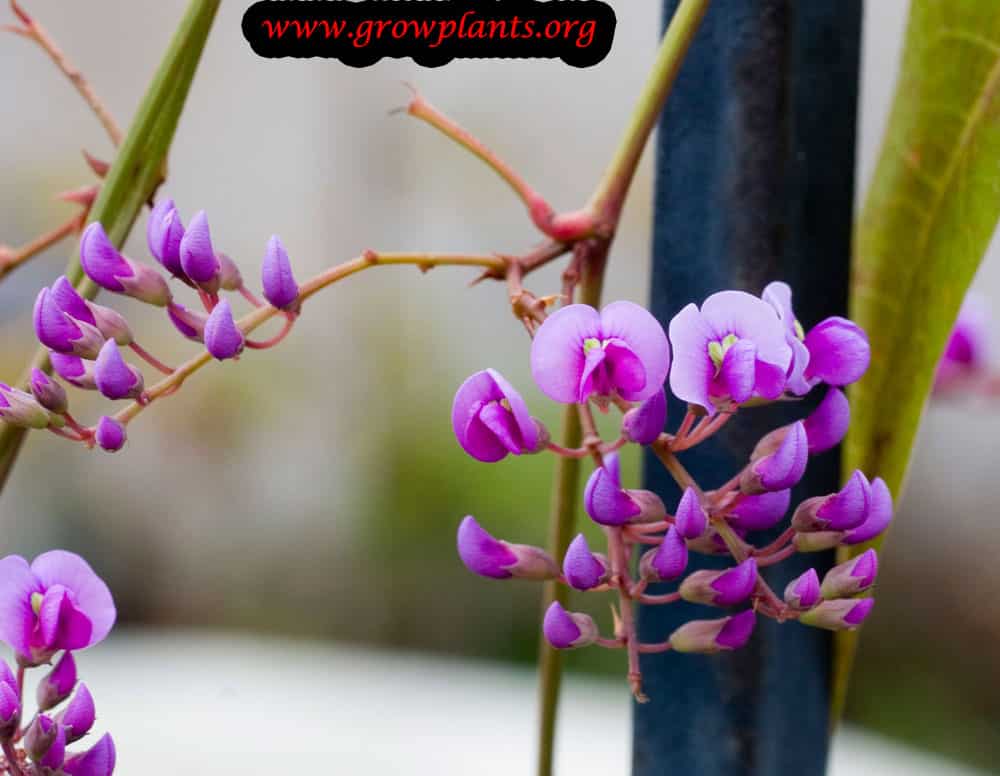
- Flower Appearance: Small (3-6 mm) fragrant pea-shaped flowers in purple, pink or white, carried in trailing clusters
- Edibility: Ornamental only – grown for its flowers, which are not eaten
Detailed Blooming Overview
Hardenbergia, the purple coral pea, is an evergreen climber in the pea family that flowers heavily through the cooler months. Sprays of tiny pea-form blooms drape along the twining stems, and because it flowers when much else is quiet it is prized for cool-season colour on fences and hedges.
Flower Characteristics
- Fragrant pea-shaped flowers, small at 3-6 mm.
- Colours range from purple through pink to white.
- Flowers grouped in clusters (racemes) that cascade along the stems.
Bloom Care & Thinning
- Site for best bloom: Full sun to light shade with free-draining soil brings the heaviest flowering.
- After flowering: A light trim once the display fades keeps the plant dense and shapes it as a hedge or screen.
- Pollination: Visited by bees; as an Australian native it is well worked by native bees.
Pests, Diseases & Troubleshooting
Overview: Hardenbergia (purple coral pea) (Hardenbergia) is a hardy Australian pea-family climber that is generally robust and lightly troubled by pests, its main enemies being root and collar rot (Phytophthora) in wet or poorly drained soil, plus the usual sap-feeders – aphids, spider mites, mealybugs and scale – on soft new growth. Grow it lean, sunny and sharply drained and it largely looks after itself.
Quick Troubleshooting Overview
| Issue / Pest | Main Symptom | Primary Solution |
|---|---|---|
| Aphids | Colonies on soft tips and buds, honeydew, distortion | Water jet, insecticidal soap, predators |
| Spider mites | Fine stippling, dull bronzed leaves in hot dry air | Rinse, raise humidity, soap/oil |
| Mealybugs & scale | Cottony fluff or waxy bumps on stems, sooty mould | Alcohol/scrape, horticultural oil |
| Root / collar rot (Phytophthora) | Wilting, yellowing, dieback in wet soil | Sharp drainage; don’t overwater – key issue |
| Powdery mildew / leaf spot | White powder or dark blotches on leaves | Airflow, sun, remove affected leaves |
Common Pests & Management
- Aphids (Aphis spp.):
- Symptoms: Soft green or black colonies on the new shoots, tendrils and flower buds, with curled growth and honeydew; a common early-season nuisance.
- Prevention & Control: Blast off with water, encourage ladybirds and lacewings, and avoid excess nitrogen. Treat heavy colonies with insecticidal soap.
- Spider mites (Tetranychus spp.):
- Symptoms: Fine pale stippling, dull bronzed foliage and fine webbing in hot, dry, sheltered positions or on container plants.
- Prevention & Control: Rinse the foliage and raise humidity; treat with insecticidal soap or light oil, covering leaf undersides, and repeat.
- Mealybugs & scale insects:
- Symptoms: White cottony tufts (mealybug) in leaf axils, or brown/waxy bumps (scale) along stems and leaf undersides, with honeydew and sooty mould; more common on sheltered or indoor-grown plants.
- Prevention & Control: Swab mealybugs with dilute alcohol, scrape or prune scale, and apply horticultural oil to smother crawlers; conserve natural predators.
- Leafhoppers / caterpillars (occasional):
- Symptoms: Light stippling from hoppers or chewed leaves from caterpillars; usually minor and cosmetic.
- Prevention & Control: Tolerate light damage on this vigorous vine; hand-pick caterpillars and use Bt only if defoliation is heavy.
Diseases & Fungal Issues
- Root & collar rot (Phytophthora cinnamomi and relatives) — the key disease:
- Symptoms: Sudden or gradual wilting, yellowing, thinning and dieback despite moist soil; dark, decayed roots and collar. Australian natives are especially susceptible to Phytophthora in wet, poorly drained or overwatered ground.
- Treatment & Management: Prevention is drainage – plant in free-draining soil in a raised or sloping position, avoid overwatering and waterlogging, and do not pile mulch against the stem. Remove badly affected plants; phosphonate treatments can help protect valued specimens.
- Powdery mildew:
- Symptoms: White powdery patches on leaves and shoots in humid, crowded, shaded conditions.
- Treatment & Management: Grow in full sun with good airflow, thin congested growth, and apply a sulphur or potassium-bicarbonate fungicide if it spreads.
- Fungal leaf spot / rust (minor):
- Symptoms: Dark leaf spots or orange rust pustules in damp weather; usually cosmetic.
- Treatment & Management: Remove affected leaves, improve airflow, and avoid overhead watering.
Growing Difficulties & Abiotic Problems
- Overwatering / poor drainage:
- Cause & Symptoms: Yellowing, wilting and root rot in heavy, wet soil; the commonest way this otherwise tough vine is lost.
- Correction Strategy: Plant in free-draining soil, water to establish then sparingly, and never let the roots sit wet.
- Phosphorus sensitivity (chlorosis):
- Cause & Symptoms: As a phosphorus-sensitive native legume, high-phosphorus fertilisers can cause leaf yellowing, blackening and dieback.
- Correction Strategy: Use low-phosphorus "native" fertiliser only, and feed lightly; the plant fixes much of its own nitrogen.
- Frost / cold damage:
- Cause & Symptoms: Young growth can be nipped by hard frost, showing blackened tips.
- Correction Strategy: Site in a sheltered, sunny position and protect young plants until established; most are moderately frost-hardy once mature.
What Helps — Products & Tools
Hardenbergia needs little: insecticidal soap and light horticultural oil for aphids, mites, mealybug and scale, and a sulphur/potassium-bicarbonate fungicide for mildew. The critical "tools" are sharp drainage (against Phytophthora root rot) and a low-phosphorus native feed – get those right and this climber is genuinely easy.