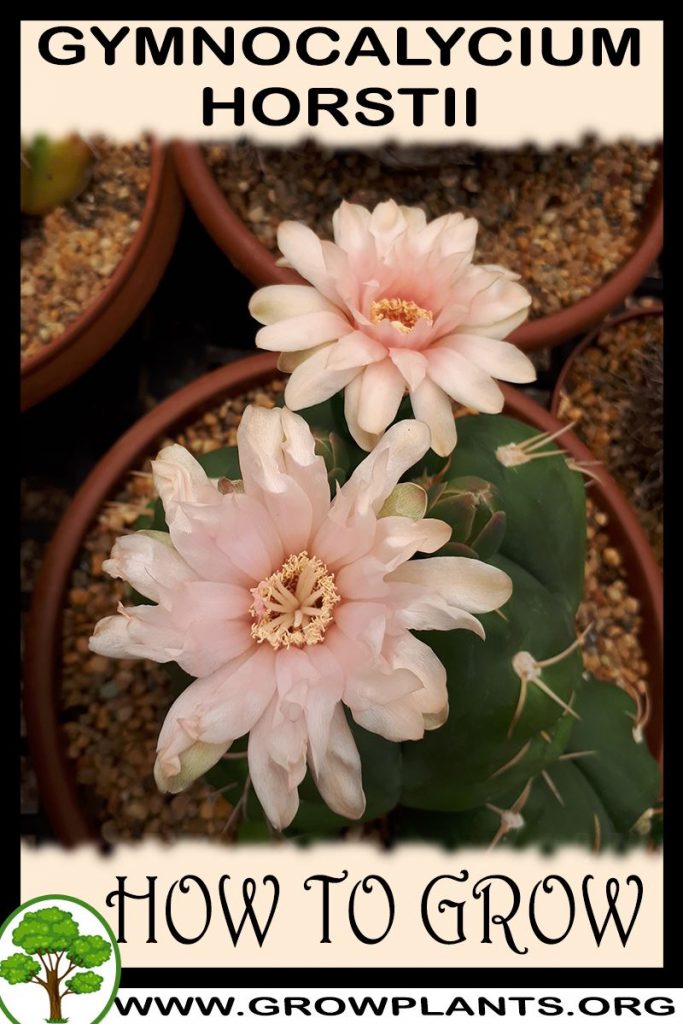
Plant Profile & Key Characteristics
Also known as: Gymno horstii
Overview: A small globular ornamental cactus (chin cactus) with a round green ribbed body, typically only a few centimetres across. Grown as an easy, slow-growing pot and windowsill cactus valued for its neat form and showy flowers.
Quick Specifications
| Specification | Attribute |
|---|---|
| Plant Type / Life Cycle | Perennial (evergreen cactus) |
| Mature Size | 1-15 cm (1-6 in) |
| Growth Rate | Slow |
| Root System | Shallow |
| Toxicity | Non-toxic (ornamental; spined) |
| Hardiness | USDA zone 10b-12 (10a with winter protection) |
Growth Form & Structure
- Height & Spread: Small globular cactus 1-15 cm; suits shallow pots roughly 20-50% wider than the root ball.
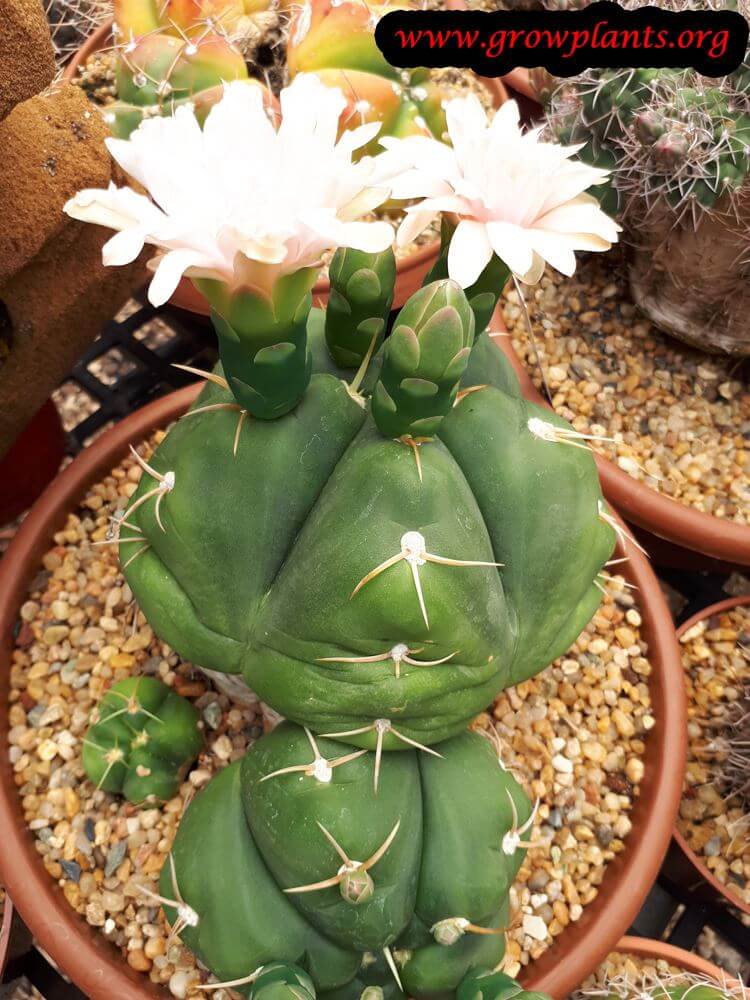
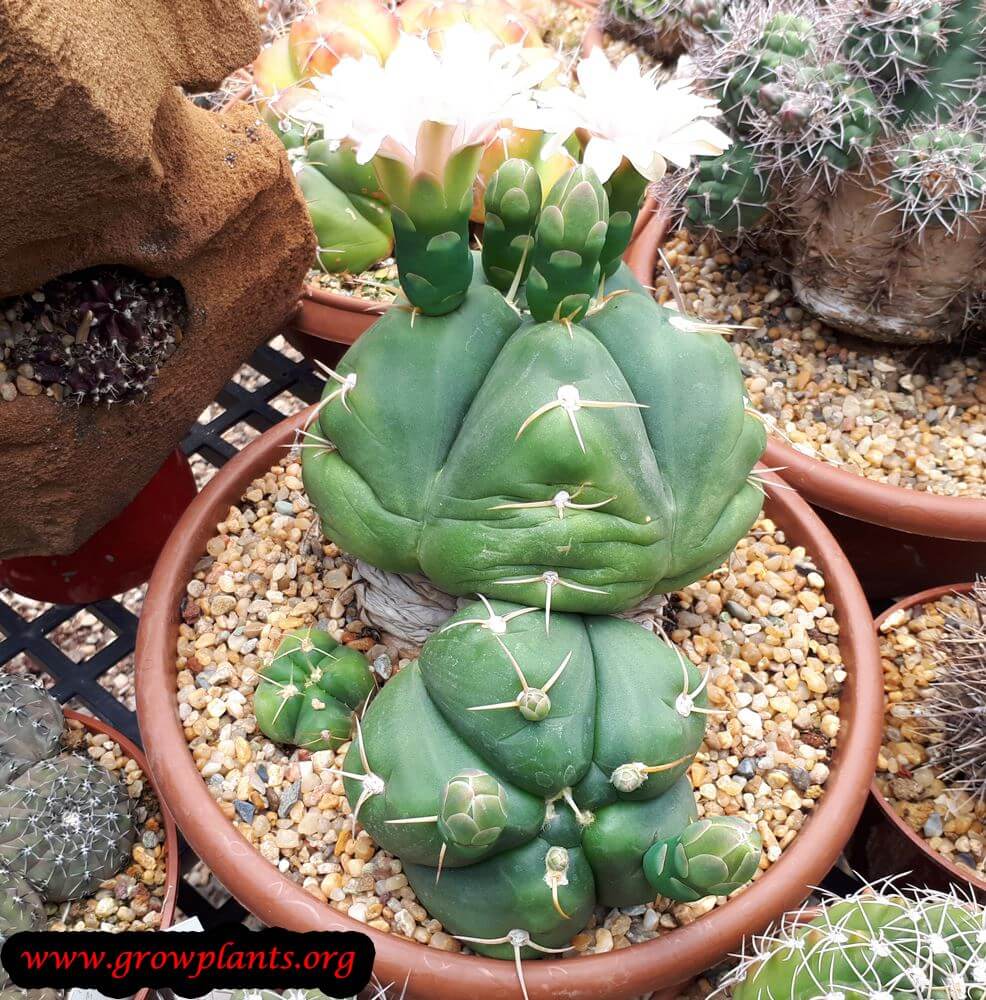
- Growth Habit & Form: Solitary or clustering round-to-flattened ribbed body; may offset into clumps of pups.
- Lifespan & Maturity: Slow-growing and long-lived; flowers once mature.
Anatomy & Physical Features
- Stems & Spines: Green, round-to-oval ribbed body bearing thorns.
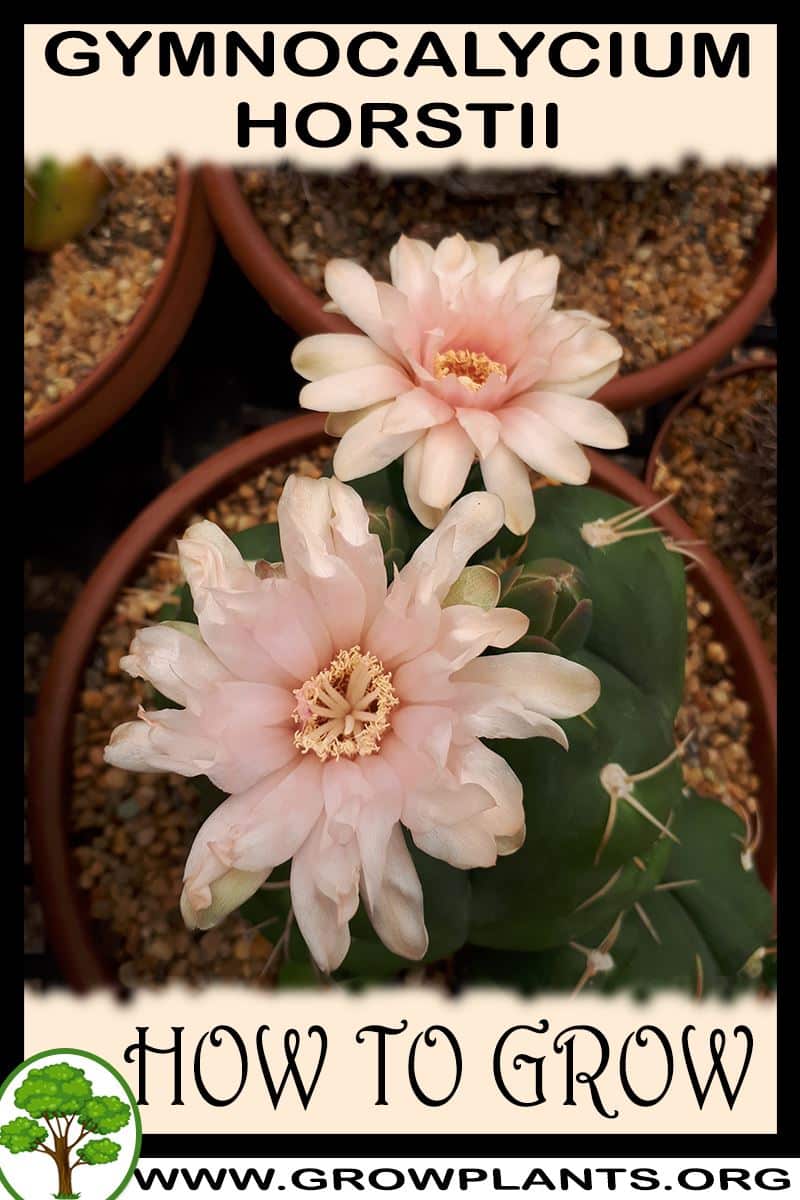
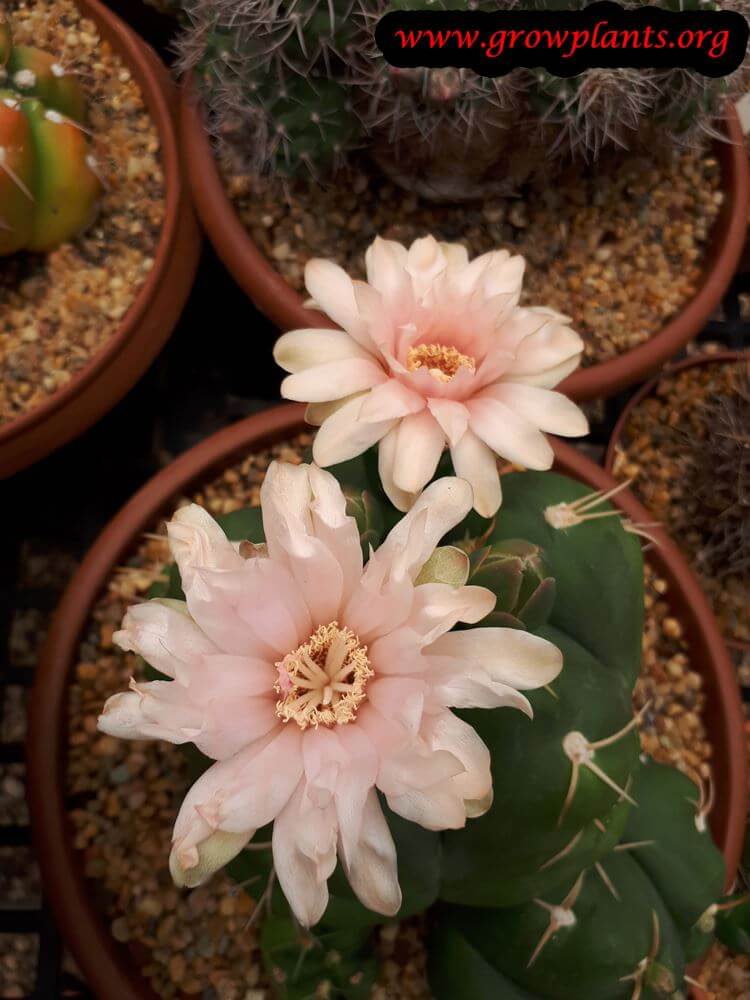
- Flower Characteristics: Pink, multi-petalled flowers.
Primary Uses & Landscape Value
- Functional & Ornamental Roles: Compact ornamental cactus for pots, rockeries and windowsills; an easy container and indoor plant.
Care Guide: Planting, Soil & Watering
Overview: Gymnocalycium horstii are slow-growing South American cacti that need a gritty, sharply draining, well-aerated soil and warmth above about 10°C. They store water in their bodies, so the soil should dry out completely between waterings to prevent rot.
Quick Care Requirements
| Requirement | Ideal Condition |
|---|---|
| Planting Season | Warm season — spring to summer in zone 10a, spring to autumn in 10b–11, year-round in zone 12+ |
| Growth Rate | Slow |
| Soil Type | Gritty, loose, fast-draining cactus mix (sandy, opened with gravel or lava rock) |
| Water Need | Low — water sparingly and let the soil dry out completely between waterings; never leave it standing wet |
Planting & Establishment
- Best Planting Season: Plant in the warm season: spring to summer in zone 10a, spring to autumn in zones 10b–11, and year-round in zone 12 and above; protect from cold and frost.
- How to Plant:
- Hole Preparation: Plant in freely draining ground; where heavy rain is a risk, grow on a raised bed or mound so water drains away from the shallow roots.
- Soil Amendments: Use a gritty cactus mix — sandy or loose soil opened up with gravel, pumice or lava rock — and add a layer of coarse grit at the base for drainage.
- Planting Depth: Set the plant so the base of the body sits at the soil surface and the root crown is not buried; firm just enough grit around it to hold it upright.
- Growth Speed & Expectations: Expect slow growth; these are compact, long-lived cacti that gain size only gradually.
Soil, Watering & Drainage Care
- Soil Mix & Drainage Needs: Use a loose, well-ventilated cactus potting mix; in containers add coarse material (gravel, pumice or lava rock) at the base and ensure plenty of drainage holes so water never pools around the roots.
- Watering Schedule & Technique:
- Young / Newly Planted: Water lightly and infrequently, keeping the mix barely moist while the plant establishes, without ever letting it sit wet.
- Established: Water thoroughly only once the soil has dried out completely; potted plants can be watered from below and then allowed to drain fully.
- Seasonal Adjustments: Water less in winter and in humid spells, and a little more during active warm-season growth — err on the side of too dry rather than too wet.
Climate, Light & Hardiness
Gymnocalycium horstii is a compact, frost-tender cactus suited to warm, dry climates outdoors or container/indoor culture elsewhere, growing best in bright but filtered light rather than harsh full sun. It needs generally warm conditions above about 10°C (50°F), and only tolerates near-freezing temperatures briefly with attentive overwintering.
Quick Climate Specifications
| Climate Zones | Mediterranean, Desert, Subtropics, Temperate, Tropics (or houseplant) |
|---|---|
| USDA Hardiness Zones | 10b–12 (10a possible with careful overwinter protection) |
| Optimal Temp Range | Generally above approximately 10°C (50°F) |
| Frost Tolerance | Very Low |
| Light Conditions | Half Shade (morning sun) to Full Shade (bright) |
Sunlight & Light Exposure
Optimal Light Setup
Site data favors half shade with gentle morning sun, or full shade with plenty of ambient light – brighter, filtered exposure rather than harsh midday sun.
Shade & Heat Management
Protect from intense, prolonged direct sun, which can scorch the stem; a lightly shaded or east-facing spot balances enough light for healthy growth without burn risk.
Best Exposure/Orientation
East-facing windowsills or garden positions, giving morning sun and shaded afternoons, suit it well both indoors and out.
Temperature Extremes & Hardiness
USDA Hardiness & Regional Limits
Reliable outdoors only in zone 10b–12; zone 10a is possible only with attentive overwinter protection, per the site's own data.
Cold Damage & Winter Protection
The site notes it grows better above roughly 10°C (50°F), so prolonged conditions cooler than this can slow growth or stress the plant well before its outright cold limit is reached.
Frost Sensitivity
Very frost-sensitive; even brief freezing can damage or kill this cactus, so plants at the cool edge of their range need winter cover or a bright indoor position.
Extreme Heat Tolerance
Handles high heat well given the loose, well-drained, well-ventilated soil the site recommends, consistent with its desert and Mediterranean climate suitability.
Wind, Humidity & Microclimate
Humidity Preferences
The site's indoor-care notes specifically recommend a location without high humidity, consistent with this cactus needing a dry growing environment.
Dry-Air Tolerance
High; thrives in the arid conditions typical of desert and Mediterranean climates.
Rainfall & Seasonal Moisture
Needs well-drained soil; in climates with heavy rain the site recommends growing in a raised bed so roots don't sit in excess moisture.
Microclimate Recommendations
In high-rainfall climates, a raised, sharply draining bed is recommended on site; indoors in cold climates, positioning near (but not touching) a heater helps overwinter it safely.
Growing in Pots, Balconies & Indoors
Gymnocalycium horstii is a small globular cactus that the grower grows as a houseplant, and it does well in a pot on a bright balcony too. It prefers gentler light than most cacti – half shade with morning sun, or full shade with plenty of ambient light – which makes it easy indoors.
Quick Details
- Container Size: A pot or clay pot 20-50% larger than the root ball; shallow is fine (grower’s value)
- Indoor Suitability: A good houseplant in bright light
- Best Spot: Half shade with morning sun, or full shade with strong ambient light
- Soil & Drainage: Well-ventilated cactus potting mix over gravel/lava rock; strong drainage
- Watering in Pots: Small amounts – let it dry between waterings; do not overwater
Indoors & On the Windowsill
- A genuine houseplant: Grows well indoors in bright light without harsh direct sun. A ready-made cactus and succulent soil mix provides that structure without mixing it yourself.
- Indoor care (grower): Site it out of high humidity; if winters are cold, place it near a heater but not so close as to burn it. Indoors it needs less water – unless it sits beside a heater or air-conditioner.
- Grafted plants: Grafted specimens (common in this group) are especially forgiving indoors.
On a Balcony or Patio
- Light & wind: Bright half to full shade outdoors with morning sun; shelter it from fierce midday sun and from rain that would waterlog the pot.
- Practicalities: A small, shallow clay pot suits its shallow roots and dries quickly – easy to move under cover.
Choosing the Pot, Soil & Long-Term Care
- Pot & drainage: A pot or clay pot 20-50% larger than the roots, with gravel/lava rock/pebbles at the base and plenty of holes; keep the mix well ventilated (grower’s method).
- Potting mix: Use a free-draining cactus/succulent mix with a layer of gravel, lava rock or pebbles at the base, and make plenty of drainage holes; the grower notes the mix loses its drainage over a few years, so replace it then.
- Feeding: Potted plants exhaust their mix faster than those in open ground – nutrients leach away with each watering – so feed lightly through the active growing season. Feed sparingly.
- Repotting: Repot into fresh gritty, airy mix every few years or once roots fill the pot.
Grower’s Container Tip
- Water from below: The grower stands the pot in water so the cactus soaks it up from the bottom, then lets it drain and dry out fully before the next watering – a good way to keep water off the body and avoid rot.
Fertilizing & Feeding
A light feeder: a dilute, low-nitrogen feeding during active summer growth is enough, with no feeding at all while the plant rests dry through cooler weather.
Quick Fertilizing Specs
| Feeding Level | Light feeder |
|---|---|
| Main Nutrient Priority | Low-nitrogen feeding during active growth only |
| Best Feeding Period | The warm active growing season, alongside regular watering |
| Organic Options | Not a major factor; a mineral, fast-draining cactus mix matters more than added organic matter |
| Reduce/Stop Feeding | No feeding during cool-season dormancy or whenever watering is reduced |
| Micronutrients | Usually adequate from a complete cactus fertilizer; correct only diagnosed issues |
| Soil pH | Prefers a well-drained, mineral potting mix over any particular pH |
Feeding by Growth Stage
Active growing season
Support steady growth during the warm season without pushing soft, weak tissue.
| Nutrient direction | A dilute, low-nitrogen cactus-formulated fertilizer supports slow, sturdy growth. |
|---|---|
| Timing | During the warm growing season, alongside regular watering. |
| Frequency | Light, infrequent feeding through active growth is plenty for this slow grower. |
| Fertilizer types | A dilute, low-nitrogen cactus or succulent fertilizer |
| Precautions | Only feed when the plant is actively growing and being watered; feeding a dry, resting plant can burn roots. |
Cool-season dormancy
Let the cactus rest through cooler weather without pushing new growth.
| Nutrient direction | None – withhold fertilizer while the plant is dry and dormant. |
|---|---|
| Timing | During cooler weather when watering is reduced and growth pauses. |
| Frequency | No feeding at this stage; feeding resumes only once active growth and regular watering return. |
| Fertilizer types | No feeding at this stage; a dormant, mostly dry cactus has no use for fertilizer. |
| Precautions | Do not fertilize while the plant is dry and dormant; unused nutrients can build up as salts around the roots. |
Nutrient Deficiency Signs & Corrections
Overall pale or yellow-green body color and stalled growth during the growing season.
| Possible causes | low available nitrogen in old, depleted potting mix, root stress from overwatering or poor drainage, insufficient light reducing overall vigor |
|---|---|
| Appears first on | new growth and the crown of the plant |
| What to check | age and condition of the potting mix, recent watering pattern, light exposure |
| Possible correction | Repot into fresh cactus mix and resume light, dilute feeding once active growth resumes. |
Soft, discolored base tissue or stalled growth despite feeding.
| Possible causes | overwatering or poor drainage causing root rot, fertilizing a dormant or overly wet plant, fungal or bacterial infection |
|---|---|
| Appears first on | the base and roots |
| What to check | soil moisture and drainage, potting mix condition, signs of soft or discolored tissue |
| Possible correction | Correct watering and drainage first; do not add fertilizer until root health recovers. |
Newer growth appears pale or yellowish while older body tissue stays green.
| Possible causes | high potting-mix pH limiting iron availability, waterlogged, poorly draining mix, root stress limiting nutrient uptake |
|---|---|
| Appears first on | newest growth near the crown |
| What to check | potting mix pH and drainage, recent watering, overall root condition |
| Possible correction | Improve drainage and repot if needed; apply a chelated iron product per its label if chlorosis persists. |
Pruning, Training & Seasonal Maintenance
This globular chin cactus tolerates essentially no routine pruning – it has a single growing point and no branching framework to shape. The only recurring task is removing damaged, rotten or dead tissue and, if the plant clusters or is propagated, dividing off pups. Any such cut is safest during active growth (spring–summer) when the wound calluses quickly; cutting during cold, wet, or dormant conditions leaves tissue vulnerable to rot. Pruning has no bearing on flowering, since blooms arise from areoles on the stem itself rather than from any prunable wood.
Quick Pruning & Maintenance Specs
| Pruning Tolerance | Low – corrective/sanitary only, no shaping |
| Primary Pruning Window | Spring–summer active growth |
| Typical Frequency | As needed, when damage, rot, or offsets appear |
| Main Objective | Remove damaged/rotten tissue; manage offsets |
| Young Plant Priority | Leave untouched unless damaged |
| Mature Plant Priority | Remove rot promptly; divide crowded offsets if desired |
| Best Tool Type | Sterile knife blade, not shears or snips |
| Avoid Heavy Pruning During | Cold, wet or dormant winter conditions |
Pruning by Plant Age & Size
Newly Established
No pruning – handle minimally and let the plant settle in after planting or repotting.
Young / Formative
No structural training applies to a solitary globular cactus.
Mature / Established
Watch for and remove any rotten or dead tissue promptly; separate offsets (pups) at the base if propagation or a tidier single specimen is wanted.
Special Growth to Remove
- Rotten or dead tissue – cut back into clean, healthy flesh as soon as noticed.
- Offsets/pups – retain for a clustering display, or remove and pot up separately for propagation, which is a standard way to start new plants.
Container & Small-Space Pruning
Since this species is routinely grown in pots, the only container-relevant point is keeping cut or removed offsets out of wet mix until the wound callouses, and using a gritty, fast-draining cactus mix around any cut plant to reduce rot risk while it heals.
Tools
A sterile, sharp knife blade for any tissue cut (rot removal, offset division) – bypass secateurs, loppers and shears have no appropriate use on this soft-bodied globular cactus.
Tool Hygiene & Disease Risk
High-risk when cutting into rot – rot pathogens spread readily on a contaminated blade. Disinfect the blade before and after any cut into rotten or diseased tissue, and between different plants.
Cut Placement & Technique
Cut well into visibly healthy, firm tissue when removing rot, leaving no discolored material behind; let all cut surfaces dry and callus in a dry, shaded spot before any watering or repotting.
Heavy Pruning & Rejuvenation
Not tolerated. This is a single-growing-point globular cactus – there is no rejuvenation or hard-pruning technique that would not simply kill the plant’s only growth point.
Post-Pruning Care
Withhold water until any cut has fully calloused; keep the plant in bright, dry conditions during healing; watch the cut margin for a few weeks to confirm rot has not resumed.
Common Pruning Mistakes
- Cutting rot away without going far enough into healthy tissue, leaving infection behind.
- Watering immediately after cutting, before the wound has calloused.
- Attempting to reshape or size-reduce the plant, which has no growth point to regrow from.
When NOT to Prune
Avoid any cutting during cold, damp winter conditions when wounds heal slowly and rot risk is highest, and avoid cutting a freshly repotted or transplanted specimen before it has settled.
Recommended Tools (by task)
- Removing rot or dividing offsets → grafting_knife: a sterile, sharp blade gives the clean cut this soft cactus tissue needs.
- Between-cut and between-plant sanitation → blade_disinfectant: rot pathogens spread easily on a dirty blade, making this a high-risk task.
Propagation Guide
Gymnocalycium horstii is most easily increased from the pups (offsets) that form at the base, since the site’s own facts note that growing it from seed is harder than growing it from pups. Seed is still a workable way to raise the species and reproduces it reasonably true-to-type, but germination and seedling care take more patience; overall this is Easy from pups and Moderate from seed.
Quick Propagation Specs
| Best Propagation Method | Pups (offsets) |
| Alternative Methods | Seed |
| Propagation Difficulty | Easy (pups); Moderate (seed) |
| Seed True-to-Type | Usually true-to-type |
| Vegetative True-to-Type | Yes |
| Best Propagation Season | Spring (zone-dependent window, see Sowing Season) |
| Seed Germination Time | 2–6 weeks |
| Germination Temperature | Consistently warm, generally above about 10°C (50°F), matching this plant’s own general temperature preference |
| Seed Sowing Depth | About 0.5cm (0.25in) |
Growing from Seed
Seed Handling & Viability
Store seed in a dry, dark spot at room temperature until sowing.
Sowing Season
Mainly spring, though also possible in autumn and winter in a hot climate (giving the seedlings half shade over summer); by hardiness zone this is spring to summer in zone 10a, spring to autumn in zones 10b–11, and possible year-round in zone 12.
Sowing Depth & Orientation
About 0.5cm (0.25in) deep, in sandy, well-ventilated soil such as a cactus potting mix, sown in half sun or full shade with good drainage.
Germination Conditions
Keep the soil moist without overwatering and don’t let it dry out; water seeds lightly, keeping the soil only lightly moist.
Germination Time
2–6 weeks.
Seedling Care
Grow seedlings in half sun or full shade, avoiding overwatering. Sow at roughly 10×20cm (4–8in) spacing, tightening to about 2×2cm (1×1in) when transplanting seedlings on.
Division, Offsets, Pups & Suckers
Pups are the site’s own recommended shortcut past the harder seed stage. Once a pup is a reasonable size and has formed its own growing point, remove it from the mother plant with a clean cut and let the cut surface dry and callus for several days to roughly a week or two before setting it onto the same sandy, well-drained cactus mix recommended for the parent plant. Keep newly potted pups on the dry side, watering lightly only once some root growth is established, matching this species’ own let-it-dry-between-waterings care.
Bloom & Flower Guide
Quick Details
- Bloom Season: Spring into summer
- Flower Appearance: Pink, many-petalled flowers opening near the top of the stem
- Edibility: Ornamental only – grown for its flowers, not for eating
Detailed Blooming Overview
Gymnocalycium horstii is a chin cactus grown for its relatively large, satiny flowers that open from buds near the crown in spring and summer. The pink, many-petalled blooms sit on top of the rounded green stem and open over several days in bright light. Chin cacti are among the more reliable small cacti to flower on a sunny sill.
Flower Characteristics
- Pink and many-petalled, with a satiny sheen.
- Open near the top of the stem.
- Each flower lasts several days.
Bloom Care & Thinning
- Encouraging bloom: A cool, dry winter rest followed by spring watering and bright light triggers flowering.
- Watering: Keep the mix just moist as buds swell, and let it dry between waterings.
Pests, Diseases & Troubleshooting
Overview: Gymnocalycium horstii (Gymnocalycium horstii) is a small, tough South American globe cactus that is very hardy against pests but unforgiving of overwatering – soft basal rot from excess moisture and cold is what kills it, far more than any insect. The pests that do occur are the classic cactus trio: mealybugs (including root mealybug), red spider mite and scale, all easily managed with dry, bright, airy culture.
Quick Troubleshooting Overview
| Issue / Pest | Main Symptom | Primary Solution |
|---|---|---|
| Mealybugs (incl. root) | White cottony fluff on body, in crevices and on roots | Alcohol swab, systemic/oil, bare-root & wash roots |
| Red spider mite | Fine stippling/rusty scarring on the crown, faint webbing | Raise humidity a little, miticide/oil, isolate |
| Scale insects | Small brown limpet-like bumps on the body | Scrape off, dab alcohol, horticultural oil |
| Basal / soft rot | Body goes soft, brown-black and mushy from the base | Cut to clean tissue, dry culture – the main killer |
| Corky scarring / etiolation | Brown corky patches or pale stretched growth | Adjust light/watering; largely cultural |
Common Pests & Management
- Mealybugs, incl. root mealybug (Pseudococcus / Rhizoecus spp.):
- Symptoms: White cottony tufts tucked between ribs, around the growing point and areoles; root mealybug shows as white waxy deposits on roots and inside the soil, causing slow decline and poor growth.
- Prevention & Control: Dab visible colonies with a cotton bud of dilute alcohol; for root mealybug, bare-root the plant, wash and inspect the roots, discard old soil and repot into fresh dry mix. A systemic insecticide or soil drench helps with stubborn root infestations.
- Red spider mite (Tetranychus spp.):
- Symptoms: Fine pale or rusty stippling and corky scarring on the sun-facing crown, sometimes with very fine webbing; damage is permanent scarring even after mites are gone.
- Prevention & Control: Mites thrive in hot, dry, stagnant air – a little more humidity and airflow deters them. Rinse the plant and apply a miticide or light horticultural oil to the body; isolate affected plants.
- Scale insects (Diaspididae):
- Symptoms: Small brown or grey limpet-like bumps stuck to the body, causing yellow blemishes where they feed.
- Prevention & Control: Scrape off gently with a soft brush or fingernail, dab with alcohol, and treat with horticultural oil, ensuring the spray reaches into the ribs.
- Fungus gnats (secondary):
- Symptoms: Small black flies over the soil; larvae in persistently wet compost can nibble roots of weak plants – a sign the mix is too wet.
- Prevention & Control: Let the soil dry out fully between waterings, use a gritty free-draining mix, and set yellow sticky traps; correcting watering usually solves it.
Diseases & Fungal Issues
- Basal / soft rot (Phytophthora, Fusarium, Pythium, bacterial) — the main killer:
- Symptoms: The body softens and turns brown-black and mushy, usually starting at the base or roots and spreading upward; the plant may topple or collapse. Nearly always caused by overwatering, cold-wet soil, or water pooling on the crown.
- Treatment & Management: Prevention is dry, warm, airy culture in a gritty mineral mix, watering only when the soil is fully dry and never in cold weather. If caught early, cut away all soft brown tissue back to firm green flesh, dust with sulphur, dry the wound and re-root the healthy top.
- Fungal / corky leaf-spot & blemishes:
- Symptoms: Brown corky patches or spots on the skin from fungal infection or old damage, mostly cosmetic but permanent.
- Treatment & Management: Improve airflow and keep the body dry; there is no cure for existing scarring, so focus on preventing new infection.
Growing Difficulties & Abiotic Problems
- Overwatering & cold-wet roots:
- Cause & Symptoms: The commonest problem – too-frequent watering, a peaty water-holding mix, or watering in cold weather causes softening, discoloration and rot.
- Correction Strategy: Use a very free-draining mineral/gritty cactus mix, water thoroughly only when bone dry, and keep it dry and cool (not wet) through winter dormancy.
- Etiolation & sunburn:
- Cause & Symptoms: Too little light causes pale, elongated, weak growth; a sudden move to fierce sun causes bleached, yellow-white scorch patches.
- Correction Strategy: Give bright light with some protection from the most intense midday summer sun, and acclimatise gradually after winter.
- Corky scarring / hard growth rings:
- Cause & Symptoms: Irregular watering or feeding causes uneven, ringed or corky growth; largely cosmetic.
- Correction Strategy: Water and feed evenly in the growing season and keep dry in dormancy for smooth, even growth.
What Helps — Products & Tools
For chin cacti keep dilute alcohol swabs, horticultural oil and a systemic insecticide for mealybug (including root mealybug) and scale, a miticide for spider mite, and sulphur powder plus a sharp clean knife for cutting out rot. The real "tool", though, is a gritty free-draining mix and disciplined dry, warm culture – that prevents the basal rot that does most of the killing.