Plant Profile & Key Characteristics
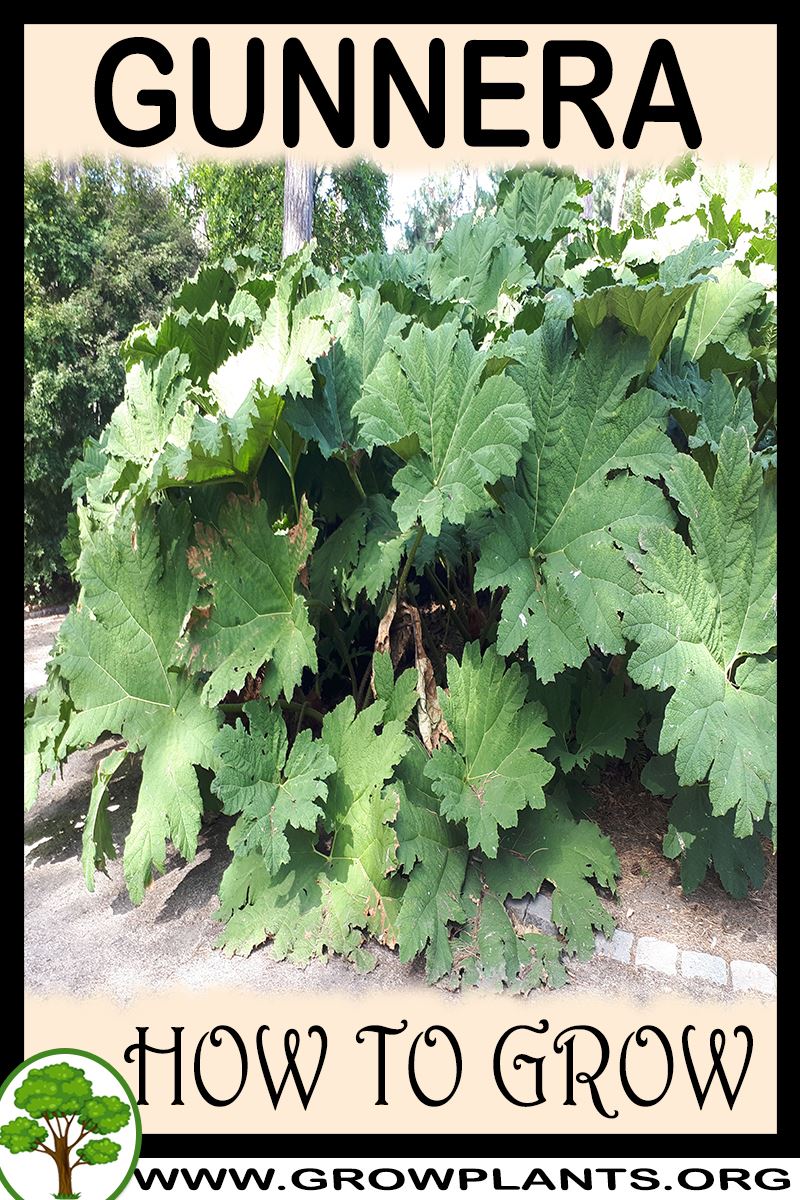
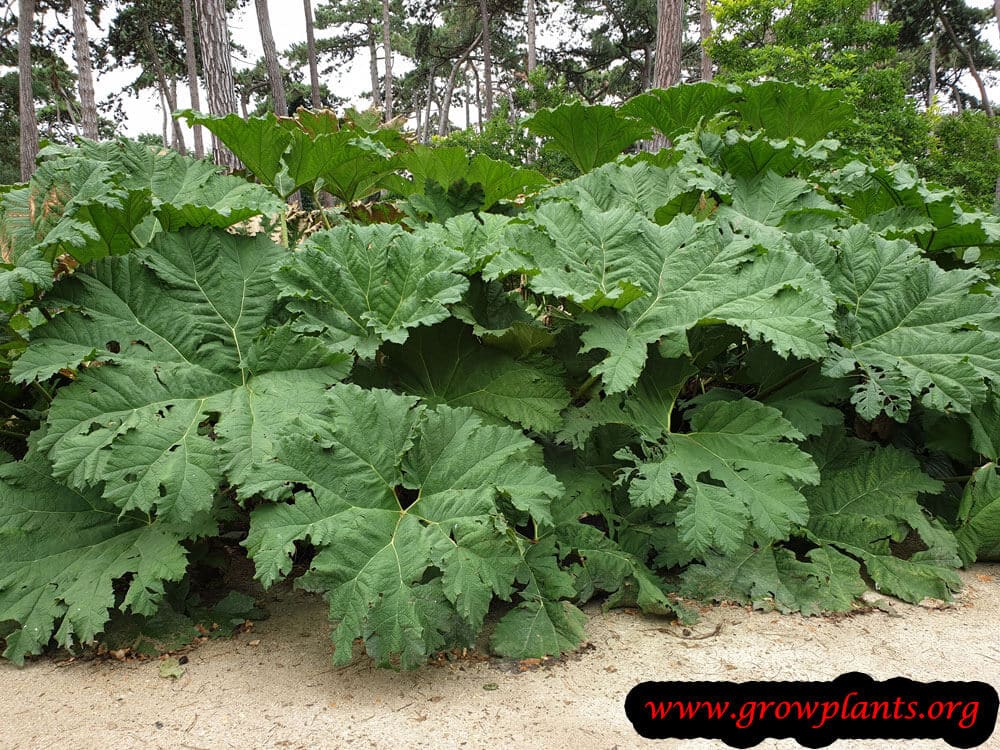
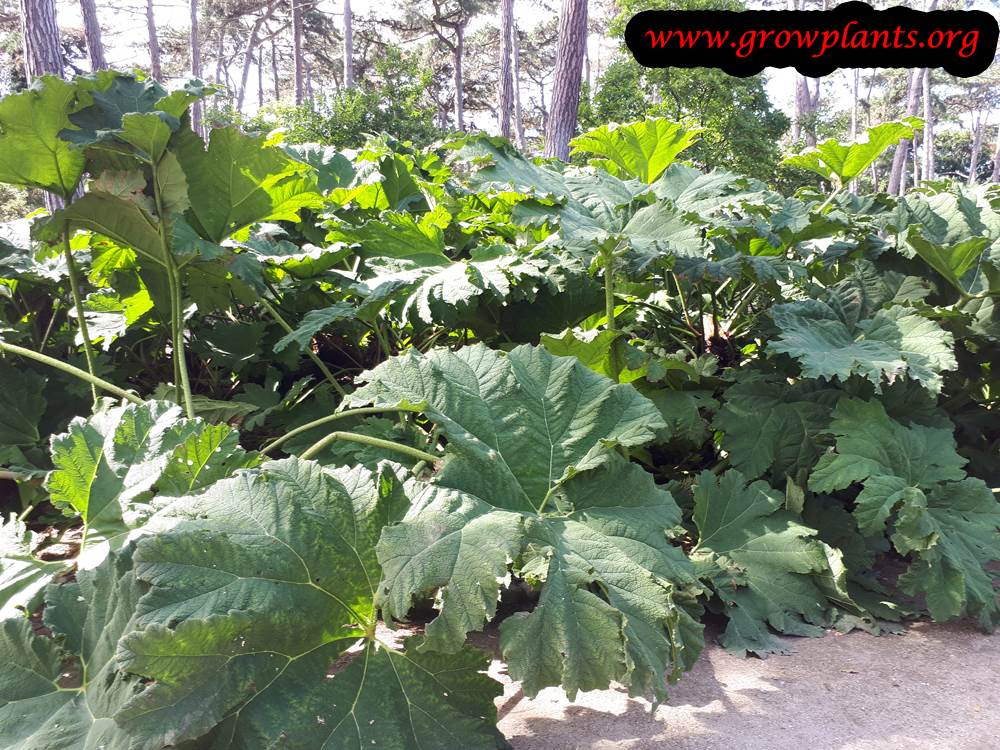
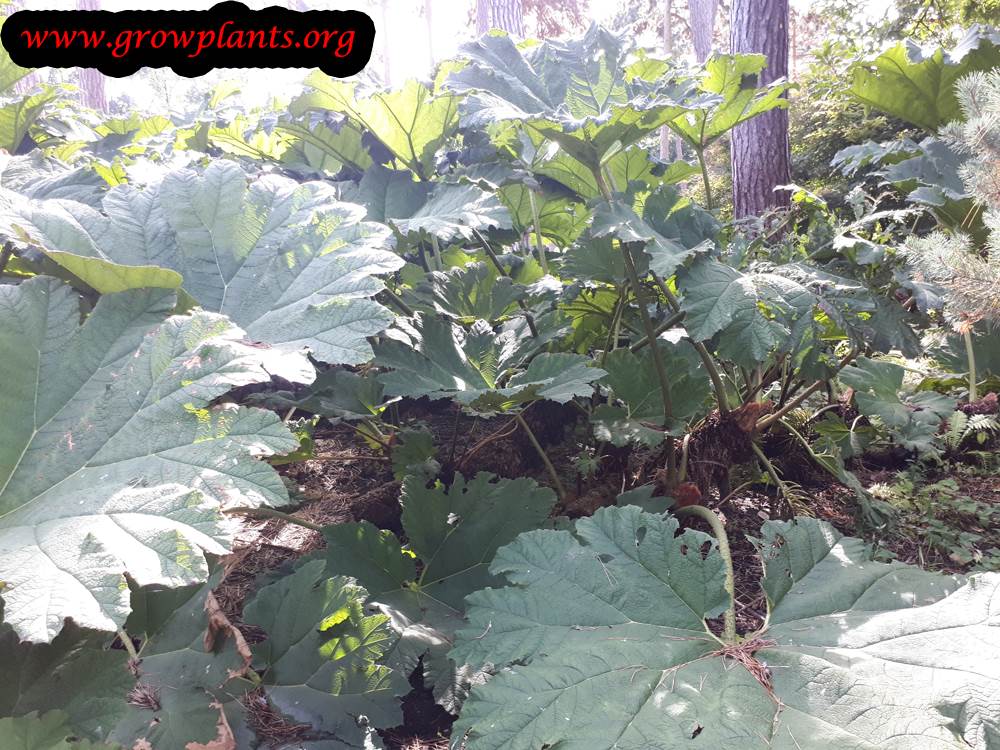
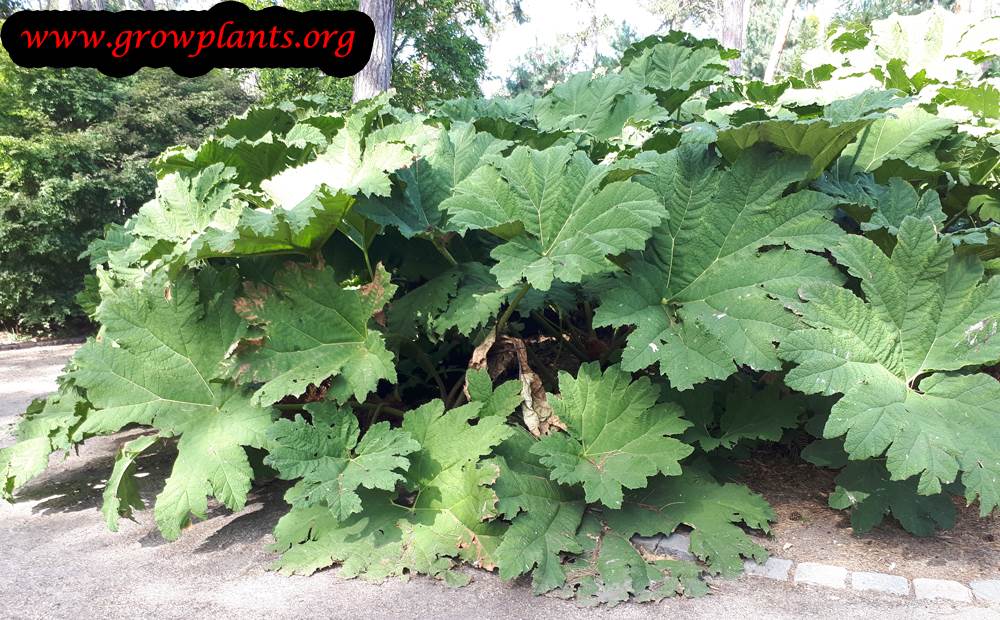
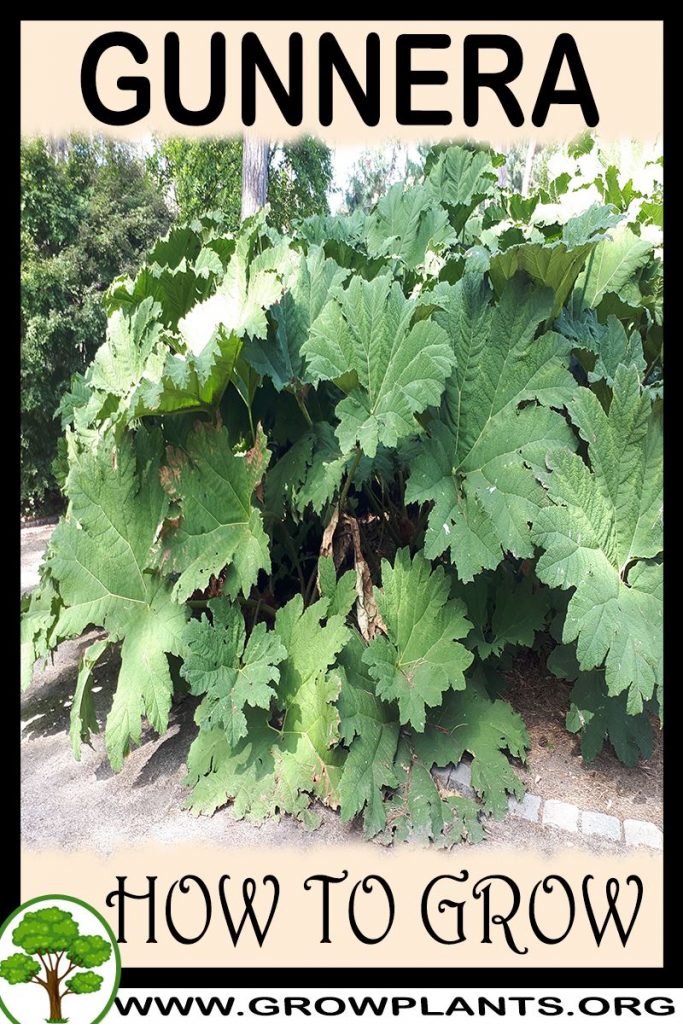
Mature Size: a huge clump-forming perennial, typically reaching up to 1-3m (3-10ft) tall and as wide.
Care Guide: Planting, Soil & Watering
Overview: Gunnera (giant rhubarb) is a huge, moisture-loving perennial for rich, constantly damp ground in sun or shade. It thrives at the water’s edge and in boggy soil, and must never be allowed to dry out.
Quick Care Requirements
| Requirement | Ideal Condition |
|---|---|
| Planting Season | In the warm season (spring through autumn) |
| Growth Rate | Moderate to Fast |
| Soil Type | Rich, humus-heavy and moisture-retentive (tolerates boggy ground) |
| Water Need | High; keep constantly moist and never let it dry out |
Planting & Establishment
- Best Planting Season: Plant during the warm season, from spring through autumn, so the crown can establish before cold weather.
- How to Plant:
- Hole Preparation: Dig a generous hole to accommodate the large crown, ideally in low, damp ground or beside a pond or stream where moisture is constant.
- Soil Amendments: Work in plenty of compost, rotted manure or leaf mould — this heavy feeder wants deep, rich, water-retentive soil.
- Planting Depth: Set the crown at soil level; do not bury the growing point, but keep the surrounding soil permanently moist.
- Growth Speed & Expectations: Moderate to fast in rich, wet soil, quickly producing very large, dramatic leaves.
Soil, Watering & Drainage Care
- Soil Mix & Drainage Needs: Wants deep, rich, moisture-retentive soil and actively tolerates boggy conditions; drainage matters far less here than a constant water supply.
- Watering Schedule & Technique:
- Young / Newly Planted: Keep young plants consistently wet while they establish; they should never dry out.
- Established: Water generously and often — established plants are thirsty and thrive with permanently damp roots, especially in sun.
- Seasonal Adjustments: Water heavily through the warm growing season; in cold-winter areas the crown dies back and needs a protective mulch.
Climate, Light & Hardiness
Gunnera is a large moisture-loving herbaceous perennial for cool to warm-temperate, subtropical and mild-tropical climates, thriving in permanently moist ground beside water. It grows in full sun to full shade and, per site data, is hardy from about zone 6 upward, though its enormous leaves need shelter from strong wind.
Quick Climate Specifications
| Climate Zones | Temperate to subtropical / mild-tropical, Mediterranean; waterside and bog margins |
|---|---|
| USDA Hardiness Zones | 6+ (site data) |
| Cold Damage Begins | Foliage is knocked back by autumn frost; the plant dies down for winter |
| Approx. Survival Minimum | Established crowns survive zone 6 winters (roughly −23 °C / −10 °F) when the crown is protected |
| Frost Tolerance | Foliage: low; dormant crown: moderate with protection |
| Light Conditions | Full sun to full shade |
| Wind Tolerance | Low (large leaves tear in wind) |
Sunlight & Light Exposure
Optimal Light Setup
Very adaptable: full sun where soil stays wet, through half shade to full shade. In hotter, drier regions part shade helps prevent leaf scorch.
Shade & Heat Management
Shade and constant moisture are the keys to keeping the giant leaves turgid; in full sun the plant only performs where its roots are permanently wet.
Best Exposure / Orientation
A sheltered, low-lying, moisture-retentive site - pond or stream margin - is ideal, out of drying and battering winds.
Temperature Extremes & Hardiness
USDA Hardiness & Regional Limits
Site data places it at zone 6 and warmer. In the colder part of that range the top growth dies back and the crown overwinters; in frost-free climates it can stay evergreen.
Cold Damage & Winter Protection
Frost collapses the leaves in autumn. Where winters freeze, protect the dormant crown - a common practice is to fold the old leaves over it or mulch it heavily - so the growing point is insulated. Hardiness varies with species and establishment.
Frost Sensitivity
The lush foliage is frost-tender; the dormant crown is considerably tougher when protected.
Extreme Heat Tolerance
Tolerates warm summers only where the soil never dries; heat with dry roots scorches and shrivels the leaves.
Wind, Humidity & Microclimate
Humidity Preferences
Prefers a humid, moisture-laden atmosphere typical of waterside sites.
Wind Tolerance
Low - the huge, soft leaves shred and tatter in exposed, windy positions; give it a sheltered spot.
Rainfall & Seasonal Moisture
Suited to high-rainfall or permanently wet ground; it is a bog- and stream-margin plant that will not tolerate seasonal drought at the roots.
Microclimate Recommendations
Plant in a sheltered, damp hollow or beside water where humidity is high and wind is broken, and where winter cold can be buffered around the crown.
Growing in Pots, Balconies & Indoors
Gunnera is a dramatic, moisture-loving giant that can reach one to three-and-a-half metres. Although the grower marks it possible to grow indoors and in containers, its eventual size and huge thirst make it a plant for large tubs and bog gardens rather than a lasting houseplant – a pot can only hold it while young, or where a compact species is grown.
Quick Details
- Container Size: The largest tub you can manage; only young plants or small species suit a moveable pot
- Indoor Suitability: The grower lists it as possible, but its scale makes indoor growing realistic only while young
- Best Spot: Full sun to full shade with constant moisture at the roots
- Soil & Drainage: Rich, heavy, water-retentive soil, heavy with compost and organic matter
- Watering in Pots: This is a bog plant – keep the soil wet at all times; a big pot in sun needs frequent, generous watering
Indoors & On the Windowsill
- Size limits indoors: The grower notes indoor growing is possible, but the plant’s scale means this is realistic only while young or for smaller species; most Gunnera outgrow a room quickly.
- If you try it: Give it the brightest spot, constant moisture and high humidity, and be ready to move it to a large outdoor tub as it grows.
On a Balcony or Patio
- A bold container plant: In a very large, heavy tub it makes a striking patio or poolside feature in warm weather; it wants sun to shade and never-dry soil.
- Water, water, water: The soil must stay wet at all times, and a big container in sun will need frequent, generous watering.
Choosing the Pot, Soil & Long-Term Care
- Pot & drainage: Use the largest tub you can – unusually, this bog plant tolerates constantly moist soil, so a water-retentive pot suits it, but avoid stagnant, airless conditions.
- Potting mix: Rich, heavy, organic soil that holds water; blend in plenty of compost and organic matter.
- Feeding: A hungry plant – feed generously through the growing season, more often in a pot where nutrients leach.
- Overwintering & repotting: In cold climates protect the crown over winter; pot on into ever-larger containers, or plant it out, as it grows.
Fertilizing & Feeding
A moderate feeder for its size: this large-leaved, moisture-loving plant benefits from a nitrogen-forward complete fertilizer and generous organic matter through the growing season, with feeding eased off while it is dormant.
Quick Fertilizing Specs
| Feeding Level | Moderate feeder |
|---|---|
| Main Nutrient Priority | Nitrogen-forward complete fertilizer for the large foliage |
| Best Feeding Period | Spring through the warm active growing season |
| Organic Options | Compost, humus, and other organic matter |
| Reduce/Stop Feeding | Ease off through cool weather and winter dormancy |
| Micronutrients | Usually supplied by organic matter and a complete fertilizer; correct only diagnosed problems |
| Soil pH | Slightly acidic to near neutral |
Feeding by Growth Stage
Spring flush of growth
Support the flush of new growth as the plant wakes in spring.
| Nutrient direction | A balanced complete fertilizer with adequate nitrogen to fuel fresh foliage. |
|---|---|
| Timing | As growth resumes in spring. |
| Frequency | A light feeding as active growth begins. |
| Fertilizer types | A balanced complete fertilizer, Compost or other organic matter worked in |
| Precautions | Keep feeding light; rich soil and organic matter do much of the work. |
Active season growth
Sustain vigorous, healthy foliage through the growing season.
| Nutrient direction | A nitrogen-forward complete fertilizer supports the large leaves without forcing weak growth. |
|---|---|
| Timing | Through the warm active growing season. |
| Frequency | Occasional light feeding, with organic matter renewed as needed. |
| Fertilizer types | A balanced complete fertilizer, Compost or humus as a top-dressing |
| Precautions | Pair feeding with steady moisture, as this large-leaved plant is a thirsty grower. |
Cool-season rest or dormancy
Let the plant rest through cool weather without pushing new growth.
| Nutrient direction | None – withhold fertilizer while the plant is not actively growing. |
|---|---|
| Timing | During cool weather, dormancy, or winter dieback. |
| Frequency | No feeding during this rest; resume only when active growth returns. |
| Fertilizer types | No feeding at this stage; hold off fertilizing until active growth resumes. |
| Precautions | Do not fertilize a resting plant; feeding now wastes nutrients and risks salt buildup. |
Nutrient Deficiency Signs & Corrections
Older, lower leaves fade to pale green or uniform yellow and overall growth slows.
| Possible causes | low available soil nitrogen, nitrogen leaching from heavy watering or rain, thin soil low in organic matter |
|---|---|
| Appears first on | older, lower leaves |
| What to check | recent feeding history, soil organic matter, watering and drainage |
| Possible correction | Apply a nitrogen-containing complete fertilizer and build soil organic matter, then water evenly. |
Youngest leaves yellow between the veins while the veins themselves stay green.
| Possible causes | high soil pH reducing iron and manganese availability, waterlogged or poorly drained roots, genuinely low micronutrient supply |
|---|---|
| Appears first on | new, young leaves |
| What to check | soil pH and drainage, watering habits, whether symptoms are on the newest growth |
| Possible correction | Correct soil pH if high, improve drainage, and apply a chelated iron or manganese product per its label. |
Leaf margins brown or scorch and growth stalls despite adequate watering.
| Possible causes | fertilizer salt buildup in the root zone, under-watering that concentrates salts, excessive or too-frequent feeding |
|---|---|
| Appears first on | leaf margins and tips |
| What to check | recent fertilizer amounts, watering consistency, drainage, especially in containers |
| Possible correction | Ease off feeding, water thoroughly to flush accumulated salts, then return to lighter feeding. |
Pruning, Training & Seasonal Maintenance
Gunnera (Giant Rhubarb) is a colossal but strictly herbaceous perennial — its 1–3 m leaves rise each year from a fleshy crown, not from woody stems, so it is never ‘pruned’ in the shrub sense. Maintenance is seasonal crown management: remove collapsed giant leaves and spent flower spikes, and in cold areas fold the frost-killed leaves back over the crown as a winter blanket. It is hardy only to about zone 6, so this crown protection is the single most important annual task; division in spring renews vigour and keeps the plant in bounds.
Quick Pruning & Maintenance Specs
| Pruning Tolerance | Low — leaf and spike removal plus seasonal crown protection; no structural pruning |
| Primary Pruning Window | Late autumn — cut down frosted leaves and pile them over the crown |
| Secondary Maintenance Window | Early spring — clear the old protective leaves once hard frost passes |
| Typical Frequency | Seasonal; lift-and-divide the crown every few years |
| Main Objective | Manage huge foliage, protect the crown over winter, remove spent flower spikes |
| Young Plant Priority | Frost protection and establishment — minimal cutting |
| Mature Plant Priority | Crown protection, remove old leaves and spikes, divide to renew or contain |
| Best Tool Type | Loppers or a pruning saw for thick fleshy petioles; a spade for division (wear gloves — petioles are prickly) |
| Avoid Heavy Pruning During | Mid-season — do not strip healthy leaves that feed the crown |
Pruning by Plant Age & Size
Newly Established
A young Gunnera is tender and small; protect it well over its first winters and remove only damaged leaves. Let it build the crown — the giant leaves come with maturity.
Young / Formative
No structural training exists — there is no stem or branch to shape, only leaves and flower spikes emerging from the crown. Simply allow the leaves to reach full size.
Mature / Established
The annual cycle is now crown management: cut down and fold the dead autumn foliage over the crown, clear it in spring, remove wind-torn leaves through summer, and lift and divide the crown every few years to rejuvenate it and limit its considerable spread.
Seasonal Pruning Schedule
Late Autumn / Pre-Winter
Objective: insulate the crown. Remove/reposition: once frost has killed the leaves, cut the giant petioles and lay the leaves upside-down over the crown as a natural frost blanket. Do NOT: remove the leaves too early — healthy foliage is still feeding the crown, and cutting green leaves wastes reserves. Response: the protected crown survives cold that would otherwise kill it.
Early Spring
Objective: uncover and clean. Remove: the spent protective leaves and any rotten material once hard frost has passed. Do NOT: uncover before the last hard frost. Response: fresh leaves unfurl rapidly as the crown warms.
Summer (Sanitary)
Objective: tidy. Remove: wind-damaged, torn or collapsed leaves and faded flower/seed spikes. Do NOT: shear healthy leaves — the plant’s scale is its whole appeal.
Special Growth to Remove
- Dead and collapsed giant leaves: cut the thick petiole low, near the crown — but time it for after frost so the leaves can first insulate the crown.
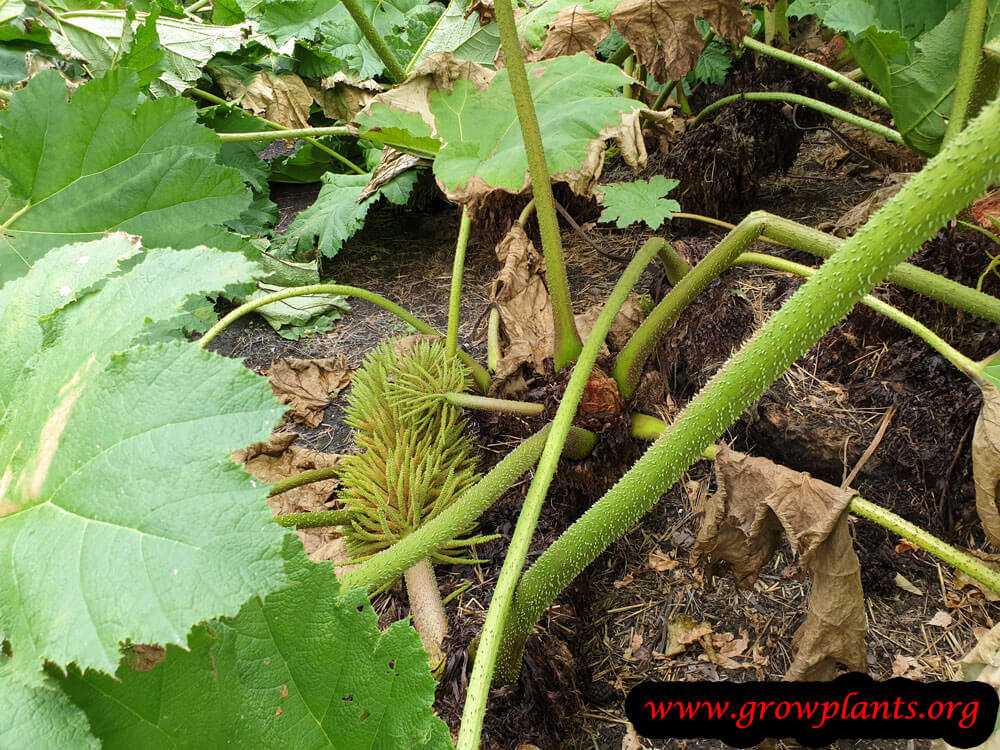
- Spent flower and seed spikes: remove the bottlebrush inflorescences as they fade; this also limits self-seeding, which in some regions makes Gunnera invasive.
- Edible leaf-stalks: the young green leaf-stalk is the edible part — harvest young stalks from the base rather than removing them randomly.
There are no woody suckers or watersprouts; new growth all rises from the crown, so a vigorous new leaf is kept, not cut.
Structural Pruning & Training
None applies — there is no framework to select or thin. The only way to control size or renew a tired plant is to lift and divide the crown in spring, cutting it into sections that each carry a bud (eye) and roots, and replanting the strongest pieces.
Container & Small-Space Pruning
Gunnera is rarely a lasting container plant — a mature crown and 1–3 m leaves quickly outgrow any pot, and it wants constant moisture at a waterside or bog margin. A young plant can be held in a large pot for a season or two with the same grooming, but plan to move it to open ground.
Tools
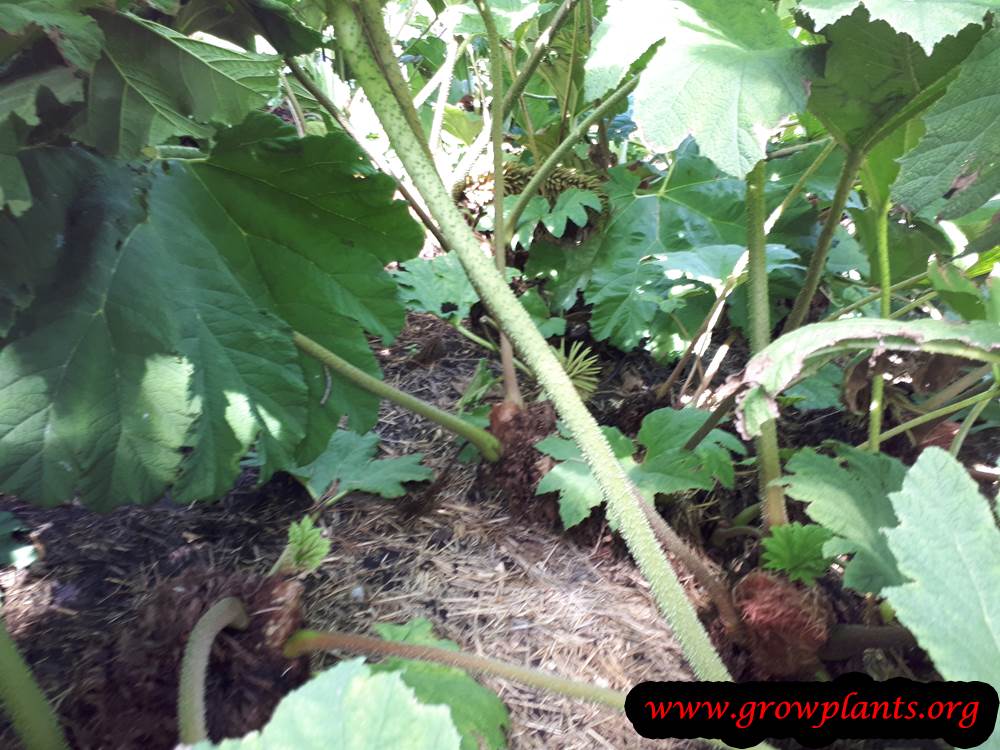
Cutting the thick, hollow, prickly petioles calls for loppers and, for the largest stalks and crown work, a pruning saw; bypass secateurs handle smaller stalks. A sharp spade divides the crown. Wear gloves — the stalks are covered in prickles. Hedge shears and a pole pruner have no use on this low, giant-leaved plant.
Tool Hygiene & Disease Risk
Routine. Gunnera has no notable pruning-borne disease; the real risk is crown rot from wet debris left sitting on the crown. Use clean, sharp tools and, above all, keep the crown clear of soggy rotting material once you uncover it in spring.
Cut Placement & Technique
- Cut petioles low, close to the crown, so no long wet stub remains to rot into it.
- When dividing, sever the crown cleanly so each section keeps a bud and roots.
- Handle with gloves and support the huge leaves as you cut — their weight can tear the petiole.
Heavy Pruning & Rejuvenation
Gunnera is not a candidate for hard woody cut-back — there is nothing woody to regrow. Renewal is by crown division in spring: split an old, overlarge crown, replant vigorous pieces, and it re-establishes its full scale within a season or two. Cutting all foliage away in mid-season only starves and weakens the crown.
Post-Pruning Care
After the autumn cut-down, make sure the crown is covered against frost. After uncovering in spring, keep it exceptionally moist — it is a bog plant and a heavy feeder — and feed generously to fuel the giant leaves. Water divisions in thoroughly and keep them shaded and wet until they root.
Common Pruning Mistakes
- Removing the dead leaves too early in autumn — they are the crown’s winter insulation.
- Leaving wet debris piled on the crown into spring, causing crown rot.
- Letting seed spikes mature where the plant can self-sow and become invasive.
- Cutting healthy leaves and so sacrificing the very size that defines the plant.
When NOT to Prune
- Not while the leaves are still healthy and green in autumn — let them feed the crown and then insulate it.
- Not before the last hard frost, when uncovering the crown too soon exposes new growth to cold.
- Not in heat or drought for division — divide in cool, moist spring conditions.
Recommended Tools (by task)
- loppers — cutting the thick, fleshy, prickly leaf-stalks at the crown.
- pruning_saw — for the very largest petioles and for cutting through the crown when dividing.
- garden_spade — lifting and splitting the crown in spring.
Pruning Troubleshooting
| Problem | Possible Cause | What to Check | Corrective Action |
| Crown dead after winter | Leaves removed too early; no frost protection | Whether the crown was covered; local minimum temperatures against zone 6 | Leave dead foliage over the crown, or add mulch/straw, before hard frost |
| Crown soft and rotting in spring | Wet debris left sitting on the crown | Drainage and how promptly cover was removed | Clear old leaves once frost passes; keep the crown clear of soggy material |
| Seedlings appearing everywhere | Spent seed spikes left to mature | Presence of ripening seed heads | Cut spent flower/seed spikes before seed sets, especially where Gunnera is invasive |
| Leaves smaller than expected | Congested old crown or too dry | Age of clump; soil moisture and feeding | Divide the crown in spring; keep constantly moist and feed heavily |
Propagation Guide
For the large clump-forming giant rhubarb the practical method is to divide the crown in spring, with seed as the slower alternative; the site notes vegetative propagation is not strictly required. Difficulty is moderate — division is straightforward but the crowns are heavy, and seed can be slow and uneven.
Quick Propagation Specs
| Best Propagation Method | Crown division |
| Alternative Methods | Seed |
| Propagation Difficulty | Moderate |
| Seed True-to-Type | Species come largely true; selected forms vary |
| Vegetative True-to-Type | Yes |
| Best Propagation Season | Spring |
Division, Offsets, Pups & Suckers
In spring, lift or expose the crown of an established plant and cut it into sections, each carrying at least one growth bud and a portion of root. Replant the divisions promptly at the same depth and keep them consistently moist while they re-establish; the large leaves lose water quickly, so shade and shelter help them recover. Note that the genus ranges from these giant clump-formers to small creeping mat species — the mat types spread by their own runners rather than needing a heavy crown split.
Growing from Seed
Seed Handling & Viability
The tiny seed is best sown fresh; viability tends to fall with dry storage.
Sowing Depth & Orientation
Surface-sow or barely cover the fine seed and keep it in good light.
Germination Conditions
Keep the surface moist and warm in a humid, bright place. Germination can be slow and staggered, so keep the pots undisturbed for a while.
Seedling Care
Grow the small seedlings on under cover with steady moisture until they are large enough to pot on.
Bloom & Flower Guide
Quick Details
- Bloom Season: Spring into early summer
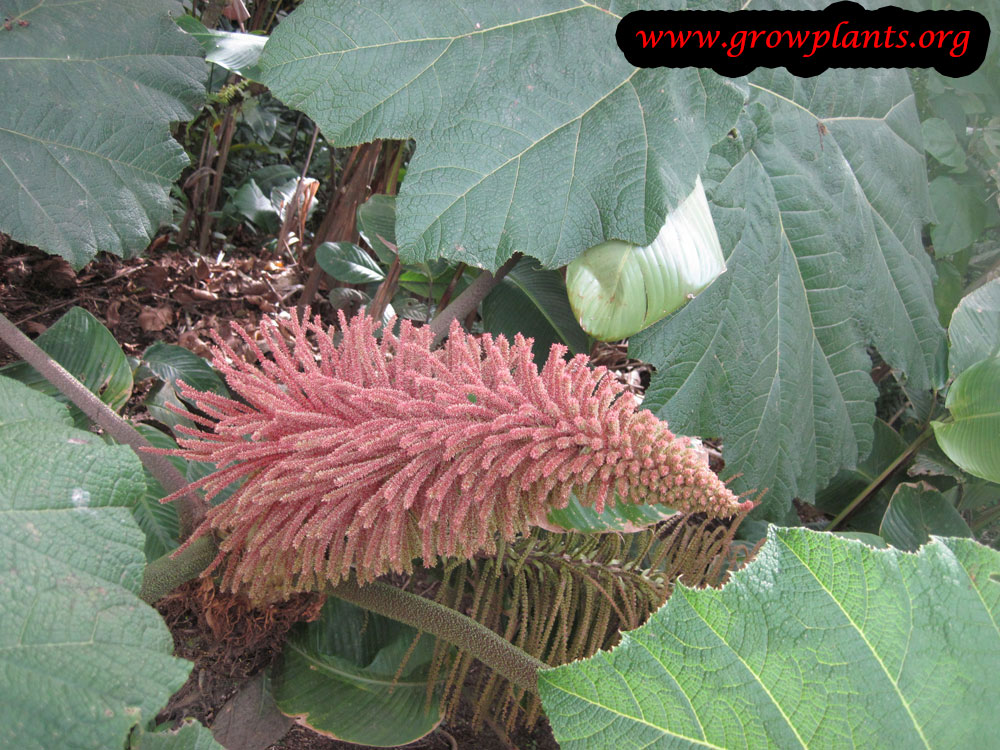
- Flower Appearance: Many tiny flowers – red, purple, brown, pink or green – packed onto a stout cone-like spike that resembles a bottle brush
- Edibility: Ornamental – the flowers are not eaten (this plant’s edible part is the young leaf stalk, not the bloom)
Detailed Blooming Overview
Gunnera, the giant rhubarb, is grown mainly for its enormous architectural leaves, but its flowering is a curiosity in its own right. In spring a thick, cone-shaped spike crowded with countless minute flowers pushes up near the base of the plant, looking like a giant bottle brush before the huge leaves fully unfurl.
Flower Characteristics
- Very small flowers in shades of red, purple, brown, pink or green.
- Densely packed into a bottlebrush-like spike (inflorescence).
Bloom Care & Thinning
- Site for best bloom: Constantly moist, rich soil at the water’s edge with shelter suits it best; the flower spike is most likely on well-fed, established clumps.
- After flowering: The spent spike can be left for structure or cut away; the great leaves remain the main feature.
Fruit & Uses
On Gunnera the edible part is the thick leaf stalk (petiole) — the huge leaf blades themselves are not eaten. The peeled stalks are eaten raw and are also used to make jams and to flavour alcoholic beverages.
Quick Edible Specs
| Edible Parts | Leaf stalks (petioles) |
|---|---|
| Main Use(s) | Culinary — eaten raw, jams, and flavouring alcoholic beverages |
| Eaten Raw or Cooked | Raw, or worked into preserves |
| Preparation Required | Peel the outer skin of the stalk; use young, fully grown stalks |
| Harvest Season | All year |
| Storage | Best used fresh; the peeled stalks do not keep long |
| Safety/Toxicity Caveat | Only the leaf stalk is eaten — do not eat the large leaf blades |
Shoots & Stems
The edible part is the leaf stalk, which can grow very large on this plant (leaves up to about 3 m / 10 ft across). Take young, fully grown stalks, cutting them from the base at ground level. Peel off the outer skin before use; the tender inner stalk is the part that is eaten.
Preparation, Uses & Safety
Peel the stalk and eat it raw, or cook it down into jams; the stalks are also used to flavour alcoholic beverages. Keep to the leaf stalks only — the leaf blades are not a food part and should not be eaten.
Pests, Diseases & Troubleshooting
Overview: Giant rhubarb (Gunnera) is a robust bog-margin perennial that is remarkably free of insect pests, its huge leaves shrugging off most trouble – the real threats are slugs and snails shredding soft young foliage, and crown rot when the dormant crown is left exposed and wet through a cold winter. Management is almost entirely cultural: keep it in rich, permanently moist ground, guard the emerging leaves, and protect the crown over winter.
Quick Troubleshooting Overview
| Issue / Pest | Main Symptom | Primary Solution |
|---|---|---|
| Slugs & snails | Ragged holes in unfurling young leaves; slime trails | Barriers, traps, hand-pick at night, iron-phosphate bait |
| Crown / winter rot | Soft, blackened, collapsing crown in spring | Cover crown with own dead leaves; improve drainage |
| Leaf scorch | Brown, crisped leaf edges | Keep soil wet; shelter from drying wind and midday sun |
| Wilting / drought stress | Whole leaves flag and collapse in dry spells | Never let the root run dry; deep watering, mulch |
Common Pests & Management
- Slugs and snails (Deroceras, Arion, Cornu aspersum):
- Symptoms: Irregular ragged holes chewed in the soft, unfurling spring leaves; silvery slime trails on foliage and soil; worst in the damp conditions Gunnera loves, and on the tender new growth before it toughens.
- Prevention & Control: Hand-pick after dark or after rain; set beer traps and lay grit, crushed shell or copper barriers around emerging crowns. Encourage frogs, birds and ground beetles. If needed, scatter iron-phosphate (ferric) slug bait, which is safe around wildlife.
- Aphids (occasional):
- Symptoms: Minor colonies may gather on flower spikes or the softest growth in spring, with slight distortion and honeydew; rarely a serious problem on such a vigorous plant.
- Prevention & Control: Usually no action needed – a water jet and natural predators keep them in check. Treat only heavy colonies with insecticidal soap.
Diseases & Fungal Issues
- Crown / winter rot (Phytophthora and general wet-cold rot):
- Symptoms: After a wet, cold winter the dormant crown fails to reshoot, or emerging buds are soft, brown-black and collapsing; this is the single most common way established Gunnera is lost.
- Treatment & Management: This is prevented, not cured – in autumn fold the plant’s own dying leaves over the crown as an insulating cap, adding straw or bracken in hard climates. Ensure the crown itself is not sitting in stagnant water; cut away rotten tissue in spring and hope for fresh buds.
- Fungal leaf spot (minor):
- Symptoms: Occasional brown blotches on ageing leaves late in the season, largely cosmetic on this short-lived summer foliage.
- Treatment & Management: Remove badly spotted leaves; no spray is usually warranted as the plant dies back naturally each year.
Growing Difficulties & Abiotic Problems
- Drought stress / leaf collapse:
- Cause & Symptoms: Gunnera is a bog plant with an enormous transpiring leaf area; if the root zone dries even briefly, whole leaves flag, wilt and brown. This is the commonest "why is it dying" complaint.
- Correction Strategy: Site beside water or in constantly moist, humus-rich soil; water deeply in dry spells and mulch heavily. It genuinely cannot be allowed to dry out.
- Leaf scorch (wind and sun):
- Cause & Symptoms: Brown, crisped leaf margins and tattered leaves caused by drying wind, intense midday sun, or a combination with dry roots.
- Correction Strategy: Provide shelter from strong wind, give dappled shade in hot climates, and keep the soil reliably wet so the plant can supply its huge canopy.
- Frost damage to crown:
- Cause & Symptoms: Hard frost penetrating an unprotected crown kills the dormant buds, so the plant fails to return in spring.
- Correction Strategy: Always insulate the crown over winter with its own cut leaves plus extra mulch in cold regions; give young plants extra protection until established.
What Helps — Products & Tools
Gunnera needs very few products: iron-phosphate slug bait, beer traps and copper or grit barriers for slugs and snails; a thick winter mulch (its own leaves plus straw/bracken) to prevent crown rot; and an occasional insecticidal-soap spray only if aphids build up. The main "tools" are consistent moisture and winter crown protection.