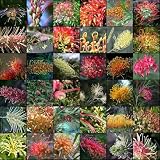


Plant Profile & Key Characteristics
Overview: A fast-growing evergreen tree reaching about 10–25 m (30–80 ft) tall. It is grown as an ornamental and shade tree, and can also be trained as bonsai.
Quick Specifications
| Specification | Attribute |
|---|---|
| Plant Type / Life Cycle | Perennial (evergreen tree) |
| Foliage Type | Evergreen |
| Mature Size | 10–25 m (30–80 ft) tall |
| Growth Rate | Moderate to fast |
| Hardiness | USDA zone 8+ |
Growth Form & Structure
- Height & Spread: Reaches 10–25 m (30–80 ft) tall as a specimen tree; too large for long-term container culture though young plants can be pot-grown or bonsaied.
- Growth Habit & Form: Upright, single-trunked evergreen tree developing a broad, spreading canopy.
- Lifespan & Maturity: Long-lived tree with fast early growth, reaching timber size within years; trainable as bonsai while young.
Anatomy & Physical Features
- Trunk & Bark: Straight trunk with furrowed grey-brown bark.
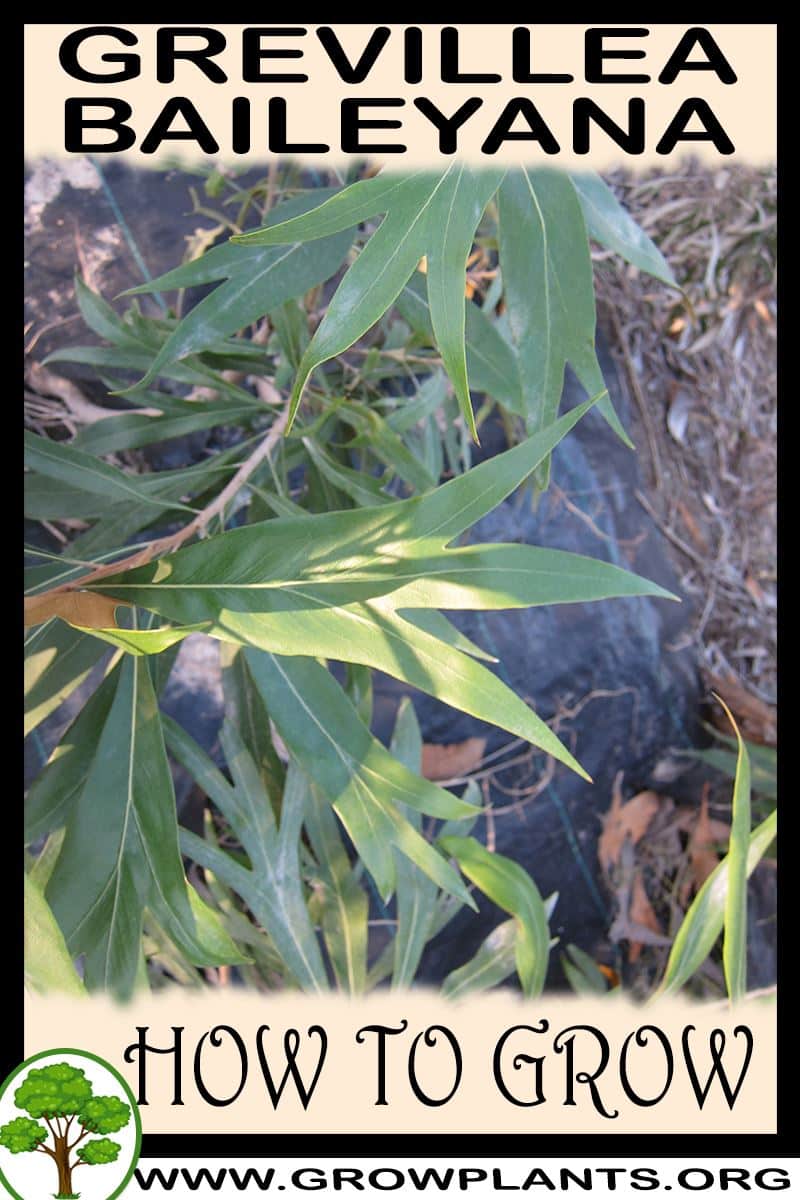
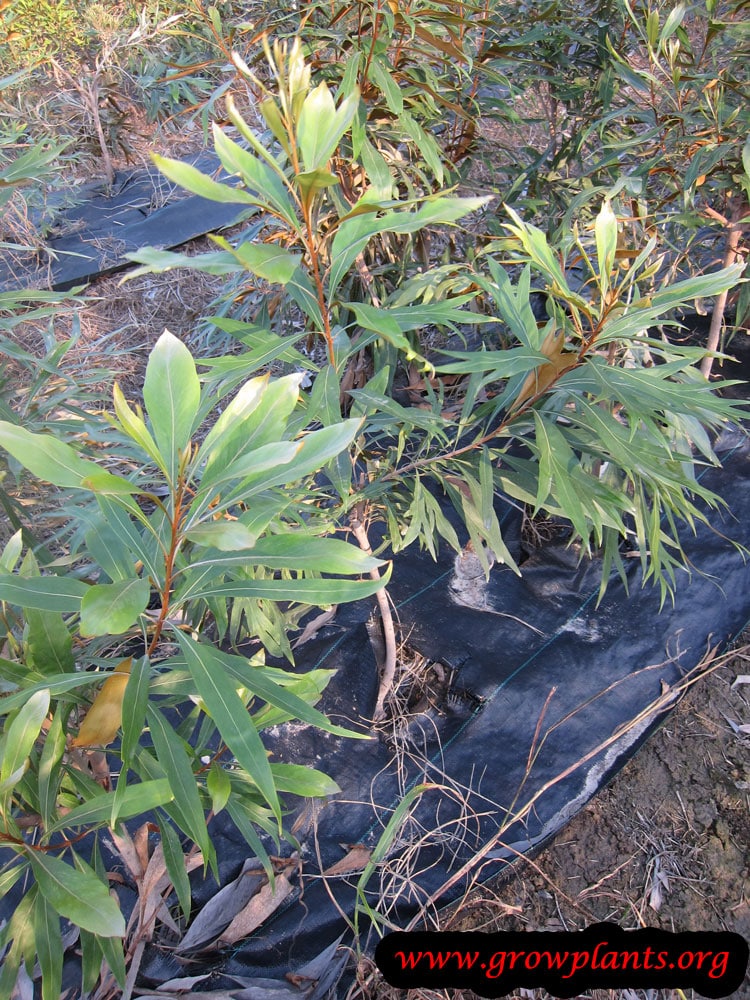
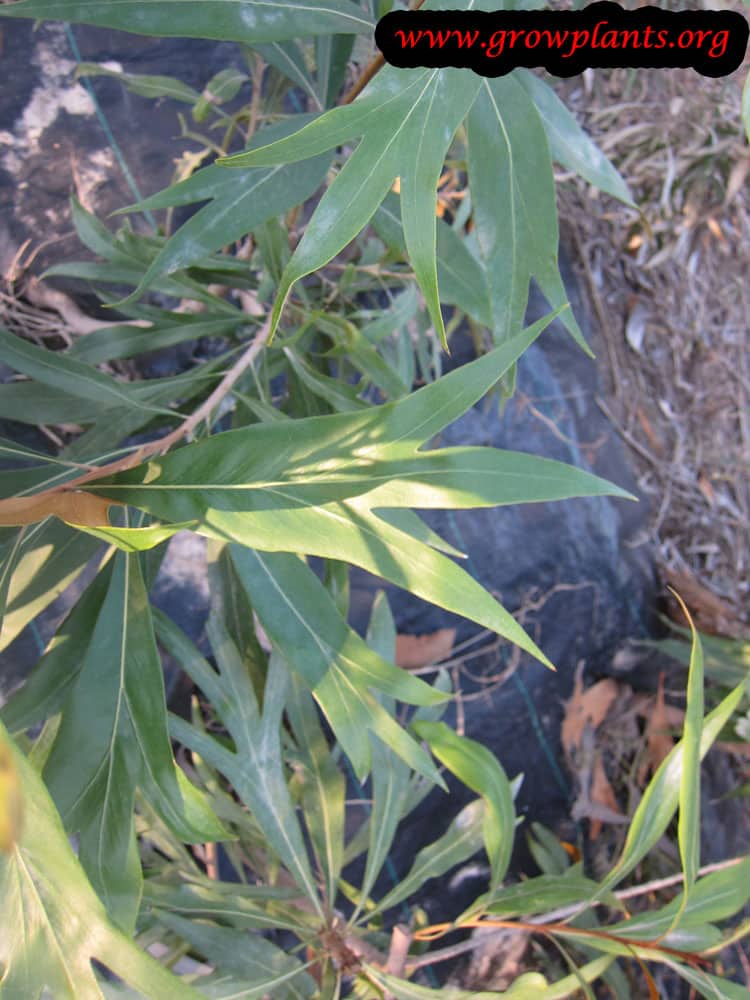
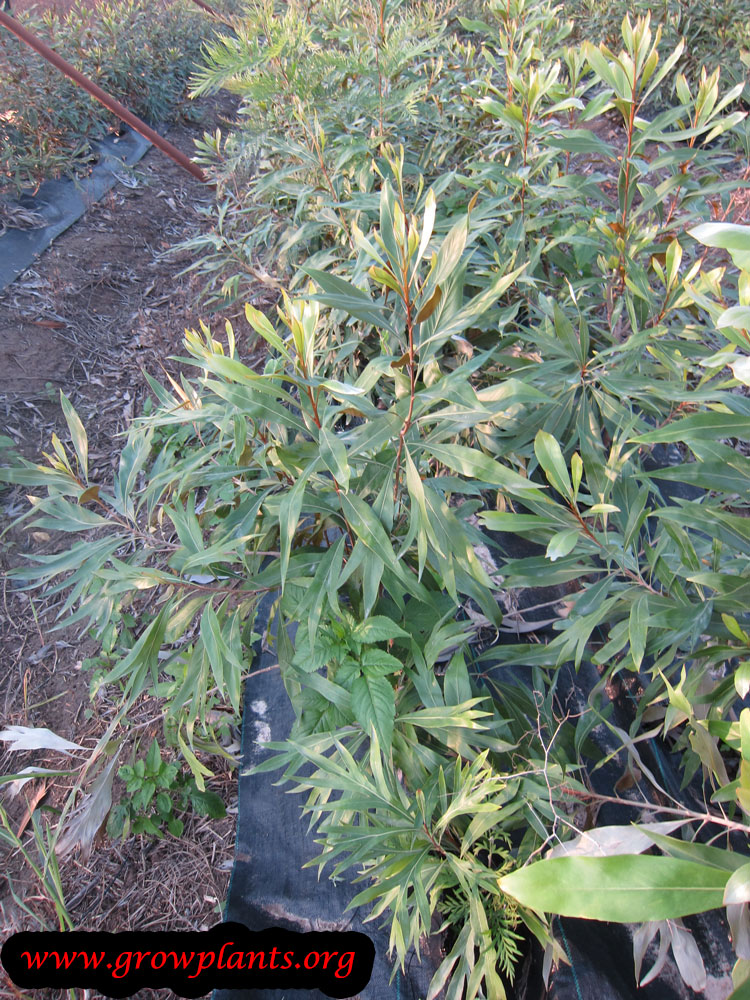
- Leaves & Foliage: Evergreen large green leaves, oval on mature growth and deeply forked/lobed on juvenile growth, with a rusty-felted underside.
- Flower Characteristics: Small cream-white flowers borne in dense cylindrical clusters.
Primary Uses & Landscape Value
- Functional & Ornamental Roles: Ornamental and shade tree, street and specimen planting, nectar source for birds and pollinators, and bonsai subject.
Care Guide: Planting, Soil & Watering
Overview: Grevillea is a tough, sun-loving evergreen from the protea family that thrives in light, sharply drained soil and tolerates dry conditions once established. Like its relatives it is sensitive to phosphorus, so it prefers lean, slightly acidic ground and low-phosphorus feeding.
Quick Care Requirements
| Requirement | Ideal Condition |
|---|---|
| Planting Season | In the warm season (spring through autumn in frost-free climates) |
| Growth Rate | Moderate to Fast |
| Soil Type | Light and well-draining; tolerates poor, sandy or gravelly ground |
| Soil pH | Slightly acidic to neutral (about 5.5–6.5); avoid lime and high-phosphorus fertilisers |
| Water Need | Low to moderate; drought tolerant once established, let the soil dry between waterings |
Planting & Establishment
- Best Planting Season: Plant in the warm season — spring, summer or autumn in frost-free and warm climates — giving the roots time to establish before any cold.
- How to Plant:
- Hole Preparation: Dig a hole about as deep as, and a little wider than, the root ball, loosening the sides so young roots can spread into the surrounding soil.
- Soil Amendments: Grevillea wants sharp drainage rather than rich soil; add coarse sand or grit to heavy ground, but avoid manure, mushroom compost and phosphorus-rich fertilisers, which can damage the roots of this protea-family plant.
- Planting Depth: Set the plant at the same depth it grew in its pot, with the root collar at soil level; do not pile soil or mulch against the trunk.
- Growth Speed & Expectations: Moderate to fast, quickly making a large shrub or tree in good conditions.
Soil, Watering & Drainage Care
- Soil Mix & Drainage Needs: Grows best in light, gritty, freely draining soil; it will not tolerate waterlogging, so improve drainage on heavy sites or plant on a slope or raised bed.
- Watering Schedule & Technique:
- Young / Newly Planted: Water regularly through the first season to settle the roots, keeping the soil lightly moist but never soggy.
- Established: Once established it is markedly drought tolerant — water deeply but infrequently, letting the soil dry out between waterings.
- Seasonal Adjustments: Reduce watering in winter and cool weather; give occasional deep soaks during extended summer heat or drought.
Climate, Light & Hardiness
Grevillea baileyana is a broadly adaptable evergreen tree, growing across subtropical, tropical, Mediterranean, desert, and even temperate climates, and needing full sun. It has moderate cold tolerance for an evergreen tree of this type, with damage generally beginning around −5°C (23°F).
Quick Climate Specifications
| Climate Zones | Subtropical, Tropical, Mediterranean, Desert, Temperate |
|---|---|
| USDA Hardiness Zones | 8+ |
| Approx. Survival Minimum | Approximately −5°C (23°F) |
| Frost Tolerance | Low to Moderate |
| Light Conditions | Full Sun |
Sunlight & Light Exposure
Optimal Light Setup
Requires full sun for healthy growth as a shade tree species.
Temperature Extremes & Hardiness
USDA Hardiness & Regional Limits
Suited to USDA zone 8 and warmer, an unusually broad climate tolerance (spanning tropical through temperate) for a single Grevillea species.
Cold Damage & Winter Protection
Generally tolerates conditions down to around −5°C (23°F); at the cooler edge of its range, a sheltered planting site helps protect against occasional harder frosts.
Frost Sensitivity
Frost tolerance is limited - brief cold near its stated minimum may be tolerated, but sustained or harder freezes are likely to cause significant damage.
Extreme Heat Tolerance
Well suited to hot desert and tropical summer conditions, consistent with its wide climate range.
Wind, Humidity & Microclimate
Rainfall & Seasonal Moisture
Tolerates small to average water, indicating reasonable adaptability to both drier and moderately moist climates.
Growing in Pots, Balconies & Indoors
Grevillea baileyana (white oak) is a large tree (10-25 m), so it is not a long-term container or indoor plant. The grower marks it as neither a houseplant nor a pot plant.
Quick Details
- Container Size: Not suited to containers long term
- Indoor Suitability: Not a houseplant – a full-size tree
- Best Spot: Full sun, open ground
- Soil & Drainage: a light, aerated potting mix – peat or coir blended with perlite or vermiculite, plus some organic matter/compost (for young/bonsai plants)
- Watering in Pots: Frequent while young in a tub – pots dry fast; avoid waterlogging
Indoors & On the Windowsill
- Not a houseplant: The grower marks it as unsuitable indoors – it is a full-size tree that needs open ground and full light.
On a Balcony or Patio
- Not for pots: The grower does not recommend container growing – it simply gets too large.
- Young plants: A large tub can hold a sapling for a short spell, but plan its final position in open ground with room to spread.
Choosing the Pot, Soil & Long-Term Care
- Young / bonsai only: If you grow it in a pot at all, keep it to the juvenile stage in a large, free-draining tub with drainage holes.
- Potting mix: a light, aerated potting mix – peat or coir blended with perlite or vermiculite, plus some organic matter/compost.
- Feeding & watering: Potted plants exhaust their feed faster because water washes nutrients out, so feed a little more often than plants in open ground during active growth; potted trees also dry out fast, so water more attentively than one in the ground.
- Repotting: Refresh the top of the mix each growing season and pot up or divide roughly every couple of years, trimming crowded roots – but recognise that a vigorous tree will soon need the open ground.
Fertilizing & Feeding
As a member of the Proteaceae, this evergreen Grevillea is adapted to naturally lean, low-fertility soils and is sensitive to overfeeding, particularly with high-phosphorus products; light, restrained feeding suits it far better than a heavy fertility program.
Quick Fertilizing Specs
| Feeding Level | Light feeder |
|---|---|
| Main Nutrient Priority | Light, balanced feeding using a low-phosphorus or native-plant-formulated fertilizer where available |
| Best Feeding Period | During the active growing season while the tree is young and establishing |
| Reduce/Stop Feeding | Avoid routine heavy feeding of established trees; this genus performs best in lean soil |
Feeding by Growth Stage
Young tree establishment
Support root and canopy establishment without overwhelming this lean-soil-adapted species.
| Nutrient direction | A light, balanced feeding using a low-phosphorus or native-plant-formulated product supports establishment without the phosphorus sensitivity issues this genus is known for. |
|---|---|
| Timing | During the active growing season while the tree is young. |
| Frequency | Light, occasional feeding through establishment is generally enough. |
| Fertilizer types | A low-phosphorus or native-plant-formulated fertilizer, applied lightly |
| Precautions | Avoid high-phosphorus fertilizers and rich garden soil amendments; this genus is well known among growers for phosphorus sensitivity and performs best in lean, well-drained conditions. |
Established tree growth
Maintain healthy evergreen canopy growth and the tree’s small white inflorescence flowers on a mature specimen.
| Nutrient direction | Established trees generally do best with minimal additional feeding, relying on their adaptation to naturally lean soils. |
|---|---|
| Timing | During the active growing season for an established tree, if feeding is used at all. |
| Frequency | Feeding needs are minimal once the tree is well established in suitable soil. |
| Fertilizer types | A light, low-phosphorus feeding only if growth or leaf color clearly suggest it is needed |
| Precautions | Resist routine feeding of an established tree; excess fertility, especially phosphorus, is more likely to cause problems than benefit this species. |
Nutrient Deficiency Signs & Corrections
Leaf tip or margin browning and scorch despite otherwise adequate water.
| Possible causes | excess phosphorus from a standard garden fertilizer, to which this genus is notably sensitive, fertilizer salt buildup in the root zone, soil richer or more fertile than this species tolerates |
|---|---|
| Appears first on | leaf tips and margins |
| What to check | type and phosphorus content of any recent fertilizer used, soil fertility history, watering consistency |
| Possible correction | Stop using standard high-phosphorus fertilizers, flush the root zone with water if salt buildup is suspected, and switch to a low-phosphorus or native-plant-formulated product if feeding is needed. |
New leaves emerge yellowish with darker green veins.
| Possible causes | iron availability limited by soil pH, especially in alkaline soil, root stress from poor drainage, genuinely low soil iron |
|---|---|
| Appears first on | newest foliage |
| What to check | soil pH if known, soil drainage, root health |
| Possible correction | Address soil pH and drainage first; if chlorosis persists, apply a chelated iron product per its label. |
Slow growth and pale foliage in a young tree.
| Possible causes | very lean soil with genuinely low nitrogen, root stress after transplanting, competition from nearby vegetation |
|---|---|
| Appears first on | new growth |
| What to check | recent feeding history, time since planting, surrounding plant competition |
| Possible correction | If truly needed, apply only a light, low-phosphorus balanced feeding rather than a standard high-fertility product. |
Pruning, Training & Seasonal Maintenance
Grevillea baileyana is grown as a shade or specimen tree (and occasionally as bonsai) and tolerates only light, mostly cosmetic pruning. The objective is a clean single-leader form with a shapely canopy; because this species has no hard winter dormancy in its warm-climate range, light shaping can be done through most of the growing season, but cuts should always be made into wood that still carries leaves or live buds — like many Proteaceae, it does not reliably resprout from bare old wood.
Quick Pruning & Maintenance Specs
| Pruning Tolerance | Low to Moderate — shaping only, not hard cutting into old wood |
| Primary Pruning Window | Spring through summer, during active growth flushes |
| Typical Frequency | Light annual shaping and clearance pruning |
| Main Objective | Single leader, tidy canopy shape, clearance beneath a shade tree |
| Young Plant Priority | Establish one central leader; remove competing leaders early |
| Mature Plant Priority | Deadwood removal and light shape maintenance |
| Best Tool Type | Bypass secateurs and loppers for shaping; pruning saw and pole pruner for a mature 10-25 m tree |
| Avoid Heavy Pruning During | Just before a cold snap (limited frost tolerance below about -5°C) and in prolonged heat/drought stress |
Pruning by Plant Age & Size
Newly Established
Remove only damaged or dead growth; let the young tree settle in before any formative cuts.
Young / Formative
Train to a single central leader, removing competing co-dominant stems while they are still small. Light tip-pruning of lateral growth can encourage a denser, more branched canopy.
Mature / Established
Limit work to removing dead or crossing wood and occasional crown-raising for clearance beneath the canopy; avoid cutting back into leafless interior wood, which this species is unlikely to resprout from.
Seasonal Pruning Schedule
Ongoing Sanitary
Remove dead, damaged or storm-broken wood as it appears. In this species’ frost-marginal, largely dormancy-free range there is no single mandatory structural window, but timing light shaping to coincide with a growth flush gives the fastest, most reliable regrowth response.
Flowering Wood
Flowers form in small clusters (racemes) on the current season’s growth. Shaping cuts made well before a flush will not sacrifice much bloom, but avoid tipping shoots that are already showing developing flower clusters if display matters.
Structural Pruning & Training
Focus on a strong single leader and well-spaced scaffold branches while young; crossing or rubbing branches should be removed as soon as they are noticed, since large old wounds on this species are slow to close and unlikely to be followed by fresh growth from that point.
Tools
Bypass secateurs for young shoot tips and formative shaping, loppers for branches up to a few centimetres. As a canopy tree reaching 10-25 m, mature specimens need a pruning saw for structural cuts and a pole pruner for elevated crown-raising or deadwood removal.
Tool Hygiene & Disease Risk
Routine: no significant transmissible disease is documented for this species. Clean, sharp tools are sufficient; there is no need for between-cut disinfection unless working on visibly diseased material.
Cut Placement & Technique
Cut just outside the branch collar, never flush. Always leave the cut end backed by live leaves or visible buds rather than cutting into bare interior wood, since regrowth from leafless old wood is unreliable in this genus.
Heavy Pruning & Rejuvenation
Not recommended: hard cutting into old bare wood risks a section that simply fails to resprout, leaving permanent gaps or dieback rather than vigorous new growth. If size reduction is needed, do it gradually and only into wood that still has live foliage.
Post-Pruning Care
No feeding is needed after light shaping. Watch cut ends over the following weeks to confirm they are resprouting rather than dying back, and water during establishment if pruning coincided with dry weather.
Common Pruning Mistakes
Hard-cutting into bare, leafless wood expecting it to resprout; pruning heavily right before a cold snap when this species has limited frost tolerance; leaving competing leaders untrained when young, leading to weak forks later.
When NOT to Prune
Avoid pruning shortly before an expected cold snap (tolerance is limited to roughly -5°C), and avoid heavy cutting during prolonged heat or drought stress.
Recommended Tools (by task)
- bypass_secateurs — tip-pruning and formative shaping of young growth.
- loppers — small to medium branches during structural training.
- pruning_saw — structural cuts and deadwood removal on a mature tree.
- pole_pruner — crown-raising and high deadwood removal once the tree approaches its 10-25 m mature size.
Pruning Troubleshooting
| Problem | Possible Cause | What to Check | Corrective Action |
| Cut end fails to resprout / dies back further | Cut made into bare, leafless old wood | Whether live foliage or buds were present near the cut | Prune back further to the nearest point with live growth; avoid repeating hard cuts into old wood |
| Weak, splitting fork in the canopy | Untrained co-dominant leaders from the formative stage | Union angle and bark condition at the fork | Remove or subordinate one leader while still young; larger unions may need professional support |
Propagation Guide
Grevillea baileyana can be grown from seed, but semi-hardwood cuttings are generally the more dependable practical method used in the nursery trade for this genus, rooting reasonably readily under warm, humid conditions. Neither grafting nor other vegetative reproduction is required, and overall propagation difficulty is easy to moderate.
Quick Propagation Specs
| Best Propagation Method | Semi-hardwood stem cuttings |
| Alternative Methods | Seed |
| Propagation Difficulty | Easy–Moderate |
| Seed True-to-Type | Usually true-to-type |
| Vegetative True-to-Type | Yes |
| Best Propagation Season | Warm months, matching the site’s spring/summer/autumn planting window in warm climates |
| Seed Germination Time | Can be slow and irregular, often several weeks |
| Cutting Rooting Time | Several weeks under warm, humid conditions |
| Germination Temperature | Warm, roughly 20–25°C (68–77°F) |
Growing from Seed
Seed Handling & Viability
Seed is best collected once pods have matured and split; viability in Grevillea species can be inconsistent, so sowing reasonably fresh seed gives the best results.
Germination Conditions
Warm temperatures and a free-draining, low-fertility seed-raising mix suit this genus best.
Germination Time
Germination can be slow and uneven, sometimes taking several weeks.
Seedling Care
Grow on in bright light with a free-draining mix; avoid overly rich soil, consistent with this genus’s general preference for lean, well-drained conditions.
Stem Cuttings
Cutting Type
Semi-hardwood tip cuttings.
Best Timing
Warm growing season.
Cutting Preparation
Take firm, non-flowering tip growth and remove the lower leaves.
Rooting Setup
A free-draining, low-fertility propagating mix under mist or a humid cover.
Rooting Hormone
Beneficial for improving strike rate.
Rooting Time
Typically several weeks.
Bloom & Flower Guide
Quick Details
- Bloom Season: Spring
- Flower Appearance: Small creamy-white flowers packed into cylindrical clusters on the stems
- Edibility: Ornamental – grown for its foliage and bloom; not eaten (some Grevillea can irritate the skin and are not for eating)
Detailed Blooming Overview
White oak grevillea carries nectar-rich flower spikes in spring that draw in nectar-feeding birds and insects. It is grown as a handsome shade tree or as bonsai, valued as much for its two-toned foliage as for its bloom.
Flower Characteristics
- Small white flowers grouped into an upright inflorescence on the stems.
Bloom Care & Thinning
- Keeping it flowering: A light tip-prune after flowering shapes the plant and encourages bushy new growth for future blooms.
- Handling: Wear gloves – the foliage and sap can irritate sensitive skin.
Pests, Diseases & Troubleshooting
Overview: Grevillea (Proteaceae) is a genuinely tough, low-input genus that shrugs off most insect pests thanks to tough, often needle-like or leathery foliage. The white/brown silky oak, a rainforest-margin tree grown for handsome bronze-backed new foliage; vigorous and generally healthy. Its real weaknesses are two: Phytophthora root rot in wet or heavy soils, and — unusually among garden plants — a sensitivity to phosphorus, which is toxic to Proteaceae and will scorch and kill a plant fed with ordinary fertiliser. Grow lean, in free-draining acidic soil, feed only with low-phosphorus native blends, and pest problems stay minor.
Quick Troubleshooting Overview
| Issue / Pest | Main Symptom | Primary Solution |
|---|---|---|
| Phosphorus toxicity | Yellowing then blackened, scorched leaf tips and margins; dieback | Stop all phosphorus feed; use only low-P native fertiliser |
| Phytophthora root rot | Wilting, yellowing, branch dieback in wet or heavy soil | Improve drainage, plant on a mound, do not overwater |
| Scale insects | Immobile brown/white bumps on stems and leaves; honeydew, sooty mould | Prune out, horticultural oil, protect natural predators |
| Borers | Holes, sawdust (frass) and dieback in stems and trunk | Keep plants vigorous, prune out and destroy affected wood |
| Webbing caterpillars | Leaves webbed together with frass; foliage skeletonised | Prune out nests, hand-pick, Bt spray on young larvae |
| Leaf spot | Brown/black spots and blotches, mainly in humid weather | Improve airflow, remove fallen leaves, avoid wet foliage |
Common Pests & Management
- Scale insects (soft and armoured scales, incl. Coccus, Saissetia):
- Symptoms: Small, immobile brown, grey or white bumps clustered along stems, leaf ribs and undersides. Soft scales excrete honeydew that blackens foliage with sooty mould and attracts ants; heavy infestations weaken growth.
- Prevention & Control: Keep plants healthy and prune out heavily encrusted stems. Encourage the many natural predators (ladybirds, parasitic wasps) by avoiding broad-spectrum insecticides; control ants, which farm scale and protect it. Spray horticultural oil to smother scale, coating stems and leaf undersides thoroughly.
- Borers (longicorn / longhorn beetle larvae, Cerambycidae):
- Symptoms: Round or oval holes in stems and trunk, ejected sawdust-like frass, and ringbarking that causes limbs above to wilt and die back. Borers target stressed, damaged or old wood.
- Prevention & Control: Vigour is the best defence — borers rarely trouble a healthy, well-sited plant, so avoid drought stress, phosphorus damage and wounding. Prune out and burn or bin affected wood well below the tunnelling. Probe visible tunnels with wire, and paint large pruning wounds. Avoid unnecessary trunk injuries.
- Webbing / leaf-eating caterpillars (leaf skeletonisers, e.g. Uraba lugens, web-tent moths):
- Symptoms: Leaves webbed and tied together with silk and frass, and foliage skeletonised or chewed. Young caterpillars graze the leaf surface; older ones strip whole shoots and shelter within the webbed mass.
- Prevention & Control: Prune out and destroy the webbed nests and clusters of caterpillars while small. Hand-pick where practical, and encourage birds and predatory insects. A targeted Bacillus thuringiensis (Bt) spray controls young caterpillars while sparing beneficials.
- Leaf miners and mealybugs:
- Symptoms: Some grevilleas develop pale blister-mines or blotches where small larvae feed inside the leaf, disfiguring but rarely serious. Mealybugs appear as white cottony masses in leaf axils and on new growth, especially on sheltered or container plants, with honeydew and sooty mould.
- Prevention & Control: Remove and destroy mined leaves. For mealybugs, wipe colonies with alcohol or dislodge with water, encourage predators, and use insecticidal soap or horticultural oil on persistent infestations. Both are usually minor on established, outdoor plants.
Diseases & Fungal Issues
- Phytophthora root rot (Phytophthora cinnamomi):
- Symptoms: The most serious disease of the genus. A soil-borne water mould that rots the fine roots; above ground the plant wilts, foliage yellows and dulls, branches die back, and a previously healthy shrub can decline and die, often quite suddenly, in wet or poorly drained ground.
- Treatment & Management: Prevention is decisive because there is no cure once established. Plant only in sharply drained soil, raise plants on a mound in heavy ground, and never overwater or let water pool at the base. Use pathogen-free stock and clean tools, and mulch without piling material against the stem. On valued plants a phosphonate (phosphite) treatment can suppress the disease — note this is a fungicidal phosphite, not a phosphate fertiliser.
- Fungal leaf spot and blotch:
- Symptoms: Brown, grey or black spots and irregular blotches on leaves, sometimes with yellowing, chiefly in warm humid weather or on crowded, shaded plants.
- Treatment & Management: Improve air circulation with thinning pruning, rake up and remove fallen infected leaves, and avoid overhead watering. It is largely cosmetic; a copper fungicide can be used on persistent, valued specimens.
- Grey mould (Botrytis cinerea):
- Symptoms: Fuzzy grey mould on flowers and soft new growth in cool, damp, still conditions; affected tissue browns and rots. Mainly a nuisery, greenhouse and wet-season problem.
- Treatment & Management: Remove affected flowers and shoots, improve ventilation and spacing, and avoid wetting the foliage. Good airflow generally prevents it without chemicals.
Growing Difficulties & Abiotic Problems
- Phosphorus toxicity — the signature Proteaceae problem:
- Cause & Symptoms: Grevilleas evolved on ancient phosphorus-poor soils and cannot regulate phosphorus uptake, so ordinary garden fertilisers, manures and “bloom booster” feeds poison them. Symptoms are yellowing between the veins followed by blackened, scorched leaf tips and margins, dieback of shoots and, in severe cases, death.
- Correction Strategy: Never use standard or high-phosphorus fertiliser, poultry manure or bone meal. Feed sparingly, if at all, with a low-phosphorus native/Proteaceae-safe fertiliser. Flush the root zone with water to leach excess phosphorus, and mulch with leaf litter rather than rich composts.
- Root rot from overwatering / poor drainage:
- Cause & Symptoms: Beyond Phytophthora, simple waterlogging suffocates the fine roots; leaves yellow and drop, growth stalls and the plant wilts despite wet soil.
- Correction Strategy: Site in full sun with excellent drainage, plant on a raised mound in clay, and water deeply but infrequently once established — most grevilleas are drought-tolerant and dislike constant moisture.
- Iron chlorosis in alkaline soil:
- Cause & Symptoms: On limey or high-pH soils, iron and other micronutrients lock up, giving yellowing between green veins on the youngest leaves.
- Correction Strategy: Grow in neutral to acidic soil; where soil is alkaline, apply chelated iron and acidifying organic mulches, or grow in containers with an acidic ericaceous-style mix. Correcting pH is more durable than repeat iron sprays.
- Frost and sun / heat stress:
- Cause & Symptoms: Species vary widely in hardiness; tender types show blackened, wilted growth after frost, while others scorch if moved from shade into fierce sun. Cold, wet winters are especially hard on marginal plants.
- Correction Strategy: Match the species to the climate and give tender types a warm, sheltered, well-drained spot. Acclimatise container plants gradually to full sun, and protect from hard frost when young.
What Helps — Products & Tools
The most important “product” for a grevillea is the right fertiliser — a low-phosphorus native/Proteaceae blend — and good drainage. Otherwise keep on hand: horticultural / neem oil for scale and mealybugs; Bacillus thuringiensis (Bt) for webbing caterpillars; chelated iron for chlorosis on alkaline soil; a copper fungicide in reserve for leaf spot; and, for prized plants at risk, a phosphonate (phosphite) product to suppress Phytophthora. Follow all labels, and spray oils in the cool of evening to protect pollinators.