
Plant Profile & Key Characteristics
Overview: Gazania rigens (treasure flower) is a fast-growing, low, mat-forming herbaceous perennial (grown as an annual in cold climates) reaching 20-50 cm (8-20 in). A drought-tolerant ornamental valued as groundcover and edging for its large yellow-and-orange daisy flowers that open in sun.
Quick Specifications
| Specification | Attribute |
|---|---|
| Plant Type / Life Cycle | Perennial (grown as an annual in cold climates) |
| Foliage Type | Evergreen (in mild climates) |
| Mature Size | 20-50 cm (8-20 in) |
| Growth Rate | Fast to Moderate |
| Root System | Fibrous |
| Hardiness | USDA zones 9+ (perennial); 5-9 (as annual) |
Growth Form & Structure
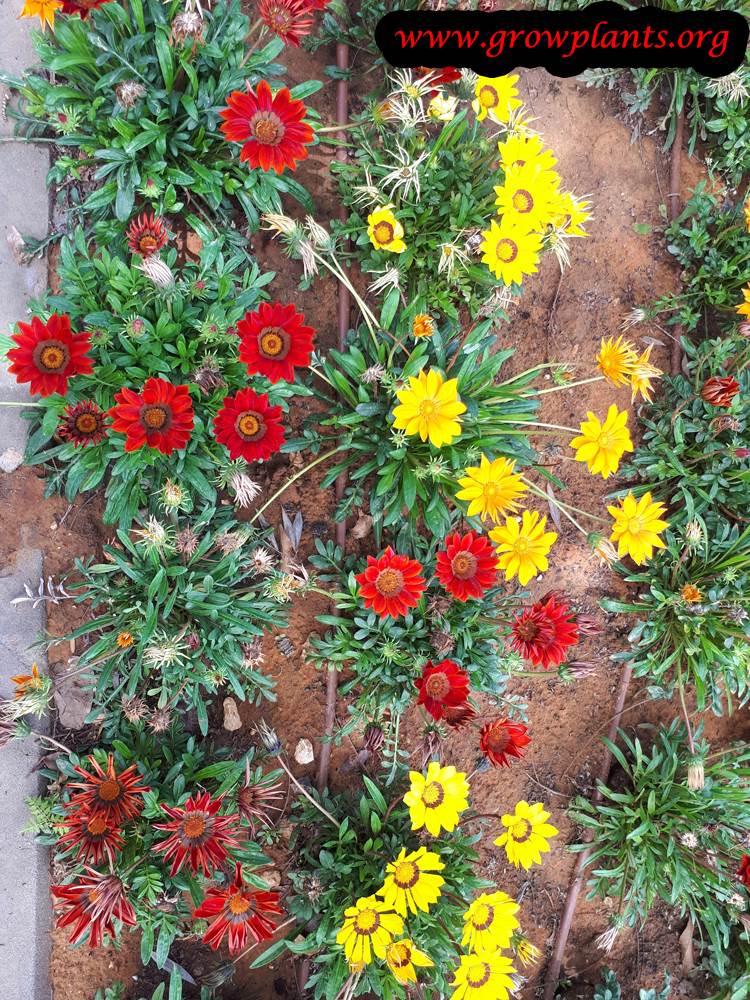
- Height & Spread: Low, spreading mounds 20-50 cm (8-20 in); also grows well in pots and containers.
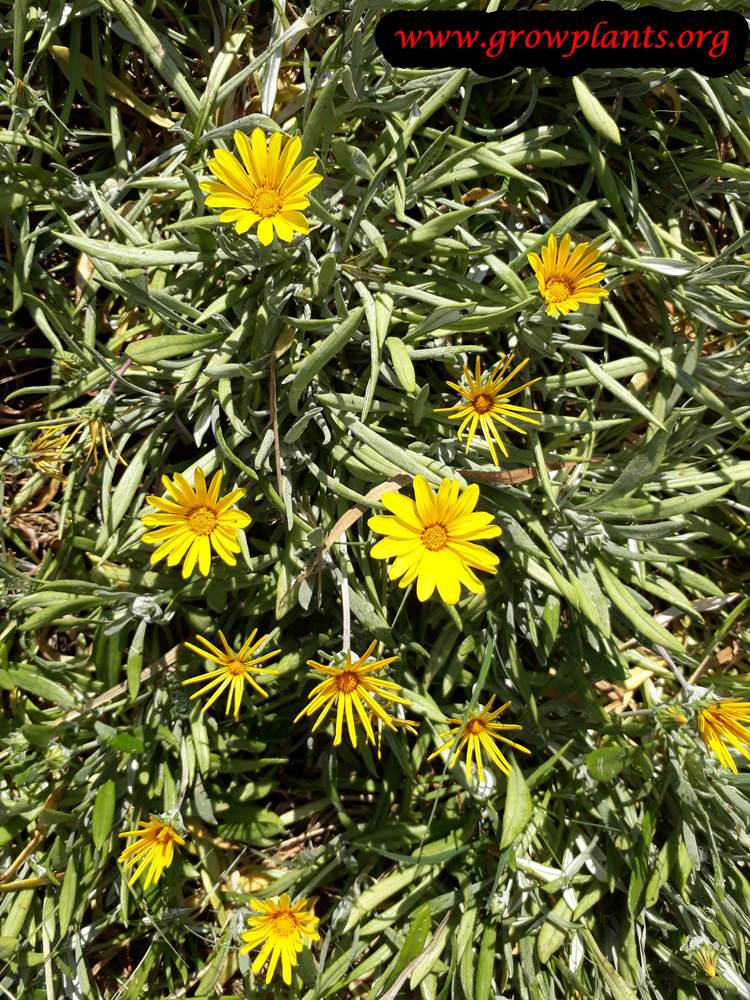
- Growth Habit & Form: Low, mat-forming to trailing herbaceous groundcover.
- Lifespan & Maturity: Short-lived perennial; fast to establish and flower.
Anatomy & Physical Features
- Leaves & Foliage: Narrow, linear green leaves with silvery, felted undersides.
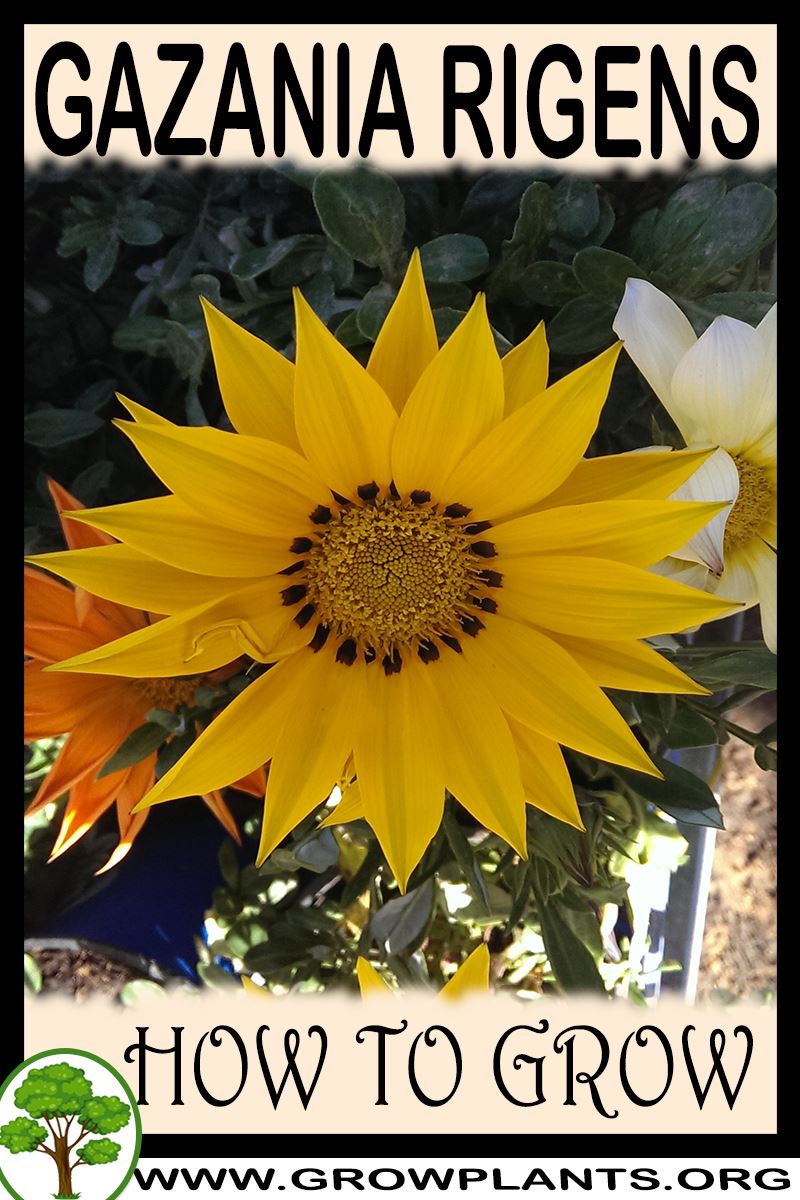
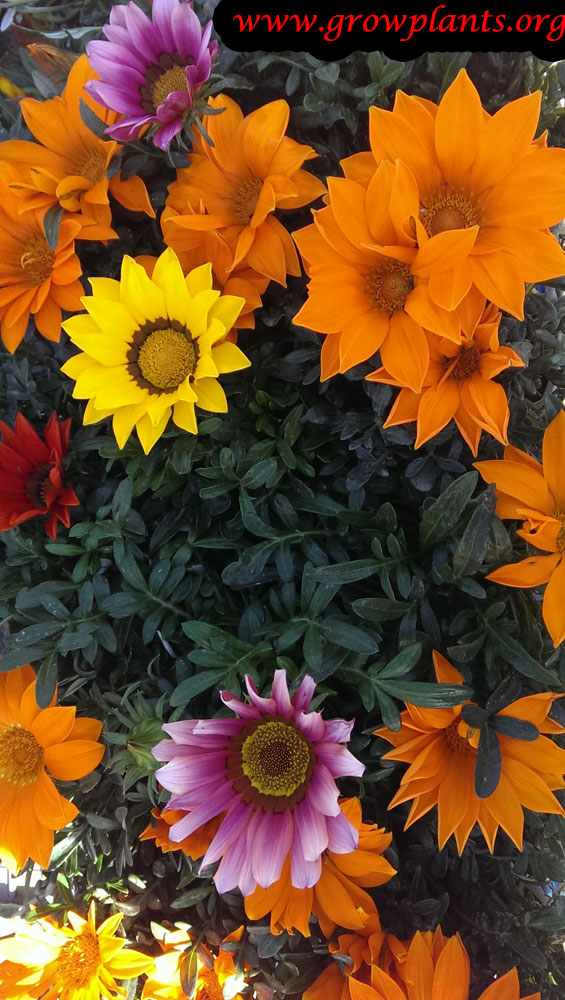
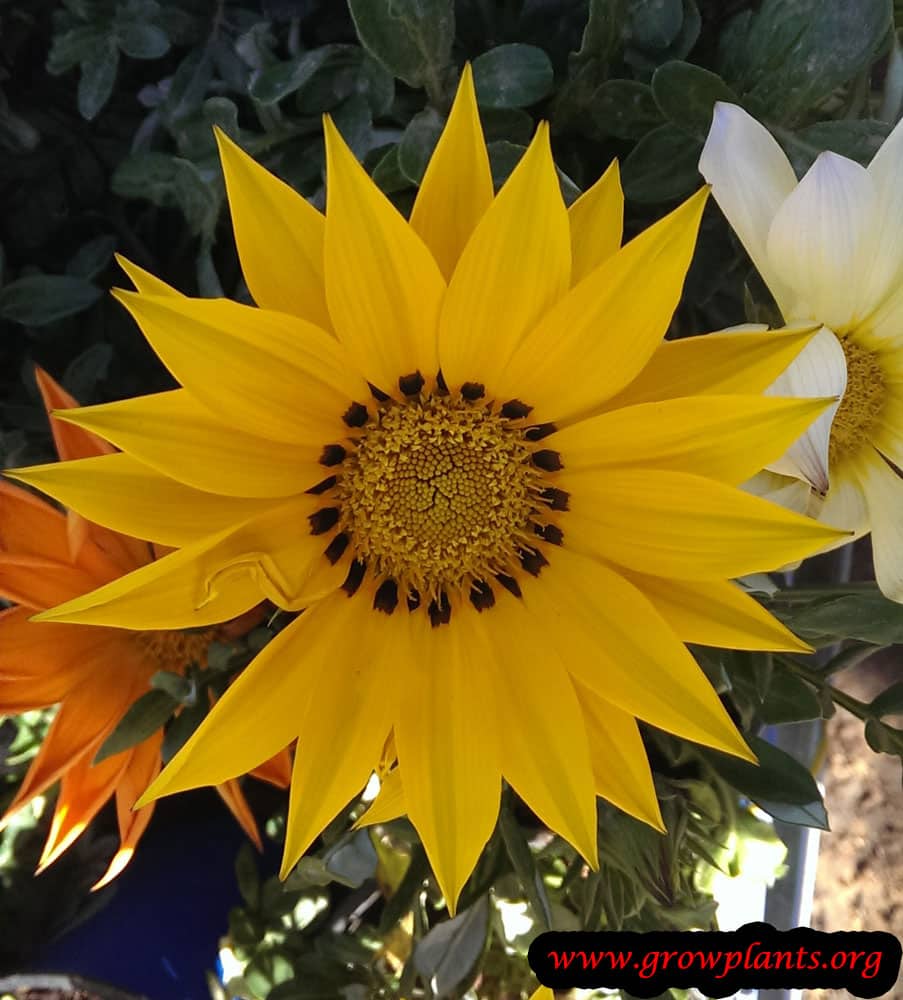
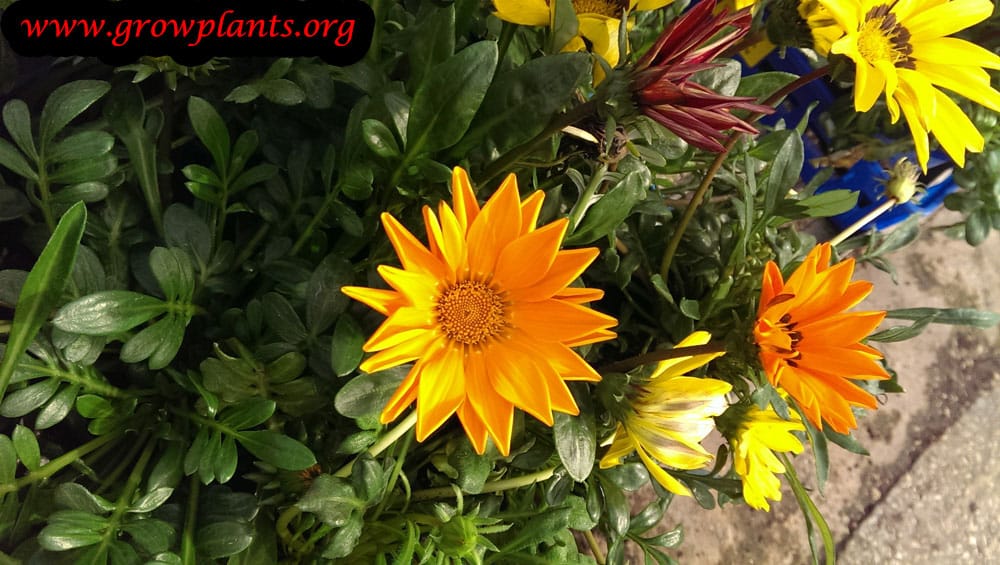
- Flower Characteristics: Large daisy-like flowers in yellow, often with an orange centre band, with 10+ ray petals that close at night (full detail in the Bloom guide).
Primary Uses & Landscape Value
- Functional & Ornamental Roles: Drought-tolerant groundcover, edging, rockery and container plant for hot, sunny sites.
Care Guide: Planting, Soil & Watering
Overview: Gazania rigens is a tough, sun-loving ground-cover perennial that thrives in hot, dry spots and poor, sandy soil. It needs full sun and sharp drainage, tolerates drought well, and rots in heavy, wet ground.
Quick Care Requirements
| Requirement | Ideal Condition |
|---|---|
| Planting Season | Warm season (spring, into summer/autumn where mild) |
| Growth Rate | Fast |
| Soil Type | Light, sandy, well-draining |
| Water Need | Low to moderate – drought tolerant, let soil dry between waterings |
Planting & Establishment
- Best Planting Season: Plant in spring, once the soil has warmed and frost has passed.
- How to Plant:
- Hole Preparation: Dig a hole slightly wider than the root ball; Gazania is shallow-rooted and needs no deep planting pocket.
- Soil Amendments: Skip rich feeding and instead loosen heavy ground with coarse sand or grit for drainage; it performs best in lean, sandy soil.
- Planting Depth: Set the plant with its crown at soil level, keeping the crown from being buried, which encourages rot in damp conditions.
- Growth Speed & Expectations: Growth is fast in warm, sunny conditions, quickly spreading into a low mat about 20-50 cm across.
Soil, Watering & Drainage Care
- Soil Mix & Drainage Needs: Give it light, sandy, sharply draining soil, or a free-draining, cactus-type mix in pots. It tolerates poor soil but not waterlogging, so make sure excess water drains away freely.
- Watering Schedule & Technique:
- Young / Newly Planted: Water newly planted Gazania enough to establish it, keeping the soil lightly moist for the first few weeks.
- Established: Once established it is highly drought tolerant – water deeply but infrequently, letting the soil dry out well between waterings.
- Seasonal Adjustments: It needs little water in cool or wet weather; give occasional deep watering only during extended summer heat and drought.
Climate, Light & Hardiness
Gazania is a drought-tolerant, sun-loving flowering perennial (grown as an annual in colder climates) suited to subtropical, mediterranean, desert, temperate, and tropical climates. It grows best in full sun with sandy, well-drained soil and is reliably hardy outdoors from about USDA zone 9 as a perennial, or zone 5–9 as an annual.
Quick Climate Specifications
| Climate Zones | Subtropics, mediterranean, desert, temperate, tropics |
| USDA Hardiness Zones | 9+ as a perennial; 5–9 as an annual |
| Optimal Temp Range | Approximately 15–29°C (59–85°F) during active growth |
| Approx. Survival Minimum | In its coldest annual-grown zone, seedlings and young plants are set out after the last frost; established plants in the perennial range may briefly tolerate winter minimums around −7°C to −1°C (20°F to 30°F) |
| Frost Tolerance | Low to Moderate |
| Light Conditions | Full sun |
| Wind Tolerance | Moderate to High |
| Salt / Coastal Tolerance | Moderate to High |
Sunlight & Light Exposure
Optimal Light Setup
Full sun is essential; flowers typically close in shade or overcast conditions and open fully in bright sun.
Direct Sun Requirement
Direct sun is required for the flowers to open and for compact, healthy growth.
Best Exposure / Orientation
An open, sunny bed, slope, or border suits this low, spreading, sun-loving plant well.
Temperature Extremes & Hardiness
USDA Hardiness & Regional Limits
Reliably perennial from about zone 9 and warmer; in colder zones (5–9) it is grown as a warm-season annual since winter cold limits year-round survival.
Cold Damage & Winter Protection
Frost damages foliage and flowers; in marginal zones a warm, sheltered, well-drained microclimate improves the chance of the plant surviving winter.
Frost Sensitivity
Frost-sensitive; young plants are especially vulnerable, so outdoor planting should follow the local frost-free schedule in cooler climates.
Extreme Heat Tolerance
Excellent heat tolerance in dry, sunny climates - it is well suited to hot mediterranean and desert summers.
Wind, Humidity & Microclimate
Humidity Preferences
Prefers relatively dry air over humid conditions; good air circulation helps prevent foliage problems.
Dry-Air Tolerance
Very good dry-air tolerance, consistent with its drought-tolerant, sandy-soil origins.
Wind Tolerance
Moderate to high wind tolerance given its low, ground-hugging growth habit.
Coastal / Salt Tolerance
Moderate to high salt tolerance; Gazania is commonly used as a tough coastal and roadside ground cover in warm climates.
Rainfall & Seasonal Moisture
Adapted to dry-summer climates with light, sandy, well-drained soil; it does not tolerate waterlogged conditions.
Microclimate Recommendations
An open, sunny, well-drained site - including hot, reflected-heat spots such as gravel beds or roadside verges - suits this tough, drought-tolerant plant well.
Growing in Pots, Balconies & Indoors
Gazania rigens is a low, mat-forming daisy that thrives on heat, drought and full sun – ideal for pots, troughs and the front of a sunny balcony. It is not a houseplant; its flowers only open in strong, direct light.
Quick Details
- Container Size: A small-to-medium pot, roughly 5-12 L (1.5-3 gal); excellent in shallow troughs and window boxes
- Indoor Suitability: Not a houseplant – a full-sun daisy whose flowers need direct light to open
- Best Spot: Full sun (the hotter the better)
- Soil & Drainage: Sharply drained, sandy or gritty mix – potting mix with plenty of perlite or coarse sand.
- Watering in Pots: Let the mix dry well between waterings – gazania is very drought-tolerant and rots in constantly wet soil.
Indoors & On the Windowsill
- Houseplant limits: Its blooms close in dull light, so indoors it simply won’t perform.
- Windowsill growing: A hot, all-day-sun sill is the only indoor option, and even then it prefers to be outside in real sun.
On a Balcony or Patio
- Light & wind: Give it the hottest, sunniest spot you have; it loves reflected heat from walls and paving and copes with wind and dry air.
- Practicalities: Water the pot in – allow for its weight on a balcony, and set it where drainage runoff won’t be a nuisance.
Choosing the Pot, Soil & Long-Term Care
- Pot & drainage: Choose a pot with strong drainage holes and skip a standing-water saucer, which invites root rot. Terracotta breathes and dries quickly, which suits these sun-lovers; glazed or plastic pots hold moisture longer if you can’t water often.
- Potting mix: Sharply drained, sandy or gritty mix – potting mix with plenty of perlite or coarse sand.
- Feeding: Potted plants use up their food faster because watering leaches nutrients away, so feed a little more often through the growing season than you would in open ground.
- Repotting: Refresh the mix or pot up about every couple of years to keep growth healthy.
Fertilizing & Feeding
A drought-tolerant, sandy-soil ground cover and light feeder; light, balanced feeding during active growth supports its yellow-and-orange daisy-like flowers without pushing the soft, leafy growth that reduces bloom.
Quick Fertilizing Specs
| Feeding Level | Light feeder |
|---|---|
| Main Nutrient Priority | Balanced feeding kept light; heavy feeding trades flowers for foliage in this sun-loving ground cover |
| Best Feeding Period | Active growth through the spring-to-summer bloom |
| Organic Options | A light amount of compost worked into the sandy, well-drained soil |
| Micronutrients | Generally supplied by a complete fertilizer; treat specific deficiencies only when diagnosed |
| Soil pH | Prefers sandy, well-drained soil; tolerant of a range of pH |
Feeding by Growth Stage
Active growth and establishment
Support foliage and root establishment as the ground cover fills in.
| Nutrient direction | A balanced, general-purpose fertilizer applied lightly. |
|---|---|
| Timing | During active growth, spring through autumn depending on climate. |
| Frequency | A light feeding during active growth is usually enough for this low-input plant. |
| Fertilizer types | A balanced, general-purpose garden fertilizer, A light amount of compost worked into the soil |
| Precautions | Keep feeding light; rich soil and heavy nitrogen push soft, leafy growth at the expense of flowers on this drought-tolerant plant. |
Spring-to-summer flowering
Support the yellow-to-orange, sun-tracking daisy-like flowers through the bloom season.
| Nutrient direction | Continue light, balanced feeding only if growth looks weak; established plants flower well on their own. |
|---|---|
| Timing | Spring into summer as flower buds form and open. |
| Frequency | Established plantings rarely need more than an occasional light feeding through bloom. |
| Fertilizer types | A balanced fertilizer used sparingly on established plantings |
| Precautions | Avoid heavy feeding, which produces lush foliage and fewer flowers, and can make this naturalizing ground cover spread more aggressively. |
Cool-season slowdown
Let growth slow during cooler, shorter days before active growth resumes.
| Nutrient direction | None – withhold fertilizer while growth is slow. |
|---|---|
| Timing | During the cooler part of the year when growth and flowering slow. |
| Frequency | No feeding at this stage. |
| Fertilizer types | No feeding at this stage; resume light feeding when active growth resumes. |
| Precautions | Do not fertilize while growth is slow during the cool season. |
Nutrient Deficiency Signs & Corrections
Older leaves turn pale and growth slows.
| Possible causes | low soil nitrogen, very sandy, fast-leaching soil, an extended period without any feeding |
|---|---|
| Appears first on | older, lower leaves |
| What to check | feeding history, soil quality, overall plant vigor |
| Possible correction | Apply a balanced, general-purpose fertilizer at a light rate. |
New leaves turn yellow between the veins while the veins stay green.
| Possible causes | high soil pH limiting iron availability in sandy alkaline soils, waterlogged soil restricting root uptake, root stress from poor drainage |
|---|---|
| Appears first on | newest growth |
| What to check | soil pH, drainage, recent watering pattern |
| Possible correction | Improve drainage and, if pH is the cause, correct it or apply a chelated iron product per its label. |
Lush, leafy growth with few flowers and a looser, sprawling habit.
| Possible causes | excess nitrogen from overfeeding, too-rich soil for this sandy-soil ground cover, insufficient full sun encouraging soft growth |
|---|---|
| Appears first on | overall plant habit and flower count |
| What to check | recent feeding rate, soil richness, sun exposure |
| Possible correction | Reduce feeding, avoid nitrogen-heavy products, and confirm the planting gets full sun in well-drained soil. |
Pruning, Training & Seasonal Maintenance
Gazania rigens is the classic trailing treasure flower, spreading by stolon-like stems that root as they travel – a groundcover habit more pronounced than in many Gazania hybrids. Pruning is therefore less about shaping a mound and more about containing that spread, removing dead leaves and spent flowers, and renewing the planting where established patches thin and turn woody at the centre. Because this species is typically planted in a single spring window, its first renewal cutback usually falls the following autumn/winter, once the planting has fully knit together.
Quick Pruning & Maintenance Specs
| Pruning Tolerance | Moderate–High where grown as a perennial groundcover |
| Primary Pruning Window | Autumn/winter, after the spring/summer bloom flush |
| Secondary Maintenance Window | Ongoing deadheading and edge-trimming through bloom |
| Typical Frequency | Trim spreading stems as needed through the season; one renewal cutback per year |
| Main Objective | Contain trailing spread; prevent a woody, bare-centred patch |
| Young Plant Priority | None beyond removing damaged growth while the planting knits together after its spring establishment |
| Mature Plant Priority | Contain stolon spread + annual renewal cutback |
| Best Tool Type | Hand shears or precision snips |
| Avoid Heavy Pruning During | Peak summer bloom / heat stress |
Pruning by Plant Age & Size
Newly Established
No pruning beyond removing damaged leaves – let the spring planting root in and knit together as groundcover.
Young / Formative
No leader or upright framework to train; instead, direct establishment by leaving trailing stems to spread and root where wanted.
Mature / Established
Cut back any stolons that root beyond the intended bed edge or creep over paths/lawn; renew the planting with a firm cutback in autumn/winter once the centre of established patches thins and turns woody.
Seasonal Pruning Schedule
| Ongoing Sanitary (Spring/Summer bloom) | Tidy, contain spread | Spent flower heads, dead leaves, wayward trailing stems past the bed edge | Young rooted stem tips still inside the intended area | Continued bloom flush | Cleaner display, contained footprint |
| Dormant/Autumn–Winter | Renew the planting before the centre goes bare | Older woody trailing stems, cut the patch back | Enough live growth to regrow from | Denser regrowth next spring | Temporary drop in flowering while it regrows |
Structural Pruning & Training
The main task is directing and containing the stoloniferous spread – trim rooted runners back to the bed line rather than trying to build any upright shape.
Special Growth to Remove
- Dead or yellowed leaves and spent flower stalks
- Trailing stems that have rooted outside the intended planting area
- Bare, woody older growth at the centre of established patches
Container & Small-Space Pruning
Well suited to hanging baskets and containers, where the trailing stems can simply cascade; only light trimming is needed to stop the tips going bare and leggy toward the ends.
Tools
Precision snips or light hand shears for trimming trailing stems and the renewal cutback; no loppers or saw needed.
Tool Hygiene & Disease Risk
Routine: clean, sharp tools are sufficient. Aphids are the only pest noted.
Cut Placement & Technique
Cut spent flower stalks down to the rosette; trim trailing stems just behind a node so the cut end doesn’t dangle bare; for the renewal cutback, cut into live basal growth rather than fully bare woody stems.
Heavy Pruning & Rejuvenation
Tolerates a firm renewal cutback of the trailing mat once established patches thin at the centre; avoid cutting into completely leafless woody stems, which may not reshoot – dividing and replanting healthy rooted sections is often more reliable than rejuvenating an old, hollow patch.
Post-Pruning Care
Water lightly after a renewal cutback but avoid overwatering, since this species is drought-tolerant and prone to rot in wet soil; no extra feeding needed; watch fresh regrowth for aphids.
Common Pruning Mistakes
- Letting trailing stems root well beyond the intended area before ever trimming them back
- Leaving an old, woody, bare-centred patch instead of renewing it
- Cutting into fully bare wood expecting reliable regrowth
When NOT to Prune
Avoid a hard renewal cutback during peak summer bloom or heat stress, and avoid pruning wet foliage in humid weather.
Recommended Tools (by task)
- precision_snips – deadheading and trimming individual trailing stems
- bypass_secateurs – the autumn/winter renewal cutback of older woody growth
Propagation Guide
Gazania rigens is grown from seed or increased vegetatively by cuttings or division; the site confirms no grafting is needed. Straight species seed is reasonably true-to-type, but named colour cultivars of this species are usually propagated by cuttings or division to keep their exact flower colour. It is an easy plant to propagate by any of these methods.
Quick Propagation Specs
| Best Propagation Method | Seed (species type) or stem cuttings / division (named cultivars) |
| Alternative Methods | Division of rosette clumps |
| Propagation Difficulty | Easy |
| Seed True-to-Type | Usually true-to-type for the wild species; cultivar-dependent for named forms |
| Vegetative True-to-Type | Yes |
| Best Propagation Season | Spring |
Growing from Seed
Sowing Season
Sow in spring, per the site’s recommended planting season.
Germination Conditions
Germinates in well-drained, sandy soil in full sun; keep lightly to averagely moist.
Seedling Care
Grow seedlings on in full sun; once established the plant needs only a small to average amount of water.
Stem Cuttings
Cutting Type
Short non-flowering rosette or basal cuttings.
Best Timing
Spring, during active growth.
Rooting Setup
A free-draining, sandy propagation mix kept lightly moist.
Rooting Hormone
Optional; not usually necessary but can improve rooting consistency.
Division, Offsets, Pups & Suckers
Mature clumps can be divided into rooted rosettes, ideally in spring, to produce new plants true to the parent.
Bloom & Flower Guide
Quick Details
- Bloom Season: Spring and summer, and into autumn in mild areas
- Time to First Bloom: Fast from a spring sowing – it flowers the first season, often within about three months
- Flower Appearance: Large daisy blooms with more than ten petals, mostly yellow with an orange zone toward the center of the petals
- Edibility: Ornamental; not eaten
Detailed Blooming Overview
This is the classic treasure flower, a low, spreading, drought-hardy daisy for hot sunny banks and containers. Like the rest of its genus, the blooms open in bright sun and close in the evening and on cloudy days.
Flower Characteristics
- Sunny yellow rays with a warm orange band near the center, over silvery, linear foliage.
Bloom Care & Thinning
- Managing the bloom: Deadhead to prolong flowering, and grow it in full sun so the flowers open fully.
- Pollination: Pollinated by bees.
Pests, Diseases & Troubleshooting
Overview: Gazania rigens is a sun-loving, drought-tolerant daisy that is generally easy, with overwatering-related root rot its biggest threat. Insect pests are the usual soft-plant sap-suckers – aphids, thrips and leaf miners – and fungal problems (powdery and downy mildew, grey mould) appear mainly in damp, crowded or over-irrigated conditions. Grow it hot, sunny and on the dry side in free-draining soil and it thrives with little trouble.
Quick Troubleshooting Overview
| Issue / Pest | Main Symptom | Primary Solution |
|---|---|---|
| Aphids | Sticky, curled new growth and buds | Hose off, predators, insecticidal soap |
| Thrips | Silvery streaks, distorted buds/flowers | Sticky traps, beneficials, spinosad if severe |
| Leaf miners | Pale winding tunnels inside leaves | Remove mined leaves; encourage parasitic wasps |
| Root/crown rot | Wilting, blackened base in wet soil | Ease watering; sharp drainage; full sun |
| Powdery/downy mildew | White powder or greyish underside mould | Airflow, dry foliage, sulfur/copper if needed |
| Grey mould | Brown, fuzzy rot on flowers in damp | Deadhead; improve airflow; remove affected parts |
Common Pests & Management
- Aphids (Aphis / Myzus spp.):
- Symptoms: Clusters of soft green, black or grey insects on tender shoots, buds and flower stalks, causing curled, distorted growth, honeydew, sooty mould and occasional virus spread.
- Prevention & Control: Blast off with water, encourage ladybirds, lacewings and hoverflies, and pinch out infested tips. Insecticidal soap or neem oil clears heavy colonies; avoid over-feeding with nitrogen.
- Thrips (Frankliniella / Thrips spp.):
- Symptoms: Tiny slender insects that rasp leaves and flowers, leaving silvery streaks, pale flecking and distorted, discoloured buds and blooms; they can also spread viruses.
- Prevention & Control: Hang blue or yellow sticky traps to monitor and catch adults, remove spent flowers, and conserve predatory mites and minute pirate bugs. Spot-treat bad outbreaks with spinosad or insecticidal soap in the evening to protect pollinators.
- Leaf miners (Liriomyza spp.):
- Symptoms: Pale, winding or blotchy tunnels mined inside the leaves by tiny larvae, with a trail widening as the grub grows; heavy mining yellows and disfigures foliage.
- Prevention & Control: Pick off and destroy mined leaves as they appear, and encourage parasitic wasps that are the key natural control. Keep plants vigorous; avoid broad-spectrum sprays that kill the wasps. Neem can reduce egg-laying.
- Whitefly & spider mites (Trialeurodes vaporariorum, Tetranychus spp.):
- Symptoms: Tiny white flies and honeydew on soft growth (whitefly), or fine stippling, bronzing and webbing in hot, dry, dusty conditions (spider mites).
- Prevention & Control: Use yellow sticky traps and hose the foliage; raise humidity to deter mites. Insecticidal soap or horticultural oil on leaf undersides manages both; conserve beneficials.
- Slugs & snails (Gastropoda):
- Symptoms: Rasped holes and chewed edges on young leaves and seedlings, with slime trails, mainly in mild, damp weather.
- Prevention & Control: Hand-pick at night, remove hiding places, and keep beds open and dry-surfaced. Iron-phosphate bait, copper barriers or wool pellets protect vulnerable young plants.
Diseases & Fungal Issues
- Root & crown rot (Phytophthora, Pythium, Rhizoctonia):
- Symptoms: The main disease risk: wilting, yellowing and a soft, blackened crown or rotted roots from overwatering or heavy, poorly drained soil. Plants collapse despite (or because of) plenty of water.
- Treatment & Management: Prevent with full sun, sharply drained soil and restrained watering – Gazania is very drought-tolerant and hates wet feet. Plant slightly high, avoid mulch on the crown, and let soil dry between waterings. Remove collapsed plants; drainage, not fungicide, is the fix.
- Powdery mildew & downy mildew (Erysiphe; Peronospora / Plasmopara):
- Symptoms: White powdery coating on upper leaf surfaces (powdery mildew) in warm, humid, crowded conditions, or yellow blotches above with greyish downy growth beneath (downy mildew) in cool, wet weather.
- Treatment & Management: Space plants for airflow, grow in full sun, and avoid wetting the foliage – water at the base in the morning. Remove affected leaves. Sulfur or potassium bicarbonate manages powdery mildew; copper fungicide checks downy mildew in a wet season.
- Grey mould (Botrytis) (Botrytis cinerea):
- Symptoms: Brown, water-soaked rot with fuzzy grey mould on flowers and soft tissue in damp, still, crowded conditions, especially on faded blooms.
- Treatment & Management: Deadhead spent flowers, improve airflow and light, and remove affected tissue promptly. Avoid overhead watering and crowding; good ventilation usually stops it without chemicals.
- Leaf spot (Alternaria / Cercospora):
- Symptoms: Brown or dark spots and blotches on leaves, sometimes with yellow halos, in prolonged wet conditions, causing yellowing and leaf drop.
- Treatment & Management: Remove spotted and fallen leaves, improve airflow, and water at the base. Copper fungicide helps if leaf spot becomes persistent in a wet spell.
Growing Difficulties & Abiotic Problems
- Overwatering & root rot:
- Cause & Symptoms: The classic Gazania mistake: rich, wet or poorly drained soil and frequent watering rot the roots and crown of this drought-adapted plant, causing wilting and collapse.
- Correction Strategy: Grow in full sun in lean, free-draining soil, water sparingly once established, and let the soil dry between waterings. Avoid heavy clay and boggy spots; raised beds or containers suit it well.
- Flowers closing / poor bloom:
- Cause & Symptoms: Gazania flowers close in shade, cloud and evening and stay shut in dull weather – normal behaviour, not disease. Too little sun, or too-rich soil, also gives lush leaves but few flowers.
- Correction Strategy: Site in the hottest, sunniest spot for open, prolific flowers, and keep soil lean. Deadhead to prolong bloom. Accept that blooms close at night and in dull weather; modern cultivars stay open longer.
- Cold & frost damage:
- Cause & Symptoms: Tender to frost; cold, wet winters blacken foliage and rot the crown, and plants are often short-lived perennials grown as annuals in cold regions.
- Correction Strategy: Protect from frost, ensure winter drainage, and overwinter under cover or take cuttings in cold climates. Treat as a warm-season annual where winters are hard.
What Helps – Products & Tools
Gazania is low-maintenance. Keep insecticidal soap, neem and horticultural oil for aphids, whitefly and mites, blue/yellow sticky traps and spinosad for thrips, and iron-phosphate bait for slugs on seedlings. For disease, sulfur or potassium bicarbonate covers powdery mildew and copper fungicide covers downy mildew and leaf spot. The most important tools, though, are full sun, free-draining soil and a light hand with the watering can. Follow the label and spray oils in the evening to protect pollinators.