

Plant Profile & Key Characteristics
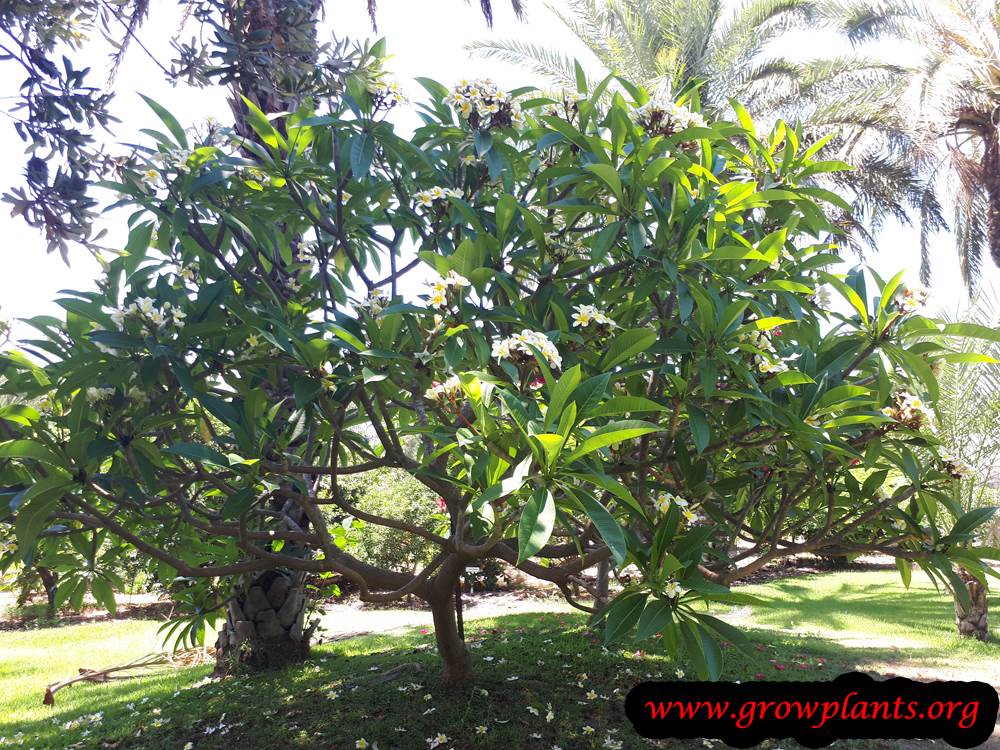
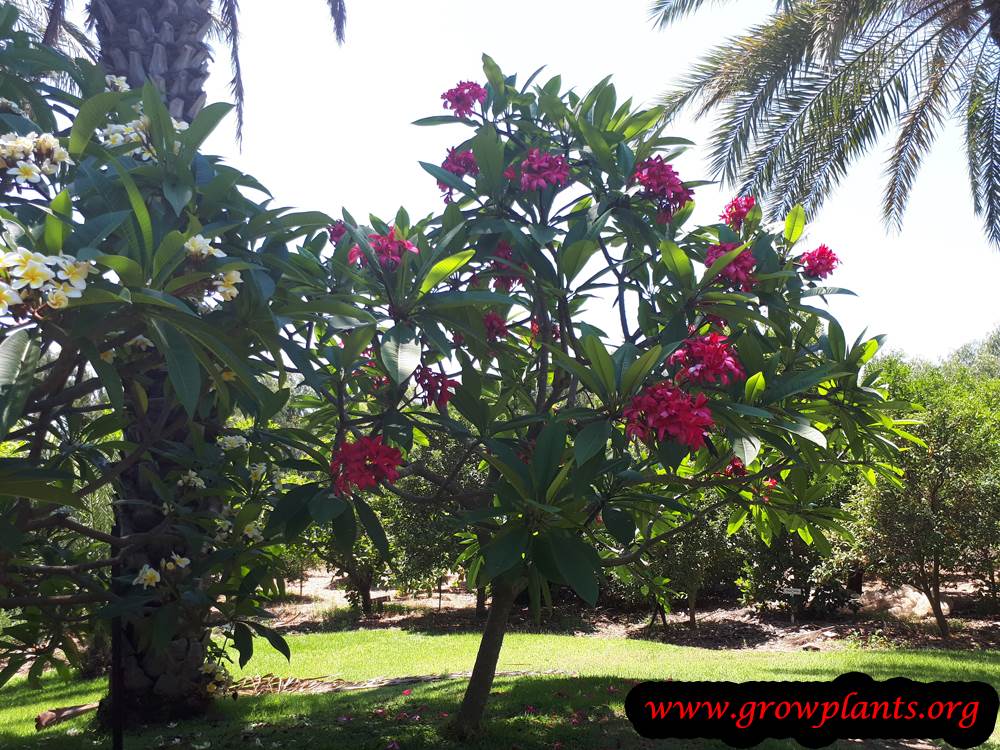
Overview: Plumeria (Frangipani) is a deciduous succulent shrub or small tree growing 3-8 m (10-24 ft), celebrated for its intensely fragrant flowers. This moderate- to slow-growing perennial drops its leaves in the cool dry season and is grown as an ornamental flowering specimen.
Quick Specifications
| Specification | Attribute |
|---|---|
| Plant Type / Life Cycle | Perennial (deciduous) |
| Foliage Type | Deciduous |
| Mature Size | 3-8 m (10-24 ft) |
| Growth Rate | Moderate to slow |
| Toxicity | Toxic – the milky sap irritates skin and is poisonous if ingested |
| Hardiness | USDA zone 10+ |
Growth Form & Structure
- Height & Spread: 3-8 m (10-24 ft) in the ground; stays notably smaller and can be kept compact in a large container.
- Growth Habit & Form: Open, candelabra-branched succulent shrub or small tree with thick, fleshy stems.
- Lifespan & Maturity: Moderate to slow growth; long-lived once established.
Anatomy & Physical Features
- Trunk & Bark: Thick, soft, fleshy branches that exude a milky white latex when cut.
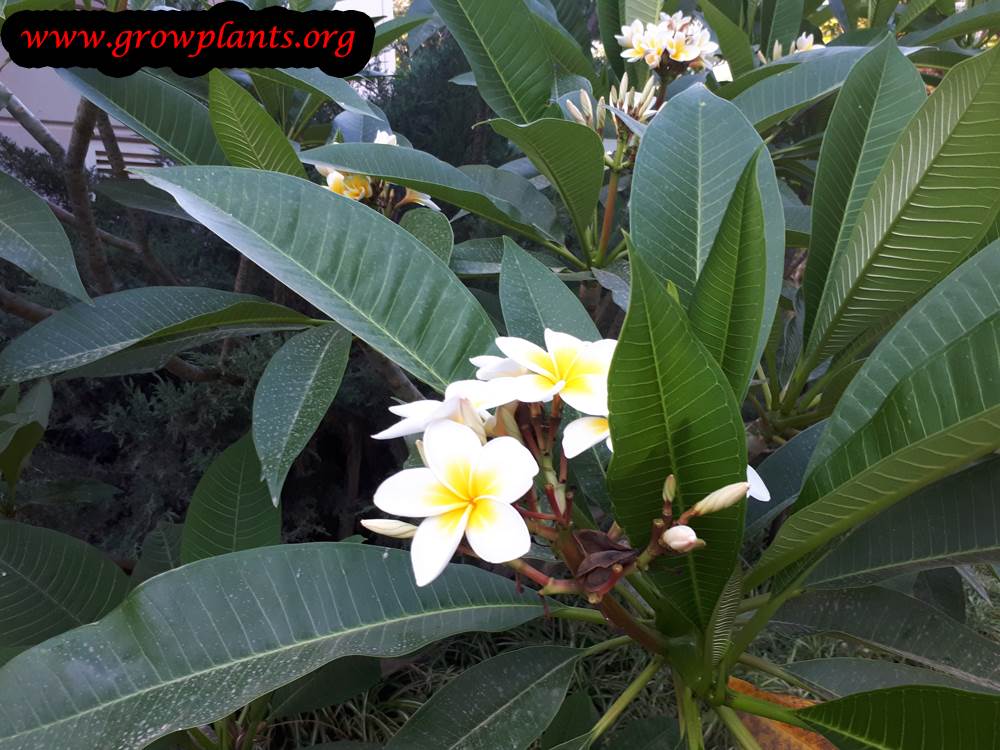
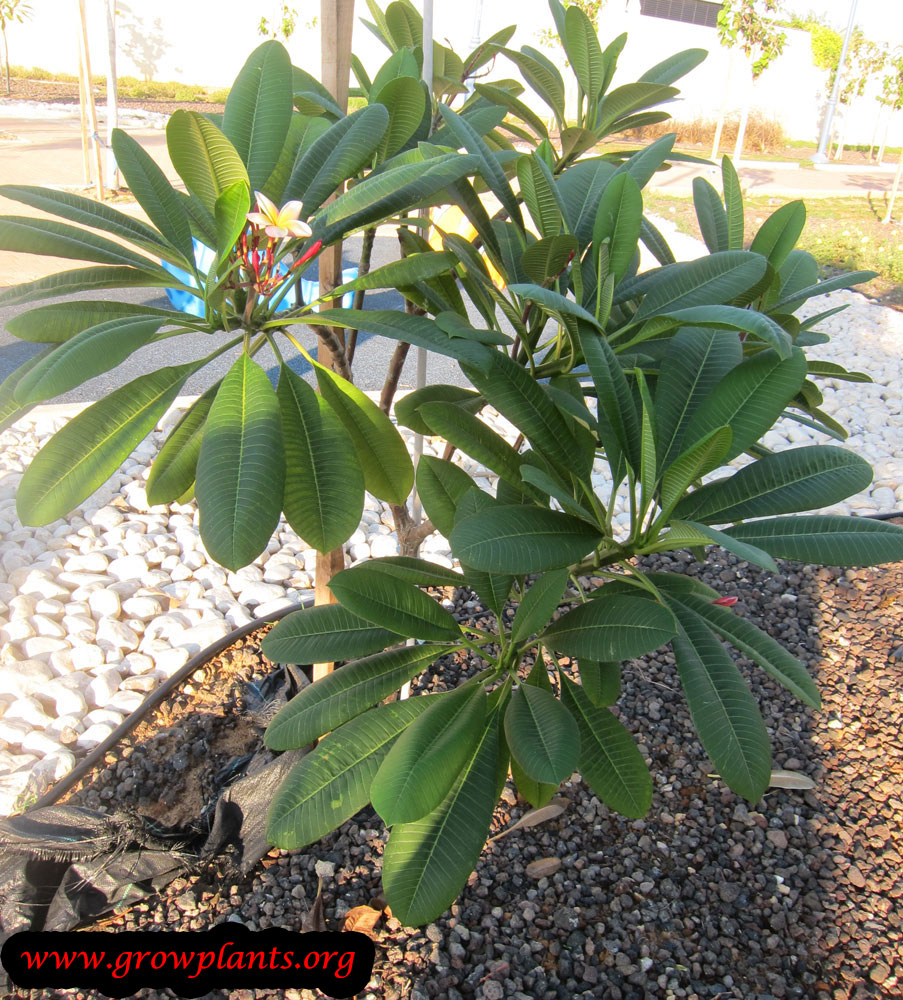
- Leaves & Foliage: Green elliptic leaves with a pointed tip, clustered at the branch tips and shed in the cool dry season.
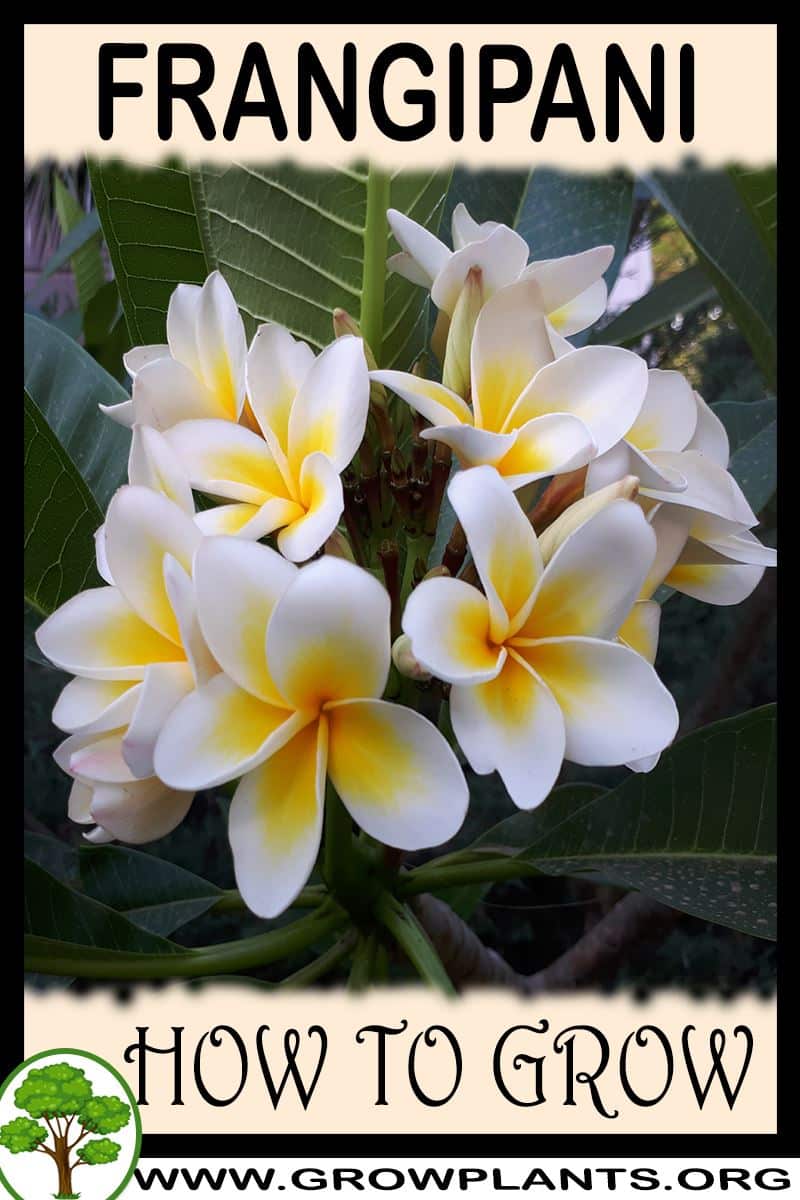
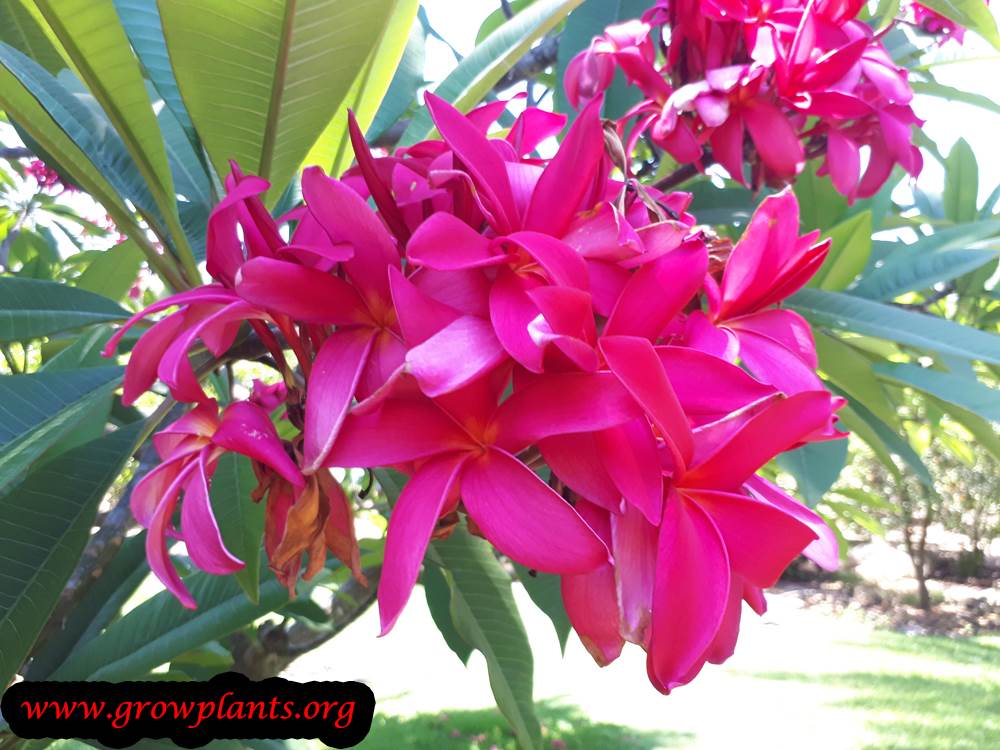
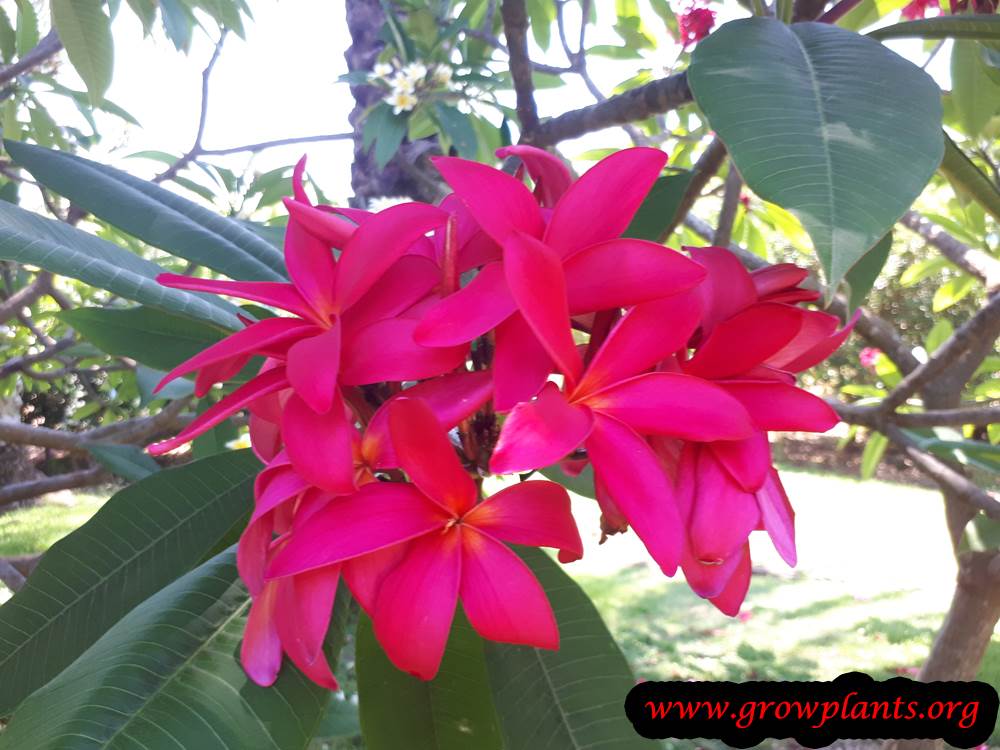
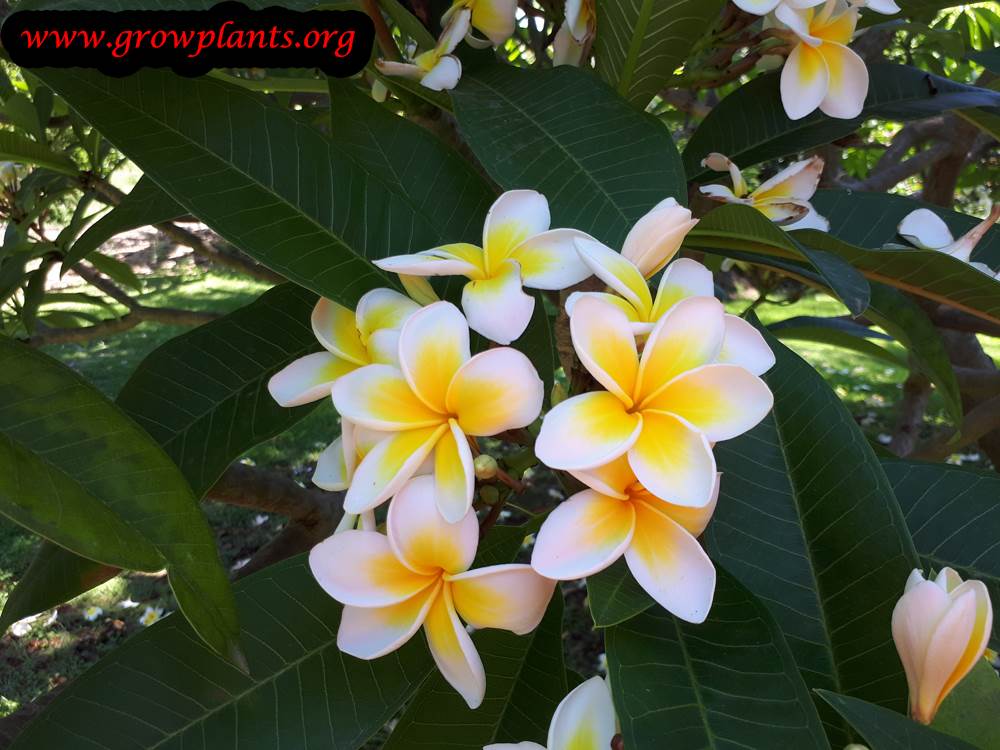
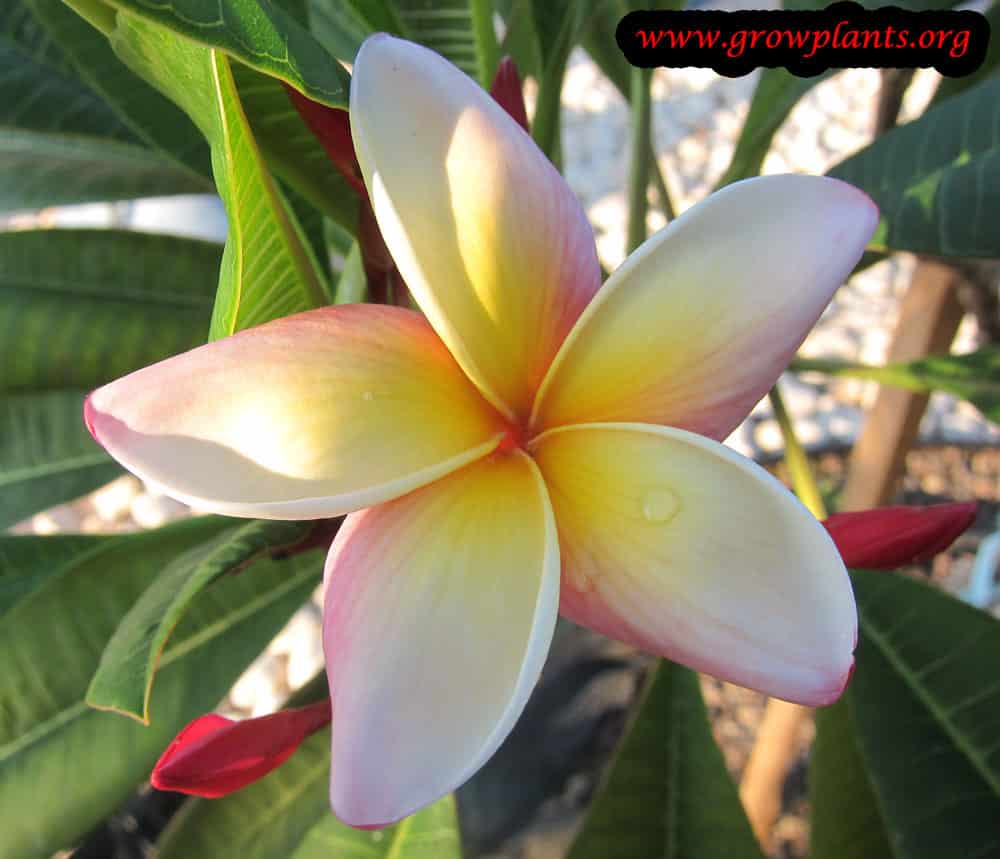
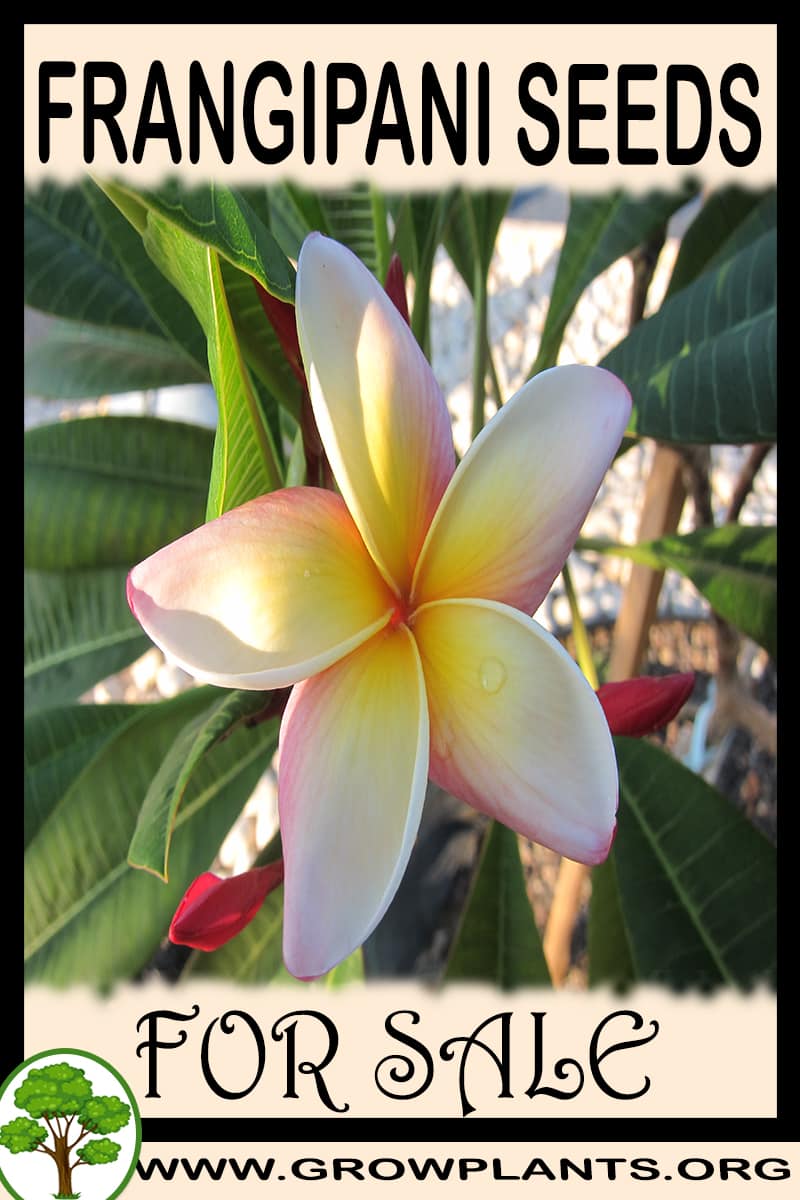
- Flower Characteristics: Fragrant, five-petalled flowers in purple, pink, yellow, white, orange or red – some cultivars multi-coloured – usually with a yellow throat, in spring and summer.
Primary Uses & Landscape Value
- Functional & Ornamental Roles: Fragrant ornamental feature shrub or small tree, container specimen, and a classic source of cut flowers and leis.
Care Guide: Planting, Soil & Watering
Overview: Frangipani (Plumeria) grows best in full sun with sharply drained soil and protection from anything more than light frost. Its succulent stems store water, so it needs only moderate watering and must never sit in soggy ground.
Quick Care Requirements
| Requirement | Ideal Condition |
|---|---|
| Planting Season | Warm season — spring through summer once temperatures are reliably warm |
| Growth Rate | Slow to moderate |
| Soil Type | Sharply drained, sandy or gritty soil; avoid heavy, water-retentive ground |
| Water Need | Moderate — water when the soil dries, and keep much drier while dormant and leafless in winter |
Planting & Establishment
- Best Planting Season: Plant in the warm season, from spring through summer, once all frost has passed and the soil is warm; within its frost-free range winter planting is also possible. Warmth is essential for the succulent stems to root without rotting.
- How to Plant:
- Hole Preparation: Dig a hole roughly twice the width of the root ball and no deeper, on a site with excellent drainage — a slope or raised bed is ideal in heavier soils.
- Soil Amendments: Blend coarse sand, grit or perlite into the backfill to guarantee fast drainage, and add a little compost for nutrition; avoid rich, moisture-holding mixes.
- Planting Depth: Set the plant at the same level it grew before, keeping the base of the trunk at the surface — burying the fleshy stem invites rot.
- Growth Speed & Expectations: Expect a slow to moderate pace; plants build a branching framework over several seasons, growing fastest during warm, sunny weather.
Soil, Watering & Drainage Care
- Soil Mix & Drainage Needs: Use a fast-draining, gritty mix — a cactus or succulent potting soil in containers — and make sure water runs straight through, because the thick stems and roots rot quickly in wet soil.
- Watering Schedule & Technique:
- Young / Newly Planted: After planting, water sparingly until new growth appears, then water moderately as the plant leafs out; overwatering a freshly planted, dormant cutting is the main cause of rot.
- Established: Water deeply when the top few centimetres of soil have dried, then let it dry again — the succulent stems tolerate drought far better than constant moisture.
- Seasonal Adjustments: Water more freely through the hot growing season and taper off sharply as growth slows, keeping the plant almost dry through its leafless winter dormancy.
Climate, Light & Hardiness
Frangipani (Plumeria) is a tropical to subtropical small tree or shrub that needs consistent warmth and grows best in full sun across tropical, subtropical, Mediterranean and warm desert climates. It is frost-sensitive and hardy only in essentially frost-free areas (about USDA zone 10 and warmer per the site data), tolerating no more than light, brief frost.
Quick Climate Specifications
| Climate Zones | Tropical, subtropical, Mediterranean, warm desert |
| USDA Hardiness Zones | Approximately zone 10 and warmer |
| Optimal Temp Range | Approximately 21–32 °C (70–90 °F) |
| Cold Damage Begins | Generally around 4–5 °C (39–41 °F) for soft growth |
| Approx. Survival Minimum | An established plant may briefly survive near 0 °C (32 °F); frost damages soft tissue |
| Frost Tolerance | Very Low (no more than light, brief frost) |
| Light Conditions | Full sun |
| Wind Tolerance | Low to Moderate (branches are brittle) |
| Salt / Coastal Tolerance | Moderate |
Sunlight & Light Exposure
Optimal Light Setup
Full sun is best, and the site data lists it as the optimal condition. Open, unshaded exposure produces sturdy growth and abundant, fragrant flowers.
Direct Sun Requirement
Needs roughly six or more hours of direct sun for strong flowering; too little light gives sparse bloom and lanky, weak growth.
Shade & Heat Management
Takes intense heat and sun well once established; young or newly moved plants can be eased into full sun to avoid sunburn on tender growth. Deep shade is unsuitable.
Best Exposure / Orientation
A warm, sunny, sheltered exposure - such as a south- or west-facing wall in cooler-marginal areas - stores heat and helps ripen growth.
Temperature Extremes & Hardiness
USDA Hardiness & Regional Limits
The site data places it at about zone 10 and warmer - a winter-cold survival limit, not a heat rating. Outside frost-free regions it is grown in containers and protected through winter.
Cold Damage & Winter Protection
Soft growth suffers at roughly 4–5 °C (39–41 °F), and the site data specifies no more than light frost. Cold tolerance varies by cultivar, plant age, exposure duration and conditions - young plants are more tender than established ones. Many frangipani are dry-season or winter deciduous, dropping their leaves in cool weather (some stay evergreen in warm, frost-free conditions); a dormant, leafless plant kept dry weathers brief cold better than one in active growth.
Frost Sensitivity
Frost is the key hazard: even light frost blackens branch tips and flowers, and a hard freeze can kill the plant. Container specimens are more exposed and should be moved to shelter before frost.
Extreme Heat Tolerance
Excellent - it revels in tropical heat and hot, sunny walls, provided the roots are not waterlogged.
Wind, Humidity & Microclimate
Humidity Preferences
Comfortable across humid tropical and drier Mediterranean or desert air; its thick, succulent-like stems store water and cope with a wide humidity range.
Dry-Air Tolerance
Good - the fleshy stems tolerate dry air far better than they tolerate cold.
Wind Tolerance
The thick but brittle branches snap in strong wind, and the broad canopy catches gusts; a sheltered site protects both limbs and flowers.
Coastal / Salt Tolerance
Moderately tolerant of coastal conditions and salt spray, and widely grown in seaside tropical gardens; this is separate from tolerance of saline soil or irrigation water.
Rainfall & Seasonal Moisture
Adapted to tropical wet-and-dry seasons - a wetter warm growing season and a drier, cooler rest. Prolonged cold, wet winters are risky and can rot stems, so sharp drainage matters most in cool-wet climates.
Microclimate Recommendations
A hot, bright, frost-protected pocket - against a sun-warmed wall or in a courtyard - is ideal; in containers the root zone heats, cools and dries faster and is easier to move under cover before frost.
Growing in Pots, Balconies & Indoors
Frangipani (frangipani) is a tropical tree grown for its intensely fragrant flowers. In the ground it reaches 3-8 m (10-24 ft), so it is far too large and light-hungry to be an ordinary room houseplant – but it is a superb container plant, kept compact in a pot on a hot, sunny patio and brought indoors, leafless and dormant, to ride out a cold winter.
Quick Details
- Container Size: Start young plants small and pot on to about 20-40 L (5-10 gal); the pot keeps the tree dwarfed
- Indoor Suitability: Too large and sun-loving to flower as a room houseplant, but it overwinters indoors dormant (grower: not a houseplant)
- Best Spot: Full sun and heat – the hottest, brightest spot you have
- Soil & Drainage: Very free-draining, gritty mix – a cactus or succulent mix, or potting mix with plenty of perlite and grit
- Watering in Pots: Water freely while growing, then keep nearly dry when cool or dormant; it rots easily if kept wet
Indoors & On the Windowsill
- Not a room houseplant: The grower marks it unsuitable as a houseplant – in low indoor light it will not flower and grows leggy.
- Overwintering indoors: This is the main reason to pot it. Before the first frost, move the pot to a cool, bright, frost-free spot; it drops its leaves and rests, so water it only very sparingly until growth restarts in spring.
- Waking up: As warmth and light return, resume watering and feeding, then move it back outside once nights are reliably warm.
On a Balcony or Patio
- Light & heat: It thrives in full sun and the reflected heat from walls and paving; a hot, sheltered balcony is ideal.
- Weight & wind: A large pot is heavy – stand it on a wheeled base to move it under cover – and shelter the brittle branches from strong wind.
Choosing the Pot, Soil & Long-Term Care
- Pot & drainage: Terracotta suits it well, as it breathes and dries fast; use strong drainage holes and skip a standing water saucer – wet feet cause rot.
- Potting mix: A very free-draining, gritty mix – cactus/succulent mix, or potting mix with generous perlite and grit.
- Feeding: Feed through the growing season with a high-potassium (bloom) feed; pot nutrients leach, so feed regularly while in active growth and stop as it goes dormant.
- Repotting: Pot on every two to three years and root-prune to keep it compact and manageable in its container.
Safety
- Irritant sap: The milky sap can irritate skin and eyes and is toxic if eaten – wear gloves when pruning, wash hands afterwards, and keep it away from children and pets.
Growing this plant in a greenhouse
A greenhouse can give frangipani frost protection, cold protection, humidity control and extra warmth.
Greenhouse at a glance
| Greenhouse suitability | Conditional - depends on your climate |
|---|---|
| Main benefits | frost protection, cold protection, humidity control, extra warmth |
| Outdoor protection advisable below | about 5°C |
| Maintain greenhouse minimum | around 5°C for active growth |
| Suitable types | unheated greenhouse, polycarbonate greenhouse |
| Heating | Heating is optional - useful mainly for winter growing in cold areas. |
Related greenhouse guides
- Greenhouses: How to Choose the Right Greenhouse
- Polycarbonate Greenhouses: What to Look for Before Buying
- Greenhouse Climate Control: Temperature, Ventilation and Humidity
Fertilizing & Feeding
This is a moderate feeder that responds to steady, balanced nutrition through the growing and blooming season, then very little once it slows for its dormant period.
Quick Fertilizing Specs
| Feeding Level | Moderate |
|---|---|
| Best Feeding Period | Through the active growing and blooming season |
| Main Nutrient Priority | A balanced complete fertilizer with adequate nitrogen to support both foliage and flowering |
| Organic Options | Compost or a balanced organic fertilizer worked in at planting and used as a topdressing |
| Soil pH | Slightly acidic to neutral and very well-drained |
| Reduce/Stop Feeding | Ease off feeding as growth slows heading into the cool, dormant season |
| Micronutrients | A complete fertilizer usually supplies the trace elements these plants need |
Feeding by Growth Stage
Spring flush of new growth
Fuel vigorous new leaves and stems as the plant breaks into active growth
| Nutrient direction | A balanced complete fertilizer with steady nitrogen to build healthy foliage |
|---|---|
| Timing | From the start of active growth in spring |
| Frequency | Light, regular feedings through the active growing season |
| Fertilizer types | Balanced complete fertilizer, Compost or a balanced organic fertilizer as a topdressing |
| Precautions | Avoid heavy nitrogen, which can push soft leafy growth at the expense of flowers |
Blooming period
Support abundant flowering while keeping foliage healthy
| Nutrient direction | A balanced complete fertilizer; adequate nitrogen with potassium supports flowering |
|---|---|
| Timing | As flower buds form and through the blooming season |
| Frequency | Continue light, regular feedings while the plant is in bloom |
| Fertilizer types | Balanced complete fertilizer |
| Precautions | Avoid high-phosphorus bloom boosters; balanced feeding and good light are what drive flowering |
Dormancy or rest period
Let the plant rest through its winter dormancy without pushing new growth
| Nutrient direction | None – withhold fertilizer while active growth has stopped |
|---|---|
| Timing | During the cool, dormant or resting season |
| Frequency | No feeding at this stage |
| Fertilizer types | No feeding at this stage – do not fertilize until active growth resumes |
| Precautions | Do not fertilize until active growth resumes in spring |
Nutrient Deficiency Signs & Corrections
Overall pale color with yellowing older leaves and weak, slow growth
| Possible causes | Low soil nitrogen, Nutrients leached out by frequent watering, especially in containers, Cold soils limiting nutrient uptake |
|---|---|
| Appears first on | older, lower leaves |
| What to check | recent feeding history, soil moisture and drainage, whether growth simply slowed with cool weather |
| Possible correction | Resume regular feeding with a balanced complete fertilizer through the growing season |
Yellowing between the veins on the newest leaves while the veins stay green
| Possible causes | High soil pH reducing iron and manganese availability, Waterlogged or poorly drained soil, Cold, wet root conditions |
|---|---|
| Appears first on | new, upper leaves |
| What to check | soil pH, drainage, root health |
| Possible correction | Correct pH and drainage; a chelated iron product applied per its label can green up new growth |
Lush leafy growth but few flowers
| Possible causes | Excess nitrogen relative to other nutrients, Too little light, Over-rich feeding |
|---|---|
| Appears first on | the whole plant |
| What to check | light exposure, the nitrogen level of the fertilizer being used |
| Possible correction | Move to brighter light and switch to a balanced fertilizer rather than a high-nitrogen one |
Pruning, Training & Seasonal Maintenance
Frangipani (Plumeria) has thick, succulent, latex-filled wood that responds vigorously to cutting, which is exactly why it is routinely pruned into either a single-trunk tree or a fuller multi-stemmed shrub – the plant tolerates either form well. The safest window is winter, while the plant is leafless or nearly so and dormant; pruning during the leafy growing season risks stem rot at the cut, since the same soft, moisture-rich wood that heals quickly in a dry, cool dormancy is slow to callus and prone to rot in humid, active-growth conditions. Because flowers form only at the tips of mature stems, pruning timing and severity directly trade this season’s bloom against next season’s number of flowering points.
Quick Pruning & Maintenance Specs
| Pruning Tolerance | High – regrows vigorously from cuts, though wound-rot risk limits the safe timing window |
| Primary Pruning Window | Winter, while leafless/dormant |
| Typical Frequency | Annual shaping cut, plus removal of dead or storm-damaged tips as needed |
| Main Objective | Shape as tree or shrub; control size; multiply future flowering tips |
| Young Plant Priority | Choose and commit to a tree (single leader) or shrub (multi-stem) form early, before wood thickens |
| Mature Plant Priority | Maintain the chosen form; remove dead, crossing or storm-damaged branches; control height |
| Best Tool Type | Bypass secateurs for finger-thick growth; loppers or a pruning saw for older, thicker branches |
| Avoid Heavy Pruning During | The humid growing season, when fresh cuts are most prone to stem rot |
Pruning by Plant Age & Size
Newly Established
Remove only damaged growth; avoid heading cuts until the young plant has enough branch structure to spare, since every cut point becomes a future fork.
Young / Formative
Decide on a single-leader tree form or an open, multi-leader shrub form early, and prune to reinforce that shape while stems are still slender enough to redirect easily.
Mature / Established
Maintain the established tree or shrub outline, remove dead or crossing branches, and thin overcrowded interior growth so light reaches the flowering tips.
Seasonal Pruning Schedule
Dormant / Winter
Objective: structural shaping and size control while the plant is leafless and dry-season dormant. Remove dead, damaged or crossing stems and shorten overly long branches. Do not remove more than a portion of the canopy at once on a young plant still building its form. Expected response: vigorous new branching from each cut point in spring. Flowering impact: cut tips will not flower again until the new growth they produce matures, typically over a season or more; uncut tips flower on schedule.
Flowering & Fruiting Wood
Plumeria flowers terminally, at the tip of stems that matured the previous season. Cutting a stem tip removes that point’s potential flower cluster for the coming season, but the cut typically forces two or three new growth tips to emerge, each capable of flowering once it thickens and matures – usually not in the very next flowering cycle. Heavy tip-pruning therefore sacrifices near-term bloom in exchange for a larger number of future flowering points; leaving a stem uncut lets it flower again from the same tip.
Structural Pruning & Training
Branch selection early on determines whether the plant develops as a clean single-trunk tree or a bushier multi-stemmed shrub – both are genuinely well-suited to this species. Remove any crossing or rubbing branches, and thin dense interior growth on older specimens so light reaches more flowering tips; height and spread are controlled by heading back selected branches in winter.
Special Growth to Remove
- Dead, shriveled or storm-broken branch tips – cut back to firm, healthy wood.
- Basal shoots at the base of the trunk – since plants are grown on their own roots (not grafted), these are not rootstock suckers and can be left to thicken a shrub form, or removed if a clean single trunk is wanted.
Container & Small-Space Pruning
Container-grown Frangipani need more consistent size control than in-ground trees, since the eventual 3–8m potential size is impractical in a pot; regular winter heading-back keeps a compact, floriferous shrub shape, and root pruning at repotting helps match top growth to the container.
Tools
Bypass secateurs for young or finger-thick stems; loppers for thicker branches; a pruning saw for old, heavily overgrown trunks being reduced; a pole pruner only on large, established tree-form specimens where upper growth is out of reach.
Tool Hygiene & Disease Risk
Increased: fresh cuts into this succulent, latex-rich wood are a genuine entry point for stem-rot pathogens, especially if pruning happens outside the dry dormant season. Use a clean, sharp blade for every cut, and let cut material and stumps dry rather than sealing them; disinfect between plants if rot or dieback has been seen on the specimen being pruned.
Cut Placement & Technique
Make cuts with a sharp blade just above a node or fork; avoid crushing the soft wood, which slows healing. Wear gloves and eye protection, since the milky latex sap is a skin and eye irritant that flows freely from fresh cuts.
Heavy Pruning & Rejuvenation
Frangipani tolerates hard rejuvenation pruning well when done in winter dormancy – an overgrown or leggy specimen can be cut back substantially to restore a compact shape. Expect a flush of new branching from the cut points but little to no flowering at those specific points for a season or more while the new tips mature; spreading a severe rejuvenation over two winters reduces the total bloom gap on a large specimen.
Post-Pruning Care
Keep the plant on the dry side immediately after a hard winter prune, since it is dormant and wet, cold soil around fresh wounds raises rot risk; resume normal watering as new growth appears in spring. Avoid feeding right after a hard cutback – the plant is already being pushed into vigorous regrowth by the pruning itself.
Common Pruning Mistakes
- Pruning during the humid growing season instead of dry winter dormancy, inviting stem rot at the cut.
- Expecting cut tips to flower again the same season, then judging the prune a failure.
- Handling cuts without gloves and getting the irritant latex sap on skin or in eyes.
When NOT to Prune
Avoid pruning during the leafy, humid growing season when wound-rot risk is highest. Avoid heavy pruning right before an expected cold snap, since fresh cuts and new soft growth are more cold-sensitive than mature wood.
Recommended Tools (by task)
- Young plant shaping & thin stems – bypass_secateurs: clean cuts on soft, latex-filled young growth without crushing it.
- Established branch removal – loppers: for branches too thick for secateurs on a maturing tree or shrub form.
- Large old trunk reduction – pruning_saw: needed on heavily overgrown specimens being rejuvenated.
- Tall tree-form specimens – pole_pruner: warranted once a Frangipani has reached its larger tree-form heights and upper growth needs reducing from the ground.
Pruning Troubleshooting
| Problem | Possible Cause | What to Check | Corrective Action |
| Soft, blackened stem tissue after pruning | Cut made during humid growing season or wound kept wet | Cut surface colour and firmness; recent watering/rain | Cut back into firm healthy wood well below the rot; keep the area dry; prune only in winter dormancy going forward |
| No flowers on recently pruned tips | Normal lag while new post-cut branching matures | Whether growth is new since the last prune | No action needed – allow a season or two for the new tips to mature and flower |
| Sparse, leggy growth with few flowers | No tip-pruning for several years | Length of unbranched stems; age since last cut | Head back selected stems in winter to force fresh branching and more future flowering points |
Propagation Guide
Frangipani (genus Plumeria) is easiest and most dependable from leafless branch-tip cuttings, which root well once the cut end has been left to dry and callus. Seed germinates readily but the seedlings are variable and rarely match the parent’s flower colour, so cuttings (or grafting) are used to keep a particular form — overall an Easy to Moderate plant to propagate.
Quick Propagation Specs
| Best Propagation Method | Stem (branch-tip) cuttings |
| Alternative Methods | Seed (variable seedlings); grafting to combine cultivars or flower a plant sooner |
| Propagation Difficulty | Easy to Moderate |
| Seed True-to-Type | Variable — seedlings differ from the parent in flower colour, so a chosen form is kept vegetatively |
| Vegetative True-to-Type | Yes — a cutting or graft reproduces the parent |
| Best Propagation Season | Warm season, spring into early summer |
| Seed Germination Time | Fresh seed in about 1–3 weeks |
| Cutting Rooting Time | Several weeks to about two months |
| Germination Temperature | Warm, roughly 24–32°C (75–90°F) |
| Seed Sowing Depth | Shallow — press the winged seed in with the wing left above the surface |
Growing from Seed
Seed Handling & Viability
The winged seed comes from a paired pod. Use it fresh — viability falls with storage — and expect the seedlings to vary from the parent.
Sowing Depth & Orientation
Press each seed into a warm, fast-draining mix with the seed end down and the papery wing standing above the surface like a handle.
Germination Conditions & Time
Keep warm, bright and just moist (never soggy); fresh seed usually sprouts in about 1–3 weeks.
Seedling Care
Grow the seedlings on in a gritty, free-draining mix with warmth and careful watering. They are slower to reach flowering than cuttings or grafts.
Stem Cuttings
Cutting Type
Take a firm, leafless branch-tip cutting, commonly about 30–45 cm (12–18 in) of mature wood.
Best Timing
Take cuttings in the warm season, spring into early summer as growth begins; they can be taken while the plant is leafless.
Cutting Preparation
Let the cut end dry and callus in shade for several days up to about two weeks before planting; this milky-sapped succulent wood rots easily if planted while the wound is fresh.
Rooting Setup
Stand the callused end a few centimetres into a gritty, fast-draining mix; keep it warm and bright and water sparingly until roots form, as a wet mix rots the base.
Rooting Hormone
Optional — rooting hormone can help, but firm frangipani wood often roots without it.
Rooting Time
Roots usually form over several weeks to about two months in warm conditions.
Grafting & Budding
Why Grafting Is Used
Grafting lets several flower colours be grown on one plant, propagates cultivars that root slowly, and brings a plant into flower sooner than a seedling would.
Preferred Grafting Methods
A cleft or side-veneer graft joining scion and stock of similar thickness is typical.
Rootstock
Use a vigorous, easy-rooting seedling or cutting-grown plant as stock — often Plumeria rubra, which roots and grows strongly.
Best Grafting Season
Graft in the warm months during active growth.
Graft Aftercare
Bind the union and keep it warm and protected until it knits.
Bloom & Flower Guide
Quick Details
- Bloom Season: Spring to summer, through the warm months
- Flower Appearance: Fragrant, five-petalled flowers in purple, pink, yellow, white, orange or red, usually with a yellow throat; some cultivars blend more than one colour
- Edibility: Ornamental only – the milky sap is toxic and can irritate skin and eyes, and the flowers are not eaten
Detailed Blooming Overview
Frangipani is a deciduous tropical shrub or small tree grown above all for its perfumed flowers, which are carried in clusters at the branch tips through spring and summer. The scent is famously rich and sweet, and tends to be strongest in the evening.
Flower Characteristics
- Five waxy, overlapping petals, most often with a warm yellow centre.
- Colours span purple, pink, yellow, white, orange and red, and some varieties show more than one colour in a single bloom.
- Borne in showy terminal clusters and prized for a heady perfume that carries on warm evenings.
Bloom Care & Thinning
- Sun and warmth: Flowers most freely in full sun and consistent warmth.
- Encouraging bloom: A drier, cooler winter rest helps set up the next flush of flowers.
- Handling: The sap is a skin and eye irritant, so wear gloves when cutting or pruning.
Pests, Diseases & Troubleshooting
Overview: Plumeria (frangipani) is a robust tropical Apocynaceae tree whose one signature disease is plumeria rust, the bright-orange pustules that appear on leaf undersides in warm humid weather. This genus profile covers the frangipanis grown for their perfumed flowers. Its other classic problems are the big black-and-orange frangipani caterpillar, sap-sucking mites and mealybugs, and tip/stem rot from cold, wet conditions. Manage with sun, airflow, dry-season rest and organic controls first; the milky sap is a skin/eye irritant, so wear gloves.
Quick Troubleshooting Overview
| Issue / Pest | Main Symptom | Primary Solution |
|---|---|---|
| Plumeria rust | Powdery yellow-orange pustules on leaf undersides | Remove leaves, airflow, sulfur/myclobutanil |
| Frangipani caterpillar | Large black-orange caterpillars stripping leaves fast | Hand-pick, Bt spray |
| Spider mites | Fine stippling, bronzing and webbing in heat | Rinse, raise humidity, oil/soap |
| Mealybugs & scale | White fluff / brown bumps, honeydew, sooty mold | Alcohol swab, horticultural oil |
| Black tip / stem rot | Black shrivelled growing tips; soft rotting stems in cold-wet | Cut to clean tissue, keep dry, fungicide |
Common Pests & Management
- Frangipani (tetrio) caterpillar (Pseudosphinx tetrio):
- Symptoms: Large, striking black caterpillars with orange-yellow bands and a red head that feed in groups and can strip a young tree of leaves in days, leaving bare stems and heavy frass.
- Prevention & Control: Hand-pick (they do not sting) and drop into soapy water, and spray Bacillus thuringiensis (Bt) on young larvae; frangipani leafs out again readily, so tolerate light feeding where you can.
- Spider mites (Tetranychus urticae):
- Symptoms: Fine chlorotic stippling, dull bronzing and delicate webbing on leaf undersides, worst in hot, dry, dusty conditions and on stressed or indoor plants.
- Prevention & Control: Rinse foliage, keep the plant well-watered in growth, raise humidity and airflow, and treat with insecticidal soap or a light horticultural oil, repeating to break the fast heat-driven cycle.
- Mealybugs (Planococcus and Pseudococcus spp.):
- Symptoms: White cottony masses in leaf axils, on undersides and around the growing tips, with honeydew, sooty mold and stunted new growth.
- Prevention & Control: Swab with isopropyl alcohol, hose off, and spray horticultural oil for coverage; control ants and encourage lacewings and mealybug destroyers.
- Scale insects (Coccidae and Diaspididae):
- Symptoms: Brown, tan or white immobile bumps along stems and leaf veins, with sticky honeydew and blackening sooty mold from soft scale.
- Prevention & Control: Scrape or prune off encrustations and spray horticultural oil to smother, coating stems thoroughly; repeat and manage attendant ants.
- Whitefly (Aleyrodidae):
- Symptoms: Tiny white flies that lift in a cloud when foliage is disturbed, leaving sticky honeydew and sooty mold, mainly a nuisance on soft growth and indoors.
- Prevention & Control: Use yellow sticky traps, encourage parasitoids, and spray insecticidal soap to leaf undersides in the evening; keep plants unstressed.
Diseases & Fungal Issues
- Plumeria rust (Coleosporium plumeriae):
- Symptoms: Masses of powdery, bright yellow-orange pustules erupt on the undersides of leaves (with yellow flecking above), leading to browning, distortion and early leaf drop; the hallmark disease of frangipani in warm, humid weather.
- Treatment & Management: Rake up and bin fallen leaves (the spores overwinter on them), space and prune for open airflow, and avoid overhead watering. Remove the first spotted leaves promptly and apply sulfur, a copper fungicide or myclobutanil/triazole to protect new foliage, rotating actives; a dry winter rest reduces carry-over.
- Black tip die-back & stem/tip rot (Botryosphaeria / Rhizopus / bacterial soft rot):
- Symptoms: Growing tips blacken, shrivel and die back after cold, wet or frosty spells; soft, mushy, foul rot can spread down stems and into the trunk, especially in wet, cool storage.
- Treatment & Management: Cut back into firm, clean, cream-white tissue with a sterile blade, let cuts dry and callus, and keep the plant warm, dry and airy; dust wounds with sulfur or a fungicide and never overwinter frangipani cold and wet.
- Root rot (Phytophthora / Pythium spp.):
- Symptoms: Yellowing, wilting and a soft, blackening base in waterlogged or poorly drained soil, often fatal once advanced.
- Treatment & Management: Grow in fast-draining soil or a gritty container mix, water only when the medium dries, and reduce watering sharply in the cool dormant season; remove severely affected plants.
Growing Difficulties & Abiotic Problems
- Cold / frost damage:
- Cause & Symptoms: Frangipani is frost-tender; cold blackens tips and defoliates, and freezing kills soft stems.
- Correction Strategy: Grow in the warmest, most sheltered spot or in containers moved under cover for the cool season; keep nearly dry when dormant and prune damage once warmth returns.
- No flowers:
- Cause & Symptoms: Too little sun, over-feeding with nitrogen, a too-cool position or a young plant results in leaves but few of the fragrant blooms.
- Correction Strategy: Give full sun, feed with a bloom (higher-phosphorus) formula in the growing season, and be patient; a proper dry, cool rest often triggers heavier flowering.
- Leaf drop / dormancy:
- Cause & Symptoms: Deciduous frangipani naturally sheds leaves in the cool or dry season, alarming new growers.
- Correction Strategy: Recognize this as normal; withhold water during leafless dormancy and resume as new growth appears.
- Sunburn & edema:
- Cause & Symptoms: Abrupt full sun scorches shade-grown leaves; erratic wet-then-hot cycles cause corky edema on undersides.
- Correction Strategy: Acclimate gradually to strong light and keep watering even; provide airflow to limit edema.
What Helps – Products & Tools
Sun, airflow, a dry cool rest and clean fallen-leaf hygiene prevent most trouble. Useful products are sulfur or copper fungicide and myclobutanil (triazole) for plumeria rust, Bacillus thuringiensis (Bt) for the frangipani caterpillar, horticultural/neem oil and insecticidal soap for mites, mealybugs, scale and whitefly, and yellow sticky traps for monitoring.