Plant Profile & Key Characteristics
Overview: Upright biennial (or short-lived perennial) grown for tall spikes of tubular flowers, reaching 0.5-1.6 m. A classic cottage-garden and woodland-edge ornamental – and a well-known poisonous, medicinal plant.
Quick Specifications
| Specification | Attribute |
|---|---|
| Plant Type / Life Cycle | Biennial (or short-lived perennial) |
| Foliage Type | Evergreen (basal rosette overwinters) |
| Mature Size | 0.5-1.6 m tall (20-64 in) |
| Growth Rate | Fast to moderate |
| Root System | Fibrous |
| Toxicity | Highly toxic – all parts contain cardiac glycosides (digitalis); ingestion is dangerous |
| Hardiness | USDA zones 4-10 |
Growth Form & Structure
- Height & Spread: A leafy basal rosette in the first year; a flower spike 0.5-1.6 m (20-64 in) tall in the second.
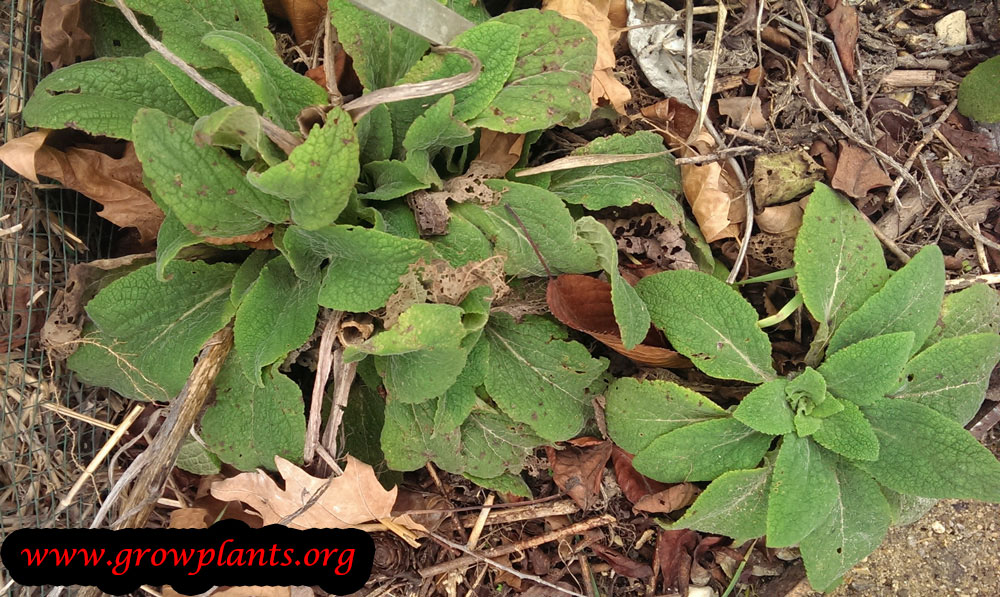
- Growth Habit & Form: Upright, spike-forming herbaceous plant rising from a circular basal rosette.
- Lifespan & Maturity: Biennial – flowers and sets seed in its second year, then usually dies; self-seeds freely.
Anatomy & Physical Features
- Leaves & Foliage: Green, elliptic, softly hairy leaves arranged in a circular basal rosette.
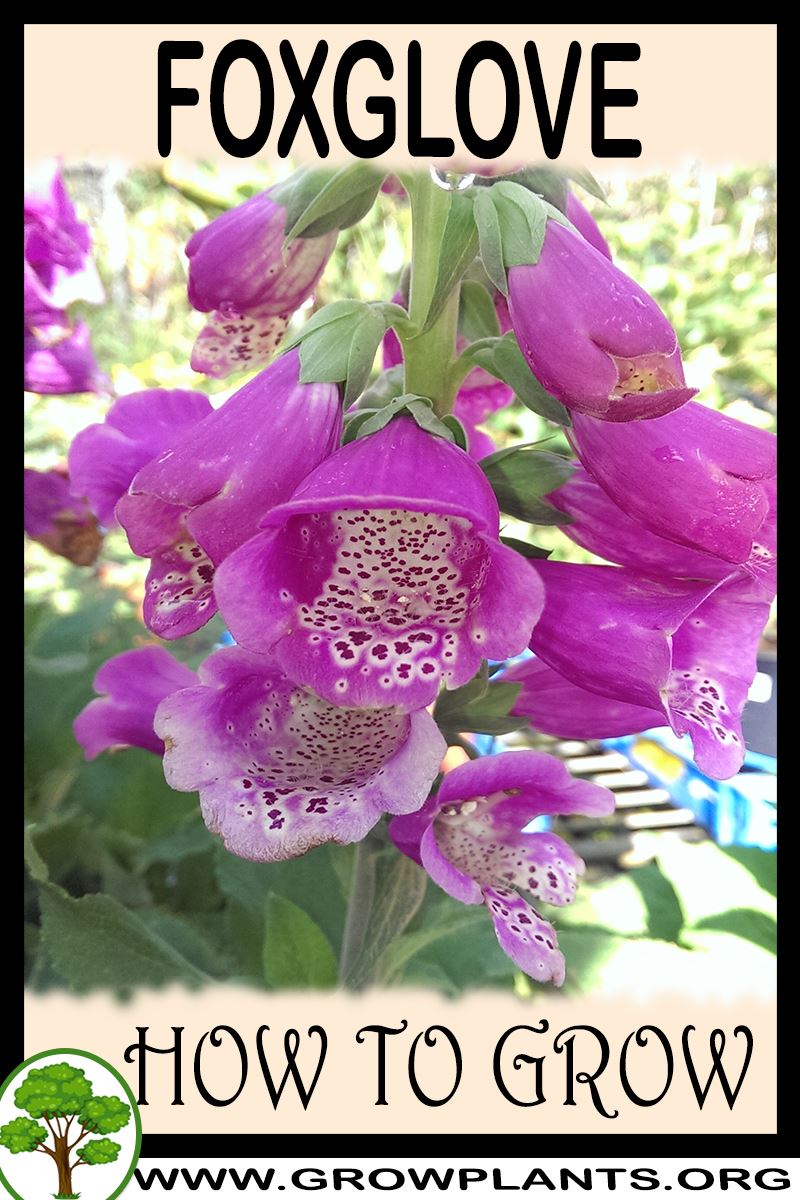
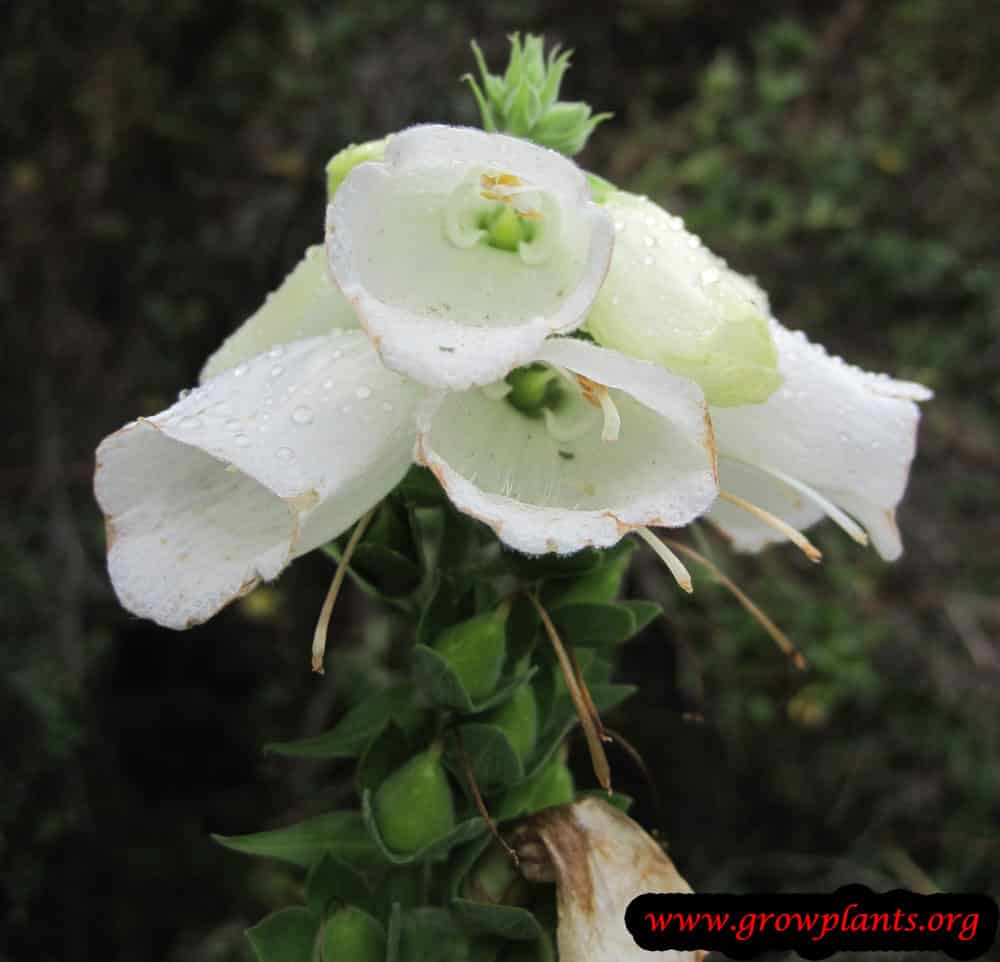
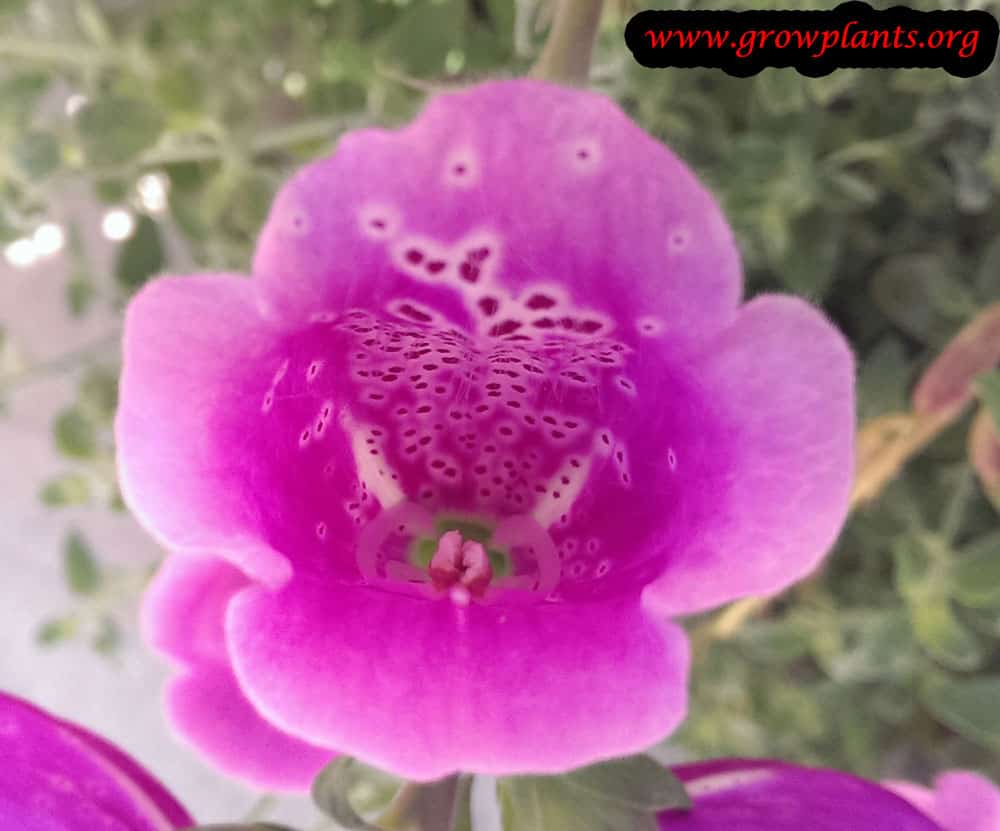
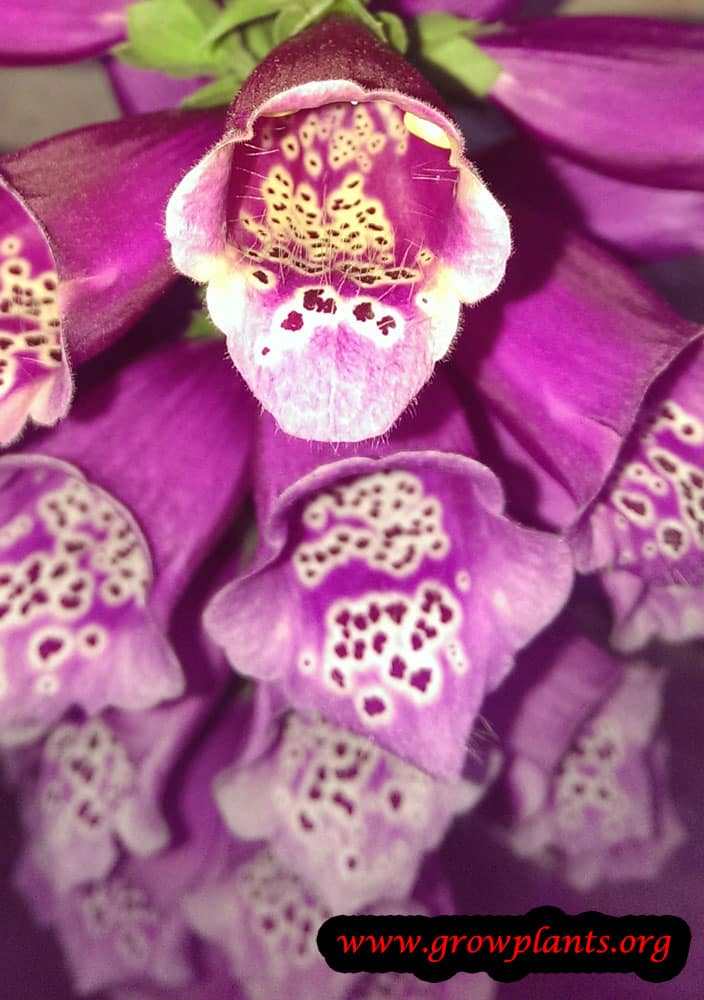
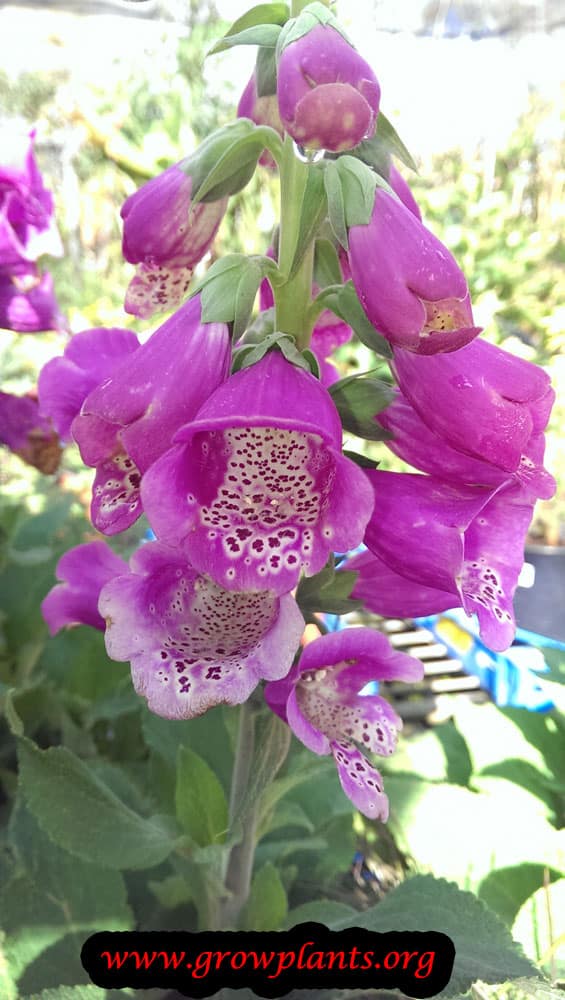
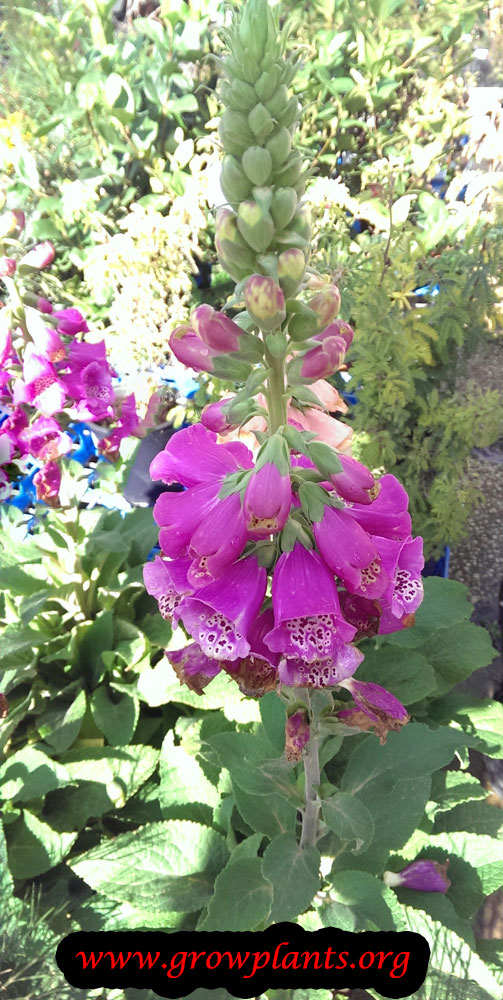
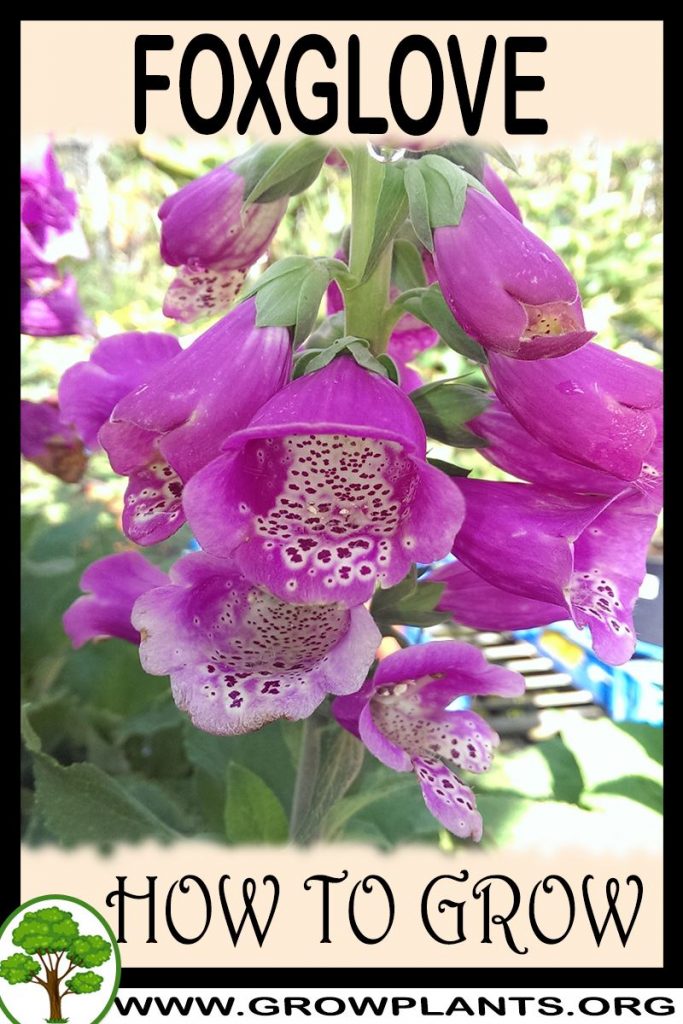
- Flower Characteristics: Pendent tubular bell-flowers on a one-sided spike – purple, pink, white, yellow, orange or brown with a spotted throat; attracts bees.
Primary Uses & Landscape Value
- Functional & Ornamental Roles: Ornamental cottage-garden and woodland-edge spike plant, bee/pollinator plant and cut flower; a medicinal source of cardiac glycosides.
Care Guide: Planting, Soil & Watering
Overview: Foxglove (Digitalis purpurea) grows best in full sun to partial shade in moist, humus-rich soil that stays cool and damp without becoming waterlogged. As a woodland-edge biennial it likes steady moisture and never enjoys drying out completely.
Quick Care Requirements
| Requirement | Ideal Condition |
|---|---|
| Planting Season | In spring or autumn, avoiding the peak of summer heat |
| Growth Rate | Fast to moderate |
| Soil Type | Moist, humus-rich, well-draining soil |
| Water Need | Moderate to high — keep the soil consistently moist |
Planting & Establishment
- Best Planting Season: Plant in spring or autumn when the weather is mild; young plants set out in autumn will establish over the cool season and flower the following year.
- How to Plant:
- Hole Preparation: Dig a hole roughly the size of the root ball so the plant sits at the same level it grew before.
- Soil Amendments: Enrich the soil generously with compost or leaf mould to hold moisture and feed the plant; foxglove loves a humus-rich woodland-type soil.
- Planting Depth: Set the crown level with the soil surface, keeping the leafy rosette above ground — do not bury the centre of the plant.
- Growth Speed & Expectations: Grows quickly, forming a leafy rosette in its first season and sending up its tall flower spikes the following year.
Soil, Watering & Drainage Care
- Soil Mix & Drainage Needs: Provide moisture-retentive but well-draining soil rich in organic matter; in containers use a good potting mix that stays damp yet lets surplus water drain, since standing water rots the roots.
- Watering Schedule & Technique:
- Young / Newly Planted: Keep the soil evenly moist while young plants root in, never letting them dry out.
- Established: Water regularly so the soil stays consistently moist, especially through the flowering period; give extra water in warm, dry spells.
- Seasonal Adjustments: Increase watering in summer heat and reduce it in cool, wet weather when the soil stays damp on its own.
Climate, Light & Hardiness
Foxglove (Digitalis purpurea) is a cool-temperate biennial to short-lived perennial of temperate, Mediterranean and mild-subtropical climates, at home in the dappled light of woodland edges. It is very cold-hardy - grown across roughly USDA zones 4–10 - with summer heat, rather than winter cold, being the main limitation at the warm end of its range.
Quick Climate Specifications
| Climate Zones | Temperate, Mediterranean, mild subtropical |
|---|---|
| USDA Hardiness Zones | Approximately 4–10 |
| Optimal Temp Range | Cool to mild, roughly 15–21 °C (59–70 °F) |
| Cold Damage Begins | Very cold-tolerant; the leaf rosette overwinters through frost with little harm |
| Approx. Survival Minimum | Established plants to about the zone 4 limit, roughly −34 to −29 °C (−30 to −20 °F) |
| Frost Tolerance | High (overwintering rosette) |
| Light Conditions | Full sun to half shade (part shade preferred in hot climates) |
| Wind Tolerance | Low to moderate (tall flower spikes) |
Sunlight & Light Exposure
Optimal Light Setup
Full sun in cool climates gives the sturdiest spikes, but in warmer regions light or afternoon shade - its natural woodland-edge setting - keeps plants cooler and extends bloom.
Shade & Heat Management
Where summers are hot, part shade reduces heat stress and prevents the foliage and flowers from scorching or fading quickly.
Best Exposure / Orientation
A position sheltered from the strongest midday sun and from wind that could topple the tall spikes suits it well.
Temperature Extremes & Hardiness
USDA Hardiness & Regional Limits
Hardy across roughly zones 4–10. As a biennial it typically forms a leaf rosette the first year and, after a winter’s cold, flowers the second - so a cool dormant season is part of its normal cycle rather than a threat.
Cold Damage & Winter Protection
The overwintering rosette is robustly frost-hardy; in the coldest zones a winter mulch simply steadies it through freeze-thaw. Little else is needed.
Frost Sensitivity
Low - established plants take hard frost in stride; only tender new spring growth can be nipped by a sharp late frost.
Extreme Heat Tolerance
This is the limiting factor: prolonged heat and humidity shorten the plant’s life, weaken flowering and push it to behave as a short-lived biennial, which is why it performs best in cooler summers or with afternoon shade.
Wind, Humidity & Microclimate
Humidity Preferences
Prefers moderate humidity; muggy, still heat encourages foliar disease.
Wind Tolerance
The tall flower spikes are top-heavy and can snap or lean in strong wind, so a sheltered spot (or support) protects the display.
Microclimate Recommendations
A cool, part-shaded, wind-sheltered pocket - much like a woodland margin - gives the best and longest-lasting show, especially in warm regions.
Growing in Pots, Balconies & Indoors
Foxglove is a tall biennial (0.5-1.6 m) grown for its dramatic flower spikes – not a houseplant, as the grower confirms, but it makes a striking container plant for a patio or balcony border. Note that every part of the plant is highly poisonous.
Quick Details
- Container Size: A deep pot (to anchor the tall spike) – roughly 20-30 L or larger
- Indoor Suitability: Not a houseplant (per the grower) – grow it outdoors
- Best Spot: Full sun to half shade
- Soil & Drainage: Rich, aerated, free-draining mix, kept evenly moist
- Watering in Pots: Average to generous – it likes steady moisture and dislikes drying out
Indoors & On the Windowsill
- Houseplant limits: The grower marks it no for indoors; it’s a tall border plant that needs outdoor light and space, not a windowsill.
- Overwintering: As a biennial it forms a leaf rosette the first year and flowers the next; a potted rosette is easy to keep sheltered over its first winter.
On a Balcony or Patio
- Light & wind: Give it sun to part shade; the tall flower spikes are top-heavy, so stake them and shelter from wind. Pots dry fast, so keep the mix evenly moist.
Choosing the Pot, Soil & Long-Term Care
- Pot & drainage: Use a pot with strong drainage holes and skip a standing-water saucer, which invites root rot; terracotta breathes and dries faster, while glazed or plastic holds moisture longer.
- Potting mix: A light, aerated organic mix – peat or coir with perlite or vermiculite – gives the roots both moisture and air.
- Feeding: Potted plants use up their feed faster because each watering leaches nutrients away, so feed a little more often than plants in open ground.
- Repotting: Refresh the top of the mix and pot up every couple of years; a light root and top prune at repotting keeps established plants vigorous.
Safety: Foxglove is highly toxic – all parts contain heart-affecting compounds. Keep pots well away from children and pets, wash your hands after handling, and never let anyone eat any part of it.
Fertilizing & Feeding
A moderate feeder: foxglove grows best with balanced spring feeding and rich, moist soil, and needs no feeding once it goes dormant.
Quick Fertilizing Specs
| Feeding Level | Moderate |
|---|---|
| young_feeding | Balanced feeding to establish |
| mature_feeding | Balanced feeding through growth and bloom |
| Main Nutrient Priority | Balanced nutrition; adequate nitrogen for growth, not high phosphorus for bloom |
| Best Feeding Period | Spring through the flowering period |
| Organic Options | Compost, well-rotted manure and mulch |
| Micronutrients | Rarely needed where soil is healthy and near neutral |
| Soil pH | Moist, slightly acidic to neutral soil |
| Reduce/Stop Feeding | Ease off after flowering and stop during dormancy |
Feeding by Growth Stage
Spring growth
Fuel fresh spring growth of stems and foliage on foxglove.
| Nutrient direction | A balanced complete fertilizer as growth resumes in spring supports strong leaves and stems. |
|---|---|
| Timing | Early in the growing season as new growth begins. |
| Frequency | A light feeding as growth starts, repeated modestly through spring. |
| Fertilizer types | Balanced complete flower or garden fertilizer, Compost or well-rotted organic matter |
| Precautions | Avoid heavy nitrogen, which produces lush foliage at the expense of flowers. |
Bloom
Support abundant, good-quality flowers on foxglove through the blooming period.
| Nutrient direction | Keep feeding balanced with adequate nitrogen; balanced nutrition, not high phosphorus, drives good bloom. |
|---|---|
| Timing | From bud formation through the flowering period. |
| Frequency | Light, steady feeding while in active bloom. |
| Fertilizer types | Balanced complete fertilizer, Compost as a slow background source |
| Precautions | Do not rely on high-phosphorus ‘bloom booster’ products; balanced feeding is enough. |
Dormancy or rest
Let foxglove rest without pushing new growth.
| Nutrient direction | None – withhold fertilizer during dormancy. |
|---|---|
| Timing | After flowering, through autumn and winter dormancy. |
| Frequency | No feeding at this stage. |
| Fertilizer types | No feeding at this stage; do not fertilize until active growth resumes. |
| Precautions | Do not fertilize dormant plants; resume only when growth restarts. |
Nutrient Deficiency Signs & Corrections
Overall pale, yellowing leaves with weak, slow growth.
| Possible causes | Low soil nitrogen, Poor, leached or sandy soil, Cold or waterlogged soil limiting uptake |
|---|---|
| Appears first on | Older, lower leaves |
| What to check | Feeding history, Soil organic matter, Drainage and weather |
| Possible correction | Apply a balanced complete fertilizer and build the soil with compost. |
Lush leafy growth but few flowers.
| Possible causes | Excess nitrogen relative to other nutrients, Too much shade, Over-feeding with a high-nitrogen fertilizer |
|---|---|
| Appears first on | The whole plant, as a balance of leaves over flowers |
| What to check | Fertilizer type and rate, Light levels, Overall vigour |
| Possible correction | Switch to balanced feeding, ease off nitrogen and ensure adequate light. |
Young leaves yellow between still-green veins.
| Possible causes | High soil pH limiting iron availability, Waterlogged or cold soil, A genuine micronutrient shortage |
|---|---|
| Appears first on | Youngest leaves |
| What to check | Soil pH, Drainage, Whether only new growth is affected |
| Possible correction | Correct pH where possible and, if needed, apply a chelated micronutrient product per its label. |
Pruning, Training & Seasonal Maintenance
Foxglove needs no structural pruning — it is a herbaceous biennial (sometimes behaving as a short-lived perennial) that grows a basal rosette in its first year and a flowering spike in its second. The only maintenance that applies is deadheading the spent flower spike to prolong bloom or manage self-seeding, and removing damaged foliage. All parts of the plant are toxic, so handling care matters more here than tool technique.
Quick Pruning & Maintenance Specs
| Pruning Tolerance | Low (deadheading only, no structural pruning) |
| Primary Pruning Window | After the main flower spike finishes blooming |
| Typical Frequency | As flowers fade through spring/summer |
| Main Objective | Prolong bloom via side shoots, or manage self-seeding |
| Young Plant Priority | None — leave the first-year rosette intact to build reserves |
| Mature Plant Priority | Deadhead the spent central spike |
| Best Tool Type | Precision snips |
Pruning by Plant Age & Size
Newly Established / Young
No pruning of the first-year basal rosette — its foliage builds the energy reserves needed to send up next year’s flower spike.
Mature / Established
Once the central flower spike has finished, deadhead it back to a set of healthy leaves; this can encourage secondary, smaller side spikes and extends the bloom display.
Seasonal Pruning Schedule
Post-Flowering
Objective: extend bloom or control self-seeding. Remove: the spent central spike, cut down to the foliage, if more bloom or seed control is wanted. Don’t remove: spikes you want to set seed for naturalizing, since foxglove self-sows readily and many gardeners rely on this to keep it going year to year.
End of Season
Cut back dying foliage in autumn for tidiness and to reduce carryover of powdery mildew on old leaves.
Special Growth to Remove
Spent flower stems (deadhead as above); dead or powdery-mildew-affected leaves, removed and disposed of (not composted) to reduce disease carryover.
Tools
Precision snips only — this is a soft-stemmed herbaceous plant with no woody growth to cut.
Tool Hygiene & Disease Risk
Routine — clean tools are enough; powdery mildew spreads mainly by airborne spores rather than tool contact, though removing and discarding affected leaves helps limit its spread.
Cut Placement & Technique
Deadhead by cutting the spent flower spike back to just above a healthy set of leaves or down to the rosette once the spike is fully finished.
Heavy Pruning & Rejuvenation
Not applicable. As a biennial, the rosette that has flowered does not regrow from a hard cutback the way a shrub would; a flowered plant naturally declines afterward and is best replaced by self-sown or freshly planted seedlings.
Post-Pruning Care
No feeding is needed after deadheading; keep soil consistently moist, which this species prefers; wash hands after handling the plant, since all parts are toxic (poisonous per source data).
Common Pruning Mistakes
Cutting back the first-year rosette foliage, which removes the reserves needed for next year’s bloom; deadheading every spike when self-seeding for next year’s display is actually wanted; handling the toxic sap without washing hands afterward.
When NOT to Prune
Avoid cutting back the first-year basal rosette. Avoid deadheading before deciding whether self-seeding is wanted, since removing spent spikes stops seed set.
Recommended Tools (by task)
- precision_snips — deadheading spent flower spikes and removing damaged leaves; this soft-stemmed plant never needs anything heavier.
Propagation Guide
Foxglove is grown almost entirely from its abundant, dust-fine seed, which must be surface-sown because it needs light to germinate. The wild species comes reasonably true, but named colour strains segregate, and plants self-seed freely once established. Overall easy from seed.
Quick Propagation Specs
| Best Propagation Method | Seed |
| Alternative Methods | Self-sown seedlings; occasional basal-offset division on plants that persist |
| Propagation Difficulty | Easy |
| Seed True-to-Type | Species mostly comes true; named colour strains variable |
| Best Propagation Season | Sow spring or autumn |
| Seed Sowing Depth | Surface — do not cover (light required) |
| Grafting Required | No |
Growing from Seed
Seed Handling & Viability
The seed is tiny and produced in huge numbers on the spent spikes; it stores well kept dry and cool.
Dormancy & Pre-Sowing Treatment
No special dormancy treatment is needed, but germination requires light, so the seed must not be buried.
Sowing Season
As a biennial or short-lived perennial, sow in late spring to summer for a rosette that flowers the following year, or sow in autumn; the site lists spring and autumn as planting seasons.
Sowing Depth & Orientation
Surface-sow and press the seed onto moist medium; do not cover it.
Germination Conditions
Moist medium in light at mild temperatures; emergence can be uneven.
Seedling Care
Prick out the small seedlings early, grow on as rosettes, and overwinter them to flower the next season.
Division, Offsets, Pups & Suckers
Foxglove is usually spent after flowering. Where a plant behaves as a short-lived perennial and forms side rosettes around the base, these basal offsets can be lifted and divided in autumn, each with its own roots. All parts are poisonous — wear gloves.
Bloom & Flower Guide
Quick Details
- Bloom Season: Spring into summer
- Time to First Bloom: As a biennial it usually flowers in its second year, after a first season of leafy growth
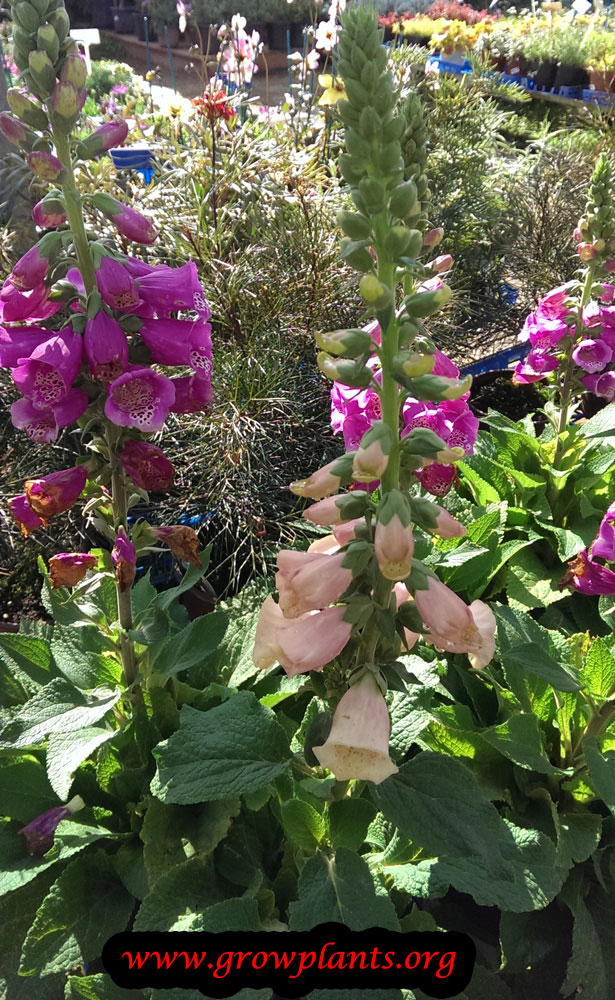
- Flower Appearance: Tall spikes of tubular flowers in purple, pink, brown, yellow, orange or white, the throats prettily speckled
- Edibility: None – highly toxic. Every part, including the flowers, contains cardiac glycosides and must never be eaten
Detailed Blooming Overview
Foxglove earns its place with those dramatic flower spires that rise in late spring and summer. As a biennial (or short-lived perennial) it spends its first year building a rosette of leaves, then sends up the flowering spike the following year. The tubular blooms open from the bottom of the spike upward, giving a long, generous display.
Flower Characteristics
- Bell-shaped, tubular flowers held on tall one-sided spikes.
- Colours range through purple, pink, brown, yellow, orange and white, each throat marked with contrasting speckles – purple flowers with purple-and-white spots, pink with white, red or purple, white with purple.
Bloom Care & Thinning
- Pollination: Long-tongued bumblebees are the main visitors, working their way up the spike from the lower flowers.
- Managing the bloom: Cutting the main spike once it fades often encourages smaller side spikes, and removing spent spikes limits heavy self-seeding – leave one or two if you want it to seed around.
- Safety while handling: The whole plant is poisonous; wear gloves, wash your hands, and keep it well away from children and pets.
Pests, Diseases & Troubleshooting
Overview: Digitalis purpurea (foxglove) is a short-lived biennial or perennial whose main pests are aphids — especially the foxglove aphid, a notorious virus vector — along with Japanese beetle, slugs and capsid bugs, while its diseases are powdery mildew, leaf spots and anthracnose, and the wet-soil crown rots and Verticillium wilt. It is easy in moist, humus-rich, well-drained soil in part shade. Note that all parts are highly toxic (cardiac glycosides): wear gloves and keep it away from children and livestock.
Quick Troubleshooting Overview
| Issue / Pest | Main Symptom | Primary Solution |
|---|---|---|
| Foxglove aphid | Colonies on undersides and buds, distortion; spreads virus | Hose off, insecticidal soap; control to limit virus |
| Japanese beetle | Skeletonised leaves and chewed flowers in warm season | Hand-pick into soapy water; avoid lure traps nearby |
| Slugs and snails | Ragged holes and grazed rosettes and seedlings | Hand-pick at night, iron-phosphate bait |
| Powdery mildew | White powdery coating on leaves, yellowing | Airflow, water at base; potassium bicarbonate or sulfur |
| Crown / root rot | Wilt and blackened, rotting crown in wet soil | Sharp drainage, plant high, ease off water |
| Verticillium wilt | One-sided wilt and yellowing, vascular browning | Remove plant; do not replant in that soil |
Common Pests & Management
- Foxglove aphid (Aulacorthum solani):
- Symptoms: Shiny pale-green to yellow aphids, often with darker joints, clustering on leaf undersides, buds and flower spikes, causing curling, distortion, honeydew and sooty mould; crucially, this species is an efficient vector of many plant viruses.
- Prevention & Control: Monitor undersides and buds, hose off and squash early colonies, and conserve ladybirds, lacewings, hoverflies and parasitic wasps. Use insecticidal soap or neem for build-ups, and control promptly precisely because the aphid spreads virus; spray in the cool of evening.
- Japanese beetle (Popillia japonica):
- Symptoms: Metallic green-and-copper beetles that feed in groups in the warm season, skeletonising the leaves between the veins and chewing ragged holes in flowers, while their grubs feed on roots in turf nearby.
- Prevention & Control: Hand-pick beetles in the cool of morning into soapy water, and avoid placing pheromone lure traps near the plants, as they draw in more beetles. Encourage predators and treat lawn grubs with beneficial nematodes or milky spore where grubs are the source.
- Slugs and snails (Deroceras / Cornu spp.):
- Symptoms: Ragged holes and grazed leaves, worst on the low overwintering rosettes and on seedlings, with slime trails; damp, sheltered, mulched conditions and shade favour them.
- Prevention & Control: Hand-pick after dark, set beer traps, and use grit or copper barriers around rosettes and seedlings. Iron-phosphate pellets are effective and safe around pets and wildlife.
- Capsid bugs (Lygocoris / Lygus spp.):
- Symptoms: Small green or brown sap-sucking bugs whose feeding on shoot tips and buds causes small ragged holes, puckering and distorted leaves and flower spikes as the tissue grows on.
- Prevention & Control: Tolerate light damage, keep weeds down, and encourage general predators. Only heavy, persistent infestations warrant an insecticidal soap or a targeted treatment, applied to protect pollinators.
- Two-spotted spider mite (Tetranychus urticae):
- Symptoms: Fine pale stippling, dull bronzed leaves and fine webbing on the undersides, worst in hot, dry conditions and on plants under stress or grown too dry.
- Prevention & Control: Raise humidity and hose the foliage, keep plants well-watered, and avoid drought stress. Horticultural oil or insecticidal soap and predatory mites control them; avoid broad-spectrum sprays that trigger flare-ups.
Diseases & Fungal Issues
- Powdery mildew (Erysiphe / Golovinomyces spp.):
- Symptoms: White powdery patches on leaves and stems, with yellowing, distortion and premature leaf loss, worst in crowded plantings with poor airflow and where roots are dry but the air is humid.
- Treatment & Management: Space for airflow, water consistently at the base, and remove affected leaves. Milk sprays, potassium bicarbonate or sulfur fungicide help; grow in an open position and avoid drought stress, which predisposes plants to infection.
- Fungal leaf spot and anthracnose (Septoria / Ascochyta / Colletotrichum spp.):
- Symptoms: Brown or purple-ringed spots that enlarge and merge, blighting the large basal leaves, with tan or greyish centres; favoured by wet, humid weather and overhead watering.
- Treatment & Management: Remove and destroy spotted leaves, water at the base to keep foliage dry, and space for airflow. Clear old debris at season’s end; a copper fungicide protects new growth under persistent damp pressure.
- Downy mildew (Peronospora spp.):
- Symptoms: Pale yellow blotches on the upper leaf surface with a matching greyish, downy growth on the underside, leading to leaf distortion and drop in cool, damp, humid conditions.
- Treatment & Management: Improve air movement and spacing, avoid overhead watering and wet foliage, and remove infected leaves. Clear debris; a suitable fungicide is only needed under persistent, damp pressure.
- Crown and root rot (Phytophthora / Pythium / Sclerotinia spp.):
- Symptoms: Wilting and collapse with a blackened, soft, rotting crown and roots, especially in heavy, wet, poorly drained soil and over a cold, wet winter; a common cause of losing overwintering rosettes.
- Treatment & Management: Plant in humus-rich but free-draining soil, set the crown high, and avoid waterlogging, particularly in winter. Remove and destroy rotted plants and improve drainage before replanting foxgloves in that spot.
- Verticillium wilt (Verticillium spp.):
- Symptoms: Progressive wilting and yellowing, often on one side of the plant, with stunting and brown streaking inside the stem; a soil-borne disease that blocks the water-conducting vessels.
- Treatment & Management: There is no cure. Remove and destroy affected plants, avoid replanting susceptible species in that soil, and keep plants unstressed with even moisture and good drainage to slow decline.
Growing Difficulties & Abiotic Problems
- Biennial life cycle (die-after-flowering):
- Cause & Symptoms: Many foxgloves are biennials or short-lived perennials that form a leafy rosette one year, flower and set seed the next, and then decline and die; gardeners often mistake this natural cycle for disease.
- Correction Strategy: Expect the natural cycle, sow or plant in succession for bloom every year, and let some spikes self-seed to keep the display going. Cutting the main spike after flowering can encourage side spikes and sometimes prolong the plant.
- Winter-wet crown rot:
- Cause & Symptoms: Cold, sodden soil over winter rots the overwintering rosette from the crown, blackening and collapsing it; foxgloves tolerate cold far better than they tolerate wet feet.
- Correction Strategy: Grow in free-draining, humus-rich soil, avoid low spots that stay wet, and improve drainage on heavy ground. Do not smother the crown with wet mulch; a gritty collar around the rosette helps in wet climates.
- Sun scorch and heat stress:
- Cause & Symptoms: Wilting, scorched leaf margins and short-lived flowers where foxgloves are grown in full hot sun and dry soil, since they are woodland-edge plants that prefer part shade and cool, moist roots.
- Correction Strategy: Grow in dappled or part shade with moist, humus-rich soil, mulch to keep the roots cool, and water in dry spells. In hot climates give more shade; in cool climates they take more sun if kept moist.
What Helps — Products & Tools
For foxglove the useful kit is insecticidal soap and neem for aphids (control them to limit virus spread), hand-picking for Japanese beetle, iron-phosphate slug bait, and horticultural oil for mites. On the disease side, airflow, base watering and sanitation prevent the mildews and leaf spots, potassium bicarbonate or sulfur helps against powdery mildew, and sharp drainage is the defence against crown rot; Verticillium can only be managed by removal and not replanting. IMPORTANT: all parts are highly toxic (cardiac glycosides) — wear gloves, wash hands, and keep away from children, pets and livestock. The source pest names are unreliable and were not used.